California’s effort to restrict sales of handguns that can be converted into fully-automatic machine guns drew an immediate federal challenge Wednesday, with the Trump administration suing the state over its new “Glock ban” law just hours after it took effect.
The U.S. Department of Justice is seeking a court order to block the controversial state law that limits where most Glock and Glock-style pistols can be sold. The lawsuit, filed in U.S. District Court for the Central District of California, also aims to invalidate key parts of the state’s handgun roster — a list that dictates the types of firearms that Californians may legally purchase. In a statement Wednesday, acting Atty. Gen. Todd Blanche said that both policies “trample” the rights of law-abiding Californians.
“The Second Amendment is a sacred right belonging to all Americans, even those in California,” Blanche said. “California cannot ban the most popular type of handgun in America.”
California’s Assembly Bill 1127 does not explicitly name the Glock brand, but instead targets any handgun with a specific mechanism that can easily be converted by a black market device. These simple “Glock switches” convert semiautomatic handguns into a weapon capable of firing 20 rounds per second with a single squeeze of the trigger.
Advances in 3D printing have made the conversion devices widely available and cheap to produce. Federal authorities reported recovering 11,088 of them from crime scenes between 2019 and 2023. Switches have been used in several mass shootings, including one in Sacramento that resulted in six deaths and 12 injuries in 2022.
The new law does not prohibit the possession of affected handguns already owned by Californians, and includes exemptions for gun dealers, as well as law enforcement and military agencies.
Gov. Gavin Newsom signed the bill in October, and has maintained that firearm laws are responsible for California’s declining crime rates and gun deaths.
“The Trump administration is once again trying to dismantle California’s commonsense gun safety laws,” Diana Crofts-Pelayo, a spokesperson for the governor, said in a statement. “Our response is simple — these laws save lives.”
The federal government argues in its complaint that California can’t ban legal semiautomatic handguns simply because they could be illegally altered, adding that state and federal law already prohibit such pistol converters. The U.S. compared California’s approach to banning ordinary shotguns because they can be illegally shortened.
The lawsuit also challenges California’s decades-old handgun roster, which requires new handgun models to pass certain safety tests before they can be approved for retail sale. A federal judge tentatively blocked portions of the roster requirements in a separate 2023 case, which is being appealed before the 9th Circuit. That lawsuit was filed by the California Rifle & Pistol Assn. and other gun rights supporters following a landmark 2022 decision by the U.S. Supreme Court that set new standards for evaluating firearm restrictions.
Under those new guidelines, the Trump administration wants a judge to find that California’s gun restrictions violate the 2nd Amendment, and is seeking an order to bar the state from enforcing them.
The Trump administration is relying on a federal civil rights law typically used against police departments accused of repeated constitutional violations, arguing that California Atty. Gen. Rob Bonta and state Justice Department agents qualify as peace officers and therefore violate gun owners’ rights whenever they enforce handgun restrictions.
Bonta, who is named in the suit, has a winning court record over the Trump administration, and has secured at least 12 final court rulings and more than 35 preliminary injunctions or emergency orders.
“We won’t be intimidated by another politically motivated lawsuit,” said Crofts-Pelayo, Newsom’s spokesperson. “We’ll continue defending the laws that protect Californians and keep dangerous weapons off our streets.”
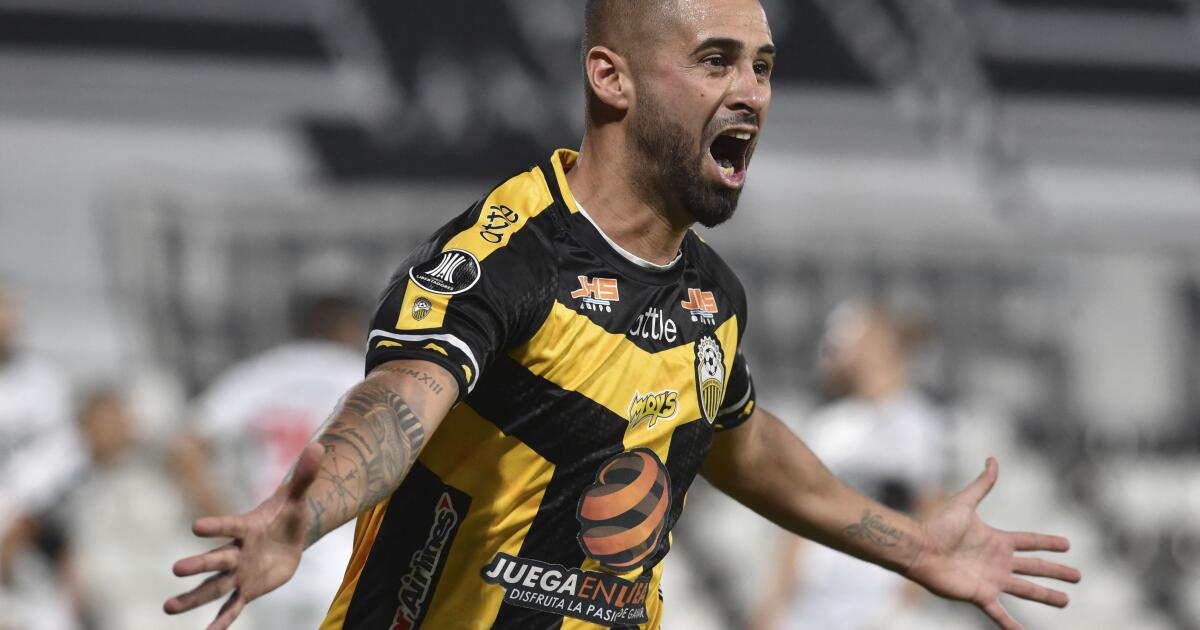
Trejo has played for several first and second division soccer clubs in the South American country since 2023 and signed on with the northern Venezuela-based Club Sport Marítimo de La Guaira earlier this year.
On Sunday, Trejo’s club announced the deaths of his family in an Instagram post.
“Club Sport Marítimo de La Guaira profoundly laments the irreparable loss of the wife and sons of our player Lucas Trejo,” the team wrote. “[The deaths] occurred on June 24th during the earthquake that shook the entire country.”
When the earthquakes struck, Trejo was at a training session in the capital city of Caracas while his wife Yanina and children— Aarón and Ainhoa— were at the family home in the severely affected beachfront city of La Guaira.
Trejo’s brother-in-law Ricardo Ardiles told CNN Español that the Club Sport Marítimo de La Guaira defender rushed home after the temblors and was “emotionally overwhelmed” as he dug through rubble for days in search of his family.
“What he found was a horrific scene,” Ardiles said last week. “He found absolutely nothing of what the building itself had been.”
Trejo was far from the only athlete gravely affected by the seismic activity in Venezuela.
Former Club Sport Marítimo de La Guaira player Héctor Bello also lost his wife Andrea during the earthquakes. She died while protecting their infant daughter, who was later found alive by rescue teams.
“I’m going to make sure our baby remembers how wonderful you were, how much you loved her,” Bello wrote in an Instagram post honoring his wife. “I’ll tell her the story of how you saved her, how you gave your own life for our daughter, how you were a brave woman who, even with your last breaths, never abandoned her.”
“Venezuelan football bids a heart-wrenching farewell to a young man who represented our country’s colors with pride, commitment and love,” a social media statement from the federation read. “His passing has plunged the entire Vinotinto family into mourning and leaves an indelible mark on all those who shared moments with him both on and off the pitch.”
Eighteen-year-old Razan Sijaa, who played for Caracas Fútbol Club, 14-year-old Víctor Palacios of Club Sport San Augustín’s academy and 17-year-old prospect Ricardo Veloz were also killed by the quakes.
Locally, the family of Dodgers shortstop Miguel Rojas narrowly escaped tragedy and were doing OK after the earthquakes.
“Literally two blocks away from where my family was, two buildings collapsed — the whole building,” Rojas told reporters last week. “I’m lucky, to be honest with you guys. I’m really lucky to have my family still alive and with me. I’m not taking this for granted.”
According to Rojas, his wife and kids were in Caracas, which is approximately six miles south of where the quakes struck. His wife was there to renew her passport, and the kids were going to try to get Venezuelan citizenship. He added that his sister was in Los Teques, Rojas’ hometown about 17 miles south of the coastal destruction.
“It’s really tough to see teammates of mine and players that I played with at some point in my career lose family members, to lose kids,” said Rojas, who spent years playing baseball in La Guaira. “It’s really devastating. It’s been really hard for me to go to sleep at night.”
The couple have a three-year-old daughter called IvyCredit: InstagramZack and Samantha’s son Leo died 14 months agoCredit: Instagram / @zackgeorge
Kate Lawler said: “Congratulations to you both. You deserve so much happiness x.”
Harry Aikines-Aryeetey, aka Gladiator Nitro, wrote: “Massive congratulations! Beautiful!”
Matty Campbell, better known as Bionic, posted: “Over the moon for you both.”
Zack and Samantha are also parents to Ivy, three.
The couple bravely shared late son Leo’s fight with followers last year.
He was initially placed on a ventilator, but after responding well he was taken off it and provided with CPAP, a non-invasive way of keeping airways open.
However, when he was retubed after six hours, it is believed accidental damage was done to his windpipe.
As well as suffering from brain bleeds, a hole in the heart and collapsing lungs, air pockets began to form around his lungs.
Zack told the Mirror: “Around the tenth day they started getting a bit bigger. They came to the conclusion that when they tubed him, either the first or the second time, they created a hole in his windpipe. It’s no one’s fault, a baby that young is really fragile; it’s just a risk.
“That was really hard, because if it hadn’t happened, he would probably still be here. A 23-week-old baby has so much to do. Overnight, he got quite bad, that’s when we went in and he passed away.”
The couple decided against giving Leo CPR having already witnessed him go through so much.
Zack announced Leo’s tragic death with a heartbreaking picture of he and Samantha holding him.
Death in Paradise fans instantly recognised the star behind drug lord Miranda Priestly.
Hayley Anderson Screen Time TV Reporter
22:53, 28 Jun 2026Updated 00:03, 29 Jun 2026
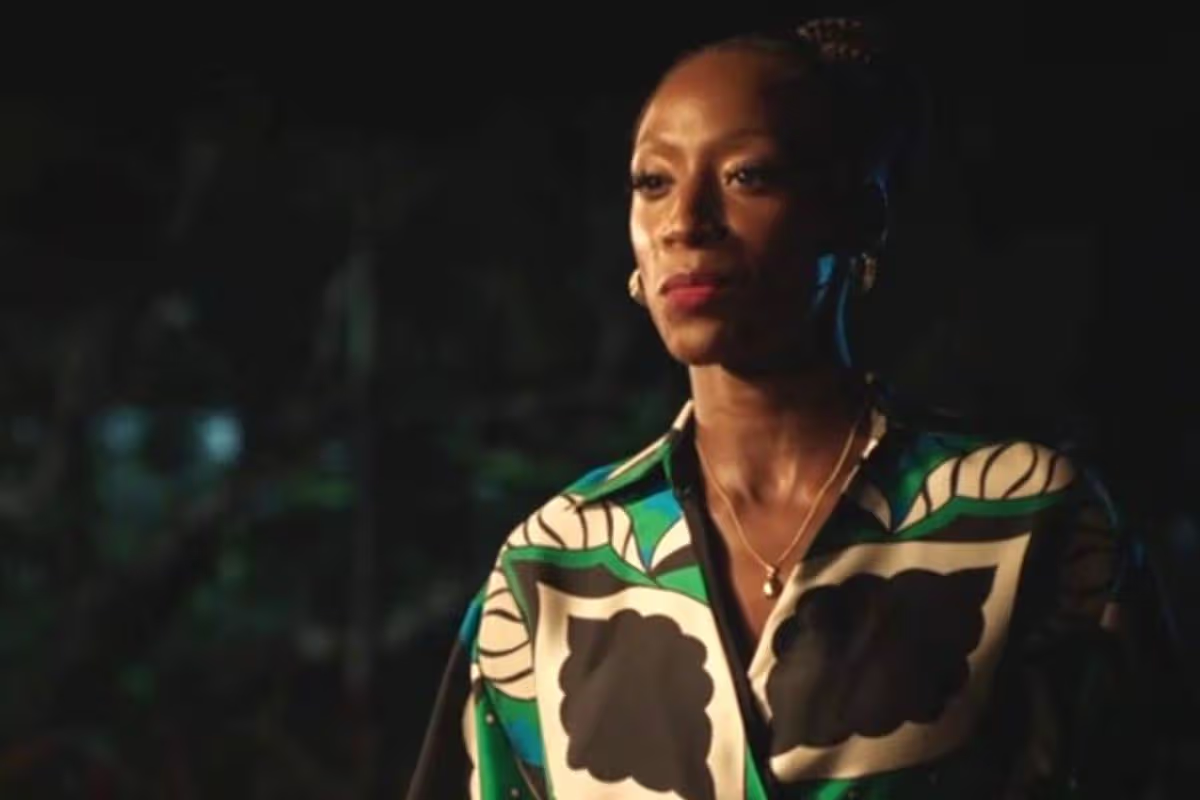
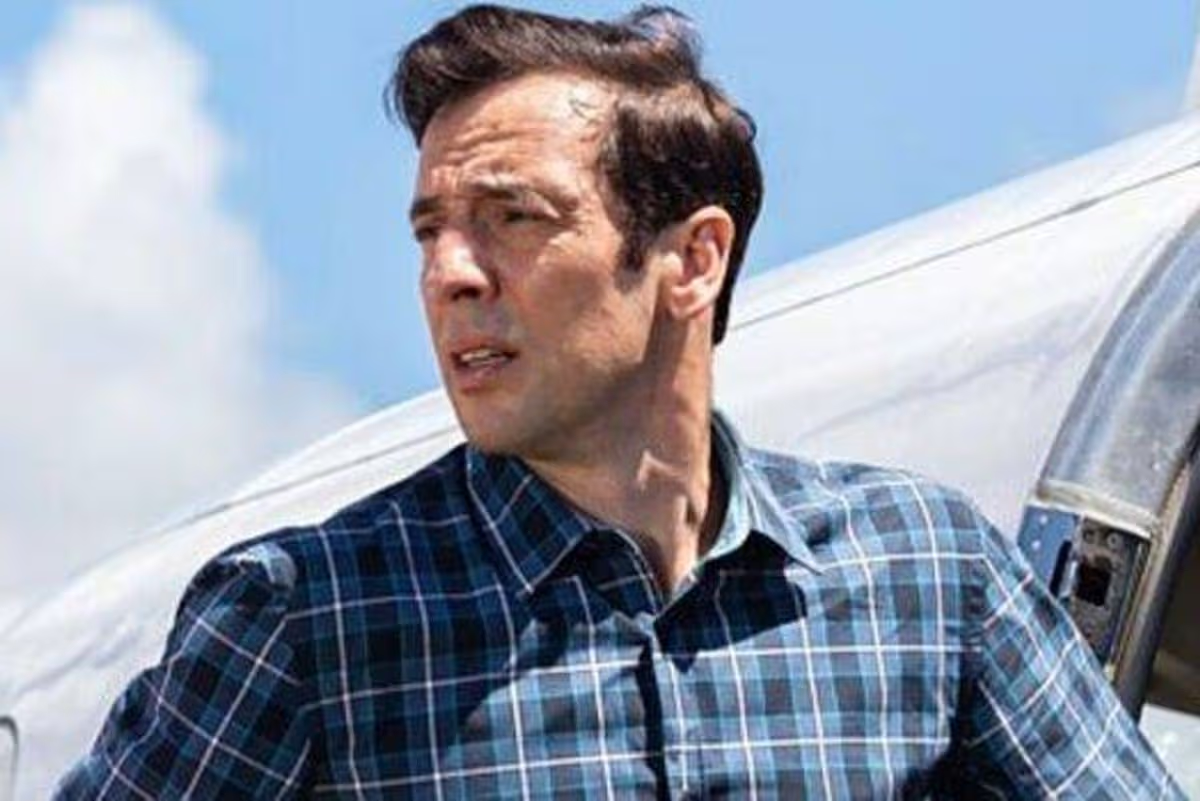
Death in Paradise’s Miranda Priestly is played by actress Victoria Ekanoye. (Image: BBC)
Death in Paradise fans were swift to work out where they’d seen drug lord Miranda Priestly before.
Death in Paradise returned tonight, Sunday, June 28, on BBC One for a classic instalment of everyone’s beloved cosy crime drama.
This time round, DS Florence Cassell (portrayed by Josephine Jobert) assumes an undercover position as the nanny for Miranda Priestly (Victoria Ekanoye), a formidable drug lord.
It fell to Florence in this two-part special to penetrate Miranda’s drug operation, but BBC audiences couldn’t help being distracted by the star playing this week’s antagonist.
Who is Victoria Ekanoye?
Death in Paradise welcomed actress Victoria Ekanoye to play Miranda Priestly in the two-part special which originally broadcast three years ago.
Before her guest appearance in Death in Paradise, Ekanoye enjoyed a two-year spell in none other than ITV’s Coronation Street as Angie Appleton.
Internationally, Ekanoye is perhaps best recognised for portraying Rachel, the devoted confidante and aide to Elizabeth Hurley’s Queen Helena in The Royals.
Some of her other most prominent screen roles have included Girl Taken, The Turkish Detective, Doctors and The Worst Witch.
However, before she shifted her focus to television, Ekanoye launched her career in musical theatre, performing in the West End’s The Lion King as Queen Sarabi and Nala.
She has also tried her hand at singing, appearing in the 2019 series of The X Factor: Celebrity, where she competed in the “Over 31s” category.
The 44 year old was represented by judge Nicole Scherzinger and finished in 11th place.
Ekanoye has a number of exciting projects in the works, including the forthcoming BBC drama The Split Up, which serves as a spin-off of the hugely popular legal series The Split.
Furthermore, the actress is set to appear in a romantic drama called As Bad as Me, as well as An English Christmas Wish, which is anticipated to land later this year.
Death in Paradise is available to watch on BBC One and BBC iPlayer.
The parents of Doug Martin filed a wrongful death lawsuit alleging that police officers used excessive force in trying to subdue the former NFL running back while he was “experiencing a mental health crisis” last October.
The lawsuit, filed Tuesday in the Northern District of California, also claims that paramedics contributed to Martin’s death by failing to “provide timely medical care.” The city of Oakland, several police officers and emergency medical service provider Falck USA/Northern California were named as defendants.
Martin died Oct. 18 in a hospital following his arrest by officers responding to reports of a break-in at a residence. He was 36. His death remains under investigation by Oakland police.
According to the Alameda County coroner’s office, Martin’s autopsy reports still are being finalized. Martin family attorney John Burris told the Athletic that an independent pathologist told the family that Martin potentially died from restraint asphyxia.
“Plaintiffs allege, on information and belief, that Decedent Martin died from restraint asphyxia caused by Oakland police officers and the FALCK NORCAL paramedics’ failure to provide timely medical care,” the lawsuit states.
The Oakland Police Department and Falck Norcal did not immediately respond to messages from The Times.
According to the complaint, Martin was “experiencing a mental health crisis” when his mother called for paramedics. He then fled and hid in a neighbor’s basement, where officers found him.
“After a brief struggle, defendant police officers physically restrained him,” the complaint states. “During the restraint, decedent Martin was placed face down while one or more officers pressed on his back. After a period of time, defendant Officers turned him onto his side.
“When they did so decedent Martin was unresponsive seemingly unconscious; However, the defendant officers initially believed he was sleeping or pretending to be sleep. When decedent Martin remained unresponsive, an officer requested medical assistance.
“Plaintiffs are informed and believe that decedent Martin did not receive immediate medical attention. Falck paramedics arrived over 15 minutes after the call for service and, and when they arrived, did not promptly provide medical care.”
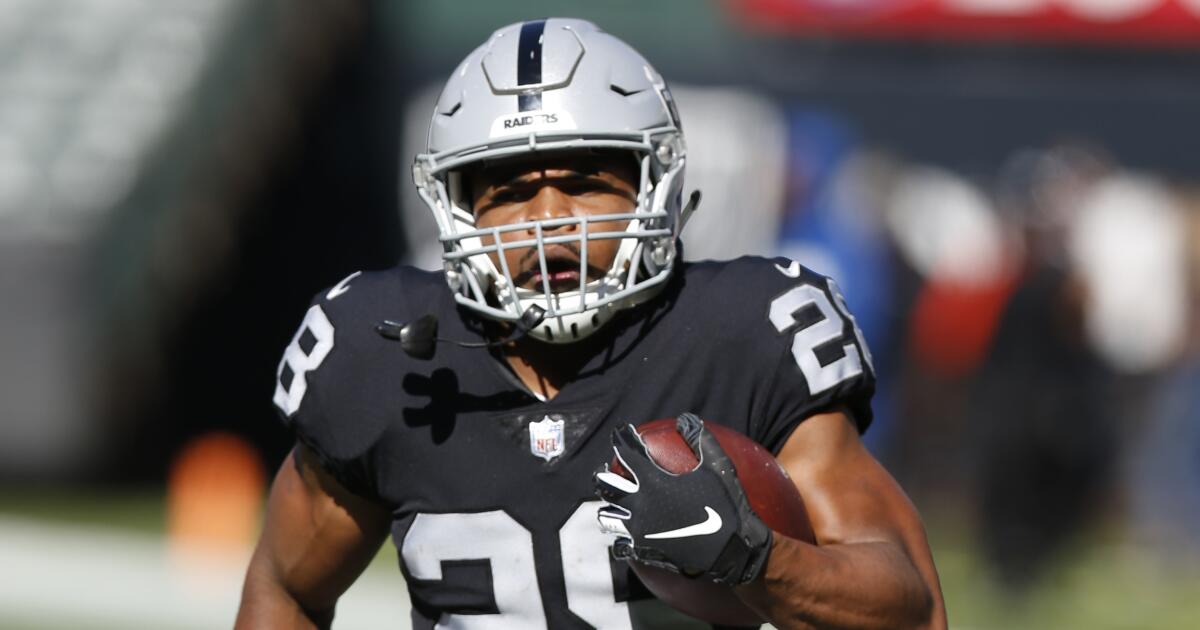
A Stockton native, Martin was a first-round pick by Tampa Bay in the 2012 draft. He played six seasons for the Buccaneers, making the Pro Bowl in 2012 and 2015, before spending his final season with the Oakland Raiders in 2018. In his career, Martin rushed for 5,356 yards and 30 touchdowns.
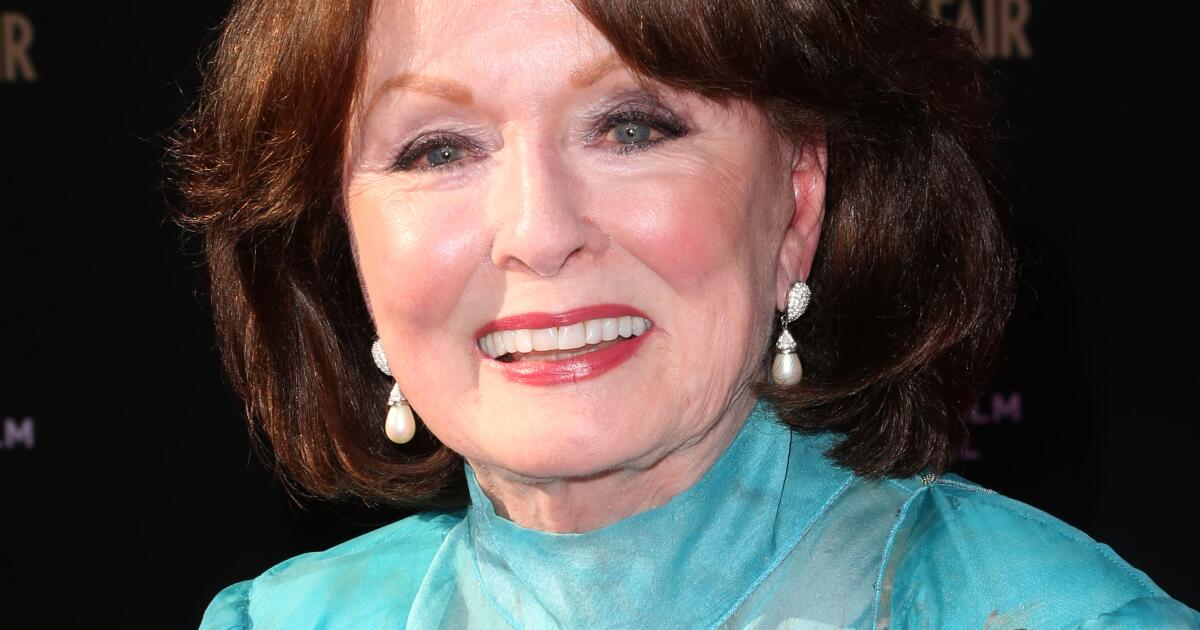
Appearing as the amoral daughter of Joan Crawford at only age 17, Blyth’s short film career saw her work with many top stars of Hollywood’s classic era.
In the last decade or so, Angelina Jolie has been on screen less frequently. So when she is — and not in forgettable tentpoles like “Eternals” — it’s worth paying attention. There seems to be a thoughtful intentionality to the roles she now chooses, almost as if this astoundingly famous woman wants to tell us something vital about herself, offering clues into her understandably guarded personal life.
Take 2015’s “By the Sea,” which she wrote and directed. Coincidentally or not, that pained study of marital dissolution, co-starring Jolie’s then-husband Brad Pitt, intersected with the couple’s real-life breakup — not to mention Jolie’s grief over the death of her mother, Marcheline Bertrand. Two years ago, Jolie portrayed a version of the elusive, emotionally closed-off opera singer Maria Callas in “Maria.” The conception of the role, marked by a dim view of stardom’s suffocating alienation, was something Jolie clearly understood. Moviegoers should be careful not to read too much autobiography into an actor’s creative choices, but Jolie makes such speculation tantalizing, adding additional layers of drama to her films.
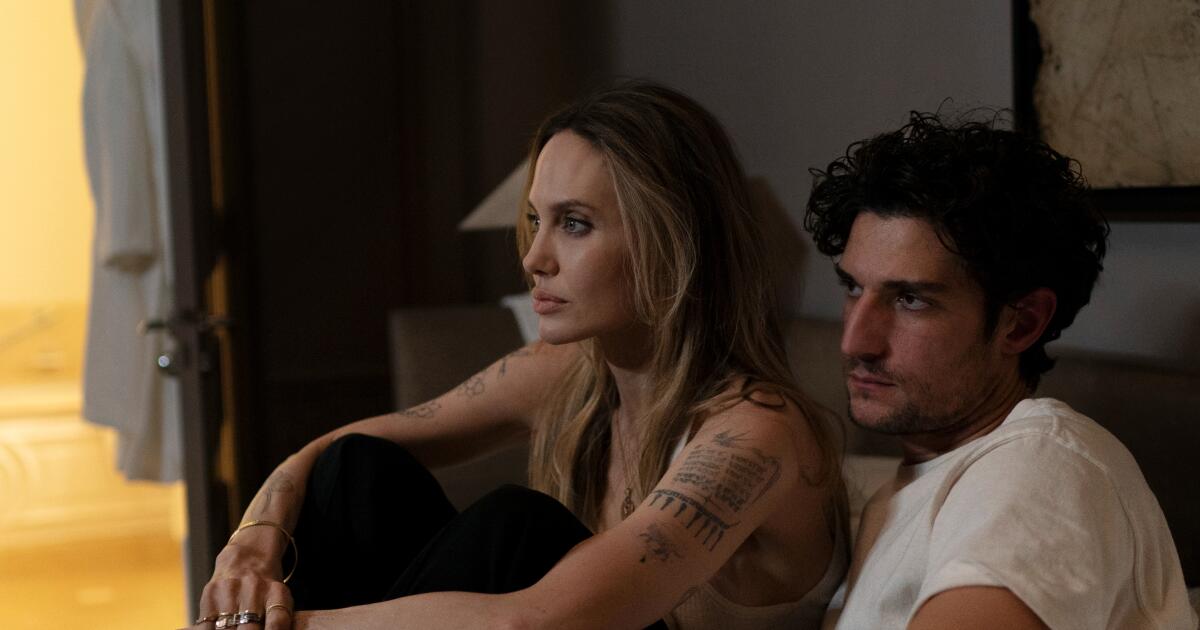
The intermittently affecting “Couture” feels similarly close to her heart, depicting a filmmaker whose life is interrupted by a cancer diagnosis — a reality Jolie knows all too well. In 2013, she underwent a preventive double mastectomy over concerns of her likelihood to develop breast or ovarian cancer. (Bertrand died of cancer in 2007.) Knowledge of Jolie’s circumstance will inform a viewer’s reaction to her wounded, resilient performance, but our inherent sympathies can only take French writer-director Alice Winocour’s ensemble piece so far.
Jolie plays Maxine, an American indie director hired to create a flashy opening film for Paris Fashion Week. Newly arrived in the City of Light, she has only a few days to put together the short, assisted by her trusted cinematographer Anton (Louis Garrel). As we deduce from the phone calls Maxine makes back home, she’s also going through an acrimonious divorce and has trouble connecting with her blasé teenage daughter. At least this Paris paycheck gig will bolster her finances — and get her ready for the feature film she’s been wanting to make for years.
Just then, though, Maxine’s future gets a rewrite. A French doctor (Vincent London) tells her she has breast cancer and needs a double mastectomy immediately. Maybe she can finish the Fashion Week film, but her passion project must wait. An artist and mother who has spent her adulthood in constant motion will have to learn what it means to stop everything and be still.
The film’s title would appear to be a reference to the story’s setting, but in French, “coutures” can also mean “stitches,” and indeed Winocour sews together three thematically linked story strands. As Maxine wrestles with her cancer diagnosis, an inexperienced South Sudanese model named Ada (Anyier Anei) works Fashion Week so she can send money home to her family. (Ada has no interest in modeling, hoping instead to become a pharmacist.) Meanwhile a makeup artist, Angèle (Ella Rumpf), longs to be an author, although she cannot get anyone interested in her writing. Each one becomes a part of the fabric of Fashion Week, but their disparate problems are a far cry from the glitzy event’s self-importance.
Winocour has often made films about women balancing their public-facing life with their private selves In 2019’s “Proxima,” Eva Green played an astronaut missing her young daughter. In 2022’s “Paris Memories,” Virginie Efira starred as an interpreter recovering from the shock of surviving a terrorist attack. Winocour shows us the intimate, vulnerable spaces within her characters that those on the outside don’t have access to.
“Couture’s” three principals rarely interact with one another, but those meaningful exchanges argue that, amid the mad clatter of the everyday, a brief, unguarded moment with a stranger can be supremely restorative. Unfortunately, the juggling of storylines ends up being more schematic than insightful. Angèle’s narrative never catches fire and while Anei is striking as Ada, that section of the film feels slightly patronizing, reducing this immigrant tale to yet another strained salute to perseverance.
This leaves Jolie as the movie’s magnetic center, with Maxine drifting through despair as she ponders what to do. Her doctor insists that the surgery cannot wait, but putting her ambitions on hold means losing a part of herself — a different kind of death sentence than the one she’s now facing.
The character is underwritten but Jolie picks up much of the slack through her silently shattered expression. As she’s gotten older, the Oscar winner has become more comfortable doing less in her performances, allowing for a fragile serenity that is belied by the anguish and anxiety roiling underneath. It’s not just our recognition of the real-life parallels that make Jolie so touching in “Couture” — it’s that ineffable star power she’s possessed for so long. In a story about a potential tragedy, what’s saddest is that Winocour’s film cannot match its lead’s effortless command.
‘Couture’
In French and English, with subtitles
Rated: R, for language, some sexuality, nudity and brief bloody violence
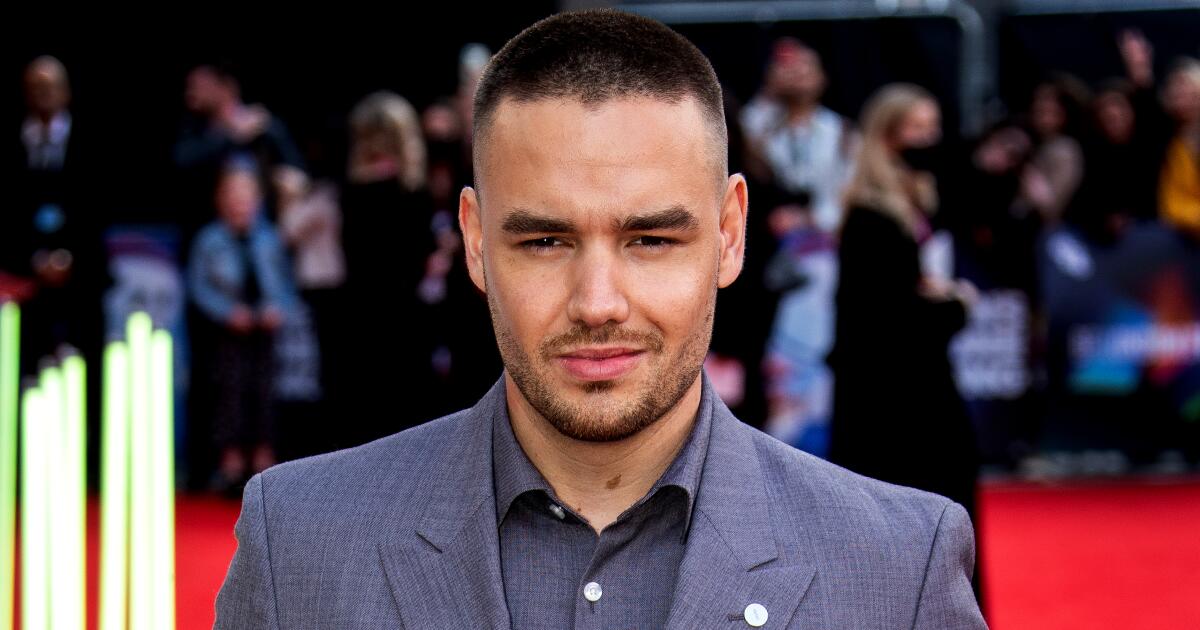
Netflix show, Building the Band, was Liam Payne’s last completed project before his heartbreaking death in October 2024 aged 31 when he fell from a hotel balcony
Netflix has decided not to renew Liam Payne’s final television project according to reports(Image: Getty Images for ABA)
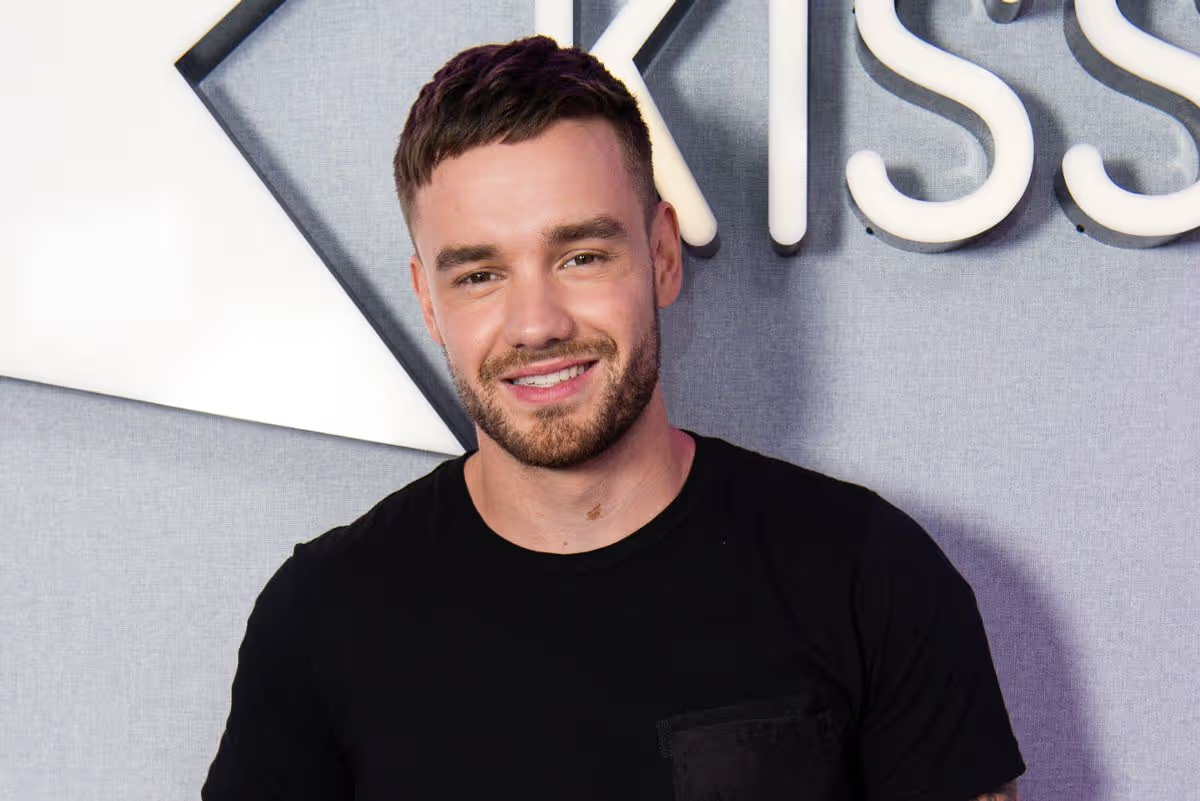
Netflix has decided not to renew Liam Payne’s final TV project according to reports. The tragic singer’s series, Building the Band – which was filmed four four months before his death – is said not to have been recommissioned, despite the music competition launching the careers of four new groups.
Liam, who tragically died in 2024 aged 31 after falling from a hotel balcony in Argentina, served as judge on the series alongside Nicole Scherzinger and Kelly Rowland, while AJ McLean hosted the contest.
The winning act, 3quency, received a global platform through Netflix, while several contestants have since secured recording contracts following the show’s release. However, there a reportedly no plans for a second series.
A source told The Sun: “Although there are currently no plans for a second season of Building The Band, bosses at Netflix are really proud of what they achieved. That’s because the show led to the creation of four amazing groups and all of them have since signed record deals.”
The source added: “The finalist groups – 3quency, SZN4, Soulidified and Midnight Til Morning – have all released original music, toured internationally – and attract hundreds of thousands of listeners each month. And Midnight Til Morning are performing at BST Hyde Park at the end of this month.”
Building the Band challenged 50 singers unknown to each other to form new groups, relying on vocal chemistry before progressing through a series of performances.
The winning act received a global platform through Netflix, while several contestants have since secured recording contracts following the show’s release.
The programme had been completed and ready for release before Liam’s death, leaving Netflix to decide whether it should proceed with the series.
After consulting the star’s grieving family, the streaming service chose to air the competition and dedicated it to the late singer.
Liam, who rose to stratospheric fame as a member of One Direction after the group was formed on The X Factor in 2010, appeared on the show mentoring aspiring singers hoping to recreate the success enjoyed by his own chart-topping band.
Since his death, tributes from his former bandmates Harry Styles, Niall Horan, Louis Tomlinson and Zayn Malik have continued to resonate with fans, while discussion around Liam’s legacy has remained a recurring topic across the music industry.
However, although Building the Band attracted significant attention because it featured the star’s final on-screen appearance, it failed to make a major impact with UK audiences, which Netflix will be aware of.
Thousands have been reported missing following the collapse of dozens of buildings in La Guaira. (Archive)
Caracas, June 26, 2026 (venezuelanalysis.com) – Venezuelan casualties from Thursday’s double earthquake continue to rise amid ongoing search and rescue efforts to remove survivors from flattened buildings.
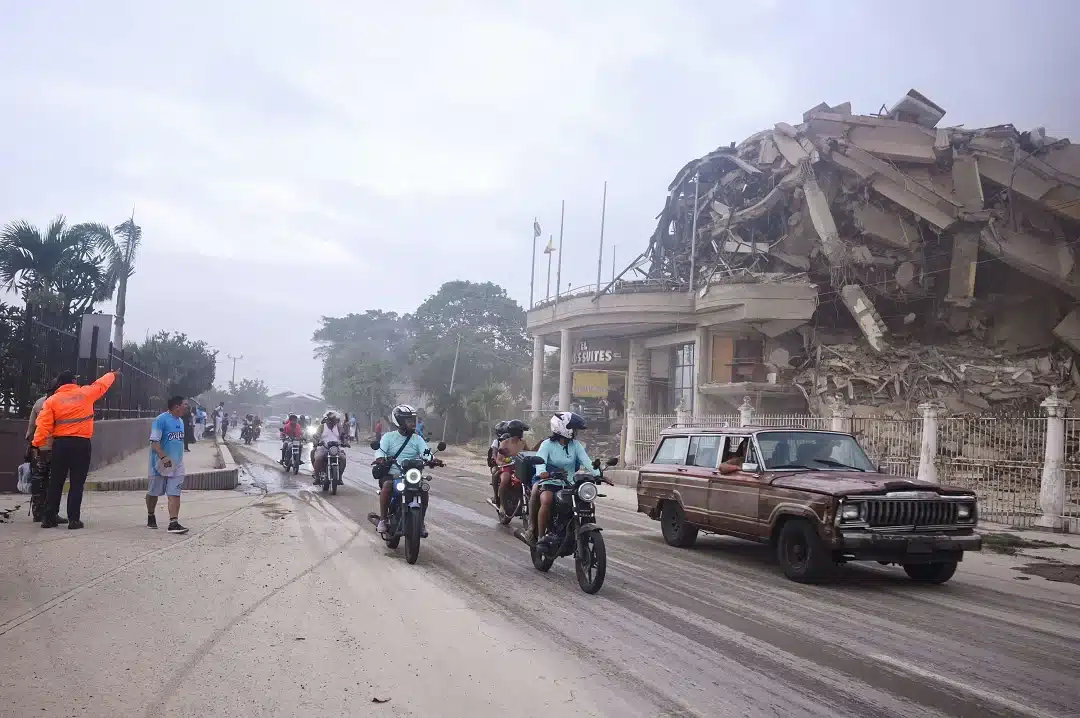
On Thursday night, Venezuelan authorities reported 235 people dead and over 4,300 injured. There are 250 buildings with serious damage or completely collapsed.
The death toll is expected to rise sharply with unofficial missing people databases compiling more than 40,000 unaccounted persons. However, the figure has steadily decreased in recent hours, while organizers have also pledged to remove duplicate filings.
Social media channels have been flooded with reports of missing friends and relatives.
The Caribbean nation was struck by 7.2 and 7.5-magnitude earthquakes in quick succession on Wednesday. The tremors were concentrated in central and northern states, including the capital. Coastal La Guaira State was the worst affected, with government officials reporting over 100 collapsed buildings.
Search and rescue efforts continued on Thursday as civil protection teams and volunteers rushed to locate survivors and remove them from under the rubble. The Venezuelan government called on the private sector to collaborate with heavy machinery. Several areas of La Guaira are also hard to reach.
Venezuelan grassroots organizations also mobilized, organizing the collection of food, clothes and medicines for displaced families and setting up makeshift shelters.
Videos on social media showed the Venezuelan armed forces likewise moving equipment and mobile surgical units to the coastal area. Commercial flights to and from Simón Bolívar International Airport airport in La Guaira, the main air hub serving Caracas, have been temporarily suspended following damage to a major runway and the air traffic control tower.
Acting President Delcy Rodríguez visited the most affected areas on Thursday afternoon and oversaw ongoing efforts to deploy heavy machinery and provide food and shelter for displaced families.
“We express our support and solidarity to all those affected and we hope to find as many survivors as possible,” she told reporters. “We are working around the clock and we have called for international assistance.”
Venezuelan efforts were reinforced on Thursday night with the arrival of emergency teams from Mexico, the Dominican Republic, and El Salvador. Additional brigades are reportedly on the way from Colombia, Brazil, and the US, among others.
Alongside search and rescue teams, the US Department of War announced a deployment of logistical support assets.
In a statement, the US Southern Command (SOUTHCOM) announced the deployment of the amphibious transport ship USS Fort Lauderdale and the littoral combat ship USS Billings alongside Hercules transport aircraft. Marine Corps Major General Kevin J. Jarrard landed on Thursday night and will reportedly oversee the efforts.
The Trump administration is providing $150 million in humanitarian aid to be channeled through “assistance” partners including Catholic Relief Services and multiple UN agencies.
Washington has, however, opted to maintain its punishing economic sanctions regime against the South American country. On Thursday, the US Treasury Department issued General License 60 (GL60) authorizing transactions related to earthquake relief efforts. However, Venezuelan assets abroad, including bank accounts, remain frozen, meaning that aid efforts will still face hurdles or require US approval.
Caracas has also been unable to access around $4.8 billion in gold held by the Bank of England as well as nearly $5 billion in IMF Special Drawing Rights issued during the Covid-19 pandemic.
Since January, the Trump administration has issued multiple sanctions waivers to allow Western corporations to secure favorable energy and mining agreements with the acting Rodríguez government. Transactions between Caracas and its historic allies in China, Russia, Cuba, and Iran continue to be prohibited by the waivers and subject to secondary sanctions. The White House has likewise seized control of Venezuelan export revenues, disbursing a portion back to Caracas at US officials’ discretion.
Edited and with additional reporting by Lucas Koerner in Caracas.
Lawsuit claims Tesla’s Autopilot shortcomings led to fatal crash; family seeks $1m in damages and punitive measures.
Published On 24 Jun 202624 Jun 2026
The family of a Texas woman who was killed has filed a lawsuit against Tesla after a driver using a Model 3’s automated driving assistance system crashed into a suburban Houston home last week.
The complaint, filed on Tuesday, argues that Tesla should be held liable for the wrongful death of 76-year-old Martha Avila. The family alleges that the automaker, led by Elon Musk, failed to adequately warn drivers about alleged defects in its Autopilot and Full Self-Driving systems.
Recommended Stories
list of 4 itemsend of list
Avila’s daughter, Jennifer Barbour, and her husband, Justin Barbour, said the Model 3’s driver, Michael Butler, told law enforcement he engaged Autopilot before ploughing through the front wall of Avila’s home in Katy, Texas, the United States, on June 19, pinning her before she succumbed to her injuries at a nearby hospital, according to the complaint.
Video obtained by KHOU – Houston’s CBS affiliate — shows the car travelling at top speed over the front lawn of Avila’s home in the Houston suburb before slamming into the front room.
The driver told the Harris County Sheriff’s Office that he was using the technology at the time of the accident. The driver in the incident was not under the influence of alcohol and is cooperating with authorities.
Butler is also a defendant in the Barbours’ lawsuit. It is unclear whether he has a lawyer.
Musk, the world’s richest person, posted on X on Monday night: “FSD drives slowly through neighbourhood streets and this was a high-speed crash!”
Ashok Elluswamy, vice president of AI software at Tesla, posted on X in response, saying that “the driver manually overrode self-driving by pressing the accelerator all the way to 100% of the accel pedal in this residential area.”
The lawsuit filed in a Harris County, Texas, state court seeks more than $1m in damages, and punitive damages reflecting Tesla’s alleged “reckless disregard for a substantial risk of severe bodily injury”.
The National Highway Traffic Safety Administration (NHTSA) has been investigating the crash.
Since 2016, the NHTSA has opened nearly 50 special investigations of Tesla crashes believed to involve advanced driver assistance systems. About two dozen deaths were reported.
In March, the NHTSA escalated its probe into 3.2 million Teslas equipped with Full Self-Driving, on concern the system may fail to detect or warn drivers in poor visibility. In 2023, Tesla recalled about two million vehicles, nearly all of its electric vehicles on US roads, to better ensure that drivers pay attention when using Autopilot.
Tesla has said Autopilot enables vehicles to steer, accelerate and brake within their lanes, while Full Self-Driving lets vehicles obey traffic signals and change lanes.
The carmaker has also said both technologies require “fully attentive” drivers whose hands are on the wheel.
The incident comes as the Musk-owned company is rolling out robotaxis using automated software in several US cities this year and plans to invite Tesla owners across the country to put their cars into the fleet using the same system.
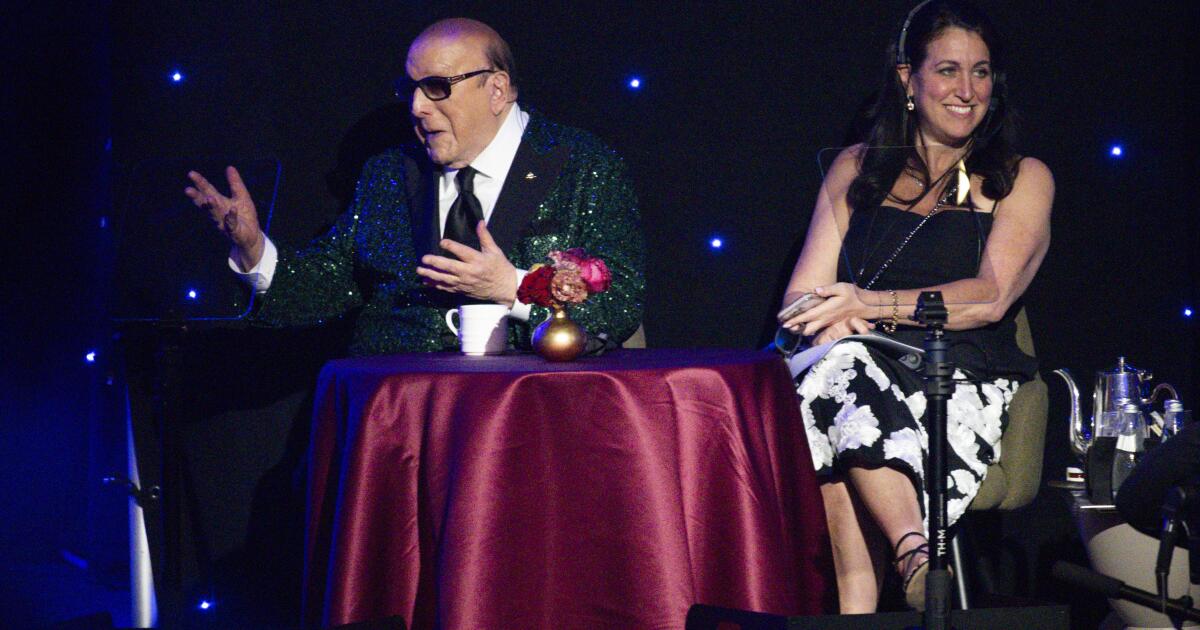
Walk into the Grammy Museum in downtown L.A., and you’ll see Clive Davis’ legacy everywhere.
The museum’s intimate performance space is named for the late record executive, and his visage greets guests at the front door. (Davis was the first million-dollar donor to the nascent Recording Academy archive and exhibition space.) His sprawling roster of acts — Bruce Springsteen, Miles Davis, Whitney Houston,Alicia Keys, Earth, Wind & Fire — defined an entire art form and business model as preserved in the Grammy Museum. Davis’ pre-Grammy gala was the most coveted invitation in music every awards season.
Davis’ death at 94 is “devastating,” said Michael Sticka, chief executive and president of the Grammy Museum. “Clive was always a north star of music and talent and artistry. We’re all lucky to have his legacy to look up to.”
Davis’ death marks the end of perhaps the most important and enduring career in the record industry. Sticka spoke to The Times about Davis’ remarkable longevity, creative vision and how a career like his will likely never be possible again.
Clive was a giant of the record business. How did his career shape the modern record industry?
His career was iconic. He really had a unique ability to not just bring an artist to their fullest potential artistically, but commercially. From attending Monterey Pop and first seeing Janis Joplin to Whitney Houston and Alicia Keys, I don’t think anybody had that ear in them the way that he did.
With Clive, what you got was not just hearing commercial viability, but an understanding of what was going on in the zeitgeist. That’s what propelled his career and legacy beyond most record executives.
His name’s on the building at Grammy Museum’s theater. What did he mean to the institution — not just for fundraising but as a living connection to music history?
He didn’t just donate to the museum. He donated his time, his historical knowledge of music, his firsthand perspective. He always kept tabs on what was happening in music. I always say the Clive Davis Theater is the toughest ticket in town for its intimacy and the level of programming we do. But he did an annual program at the museum where people could come hear stories directly from him. Once he decided he was in, he was all in.
His gala was the place to be every Grammy season too.
I don’t think anybody could gather a roomful of luminaries like that from entertainment, tech and politics in the way that Clive did. We were lucky to be a part of that. Even with the stature he had, he was still a physical presence there, he was approachable. He was always looked at as this living legend, but his legacy was continuously being built.
That’s true over the arc of his career, which saw him lead Columbia, Arista, J Records and more. He had a lot of resurrections as well as successes.
He had this ability to resurrect. Look at Santana and “Supernatural,” he was a producer on that album that was inducted into the Grammy Hall of Fame just last year. So many of us would just give up, but he just had this resolve to continue, and thank God he did.
The record industry is so different now than when he began his career. Artists find audiences on social media rather than being discovered by label executives. Is a career like his — a famous executive driven by their own taste and individual savvy — even possible today?
That’s true, artists break on social media before they’re even on record executives’ radars now. I don’t know if we’ll see that kind of career arc again. Clive had a rare combination of gravitas and being recognized so publicly. The man and his legacy are not going to be replicated.
Beyond the name on the theater, how do you hope the Grammy Museum will honor him with its programming in time to come?
I don’t know yet. We weren’t really prepared for this. We’re gonna have to sit down and think how to pay tribute to such a legacy. I think that the impact the Clive Davis Theater has, bringing in 120 artists a year — I couldn’t think of a more apropos name on the door.
Liam Payne’s 9-year-old son has inherited the late singer’s fortune.
Bear Grey Payne, the only child of Payne and British singer and former “X-Factor” judge Cheryl Cole, has been named the sole beneficiary of the former One Direction star’s estate, according to court documents reviewed by People.
Bear now has more than $29 million to his name. According to the filing, a portion of the inheritance can be accessed now, but the majority will be held in a trust for another nine years, until Bear turns 18.
During a 2019 appearance on “The Jonathan Ross Show,” Payne opened up about fatherhood and spending time with Bear after the singer and Cole had called it quits.
“He comes over to my house every so often, and we just hang out and do whatever,” Payne said of his then-2-year-old son. “I think you put pressure on yourself as a dad sometimes. It’s hard to connect with it with a 2-year-old … but they literally will laugh at anything. We put this Batman costume on him in the house, and it was a little bit slidey on the floor, and he kept falling off the sofa. And if I said ‘Whoopsie-daisy!’ and it was like the best thing ever.”
Payne, who was one-fifth of the global boy-band sensation One Direction, died Oct. 16, 2024, after falling from a balcony at the CasaSur Palermo Hotel. Officials determined the 31-year-old singer died from multiple traumas caused by the fall. He had traces of alcohol, several narcotics and a prescription antidepressant in his system when died, according to officials.
The boy-band star turned solo artist had been open about his battle with addiction and mental health and shared updates on his sobriety journey on social media.
After Payne’s death, the National Criminal and Correctional Prosecutor’s Office of Argentina charged five people for alleged involvement in the pop singer’s death, including a representative for Payne and the manager and the head of reception of the Buenos Aires hotel where the British singer fell to his death.
Another hotel employee and a waiter whom Payne met in a restaurant were charged with supplying the singer with narcotics.
Times staff writers Alexandra Del Rosario and Karen Garcia contributed to this report.
Death in Paradise star Ralf Little has been acting for over three decades, and he has reflected on nearly 30 years since his Royle Family journey began.
17:50, 22 Jun 2026Updated 17:57, 22 Jun 2026
The BBC star left the drama in 2024(Image: (Image: BBC))
For four years, Death in Paradise audiences watched Ralf Little portray Detective Inspector Neville Parker in the enduring BBC drama. The actor departed the programme in 2024, with Don Gilet assuming the role as the lead DI in the cherished show.
However, prior to solving crimes in the BBC series, Ralf was recognised as Jonny Keogh in the sitcom Two Pints of Lager and a Packet of Crisps.
His acting journey commenced over three decades ago when he featured as Robbie in the 1990s ITV children’s drama Children’s Ward, which he credits with securing him a part in The Royle Family, the breakthrough that propelled his career.
In a clip he posted on Instagram from the programme Ricky & Ralf’s Very Northern Road Trip, he detailed the audition process for becoming Antony Royle, reports the Express.
He captioned the post: “It’s been nearly 30 years since my Royle Family journey began! It all started after I was on an ITV drama called ‘Children’s Ward’, which also launched the careers of Danny Dyer and Stephen Graham. Here’s the backstory, taken from ‘Ricky & Ralf’s Very Northern Road Trip’.”
Ralf told Ricky: “I’d done a few episodes of that, and I can only assume that Caroline (Aherne) and Craig (Cash), when they were doing the Royle Family, they couldn’t be bothered seeing hundreds of kids, like what normally happens.
“They said, ‘Just send three or four lads that you know’. I walked in, I sat down, and I read the script with them. I must’ve have been in the room more than three minutes, four minutes tops.
“I walked out going, ‘I did nothing, nothing interesting, nothing different’. Got to my car, got a parking ticket that was £50, which I couldn’t afford. It was like, ‘This is the worst day of my life. Got in the car, drove home back to Bury, got in, this was before mobile phones.
“I walked in, and my mum said, ‘Just had a phone call from Granada, they offered you the part’ before I’d even got home! Never happens like that, it was bonkers.”
It didn’t take long for the comments to flood in, with fans quick to reminisce about his iconic past role. One person said: “So glad they picked you to be in The Royle Family, leading to an amazing career for a fantastic actor.”
Another wrote: “Still going strong & still an incredible actor. Well done Ralf.” A third chimed in: “Right choice! And this was just the beginning of a versatile, great career. Thx for so many wonderful TV moments.”
One follower added: “Great story. Time is flying.” While another remarked: “Dang, I can’t believe it is going to be almost 30 years.”
Ricky & Ralf’s Very Northern Road Trip is available to watch on U.
NEW YORK — A 51-year-old man fell to his death from an upper deck of Madison Square Garden during a rock concert Saturday night, police said.
Officers responding to a 911 call around 9:51 p.m. found the man unconscious and unresponsive with injuries indicating a fall from an “elevated position,” New York City police said. Police did not say how far the man fell, but said he was in Section 300. They declined to release his name.
The man was with his wife, according to police. He was taken to a hospital, where he was pronounced dead.
The rock band Goose was performing. In a statement on Facebook, the band said it was “deeply saddened and heartbroken to learn of the tragic event that occurred.”
Tom Parker’s pregnant widow Kelsey has revealed her struggle ahead of the first anniversary of her stillborn baby’s deathCredit: Instagram/being_kelseyThe podcast host, 36, lost Phoenix in June 2025Credit: YouTube
Kelsey has two children with The Wanted singer Tom,who died in 2022 aged 33,– Aurelia, six, and Bodhi, four – but had been expecting her third child with new partnerWill Lindsay.
Amid her pregnancy joy, it will be the one-year anniversary of Phoenix’s passing and in a candid Instagram upload, she admitted she “deeply misses my little boy and wish things had been different”.
Kelsey uploaded a selfie showing her in the sunshine, wearing a white vest top and sunglasses with a gold chain.
She is now pregnant with her rainbow babyCredit: being_kelsey/InstagramKelsey, seen with partner Will Lindsay, revealed she ‘deeply misses my little boy and wish things had been different’Credit: being_kelsey/Instagram
In a frank message posted alongside it she put: “I’ve been really quiet on here the last couple of days.
“Truthfully, I’ve been working a lot, trying to keep busy and just processing the fact that Sunday is a big day.
“It’s Phoenix’s first anniversary and it’s Father’s Day too.
“Grief is a strange thing. Some days you can keep going and stay busy, and other days it all catches up with you.
She shares two children with The Wanted singer Tom ParkerCredit: Social media – Refer to sourceTom sadly passed in 2022 and Kelsey told how the upcoming Father’s Day would be emotional for the familyCredit: Getty
“I’m learning that both things can exist at once. I can feel excited about this next chapter of life, be grateful for everything I have, and still deeply miss my little boy and wish things had been different”.
Giving advice to her followers, Kelsey added: “If you’re navigating grief, anniversaries or simply carrying something heavy right now, please know you’re not alone.
“As always… stop waiting, start living. But also, give yourself permission to feel it all”.
Recently, the brave mum appeared on ITV daytime series Good Morning Britain to reveal her home was “treated like a crime scene” after Phoenix arrived into the world.
She previously admitted that that grieving Phoenix was “harder than grieving Tom” as she spoke on the Mum’s The Word podcast.
She shared: “It was so hard. I think with Phoenix, it was harder than it was with Tom.
“I think because they [her kids] were so much younger, it’s like I could just be like, ‘daddy wasn’t coming back.’
“And you know, when I said about the angels taking daddy, ‘we won’t see daddy again’, it was like they accepted that and we sort of moved on.
“And now as time’s gone on, they asked me more questions about their dad and stuff, but that initial I suppose with Bod as well. He was 18 months old. It wasn’t a question that he even thought.”
At the time of Tom’s death, Aurelia was around three, and Kelsey’s co-host Georgia pointed out: “They were almost ages where they didn’t understand.
“So you almost didn’t have to explain it too much. You obviously have to explain it, but it’s very different to having a child that completely understands, knows what death is”.
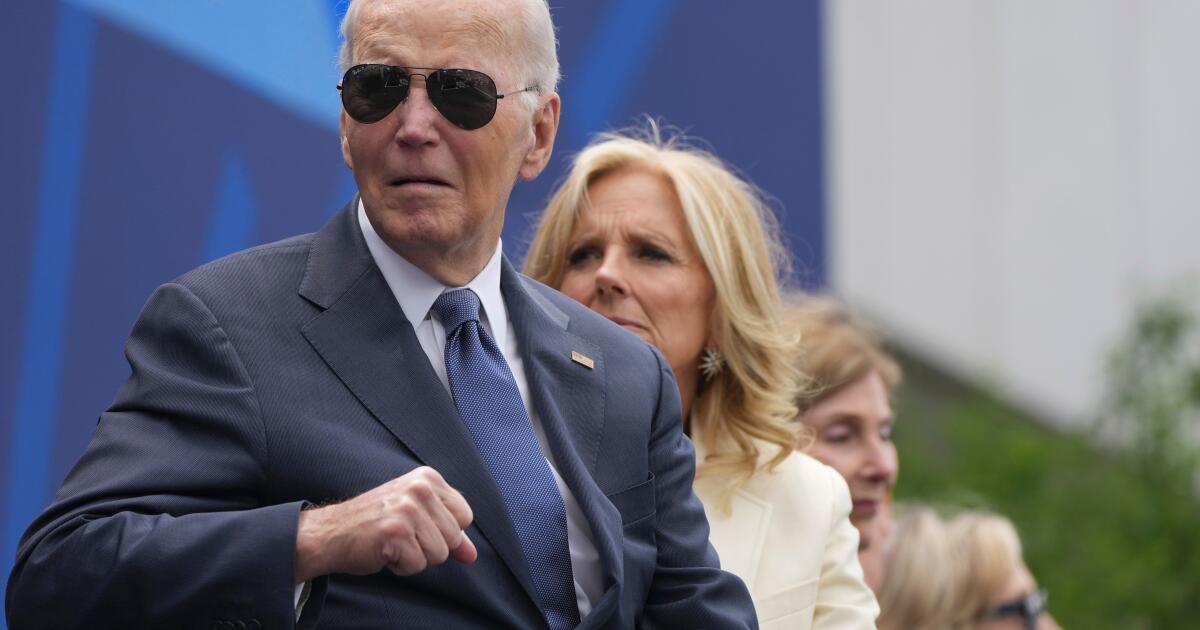
A federal judge on Friday rejected former President Biden’s attempt to block the Trump administration from releasing to a conservative group the recordings that Biden made with a ghostwriter.
U.S. District Judge Dabney Friedrich found that the public interest in the material outweighed whatever privacy rights Biden had.
The recordings were obtained by special counsel Robert Hur in the course of his investigation into whether Biden improperly retained classified documents while a senator and vice president. Republicans in Congress demanded them after Hur declined to file charges against the then-president.
Biden’s Democratic administration refused to turn over the 2017 recordings and transcripts, leading congressional Republicans to hold his attorney general, Merrick Garland, in contempt.
President Trump’s Department of Justice authorized the release of the materials. That led Biden last month to sue to seek to block the release to a staffer at the conservative Heritage Foundation who had formally requested the records.
Biden objected to the release as an invasion of privacy, saying the recordings included him discussing sensitive personal matters such as the death of his older son, Beau Biden. But Friedrich found that the administration redacted that material.
The judge wrote that the materials “contain no mention of highly sensitive topics like illness or death, nor do they mention any non-public persons, including members of Biden’s family.”
Representatives for Biden did not immediately comment but asked Friedrich to bar release of the material while they appeal her decision. The Justice Department did not immediately respond to a request for comment.
Friedrich was nominated by Trump, a Republican, in 2017.
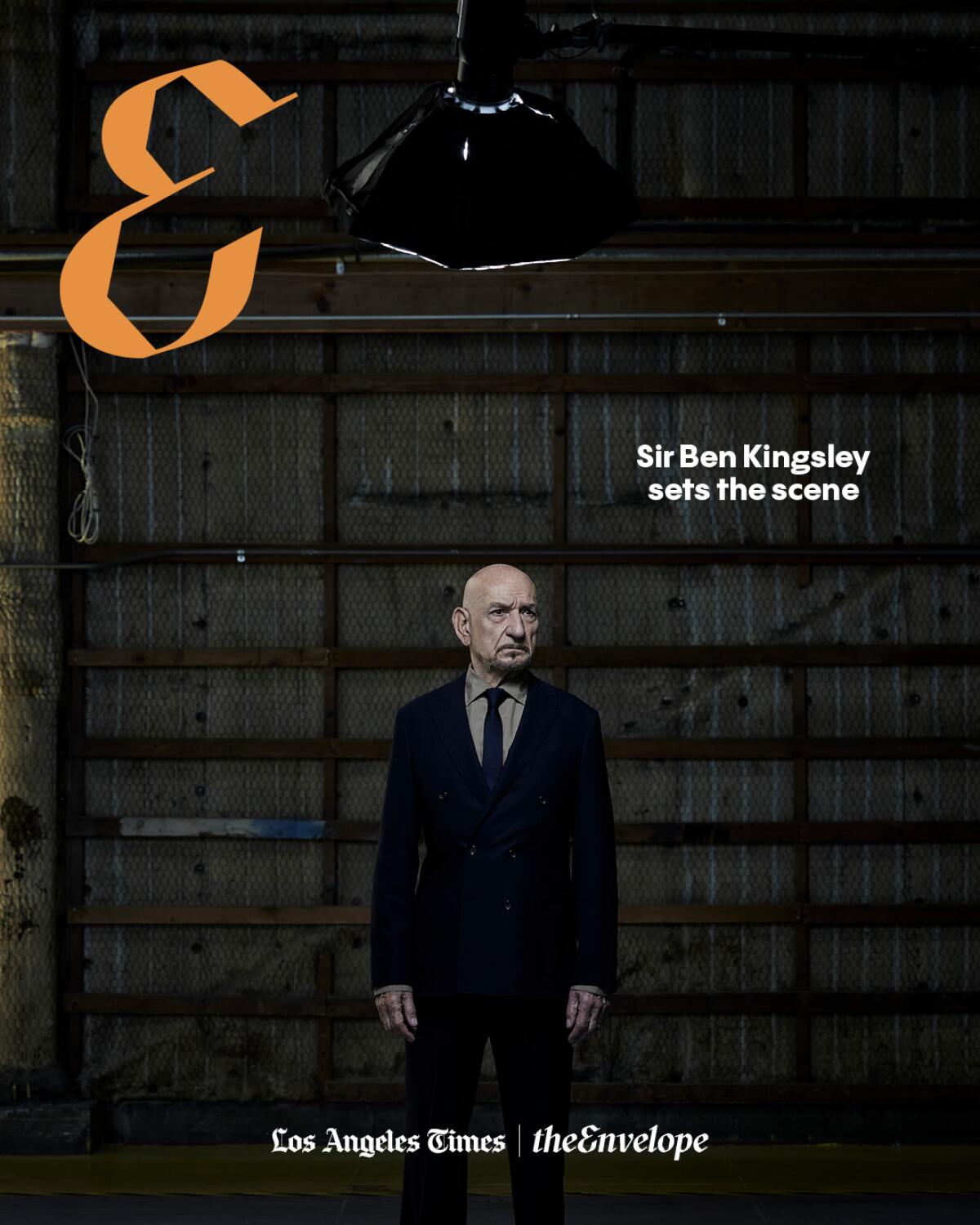
Did Ben Kingsley in “Gandhi” cross your mind? Probably not.
The 82-year-old Oscar winner thinks it should.
I’m Glenn Whipp, columnist for the Los Angeles Times and host of The Envelope newsletter. Don Logan or Mahatma Gandhi? The answer isn’t as plain as you might think.
Sign up for The Envelope
Get exclusive awards season news, in-depth interviews and columnist Glenn Whipp’s must-read analysis straight to your inbox.
By continuing, you agree to our Terms of Service, which include arbitration and a class action waiver. You agree that we and our third-party vendors may collect and use your information, including through cookies, pixels and similar technologies, for the purposes set forth in our Privacy Policy such as personalizing your experience and ads.
Not long ago, I spoke with Kingsley just before an Emmy FYC event for “Wonder Man,” the enjoyable new Marvel TV series that finds him revisiting Trevor Slattery, the washed-up, drug-addled actor he first played in 2013’s “Iron Man 3.”
“Wonder Man” follows struggling actor Simon Williams (Yahya Abdul-Mateen II), trying to land a big break in Hollywood while keeping his superpowers hidden. Trevor befriends Simon. Initially he has ulterior motives, but soon becomes Simon’s mentor, turning the series into a look at the indignities that actors face while pursuing their profession.
Taking notes while watching the show’s eight episodes, I wrote, “Ben Kingsley’s seething anger is everything.”
You may remember Kingsley’s bullying and badgering and swaggering menace playing the underworld sociopath in Jonathan Glazer’s 2000 crime-thriller “Sexy Beast,” still my favorite Kingsley performance, one that earned him a supporting actor Oscar nomination. (He lost to Jim Broadbent in “Iris.”)
Is that kind of boiling rage as fun to play as it is to watch?
“If the expression of rage or indignation is completely dramatically justified and that expression of indignation is of enormous benefit to the tribe, yes,” Kingsley answers.
(Larsen&Talbert / For The Times)
Kingsley says Itzhak Stern, Oskar Schindler’s loyal aide and factory manager in “Schindler’s List,” was, “bless him,” all about “contained rage.”
“And a colleague of mine who saw ‘Gandhi’ said, ‘That’s the angriest performance I’ve ever seen on screen,’” Kingsley continues. “That righteous indignation propelled him, and it can be expressed in many ways. Sometimes the safety valve is efficient enough to allow it to come through language and gesture, and sometimes the safety valve can’t hold it.
“That was Don Logan in ‘Sexy Beast.’ No safety valve.”
Let’s circle back to that thought of how rage can help the “tribe.” In “Wonder Man,” Trevor proclaims that “acting is not a job. It’s a calling, the single most consequential thing anyone could ever do with their life.”
“I would broaden the definition and refine it back to its origins,” Kingsley says when I ask if he shares Trevor’s view on acting. “There are images, thoughts and threads that I find nourishing and sustaining, and I treasure them. The tribal storyteller is a very consequential figure in the tribe, and if the mantle of the tribal storyteller falls upon that person’s shoulders, that is the single most consequential thing that person can do in their lives.”
“Trevor expresses it quite differently, and that’s fine,” Kingsley says. “That’s in the script. I honor the lines. But for me personally, as a rather convoluted answer, the tribal storyteller is the hand I hold and the baton I want passed on to me. Maybe it has. I hope I’m worthy, but it’s …” Kingsley widens his eyes and whispers, “Wow.”
“It is the single most consequential thing I can do with my life.”
The “Love Island USA” production team is mourning the loss of executive producer James Barker, who died last week while on set in Fiji.
“Love Island USA” producers ITV America and Peacock confirmed Barker’s death in a media release shared with The Times on Monday. The announcement said that Barker died after “an unexpected medical emergency” but did not provide additional details, including the day of his death and a cause of death. Barker was 40.
“James’ unimaginable loss has been deeply felt across not just the entire Love Island USA production, but throughout all of ITV and Peacock,” the television companies said in a joint statement. “He was a beloved and greatly valued member of our collective family whose kindness, talent and dedication left an indelible mark on all of us and everyone who had the privilege of knowing and working with him. We extend our heartfelt condolences to James’ family, friends and colleagues.”
Barker began his tenure on “Love Island USA” in 2020, first working as a story producer. He has worked as an executive producer on the series for the last three seasons and was also a member of the producing team on “Love Island” companion series “Love Island Games” and “Love Island: Beyond the Villa.”
Barker, according to Monday’s statement, also oversaw the hit series’ pop soundtrack. For an interview with Rolling Stone in 2025, Barker recalled watching the original British “Love Island” series and how pop music supplemented the on-screen romances and heartbreak: “I think that is where my brain immediately said, ‘One, this is amazing, and more shows should be like this.’ And two, ‘How do I work on “Love Island”?’”
Barker also noted in the interview that he drew inspiration for the “Love Island USA” villa sound from his pre-TV career as a nightlife DJ and spoke about the process of hand-selecting music from established pop acts and up-and-coming artists.
“In the past, there was such a stigma about reality shows that a lot of artists didn’t want their music associated with reality shows. And that’s starting to turn around now,” Barker told the outlet. “[Artists are] more and more seeing, well, one, the financial aspect of having your music synced in these kind of shows, and also just the wide reach of viewers.”
Before “Love Island USA,” Barker was a producer on reality series “Pawn Stars,” “Counting Cars” and “Forged in Fire.” He later served as a story producer on “Queer Eye,” “Cosmic Love” and “Are You My First?” Outside of his TV work, Barker often performed as DJ Chaotic at gay bar C’mon Everybody in Brooklyn.
“Love Island USA,” which began its eighth season earlier this month, will pay tribute to Barker in Tuesday’s episode.
A weekend BASE jumping accident in a Utah canyon killed two people, one of them a daredevil athlete best known for performing onstage with Madonna at the 2012 Super Bowl, authorities said.
The Sheriff’s Office in Grand County, Utah, confirmed one of the dead was Andy Lewis, an extreme athlete known for feats in BASE jumping, a dangerous sport that involves parachuting to the ground after jumping from a tall fixed object such as a building, a bridge or a desert cliff overlooking a deep canyon.
In BASE jumping circles, Lewis had a huge following and a reputation for pushing the envelope — leaping into tighter spaces or deploying his parachute later than his peers would dare, said John McEvoy, a BASE jumping instructor in Twin Falls, Idaho, who has jumped with Lewis.
“He had an incredible level of athleticism and skill that was developed over years of practice,” McEvoy said. “But then he would take an incredible amount of risk.”
Lewis’ other sport made him an overnight celebrity, thanks to Madonna
Lewis was also a prominent figure in the niche sports of slacklining and tricklining, which combine elements of high-wire walking with aerial acrobatics — sometimes at perilous heights.
Lewis went from obscure athlete to overnight celebrity when he appeared onstage in Madonna’s 2012 Super Bowl halftime show. Dressed in a Roman toga, Lewis bounced and executed tricks on his inch-wide line as though it was a trampoline while Madonna sang behind him.
“My phone actually rang itself to death three days in a row,” Lewis said soon afterward in an appearance on Conan O’Brien’s late-night show.
Emergency responders were dispatched Sunday to a report of people injured in a BASE jumping attempt at Mineral Bottom, a remote desert area near the Utah-Colorado line, according to the Sheriff’s Office. Lewis and an unidentified 50-year-old man died at the scene, the office said in a news release.
Sheriff’s Lt. Al Cymbaluk confirmed to the Associated Press that it was Lewis the extreme athlete who died. He said he had no further details on the fatal accident.
BASE jumping is far more dangerous than skydiving
Though there’s no official tally of BASE jumping deaths, a list compiled by the website BASEaddict.com shows 540 total fatalities worldwide since 1981 — including 30 people killed last year. Prominent deaths include BASE jumper Dean Potter and his climbing partner, Graham Hunt, who were killed in 2015 while attempting a wingsuit flight in Yosemite National Park.
A study focused on BASE jumping in Norway, published in a medical journal in 2007, estimated that BASE jumping carried risks of injury or death five to eight times greater than skydiving.
Lewis openly acknowledged the sport’s inherent danger.
“It’s weird to think about how many people are dead, because it’s like a normal thing,” Lewis told documentary filmmaker Ella Warnick in an interview published last year.
Lewis owned BASE Jump Moab, a business that offered excursions to inexperienced customers using tandem jumps, in which the customer was harnessed to a guide wearing the parachute.
Sheriff’s spokesperson Cymbaluk said he didn’t know whether Lewis and the other man killed were performing a tandem jump.
Tandem BASE jumping carries additional risk because it straps together two people, one of whom generally lacks experience, under a single parachute, McEvoy said. But because they involve novices, they also tend to be the most low-risk, basic types of jumps.
“Within BASE, it’s a very controversial topic,” McEvoy said. “There’s a lot of people who say it’s the stupidest thing in the world and others arguing, `No, we’re giving people the experience of their lives.’”
No one immediately returned phone, text and Facebook messages left Monday for BASE Jump Moab.
Lewis won four straight world championships in competitive slacklining from 2008 through 2011. Lewis set a Guinness World Record for slackline surfing, swaying his feet side to side in a rocking motion that mimics surfing, while keeping his balance above China’s Diaoshuilou waterfall in 2011.
In 2014, he walked a slackline suspended between two hot air balloons more than 4,000 feet above the Nevada desert.
The outbreak caused by the rare Bundibugyo virus strain has reached 782 confirmed cases.
Published On 15 Jun 202615 Jun 2026
The number of confirmed cases in the Democratic Republic of the Congo (DRC)’s Ebola outbreak has surged to 782, with 178 deaths, marking one of the largest daily jumps so far as regional conflict, patient escapes, and limited contact tracing undermine containment efforts.
The Ministry of Public Health confirmed 72 new cases on Sunday over the previous 24 hours, a record single-day increase, with 29 additional deaths.
Recommended Stories
list of 3 itemsend of list
The Bundibugyo virus strain has a 22.8 percent death rate so far, with 40 patients recovering, officials said.
“We remain committed to supporting affected countries until transmission is stopped. We call on partners and donors to urgently mobilise resources to strengthen the response and save lives,” Jean Kaseya, director general of the Africa Centres for Disease Control and Prevention, said on Sunday.
The outbreak stems from the rare Bundibugyo strain, which has no approved vaccine or treatment, unlike the Zaire virus responsible for the DRC’s previous 16 Ebola outbreaks.
Contact tracing coverage has plummeted to 56.5 percent, a sharp decline from the 95% target, Health Ministry officials said.
Doctors Without Borders, known by its French initials MSF, warned that “no one knows the true scale” of the outbreak due to dangerous gaps in surveillance and testing.
Eastern Ituri province remains the outbreak’s epicentre, harbouring nearly 95 percent of all confirmed cases. The virus has since breached into North Kivu and South Kivu provinces and spread across the border to Uganda.
Ituri’s humanitarian crisis exacerbates the medical emergency. Nearly one million residents have fled overlapping armed conflicts involving multiple groups, including the M23 rebel movement that controls Goma, the capital of North Kivu province. The area has endured decades of instability, with United Nations reports documenting massacres of more than 100 civilians in gold-rich Ituri villages as various factions vie for control of the region’s mineral wealth.
Thousands of artisanal miners routinely shuttle between clandestine mining sites scattered across the mineral-dense region, creating transmission hotspots that evade health monitoring. The outbreak is believed to have originated in the mining-intensive Mongbwalu Health Zone in Ituri province.
The World Health Organization announced it is ramping up diagnostic testing and contact surveillance operations. However, MSF reports a critical funding gap of $21.5m hampering response efforts.
There are more than 100 Emmy categories, and if you scroll through each and every one of them on the Television Academy’s website, you’re probably one of those people who read the terms and conditions on a document before signing your name.
This hasn’t been the greatest year for television, which has had the converse effect of prompting me to sample more shows than ever in a quest to unearth that one hidden gem that merits a place on my mock Emmy ballot. Truth be told, I’m still looking. I’m sure I’ve missed something. And I’m sure you’ll let me know.
In the meantime, here are my picks for the top 15 categories — five each for comedy, drama and limited series — along with a brief line of reasoning for each. And if it’s predictions you’re after, you can find our full BuzzMeter panel’s choices here. Emmy nominations will be announced July 8.
Sign up for The Envelope
Get exclusive awards season news, in-depth interviews and columnist Glenn Whipp’s must-read analysis straight to your inbox.
By continuing, you agree to our Terms of Service, which include arbitration and a class action waiver. You agree that we and our third-party vendors may collect and use your information, including through cookies, pixels and similar technologies, for the purposes set forth in our Privacy Policy such as personalizing your experience and ads.
Comedy series
“Abbott Elementary” “The Bear” “The Comeback” “Hacks” “The Lowdown” “Margo’s Got Money Troubles” “The Fall and Rise of Reggie Dinkins” “Shrinking”
Sterlin Harjo’s “The Lowdown” feels like it’s on the same trajectory as his last series, “Reservation Dogs,” an under-the-radar charmer that grows in estimation as its audience builds. Noir crime stories don’t come more delightful.
Comedy actress
Quinta Brunson, “Abbott Elementary” Rose Byrne, “Platonic” Ayo Edebiri, “The Bear” Elle Fanning, “Margo’s Got Money Troubles” Lisa Kudrow, “The Comeback” Jean Smart, “Hacks”
“Platonic” heightened the chaos and conflict in its second season, affording the gifted Byrne additional room to flex her comic chops. How do you sleep on a show starring a newly minted Oscar nominee?
Comedy actor
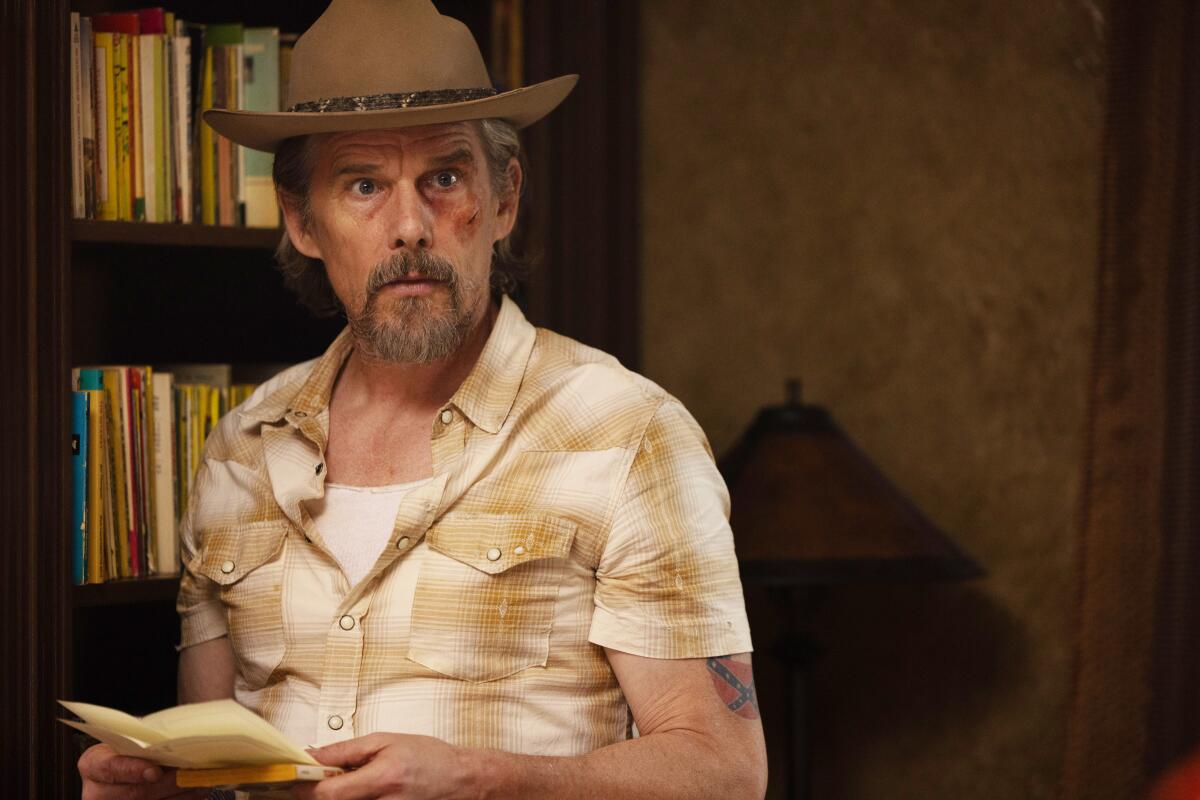
Yahya Abdul-Mateen II, “Wonder Man” Ethan Hawke, “The Lowdown” Tracy Morgan, “The Fall and Rise of Reggie Dinkins” Jason Segel, “Shrinking” Martin Short, “Only Murders in the Building” Jeremy Allen White, “The Bear”
Morgan acting oblivious is one of the funniest things ever.
Comedy supporting actress
Hannah Einbinder, “Hacks” Janelle James, “Abbott Elementary” Ashley Padilla, “Saturday Night Live” Michelle Pfeiffer, “Margo’s Got Money Troubles” Sheryl Lee Ralph, “Abbott Elementary” Jeanne Tripplehorn, “The Lowdown” Jessica Williams, “Shrinking”
The Padilla Pause is one reason I’m watching “Saturday Night Live” again.
Comedy supporting actor
Harrison Ford, “Shrinking” Marcello Hernández, “Saturday Night Live” Ben Kingsley, “Wonder Man” Ebon Moss-Bachrach, “The Bear” Nick Offerman, “Margo’s Got Money Troubles” Stephen Root, “Widow’s Bay” Tyler James Williams, “Abbott Elementary”
Hernández’s charisma and physical comedy is another.
Drama series
“Industry” “A Knight of the Seven Kingdoms” “The Night Manager” “Paradise” “The Pitt” “Pluribus” “Slow Horses” “Task”
How many Emmy voters finally caught up on “Industry,” the fast-paced drama about a group of cutthroat Gen Zers? Four seasons in, it’s more addictive than ever.
Drama actress
Caitriona Balfe, “Outlander” Myha’la, “Industry” Chase Infiniti, “The Testaments” Michelle Pfeiffer, “The Madison” Rhea Seehorn, “Pluribus” Zendaya, “Euphoria”
Now that “Outlander” is over, it’s time to pour one out for Balfe. Over the course of eight seasons, she hopscotched through time, enduring and overcoming numerous assaults and kidnappings, dealing with grief and trauma and enjoying lots of emotionally grounded sex. Balfe has earned a final reward.
Drama actor
Sterling K. Brown, “Paradise” Peter Claffey, “A Knight of the Seven Kingdoms” Tom Hiddleston, “The Night Manager” Gary Oldman, “Slow Horses” Mark Ruffalo, “Task” Noah Wyle, “The Pitt”
Claffey turned bumbling into art.
Drama supporting actress
Isa Briones, “The Pitt” Taylor Dearden, “The Pitt” Fiona Dourif, “The Pitt” Supriya Ganesh, “The Pitt” Katherine LaNasa, “The Pitt” Sepideh Moafi, “The Pitt” Karolina Wydra, “Pluribus”
LaNasa should have bumped herself up to lead. As Whitaker explains to Langdon in Season 2’s penultimate episode, Robby’s the Professor of the ER and LaNasa’s Dana is the Skipper. And the Skipper should be lead.
Drama supporting actor
Patrick Ball, “The Pitt” Diego Calva, “The Night Manager” Shawn Hatosy, “The Pitt” Gerran Howell, “The Pitt” Ken Leung, “Industry” Tom Pelphrey, “Task” Carlos-Manuel Vesga, “Pluribus”
Pelphrey has called his desperate single dad on “Task” the role of a lifetime. No argument here.
Limited series
“Bait” “Beef” “DTF St. Louis” “Death by Lightning” “Half Man”
I put off watching the finale of the punishing “Half Man” for weeks. Does that mean the show worked?
Limited series/TV movie actress
Sally Field, “Remarkably Bright Creatures” Camila Morrone, “Something Very Bad Is Going to Happen” Carey Mulligan, “Beef” Sarah Pidgeon, “Love Story” Robin Wright, “The Girlfriend”
Riz Ahmed, “Bait” Charlie Hunnam, “Monster: The Ed Gein Story” Matthew Macfadyen, “Death by Lightning” Mitchell Robertson, “Half Man” Michael Shannon, “Death by Lightning”
The young actors on “Half Man” — Robertson and Stuart Campbell — outshone their well-known counterparts.
Limited series/TV movie supporting actress
Linda Cardellini, “DTF St. Louis” Grace Gummer, “Love Story” Laurie Metcalf, “Monster: The Ed Gein Story” Cailee Spaeny, “Beef” Joy Sunday, “DTF St. Louis” Constance Zimmer, “Love Story”
Both Cardellini and Sunday for “DTF St. Louis”? No way, José, you say? Yes way, I say. All the way!
Limited series/TV movie supporting actor
(Larry Horricks / Netflix)
Jason Bateman, “DTF St. Louis” Stuart Campbell, “Half Man” Richard Gadd, “Half Man” David Harbour, “DTF St. Louis” Charles Melton, “Beef” Nick Offerman, “Death by Lightning”
The mutton-chopped Chester A. Arthur joins Ron Swanson’s ’stache in television’s facial hair hall of fame.
EXCLUSIVE: The Death in Paradise spin-off star opens up about cast changes in Beyond Paradise
16:35, 14 Jun 2026Updated 16:42, 14 Jun 2026
Morning Live: Kris Marshall teases series four of Beyond Paradise
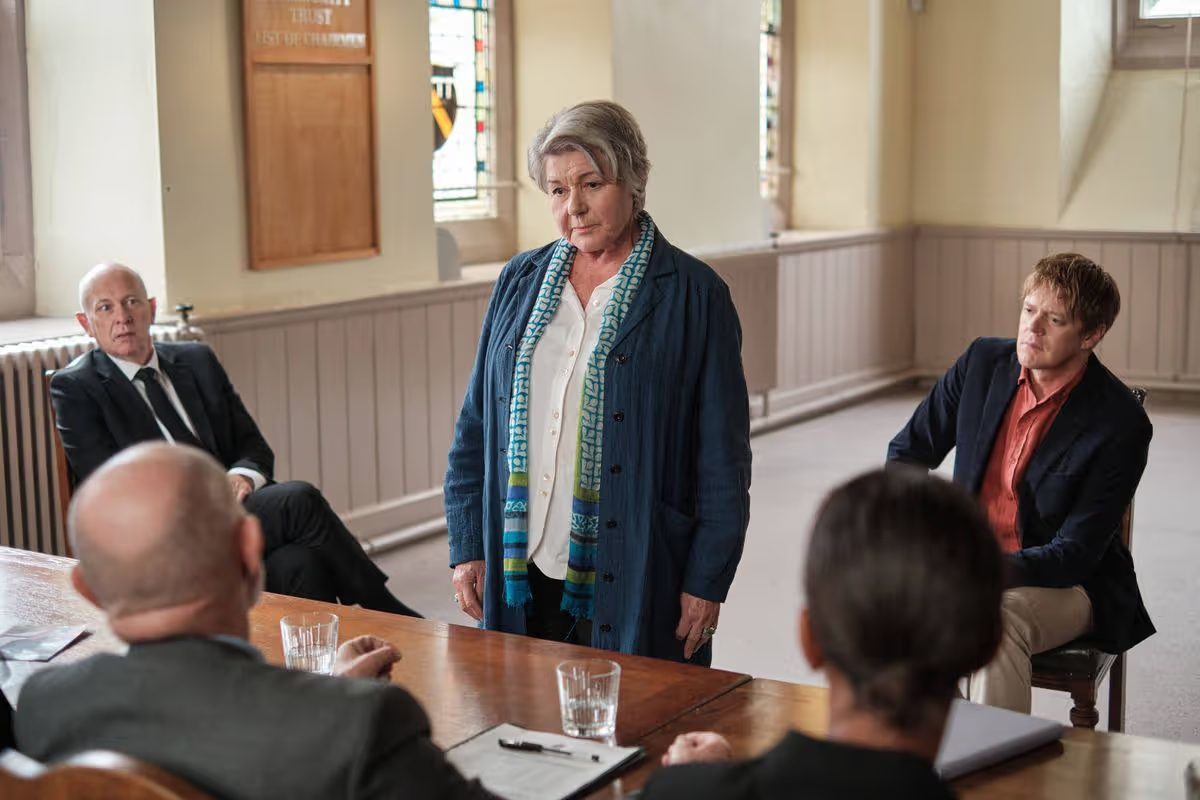
Barbara Flynn thought she had lost her job after one week of filming the Death in Paradise spin-off.
The beloved actress, who portrays Anne Lloyd and has also appeared in Death in Paradise, has offered a glowing tribute to a guest star following their departure from the BBC drama.
The fourth series of Beyond Paradise concluded earlier this year, featuring Anne Lloyd stepping in to prevent Humphrey Goodman (Kris Marshall) from being dismissed from his position. The episode additionally saw Zoe Williams bidding farewell to Shipton Abbott for travels abroad.
New arrival Mr. James Smith (Vincent Franklin) was also exposed by Anne for conducting an affair with a DI from Heston Morley station. Anne, who featured on a repeat broadcast of Love Your Weekend with Alan Titchmarsh today, previously discussed filming alongside Vincent, describing the performer as “funny”.
She told Reach PLC: “We got on incredibly well. He’s a funny man, and we had enormous fun off-screen as well as on. He was a lovely addition and a bit of a mystery, and it’s going to all end in… not tears, but chaos or something.
“And, of course, because Anne decides to get much more involved than that, then there’s a real, there’s a real kind of shift,” reports the Express.
Reflecting on increased collaboration with Kris Marshall’s character, Barbara continued: “Well, they all find it difficult having Anne in the station.
“I mean, Humphrey is as polite as he could be. He was never rude, but he’s so in his head, and so Anne is constantly bemused by him, but at the same time, very fond.”
Kris similarly expressed his appreciation for working with Vincent, who portrayed his adversary, calling him a “genius actor”. During the repeat episode of Love Your Weekend, Anne chatted with Alan about the series and how she finds it “a joy” to go to work.
“It is lovely,” Barbara said, going on to heap praise on the show’s writers, “Tony Jordan and Tim Key are an amazing pair. Death in Paradise has such a huge following around the world, and I think it is just something pleasant.
“I said to Sally (Bretton) once, because most of my scenes are with her, who I absolutely adore, I said, ‘Look, Sal, here we are sitting on a bench on a beach’.
“We are at work, and we were doing yoga on a beach, and it was a complete delight.”
She went on to reveal that she broke her ankle after just one week of filming, which made shooting certain scenes particularly challenging. She added, “The rest of it was filmed of me from wheelchairs and crutches. I thought I’d lost a job after the first week, but they said, ‘No, no Barbara, we will wheel you up and down’.”
Beyond Paradise is available to stream on BBC iPlayer.