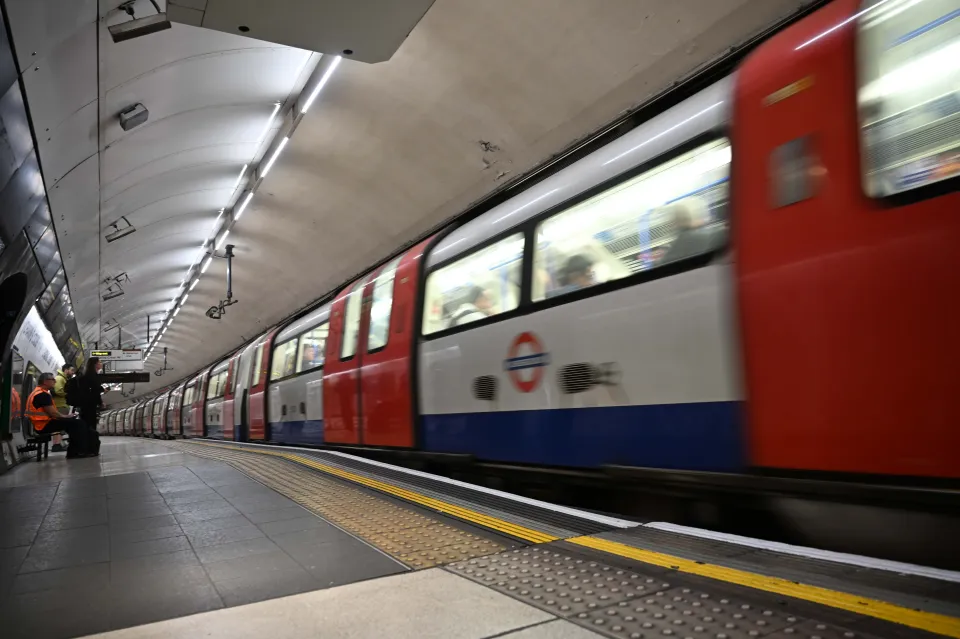
Full list of 8 dates Tube drivers are set to strike sparking travel chaos in Christmas run-up
A SERIES of tube strikes is set to take place in the coming months, expected to spark chaos for travellers over the festive period.
London Underground has confirmed a walkout will occur over eight dates between November and February, running from midday-to-midday.


The Rail, Maritime and Transport union (RMT) confirmed the strike action this week, with drivers set to walkout on eight dates between November and February.
Each strike will be in place for 24 hours, with the industrial action starting at noon on November 26.
Further strike dates will occur on December 17 and 19 sparking travel chaos for Brits in the run-up to Christmas.
Two more days of strikes will take place on January 4 and 6, with three further dates in February – 17, 23 and 25.


Festive shoppers are reminded that these dates mean that strikes will roll into both the morning of Black Friday and the last Saturday before Christmas.
Typically, walkouts affect the entire tube network, with all London Underground lines likely to be impacted.
This doesn’t include the Elizabeth line, DLR or Overground network.
Full list of 8 London tube strikes dates announced by the RMT union:
As the strikes will take place from midday-to-midday, the following dates are expected to be impacted by the walkout
- Thursday, November 26 to Friday, November 27
- Thursday, December 17 to Friday, December 18
- Saturday, December 19 to Sunday, December 20
- Monday, January 4 to Tuesday, January 5
- Wednesday, January 6 to Thursday, January 7
- Wednesday, February 17 to Thursday, February 18
- Tuesday, February 23 to Wednesday, February 24
- Thursday, February 25 to Friday, February 26
RMT general secretary Eddie Dempsey said: “London Underground is attempting to dress up a wholesale attack on drivers’ working conditions as a voluntary four-day week.
“But there is nothing voluntary about a scheme that forces drivers to give up existing protections whether they would work four days or five, and threatens those who refuse with displacement from their depots.
“Our members are being asked to spend more time driving trains, accept longer and more unpredictable shifts and surrender agreements that have been negotiated and defended over many years.”
The industrial action announced by RMT follows long-running disputes over working arrangements for drivers.
Many believe that current plans to move to a four-day working week would result in increased time spent driving trains, longer duties, earlier starts and later finishes.
This next round of walkouts follows on from serious disruptions on the London Underground earlier this year, when strike action was announced through March and May.
Running the strikes from midday-to-midday is thought to maximise the level of disruption, with the delays hitting peak commuter times and morning and evening rush hours.
Finn Brennan, Aslef’s (the British trade union for train drivers) full-time organiser on London Underground, said: “We are surprised that the RMT has, once again, decided to take strike action to try to prevent Underground drivers moving to a four-day week on a voluntary basis.
“We are in discussions with Transport for London about how the final details of this will work in practice.”