daily show

Kevin Bleyer, a longtime ‘Daily Show’ writer, dies in car crash at 54

“The Daily Show” writer Kevin Bleyer died in a car crash on Sunday. He was 54.

The death was confirmed via his wife, Nella Vera, who shared the tragic news on her Instagram account on Tuesday. Multiple news outlets report that the Oct. 25 crash occurred in Millrift, Pa., a rural town near Bleyer’s country home.

“The last eleven years have had their ups and downs, as life does, but above all, they have been filled with immense love, laughter, dogs, and travel,” Vera wrote in her Instagram caption. “I was in awe of his intellect, dazzled by his wit, amazed by his fearlessness and spirit of adventure, besotted by his loving heart, and smitten by his beautiful blue eyes.”

The two met in 2010 at a production of “Bloody Bloody Andrew Jackson” at the NYC Public Theater and shared a love for political comedy. Bleyer was an esteemed staff writer on “The Daily Show With Jon Stewart” for nine years, during which he won four Emmys for writing for a variety, music or comedy program.

The couple began dating in 2015 and married in June 2025.

“I feel incredibly lucky to have shared the past decade with such a brilliant, complicated, funny, stubborn, and wonderful man,” Vera added in her caption. “He had many public accomplishments and awards throughout his long and successful career, but to me, he was my soulmate, my partner in crime, and the one who made life so much more fun.”

Prior to “The Daily Show,” Bleyer also wrote on the satire show “Politically Incorrect” led by comic commentator Bill Maher, the improv comedy show “Significant Others” and late-night talk show “Dennis Miller.”

In 2010, Bleyer co-wrote the book “Earth (The Book): A Visitor’s Guide to the Human Race,” a comedic travel guide for aliens that details the history of humanity, alongside Stewart and dozens of other comics. He was also the solo author of 2012‘s “Me the People: One Man’s Selfless Quest to Rewrite the Constitution of the United States of America,” which poked fun at the way in which Americans choose to interpret the historic document.

In 2013, he moved to Kyrgyzstan, where he was the executive producer of “Studio 7,” the first political satire news show in Central Asia, according to his website. When he returned to the States, he co-founded Pilot Media Initiatives, which launched civics-minded media programs in democratically-challenged countries, including North Macedonia, Nigeria, Moldova, Kenya, Jordan and Estonia.

Bleyer also served as a writer and producer for NBC News’ “Today” show, as a supervising producer for MSNBC’s “Ronan Farrow Daily” and as a writer and producer for a CNN talk show pilot starring Kal Penn.

The humorist was also a gifted speechwriter for various NASA astronauts, political diplomats — once serving as deputy chief speechwriter for New York Mayor Bill de Blasio — and Colombian pop star Shakira.

Bleyer also contributed to the funnier speeches made by President Obama, including all of his White House Correspondents’ Assn. dinner addresses. In a 2017 TED Talk, Bleyer pointed out Obama’s famous 2011 monologue, which aimed multiple shots at Donald Trump and his ability to lead the country; various political analysts believe the humiliating moment set the groundwork for Trump’s 2016 presidential run.

“Before I go any further, I feel like I should offer an apology. The rumors are true, Donald Trump is president of the United States of America, and there’s a good chance it’s my fault,” joked Bleyer in his 2017 TED Talk. “I’m told he ran for president, in part because he couldn’t take a joke, a few jokes actually.”

In her Instagram tribute, Vera described him as a “private person,” although some of his own political commentary aired as a guest on National Public Radio, “CBS Sunday Morning,” CNN and MSNBC.

Bleyer was born in Maryland but grew up in Washington state. He later attended Stanford University, where he switched his engineering major for communications.

He began his career as a dramaturge and assistant to actor-playwright Anna Deavere Smith at the New York Public Theater and Broadway’s Cort Theater. He later moved to London, where he worked for journalist David Brancaccio at the London bureau of the public radio business affairs program “Marketplace.”

There will be a private gathering in a few months to honor Bleyer’s life, Vera said. Individuals are welcome to donate funds to the Alzheimer’s Assn. New York City Chapter, where he volunteered, or the American Society for the Prevention of Cruelty to Animals.

Bleyer is survived by Vera, his father, brother, sister-in-law, niece and nephew.
Source link

Jon Stewart will remain at ‘The Daily Show’ through 2028

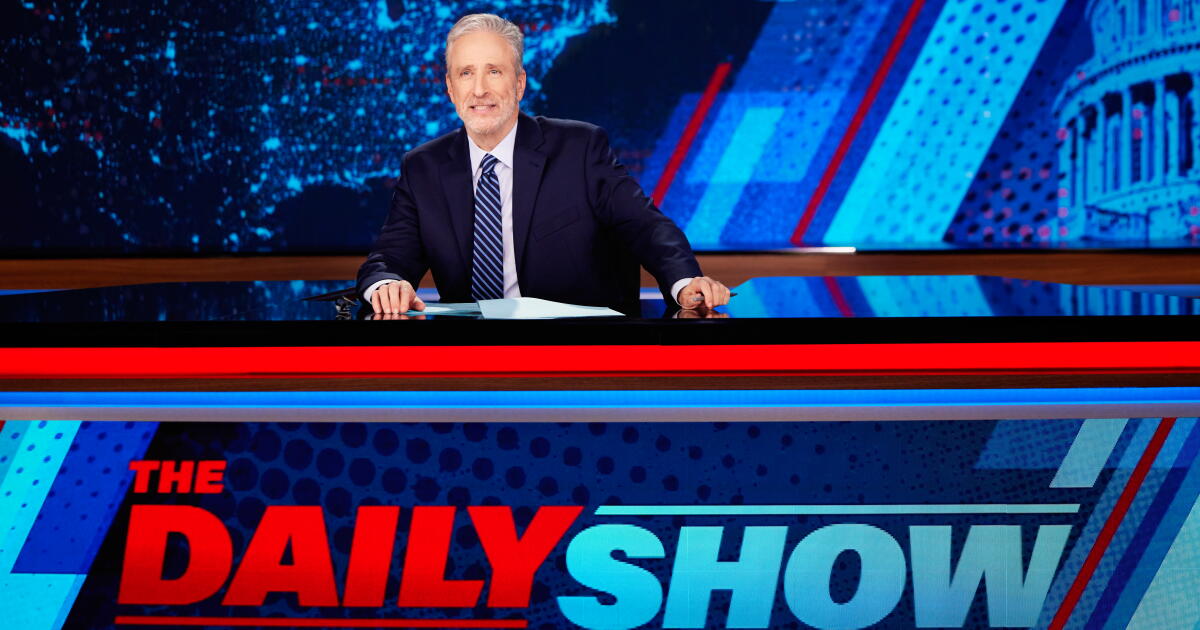
Jon Stewart has signed a new deal that will keep the comedian at his weekly perch on Comedy Central’s “The Daily Show” through 2028.

Skydance Television, which owns Comedy Central, announced Monday that Stewart will remain as a once-a-week host and serve as executive producer in a deal that takes him through the 2028 presidential election.

“Jon Stewart is a generational talent and The Daily Show continues to be one of the most influential franchises on television and a cornerstone of Comedy Central,” George Cheeks, Co-Chair and Chief Content Officer, Skydance TV, said in a statement. “We are excited to continue our partnership with Jon and his award winning news team.”

Tuesdays through Thursdays will continue to be handled by “Daily Show” regulars Ronny Chieng, Josh Johnson, Jordan Klepper, Michael Kosta, and Desi Lydic.

Stewart is a signature talent for Comedy Central, which also the home of the long-running animated series “South Park.” The channel needed to retain its biggest names to keep the channel valuable to cable and satellite TV providers who pay to carry it.

Stewart first became “Daily Show” host in 1999, and tuned the satirical news program into an important voice in the national discourse. He stepped away in 2015 when he was among the highest-paid performers in the TV business.

Stewart had a production deal with HBO and hosted a series for Apple TV, “The Problem with Jon Stewart,” before rejoining “The Daily Show” in 2024 to host on Monday nights. He signed a second one-year deal in November that was set to expire at the end of this year.

While President Trump has attacked network late-night hosts who are critical of him, he has never gone after Stewart in any of his social media rants during his second term. Comedy Central is a cable network not subject to Federal Communications Commission authority, unlike Stewart’s late-night cohort Jimmy Kimmel, who appears on ABC. Both Trump and FCC Chairman Brendan Carr have threatened to pull Kimmel off the air.

Late-night TV is struggling overall as a genre due to younger viewers moving away from traditional TV to streaming, “The Daily Show” has continued to have a strong following. The program hit an eight-year high in viewing during the third quarter of 2026 according to Nielsen data. Comedy Central said the program has accrued 1.6 billion views across social media in 2026.

Skydance got out of the broadcast network late night business when it cancelled “The Late Show with Stephen Colbert.” The company said the program was losing $40 million a year. It replaced with “Comics Unleashed,” a non-topical comedy show from media mogul Byron Allen, who leases the late night hours from the network.

Source link

Anna Holmes reflects on Jezebel’s legacy, moving to L.A., her new book

On the Shelf

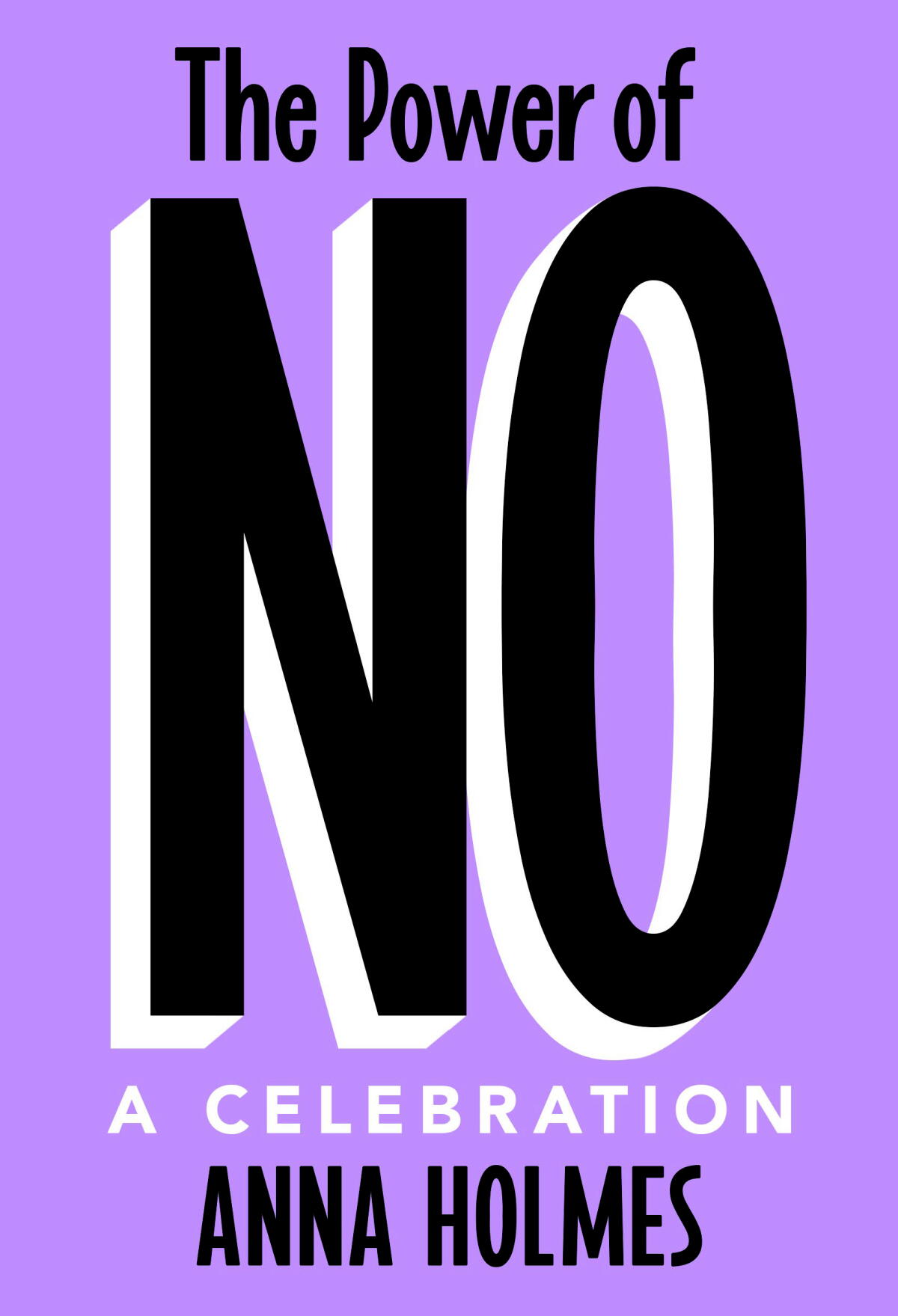
The Power of No: A Celebration

By Anna Holmes
Knopf: 160 pages, $24

If you buy books linked on our site, The Times may earn a commission from Bookshop.org, whose fees support independent bookstores.

On a blazing hot Silver Lake morning, ushering in yet another heatwave day, Anna Holmes and I say “no” to a steamy sidewalk table at Millie’s Cafe, opting instead for an indoor, air-conditioned spot. Our server reads our order back to us, shaking his head in theatrical disbelief. “Pancakes. French toast. Biscuit. Waffle with whipped cream.” He glances from one of us to the other. “No protein?” he asks. “Just the carbs?”

“I guess I’ll have some egg whites, too,” I cave. Not so my brunch companion who confirms, “Just the carbs.” Holmes grins, “I’m not a fan of fad diets that make women hate ourselves.”

In fact, Holmes has built a career of saying “no” to woman-hating of all kinds — starting in 2007, when she founded the boundary-pushing feminist website Jezebel, the sister site of the notoriously provocative Gawker. “I decided that NO would be our mantra of sorts,” she writes in her new book, “The Power of No: A Celebration.” “‘No’ to diet tips, ‘no’ to sexist gossip, ‘no’ to conspicuous consumption. We drove the point home again and again … creating new definitions and examples of what it means to be female.”

Raised in a biracial, working-class family in Davis, Calif., Holmes escaped to New York at 18, chasing her writer’s dream. “Davis was a safe, homogenous little town,” she tells me, spearing one of the sliced strawberries fanned prettily across her waffle. “Being Black, I wasn’t one of the homogenies. I couldn’t wait to get out.”

"The Power of No: A Celebration" by Anna Holmes

“The Power of No: A Celebration” by Anna Holmes

(Crown)

Accepted by several top universities, Holmes said ‘yes’ to New York University. “They gave me money,” she explains. “And they had a journalism school.” After graduating, Holmes grabbed a rung on the media ladder and started climbing: writing and editing for Glamour, InStyle and Entertainment Weekly. Holmes published her first book, “Hell Hath No Fury: Women’s Letters from the End of the Affair,” featuring a collection of breakup letters from the likes of Anaïs Nin, Charlotte Brontë and Sylvia Plath, in 2002.

“So, you’ve always been a slacker,” I say.

Holmes laughs. “I come by my drive honestly. It stems from my fear of failure. And growing up lower-middle class, without the kinds of connections the wealthier kids had.”

Next came the breakthrough media success of Jezebel. Her project quickly reached 10 million monthly views, exceeding Gawker’s. But the bold irreverence that drew droves of devoted readers to Jezebel brought contention, too. In June 2010, Jezebel reported that women’s exclusion from senior positions at “The Daily Show” — which the article called a “boys’ club” — was “frustrating and alienating” for women. The story earned an on-air mention by Jon Stewart, who announced “Jezebel thinks I’m a sexist prick” — and an open letter signed by more than 30 female “Daily Show” employees, refuting Jezebel’s allegations.

Author Anna Holmes.

Author Anna Holmes.

(Annie Noelker / For The Times)

Weeks later, under the header “How feminist blogs like Jezebel gin up page views by exploiting women’s worst tendencies,” former Gawker employee Emily Gould wrote in Slate, “When Jezebel was founded, it proposed itself as an explicit alternative to traditional women’s magazines … but the easiest way for Jezebel writers to be provocative is to stoke readers’ insecurities — just in a different way.”

Holmes says some Jezebel haters were anti-feminist or far-right. “Others were politically aligned with Jezebel, but felt we were too pop-culture-focused. Some accused us of being snarky to other women,” she adds.

After three years, Holmes resigned. “I’d done what I went to Jezebel to do,” she says. “Also, the 14-hour workdays were threatening my marriage, my sanity and my health. I was smoking too much. Drinking too much. Gaining weight.”

Holmes said a final goodbye to her creation in 2013 by publishing “The Book of Jezebel: An Illustrated Encyclopedia of Lady Things.” Despite — and because of — having founded one of the internet’s most provocative publications, she helped lift up journalists, and journalism, in her wake.

“I would follow Anna off of a cliff, professionally and personally,” says Reyhan Harmanci, Wired’s editorial director, who reported to Holmes at Topic magazine a decade ago. “She channels her curiosity in a way that opens the world to readers.”

Former Gawker editor A.J. Daulerio also lights up at the mention of Holmes’ name. “If you look back at Anna’s history of finding and developing talent, you can see her impact. Writers who’ve worked with and for her can be found on podcasts, on mastheads at major publications and on bestseller lists.” Meanwhile, New York magazine’s Emily Gould, who wrote the biting Slate critique of Jezebel in 2010, has come to admire Holmes. “Nobody’s right 100% of the time,” Gould says, “especially when publishing around the clock and reacting to news as it unfolds. My current sense of Anna is that she’s genuinely brave, clear-sighted and wise. I’m eager to read her new book.”

Post-Jezebel, Holmes wrote the “Bookends” column for the New York Times Book Review. Her byline grew a few picas when she replaced Roxane Gay as editor of the Times’ popular “Work Friend” column. Having “made it there,” Holmes decided to leave New York.

“I never considered myself a New Yorker,” she says, stirring a foam flower into her latte. “When people asked, I’d say, ‘I’m from California but I live in New York.’”

While deliberating about where to go next, Holmes says, “I got a job offer with the Obamas’ production company in L.A.”

“The Obamas?” I blurt. Holmes nods. “I was tired of New York. And wanting to be closer to my elderly mom.” In the first week of the COVID shutdown, Holmes packed her two hissing black cats, donned an N95 mask and flew to LAX. Six years later, after several moves around town, she shares the upper half of a sun-splashed 1920s duplex with Ewok and Harriet.

“I didn’t have a writing community in New York and I don’t have one here,” Holmes says about her L.A. move. “I had a media community in New York. If that exists here, I’m not invited to those parties.” She cocks her head. “Every once in a while, I wonder, ‘Does Susan Orlean have regular salons? And if so, can I please go?’”

Holmes continues to settle into a slower, more domestic groove. “I’m 53 now,” she says. “I don’t want to go out all the time. I like going to bed early. All the cliches are true of me: moving from NYC to L.A. and ending up in Silver Lake — with a Volvo, no less. In my defense, I dress like a tomboy, I don’t have tattoos and I’ve never been to Bar Stella.”

Since her big move, Holmes has written “The Power of No” and is finishing up her fourth book, a sexual memoir. Her articles on wildly divergent topics continue to appear in the New York Times, the New Yorker, the Atlantic and L.A. Material.

“The Power of No” is a slim but impactful guide to the human dance between yes and no; vulnerability and ambition. The book consists of readily digestible yet smart, sophisticated bits, including quotes from luminaries, research findings, anecdotes from Holmes’ own life and others, practical tips, and lists like “Ways to Say No” (which is especially helpful to have on hand during the upcoming holiday season).

“No,” Holmes writes on Page 1: “As uttered by a woman, a provocation. Has there ever been a more fraught relationship between women and word?” By way of example, she cites what she calls “my biggest NO, my strongest rejection of what was expected of me as a woman: founding Jezebel.”

“Has writing about ‘no’ made you better at saying it?” I ask Holmes.

“I don’t purport to be good at it,” she answers. “But I’m more cognizant now of wanting to say it, at least.”

Maran, author of “The New Old Me” and other books, lives in Silver Lake.

Source link