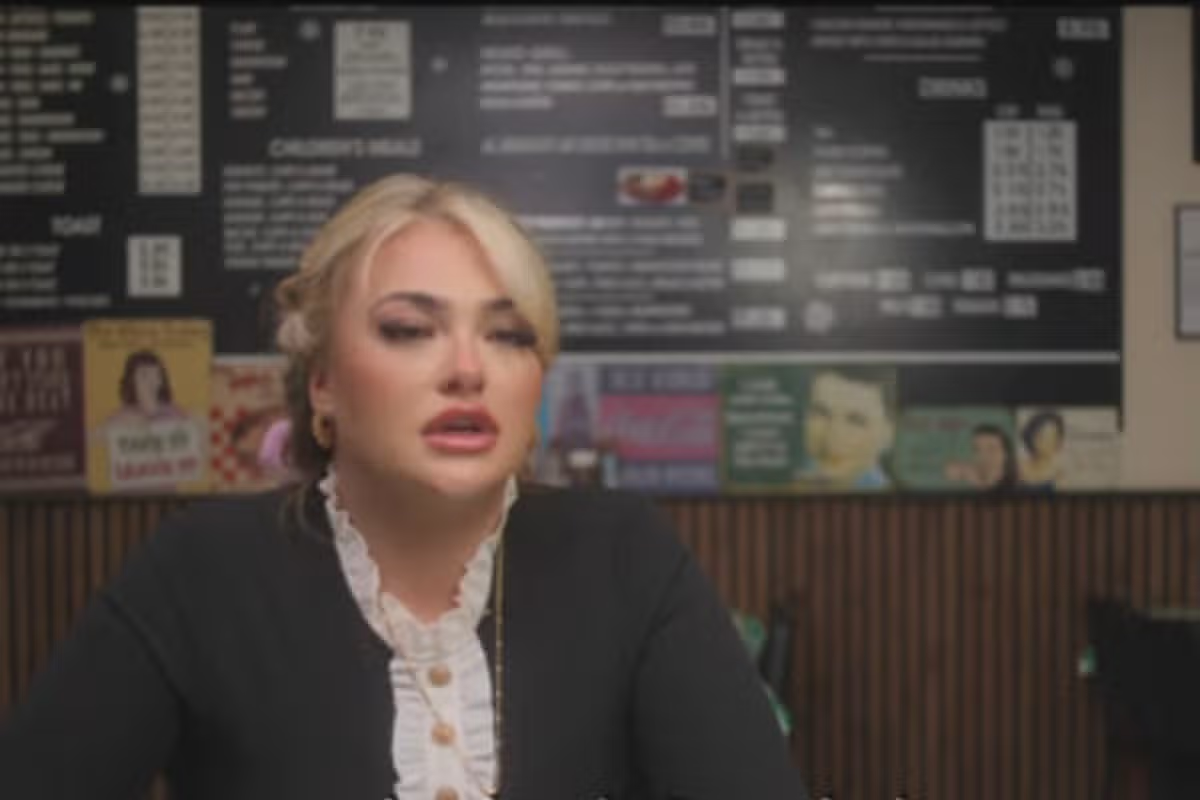
The social media sensation made an appearance on our TV screens tonight (Monday, July 20) as she let cameras into her family life in the brand new Channel 4 series.
Not long into the show, things took an emotional turn as Trewley opened up about her devastating loss. Trewley’s late father, Sidney “Siddy Boy” Temple passed away in November 2022.
He was a traditional, prideful Romany Traveller and Trewley credits him with giving her a proud and rich cultural heritage.
While setting up for her mum Tina’s birthday celebration, Trewley was visibly moved as she revealed: “I like to get her stuff from my dad. My dad passed away three years ago in November.
“Ever since then I always get mum a present from him, whether that is mothers day or valentines day – I’ll get her something from him.”
She added: “He was ill so he couldn’t move so he was like ‘go out and get your mum something from dad will yeah.”
Speaking to the camera, Trewley broke down in tears as she said: “My dad died three years ago of cancer and it was the worst thing. I can’t even talk, I feel like I’m in a different world.”
Wiping away her tears, she continued: “It was absolutely horrible and I was really young, I was only 22 when it happened.”
Tina was emotional as she explained: “That’s been the hard thing, I’ve not even had time to grieve because there has been so many people who are more important than me that I had to keep together because they were absolutely devastated.”
She continued: “I feel like everyone had turned into balloons and they’re all trying to float away and I’m trying to grab the strings and hold onto them and pull them back so I pulled them in and put my arms around them so they wouldn’t go anywhere.”
Speaking to one of her sisters, Trewley said: “Dad was the biggest loss that the whole family has had”. As everyone gathered to celebrate Tina’s birthday, Trewey gave her the gift she bought from her dad. Before Trewley’s mum could even open the present, she broke down in tears.
The family was overcome with emotion as Trewley’s brother Jamie John read the sweet message written on the ribbon, it read: “To my Tinny happy birthday me old girl. Thank you for looking after our babies. I love you in this life and the next.” Attempting to lift the mood, Trewley’s brother joked: “You’ve ruined the whole day, Trewley.”
You can catch up on The Secret Lives of Gypsy Wives on Channel 4
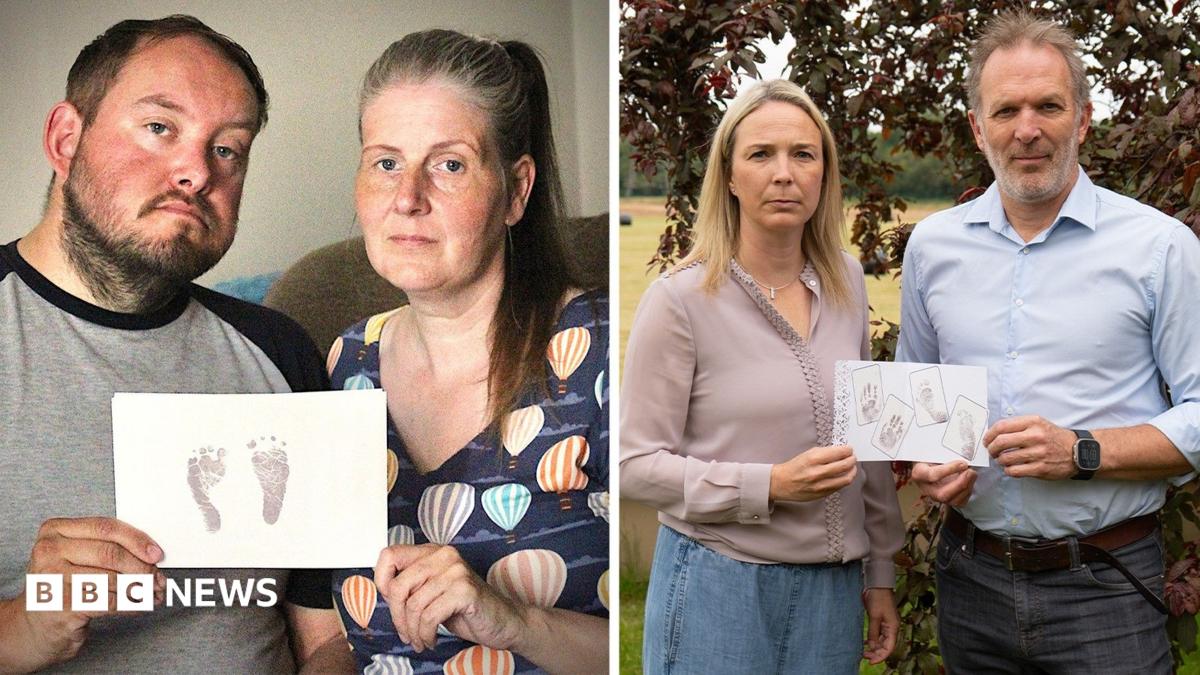
Gary and Sarah Andrews’s daughter Wynter died 23 minutes after she was delivered by Caesarean section at the Queen’s Medical Centre on 15 September 2019 after repeated warning signs of her being in distress had been missed.
Wynter died from a loss of oxygen flow to the brain – which an inquest found could have been prevented had staff delivered her earlier.
Sarah, 41, had been admitted to hospital on 14 September, six days after initially experiencing contractions.
The inquest heard the maternity unit was “busy” when she arrived, with information on the patient’s history not properly handed over to other staff at shift changes.
The inquest found Wynter may have survived if “multiple missed opportunities” had been spotted.
In what would become a recurring theme about warning signs being missed, the coroner cited a 2018 letter from midwives to bosses at the trust, outlining concerns over staffing levels as “the cause of a potential disaster”.
“The grim predictions… were indeed realised some 10 months later when Wynter died as a result of the unsafe practices warned about,” coroner Laurinda Bower said.
The Care Quality Commission (CQC) prosecuted NUH over her death in January 2023, with the trust pleading guilty to care failures.
GREG James has confirmed his Radio 1 show return and revealed that he’s ‘exhausted’ as he shared an update on his dad’s recent open heart surgeries.
The radio star, 40, was missing from the Radio 1 Breakfast, which airs weekdays from 7am to 10:30am, on Wednesday and Thursday (18 June 2026).
Sign up for the Showbiz newsletter
Thank you!
Greg James shared an update following on from his dad’s open heart surgeriesCredit: InstagramThe star has also confirmed when he will be back presenting Radio 1 BreakfastCredit: Getty
Greg took to his Instagram story this morning to reveal the heart-breaking reason why – and admitted that he’s “in no fit state” because his father Alan Milward has undergone heart surgery.
Then this afternoon, he decided to give his 1.3m followers on the social media platform an update.
Sharing a selfie from a sauna, Greg wrote: “Hello from the sauna! I felt daft updating on all of this but because it was such a loud part of the comic relief challenge, I feel like it’s nice to be honest about it all.
“Just to say, my dad is responsive, just about conscious and being looked after amazingly.
Greg pictured with his dad AlanCredit: InstagramGreg took to his Instagram page to share why he wasn’t on the radio on Wednesday and ThursdayCredit: @greg_james/Instagram
“Obviously, after two open heart surgeries in three months, he’s not out of the woods by a long way, but we’re hopeful he’ll be fixed and we can all just get on with life.
“Which is what I’m gonna try and do.
“I won’t keep updating on here about it all as quite frankly, we’re all exhausted by it and it’s going to be a long road to recovery.”
He then went on to share exactly when he’ll be back on the radio – and fans don’t have long to wait.
The presenter later explained that he was ‘no fit state to be on the radio’Credit: @greg_james/InstagramEarlier this year Greg took part in a 1,000km tandem bike ride for Red Nose Day and opened up about his dad’s strokeCredit: instagram/@bbcradio1
Greg continued: “I’ve wanted to make sure my mum is OK so it’s been nice to spend loads of time with her and my big sis, but I’m back to the show tomorrow and I can’t wait.
“Thank you again for the most amazing load of messages.
“It’s genuinely very comforting.”
It comes after Greg told fans yesterday: “Hello from my mum’s garden! I wasn’t on the breakfast show today as my dad was in for another go at heart surgery (it’s been a wild few months and I didn’t want to bore you with it all).
“But here we are. Back to square one. Waiting for news and staying distracted and keeping calm by making water features.
“All being well, back on tomorrow morning.”
However Greg later revealed Alan’s surgery took “much longer” than they’d expected so he would be taking another day off.
He said: “What a great day! An absolute hoot in ICU.
“Surgery was much longer than everyone hoped. Big up my mum and my big sis. And the surgeons. And the NHS. What a gang. We’ve all gone mad.
“Real talk, surgery went ok but he’s far from out of the woods so I’m gonna take it easy tomorrow and hopefully back on Friday.
“Plus, I’m in no fit state to be on the radio. I mean, look at me, I’m posting photos from intensive care ffs. Thank you for your lovely messages.”
In March Greg had to cancel his show and rush home after Alan suffered a stroke during a planned heart operation.
He later opened up about his dad’s struggles during his 1,000km tandem bike ride for Red Nose Day.
He said: “I feel elated. I feel a bit overwhelmed by all these people who just turned up out of nowhere. I just burst into tears as I was going up to Blaenavon. It was all a bit much.
“Just thought about… I just thought about everything. Just thought about my dad, thought about my mum. It got way too much. It’s so silly. It must have been the altitude.”
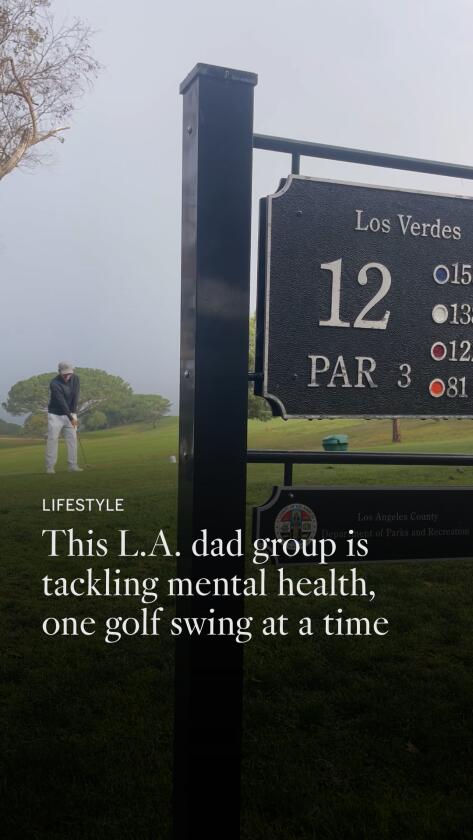
To understand the gravitational pull toward golf, consider the sport as a sequence of problems. Aaron Singleton, a skilled player in the Dads Link Golf Club, is playing particularly well today at Palos Verdes Golf Course, having just hit two back-to-back birdies. But even on the shots that fly into a grassy oblivion, he smiles.
Share via
“Golf is 18 different holes. 18 different chances to solve a problem,” he says. “Each hole presents a different problem. Each shot is a different problem.” According to Singleton, this wisdom that players inherit on the golf course — especially resilience and patience — translates to fatherhood.
Singleton, who has a 3-year-old son, is part of a growing group of fathers who participate in the Dads Link Golf Club. The club is part of the region’s golf boom; Southern California Golf Assn. is estimated to have one of the largest memberships in the country, with over 200,000 golfers.
Ian Davis, the founder of Dads Link and Golf Club, watches his drive.
Ian Davis is the founder of Los Angeles’ Dads Link Golf Club. Each month, he invites fathers to enjoy golf together to focus on fellowship, fatherhood and their well-being.
“This has grown in a way that I couldn’t have imagined,” says Davis, who works as a wellness coach with an emphasis in mindfulness and meditation. He started the club in 2023 on the East Coast before relocating it to Los Angeles in January 2024, where the club hosts an annual Father’s Day tournament and various golf clinics.
At the driving range, Davis leads the group through “a grounding practice” that involves stretching and deep breathing. Member Ose Akhile, a personal trainer, follows up with stretching and other warm-up exercises. For many of the men, golf has become a rediscovered hobby. Singleton returned to the sport after playing it as a teenager. “I’m looking forward to getting better,” he says.
Club member Darius Ingram, father of 3-year-old daughter, says that reconnecting with the game has allowed him to prioritize his own well-being.
“I used to play golf recreationally. Now, I do it for mental stability,” he says.
Ian Davis greets Ose Akhile as Darius Ingram stands nearby.
Ian Monteilh, who is new to the group and has two daughters ages 11 and 15, says the outing provides camaraderie that was missing from his life.
“It’s a community that I didn’t have. I’m blessed to be around like-minded men with no pressure,” he says. “Even if we’re having a rough day on a golf course, there’s camaraderie.”
Once considered a predominantly white sport, golf is now being reshaped by a new generation of Black players and other players of color, including many of the fathers in Dads Link Golf Club. In 2024, 25% of golfers across courses nationally were Black, Asian and Latino, marking the most diverse era in the sport’s history, according to the National Golf Foundation.
Darius Ingram reacts to barely missing a putt on the 18th green as Ian Davis watches.
Ingram partly attributes Black men’s interest in golf to renewed interest from other professional athletes. Star athletes like Michael Jordan and Steph Curry — who also happen to be dads — are skilled golfers.
“There are a lot of people who play their main sport, and they play golf when they retire,” says Ingram.
Ose Akhile smiles before teeing off.
Rappers like Schoolboy Q and DJ Khalid have also become interested in the sport, adding to its cachet.
The benefits of the groups are apparent, explains Akhile, who has three daughters, ages 6, 7 and 9.
“I’m outside — fresh air, sunshine, a break for my family. I get to decompress,” he says. Describing himself as a “Caribbean baby,” he explains that the ocean waves have a hypnotic effect on him. As the golfers move along the Palos Verdes course, the ocean stretches beyond them.
“Nature helps a lot with stress relief. There’s a lot of green grass and quiet out here. I love my child, but it’s hard to hear her yell, ‘Dad!’ every three seconds,” says Singleton. During the game, he stays calm while a squirrel approaches him. “Me and nature are one with each other,” he says. Behind him, a baby coyote prances into the fog.
Singleton adds that in the chaos of fatherhood, friendships occasionally fall to the wayside.
“There’s so much to do. Everyone separated. It’s beneficial to have a group text, a fellowship like this, where you can hear someone going through the same thing as you,” Singleton says.
Akhile agrees. “These are probably the only guys that understand the day-to-day stressors and pressures of my life,” he says.
Ose Akhile, Darius Ingram, Ian Monteilh, Ian Davis, Aaron Singleton and other Dads Link and Golf members have breakfast together.
After finishing nine holes, the men enjoy breakfast burritos. They joke that they will begin ranking the golf courses in the L.A. area by the quality of their breakfast burritos. Meanwhile, Davis leads the group through a conversation about fatherhood. Each month he chooses one dad to be the focus. This morning that’s Ingram. He speaks on being a father and how it relates to golf.
“I’m not as good as I want to be, so there’s frustration there,” Ingram says, referring to the challenges of parenting. He adds that to “right things” he doesn’t like about himself, he focuses on how his efforts could result in his daughter becoming a better version of him. The men offer encouragement as birds circle above. The sun pierces through the fog.
Monteilh looks up and jokes: “The only birdies I saw today were in the sky.”
There was a time in the beginning of Sublime’s recent revival when Jakob Nowell, the son of the band’s late singer Bradley Nowell, saw himself simply as a good son trying to help his adoptive uncles — drummer Bud Gaugh and bassist Eric Wilson — restart his dad’s iconic Long Beach trio. The goal wasn’t to take the place of his frontman father who died of an overdose in 1996. “I’ll never look at it as my band. Sublime is my dad’s band, and I’m helping out, that’s all,” he told The Times in 2024. Luckily, he was wrong.
The journey of finding his own voice through his father’s sly, shambolic poetry and reggae rock anthems, along with his determination on the road with Gaugh and Wilson through a barrage of festivals and tour dates helped him eventually step into his own as a songwriter and Gen Z rock star. It’s all been done with the mission to preserving his dad’s legacy and having fun while doing it. Now it feels as natural as the trio sitting together on the waterfront in LBC’s shoreline marina within earshot of the bellowing horn of the Queen Mary earlier this year as they were finishing the recording of “Until the Sun Explodes,” the first album under the Sublime moniker in 30 years.
Just like the band’s original recipe of shoving punk, dub reggae, hip-hop and ska into a blender, the new songs dutifully stick to the formula along with Jakob’s soulful caterwauls that sound scarily similar to his dad. But what emerges from the 21-song tracklist is the evolution of a trademark sound that gives a nod to the past while standing strong on its own, just like Jakob, despite coming to the interview on crutches while healing from a performance-related knee injury. The band members chatted with The Times about recapturing the effortless essence of their immortal beach-ready sound and looking forward to a second chance to chase an endless summer.
This interview was edited for length and clarity
It’s kind of a rare thing for all three of you guys to be in one place at the same time. What was it like working in the studio together to finish the new album?
Bud Gaugh: Magical. Things are just coming together. We showed up, Jake had an idea for another song, and he sent us a little demo and said “Hey, this is what I’ve been thinking about.” And then we get down to the studio [in San Pedro], and he’s like, “Oh yeah, so I had another idea,” and kind of changed it. We jumped in there [and by the end of our sessions, we had written] brand new songs to the list of songs that we already had.
The band’s revival has been a long time in the making. I remember when you guys had your first show together, a surprise gig a couple years ago as part of a benefit show for the Bad Brains frontman H.R. Do you feel you’ve come a long way since then?
Eric Wilson: I never thought the chemistry would be like it was with Bradley.
Jakob Nowell: Especially now that we’ve been playing together this long, the chemistry is very much there. We’re just comfortable and having fun. Jamming together is the best. We get in there to do a take for a song, and I’m always like “Let’s just do like three more!” It’s just that much fun, and that’s how it feels playing live too.
When did the idea for creating a new album come about?
Gaugh: It was pretty much just while we were playing shows, At first, the idea was that we were getting together to do this benefit for H.R. [at Teragram Ballroom in December 2023]. We went from “How’s this going to work?” and then [after the show] it was like, “Wow, this is something special. We should definitely go out and play some more shows, and get this music out there and get the opportunity to bring the music to the people in the purest form that we possibly could.” As we’re doing that, it’s like we’re seeing the reaction in the fans, and we were feeling it emotionally. We realized this is going to be bigger than we ever thought. That’s when we really decided where it was going to go.
Jakob Nowell, right, once thought Sublime was only his late father’s band; now, fronting the Long Beach trio, he’s leading a new chapter that still honors Bradley Nowell’s legacy.
(Allen J. Schaben / Los Angeles Times)
Were any of the songs on the new album mined from previously unreleased material or did you start fresh?
Nowell: There was that song we did with Stick Figure [“Feel Like That”], so I think that kind of inspired us. [We realized] “Oh s—, there really is some meat on the bone.” And then I had found some old recordings of stuff that were just like jams without even like vocals or whatever. Then it became just this thing during sound check or maybe in the middle of sets, we’d just start jamming these random progressions and stuff, and it kind of just evolved from there naturally.
The new songs that I’ve heard fit right in the vein of what people love about Sublime. What was it like putting some of those new songs in the setlist as you were building them?
Nowell: It was like magic. We were joking yesterday that sometimes we’ll play a new song for the first time just randomly and I’d see people try mouthing the lyrics and stuff and I’ll say “you’ve never even heard this before! I know you haven’t. We don’t even really know what the hell we’re saying.”
Gaugh: You frontin’! [Laughs]
Nowell: But [the new material] sounded like it was supposed to be there, so it was kind of a rad little test in a lot of ways. We almost don’t even have to think about it. That’s always going to be the guiding goal of any band trying to make fun music that’s relatable.
Wilson: What if you’re Slayer? That’s not true if you’re Slayer.
Jakob, it seems like you’ve gotten a lot more comfortable in the frontman role since joining the band. What’s it like just taking the lead, not just for the sake of your dad, but for the fans?
Nowell: Oh, dude, it’s the best. I don’t even have to think about it. We really feel like this is — we’re a band, you know?
Gaugh: It’s [Jakob’s] band too. Now it’s our band. It’s us.
Nowell: It feels like that whenever we’re hanging out, just doing stuff, or at the studio or at these shows. So, this upcoming year feels like a really rad adventure. We got all these different eras [of fans] — people who were in their 50s when [Sublime’s] first stuff dropped, who are still alive, and then their kids and their grandkids and great grandkids. Everybody finds a piece of the discography they can relate to. That’s what is most exciting. It’s not just one or two songs, people sing along to everything.
I was at Warped Tour in Long Beach last year when you guys played and —
Nowell: That was my favorite set!
To me that felt like it encapsulated what you were talking about with the multigenerational groups of fans that have enjoyed you guys and associate you with Long Beach.
Gaugh: It was like a homecoming for me. I remembered playing the Chili Cook off, you know, right over there in the same area [as Warped Tour], and it was just bringing me back 30 years. It’s so meaningful to be in our backyard playing our music again, right there. This is where it all started. It’s come full circle.
Nowell: It was like playing at a local bar in a cool way. I had this huge group of people up front, they were just talking and shouting and saying stuff, like f–ing with us and joking around. I was like “Damn this is great!”
How about you, Eric? How’d you feel playing Warped?
Wilson: [Mumbles] It was f–ing awesome.
Now that you’ve played all these festival shows, from Coachella to No Values, you’ve got your own festival going on. Can you talk a little bit about Sublime Fest and your Sublime Reef Madness Cruise and how you came up with it?
Nowell: We could put on a bunch of the bands we love, and some of our boys, like Vandals, and make it our own vibe.
Gaugh: You walk around Coachella and there’s so many different elements there. Wouldn’t it be neat if we could make like all this like a Long Beach element, a Sublime element. Looking at this thing, it’s like “Oh wow. So we can actually get some of our friends and set up like a tattoo booth, and have our idea of art and everything out there, and mix it all together — food, art, music — bringing all these different elements, and friends of ours that play music. We get to decide who’s going to share the stage with us, so it’s really neat. It’s like planning a high school party or something like that.
Nowell: The biggest backyard party ever seen.
You guys always had your own sound going on, what’s it like to see that the fans still want it?
Wilson: It took a lotta years to catch on, but it did.
Nowell: Yeah, the kids really want that, like ‘90s, Y2K kind of vibe. That was the last era of like cool authenticity and stuff. You can see it when young people make stuff to look retro … when things get so high fidelity, we’re almost losing a little element, so I think these festivals kind of seek to bring some of that back in a way that everybody can get into.
With “Until the Sun Explodes,” Sublime’s first album in three decades, Jakob Nowell, Bud Gaugh and Eric Wilson rediscover their studio chemistry, jamming new songs that feel instantly familiar onstage.
(Allen J. Schaben / Los Angeles Times)
You guys also have the timeless iconography of the Sublime sun logo. The title of the album is “Until the Sun Explodes.” Does that title have any particular meaning to you?
Nowell: It’s almost just another way of saying “forever,” like “Oh baby I’m gonna love you till the sun blows up.” That’s gonna happen in billions of years, if at all. The fact that [Sublime’s] lasted this long and has this many fans is evidence to me that we wanna be here forever. I think that’s what everybody wants for themselves.
Jake, you’ve taken steps to advance your own aspirations and music with your label, Sunburnt Records, how does that fit into where Sublime is right now?
I was inspired by the whole Skunk Records thing [Sublime’s first label], Evan Zinger with [his lifestyle brand] SRH, and just all the local brands I grew up with when I was a kid. So just trying to do a cool, chill local thing that has that vibe of putting on small shows and kind of getting to use this new notoriety to be like, man, I have so many friends in these small bands like Strange Case and Eight Ball, and other bands up and down Southern California. Let’s put on shows and sneak them on a Sunburnt Stage at [Sublime Fest] and if people really like that Sublime sound here’s a bunch of kids who are carrying the torch like Slightly Stoopid did when they started out. Mike Watt always said “start your own band!” So the more we can inspire people to do that and be some small part of that, it’s a dream come true.
Do you feel like this version of Sublime is something Brad would be proud of?
Gaugh: We all kind of brought our own element to the music orignally. So we just kind of followed that recipe. Jake’s his own person, he’s got his own influences, and we just kind of stick with that idea. Jake brings in his feelings, and Eric brings in his and we sat there and recorded this song, and then as we were recording it, we’re coming up with ideas. It’s like, “Oh wait, we should do this here, slow that down there, stop here,” it’s all a conglomeration of ideas, everyone does their part, brings in their own spices and we mix it in a pot like gumbo.
And it’s a good job, too, as unlike any other gift experience you’ve ever been to, you will be pushed to your absolute limit.
I’m greeted by a hearty full English, before a safety briefing, and then it’s helmets on and straight to my first track session.
Everyone is placed in small teams, and all the sessions are professionally timed so you have a crack at a fastest-lap trophy.
The cars are staggering.
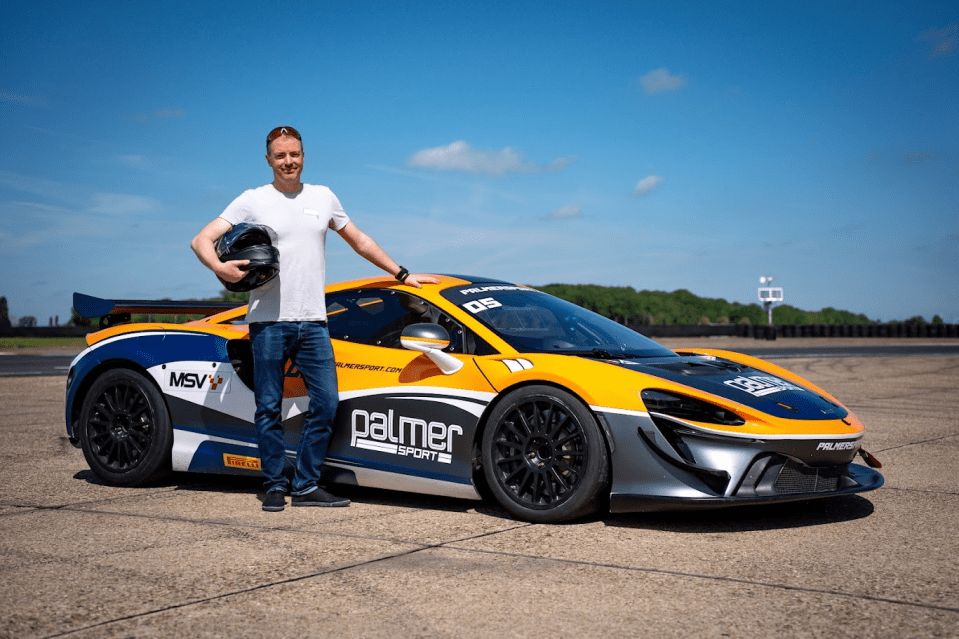
My favourites were the McLaren Artura GT4 and Ginetta G56 GTA – both full-blown race cars with slicks and roll cage.
But I never felt too intimidated once on track, thanks to the brilliant instructors.
They gave me immediate feedback over the helmet intercom, and there’s dual controls to help get you out of trouble.
You build up steadily and your last lap should always be your fastest, plus the 596bhp McLaren boasts in-car video and telemetry so I could analyse my quickest time.
We were hitting 135mph on the short back straight, with the instructor telling me precisely when to stamp on the brakes before slicing towards the apex.
The Ginetta felt like a touring car race, raucously good fun and forgiving.
But the real “heart in your mouth” stuff comes on the West Circuit.
The Palmer JP-LM is a sports prototype inspired by the 200mph racers at Le Mans.
It will pull 2.5g in the corners and sap tears from your eyes under braking.
Listen to your instructor carefully, though – as next time you’re out, it’s solo.
It’s truly mind-blowing to think that, in a land of health-and-safety trigger warnings these days, they will squeeze you into a Formula 3000 single-seater.
There’s no instructor, just pure driving in your own mini-Ayrton Senna nirvana.
You also get taster laps in a new 650bhp Hyundai IONIQ 5 N – that alone would be a £250 experience day.
And I still haven’t finished yet.
There’s a full off-road course, where I get to pilot a Defender 90 over obstacles I couldn’t walk up in crampons.
The all-inclusive day means breakfast, refreshments, lunch and afternoon tea – plus the driving experiences – are all part of the package.
I also get a photo taken alongside the McLaren, and in-car video of my fastest laps in the GT4 and F3000.
While it might not exactly be cheap, if you tried to replicate it independently it would cost you twice as much – and the driver coaching alone is priceless.
Japanese filmmaker Chie Hayakawa isn’t afraid to look death in the eye. The writer-director’s 2022 feature debut, “Plan 75,” imagined an unsettling future in which the elderly are offered a subsidy by the government to be euthanized. For her follow-up, she travels into her own past, drawing from memories of her father’s battle with cancer.
But while “Renoir” features no sci-fi elements, the nearness of oblivion remains just as prominent. Shorn of sentimentality, this gentle drama follows a quietly observant fifth-grader who feels the grim shadow of mortality all around her. How the character will absorb that realization is anyone’s guess — including Hayakawa’s.
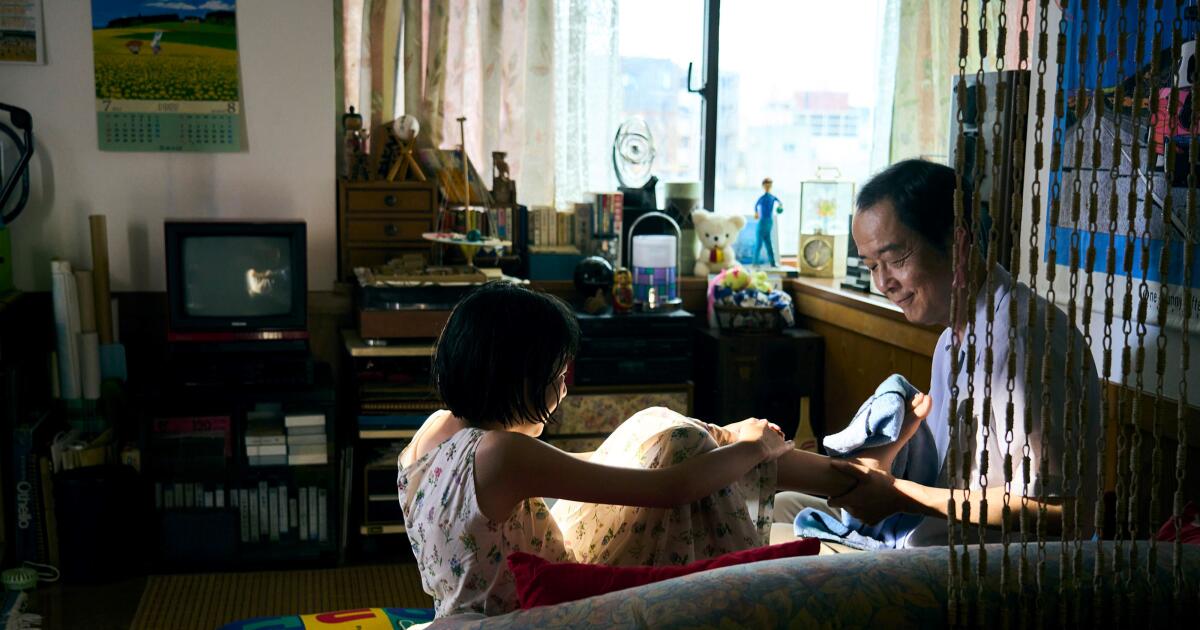
Newcomer Yui Suzuki stars as Fuki, who lives in a nondescript Tokyo suburb in 1987. Her soft-spoken dad, Keiji (Lily Franky), is suffering with terminal cancer in its final stages, the emaciated man spending as much time in the hospital as he does at home. Fuki’s mother, Utako (Hikari Ishida), doesn’t seem very despondent, though: One senses an emotional exhaustion that comes from preparing so long for the inevitable that she’s now mostly numb, her anticipatory grief having given way to frayed nerves.
Fuki’s pre-mourning process is equally complicated. Outwardly, she shows no signs of being devastated by her dad’s imminent passing, happily playing with him, almost in denial of his fate. But “Renoir” subtly suggests the impressionable girl is more aware than she lets on, surrounding her with random reminders of death. Local news breathlessly reports on random domestic murders. Even when Fuki gets away from the city, the camera lingers on her watching a campfire’s dying embers. The film derives its title from the girl’s interest in “Little Irène,” a painting by influential French impressionist Pierre-Auguste Renoir. She asks if Renoir is still alive. No, he’s dead too.
Hayakawa pulls from her childhood in multiple ways for her sophomore feature, which premiered in competition at Cannes last year. “Renoir” takes place in 1987 specifically because that’s the year she turned 11, and, like her protagonist, she was infatuated with “Little Irène.” But there’s a refreshing absence of nostalgia in Hayakawa’s conception of Fuki and her quizzical processing of her father’s fatal illness.
For school, Fuki writes an essay about her wish to be an orphan. She becomes obsessed with hypnotism and mind-reading, an unorthodox strategy to create a sense of control. And, occasionally, she wanders into daydreams that Hayakawa presents so matter-of-factly that viewers may sometimes be unsure if what they’re seeing is actually happening. In “Renoir,” Fuki’s flights of fancy are as naturalistic as her everyday life — a sharp reminder that, for children, imagination and reality are often indistinguishable.
If death has been integral to Hayakawa’s two features, it’s society’s callous reaction to aging that is her primary focus. “Plan 75” eschewed dystopian-thriller conventions to ponder how Japan might one day treat its senior citizens, viewing them as little more than a drain on resources. “Renoir” makes a similar point within a memory piece. Keiji is the one dying, but it’s telling that Hayakawa centers the story on Fuki and Utako, who each, in their own way, seem more concerned about their own personal dramas.
As Keiji’s situation grows more dire, Utako enters the orbit of Toru (Ayumu Nakajima), a workplace advisor with whom she’s instantly smitten, pondering pursuing him romantically. Ironically, Toru preaches the importance of good communication skills in the office, a lesson the film’s guarded family would be wise to heed. While Utako hides her feelings for Toru, Fuki begins a secret odyssey in which she impulsively joins a phone dating service, engaging in conversations with a creepy college student (Ryota Bando) who pushes her to meet in person. This potentially traumatic subplot is the closest “Renoir” gets to traditional suspense, but even here Hayakawa adopts a muted approach, sidestepping shock value for bittersweet commentary about young people’s confusion around love. Both Utako and Fuki chase after human connections fraught with danger, each trying to insulate themselves from the tragedy waiting at home.
“Renoir” may be a delicate wisp of a film, but it’s flecked with thoughtful questioning about whether childhood’s sorrows leave permanent scars on us as adults. Suzuki exudes the fragility and buoyancy of adolescence, playing Fuki as someone constantly imbibing the world, rarely revealing what she’s doing with that stimulus. The simplest moments resonate the strongest, such as when the moody 11-year-old holds a balloon over the balcony of her family’s high-rise apartment, casually releasing her grip so that it tumbles to the ground far below. Does it speak to a desire to jump herself? “Renoir” won’t say, but the character is so poised you feel confident she’ll survive her father’s death. Who knows: Maybe years from now, she’ll even make a touching, emotionally astute movie about it.
‘Renoir’
In Japanese, with subtitles
Not rated
Running time: 1 hour, 56 minutes
Playing: Opens Friday, June 5 at Landmark’s Nuart Theatre
A holiday in Lanzarote turned into a nightmare for the family after John suffered a heart attack – and then they had issues when trying to get their sons home
It wasn’t the holiday end that the family had expected(Image: Handout)
A father of two was on holiday with his family when he suffered a heart attack, but faced turmoil when trying to fly their children home.
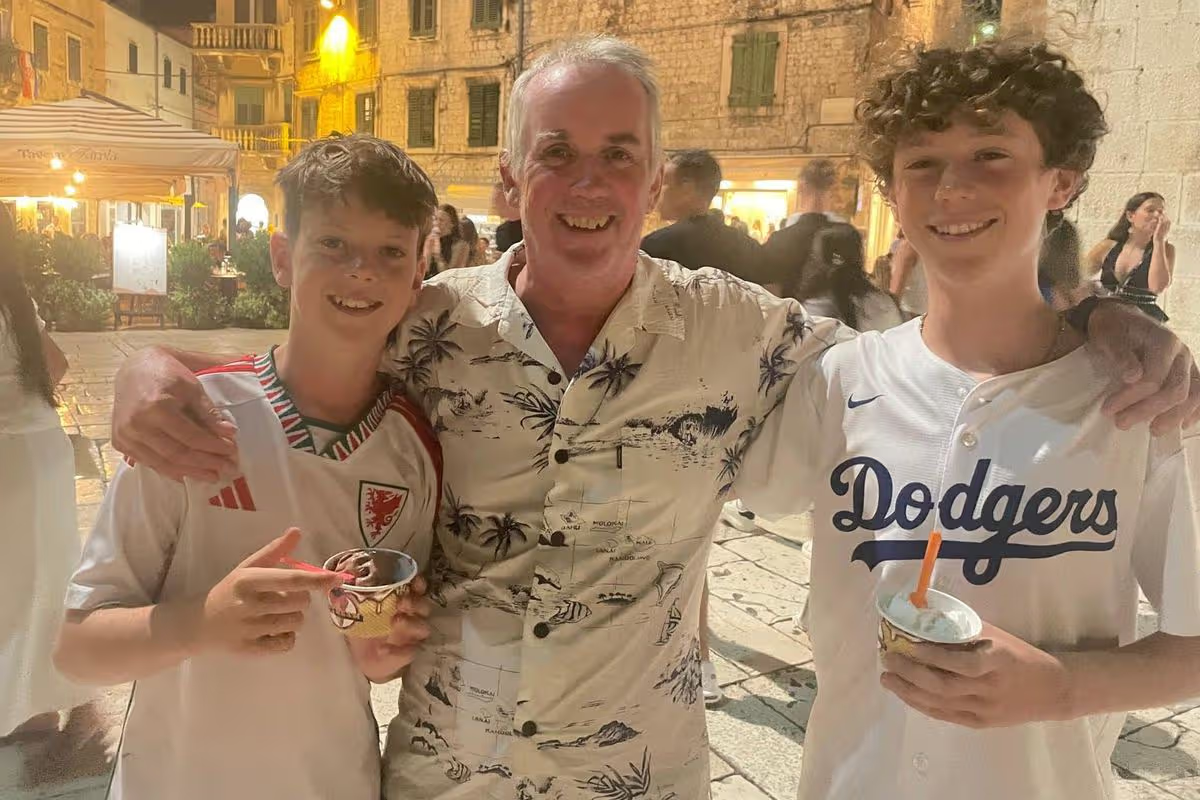
John Evans, 61, from Cardiff, Wales, had been on holiday with his wife, Annette, and their two children, aged 12 and 15, at the time, when he started to feel unwell. While they were enjoying a sun-soaked getaway at a resort in Lanzarote, John felt unwell. When his wife, a nurse, became concerned, they called a doctor. The next thing they knew, John was told to go to hospital.
“At that stage, I didn’t want to make a fuss, but I thought fair enough. I hadn’t had much chest pain at the point, but I was light-headed,” John told the Mirror. At the hospital John was undergoing an ECH when he began to experience “severe pain”.
Do you have a travel story to share? Email webtravel@reachplc.com
Amy Jones
Amy Jones
The 61-year-old explained: “They said, ‘he’s having a heart attack now’. My wife was asked to leave the room, and they put some lines in me. I was vomiting and not very well at that stage, but they managed to put a stent in. Basically, there was an occlusion (blockage) in my left main stem artery, which is the worst possible place to have an occlusion. But then the stent got blocked, so they had to shock me a couple of times.”
Thankfully, John came around, and was taken to Cardiac Care Unit where he remained for three days, before being transferred to another ward in the hospital. Yet, as his heart attack happened the day before the family were due to fly home, the parents were left with the additional stress of trying to get their children home.
“My wife was obviously very upset, and we didn’t know how long I’d need to be in the hospital for,” John said. “We didn’t really want the kids getting worried, so we thought it was best they flew home with the other family (they had been on holiday with), and my sister would then meet them at the airport in the UK. We weren’t sure what we needed for them to fly without us.”
John and Annette signed a note confirming they had given consent for another family to travel with their two children back to the UK. Annette went with the group to Lanzarote airport to ensure everything went smoothly. As they had all checked in to their flight online the day before, they went through airport security and to their departure gate.
However, when they got to the gate, John claimed that his wife was told by easyJet staff that the children couldn’t travel without their parents onboard. John alleged: “They had our four boarding passes and a letter with our consent, but they point-blank refused and said that we had to get a letter fromGuardia Civil to allow the kids to fly without parents, which was a bit of a shock. I had spoken to other people who have travelled with their own kids and taken other kids on holiday, and they never had any problems.”
As a result, their children had to stay in Lanzarote, which John said “put a bit more stress on the wife” who had to find an Airbnb near the hospital and start making plans for how to get their children home, as it was unclear how long John would remain in hospital.
It’s worth noting that easyJet states on its website that children aged 15 years and younger cannot travel unless they are accompanied by an adult. The airline also confirmed to the Mirror that, for British nationals, children under 15 can travel with another adult provided they have written consent from the child’s parent or legal guardian, but said there are different regulations for children of certain nationalities or when travelling to/from specific countries. However, the child must be on the same booking as the adult they are travelling with.
Annette went to the Guardia Civil to inquire about what they needed for their children to travel back to the UK with their godmother, who had flown out to Lanzarote. However, the couple say she was told by staff there that they didn’t need a letter from Guardia Civil, despite what they’d been told at the airport.
After this, they rebooked flights with another airline for their two sons and their godmother to fly home together. John said. “They flew home without any bother on Monday. They didn’t check any documentation and didn’t ask for anything.”
The following Saturday, and after a week in hospital, John was able to fly back to the UK. But following the ordeal, John said: “My wife was struggling, and it was frustrating. I was a bit annoyed at easyJet as they had given my wife the wrong information during a fairly stressful time.”
While John was able to claim the majority of their additional expenses, including the flights, through travel insurance, the issue is not settled in his mind, as he feels that nobody addressed the fact they were given “wrong information at the gate”.
Annette got in touch with easyJet, who apologised for the “challenges you all faced at Lanzarote airport”. However, John said he still feels “quite angry” at the whole situation as “the boys were struggling, their dad was in hospital, and they were in a nasty position – they had to stay around when they could have been at home, out of the stress”.
A spokesperson for easyJet told the Mirror: “We are very sorry to hear about Mr Evan’s circumstances and fully understand this will have been a stressful time for the family.
“We take the safeguarding of minors very seriously and have processes in place to ensure their wellbeing and to support our customers should their children need to be accompanied by someone other than their parent or legal guardian. This includes ensuring children are on the same booking as the adults they are travelling with, and we can make these changes to a booking for customers ahead of travel.
“Whilst Mr and Mrs Evans provided a letter of consent, as their children were on a separate booking to the adults they were travelling with, they were unfortunately unable to travel. We are in touch with the family about their experience and are offering any further assistance they may need.”