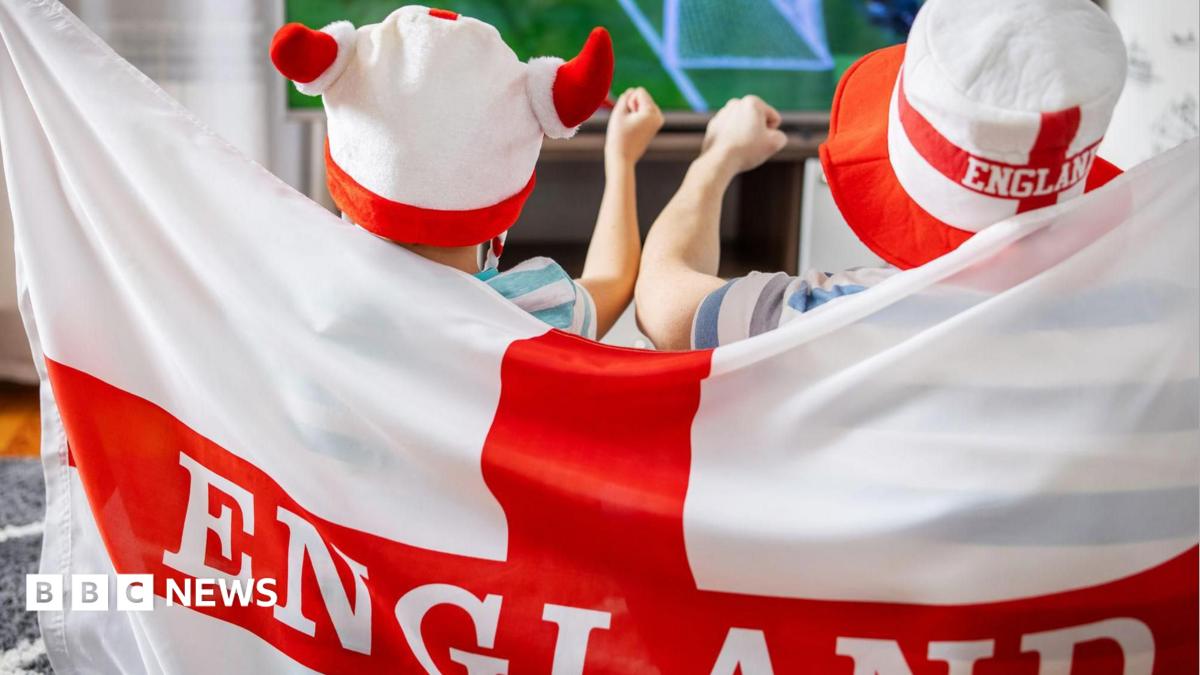
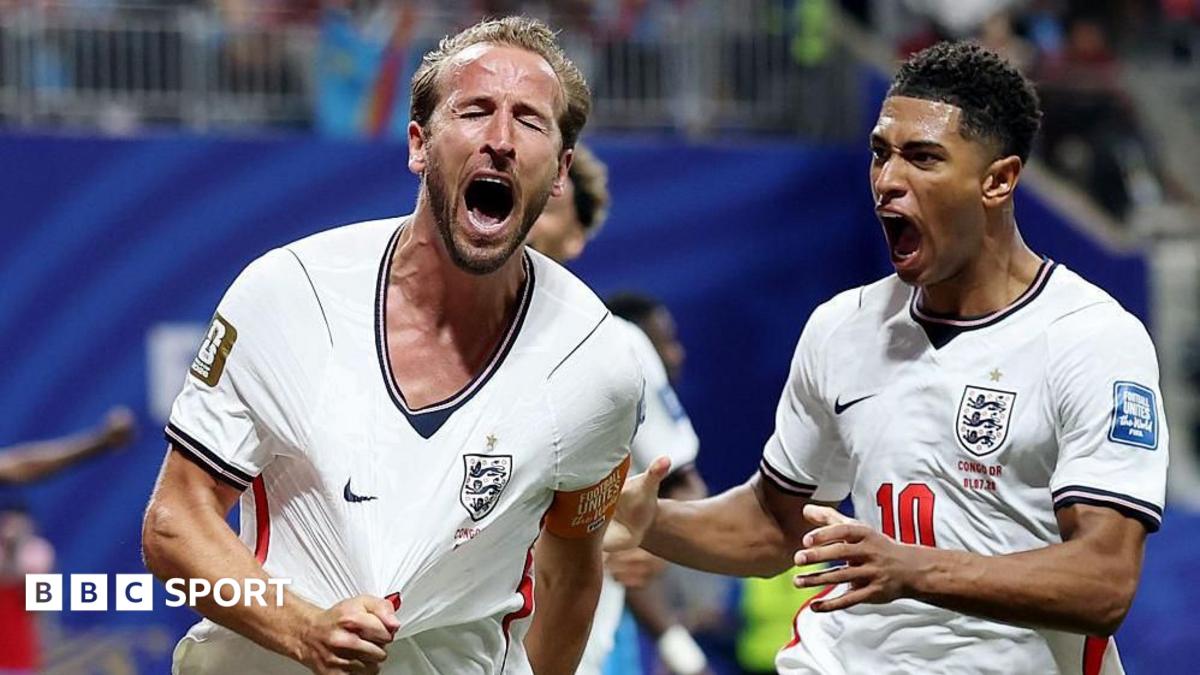
That was England coach Thomas Tuchel’s advice for parents on whether children should be allowed to stay up to support England in their early morning World Cup match against Mexico on Monday.
The time difference means the round of 16 clash against the co-hosts in Mexico City will not kick off until 01:00 BST – and would not finish until closer to 04:00 should it go to penalties.
Speaking to the media after the Three Lions’ victory over DR Congo on Wednesday, a smiling Tuchel said: “There’s so much school to go to, but the World Cup is every four years. Let them watch.”
But some parents and teachers are concerned about the knock-on impact.
In the past, some schools have suspended lessons to allow children to watch games in the knockout stages of tournaments – but the awkward timing of the Mexico match poses some tricky logistical questions.
Let children stay up and risk a wasted school day on Monday – or force young fans to miss what could be a vital victory on the way to World Cup glory?
Unsurprisingly, parents are divided.
One mum, from Epping in Essex, said of the prospect of her two young children staying up: “They couldn’t even if they wanted to.
“They struggled to make it to the 21:00 kick off for the Ghana match.”
Another parent said they would allow the kids to watch the match live, but expected them to be ready for school the next morning.
They wrote on X: “Mine will be watching and still going into the school the next day.
“What’s the big deal? The recent thunderstorms woke then up at 2am and kept them awake for hours and they were fine the next day going to school.”
A third parent praised Tuchel’s comments and called for every pupil to be given Monday off of school.
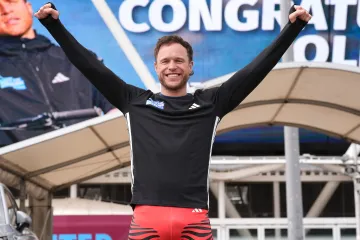
OLLY Murs left talkSPORT hosts Andy Goldstein and Gabby Agbonlahor in stitches after impersonating Ross Kemp’s emotional reaction to England playing during the World Cup.
The singer was asked if he had seen the moment EastEnders star Ross went wild watching the Three Lions play DR Congo and whether he would be willing to replicate the moment.
Sign up for the Showbiz newsletter
Thank you!
Olly Murs did a hilarious impression of Ross Kemp going nuts after Harry Kane scored for England in the World CupCredit: Talk SportRoss posted a video of himself celebrating the win online which has cracked people upCredit: Instagram
The Heart Skips A Beat singer pulled out all the stops to deliver an equally passionate performance, as Andy asked: “Is there any way you could deliver us a Ross Kemp style rallying cry for England against Mexico?”
Scrunching up his face and changing his voice to sound more like Ross, Olly dived right into the task, yelling: “Come on England, we can do this.
“Stop doing this to me, stop it. I’m telling ya, we can do it. He’s coming home.”
Olly then dramatically walked out of frame, leaving Andy in stitches while asking where he had gone.
Olly gave the impersonation his all, altering his voice and pulling funny facesCredit: Talk SporttalkSPORT host Andy then jokingly told Olly he needed to do it again because the video cut outCredit: Talk Sport
Ross filmed himself wearing an England shirt in his living room, shouting at the camera: “Yes! Yes! Harry Kane! Harry Kane!
“That’s what we’re talking about. Great changes made – a massive difference. Come on, England! Close it down. Close it down!”
Punching the air in triumph, he went on: “Four minutes! Four minutes! Plus extra time!”
Looking out of breath, the actor added: “My God, why do you do this to me? Come on, England!”
He captioned the Instagram video, “Harry Kane,” with football and England flag emojis.
A slew of celebs flooded the comments with their amusement, with actor and presenter Adil Ray joking, “Watch the ticker Grant!!!!!” while presenter Rav Wilding posted, “Love you Ross!” and Sky Sports host Adam Smith commented: “Legend.”
Fans also shared their appreciation, with one asking: “Please can I come and watch the next match with you?”
“Grant Mitchell shouting down his phone has made me feel more patriotic than when I was watching the game,” someone else joked.
A third user suggested Ross should join the England coaching team, declaring: “Get him on the team as assistant manager.”
Harry scored two goals in nine minutes during Wednesday’s match, delivering England to a 2-1 win and sending the Three Lions to Mexico City.
You can listen to all FIFA World Cup 2026 matches for free on the talkSPORT app, with live commentaries via talkSPORT’s YouTube and TikTok.
Dakar, Senegal – The silence came before kickoff. Not from fear but anticipation, a nation holding its breath.
Across Dakar, radios crackled from open windows. Men gathered shoulder to shoulder in cafes, their eyes fixed on flickering television screens. Families crowded into living rooms. Friends leaned over phones, tea growing cold as conversation gave way to concentration.
Recommended Stories
list of 3 itemsend of list
The city’s usual rhythm horns, its markets, its arguments, its laughter – did not disappear. It simply yielded to something larger.
Senegal were in the first knockout round of the World Cup, playing against Belgium.
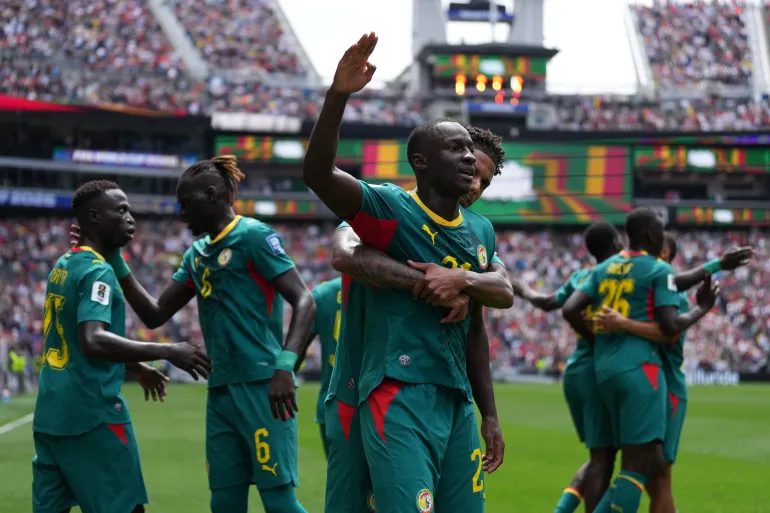
On the 25th-minute mark of the game, the boy from the suburbs of Dakar, Habib Diarra, delivered the nation from its anxiety, sweeping a loose ball beyond the Belgian goalkeeper: 1-0 to Senegal.
Eight thousand kilometres away from the game in Seattle, the United States, Dakar became the stadium. The celebrations only grew after Senegal scored a second goal early in the second half. Confidence turned into complacency. Five minutes from full-time, car horns blared and firecrackers echoed through the night. Victory was near.
But the celebrations came too early.
Belgium scored once. Then again. All in the space of five minutes, completing an astonishing comeback. And then, in the final minutes of extra-time, Senegal gave away a penalty: 3-2 to Belgium.
Problem is preparation
A day later, the silence remains.
Not quite mourning, but more disbelief.
“It’s incomprehensible,” says former Senegal international footballer Ferdinand Coly. “When you control a match with such quality until the 85th minute, you have to finish it. But psychologically, everything changed.”
Coly believes the turning point was not Belgium’s resurgence, but the Senegal coaching team’s decisions.
“The substitutions completely changed the midfield. There was no reason to make them. Once Belgium scored, they gained the psychological advantage. Senegal became fragile. They retreated, played with fear, and never recovered.”
Coly was part of Senegal’s 2002 World Cup squad, the team that famously stunned France in the tournament’s opening match.
“It’s never over… until the final whistle,” he said, reflecting on Belgium’s dramatic comeback.
Since retiring, Coly has swapped his football boots for farming. He has also worked with the Senegalese Football Federation, and believes the national team has lost sight of the basics.
For him, the problem is not talent but preparation.
He criticises what he sees as an over-reliance on data, statistics, and performance apps, instead of building a coherent team identity and developing a clear tactical strategy.
As Belgium searched for an equaliser, their coach was still scribbling notes on a sheet of paper, adjusting and reacting until the very last minute.
“What a contrast!” Coly said. “We’re relying on technology when football is still about reading the game, adapting and thinking.”
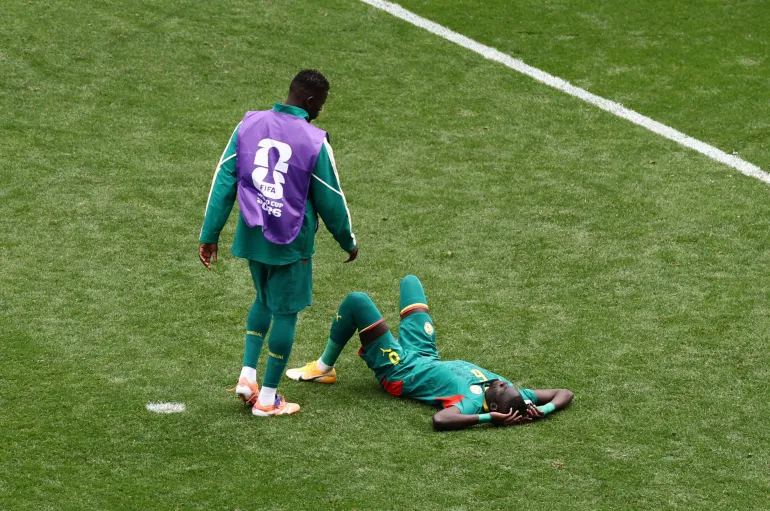
Senegal’s Pathe Ciss looks dejected after the match as the team are eliminated from the World Cup [Lee Smith /Reuters]
Same old struggle
Coly’s analysis echoes that of supporters still trying to process a defeat that slipped away in the closing minutes.
Ibrahima Diop is a die-hard fan of the Lions of Teranga. He travelled to the 2022 FIFA World Cup in Qatar. He was even jailed in Morocco after trouble during the Africa Cup of Nations Final earlier this year.
In that controversial final – played against the hosts, Morocco – Senegal’s coach controversially called his players off the pitch after a disputed penalty decision. Senegal went on to win the match, but later lost the title over the incident.
For Diop, the lesson was the same as against Belgium.
“It comes down to concentration,” he says. “For 85 minutes the team was organised and united. Then it disappeared. European teams are prepared psychologically to fight until the very end. We still struggle in those final minutes.”
Diop also believes Senegal were missing something impossible to measure.
“The team played without its supporters. Visa restrictions and the economic crisis meant many fans could not travel. The players know what that atmosphere gives them. Mentally, it made a difference.”
US President Donald Trump signed a proclamation in December declaring that no visas would be given for business or tourism to nationals of Senegal, and several other countries. This meant that fans with only Senegalese nationality were unable to travel to the tournament.
Diop sees a pattern in this World Cup. Ivory Coast, DR Congo, and now Senegal led until the closing minutes, only to watch victory slip away in stadiums empty of their fans.
Senegal supporters watch as their national football team snatches defeat from the jaws of victory in the World Cup round-of-32 game against Belgium [AFP]
Cruel for country
Football is rarely just football. This World Cup – meant to unite – has revealed the deep inequalities beyond the stands. A nation may be united in victory. But when the referee blows the final whistle, another game begins: the blame game.
Football is opium for the masses, says Coly. It has become one of the few moments when political loyalties disappear. For 90 minutes, everyone wears the same colours.
“The national team is a bridge,” Coly said. “When Senegal plays, there is no political affiliation. It’s simply Senegal. Sport has this unique ability to unite people beyond their differences.”
The unity makes defeat feel disproportionately heavy.
Social media quickly filled with frozen moments from the match: missed chances, defensive mistakes, and coaching decisions replayed endlessly.
Under pressure, football often reveals more than just sporting weaknesses.
Babacar Fall, a Senegalese journalist who has closely followed the national team, argues that the problems began long before kickoff.
According to him, uncertainty over the coach’s future, disagreements inside the federation, and unresolved contractual issues created instability during the tournament.
“There were already problems before the Norway match,” he says. “The coach’s contract wasn’t settled. There were disagreements over player selection. Then, 10 minutes from the end against Belgium, one substitution broke the defensive structure completely.”
He draws an even broader comparison.
“The country is paralysed. There was so much hope after the Africa Cup of Nations, just as there was so much hope politically. Today, there is disappointment. In many ways, the team’s collapse reflects the country’s mood.”
Those views capture a feeling repeated by many supporters in Dakar this week. There is frustration, not simply because Senegal lost, but because of how it lost.
The talent was there. The opportunity was there. For much of the match, Senegal looked like the stronger side. That is perhaps why the silence lingers.
This generation has raised expectations. Winning continental titles transformed how Senegal sees itself. Reaching the knockout stages is no longer enough; supporters believe this team should compete with the world’s best.
Ultimately, it is only football. But in Senegal, football has become something larger than sport. It is a source of national pride, a rare moment of collective unity, and a reflection of possibility.
That is why this defeat feels so cruel. Not because a match was lost. But because, for one evening, it felt as though an entire country’s potential had slipped away in the space of just five minutes.
Mikel Oyarzabal’s brace allows the European champions to dominate Austria and move on to the round of 16.
Published On 2 Jul 20262 Jul 2026
Spain coasted past Austria and into the FIFA World Cup last 16 on Thursday, thoroughly outclassing their opponents in a 3-0 knockout win, with a brace from Mikel Oyarzabal and a Pedro Porro header.
The European champions controlled possession and sliced through the Austrian defence in a typically dominant performance in Los Angeles, as Hollywood stars Penelope Cruz and Javier Bardem and singer Rosalia cheered on.
Recommended Stories
list of 4 itemsend of list
The win, which could have been by a greater margin – with a disallowed goal and a free kick off the woodwork – sets up a tantalising round-of-16 clash with either Portugal or Croatia.
“I’m happy to help the team and get through to the next round. Now we need to rest,” said Oyarzabal directly after full-time.
“They were a physical side and difficult to play against, but we played a good match. We’re happy to qualify,” he added.
As to whether he would prefer Portugal or Croatia in Monday’s last-16 match-up, Oyarzabal remarked: “It doesn’t matter who we face in the next round; I have friends in both teams.”
Oyarzabal sets the tone
Los Angeles Stadium was a sea of red and excitement over the first visit by a bona fide World Cup favourite to the US’s second city.
Spain ratcheted up the pressure gradually through the first half, creating a string of chances after the first hydration break.
Marc Cucurella thought he had scored from a Lamine Yamal corner, but Pau Cubarsi was judged to have encroached on Austria’s goalkeeper.
Alexander Schlager then made a superb diving save, pushing Oyarzabal’s low shot around the post.
Austria’s defence finally buckled in the 36th minute. Pedri pinged a ball wide, left to Cucurella, whose cross to Oyarzabal was calmly side-footed past the goalkeeper.
Spain’s dominance grew further, with Yamal tormenting the Austrians, mainly from the right flank.
An Alex Baena free kick hit the crossbar, and Yamal’s close-range follow-up shot was well saved.
Austria spurned a rare chance at the other end. Romano Schmid played in a late-arriving and unmarked Stefan Posch, but a terrible first touch meant he lost the ball before even attempting a shot.
Oyarzabal scores his second goal against Austria in the 89th minute [Kiyoshi Mio/Imagn Images via Reuters]
‘Ole’
After the break, Spain continued knocking on the door without quite putting the game to rest.
Austria sent on two giant strikers, Sasa Kalajdzic and Marko Arnautovic, and immediately went long, with Kalajdzic putting a header over the bar.
But in the 66th minute, Spain struck again. Baena lifted a cross onto the head of Pedro Porro, who nodded in his first goal for Spain.
Some dogged defending kept the scoreline respectable, including a goal-line clearance by David Alaba from Yamal, who was substituted off to rest moments later.
Spain sprayed passes around the pitch as the final minutes ticked down, eliciting “Oles” from the crowd, as attention turned to a sterner test on Monday in Dallas.
In the 89th minute, a pinpoint Cucurella cross found a completely unmarked Oyarzabal in the penalty area, who slotted the ball home to seal the victory in style.
On Sunday, Mexico will take on England at Mexico City’s famed Estadio Azteca for a round of 16 World Cup match in one of the most hotly anticipated contests of the tournament so far.
But days before anything goes down on the pitch, Mexico and England fans have already started bickering with each other online — from cheeky jabs to heated debates about which country does beans on toast better.
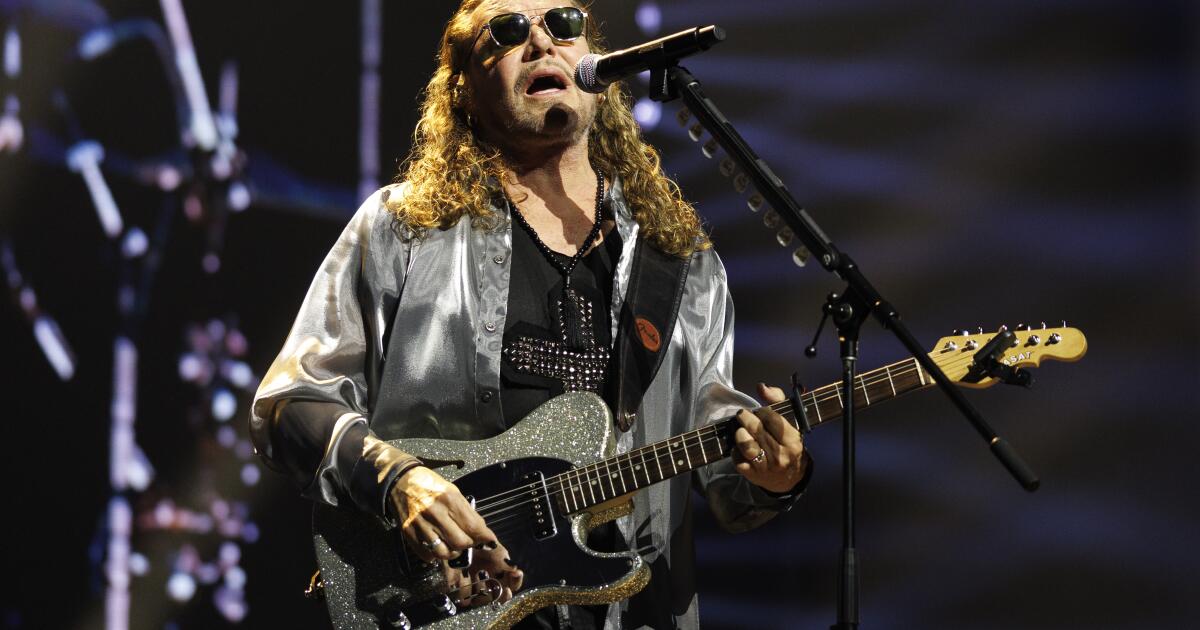
Joining in on the soccer smack talk are two of the biggest rock stars from the countries — Liam Gallagher of Oasis fame and Maná frontman Fher Olvera.
The “Wonderwall” singer’s prediction was so audacious that Olvera took it upon himself to publicly respond with an Instagram video Wednesday evening.
“The singer of Oasis said that Mexico will lose to England 5-0,” Olvera said in Spanish with a giant grin on his face while draped in a Mexican flag. “No way! Check yourself dude! 5 to 0? Calm down! We’ll see you Sunday to see how it goes, dude. Don’t play with me.”
By Thursday morning Gallagher amended his prediction for the match.
“[L]et me just clear someting up I was obv kidding when I said England will beat Mexico 5-0,” the English rocker wrote in an X post. “I reckon it’ll be more like 3-0 to England.”
Maná already made its mark on this year’s World Cup when it played its 1992 hit “Oye Mi Amor” at the tournament’s opening ceremony in Mexico City ahead of the Mexico-South Africa match on June 11.
Sunday’s contest between England and Mexico also marks the first time the English side will play at Estadio Azteca since the 1986 World Cup when they lost to eventual-champions Argentina in a quarterfinal game infamous for Diego Maradona‘s “Hand of God” goal.
The last time Mexico and England squared off in a World Cup setting was during the 1966 World Cup in England where the Three Lions beat El Tri 2-0 in a group stage match at Wembley Stadium.
England roared into Sunday’s T20 World Cup final against Australia with a superb 40-run victory against South Africa at The Oval.
On a brilliant night under the lights in front of a jubilant and expectant crowd, England overcame their recent struggles in pressure matches in the biggest sign of improvement under coach Charlotte Edwards to date.
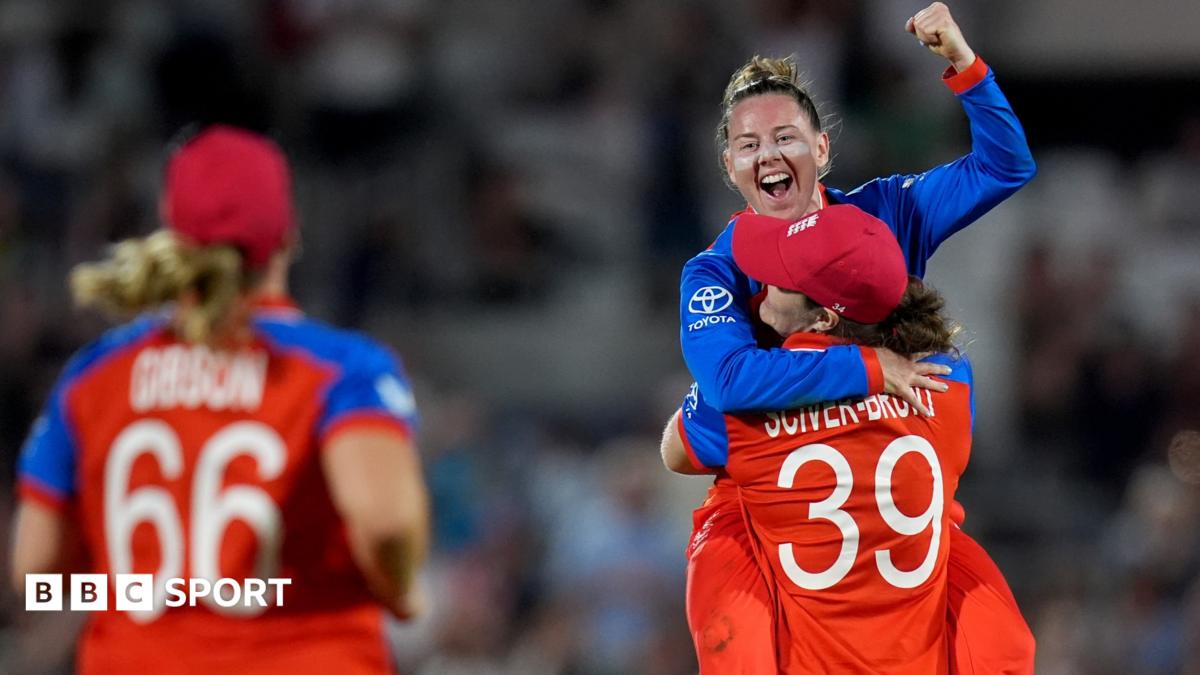
They wobbled early on, faltering at 23-3 in the fourth over, but captain Nat Sciver-Brunt hit an immaculate 75 from 47 on her return from a calf injury which threatened to rule her out of the tournament.
She shared a partnership of 133 from 90 balls with England’s other wise head, Heather Knight, lifting England all of the way to 169-5. Knight, equally as impressive as Sciver-Brunt, made 58 from 47.
And while those two provided almost all of the runs, England’s excellence in the field was an all-round effort.
Their fielding – for so long a glaring weakness – was outstanding.
Sophie Ecclestone took a leaping catch to see off Proteas captain Laura Wolvaardt and break an opening stand of 43, and took a second tough chance later to dismiss Sune Luus. Danni Wyatt-Hodge also ran out Sinalo Jafta with a direct hit.
As for the bowlers, Lauren Bell and Charlie Dean took two wickets apiece, Ecclestone, Linsey Smith and Freya Kemp one each, as South Africa’s hopes were snuffed out.
Their wait for a World Cup win goes on but England, though second favourites against their oldest rivals at Lord’s, have a real shot at a first trophy since 2017.
As Mexico moves to the Round of 16 in the 2026 World Cup following its Tuesday night 2-0 win over Ecuador — advancing in the knockout stage of the tournament for the first time in 40 years — El Tri fans have rallied behind a unifying phrase: “¿Y si sí?”
The simple three-word expression — which roughly translates to “What if… yes?” — has given Mexico supporters all over the world renewed hope: What if Mexico wins the World Cup?
The now ubiquitous phrase has been featured in memes and compilation videos. Even Mexican goalkeeper Memo Ochoa has gotten in on the action, posting a selfie on Instagram wearing a straw cowboy hat with “¿Y si sí?” etched on it.
Origins of the phrase can be traced back to a May interview with Efraín Juárez, who led Pumas UNAM to the Liga MX Clausura final. During the media appearance, journalist Rodrigo Celorio asked the head coach, “Y si sí?” (“What if yes?”), to which Juárez responded, “Y si sí? Y si los Pumas sí son campeones?” (“What if yes? What if Pumas are be champions?”).
Although Pumas would lose to Cruz Azul 2-1, the optimistic sentiment resonated with TikTok users, especially with the World Cup just weeks away. Some hopeful fans took to social media to post their own interpretation of the phrase, often coupled with clips of past Mexican men’s national teams. Others included a mariachi soundbite of Juan Gabriel’s “Hasta Que Te Conocí” from his 1990 performance at the Palacio de Bellas Artes — an appearance that was seen as a milestone for Mexico’s working-class communities given that the iconic Mexico City venue was best known to cater to the elite class. Because if someone who grew up in extreme poverty like Juan Gabriel could bring a mariachi band to the illustrious Palacio de Bellas Artes, why couldn’t the Mexican national team win its first ever World Cup?
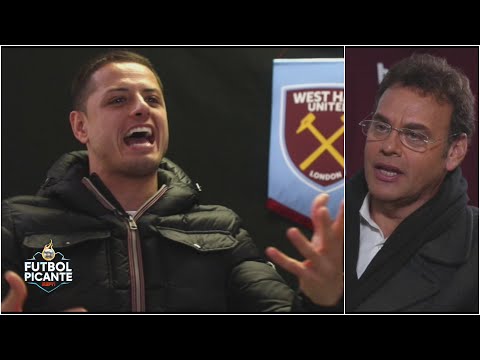
The phrase “¿Y si sí?” is also a callback to a 2018 interview Javier “Chicharito” Hernández gave to journalist David Faitelson, who asked the former striker if he was serious about Mexico’s chances of winning that year’s tournament.
“Why can’t we be Greece in the [2004] EuroCup? Why can’t we be Leicester in the Premier League? Why not?” said Hernández, referring to underdog teams that defeated the odds against more favorable clubs.
As the two discussed Mexico’s probability of advancing in the knockout stages of World Cup, Hernández balked back with his now famous phrase: “Imaginémonos cosas chingonas!” (“Let’s imagine badass things!”), followed by “Porque no?” (“Why not?”)
Now both “¿Y si sí?” and “Porque no?” have taken on new meaning in 2026. After Fox Deportes reporter Rodolfo Landeros asked attacking midfielder Gilberto Mora why Mexico could win the World Cup ahead of the June 11 kickoff, the 17-year-old responded with “Es qué, porque no?” (“Because, why not?”).
After Mexico won all three of its group stage matches, TUDN reporter Julio Ibáñez asked the wunderkind Mora, “¿Y si sí?” to which the young soccer player replied “Y Porque no?” When Ibáñez asked if people should get their hopes up, Mora said yes. “Si, que se ilusione” (“Yes, they should dream big”), playing up the running gag.
With Mexico set to face England, one of the teams favored at the start of the tournament, on July 5, would it be so wrong if fans allow themselves to dream? ¿Y si sí? ¿Porque no?
SANTA CLARA, Calif. — Mauricio Pochettino’s team continues to do things in this summer’s World Cup that no U.S. team has ever done before.
Its three wins are the most in a single tournament. So are the 10 goals in four games. It has the best goal differential ever and its two shutouts ties a record.
Yet all that means absolutely nothing to the players.
“They’re great milestones,” captain Tim Ream said. “But I don’t think anybody’s even once mentioned the different things that we’re doing. We’re focused on what we’re doing daily on the training ground, because that puts us in the best possible position to to put these performances.
“So yeah, not aware or even worried about records that we’re breaking.”
Well, except for maybe one.
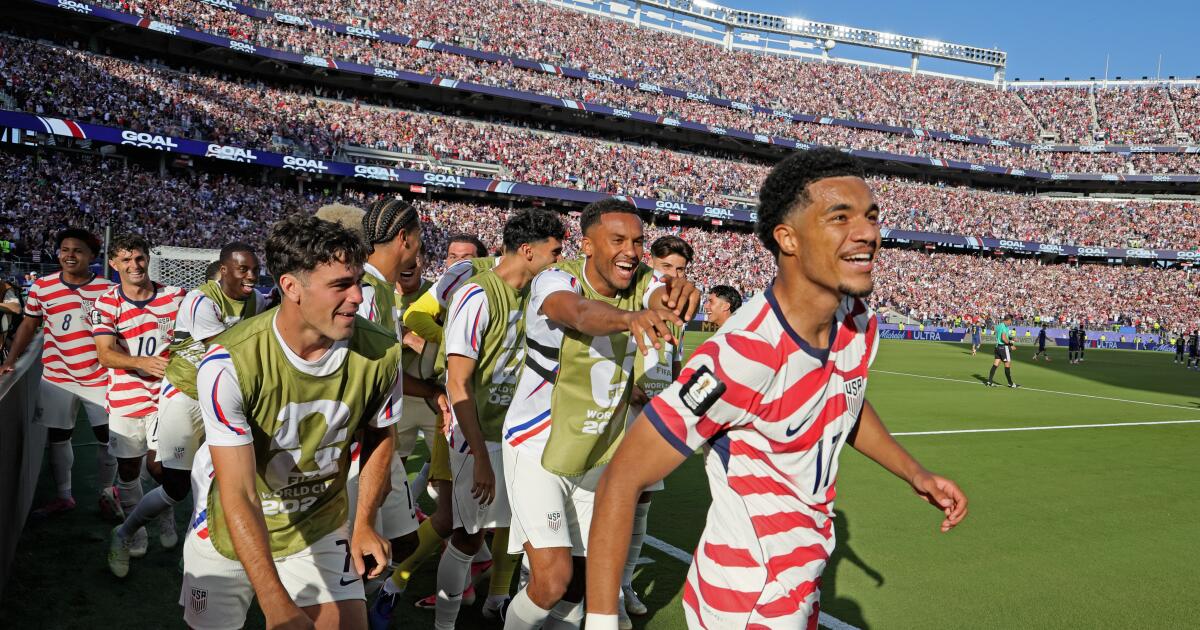
With Wednesday’s gritty 2-0 over Bosnia and Herzegovina, a game the U.S. finished with just 10 men, the Americans won a game in the World Cup knockout stage for just the second time. That sends them on to a round-of-16 meeting with Belgium on Monday in Seattle where a win would be — you guessed it — historic.
“It’s cool and it’s great and it’s an accomplishment,” midfielder Weston McKennie said of the records. “But at the same time, we have high expectations for ourselves. That’s what we expect of ourselves, what we expect of our team.
“We just want to focus on Belgium now and continue to try to make history.”
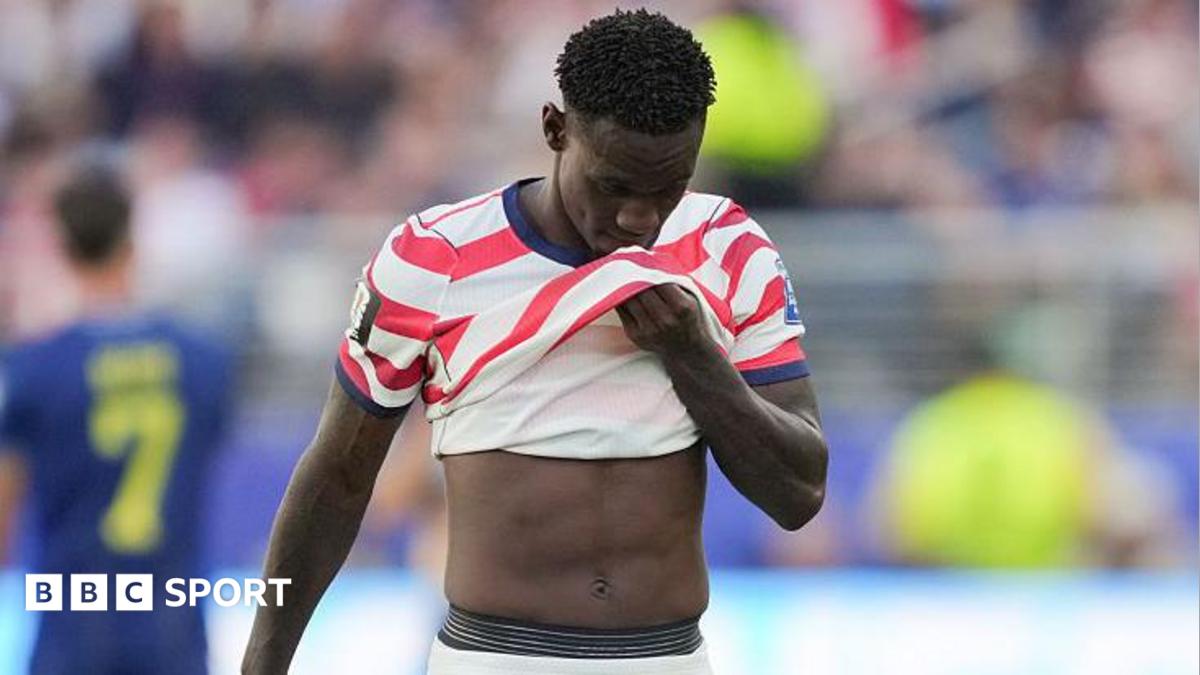
That chore got a good deal more difficult because of an unwanted team record that was also set Wednesday. When Folarin Balogun scored a goal late in the first half then drew a red card early in the second, he became the first American — and third player ever — to get one of each in the same World Cup knockout game.
“Cool record,” defender Chris Richards said.
But while the goal, Balogun’s third of the tournament, proved to be all the U.S. needed to beat Bosnia, the red card — which cannot be appealed according to U.S. Soccer — means he’s suspended for the game with Belgium.
“It’s just so unfortunate, honestly,” Christian Pulisic said. “Looking back at it, it seems so harsh. I just told him he’s done so much for us, and now we’ve got his back.”
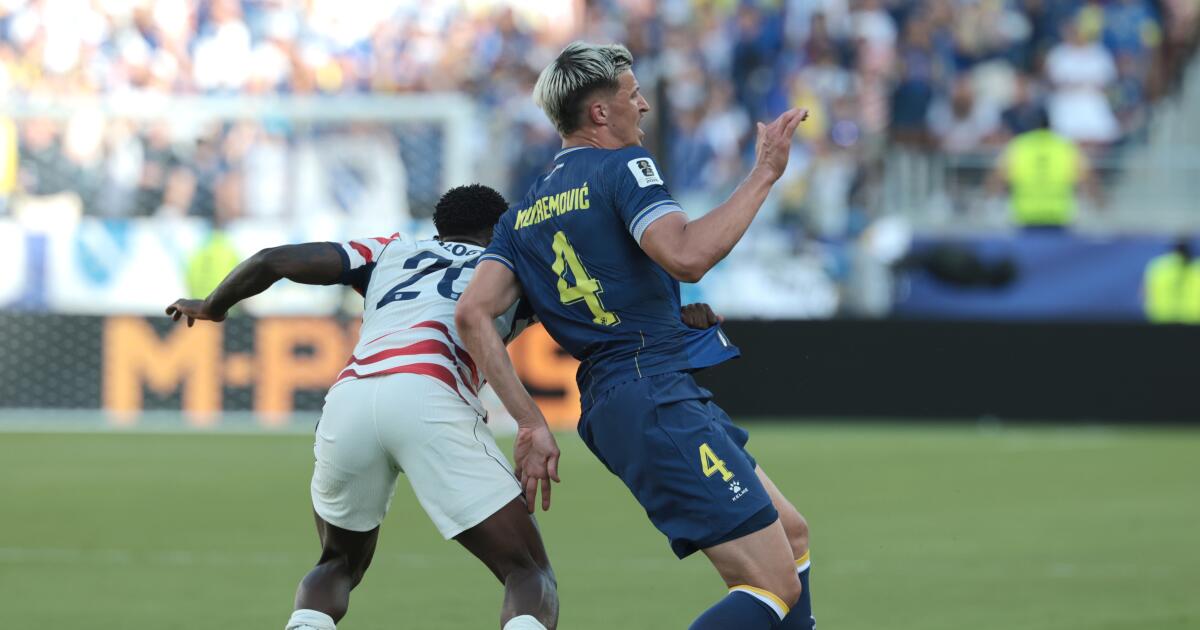
The red card came in the 64th minute with the U.S. protecting a 1-0 lead built on Balogun’s goal just before the intermission. The American striker was battling hulking Bosnia defender Tarik Muharemovic for a loose ball when he inadvertently raked Muharemovic’s right calf with his studs up, then landed on his ankle, twisting it awkwardly.
Brazilian referee Raphael Claus did not flash either card before stopping play at the behest of the video assistant referee. But after consulting a slow-motion reply, Claus gave Balogun a red card for a dangerous challenge.
“For me, never is this a red card,” said Pochettino, now the winningest U.S. coach in World Cup history. “Watching after on TV, never was [it his] intention to step up on the player. That was a normal action in football.”
Maybe. But Claus sent Balogun off just the same, leaving the U.S. to protect a one-goal advantage for the final 30 minutes while playing a man down. It was probably the sternest test the Americans have faced in the tournament.
“It would be easy to have an excuse if they did score,” McKennie said. “But that’s not the type of team we are.”
For Ream, the challenge was actually no challenge at all.
“Would it be weird if I downplayed this and said [I] wasn’t even fazed by it?” he said. “It didn’t feel like we were down a man. We were still able to carve out chances and we were still able to keep hold of the ball. Everybody knew their roles.
“It felt really calm and felt really, really easy and simple for us in that moment.”
And that allowed another hero to shrug off the pain of his own wounds and step up big.
Early in the second half a Bosnian player stomped on Malik Tillman, shredding his boot and cutting his right foot (but not drawing a red card). During the hydration break, Tillman was able to change shoes and in the 82nd minute, his white sock turning red with blood, he found himself standing over a free kick just outside the Bosnian penalty area.
“I’ve been dreaming about this game. I’ve been dreaming about, yeah, maybe taking a free kick and scoring,” said Tillman, who bent the ball off the gloved right hand of Bosnian keeper Nikola Vasilj and into the net for his first World Cup goal. “I trained for this in our practices and then it actually came true.”
So did the team’s dreams of reaching the round of 16, only now they’re arriving without their leading scorer, who will have to watch the Belgium game from the stands. Balogun’s absence, however, creates opportunity for others, with Haji Wright and Ricardo Pepi the most likely candidates to take his place.
And if this U.S. team has proven anything, it’s proven that it loves nothing more than embracing opportunities to prove people wrong.
“We’re going to miss him for the next game but we know that if it’s Pepi or Haji, whoever, is going to step up next and they’re going to do the job just as well as he did,” Richards said of Balogun. “One thing about this team is we’re really a big family and we’re shown it this whole tournament.
“Coming in, there was a lot of question marks about our whole team in general. Game by game we started to put ourselves right. Because we knew we had it the whole time.”
The penalty awarded against the Senegalese national team in the final moments of their match against Belgium on Wednesday caused widespread controversy after it led to their elimination from the Round of 32 at the 2026 World Cup, in a harsh turn of events that saw the “Lions of Teranga” go from leading 2-0 to losing 3-2.
Honduran referee Said Martinez awarded a penalty kick at the end of the second period of extra time, after a VAR review, following a challenge by Senegal’s Lamine Camara on Belgian captain Youri Tielemans, with the score tied 2-2 and the match heading towards a penalty shootout.
The “Archivo VAR” platform, which specialises in analysing refereeing decisions, said that VAR intervened excessively during the match, confirming that it was Tielemans who extended his foot in front of Camara, causing the contact.
The platform added, via its account on “X,” that the incident did not warrant VAR intervention, explaining that it was the Belgian player who forced the contact entirely, and that the situation did not amount to the clear and obvious error needed to justify the referee reviewing the decision.
Recommended Stories
list of 4 itemsend of list
The decision triggered a wave of controversy on social media, with one fan writing: “This is 100% robbery. Senegal have been robbed. How is this a penalty? Belgium do not deserve to go through corruption.”
Sports content creator Sneako blamed the result on match ‘”rigging”.
“Rigged! Senegal should storm the pitch right now. Leave the pitch and go home. This is rigged!”
Another sports fan wrote: “I’m sorry, but this was never a penalty. Camara went to clear the ball, but it was Tielemans who got in his way. Senegal was robbed, and it should have been Belgium going out.”
Spanish sports journalist Manolo Lama commented: “They stole the Africa Cup of Nations from them, and now they’re stealing all the solidarity with Senegal at the World Cup too.”
Senegal’s Habib Diarra, front, celebrates scoring their first goal with Ismail Jakobs, back, during the World Cup round of 32 soccer match between Belgium and Senegal in Seattle, Wednesday, July 1, 2026. (AP Photo/Abbie Parr) (AP)
Egyptian journalist Mohamed Saeed linked the incident to what happened in the 2025 Africa Cup of Nations final against Morocco, writing: “You can feel that the penalty awarded against Senegal in the final seconds was a harsh lesson and a difficult test. After the scenes from the Africa Cup of Nations final, I think that if it weren’t for the change in the rules around the withdrawal incident, this scene could have repeated itself.”
Another sports fan, Fares Ahmed, wrote that football ”teaches lessons” and the outcome brought back the memory of Senegal at the tournament in Morocco.
“They took advantage of the tournament’s vulnerable position and the host’s need to make it a success, and used that to impose their pressure,” Ahmed wrote. “Today, the scene was almost repeated against Belgium — a penalty in the final minutes, objections, and disbelief over the decision — but this time there was no threat of withdrawal, because you can’t risk penalties like that in a tournament the size of the World Cup.”
Drawing a connection between the two events, one follower wrote on “X”: “When there was a clear penalty in the Morocco final, they rebelled against the decision and tarnished the reputation of African football, just because the tournament was in Morocco. But when an unclear penalty came along that eliminated them from the World Cup, they stayed silent, because this time it was in the West.”
Senegal’s Pathe Ciss #6 kneels on the pitch after Belgium were awarded a penalty during the World Cup Round of 32 match in Seattle, on Wednesday, July 1, 2026 [Maddy Grassy/AP Photo]
After the dramatic penalty was awarded, Tielemans stepped up to take it and scored successfully, netting Belgium’s third goal and capping off an unexpected comeback that eliminated the Lions of Teranga.
But back on the pitch, Senegal had the run of play for 85 minutes. The African team held a two-goal lead, and had all but secured a spot in the round of 16 at the World Cup.
Within five minutes, it crumbled and the players were feeling it.
“We were at the heart of writing the beautiful pages of the history of our football in this world,” defender Krepin Diatta said. “And we have to accept that we failed at our mission.”
Senegal midfielder Habib Diarra said. “We had a good first half, but it wasn’t enough. A match lasts 90 minutes, and we’re devastated. It’s very tough. I don’t know what to say. When you’re on the pitch, you have to give your all, and that’s not what we did. We’ve only got ourselves to blame.”
Toronto, Canada – The year was 2009, and a sculpted, spiky-haired, 24-year-old Ronaldo was greeted by hundreds of adoring fans in Toronto dying to catch a glimpse of the newly signed Real Madrid superstar as he graced the city with his presence for the first time.
Fast forward 17 years, and the visuals are almost identical, give or take a few differences.
Recommended Stories
list of 4 itemsend of list
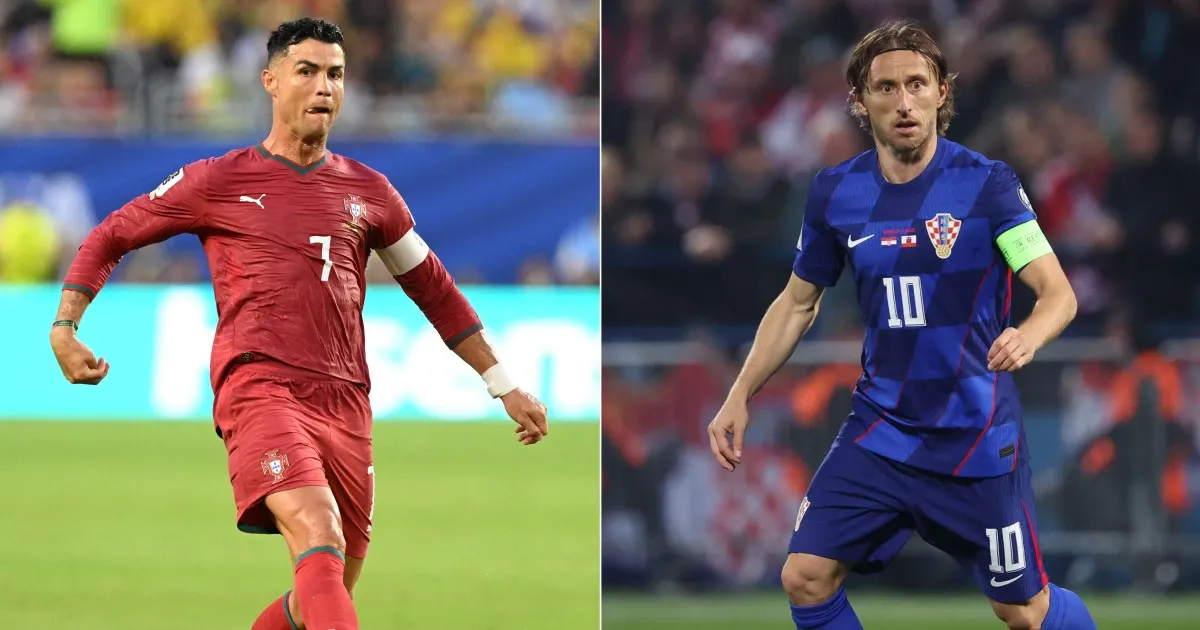
Hundreds of Toronto residents took to the streets on Wednesday, lining highways, thronging downtown intersections, climbing onto each other’s shoulders and peeking out of high-rise buildings, all to get a 10-second glimpse of Ronaldo passing by, as Portugal arrived in the city ahead of their World Cup round of 32 clash with Croatia.
The last time the football icon was in Toronto was August 2009 when Real Madrid played a friendly against Toronto FC, coincidentally at the same stadium where Portugal will take on Croatia on Thursday evening.
Wednesday being a public holiday increased the chances of fans catching a glimpse of the 41-year-old football legend at what is likely to be his last ever World Cup, and potentially last World Cup match if Portugal are knocked out of the tournament.
The city was buzzing with Ronaldo fever right from the minute Portugal landed at Pearson airport early Wednesday afternoon.
Biker groups lined Gardiner Expressway to escort the Portuguese team bus to the Delta Hotel, where hundreds of fans gathered to get a glimpse of Ronaldo as he exited the bus, and then again when the team headed to Centennial Park for their training session.
Even at the grounds in Etobicoke, dozens of starstruck fans sporting red #7 jerseys stood outside the field as Ronaldo and the Portugal team warmed up on what was supposedly the hottest day of the year in Canada.
The fan frenzy was valid; for most Portugal fans in the city, this was the closest they would get to seeing the one and only Cristiano Ronaldo in person.
Sky-high ticket prices for the match, some as ludicrous as $30,000 Canadian dollars ($21,000), were unaffordable to the average football fan.
Tickets to the sold-out game have averaged $2,500-3,500 Canadian dollars over the past week on resale platforms, even though Ontario laws forbid third-party sales above face value.
“I’m a dad and a husband, and I couldn’t justify spending that kind of money on a ticket no matter how much I want to see Portugal play in Toronto,” Joey, 33, told Al Jazeera, as he closed out his shift at Bairrada Churrasqueira on the fringe of Little Portugal in Toronto.
“But it still feels surreal that Portugal is playing here in Toronto, who would have ever thought that,” the restaurant worker beamed, as he flipped chairs onto the tables before mopping the floor.
Worlds collide
Joey, who declined to share his surname, was one of tens of thousands of Portuguese-Canadians who have called Toronto home for several decades now.
The first wave of immigrants arrived in the 1950s seeking better opportunities for themselves and their families. Just last year, the city inaugurated the Azores Parkette in the heart of Little Portugal to honour the 18 “pioneering men” who departed Sao Miguel, Azores, and landed on the shores of Halifax to build a new life.
So when Portugal take the field in Toronto Stadium on Thursday, it’ll be more than just a game for generations of hyphenated Canadians in the city; for them, it’s two worlds colliding in a once-in-a-lifetime moment.
For Shannon Medeiros, 46, the match holds even more significance. The football fanatic fell in love with the sport aged six, inspired by her father, who attended every game and coached her as she delved into the sport.
The game has been a crucial part of her life, and her family’s, since her father and his family arrived in Canada when he was 16 years old, in the 1950s.
Like many immigrants at the time, schooling had to be abandoned in favour of a job to help make ends meet for the family, which, in his case, arrived in Montreal with a single suitcase and lived in another family’s basement until they could afford a place of their own.
Football was the only non-negotiable, axiomatic staple in the Portuguese community that grew from a few hundred to more than 300,000 people.
“It’s something we do as a family now; that’s how much the game means to us,” said Medeiros, who now coaches her two sons in the sport the way her father did for her.
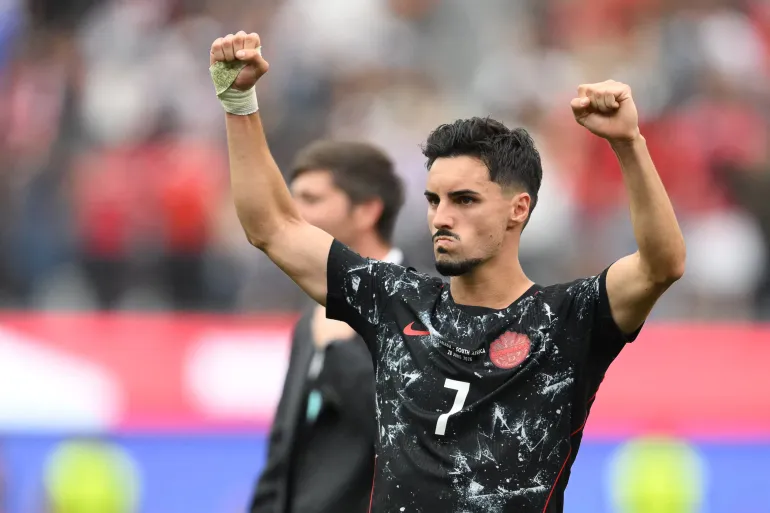
The storyline is almost identical to that of Stephen Eustaquio, Canada’s wonder boy who scored against South Africa to send his team to the World Cup round of 16 for the first time in history.
Canada’s Stephen Eustaquio celebrates after winning the 2026 World Cup round of 32 match against South Africa at the Los Angeles Stadium in Inglewood on June 28, 2026 [AFP]
The Ontario-born, partially Portuguese-raised football star was guided into the sport by his father and his Portuguese background for a love of football. The sport was a way for the community to come together and enjoy a shared sense of identity, as Canada welcomed dozens of ethnicities decade after decade.
“The one thing you’ll see in the Portuguese community is how proud we are – of our heritage, our culture, to wear the jersey, put a flag up,” Medeiros told Al Jazeera.
A walk through Little Portugal during the World Cup would show you just that; flags split diagonally with Canada and Portugal in each half, fluttering on porches or glued to bedroom windows, an omnipresent CN Tower needle peeking above the neighbourhood anywhere you stand.
Match predictions
Medeiros admitted that while the team has not been playing to their full potential at the tournament, they have a strong chance of winning against Croatia. She’ll see whether her prediction comes true or not as she watches the game with her father at his house.
Elsewhere in the city, fans without match tickets are heading to sports bars, match screenings and fan festivals to see whether Ronaldo will score his first knockout-round goal at a World Cup that saw an unimpressive start for the Portuguese captain.
“I think Portugal will win 2-1, or maybe 3-1. But don’t tell my girlfriend I said that,” Josh Madeiros grinned, as he waited for his drink at Garrafeira. The Portuguese-Canadian 35-year-old will be supporting his side away from his girlfriend, who is Croatian.
He thought long and hard before admitting that Portugal’s team has had a shaky run so far, and that there’s only so much Ronaldo can do as a player in his forties.
“But he’s still my guy, and he’s still the GOAT [greatest of all time].”
SANTA CLARA — The U.S. cannot appeal Folarin Balogun’s red card and ensuing suspension for the Americans’ round of 16 match against Belgium, U.S. soccer officials confirmed.
FIFA rules governing the 2026 World Cup, first cited by the Athletic, state that “a sending-off automatically incurs suspension from the subsequent match. The FIFA judicial bodies may impose additional match suspensions and other disciplinary measures.”
The only instance in which the U.S. could appeal is if FIFA’s disciplinary committee decides to suspend Balogun for more than one game after reviewing the incident.
Broadcast commentators and fans immediately questioned the decision after Balogun was shown a red card during the U.S.‘s win over Bosnia-Herzegovina on Wednesday at Levi’s Stadium.
Balogun crashed into Bosnia’s Tarik Muharemović, landing his foot on top of Muharemović’s during the physical match. Muharemović hit the pitch, howling in pain, and was treated on the field. The referee used the video assistant referee to review the play and determined it merited a red card.
U.S. fans accustomed to appeals in the NBA and NFL suggested that an appeal include video of Lionel Messi receiving no discipline for stepping on an opponent’s calf earlier in the tournament.
The red card on the field, however, remains the final word barring any extra games added to Balogun’s suspension.
“The World Cup is ruining my life,” a neighbor recently said with a laugh. “I’m supposed to be working; instead I’m watching World Cup. I’m supposed to be doing chores; instead I am watching World Cup.”
I laughed in guilty recognition. We had met on the street by chance while I was walking the dog. Having just spent the last two hours watching, then celebrating Lionel Messi’s hat trick during Argentina’s first-game victory over Algeria, I had less than an hour to get back in time to watch Austria play Jordan.
That was on Day 6, and it’s only gotten worse. If I had to calculate my own ratio of work done to soccer watched … well, as I am not a sports reporter, I don’t think my editor would be thrilled. (Though I’m sure she appreciated the England/Congo updates I provided as I finished this piece.)
Like millions worldwide, my family and I have been deeply, and in our case, weirdly, engrossed in this year’s games. “Weirdly” because we do not follow men’s soccer. The World Cup is different, of course — going in, I figured I would check out the U.S., keep an eye on Messi, then tune into the final few games. Perhaps my husband would join (but only if he at least pretended to understand the offside rule), but with our two oldest children out of the house, it is, with the exception of the Super Bowl, unheard of for our family to concurrently view any sporting event in real time.
Until this World Cup. I’m not quite sure how it happened, but suddenly we’ve got game times written onto our calendar. Entire days have been spent in front of the TV with at least one child and the others watching from their homes, our family texts studded with “are you watching…?,” “did you just see that?” and, of course, “OMG MESSI!”
(I would attempt to calculate my recent ratio of chores done to Messi videos watched if I weren’t legitimately concerned that my family would have me committed.)
The fact that my son and his girlfriend live in Kansas City certainly helped spark our newfound fascination. Yes, Los Angeles is also a host city, but L.A. hosts so many things; inevitably we were mostly concerned about what it would do to the traffic. KC, on the other hand, is the smallest and most unlikely of the host cities, and over the last few years we have seen — on visits and through my son’s accounts — all the construction, effort and can-do spirit that has gone into preparing for the event.
We were thrilled when it was announced that Argentina, England, the Netherlands and Algeria would be based in or near KC. We wanted the city to shine, and it has — from nearby Lawrence’s enthusiastic adoption of Algeria to Messi’s historic hat trick at Kansas City Stadium.
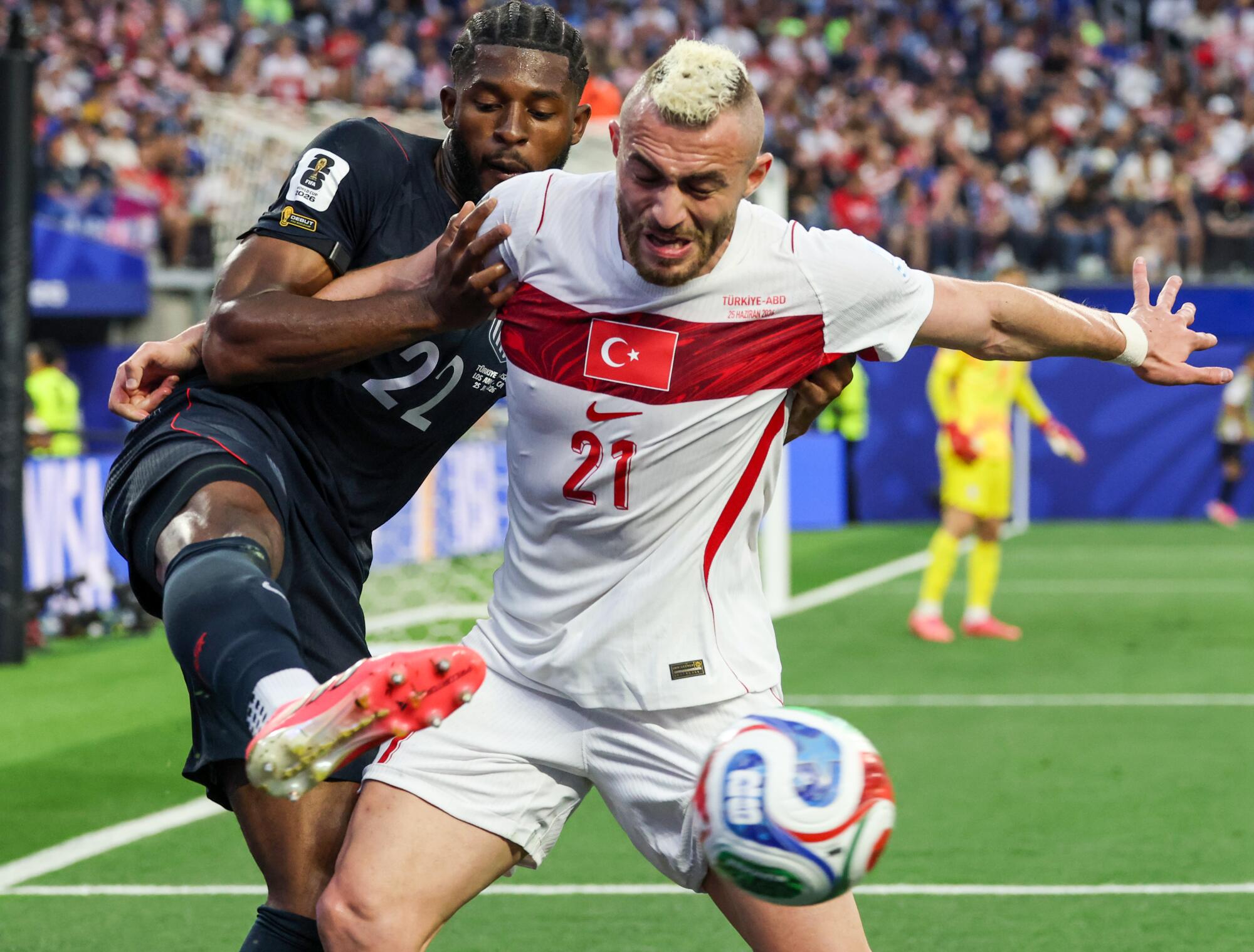
Team USA defender Mark McKenzie, left, and Turkey midfielder Baris Alper Yilmaz in the World Cup match at Los Angeles Stadium on June 25.
(Robert Gauthier / Los Angeles Times)
But it’s more than vicarious Midwestern pride. When our older daughter began texting out missives from the earliest games and our son sent pictures of fans streaming into Kansas City Stadium, we started watching as a way to stay connected.
First, as a family, and then to our country and the rest of world.
The games have been inevitably exciting, especially as now that they’re in the knockout round, but the overall sensation was unexpected relief, a soul-soothing balm.
At a time when the news cycle seems to serve up nothing but conflict, crisis and woe, the World Cup offers shelter, a truly international event in which conflict is defined by long-term sports rivalries and questionable referee decisions.
We want our national or preferred teams to win, of course, but no matter the outcome, it’s impossible not to be thrilled by the sight of phenomenal play, underdog tenacity and so many adoring and enthusiastic fans.
Soccer is called the beautiful game for many reasons, and hours/days/weeks of sustained beauty is impossible to resist. Even social media has surrendered to spectacular highlights along with tales of Japan supporters cleaning up stadiums, fans of the victorious consoling fans of the defeated and Europeans discovering the glories of free refills and ranch dressing.
None of this changes the realities we face in America and the rest of the world. Grocery and gas prices remain catastrophically high; Iran continues to contradict U.S. claims of diplomatic resolution to an unpopular war. The unnecessarily revamped reflecting pool in Washington remains a swamp of algae and tourist arrests, as the semiquincentennial struggles under the weight of our president’s self-centered hubris.
But for a few blessed weeks, the World Cup offers inspiration, escape and cultural healing.
It has also, thus far, escaped President Trump’s so often internationally insulting social-media notice and more importantly, his presence. Historically, the leaders of host countries attend the opening match; Trump has, apparently, been too busy (including planning and attending the UFC Freedom 250 cage match recently held on the South Lawn.)
Given his tendency to suck the oxygen out of any room (like his recent reception at Game 3 of the NBA Finals in New York), it’s definitely for the best. If nothing else, the World Cup has given us a chance to take a break from politics and talk instead about Messi, France’s Kylian Mbappé, England’s Harry Kane and all the amazing goalkeepers, including Cape Verde’s now-iconic Vozinha.
Never before have I so understood the therapeutic power of sport.
Who wouldn’t want to at least take a break from rising measles cases, the latest federal or Supreme Court decisions and primary tea-leaf readings to lose themselves in a game where exquisitely patient passing suddenly bursts into spectacular feats of speed and footwork? Where a well-defended ball can suddenly become a goal with a nearly undetectable flick of a foot, or a perfectly placed shot blocked by a goalie’s incredible ability to launch into space? Where an outcome that seems assured can be overturned in the final minutes to the collective roar of an international cast of thousands?
Vozinha of Cape Verde makes a save during the World Cup match between Spain and Cape Verde at Atlanta Stadium on June 15.
(Justin Setterfield / Getty Images)
Like many Americans, I have been occasionally embarrassed by the World Cup’s exposure of my world-geography ignorance — I know where Bosnia and Herzegovina lies on a map, but until recently, I couldn’t place Cape Verde, Curacao or, if I’m being completely honest, Cote d’Ivoire.
Isn’t it wonderful, though, to have a reason to reacquaint yourself with a world map that isn’t related to war, natural or man-made disaster or economic and political tension? The current U.S. administration may seem to be at odds with just about everyone, but visiting World Cup fans are here to remind us of all we share, beneath our crazy wigs and face paint, our cheers, groans and chants.
And we, as hosts, have shown them that America is so much more than the sum of our current government’s policies and posturing.
Watching all this happen, in real time, has been magical, miraculous and magnetic.
Not every moment, of course. Various visa issues created unnecessary and embarrassing drama; high ticket prices and transportation issues were blamed for empty seats at some of the early games. Members of the Iranian team and its coaching staff criticized the way they were treated (though the team left a handwritten note in the dressing room of Los Angeles Stadium, thanking L.A. for its hospitality). The controversial hydration breaks, and the extra commercials they accommodate, can be irritating (though when it’s close to 100 degrees in many stadiums, quite necessary). And though it didn’t matter in terms of standing, watching the U.S. lose to Turkey wasn’t much fun for American fans (though the Turkish exuberance was pretty infectious).
Overall, the 2026 World Cup has done exactly what it was supposed to do: create, in this country, a stage for the finest teams and players in the world’s most popular sport and, more important, carve out five weeks in which we can all spend a few hours removed from the political and cultural divisiveness that threatens to define us.
It’s space in which we can cheer, gasp and leap out of seats along with our families, friends and all the millions we will never meet but to whom we are connected all the same.
Now if you’ll excuse me, the next game is about to start.
The rules are simple. Each day there’s a new footballer and the challenge is to guess who they are in as few attempts as possible.
After each wrong guess you unlock a new clue. Guess the answer after as few clues as possible to score more points.
Three is a good score, four or five points is exceptional.
So take part and return for more tomorrow.
Today’s player and clues set by BBC Sport’s Flora Snelson.
After more quizzes? Go to our dedicated Football Quizzes and Sports Quizzes pages and sign up for notifications to get the latest quizzes sent straight to your device.
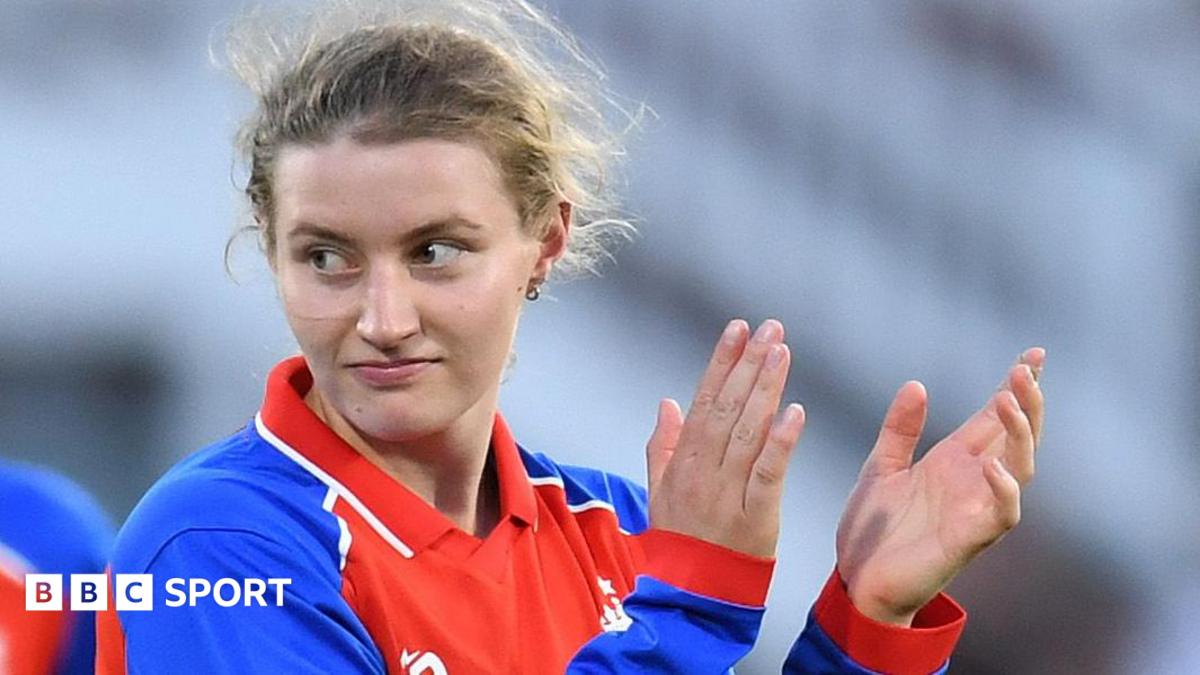
Born in the Midlands – her football team is Derby County – Dean learned cricket at Havant Cricket Club in Hampshire, where her father Steven played after a fine Minor Counties career through the 1980s and 90s.
Windsor, three years older, coached Dean in junior cricket before they progressed through the Havant boys’ sides and into the Hampshire and Southern Vipers first XIs.
“There are cricket badgers that love watching the game who vocalise about it. She is a silent badger,” Windsor says. “She watches a lot of cricket but not in your face.”
An England age-group regular, Dean made her county debut for Hampshire aged 15, where her first seasons crossed over with the final years of England coach Charlotte Edwards’ illustrious playing career.
“The thing that stands her in such good stead is she reads cricket really well,” added Windsor.
“That is why we see her as a leader now. She always seemed to be cricket-smart.”
Dean and Edwards first met when Dean was a “very shy” 10-year-old but when she made her England debut in 2021, it was Edwards, by then Vipers coach, who was invited to present the 20-year-old with her first cap.
Such a quick ascent denied Dean, now the youngster of the teams, the chance to captain sides, as she had done coming through the Hampshire and England academy ranks.
Before this summer her only real experience in charge was two seasons in The Hundred with London Spirit, when an injury ruled out former England captain Heather Knight. She was preferred over Australia’s Beth Mooney and current New Zealand skipper Melie Kerr – two far more experienced players.
“My sense was Charlie was well respected within the group,” says Trevor Griffin, then Spirit’s coach. “She had a connection.
“It was always going to be a step up but the main thing for me was the curiosity she has around the game, she understood how to play it, she understood the format and the connection within the playing group.”
Belgium fans celebrate a dramatic 3-2 victory over Senegal in extra time after the Red Devils fought back from two goals down. Supporters describe the match as an emotional rollercoaster from despair to elation.
Wednesday’s win over Bosnia-Herzegovina in San Francisco Bay Area Stadium was thoroughly deserved and earned Pochettino’s side a date with Belgium in Seattle on Monday evening (01:00 BST on Tuesday).
It did not, however, come without a price.
Folarin Balogun, the 24-year-old former Arsenal youngster, who inspired the US to a thumping win over Paraguay with two goals to begin their campaign, added his third of the tournament to break the deadlock shortly before half-time.
He might have had a hat-trick, firing one effort wide of the near post, seeing an effort ruled out for offside and slicing a shot onto the bar from close range, but just after the hour mark his night, and potentially his World Cup was ended.
What looked an innocuous tussle with Bosnia defender Tarik Muharemovic for a looping ball down the left channel ended with the forward being shown a straight red card.
As Balogun attempted to shield the ball, Muharemovic managed to get in front of him, and as the forward’s boot returned to the ground it landed on the back of the Bosnian’s ankle, causing it to twist gruesomely.
In real time, and in all likelihood in reality, it looked entirely accidental, but Brazilian referee Raphael Claus was sent to the monitor to watch a super slow-motion replay, which gave him little choice but to brandish the red card.
It etched Balogun’s name further into the record books.
On the night when he became just the third American to score three goals in a World Cup edition, he also became the fourth player to both score and be sent off in a knockout match, following Brazil’s Garrincha in the 1962 semi-final, his compatriot Ronaldinho in the 2002 quarter-final against England, and France’s Zinedine Zidane in the infamous 2006 final against Italy.
The sending-off brings an immediate one-game ban, ruling him out of the Belgium match, but it could yet be extended by Fifa officials to potentially rule him out of the quarter-final and semi-final, should the Americans make it.
Long-time Fulham target Ricardo Pepi is the man most likely to fill Balogun’s boots , though he has not scored in his 184 minutes on the pitch at this tournament, nor in the four friendly games before it.
The PSV man’s last international goal came in a Nations League game in November 2024.
Crystal Palace and US defender Chris Richards said the players were supporting Balogun.
“We told him we have got his back,” he said. “We are a team of 26, not just one.
“Ultimately we are going to miss him for the next game but we know whoever is going to step up is going to do a job just as well as he did.
“I think it’ll keep us stronger. One man is down, the next guy steps up. We are a team, we are more than just one player, we are more than just 11 players.”
Pochettino added: “When Balogun received the red card, I thought that is the moment we need to show we are a team and the eyes of the players were [saying], ‘Coach, we are ready to go and fight’ and that is amazing.
“These guys are creating a legacy in this country and with our amazing fans everything is possible. Why not us?”
One minute, Senegal were cruising into the last 16 of the World Cup.
The next, they were left wondering how another dream had slipped through their grasp.
Manager Pape Thiaw’s side led 2018 semi-finalists Belgium 2-0 with only four minutes left of normal time, after goals from Habib Diarra and Ismaila Sarr.
But after outplaying their opponents, they somehow “found a way to lose the game”, as ex-Republic of Ireland skipper Roy Keane put it on ITV.
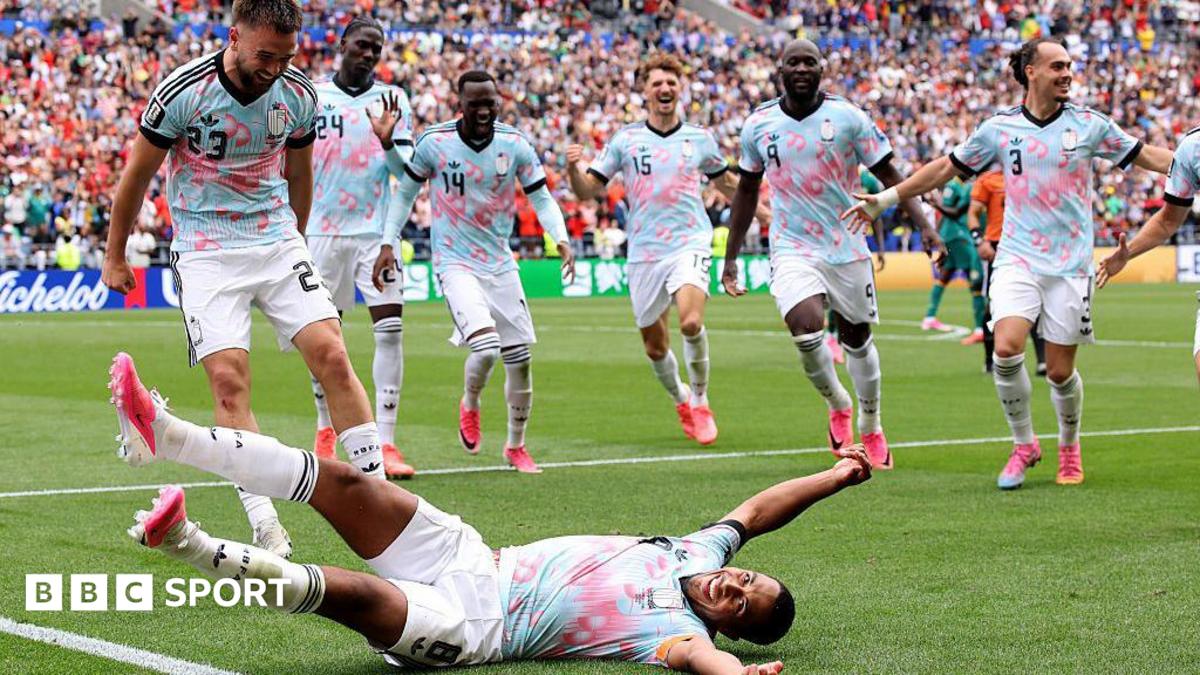
Romelu Lukaku’s 86th-minute goal sparked hope for Belgium and three minutes later, captain Youri Tielemans headed in an equaliser from Leandro Trossard’s cross – the pair were earlier seen having a heated argument – to force extra time.
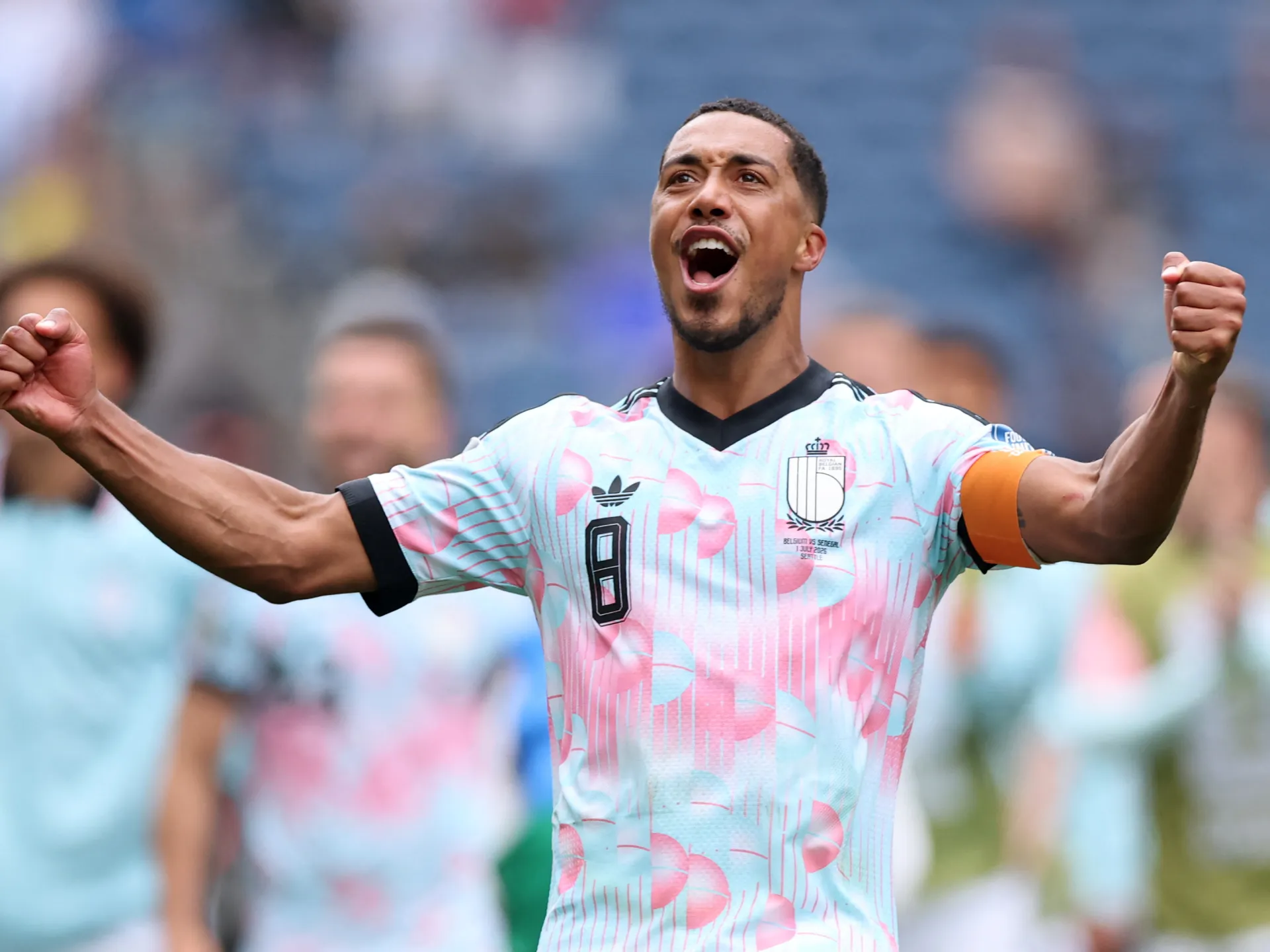
Then came the controversial penalty, awarded for Lamine Camara’s challenge on Tielemans following a video assistant referee (VAR) review, and converted by the skipper himself 125 minutes in.
Tielemans’s penalty late into stoppage time of extra time capped Belgium’s comeback from 2-0 down in Seattle.
Published On 2 Jul 20262 Jul 2026
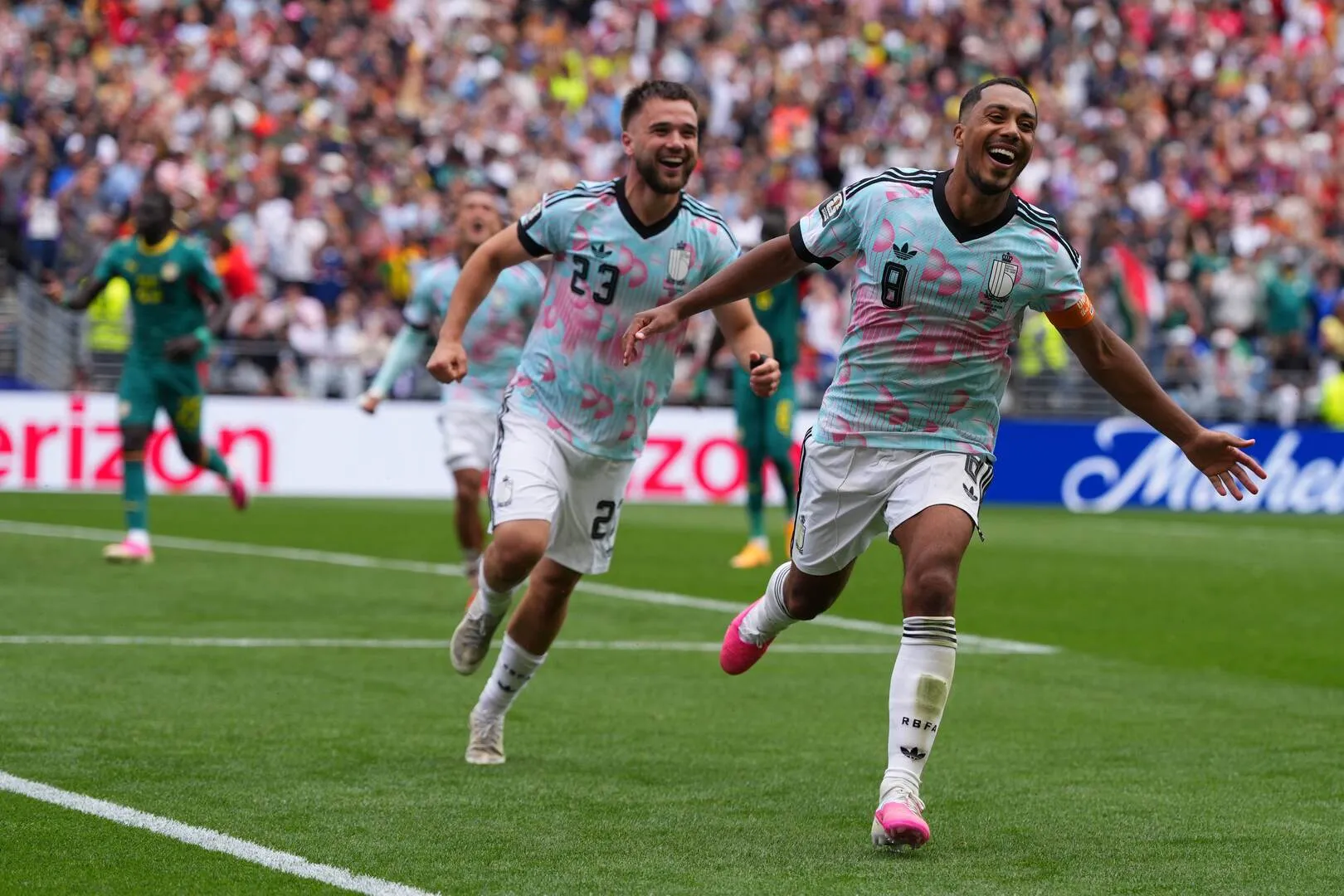
Youri Tielemans struck a 125th-minute penalty as Belgium rallied from two goals down and defeated Senegal 3-2 after extra time in their World Cup last -32 clash in Seattle to keep alive their title hopes, which had looked dead and buried.
Senegal’s Lamine Camara slid in on Tielemans as the ball flashed across the face of goal and conceded the spot kick after a video assistant referee review, with the Belgian picking out the top corner to complete an extraordinary comeback on Wednesday.
Habib Diarra and Ismaila Sarr had given Senegal a deserved 2-0 lead, and they looked to be cruising through to the next round before Belgium netted twice in the final four minutes through Romelu Lukaku and Tielemans to force extra time.
Belgium now face the winner of Wednesday’s last-32 clash between cohosts United States and Bosnia and Herzegovina in the next round in Seattle on Monday.
It was cruel on Senegal, who controlled much of the 90 minutes, and struck the woodwork twice, but could not see out the game.
They became the fourth African side to bow out in a narrow defeat in the last 32 after South Africa, Ivory Coast, and the Democratic Republic of the Congo, and will wonder how they managed to let this one slip.
Senegal were inches away from the lead when Ismail Jakobs’s cross from the left was parried by Thibaut Courtois, but a stretching Sarr could only steer the loose ball onto the post.
When the African side did break the deadlock in the 25th minute, it was no surprise. Sadio Mane’s cross was headed goal-wards by Sarr, but his effort came off the post again.
This time, the loose ball fell kindly for Diarra, and he side-footed home from 7 yards.
Maxim De Cuyper forced an excellent save from Senegal goalkeeper Mory Diaw with a shot that looked to be heading into the top corner as Belgium trailed at the break.
Belgium brought on Lukaku for the ineffective Charles De Ketelaere at half-time, but were soon 2-0 down.
A stunning long pass from Moussa Niakhate was brilliantly controlled on the chest by Sarr, who held off two defenders before thundering the ball into the net in the 51st minute.
Belgium struggled to create clear-cut chances until the final five minutes, and almost out of nowhere turned the game on its head by netting twice in three minutes.
First, Lukaku turned the ball in at the near post from Thomas Meunier’s low cross, and Leandro Trossard’s ball into the box from deep was headed into the net by Tielemans.
Those two had been involved in a heated exchange earlier in the match, but it was all smiles and hugs when the equaliser went in, before Tielemans was central again in the winner.
If there were such a thing as a mid-table team at the World Cup, it would probably be Mexico. They are almost ever-present, yet no side has played as many matches at the tournament – 64 in total – without lifting the trophy.
Their supporters can be demanding but expectations were more modest this summer. However, the co-hosts ended a 40-year wait for a knockout win by beating Ecuador, so confidence will be raised for their match against England.
The failure to reach an elusive fifth game – the curse of the ‘quinto partido’ – plagued Mexico for generations. El Tri went out in the round of 16 at seven consecutive World Cups between 1994 and 2018, before ending that sequence in the worst possible way in Qatar, where they exited at the group stage.
Since then, Mexico have hired and fired two coaches before bringing back the vastly experienced Aguirre for a third spell in charge in 2024.
No stone has been left unturned in his preparations. El Tri played 22 matches over the past year before the tournament began, giving Aguirre ample scope to experiment with tactics and personnel. He used 54 players in that time, fewer than half of whom made the final squad.
Those who did are well drilled now, especially the 12 domestic-based players. Most were told to report for training on 6 May, meaning some squad members were in camp for five weeks by the start of the World Cup.
England’s reaction was an explosion of celebration and sheer relief, a largely dreadful performance transformed into dramatic victory by their magnificent captain.
The celebration was for that place in the last 16.
The relief will have been Tuchel’s, who would surely have been unable to survive such embarrassment had England lost, irrespective of his contract extension.
Relief, too, for the Football Association, who placed such faith in the German and handed him the sole mission of winning this World Cup.
And it was all down to Kane.
Kane attracts superlatives and respect like a magnet. Every bit of it deserved – as proved by the stats left behind by his latest feat.
He now has five goals in this World Cup, as the race for the Golden Boot becomes a sprint between Kane, Kylian Mbappe, Erling Haaland and Lionel Messi, with Tuchel saying: “They are all sharks. They smell blood.”
Tuchel added: “These big guys at this World Cup, do they watch each other? And then they go ‘not with me, then I score, then I do a hat-trick, then you go’. What is going on? Crazy.
“Harry is so, so good. He’s our captain. He’s our leader. He decides football matches with unbelievable finishes and did it here twice. The second one was just a brilliant goal.”
Kane now moves above Pele to go joint sixth on the all-time World Cup scorers list with 13, and now has 84 goals for England, putting him level with legendary Hungarian Ferenc Puskas in ninth on all-time international scorers list.
He is the first England player to score twice in a World Cup knockout stage match since Gary Lineker against Cameroon in 1990. Kane has now scored five knockout stage goals at a World Cup. Only Lineker, with six, has scored more for England.
Most remarkably of all, he now has scored 72 goals in 62 games for club and country this season, with 11 for England and 61 for Bayern Munich.