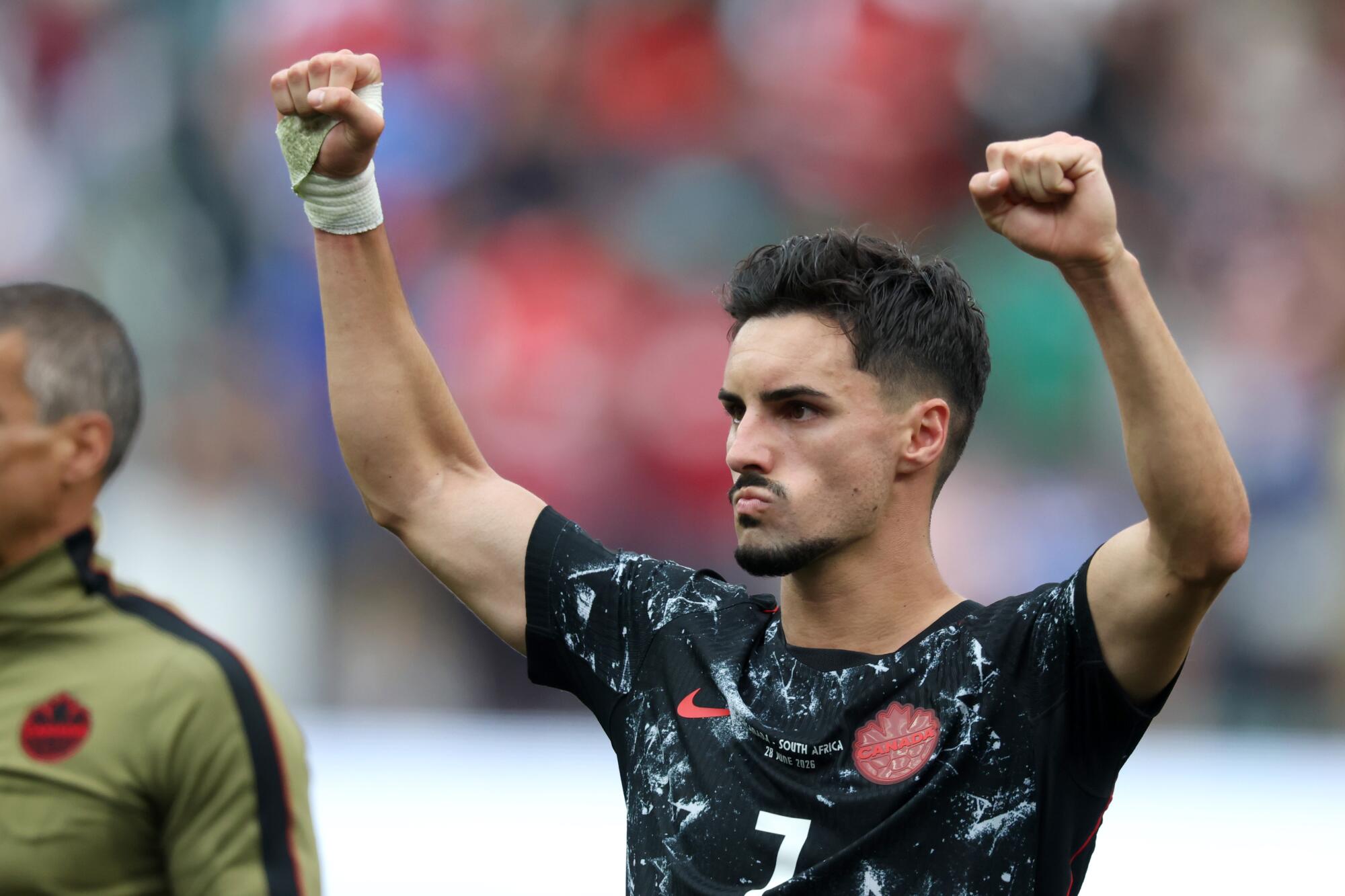
Canada beat South Africa 1-0 thanks to a stoppage-time strike by Stephen Eustaquio from distance to reach the World Cup last 16 for the first time in their history.
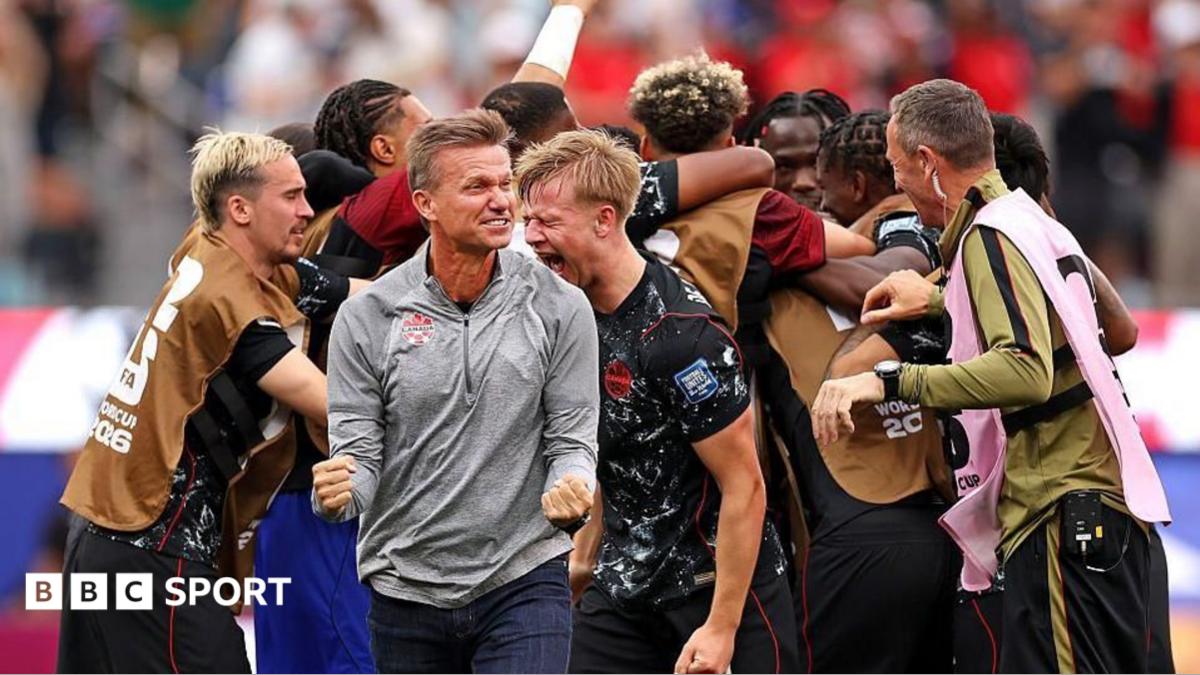
Minutes after the final whistle was blown on Canada’s historic World Cup victory against South Africa on Sunday, coach Jesse Marsch gathered his players and staff in a huge huddle and delivered some words of inspiration to them.
“Canadian heroes,” he called his team after they won a knockout game at the tournament for the first time to reach the last 16.
“The future of the sport in this country is huge because of you.”
Marsch is known for grandiose comments – exaggerated and emotional statements delivered to provide maximum impact.
But his words here ring true – the sport in the country is changing.
“It is starting to become known as football now, not soccer,” one fan told BBC Sport before the match.
“Canada is becoming a football nation.”
That was the objective Marsch set out to achieve when he became Canada boss two years ago, a goal that at the time seemed highly unlikely for a country whose first love is widely regarded as ice hockey.
Mexico hosted this World Cup’s opener while the USA stages the final. Attention has been far greater on the two in the build-up, leaving Canada as something like the forgotten co-host.
But Canada quietly went about its business, building interest and passion for the tournament and their national team from within.
The country’s captain, Alphonso Davies, is used to large, football-mad crowds playing for Bayern Munich and in the Champions League.
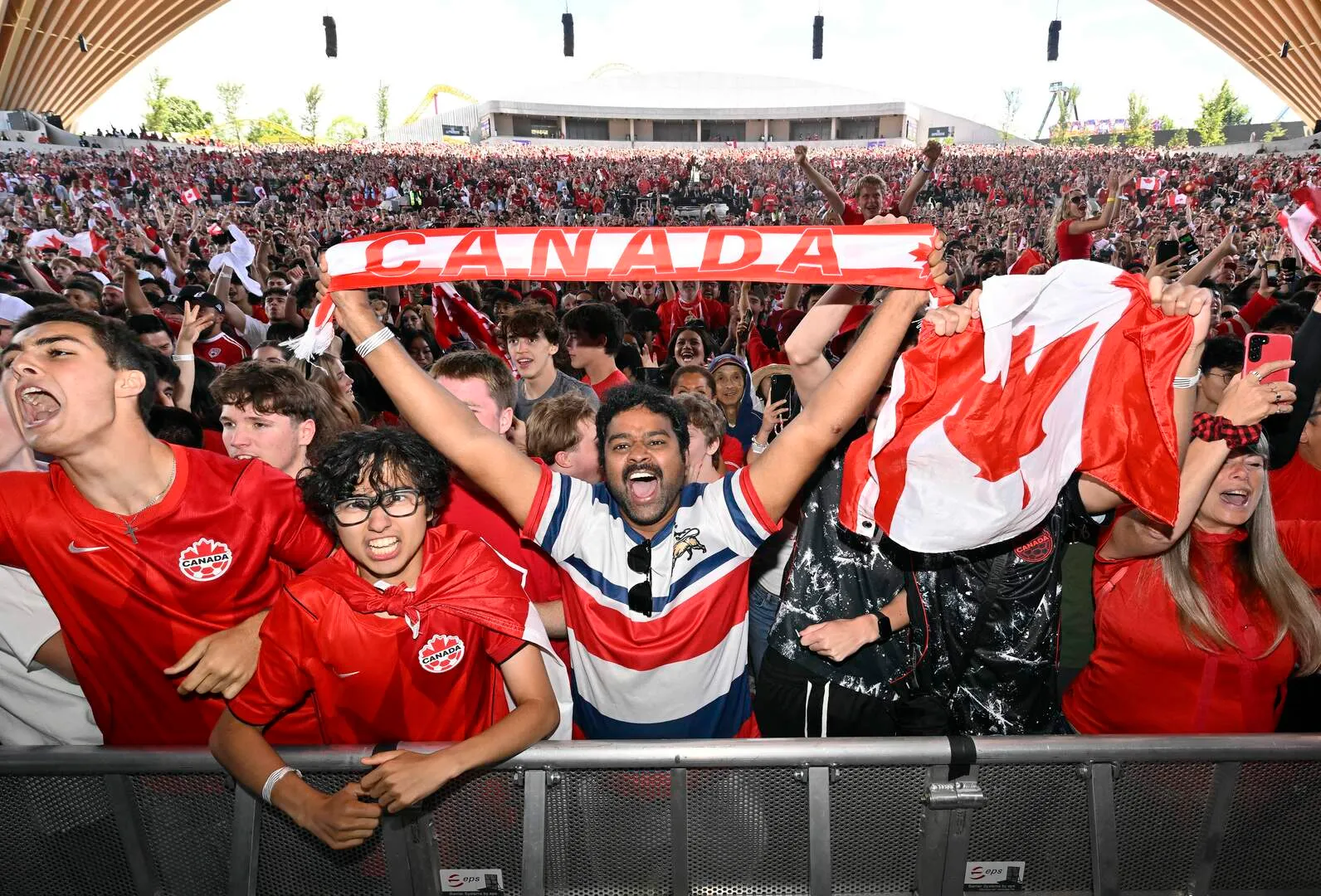
However, he has noticed the change in Canada since the World Cup got under way, and said he cried at seeing so many fans clad in red and white in Toronto for their opening game against Bosnia-Herzegovina.
“It was surreal because I’ve never seen so many Canadians at a football match before,” he said before the win against South Africa.
From the prime minister to sport celebrities and fans on social media, Canadians have revelled in their team’s win.
Canada have enjoyed a historic run at the FIFA World Cup 2026, and it will continue thanks to Stephen Eustaquio’s 92nd-minute goal against South Africa, which sent the cohosts into the global tournament’s round of 16 for the first time.
The 29-year-old midfielder’s strike on Sunday rewrote Canadian football history, capping off a narrative that Jesse Marsch has been scripting since taking the reins two years ago.
Recommended Stories
list of 4 itemsend of list
“Think about how we talked about sticking to the plan, sticking to who we want to be, playing aggressive, accessing the quality, you guys showing your character,” an impassioned Marsch told his team as they circled around him on the pitch following their victory.
“You guys are Canadian heroes! Canadian heroes for the future children of this country, who play this sport. This sport has a big future because of you guys.
“You should be so proud of who you are. You should be so proud of this game. You went after it, moment after moment.”
The same words were echoed by Prime Minister Mark Carney, who had barely exited his flight and watched the final minutes of the game on his phone.
“What a game. What a team. What a country,” Carney wrote on social media.
Doug Ford, the premier of Ontario, where Eustaquio was born and raised before his family moved to Portugal, congratulated the team for advancing to the next round, as did Leader of the Opposition, Pierre Poilievre.
Mayor of Vancouver, Ken Sim, wrote to the team, saying: “You wore your hearts on your sleeves, gave everything on the field, and gave all of us a memory we’ll never forget.”
Social media was flooded with footage of Canada fans turning watch parties and fan festivals into a sea of red. Even Los Angeles Stadium, where Canada came down the West Coast to play South Africa, was thronged with fans supporting the World Cup cohosts.
Football enthusiasts and analysts on social media said the victory felt surreal for Canada, where sport like ice hockey, basketball and baseball enjoy far more popularity than football.
Fellow Canadian athletes joined in the social media celebrations. Multiple Olympic champion swimmer Summer McIntosh, tennis star Felix Auger-Aliassime, and Olympic champion runner Andre de Grasse were some of Canada’s top athletes to back the men’s football team after their win.
Famed Canadian astronaut Chris Hadfield also congratulated the team after wishing them well earlier on Sunday.
FC Bayern congratulated Alphonso Davies for returning to international duty after he sustained a hamstring injury with them in May, during the UEFA Champions League semifinal. The game saw a noticeable shift in pace and tactic when Davies was subbed in on the 74th minute.
From the opponent’s side, South African President Cyril Ramaphosa congratulated Canada for winning “with Bafana Bafana breathing down your necks”.
Former German footballer Bastian Schweinsteiger, however, who was called out by Ivory Coast manager Emerse Fae for racist undertones in his remarks on the African team, seemed unfazed by Canada’s historic win.
“Overall, not a convincing performance, but thanks to the clearer chances, progressing is fine. Alphonso Davies brought fresh wind after coming on as a substitute,” he wrote on social media.
“However, against the Netherlands or Morocco, the team will have to improve significantly.”
Remember when we were sure the World Cup would suffer from all the issues that had everyone seeing red before the first ball was kicked?
And remember when we were certain soccer could never catch on in this country?
Despite controversies over visas and ticket prices and transportation, and in spite of consternation over expansion and new rules, the game has, as usual, proved too good to fail.
And we, the American people, have become unusually engrossed in it.
We’ve been tuning in on TV in record numbers and, even at exorbitant prices, helping to sell out our 70,000-some-capacity stadiums. Before group play was even finished, this tournament — staged also in Mexico and Canada — already outdrew the 1994 World Cup, which was hosted by the United States and set an attendance record of nearly 3.6 million.
We’ve been loving the healthy cultural exchange, and we’re being reminded that cultural barriers of traditional sports fandom can be breached.
So now, to keep our interest from drying out like a pitch on a hot summer day, the goal should be to keep the market saturated with soccer. That will take Major League Soccer tearing down all the walls.
It’s already turned the page on its calendar, adopting a summer-to-spring season format that will better blend with the global game.
Now MLS needs to make its games easier to watch, and to do its part to make the sport easier to play.
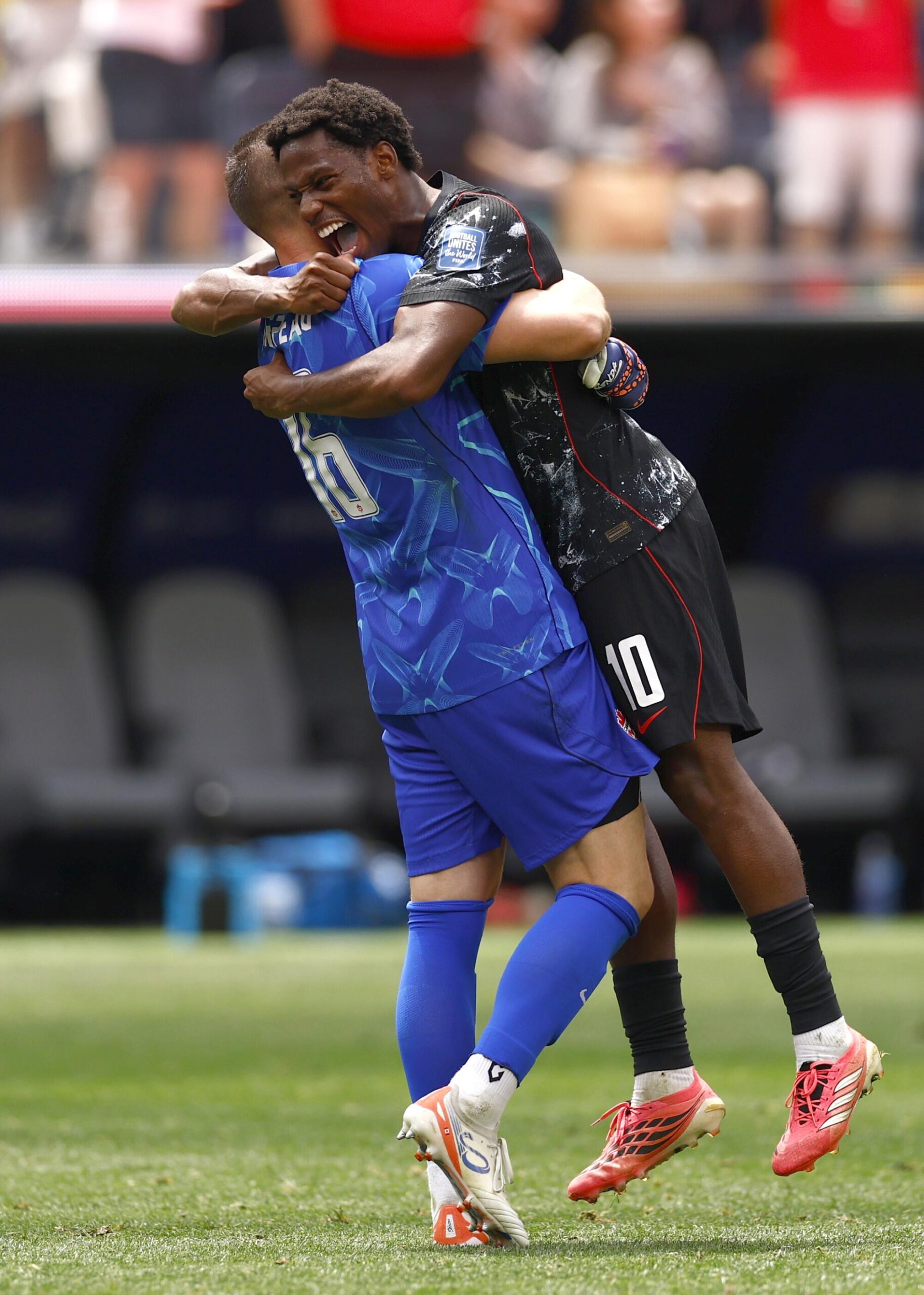
Canada goalkeeper Maxime Crépeau, left, celebrates with teammate Jonathan David after a 1-0 win over South Africa at the World Cup on Sunday.
(Kelvin Kuo / Los Angeles Times)
While the proverbial iron is hot, it needs a strike like Stephen Eustáquio’s winning rocket in the 92nd minute of Canada’s 1-0 victory against South Africa on Sunday at SoFi Stadium.
Eleven players on the two teams were MLS representatives — including Eustáquio, who spent the last six months in LAFC’s midfield.
Goalkeeper Maxime Crépeau, who played two seasons with LAFC and now plays for Orlando City, stopped the only shot he saw for his second clean sheet this World Cup, which saw the Canadians succeed in their first knockout stage appearance.
There’s been no avoiding MLS players in this World Cup. The greatest of them is piling up goals for Argentina: Lionel Messi, the Inter Miami superstar, is now the all-time World Cup goal-scorer (with 19).
MLS has set an attendance record too, with 44 players participating. It ranks as the league with the second-most players apart from the top five European leagues. LAFC had three current players in the mix.
But wait. Record skip. Before you celebrate the MLS’s contributions to this soccer spectacle, check with the VAR. Yep, without the 13 MLS players representing nations that rank 40th or lower in FIFA’s world ranking, there actually would be fewer than the 37 MLS participants at the World Cup four years ago.
A baby’s first steps are for celebrating, but three decades after the league’s formation, MLS is still searching for a giant leap. It’s still having a mean time of trying to make “fetch” happen for real.
It would help to make its games more readily available — not to the already converted, but to fans who didn’t even know what they didn’t know about soccer until the World Cup began in their backyards.
MLS has already brought MLS from behind Apple’s season pass paywall. And the league and streaming service also reportedly have agreed to a revised media rights deal that will end at the end of the 2028-29 season, three and a half years earlier than expected.
But the hat trick would be to remove the need to subscribe to streaming service to watch MLS games altogether, and then get those matches onto the networks people know to tune into for their sports.
Normalize watching American soccer.
And stop gatekeeping. MLS’s developmental programs are too restrictive and exclusive — they’re not developing more soccer players, they’re curtailing who can play.
It’s in the league’s interests, and the sport’s in this country, to encourage as many players to play as much as they can — including for their high school teams, which MLS Next bars.
They’ve got people in the tent; the goal should be to make them want to stay.
To make them want to join the world’s circus, not to let it pack up and move on, out of sight and out of mind, until it swings back through years from now.
Tehran, Iran – Iran’s national football team has once again failed to realise the dream of reaching the knockout phase of the World Cup, with the wartime 2026 tournament stirring up a wide range of emotions among Iranians inside and outside the country for different reasons.
Team Melli ended its seventh appearance in the tournament after a 1-1 draw in Seattle on Friday against Egypt left them in third place in Group G, with only three points gleaned from three draws.
Recommended Stories
list of 3 itemsend of list
The team was eliminated a day later, after a series of other match results left them just outside of the tournament’s eight third-placed teams advancing to the next stage after FIFA expanded from 32 to 48 teams.
“This was very unlikely to happen, I couldn’t believe how we got out again, with just one spot away from advancing,” Milad, a resident of Tehran who watched all matches impacting Iran’s run at the World Cup, told Al Jazeera.
The circumstances were so peculiar that, among other things, they left the head coach pondering divine intervention, and state television accusing other teams of cheating and collusion.
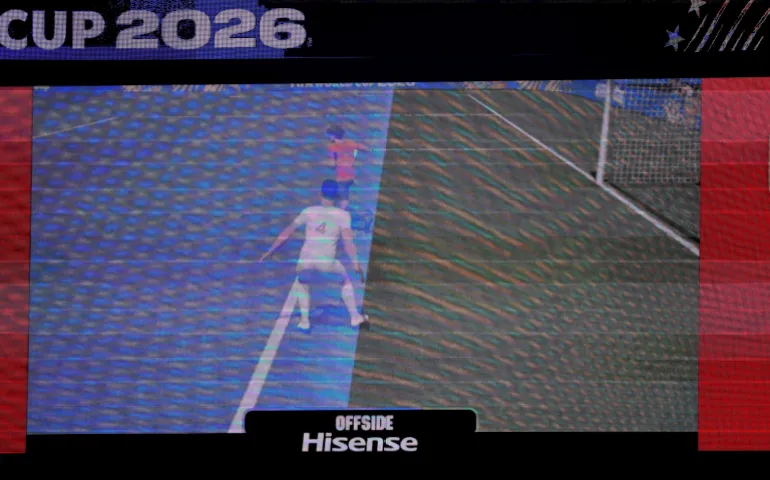
During the Egypt match, centre-back Shoja Khalilzadeh appeared to score a 93rd-minute winner that would have automatically sent Iran into the Round of 32, but VAR ruled it out after a few centimetres of his right foot were offside.
Video replay in the stadium shows Shoja Khalilzadeh of Iran as offside when he scored the second goal which was then dissallowed during the FIFA World Cup 2026 Group G match between Egypt and on June 26, 2026 in Seattle, Washington [Richard Heathcote/Getty Images] (AFP)
A member of the coaching staff had his nose broken after another staff member inadvertently headbutted him during emotional group celebrations of the goal before it was overturned.
Khalilzadeh’s goal celebration included posing with sunglasses, so Egypt – which advanced to the knockout phase – later taunted him with an Instagram picture of striker Mohamed Salah giggling while wearing sunglasses.
A disgruntled head coach Amir Ghalenoei told state television during a live post-match interview that he believed everyone enjoyed the match, but at times it seemed like “God was at odds with us” due to the lack of good luck – which also included Iran scoring three VAR-overturned goals during the competition, the highest of any team.
He also blamed tough conditions faced by the players and the entire staff during an unprecedented World Cup campaign, in which the main host country, the United States, has been at war with a participating nation, Iran, for the past four months.
The US military bombed several islands in the Strait of Hormuz in Iran’s southern waters just hours before kick-off in the Iran-Egypt match.
Football federation officials, as well as other staff and media personnel, were denied visas to travel to the US for the tournament, on grounds that included their alleged affiliation with the Islamic Revolutionary Guard Corps (IRGC), the force running war and politics in Iran.
The playing squad was only allowed in under unusually tight restrictions, and had to be mostly based in Mexico’s Tijuana instead of the originally designated Tucson in Arizona.
They had to enter the US within 24 hours of a match and leave on the same day, with only a slight easing allowing them to arrive two days early for the Seattle match.
‘Completely mad’
After the Egypt match, Iran needed just one of three things to go their way: Croatia had to lose to Ghana, but it won 2-1; DR Congo had to fail to beat Uzbekistan, but won 3-1; and Algeria vs Austria had to produce a winner, but the match ended 3-3.
Hours before the Algeria-Austria match, Javad Khiabani, a sports presenter infamous for decades of eccentric football commentary, released a video message in Arabic, addressed to the “Muslim brothers in Algeria”. He asked them to defeat Austria and allow Iran, a Muslim-majority country that has suffered war, to advance.
Other hosts of Iranian state television and radio channels broadcasting the match live went through an emotional rollercoaster after Algeria’s Riyad Mahrez scored deep into stoppage time, creating a 3-2 result that would have sent Iran through.
“Now, a Muslim country is doing something to keep another Muslim country in the knockout stage,” shouted another ecstatic commentator, again linking the sport with religion.
He and many Iranians watching at home were devastated moments later when Austria’s Sasa Kalajdzic used his first touch of the game to equalise with a header in the box. The result benefited both teams, because it sent both into the next round, with Austria facing Spain and Algeria facing better odds against Switzerland.
Some inside and outside Iran suggested the game was rigged, but Austria’s head coach Ralf Rangnick responded to match-fixing allegations by saying: “If Alfred Hitchcock had written such a drama, I probably would have said he was completely mad”.
Shoja Khalilzadeh #4 of IR Iran scores his team’s second goal that was ruled offside following a VAR review during the FIFA World Cup 2026 Group G match between Egypt and IR Iran at Seattle Stadium on June 26, 2026 in Seattle, Washington [Dean Mouhtaropoulos/Getty Images]
Killings that scarred society
For a second consecutive World Cup, Iran’s national football team did not enjoy unified support from Iranians inside or outside the country, due to the fallout from public protests against the Islamic Republic, the theocratic establishment that has governed Iran since the 1979 Revolution.
In January 2026, thousands of Iranians, including at least 230 children, were killed during nationwide anti-establishment protests that erupted across the vast country of over 90 million. The government, as with previous protests, put all the blame on “terrorists” organised by the US and Israel, but Amnesty International called it an “unprecedented deadly crackdown” by the state that also included a total internet shutdown.
Just months after the killings that scarred parts of Iranian society, some believe football players – who have all avoided commenting on the protests, but in some cases have backed the state – are not representatives of a unified Iran.
Outside the stadiums in the US during the World Cup, some anti-Islamic Republic Iranians protested using Iran’s pre-1979 lion-and-sun flag, as opposed to the official flag which features the word “Allah” in the centre, but most diaspora Iranians ended up cheering for the team in packed stadiums.
Mohammad Khakpour, a former Team Melli captain now based in the US, wrote in an Instagram post on Sunday that the fact Iranians had contrasting emotions after Iran’s elimination from the tournament carries a social message.
“When a part of the society feels that Team Melli is no longer representative of their emotions, pains or hopes, a chasm is created,” he said. “The people may not be happy from a football loss, but they may at times be happy about the collapse of an image that they do not consider to be true”.
Farhad, a 36-year-old resident of eastern Tehran, told Al Jazeera that decades from now, people may remember Team Melli not only as representing the Islamic Republic but also for the football record it left behind.
“Personally, I preferred it if they advanced, but I’m not devastated that they didn’t,” he said.
When FIFA expanded the World Cup field from 32 to 48 teams for this summer’s tournament, the gnashing of teeth and clutching of pearls was as predictable as it was loud. The field would be watered down, the traditionalists protested. The group stage would be a series of blowouts, the sharks would devour the minnows.
In fact, none of that happened.
What we got instead was plucky Cape Verde playing No. 3 Spain to a draw and becoming the smallest nation to reach the elimination rounds. We got Austria advancing on a goal six minutes into stoppage time — eliminating unbeaten Iran, which deserved better — and Canada, Egypt and the Democratic Republic of Congo all winning World Cup games for the first time.
We got Lionel Messi scoring six goals and Mexico and Spain giving up none. We got South Africa, Canada, Egypt and Cape Verde advancing to the knockout rounds for the first time while South Korea and Uruguay went home.
It was one of the most surprising, exciting and compelling group stages in recent World Cup history. And on Sunday it gave way to the first game of the knockout rounds, with Canada beating South Africa 1-0 on a goal by LAFC midfielder Stephen Eustáquio in the second minute of stoppage time.
Canada’s Stephen Eustáquio reacts after a 1-0 win over South Africa at the World Cup on Sunday at SoFi Stadium.
(Robert Gauthier / Los Angeles Times)
Unlike much of the group stage, Sunday’s game was a sloppy, sleepy affair, with South Africa relying on some heroic play from its back line to keep the game even. But it ended with a bang with Eustáquio latching on to a loose ball at top of the box and blasting a right-footed volley just inside the left post.
Canada will play the winner of Monday’s Netherlands-Morocco match in the round of 16 next week. For South Africa, the World Cup is over.
For both countries, this World Cup was the most successful ever. Canada, which is sharing host duties with Mexico and the U.S., has won twice. South Africa had won games before, but it had never gotten beyond the group stage.
For South Africa, that success is part of a continental soccer resurgence. Four years ago in Qatar, Morocco became the first African nation to reach the World Cup semifinals. This summer, thanks to the expanded field, 10 African nations qualified for the tournament and nine advanced to the round of 32.
And the rise of African soccer hasn’t just boosted the fortunes of African teams. Top-ranked France, a World Cup favorite, has 21 players of African descent on its roster; at least a dozen other non-African teams, including Canada, have at least two players of African heritage.
Canada is one of the world’s most diverse countries with nearly a quarter of its population having been born somewhere else. Former coach John Herdman leaned into that diversity when he took over the men’s team in 2018; four years later, Canada made its second trip to the World Cup with a lineup that included four dual nationals.
Jesse Marsch, the U.S.-born coach who succeeded Herdman, doubled down on that. As a result, the 26 players on Canada’s roster, or their parents, come from more than 17 countries — from Iran, Croatia, Jamaica and Barbados to Haiti, Lebanon, Nigeria and the Philippines. Captain Alphonso Davies, Canada’s best player, was born to Liberian parents in a refugee camp in Ghana before being resettled in Edmonton, becoming a citizen in 2017.
Canada goalkeeper Maxime Crepeau makes a save against South Africa on Sunday.
(Ronaldo Bolanos / Los Angeles Times)
Davies, who hasn’t played since sustained an acute hamstring injury in early May, came on in the 76th minute Sunday and had an immediate influence, threading a perfect pass to the feet of Promise David, whose right-footed shot from the top of the box drifted inches wide of the left post.
Three minutes later, Davies drew two defenders to him on the left flank, opening space for Jonathan David to slip into the box and get off a tight-angled shot near the end line that stood up South African keeper Ronwen Williams. But the winner came from Eustáquio, the son of Portuguese parents who Herdman wooed away from the Portuguese U-21 team in 2019.
He has made 60 appearances with Canada’s senior national team, none bigger than Sunday’s.
Canada’s Tani Oluwaseyi, center, gets caught between South Africa’s Khuliso Mudau (20) and Sphephelo Sithole during the first half Sunday.
Sixteen of the 48 teams are heading home, but which of the sides left standing will survive all the way to the World Cup final at MetLife Stadium near New York City on 19 July?
The hopes of another 16 nations will bite the dust after the first knockout round, which includes England against DR Congo and holders Argentina against surprise package Cape Verde.
It was a different team who caused the biggest shock in the final set of group games, however.
While BBC Sport’s football expert Chris Sutton and AI still went for Cape Verde to lose against Saudi Arabia – from more than 50,000 users playing the BBC’s new predictor game – 39% of you correctly went for a draw and 43% even backed the African side to win.
Instead, it was Ecuador who caught almost everyone out this time.
From more than 56,000 users predictions for that game, only 597 of you correctly backed them to beat Germany.
Chris and AI were also wrong about that one but, overall, they both got 15/24 predictions right from that set of matches.
Again, the users did better, with 17/24, and they still lead the way with 72 of this World Cup’s 104 matches now completed.
Chris has been right 41 times (57%), AI has a score of 43 (60%), but you lot are doing even better with 48 (67%).
Before the tournament, Chris also picked the order he thought each of the 12 groups would finish in. He was right about seven of the winners, but only got all four teams in the correct order in three of the groups.
AI’s predictions have been generated using Microsoft Copilot Chat. We simply asked the tool to ‘predict the results of the World Cup last-32 ties’.
The new BBC predictor game allows readers to pick a winner from each knockout tie.
Group play is over and it’s knockout time at the 2026 FIFA World Cup.
The round of 32 is set, with tournament co-host Canada kicking things off Sunday when it faces South Africa at SoFi Stadium.
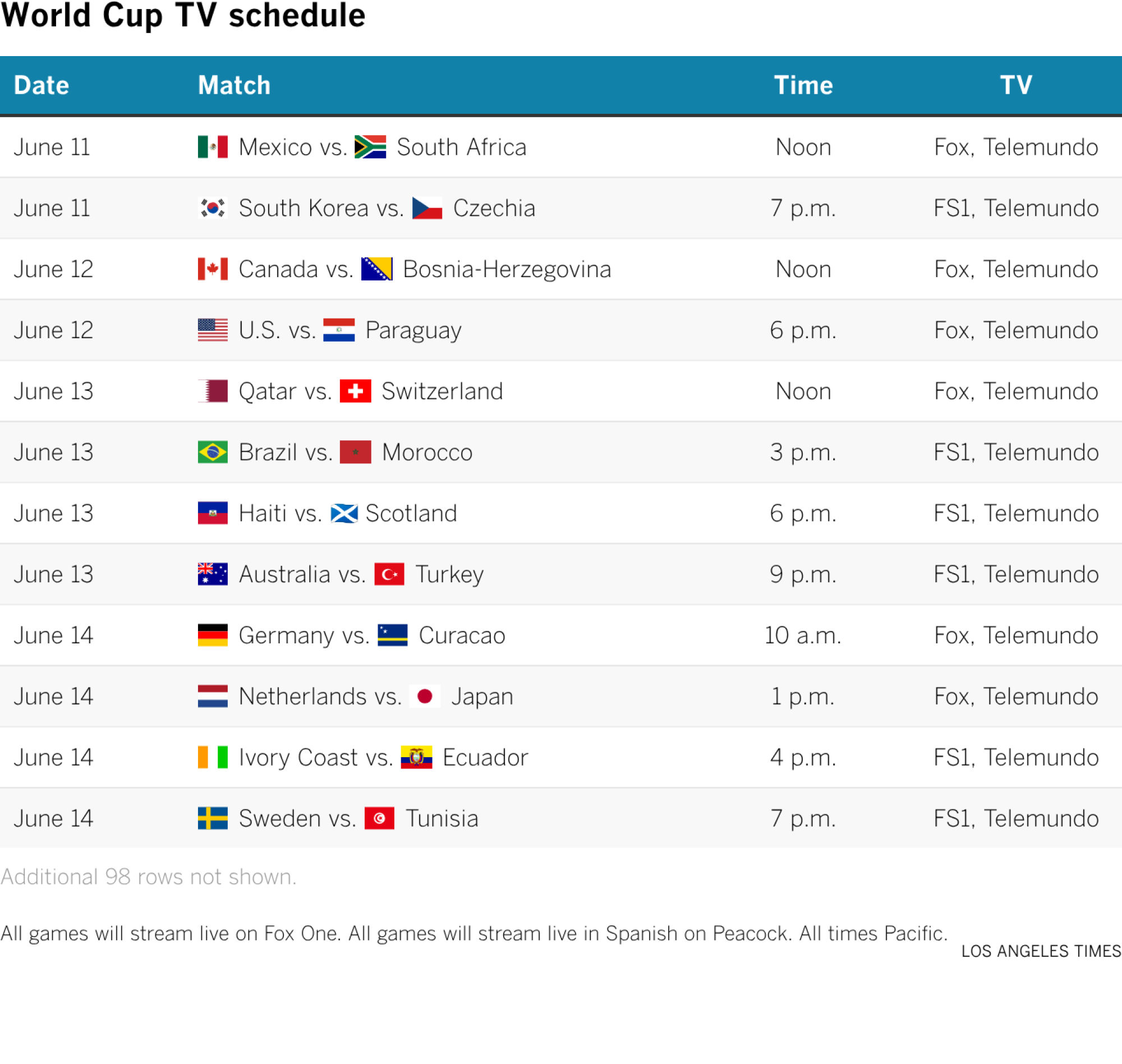
Here’s everything you need to know about World Cup knockout stage matches being played Sunday, Monday and Tuesday across the U.S., Mexico and Canada (all times Pacific).
Sunday’s round of 32 match
Canada vs. South Africa
Canada’s Alphonso Davies warms up before a World Cup match against Qatar on June 18.
The buzz: Both teams are making their first appearances in a World Cup knockout round, Canada (1-1-1) after losing its group-play final to Switzerland and South Africa (1-1-1) after upsetting South Korea. Canada, the first World Cup host to play a game outside its borders, could get a boost if Alphonso Davies, its best player, can play after missing the team’s first three games. South Africa scored just one goal of its own in the group stage; Canada got six in one game alone.
Monday’s round of 32 matches
Brazil vs. Japan
Brazil’s Matheus Cunha celebrates after scoring against Haiti at the World Cup on June 19.
The buzz: Brazil won Group C, posting consecutive 3-0 wins over Haiti and Scotland to close out the first round and run goalkeeper Alisson Becker’s shutout streak to 249 minutes. Vinícius Júnior, with four goals, and Matheus Cunha, with three, have accounted for all of Brazil’s scoring. Brazil hasn’t been eliminated in the first knockout stage of a World Cup since 1990. Japan has received goals from five players in an unbeaten run through Group F, where it finished second to the Netherlands. Japan has not won a World Cup knockout-round game in four tries.
Germany vs. Paraguay
Germany’s Kai Havertz reacts during a match against Curaçao at the World Cup on June 14.
The buzz: Germany scored 10 goals in the group stage, but the four-time tournament champions lost to Ecuador and had to rely on a tiebreaker to win the group over the Ivory Coast. Deniz Undav, with three goals, and Kai Havertz, with two, are the only Germans who have scored more than once. Paraguay gutted out a scoreless draw with Australia in its final game to finish third in Group D and squeeze into the round of 32. It has just two goals in the tournament, but it is coming off back-to-back shutouts.
Netherlands vs. Morocco
Brian Brobbey celebrates after scoring for the Netherlands in a win over Sweden at the World Cup on June 20.
The buzz: Morocco, a semifinalist four years ago, did not lose in the group stage but finished second to Brazil on goal differential, setting up this challenging matchup with the Netherlands. Morocco is ranked sixth in the world by FIFA, one spot ahead of the Dutch, who matched Germany with a tournament-high 10 goals in the first round. The Netherlands haven’t lost a first-round knockout game since 2006. Brian Brobbey has three goals for the Dutch while Cody Gakpo and Crysencio Summerville have two apiece. Ismael Saibari has scored in each of Morocco’s three games.
Tuesday’s round of 32 matches
Ivory Coast vs. Norway
Norway’s Erling Haaland celebrates after scoring against Senegal at the World Cup on June 22.
The buzz: Norway rested many of its regulars in its group-play finale, a 4-1 loss to France, to settle for second in Group I. Erling Haaland, playing in his first World Cup, had braces in Norway’s first two games. Ivory Coast finished second to Germany on a tiebreaker but advanced to the knockout stages for the first time. Villarreal’s Nicolas Pépé has two of the team’s four goals.
France vs. Sweden
France’s Kylian Mbappé points during a win over Norway at the World Cup on June 26.
The buzz: Unbeaten France, which has played in the last two World Cup finals, has designs on returning after dominating its group, winning two of its three games by three goals. Kylian Mbappé had braces in the first two games and is tied with Ousmane Dembélé for the team scoring lead for four goals. Sweden finished third in Group F, winning its first game by four goals and losing its second by the same margin. Sweden’s seven goals allowed matches Norway and Algeria for most by a round-of-32 qualifier.
Mexico vs. Ecuador
Mexico’s Luis Romo gestures during a win over Czechia at the World Cup on June 24.
The buzz: Mexico hasn’t won a knockout-stage match since 1986, the last time the tournament was played in Mexico. El Tri didn’t allow a goal in winning its group easily. Colombian-born Julián Quiñones leads the team with two goals. Ecuador beat Germany 2-1 in its final group-play match to squeeze into the knockout stages for just the second time, advancing as a third-place team. It was shut out in its first two matches.
Abigail Velez, who works for ABC7 Los Angeles, was reporting from a USA viewing party in Long Beach, California, when she made the remarks while discussing America’s next opponent in the tournament.
Following the US team’s 3-2 defeat to Turkey, Velez told viewers: “The next round, Team USA will play Bosnia next Wednesday and one thing about Bosnia, I could not point out where it is on a map.”
She then added: “I don’t know the first thing about Bosnia and I don’t want to know because Team USA, we’re back, we’re better than ever.”
The comments quickly spread on social media, where Bosnian football fans and other viewers criticised the report as disrespectful.
One account, Bosnian Football, shared the clip on X and wrote: “My goodness, the stereotypes write themselves…”
Another viewer said: “Some competitive talk is always fun, but that’s not the way to do it.”
A third added: “The weirdest thing about Americans is that they feel it’s like a flex to say ‘I don’t even know where they are on a map.'”
Velez later issued an apology on X, formerly Twitter, admitting she had gone too far while trying to inject humour into her World Cup coverage.
She wrote: “In a poor effort to have a little fun with World Cup competition, I took it too far and made a thoughtless comment on air that was insensitive and inappropriate. I apologise to the people of Bosnia and the Bosnian Football team.”
She added: “The World Cup is supposed to be about uniting communities around the world, and my comment didn’t reflect that spirit. Wishing all the teams the very best as they continue their World Cup journey.”
Despite her apology, not everyone was convinced. One person replied: “This is not a pure apology. This is just a pr stunt to protect one’s reputation from being scrutinized.” Another pointed out that the current president of ABC News, Almin Karamehmedovic, is actually from Bosnia and Herzegovina.
Not everyone was offended though. One user shared, “There is absolutely no reason to say sorry for that. The Bosnians don’t even know where Pigeon Forge and Rochester are on the map. Do you see them saying sorry?”
The apology came ahead of the USA’s knockout match against Bosnia-Herzegovina, which is due to take place at San Francisco Bay Area Stadium on Wednesday.
The United States finished top of Group D after winning two of their three matches, while Bosnia-Herzegovina progressed from Group B as one of the best third-placed sides.
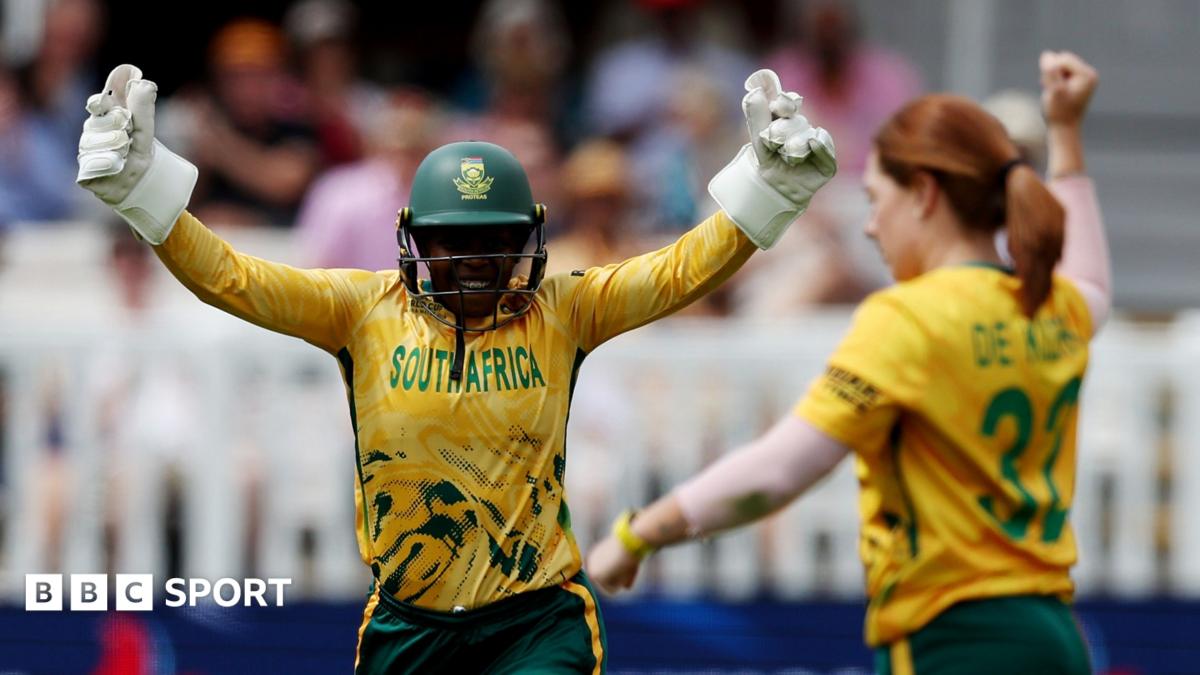
South Africa stuttered but ultimately applied the pressure to India in the race for the T20 World Cup semi-finals by beating Bangladesh by four wickets in their final group match at Lord’s.
After coming through an edgy chase of 118, the Proteas will progress to play England, who they beat in last year’s 50-over World Cup semi-final, on Thursday unless India beat unbeaten Australia later on Sunday (14:30 BST).
South Africa still fail to convince at this tournament, however.
Having beaten India and piled up 208-1 against Netherlands in their previous two games, they put in an indifferent batting performance reminiscent of their opening two games.
Captain Laura Wolvaardt fell to the first ball of the chase, her off stump knocked back by a Marufa Aktar inswinger, and when Dane van Niekerk was trapped lbw for three the Proteas were 59-3 at the halfway stage.
Annerie Dercksen threatened to take them home but she edged behind for 45 in the 15th over after which the boundaries dried up and the tension rose.
Marizanne Kapp was run out for 16 and Nadine de Klerk was caught at deep mid-wicket with five runs still needed before Chloe Tryon edged a four and cleared the off side to secure victory with four balls to spare.
South Africa were at least better with the ball.
Kapp bowled Juairiya Ferdous with the first ball of the match and, despite some middle-order resistance through a careful 42 by Sobhana Mostary and the late flurry of captain Nigar Sultana’s 32 not out, Bangladesh still only made 117-5.
But, after an affair far more tense than it should have been, they face a nervy wait to see if Australia can beat India to send them through.
Knockout matches begin with South Africa vs Canada as Iran exit, Africa make history and hopes for Messi-Ronaldo final rise.
The knockout stage of the 2026 FIFA World Cup begins on Sunday with South Africa taking on Canada in the first round of 32 tie.
With the group stage complete, the full knockout bracket is now set. Nine African nations have reached the round of 32, Iran were eliminated after Algeria’s late qualification and the draw has left the door open to a Lionel Messi vs Cristiano Ronaldo final.
Recommended Stories
list of 4 itemsend of list
Here’s the full round of 32 schedule, the South Africa vs Canada prediction and the latest World Cup news:
What is Sunday’s schedule?
South Africa vs Canada at Los Angeles Stadium, California, in the United States at noon (19:00 GMT).
What are the predictions for South Africa vs Canada?
This will be only the second meeting between South Africa and Canada. The sides’ only previous encounter ended in a 2-0 win for Bafana Bafana in a friendly in Durban in 2007.
Canada, however, will be looking to end another unwanted record. They have lost both of their previous competitive matches against African opposition, falling 2-0 to Cameroon at the 2001 Confederations Cup before a 2-1 defeat to Morocco at the 2022 World Cup in Qatar.
Despite that history, the Opta supercomputer shows Canada as the clear favourites. They won 55 percent of 25,000 pre-match simulations while South Africa triumphed in 20 percent. The remaining 24.9 percent of its calculations ended level after 90 minutes, which would send the tie to extra time and potentially penalties.
Overall, Canada are given a 67.8 percent chance of reaching the quarterfinals, compared with 32.2 percent for South Africa.
When and where will the other knockout matches be played?
Monday
Brazil vs Japan: (noon/17:00 GMT) at Houston Stadium, Texas, in the US
Germany vs Paraguay: (4:30pm/20:30 GMT) at Boston Stadium, Massachusetts, in the US
Netherlands vs Morocco: (7pm/01:00 GMT on Tuesday) at Monterrey Stadium in Mexico
Tuesday
Ivory Coast vs Norway (noon/17:00 GMT) at Dallas Stadium, Texas, in the US
France vs Sweden (5pm/21:00 GMT) at New York/New Jersey Stadium in the US
Mexico vs Ecuador (7pm/02:00 GMT on Wednesday) at Mexico City Stadium in Mexico
Wednesday
England vs Democratic Republic of the Congo (noon/16:00 GMT) at Atlanta Stadium, Georgia, in the US
Belgium vs Senegal (1pm/20:00 GMT) at Seattle Stadium in the US state of Washington
USA vs Bosnia and Herzegovina (5pm/00:00 GMT on Thursday) at San Francisco Bay Area Stadium, California, in the US
Thursday
Spain vs Austria (noon/19:00 GMT) at Los Angeles Stadium
Portugal vs Croatia (7pm/23:00 GMT) at Toronto Stadium, Ontario, Canada
Switzerland vs Algeria (8pm/03:00 GMT on Friday) at BC Place Vancouver, British Columbia, Canada
Friday
Australia vs Egypt (1pm/18:00 GMT) at Dallas Stadium
Argentina vs Cape Verde (6pm/22:00 GMT) at Miami Stadium, Florida, in the US
Colombia vs Ghana (8:30pm/01:30 GMT on Saturday) at Kansas City Stadium, Missouri, in the US
What else is happening?
Is Iran eliminated from the 2026 World Cup?
Yes. Iran have been eliminated from the 2026 FIFA World Cup.
Team Melli’s hopes depended on the final Group J match on Saturday between Austria and Algeria. A draw was the only result that could have knocked Iran out, and the 3-3 score meant that Algeria moved above Iran in the ranking of third-placed teams.
Algeria finished third in Group J on four points, enough to take the final available place among the eight best third-placed teams, which advanced to the round of 32.
Iran, who had been holding the last qualifying spot, were, therefore, eliminated in the group stage.
Africa set a new World Cup record
African teams have enjoyed their best ever men’s World Cup campaign.
A record 10 African nations qualified for the expanded 2026 tournament, and nine have reached the round of 32, the most from the continent in a single World Cup.
Those who qualified are: Algeria, Cape Verde, DR Congo, Egypt, Ghana, Ivory Coast, Morocco, Senegal and South Africa.
Tunisia are the only African side eliminated so far.
The success builds on Africa’s growing influence on the world stage after Morocco’s historic run to the 2022 semifinals. With more nations now consistently challenging football’s traditional powers, the continent is enjoying its strongest World Cup showing yet.
Lionel Messi, then of PSG, and Cristiano Ronaldo, part of an exhibition Riyadh XI side, last played each other in Riyadh, Saudi Arabia on January 19, 2023 [EPA-EFE]
Messi vs Ronaldo final?
A potential knockout clash between superstars Lionel Messi and Cristiano Ronaldo remains a possibility – but only if both captains lead their teams all the way to the World Cup 2026 final.
With the round of 32 bracket now confirmed, Argentina and Portugal are on opposite sides of the draw, ruling out the quarterfinal meeting many fans had anticipated. That means football’s two greatest modern rivals can face each other only if both reach the final on July 19.
The bracket has sparked widespread reaction on social media, where fans have been sharing predictions, memes and hopeful scenarios for one last meeting between the two icons, who are both playing in their sixth World Cup.
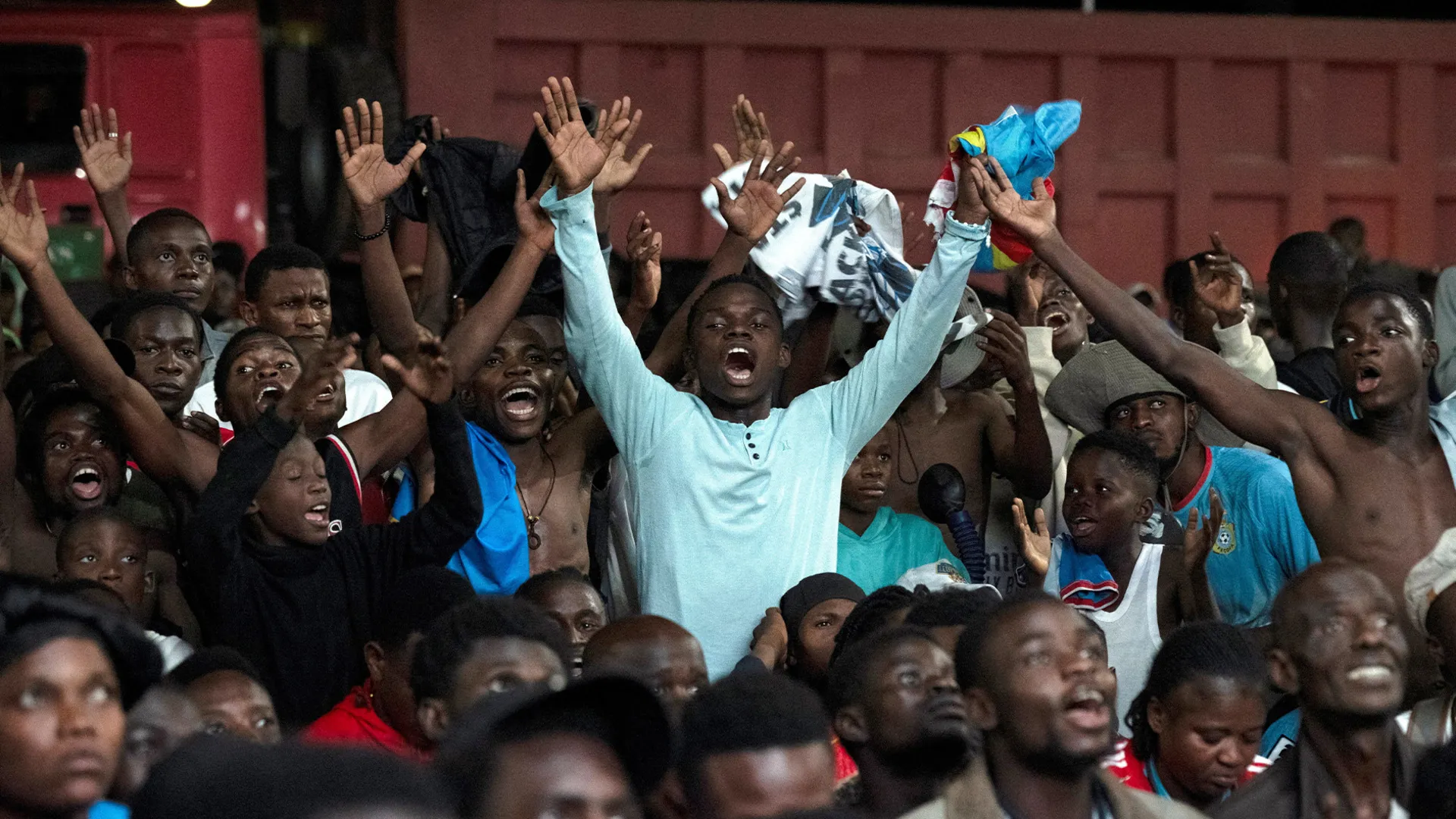
Democratic Republic of Congo fans erupted in celebration after their team secured a historic place in the World Cup knockout stage with victory over Uzbekistan. The Leopards will now face England in the Round of 32, their first-ever appearance beyond the group stage.
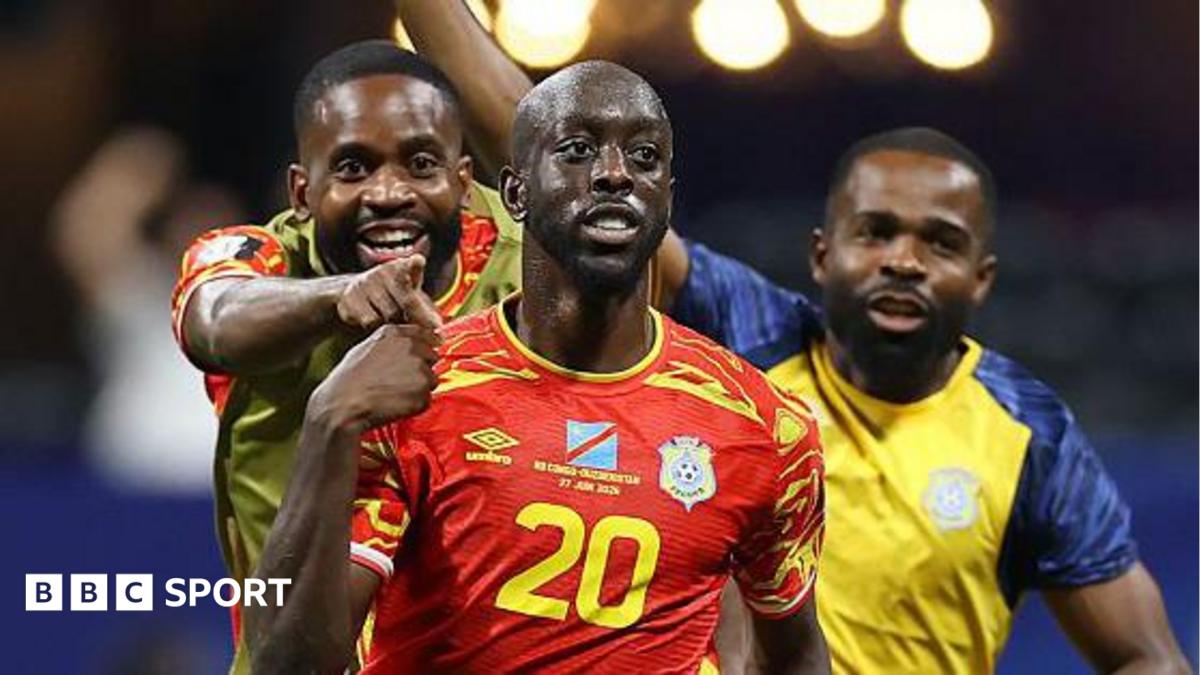
The rules are simple. Each day there’s a new footballer and the challenge is to guess who they are in as few attempts as possible.
After each wrong guess you unlock a new clue. Guess the answer after as few clues as possible to score more points.
Three is a good score, four or five points is exceptional.
So take part and return for more tomorrow.
Today’s player and clues set by BBC Sport’s Joe Rindl.
After more quizzes? Go to our dedicated Football Quizzes and Sports Quizzes pages and sign up for notifications to get the latest quizzes sent straight to your device.
This is Frenchman Sebastien Desabre’s 11th coaching role in Africa.
The 49-year-old has qualified DR Congo for successive Africa Cup of Nations, reaching the semi-finals in 2023, as well as the World Cup. He had previous success with Uganda.
How did DR Congo get to the last 32?
They earned the first World Cup point in their history by holding strongly-fancied Portugal to a 1-1 draw but then lost 1-0 to Colombia. That left DR Congo needing to beat Uzbekistan, which they duly did 3-1 to progress to the last 32 as one of the best third-placed teams.
Where can I watch DR Congo?
Their last-32 tie against England will be live on BBC One on Wednesday 1 July, with build-up from 16:00 BST.
The match will also be covered live on BBC Radio 5 Live, the BBC Sport website and app.
Give me a fact to impress my friends
Superfan Michel Kuka Mboladinga, who went viral at the Africa Cup of Nations for his eye-catching patriotism during games, has been included in DR Congo’s official World Cup delegation at the request of the players.
Since 2013, Mboladinga has worn colourful suits and silently imitated a statue of revered revolutionary leader Patrice Lumumba, with one arm raised, for entire matches.
Now give me some proper detail
The Congolese proverb little by little, grow the bananas emphasises the virtues of patience and steady progress. But during the national football team’s 52-year gap between World Cups – the joint-fourth longest of any nation – patience has been exhausted and progress stalled. Until now.
There has been a determination to change the country’s World Cup narrative after a 1974 debut that left them ripe for ridicule. Zaire, as DR Congo was then known, lost all three games – including 9-0 against Yugoslavia.
Then came the infamous moment when right-back Mwepu Ilunga charged out of a defensive wall to boot the ball away as Brazil lined up a free-kick.
Bemused onlookers were unaware it was an act of political protest. The players had learned their expected wages and bonuses wouldn’t be paid – and Zaire President Mobutu then threatened them with exile if they lost by more than three goals against Brazil.
By kicking the ball away, Ilunga had hoped to waste time and get sent off. He was only booked and Zaire lost 3-0; they were allowed home but President Mobutu cut their funding.
Ever since, the 1968 and 1974 African champions have been kept on the game’s periphery by a combination of conflict, corruption, poor football governance and a lack of facilities.
Current head coach Desabre has brought in fresh talent from the vast Congolese diaspora – all but six of the World Cup squad were born in Europe – and the nation is now seeing the fruits of his endlessly patient nurturing.
How have DR Congo done at previous World Cups?
The central African nation has only played in the World Cup once before – in 1974, when the country was named Zaire. They lost all three group games without scoring, including 9-0 against Yugoslavia.
Colombia and Portugal played out a breathless 0-0 draw to a wall of sound at Miami Stadium, with both teams advancing to the last 32 of the 2026 FIFA World Cup as the top two in Group K.
The Colombians will rue their profligacy in front of goal on Saturday, but take encouragement from dominating quality European opposition for large periods as they head off to Kansas City as group winners to take on Ghana on Friday.
Recommended Stories
list of 4 itemsend of list
Portugal, who needed to win to top the group, go north to Toronto to play Croatia on Thursday, knowing they have not quite yet found a way to blend all the talent in their squad into an effective team.
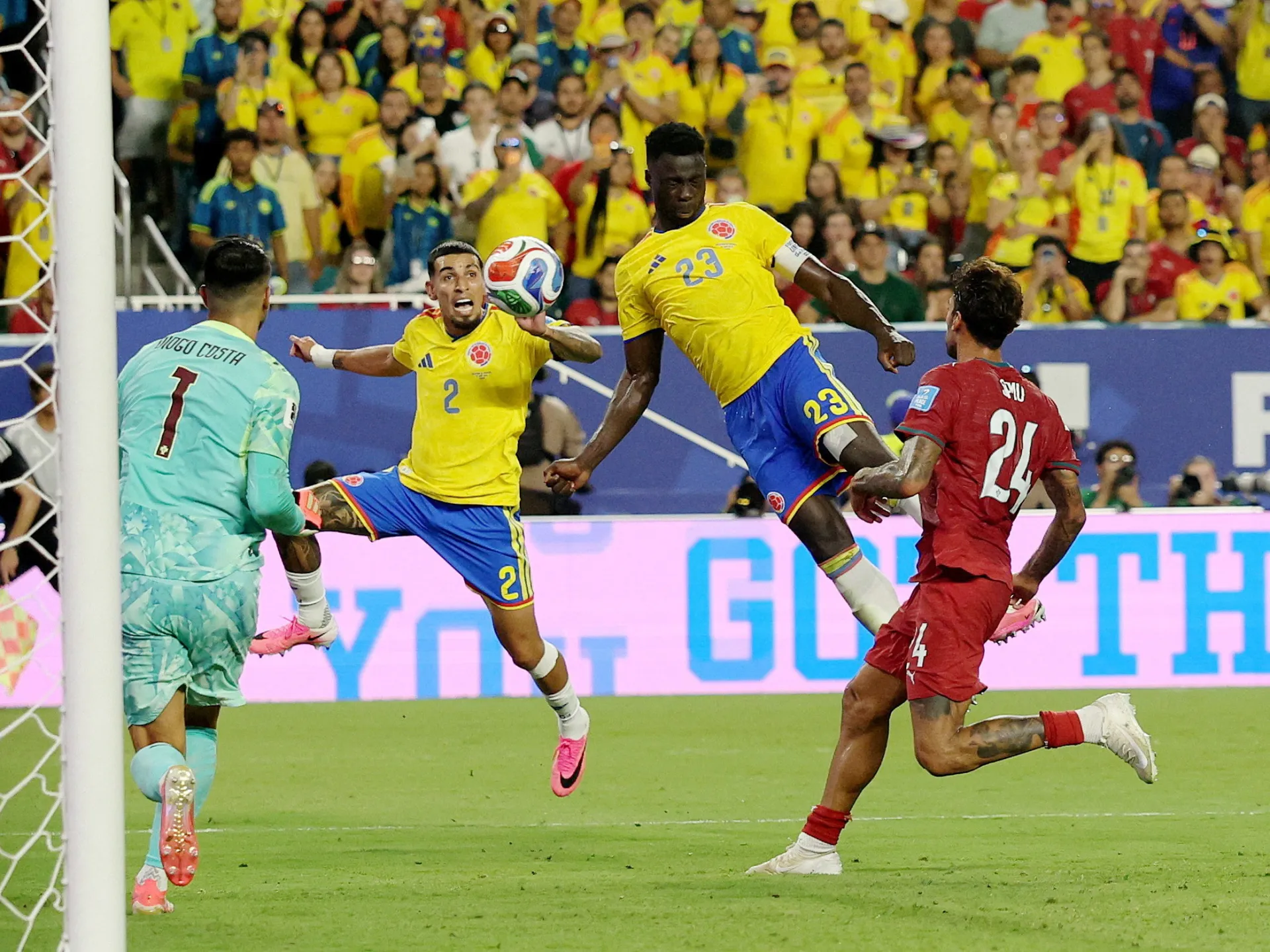
The match started to a cacophony of noise from the massed ranks of yellow-shirted South Americans, and the decibel levels went up a notch when striker Jhon Cordoba headed the ball over the bar in the first minute.
Jhon Arias caused Portugal problems every time he ran at them, and he set Cordoba free in the 17th minute, the big target man unleashing a rocket of a shot that keeper Diogo Costa did well to stop.
After a lovely flowing move five minutes later, winger Arias took the shot himself and screwed the ball towards the far corner of the net, only for Ruben Neves to arrive just in time to flick it off the line.
Colombia struggled to clear their lines cleanly sometimes, however, and it was this frailty that allowed Portugal their best chances towards the end of the first half.
Bruno Fernandes found himself free in front of goal in the 39th minute, with his shot bringing a fine point-blank save out of Camilo Vargas in the Colombia goal.
Three minutes before half-time, Joao Felix cleverly chested the ball over a defender and flashed an acrobatic volley over the bar.
Colombia pressed forward, looking for the goal their dominance deserved, and both Gustavo Puerta and playmaker James Rodriguez troubled the goalkeeper with shots before the break.
Portugal attacked more after the break, but it was Colombia who continued to carve out the best chances, with Arias setting up substitute Richard Rios for a shot that went wide.
Arias curled a shot at goal, which was well saved by Costa, and Puerta drilled another chance wide just before the hydration break.
A Rodriguez volley was deflected away from its target in the 73rd minute, just before he and Arias were substituted, but Colombia continued to tear forward at every opportunity.
Davinson Sanchez thought he had scored the winner with a far-post header a minute from time, but it was called back for a very tight offside after a VAR check.
Rafael Leao went close to winning it for Portugal in stoppage time with a shot that flashed across goal, before the referee finally called time on the entertaining match, played out in front of a crowd of 64,478 sweltering in the Miami evening heat.
Portugal’s totem Cristiano Ronaldo, booed every time he touched the ball and starved of service, had barely a sniff of a chance, his one shot on target a long-range free kick that went straight to the goalkeeper.
Wissa sends DR Congo into last-32 clash with England
In the group’s other game, Yoane Wissa scored twice as the Democratic Republic of the Congo beat Uzbekistan 3-1 and qualified for the last 32 of the World Cup for the first time in their history on Saturday.
They will meet England after registering their first-ever World Cup win.
Eldor Shomurodov’s lob over Lionel Mpasi gave Uzbekistan a perfect start in Atlanta.
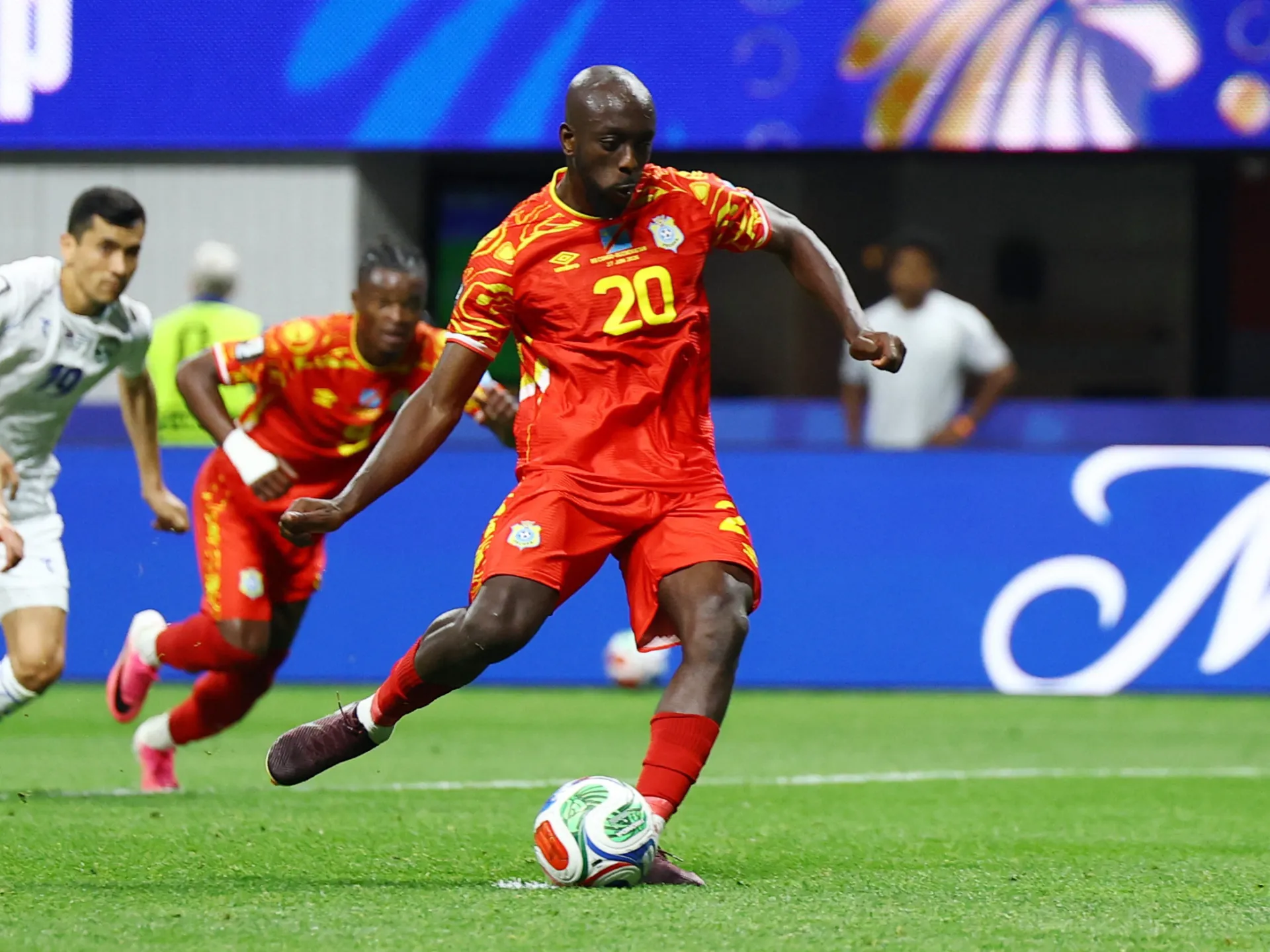
But Newcastle striker Wissa levelled from the penalty spot, before Fiston Mayele’s goal sent the mainly Congolese crowd into a frenzy.
Wissa rounded off a historic night for the Africans with a fine strike in stoppage time for his third goal of the tournament.
Earlier on Saturday, Jude Bellingham dragged England through a stubborn Panama test, scoring and setting up Harry Kane in a 2-0 win that sent them into the World Cup round of 32 as Group L winners.
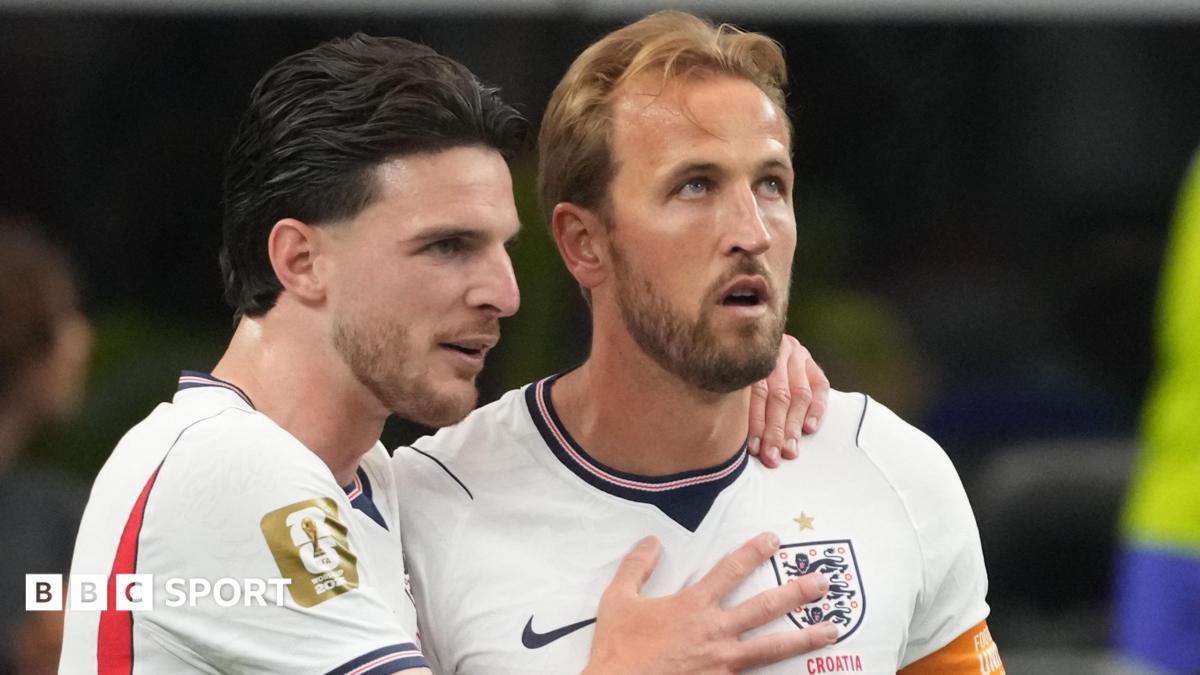
England were made to work for more than an hour in rainy New Jersey, before Bellingham broke the deadlock, crossing for Kane to head in his 11th World Cup goal, lifting him above Gary Lineker as England’s all-time leading scorer at the tournament.
Meanwhile, Nikola Vlasic headed in Luka Modric’s 83rd-minute corner to lift Croatia to a 2-1 victory over Ghana on Saturday and a second-place finish in World Cup Group L.
Vlasic’s perfect finish off the inside of the left post came 10 minutes after Derrick Luckassen had pulled Ghana level on his international debut, with half the time in between spent on a VAR review determining whether he was onside.
Petar Sucic scored early for Croatia, who needed only a draw to reach the last 32. Claiming the second-place spot guaranteed the 2022 third-place finishers a meeting with Portugal, the second-placed team in Group K, on Thursday in Toronto.
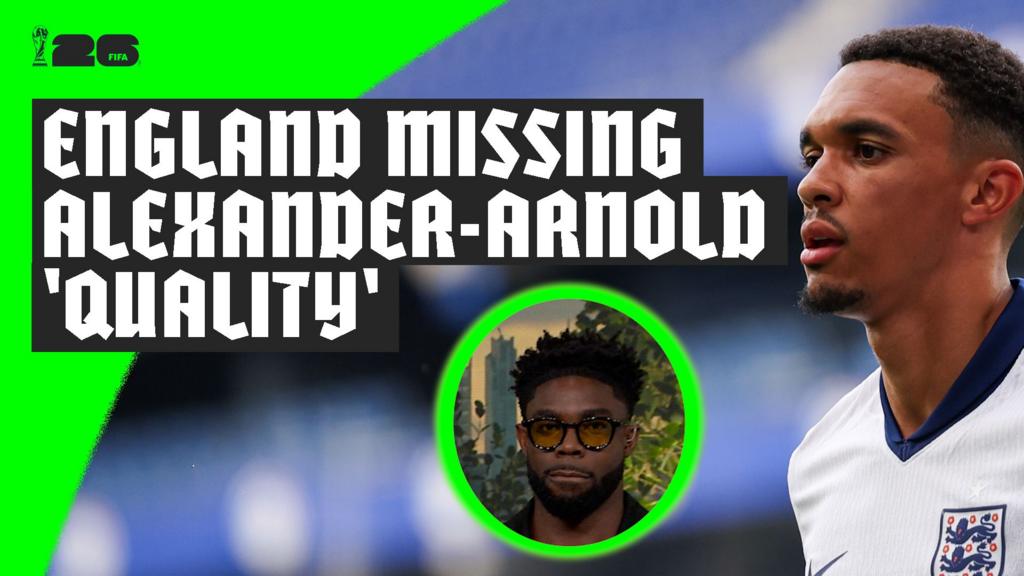
BBC Sport World Cup pundits Micah Richards and Wayne Rooney believe Thomas Tuchel should have included more full-back cover in the squad, following the withdrawal of Tino Livramento and injury concerns for Reece James, and now Jarrell Quansah.
AN iconic British singer is set to perform at the World Cup Final’s halftime show.
The musician, 52, has been booked to sing ahead of the game on the pitch at the MetLife Stadium in New Jersey, on Sunday, July 19.
Sign up for the Showbiz newsletter
Thank you!
A music legend has been revealed as a performer at the Word Cup Final’s halftime showCredit: Getty ImagesRobbie Williams shall take to the stageCredit: Getty
Robbie Williams will belt out his FIFAfootball anthem Desire with Italian pop star Laura Pausini, 52.
The singer is largely known from his time in Take ThatCredit: GettyRobbie also sang the Official FIFA Club World Cup anthem Desire prior to kick off in the FIFA Club World Cup 2025Credit: Getty
Earlier this month Noel Gallagher revealed he wasn’t too impressed with the line-up so far.
Asked on Talksport for his thoughts about performers booked he said: “I don’t like the razzmatazz of football.
“It’s been functioning perfectly for hundreds of years.
“They’re not really football people who are performing anyway, are they?”
Robbie began his music career in 1990 at the tender of of 16 years old.
The teen joined the hugely successful group Take That before dabbling in releasing solo music five years later.
England play one of the eight best third-placed teams, but the distribution of the fixtures depends on which groups provide the qualifiers.
After it was confirmed Ghana had qualified as third in group L, it meant England had only two possible opponents – third place in group K or Senegal.
If DR Congo beat Uzbekistan in their final group K match at 00:30 BST on Sunday, England will play the third-placed team in that group.
That is almost certain to be DR Congo, bar a scenario whereby Portugal lose with a goal difference swing of seven between the teams. Then England would play Portugal.
If DR Congo draw or lose then England will play Senegal.
The knockout path is now set for England through to the quarters.
After DR Congo or Senegal, they would play the winners of Mexico or Ecuador in the last 16 in Mexico City on 5 July.
The potential quarter-final would be in Miami in 11 July against Brazil, Japan, Ivory Coast or Norway.
Scotland, who have played at each of the past two European Championships, booked their spot at a World Cup for the first time since 1998 in dramatic fashion with an unforgettable victory against Denmark at Hampden Park in November.
Backed by tens of thousands of fans who had travelled to the United States, John McGinn’s deflected strike against Haiti earned the country’s first win at a World Cup for 36 years.
That would be Scotland’s only goal of the tournament.
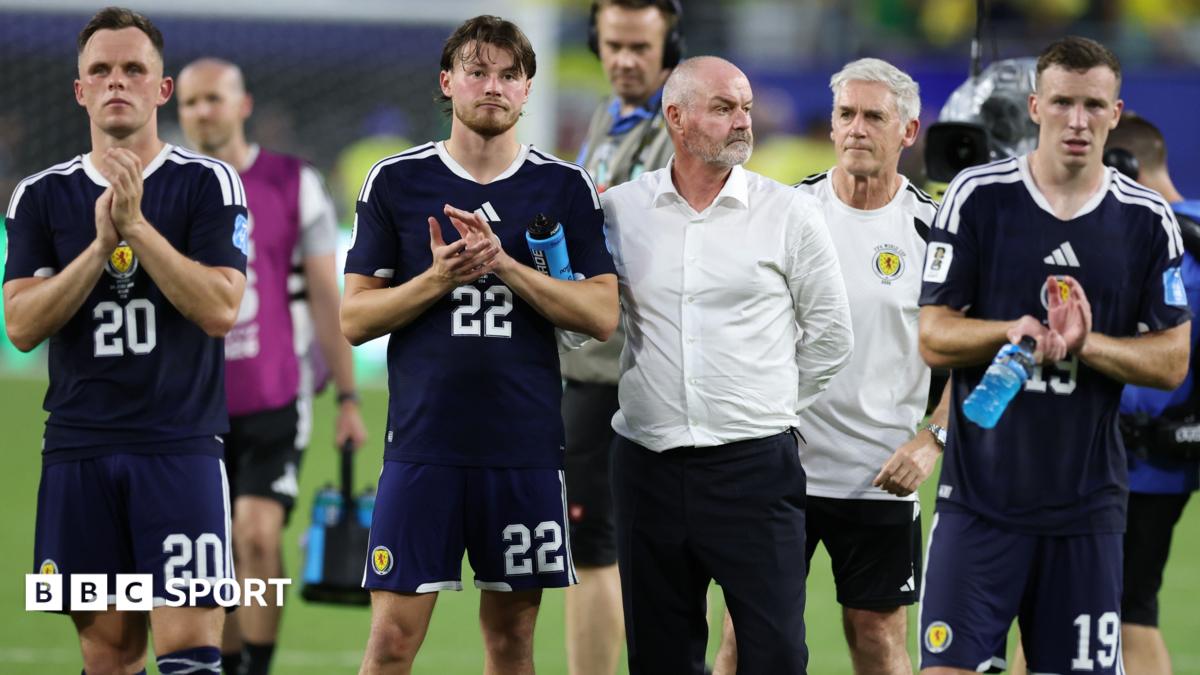
They lost to a second-minute strike by 2022 semi-finalists Morocco in their second match, so they entered their final group game against Brazil knowing a draw would probably be enough to send them through as one of the best third-placed teams.
However, first-half defensive errors would prove their undoing.
They once again conceded early when defender Scott McKenna was robbed of possession inside his own penalty area, gifting an opener to Vinicius Jr.
The Real Madrid forward was denied a second when the video assistant referee (VAR) deemed he had fouled Jack Hendry before rolling the ball past Angus Gunn, but just before half-time Scotland again gave the ball away near their own goal and Vinicius Jr nodded in at the back post to make it 2-0.
Matheus Cunha extended Brazil’s advantage after half-time and a late rally failed to yield a reply that would have improved Scotland’s goal difference.
Although England were always expected to progress from Group Two, the manner of their performances has still been impressive.
They racked up 200 or more against Sri Lanka and Scotland, scored an equally impressive 186-7 on a tricky pitch against West Indies at Lord’s, and romped home with 2.4 overs to spare in a chase of 164 against the White Ferns as Danni Wyatt-Hodge made an unbeaten 89.
“The goal was to win the group,” Edwards said.
“To go through unbeaten is really pleasing. Our batting has been particularly powerful and a real positive for us.
“I thought we bowled really well tonight on a good pitch. You saw how good that pitch was.
“We seem to be getting better with each game which is really good going into the business end of the tournament.”
England will not find out their semi-final opponents until Group One concludes on Sunday, but India or South Africa currently appear the most likely.
They also do not know whether they will play on Tuesday at 14:30 BST or Thursday at 18:30 BST.
Tuesday’s match has been arranged to suit Indian TV and India will play in that match should they qualify.
It means England will play on Thursday if anyone but India finishes second in Group One, but be switched to Tuesday if India take second spot.
“We obviously know now with the teams we are likely to play in the semi-finals, one are world champions of the ODIs [India] and one have played in every World Cup final for the last three years [South Africa] so it is not going to be easy,” Edwards said.
“But we are going in with the most confidence we have ever done into a semi-final and with a lot of belief.”