
cruise

Three dead in suspected hantavirus outbreak on Atlantic cruise ship | Health News

Three of six passengers who fell ill from suspected rodent-transmitted virus have died, and one is in intensive care, the WHO says.

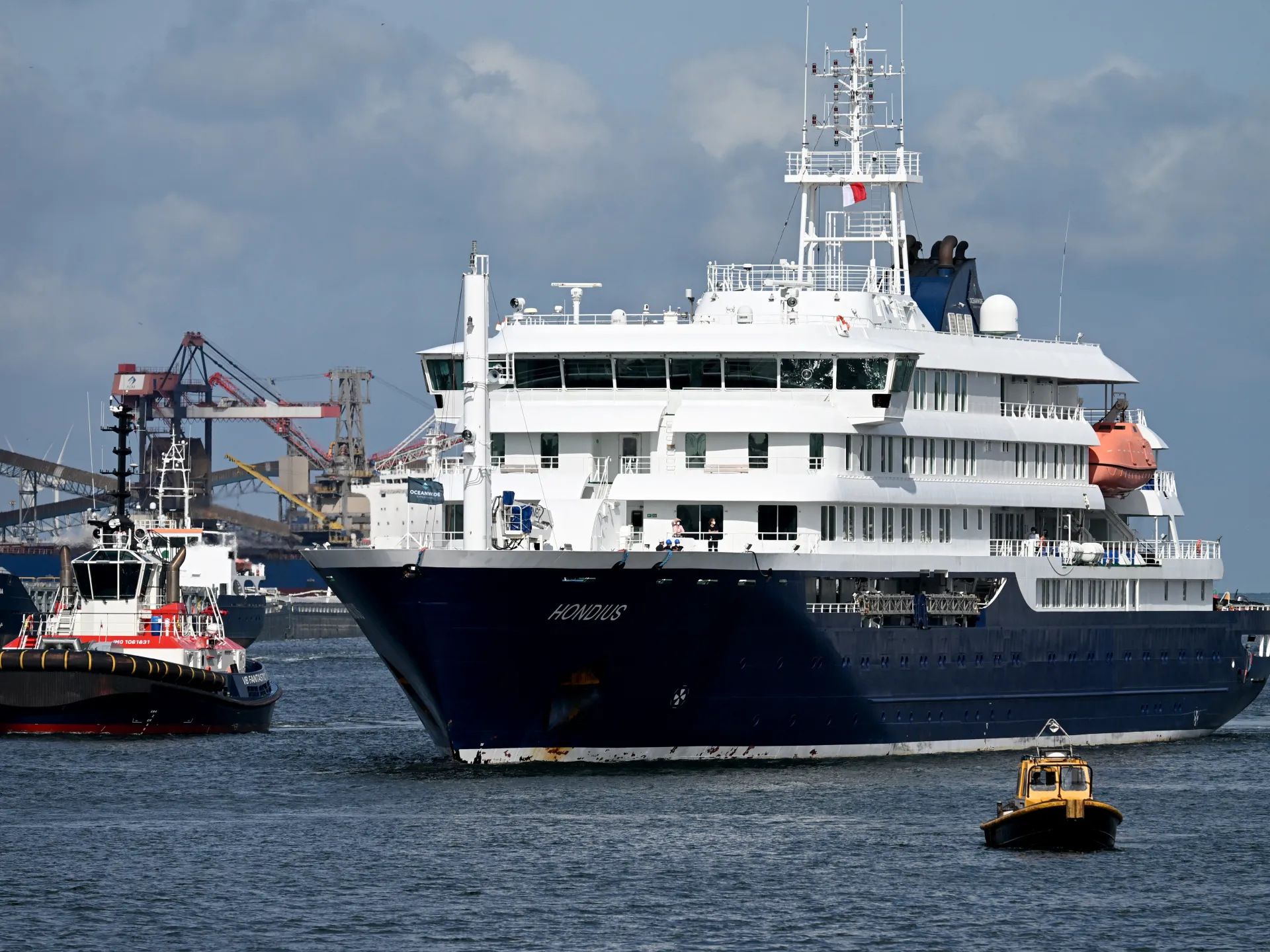
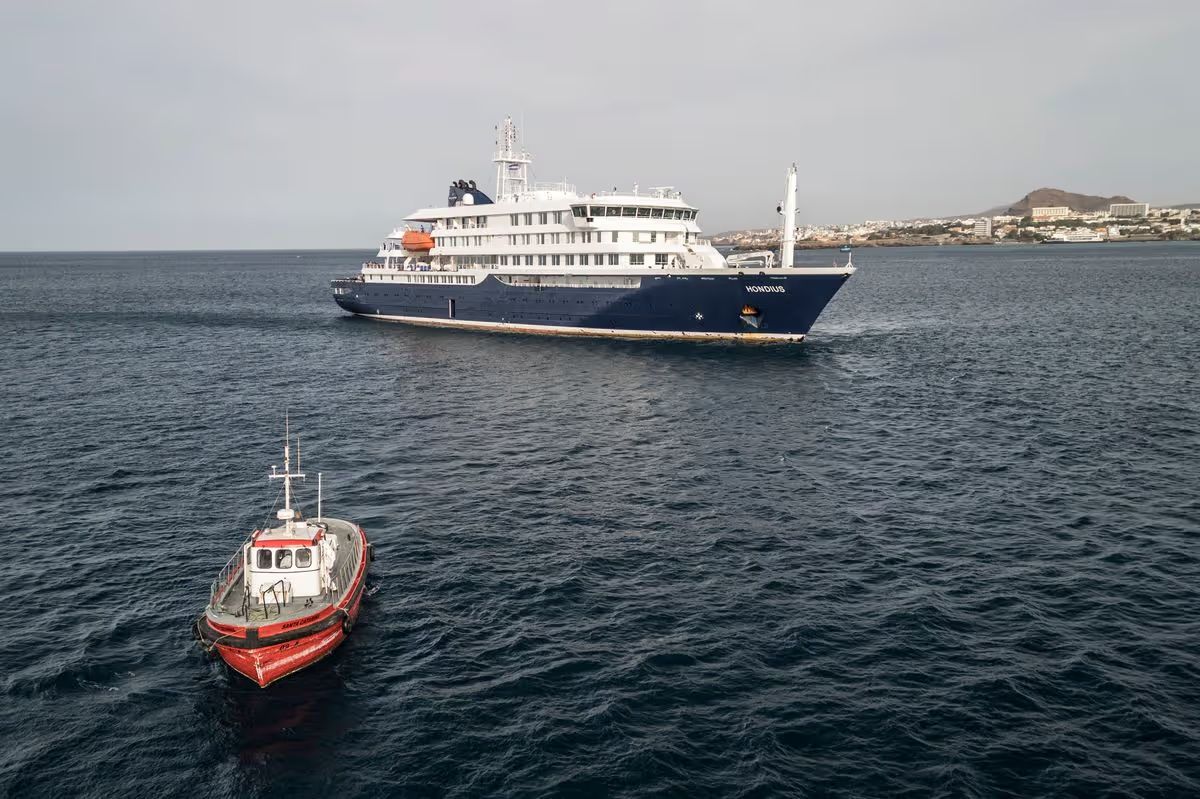
Three people have died on a cruise ship in the Atlantic, with at least one confirmed to have suffered from hantavirus, a rare disease transmitted to humans from rodents.

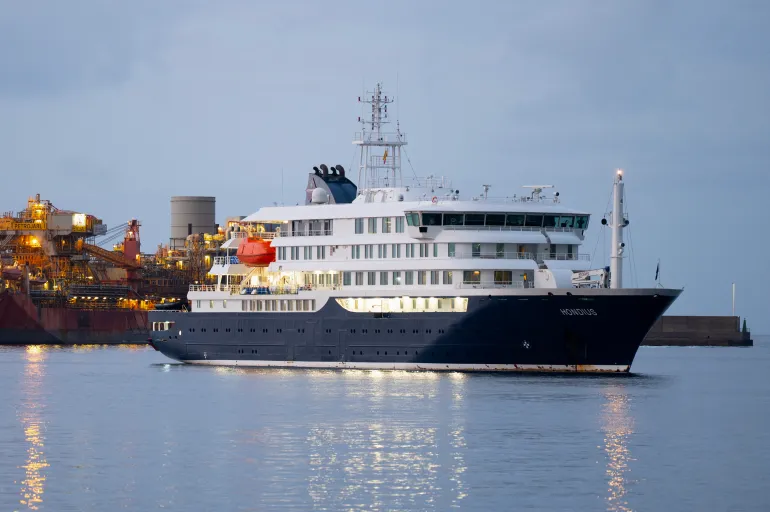
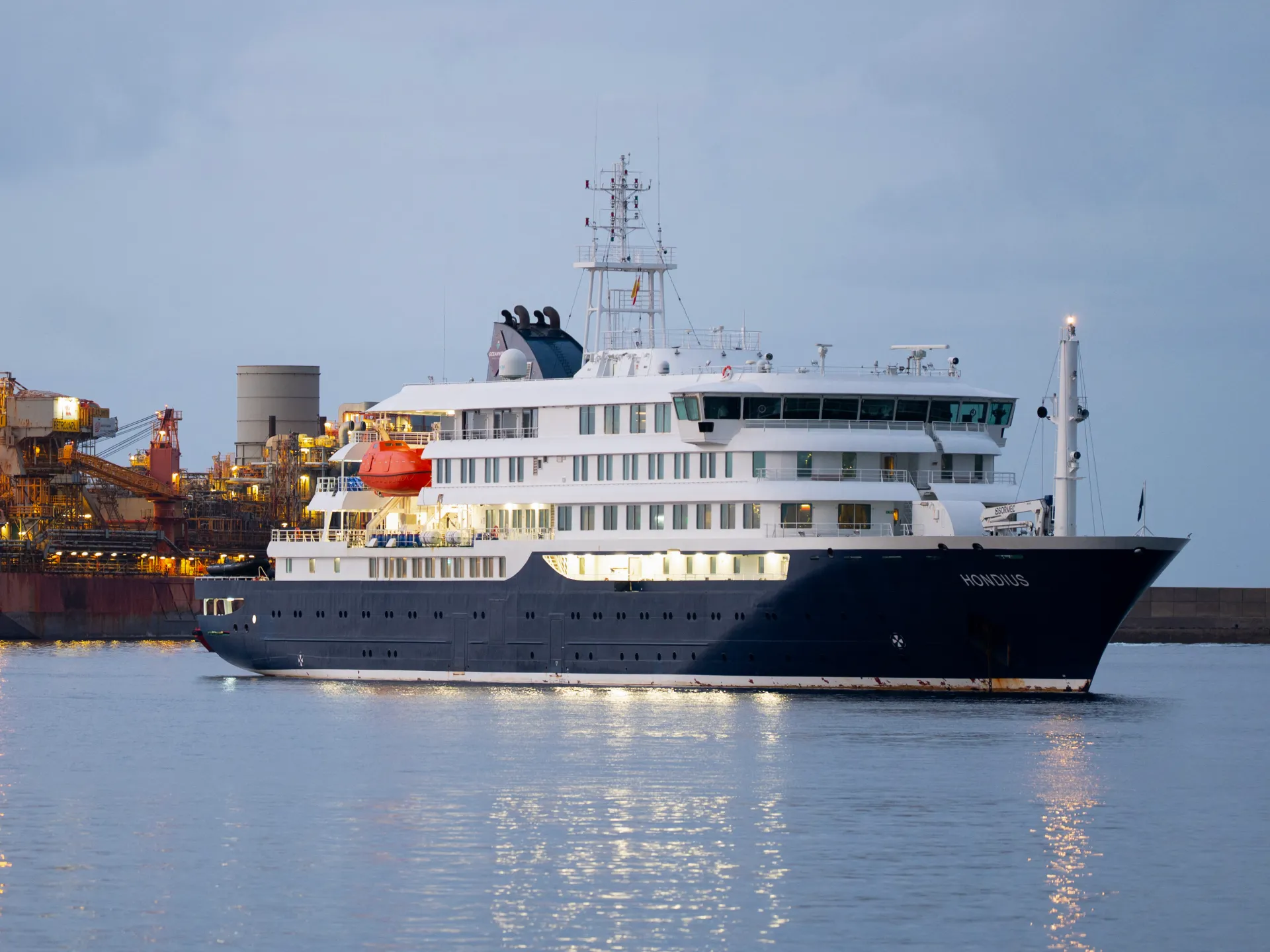
Health authorities are now investigating a suspected outbreak of the virus on the MV Hondius, which is sailing from Ushuaia in Argentina to Cape Verde.

Recommended Stories

list of 3 itemsend of list

In a statement on Sunday, the World Health Organization said that one case had been confirmed and at least five other passengers were suspected of being infected.

“Of the six affected individuals, three have died, and one is currently in intensive care in South Africa,” WHO said in a statement.

“Detailed investigations are ongoing, including further laboratory testing and epidemiological investigations. Medical care and support are being provided to passengers and crew. Sequencing of the virus is also ongoing.”

WHO added that it was “facilitating coordination” between countries to evacuate the two other passengers showing symptoms of the infection.

Hantavirus, a rare disease transmitted to humans through the droppings or urine of infected rodents, can be fatal in severe cases and cause hemorrhagic fever.

Infected couple among casualties

South Africa’s National Department of Health said earlier on Sunday that there had been an outbreak of a “severe acute respiratory illness”, which had killed at least two people, and that a third person was in intensive care in Johannesburg, according to the AFP news agency.

The ministry’s spokesperson, Foster Mohale, confirmed that the patient being treated in Johannesburg tested positive for hantavirus.

A 70-year-old was the first to develop symptoms. He died on the ship, with his body now being held on the island of Saint Helena, a British territory in the South Atlantic, the spokesman said.

The patient’s 69-year-old wife also fell sick and was evacuated to South Africa, where she died in a Johannesburg hospital, he added.

Mohale told AFP that authorities have not confirmed the nationalities of the deceased. But the person in intensive care was reported by AFP to be a 69-year-old Briton.

Source link

New Cruise Missile-Armed MV-75 Tiltrotor Concept For The Marines Shown Off

Bell has put forward a new concept for a next-generation tiltrotor aircraft armed with anti-ship cruise missiles and other munitions for the U.S. Marine Corps. The design is based on what has been newly named the MV-75A Cheyenne II, which is in development for the U.S. Army. This comes as the Corps has said “everything is on the table” as it starts to formulate a new vision for what will succeed its AH-1Z Viper and UH-1Y Venom helicopters.

A model of the new armed MV-75 concept for the Marines is currently on display at the annual Modern Day Marine conference in Washington, D.C., at which TWZ is in attendance. It is painted in the markings of Marine Light Attack Helicopter Squadron 267 (HMLA-267), a unit currently equipped with AH-1Z and UH-1Y helicopters, which perform attack and armed utility mission sets, respectively.

Another view of Bell’s new MV-75 concept model at this year’s Modern Day Marine. Eric Tegler

The model’s most immediately eye-catching details are its armament. This includes two stub wings, each with a single pylon, mounted on either side of the top of the forward fuselage, situated between the main wing and the cockpit. A Naval Strike Missile (NSM), a stealthy anti-ship cruise missile with secondary land capability, is loaded on the left side. The Marine Corps is already fielding NSM in a ground-launched configuration. The missile is also in U.S. Navy service as a sea-launched weapon, as it was originally designed.

A close-up look at the NSM on the MV-75 model at the 2026 Modern Day Marine exposition, at left, and a full-size model of the NSM on display at a previous trade show. Eric Tegler / Joseph Trevithick

On the right side of the model, there is a pair of missiles, which are intended to reflect the Marine Corps’ forthcoming Precision Attack Strike Munition (PASM) capability. PASM is a version of L3Harris’ Red Wolf, a small, lower-cost cruise missile that you can read more about here.

A close-up look at the missiles on the stub wing on the right side of the model. Phil Hladky

It is interesting to note that the missiles on the model also look similar in broad strokes to Lockheed Martin’s Common Multi-Mission Trucks (CMMT, pronounced ‘comet’). Red Wolf and CMMT are just a few examples of a growing field of missile-shaped ‘air vehicles,’ many of which can be readily reconfigurable to perform a host of different tasks, including acting as a kinetic munition, an expendable electronic warfare system, or a decoy. Designs in this general category increasingly blur the line between uncrewed aerial systems, especially longer-range kamikaze drones, and traditional cruise missiles.

The stub wings could be used to carry other stores, such as AGM-114 Hellfire missiles or Advanced Precision Kill Weapon System II (APKWS II) laser-guided rockets, per Bell.

Two additional launchers are attached to the sides of each of the main landing gear sponsons. These are intended to depict launch tubes for the ALTIUS-700M loitering munition or something similar, according to Bell. This is a general category of uncrewed systems now commonly referred to as launched effects. There are also five apertures on either side of the fuselage through which additional munitions or drones could be fired via Common Launch Tube (CLT).

A look at the launchers attached to the right side main landing gear sponson. A row of apertures is also visible on the side of the fuselage. Eric Tegler

“There are some restrictions of [sic] where you can place them [launchers and/or pylons for munitions and other stores], because anything that’s forward firing would need to have the clearance to get past the [rotor] tip path plane and [have] it fit inside the fuselage,” Bill Hendricks, Senior Strategy Manager at Bell, told our Eric Tegler on the show floor at Modern Day Marine. “Our assumption is that, should the Marine Corps pursue something like this, they would want to be able to employ ordnance while in airplane mode with the nacelles forward. So the weapons that we have currently on that conceptual model would be something that you could fire in airplane mode.”

The design also has a three-barrel Gatling-type cannon or machine gun in a turret under the nose. What is depicted is in line with the M197 20mm Gatling-type cannon found on Marine AH-1Zs today. An improved, lightweight evolution of that cannon, the XM915, was also expected to arm the Army’s now-canceled Future Armed Reconnaissance Aircraft (FARA).

The video below shows a live-fire flight test of the XM915 mounted on a UH-60 Black Hawk helicopter.

XM915 20mm firing thumbnail

XM915 20mm firing


The model of MV-75 derivative for the Marines also has a sensor turret in the nose with a pair of large apertures in front, which typically reflect electro-optical and/or infrared video cameras inside. It has a retractable in-flight refueling probe, as well. The Army’s plans for in-flight refueling capability for the Cheyenne II are evolving. This is also a feature expected to be found on a special operations version of the MV-75.

A close-up look at the nose-end of the model showing the gun, in-flight refueling probe, and sensor turret. Phil Hladky

Compared to the AH-1Z and UH-1Y, with this tiltrotor design, “now you have additional range, you have additional speed, more operational flexibility, you can cover more area with one platform,” Bell’s Hendricks highlighted at the Modern Day Marine show.

“If that was something that we were asked to look at, then we can certainly explore that,” he added when asked about the possibility of extra fuel carried externally for even greater reach. “That’s not something that we’ve looked at with that conceptual design, because an MV-75 variant in that configuration with internal fuel would still have a range, after a short takeoff or a running takeoff, in excess of 1,000 nautical miles.”

As a single replacement for the AH-1Z and UH-1Y, an armed MV-75 derivative would come in a larger and more expensive package, which would present additional tradeoffs for the Marines to consider. As an aside, the service is also now in the process of charting a separate course to a replacement for the MV-22 Osprey.

A U.S. Marine Corps AH-1Z Viper attack helicopter, in front, flies together with a UH-1Y Venom armed utility helicopter, at rear. USMC

As noted, the Marine Corps has now begun to lay out a new vision for what will succeed its AH-1Z and UH-1Y helicopters. The service has previously told TWZ that this effort, currently known as Future Attack Strike (FASt), will also help fill certain capability gaps created by the retirement of the AV-8B Harrier jump jet and legacy F/A-18C/D Hornet fighters. The Marines have long said the main replacements for the AV-8Bs and F/A-18C/Ds will be variants of the F-35 Joint Strike Fighter.

“So, right now, for FASt, everything is on the table. Manned, unmanned, optionally-piloted, I think, are good avenues to take a look at. Conventional rotary-wing, tiltrotor. Maybe there’s something else out there,” Col. Scott Shadforth said in response to a question, also from Eric Tegler, while speaking today at Modern Day Marine. “There is no steadfast, solid response to that.”

Shadforth is currently Director of the Expeditionary Maritime Aviation-Advanced Development Team (XMA-ADT) within Naval Air Systems Command (NAVAIR). XMA-ADT focused on rapid prototyping and experimentation to help refine future Marine Corps aviation requirements in cooperation with the Navy.

“So, as we look at unmanned, manned-unmanned teaming, air-launched effects, all the capabilities to help extend the range of various assault support or attack type platforms, all of those are on the table for consideration by the Marine Corps at this time,” he added.

Another view of the MV-75 concept model at Modern Day Marine 2026. Eric Tegler

In the meantime, the Marines are notably working to integrate a standoff strike capability onto the AH-1Z through the aforementioned PASM, which will open up significant new operational possibilities. The service has also been looking at ways to expand the roles and missions of the UH-1Y, to include anti-submarine warfare capability and acting as an airborne drone controller.

It is important to note that this is not the first time Bell has shown models and renderings of armed variations of this design, originally branded as the V-280 Valor, that could perform sea control and other maritime mission sets. This has included versions with internal bays, as well as pylons under the wings and ones mounted on the sides of the rear end of the fuselage.

From ‘Hook: Bell showed this seriously armed variant of its MV-75/FLRAA it is offering for the USMC’s AURA, and reminding the Navy of its paid-for engineering for FVL-MS pic.twitter.com/fs9r2m7IxT

— Brian Everstine (@beverstine) August 25, 2025

Previous navalized concepts have also included folding main wings and rotors, similar in form and function to those features on the V-22 Osprey tiltrotor, to help reduce the aircraft’s physical footprint when operating from ships. Bell has said previously that the ‘stowed’ configuration of the V-280 could be small enough to fit inside the hangars on Arleigh Burke class destroyers, as well as those on larger naval vessels.

A rendering of V-280-based naval tiltrotors on the stern flight deck of an Arleigh Burke class destroyer. Bell

Bell has also pitched navalized V-280/MV-75 designs in the past, paired together with its uncrewed V-247 Vigilant tiltrotor drone. This has included previous proposals specifically aimed at meeting future Marine Corps aviation requirements, which have evolved significantly in recent years.

V-280 and V-247-based designs depicted operating from an amphibious assault ship. Bell
A rendering of a V-247 carrying a pair of Joint Strike Missiles (JSM), a design derived from the NSM. Bell

“I can see conceptually, where the Navy could, if this is what they wanted, adopt like this to [meet] their sea control, or ASW [anti-submarine warfare], or ASuW [anti-surface warfare] mission set [sic], because of the additional range that it gives you,” Bell’s Hendricks said when asked about whether this concept could also be relevant to that service’s needs. “It would outperform the speed and range of an H-60, and so that would give them more operational reach.”

In recent years, the Navy has been exploring options for replacements for its MH-60R and MH-60S Seahawk helicopters, as well as its MQ-8C Fire Scout drone helicopters. However, at least in the near term, the service seems to be leaning more toward a major evolution of the Seahawk platform rather than an entirely new platform.

The Marine Corps has made clear that all options are currently on the table, including a tiltrotor like Bell’s MV-75 or a derivative thereof, as the service works to firm up requirements for a replacement for its AH-1Z and UH-1Y helicopters.

Eric Tegler and Phil Hladky contributed to this story.

Contact the author: joe@twz.com

Joseph has been a member of The War Zone team since early 2017. Prior to that, he was an Associate Editor at War Is Boring, and his byline has appeared in other publications, including Small Arms Review, Small Arms Defense Journal, Reuters, We Are the Mighty, and Task & Purpose.


Source link

New Low-Cost Cruise Missile Features Tomahawk-Like Range

A new, longer-range version of the Rapidly Adaptable Affordable Cruise Missile (RAACM) has been unveiled by CoAspire at the Sea-Air-Space 2026 exposition near Washington, D.C. The development comes just days after the U.S. Air Force launched market research for its Family of Affordable Mass Missiles — Beyond Adversary’s Reach (FAMM-BAR), reflecting the service’s interest in low-cost, long-range strike weapons, specifically for anti-surface warfare.

Jamie Hunter of TWZ spoke about the RAACM-ER (RAACM pronounced ‘rack-em;’ ER for Extended Range) with Doug Denneny, founder, CEO, and owner at CoAspire.

A frontal view of the RAACM-ER. Jamie Hunter

First off, it’s worth looking at the original RAACM, a modular, low-cost cruise missile that leverages 3D printing to bring down cost and enable rapid production ramp-up.

“When we designed the original RAACM, we knew that it was going to be the size of a GBU-38,” Denneny said, referring to the 500-pound version of the Joint Direct Attack Munition (JDAM), which is 92.6 inches long and has a wingspan of 14 inches.

An official video promoting the original RAACM:

RAACM Rapidly Adaptable Affordable Cruise Missile thumbnail

RAACM Rapidly Adaptable Affordable Cruise Missile


“When you go to that size, there are great reasons to do it, but it doesn’t go as far as a larger variant could do,” Denneny continued. “We really wanted to take everything we learned and now have an extended-range version. And what’s beautiful about the additive manufacturing that we use is that we can really optimize fuel tank volume, which means this can go very far.”

According to the manufacturer, the RAACM-ER has a range greater than 1,000 nautical miles.

This is especially remarkable considering the relatively compact size of the weapon. Indeed, when it comes to anti-ship missiles, the only weapon in the U.S. inventory that comes close is the BGM-109 Block V Maritime Strike Tomahawk (MST). This can be launched from destroyers, submarines, and the U.S. Army’s Typhon system. Like the RAACM-ER, it is subsonic, but a single round costs $3.64 million, according to the Navy. While the RAACM-ER clearly has a degree of low observability, it is not to the same degree as on the MST.

A full battery set of four Typhon launchers, as well as the trailer-based command post. U.S. Army

Like RAACM, the extended-range model is designed for launch from aircraft, as well as from the ground and from naval vessels. For surface-launched applications, the RAACM-ER adds an additional rocket booster behind its turbojet, meaning it can be propelled out of its launch canister.

Despite the nomenclature, the RAACM-ER is a new design, rather than a modification of the RAACM.

Denneny explained: “Our engineers came to us and said, ‘Hey, if we’re going to make a bigger one, should we make it look just the same?’ I mentioned earlier that RAACM was made that shape just to ease integration. We’re an engineering company, so we said, ‘Let’s optimize fuel volume, let’s optimize survivability features, let’s optimize physics so that this thing can go as far as possible and take the sensors needed. That’s why it’s in this slightly different shape.”

The RAACM-ER is somewhat reminiscent of the AGM-158 Joint Air-To-Surface Standoff Missile (JASSM), in terms of appearance and capabilities, but Denneny is keen to avoid direct comparisons.

Stealthy AGM-158 JASSMs loaded onto an F-15E. U.S. Air Force/Photo by Airman 1st Class Susan Roberts Stealthy AGM-158 JASSMs loaded onto an F-15E. JASSM uses an imaging infrared seeker — seen in the hexagon-shaped window on the missile’s nose — to match the target in its databank and fine-tune its terminal attack run. (Photo by Airman 1st Class Susan Roberts)

“Physics is physics,” he added. “When people look at shapes, they look similar, but just like an Airbus looks like a Boeing, but what they have different inside is really what matters, and that’s how we differ in many ways.”

In terms of sensors, the RAACM-ER is currently fitted with a GPS navigation system, suitable for air, ground, and surface launch.

“Both our RAACM and our RAACM-ER also have a long-wave infrared sensor in the nose,” Denneny continued, “so we have the opportunity to search and find targets as well.”

Unlike the JASSM and similar cruise missiles, however, the RAACM-ER, like the RAACM before it, is optimized for low cost.

For Denneny, “the most important thing is affordable mass. [This] means keeping the cost down, so that the nation and our allies can purchase these at scale. That’s number one. Number two is to use as many commercial off-the-shelf parts, so that we’re we are not locked into a single supplier for anything. The final thing is to have something that can survive enemy countermeasures, and also hit the target, whether it’s stationary or moving. Those are the main requirements.”

Jamie Hunter

When it comes to price point, CoAspire has optimized mass rather than the highest-end capabilities. This is a reflection not only of the sheer number of targets that the U.S. military and its allies would face in a potential conflict with China, but also the fact that a considerable proportion of missiles won’t make it to their targets anyway. Still, as recent conflicts have shown, the ability of lower-end drones, especially, to overwhelm adversary air defenses when fielded in large numbers is significant. After all, quantity has a quality all of its own.

Denneny confirmed that CoAspire plans to test-fly the RAACM-ER “very soon.”

The original RAACM has already undergone flight trials aboard a contractor-operated A-4. CoAspire is now under contract to the U.S. government for RAACM, and the weapon is in production at the company’s plant in Manassas, Virginia.

In the past, we’ve learned that both the Air Force and the Navy have funded work on the RAACM project. It has also been reported that CoAspire is one of two companies producing Extended Range Attack Missiles (ERAM) for Ukraine — this may well involve the RAACM or a related weapon.

Two candidate weapon prototypes competing for the US Air Force’s Extended-Range Attack Munition program 👇. Both Coaspire and Zone 5 Technologies were awarded contracts late last year in support of the #ERAM program. Both are expected to enter testing this year. https://t.co/9cGBuB9z3s pic.twitter.com/gc3ZDtX54m

— Air-Power | MIL-STD (@AirPowerNEW1) February 9, 2025

As for the RAACM-ER, this was unveiled only a week after the Air Force launched market research for its Family of Affordable Mass Missiles — Beyond Adversary’s Reach (FAMM-BAR).

“The potential procurement objective is to produce an inventory for the [U.S.] Government and Foreign Military Sales. The expectation is that the annual production orders will range from 1,000 to 2,000 units per year for five years (procurement numbers will vary by year),” the Air Force says in the request for information.

The FAMM-BAR program lists five desired attributes for the potential weapon: a range of at least 1,000 nautical miles, a speed of at least 0.7 Mach, the option of palletized delivery from a cargo aircraft, the ability to receive midcourse navigation updates, and the manufacturing capacity to produce more than 1,000 rounds annually. The main target set for the weapon is “slow-moving maritime” vessels.

A video showing a demonstration of the Rapid Dragon air-launched palletized munitions concept, using surrogate weapons delivered from the cargo holds of a C-17A and an EC-130J:

Rapid Dragon Flight Test thumbnail

Rapid Dragon Flight Test


This requirement reflects the growing focus on anti-surface warfare as the U.S. military plans for a high-end conflict in the Pacific, especially against China. The U.S. military is increasingly investing in a diverse mix of anti-ship capabilities, part of a broader strategic shift driven by China’s growing maritime power. At the same time, real-world operations have exposed how rapidly missile stockpiles can be depleted, intensifying concerns that sustaining the massive volumes of anti-ship fires required in a China conflict will demand significant expansion of U.S. production capacity and inventories.

At the same time, the RAACM-ER would be useful for striking static land targets during an Indo-Pacific war, too. With such a considerable range, the weapon will also be better able to deal with increasingly far-reaching air defenses, something that the Pentagon is increasingly concerned about, including the likelihood of enemy missiles that can target its aircraft at ranges as great as 1,000 miles.

It should be noted that there are already other FAMM programs underway, namely the FAMM-Palletized and FAMM-Lugged cruise missiles for the Air Force. However, these require ranges of 250-500 nautical miles.

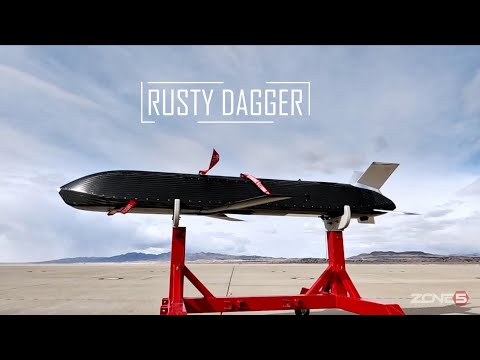
At this point, the low-cost, long-range strike weapon field is becoming increasingly crowded. Other contenders include designs from Anduril, General Atomics, and Zone 5 Technologies. From the last of these companies, the Rusty Dagger recently underwent release tests from an Air Force F-16 as part of the FAMM-L effort.

A U.S. Air Force F-16 takes off carrying a Rusty Dagger, from Zone 5 Technologies, as part of the Family of Affordable Mass Munition — Lugged tests. U.S. Air Force photo by Tech. Sgt. Thomas M. Barley

Global Technical Systems is also pitching a cruise missile with a range of 1,200 nautical miles and an anti-ship warhead.

However, with the original RAACM already in production, and proven in flight tests, the new RAACM-ER looks well-positioned to go far — figuratively and literally — in the FAMM-BAR program.

Contact the author: thomas@thewarzone.com

Thomas is a defense writer and editor with over 20 years of experience covering military aerospace topics and conflicts. He’s written a number of books, edited many more, and has contributed to many of the world’s leading aviation publications. Before joining The War Zone in 2020, he was the editor of AirForces Monthly.


Source link

Wolf Pack Modular Mini Cruise Missiles Pitched For Apache, Black Hawk

L3Harris is pushing its modular Wolf Pack family of “launched effects vehicles” for the U.S. Army, including to equip its H-60 Black Hawk series and AH-64 Apache helicopters, with an eye on the specific demands of a future conflict in the Pacific. The family of vehicles includes the Red Wolf, configured for long-range precision strikes against targets on land or at sea, and the Green Wolf fitted with an electronic warfare payload. Overall, these are part of a wider drive toward fielding modular, relatively cheap, and small systems that increasingly blur the line between uncrewed aerial systems, especially longer-range kamikaze drones, and cruise missiles, as well as decoys.

Readers can refer to our previous coverage of the Wolf Pack family, and it is also worth noting that the company is under contract with the U.S. Marine Corps to deliver the related PASM, the Precision Attack Strike Munition.

At the Army Aviation Association of America’s Army Aviation Warfighting Summit in Nashville, Tennessee, this week, TWZ caught up with Brad Reeves, the director of strategy and requirements for the Agile Development Group at L3Harris, to talk about the company’s vision for the Wolf family with the Army.

L3Harris has formally rolled out its modular Wolf family of "launched effects vehicles," which includes the Red Wolf, configured for long-range precision strikes against targets on land or at sea, and the Green Wolf fitted with an electronic warfare payload.
A rendering of the Red Wolf launched effects vehicle. L3Harris L3Harris

TWZ: What is the primary driver behind the Wolf family, and how is it relevant to the Army’s rotary-wing fleets?

Brad Reeves: The Department of War has a heavy emphasis on the Pacific and a conflict over there. Mass is an issue. We have a lot of exquisite weapons today, but the numbers are not maybe as high as we might hope for a conflict over there. So, they’re trying to solve that problem. Affordable mass has kind of become the buzzword, which basically means, “hey, how do we get capability that we can buy in quantity without breaking the bank?” And so, with that, the Department of War, actually Secretary Hegseth, issued a memo on April 30 of last year. And one of the things he called out specifically was launched effects, the urgency to get that fielded beginning this year. So, that’s a high-emphasis item for those guys.

A U.S. Army UH-60M Black Hawk. U.S. Air Force photo

Launched effects are really meant to be an affordable mass solution for the Army. But the real story behind this is what we call our Wolf Pack family of systems, and our offering and the capability it brings. And the story here is it’s very capable, but it’s what it does for the Army and for Army aviation. So it’s transforming Army aviation, and it’s addressing platforms that lack some relevancy today in the fight. Black Hawks, Apaches, etc, have a very short-range capability, relatively speaking, when you’re talking about the Pacific, and you have the tyranny of distance and anti-access/area-denial threats. It’s a much harder challenge than what we’ve dealt with in the decades since those aircraft were first invented.

Now we’re basically bringing relevancy to those platforms. We’re transforming from a weapons-effectiveness range and lethality range of single-digit kilometers, maybe up to a dozen kilometers, and we’re now extending that to hundreds of kilometers. We’re taking what before was a single-mission aircraft that’s supporting the Army; it’s doing close combat attack missions for Army soldiers on the ground, and is basically specific to that single service. And we’re now expanding that, and we’re giving that platform a joint or coalition viability in a Pacific flight. And so, the relevance now has increased. We’re taking what was before, a single-domain, fully land-based capability. We’re turning it into multi-domain, so now surface, meaning maritime, and land. And then we’re taking the target sets, which were traditionally tanks, maybe threats that we get from ground forces, etc. Again, we’re expanding that so it can be maritime threats and ground threats. It’s kind of a revolution in the way that the Army is going to fight and what they’re going to contribute to the joint coalition force. The Army desperately needs this capability.

A U.S. Army AH-64D Apache fires a Hellfire missile during training. The basic Hellfire has an operational range of anywhere between four and just under seven miles (seven to 11 kilometers). U.S. Army photo by Spc. Dean John Kd De Dios

TWZ: And what are the differences between the Wolf Pack family members?

Brad Reeves: Our launched effects offering, we call it the Wolf Pack family of systems. Today, we have two high-level mission capability variants. We have the Red Wolf, which is the kinetic variant, so a cruise missile. We have the Green Wolf, which has a purely (non-kinetic) electronic warfare payload. So now you’re also doing suppression of enemy air defenses. These types of missions, the DILR mission — detect, ID, locate, report — and/or electronic attack to suppress this threat.

Wolf Pack is designed to have multiple variants, so one aircraft, let’s say an Apache in this instance, you could launch multiple variants, Green and Red. You have a Green Wolf that goes out ahead and is searching and building the EMBM, the electromagnetic battle management. Through some software we call DISCO, which is AI-driven software, it’s building the landscape where the threats are, whether on the surface or on the land.

The wait is over.

Introducing Red Wolf ᵀᴹ and Green Wolf ᵀᴹ, the first vehicles in our expanding pack of launched effects systems. pic.twitter.com/d4oG7fgeE4

— L3Harris (@L3HarrisTech) July 17, 2025

TWZ: How does PASM, the Precision Attack Strike Munition, differ from these?

Brad Reeves: It comes out of our Wolf Pack family. It’s a unique variant designed for the U.S. Marine Corps AH-1Z Viper, and we’re delivering early operational capability. They did a long-range precision fire, LRPF, last September, and that was somewhat of a graduation event. Now we’re basically starting to work with production at our plant in Virginia.

In February 2025, NAVAIR released this image of a Red Wolf-toting AH-1Z, at which time the munitions were identified only as “a new Long Range Precision Fire (LRPF) capability.” U.S. Navy

TWZ: So these are basically loitering munitions?

Brad Reeves: We don’t consider it a loitering munition, but technically, by definition, yes, what it’s doing is it’s flying a pattern. It’s very smart: it goes out, starts detecting threats, then it will set up a pattern to make sure that a) it’s survivable itself, so it doesn’t fly over a threat and get shot down. But b), it will maximize the search pattern, and then it will deconflict with the others in the pack, so that you can, if you have a large area, you can have one, one will say, “hey, I’m going to go do maybe a zigzag pattern over here looking for threats. You go do a zigzag pattern and then report those back.” Once they find the threats, they’ve got options. Either the aircraft can just avoid the threats because they know where they are, or if they need to go through them, then you can either use electronic attack to jam them, or you can send a signal to one of the kinetic variants. Then the kinetic variant does the destruction of enemy air defenses mission.

That’s kind of why we call it the Wolf Pack: working together collaboratively in a pack to perform a mission that’s assigned by the pilot, and they do that autonomously. They have been ground-launched. They have been air-launched from both manned and unmanned platforms, and they can be launched from rotary-wing or fixed-wing. Since we’re here with the Army, the target is Black Hawks and Apaches very specifically.

In the past, L3Harris has also highlighted the potential benefits of pairing its Red Wolf miniature cruise missile with the U.S. Air Force’s OA-1K Skyraider II. L3Harris

TWZ: Would you say that the Wolf Pack is oriented generally towards the SEAD/DEAD mission?

Brad Reeves: It is much broader. But certainly one of the main applications is SEAD/DEAD. With the EW variant, that’s really applicable when you’re doing SEAD/DEAD, or you’re just looking for platform survivability, meaning you’re going towards a mission, but you want to maybe send something out ahead. These fly at high subsonic speeds. They’re going out ahead when launched from a helicopter. They’re scouting out the area, giving them the picture, and allowing them to either avoid, suppress, or defeat threats that may be in their way.

A graphic depicting a notional ground mission scenario involving the employment of Red Wolf and Green Wolf launched effects vehicles. L3Harris

TWZ: Presumably, the cost point of these means the numbers can be fairly scalable, depending on the requirement?

Brad Reeves: Absolutely, it depends on the mission set. One of the advantages is that, while it is an affordable mass munition, it also comes with significant capability. There are some, what I would call differentiators, that put this capability at the high end of the affordable mass, meaning it’s very inexpensive compared to traditional legacy weapons that the forces are using today. We usually say it’s about five times cheaper than what these aircraft would be using today. There are BAAs, broad area announcements, something the U.S. government will release to industry, asking for different capabilities. Right now, when they’re asking for this type of capability, they’re usually targeting somewhere between $300,000 to $500,000 for that market, per round, and we’re certainly in that sweet spot.

TWZ: Aside from the small turbine engine that they share, how modular are the Wolf Pack vehicles themselves?

Brad Reeves: Some people call it a truck, but for some reason, that offends me. But you’ve got the platform, and we’ve designed it modularly with what’s called WOSA, weapon open systems architecture. And so you can interchange the payload. You can take the platform, you can put a warhead in it, and it becomes kinetic. You can take the warhead out, you can put an EW payload in it. I’m oversimplifying a little bit because with the kinetic variant, there are sensors and other stuff. So you probably wouldn’t physically take a kinetic one and swap out the warhead for an EW payload.

Side-by-side renderings of the Red Wolf and Green Wolf, showing them to be functionally identical, at least externally. L3Harris

TWZ: When it comes to Green Wolf, which has no warhead, is this designed to be expendable or recoverable?

Brad Reeves: We have both. We have a recoverable variant. It depends on what the customer wants. In some instances, they want recoverability. And with recoverability, you lose a little bit of range. So in some instances, it’s going to be on a one-way mission; they just want maximum range. Basically, the parachute equipment we use to recover it takes up a little bit of space that otherwise would be fuel tank space.

The Deceptor small-form-factor software-defined radio frequency (RF) electronic warfare (EW) payload from L3Harris. In its promotional material, the company has indicated that this is a potential payload for the Green Wolf. L3Harris

TWZ: How do these vehicles navigate?

Brad Reeves: It has the standard inertial navigation and GPS. It has those capabilities inside of it, and then the seeker effectively is used purely for in-game targeting.

TWZ: To what degree would you be able to surge production to meet urgent demands?

Brad Reeves: We gave our manufacturing team the problem and said, “Hey, multiple customers are asking for as many as a thousand per year. We expect this to really blow up. How do we know how big a plant to build? How do we know what we can do?” And so they actually designed a modular, scalable production plan. In theory, you can scale up to as many as you want. But right now, what we’re doing is we’re scaling towards a thousand a year, which is the current path, and then if the demand signal spikes, we have the ability to scale above that.

The beauty of this vehicle is that there’s a lot as a significant amount of commonality, which does allow us to scale, and also gives us economies of scale, price, etc.

Meet the “Wolf Pack” thumbnail

Meet the “Wolf Pack”


TWZ: Where are you now with testing?

Brad Reeves: We’ve flown over 50 times in test events with the military. So we’ve done multiple services. We’ve done formal testing with those services. It’s been launched twice off the AH-1Z. We’ve launched off fixed-wing UAS, but this gets a little sensitive with the customers, as to what those platforms are. And we’ve done ground launch.

TWZ: Do you have a pathway toward testing on the Black Hawk and Apache?

Brad Reeves: I am very passionate about making sure this gets fielded to U.S. Army soldiers, specifically the Apache and the Black Hawk. Right now, we’ve obviously got Epic Fury. But if something lights off in the Pacific, this just pales in comparison. If I were young enough to be flying in that fight, I would want more capability. And so I am a little bit of a zealot. The U.S. Army, I know, has to have this capability, and I believe they want it. It’s going to be a game-changer for them, and it’s going to be important to the joint force and coalition forces. It is a significant transformational capability.

Jamie Hunter contributed to this story.

Contact the author: thomas@thewarzone.com

Thomas is a defense writer and editor with over 20 years of experience covering military aerospace topics and conflicts. He’s written a number of books, edited many more, and has contributed to many of the world’s leading aviation publications. Before joining The War Zone in 2020, he was the editor of AirForces Monthly.


Source link

I went on a tropical island cruise with rainforest hikes, white sand beaches… and Yorkshire tea on tap

SUNDAY may be a day of rest in Europe, but that’s not the case for Puerto Rico. 

The shops were shut, but the city of Ponce was very much awake.  

St Thomas, one of the US Virgin Islands, where you can snorkel in the crystal-clear water of Magens Bay Credit: Getty
In the city of Ponce men play a leisurely game of dominoes in the main square Credit: Jenny Green
Ponce is an Art Deco delight Credit: Getty

As I wandered the streets, locals cruised past in their vintage cars, music blasted from lively bars and groups of youngsters burst into spontaneous dance on the streets. 

In the main square, families strolled past colourful murals and beautiful yet crumbling Art Deco buildings, while old men put the world to rights over a leisurely game of dominoes in the main square. 

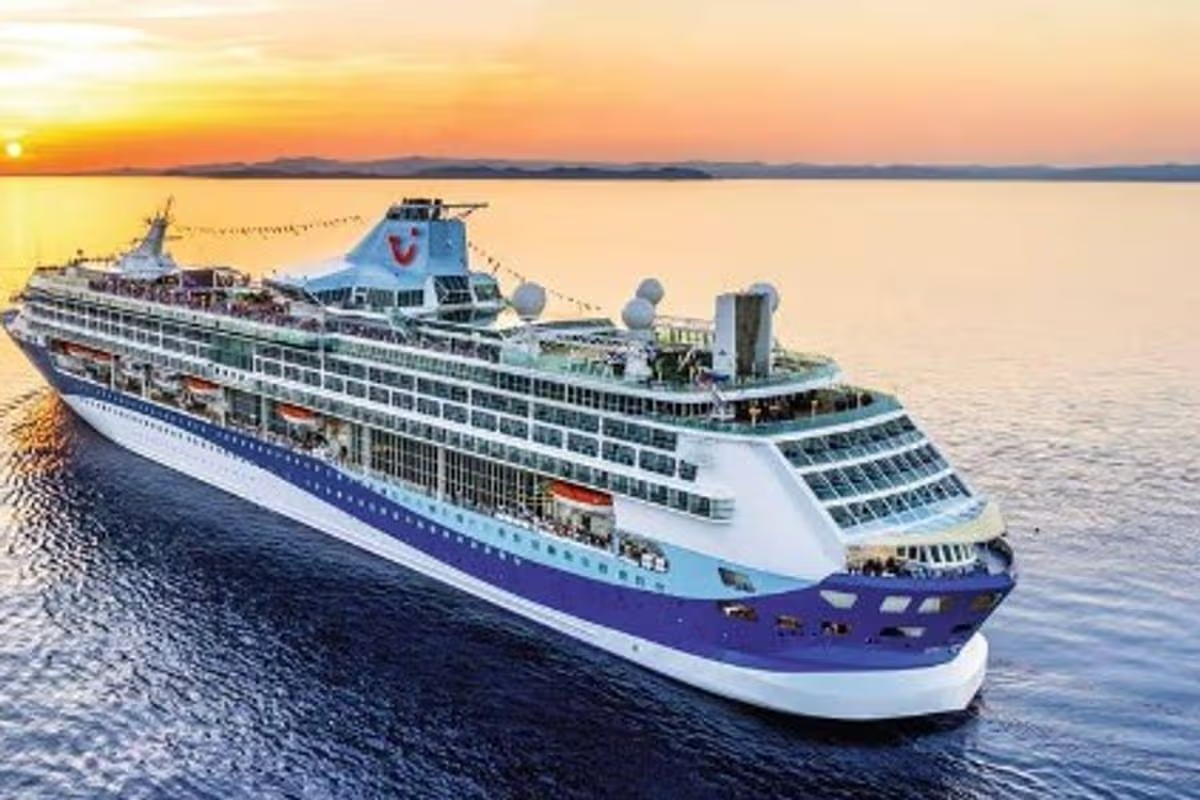
Ponce (pronounced Pon-say) was the last stop on my Tropical Isles cruise onboard the recently refurbished Marella Discovery. 

It’s a new port for Marella so, like ­Christopher Columbus — who discovered the Caribbean island of Puerto Rico back in 1493 — I was excited to be one of the first people to explore. 

BEST BAR NONE

Enjoy the full F1 Grand Prix plus cruise experience for under £2,000


TAKE THE MEDS

Spanish GP and cruise to Ibiza on 11-night adventure from just £2,149pp

Week-long sailings start and finish in La Romana, in the Dominican Republic, calling at the nearby nature reserve of Isla Catalina, the Puerto Rican capital of San Juan and the US Virgin Islands of St Thomas and St Croix. 

Now I’ve been lucky enough to visit the Caribbean a few times before, but I was still surprised by how green these islands were.  

The Marella Discovery Credit: Supplied
Puerto Rico’s El Yunque National Forest Credit: Getty
Dominican Republic’s Isla Catalina Credit: Supplied

And while this itinerary gave me plenty of opportunity to sunbathe on white-sand beaches and sample local rum (I recommend Ron del Barrilito), I was still able to go hiking in the rainforest and kayak through beautiful coves. 

Staying active is something I would definitely recommend on a Marella cruise — not just because you’ll miss out on amazing experiences if you don’t, but because you’ll need to burn off all the extra calories you’re bound to consume on board. 

With nine restaurants and seven bars spread over 11 decks, you certainly won’t go hungry or thirsty — especially as Marella cruises are all-inclusive as standard.  

This means your flights, cabin, transfers to and from the ship, drinks, food and entertainment are all included in the price. 

Even your bags go straight from your home airport to your cabin door so you don’t have to worry about collecting them from a carousel or lugging them around. 

Compared to other cruise ships, Marella Discovery is quite small, accommodating up to 1,800 passengers.  

It’s really set up for British tourists, though, with Yorkshire Tea on tap and dishes such as steak and ale pie readily available in the excellent Islands buffet. 

Passengers can find their way out of an escape room on the ship Credit: Supplied
Jenny pictured at Magens Bay Credit: Jenny Green
Catch a West End style-show at the Broadway Show Lounge Credit: Unknown

Entertainment-wise, passengers can find their way out of an escape room, play a round of mini-golf or enjoy a musical afternoon tea. Plus there are West End-style shows, quizzes and gameshows galore. 

For better-quality booze and speciality ­coffees, you can upgrade to a Premium All Inclusive package, while speciality restaurants, including the Surf & Turf Steakhouse and Sushi Bar, come at an extra charge. 

But be sure to leave room for some traditional Caribbean delicacies when you leave the ship. At Café Manolin, in San Juan, I joined locals queuing to tuck into giant plates of mofongo, a much-loved Puerto Rican dish of fried green plantain stuffed with meat or veggies. 

Coffee is also big business here — and almost as popular as rapper Bad Bunny, who hails from the island.  

Many coffee plantations welcome visitors to sample their wares but I got my caffeine fix at Hacienda Jacana, in the mountainous region of Adjuntas, where owner Jonathan and his ex-cop father proudly showed off their farm while explaining details of the coffee-making process. 

I was buzzing after a few cups of their delicious Latitude 18° coffee — but it couldn’t possibly compare to the buzz I got in St Thomas after snorkelling with a group of green turtles in the crystal-clear water of Magens Bay. 

Granted, I had to keep reminding myself that I wouldn’t die if I tried to breathe ­normally underwater, but I forgot all about breathing when a metre-long turtle paddled right past my face. Just wow. 

As an animal lover, and a keen traveller missing my two dogs back home, I was also thrilled to stumble across the Ruff Night — Hair Of The Dog Bar in St Croix (pronounced Croy), just steps from where Marella Discovery docked in Frederiksted.

The lively bar, in the courtyard of the Victoria House Inn, is run by volunteers from the Ruff Start STX animal charity who love nothing more than mixing super-strong cocktails and bringing in puppies for punters to cuddle.  

And if that’s not reason enough to visit, all money raised from the bar goes directly to local dogs in need, so go armed with plenty of cash in your pocket! 

I’d certainly worked up a thirst after a morning kayaking in the nearby Salt River Bay, and I enjoyed getting back to nature there almost as much as I did at El Yunque National Forest — the jewel in the crown of Puerto Rico. 

The 28,000-acre site is the only tropical rainforest in the US and it has more than 100 miles of walking trails just waiting to be explored. With enormous trees providing canopies of greenery and exotic birds and frogs creating a cacophony of noise, it was just how I imagined a rainforest to be. 

While mosquitoes are rife here after dark, I managed to avoid being savaged by the pesky wee beasties during the daytime. 

One thing was for sure, though — I had definitely been bitten by the Caribbean cruise bug.

GO: TROPICAL ISLES CRUISE

SAILING THERE: A seven-night Tropical Isles round-trip on board Marella Discovery is from £1,573pp, departing from La Romana, Dominican Republic.

Price is based on two adults sharing a Deck 2/3 inside cabin on an all-inclusive basis and includes flights from Gatwick on November 24, 20kg of luggage per person, transfers, tips and service charges.

See tui.co.uk/cruise or call 0203 451 2688.

Source link

I hadn’t been on a cruise in 25 years – it’s a completely different holiday now

We boarded the P&O Cruises sailing around Canary Islands and Madeira with a previous cruise experience in mind – but P&O Cruises offered a completely unexpected holiday

‘I get seasick when I am on a rowing boat’.

Those 10 words from my friend Paul filled me with dread as we prepared for our first ever cruise together. He was a cruise virgin having always avoided a holiday on board a ship due to seasick fears and the idea of not being in one place for very long.

My last cruise was 25 years plus ago so we were definitely newbies as we boarded P&O’s Azura in the Port of Santa Cruz following a chartered flight from Gatwick to Tenerife. But we had decided to take the leap of faith in a bid to soak up some winter sunshine, relax and explore the Canary Islands and Madeira.

This kicked off with a trip to Tenerife’s Mount Teide where we were immediately hit by the contrast of winter underfoot and the sunshine hitting our skin. Following a bumpy and exhilarating cable car journey towards the summit of the 3,715 metre high volcano we emerged onto the crisp snow that crunched under every step.

Just minutes earlier we had been at the bottom among ashen, molten rock on a lunar landscape more at home on Mars or the Moon. Our guide explained that they had experienced more rain and snow than in many many a year, but this just added to the breath-taking scenery.

However each destination offers something different with a whole host of excursions available. Regular cruisers told us the excursions and the entertainment on sea days are what sets this cruise apart and we really could not disagree.

Our other excursions on Gran Canaria and then Lanzarote continued the theme of feeling like you are stepping off the boat onto another planet. We visited Timanfaya National Park on Lanzarote where a 40-minute bus tour takes you through lunar landscape shaped by eruptions towards the park’s Islote de Hilario where geothermal demonstrations wow the crowds of tourists and chickens are cooked on BBQs using the volcanic heat. In Gran Canaria we did a two-hour walking guided tour around the edge of a volcano where we again mixed ash, molten rock and thriving greenery before heading to a vineyard to sample local wines and cheeses.

Thankfully the destination days were separated by two sea days which allowed us to recover from exploring the islands and discover everything the Azura had to offer. It is one of the largest cruise liners in the P&O fleet with more than 1500 cabins spread across 14 decks which also include five pools, a gym, a spa, a casino, theatre as well as several restaurants and bars.

It meant there was plenty of opportunity for us to unwind and indulge – and there was not even the smallest of suggestion that Paul was going to be seasick . We spent several hours in the modern and well-equipped gym but it was the spa that was the real special retreat with an adult-only pool, jacuzzi, sauna and plenty of treatments.

The escape from the sun-kissed bustling decks was welcome before the highlight of dining and then on to more exploring – this time trying out the nightlife onboard!

When it came to food, there was an impressive amount of choice, but one must-visit is the sophisticated Epicurean which offers fine dining and makes you feel at home for the black-tie evenings. The dishes are not just beautifully presented but the taste was exceptional and the whole experience felt extremely luxurious.

Other highlights included Sindhu which is a stylish Indian eatery, the Beach House offering Caribbean and Mexican style dishes (which includes the stand-out Fillet steak served on a lava rock), as well as The Oriental featuring a mix of British and global dishes.

It was this variety – not just for dining – but across the whole experience which saw us converted to cruise enthusiasts. There really is something for everyone and something for every budget. You can mix fine dining and extravagant excursions or you can mix the buffet with exploring the islands yourself. You can relax by the pool and bars or head to the spa.

You can work out in the gym and swim or you can soak up the sun on the decks. You can try quizzes, the casino, sports and much more. It seems to be perfect for couples, friends, families, as you truly can make what you want out of the holiday.

In the meantime, I know for sure that I won’t be leaving it another 25 years before I board my next cruise.

Book the holiday

Prices for the Spain, Portugal & Canary Islands cruise (N617) start from £1,299pp, sailing 14-nights on a roundtrip from Southampton on 18 July onboard Ventura, based on two people sharing an inside cabin. Book on pocruises.com.

Source link

I went on TUI cruise ship and got sneak peek at the areas passengers don’t see

I went behind the scenes on a Marella cruise and ended up getting a sneak peek at some of the rooms that the passengers usually don’t get to see

Cruises are made to feel effortless – from island-hopping, flowing cocktails to all-inclusive dining. But behind the scenes, an army of staff are working around the clock to keep things powered to the highest of stands.

For my first Caribbean cruise on board the Marella Discovery, I was given access to areas passengers don’t normally see. After getting to grips with the 11-deck vessel – home to nine restaurants, six bars and everything from mini golf, an escape room and a climbing wall to keep you entertained, it was time to see the ship from a new angle.

Here’s everything I learned…

Where the magic happens

Only a handful usually get to see the command centre of any ship; the bridge. Here, the Captain and his crew navigate these huge vessels from ‘parking’ in tight corners at the docks, to steering the course when out in the middle of the ocean. The view from the bridge was unlike anything I’d seen before, and quite impressive. We watched how the crew navigated as our ship docked among huge superyachts owned by millionaire (just to add that extra bit of pressure).

Your air con affects the speed of the ship

Next, I head into the engine room where a team operates the smooth running of five engines, two massive propulsion motors and multiple air-conditioning systems – working 24 hours a day. Modern cruise ships like the Marella Discovery distribute power to meet the demand. That means lighting, kitchens and even your cabin’s air con will play a role. “If we were in Alaska in the middle of the night, with no air con running, we could reach 24 knots,” one crew member explained. “But during the day, when everything’s in use, it drops to around 22.” At full speed, the ship burns around 8,000 litres of fuel an hour. Efficiency is key.

It all comes out in the wash

In the laundry room, staff wash around 1000 towels a day with industrial machines and steam presses. It’s not just the passengers who are catered for. In these rooms tucked out of sight, the crew’s immaculately white uniforms are maintained. Since that’s a lot of similar looking clothing, every item is labelled with a unique number to make sure they go back to the right person.

The show must go on

As a theatre fan, I couldn’t wait to get up on the stage of the Broadway Show Lounge – from a view not many get to see. Behind the curtain, the performers do more than just sing and dance. I learned that they handle their own props, do their own hair and make-up, and of course all of the warm-ups they undergo. In the dressing room, wigs, hairspray and hairpins fill every space, but among the seeming chaos there’s a strong camaraderie. After working with each other for three months at sea at a time, it’s clear the performers are like family.

The motion in the ocean might be in your head

Unlike the seasoned sailor, I admit that being a cruise-newbie means I feel the ship moving especially at night. However, according to the crew, the tilting is far less dramatic than I was expecting. Thanks to stabilisers, the ship can only ever move to a maximum of one degree either side. “We keep your soup in your bowl and your drinks in your glasses,” one jokes.

The most eaten food on board? It’s not what you’d expect

I got a chance to see the ship’s galley – the central multi-floor hub of the ship where thousands of meals are prepared every single day. A team of 101 chefs work around the clock to fuel up 1800 passengers and 700 crew members every single day. The head chef shows me what is known as ”the manual’, a list of detailed recipes for every single food item on the menu – ensuring the exact same meal can be recreated anywhere in the TUI fleet. Around 3,600 meals are served at lunch and dinner, but breakfast is the real peak with passengers get through a staggering 7000 dishes a day. The most popular food on board? Eggs. Around 2,300 are served up at breakfast alone – that’s a lot of omelettes.

The customer service is down to a tea

It’s not just the big systems that are carefully thought out on Marella. As an avid Yorkshire tea drinker, I was thrilled to see the boat was well stocked even in the Caribbean. One crew member told me it’s something that was introduced after passenger feedback and quickly became a staple.

Book the holiday

Marella Cruises offers a seven-night Tropical Isles round trip from La Romana, Dominican Republic on Marella Discovery from £1573 per person. Price based on two adults sharing a Deck 2/3 inside cabin on an all-inclusive basis. Includes flights from London Gatwick, 20kg of luggage per person, transfers, tips, and service charges. Find out more at tui.co.uk/cruise.
Source link

Cruise expert shares the five items you must leave behind on a cruise

If you’re planning a cruise holiday this summer, it’s crucial to know the prohibited items list – and one travel expert has shared five things that could be confiscated

Summer is just around the corner, and millions of Britons are busy planning their getaways. Cruises are a wonderful way to explore the world – but if you’re setting sail, it’s vital to know precisely what you can and cannot bring on board.

Packing can be a stressful experience – but knowing what’s permitted and what isn’t puts you one step ahead. Will Sarson, a travel expert with cruise operator Riviera Travel, has revealed the five items you cannot bring aboard a cruise to make your trip that bit smoother, reports the Express.

He said: “When packing for a cruise holiday, it’s important to do your research to understand the list of prohibited items. This can help better planning while packing and help avoid disappointment when items are confiscated.”

His first item to leave behind is alcohol. While not outright banned, many cruise companies have restrictions to prevent passengers bringing their own supply. He said: “Often, travellers are restricted to just a single bottle of wine or champagne – with potential corkage fees for drinking in public spaces.

“With so much alcohol available on board, we recommend leaving the bottles at home to avoid further costs and instead making use of the available liquor found throughout the ship and at varying ports across the world.” His second item to leave at home is your clothes steamer or iron.

Will explained: “Many cruise liners do not allow irons or steamers onboard as they pose a fire hazard. This is an item that constantly catches people out, with travellers forced to part ways with their iron or steamer.

“To avoid disappointment, it’s best to leave these items at home. Many ocean and river cruises have irons or steamers onboard that can be borrowed by guests during their stay.”

Similarly, candles and incense are prohibited owing to the fire risk they present. Cruise personnel will seize these straight away – so it’s advisable to leave them behind.

If you’re fond of your CBD oil, you’re in good company – it’s an extremely popular wellness product for assistance with muscle pain and mental health, but due to its varying legality worldwide, it’s forbidden on cruises. Will stated: “While the product is 100% legal for sale and tender throughout the UK, this is not the case in certain cruise ship stop-off destinations. As a result, the substance is not allowed on board the ship.

His final recommendation may seem entirely self-explanatory, but according to Will, a lot of people don’t realise their pets cannot come with them on their cruise.

He said: ” You’d be surprised at how many people try to gain access to their cruise alongside pets. Domestic animals are typically not allowed on cruises due to the allergy risk and general health and safety aspects that come with allowing cats or dogs on board.”

His final suggestion may appear completely obvious, but according to Will, many people don’t realise their pets cannot accompany them on their cruise.

He stated: “You’d be surprised at how many people try to gain access to their cruise alongside pets. Domestic animals are typically not allowed on cruises due to the allergy risk and general health and safety aspects that come with allowing cats or dogs on board.

“However, animals such as guide dogs are granted access due to the medical assistance they provide. If you’re a pet owner with a cruise holiday booking, it’s best to seek arrangements for your animals, as they generally won’t be allowed to join you on board.”

Source link