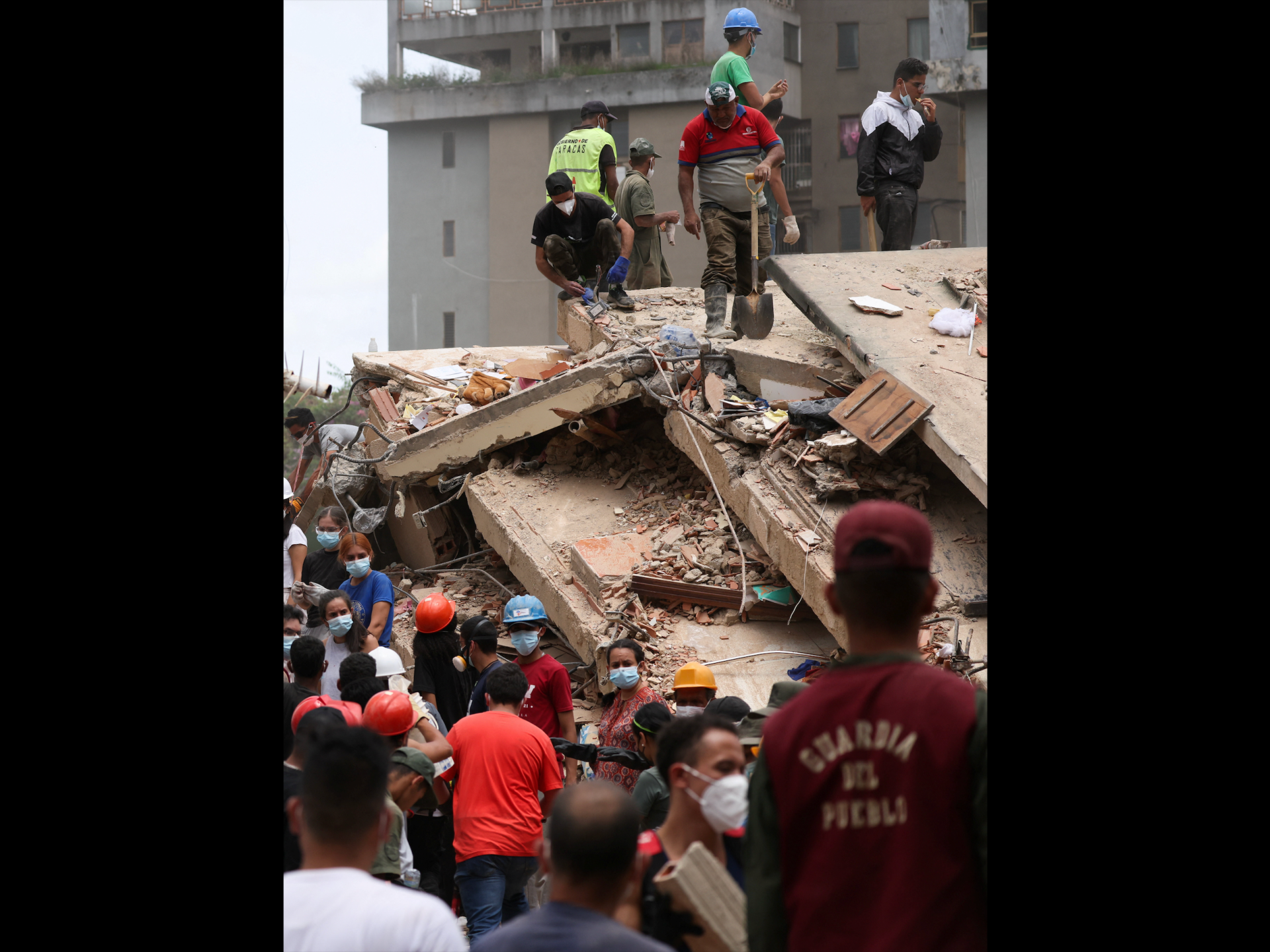
The UN says it is scaling up its response after twin earthquakes devastated Venezuela, warning the disaster will deepen an already severe humanitarian crisis. Speaking to Al Jazeera, UN spokesperson Stéphane Dujarric said hundreds of UN staff are supporting the response, adding that recovery efforts are expected to continue for months.
Paris and other European cities are experiencing temperatures above 40C (104F), reaching levels normally seen across the Middle East.
A blistering heatwave has gripped much of Europe, prompting the highest-level red alerts in parts of the United Kingdom, France, Spain and Italy.
Authorities have warned of health risks, wildfires and travel disruptions as extreme temperatures persist.
Recommended Stories
list of 3 itemsend of list
With temperatures approaching record highs, officials have taken emergency measures, including a localised alcohol ban in parts of France under red alert, nationwide heat warnings in Germany and the cancellation of a World Cup fan zone screening in Madrid, where temperatures hit 39C (102F).
Why is it so hot in Europe?
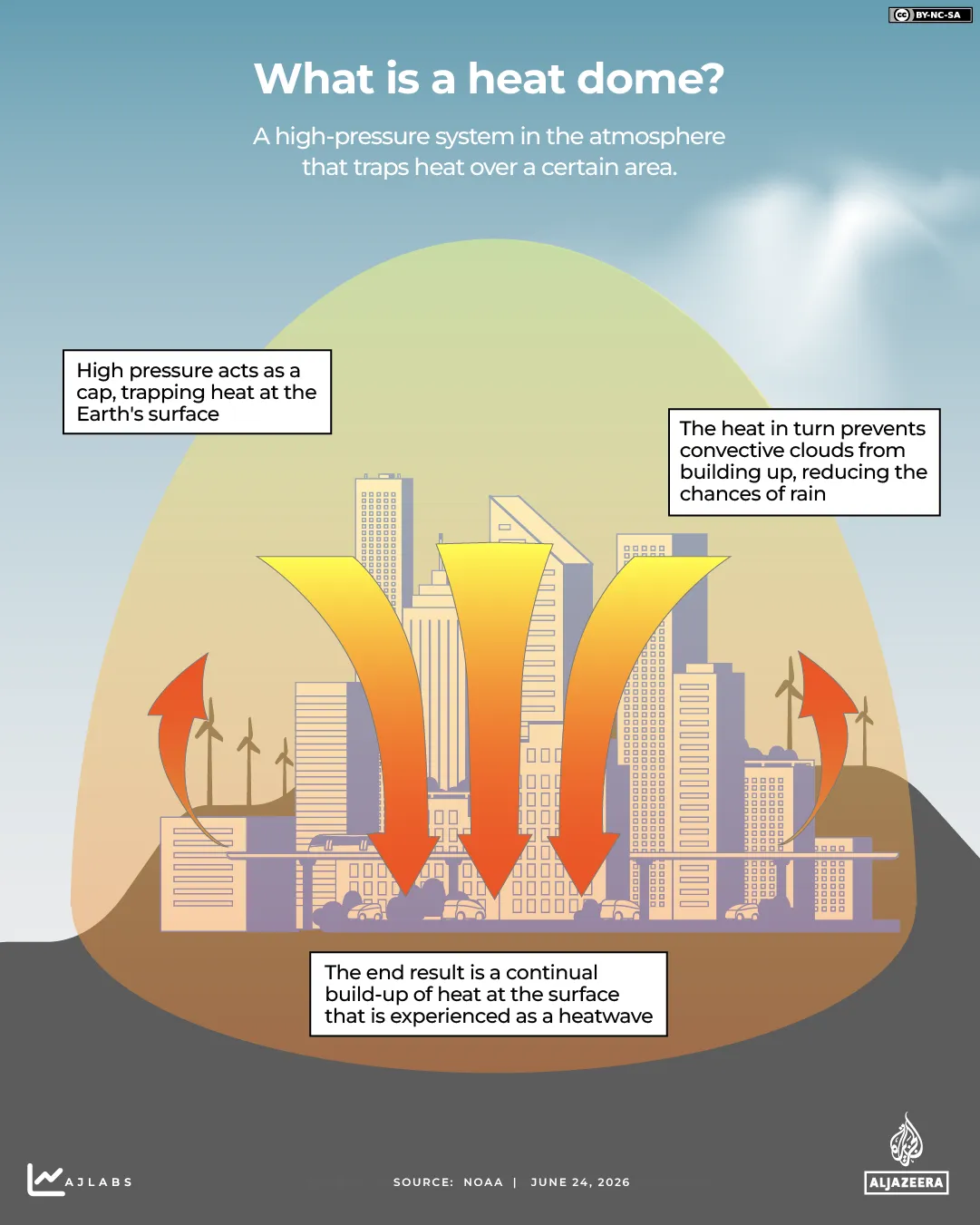
A persistent area of high pressure, known as a heat dome, has trapped hot air over Western Europe, bringing clear skies, weak winds and prolonged sunshine. Hot air moving north from North Africa has added to the extreme temperatures.
(Al Jazeera)
Unusually warm seas around the UK, Ireland, France and the western Mediterranean have also helped keep coastal areas hot, especially at night. Coastal waters around Spain have reached record warm levels, according to Spain’s port authority.
In the worst-affected areas – western France, England and Wales – daily average temperatures have soared more than 12C above the 1991-2020 baseline, according to Copernicus data.
(Al Jazeera)
Scientists say the early-season heatwave is part of a broader warming trend. Europe is the world’s fastest-warming continent, with temperatures rising by approximately 0.56C per decade since the mid-1990s, more than double the global average.
Climate change is making heatwaves more frequent, more intense and likely to occur earlier and later in the year.
How hot are European cities today?
To contextualise the temperatures Europe is dealing with, Al Jazeera looked at the maximum temperatures in five European capitals on June 24 and compared them with cities across the Middle East, North Africa and Asia, where high temperatures are more typically experienced.
Europe is particularly vulnerable – much of its housing and infrastructure was not built for prolonged extreme heat, and only about 20 percent of European homes have air conditioning.
The graphic below shows how European cities’ maximum temperatures today compare with some other cities around the world:
(Al Jazeera)
How is temperature measured?
The temperature you see on the news or the weather app on your phone relies on a network of weather stations positioned around the globe.
To ensure accurate readings, weather stations typically use specialist platinum resistance thermometers placed inside shaded instruments known as a Stevenson screen.
Measurements are taken at a standard height of 1.25-2 metres (4-6.5 feet) above the ground. This provides a reading that reflects the air temperature that people actually feel.
(Al Jazeera)
There are two well-known scales used to measure temperature: Celsius and Fahrenheit.
Only a few countries, including the United States, use Fahrenheit as their official scale. Most of the world uses the Celsius scale, named after Swedish astronomer Anders Celsius, who invented the 0-100 degree freezing and boiling point scale, although originally inverted, in 1742.
Why does the temperature feel hotter than the forecast says?
Air temperature alone often doesn’t match how hot it feels to your body. That is why forecasts report a “feels like” temperature, which adjusts air temperature based on factors like humidity, wind speed and sun exposure.
(Al Jazeera)
Humidity
Humidity measures how much water vapour is in the air. This moisture slows the evaporation of sweat, so your body can’t cool itself as effectively.
Wind speed
In hot weather, a light breeze can help evaporate sweat, making it feel cooler.
Sun exposure
Even if the thermometer reads the same, direct sunlight adds extra warmth, which is why shaded areas feel cooler.
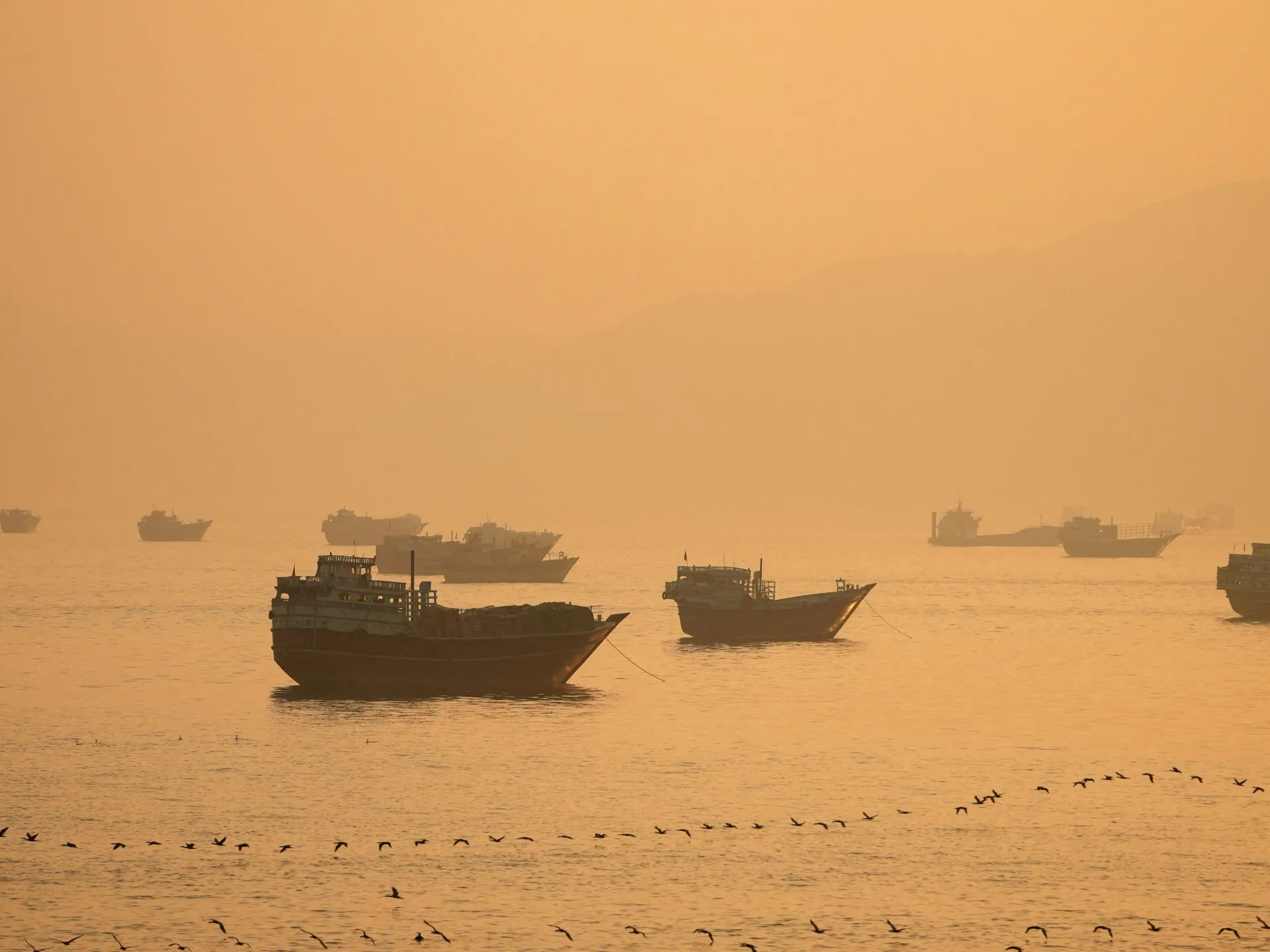
Iranian armed forces say they’ve closed the Strait of Hormuz after Israeli attacks on Lebanon – just days after an agreement with the US reopen it.
Disruption to the crucial waterway has had a huge economic impact worldwide.
Recommended Stories
list of 4 itemsend of list
So, what happens next?
Presenter: Tom McRae
Guests:
Ian Ralby — Senior Fellow at the Center for Maritime Strategy and Associate Fellow with the International Law Programme at Chatham House
Mehran Kamrava — Professor of Government at Georgetown University in Qatar and Head of the Iranian Studies Unit at the Arab Center for Research and Policy Studies
Stavros Karamperidis — Associate Professor in Maritime Economics and Head of the Maritime Transport Research Group at the University of Plymouth
Report highlights the growing threats posed by climate change and calls for the green transition to be accelerated.
Published On 16 Jun 202616 Jun 2026
Almost all children across the globe are exposed to at least one climate hazard and the situation is expected to worsen unless greenhouse gas emissions are urgently reduced, says a report by UNICEF.
The report, published on Tuesday, warns that climate hazards pose a threat to children on multiple fronts, with nearly half of the world’s children exposed to at least three such hazards, putting their health, education and survival at risk.
Recommended Stories
list of 3 itemsend of list
“The lives of children continue to be upended by the impact of heatwaves, wildfires, droughts, and floods,” said UNICEF Executive Director Catherine Russell. “Half of the world’s children are now living with at least three overlapping climate threats shaping their daily lives.”
The report highlights the growing threats posed by climate change and calls on governments and business leaders to accelerate the transition to renewable energy.
According to UNICEF’s report, 1.8 billion children are currently at risk from drought, while 1.2 billion are exposed to extreme heat, as warmer temperatures wreak havoc on the world’s water cycle.
Countries across Western Europe experienced a record-breaking heatwave last month, reaching temperatures not typically expected until the summer.
UNICEF also says that nearly every child is exposed to air pollution, while one billion are exposed to malaria.
Scientists have repeatedly warned that global warming must be limited to 1.5C (2.7F) above pre-industrial levels to avoid the worst effects of climate change.
Nearly 200 countries signed the Paris Agreement, aiming to curb global warming to that 1.5C mark. The accord came into force in November 2016.
Since then, scientists have repeatedly warned that the target is unlikely to be met.
In January, the United States formally withdrew from the Paris Agreement for a second time, following an order by President Donald Trump.
The announcement of a preliminary US-Iran agreement has generated cautious optimism in Lebanon, where months of conflict have displaced large portions of the population and devastated communities across the south.
While the framework reportedly calls for the immediate cessation of military operations, Lebanese authorities are warning residents against assuming that conditions are safe enough for a rapid return.
The caution reflects uncertainty over how the agreement will be implemented and whether all parties will abide by its terms.
Adding to those concerns, Israel has made clear that it does not consider itself bound by the agreement and intends to maintain security zones in southern Lebanon.
Lebanon became one of the principal battlegrounds of the wider regional conflict after Hezbollah opened a front against Israel in support of Iran following the outbreak of hostilities.
The resulting escalation led to extensive Israeli military operations across southern Lebanon, causing widespread destruction and one of the largest displacement crises in the country’s recent history.
Entire communities were uprooted as residents fled bombardment and military activity.
Iran consistently pushed for any agreement with Washington to include provisions addressing Lebanon, viewing the conflict there as inseparable from broader regional tensions.
The inclusion of Lebanon in the framework agreement therefore represents a significant diplomatic concession and a central element of Tehran’s negotiating position.
Why This Matters
Lebanon has become one of the clearest examples of how regional conflicts can produce devastating humanitarian consequences.
The conflict has:
Displaced more than a million people.
Damaged homes, infrastructure, and businesses.
Increased pressure on Lebanon’s already fragile economy.
Deepened political and social instability.
A durable ceasefire could allow reconstruction efforts to begin and reduce the risk of further regional escalation.
However, the humanitarian benefits will depend on security conditions improving on the ground rather than merely on diplomatic declarations.
The Challenge of Returning Home
For displaced families, peace announcements do not automatically translate into confidence.
Many residents remain uncertain about:
Whether military operations have truly ended.
The presence of Israeli forces in southern areas.
The condition of homes and infrastructure.
Future security guarantees.
The hesitation expressed by displaced residents reflects a broader reality in conflict zones: trust often takes much longer to rebuild than physical infrastructure.
Even if active fighting stops, communities may remain reluctant to return until they believe the risk of renewed conflict has genuinely diminished.
Israel’s Position Complicates the Picture
A major obstacle to immediate normalization is Israel’s position.
Israeli officials have indicated they will continue maintaining security zones and reserve the right to conduct operations they deem necessary for national security.
This creates ambiguity regarding implementation of the broader agreement.
While the US-Iran framework may establish a diplomatic foundation for reducing violence, the practical situation on the ground will depend on decisions made by actors who were not direct participants in the negotiations.
This distinction could prove crucial in determining whether the agreement produces lasting stability.
A Test of Regional Diplomacy
The inclusion of Lebanon in the agreement demonstrates how interconnected Middle Eastern conflicts have become.
The war was never confined solely to the United States and Iran. It involved multiple regional actors, proxy groups, and overlapping security concerns.
As a result, success will be measured not only by whether Washington and Tehran uphold their commitments but also by whether the agreement influences behavior across the broader region.
Lebanon is likely to become one of the first and most visible tests of that process.
Key Stakeholders
Lebanon and its government institutions
Displaced Lebanese civilians
Israel and its military leadership
Hezbollah
Iran
The United States
Regional mediators including Pakistan
Humanitarian organizations operating in Lebanon
What to Watch Next
Whether military activity in southern Lebanon decreases in the coming days.
Israeli decisions regarding security zones.
Hezbollah’s official response to the agreement.
The pace of civilian returns to southern communities.
International support for reconstruction and humanitarian assistance.
Broader negotiations during the 60-day ceasefire period.
The agreement creates an opportunity for Lebanon to move toward greater stability after months of destruction and displacement.
If implemented successfully, reduced hostilities could pave the way for reconstruction, humanitarian relief, and the gradual return of displaced populations.
Yet significant uncertainty remains. Security concerns, damaged infrastructure, and competing interpretations of the agreement could slow progress and complicate efforts to restore normalcy.
For many Lebanese families, the end of active conflict would represent only the beginning of a much longer recovery process.
Analysis
The most revealing aspect of Lebanon’s reaction is the disconnect between diplomacy and reality.
International leaders may celebrate ceasefires and framework agreements, but people living through conflict judge peace by different standards. They look not at official statements but at troop movements, security conditions, and whether it is safe to return home.
That gap is already visible in southern Lebanon. While diplomats describe the agreement as a breakthrough, local authorities are warning residents against rushing back. Israel’s decision to maintain security zones further reinforces uncertainty about how quickly conditions can normalize.
This highlights a recurring challenge in conflict resolution. Agreements can stop wars on paper, but rebuilding trust often takes far longer than negotiating a ceasefire.
Lebanon’s experience may therefore become a key measure of whether the US-Iran agreement delivers meaningful change beyond diplomatic symbolism. If displaced communities can safely return, reconstruction begins, and violence declines, the agreement will gain credibility. If insecurity persists despite the deal, questions will quickly emerge about its effectiveness.
Ultimately, Lebanon represents the human dimension of the broader regional settlement. The success of the agreement will not be judged solely by geopolitical outcomes or energy markets but by whether ordinary people feel secure enough to rebuild their lives after months of war.
Animal lovers in Gaza are resorting to desperate measures to keep their pets alive and healthy. Only two pet clinics are still operating, and critical veterinary supplies and animal food are running low. Vets are warning animal deaths will rise unless supplies arrive soon.
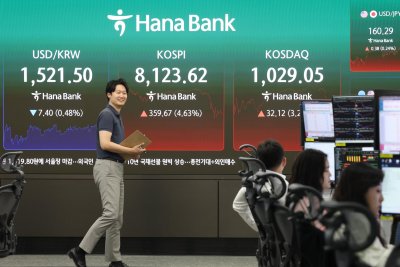
This photo, taken Friday, shows the trading room of Hana Bank in Seoul as South Korean stocks spiked more than 4 percent amid hopes the war between the United States and Iran could end soon. Photo by Yonhap
Seoul stocks rose by more than 4 percent Friday, as investors snapped up tech heavyweights amid hopes the war between the United States and Iran could end soon.
The benchmark Korea Composite Stock Price Index (KOSPI) closed up 359.67 points, or 4.63 percent, at 8,123.62 after rising as high as 8,434.40.
After opening sharply higher on renewed hopes that the war between the U.S. and Iran is near its end, the index trimmed earlier gains on profit taking ahead of the closing bell.
Trade volume was heavy at 490.3 million shares worth 51.1 trillion won (US$33.6 billion). Winners outnumbered losers 753 to 144.
On Thursday (U.S. time), U.S. President Donald Trump said he has reached a “great settlement” that would resolve the monthslong conflict with Iran and the deal would be signed as early as over the weekend, possibly in Europe.
Media outlet Axios also reported that four U.S. Air Force C-17 planes departed for Europe on Thursday, moving equipment for possible travel by Vice President J.D. Vance, raising the possibility a signing ceremony could take place in Geneva, Switzerland.
“Market sentiment improved as foreign investors shifted to net buying after a 25-session selling streak, on anticipations for peace negotiations,” said Lee Kyoung-min, an analyst from Daishin Securities.
But the rise was limited, amid reports that global banks are curbing hedge funds’ leveraged bets on the country’s two semiconductor heavyweights: Samsung Electronics and SK hynix, Lee added.
Foreigners and institutional investors net purchased a combined 4.4 trillion won. Retail investors net sold 4.3 trillion won.
In Seoul, shares closed higher across the board.
Market top-cap Samsung Electronics rose 7.86 percent, to 322,500 won, while its chipmaking rival SK hynix moved up 2.33 percent to 2,150,000 won.
Semiconductor equipment maker Hanmi Semiconductor vaulted 24.05 percent to 361,000 won, after the company said in a regulatory filling it is seeking to invest in SpaceX, Elon Musk’s space company set to make its Nasdaq debut on Friday (local time).
Shipmakers also gathered ground as investors went bargain hunting. Hanwha Ocean added 7.85 percent to 112,700 won and HD Hyundai Heavy Industries increased 0.62 percent to 650,000 won.
Portal operator Naver jumped 10.27 percent, to 247,000 won, financial firm KB Financial climbed 6.4 percent to 161,200 won, and top car maker Hyundai Motor added 1.68 percent to 607,000 won.
The Korean won was quoted at 1,519.8 won against the U.S. dollar as of 3:30 p.m., up 9.1 won from the previous session’s close.
Bond prices, which move inversely to yields, closed higher. The yield on three-year Treasurys fell 9.6 basis points to 3.808 percent, and the return on the benchmark five-year government bonds declined 10.9 basis points to 3.971 percent.
Copyright (c) Yonhap News Agency prohibits its content from being redistributed or reprinted without consent, and forbids the content from being learned and used by artificial intelligence systems.
Most UK airlines have said that they don’t see any immediate threats to upcoming flights, as many have ‘hedged’ fuel costs, which is paying a set price for a period of time.
However, Ryanair has warned that budget airlines face the biggest struggle, due to the low margins.
Turkish Airlines also said they could cut flightsCredit: Alamy
The budget carrier’s boss Michael O’Leary previously warned: “If pricing stays higher for longer this summer, we think a number of our airline competitors in Europe are going to face real financial difficulties. I think there will be failures.”
And while UK flights might not be cancelled, the cost of flights is expected to only go up.
International Airlines Group (IAG), which also owns Iberia and Aer Lingus, said it will likely pass on extra costs to cover the additional £1.72billion costs of its fuel this year.
Experts have said costs could continue to go up, due to the UK’s reliance on US jet fuel.
This is because US suppliers could divert their fuel inwards due to it being the busy American holiday season, particularly for “driving season” (when domestic holidays boom).
S&P Global’s research director for fuels Eleanor Budds told Telegraph: “Prices could rise again. The UK is replacing a good part of its imports. If the US can’t keep up those volumes, [the UK] is very exposed”.
For many Iranians, the most immediate threat is no longer just war, but water.
Years of drought, falling rainfall and unsustainable water use have pushed the country into severe water stress, depleting reservoirs, rivers and groundwater reserves. The US-Israel war on Iran has added further strain after reports of damage to desalination plants, pipelines and other civilian water infrastructure in the early weeks of the conflict.
Iran is classified by the World Resources Institute as facing “extremely high” baseline water stress, using more than 80 percent of its renewable water supplies each year.
In this visual explainer, Al Jazeera breaks down Iran’s worsening water crisis and what is driving it.
How Lake Urmia disappeared
One of the most striking examples of Iran’s water crisis can be seen from space.

A time-lapse display of Lake Urmia in northwestern Iran shows how the largest saltwater lake in the Middle East, which covered nearly 6,000sq km (2,300sq miles) in the 1990s, shrunk to just 581sq km (224sq miles), less than 10 percent of its former size.
A time-lapse view of Lake Urmia from 1990 to 2026 [Google Earth]
Consecutive droughts, agricultural water use, river diversion, and groundwater extraction have transformed vast stretches of Lake Urmia into exposed salt flats.
More than 60 dams built on its feeder rivers choked off inflows, while farmers diverted water into irrigation channels and decades of groundwater extraction drained the aquifers below. Rising temperatures accelerated evaporation as precipitation fell.
A view of Lake Urmia in 2014 [Kaveh Kazemi/Getty Images]
Iran’s growing water deficit
To sustain its freshwater resources, a country must replenish at least as much water as it withdraws for agriculture, industry, and household use.
Iran has long been on the wrong side of that equation. Decades of dam construction, intensive farming, and groundwater extraction have pushed consumption far beyond what rainfall can replenish.
In 2025, Iran’s 92 million people consumed around 100 billion cubic metres of water, nearly 13 billion more than its renewable resources could provide.
Agriculture is by far the largest consumer of water in Iran, accounting for about 91 percent of all withdrawals, compared with seven percent for households and two percent for industry. Yet much of that water is lost before it reaches crops, as ageing and inefficient irrigation systems waste a significant share of the country’s most precious resource.
Disappearing dams around Tehran
Iran is one of the world’s major dam-building countries, and has constructed hundreds of large and small dams to store water, generate electricity, and manage shortages.
In recent years, dozens of reservoirs have dropped to extremely low levels, leaving several to nearly run dry.
Before-and-after satellite imagery of Lar Dam, Latyan Dam and Mamloo Dam, all clustered around Tehran and the southern slopes of the Alborz mountains and forming part of the main water supply system for the capital region, reveals how water levels have declined over time as drought and rising demand strain Tehran’s water system.
Drought displacing thousands
Water scarcity is increasingly reshaping where Iranians can live.
As wells run dry and farming becomes harder to sustain, many families are leaving rural communities in search of more secure livelihoods. According to Abdolkarim Hosseinzadeh, Iran’s vice president for Rural Development and Disadvantaged Regions, only 38,000 of the country’s 69,000 villages remain inhabited, while 31,000 villages have been abandoned.
The pressure extends far beyond abandoned settlements. According to Iran’s state-owned Water and Wastewater Company, about 27,000 villages, home to more than 10 million people, are currently experiencing water shortages. In total, more than 70 percent of Iran’s villages are facing some form of water crisis.
Many migrants head towards major cities such as Tehran, Mashhad, Isfahan, and Shiraz. Yet these cities are facing water pressures of their own. Home to more than nine million people, Tehran has seen growing strain on its water system as drought and demand continue to rise.
The map below shows how Iran’s population is concentrated in the western half of the country. Today, roughly 75 percent of Iranians live on less than 40 percent of the country’s land area, concentrating both people and water demand in a relatively small region.
The effects of water scarcity can also be seen along the Zayandehrud River, once one of central Iran’s most important waterways.
Satellite imagery of Zayandehrud Dam reveals declining water levels upstream after years of drought and overuse.
Further downstream, the consequences become visible in the heart of Isfahan. The historic Allahverdi Khan Bridge (Si-o-Se Pol) was built over a river that sustained the city for centuries.
Today, residents increasingly encounter dry riverbeds beneath its arches as sections of the Zayandehrud repeatedly run dry.
The Si-o-se Pol (33-Bridge) historical bridge in 2017 [Thomas Schulze/Picture alliance via Getty Images]An Iranian man stands on the dried-up side of the Zayandehrud River as the Si-o-se Pol (33-Bridge) historical bridge is pictured in the historic city of Isfahan [Morteza Nikoubazl/NurPhoto via Getty Images]
Only a tiny fraction from desalination
Desalination accounts for only about three percent of Iran’s water needs, a stark contrast to Gulf neighbours, which depend on it for the majority of their drinking water.
Most of Iran’s desalination plants are located along its southern coast on the Gulf. As a result, desalination is largely concentrated in coastal cities, while inland areas such as Tehran, Isfahan and most agricultural regions rely on other water sources.
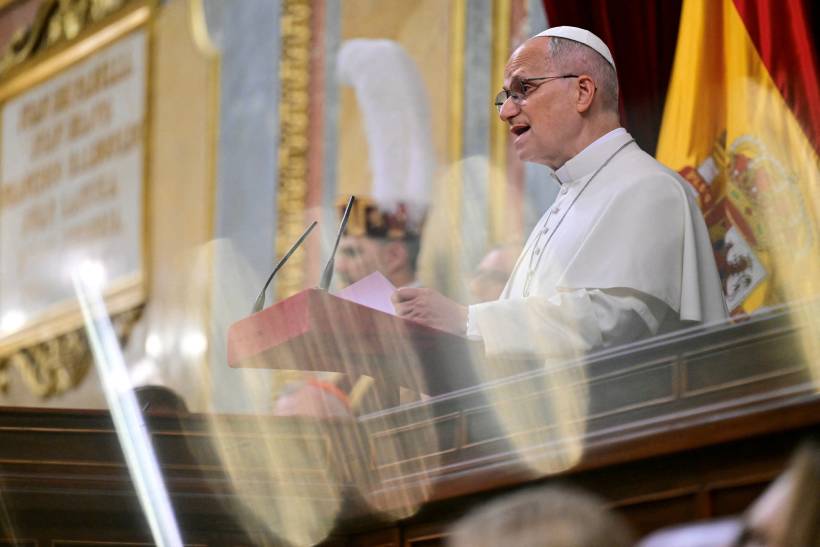
Pope Leo delivered a landmark address to Spain’s parliament, warning that the world is facing a profound spiritual, cultural, and political crisis marked by escalating conflicts, deepening polarization, and growing disregard for human rights.
The speech, the first by a pope before the Spanish legislature, formed a central part of his week long visit to Spain. Coming amid renewed hostilities between Israel and Iran and ongoing debates over migration and European security, the address reflected the Vatican’s increasing engagement with major geopolitical and humanitarian issues.
Leo used the occasion to reiterate long standing Catholic concerns regarding war, social fragmentation, migration, and the ethical implications of technological development. He also addressed the relationship between religion and public life, defending religious freedom and the confidentiality of confession.
Key Themes
Peace Over Militarisation
A central theme of the pope’s address was opposition to the growing militarisation of international politics. He argued that military force may suppress conflict temporarily but cannot create lasting peace.
His remarks came as European governments continue increasing defence expenditures in response to heightened security concerns following Russia’s invasion of Ukraine and broader geopolitical instability. The pope warned that excessive reliance on military solutions risks deepening rather than resolving global tensions.
Migration and Human Dignity
Leo devoted significant attention to migration, describing inadequate responses to displaced populations as a challenge to the ethical foundations of the international order.
He urged governments to move beyond border management policies and address the underlying drivers of migration, including conflict, poverty, and climate change. His comments coincided with plans to meet migrants in Spain’s Canary Islands, a major entry point for migrants attempting to reach Europe from Africa.
The pontiff framed migration as both a humanitarian and moral issue, arguing that the treatment of vulnerable populations serves as a measure of a nation’s moral character.
Artificial Intelligence and Ethics
The pope also expanded on concerns he has raised previously regarding artificial intelligence. He called for stronger ethical oversight of emerging technologies, particularly their application in military contexts.
As governments and defence industries increasingly integrate AI into weapons systems and military planning, Leo argued that technological progress must remain subject to moral and humanitarian considerations.
Religion in Public Life
Another notable aspect of the speech was the pope’s defence of religious participation in public affairs. He argued that faith should not be excluded from public discourse and stressed the importance of protecting religious freedoms.
Leo also defended the confidentiality of confession, a topic that has generated debate in several countries considering legal requirements for clergy to report abuse disclosed during confessions.
Why It Matters
The speech signals a more assertive Vatican engagement with global political debates at a time of mounting international instability.
Unlike purely theological addresses, Leo’s remarks directly addressed issues shaping contemporary international relations, including war, migration, technological governance, and democratic cohesion. His intervention places the Catholic Church within broader discussions regarding the future direction of global governance and international cooperation.
The address also highlights the Vatican’s growing concern that rising geopolitical competition, nationalism, and social polarization are weakening international institutions and undermining collective approaches to global challenges.
Stakeholders
The Vatican
Seeking to shape global debates on peace, migration, ethics, and human rights.
European Governments
Balancing security concerns with humanitarian responsibilities and social cohesion.
Migrants and Refugees
Directly affected by immigration policies and international responses to displacement.
Technology Sector
Facing increasing scrutiny over the ethical implications of artificial intelligence.
Religious Communities
Monitoring debates surrounding religious freedom and the role of faith in public life.
Human Rights Organisations
Engaged in discussions regarding migration, conflict resolution, and protections for vulnerable populations.
Strategic Implications
The address reflects the Vatican’s effort to position itself as a moral counterweight to rising geopolitical competition and militarisation. By linking war, migration, technology, and social division within a single framework, the pope presented these issues as interconnected symptoms of a broader crisis affecting the international order.
His criticism of increased military spending places the Vatican at odds with many Western governments currently prioritising defence expansion. At the same time, his focus on migration challenges increasingly restrictive immigration policies adopted across Europe.
The pope’s intervention on artificial intelligence also signals that ethical governance of emerging technologies may become a more prominent area of Vatican diplomacy in the coming years.
Analysis
Pope Leo’s address represents one of the clearest articulations yet of his vision for the Church’s role in contemporary global affairs. Rather than limiting his remarks to spiritual concerns, he framed international conflict, migration pressures, technological change, and democratic fragmentation as interconnected challenges requiring moral as well as political responses.
The speech suggests a papacy willing to engage directly with policy debates at a time when many governments are prioritising security, strategic competition, and economic interests. While the Vatican lacks conventional political power, its ability to shape public discourse and influence ethical debates remains significant.
By positioning peace, human dignity, and ethical governance at the centre of his message, Leo is seeking to reassert the relevance of moral leadership in an increasingly fragmented international environment. Whether governments embrace those arguments remains uncertain, but the address signals that the Vatican intends to remain an active participant in debates over the future of the global order.
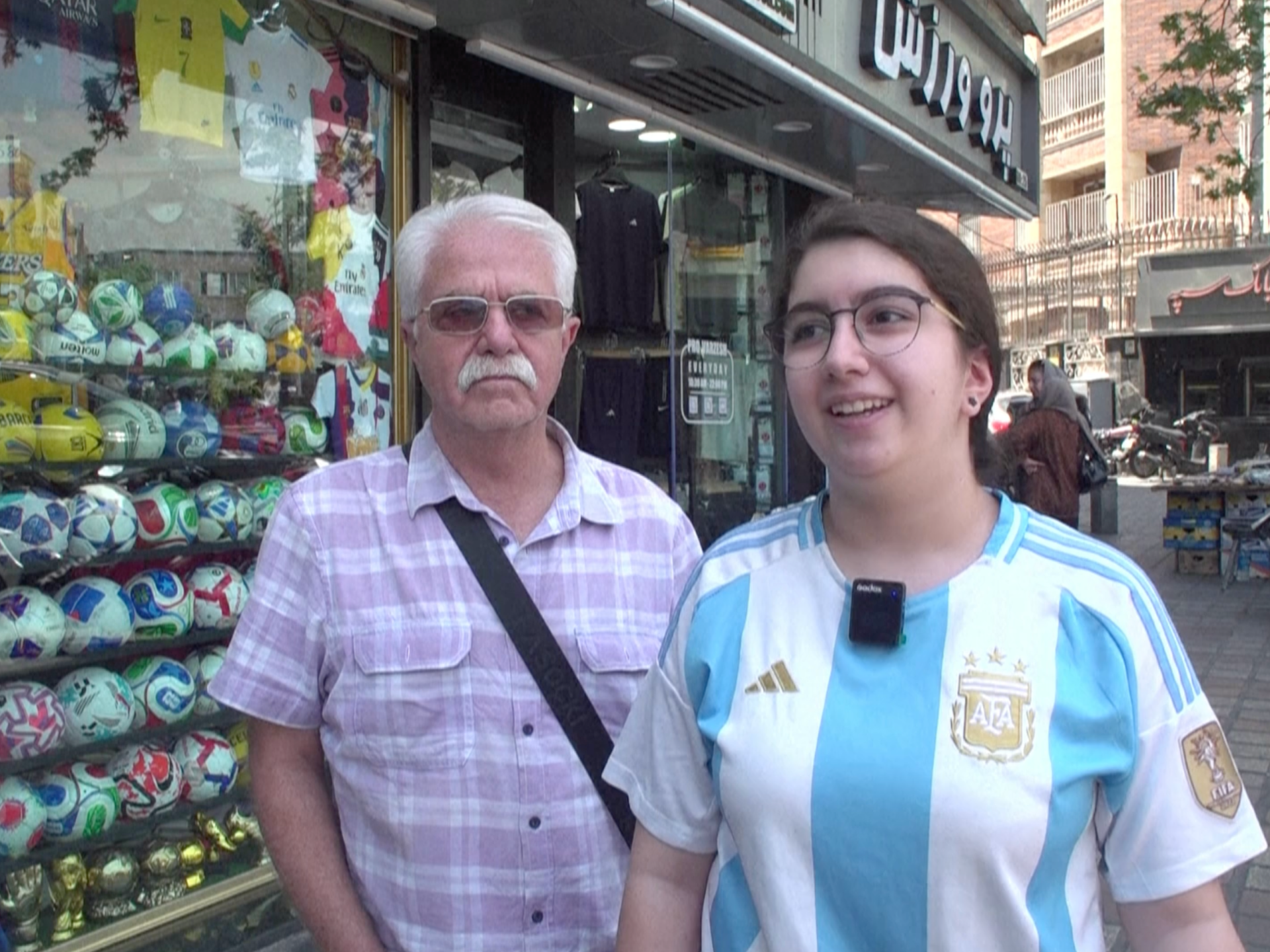
As the World Cup nears, many Iranians say their normal enthusiasm for the event has been dampened by the co-host US’s war against their country as well as economic hardships.
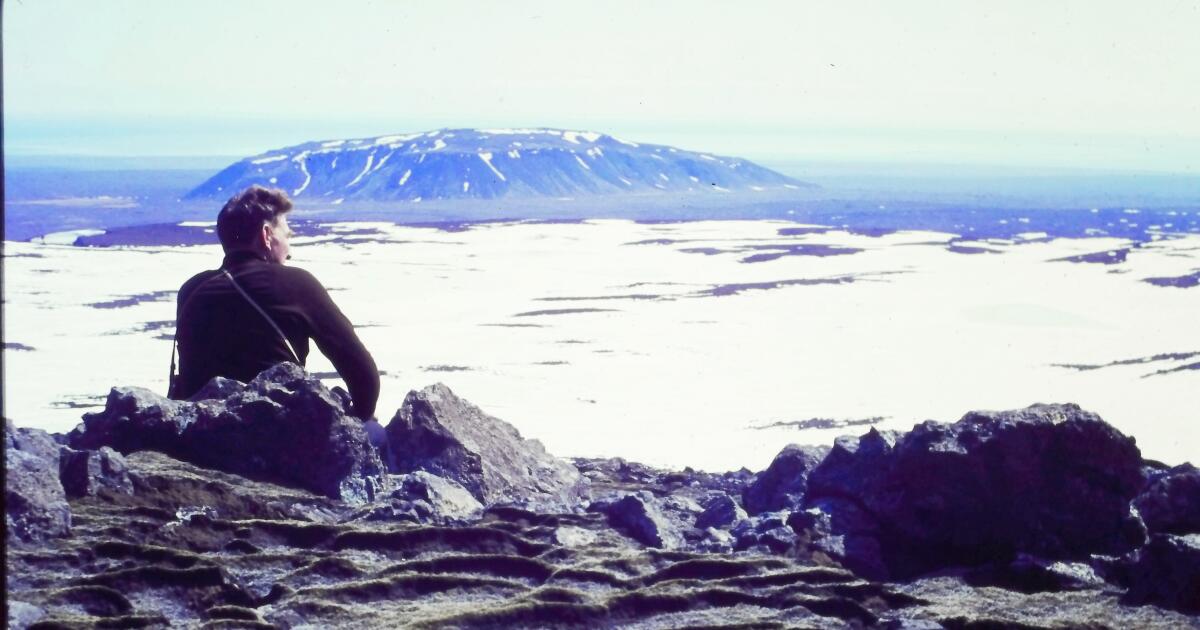
Glaciers aren’t stationary. Immense and imposing, formed through the downward trajectory of water from mountains as it collects and freezes, they have always moved. Now, however, they’re leaving. The demise of glaciers is a fact inherent in all the bad news about the effects of climate change on what once seemed permanent. But for Icelanders, whose connection to glaciers is ancient and mythic, our human epoch has become an extended hospice for the landscape of their lives.
Somehow, though, Sara Dosa’s documentary on this matter, “Time and Water,” avoids playing like a funeral in waiting. Built around Icelandic writer Andri Snær Magnason’s voiced lamentations on a vanishing frozen world, along with archival footage of his family, it’s no simple howl of grief, even when it takes us to a publicly held memorial in 2019 for Iceland’s Ok glacier, the first such “death” diagnosis in the country’s history. Rather, Dosa’s film is a meditation on change — both the kind that we accept with a heavy heart and something more general. “Time and Water” is a curiously vibrant elegy, teeming with appreciation for the intimate majesty that is all life, generational and geologic.
Dosa has finessed this emotional-meets-elemental space before in her Academy Award-nominated 2022 documentary “Fire of Love,” about married volcanologists Katia and Maurice Krafft. That was a wonderfully eccentric romance forged in molten lava. Here, she’s in a collaboration of sorts with her subjects, both human and elemental. Magnason’s opening narration over spectacular footage of glaciers — up close and from far away — gently informs us that we’re watching a time capsule, one where the bonds of family and environment are intertwined.
We learn how Iceland’s glaciers, essentially rivers of varying pace, begat their unique ecosystems, but also how they provided the breathtaking terrain upon which Magnason’s grandparents Hulda and Árni fell in love. (Grandma Hulda was the first woman to fly in Iceland, itself a very cool fact.) The onset of dementia in Árni spurs his grandson to consider what’s lost when the markers of memory depart. “Time and Water” touches on the epic verse called rimurs, passed down via chanted song by Icelandic women, their descriptive, sorrowful tales like dispatches from previous ages.
“Tone poem” is an overused term in cinema, but the humbling “Time and Water,” graced with a playful, atmospheric Dan Deacon score, earns that distinction. Naturally, it helps that you can never tire of all the air-crisped glacier imagery, captured digitally and in 16mm. Folded into the cozy slide-show vibe of Magnason’s home videos and the carefully chosen archival footage, the movie plays like a scrapbook portrait in which home just happens to boast the grandest of backyards.
How much longer will Icelanders enjoy it? The glaciers are predicted to be gone within 200 years. That’s an eternity or a drip, depending on whose survival we’re talking about. Still, “Time and Water” collapses the notion that we are somehow separate from these ancient, essential formations: an encouraging hello to the future from inside a sobering goodbye.
‘Time and Water’
In English and Icelandic, with subtitles
Rated: PG, for some thematic elements, smoking and brief language
Running time: 1 hour, 33 minutes
Playing: Opens Friday, June 5 at Laemmle Royal and Laemmle Glendale
Mogadishu, Somalia – Mustafa, 33, dreads election time in Somalia. He drives a bajaj — a three-wheeled taxi — and says that when tensions rise, as they always do when polls are near, the whole city feels it, and drivers like him are among the first.
On Wednesday, he was passing through the Hawl Wadaag district when heavy gunfire between government and opposition forces erupted all around him.
Recommended Stories
list of 2 itemsend of list
“I couldn’t even think. Everyone was shouting and running for their lives, and we all fled from the bullets,” he told Al Jazeera. “We haven’t seen fighting this bad in years.”
The shooting that began that afternoon around the homes of former Prime Minister Hassan Ali Khaire and, later, former President Sheikh Sharif Sheikh Ahmed, came as opposition figures were planning to organise protests against what they describe as an illegal term extension by incumbent President Hassan Sheikh Mohamud.
Khaire and Sharif Sheikh Ahmed were among opposition leaders spreadheading the planned protests amid rising tensions with the federal government.
The government said the planned protests would undermine security in a city still grappling with persistent armed violence.
Hundreds of families fled neighbourhoods near the fighting, and by the next day, many of the capital’s central areas had emptied. The sudden eruption of violence ended a period of improving security in Mogadishu, shattering the perception that the city had begun turning a corner.
“The most frustrating thing is that we have nothing to do with it, and it impacts so many of us,” Mustafa said. “We make our living in this city”.
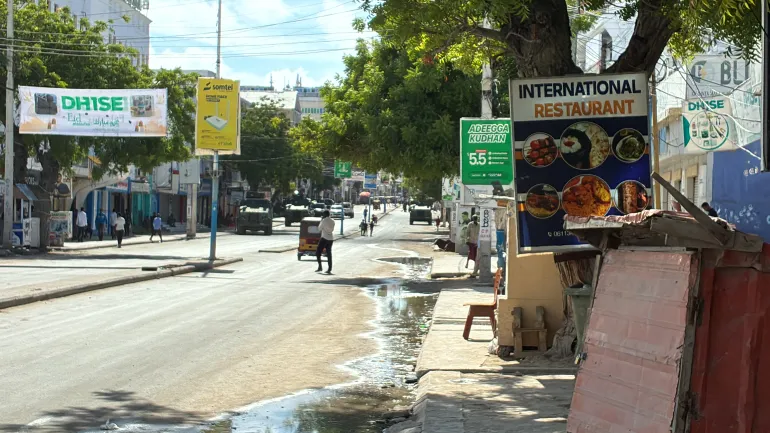
Security forces sealed Maka al-Mukarama Road, one of Mogadishu’s main arteries, while Bakara market, the largest commercial hub in the city, was effectively closed for business.
Maka al-Mukarama Road, Mogadishu’s main thoroughfare, is usually a bustling commercial hub, but recently, it has been largely empty, with the exception of military vehicles [Faisal Ali/Al Jazeera]
“Look, it’s midday, and there’s almost no one here, shops are closed, and usually by this time the place is jammed,” Ahmed, a street vendor at Bakara market, told Al Jazeera, gesturing at shuttered stalls.
Ali Wardheere, the deputy central bank governor, estimated the direct cost to businesses and services at $3.8m, though he stressed the figure was a model-based projection, not an official or final tally.
Like most Somalis, Mustafa has never voted for a president or a member of parliament. The country has not held a direct election for national leadership since the late 1960s.
Since the state was re-established in 2012 after its 1991 collapse, leaders have been selected through an indirect system negotiated by clan elders and political elites.
As presidential terms near their end, low trust among political actors often leads to intense competition over power — and at times violence — as disputes over the electoral timetable come to a head.
At a press conference in late May, Sharif warned that the political deadlock could turn violent if negotiations failed.
“Where do things stand? [We say] Leave, and [you say] I won’t leave. What comes next? Bullets.”
The warning echoed events in 2021, when then-President Mohamed Abdullahi Farmaajo remained in office more than a year beyond the end of his term, triggering clashes in Mogadishu before a political agreement was reached.
Higher stakes this election
This time, the political standoff carries higher stakes.
President Hassan Sheikh Mohamud says that constitutional amendments approved by parliament extended his mandate by an additional year from May 15. The opposition rejects that and has begun referring to him as a “former president”.
Two of Somalia’s most influential federal states also reject the amendments, leaving the country divided over the constitutional framework governing the next election, with no constitutional court to resolve the dispute.
After parliament approved the changes, Mohamud declared that the “provisional constitution, and the provisional era, was a sun which set yesterday,” signalling that his administration would press ahead despite objections from its opponents.
Tensions had been building for days. Ahead of a protest planned for Thursday, opposition leaders left the heavily fortified “green zone” near Mogadishu’s airport and returned to their residences across the city.
Some opposition figures said they would deploy their own armed guards at the demonstration, a proposal Mohamud rejected. The dispute heightened fears of a confrontation before fighting eventually broke out.
Both sides blame the other for starting the clashes. Khaire accused Mohamud of directing a “sustained and indiscriminate military assault” that lasted more than 20 hours, a claim Sharif echoed after fighting reached his own residence.
Ahmed Moalim Fiqi, the defence minister, accused the opposition of militarising the standoff, likening it to Sudan’s Rapid Support Forces and alleging that opposition figures had “distributed mortars and artillery across the capital”.
“Force and militias,” he said, would no longer be allowed to “seize power or block the state.”
How it came to this
The roots of the crisis run back to the 2012 provisional constitution, which set up a federal, parliamentary system built on broad consensus and clan-based power-sharing, which every government since has promised to achieve and failed to attain.
This year, after a long review, parliament amended the constitution through a disputed process that split the political class. The government has insisted that the new constitution advances the statebuilding process and that the Somali public should be allowed to directly elect its representatives.
For Ahmed Abdi Koshin, a federal MP who boycotted the draft, the danger is that the whole settlement comes apart. The process, he said, “clearly doesn’t have buy-in,” and the original constitution, for all its faults — “an imperfect product of compromise” — was the “only glue holding Somalia together”.
Koshin is not against a direct vote in principle, he said, but does not believe the country is ready for one. “We don’t have legislation for a direct vote; censuses and the security situation remains compromised. It really is up to the president to either reach a deal and save Somalia, or watch it fall apart,” he said.
The opposition, organised as a coalition known as the Somali Future Council and including two serving federal-state presidents, former prime ministers and a former president, has pressed Mohamud to accept that his mandate has ended and negotiate a new electoral framework, as in past transitions.
It alleges that his push for a direct vote is a pretext for extending his term and potentially securing another.
The government rejects that, casting a national one-person, one-vote election — the first since the 1960s — as essential to a drawn-out state-building project. When electoral talks collapsed on May 15, the Ministry of Information accused the opposition of bringing demands that ran counter to “the citizen’s fundamental right to vote and to be voted for”, and vowed to press ahead.
Mohamed Ibrahim Moalimuu, a lower-house MP who backed the amendments, said further delay could not be justified. “We’ve waited for more than 12 years,” he told Al Jazeera.
“If they had arguments against them, they should have taken part in the process and raised their issues. A constitution isn’t a Quran, and they should come back and work through parliament to make their views clear.”
A whole generation of Somalis, he noted, have never cast a ballot, and a real election “would be a major milestone and would bring some hope”.
The old indirect system, he added, was notoriously corrupt, with parliamentary seats changing hands for anywhere from $100,000 to as much as $1.3m. “This system is too dirty and keeps people out,” said Maliumuu. “It needs to be changed.”
A deeper problem
A regional official, speaking on condition of anonymity because he was not authorised to talk to the media, described an elite “divided strategically over what type of country they want, whether a strong centralised state or a weak decentralised one, and tactically over who the right candidate is to take them there”.
Mohamud, the official said, had moved from a decentralised vision for Somalia that embraces federalism towards a stronger executive, and his early, promising relationships with the federal-state leaders had since soured.
Those fractures have opened on several fronts at once.
Somaliland, which declared independence in 1991 and has stayed out of the constitutional review entirely, was recognised by Israel late last year after earlier courting Ethiopia.
Puntland and Jubaland, two of Somalia’s six federal states, have withdrawn from the federal system over the new constitution, while more than 100 MPs and senators from both boycotted the final vote.
Broader regional crises, from Sudan’s civil war to disease outbreaks elsewhere on the continent, have pushed Somalia further down the list of international priorities, leaving international engagement more fragmented and inconsistent.
The country is also grappling with a deepening humanitarian crisis and aid cuts, prompting famine monitors to warn of a heightened risk of hunger in parts of Somalia.
Yusuf Aynte, a veteran religious leader and former MP, said Somalia’s leaders needed to build consensus rather than push through changes that risk deepening divisions.
“The president says what he is doing is good, and that may be so,” he told Al Jazeera. “But the most important thing is what everyone can agree on.
“At the moment, Somalia has too many problems, and can’t afford to be distracted like this.”
Jamal Shiil, a youth activist, told Al Jazeera that Somalia’s large youth population would ultimately bear the cost of the persistent instability.
“Young people want to make a living here, for Somalia to be peaceful and not to have to leave because of the problems,” he said. “But if things don’t change it won’t leave them much of a choice”.
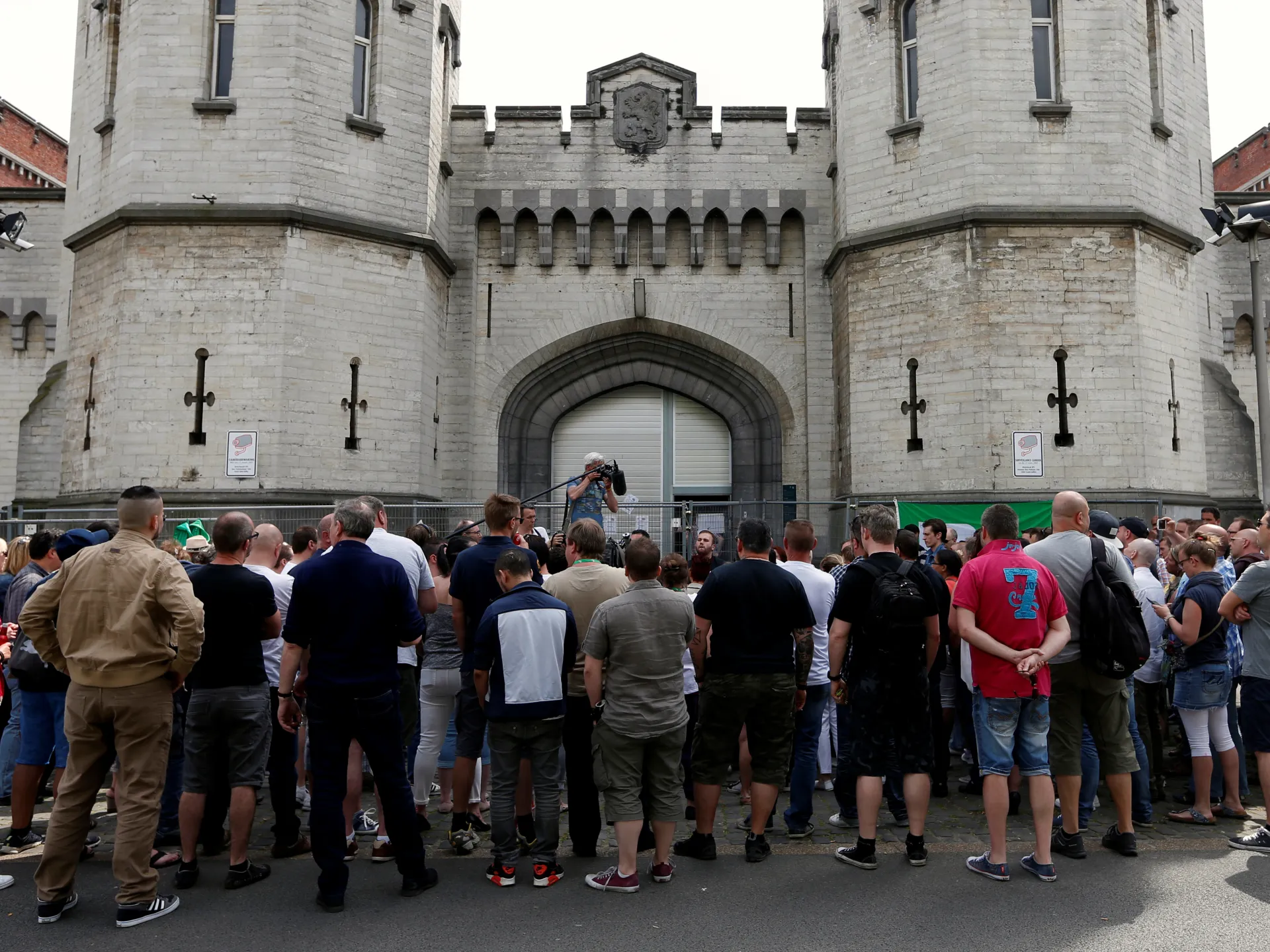
Over the past 10 years, the 34-year-old has served a sentence in five prisons across Belgium. He most vividly recalls conditions in Mons, a 19th-century prison near the French border, where he said 9-square-metre (97-square-foot) cells housed three to four detainees. He remembers bouts of scabies, bed bugs and monkeypox spreading widely and guards who faced severe exhaustion.
“During my 10 years in prison, things only got worse,” Bilal told Al Jazeera on condition that we use only his first name. “They took away some of our time outside of our cells, various activities.”
Belgium, one of Europe’s richest countries, is grappling with a deepening prison overcrowding crisis.
In mid-May, its 39 prisons counted 13,733 inmates – significantly exceeding a capacity of 11,064, according to data provided by the directorate-general of prisons.
“The combination of ever-increasing overcrowding and staff shortages makes the situation very, very, very difficult,” warned Pieter Houbey, vice-chairman of the Central Prison Monitoring Council (CCSP), an independent watchdog.
“It’s become almost impossible to maintain a detention system … aimed at reintegrating people,” he said.
In mid-May, 754 detainees were sleeping on mattresses on the floor, up from 672 in December.
Across Europe, prison populations have increased dramatically since the COVID-19 pandemic, with overcrowding affecting one-third of prison administrations.
Occupancy rates are highest in Cyprus, followed by Slovenia, France, Croatia, Italy, Romania, Austria and Belgium.
As a result, governments find themselves under pressure, with experts and workers criticising common responses – from building more detention facilities to transferring prisoners abroad – as ineffective.
‘Mice in a cage’
“To ensure decent conditions, we must first respect their rights – that is, stop treating them like mice in a cage,” said Yasin Sarikaya, vice-president of Brussels’ prisons.
Prisoners, especially those on remand, are often left in their cells for 22 to 23 hours a day, exacerbating the lack of privacy, as well as potentially pre-existing health and substance abuse issues. Receiving medical support can take months.
Loic*, who is serving his third of seven years at Saint-Gilles Prison in Brussels – meant to shut down by 2028 – said that work or other activities are hardly offered at the facility. Most detainees do not have a residency permit, he said.
“It’ll be tough to get back into the workforce,” the 23-year-old told Al Jazeera, looking at the floor while he spoke.
Bilal, convicted of two bank robberies and attempted murder, said he experienced suicidal ideation during imprisonment.
In recent years, videos circulating online have shown drones smuggling goods into prisons. In 2024, a video went viral showing a prisoner being tortured by five fellow inmates in his cell while the guards, on a 48-hour strike, failed to notice for days.
Guard burnout
Those conditions reinforce existing staff shortages.
At Haren, the country’s largest jail complex, “some guards are injured and can’t come to work”, said Sarikaya, who works at the complex.
According to the directorate-general of prisons, critical incidents in prisons doubled within a year.
With general crime rates having fluctuated in past years, experts connect the situation to Belgium’s carceral policy and its attempts to crack down on drug-related crime. While the country has struggled with overpopulation for decades, its most recent increase is mainly linked to a decision in 2023 to enforce all sentences of up to three years, previously served primarily under electronic monitoring.
Belgium also detains people for ever longer periods. Currently, the average detention lasts 9.9 months – a 39.4 percent increase over five years. Belgium’s pretrial detention rate of 32 percent is well above the European average (24.7 percent in 2024).
Emergency measures
Last July, Belgium’s parliament passed an emergency bill. The law, drafted by Justice Minister Annelies Verlinden, encourages the use of alternative punishments for sentences under three years and allows directors to release inmates, sentenced to a maximum of 10 years, six months before the end of their sentences.
In the longer term, the government seeks to install modular units and to renovate existing prisons pending the construction of new facilities.
That, however, is unlikely to reduce overcrowding, warned An-Sofie Vanhouche, a professor in the criminology department of Vrije Universiteit Brussel.
“Research shows that the more [prison] space we have, the more people we usually send to prison,” she said.
Cells to rent
As part of a stricter migration policy, Belgium is also seeking ways to deport detainees without legal residency, who comprise about a third of the prison population.
Earlier this year, Verlinden visited Estonia to discuss renting cells there. The government has already eyed similar deals with Kosovo and Albania.
Belgium is not the only European country considering such agreements.
Sweden has struck a deal with Estonia to rent 400 prison cells. According to the Estonian Ministry of Justice, prisoners could start arriving by the end of the summer. In 2019, Denmark reached an agreement to rent 300 prison cells from Kosovo.
Vanhouche described the moves as “very populist and symbolic”.
While only having a “small impact”, they raise numerous ethical questions around the protection of prisoners’ rights and their wellbeing, she argued.
The Belgian Ministry of Justice, as well as the Swedish and Danish ministries, did not respond to requests for comment. The Estonian ministry said that “prisoners remain protected under European human rights standards and applicable international law”.
Ways forward
Critics are calling on Belgium to move towards a greater emphasis on societal reintegration rather than just security – also through alternative punishment.
“Prison leads to recidivism,” warned Tahar Elhamdaoui, the founder of NGO Collectif Desistance, which helps young former prisoners reintegrate into society.
According to Houbey, Belgium’s reoffending rate is 60-70 percent.
Thanks to Elhamdaoui’s NGO, Bilal is interning as a football coach. Meanwhile, Loic* is trying out different jobs on day release.
But that’s not the norm, Elhamdaoui warned.
“As long as there are no prisons that prepare people to succeed outside,” he said, “we will not only be producing more crime upon release, but also a sense of despair so deep that people will not be able to reintegrate into society.”
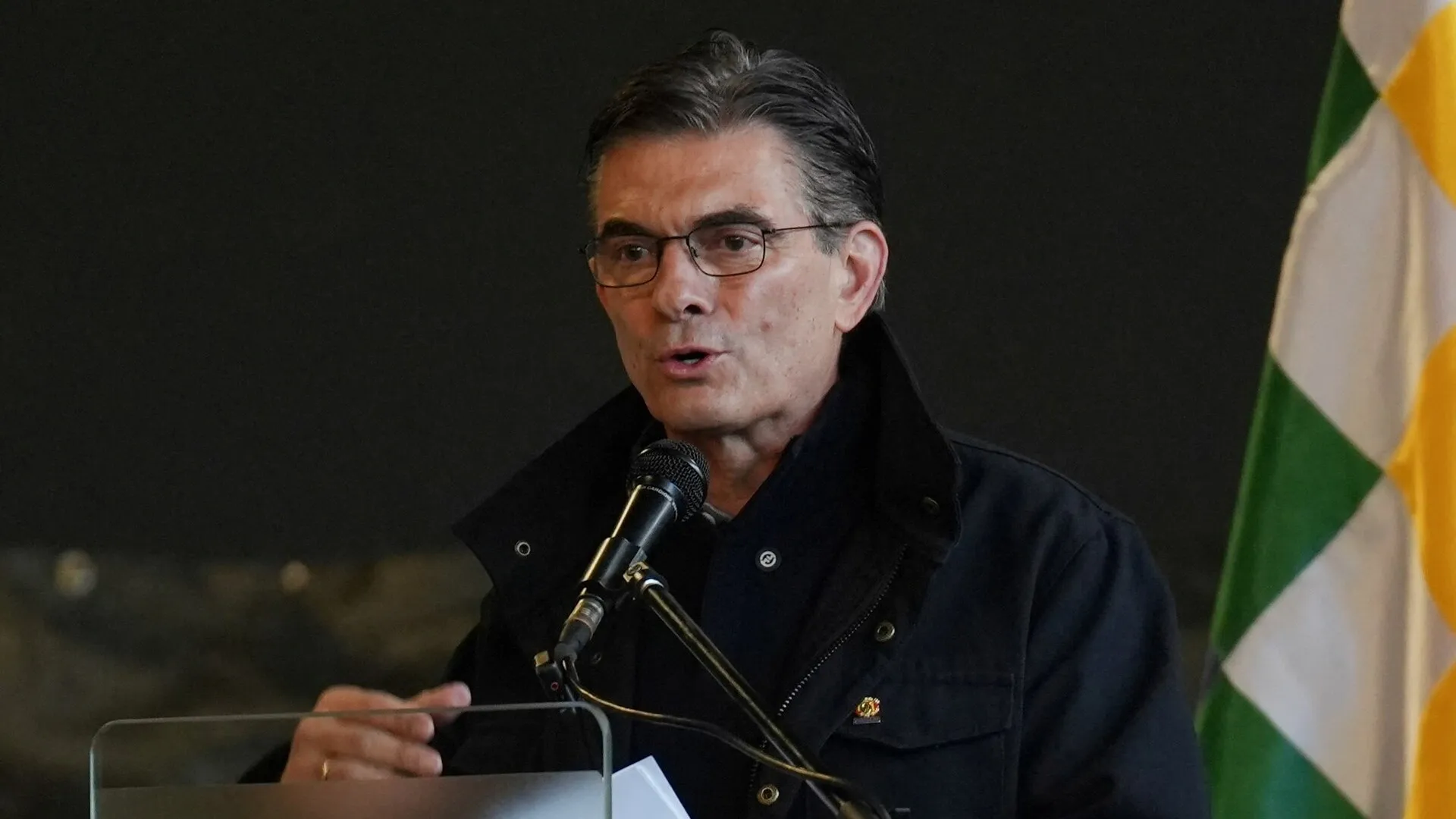
Bolivia’s president has warned protesters “time is running out” amid a weeks-long standoff over the country’s economic and political crisis. President Rodrigo Paz has secured powers to declare a State of Emergency, but protesters remain unmoved.