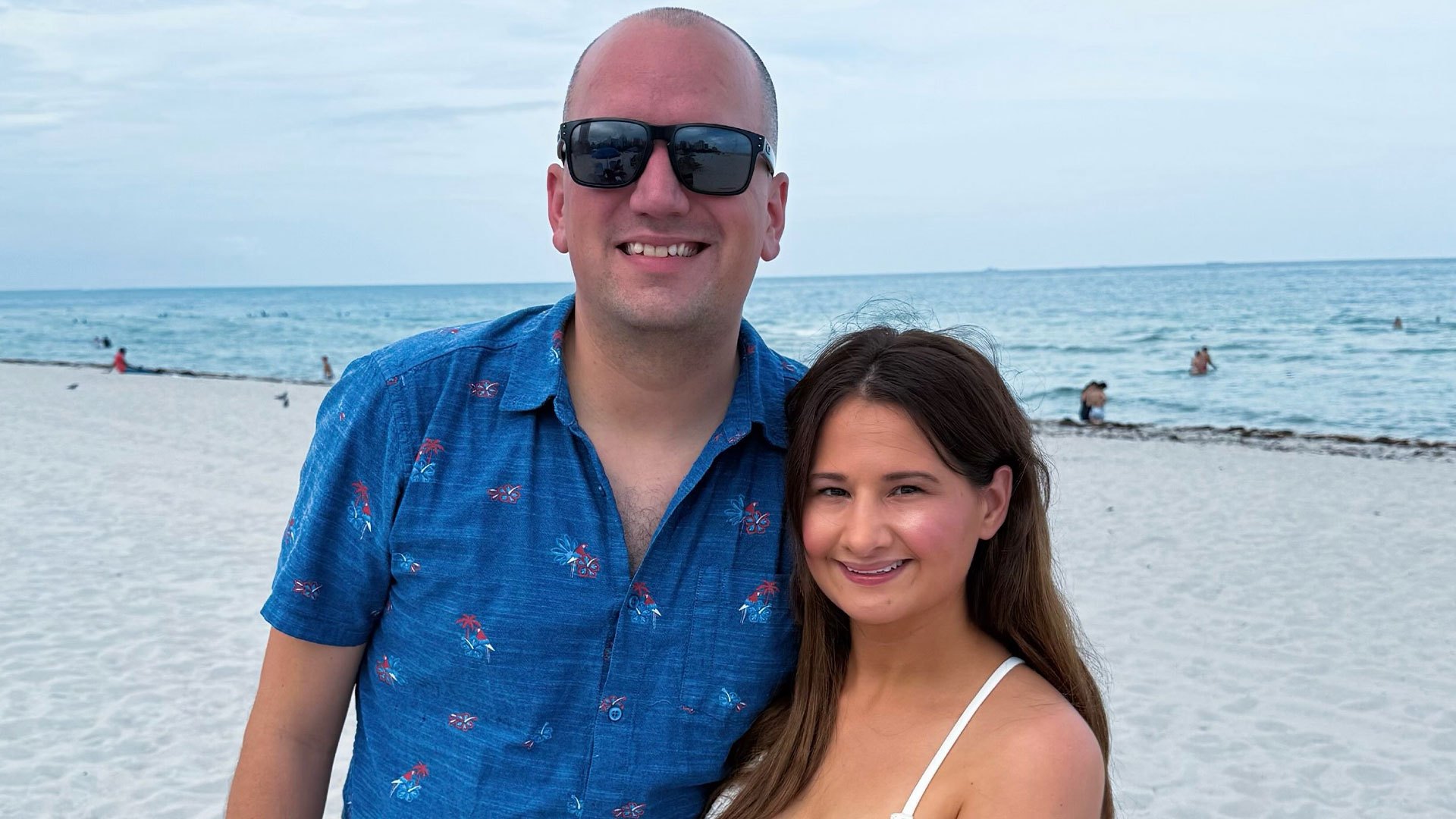
A former Love Island star who is suspected of sexual assault and stalking has been re-arrested by London’s Metropolitan Police on suspicion of perverting the course of justice
Daniel Bird Assistant Celebrity and Entertainment Editor
18:26, 03 Jun 2026Updated 18:26, 03 Jun 2026
A Love Island star has been re-arrested by police(Image: ITV)
A Love Island star has been re-arrested. The man was arrested by the Metropolitan Police on suspicion of perverting the course of justice. The man, in his 20s, was previously arrested in November last year at Gatwick Airport on suspicion of multiple offences, including sexual assault.
He is also suspected of criminal damage, assault by beating, coercive and controlling behaviour, and threats to share photographs or films of a person in an intimate state. But he has since been re-arrested by officers from the force who attended his home. It is claimed that he attempted to contact an alleged victim.
A spokesperson for The Metropolitan Police said: “A man in his 20s has been arrested on suspicion of perverting the course of justice. The arrest relates to an ongoing investigation into allegations of sexual assault, stalking, criminal damage and assault. He was arrested at an address on Monday, April 27 and bailed pending further enquiries.”
The man is not linked to the current series of the ITV2 dating programme. Speaking to The Sun, a source said: “This second arrest is a real shock – and potentially very bad news for the ex-contestant.
“There was an investigation going on into very serious offences that he was arrested over last year.” Last year, the man was bailed pending further enquiries after his arrest upon arrival at Gatwick in the United Kingdom on November 27.
The force had launched an investigation into the claims just 12 days before the arrest and at the time, a spokesperson told the Mirror: “A 29-year-old man has been arrested on suspicion of multiple offences, including sexual assault, stalking, criminal damage and assault as part of an ongoing investigation by Met Police officers.
“Met Police launched an investigation on Saturday, 15 November and arrested a man at Gatwick Airport on Thursday, 27 November. He has since been bailed pending further enquiries. A woman has been offered specialist support by officers.”
The show, which launched earlier this week again, has faced several problems in recent years. Earlier this year, former winner Jack Fincham revealed he lost millions of pounds and was unable to afford rehab after a drug addiction.
In 2018, Sophie Gradon, who featured as a contestant in 2016, took her own life at the age of 32. The following year, Mike Thalassitis also took his own life at the age of 26, having been a contestant in 2017.
And in February 2020, former show host Caroline Flack died by suicide at the age of 40 after hosting the series from 2015 until 2019. The deaths of former contestants and Flack have sparked concerns about the well-being support offered by ITV after propelling contestants into the spotlight.
Following the incidents, ITV introduced duty of care measures to support those taking part on the show before, during and after their time in the villa and on screens. The improvement in support was welcomed by former contestants, who applauded ITV for doing more to help those who experienced life in the villa.
If you’ve been the victim of sexual assault, you can access help and resources via www.rapecrisis.org.uk or calling the national telephone helpline on 0808 802 9999
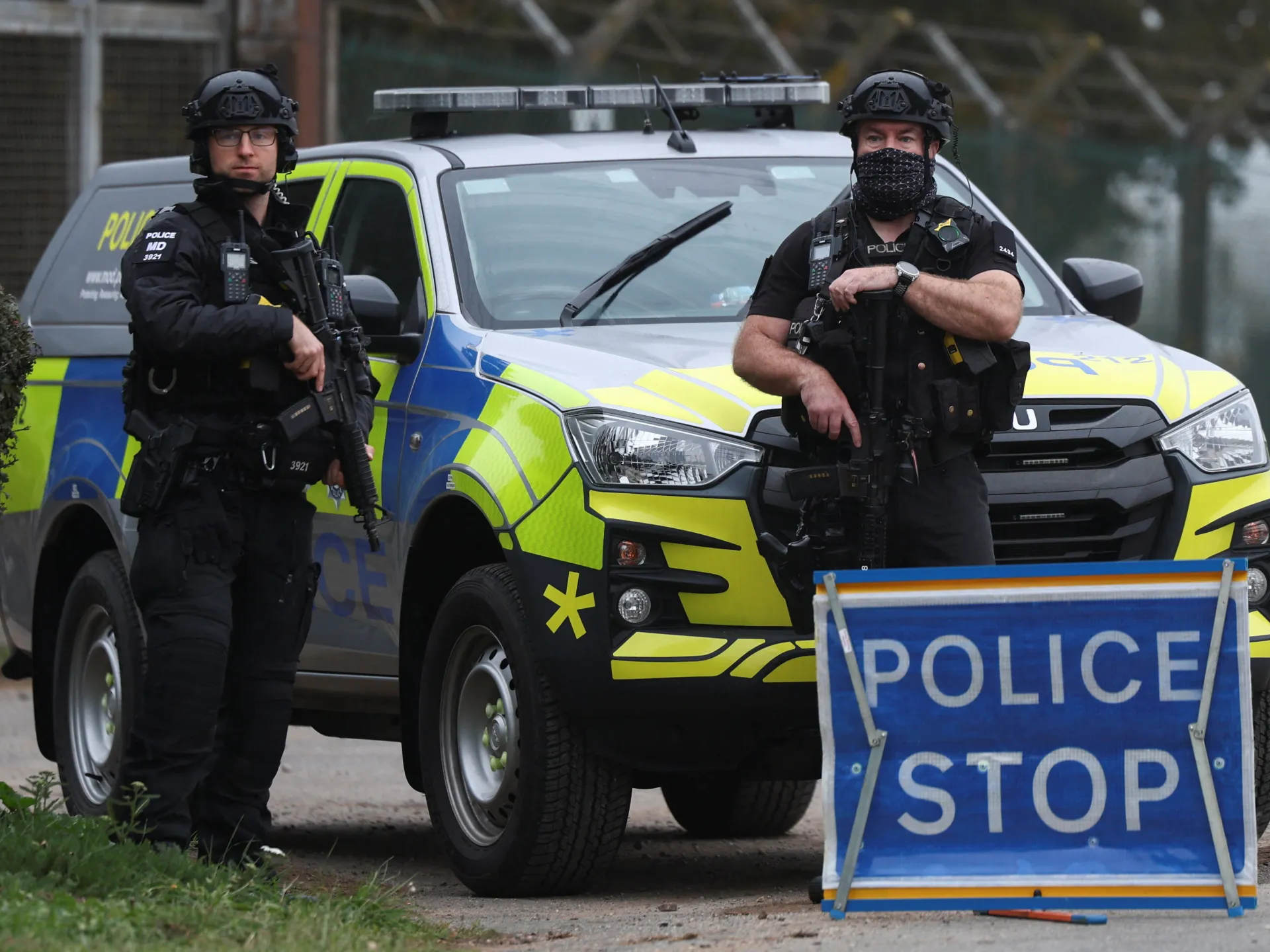
The shooting ends a 12-hour standoff in the city of Bakersfield between suspect and law enforcement.
Published On 3 Jun 20263 Jun 2026
Agents with the Federal Bureau of Investigations (FBI) in the United States have fatally shot a man allegedly holding hostages inside of a building in California.
The shooting ended a 12-hour standoff at an office in Bakersfield that houses a bank branch and school district office.
In a statement, the Bakersfield police said the suspect was killed in “an officer-involved shooting involving Federal Bureau of Investigation personnel”.
It added that “all hostages were located unharmed and received medical evaluation and treatment at the scene”.
Police had originally been called following a bomb threat at the location. Police said the man barricaded himself inside with several people, two of whom were released Tuesday after negotiations with authorities.
Authorities established a wide perimeter around the building, evacuating the nearby City Hall and the police headquarters.
Bakersfield police sergeant Eric Celedon told reporters on Tuesday the department had “every single resource at our disposal out here to bring this to the safest resolution possible”.
Police on Wednesday said the investigation was ongoing and that “significant” law enforcement would remain in the area.
The identity of the suspect was not immediately released and a motive was unclear.
Death in Paradise fans have a while to wait for the next series, but luckily there are three cosy crime dramas that can fill the void
Death in Paradise is loved by viewers(Image: BBC)
These three brilliant dramas should fill the gap nicely.
Death in Paradise face face a bit of a wait until the next instalment from Saint Marie, but there are a few “cosy” crime programmes that can take its place in the meantime.
The most recent series of the BBC crime staple – starring Don Gilet as DI Mervin Wilson, who investigates various murders on a fictional Caribbean island – concluded in March.
The 16th series isn’t expected to air until early 2027, while the Christmas special remains months away, reports the Express.
Fortunately, there are a few crime programmes to bridge the gap for Death in Paradise fans. We have a look at some of the best ones to delve into during June.
A Taste For Murder
A Taste For Murder premiered in April, following widowed Metropolitan police detective DCI Joe Mottram, portrayed by Warren Brown, who travels to Capri with his daughter Angelica (Beau Gadsdon) as they process their bereavement.
During their stay, he starts getting involved in solving local crimes, including the death of a British holidaymaker and the questionable fate of someone who’d been making a routine dive.
It’s proven tremendously popular with audiences, with some declaring it superior to Death in Paradise.
One viewer posted on X: “Death in Paradise meets Whitstable Pearl meets Recipes for Love and Murder and I’m absolutely here for it.” Another viewer remarked: “If you like light-ish murder mysteries then give it a try. Similar theme to Death in Paradise but I think it’s much better. Gorgeous scenery/food & a better cast imo. It’s entertaining, and it flies by.”
A Taste For Murder is available on ITVX.
You’re Killing Me
Mystery drama You’re Killing Me launched on Acorn TV in May.
Situated in a picturesque New England town, the series follows novelist Allie (Brooke Shields), who joins forces with podcaster Andi (Amalia Williamson) to track down the killer of a friend.
One viewer left a comment on IMDb describing it as a “perfect mystery series”, while another remarked: “You’re Killing Me may find its place in the cosy mystery pantheon.”
Someone else commented: “At first glance, it seems like a reincarnation of Murder She Wrote. Writer, New England location and murders! It rapidly became its own show. Brooke Shields is absolutely hysterical in this. I never saw her movies or series so I didn’t know why to expect but I was instantly pleased. The support cast is enjoyable as well. Kudos to the writers for some clever dialogue.”
The Brokenwood Mysteries
New Zealand-based programme The Brokenwood Mysteries is currently on screens as the crime drama’s 12th season airs.
The series is set in the seemingly tranquil town of Brokenwood, which is “slowly being riddled with murders” and Detective Mike Shepherd (Neill Rea) must solve them.
The series can be found on U&DRAMA and Channel 4, with the official synopsis describing it as a show “about a detective who arrives on assignment in a small town where memories – and animosities – run deep”.
Fans have labelled it “outstanding”, with one viewer declaring: “I look forward to future episodes of this refreshing NZ ‘whodunnit’, which for me rates better than Midsomer, definitely better than Death in Paradise, but perhaps not quite as good as Lewis, Frost, or the Swedish version of Wallander.”
Death in Paradise is available to stream on BBC iPlayer.
Rachel Nickell’s horrific death sent shockwaves across the UK, but it took the police more than 15 years to solve her murder. As the case is explored in a new Netflix documentary, we speak to the expert who found a breakthrough clue after years of investigation failures
The Murder of Rachel Nickell teased in Netflix trailer
Rachel Nickell had her whole life ahead of her when it was cruelly stolen in a sickening attack – leaving her toddler son as the sole witness.
In July 1992, the 23-year-old mum was strolling through Wimbledon Common with her two-year-old son Alex Hanscombe, and their dog Molly. In a quiet, wooded area, she was ambushed, sexually assaulted and stabbed dozens of times.
Alex was later found by a passerby, desperately clinging to his mother’s body. In a heartbreaking attempt to help, the toddler had placed a piece of paper on her forehead as a makeshift bandage after pleading with her to wake up. Even at that tender age, Alex later revealed, he knew instantly that his mother was never coming back.
The brutal murder shattered the life of Alex and his father André Hanscombe. Yet, it would be 16 years for anyone to face justice. The haunting case is now the subject of a new three-part series for Netflix dramatisation, The Witness, alongside an accompanying documentary featuring never before seen archive footage, and deeply personal accounts from those who lived through the tragedy.
Among those interviewed is legendary forensic scientist Angela Gallop, whose work has helped solve many of the UK’s most high-profile murders, including the killings of Stephen Lawrence and Damilola Taylor.
Her team was handed the case in 2002, a decade after the murder, when the investigation had gone completely cold. They had agonisingly little to work with: a microscopic trace of male DNA recovered from the crime scene. To make matters even more difficult, forensic technology at the time was ill-equipped to handle such a minute sample. In order to find the killer, they had to pioneer an entirely new methodology to examine the sample.
Reinvestigating the decade-old DNA required immense precision. Describing the pressure and the patience required to manipulate the tiny shred of evidence, Angela said: “The technique that had been used at the time was a very new, sensitive method, but we had never particularly liked it in my laboratory.
“For Rachel’s case, we got hints of male DNA using our standard test, but we wanted to see if we could squeeze out some more information. By concentrating and purifying the DNA, we managed to achieve it, but it took two years to develop the technique properly.”
After a painstaking process, the team eventually got a strong enough DNA profile to add to their database – and it matched with a man named Robert Napper, a paranoid schizophrenic and serial rapist.
To ensure the case was ironclad, they raced back to the crime scene and analysed all the sample items that had been collected. Angela and her colleagues then went on to uncover footwear marks and forensic paint evidence linking Napper directly to Wimbledon Common.
His footwear was matched directly to the mud profiles taken from the area, and microscopic paint flakes matching Napper’s toolbox were discovered trapped in the hair of two-year-old Alex. The box, found in Napper’s flat, contained knives and other weapons.
The new DNA breakthrough was enough to convict Napper and exonerate Colin Stagg, the innocent man wrongfully targeted by a flawed police honey-trap operation. A new Netflix documentary will examine the botched investigation, which led to Stagg – a local resident who walked his dog on the common – spending 13 months behind bars in custody, and facing rampant speculation that he killed Rachel.
He was freed by an Old Bailey judge in 1994, who criticised officers for using a ‘honeytrap’ undercover policewoman to try to make him confess to the murder, branding the entrapment evidence as “reprehensible”
Mr Justice Ognall, who halted the trial, described officers actions as “deceptive conduct of the grossest kind” after undercover officer “Lizzie James” tried to seduce Stagg, promising a relationship in the hope of getting a confession. Stagg later received £700,000 compensation from the Home Office.
In 2008, Napper admitted manslaughter on the grounds of diminished responsibility and was detained indefinitely at Broadmoor. He was already incarcerated at the psychiatric unit, having been convicted in 1995 for the equally depraved double killing of single mother Samantha Bisset, 27, and her four-year-old daughter Jazmine.
Discovering the match provided a profound sense of justice for Angela’s team, particularly regarding the human toll of the investigation. “We had a DNA result that hit a match on the National DNA database, so the police have got something to investigate,” she said.
“There was an added level of satisfaction because Colin Stagg had been professing his innocence for all those years. We were able to show that he was telling the truth,” she said.
The new documentary about the 1992 murder features Alex describing the moment that he knew his mother had died after being stabbed 49 times.
A home video video captures him describing the moment his mother was killed on Wimbledon Common to his dad André, who gently discusses what his son saw on the day.
Now 36, Alex describes seeing Napper, telling his dad: “I saw him first,” he says, telling Andre that the man was carrying a bag which he opened. Asked what he took out, he replies simply: “A knife.”
He then tells his dad that the man “knocked me over” and that he witnessed his mum being stabbed. “There’s his knife,” the little boy tells his dad, indicating the picture he is drawing of his mother. “I saw the knife. I saw it, Yeah, I saw it all.”
Speaking in the trailer for the film, André explains: “My son saw his mother’s murder but nobody could have possibly known how long it was gonna take to find the person who did this.”
Ahead of the Netflix show, Angela is keen to emphasise that DNA evidence is rarely a simple “magic bullet.” Television would make people think that experts can simply swab a crime scene and receive a clear-cut result just 30 minutes later, Angela said, adding: “If it was going to be really straightforward, the original scientists would have discovered the truth a long time ago.
“You have to be much more clever. Sometimes you have to look for one type of evidence to find another. In the Stephen Lawrence and the Pembrokeshire Coastal Path murders, it was analysing textile fibres that led us to finding blood traces and therefore DNA.”
As well as the archive footage, the documentary will explore how Angela’s work led to justice for Stagg after her breakthrough solved the case.
The three part drama, The Witness, will follow Alex and André as they deal with the devastating impact of losing Rachel. Jordan Bolger plays André, while Max Fincham is the teenage Alex. Both men acted as consultants on the series.
The story aims to show how a father and son “moved through the aftermath of unimaginable tragedy, from darkness into light.”
The other cast include Kevin Eldon as DCI Mick Wickerson, Neil Maskell as DI Keith Pedder, Mark Stanley as DS Ivan Agnew, Jon Pointing as DC Nick Sparshatt, James Dryden as DC Paul Miller, Kerry Godliman as André’s mother June, James Bradshaw as DCI Tony Nash and Claire Rushbrook as Dr. Jean Harris-Hendriks.
In a joint statement released last month, André and Alex Hanscombe said: “Our life has been a battle. We can never express how indebted we are to everyone that’s been a part of this, for the kindness and generosity they’ve extended to us, for the chance they took with us in bringing our story to the screen, and for the care they have taken.
“Our journey has all been by the grace of God and a promise to go on together, and we feel incredibly blessed to be able to share our story in this way.
“We hope that audiences will be left with a testament to the tough battle of life we all face and to the power of faith, hope, love – and never giving up.”
Documentary The Murder of Rachel Nickell has been made to accompany the new drama about what happened that day, called The Witness. Both will be released on Netflix on June 4.
Officials are considering measures that would allow UK airlines to block disruptive passengers with a history of serious misconduct from travelling, amid a sharp rise in onboard incidents since the pandemic
05:26, 01 Jun 2026Updated 05:27, 01 Jun 2026
The moment a ‘drunk’ passenger is thrown off a plane after ‘masturbating’ in his seat.(Image: Jam Press)
Ministers are exploring proposals that could result in persistent troublemakers being banned from future flights amid growing alarm over disruptive behaviour on aircraft.
Officials are weighing up a system that would enable airlines to identify passengers with a track record of serious misconduct and potentially deny them the ability to travel. Under the plans, which are still at an early stage of consideration, details of blacklisted passengers could be shared throughout the aviation industry.
Should someone attempt to book a flight after being added to the list, the airline or tour operator could receive notification and be given the choice to block the reservation, effectively grounding that individual indefinitely.
Civil liberties campaigners have, however, raised alarm about the proposals, cautioning they could set a “dangerous precedent” through the sharing of personal data and limitations on access to transport, reports the Express.
Currently, airlines have the power to ban passengers who have displayed violent or abusive conduct while travelling with them. Yet existing restrictions only extend to the specific carrier involved in the incident, meaning offenders can frequently sidestep penalties by simply booking with a different airline.
The primary hurdle facing any new system is current data protection law, which prohibits carriers from exchanging passenger details with one another, even where criminal offences have taken place.
Who is calling for some passengers to be banned from all flights for life?
Calls for stricter measures have grown louder following a string of high-profile mid-air incidents that have gone viral online, reports the Daily Mail. These have included episodes where cabin crew faced death threats and violent clashes erupted between passengers in aircraft aisles.
Such incidents are among hundreds logged annually and have often led to expensive flight diversions that wreck holidays and travel arrangements.
There appears to be widespread public backing for harsher punishments, with recent polling indicating most Britons support restrictions on passengers who commit serious misconduct while airborne.
Ryanair boss Michael O’Leary has previously urged limits on airport alcohol sales, including curbs on early morning pints, in an effort to cut the number of disruptive passengers getting on planes.
Ministers aren’t attempting to stop travellers from having a drink before their flight. Rather, they’re hoping any future system would promote better conduct while helping to safeguard cabin crew, families and fellow passengers.
It’s understood the proposals are being worked on by the Home Office and Department for Transport but remain in the early stages and require additional consultation with the aviation sector. Any system would need to tackle existing privacy regulations, which currently stop airlines from sharing passenger data.
Ministers are expected to sit down with industry bosses later this month to thrash out the details of the plans. A government source said: “Everyone should be able to enjoy a pint at the airport, but anti-social behaviour on flights is totally unacceptable.
“It threatens the safety of passengers and crew and disrupts hard-earned holidays.
“There are already tough laws in place to deal with offences committed on flights, but we are exploring with industry how we can better address this issue, ensuring we crack down on people who persistently cause chaos. Everyone should be able to fly without fuss.”
I come from a family of priests and devoted Catholics. Catholicism is the blood in my veins. My father was not a disciplinarian, but if you lived under his roof you went to church. Saturday evening or Sunday morning, didn’t matter, you went. My four siblings and I were not miscreants, but we drank beer and sneaked out, and I was once cited for stealing liquor. I can’t recall my father ever yelling at me for anything other than missing Mass.
My great-uncle Dan was a diocesan priest at St. Charles Borromeo in Drexel Hill, Pa. Dan was a fire-and-brimstone hard-liner. Every Thursday we’d gather as a family for a roast beef dinner at my grandmother’s house. Dan would drink Manhattans — plenty — and if someone expressed a view of God contrary to his own, he’d say, “It’s awfully hot down there.” “There” meant hell. My uncle Ed, my mother’s eldest brother, was an Augustinian. Patient, compassionate, inclusive, Ed’s God was very different from Dan’s. While discussing God, Ed would quote Michael Himes, “There is nothing we can do to make God not love us,” and the Trappist monk Thomas Merton, “Mercy, within Mercy, within Mercy.”
Sports was in my family too — basketball, specifically — and I came to view Dan and Ed as head and assistant coach, respectively. The head coach shouting harsh critiques from the sideline, the assistant coach there to put his arm around you when you made it, crestfallen and ashamed, back to the bench. I loved them both, but I aligned with Ed’s view of God. Dan passed away a decade ago. Ed has since left the priesthood and married a kind and patient woman named Kathy. Over the years, Ed’s views on God have changed drastically. We meet for dinner once a month to talk about life and faith, and it was during one of our conversations that “Task” was born.
Mark Ruffalo in “Task.”
(Peter Kramer / HBO)
Tom Brandis, played by the singular Mark Ruffalo, is a former priest-turned-FBI agent who has lost his faith. Everything he held as truth in his life has come crashing down in the wake of a family tragedy. Tom believes he was called by God to adopt two children, Emily and Ethan. Adopting these children has resulted in the death of his wife, Susan. Matricide. What kind of God allows that? I have struggled with my Catholic faith over the years, but nothing has perplexed me more than the idea of suffering. The poet Archibald MacLeish wrote, “If God is God, He is not good / If God is good, He is not God.” The message is clear: If God is God, the author of everything, then He created evil and suffering and therefore cannot be good.
In “Task,” I wanted to explore a crisis of faith with honesty and without easy answers, because that is exactly how I have found my own faith journey — arduous and circuitous. I believe in God, but I find that belief tested daily. Faith and religion are separable. Tom’s journey in “Task” is a journey of faith. In the fifth episode, Tom is kidnapped by the criminal Robbie Prendergast, played by the brilliant Tom Pelphrey. During a long and tense car ride to the Poconos, Robbie tells Tom that he doesn’t believe in God. Never has. God is an idea conjured to make life bearable. “There’s nothing after this life,” Robbie says. Tom doesn’t argue. His own beliefs have veered in that direction. The car pulls into a secluded, wooded area. Facing death, Tom suddenly wants to call his son, Ethan, and forgive him. Robbie doesn’t allow it. Instead, he walks Tom to the edge of the woods, tells him he’s a decent man, and sets him free. Because Robbie has his own plan: to sacrifice his life in the hopes of providing a better one for his family. It’s through Robbie’s act of mercy that Tom regains faith. He believes in goodness again.
Brad Ingelsby.
(Ian Spanier / For The Times)
In the final episode, Tom finds himself taking care of a young and suddenly parentless boy, Sam. Sam reminds him of his own son, Ethan. Sam wants to live with Tom. And Tom desperately wants Sam to stay with him. But Tom also recognizes that Sam would be better served in the care of a young family capable of meeting his needs. Sam shouldn’t be stuck with an old man like him. Tom lets Sam go; he believes the boy will be taken care of. That is Tom’s act of faith.
When Ed and I met for dinner last month, we talked about how his idea of God has changed over the years. He no longer sees God as a bearded white man tallying our sins and waiting to judge us in heaven. He thought God was everywhere, all the time. The love that exists between people. He thought he could feel God right then, among us at the table as we laughed. We talked about Camp Mystic. The young girls swept away. Why, God?They were there to serve You. We didn’t have any answers. We never do. But the food and wine were good, and we talked about great-uncle Dan, about how he was so different from us but how much we loved him anyway, and how, when he drank Manhattans — plenty — he could turn harsh and opinionated, but it didn’t matter because he loved God. He loved Him with his whole heart, and we thought about the unimpeachable dignity of that and what an amazing gift it would be — to believe and never doubt.
In 2025, Brazil’s deadliest police raid killed 120 people and exposed a pattern of mishandled evidence and impunity.
On October 28, 2025, more than 2,500 police officers launched a massive raid on two favelas in Rio de Janeiro. They were targeting leaders of Red Command, one of Brazil’s largest drug trafficking groups. By the end of the day, more than 120 people were dead, making it Brazil’s bloodiest police operation.
In the aftermath, police withdrew without securing the scene. Bodies were left behind, and forensic teams never arrived. Residents recovered the dead themselves, which erased critical evidence of what happened.
Through exclusive reporting, Fault Lines reconstructs the case of Douglas de Almeida da Silva, a father and small business owner shot by police that night. Officers say he fired first, but forensic analysis and witness footage raise serious questions about their account.
The raid reflects a broader pattern in Rio, where police routinely fail to preserve crime scenes, undermining investigations and shielding officers from accountability.
Despite repeated deadly raids, gangs continue to control the favelas, raising questions about whether these operations curb the violence or simply add to it.
On Sunday, voters in the South American country of Colombia are facing a choice.
Four years ago, they elected the first left-wing president in the country’s modern history, Gustavo Petro. Now, they must decide whether to continue with Petro’s leftist push — or restore the political right to power.
Recommended Stories
list of 3 itemsend of list
Fourteen candidates will be on the ballot for the first round of voting in Colombia’s presidential election. The packed field includes contenders from the left, right and centre, who are slated to face off over issues like security and the cost of living.
But Petro will not be among them: Presidents in Colombia are limited to a single four-year term.
The right wing is expected to have the advantage, particularly if the race proceeds to a second round. Petro is struggling with low poll numbers, and voters have expressed frustration with crime and violence, driven in part by the country’s six-decade-long internal conflict.
But leftist candidate Ivan Cepeda has surprised observers, consistently placing at the top of the polls ahead of the first round.
When is the election, who are the candidates, and which issues are top of mind for voters? We look at those questions and more in this brief explainer.
When is the election?
The first round of voting is set to take place on May 31, 2026.
Will there be a second round of voting?
A candidate would need to win more than 50 percent of the vote in the first round to avoid a run-off.
If no single candidate meets that threshold, a run-off will be held between the top two finishers on June 21.
Why is this election important?
In recent years, across Latin America, long-entrenched left-wing governments have met defeat at the ballot box.
Last year alone, right-wing candidates have been elected to replace left-wing presidents in Bolivia, Chile and Honduras.
But Colombia does not have a long history of left-wing presidents. Petro was the first. That makes this race one to watch, according to Gimena Sanchez, a Colombia expert at the Washington Office on Latin America (WOLA), a human rights nonprofit.
“This is the first election to be held after the first-ever leftist administration in Colombia’s 200-year history,” Sanchez explained.
Colombia now stands at a fork in the road. One of the dominant issues in the election is how to resolve the country’s internal conflict, which forced more than 235,619 individuals from their homes in 2025.
Another 87,069 people were caught up in mass displacement events due to the fighting, according to the International Committee of the Red Cross.
Petro has embraced negotiation as a tool to end the conflict, which has seen government forces, criminal networks, left-wing rebels and right-wing paramilitaries all battling one another.
But the political right has advocated a return to the more militarised approach backed by the United States, according to Sanchez.
“The leading candidates fall into two camps: continuity with the leftist government of Petro and an approach to security that focuses on negotiations with armed groups, and right-wing candidates who very much want to go back to a hardline security model that Colombia had in the past,” Sanchez said.
“You have polar opposite visions for the country.”
Who is the main candidate on the left?
Senator Ivan Cepeda has emerged as the primary candidate of the political left, running as the head of the governing coalition, known as Historic Pact.
Cepeda has largely pledged continuity with Petro’s platform, including social and economic policies meant to reduce inequality.
He has also embraced Petro’s “Total Peace” approach, which aims to resolve the country’s internal fighting by negotiating with armed groups and criminal networks, as opposed to solely relying on military force.
Confronting state-backed violence has become a hallmark of Cepeda’s life and career.
His father, who was also a senator, is believed to have been assassinated by a government-backed paramilitary. For years, Cepeda was also embroiled in a legal battle for accusing former President Alvaro Uribe of connections to right-wing paramilitaries.
Presidential candidate Ivan Cepeda speaks to supporters during his final campaign rally in Barranquilla, Colombia, on May 24 [Vanessa Romero/AFP]
Who are the main candidates on the right?
While Cepeda has become the standard-bearer for the left, the political right has had to contend with a more fractured field of candidates.
Running on the far right is Abelardo de la Espriella, a lawyer for the Defenders of the Homeland Party who has generated comparisons with Salvadoran President Salvador Bukele and Argentina’s Javier Milei.
Like those leaders, de la Espriella has offered a hardline vision for his country’s security. If elected, he says he would end negotiations with armed groups, bomb rebel camps, and resume the aerial fumigation of coca crops, which produce the raw material for cocaine.
Senator Paloma Valencia, a candidate with the Democratic Centre Party, is running as a more moderate alternative to de la Espriella. She too has promised a stricter approach to crime. Her platform involves expanding the police and armed forces, while cutting taxes and promoting pro-business policies in the economic realm.
Their election-season competition has become a source of acrimony for Valencia and de la Espriella, who have accused each other of paving the way for a leftist election victory.
“There is a more familiar, establishment right, represented by Valencia, and a far right in the form of de la Espriella, who pitches himself as an outsider,” said Sanchez.
Valencia, for her part, has criticised de la Espriella as two-faced, defending criminals in his legal practice but advocating for tighter security on the campaign trail.
De la Espriella, meanwhile, has dismissed Valencia as a member of the country’s political establishment and chided her in a social media post, stating that the presidential election is “not for little games”.
Paloma Valencia of the Democratic Centre Party speaks to supporters during her final campaign rally in Bogota on May 24 [Raul Arboleda/AFP]
What are the polls saying?
Polls generally show Cepeda ahead of his rivals, with de la Espriella in second place and Valencia in third.
A May 24 poll from the National Consulting Centre (CNC) and the publication Cambio suggested that Cepeda had drawn 33.4 percent of voter support, the most of any candidate.
But de la Espriella was on the upswing with 30.9 percent. Valencia, meanwhile, trailed with 12.6 percent.
The same surveys, however, suggest that Cepeda would struggle to win a run-off against either of the two right-wing candidates, with de la Espriella eking out about three points in a head-to-head contest, and Valencia coming within a percentage point of victory.
Undecided voters could play a key role in deciding the outcome, though. An analysis cited by the Spanish paper El Pais estimates that undecided voters could account for as much as 28 percent of the electorate.
Presidential candidate Abelardo de la Espriella, of the Defensores de la Patria party, speaks behind bulletproof glass during his closing campaign rally in Medellin, Colombia, on May 24, 2026 [Jaime Saldarriaga/AFP]
Which issues are front and centre?
Concerns over crime, security and economic issues like unemployment and affordability have dominated the election.
In a poll from the firm Invamer, the highest proportion of voters — 37 percent — identified security as the top issue facing the country.
Basic needs and unemployment ranked second and third, with 17 percent and 16 percent, respectively. Eleven percent of voters, meanwhile, named corruption as a leading concern.
The threat of violence has lingered over the presidential campaign over the past year.
Two political staffers with de la Espriella’s campaign were killed by gunmen on motorbikes earlier this month. And in June 2025, presidential candidate Miguel Uribe Turbay was shot while leaving a campaign rally. The 39-year-old died two months later from his injuries.
Political violence is a serious concern in Colombia, and all of the frontrunners in the race travel with heavy security.
Emmerdale fans were left divided when the identity of the arsonist was finally revealed on the latest episode of the long-running ITV soap, especially as a potential production blunder confirmed it weeks ago
Emmerdale finally confirmed the identity of the arsonist on Friday night’s episode(Image: ITV)
It was all revealed in the final Emmerdale of the week, but even then, viewers had to wait until just before the credits rolled. Joe Tate (Ned Porteous), Robert, and Aaron Dingle (Danny Miller) had spent the day trying to figure out who was the culprit, along with Graham.
At the end of the day, Aaron explained to Robert: “Graham reckons he nearly caught someone today – the arsonist. Well, not nearly caught them, actually. He’s been keeping an eye on the place since Joe thought it was me and Robert starting the fires. Just someone in a dark hoodie, which is pretty much everyone we know.”
As he was talking, the final scene of the episode saw teenager Kyle Winchester (Huey Quinn) walking up to the scene of the crime with a can of petrol and starting the fire.
Fans were quick to react to the revelation, with one writing: “Kyle Dingle needs some serious psychological help first murder then arsonist, what’s next serial killer?!” and another said: “Surely Kyle needs some punishment now. Him offending and the Dingles covering for him is not going to end well.”
Taking to X, another said: “OMG IT WAS KYLE ALL ALONG,” and another wrote: “Omg it’s Kyle,” as they emblazoned their comment with a shocked-face emoji. However, others claimed that the twist was “predictable”, especially given a potential mishap that happened in production.
As with fellow ITV soap Coronation Street, the credits roll with the cast listed in order of appearance and Kyle Winchester was the character noted at the top, and therefore suggested to be the person in the opening scene way back when the mystery was first teased. This opening scene was the hooded fire starter, therefore suggesting even then that it was Kyle.
One said: “#Emmerdale it was so obvious it was Kyle [eye roll emoji] It was as obvious as living in No1 Obvious St, Obvious Cresent in Obvious Town in the country of Fucking Obvious OB3 1OS,” whilst another said: “Oh really… would never have guessed him to be the fire starter.”
A third wrote: “So not only is Kyle a killer for murdering Al – he’s now an arsonist, As much as I’m loving another big story for Kyle and Huey Quinn is brilliant – this almost felt too predictable especially with the early spoiler last week in the end credits. #Emmerdale”
A fourth said: “I really wasn’t expecting Kyle to be the fire starter, it was so unexpected even when a lot of viewers called it weeks ago and #Emmerdale were so excited to tell us they totally didn’t credit Kyle in an episode where we only saw his figure.”
The charges stem from the January 14 shooting of Julio Cesar Sosa-Celis in Minneapolis during Operation Metro Surge.
An Immigration and Customs Enforcement (ICE) agent charged with shooting a Venezuelan man during a controversial immigration raid in Minnesota has been arrested in Texas, according to United States authorities.
Agent Christian Castro, 52, was taken into custody on Friday after investigators from Minnesota tracked him down in the southern state, where he was arrested with assistance from the Texas Rangers and the Department of Homeland Security’s (DHS) inspector general’s office. He faces four counts of second-degree assault and one count of falsely reporting a crime.
Recommended Stories
list of 3 itemsend of list
The charges stem from the non-fatal shooting on January 14 of Julio Cesar Sosa-Celis in Minneapolis during Operation Metro Surge, a large-scale immigration enforcement campaign that drew widespread criticism for its aggressive tactics.
Prosecutors allege Castro fired through the front door of a residence, striking Sosa-Celis in the leg.
“Mr Castro was charged earlier this month with four counts of second-degree assault and one count of falsely reporting a crime for an incident on January 14, 2026, when he discharged his weapon through the front door of a home knowing there were people who had just run inside,” the Hennepin County Attorney’s Office said in a statement.
“The bullet travelled through the door and struck one victim in the leg before making its final impact in the wall of a child’s room.”
Minnesota officials welcomed Castro’s arrest, saying federal agents should be held to the same legal standards as everyone else.
“In Minnesota, we believe in equal justice under the law. That means nobody is above the law, including agents of the federal government,” said Minnesota Attorney General Keith Ellison. “I am pleased to hear Christian Castro has been taken into custody and will stand trial for the crimes he allegedly committed in Minnesota.”
Operation Metro Surge faces increasing legal scrutiny
The case became a flashpoint after federal authorities initially claimed Sosa-Celis and another man had assaulted ICE officers.
Those allegations later unravelled when video and other evidence emerged that contradicted agents’ accounts, prompting prosecutors to drop charges against Sosa-Celis and his housemate, Alfredo Aljorna.
The DHS later acknowledged that officers involved in the incident had provided false information about the shooting.
The outgoing director of ICE, Todd Lyons, also indicated a federal investigation was under way. “Lying under oath is a serious federal offense,” he said.
But through a spokesperson, ICE rejected Minnesota’s effort to prosecute the agent involved, calling the case “unlawful” and “a political stunt”.
Castro is the second federal officer charged this year in connection with Operation Metro Surge, an unusual step that reflects growing scrutiny of federal agents’ conduct during the immigration crackdown.
Hennepin County Attorney Mary Moriarty is also pursuing investigations into other incidents linked to the operation.
Operation Metro Surge began in Minnesota in December 2025. By the time Sosa-Celis was shot on January 14, hundreds of federal agents had been deployed across the Minneapolis-St Paul area in what officials described as the largest DHS operation in US history.
The crackdown ultimately prompted intense controversy, particularly after the fatal shootings of two US citizens: Renee Good on January 7 and Alex Pretti on January 24.
Against that backdrop, the investigation into the Sosa-Celis shooting further intensified scrutiny of federal agents’ tactics and conduct during the operation.
The president of Brazil, left-wing leader Luiz Inacio Lula da Silva, has denounced a decision by the United States to designate two of the South American country’s criminal networks as “terrorists”, warning that the label could be a “setback” for local law enforcement efforts.
The condemnation came in a 435-word message posted to Lula’s social media platforms on Friday.
Recommended Stories
list of 3 itemsend of list
In it, Lula drew a line between criminal activities and international terrorism, which is often understood to use violence for political or social aims.
“The terror inflicted by these organisations upon communities seeks to generate profit through crime — specifically through drug and arms trafficking,” Lula wrote.
Those activities, however violent, “must not be conflated with the ideologically, politically, or religiously motivated actions characteristic of international terrorism”, he added.
Lula’s statements came in response to an announcement a day earlier from the administration of US President Donald Trump.
Pushback against ‘terrorist’ label
On Thursday, US Secretary of State Marco Rubio revealed that he had designated Brazil’s two largest criminal groups — the Primeiro Comando da Capital (PCC) and the Comando Vermelho (CV) — “specially designated global terrorists”.
He also outlined plans to add the two groups to the list of “foreign terrorist organisations”, effective June 5.
Rumours had swirled for months that the Trump administration would apply the “terrorist” label to the two groups. But Lula and his ministers had pushed back, calling on Trump to hold off.
“Terrorist” designations freeze all US-based assets connected to the targeted groups, but they can also be used to penalise anyone who offers “material support or resources” to them.
Experts warn that such restrictions could potentially affect financial institutions and even the victims of such groups, including businesses and individuals who might be forced to pay extortion.
Lula has also expressed concern that the “terrorist” label could pave the way for US military intervention, a fear he reiterated in Friday’s statement, though he never named Trump outright.
“We remain fully prepared to develop joint solutions that yield mutual benefits for all nations involved,” Lula wrote.
“However, we will not tolerate the imposition of arbitrary measures from abroad, nor will we accept their use as a pretext to undermine our sovereignty or our economy. Unilateral, non-negotiated measures can undermine the fight against criminals and trigger actions that endanger the lives of people who have absolutely no connection to crime.”
A tight election in Brazil
A prominent left-wing leader in Latin America, Lula is in the midst of a heated election season, as he seeks a fourth nonconsecutive term as Brazil’s president.
Previously, he served as president from 2003 to 2011, before being re-elected to a third term in 2022.
In that race, he defeated the right-wing incumbent, Jair Bolsonaro, who would later be convicted of attempting to overturn the results of the race. Bolsonaro is currently serving a 27-year prison sentence.
His eldest son, Senator Flavio Bolsonaro, is thought to have been instrumental in Trump’s decision to issue the “terrorist” designations. The senator is currently running against Lula in the 2026 presidential election, and the two have been locked in a tight race.
This week, as he visited the White House, Senator Bolsonaro confirmed to reporters that he intended to seek “terrorist” designations for both the Primeiro Comando da Capital and the Comando Vermelho.
Trump has close ties to the Bolsonaro family, and he has previously intervened in elections around the world on behalf of right-wing candidates.
In Friday’s post, Lula accused Senator Bolsonaro of leveraging his family connections to “petition foreign authorities” for favour.
“It is deplorable that, once again, members of the Bolsonaro family have travelled to the United States to advocate for foreign intervention in Brazil,” Lula wrote.
He pointed to alleged efforts to stop the criminal prosecution of Jair Bolsonaro. Currently, one of the ex-president’s sons, Eduardo Bolsonaro, is facing obstruction charges related to efforts to lobby Trump to intervene in the case.
Trump ultimately did impose steep sanctions against Brazilian products in August 2025, citing the Bolsonaro trial as a reason.
Concerns about sovereignty
Under Trump, the US has taken an increasingly expansionist view towards the Western Hemisphere, reviving the 19th-century Monroe Doctrine, which described the Americas as Washington’s sphere of influence.
Trump himself has used crime as justification for taking unilateral military action in the region. Since September, his administration has conducted 59 strikes against alleged drug-trafficking boats in the Caribbean Sea and eastern Pacific Ocean, killing at least 196 people.
And on January 3, he launched an early-morning military operation against Venezuela, culminating in the abduction and imprisonment of then-President Nicolas Maduro on drug-trafficking charges.
While the Bolsonaro family has courted Trump in recent months, Lula has criticised those military-led actions as unjustified.
But security is expected to be a dominant issue in October’s presidential race. This week’s “terrorist” designations are likely to put Lula in an awkward position, forcing him to condemn the label without downplaying the extent of the violence.
Lula has attempted to brush off right-wing criticism that he has been lax on crime, pointing to his government’s recent $11bn investment in the “Brazil Against Organized Crime” programme.
That follows a separate $2bn programme in March to bolster the country’s prisons, improve homicide investigations and disrupt arms trafficking and other financial transactions carried out by criminal groups.
Still, Lula and Bolsonaro remain neck and neck in the lead-up to October’s election.
On May 16, the polling firm Datafolha found that both candidates would receive 45 percent of voter support in a one-on-one race, with 9 percent of voters indicating they would cast a null vote.
IN just three days, Katie Price’s husband Lee Andrews is due to be released from Dubai’s hell-hole Al Awir prison.
But the news of his imminent return to freedom has emboldened the women who have been caught up in his web of lies and deceit – and now they’re determined to see him locked up for good.
Lee Andrews has been at the centre of numerous fraud claimsCredit: InstagramKatie Price revealed this week that her husband had been found after disappearingCredit: mistraesthetics/Instagram
Over the past five months, I have spoken to the women who have survived Andrews, and their extraordinary stories are chilling.
From financial fraud on a life-changing scale to even more shocking allegations, the women painted a terrifying picture of the man Katie chose to marry just weeks after meeting him earlier this year.
Together they stood firm as he desperately tried to smear their reputations, telling me in a long and rambling voice note that one of the women was disturbed and had spent time inside a “mental institution”.
He claimed they were fantasists, liars and angrily declared: “I know you’re a lady and everything, but women can be very harsh.”
I didn’t believe a word he said to me then, and I still don’t now.
But the patience of the women involved is understandably wearing thin.
His arrest in Dubai on a civil matter has, they tell me, been for Andrews just a brief taste of what they hope is to come.
Justice for these women, however, will be a war that will not be easily won.
“Lee is a dangerous man, and the authorities need to act,” one of the women tells me from their home in the US.
“All of the women Lee has conned in the past have come together in a group, and we are determined to fight to get justice.
“It does feel incredibly hopeless at times. No one in power seems to be properly acting. But we’re standing together, and we will do everything we can to make the police act.”
Another of his victims, businesswoman Crystal Janke, reported an alleged theft of £123,000 to cops in America.
The uphill battle they face is the fact that Andrews resides in Dubai and is unable to leave due to a travel ban.
Andrews, ultimately, is able to dodge culpability because of where he is.
Hertfordshire Police confirmed to me they had handed the complaints filed to them to cops in Dubai because the alleged incidents happened in the UAE.
These allegations, to add, are incredibly serious.
They need to see him hauled in for questioning.
But so far, the police there have seemingly failed to act in any way to investigate Andrews, let alone arrest him.
The financial fraud complaint made to cops against Andrews in the US by Crystal is also dangling in the ether.
The police confirmed they can only act against Andrews if he lands on US soil.
He’s currently in Dubai’s hell-hole Al Awir prison after being arrestedCredit: AFPMany women have come forward to reveal they’ve been duped by LeeCredit: Instagram/wesleeeandrews
And let’s be honest, Andrews isn’t going to be leaving Dubai anytime soon.
From the number of phone calls I had in the days leading up to Andrews’ arrest, the women who have joined forces to try and bring the con-artist to justice are not alone in their plight.
Andrews is alleged to owe vast sums of money to several people in Dubai.
Each individual wants him taken to task, and no one more so than the women whose lives he has irrevocably damaged in one way or another.
“We see ourselves as survivors of Lee, not victims,” one woman tells me.
“But to say the slow progress by the police in Dubai is frustrating is an understatement.
“The complaints are racking up, and nothing is being done.
“Some of us have even gone to the lengths of contacting the police when we know where Lee is and pleading with them to arrest him.
Crystal Janke reported Lee to cops in America and claimed Lee took £123,000 from herCredit: InstagramShe dated him back in 2024Credit: Instagram
“Repeatedly, we have said, he is at this location, he is wanted for this, please act. And nothing ever seems to happen.
“We have no idea what else to do, but once he is out, we are going to carry on alerting the police, and we won’t stop until they act.”
It proved once again that Andrews is a devious liar – after he told Katie he had been arrested for espionage.
“Lee saying he was arrested for spying is nothing new,” one of the women explained to me.
“It’s a claim directly out of his conman playbook.
“He’s said to everyone in this group at some point that he worked for the secret services. He bragged about being in MI5 in the UK.
“Lee would just tell so many lies. He told Katie he was an international arms dealer, too.
“By this point, we don’t think Lee would know what the truth is – even if he slapped him around the face.”
Previously, Andrews denied every claim made against him by the women who spoke out against him.
In the face of the weight of evidence they provided me with, including their bank statements and correspondence with their relevant police forces, Andrews stood firm and tried to paint them as scorned fantasists.
These women are nothing of the sort.
And I, along with my colleagues, will keep banging this drum until Andrews is locked up.
Erin Patterson was found guilty of killing three family members as she served them a lunch laced with poisonous fungi.
By Al Jazeera Staff and Reuters
Published On 29 May 202629 May 2026
An Australian court has confirmed that an appeal hearing for Erin Patterson, commonly referred to as the “mushroom murderer,” will be held in August.
The Supreme Court of Victoria announced on Friday that the hearing will take place on August 19 and 20. Patterson’s lawyers formally applied to appeal her life sentence in November, arguing that there had been a “substantial miscarriage of justice” during her trial.
Recommended Stories
list of 3 itemsend of list
Patterson was sentenced to life in prison in September after being found guilty of murdering three of her estranged husband’s relatives by serving them a lunch laced with poisonous fungi.
During the two-day hearing, the court will also consider an appeal from prosecutors, who argue that her sentence, which allows her to be considered for parole after 33 years, is “manifestly inadequate”.
Prosecutors unsuccessfully argued during the trial that her sentence should have been life imprisonment without parole.
Convicted triple-murderer Erin Patterson was sentenced to life in prison in September (Getty)
In July, a jury found Patterson guilty of killing her estranged husband’s parents after serving them a lunch of beef Wellington laced with toxic mushrooms.
The case attracted worldwide attention, with more than 250 journalists registering for updates from the court, and the judge deciding to broadcast the sentencing live.
Both Gail Patterson and Donald Patterson died in August 2023. Patterson was also found guilty of murdering Gail’s sister, Heather Wilkinson, who died that same month, and of attempting to kill Wilkinson’s husband, Ian. He spent seven weeks in hospital following the poisoning and received a liver transplant.
Patterson is appealing her conviction on seven grounds, including what her lawyers described as a “fundamental irregularity” relating to the sequestration of the jury, who stayed in the same hotel as key figures in the case, including a police witness and two prosecutors.
Patterson’s lawyers also argue that several pieces of evidence presented during the trial were either irrelevant or unfairly prejudicial, and that the prosecution’s cross-examination of her was “unfair and oppressive”.
Patterson maintains her innocence, arguing that the poisoning was accidental.
MATTHEW Perry’s live-in assistant has been jailed for three years and five months after injecting the actor with ketamine and leaving him alone to die.
Kenneth Iwamasa, 60, learned his fate as he appeared in federal court in Los Angeles on Wednesday.
Sign up for the Showbiz newsletter
Thank you!
Actor Matthew Perry was open about his years-long battle with drugs and focused heavily on his addition problems in his autobiographyCredit: GettyKenneth Iwamasa, left, stands next to his attorney, Alan Eisner, during a news conference after his sentencing in Los AngelesCredit: APKenneth Iwamasa refused to answer any questions outside of court and had his lawyer speak on his behalfCredit: APMatthew Perry’s mother, Suzanne Morrison, center left, and stepdad, Keith Morrison, arrive at federal court for the sentencing of Kenneth IwamasaCredit: AP
He was the fifth and final defendant to be sentenced for playing a role in the actor’s 2023 overdose death.
Iwamasa, who was previously out on bail, avoided photographs by turning up to court at 7am when the doors opened, two hours ahead of the hearing, a source told The U.S. Sun.
He was then granted a delayed surrender date of July 17.
Los Angeles Judge Sherilyn Peace Garnett also ordered him to pay fines of $10,000 and $100 and be on supervised released for two years.
Iwamasa wore a grey suit and matching tie with a white shirt for the hearing.
“Kenny wishes he would have had the strength to push back and say no and for that he will forever be remorseful,” his lawyer, Alan Eisner, said as he stood beside him outside of the court.
“Kenny is not the only person here who partook in this tragic event.”
He said Perry had agency, and his family should have also been there for him during his relapse.
Most read in Entertainment
“Mr Perry’s family could have said no along the way,” he bizarrely stated.
His loved ones previously insisted they had no idea he had fallen back into addiction.
The attorney said the blame shouldn’t all fall on his client, a man who is at the “low end of the totem pole” and wasn’t benefiting financially like those who sold him the drugs.
Asked why he left him alone to die after injecting him with the drug, the lawyer called the comments “vindictive” and said it was an unfair narrative.
Perry’s stepfather, Keith Morrison, who arrived with the actor’s mother, Suzanne, gave an emotional impact statement, along with estate manager, according to the New York Post.
Iwamasa was reportedly on the verge of tears as Morrison addressed him in court but he did not speak to reporters outside.
Matthew Perry is seen leaving E Baldi restaurant in Beverly Hills with his assistant Kenneth Iwamasa in August 2024Credit: BackGridMatthew Perry’s publicist, Lisa Calio, slammed Iwamasa in a letter to the judge before the sentencing hearingCredit: Alamy
Although he pleaded guilty, his counsel argued that he was trapped in a toxic employer-employee dynamic and felt unable to refuse Perry’s requests.
The actor’s publicist, Lisa Calio, who was close to him for 30 years and is now the CEO of The Matthew Perry Foundation, wrote a heartbreaking letter to the judge and slammed Iwamasa.
She claimed he hatched a delusional plan to get rid of those tasked with keeping Perry safe so he could run the show and live a lavish lifestyle, before sourcing drugs for him.
She wrote, “His narcissistic, outrageous, irresponsible behavior, his psychotic plan, caused him to heat up the jacuzzi, give Matthew the giant shot he requested and leave him alone to die.”
Referencing the day Perry was found dead, she recalled, “I received a text from Kenny at 4 a.m. as he was driving one of Matthew’s cars from the house in the Hollywood Hills to the house in the Palisades. And he was loving it.”
She claimed, “Kenny convinced Matthew that there were too many people around and that he didn’t need to spend the money on them anymore. And that battle, Kenny won. I was not aware.”
Calio claimed that it was “the beginning of the end.”
She added, “Whatever sentence he receives, it won’t be long enough.
“He will always be known as the man who killed Matthew Perry, I suppose there should be some comfort in that.”
Before he was Perry’s live-in assistant, the star had other staff members and a sober companion who saved his life.
Iwamasa had been working for Perry’s manager, Doug Chapin, since the 1990s and took a more hands-on role as the actor’s live-in assistant around 2022, according to reports.
Court documents showed he was paid around $150,000 a year to assist Perry around the clock and was tasked with helping to manage his sobriety.
They lived together at a Beverly Hills rental after Perry sold his “mansion in the sky” in Century City and was waiting for renovation work to be completed on his new home in the Pacific Palisades.
As Perry relapsed, Iwamasa obtained ketamine from suppliers and was taught how to administer it, according to court documents.
Iwamasa admitted to injecting Perry with the drug three times on the day he died, including twice in 40 minutes.
Iwamasa was accused of repeatedly lying to investigators, including allegedly hiding the fact that heinjected Perry with several ketamine shotson the day of his death,court documents also show.
He later admitted he “cleaned up the scene” during a phone call with middleman Erik Fleming, officials claimed.
The assistant reportedly said he got rid of syringes and bottles, changed passwords on Perry’s devices and “deleted everything.”
The five responsible for Matthew Perry’s death
Here are the five individuals allegedly behind Perry’s ketamine overdose.
“Ketamine Queen of Los Angeles” Jasveen Sangha – Sangha, 42, pleaded guilty in September 2025 to federal charges for supplying the ketamine that caused Matthew Perry’s fatal overdose. Prosecutors say that after Perry’s death, she reportedly searched online, “can ketamine be listed as a cause of death.” She has now been jailed for 15 years.
“Dr. P” Dr. Salvador Plasencia – Plasencia, 44, was one of the physicians who illegally supplied ketamine to Perry before his death. He pleaded guilty in mid‑2025 to several federal counts of ketamine distribution. In December 2025, he was sentenced to 30 months in federal prison and fined; he was remanded immediately to begin serving his term.
Dr. Mark Chavez – Chavez, 55, pleaded guilty to conspiracy to distribute ketamine in connection with Perry’s death. In December 2025, he was sentenced to eight months of home confinement, ordered to complete community service, and placed on supervised release.
Kenneth Iwamasa – Iwamasa, 60, Perry’s live‑in assistant, admitted he obtained and administered ketamine to Perry as part of the scheme. He pleaded guilty to conspiracy to distribute ketamine causing death and is set to be sentenced in May.
Erik Fleming – Fleming, 56, an intermediary dealer who helped coordinate the flow of ketamine from suppliers to Perry’s assistant, pleaded guilty to conspiracy and distribution charges. He was sentenced to two years in prison.
It was several months before it was revealed that Iwamasa played a part in Perry’s death, shocking not only his family and friends but thousands of fans worldwide.
He pleaded guilty in August 2024 to one count of conspiracy to distribute ketamine resulting in death and initially faced 15 years behind bars.
But prosecutors said in court documents that he provided significant cooperation in the government’s investigation, leading to a reduced sentencing recommendation of three years and four months.
Perry’s mum, Suzanne Morrison, also described Iwamasa in a victim impact statement ahead of sentencing as a “man without conscience” and said the family felt betrayed by him.
In the statement, Morrison said Iwamasa not only delivered the fatal dose but also painted himself as someone who was trying to help Perry, and even went as far as begging to speak at his funeral.
She said in court filings, “He clung to me and the family as if he was somehow the good guy who tried to save Matthew.”
She added: “We trusted a man without a conscience, and my son paid the price.”
Four others were convicted in recent months after being involved in Perry’s death.
Erik Fleming, a middleman and former drug counsellor, was sentenced to two years in prison, while Jasveen Sangha, also known as “The Ketamine Queen”, was handed 15 years.
Dr. Salvador Plasencia, who was involved in supplying and administering ketamine linked to Perry, received two and a half years.
He obtained the drug from a fellow doctor, Mark Chavez, who received eight months of home detention after pleading guilty.
Perry rose to fame as Chandler Bing on the hit 90s sitcom Friends.
This “gripping” missing child thriller is brought to life by Slow Horses and Murders At White House Farm creators.
Hayley Anderson Screen Time TV Reporter
21:43, 27 May 2026
Actress Maxine Peake stars in Apple TV’s Last Seen(Image: APPLE TV)
Crime thriller fans shouldn’t miss out on this “addictive” drama with an all-star cast.
Apple TV has given fans a first-look at its upcoming six-part drama Last Seen, based on Ryan David Jahn’s best-selling 2011 novel The Dispatcher.
The series follows Detective Ian Ridley (played by Patrick Brammall) whose life is turned upside down when his young daughter Maggie disappears.
Fast forward to the present day and Detective Ridley answers a call from a distressed teenage girl and becomes convinced it’s his daughter.
The official synopsis goes on to add that “he will stop at nothing to find her and reunite his broken family, whatever the cost.”
The Last Seen cast will be headed up by Glitch and Devil Wears Prada 2 star Patrick Brammall as Detective Ridley.
He will be joined by Shameless, The Village and Three Girls star Maxine Peake, as well as Dune: Prophecy actor Brendan Cowell, Mickey 17 Daniel Henshall and Mr Inbetween Jessica Wren.
Thankfully, the wait isn’t too long before Last Seen premieres with the six-part series coming out on Wednesday, September 9.
Only the first two episodes are going to be released on this initial release date with the remaining episodes coming out weekly until Wednesday, October 7.
It isn’t just about the cast that fans should be excited about either as Last Seen was written by The Murders at White House Farm creator Kris Mrksa.
He’s also backed by executive producers from Slow Horses and Down Cemetery Road.
Given that Last Seen is based on Jahn’s best-selling book The Dispatcher, the drama already has a fanbase ahead of its release.
Describing the series on Good Reads, someone called the novel an “adrenalin rush” as another shared: “When I sat down to start reading this book which has closer to 400 pages than 300, it was early in the morning and little did I know I would be in the same spot that evening tapping to the final pages of this addictive read.”
Meanwhile, a third commented: “This book is right up my alley- gritty, violent, brutal, psychologically thrilling and fast paced.”
Last Seen premieres on Wednesday, September 9, on Apple TV
Michele Spagnuolo allegedly used insider information to profit from bets on people on Google’s most-searched list.
Published On 28 May 202628 May 2026
A Google software engineer has been charged with fraud by US authorities after allegedly using insider information to win more than $1.2m in bets on the prediction market platform Polymarket.
Michele Spagnuolo, an Italian citizen residing in Switzerland, is accused of using confidential information to wager on the results of Google’s annual most-searched list, according to a criminal complaint unsealed on Wednesday.
Recommended Stories
list of 3 itemsend of list
US prosecutors accuse Spagnuolo of using an account named “AlphaRaccoon” to make trades on various markets linked to the results of Google’s 2025 Year in Search.
The total sum of the bets was approximately $2.75m, according to the complaint, filed in federal court in New York.
Among the bets, Spagnuolo successfully predicted that indie pop musician d4vd would top the list for the most-searched for person last year, hours after accessing confidential data at Google, according to prosecutors.
Spagnuolo, 36, faces charges of commodities fraud, wire fraud and money laundering.
“Today’s charges reinforce a decades-old message: corporate insiders cannot use confidential business information to turn a profit in our markets,” US Attorney for the Southern District of New York Jay Clayton said in a statement.
“Insider trading compromises the integrity of our markets, and the American people want this greed-driven conduct investigated and prosecuted,” Clayton added.
Bets on Maduro’s capture
Google said in a statement that it is working with law enforcement and that using confidential information to place bets is a serious breach of company policy.
Spagnuolo has been placed on leave, according to a Google spokesperson.
A Polymarket spokesperson said the company had worked closely with the US Attorney’s Office on the investigation and that the firm “is the only prediction platform to date whose cooperation has led to insider trading charges in the United States”.
“We are committed to maintaining accurate, fair, and transparent markets as well as enforcing our rules and working with our regulators and law enforcement,” the spokesperson added.
Last month, a US soldier was charged with using classified military information to place bets on Polymarket regarding the abduction of Venezuelan President Nicolas Maduro.
Prosecutors accuse Gannon Ken Van Dyke, 38, of cashing in on the US operation against Maduro, to the tune of more than $400,000.
SAVANNAH Guthrie has quietly dropped hundreds of thousands on private investigators in a desperate attempt to find her mother months after she was abducted from her home.
The U.S. Sun can report that the Today anchor, 54, has shelled out around $500,000 to keep the search going for Nancy, 84, after losing faith in the official investigation.
Sign up for the Showbiz newsletter
Thank you!
Savannah Guthrie, here on Today, has spent over $500,000 in private investigator services in the search for her abducted motherCredit: GettySources told The U.S. Sun that Savannah has a team tirelessly working on her beloved mother, Nancy’s disappearanceCredit: Instagram/savannahguthrie
Though many have lost hope that Nancy will ever be found, Savannah “has told everyone involved that the search will continue for as long as necessary,” an insider told The U.S. Sun.
“She is not prepared to stop looking for her mother. She feels that depending only on the official investigation is not enough anymore – that’s why she’s investing so heavily in private investigators and outside specialists.”
The source said that the heartbroken daughter has hired an “entire independent team” who are “working leads every day” to help bring her beloved mother home.
This top-notch team includes former agents, security experts, and investigators, the insider claimed.
According to the insider, the veteran journalist became disillusioned with the official investigation.
“She became increasingly disappointed with how communication from authorities changed over time,” they added.
“What once felt urgent started to feel far more routine.”
Savannah’s mother, Nancy, was taken from her home on February 1stCredit: Instagram/savannahguthrieA chilling video showed an armed and masked man at the door to her Arizona home the night she vanishedCredit: Getty
“When Savannah learned there would no longer be direct contact with the sheriff, she took that very personally,” the insider continued.
Most read in Entertainment
“She felt the family was being pushed further away from the center of the investigation.”
Meanwhile, a second insider explained: “The financial cost has become enormous, but Savannah doesn’t care about the money.”
“Right now, every dollar is worth spending if it helps bring her mother home.
“By now, the costs have climbed well into the mid-six figures.
“And remember, Savannah was once willing to pay a ransom, so spending big on the search is nothing new for her.”
“She keeps telling friends the same thing: The family can’t stop searching.
“But she still believes there’s a chance her mother can be found, and that belief is what keeps the private search going every single day.”
Rob Shuter’s Naughty But Nice Substack was the first to report on Savannah’s ongoing investigator efforts into Nancy‘s disappearance.
More than 100 days have passed since Nancy Guthrie disappeared from her bed in the early morning hours of February 1.
As the Pima County Sheriff’s Office remains tight-lipped, a feud has erupted behind the scenes between local cops and the highest levels of federal law enforcement.
FBI Director Kash Patel went on national television to blast local authorities, claiming they completely botched the opening hours of the investigation.
Speaking with Fox News host Sean Hannity, Patel emphasized that while missing persons cases technically fall under local jurisdiction, the first 48 hours are the absolute most critical window to find someone alive.
According to the FBI chief, federal agents were left twiddling their thumbs for four straight days before locals finally let them in.
Once the Bureau secured access, they immediately bypassed local roadblocks to recover chilling Nest security camera footage from Guthrie’s front porch.
Patel took direct credit for the breakthrough, noting the Bureau had to coordinate directly with Google just to get those haunting images out to the public.
The finger-pointing did not stop there. Patel openly slammed Pima County Sheriff Chris Nanos for bypassing the FBI’s world-class crime lab in Quantico, Virginia.
Instead, local police shipped crucial DNA evidence found inside Nancy’s home to a private laboratory down in Florida.
Timeline of Nancy Guthrie’s disappearance
Nancy Guthrie, the 84-year-old mother of Today show co-anchor Savannah Guthrie, disappeared from her home on February 1, 2026.
Timeline:
January 31: Nancy is last seen by her family
5:32pm: Nancy travels to her daughter’s home for dinner, about 11 minutes from her own house.
9:48pm: Family members drop off Nancy Guthrie at her home in Tucson. Her garage door closes two minutes later.
February 1: Nancy is reported missing and a search begins
1:47am: Nancy’s doorbell camera disconnects
2:12am: Camera software detects a person moving in range of the camera. There is no video, and Nancy does not have a storage description.
2:28am: Nancy’s pacemaker app disconnects from her phone, which is later found still at her house.
Around 11am: A parishioner at Nancy’s church calls the mom’s children and says she failed to show up for service.
11:56am: Family members arrive at Nancy’s house to check on her.
12:03pm: The family calls 911 to report Nancy missing.
8:55pm: The Pima County Sheriff’s Office gives its first press conference and reveals some clues found at Nancy’s home caused “grave concern.” Sheriff Chris Nanos says helicopters, drones, and infrared cameras are all being utilized in the search.
February 2: Search crews pull back. Nancy’s home is considered a crime scene. Savannah releases a statement thanking supporters for their prayers, which her co-hosts read on Today.
February 3: A trail of blood is pictured outside Nancy’s home, where there were reportedly signs of forced entry. Nanos admits they have no suspects, no leads, and no videos that could lead to Nancy’s recovery. He and the FBI beg for more tips and accounts.
February 4, 8pm: Savannah and her siblings release a heartbreaking video directed at their mother’s abductors asking for proof she is alive and saying they’re willing to work with them to get her back.
February 5: FBI offers $50,000 reward for information on the case.
5pm: First ransom demand deadline for millions in Bitcoin passes. Guthrie family releases demand to speak “directly” to the kidnappers, saying, “We want to talk to you and we are waiting for contact.”
Blood is confirmed to be Nancy’s.
February 7: Savannah and her siblings share a video stating they received a message from kidnappers and are willing to pay.
February 9, 5pm: Second ransom demand deadline, reportedly with “much more serious” conditions.
Savannah posts a video asking the public to report anything strange to law enforcement.
February 10: The FBI release surveillance footage of the armed masked suspect outside Guthrie’s house on the night she disappeared.
February 11: A man is detained in Rio Rico, about 19 miles south of Tucson. The individual was released after being questioned by authorities.
February 12: Suspect described as 5’9″-5’10” carrying a black Ozark Trail backpack (Walmart exclusive).
February 13: A second man is detained by police after being pulled over by Pima County officers near a Culver’s in Tucson. The man, identified as Luke Daley, was questioned and has since been released.
February 15: DNA is collected from a discarded glove found 2 miles away that matches surveillance.
February 16: Sheriff Nanos clears the Guthrie family and their spouses of any involvement.
February 24: The Guthrie family increased the family’s reward for information to $1million.
March 4: DNA on the glove is traced to a restaurant worker, and the person is cleared of any involvement.
March 16: ABC News reports that more images have been obtained from motion-activated cameras.
March 26: Savannah’s first on-camera interview since her mother’s disappearance airs.
Patel claimed he had hundreds of federal agents and intelligence analysts deployed to Phoenix and Tucson on standby, ready to flood the neighborhood and process the DNA evidence within days.
He expressed frustration that the Bureau was sidelined, arguing their premier lab could have cracked open better leads by now.
Sheriff Nanos is fiercely hitting back against the narrative.
In an official statement, Nanos denied keeping the feds in the dark, insisting that members of the FBI Task Force were actually boots-on-the-ground at the scene alongside local detectives from the very beginning.
Nanos fired back that both his department and Nancy’s own family notified federal authorities immediately.
However, the bizarre case takes an unexpected turn, and the series about his extraordinary life has left viewers stunned.
The synopsis on Netflix reads: “Henry Lee Lucas rose to infamy when he confessed to hundreds of unsolved murders. =
“This documentary series examines the truth – and horrific consequences.”
Titled The Confession Killer, the Netflix series was a hit when it first came out, earning a rare 100% fresh score on Rotten Tomatoes.
Audiences took to the review section to share their thoughts on the mini-series, with many praising its detail and calling it a “must watch”.
“Superb, my mind was blown as the story unfolded,” one person wrote, as another agreed: “This is amazing. One of the best, if not the best, true crime doc series of late.”
“Very well described in terms of details and information. Very little bias,” another praised, as a fourth person said: “Henry Lee Lucas is a tragic story where everyone involved was surprised in the end. It’s heartbreaking. You must watch it.”
Get Netflix free with Sky
This article contains affiliate links, we will receive a commission on any sales we generate from it. Learn more
Sky is giving away a free Netflix subscription with its new Sky Stream TV bundles, including the £15 Essential TV plan.
This lets members watch live and on-demand TV content without a satellite dish or aerial and includes hit shows like Stranger Things and The Last of Us.
Another person reflected: “As someone as complicated as Henry Lee Lucas, this is probably the best and most well put together documentary about him that has ever been made.”
One more viewer observed: “This was fascinating and SO well done. The old footage was terrific as were the interviews with people who are still alive to tell their versions of the story. I was hooked.
“I thought I was just watching a good profile of a serial killer and then everything took a completely different turn. Anyone interested in true crime will find this a compelling documentary. Highly recommended.”
Critics also applauded the documentary, with Mashable noting: For true crime devotees, watching the five-part series will do more than hit the spot.”
The Confession Killer is available to stream now on Netflix.
Moscow condemned the action of the Czech police, calling the detainment a ‘provocation’.
Published On 25 May 202625 May 2026
Czech police have detained a Russian cleric after four containers of a suspicious white substance were discovered in his car.
Orthodox Bishop Hilarion was detained in the town of Karlovy Vary, according to a statement released on his Telegram channel by his defence team on Monday.
Recommended Stories
list of 3 itemsend of list
The arrest sparked claims of provocation from Moscow against Czechia’s government, despite Prague having reduced its support for Ukraine since it took office six months ago.
Bishop Hilarion, 60, whose secular name is Grigory Alfeyev, heads the Russian Orthodox Church’s congregation in the western town, which hosts a sizeable Russian diaspora.
The cleric denied any involvement in drug possession. “I have no connection and have never had any connection to the illegal trafficking of narcotic substances,” he said in the statement.
Czech police said only that a man was detained on Sunday evening on a highway between Karlovy Vary and Prague, adding that interrogations were under way and no one had been charged, without disclosing the detainee’s identity.
The Czech Drug Enforcement Centre said it had also acted on an anonymous tip-off reporting the transport of narcotic and psychotropic substances.
Hilarion’s defence said police offered no clear reason for stopping the vehicle and that two patrol cars appeared to be waiting for it on the road.
Hilarion was not permitted to observe the search, his lawyer said, adding that the defence was demanding independent forensic analysis of the substance along with fingerprint and DNA checks.
‘Provocation’
Russian Foreign Ministry spokeswoman Maria Zakharova called the incident an “orchestrated provocation” aimed at discrediting Hilarion, and demanded his immediate release.
“The head of the Czech diplomatic mission in Moscow will shortly be summoned to the Russian Foreign Ministry, where a strong protest will be lodged regarding the unacceptable high-handedness of the Czech authorities,” she said.
Russian media reported that the detention followed months of anonymous threats against Hilarion, including threats of physical violence demanding he leave his post in Karlovy Vary.
Hilarion was once considered the right-hand man of Patriarch Kirill – the head of the Russian Orthodox Church and a pillar of support for President Vladimir Putin and his war on Ukraine.
However, the priest reportedly fell out of favour with Moscow’s spiritual authorities and was sent abroad in 2022, shortly after Russia’s invasion.
Pro-Ukrainian activists trample a photo of Russian President Vladimir Putin and Patriarch of Moscow and All Russia (File: AFP)
His assignment to the Czech Republic came after a former aide brought sexual misconduct charges against him, allegations Hilarion denied, claiming the aide had attempted to extort €384,000 from him.
Unlike many senior Russian clergymen who have publicly backed the war in Ukraine, Hilarion has never publicly commented on the conflict.
Separately on Monday, the Czech government, a coalition of populist and far-right parties that took office in December, announced that it had approved a legal amendment that would tighten rules for Ukrainian refugees’ stays and financial support. It said it was responding to the abuse of aid, and the perception that refugees had some advantages over locals.
As technology becomes more and more advanced and accessible to people, cruise ships have to put rules in place to make sure passengers are safe, and their privacy is protected
Having one item onboard could leave you in lots of trouble (stock)(Image: Getty Images)
People are being warned that they could be fined or kicked off a cruise ship they’re a passenger on for wearing 1 luxury item when onboard. Several cruise companies have introduced a number of new rules in 2026 to ensure the safety of passengers travelling on board.
As technology continues to advance and people snap up the latest gadgets, cruise operators are keeping their policies up to date to safeguard holidaymakers and protect their privacy while travelling at sea. Whether you’re sailing with Disney, Virgin, P&O or Fred. Olsen., each cruise liner has their own set of rules that could land passengers in trouble.
Don and Heidi, a couple who have clocked up 100 cruises between them, regularly share updates and handy tips on TikTok, and have been keeping a close watch on shifting cruise policies over recent months.
With the rise of people wearing smart glasses, such as the very popular Meta Glasses, cruise ships have been forced to take steps to protect their passenger’s privacy when they’re traveling on cruise liners.
Don said: “Cruise lines are instituting new policies and in 2026, these behaviours will get you fined, banned, or removed from the ship entirely.
Content cannot be displayed without consent
“One, recording other passengers without their consent using technology like Meta Glasses is a serious violation of privacy policies and fellow cruisers are reporting it.”
One of the cruise companies who has banned the items is Royal Caribbean who quietly updated its prohibited items list to tighten onboard safety and cybersecurity.
Recently, Royal Caribbean updated the verbiage on its prohibited items list to read: “‘Smart’ glasses from any of several manufacturers that can record video and audio are not allowed to be used in certain areas onboard the ship, including, but not limited to, public restrooms, Youth Program areas, medical areas, as well as the casino.”
Royal Carrabian’s app confirmed that if a guest fails to abide by the policy, the chief security officer and captain are authorized to confiscate the smart glasses.
Don continued: “Two, flying a drone from the ship is banned on nearly every cruise line. Get caught launching one and you’ll be escorted off at the next port.
“Three, fights on cruise ships are all over the news and lines are done looking the other way. Passengers involved in physical altercations are now being banned from certain cruise lines for life.
“Four, getting caught with prohibited items in checked luggage and you get escorted to a security meeting. Try to bring something more serious on board and you could be handed over to authorities at the next port.
“Five, this isn’t optional. It’s international maritime law. Skip the muster drill and crew will track you down to complete it. Refuse entirely and you’ll be removed from the ship before a set sail.
“Six, lighting up on your balcony, in your cabin, or anywhere else outside the designated smoking areas can get you fined and repeat violations can get you escorted off the ship.
“This includes vaping. Don’t forget to share this one with your cruise mates for your next sailing.”
The right-wing president highlighted anti-crime operations and economic progress, while critics warned of abuses.
Published On 24 May 202624 May 2026
Ecuadorian President Daniel Noboa has used his State of the Union speech to tout his United States-backed crime-fighting strategies as well as improvements to the economy.
Addressing the National Assembly in the capital Quito on Sunday, Noboa cited the extradition of a dozen crime bosses to the US and the seizure of almost 300 tonnes of drugs as examples of what he described as his decisive and effective approach.
Recommended Stories
list of 3 itemsend of list
“We will seek them out, find them and extradite them,” Noboa said of wanted criminals. He also asserted that the South American country cannot develop “if families live in fear”.
Organised crime is the leading concern among Ecuadorians this decade, after a spike in homicides during the COVID-19 pandemic.
Since 2021, Ecuador has struggled to contain drug violence as rival cartels partner with local gangs to battle for control of routes and coastal ports used to smuggle cocaine. The country is wedged between Colombia and Peru, the world’s top cocaine producing countries.
Last year, Ecuador recorded its highest homicide rate in decades, with approximately 50 murders for every 100,000 residents, according to the Ministry of the Interior.
In response, Noboa, who was reelected last year to a four-year term, has used a state of exception to allow the military to implement a variety of crime-fighting strategies, including joint patrols with police officers and property searches without warrants.
Earlier this year, Ecuador’s military also carried out an operation with US forces against a training camp allegedly used by Colombian drug traffickers, attacking the site with drones, helicopters and boats.
Noboa’s approach, however, has come under criticism from civil society groups, who say his iron-fisted methods have failed to reduce crime while putting civilians in danger.
Glaedys Gonzalez, an analyst for the Andean region at the International Crisis Group, said on Sunday that Noboa may have been optimistic in his speech regarding the country’s security.
“Progress on violence is far from being achieved,” Gonzalez said. “It is evident that the situation in Ecuador has reached unprecedented levels.”
Sunday’s speech also promoted Ecuador’s economic progress, with Noboa telling lawmakers that poverty dropped from 26 percent to 21.4 percent in 2025. Extreme poverty, he added, went down from 10.4 percent to 8.4 percent.
Noboa was first elected in 2023 during a snap election triggered when then-President Guillermo Lasso dissolved the National Assembly and shortened his own term.
Convictions handed down amid an intensified crackdown by Bahraini authorities on individuals accused of having ties to Tehran.
Published On 24 May 202624 May 2026
Bahrain has sentenced nine people to life in prison for carrying out what authorities describe as “hostile and terrorist acts” in cooperation with Iran’s Islamic Revolutionary Guard Corps (IRGC).
Two other defendants were also jailed for three years each after being convicted of collaborating with the IRGC in what prosecutors described as “terrorist and espionage” activities, state media reported on Sunday.
Recommended Stories
list of 3 itemsend of list
The convictions were handed down during an intensified crackdown by Bahraini authorities on individuals accused of ties to Tehran. The crackdown followed a wave of Iranian strikes on Bahrain after the United States and Israel launched their war on Iran in late February. Iran began striking all of its Gulf neighbours in response, saying it was targeting American interests, including military bases.
Prosecutors said some of the defendants photographed vital and strategic sites in Bahrain on behalf of the IRGC. Others were accused of facilitating the transfer of funds from Iran to Bahrain, including through cryptocurrency transactions, to finance the operations. Authorities also alleged that individuals inside the country were recruited to support some of the plans.
Bahrain began arresting individuals allegedly linked to Iran in March, shortly after the conflict began.
Earlier this month, authorities detained a further 41 people.
Less than two weeks later, more than 60 people were stripped of their citizenship for allegedly supporting Iranian attacks on Bahrain and “colluding with foreign entities”.
The London-based Bahrain Institute for Rights and Democracy described the move as “dangerous” and said it constituted a clear violation of international law.
Other Gulf states have also arrested individuals accused of cooperating with Iran. Last month, the United Arab Emirates said it had dismantled a group allegedly planning to carry out what officials described as “terrorist acts”.
Bahrain is home to a large Shia population. Many of its members have long accused the authorities of political and economic marginalisation. The government denies discriminating against Shia citizens, accusing Iran of fuelling unrest in the country.