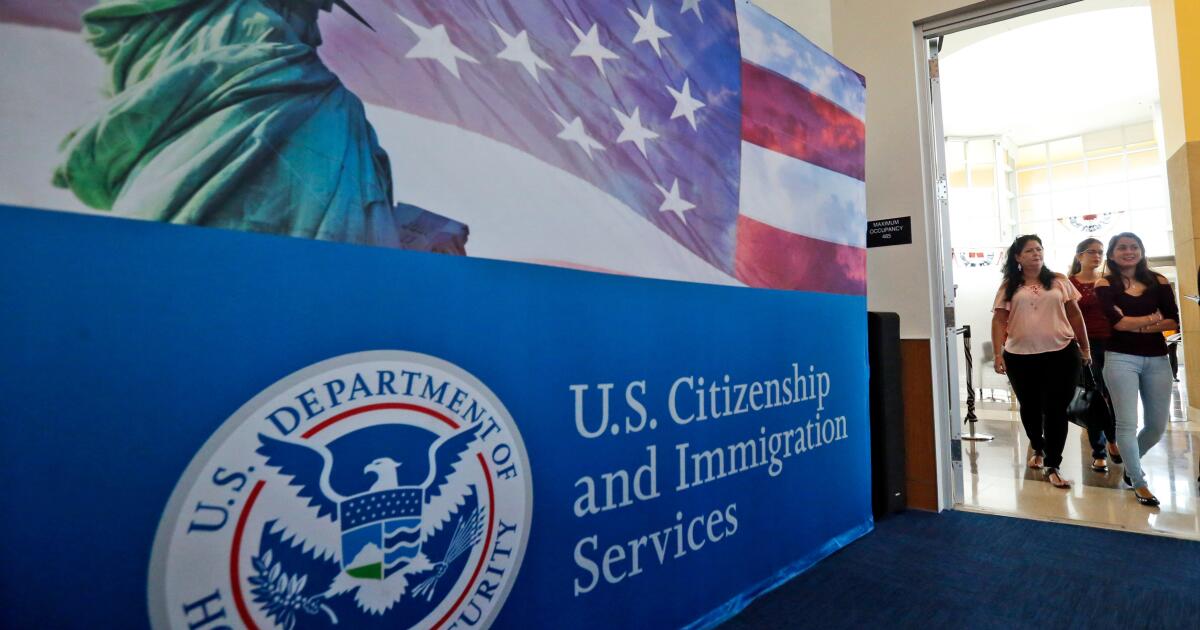
BOSTON — A federal judge on Monday struck down the Trump administration’s $100,000 fee on new H-1B visas, contradicting an earlier federal court ruling upholding the fee hike.
The administration announced the much-higher fee as a way of preventing foreign workers from taking American jobs.
But U.S. District Judge Leo Sorokin in Boston sided with 20 states and struck down the visa policy, concluding that the executive branch exceeded its authority and violated the Administrative Procedure Act, which governs how federal agencies develop and issue regulations.
“The Court finds that the Policy imposes a tax on H-1B petitions without the requisite delegation by Congress,” Sorokin wrote.
H-1B visas are meant for high-skill jobs that are difficult to find American workers to fill. Deep-pocketed technology companies are the biggest users, with nearly three-quarters of approvals going to workers from India. The states argued that using the H-1B program to fill vacancies for much-needed doctors and teachers was already difficult before the higher fee.
Most H-1B visa applications cost several thousand dollars before the announced increase set off a wave of panic among confused employers, students and workers in the United States and abroad and led to several lawsuits, including in Boston.
The U.S. Chamber of Commerce also sued, in federal court in Washington, D.C., and has appealed a denial of a summary judgment against the fee hike. That left the higher fee in effect, at least until September, when it is scheduled to expire. Monday’s ruling is also a summary judgment, to the opposite effect. Still another lawsuit was filed in federal court in San Francisco, by religious groups and labor organizations, setting up the possibility of divided rulings in three appellate court circuits.
The states argued that the policy impedes their ability to hire primary and secondary school educators and to staff public colleges and universities, will stymie academic research and will lead to a decline in medical workers.
“The Proclamation makes various overtures to domestic economic policy goals to justify the unprecedented $100,000 fee,” plaintiffs wrote in their complaint. “But the Proclamation gives no indication that the President gave any consideration to how the fee would affect Plaintiff States and their ability to provide their residents access to education, healthcare, and other basic human needs.”
A Department of Homeland Security statement said the agency disagrees with “this blatant judicial activism dismantling President Trump’s historic efforts for immigration reform.”
“Under President Trump and Secretary [Markwayne] Mullin, our immigration system is being reformed to serve American citizens, American workers, and American families and to preserve our national identity — not to rapidly import foreigners who take American jobs, commit crimes, burden our welfare system, and erode our cultural and social fabric.”
Texas Tech quarterback Brendan Sorsby has been granted a temporary injunction that allows him to practice and play with the Red Raiders in 2026 despite having been permanently banned by the NCAA for wagering on college sports.
Texas judge Ken Curry ruled Monday that the NCAA cannot block Sorsby’s final year of eligibililty. The Cincinnati transfer will have to miss the first two games of the season as one of the conditions of the ruling.
In his ruling, Curry stated that Sorsby would “suffer a probable, imminent and irreparable injury” without the injunction by missing out on the “elite coaching, training resources, camaraderie, and regimen that only being a member of a Division I college football team can provide.”
“I’m very grateful for the endless support I have received throughout this entire process. I am also grateful for the chance to rejoin my teammates,” Sorsby wrote in a statement posted Monday on Instagram. “This opportunity comes with the responsibility to remain focused on my personal growth, the ability to learn from this experience, and to be able to use my situation to help others going forward.”
The NCAA can appeal the injunction but did not immediately indicate its next steps in the matter. It is unclear how long such a process would take. Texas Tech’s season starts Sept. 5, with Sorsby first eligible to play when the Red Raiders host Houston on Sept. 18.
“The NCAA strongly disagrees with the court’s ruling in Sorsby’s case and is deeply concerned about the damaging, far-reaching and broadly destabilizing ramifications of this outcome — which undermines and corrupts the integrity of sports,” the association said in a statement.
“The NCAA is committed to supporting student-athlete mental health but must continue to aggressively defend against actions that defraud college athletics and threaten competitive integrity, such as betting on one’s own sport.”
Last month, Sorsby’s attorneys filed a lawsuit in Lubbock County District Court requesting that he be declared eligible for all team activities because the NCAA “failed to comply with its contractual commitments” to him as a student athlete and therefore “is precluded from enforcing its gambling bylaws against Mr. Sorsby to deny or withhold his reinstatement.”
Sorsby spent two years at Indiana and two at Cincinnati before transferring to Texas Tech this offseason for a reported multimillion-dollar deal. In late April, he and Texas Tech jointly announced that he had entered a residential treatment program for gambling addiction and would be away from the team for an indefinite period of time.
According to court records, Sorsby has admitted to betting at least $90,000 during his time as an NCAA student athlete, including 40 bets on Indiana football games he was not participating in as a freshman backup with the Hoosiers in 2022.
NCAA guidelines state that student athletes who bet on their own games or on other sports at their school could “potentially face permanent loss of collegiate eligibility.” Texas Tech was informed of an NCAA investigation into Sorsby’s gambling activity in March, according to court records, and declared him ineligible according to the association’s bylaws.
The NCAA has since denied two petitions from Texas Tech to have Sorsby’s eligibility reinstated.
“As we have said before, we do not believe that the circumstances of Brendan’s case warranted permanent ineligibility,” Texas Tech athletic director Kirby Hocutt said Monday in a statement. “As he returns to our football program, we remain committed to supporting Brendan’s recovery and ensuring his compliance with the court’s order. A comprehensive support structure, including clinical care, monitoring, and compliance checks, will remain fully in place for the duration of Brendan’s time as a student at Texas Tech.”
Georgia athletic director Josh Brooks, a member of the NCAA Football Oversight Committee, told Yahoo Sports that there should “be serious conversations about not playing Texas Tech in any sports” as a result of Monday’s decision.
“This is not about Texas Tech. It’s about protecting our own locker room,” Brooks said. “We cannot in good conscience put our student-athletes on a field where the competitive integrity of the contest is compromised and overridden by the courts.
“All [Football Bowl Subdivision] schools should only take the field against programs operating under a uniform, trustworthy standard of fairness. We’ve officially reached the point of no return.”
WASHINGTON — A relentless push by President Trump to reshape Washington‘s cityscape is facing mounting resistance, threatening a slate of transformative monuments intended to cement his legacy in the nation’s capital.
Eager to see his projects completed before leaving office, Trump has responded to growing legal and political obstacles by pushing ahead, attempting to force approvals through faster than opponents can challenge them. But the scramble to fast-track construction has inflated their costs for taxpayers, imperiling his plans and amplifying his political risks as the midterm elections approach.
Urban design has become a preoccupation for Trump since the start of his second term. Cranes dot the skyline of the city, and construction fences block access to many of its most cherished parks and venues less than a month before the nation celebrates 250 years since its founding on July 4.
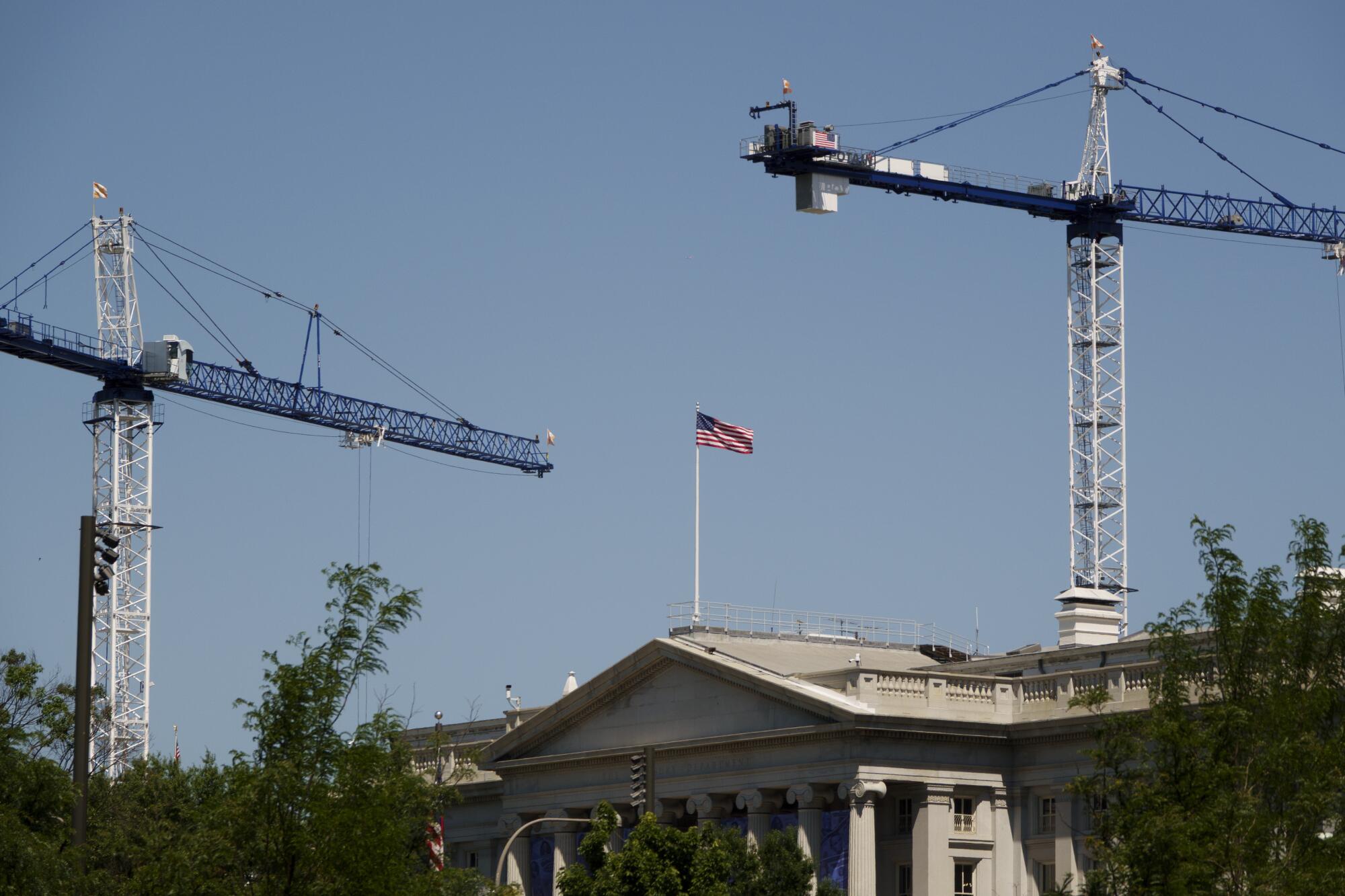
Cranes from the White House East Wing ballroom construction project rise from behind the U.S. Treasury Department building on Thursday in Washington, D.C.
(Kevin Carter/Getty Images)
Government lawyers are defending the president’s use of the wrecking ball, arguing in court that he has unfettered power to build and destroy. Should he ever choose to tear down the Statue of Liberty, the Justice Department told a judge Friday, no one could stop him.
Yet a recent series of legal setbacks, as well as increasing Republican opposition on Capitol Hill, have cast doubt on the fate of his most lavish designs, including the construction of an imposing ballroom at the White House and the erection of a massive triumphal arch on the sightline of the National Mall.
It’s become a race against time for the president, who could soon confront a Democratic-controlled Congress armed with renewed oversight authority and subpoena power, further gumming the works of elaborate construction projects, which could stymie their completion before he leaves office.
“This is very much on the committee’s radar,” said one Democratic source with the House Oversight Committee, citing “serious concerns surrounding corruption.”
Visitors at the Mall gather in front of the Lincoln Memorial and near the Reflecting Pool, which is under renovation on Friday in Washington, D.C. President Trump dismissed criticism of the recent Lincoln Memorial Reflecting Pool renovations, rejecting claims the project amounted to merely a “paint job.”
(Roberto Schmidt / Getty Images)
Trump as ‘builder-in-chief’
Several of Trump’s more modest initiatives, referred to by the administration as beautification projects, are complete or well underway.
At the White House, a historic rose garden conceived by Jacqueline Kennedy was paved over, and its adjoining colonnade refurbished with black granite and gilded presidential portraits. The Palm Room foyer was decked in marble and chandeliers. New flagpoles fly supersized American flags on the North and South lawns.
The en suite bath of the Lincoln Bedroom in the residence has been gutted and renovated. And the Oval Office now practically drips in gold, while an adjoining study, once used by Franklin Roosevelt to scrutinize war maps and Lyndon Johnson to monitor the space race, was converted into the president’s personal swag shop.
A temporary Ultimate Fighting Championship arena constructed on the White House South Lawn is another example of how Trump is leaving a visual mark on the presidential residence. The structure, which towers over the White House, was paid for by the UFC, which is scheduled to host a series of fights on the premises.
Outside the White House complex, fountains across the city are coming back to life after decades of neglect, from DuPont Circle to Freedom Plaza and Union Station. The idyllic Logan Circle, surrounded by historic mansions, is being revitalized by the National Park Service, as is Lafayette Square, the site of an infamous clash between Trump and protesters shortly after George Floyd’s murder in 2020.
1
2
1.National Park Service Conservator for the National Mall and Memorial Parks Ali Cavicchio puts a clear coat over the recently repainted “I Have a Dream” marker at the Lincoln Memorial on June 05, 2026 in Washington, DC. The marker’s letters are carved into stairs of the Lincoln Memorial where Dr. Martin Luther King Jr. stood and delivered his “I Have A Dream” speech in 1963.(Chip Somodevilla / Getty Images)2.Members of the West Branch Area School District in Morrisdale, Pennsylvania, student marching band perform at the Lincoln Memorial on the National Mall on June 05, 2026 in Washington, DC.(Chip Somodevilla / Getty Images)
In some parks, even the turf is getting a makeover.
“People are all thanking me because Washington is beautiful again,” Trump told reporters last week. “The parks are open, we changed the grass. You know, grass has a life, also. Like people, grass has a life, and that grass hasn’t changed in 70 or 80 years.”
On Friday morning, several people sat by the restored cascading fountain at Meridian Hill Park. They walked their dogs, read books and exercised by the water.
Jean Luc, 33, was one of them. As he took a stroll with his 2-month-old daughter, Juno, he said it had been nice to see the government fix up the park, which he says he tries to enjoy with his daughter daily.
“It’s been nice to see the whole process,” he said. “I love it.”
President Trump displays a chart titled “Our Pool is Bigger than Skyscrapers” while discussing his renovations to the Lincoln Memorial Reflecting Pool on Wednesday in the Oval Office.
(Kevin Dietsch / Getty Images)
The Lincoln Memorial Reflecting Pool has been painted over in “American Flag Blue” by a firm that Trump said had worked on the swimming pool at his golf club in Virginia. Millions will be spent to regild the hulking Art Deco statues that buttress Arlington Memorial Bridge. And Trump has plans to connect the Lincoln Memorial to the Potomac River by building a promenade, one of many projects he has said may be named after himself.
Federal contracting data show that the Virginia firm Terra Site Constructors has been awarded roughly $60 million in contracts from the National Park Service to complete work on the various fountain rehabilitation projects across the city.
Another Virginia firm, Atlantic Industrial Coatings, holds a contract for $14.2 million to paint the reflecting pool.
The funding for both contracts comes from the entrance fees paid by national park visitors.
“How fortunate are we to have the builder in chief?” Interior Secretary Doug Burgum said Thursday in the Oval Office. “Someone who both has the vision and the understanding of how to get projects done that would make our city safe and beautiful.”
Construction continues on the White House East Wing ballroom on May 29, 2026.
(Kevin Carter / Getty Images)
‘The finest ballroom anywhere in the world’
Yet other, more controversial projects, exacting irreversible change to capital institutions, are facing greater opposition.
On Thursday, the Kennedy Center for the Performing Arts directed its staff to begin removing Trump’s name from its facade after a judge ruled that the attempted name change, and his effort to close the venue for two years of dramatic renovations, were illegal.
Angered by the court’s decision, Trump directed the Commerce Department to make arrangements to transfer control of the Kennedy Center to Congress. The move would give lawmakers power over the center’s operations, maintenance and management. It was originally an act of Congress that gave the Kennedy Center its name and mandate.
In other areas of the city, preservationists have successfully delayed the president’s bid to paint over the natural gray granite of the Eisenhower Executive Office Building. And Republican lawmakers have refused to vote to fund the construction of a ballroom at the White House that has already laid waste to the East Wing and, if completed, would dwarf the landmark residence.
Construction crews began tearing down the East Wing in October to make way for the 90,000-square-foot facility. Trump, who built a career as a real estate developer, has frequently touted the project, gushing over the sounds of jackhammers and excavation trucks.
Construction continues on the White House South Lawn on June 1, 2026, for an upcoming UFC match. President Trump is hosting a UFC match on the White House grounds to mark the nation’s 250th birthday.
(Kevin Carter / Getty Images)
“Oh, that’s music to my ears. I love that sound,” Trump told Republican senators at a White House event last fall. “A lot of people don’t like it. When I hear that sound, it reminds me of money.”
The ballroom project was initially expected to cost $200 million, a price that has since doubled. It is being financed by private donors and Trump, who has called it a “gift to the United States.”
“We are building what will be the finest ballroom anywhere in the world,” the president said last month.
More than half of the publicly identified donors of the ballroom projects — 14 of the 27 known corporate contributors — have won new or bigger federal contracts worth more than $50 billion in the six months since construction began, according to a report released by Public Citizen, a watchdog group.
“These giant corporations aren’t funding the Trump ballroom fiasco out of the goodness of their hearts,” said Jon Golinger, a public policy advocate at Public Citizen and author of the report. “They have massive interests before the federal government and they hope to curry favor with, and receive favorable treatment, from the Trump administration.”
White House military aides stand next to the giant mirror that hangs along the Rose Garden Colonnade at the White House on May 21, 2026.
(Chip Somodevilla / Getty Images)
The White House has challenged the report’s assertions, saying critics of how the project is being funded are “only people who suffer from a severe and incurable disease known as Trump Derangement Syndrome.”
“President Trump is making the White House beautiful and giving it the glory it deserves at no cost to taxpayers — something everyone should celebrate,” White House spokesman Davis Ingle said in a statement.
The report came out as the ballroom project has faced persistent hurdles in court and Congress.
The National Trust for Historic Preservation sued to stop construction, arguing the administration had not followed the legally required review process and had not secured congressional approval. In March, a federal judge halted aboveground construction, but an appeals court quickly allowed work to resume through June while the case proceeds.
On Friday, the panel heard the case and expressed skepticism about Trump’s push to build the ballroom without congressional approval.
On Capitol Hill, Senate Republicans dropped a proposal to set aside $1 billion in security funding for the ballroom after several GOP senators said it lacked the votes to pass.
Trump has insisted the funding is not necessary to complete the project, though he said it would help secure the complex. Without it, he told reporters last month, “the White House won’t be a very secure place.”
(Los Angeles Times photo illustration; Photo by Kevin Dietsch / Getty Images)
Arc de Trump
The president is also seeking to build a 250-foot-tall “triumphal arch” near Arlington National Cemetery, across the Potomac River at the foot of Memorial Bridge.
Renderings show the arch would be twice the height of the Lincoln Memorial, crowned by a golden statue of Lady Liberty sporting outstretched wings. An observation deck on its roof would offer sweeping views of the city.
Preservationists have criticized the plan as disrupting a sacred sightline between the memorials to Abraham Lincoln and Robert E. Lee, designed as a statement of unity after the Civil War. Even advocates of adding an arch in Washington have criticized the size of Trump’s proposed structure as overbearing. And a group of Vietnam War veterans has sued to try to stop its construction, arguing the project lacks congressional approval and would “dishonor their military and foreign service” because it would block the view of the cemetery.
Commission of Fine Arts member Pamela Hughes Patenaude, left, hands colleague Matthew Taylor a model of President Trump’s proposed triumphal arch to commemorate the country’s 250th anniversary during the commission’s public meeting at the National Building Museum in Washington on April 16, 2026.
(Andrew Harnik / Getty Images)
Despite public opposition, the National Capital Planning Commission last week advanced the project in its review process.
Trump praised the planning commission’s support, saying that “when completed, it will be, without question, the Greatest Arch of them all!”
The president has yet more plans to leave his mark — in some cases with his name, in others with his face.
Transportation Secretary Sean Duffy has proposed a $22-billion overhaul of Dulles International Airport outside the capital that would include a new terminal brandishing Trump’s name. Limited-edition U.S. passports will feature his portrait. And the Treasury has plans to mint a $250 bill featuring Trump’s mugshot from his 2023 Fulton County arrest, pending congressional approval — an unlikely prospect.
A walkway with the numbers “45” and “47” leading to construction on the new ballroom extension of the White House in Washington, D.C., on May 19. President Trump said a military hospital and research facilities will be built on the site of his planned White House ballroom, offering more details about the scope of the sprawling, controversial project.
(Samuel Corum/Bloomberg via Getty Images)
In a moment that went viral on social media, Sen. Jon Ossoff (D-Ga.), who is generating buzz over a potential run for the Democratic presidential nomination in 2028, offered a theory on what’s driving the president.
“He’s trying to put his face on the money. He’s building a monument to himself,” Ossoff told a crowd of supporters.
“But see, Atlanta, he’s doing these things now because no one will honor him when he’s gone,” he added, “because he’s a failed president and a national disgrace.”
Wilner reported from Los Angeles and Ceballos from Washington. Times staff writer Ben Wieder contributed to this report.
Zverev had long been dubbed the best player of his generation to have never won a Grand Slam after a string of near misses – including three defeats in major finals.
At the US Open in 2020, he lost the final despite being two sets up against Dominic Thiem and having served for the championship at 5-3 in the final set.
Zverev then led Carlos Alcaraz by two sets to one in the 2024 French Open final but it was the Spaniard who ended up lifting his first Coupe des Mousquetaires.
At the Australian Open in 2025, he was outclassed in a merciless performance by Jannik Sinner that left Zverev saying he felt mentally “empty” a few months later.
“Last year was one of the most difficult moments in my tennis career,” Zverev said.
“This year is one of the happiest moments. It’s a very different feeling right now.”
It seemed like the pressure of a Grand Slam final might prove too much for a fourth time when 24-year-old Cobolli, who had twice fought back from a set down, forced a deciding fifth set.
But Zverev, who has struggled with his emotions on court in the past, held his nerve to end his major final curse.
After falling flat on his back in celebration, Zverev dedicated his victory to his team, which includes his father and brother.
“We have been through injury, heartbreaks, losses. We have been losers at times in the most important moments,” Zverev said.
“At the end of the day, we are Grand Slam champions now and that is what counts.
“I was laying on this court with an injury that I didn’t know if I will ever come back from. All of those memories, they’re not wiped out,” he said.
“They’re still with me but this one will beat all of them.”
PARIS — Alexander Zverev is no longer one of the best players never to win a major title.
He’s finally a Grand Slam champion.
In his fourth major final, Zverev beat Flavio Cobolli 6-1, 4-6, 6-4, 6-7 (5), 6-1 for the French Open title on Sunday.
It was a unique opportunity for Zverev without Jannik Sinner or Carlos Alcaraz across the net and the third-ranked German took full advantage on the red clay of Roland Garros.
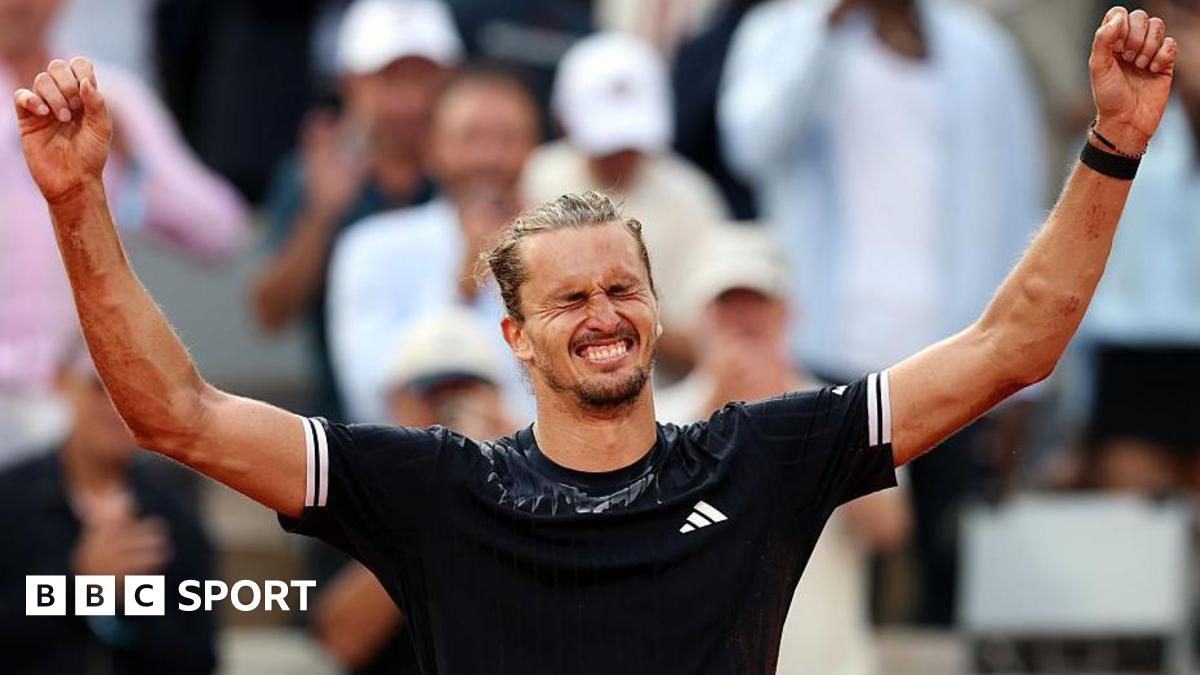
When Cobolli missed an overhead on the second championship point after more than four hours of the five-set encounter, Zverev dropped on his back to the clay and covered his face with his hands as he began sobbing. When he got up, with his shirt and arms covered in clay, Zverev put his hands back on his face before he lifted both arms in celebration.
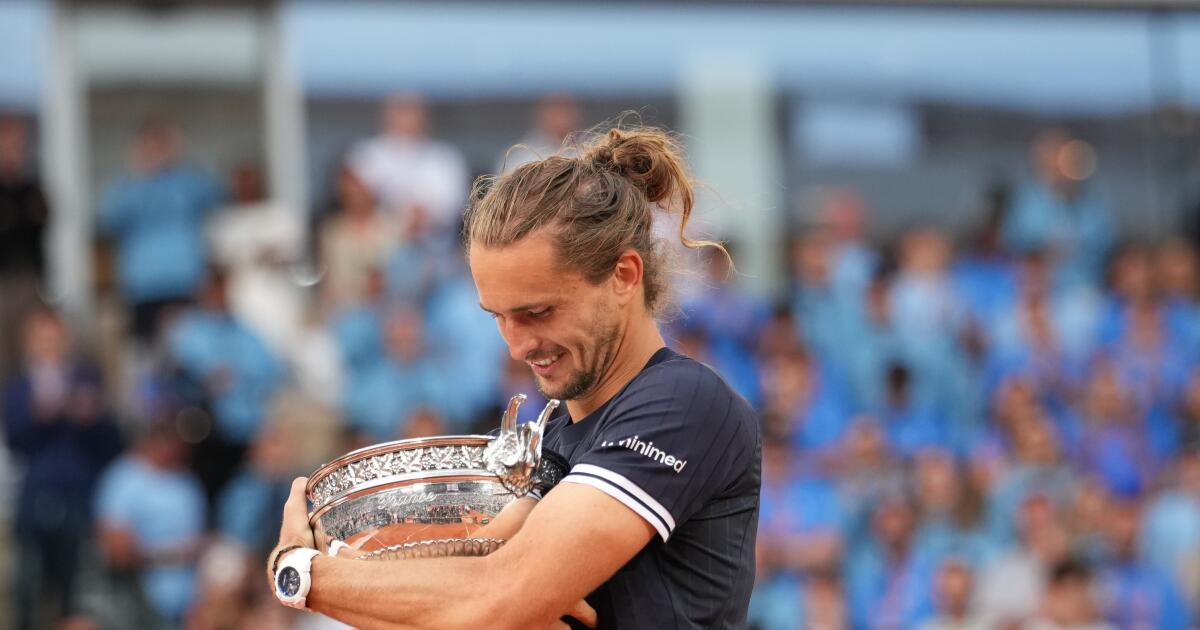
When Zverev was handed the Coupe des Mousquetaires trophy, he lifted it with both hands and let out a liberating roar.
“This court is so special to me in so many ways. I’ve had the best moments of my life on this court; I had the worst moment of my life on these courts,” Zverev said, referring to when he was injured and pushed off on a wheelchair during a semifinal against Rafael Nadal in 2022.
“I was laying in that corner over there four years ago with seven broken ligaments and two fractured bones,” Zverev said. “I lost a Grand Slam final here two years ago but now finally it’s a happy end.”
Zverev has now joined an elite group of players that captured their first major in their fourth final: Eight-time major champion Andre Agassi, 2001 Wimbledon winner Goran Ivanisevic and 2020 U.S. Open champion Dominic Thiem.
No Sinner or Alcaraz
Zverev had been an overwhelming favorite for the title ever since the top-ranked Sinner struggled in the first week’s heat wave and wasted a two set and 5-1 lead against Juan Manuel Cerundolo in the second round. A day later, 24-time Grand Slam champion Novak Djokovic was also eliminated.
Alcaraz, the two-time reigning champion, withdrew before the tournament with an injured right wrist.
It was Zverev’s second French Open final, having wasted a lead of two sets to one against Alcaraz in the 2024 championship match.
Zverev had an even bigger advantage — two sets to none — in the 2020 U.S. Open final and lost that one, too, to Thiem. He was also beaten in straight sets by Sinner in the 2025 Australian Open final.
It was the 25th title of Zverev’s career.
Cobolli’s first Slam final
The 14th-ranked Cobolli had never been past a Grand Slam quarterfinal until this week. He was attempting to become the first Italian man to raise the singles trophy at Roland Garros since Adriano Panatta 50 years ago.
Cobolli comes from the same tennis club in Rome as Panatta did and Panatta was asked by tournament organizers to present the trophy to the champion to celebrate the anniversary of his 1976 triumph.
The honors, however, went to Zverev.
Russian teenager Mirra Andreeva won the women’s singles trophy on Saturday.
Zverev took control early on
The match was played in perfect conditions and Zverev’s game was almost flawless at the start.
Zverev broke Cobolli’s serve in a long opening game when Cobolli shanked a forehand into the first row of the stands. The break came after Zverev had a bit of luck when a backhand return hit the net but dribbled over on game point for Cobolli.
A group of women in the stands held up letters to form Zverev’s nickname: “Sascha.”
Cobolli likes to stand way over near the corner of the court and hit big kick serves out wide into the ad court. Zverev knew what was coming and returned one such kick serve early in the first set with a backhand that he wrapped around the outside of the net post. Cobolli ended up winning the point, but it was a message from Zverev that he knew how to handle his opponent’s tactics.
The next time Zverev hit a wrap-around-the-net-post return, Cobolli couldn’t handle it and Zverev won the point.
Cobolli’s supporters in his box were all dressed in blue, the color of Italy’s national teams, and as Cobolli worked his way back into the match, there were chants of “Ole, Ole, Ole; Flavio, Flavio.”
After Zverev held for a 6-5 lead in the fourth, he had his upper right leg treated by a trainer. Then Zverev wasted a 3-1 lead in the tiebreaker, which Cobolli concluded with a forehand winner up the line that produced a roar from the crowd.
But Cobolli appeared to run out of energy in the fifth, running down a drop shot only for Zverev to then pass him up the line for a 3-0 lead and a double break.
Abuse allegations
Moments after Zverev’s previous Grand Slam final in Australia in 2025, a person in the stadium yelled out the names of two of his ex-girlfriends who accused him of physical abuse.
One case was resolved following an agreement between German prosecutors, lawyers for Zverev and his former partner. The ATP Tour investigated another case and concluded there was insufficient evidence.
Dampf writes for the Associated Press. Samuel Petrequin and Jerome Pugmire contributed to this report.
PHOENIX — The Arizona Supreme Court has denied a prosecutor’s appeal of an order that the state’s fake elector case against President Trump’s former chief of staff Mark Meadows, former New York City Mayor Rudy Giuliani and others over the 2020 presidential election be sent back to a grand jury.
The decision marks another setback for Democratic Atty. Gen. Kris Mayes as she struggles to push the sprawling case through the courts. Mayes’ office said it will again present the case in its entirety to a grand jury rather than end the prosecution.
The ruling came after similar cases in Michigan and Georgia were dismissed by the courts and a special prosecutor dropped a federal case in late 2024 that charged Trump with conspiring to overturn the 2020 election. Cases related to the fake elector scheme remain in Arizona, Nevada and Wisconsin.
A lower-court judge in Phoenix concluded in May that the case’s first grand jury hadn’t been shown the text of the Electoral Count Act, a 19th century law that governs the certification of presidential contests and was invoked by those charged in defending themselves.
Defense lawyers argued the law allowed for multiple slates of electors to be submitted to Congress in case the results were disputed, though it was amended in 2022 to specify that a state could put forward only one slate of electors and that it was the governor who would sign off.
There has been no movement in the Arizona case at the trial court level since mid-May.
Former President Joe Biden won Arizona in 2020 by 10,457 votes.
Israel’s Supreme Court rejects government ban on prisoner visits, affirming Red Cross access under international law.
Published On 4 Jun 20264 Jun 2026
Israel’s Supreme Court has unanimously rejected a government policy banning representatives of the International Committee of the Red Cross (ICRC) from visiting Palestinian detainees in Israeli prisons.
The court ruled on Wednesday that by preventing the Red Cross from visiting prisoners, the government had contravened Israeli and international law, and therefore the policy must be repealed.
Recommended Stories
list of 3 itemsend of list
It also ruled that the government failed to present a legal foundation for its policy on annulling all visits after the Hamas-led attack on October 2023, in which more than 1,100 people were killed and more than 240 were taken captive.
The assault triggered a brutal war in Gaza, which has been defined as a genocide by several prominent scholars and an independent United Nations inquiry. The Israeli army killed more than 72,950 people in the enclave, according to Gaza’s Health Ministry, and reduced most of the besieged territory to rubble, and forced the displacement of nearly 1.9 million Palestinians.
Violence across the occupied West Bank perpetrated by Israeli forces also intensified to unprecedented levels. All visits to prisoners were halted, and information about them was not shared – something that used to be standard practice before the war. Back then, Israeli authorities accused Hamas of failing to secure access to the captives in Gaza.
It was the first time in 50 years that Israel prevented Red Cross visits, according to the Association for Civil Rights in Israel (ACRI), which filed the petition.
“For the first time in nearly three years, the over 9,000 Palestinian security prisoners being held in Israeli prisons and military detention centers will receive Red Cross visits,” ACRI said. The ban remained in place even after a “ceasefire” was agreed last October.
Initial petition
The petition by ACRI, Physicians for Human Rights, Israeli rights group HaMoked and Israeli NGO Gisha against the government policy was first filed in Israel’s High Court in February 2024. But the state of Israel asked for 27 extensions before a hearing was held at the end of October last year.
The ICRC welcomed the decision, saying it was ready to resume its visits. “We are continuing our dialogue with the Israeli authorities to resume our work in detention as soon as possible,” it said in a statement. It added that access to detainees and the ability to meet with them privately are obligations under international law.
Wednesday’s decision comes amid growing concerns over the ill-treatment of Palestinian detainees in Israeli prisons.
Last week, the United Nations released its annual report on conflict-related sexual violence verified in 2025. It cited torture, rape, gang rape, forced nudity and “cavity searches conducted without apparent security justification perpetrated” by Israeli armed forces and security forces primarily during detention and interrogation and across several sites, including the infamous Sde Teiman military camp, among others.
LOVE Island’s Millie Court has stepped into her “hot girl summer” era with a series of sizzling new bikini snaps after her split from All Star boyfriend Zac Woodworth.
The Essex girl and the American hunk shocked fans when they called time on their romance last month, having been one of the villa’s big success stories earlier in the year.
Sign up for the Showbiz newsletter
Thank you!
Millie Court looked white hot in a bikini on holidayCredit: InstagramMillie is newly-single after splitting from Zac WoodworthCredit: Instagram
Millie hasn’t resigned herself to the sofa eating ice cream since the split, instead she’s looking better than ever.
Just days after wowing on the catwalk in Miami, she showcased her toned body in white swimwear beside a pool.
Unsurprisingly, the comments were packed full of compliments, with pals like Sophie Piper and Chloe Burrows championing her.
Another follower said the pics gave them “goosebumps”, while another urged a man out there to “wife her up”.
Millie sent her Instagram followers wildCredit: InstagramMillie and Zac couldn’t overcome long distanceCredit: Instagram
Just days ago, Millie and Zac came face-to-face for the first time since ending their relationship, supposedly due to the transatlantic distance keeping them apart.
They crossed paths during a group gathering with fellow Islanders, and fans believe their body language was telling.
Love Island‘s Yamen Sanders captured the moment the former couple reunited and shared a hug, joking that they were “back together” and his girlfriend Whitney Adebayo agreed with the tease.
However, Millie looked far from impressed by the joke, appearing awkward as she briefly hugged Zac before turning to her friends and asking them to “stop”.
Her reaction caught fans’ attention, with many claiming it suggested Millie was the one who dumped Zac.
One wrote: “Millie’s like no thanks”.
A second said: “Millie said hell nah ahahahahaha.”
A third shared: “Millie looks less than impressed”.
Opposition leader and dozens of other defendants handed lengthy prison terms for ‘forming a terrorist alliance’.
Published On 3 Jun 20263 Jun 2026
A Tunisian court has handed down sentences ranging from 10 years to life imprisonment against opposition leader Rached Ghannouchi and dozens of other defendants in the so-called “secret apparatus” case involving the Ennahdha party.
The Tunis Court of First Instance on Tuesday sentenced Ghannouchi, the leader of Ennahdha and a former parliamentary speaker, to life in prison plus 30 years on terrorism-related charges, reported Tunis Afrique Presse, Tunisia’s official news agency.
Recommended Stories
list of 4 itemsend of list
Eleven other defendants, including Ali Laarayedh, an adviser to former Tunisian Prime Minister Ali Laarayedh, were handed life sentences in addition to prison terms of up to 96 years, Tunis Afrique Presse reported.
Thirteen others were handed prison terms of between 10 and 48 years, according to the news agency.
The court found Ghannouchi and the other defendants guilty of “forming a terrorist alliance” and other crimes, including “placing skills and expertise at the disposal of a terrorist alliance and of persons linked to terrorist crimes”, according to Tunis Afrique Presse.
The court ordered all defendants to be placed under administrative monitoring for five years.
Authorities opened the case against Ghannouchi and his co-defendants in early 2022 following a complaint by the public prosecutor’s office and lawyers for the families of leftist politicians Chokri Belaid and Mohamed Brahmi, vocal Ennahdha critics who were assassinated in 2013.
Lawyers representing Belaid and Brahmi’s families accused what they called Ennahda’s “secret apparatus” of involvement in the assassinations, as well as “conducting espionage and infiltrating state institutions”.
Ennahdha denied the allegations, describing them as “politically motivated”.
The public prosecutor’s office at the Ariana Court of First Instance initially took up the case, before handing it over to the judicial counterterrorism unit in 2023.
In April, Ennahdha said Ghannouchi had been urgently transferred from prison to hospital after a sharp deterioration in his health and called for his immediate release.
The opposition National Salvation Front also called for Ghannouchi’s release, citing his deteriorating health.
Tunisian security forces arrested Ghannouchi at his home during a Ramadan gathering in 2023, before a court of first instance ordered his imprisonment on charges of making statements that “incite chaos and disobedience”.
On April 15, a court sentenced Ghannouchi and three other Ennahdha leaders to 20 years in prison in what came to be known as the “Ramadan soirée case”.
Tunisian authorities have denied accusations that Ghannouchi and the other detainees are being held on political grounds.
WASHINGTON — The Supreme Court ruled Tuesday night that Alabama Republican leaders may redraw their congressional voting districts to oust a Black Democrat and elect a white Republican.
The court’s conservatives, who ruled for Louisiana Republicans in a redistricting dispute, extended that decision to Alabama. The three liberals dissented.
The decision clears the way for the governor and state lawmakers to redraw their congressional voting map with six districts that favor Republicans and one that favors a Democrat.
“Weeks ago, I warned that vacating the District Court’s injunction in these cases would ‘unleash chaos and … confuse voters,’ ” Justice Sonia Sotomayor wrote in dissent. “Yet just as Alabama doubled down on racial discrimination, the Court today doubles down on chaos. Because I choose to defend the rule of law and the right of all Alabamians to participate equally in democracy, I respectfully dissent.”
The justices granted an emergency appeal that was backed by the Trump administration and set aside the decision of a three-judge panel in Alabama.
The court in a brief opinion said the three judges should not have blocked Alabama’s new map.
“While federal courts should not impose changes close to an election, states are free to decide for themselves whether last-minute changes to an election are in their best interests,” the court said.
Alabama’s emergency appeal went to Justice Clarence Thomas, who referred it to the full court.
Those three judges, two of them Trump appointees, ruled that Alabama’s state lawmakers discriminated against Black voters, who made up a near majority in the center of the state.
Three years ago, the Supreme Court agreed.
In a 5-4 decision written by Chief Justice John Roberts, the justices upheld the creation of a second district in the center of the state where Black voters had a near majority.
The result then was an Alabama state voting map that favored five Republicans and two Democrats for the House of Representatives.
But last month, in the wake of the Louisiana decision, Alabama’s lawmakers went back to court, arguing that the state may return to the voting map with only a single Black majority district.
In his appeal to the Supreme Court, Alabama’s Atty. Gen. Steven Marshall argued that the high court’s decision in favor of Louisiana “vindicates Alabama position on the lawfulness” of its earlier voting map. He said the state should not be penalized for “refusing to intentionally discriminate” to favor Black voters.
The court’s decision has cleared the way for Republican-led states in the South to flip congressional districts in Louisiana, Tennessee, Florida and now Alabama.
BOSTON — A federal judge on Tuesday heard from voting rights groups and a coalition of two dozen states that want the courts to halt President Trump’s executive order seeking to create a federal voter list and limit who can receive a mail ballot.
The plaintiffs argued in two lawsuits that Trump’s order should be found unconstitutional because the states and Congress, not the president, have the power to set election rules. They also told the court that the move imposes a costly burden on state election officials to comply and would spread fear about the possibility of prosecution.
“This is going to be a sea change in the way that some states administer their ballots,” said Michael Cohen, who was part of a team representing California, adding that “it will be difficult to overstate the disruption that this will cause.”
Trump’s executive order, the second one aimed at elections during his second term, comes as he continues to raise the specter of widespread voting by noncitizens as a reason to change election rules. But states already have detailed processes aimed at keeping their voter rolls accurate, and voting by noncitizens has been shown to be rare. It also is a felony that can be punishable by deportation.
His latest order is being challenged through multiple lawsuits, including two filed in U.S. District Court in Boston.
The American Civil Liberties Union, which represented the League of Women Voters in one of the two Boston cases, has called the order “a dangerous attempt to disenfranchise eligible voters nationwide.” The group said the order transforms “the U.S. Postal Service from a neutral mail carrier to an arbiter of who may cast a ballot by mail.”
“This case challenges an extraordinary and abusive assertion of executive power over the administration of federal elections,” the organization said in its complaint.
The hearing comes less than a week after another judge declined to halt the order. U.S. District Judge Carl Nichols, a Trump appointee in Washington, agreed with the Trump administration’s contention that it was too early to block the order because it has yet to be implemented.
The administration, in its motions to dismiss the lawsuits, argued that the plaintiffs lack standing to bring their claims. They also argued the motions are premature and that plaintiffs lack the legal basis to bring their Administrative Procedure Act claim, which governs how federal agencies develop and issue regulations.
Stephen Pezzi, a lawyer for the Trump administration, said the harms the plaintiffs referred to were subjective, since much can change with the voting list before it is finalized. He also said no one would be prosecuted for violating the executive order.
Missouri Solicitor Gen. Lou Capozzi, speaking for the states supporting the list, argued it was too early to say how his state might use the list, but that it was “unlikely” any voter would be removed this year from the voter rolls because of it.
“We are not exactly sure how we would use it,” Capozzi said, adding that “we don’t want this process to be strangled in the crib, so to speak.”
U.S. District Judge Indira Talwani took the requests for motions to halt the order, along with motions to dismiss the cases under advisement.
During oral arguments, Talwani expressed concerns about whether the federal system envisioned under the executive order could be ready for the upcoming midterm elections and about the risks posed to election workers who rely on a state list that differs from the federal one. She also raised doubts about the reliability of a federal list — noting, for example, women who changed their names after getting married or someone who has moved from state to state might be missed.
“Isn’t there a reasonable fear and concern on behalf of voters that they will be precluded?” Talwani asked.
Trump issued the order in March after a bill he supported to overhaul voting stalled in Congress. The order would have had the federal government create a list of eligible voters and then directed the postal service to deliver mail ballots only to those on the list. Election officials argued that it was ripe for abuse and could cause chaos, and the postal union has objected to the idea of mail carriers policing ballots.
The postal service has published a proposed rule required by Trump’s executive order in the Federal Register. Among other things, the rule would not apply to primary elections or overseas ballots.
Since his 2020 presidential election loss to Democrat Joe Biden, Trump has groundlessly claimed mail voting is rife with fraud and has launched a federal investigation into that year’s vote, even though repeated audits and investigations, including ones run by Republicans, found it was free of widespread fraud. Trump also has said he wants to “take over” election administration in Democratic areas.
WASHINGTON — Homeland Security Secretary Markwayne Mullin, under intense grilling at a Senate hearing Tuesday, refused to commit to abiding by federal court orders.
Mullin also conceded that his predecessor as secretary, Kristi Noem, had inaccurately described two shootings involving immigration officers in Minneapolis.
His refusal to commit to complying with court orders came during a testy exchange with Sen. Chris Murphy (D-Conn.). Murphy quoted Chief U.S. District Judge Patrick Schiltz in Minnesota — a Republican appointee — who said Immigration and Customs Enforcement had violated nearly 100 court orders and had “likely violated more court orders in January 2026 than some federal agencies have violated in their entire existence.”
When Murphy asked Mullin to commit to complying with court orders in the future, Mullin replied that his agency would not break the law.
So you’ll pick and choose which court orders you’ll obey?
— Sen. Chris Murphy
“But that doesn’t sound like the same thing as committing that you will obey a court order,” Murphy said.
“If we didn’t think the courts were politicized, then I would probably be able to answer that. But we see courts over and over again that use their bench for political opinion and not just the rule of law,” Mullin said.
“So you’ll pick and choose which court orders you’ll obey?” Murphy asked,
Mullin told Murphy not to put words in his mouth.
Addressing his fellow senators, Murphy said, “If you’re a Democrat or a Republican on this committee, you should be really, really freaked out.”
Murphy later returned to the court orders question, saying that ignoring judges erodes democracy.
“I agree that there is politics involved in judicial decisions,” he said. “I do not think that gives an excuse to either Democratic or Republican administrations to ignore those court orders. I think that’s actually the end of our republic, if the administration willfully ignores a court order because they disagree with it or its motivation.”
Mullin faced the Senate Appropriations Committee amid scrutiny over the agency’s budget and immigration enforcement ahead of the World Cup. President Trump tapped Mullin to take over leadership of the embattled Department of Homeland Security after Noem was fired in March.
Mullin’s appearance came as the Senate is considering legislation that would fund immigration enforcement agencies through the end of Trump’s term. Republicans intend to use a legislative maneuver that would bypass the need for support from Democrats, who have pushed for reforms since two U.S. citizens were killed by immigration agents in Minneapolis.
During his previous appearance before senators, Mullin projected himself as diplomatic, saying he would work to bring confidence to the agency and keep it out of the news. But recently, he has set the travel industry on edge by threatening to remove Customs and Border Protection officers from airports in so-called sanctuary cities, which limit collaboration with immigration enforcement agents.
Millions of people are preparing to visit the United States for the World Cup, which starts June 11 and includes host cities such as Los Angeles, San Francisco and Seattle. Mullin said he will attend his first soccer game June 12 in Los Angeles.
Murphy, the committee’s top Democrat, made note of Mullin’s promise to keep Homeland Security out of the news. He said the agency has repeatedly broken the law, wasted billions in taxpayer dollars and lined the pockets of private prison corporations.
“Nothing has really gotten better,” he said. “In fact, you spent the first two months of your tenure threatening to suspend international arrivals in states represented by Democrats. Not only would that throw our entire air travel system into chaos, it’s completely illegal.”
Mullin took issue with Murphy’s characterization of the agency’s behavior, calling it political theater. Murphy sat with his head propped up on his hand, looking directly back at his former Senate colleague.
Mullin said threats against immigration agents are up significantly and that Murphy’s “reckless tone is getting people hurt.”
Protests erupted last month outside an immigrant detention facility in New Jersey after detainees launched a hunger and labor strike over what they called inhumane conditions such as rotten food and medical neglect. Tensions have escalated over several days as protesters clashed with law enforcement and counterprotesters.
On Monday in Dallas, Mullin said he would pull Customs officers from airports around the country to help with the security in Newark, if it became necessary.
Addressing the issue of officer training, Mullin said Tuesday that the agency will return next month to 72 days of training for new recruits, including training on crowd control. Last year, then-acting ICE Director Todd Lyons told Congress the agency had reduced the number of training days to 42.
He also said the agency is not “actively patrolling” sensitive locations, such as schools, and said that the agency has stopped relying on administrative warrants to enter a residence by force and is now seeking judicial warrants before doing so in most cases.
Asked by Sen. Patty Murray (D-Wash.) about body-worn cameras, Mullin said the agency doesn’t have the money to supply enough body cameras for every immigration officer. Homeland Security received an unprecedented windfall last year of $170 billion under Trump’s sweeping tax bill, the One Big Beautiful Bill Act.
Mullin said the agency suffered a blow to morale because of the historic 76-day shutdown of ICE and CBP after a congressional stalemate over funding.
“Some people couldn’t sustain it,” he said. “We lost a tremendous amount of workforce, about 8%.”
During an exchange with Sen. Chris Van Hollen (D-Md.), Mullin acknowledged that Noem had unfairly and inaccurately described two shootings involving immigration officers in Minneapolis.
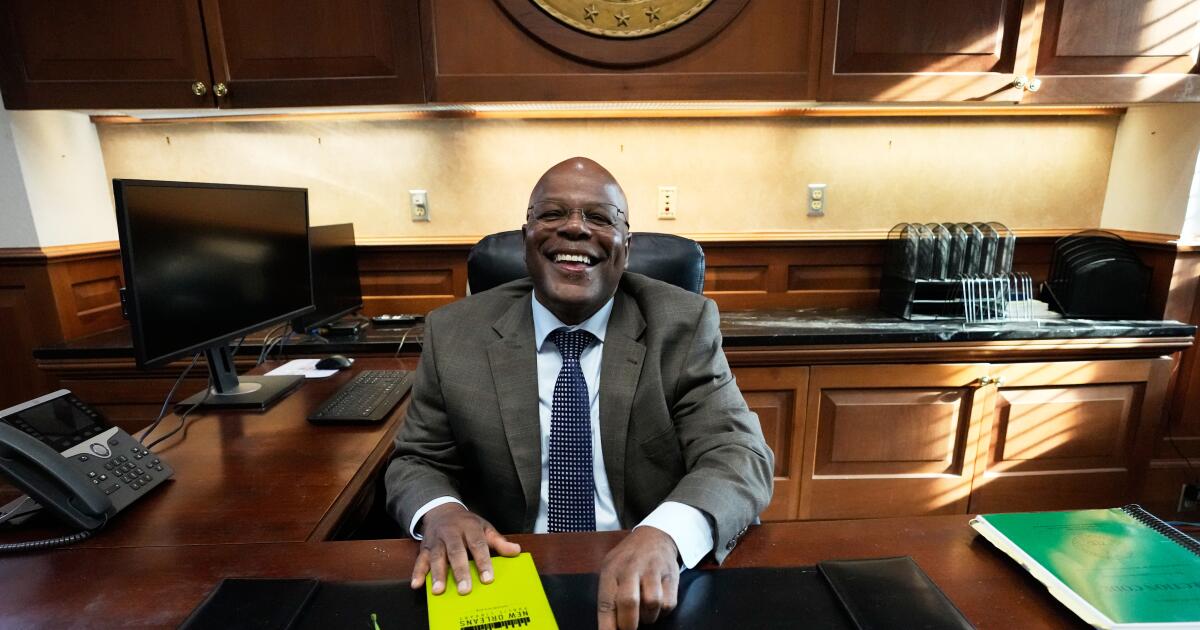
NEW ORLEANS — A sharply divided Louisiana Supreme Court on Monday signed off on abolishing an elected office won by a New Orleans exoneree who had spent nearly 30 years in prison for murder before his conviction was vacated.
The 4-3 decision leaves Calvin Duncan with little path forward to try assuming the role of Orleans Parish clerk of criminal court, a job he won in a landmark election last year before Republican lawmakers raced to eliminate the office this spring.
In a blistering dissent, the court’s Democratic justices said the ruling opened the door to allowing Louisiana lawmakers to subvert the will of voters. The court’s conservative majority disagreed, writing that “this change was entirely within the authority of the Legislature.”
The court also rejected the New Orleans City Council’s attempt to hold a special election, which would have given Duncan the option to run again.
“At a time when our voting rights are under unprecedented attack, this decision clarifies that if we want to live in a democracy, we have to fight for it with every tool our system of government provides,” Duncan said in a statement.
Signed by Republican Gov. Jeff Landry, the bill eliminating the New Orleans clerk’s office was championed by GOP lawmakers as a necessary step toward government efficiency. Supporters denied that it had anything to do with Duncan or his past.
Democrats blasted the change as overreach from a largely white, conservative Legislature that they accused of seeking to thwart the will of a predominantly Black city. Those tensions surfaced again last month when Landry signed a new congressional map that eliminated one of the state’s two majority-Black House districts.
Duncan was convicted of a 1981 murder and was released from prison in 2011. In 2021, an Orleans Parish district judge vacated Duncan’s sentence, finding he had been unjustly convicted and the charges against him were dropped. Duncan is listed on the National Registry of Exonerations.