In 1846, two amateur baseball teams played under new rules at Hoboken, N.J., planting the first seeds of organized baseball. The New York Nine beat the Knickerbockers, 23-1.
In 1856, the first Republican national convention ended in Philadelphia with the nomination of explorer John Charles Fremont of California for president. James Buchanan, a Federalist nominated by the Democrats, was elected.
In 1864, the Union sloop-of-war USS Kearsarge sank the Confederate commerce raider CSS Alabama in the Battle of Cherbourg off the coast of France.
In 1865, nearly two and a half years after the Emancipation Proclamation, freedom from slavery was announced in Galveston, Texas, the most remote area of the country where slavery was still practiced. The day came to be celebrated annually as Juneteenth, Freedom Day, Jubilee Day and Liberation Day.
In 1867, Austrian Archduke Ferdinand Maximilian, installed as emperor of Mexico by French Emperor Napoleon III in 1864, was executed on the orders of Benito Juarez, president of the Mexican Republic.
In 1905, Pittsburgh showman Harry Davis opened the world’s first nickelodeon, showing “The Great Train Robbery,” a silent Western film. The storefront theater had 96 seats, charged 5 cents and prompted the advent of movie houses across the United States.
In 1910, Spokane, Wash., had the first Father’s Day.
File Photo by Gary C. Caskey/UPI
In 1944, World War II’s Battle of the Philippine Sea began. Japanese forces tried unsuccessfully to prevent further Allied advancement in the South Pacific.
In 1953, convicted spies Julius and Ethel Rosenberg were executed by electric chair at Sing Sing Correctional Facility in Ossining, N.Y.
In 1965, Nguyen Cao Ky became the prime minister of South Vietnam, the ninth leader within the past 20 months.
UPI File Photo
In 1972, Hurricane Agnes made landfall in the Florida Panhandle, going on to kill 128 people along the eastern U.S. seaboard.
In 1987, the U.S. Supreme Court struck down a 1981 Louisiana law that required schools to teach the creationist theory of human origin espoused by fundamentalist Christians.
In 1991, Colombian drug lord Pablo Escobar surrendered to police in Medellin in the wake of the assassination of Luis Carlos Galan. Authorities convinced him to give himself up in exchange for a lighter sentence for prior criminal activity — activity which continued after his imprisonment.
In 1999, horror novelist Stephen King was hit by a car and severely injured while out for a walk in rural Maine.
In 2000, the U.S. Supreme Court ruled that prayers led by students at public high school football games aren’t permitted under the constitutional separation of church and state. In 2022, the high court ruled, however, that a school district in Washington violated a coach’s First Amendment rights when they stopped him from publicly praying on the field after games.
In 2008, U.S. Sen. Barack Obama, D-Ill., the presumptive Democratic presidential nominee, became the first candidate at that level to bypass public financing since the program was established.
In 2014, Felipe VI was proclaimed Spain’s new king after his father, King Juan Carlos, abdicated the throne.
In 2019, Joy Harjo was named the first Native American poet laureate of the United States.
In 2024, the annual Hajj pilgrimage to Mecca, Saudi Arabia, concluded after at least 1,300 people died over the five-day trek. Officials blamed a lack of cooling centers, sleeping accommodations and other critical services as temperatures soared above 125 degrees Fahrenheit.
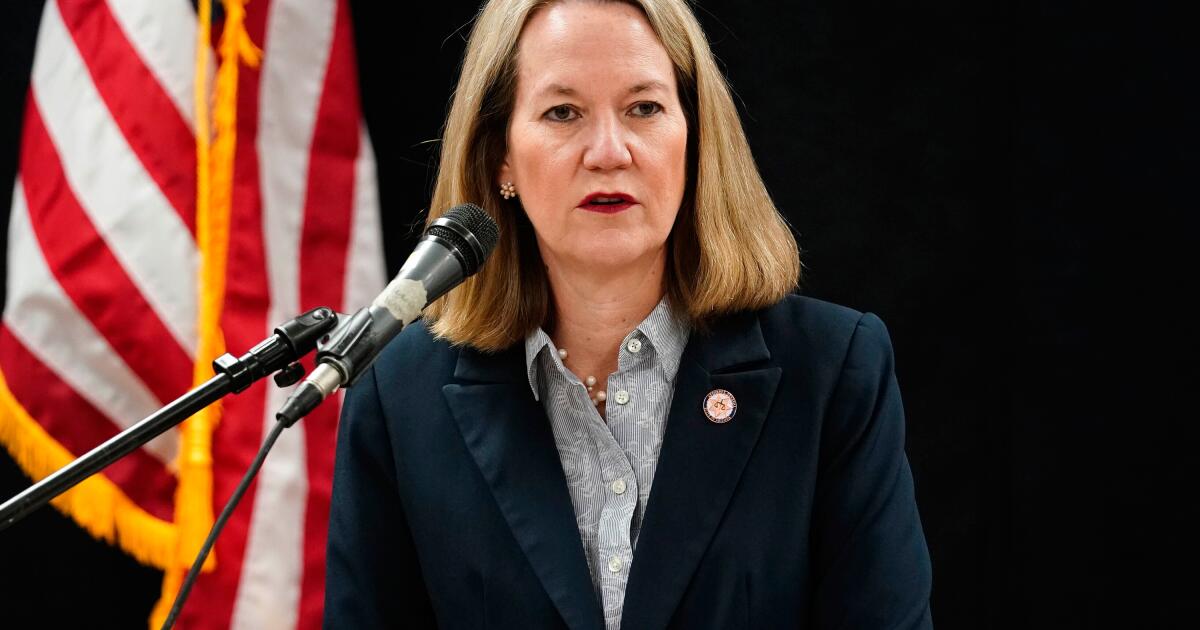
PHOENIX — Arizona Atty. Gen. Kris Mayes is dismissing a sprawling criminal case that alleged President Trump’s former chief of staff Mark Meadows, former New York City Mayor Rudy Giuliani and others tried to overturn Trump’s 2020 loss in the state.
The decision, announced Thursday, marks the third such fake elector case filed by states to be dismissed, though the Democratic attorney general is vowing to bring it back to a grand jury in hopes of securing another indictment.
The legal maneuver is aimed at getting around a Friday deadline for starting new grand jury proceedings after Mayes lost an appeal earlier this month. The appeal was filed after defense attorneys argued successfully that the original grand jury hadn’t been shown the relevant parts of a law that governs how presidential contests are certified.
Courts have dismissed similar cases in Michigan and Georgia, and a special prosecutor dropped a federal case in late 2024 that charged Trump with conspiring to overturn the 2020 election. Those cases ended after Trump defeated Democratic Vice President Kamala Harris in 2024. Cases related to the fake elector scheme remain in Nevada and Wisconsin.
The Nevada charges were dismissed in 2024 after a judge concluded Clark County, the state’s most populous county and home to Las Vegas, was the wrong venue for the case. Later that year, though, the case was refiled in Carson City, Nevada’s capital.
The Arizona case had been stalled for well over a year while Mayes pursued the appeal.
In Arizona, defense lawyers argued the law allowed for multiple slates of electors to be submitted to Congress in case the results were disputed. Federal law was amended in 2022 to specify that any given state could put forward only one slate of electors and that state governors are responsible for signing off.
Joe Biden won Arizona in 2020 by 10,457 votes.
The state attorney general has faced steep challenges in making her case.
It was filed nearly three and a half years after the 2020 election and levels complicated conspiracy charges against the 18 defendants. A dozen dismissal requests filed by defense attorneys have slowed progress in court.
The first judge on the case recused himself in late 2024 after an email surfaced in which he told fellow judges to speak out against attacks on Harris’ campaign for the presidency. The next judge ordered the case to be sent back to a grand jury.
Of the 18 Arizona defendants, two were former Trump aides, five were lawyers working for Trump and 11 were Republicans who submitted a document falsely claiming Trump won Arizona.
Three defendants have resolved their cases, including one who pleaded guilty to a misdemeanor charge.
The rest pleaded not guilty. Some said they signed the certificate in case Trump won court challenges and a new slate of electors was needed urgently before Congress’ Jan. 6 deadline to tally votes.
The case has factored into Arizona’s attorney general race, where both Republican challengers to Mayes have publicly said they will dismiss the charges if they were elected to the post.
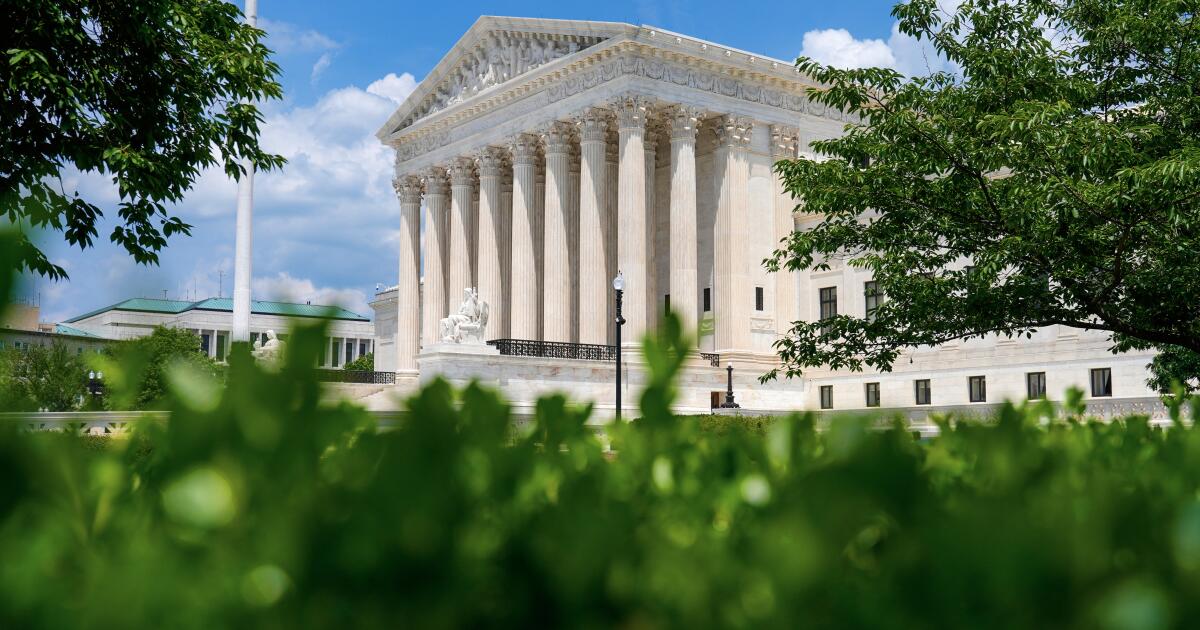
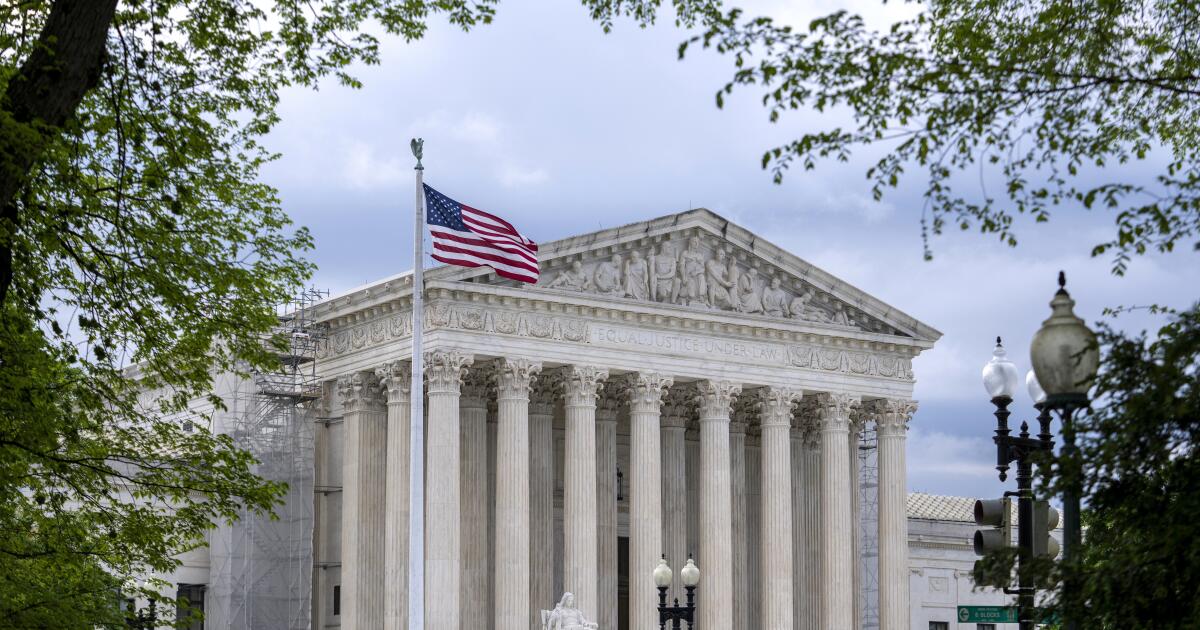
WASHINGTON — A unanimous Supreme Court ruled Thursday for gun rights and against drug laws.
In a 9-0 ruling, the justices struck down part of the longstanding federal gun control law that makes it a crime for an “unlawful user” of illegal drugs to possess a gun.
The Trump administration had urged the court to uphold the conviction of a Texas man who was investigated for alleged terrorist ties and admitted to being a regular user of marijuana.
Rejecting that claim, Justice Neil M. Gorsuch, speaking for the court, said the law was far too broad and overly harsh.
“The law automatically bans an individual from possessing a gun from the moment he becomes an unlawful user of any controlled substance until he ceases being one,” he wrote. “It doesn’t matter what controlled substance an individual uses, in what amounts he does so, or whether his drug use has ever made him a danger to himself or others.”
And it can lead to a 15-year prison term, he added.
He noted, however, the court was not ruling on “addicts” or people who were under the influence of drugs when they were arrested.
The American Civil Liberties Union welcomed the ruling.
“Today’s unanimous 9-0 decision makes it clear that the government cannot make it crime for people to own a gun, which the Supreme Court has held is a fundamental constitutional right, simply because they use marijuana,” said Cecillia Wang, legal director at the American Civil Liberties Union. “With nearly half of Americans reporting marijuana use at some point in their lives, this ruling protects the rights of millions and curbs the government’s ability to impose arbitrary and discriminatory penalties.”
Since 1968, federal law has prohibited gun possession by felons, fugitives and other persons deemed to be dangerous. Included was anyone who is “an unlawful user of or addicted to any controlled substance.”
But the 5th Circuit Court of Appeals ruled in a Texas case this restriction on guns violated the 2nd Amendment. It said “there is no historical justification for disarming a sober citizen not presently under an impairing influence.”
Appealing to the Supreme Court, the Trump administration urged the justices to uphold the law.
“Habitual illegal drug users with firearms present unique dangers to society—especially because they pose a grave risk of armed, hostile encounters with police officers while impaired,” said Solicitor Gen. D. John Sauer.
He asked the court to rule in the case of a Pakistani native who was investigated by the FBI for his suspected ties to the Islamic Revolutionary Guard Corps.
In 2020, Ali Danial Hemani and his parents “traveled to Iran to participate in a celebration of the life of Qasem Soleimani, an Iranian general and terrorist who had been killed by an American drone strike the month before,” the administration told the court last year.
The FBI obtained a warrant to search Hemani’s family home.
Agents found a Glock 9mm pistol, 60 grams of marijuana and 4.7 grams of cocaine.
Hemani said he used marijuana about every other day.
A federal grand jury in Texas charged him with possessing a firearm as an unlawful habitual user of marijuana.
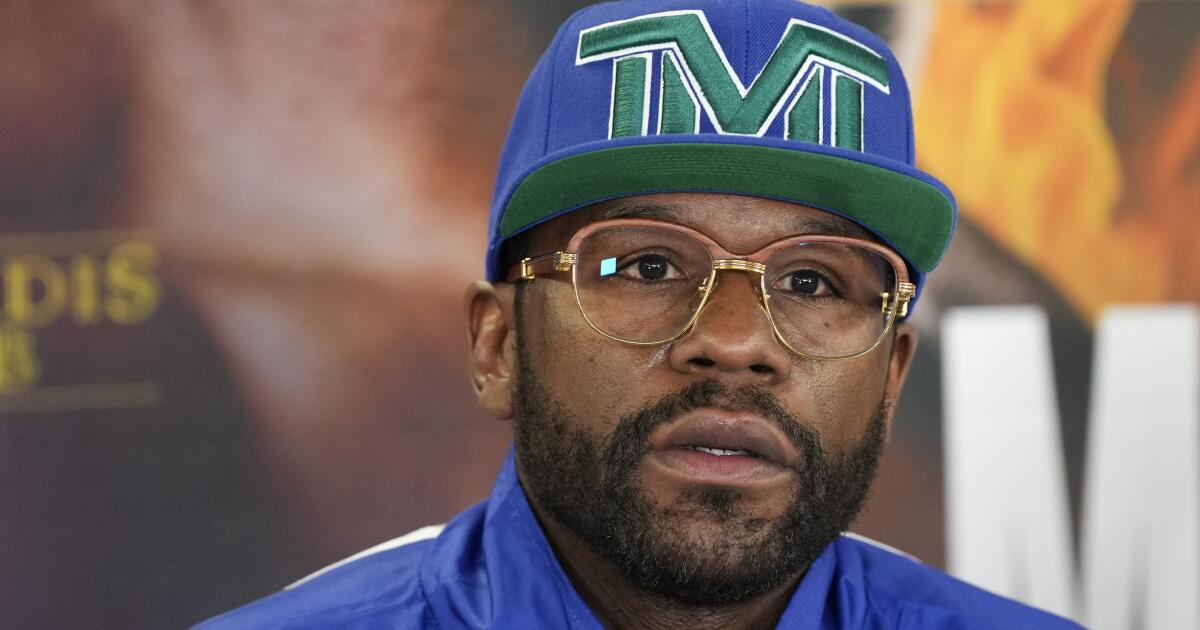
Floyd Mayweather Jr.’s Christmas Day purchase of an exclusive Audemars Piguet watch has landed the billionaire boxer in court facing two felony charges alleging theft and intent to defraud, according to Clark County, Nev., court records.
Mayweather wrote a check for $200,000 to Las Vegas high-end consignment store Gold and Beyond for the timepiece on Dec. 25, 2024. Prosecutors filed a criminal complaint on April 27 of this year and the court ordered Mayweather to appear before a judge. His lawyer did so at a preliminary hearing Monday.
The charges are theft with a value of $100,000 or greater and passing a check of $1,200 or greater with intent to defraud. Mayweather did so “knowing that the check would not be paid when presented,” according to the complaint.
Mayweather, 49, could face a prison term of one to 20 years and $15,000 in fines if found guilty of felony theft. The fraud charge carries a sentence of one to four years in prison and a $5,000 fine plus restitution.
Audemars Piguet, which has operated in the quaint Swiss village of Le Brassus for 150 years, is considered a more luxurious and prestigious brand than Rolex, belonging to the “Holy Trinity” of Swiss watchmaking alongside Patek Philippe and Vacheron Constantin.
Luxury watch expert Prestige Time explains why a watch enthusiast would become enamored by the brand: “Buy an Audemars Piguet if you enjoy complications, the kind you find in a really high-end mechanical watch. We’re talking about tourbillons, perpetual calendars, moon phase, retrograde, minute repeaters, chronographs, dual time zone/GMT’s, and more mechanical features that offer more function than just to tell you the time.”
Now the man nicknamed “Money” is on the clock to resolve a high-dollar dispute that could result in a criminal conviction. Mayweather’s next court appearance is Sept. 17. Meanwhile, lawyers representing both sides made their cases in court filings and to the judge.
Mayweather has had a longstanding business relationship with Gold and Beyond, his attorney Adrian Lobo told ESPN in a statement on Tuesday night. Lobo appeared perturbed that the shop’s owner brought the claim to the Clark County District Attorney instead of filing a civil suit.
“This matter does not belong in the criminal courts,” Lobo wrote in the statement. “And Mr. Mayweather looks forward to being vindicated through the court proceedings.”
Gold and Beyond attorney Marc Cook said his client exhibited patience with Mayweather, giving him ample time to pay for the watch. The complaint was filed with the Clark County District Attorney’s office in February.
“The reason for the delay is that my guy trusted Mayweather and was trying to give him every opportunity to make good on that,” Cook said in a statement to ESPN. “And it got to the point where he wasn’t getting responses and wasn’t getting money for a watch that Mayweather had for well over a year.”
Given Mayweather’s reported wealth, bouncing a check might seem perplexing. He is considered the richest boxer of all time, with roughly $1.1 billion in career earnings and an estimated net worth of $400 million.
He owns three of the top-five largest payouts in boxing history, making $275 million for an exhibition with UFC fighter Conor McGregor in 2017, $250 million for the “Fight of the Century” against Manny Pacquiao in 2025, and a then-record $80 million payout for a bout with Canelo Alvarez in 2013.
Mayweather, whose career record is 50-0, reportedly has increased his net worth since last fighting nine years ago. He represents some of the world’s top boxers through Mayweather Promotions and owns roughly 75 gyms around the country along with real estate holdings.
However, Mayweather is reportedly beset by financial woes as well. He filed a $340 million lawsuit against former broadcast partner Showtime, alleging the television network concealed and diverted his earnings. Also pending is a $175 million lawsuit against former associates, claiming they defrauded him and misappropriated his funds, jewelry, and private jet.
Mayweather is scheduled to face kickboxer Mike Zambidis in a full-contact exhibition June 27 in Athens, Greece, and a rematch with Pacquiao is set for September in Las Vegas. However, an exhibition against Mike Tyson scheduled for last April was canceled because Mayweather was notified by the IRS that it intended to revoke his passport over a delinquent tax debt of $7.3 million, according to Ring Magazine.
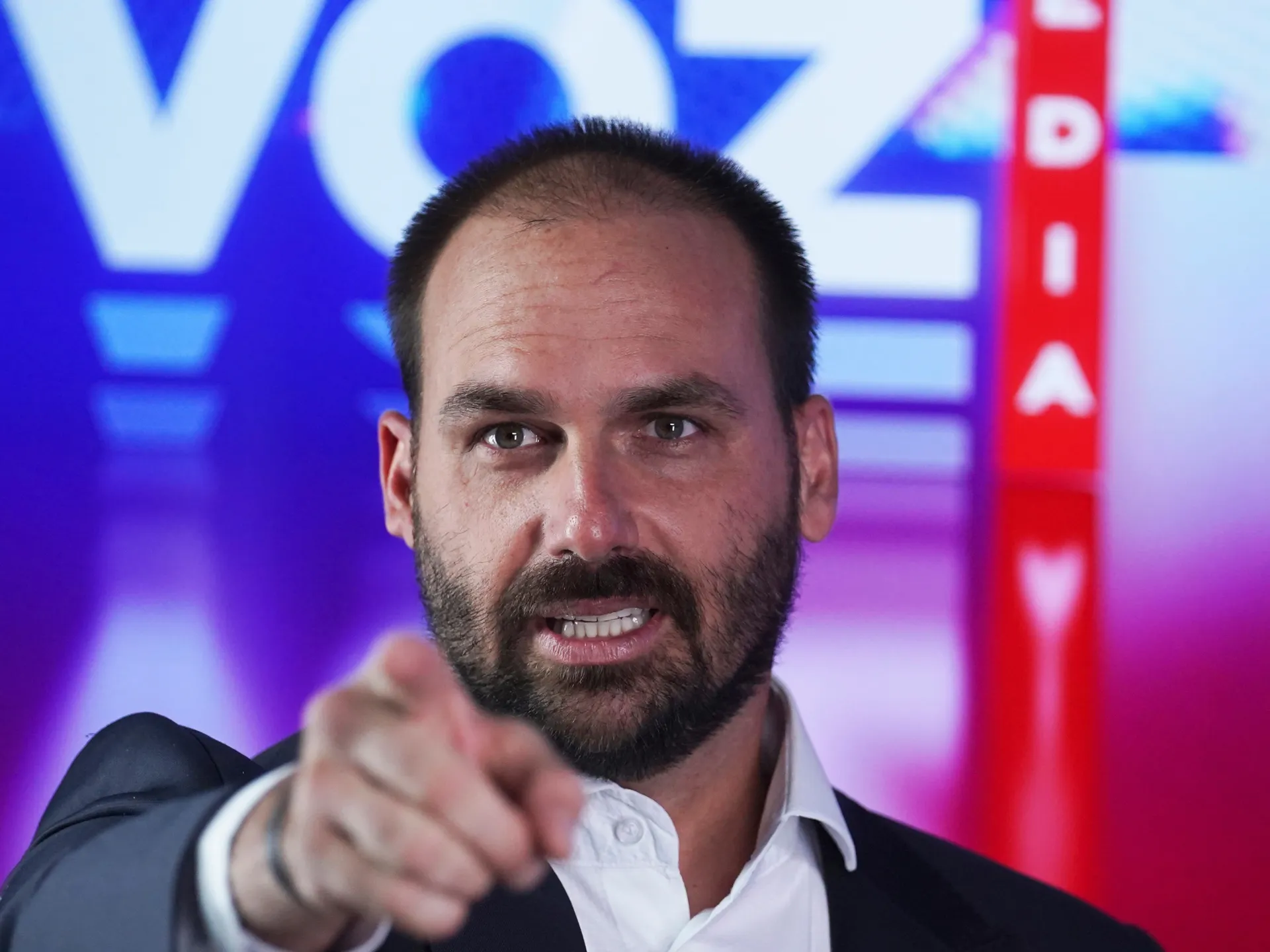
A panel on the Brazilian Supreme Court has voted to convict Eduardo Bolsonaro of lobbying the United States to interfere in the trial of his father, former right-wing President Jair Bolsonaro.
On Tuesday, three of the four justices on the panel voted in favour of conviction, with one remaining justice yet to vote.
Recommended Stories
list of 3 itemsend of list
They determined that Eduardo Bolsonaro’s actions amounted to coercion against Brazil’s justice system and sentenced him to four years and two months in prison.
“It wasn’t merely an expression of opinion or a political stance, but rather conduct that clearly threatened Brazilian authorities and Brazilian citizens themselves,” Justice Cristiano Zanin said, calling Eduardo Bolsonaro’s actions “illegitimate and criminal”.
The conviction is the latest legal setback for the Bolsonaro family, which remains a dominant force on Brazil’s political right.
Jair Bolsonaro is serving a 27-year prison sentence for his efforts to remain in power after losing the country’s 2022 election.
Prosecutors described his actions as an attempted coup. Bolsonaro and his family have portrayed the trial as a political witch-hunt.
The ex-president’s third son and a member of Brazil’s Chamber of Deputies, Eduardo Bolsonaro has been active in his father’s defence.
In March 2025, he pledged that he would move to the US full time to “focus 100 percent” of his energy on “a single cause”: freeing his father.
Prosecutors accused him of mounting an illegal campaign to court US President Donald Trump and use foreign influence to pressure Brazilian officials to drop the case against Jair Bolsonaro.
Trump, an ally of Bolsonaro, had likewise tried to remain in office despite his loss in the 2020 election and has accused Brazilian officials of persecuting right-wing voices like Bolsonaro.
In July 2025, Trump issued a letter announcing 50 percent tariffs on certain Brazilian products, citing Jair Bolsonaro’s trial, specifically, as a reason.
“This Trial should not be taking place,” Trump wrote at the time. “It is a Witch Hunt that should end IMMEDIATELY.”
Trump also issued an executive order sanctioning one of the Brazilian Supreme Court justices involved in the Bolsonaro case, Alexandre de Moraes, on the basis that he worked to “target political opponents” and “suppress dissent”.
He called de Moraes a “threat” to the US, and his administration later expanded the sanctions to include the justice’s family members, as well as other Brazilian judicial officials.
Brazil’s current president, Luiz Inacio Lula da Silva, has denounced those actions as an attempt to interfere in Brazil’s domestic affairs.
As relations with Lula grew more cordial, the Trump administration relaxed its tariffs against Brazil. In December, it also repealed the sanctions against de Moraes and his family.
Lula, meanwhile, visited the White House in May and praised what he described as a productive meeting with his US counterpart.
But it remains unclear what role Trump may seek to play in Brazil’s upcoming presidential elections.
The left-wing Lula is campaigning for a fourth term, and he is likely to face his stiffest competition from Jair Bolsonaro’s eldest son, Senator Flavio Bolsonaro.
A CNT/MDA poll released on Tuesday projected that Lula would receive 49.3 percent of the vote in a run-off election against the senator’s 40.2 percent.
Flavio Bolsonaro has faced his own legal trouble in recent months, with police opening a probe in April into whether he defamed Lula. His connections to a disgraced banker have also raised media scrutiny.
Jair Bolsonaro, meanwhile, faced questions this week about the presence of a firearm in his home in Brasilia, where he is serving three months of his sentence on medical grounds.
Justice de Moraes likewise asked the elder Bolsonaro’s legal team to explain the presence of the weapon, which police discovered during a routine inspection on Monday.
A security guard for Bolsonaro initially said the 9mm Glock pistol was his own, but it was later revealed to be the ex-president’s.
De Moraes gave Bolsonaro’s legal team 24 hours to explain why “the convicted man kept a firearm at home”.
MADISON, Wis. — A federal judge on Tuesday declined to overturn a Wisconsin judge’s obstruction of justice conviction for helping a man evade immigration officers who showed up at a courtroom looking to detain him.
The case against Hannah Dugan, who resigned from the Milwaukee County Circuit Court following her conviction, was an early test of how the courts would respond to President Trump’s sweeping immigration crackdown.
Trump allies branded Dugan as an activist judge, while her supporters said she was unfairly targeted.
U.S. District Judge Lynn Adelman postponed Dugan’s sentencing June 3 to consider arguments about whether he should overturn her conviction. But in his ruling Tuesday, Adelman said Dugan’s conviction would stand. He did not immediately set a sentencing date.
“The court’s decision is wrong,” Dugan’s legal defense team said in a statement.
Questions about a similar case in Virginia
Dugan’s attorney had argued that her conviction in helping Eduardo Flores-Ruiz leave the courthouse was invalid and should be overturned. He said that was necessary because a federal appeals court in April overturned a key Virginia immigration case that the judge and prosecutors had cited in Dugan’s case.
In the Virginia case, an immigrant who was in the country illegally was detained by U.S. Immigration and Customs Enforcement agents and later escaped. He was recaptured and indicted on a charge of obstructing a pending immigration proceeding.
The federal appeals court found that the ICE action did not constitute a “pending proceeding,” as is required under the federal obstruction law.
Dugan’s attorneys argue that she should not have been charged because there was no “pending proceeding” against the immigrant in her courtroom being sought by ICE agents, only a warrant filed for his arrest. The filing of a warrant does not constitute a “proceeding” under the law, Dugan’s attorneys argued.
Prosecutors countered that the facts in the Virginia case are different and don’t apply to Dugan’s. They also argued that other cases support Dugan’s conviction.
Adelman said the attempted arrest of Flores-Ruiz did count as a “pending proceeding,” in part because it was a planned and targeted operation rather than an arrest resulting from a random encounter.
“Defendant argues that ICE was acting as a law enforcement agency here,” Adelman wrote. “But this ignores the fact that, unlike, say, the FBI, ICE can issue its own warrants and adjudicate and effectuate a removal, as it did with Flores-Ruiz, without the involvement of a court. This makes a difference.”
Dugan faces 5 years in prison, but will likely get probation
Dugan, 67, faces up to five years in prison after a jury convicted her Dec. 19, 2025, but she is unlikely to be sentenced to time behind bars. Federal sentencing guidelines generally call for probation for defendants like her, who have no criminal history and are convicted of a nonviolent crime.
Dugan resigned from her position as a Milwaukee County circuit judge two weeks after her conviction amid threats of impeachment from Republican state lawmakers. She had been a judge for nine years.
The Trump administration brought the case against Dugan as the president pressed ahead with his sweeping immigration crackdown. Trump’s administration and his allies branded Dugan as an activist judge, while Dugan’s attorneys said she was being unfairly targeted and argued, unsuccessfully, that she was immune from being charged because she was a judge.
Dugan’s case marked the first time that a state judge in Wisconsin went to trial on charges of obstructing immigration agents. She was acquitted of concealing an individual to prevent arrest, which is considered a misdemeanor.
Dugan helped an immigrant wanted by ICE agents
On April 18, 2025, immigration officers went to the Milwaukee County courthouse after learning Flores-Ruiz had reentered the country illegally and was scheduled to appear before Dugan for a hearing in a state battery case.
Dugan confronted agents outside her courtroom and directed them to the chief judge’s office because she told them their administrative warrant wasn’t sufficient grounds to arrest Flores-Ruiz.
After the agents left, she led Flores-Ruiz and his attorney out a private jury door. Agents spotted Flores-Ruiz in the corridor, followed him outside and arrested him after a foot chase. A week later, FBI agents arrested Dugan in the courthouse, leading her outside in handcuffs.
James Comey, former director of the Federal Bureau of Investigation, testifies via videoconference during a Senate Judiciary Committee hearing in Washington, D.C. on Sept. 30, 2020. The U.S. Supreme Court will not take up former Trump adviser Carter Page’s lawsuit against Comey, it decided Monday. File Pool Photo by Stefani Reynolds/UPI | License Photo
June 15 (UPI) — The U.S. Supreme Court will not take up former Trump adviser Carter Page’s lawsuit against former FBI director James Comey, it decided Monday.
Page sought to revive his lawsuit against Comey over errors and omissions made on warrant applications used to get permission to surveil him. The FBI wiretapped Page while it was investigating allegations against President Donald Trump‘s 2016 campaign colluding with Russia to interfere with the election.
Page’s lawsuit was dismissed by lower courts as they ruled he did not file his claims on time. Page alleges that the investigation into him harmed his reputation and cost him business opportunities.
The Trump administration paid Page $1.25 million in April to settle claims he made against the federal government.
The Justice Department said when announcing the agreement to settle with Page that the investigation into him was based on flawed information.
“No American should ever face covert and unlawful surveillance based on their political view,” a spokesperson for the Justice Department said in a statement.
Page has continued his attempts to sue Comey and seven others who served with the FBI during the investigation as individuals.
The Supreme Court released a list of cases it will and will not accept to its docket on Monday. The justices did not say why Page’s case has been denied.
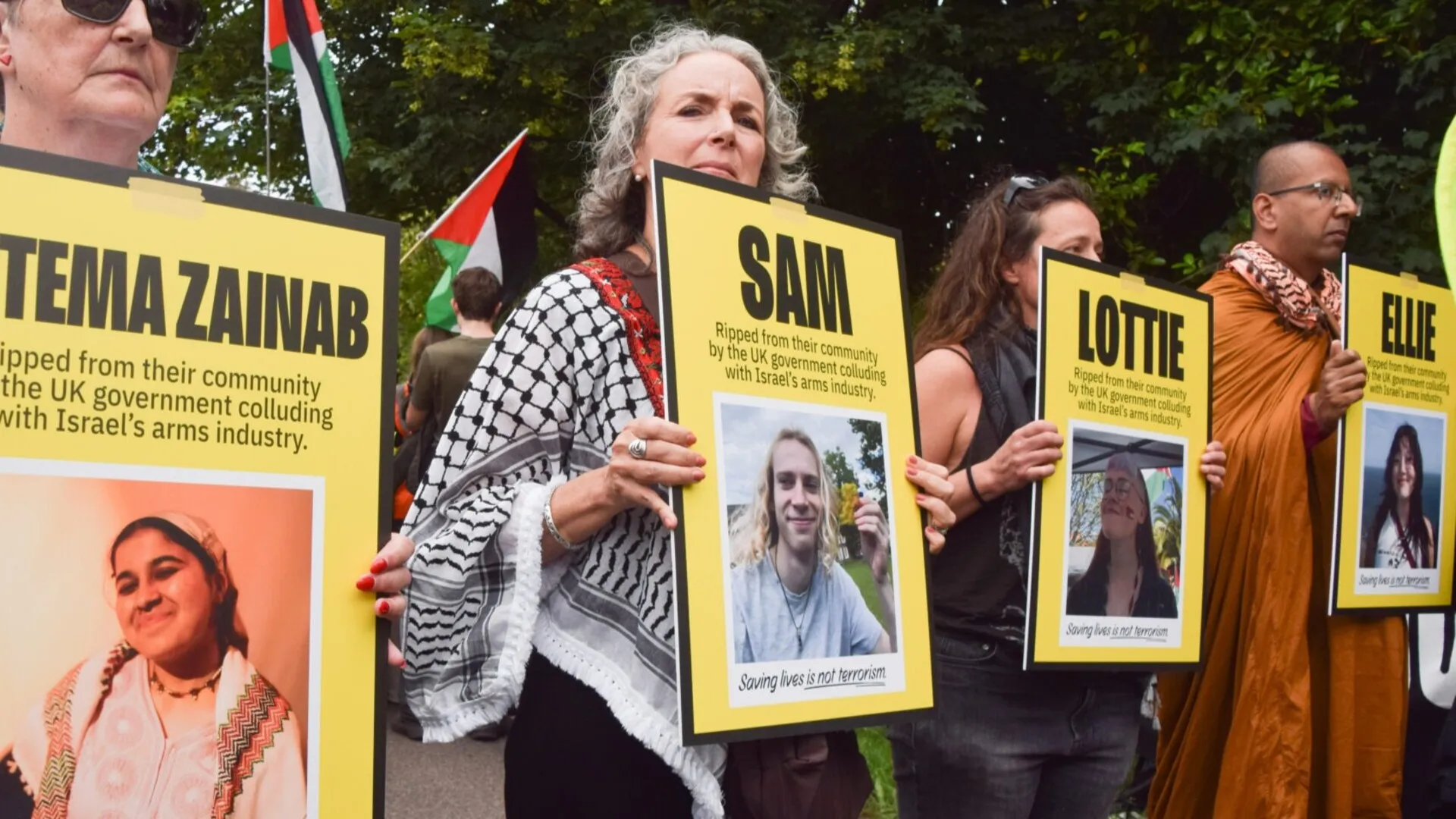
June 15 (UPI) — The British Court of Appeals ruled Monday that the ban on the pro-Palestine organization Palestine Action is lawful and upheld its designation as a terrorist organization.
The five judges on the Court of Appeals ruled that the ban on the organization under the Terrorism Act is “justified and proportionate.” The proscription of Palestine Action as a terrorist organization makes supporting the group punishable by up to 14 years in prison.
More than 2,500 members of the group have been arrested.
Huda Ammori, the co-founder of Palestine Action who originally challenged the ban in court, said she plans to appeal the ruling in the British Supreme Court.
“We will fight this all the way,” Ammori said. “We will seek permission to appeal to the Supreme Court and, if need be, take this to the European Court of Human Rights.”
Palestine Action has remained banned since February, despite the High Court in London ruling that it is disproportionate and an unlawful violation of free speech rights.
“The future threats and risks posed to third-party individuals and property by Palestine Action are perhaps the most important factors to weigh in the balance,” Sue Carr, chief justice, read from the appeals court’s ruling. “In that connection, it is important to understand that the home secretary is in the best position to assess those future threats and risks. She is advised by experts on anti-terrorism.”
Carr acknowledged that the ruling may chill free speech and may deter people from lawfully assembling to protest Israel’s actions in Gaza or show support for Palestinians.
Non-government organizations, including Liberty, Human Rights Watch, Amnesty International UK and Greenpeace, said Monday’s ruling is a misuse of counter-terrorism authority.
Troops in landing craft approach Omaha Beach on D-Day in Normandy, France, on June 6, 1944. D-Day was the largest seaborne invasion in history and turned the tide of World War II. Photo by UPI | License Photo
WASHINGTON — The Supreme Court agreed Monday to hear a Trump administration appeal and decide if “criminal aliens” may be held indefinitely while they fight deportation.
The case to be heard in the fall could give the administration more power to arrest and hold immigrants, including green card holders, who have criminal records.
The government’s lawyers say immigration laws call for deporting non-citizens with “aggravated felonies” on their records. And in such cases, they say these people may be held for months or even years while their claims are before the immigration courts.
Judges have been split on whether non-citizens fighting deportation have a right to a bond hearing and a chance to go free if they pose no risk to public safety.
The 2nd Circuit Court of Appeals in New York ruled for a pair of green card holders who faced deportation to the Dominican Republic and Jamaica. Both had been convicted of assaults that were characterized as aggravated felonies under the immigration laws.
However, the appeals court said their “prolonged detention” was unconstitutional if they were given no bond hearing and no chance to go free.
They were represented by the American Civil Liberties Union, whose lawyers urged the court to turn down the appeal.
“For the first time in this litigation, the government argues that civil detention ‘does not implicate any fundamental rights’ and so the Due Process Clause affords the detained men no protections—substantive or procedural,” they wrote.
In the past, they said the Supreme Court had accepted the “bedrock principle” that detained persons may have a right to seek their release on bond.
One of the two men had left this country and returned to Jamaica, the ACLU lawyers said. But Solicitor Gen. D. John Sauer urged the court to rule on the issue.
The detained men “have no procedural due-process right to a bond hearing on whether they are a flight risk or danger to the community,” he told the court. “Individualized findings about flight risk and danger are irrelevant” under the immigration laws which called for “mandatory detention based on their aggravated-felony convictions alone.”
June 15 (UPI) — A judge who is turning 99 years old on Saturday is seeking to have her suspension lifted but the U.S. Supreme Court is passing on taking up her case.
The high court decided on Monday to decline Pauline Newman’s request for a hearing to lift her suspension. She is the oldest active federal judge but has been suspended for refusing to submit to mental fitness testing.
Newman argued that she is fit to serve, despite her age and the suggestion otherwise from her colleagues. She filed a lawsuit against her colleagues for suspending her with the U.S. Court of Appeals for the Federal Circuit, alleging that her suspension is unconstitutional.
“The petition presents questions concerning crucial constitutional and statutory aspects of lifetime tenure and judicial independence, especially the availability of judicial review for intra-branch infringements on judicial service,” Newman’s attorneys said in a filing to the Supreme Court.
Newman is indefinitely suspended from taking up new cases. She was suspended three years ago and told by the court’s chief judge, Kimberly Moore, that she may either retire or be given senior status, a type of semi-retirement for judges that reduces their caseload.
Newman has been on the bench for the U.S. Court of Appeals’ Federal Circuit since 1984. The Federal Circuit was established in 1982.
Newman has been called the “Great Dissenter” for writing more than 300 dissenting opinions throughout her career.
In her filing to the U.S. Court of Appeals for the Federal Circuit, Moore said Newman experienced health issues in 2021 that made her “unable to discharge the duties of an active circuit judge.” She adds that Newman fainted following an argument and was unable to walk in 2022. Newman then agreed to reduce her caseload.
After convening with a special committee of two Federal Circuit judges, Moore and the committee ordered Newman to undergo neurological and neuropsychological testing and for her to submit medical records.
Newman shared expert reports from two doctors but the committee recommended that she be barred from hearing any cases for one year, subject to renewal. In September 2023, the court approved the recommendation and she has remained under suspension since.
President Donald Trump speaks to reporters about restoring commercial fishing access to areas of the Pacific during a signing ceremony in the Oval Office of the White House on Thursday. Photo by Jim Lo Scalzo/UPI | License Photo
WASHINGTON — The curtain started to come down for President Trump at the Kennedy Center on Saturday.
After a day of legal maneuvers and thunderstorms, workers began the process in the early morning hours of removing the letters spelling out Trump’s name from the facade of the performing arts venue. They were a few hours past a court-ordered deadline and did their work shrouded by a tarp, much to the frustration of onlookers who had gathered for hours hoping to witness a dramatic moment symbolizing the limits of Trump’s power.
As the sun rose over Washington, the tarp remained in place, leaving it impossible to determine whether all the letters had been removed. Shortly after midnight, the Kennedy Center asked a judge to extend the deadline until noon Eastern time, citing the storms for delaying the work. The court agreed to that request Saturday morning.
The removal of Trump’s name closes one of the more unusual chapters in the history of the Kennedy Center, which began construction in 1964 and was dedicated to the memory of the slain president, John F. Kennedy. At what is typically one of the few relatively nonpartisan spaces in Washington, Trump has exerted unprecedented executive influence over the congressionally created venue during his second term.
Though he rarely discussed the Kennedy Center during his 2024 campaign, Trump moved quickly to oust the institution’s leadership when he returned to office in January 2025 and replaced it with a board of trustees that named him chairman. It rebranded the venue the “Donald J. Trump and John F. Kennedy Center for the Performing Arts” and his name was quickly added to the building’s exterior, though an official name change would require an act of Congress.
While the removal of his name marks a setback for Trump, he is moving forward with other plans to reshape the physical landscape of the nation’s capital in ways that have few modern parallels.
He demolished the East Wing of the White House and is building a controversial ballroom in its place. He remodeled the Lincoln Memorial Reflecting Pool and plans extensive renovations of a golf course in East Potomac Park, moves that could significantly reduce the public’s access to running and biking paths. He is also moving forward with a triumphal arch that would sit near Arlington National Cemetery across the Potomac River in Virginia.
Indeed, as Trump’s name is being removed from the Kennedy Center, the South Lawn of the White House has been transformed into a venue for a UFC match intended to celebrate the 250th anniversary of American independence but also coinciding with Trump’s birthday on Sunday.
Back at the Kennedy Center, there are many questions about the institution’s future. The same May court decision that ordered Trump’s name to be removed from the building also blocked a planned two-year closure for renovations that was set to begin next month.
The Kennedy Center’s calendar for the weeks ahead include performances of “Moulin Rouge! The Musical” and “Bluey’s Big Play.” Comedian Bill Maher is to be awarded the Mark Twain Award for American Humor during a ceremony on June 28.
But little is scheduled for the stages beyond that and, after the Kennedy Center substantially reduced staff, it is unclear how quickly it could build out a robust performance list. Trump, angered by the court’s order to remove his name, has said he would turn the Kennedy Center over to Congress and has suggested it might simply shutter because of public safety concerns.
In its unsuccessful appeal Friday seeking a pause on the order removing Trump’s name, the Kennedy Center’s leadership argued, in terms similar to the president’s use of language and framing of the argument, that the lower court was interfering with needed renovations.
“The District Court is not allowing us to close in order to properly fix up and repair the Building, including potentially life threatening structural damage like beams and parking garage ceilings that are rusted, and in serious danger of falling onto people below,” according to the appeal. “Indeed, total collapse!”
The institution also suggested that the president’s name could return to the building if the Kennedy Center later wins its appeal.
If the court denied the venue’s request for a pause, the Kennedy Center argued that it would “be forced to squander time and money — by both removing the signage and then potentially returning it after appeal.”
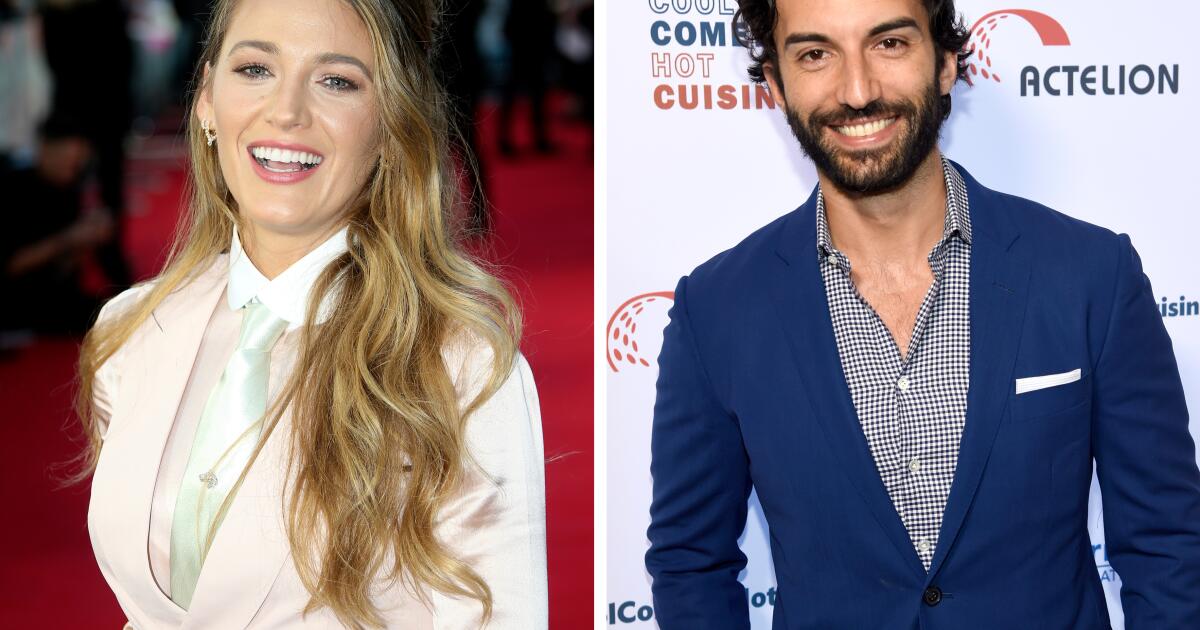
The bitter legal battle between Blake Lively and Justin Baldoni over allegations of misconduct and retaliation tied to the making of “It Ends With Us” moved closer to a conclusion Friday after a federal judge ordered Baldoni and his production company to pay Lively’s attorneys fees related to his unsuccessful defamation lawsuit against her, while rejecting her bid for additional damages.
In a 47-page order, U.S. District Judge Lewis Liman found that Lively was entitled to recover legal fees under a California law intended to protect people who report sexual misconduct from retaliatory defamation claims, ruling that Baldoni’s side had failed to show she acted with malice when making her allegations.
But Liman denied Lively’s request for treble and punitive damages, concluding that the procedural mechanism her lawyers used permitted recovery of attorneys fees and costs but not broader financial penalties.
Lively’s attorneys, Esra Hudson and Michael Gottlieb, called Friday’s ruling a victory for their client and emphasized that the judge found “there was no evidence she acted with malice.”
“The Court is awarding Ms. Lively attorneys’ fees and costs and has explained that a prevailing defendant under Section 47.1 may seek damages using different procedural mechanisms,” the attorneys said in a statement. “The parties’ settlement agreement expressly preserves Ms. Lively’s rights to obtain those damages.”
While the judge rejected Lively’s request for additional damages in this particular motion, her legal team said she could still seek them through other legal avenues permitted under the statute.
Bryan Freedman, Baldoni’s attorney, sharply disputed Lively’s characterization of the ruling, arguing that the court’s prior decisions had substantially undercut many of her original claims.
“There was no sexual harassment. There was no retaliation. There was no smear campaign,” Freedman said in a statement. “The court recognized it, the record reflects it, and we have maintained it from the very beginning.”
The amount Baldoni and Wayfarer Studios ultimately may have to pay has not yet been determined. Lively’s lawyers must still submit billing records and fee calculations for court approval.
The ruling follows last month’s settlement between Lively and Baldoni, which came just before what had been expected to be a closely watched federal trial in Manhattan. Under that settlement, neither side received financial compensation. But the agreement preserved Lively’s ability to seek attorneys fees and damages under California Civil Code Section 47.1, a relatively new statute designed to shield sexual harassment and assault accusers from retaliatory defamation claims.
Lively sued Baldoni, Wayfarer Studios, Wayfarer CEO Jamey Heath and others in December 2024, alleging Baldoni and his associates orchestrated a coordinated effort to damage her reputation after she raised concerns about misconduct during production of the film, which Baldoni directed and co-starred in. Baldoni denied wrongdoing.
Baldoni and Wayfarer later filed a $400 million defamation suit against Lively, her publicist Leslie Sloane and her husband, Ryan Reynolds, that was dismissed last year. Friday’s ruling dealt specifically with whether Lively could recover attorneys’ fees and damages tied to that dismissed suit under California Civil Code Section 47.1.
The latest ruling comes after Liman earlier this year dismissed 10 of the 13 claims in Lively’s lawsuit, including sexual harassment and defamation claims, while allowing retaliation-related claims to proceed.
In Friday’s ruling, Liman wrote that Baldoni’s team had produced no evidence demonstrating Lively acted maliciously when making her allegations.
“Allegations are insufficient on their own to demonstrate that statements were in fact made with malice,” the judge wrote. “That determination requires some evidence.”
Friday’s ruling offered each side new grounds to claim vindication in a legal battle that has played out as much in public statements as in court filings. Lively’s team pointed to the judge’s finding that she acted without malice, while Baldoni’s attorneys emphasized that many of her original claims had been dismissed.
Still, the settlement agreement bars either side from appealing Liman’s ruling, potentially drawing one of Hollywood’s ugliest recent legal fights to a close.
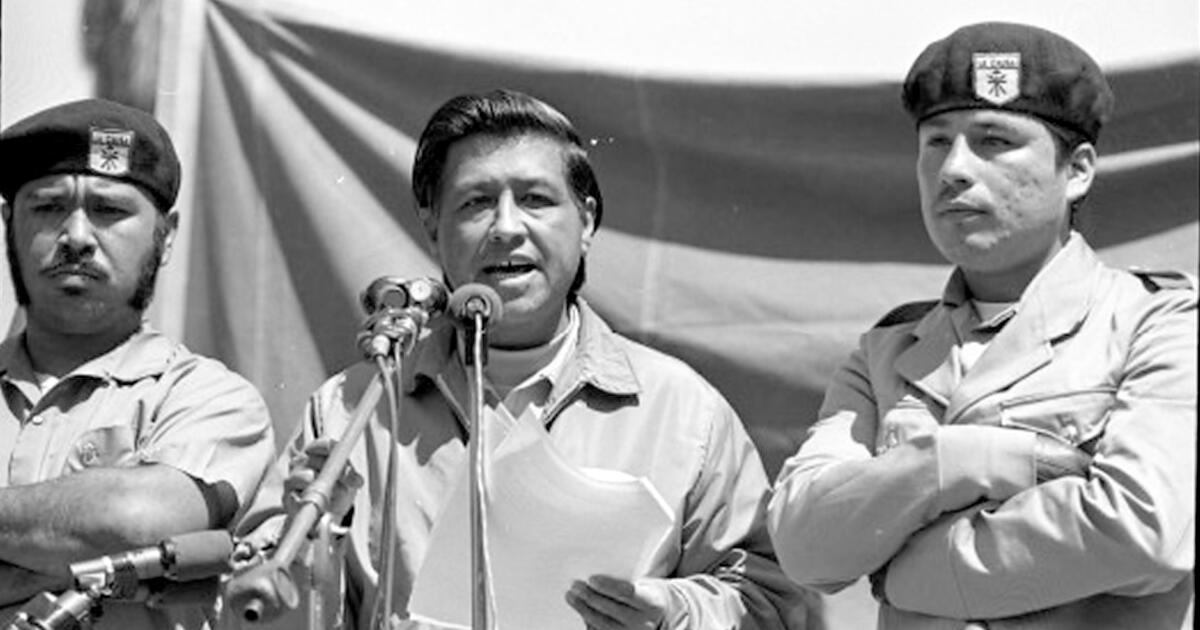
WASHINGTON — The Supreme Court on Wednesday struck down part of a historic California law inspired by Cesar Chavez and the farm workers union, ruling that agricultural landowners and food processors have a right to keep union organizers off their property.
The justices by a 6-3 vote said the state’s “right of access” rule violates property rights protected by the Constitution, which states private property shall not be “taken for public use without just compensation.”
Writing for the court, Chief Justice John G. Roberts Jr. said “the access regulation is not germane to any benefit provided to agricultural employers or any risk posed to the public…The access regulation grants labor organizations a right to invade the growers’ property. It therefore constitutes a per se physical taking,” he wrote in Cedar Point Nursery vs. Hassid.
He cited as precedents a pair of California cases. One ruled for the owner of a beachfront home in Ventura who objected to giving the public access to the shore and a second from 2015 which ruled for a grape grower from Fresno who objected to giving his grapes to a government-sponsored cooperative.
“The upshot of this line of precedent is that government-authorized invasions of property — whether by plane, boat, cable, or beachcomber — are physical takings requiring just compensation,” Roberts said.
The three liberal justices dissented. They described the rule as a regulation, not a taking of property.
The California Legislature in 1975 became the first in the nation to extend collective bargaining rights to farm workers. Months later, a new agricultural labor board adopted the “right of access” rule to allow organizers to seek out those who were working on farmland.
Earlier this year, the state’s lawyers said the rule was still needed because farm laborers often worked in remote areas and were not fully aware of their rights to join a union.
It has come under attack in recent years by agribusinesses that have called it a “union trespassing” rule that violates their property rights.
A lawyer for the Pacific Legal Foundation, which represented the farm owners, cheered the ruling as “a huge victory for property rights.” It “affirms that one of the most fundamental aspects of property is the right to decide who can and can’t access your property,” said Joshua Thompson, a senior attorney for the group, based in Arlington, Va..
Karla Walter, a director of employment policy for the liberal Center for American Progress, called it a major setback for union organizing.
“Today the Supreme Court’s conservative majority overturned nearly a half-century of progress for California’s farm workers, who have struggled to exercise their right to bargain for decent wages and to protect their health and safety,” she said. “Reaching farm workers — the overwhelming majority of whom are Latinx and migrant workers — where they work is critical to protecting their rights and interests.”
The case decided Wednesday began in 2015. The owners of the Fowler Packing Co. in Fresno, which produces grapes and citrus fruit, refused to allow union organizers onto their property.
A few months later, union organizers entered a strawberry packing plant near the Oregon border and disrupted the work, according to Mike Fahner, owner of the Cedar Point Nursery.
The two companies then joined in a lawsuit seeking to have the California union access regulation declared unconstitutional. They lost before a federal judge and the 9th Circuit Court of Appeals in San Francisco, but the Supreme Court voted to hear their appeal.
Lawyers for the Pacific Legal Foundation representing the farm owners argued the Constitution “forbids the government from requiring you to allow unwanted strangers on to your property.”
In defense of the rule, California officials called it a temporary regulation of property, not a taking of the grower’s land. Union organizers may enter a farm for one hour before the start of the workday or for an hour at the end of the day.
The state’s lawyers said the rule is similar to federal and state laws that allow meat and poultry inspectors to go into packing plants or health and safety inspectors to visit warehouses, manufacturing plants or construction sites.
A UK court has sentenced four pro-Palestine activists to jail for a raid on an Israeli arms factory near Bristol in 2024. Palestine Action says their aim was to ‘dismantle drones and weaponry’ they believed would be used to kill people in Gaza.
Serena Williams opted to let Nike break the news about her pro tennis comeback at age 44 in two slick commercials. The abrupt end to her doubles foray at the HSBC Queen’s Club Championships was more muted.
Williams’ playing partner Victoria Mboko injured her left knee in a fall during a singles match Wednesday. The turn of events restricted Williams’ return to tennis to one match, a 7-6(2), 6-2 victory with the Canadian teenager over No. 3 seeds Erin Routliffe and Nicole Melichar-Martinez.
Shed no tears for Williams. She pivoted quickly and will partner with Czech tennis star Karolína Muchová in doubles at the grass-court WTA 500 Berlin Open next week.
“Every tournament I add to my schedule right now feels special, and Berlin is no exception,” Williams said in a statement. “I’m excited to compete in front of the German fans and continue building momentum throughout the grass-court season.”
Another commercial by Nike, her collaborator and business partner of more than two decades, probably isn’t necessary. Williams’ announcement that she would play for the first time since the 2022 U.S. Open came via a pair of clips from the athletic footwear and apparel conglomerate.
One was captioned “good news travels fast.” Talk about buzzy. Her phone makes all sorts of sounds while she’s working out on the court, ending with the text: “Guess everybody heard the news,” and her saying, “I gotta change my number.”
The second is even zanier, a bit with LeBron James and Nike executives pitching a film called “The GOAT’s Goodbye” to Williams, who wants none of it because she still wants to play. James says to the suits, “You’re gonna have to find someone else,” and Williams walks onto the court with racket in hand.
Tagline: “The GOAT’s back.”
For now, her comeback is open-ended. Wimbledon begins June 29 and Williams has not indicated whether she will play. She has 14 titles in the prestigious tournament, six in doubles, one mixed doubles and seven in singles.
Asked shortly after her lone doubles victory at the Queen’s Club why she returned to the tour after a hiatus punctuated by the birth in 2023 of her second child, Adira River Ohanian, Williams shrugged.
“I don’t know, I had nothing better to do,” she said with a smile. “I got tired of sitting at home. My kids are out of school for the summer, so why not?”
Every morning, Harvard-Westlake tennis player Chase Klugo’s house shakes like it’s in the middle of a small earthquake. His alarm clock, a big and bulky machine that’s Bluetooth-connected to the house’s fire alarm, rattles his room until he finally shuts it off.
Klugo’s moderate-to-severe hearing loss requires hearing aids to navigate life, a daily reminder that he isn’t like his teammates. Instead of forgetting his sneakers or a racket at home, Klugo might mistakenly leave without his hearing aid’s batteries.
In Sacramento, Gov. Gavin Newsom is negotiating with the legislature to pass the 2026-27 budget by a June 15 deadline. Klugo wants to add language to the budget to include hearing aid coverage — an idea that, despite bipartisan support, has stalled on Newsom’s desk multiple times.
“It’s been instilled in me since I was young that it’s important for not only yourself to thrive, but your community to thrive,” Klugo said, sitting in his family’s house in the San Fernando Valley. “I find it insane how someone can be denied one of their five senses, and not only one of their five senses, but one of the most important senses that you could possibly have.”
Off the court, Klugo is quieter, more reserved. His coach at Harvard-Westlake, Robert “Bo” Hardt, described him as a 45-year-old man trapped in a 17-year-old’s body. Hardt reminds Klugo to go to parties and enjoy his high school experience, but it’s the furthest thing from Klugo’s mind.
Instead, he does community outreach for the about 20,000 deaf or hard-of-hearing children in the state whose hearing aids are not covered by their insurance. He works with Michelle Marciniak, the founder of Let California Kids Hear, to share his story.
California’s current $30 million plan, the Hearing Aid Coverage for Children program, had just 314 active participants as of April. The $6,000 out-of-pocket cost every three years of hearing aids can force some parents into debt or to delay or skip treatment, Marciniak said.
An insurance mandate would decrease the taxpayer money spent on the HACCP, reducing the number of children who need the program’s assistance. Instead, more private insurance companies would cover costs associated with hearing aids for children and young adults under 21-years-old, she said.
Harvard-Westlake tennis coach Robert “Bo” Hardt described Chase Klugo as a 45-year-old man trapped in a 17-year-old’s body.
(Courtesy of Harvard-Westlake)
Newsom has cited concerns about the precedent of adding requirements to California’s affordable care act insurance and raising prices for those who don’t need the hearing aid coverage, favoring expanding the state-funded program instead, according to Cal Matters.
Let California Kids Hear and Klugo have been steadfast in their response that insurance costs would be minimal and the state program falls far short of fulfilling needs throughout the state. Thirty-five other states require coverage of children’s hearing aids — through a state mandate for all insurers, their affordable care act insurance or both.
Klugo is persistent for a reason. Those most affected by any legislation can’t knock on state representatives’ doors or write letters to Newsom, he said. Deaf and hard-of-hearing children are more likely to achieve a high quality of life personally and professionally when hearing concerns are identified and intervened with before they’re 6 months old, according to the World Health Organization.
Children who don’t receive treatment for hearing loss are more likely to be at risk for developmental issues in speech perception, language, cognitive and social skills, according to the World Health Organization’s 2021 world report on hearing.
“These babies, they can’t tell their stories about what’s actually happening. I’m sure the parents are obviously furious and they can advocate, but they don’t have that experience of what it’s like to actually firsthand experience it,” Klugo said. “So I think it’s my job to do that.”
Marciniak has worked with hard-of-hearing teenagers like Klugo to spread awareness for nearly a decade.
“It’s a really heavy weight,” Marciniak said. “Every single person, every single year has supported this. It’s not a red, it’s not a blue issue. This is about a child’s ability to hear, and it shouldn’t be dependent on their zip code or their family’s income.”
“It haunts me.”
Tennis has been Klugo’s outlet to release the weight he feels on his shoulders sometimes, he said. An overflowing duffle bag of tennis balls sat by the front door, the only chaos in a tidy house. Klugo’s parents — Karen, a former tennis player in high school, and his father, a Penn State swimmer — each carried the genes that could lead to hearing loss. Neither, though, was affected.
Karen first found out about hearing loss when Klugo’s older sister failed a routine newborn auditory test. Klugo did, too. The family adapted to its new normal, and Klugo and his sister enrolled in athletic programs.
Still, Klugo’s hearing loss couldn’t be brushed away. In fourth grade, he was reading a book and had turned off his hearing aids. He only realized something was wrong when he looked at his teacher, whose face was drained. He looked around. All his classmates had pushed in their chairs, and he was the only one left in the classroom in the middle of a fire drill.
Not every situation is life-threatening, but most that Klugo encountered in school required self-advocacy. Sure, teachers needed to talk louder, especially when they turned around and Klugo couldn’t read their lips. But he also needed his friends to be more patient. Sometimes it took one or two times to understand what they were saying.
When the family moved from Ohio after his freshman year, Klugo’s self-reliance helped elevate the tennis team. In return, Klugo joined a built-in support system.
“He’s intense, but he’s good, and they respect the way he works, and that rubbed off on a lot of the team, too. It’s like a pro in his practice habits and his work,” Hardt said. Take his doubles teammate Aaron Chung, for instance. Chung speaks in a low, hushed tone, but to accommodate Klugo, he becomes a bit louder — though not too loud to give away their attack plans to their opponents.
“I told him that you got to speak up, because I’m not gonna be able to hear if it’s super loud and you’re very quiet,” Klugo said. “He’s typically a pretty quiet person too on the court, which has been cool to see him transform a little bit. He’s been doing a great job helping me out.”
After Chung and Klugo huddle, they line up on the court like two halves of the same body, moving in tandem as the balls ricochet off rackets. It’s a flow of squeaking of tennis shoes and the pitter-patter of the ball hitting the concrete court until either Klugo or Chung scores. The same teenager who drafts op-eds to send to places like the Times plots his next battle attack.
When either of the two scores, Klugo releases a full-chested yell in celebration, and they slapped hands, a rhythm that repeats until the sets are over, until the game is over. From a distance, his mom watches in the shade on the benches. His dad paces in the background.
Every so often, the sun catches on the small, clear wires of Klugo’s hearing aids. Otherwise, they’re shielded from the sun under his white baseball cap and his curly hair.
Klugo’s teammates help out with more than winning sets. Klugo’s Bluetooth alarm clock isn’t portable, and the hotel alarms ring too softly for him to hear. He can’t sleep in his hearing aids. The device will completely block the ear canal and cause a low buzzing noise that makes drifting off hard. So, when Harvard-Westlake travels, one of his teammates wakes him.
Klugo wears his hearing aids while competing, but even then he might miss something. Karen has watched her son accidentally miss his opponents saying something as he turns to get a stray ball.
Nonetheless, Klugo’s leadership as a junior on the team makes him a leading team captain candidate next season, Hardt said.
On the court, the well-spoken, thoughtful Klugo sheds any semblance of the person who takes time to answer questions and lists off numbers about hearing loss.
But, tennis doesn’t change who Klugo is, Karen said. The sport only amplified his personality.
“It’s helped me be a better person off the court,” Klugo said. “On the tennis court, too. It’s a game of who’s going to be better on that day, and I feel like the person who wants the most and is advocating the most for themselves is going to end up winning.”
June 10 (UPI) — Brad Lander, former New York City comptroller, appeared in a Manhattan court Wednesday after his arrest last year at 26 Federal Plaza, the site of the city’s major immigration court.
Police arrested Lander on Sept. 18 during his attempt, with other officials, to inspect holding rooms for detained immigrants. Police also arrested about 10 other officials, The Guardian reported.
Lander said that he pleaded not guilty to misdemeanor charges so he could question Immigrations and Customs Enforcement operations under oath, WABC-TV reported.
“Someone for the past year has been unreasonably obstructing the usual use of 26 Federal Plaza as an immigration court hearing, but the guilty party is ICE, the guilty party is not us,” Lander said.
Lander was ticketed on a violation for allegedly blocking an elevator bank on the 10th floor of the building. He testified Wednesday that he was there in his role as comptroller and that there were concerns that the holding rooms — usually used for much shorter periods of time — were crowded and unsafe, The Guardian reported. When the officials were not allowed to inspect the rooms, they sat down to wait.
The Guardian said that the trial unfolded “slightlysurreally — with an emphasis on the detail of alleged elevator blocking.”
“Were you trying to block the elevator?” asked Deidre von Dornum, Lander’s attorney.
“No,” Lander said, saying that the officials were there to inspect the rooms. “Our purpose was not to block the elevators.”
He said the elevator near him “did not ding, or open, during that time.”
Prosecutor Arial Cohen said Lander ignored multiple warnings to move.
Michael Bass, another attorney for Lander, said the comptroller was “concerned for the safety of his constituents.”
“Arrest is the bludgeon of suppression, and this case is yet another example of the administration’s suppression of political dissent,” Bass said.
Lander is running for the congressional seat held by incumbent Democrat Dan Goldman.
Marius Borg Høiby and his mother, Norwegian Crown Princess Mette-Marit, attend a government’s party event in 2022 in Oslo, Norway. A Norwegian appeals court has denied Høiby’s request to leave custody because of his mothers’ illness. File photo by Lise Aserud/EPA
June 10 (UPI) — A Norwegian appeals court has denied a request from Marius Borg Høiby, son of Norwegian Crown Princess Mette-Merit, to leave custody because of his mothers’ illness. Høiby is behind bars while he awaits a verdict in his rape trial.
The court overturned a verdict by a lower court Monday that had ordered Høiby’s release before the verdict, which is expected June 15. Hoiby, 29, is facing 40 criminal charges and has been in custody since February.
Princess Mette-Merit, 52, has pulmonary fibrosis, a chronic lung condition, The BBC reported. Her doctors added her to a lung transplant list last week.
“We are very, very disappointed. I find the decision almost incomprehensible,” defense lawyer Ellen Holager Andenæs said to Norwegian news outlet VG, as cited by Nine.com.au.
Høiby had told the lower court that “sitting inside while I know Mum is so sick is unbearable,” The BBC said.
Høiby was detained before his trial after new allegations of assault and violating a restraining order. The appeals court disagreed with the lower court that had ordered his release, saying his risk of reoffending was “virtually unchanged” since its earlier decision.
“As the Court of Appeals sees it, this is not a question of will, but a question of ability, lifestyle and risk factors,” the ruling said. It noted that Høiby is not the only one in prison with a family member affected by serious illness and will not receive special treatment.
Høiby denies four counts of rape but had admitted to lesser charges such as drug possession and traffic offenses. The judges are also considering charges of violence, threats and abusive behavior within a relationship.
Høiby was born before his mother married Norwegian Crown Prince Haakon and is not a member of the royal family. He was first arrested in August 2024.
The Delhi High Court grants bail to Kashmiri rights activist Khurram Parvez, jailed in India for nearly five years.
Published On 10 Jun 202610 Jun 2026
New Delhi, India — A prominent Kashmiri human rights activist who has been imprisoned for nearly five years has won a partial legal victory after being granted bail in a “terror funding” case, but remains in jail over a second case.
The Delhi High Court granted Khurram Parvez, 49, bail in a November 2021 case on Wednesday, according to legal website LiveLaw. However, he will remain in jail in a separate case from March 2023.
Recommended Stories
list of 3 itemsend of list
Parvez was first arrested about five years ago by India’s main counterterrorism law enforcement bureau, the National Investigation Agency (NIA), over accusations of “terror funding”, recruitment of rebels in Indian-administered Kashmir and mobilising protesters during a civilian uprising. The second case is also related to alleged “terror funding”.
International rights groups have widely condemned Parvez’s arrest and continued imprisonment.
His lawyer, Swati Khanna, said she hoped Parvez could be freed from jail soon if there was a “positive result” in the second case.
“We are hoping, in a month or two, he could be out,” she told reporters.
The trial has not begun in either of the cases – an issue highlighted by international rights organisations, which say the process becomes the punishment for political prisoners in India who have to wait years behind bars before even facing trial.
The conviction rate in the counterterror law, the Unlawful Activities Prevention Act (UAPA), remains low at 5 percent nationally. It dips further, to less than 1 percent, when it comes to Indian-administered Kashmir.
Prime Minister Narendra Modi’s Hindu nationalist government has been criticised for persecuting dissent and criminalising expression in Kashmir, the country’s only Muslim-majority region.
Kashmiris protest against the scrapping of the special constitutional status for Indian-administered Kashmir by the government, in Srinagar, September 26, 2019 [Danish Ismail/Reuters]
“Khurram’s arrest proved to be the last nail in the coffin of any meaningful rights activism in Kashmir, one of the world’s most militarised zones,” said a political analyst based in Srinagar, Kashmir, who requested anonymity fearing repercussions from the authorities.
“This bail comes in a completely shallow, and nearly fictitious, trumped-up case after years in jail, and Khurram would still not walk free.”
Kashmir remains disputed between India, Pakistan, and China, which control parts of the region. Pakistan controls the northern and western portions – Azad Kashmir; and Gilgit and Baltistan. India controls the southern and southeastern parts – the Kashmir valley, including its biggest city, Srinagar; Jammu; and Ladakh. China controls the Aksai Chin area in the northeast.
The two neighbours have fought three major wars over Kashmir since the end of British colonial rule and their partition in 1947 led to the creation of Muslim-majority Pakistan and Hindu-majority India. Both countries continue to assert claims to the entire region of Kashmir.
California’s slow vote counting process — still underway and causing friction after last week’s primary — may be forced to change before November’s midterm elections, as the U.S. Supreme Court prepares to rule on whether mail ballots must be received by election day to count.
Whether those changes will speed things up — and help tamp down baseless claims from President Trump and others that the slow count is evidence of fraud — will depend on a variety of factors, election experts said, including how the high court rules, how state lawmakers and local elections officials respond, and whether they push any additional steps to quicken the count.
“We’re all on the edge of our seats, waiting to see what the Supreme Court does,” said Kim Alexander, president of the California Voter Foundation.
“We’re certainly planning for a bad Supreme Court decision in this case, but we don’t really know all of our options for how to respond until we see the court’s decision,” said Assemblymember Gail Pellerin (D-Santa Cruz), chair of the Assembly Elections Committee and a former top elections official in Santa Cruz County.
Pellerin said she has been working on contingency plans with other state officials — including some from the offices of Gov. Gavin Newsom, Secretary of State Shirley Weber and Atty. Gen. Rob Bonta — and has requested $35 million in state funds to educate voters on any new midterm deadlines, though that funding has not been appropriated.
Federal law has, since 1872, set “election day” as the first Tuesday following a Monday in November, and gives Congress oversight over elections for the president and members of Congress. However, most authority for running elections falls to the states.
California currently provides a grace period for ballots to be counted as long as they are postmarked by and received within seven days of election day. More than a dozen states have similar laws that allow for counting late-arriving ballots, and most states accept such mail ballots from members of the military who are stationed overseas.
In March, the nation’s high court heard arguments about a five-day grace period in Mississippi, with the court’s conservative majority appearing skeptical. Many observers expect from those arguments that the high court will rule, by the end of this month, that ballots — at least for federal races — must be received by election day to count.
That outcome — in the case Watson vs. Republican National Committee — is considered likely but not assured, and some elections experts believe the high court has little legal precedent to support such a conclusion.
“That is a bogus interpretation of the statute,” said Rick Hasen, an election law expert and director of the Safeguarding Democracy Project at UCLA Law. “It violates what the statute says as a matter of text and history, and just how it’s been understood since the Civil War basically.”
Hasen and others also doubt that such a change would have much impact on the speed of California’s vote counting process, given that huge volumes of mail ballots that are placed in ballot drop boxes or arrive at processing facilities on or just before election day would still count — and would still drag the counting process out for days after the election.
In 2024, California counted more than 406,000 late-arriving mail ballots, but they represented only about 2.5% of the statewide total.
“The main bottleneck is really not ballots that arrive after election day. The bottleneck is ballots arriving before or on election day,” Hasen said. “So I don’t think the Watson case — however it comes out — is going to appreciably change California’s timing on when they’ll get enough ballots counted in a close race for it to be able to be called by news organizations.”
Nonetheless, state and local elections officials are preparing for changes — and looking for other ways to speed up the vote count, which, as of Monday, had resulted in more than 7.7 million ballots counted from last week’s primary, but more than 1.7 million left to process.
State plans unclear
If the Supreme Court were to rule that votes cast in federal elections must be received by election day, California would need to respond quickly.
It would need to craft a messaging campaign to inform millions of voters of the new rules, and determine when to tell voters they must mail their ballots by in order for their votes to count, experts said. That calculation may be shaped in part by efforts by the Trump administration to assert federal control over the mail ballot process through the U.S. Postal Service, which California and other states are fighting in court.
California officials may also need to determine whether they will create a “bifurcated counting process” with different rules for primary and general elections and different rules for federal races and state and local races on the same ballots, Alexander said, as a narrow Supreme Court ruling may not apply to them all equally.
“That’s a big policy decision that lawmakers will need to make, and I’m not sure how that would go,” Alexander said, citing a lack of detailed public plans from state and local elections officials.
Brandon Richards, a spokesperson for Newsom, said the governor’s office doesn’t comment on “hypotheticals,” but that Newsom “is planning for all eventualities, including but not limited to attacks on our democracy and disruptions in our elections.”
Bonta’s office said it is “in communication with election officials and actively preparing for the possibility that the U.S. Supreme Court could require changes to California’s election procedures,” but that it could not provide details.
Dean Logan, head of the L.A. County Registrar-Recorder/County Clerk’s office, said he was “not in a position to discuss specific contingency planning details” given the high court has yet to rule, but that his office “is closely monitoring the case and has begun evaluating potential impacts to election administration.”
If changes are required by the court, Logan said his office “is prepared to undertake a comprehensive voter education and outreach effort to ensure voters understand any new requirements, deadlines, or voting options,” which would be “multilingual, multi-channel, and designed to reach voters directly across Los Angeles County, particularly in communities that rely heavily on voting by mail and those that have historically done so.”
Funds needed for faster count
Alexander’s group has backed Pellerin’s request for $35 million for a marketing campaign to encourage voters to send midterm ballots in early, and advocated for another $55 million in state funding to support county efforts to build up their vote processing capabilities.
H.D. Palmer, a spokesperson for the California Department of Finance, said it would be “premature” to comment on those requests, but “discussions have been underway and are continuing.”
Both Alexander and Hasen said California should be investing more in its ballot processing capabilities even if the current process is fair and secure and the claims of fraud are baseless, because those claims have succeeded in diminishing trust.
“On the one hand, this is a manufactured crisis. There is nothing that is intrinsically bad about a slow count for a race,” Hasen said. “On the other hand, we live in an era of profound distrust in institutions and in the integrity of elections, in no small part because of Donald Trump.”
In 2012, slightly over half of all California votes were cast via mail ballots. However, that number has increased dramatically since, thanks in part to an expansion during the COVID-19 pandemic, and nearly 89% of ballots were cast by mail in last year’s special election.
Alexander said that throughout that same period, California lawmakers have passed new laws to expand access to the ballot but have not provided counties with the necessary funding to keep up with the volume — meaning “counties are left holding the bag.”
Alexander said California should fix that by providing consistent state funding for new ballot counting machines, more modern and efficient county processing facilities, and an expansion of a program backed by Pellerin and available in some counties already that allows voters dropping off ballot envelopes in person to essentially convert those ballots into in-person votes on the spot — which Alexander called a “hybrid” option that saves counties a huge amount of processing time.
She said the state spent millions to educate voters on new COVID-related vote-by-mail protocols and deadlines in 2020, and it led to both record turnout and a faster count — proving access and speed are not mutually exclusive.
“We’re being asked to make a false choice,” Alexander said. “It is possible to have accessible, secure, reliable and verified elections, and also an accelerated vote count.”
Times staff writer David G. Savage in Washington contributed to this report.