Late last night, on September 1st, on the day the commercial terminals of Maiquetía airport went back online, US Secretary of Energy Chris Wright landed in Caracas for the second time this year. Of course, Wright didn’t fly commercial, and he was swarmed by a flurry of journalists looking for headlines on the “massive” oil deal that has invaded the news both in the US and Venezuela.
“I think very good times are coming,” Wright told reporters upon his arrival. “As large investments flow into this country, that creates more jobs, which pushes wage pressure up, creates opportunity and prosperity for Venezuelans, and it snowballs: when you get business confidence and investment, it creates all sorts of opportunities—not just jobs, but opportunities for entrepreneurs.”
Wright arrived to give this new partnership a bit more ceremony, but also, very likely to join in the festivities of what is to be an important week for the Trump administration’s push for energy supremacy in the region and for the Venezuelan oil industry. Besides the strange deal that we’re going to unpack in this piece, this week will feature Chevron, which according to Bloomberg is about to invest $7 billion looking to double its production in the country. Also, it is expected that deals with Eni, ONCC, and Colombia´s Geopark will be signed as well. And the icing on the cake, it’s been also reported that one of the agreements with GE Verona to tackle Venezuela’s decaying power grid is close to being executed.
The clumsy communications around the announcement of the deal have generated some negative backlash from the Venezuelan public and skepticism from the same oil majors the Trump administration is trying to woo. Just a couple of hours before Secretary Wright touched ground in Venezuela, Marco Rubio had to jump on a livestream with a Venezuelan journalist in a damage control mission.
The US-Nabep deal
Those who brokered the US-Venezuela oil agreement are boasting about historical proportions, about leaving a mark for generations to come, but they took their time to explain why it is so important. Information has been coming out in a very fragmented way, heavily determined by propaganda needs from the Trump administration and the chavista regime. After vague rumors related to Mauricio Claver-Carone taking a step back as the Americans’ informal envoy, and the fall of Harry Sargeant III in Venezuela, we saw an old communication trick, which the Trump administration did not invent, setting the stage for the big news. Washington sent out a first version with catastrophic details, waiting for panic to spread, and published a second, corrected version that would make the news look better than initially perceived. Last week, the first Axios “scoop” talked about 90 billion barrels of Venezuelan oil reserves that the US would own. Now, the current version of the official announcement says it’s 65 billion barrels, so people can say “well, it’s just 65 billion barrels, it ain’t so bad.”
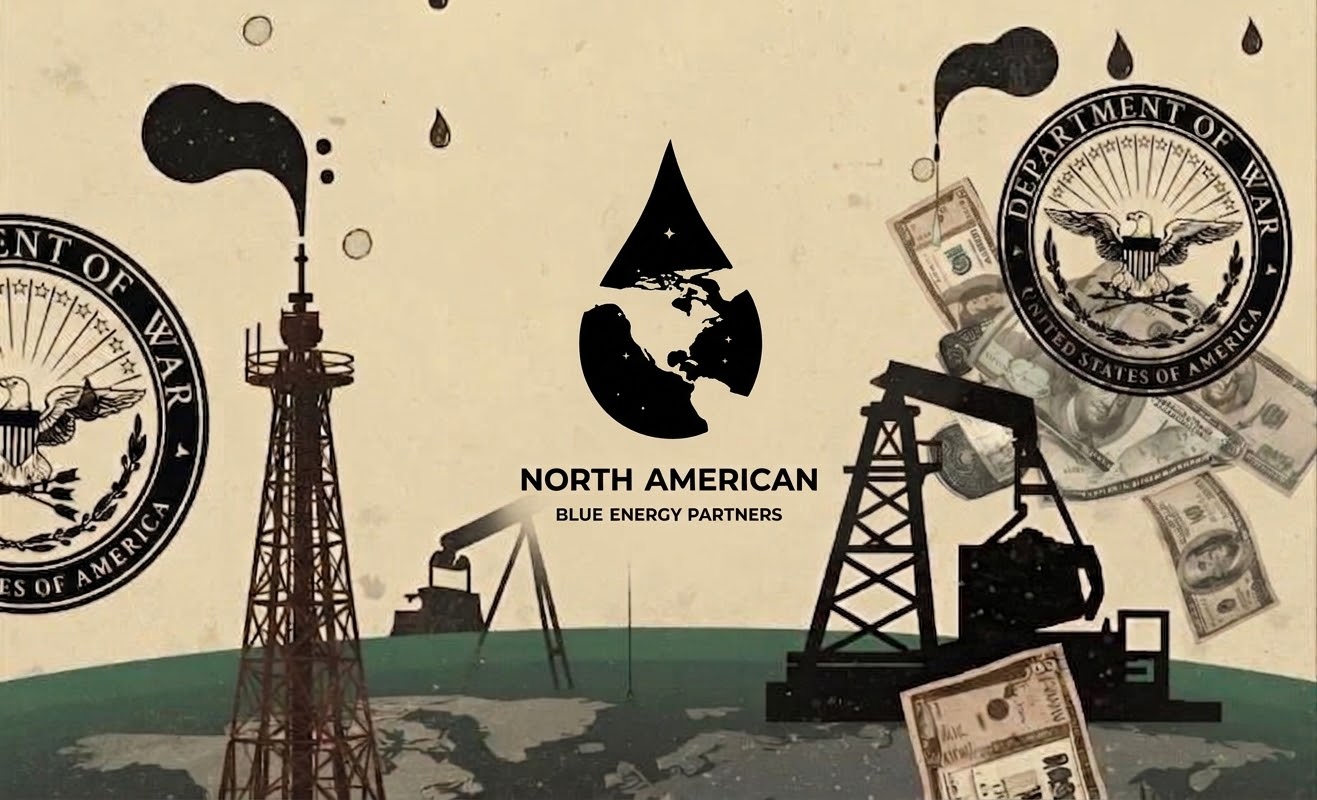
The White House finally published a fact sheet on Monday night disclosing more details about the involvement of the State and “War” Departments in buying the oil produced in 17 Venezuelan fields (supposedly containing about 65 billion barrels) by a private Venezuelan company. North American Blue Energy Partners, or Nabep, is the country’s second biggest crude producer led by notorious Venezuelan oligarch Alejandro Betancourt. To execute this deal, the Rodríguez government is granting a 100-year concession to a Nabep-Pentagon joint venture that looks, sounds and smells pretty unconstitutional from a Venezuelan point of view.
Francisco Monaldi: “Instead of generating more credibility and allowing investors to feel confident, the fact that this is allocated without any bidding and to an individual that has issues with justice, that could be a problem in the future.”
These are the known conditions of the deal:
- NABEP granted the Department of War’s Office of Strategic Capital a 35% equity stake in its corporate parent.
- The Department of State receives a guaranteed right to purchase 20% of NABEP’s current and future output at production costs, alongside a right of first refusal to buy the remaining 80%.
- The deal is strictly governed by US law and US court jurisdiction.
- Washington is granted veto power over board appointments. The majority of NABEP’s board of directors must be American citizens.
The US government is trying to sell this to the American public as a way to restock US oil reserves and to cut domestic gas prices, which have a negative impact on Trump’s popularity and the prospects of Republican candidates in November’s congressional elections. In an interview in Spanish published Tuesday, Secretary of State Marco Rubio insisted that the deal was between the US and a private company, not the chavista regime, and offered this as a model the White House expects can be replicated.
The expert opinion
Francisco Monaldi, director of the Latin America Energy Program for the Baker Institute at Rice University, warned on X that Venezuela’s famous oil reserves are inflated by order of Hugo Chávez: in reality, they are about a third of the 300 billion barrels everyone quotes as the total proven reserves. So those 17 fields must have about 25 billion barrels, instead of 65 billion barrels, an unreliable figure no one should take for certain. Besides that, it would be very hard to actually extract those 25 billion barrels in 25 years, given that most fields are undeveloped. Monaldi added before PBS News that “the presence of the US government could make investors more willing to take the risk of going into Venezuela with all the issues, including the fact that this is an illegitimate government in Venezuela, and that the history of the country, of course, is not great in terms of respecting deals… The other issue is that the Strategic Petroleum Reserve typically uses light oil, and Venezuela mostly produces heavy and extra heavy oil.”
Monaldi thinks that “if it’s an opaque deal that doesn’t seem to benefit the country, then there will be a backlash eventually, and we will end up as in other parts of the world and in Venezuela itself with renegotiation at some point.” Even if the agreement with NABEP means that they can run faster than other private companies, Trump’s anxiety to get American investors to Venezuela won’t be helped by this, because “instead of generating more credibility and allowing investors to feel confident, the fact that this is allocated without any bidding and to an individual that has issues with justice, that could be a problem in the future.”
Amid the fall of Tareck El Aissami and the rise of súper ministra Delcy Rodríguez, Betancourt re-entered the Venezuelan oil scene alongside Trump-linked oil magnate Harry Sargeant.
Harvard scholar Ricardo Hausmann, a former planning minister who leads a research center on economic growth, avoided the oil economy dimension of the matter and just trashed Rubio for betraying the idea of democracy transition. On the other hand, some influential economists see opportunities. Asdrúbal Oliveros chose a middle ground between celebration and condemnation and pointed out that benefits will come as long as the country develops not only the oil fields but the institutions to create accountability.
Betancourt: a meteoric rise and a shady trail
That Alejandro Betancourt, the CEO of NABEP, is at the center of this deal is bad news in the eyes of observers and Venezuelan journalists familiar with his trajectory.
Over the past two decades, this businessman became a symbol of the bolichico culture, a term apparently coined by investigative journalist Juan Carlos Zapata to define those scions of Venezuelan old-money families who became travel companies of Bolivarian-era corruption. Betancourt and his partners—namely his cousin Pedro Trebbau López and childhood friend Francisco Convit Guruceaga—became synonymous with the vanishing of hundreds of millions of dollars the Chávez government allocated to a newly-formed company, Derwick Associates, to fix the country’s power grid. Both Betancourt and Trebbau were in their late 20s when Derwick first emerged, and had no experience in the electricity sector.
Many things would happen between then and now. Betancourt became famous in Spain for investing in Hawkers, a Spanish sunglasses brand that got him cleaner headlines before local journalists discovered who he was. Prior to the Hawkers move, the three bolichicos created a Bahamas-based company to partner with a Gazprombank subsidiary. The resulting company, called Gazprombank Latin America Ventures, would operate a heavy-crude PDVSA project in the Lake Maracaibo region called Petrozamora. The joint venture did get to hold a steady production, but as with everything Russian, its operations were quite opaque. The Maduro regime eventually raided its offices and forced Betancourt to leave the country.
Betancourt faces probes in Spain and Switzerland. US prosecutors investigated him as an alleged co-conspirator in the $1.2 billion money-laundering scheme that targeted Convit and others, but didn’t charge the former.
Amid the fall of Tareck El Aissami and the rise of súper ministra Delcy Rodríguez, Betancourt re-entered the Venezuelan oil scene alongside Trump-linked oil magnate Harry Sargeant. Through Nabep, Betancourt and Sargeant took control of a number of oil projects (including the Petrozamora fields) under the CPP scheme, in which private companies could hold a larger stake than the State (running counter to the country’s hydrocarbons legislation until it was changed this year).
Betancourt seems to have a hand on both sides of Venezuela’s political conflict. That a close relative of Juan Guaidó was seen visiting Betancourt’s castle in Spain, in the company of Trump ally Rudy Giuliani, helped to cement the bad reputation of the interim government. In fact, Rubio now alleges that Betancourt was a friend of the opposition to deflect the suspicion that the tycoon is a man of the Rodríguez regime, and that the US chose Nabep because it is the biggest private company in the Venezuelan oil sector. Questioned by journalist Sergio Novelli about Betancourt’s past, the Secretary of State said that the businessman faced no charges “in our system.”
Over the past several weeks, Betancourt reemerged as a key operative between the Trumpworld and the Rodríguez government. The Washington Post reported last week that the Trump administration lobbied Switzerland to “resolve” an ongoing money-laundering probe into Betancourt without him facing criminal charges. Despite such a level of external interference, Betancourt remains under investigation in both Spain and Switzerland. He hasn’t been charged in these countries. US prosecutors investigated Betancourt as an alleged co-conspirator in the $1.2 billion PDVSA money-laundering scheme that targeted Francisco Convit and many others, but did not charge the former.
Distrust has grown in the Venezuelan public sphere. Before the oil agreement was announced, Cazadores de Fake News published an investigation about the network of social media accounts defending Betancourt. Hours after the White House published the fact sheet, an Axios piece tells the story of Betancourt as the global, influential businessman that promoted the Trump-backed Guaidó government and, during the events of January 3, persuaded Delcy Rodríguez to cooperate with Rubio. An Axios source even says that Maduro would still be in power had Betancourt not helped to remove him.
How Delcy is selling this
As another blackout hit Western Venezuela over the weekend, Delcy Rodríguez released a video statement saying this was about improving the future of the country. She was emphatic in thanking Trump and Rubio, and assured the nation would preserve sovereignty of the oil reserves while turning into a big energy powerhouse. Social media reacted by reproducing pre-2026 footage of her and Diosdado Cabello accusing the opposition of offering all our oil to the US. The most significant detail remains a mystery: what Delcy Rodríguez is demanding in exchange for signing and enforcing this deal.
How Venezuelan political figures are reacting
The most enigmatic reaction in the Venezuelan opposition came from María Corina Machado: she hasn’t said anything, really. A couple of days after Trump’s announcement, the opposition leader remotely attended an international conference held in Slovenia. She did not mention the reported contents of the deal or the role of Betancourt, but insisted on the potential of Venezuela as the energy hub of the Western Hemisphere in light of the Ukraine War and the crisis in the Strait of Hormuz. Machado added that a democratic government could serve as a bridge between the US, Europe and Latin America.
Leopoldo López and Julio Borges, two important opposition figures who held leadership roles in the past, also remain quiet. Their political parties are linked to a US-sponsored working group meant to reform the Venezuelan Supreme Court (TSJ) and electoral authority. López and Borges previously praised the US for its role and welcomed the progress made in August. In the deal’s factsheet, the White House says these talks resulted in significant reforms to the Venezuelan judiciary and the release of hundreds of political prisoners, which are grossly exaggerated claims. The reform to the Organic Law of the TSJ has not been approved yet, though the National Assembly sanctioned it on Tuesday night.
Edmundo González Urrutia said more, but not much against it. He stated that “Venezuela’s recovery cannot be measured only by the barrels it produces again, but by the lives that wealth allows us to rebuild.” He made no mention of Delcy, the deal’s legality, or its conditions, but wondered whether oil will improve the lives of all Venezuelans or only some this time around. He asked what those millions of dollars could mean to a family that lost a home and is still waiting to rebuild it, to someone who arrives at a hospital to find no supplies, to a community that lives waiting to see when the water will come. González did not denounce the agreement, but reflected on the difference between financial resources reaching the country and reaching the families that need it most.
Ruling chavismo has invoked its “loyalty to national sovereignty and the well-being of the people,” offering a list of crises the deal is supposed to solve: economic reactivation, the recovery of public services, care for those affected by the double earthquake, jobs, workers’ wages.
Juan Pablo Guanipa, a popular ally of Machado in Primero Justicia, sort of misread the animus. He called for a “calm reading” of the deal hours after it broke, arguing that Venezuela cannot develop its reserves without massive foreign capital. “If we see new jobs, more investment, more income, and a new economic upturn, this agreement will earn its backing. But if we don’t see it, little by little, popular rejection will follow.” His critique became sharper days later. From a rally in Falcón, Guanipa denounced that no government without an electoral mandate—like Delcy’s— has the standing to enter binding commitments like this.
Henrique Capriles did better, insisting Venezuelans were entitled to defend their oil, their interest and their future: “What is the deal’s scope? Its legal basis? What do Venezuelans receive? What do they give up, and under what conditions? Questions, he noted, no one can begin to answer when the country doesn’t even have clarity on this year’s oil income.” He recognized that, although oil remains the only lever at hand to “push everything” and grow the economy, the triumvirate of the Rodríguez siblings and Diosdado Cabello are not qualified to lead that commitment, and will only coat the process with more opacity and corruption.
Diosdado Cabello is yet to say a peep, though we expect him to put some nice words together for his Con el Mazo Dando TV show tonight. PSUV, Venezuela’s ruling socialist party still under Cabello’s control, fully backed Delcy Rodríguez’s leadership in light of the oil deal. The party recalled its historical loyalty to national sovereignty and the well-being of the people, offering a list of crises the deal is supposed to solve: economic reactivation, the recovery of public services, care for those affected by the double earthquake, jobs, workers’ wages. According to them, Rodríguez was simply using “every tool possible within the constitutional framework to put our immense hydrocarbon reserves at the service of national development.” During last night’s session, the Rodríguez-controlled National Assembly passed a motion supporting the “US-Venezuela Binational Energy Agreement.”
Maduro’s son, “Nicolasito” Maduro Guerra, came out in support of the “historic” deal—as he called it, in English. He quoted an interview where his father said the State was fully open to the return of American capital to the Venezuelan oil industry. Which isn’t exactly false: before the US captured Maduro on January 3, The New York Times reported that the dictator had offered all existing oil and gold projects to US companies in exchange for being allowed to remain in power.
Rafael Ramírez, Venezuela’s oil tsar under Hugo Chávez who oversaw PDVSA’s total collapse and the embezzlement of billions of public funds, called the new deal illegitimate, unconstitutional, and a pillage (saqueo). He considered it a ploy by the Trump administration ahead of midterms, as the “Venezuelan case has become the only success to show their [voter] base,” further criticizing Delcy and US policy in an interview with El Nacional. Among other original chavistas that broke with the Maduro regime, Chávez’s former propagandist Andrés Izarra used a double-edged sword: “Delcy is carrying out Machado’s oil plan.” He also tweeted that the agreement was high treason for which its enforcers should be tried.
Juan Barreto, the former chavista mayor of Caracas who is trying to become a relevant opposition figure, quote-tweeted Alejandro Betancourt’s defense of the agreement (who had said that it would benefit Venezuelans and Americans alike) and took the class war route: “The true head of the transition speaks: from intervention to colony… from the stands, the traditional political class and the elites applaud, begging for a scrap… in the streets, neighborhoods, and factories, the people converse, organize, unite…Workers across the country, begin national dialogue and consultation.” Elías Jaua followed suit. The former chavista vice president and career chavista minister said Venezuela is now under the occupation of a foreign invader, calling for grassroots organizing and the recovery of national independence. In what seems to be an ongoing effort to distance himself from what remains of chavismo in power, Jaua clarified he had not spoken to any government official or PSUV leader.