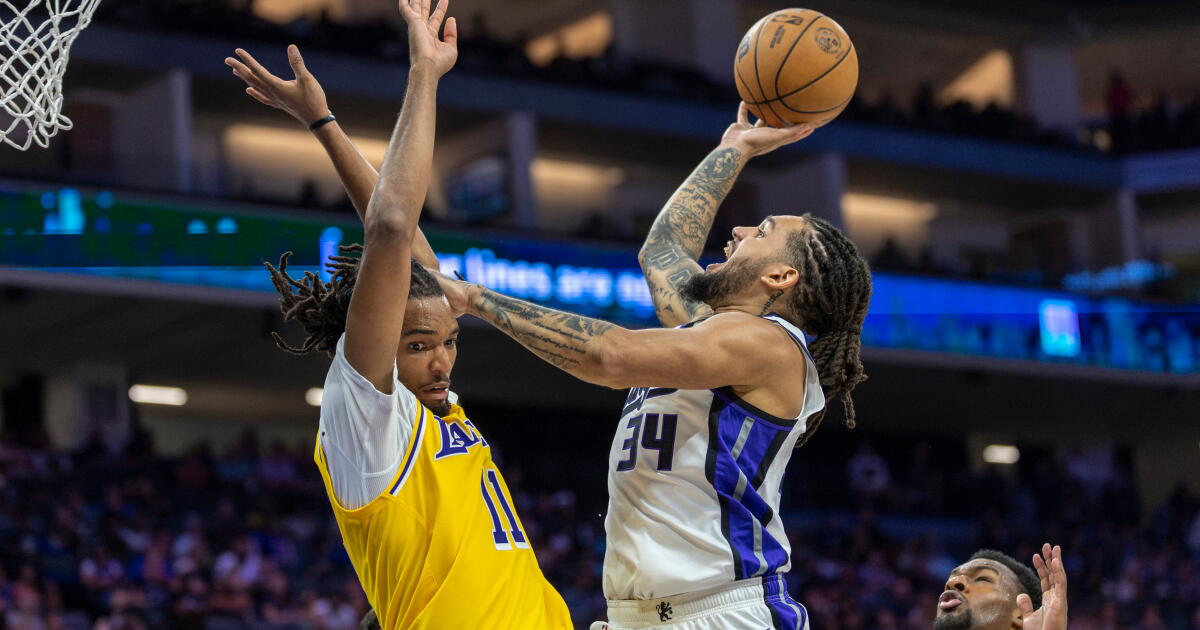
He made one of the biggest splashes in the Lakers’ first preseason game. Ziaire Williams set the tone of the Lakers’ new defensive style, pressuring the ball the full length of the court and injecting energy into his teammates. The Sierra Canyon High alumnus sank three three-pointers in a stellar debut for his hometown team.
Then came the swelling in his left foot.
After a minor injury slowed Williams’ preseason ascent, the 6-foot-9 forward could be in position to return to the lineup for the Lakers’ preseason finale at 7:30 p.m. Friday against the visiting Denver Nuggets. Williams practiced fully Thursday after missing the last three games. He’ll leave the final call up to the Lakers’ medical staff as the team tries to maximize its preseason preparation.
“It’s important, man, just to get game reps with each other, but health is key,” said Williams, who had 13 points and a steal as a starter in the preseason opener against the Sacramento Kings on Oct. 5. “If you can’t go, you just can’t. It’s not the end of the world. Going back to championship identity, we’re looking ahead at the bigger picture. So it’s not worth [it] to risk your body for a game that doesn’t count and then be out for the real games.”
With nine new players, the Lakers needed training camp and preseason games to build chemistry as a group. Small injuries to several players interrupted the process, but with one fewer preseason game than last year and almost double the total practice days, coach JJ Redick said integrating new players still has “been pretty seamless.”
“We would love to have gotten looks with everybody healthy and everybody good to go,” Redick said, “but we also have to be smart with an 82-game season.”
The Lakers debuted new center Walker Kessler only this week, and the star acquisition who jammed a pinky finger early in training camp still has not played in a game with guard Luka Doncic, who was held out of Tuesday’s game for a planned rest day. Doncic participated fully in practice Thursday, as did forward Adou Thiero, who sat out Tuesday because of “maintenance,” Redick said. Rookie Cameron Carr (undisclosed) remained out of practice Thursday after missing the last two games.
Guard Quentin Grimes has been a preseason iron man. The free-agent signing who is angling for a starting position has played a team-high 97 minutes in four preseason games. With Doncic and Austin Reaves playing together only once in the first four games, Grimes has filled a larger ballhandling role than he might have if the Lakers were at full strength. The 26-year-old guard who is on his fifth team in six seasons credited his journeyman history for helping him get comfortable with a do-it-all role.
“I’ve done a good job of just creating offense, creating opportunities whether that be for myself or for teammates, getting everybody involved,” said Grimes, who is averaging 12.3 points and 2.5 assists on 53.3% shooting in the preseason. “I feel like this team allows me to play on the ball, off the ball in any situation. I feel like I’ve played that kind of [role at] every stop.”
Collin Sexton is the only offseason acquisition who has not made his Lakers debut. Battling a lower leg injury, Sexton participated in all of practice except for periods of live play Thursday. After practice, the guard was seen with kinesiology tape snaking up his right calf while working on the court with assistant coaches.
Sexton’s presence could help stabilize the Lakers’ offense, which is averaging 25.3 turnovers during the preseason.
When Sexton was sidelined at the beginning of the preseason, Redick said he was not worried about the guard’s status for the Oct. 21 season opener against Golden State. When asked Thursday about Sexton’s availability, Redick said simply he was “trending in the right direction.”
Ten-man Tottenham fight back from a goal behind to draw 1-1 at Manchester United in the Premier League.
Published On 10 Oct 202610 Oct 2026
Dominic Solanke rescued a 1-1 draw for 10-man Tottenham to ramp up the pressure on Manchester United boss Michael Carrick on Saturday.
Solanke’s stoppage-time header edged Spurs off the foot of the Premier League table after it seemed like they would pay a heavy price for not taking their chances in a dominant display at Old Trafford.
Recommended Stories
list of 3 itemsend of list
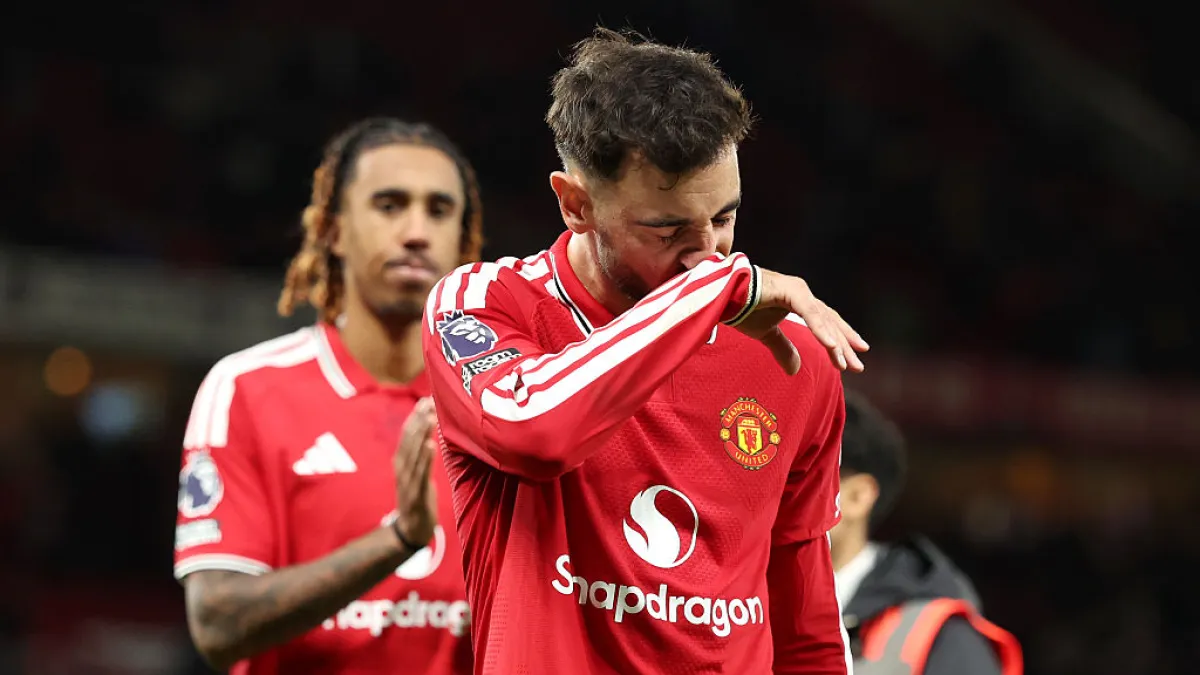
Bryan Mbeumo put United in front against the run of play 17 minutes from time before Rodrigo Bentancur was shown a straight red card.
But not for the first time this season, Carrick’s men failed to make a man advantage count.
Manchester City won 1-0 at Old Trafford last month despite playing for more than an hour with 10 men.
Solanke stooped to head in Sandro Tonali’s cross to leave United with just six points from their opening six league games.
Tottenham had three weeks to fester on dropping to the bottom of the table during the international break after a disastrous start to their 300-million-pound ($397m) rebuild in the transfer window.
Roberto De Zerbi’s men took until the closing stages of their fifth league game to even score a goal, and a much-improved performance was undone by a familiar lack of cutting edge up front.
Before kickoff, the United supporters took aim at local rivals City, who have been found guilty on more than 100 charges of breaking Premier League financial rules.
But the home fans soon had their own troubles to concentrate on as Spurs penned United inside their own half.
Solanke should have opened the scoring when he fired too close to Senne Lammens before Mohammed Kudus blasted wide at the end of a flowing Tottenham move.
Chances continued to come and go for the visitors after the break, much to the frustration of a visibly animated De Zerbi.
Solanke spooned over, and Destiny Udogie curled wide before the game appeared to run away from Spurs.
Carrick helped turn the tide with a triple substitution on the hour mark.
Carlos Baleba added more dynamism to United’s midfield on his first appearance since a 70-million-pound ($92.6m) move from Brighton, while the introduction of Joshua Zirkzee allowed Matheus Cunha to drop into a deeper role.
United had barely threatened Antonin Kinsky’s goal until Mbeumo was afforded too much room to spin onto Cunha’s pass and fire into the far corner.
To compound Tottenham’s woes, Bentancur was then shown a straight red card for a headbutt on Luke Shaw after an angry confrontation between the pair.
But United again failed make their man advantage count.
Solanke finally ended Tottenham’s wait since May for an away goal when he outmuscled Lisandro Martinez to glance in Tonali’s cross.
The point edges Spurs up to 18th, with only goals scored keeping them inside the relegation zone.
Education Minister Edouard Geffray said on Sunday about 500 schools likely to be fully or partially closed on Monday.
Published On 5 Oct 20265 Oct 2026
Hundreds of high schools in France are closed as student protests continue against rundown schools and teacher shortages.
Government spokesperson Maud Bregeon told CNews television on Monday that the priority was to “restore order”.
Recommended Stories
list of 3 itemsend of list
Earlier, National Education Minister Edouard Geffray said on Sunday evening, of the 3,700 schools, 400 to 500 were likely to be closed fully or partially on Monday.
Geffray said 24 schools had been burned or ransacked, while 78 teaching staff had been injured since the beginning of the protests.
Nationwide demonstrations erupted at the end of last month at a high school in a Parisian suburb over teacher shortages, before spreading nationwide.
Reporting from a high school in Paris, Al Jazeera’s Natacha Butler said students had set up a barricade in front of the building’s entrance using dustbins and fences.
“We’ve been talking to many of the students who have come out here, and what they say is that they are here to have their demands heard by the government. They say they are fed up with teacher shortages and often don’t have teachers for subjects like maths and English,” she said.
“They also tell us that they’re here to demonstrate to show solidarity with other high school students who are in perhaps poorer areas in France with less adequate facilities or in France’s overseas territories. They say all young people should have an equal right to education,” Butler added.
French news channel BFMTV showed images of police and students clashing in Lille, northern France, tear gas being used in Toulouse in the southwest and of a fire being set alight as people tried to break into a school in central Paris.
Carole Zerbib, head of the vandalised Lycee Vauquelin in Paris’s 13th district, said a “very determined” group wearing hoods and masks attacked her school.
While police and firefighters quickly put out the fire and the school was evacuated, suspending classes, Zerbib said it was “very violent and happened very quickly”, adding that the attack lasted 15-20 minutes.
Since September 28, about 5,000 people, mostly teenagers, have been arrested across the country and dozens have been injured.
French newspaper La Voix du Nord reported on Monday that a teenager lost a hand after picking up a police stun grenade.
Teachers and members of the public have also been attacked, while estimated costs of property damage are in the tens of millions of euros.
Student unions have called for a national day of demonstration on Tuesday.
Brits are continuing to face delays due to the EES system, and queues of five hours were reported just last week at a popular city break destination for those visiting from outside the EU
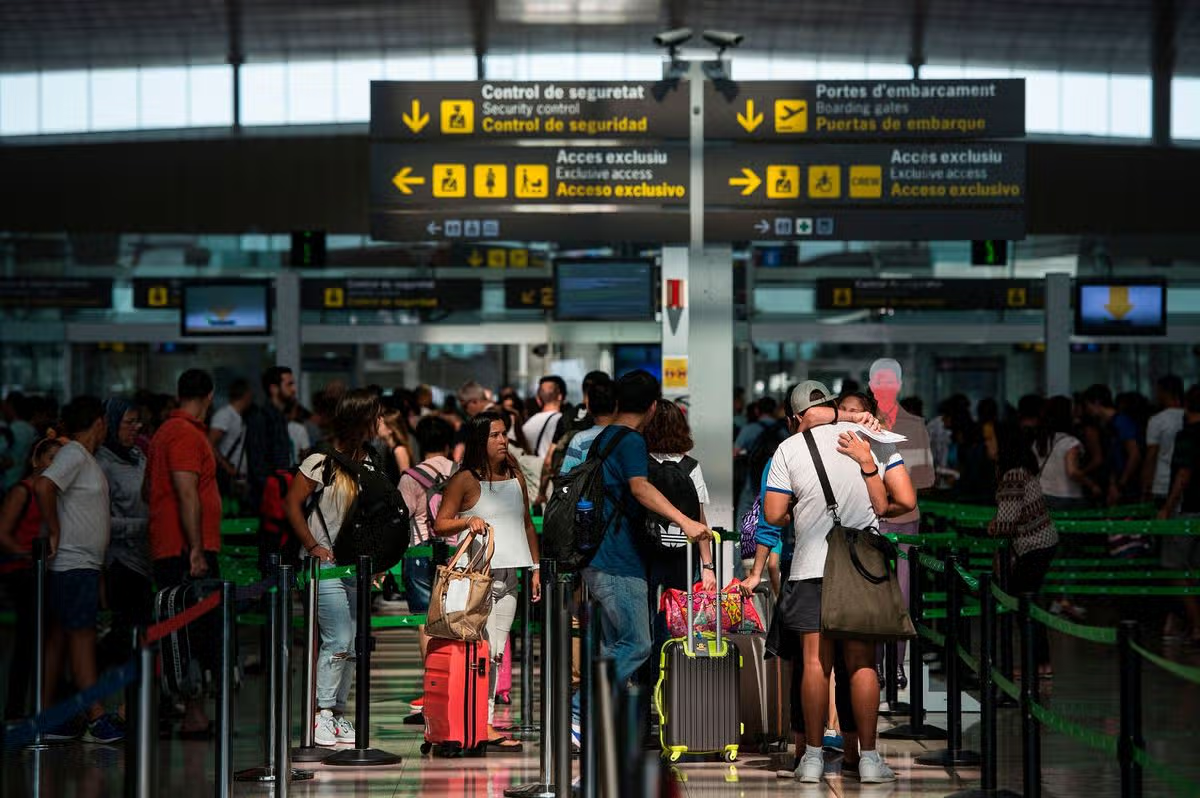
The long queues seen over the summer seem to be continuing for Brits(Image: JOSEP LAGO/AFP via Getty Images)
European Entry/Exit System (EES) continues for Brits with a major European airport confirming that non-EU visitors faced five hour queues last week.
The Brussels Times reports that non-European travellers, including Brits and Americans, were forced to go through staffed control posts leading the the huge queues. In a statement to the Belgian news outlet, the airport confirmed that additional police officers are being trained for the border control posts and they were seeking “structural solutions”.
When contacted for comment, a spokesperson from Brussels Airport said: “Since the introduction of the European Entry/Exit System (EES), border checks for travellers covered by this system have taken longer, as is the case at many other airports. In addition, passengers from certain non-EU countries can no longer use the e-gates. As a result, more passengers need to go through staffed border control points, which has increased waiting times.”
They added: “All parties involved continue to work together on long-term solutions.” The airport spokesperson confirmed the airport had added two extra border control booths for the Federal Police at departures, in addition to two booths that were added at arrivals before the introduction of EES.
They went on to say: “The Federal Police also increased staffing levels on a permanent basis during the summer, and further reinforcements have been planned. More police officers are also being trained to ensure sufficient staffing at border control points, and additional infrastructure needs are being assessed.
“In addition, 60 EES pre-registration kiosks have been installed. These allow non-EU travellers to submit some of their information in advance. The connection between the e-gates and the pre-registration kiosks is still being tested so that, in the future, passengers from certain non-EU countries may be able to use the e-gates again.”
EES launched nearly a year ago, on October 12 2025, before officially becoming operational on April 10 2026. However, over the summer months holidaymakers have reported a myriad of issues with the system.
But no sooner was it launched than countries started to pause, or even shelve the scheme, due to the huge queues snaking through airports. Nine countries have put full EES implementation on hold, despite the fact that the EU said there would be no extension to the deadline. Holiday hotspots such as Greece briefly made an exemption for British holidaymakers over the summer, which has now been reversed, putting them back in the queue.
Over on Reddit, a poster took to the R/Belgium sub with a post titled: “Brussels airport queues should be a national scandal”, asking: “Why are they so bad? EES isn’t new anymore. They hardly have anyone checking passports. Are people in Belgium aware that queuing for 1hr + isn’t normal?”
One poster replied: “If you’ve got a kid under 12 you have to go through a manual check and can’t use the kiosks, and while usually shorter than the all passports line, it can sometimes be long as well. We waited 20-30 minutes last Friday mid morning. The all passport line was all the way along the back of the security screening area. I don’t remember the last time I’ve seen more than 3 agents working and an all passport line shorter that didn’t back up into the arrivals corridor. “
Reviews of the airport on Google tell the same story. One visitor said: “The passport control situation at Brussels Airport is completely unacceptable. Every time I arrive and have to use the “All Nationals” queue, I face the same problem: an enormous line and an extremely long wait, sometimes lasting hours.”
They added: “This is an international airport and one of the main gateways to the capital of Europe. Yet the passport control capacity seems completely inadequate for the number of arriving passengers. Hundreds of people are forced to stand in line after long flights because there are simply not enough control points operating to process passengers within a reasonable time.”
Have a story you want to share? Email us at webtravel@reachplc.com
At least six people killed in drone attack on passenger van and one person killed in strike on residential apartment.
At least seven Palestinians have been killed and more than 10 wounded in Israeli attacks on the Gaza Strip as Israel continues to violate a nearly year-old “ceasefire”.
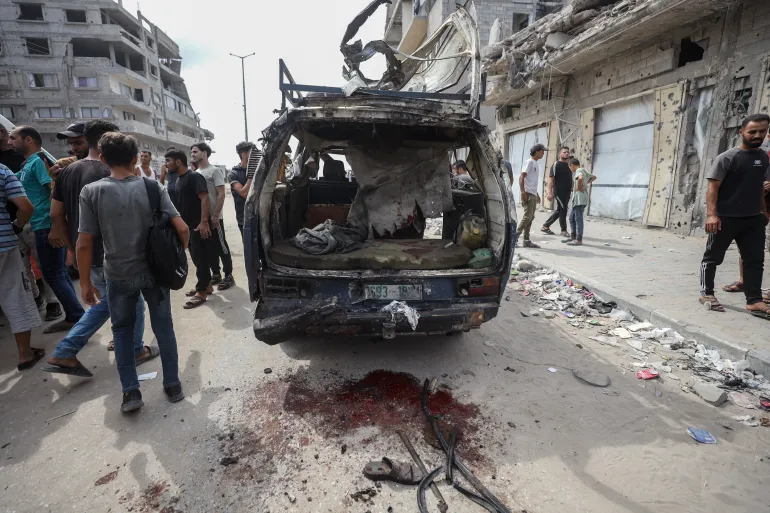
Six of the victims were killed in an Israeli drone attack on a passenger van in Tal al-Hawa, in southwest Gaza City, on Wednesday, according to witnesses and medical sources.
Recommended Stories
list of 2 itemsend of list
The Palestine Red Crescent Society, a humanitarian group that runs ambulance and emergency services, said its crews took 13 wounded people to al-Quds Hospital.
Medical sources told Al Jazeera the injuries sustained by the victims of the attack are “critical”.
“Doctors say it’s difficult to save the lives of the wounded because the health system is decimated by years of Israeli attacks and the blockade,” said Al Jazeera’s Hind Khoudary, reporting from Gaza City. “The number of dead in the strike could rise in the coming hours.”
Earlier, the official Palestinian Wafa news agency reported that an Israeli attack on a residential apartment near al-Shifa Hospital in Gaza City killed at least one woman.
Elsewhere, four Palestinians, including two children, were wounded when an Israeli drone hit a shelter for displaced people in southern Gaza, according to local sources cited by Wafa.
Two other Palestinians were seriously wounded by Israeli forces southeast of Deir el-Balah in central Gaza, while Israeli tank fire was also reported in southern Khan Younis, in the southern part of the Strip.
The attacks came as the Ministry of Health in Gaza, which compiles casualty figures from hospitals across the territory, said in its latest daily update early on Wednesday that the bodies of at least nine people had arrived at hospitals during the last 24 hours.
While eight people were killed around the reporting period, one woman had died from earlier wounds, bringing the number of people killed since the start of the “ceasefire” between Israel and the Palestinian group Hamas in October last year to at least 1,431.
An Israeli strike targeted a vehicle in Tal al-Hawa, in southwest Gaza City [Khames Alrefi/Anadolu]
At least 5,026 have been wounded over the same period, including 31 in the past 24 hours, the ministry said.
“There is supposed to be a ceasefire in Gaza, but the Israeli army’s violence is endless. Every day, Palestinians are killed, injured, and the humanitarian situation is deteriorating,” said Khoudary, describing “terrifying” conditions for Gaza’s residents.
“Everyone inside the Strip is afraid to go to the supermarket, to take their children to school, and to live their everyday lives,” she added.
Overall, Israel’s genocidal war against Palestinians in Gaza has killed at least 74,032 people since October 2023, with another 175,142 wounded, according to health officials.
In August, an analysis by the United Nations Satellite Centre found that the number of destroyed structures across Gaza has increased by 9 percent since the “ceasefire” took effect.
Overall, about 82 percent of structures in Gaza, roughly 200,000 buildings, have been damaged, and about two-thirds of those have been destroyed since the start of the war, according to the UN.
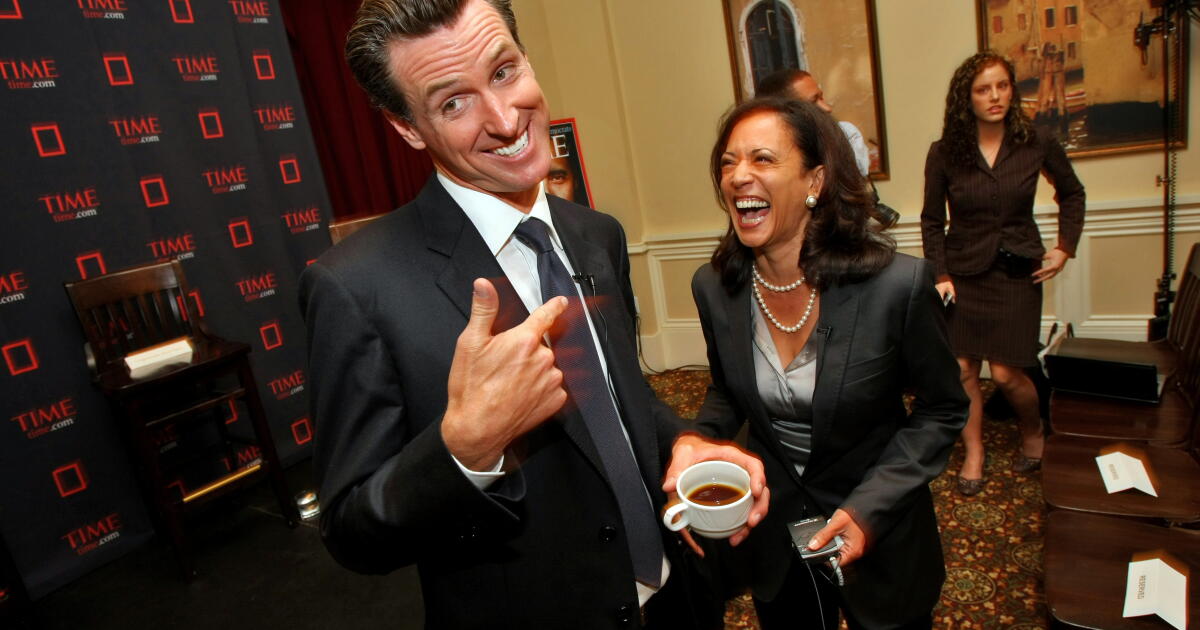
California’s departing governor, who has spent the better part of his second and final term auditioning for the White House, recently said he wouldn’t run if Harris chooses to do so. “Mutual assured destruction,” Newsom called a he-she contest between the two Left Coast rivals, and a “waste of everyone’s time.”
You’re reading the L.A. Times Politics newsletter
Expert columnists cover the insights, legislation, players and politics you need to know.
By continuing, you agree to our Terms of Service, which include arbitration and a class action waiver. You agree that we and our third-party vendors may collect and use your information, including through cookies, pixels and similar technologies, for the purposes set forth in our Privacy Policy such as personalizing your experience and ads.
“That’s objectively true,” Newsom added, driving the knife a little deeper.
But rather than forcing Harris’ hand, Newsom’s professed willingness to stand aside may have simply invited the former vice president to take her sweet time deciding whether or not to run, waiting until the Democratic contest is well underway.
And leaving Newsom in an odd sort of limbo.
The former vice president, lips largely sealed, has done and said just enough to keep the door open to a 2028 run, without firmly committing to the contest. There’s a good chance that Harris — always careful, ever deliberate — doesn’t know what she’ll do. Or, at least, isn’t 100% certain.
She can afford to wait.
Time is on her side
After four years in the White House and her abbreviated 2024 White House bid, Harris has universal name recognition, a nationwide fundraising base and continued support among a significant number of Black women, who just happen to form the backbone of the Democratic Party.
Harris won’t freeze the presidential campaign the way she did the race for California governor. That contest was stalled and the field incomplete until Harris announced, after months of consideration, she’d take a pass. That’s not to say, by any stretch, Harris is the favorite to win the presidential nomination. The criticism Newsom expressed — just a fella jawing away, as he and Tapper cast their fly rods — is a view that is widely held among Democrats.
But the 2028 contest, which unofficially starts the instant the final polls close Nov. 3 — won’t be firmly fixed until it’s clear whether Harris is in or out.
Newsom doesn’t have that luxury of biding time, especially when so many other Democrats are poised to enter the race.
The governor has his own formidable national fundraising base — thanks in good part to his online trolling and anti-Trump hijinks — and a not-small degree of name recognition across the country. But Newsom has yet to fully engage in the see me, feel me aspect of presidential campaigning, which typically requires a candidate’s persistent physical presence and is particularly important in the earliest-voting states.
So his only option is to campaign full bore once he leaves the governor’s office in January, as though he’s running without hesitation or qualification. Then, if Harris jumps into the contest, Newsom can sulk his way back to California, or break his pledge and run against her after saying he wouldn’t.
That, as Newsom suggested to Tapper, would be a gift to the rest of the Democratic field.
Not too long ago, Newsom and Harris were carping over whether he was sufficiently supportive of her hurried-up 2024 presidential bid.
In her account of the campaign, Harris said she reached out to the governor shortly after President Biden announced he was standing aside in favor of his vice president. When she called, Harris wrote, Newsom texted that he was out hiking and would call her back. But, she said, he never did.
Much backing and forthing ensued — Newsom pointing out he didn’t hesitate to endorse Harris once he returned to civilization — with both insisting all the while things are fine between them, really.
Now the two are once more entwined, their fates tied up in mutual ambition and a shared hunger for the White House.
Was Newsom’s CNN interview a feint? Was he just faking respect for Harris as a way to keep in the good graces of Black women voters, all the while hoping against hope she won’t run — and planning to reverse himself if she does?
Will Harris put off her decision, knowing that every day and month that passes deepens the suspense and leaves Newsom twisting?
Will the two finally collide head-on, settling once and for all their intense, if unspoken, competition?
So much drama!
Stay tuned. There’s a reality TV show in there somewhere.
The high court grants an emergency petition ahead of expected arguments in the case, slated for December.
The United States Supreme Court has allowed President Donald Trump’s administration to continue third-country deportations, halting a lower-court ruling that paused such removals over questions of due process.
On Tuesday, the high court granted the administration’s emergency request to resume the deportations, which involve sending immigrants to countries they may have no connection to.
Recommended Stories
list of 3 itemsend of list
The court’s order was unsigned, as is typical for an emergency petition. It also does not include an explanation or a list of how the justices voted.
But at the bottom of Tuesday’s order, the court’s three left-leaning justices – Sonia Sotomayor, Ketanji Brown Jackson and Elena Kagan – indicated they would have denied the Trump administration’s petition.
The Supreme Court’s decision to pause the lower court ruling is temporary. The order calls for arguments to be heard in December.
That hearing comes as Trump administration continues its appeal against the lower court’s ruling, handed down by Judge Brian Murphy in Boston, Massachusetts.
Murphy had ruled that immigrants must be given a “meaningful” chance to raise safety concerns before their removal to third-party countries.
In pausing such deportations, Murphy indicated that some immigrants may have been denied the opportunity to challenge their deportations as part of their due process rights.
Tuesday, however, is not the first time the Supreme Court justices have weighed in on the practice of forcibly sending people to third countries, which Trump dramatically stepped up since his return to office in 2025.
Trump campaigned on a pledge to implement the “largest deportation operation in American history”, and his officials have argued that third-country deportations are a means of removing individuals whose home countries may not accept them.
In June 2025, the Supreme Court also issued an unsigned order allowing such removals to proceed.
That cleared the way for eight men, including nationals of Cuba, Myanmar and Vietnam, to be deported to South Sudan, a country the US State Department advises against visiting because of “crime, kidnapping, and armed conflict”.
The Department of Homeland Security at the time called the removals “a win”, while rights groups said the move flouted basic legal protections.
Critics have expressed concern that many of the governments receiving third-country deportations have a record of human rights abuses.
Third-country deportations have been used to bypass court protection orders that prevent immigrants from being sent back to their home countries due to fears of persecution.
But advocates say that some of those third-party countries have ultimately sent deportees, including asylum seekers, back to the places where they feared they would be at risk of torture or other harms.
At least 35 countries have signed agreements with the Trump administration to take in the third-country nationals, according to a tally by the nonprofits Refugees International and Human Rights First.
The groups estimate that more than 25,000 people have been subject to third-country deportations so far.
On Monday, human rights experts at the United Nations wrote to the US government urging a halt to such removals, warning they were putting deportees at heightened risk of abuse.
“At gravest risk are children, women, persons with disabilities, victims of trafficking, LGBT persons, human rights defenders, stateless persons and other people in extremely vulnerable situations,” the experts said.
On Tuesday, Burundi became the latest country to enter an agreement with the US to take non-citizen deportations.
Officials said the country would only take in people who were not facing prosecution and had no links to “terrorism”.
Ed Sheeran’s Loop tour, in the span of less than two weeks, became an unexpected lightning rod for controversy and conversation about artist activism amid Israel’s deadly war in Gaza. Still, the show will go on.
Sheeran’s tour will proceed as planned, The Times has learned. He is scheduled to play on Saturday at Lincoln Financial Field in Philadelphia. The venue also confirmed on Wednesday that the Saturday concert is still a go, but that supporting acts have yet to be finalized.
A representative for Sheeran’s tour did not immediately respond to requests for additional information, including who will be the new supporting acts.
In a rapid turn of events since rapper and former opening act Macklemore called for Palestinian liberation onstage earlier this month, Sheeran — the singer of inoffensive hits including “Thinking Out Loud” and “Shape of You” — fell out with the fellow Grammy winner, witnessed all supporting acts drop from his lineup and defended himself against accusations of complicity in silencing criticism of Israel. Additionally, Sheeran confronted scrutiny over his largely apolitical public presence. He attributed this to his longtime desire to “bring people from all backgrounds and cultures together” via his music and performances.
“I am not complicit. I have my personal views on this devastating conflict,” he wrote Tuesday on Instagram. “Just because I choose not to speak publicly, it doesn’t mean I don’t have them, and it doesn’t mean I don’t care. Nor does it mean I don’t support causes in my own, personal way.”
Ahead of Sheeran’s first concert since the scrutiny surrounding Macklemore’s performance, read on for what preceded the fallout of Sheeran’s Loop tour.
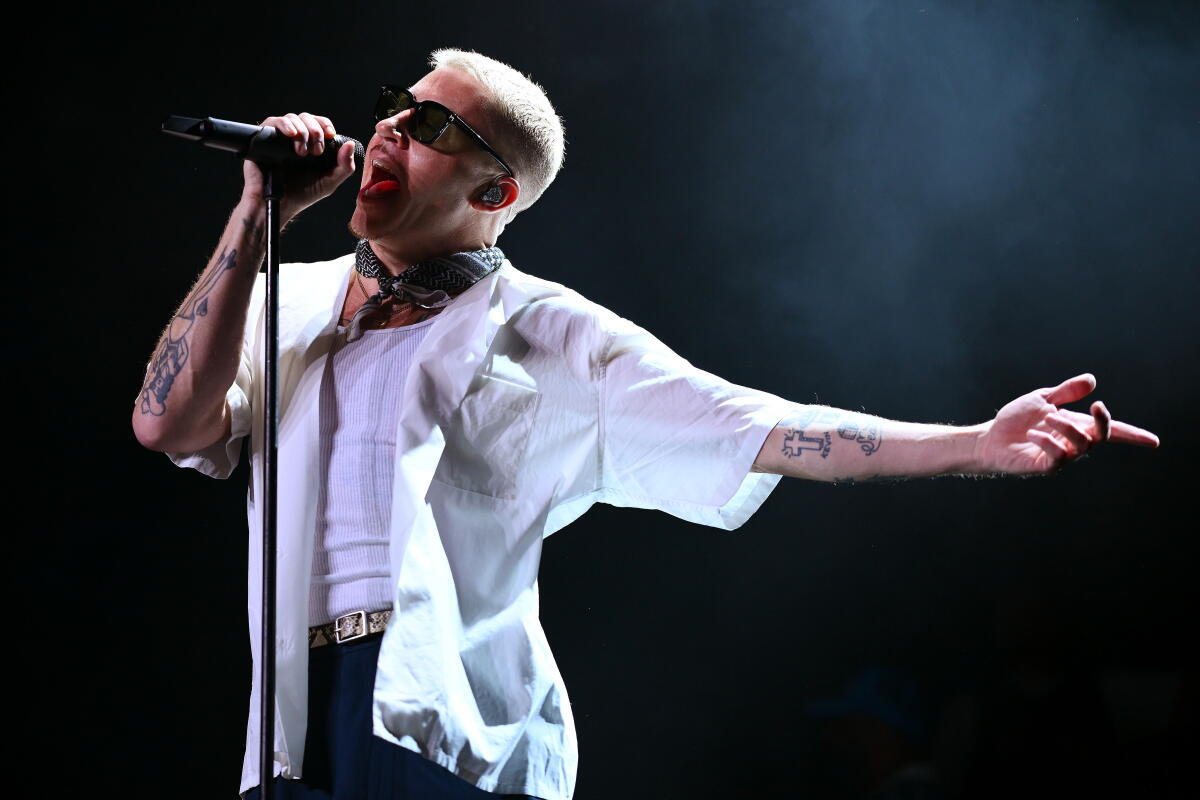
Macklemore goes from “Thrift Shop” to “Hind’s Hall”
Macklemore performs at Rod Laver Arena on May 15, 2024, in Melbourne, Australia.
(Morgan Hancock / Getty Images)
Before hitting the stage for Sheeran’s Loop tour, Macklemore famously burst onto the music scene in 2012 as part of the duo Macklemore & Ryan Lewis. The pair gained popularity for the then-inescapable hit “Thrift Shop,” the fourth single off their acclaimed debut album, “The Heist.”
The duo gained further notoriety with hits “Can’t Hold Us” and same-sex marriage anthem “Same Love.” They notoriously bested Kendrick Lamar at the 2014 Grammy Awards in the rap album category. Lamar was nominated for his striking debut “Good Kid, M.A.A.D City.”
A year after releasing their 2016 album, “This Unruly Mess I’ve Made,” the duo announced an indefinite hiatus. Macklemore focused on his solo work, including collaborations with Kesha, Lil Yachty and Skylar Grey. In recent years, Macklemore has taken on a new purpose with his platform.
Macklemore, like many musical acts including Kehlani, Finneas and Irish rap group Kneecap, became a vocal supporter of the Palestinian cause after Israel began its offensive in Gaza in the wake of the Hamas attacks on Oct. 7, 2023. The rapper has channeled his views on the conflict into his music, releasing his protest song “Hind’s Hall” in May 2024. The song calls for a ceasefire, an end to Israeli occupation in Gaza and highlights pro-Palestinian protests on college campuses.
Ed Sheeran announces his Loop tour
Ed Sheeran performs during iHeartRadio Kiss 108’s Jingle Ball 2025 at TD Garden on Dec. 14, 2025, in Boston, Mass..
(Scott Eisen / Getty Images for iHeartRadio)
Last September, Sheeran unveiled his plans to hit the road to promote his eighth studio album, “Play.”
The British “A Team” singer announced at the time that his tour would begin June 2026 with a stop at Arizona’s State Farm Stadium and would run through early November. The announcement did not disclose the supporting acts set to share the stage with him, but informed fans the singer would perform shows across large venues including Inglewood’s SoFi Stadium in August and a pair of performances at MetLife Stadium in New Jersey.
The concerts at MetLife Stadium would later embroil Sheeran, his tour, Macklemore — and somehow pop star Pink — in controversy.
Macklemore calls to ‘Free Palestine’: Performance or ‘propaganda?’
When Macklemore took the MetLife Stadium stage as the supporting act for Sheeran’s Sept. 4 and 5 concerts, he did not mince words in his message. During his set, Macklemore criticized Israel for its war in Gaza and accused it of genocide of Palestinians. He also projected an edited version of his “Hind’s Hall” music video, which features footage of pro-Palestinian college encampments and protests and military strikes in Gaza.
Video of Macklemore’s performance spread online, drawing ire from some Jewish advocacy groups including StopAntisemitism, which accused Macklemore on Instagram of turning “a mainstream event into a political nightmare against the Jewish state.” Pop star Pink, who is Jewish, shared StopAntisemitism’s post to her Instagram story. She faced backlash for the repost and later clarified in a three-part statement that she took issue with the imagery Macklemore displayed during his performance. She also accused the rapper of taking “the mic to tell all the Jews in the stadium that it wasn’t about them.”
In the wake of Macklemore’s performance, the Israeli American Council and the Anti-Defamation League also decried Macklemore’s performance on social media, with the former publishing a petition calling on Sheeran to remove the rapper from the remaining shows of his tour.
“Freedom of expression does not give anyone the right to turn someone else’s stage into a platform for political propaganda,” the Israeli American Council said on Instagram.
Amid the mounting backlash, Macklemore defended his stance and shared video on social media of his full address to the MetLife crowd. “I said ‘Free Palestine.’ I want those words to be loud and clear so that the people in Gaza all the way to the occupied West Bank know that we have not forgotten them,” he tells concertgoers in his introduction to “Hind’s Hall.”
“To all my Jewish brothers and sisters, criticism of Israel, criticism of apartheid, being against genocide in no way is a criticism of you,” he adds, according to video of his address. “My message is for peace, love for all human beings to be treated with dignity, respect and equality.”
The fallout begins: Macklemore fired from Loop tour
Whether Macklemore would remain on Sheeran’s tour amid the public outcry remained uncertain, until he confirmed his status earlier this week. He said in a lengthy statement shared to Facebook that his continued, vocal support for Palestinians amid Israel’s war in Gaza has cost him professionally.
The rapper said he was removed after “some difficult conversations” with Sheeran. He also went into depth about the inner workings that led to his removal from the tour, including conversations between Sheeran and wealthy venue owners, including billionaire Robert Kraft, whose Kraft Group owns Gillette Stadium in Massachusetts, where Sheeran is set to play later this month.
“Ed told me that Kraft said I would not be allowed to perform in his stadium,” Macklemore wrote. “Ed also told me that Kraft had rallied some of the other stadium owners and collectively they gave him an ultimatum: if Macklemore stays on the tour, you will not be allowed to play in our venues.”
Sheeran in a separate statement shared on Tuesday confirmed he had conversations with Kraft but did not speak to the alleged ultimatum. The singer also said removing Macklemore from the tour “was the promoter’s decision, it was not mine” and that Macklemore’s contract was with its promoter. Messina Touring announced on Monday it had dropped Macklemore from the remaining tour dates “after discussions with stakeholders.”
Additionally, Macklemore wrote that Sheeran’s “typical apolitical stance was being challenged” amid the public scrutiny and “he couldn’t get past his public facing, ‘I don’t take sides.’”
Sheeran appeared to address that criticism, writing in his missive that attendees at his concerts “do not expect a political forum.” The singer also wrote he thinks there can be different ways to work toward peace.
“If we only focus on shouting the loudest, nothing will ever change,” he wrote.
Macklemore said in his Monday statement he was hopeful this turn of events would not mean an end to his friendship with Sheeran and he was grateful for the opportunity to play on tour, regardless.
“I didn’t need 10 Shows from Ed. I needed 2,” he wrote. “Two chances to stand in front of 90,000 people and say … ‘Free Palestine.’”
Supporting acts depart tour in solidarity
Grammy winner Finneas was among the supporting acts who announced their departure from Ed Sheeran’s tour on Tuesday.
(Monica Schipper / Getty Images)
Hours after Sheeran shared his side to the controversy, numerous musical acts including Grammy winner Finneas and folk band Beoga, Sheeran’s backing band, pulled from the Loop tour in solidarity with Macklemore and in support of Palestinians.
“Artists must not be silenced when they speak up for the oppressed. I have decided to withdraw from my upcoming tour dates with Ed Sheeran,” wrote Finneas, who has been a vocal supporter of Palestinians. “I stand with Palestine and its people.”
Pop band Lukas Graham and Irish singer-songwriter Aaron Rowe, both billed as supporting acts for several upcoming dates on Sheeran’s tour, voiced support for the Palestinian people and spoke against the inner workings that led to Macklemore’s removal.
In its statement, Lukas Graham wrote: “Money doesn’t give you the right to own the conversation. Nobody’s bank balance should decide who gets to speak or which suffering we’re allowed to acknowledge.”
Rowe in his Instagram statement said that Sheeran “has been a friend to me and has changed my life” but that he is sympathetic to the Palestinian cause. “As Irish people we know all too well about genocide, forced famine and violent occupation,” he wrote. The “Hey Ma” singer accused elites of leveraging their power to “silence the rightful voices” and criticism of Israel.
“I need to be true to myself and my ancestors who resisted colonisation, and fought for a freedom that I enjoy today in Ireland,” Rowe continued.
Macklemore announced Wednesday that he will donate his earnings from his shows with Sheeran to charities supporting Palestinians. He also invited Kraft to match his donation and reaffirmed his dedication to the Palestinian cause.
“This is what this has always been about,” he wrote. “Not me. Not a tour. Not the headlines or the controversy.”
The North American leg of Sheeran’s Loop tour is scheduled to end Nov. 7 at Raymond James Stadium in Tampa, Fla. — the same venue that platformed controversial rapper Ye (formerly Kanye West) earlier this summer.
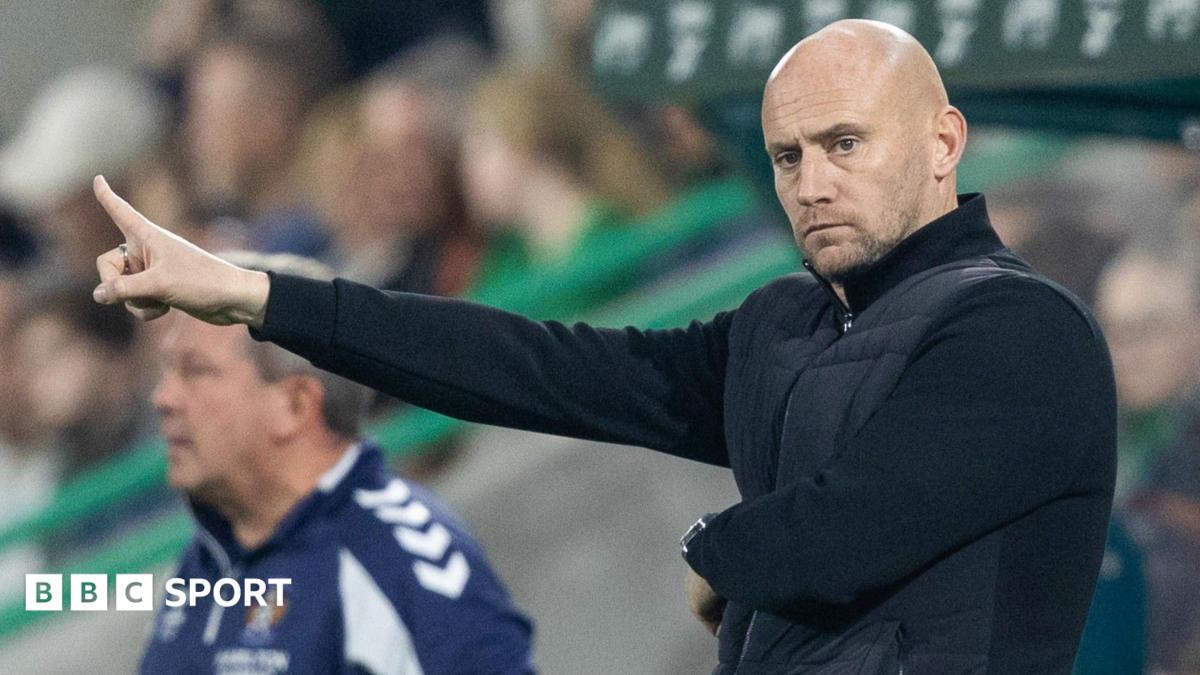
Kieron: Kilmarnock could have won by three or four and it wouldn’t of flattered them. Hibs were so poor tonight. David Gray’s position is hanging by a thread.
Stuart: The players on that pitch have to take as much responsibility as Gray for this result, nowhere near good enough. Amateur performance.
Andy: How can Gray continue to keep his job? The players are not playing for him. The club is a mess. Banning the only fans that bring an atmosphere. Benching three of our best players. So confusing.
Chris: Question the tactics. Thought for long time long ball is desperate and lacks ambition. Pressure indeed on David Gray.
Lee: If we end the game two points off bottom spot then it’s surely time up for the Hibs manager. It’s not a run and recovery from a bad position needed, it’s deliver and results from the get go the support demands for a club of our size.
Stuart: The players on that pitch have to take as much responsibility as David Gray for this result, nowhere near good enough. Amateur performance.
Paul: Long balls to no-one as usual from Hibs and as usual our keeper is a weak link. Gray has to go even if we win as this is awful football. Bring in Neil Lennon or Steve Clarke asap before our season drifts to nothing as usual.
Andy: How can Gray continue to keep his job? The players are not playing for him. The club is a mess. Banning the only fans that bring an atmosphere. Benching three of our best players. So confusing.
Brian: Worst backline in Scotland, midfielders trot about like headless chickens, feel sorry for strikers. Gray clueless. No plan. No tactics. Blah, blah, blah after game as usual but won’t resign. Board have to act.
SMcDhfc: David Gray has lost the team, it was obvious tonight. As an attacking force, we were shocking, lots of huffing and puffing but not one real effort on target. The players should be embarrassed after that display, but they will get the result they are after, Gray sacked.
Craig: I like Gray but believe it’s time he goes. He has one formation. It’s just not good enough. But, if he goes, Malky MacKay [director of football] should go too. His signings have been terrible.