2027 Oscars power rankings: Top 10 best picture contenders right now
Venice, Telluride and Toronto have wrapped, and the New York Film Festival is winding down. Ovations have been meticulously timed. Existential crises have been parsed, not including the trauma induced by Tom Cruise’s “Digger,” which prudently skipped the festivals to delay, if only for a couple of weeks, the poisonous word of mouth from seeping out. (It’s still well worth seeing.)
And there have been, of course, prizes, including a Netflix movie, the Spanish maximalist melodrama “La Bola Negra,” winning Toronto’s People’s Choice Award. That’s a first for the streamer, which means we will again be asking the question: Can a Netflix film finally win the best picture Oscar?
If you’ve seen “The Odyssey,” you probably know the answer to that question. But with more than five months (!) until the 99th Academy Awards, it’s a bit early for ironclad guarantees, even if it feels like it would take the winds of Poseidon to blow “The Odyssey’s” best picture campaign off course.
But it’s not too soon to roll out a first set of Oscar power rankings for best picture. With apologies to “Obsession,” “Fjord,” “Possible Love,” “You Can See Everything,” “Elsinore,” and whatever other movies you love (or look forward to loving), let’s start counting.
10. ‘Tender Loving Care’

(Joseph Lynn / Thin Man Films / Bleecker Street)
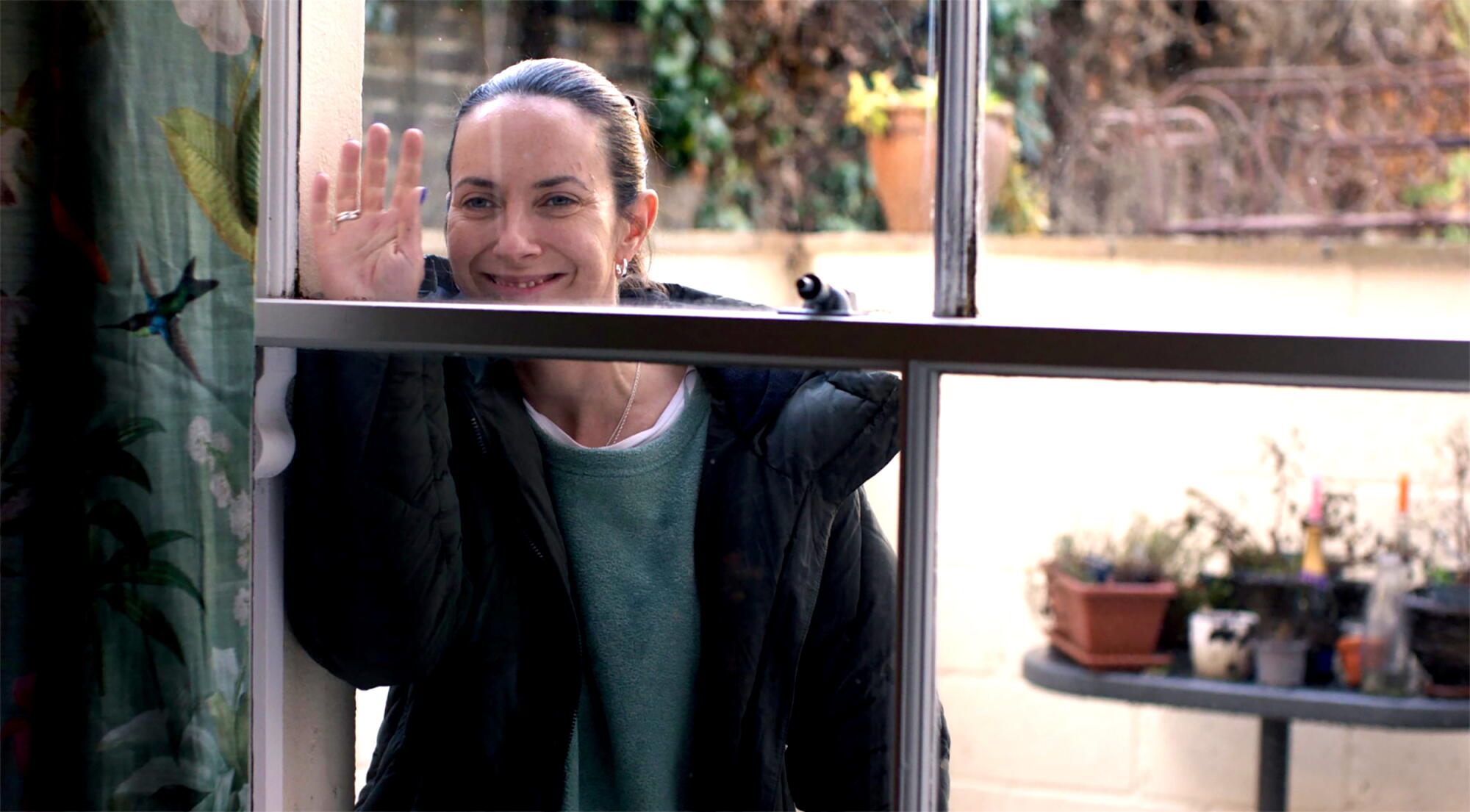
Because of ongoing health issues, Mike Leigh has said that this warm and wrenching drama will be his last movie. If so, it’d be quite the capper to a career that has netted him seven Oscar nominations, five for his screenplays and two for direction. Yes, only one of his movies, “Secrets & Lies,” has been nominated for best picture. But “Tender Loving Care,” centered on two social service workers navigating the fraying social safety net and, in one case, anxiety about aging parents, possesses a bracing humanity full of compassion and urgency. It’s also quite funny. And it boasts a great cast, including newly minted Emmy winner Kate O’Flynn, as charming here as she is on “Widow’s Bay.” Leigh has more than earned a final curtain call with this one.
9. ‘Club Kid’

Jordan Firstman’s sincere, funny and genuinely moving debut feature has him playing a queer New York underground party promoter blindsided by the arrival of the 10-year-old son previously unknown to him. You could take issue with the uncomplicated perfection of the child, who has exquisite taste in music (Cocteau Twins, really?) and barely a trace of trauma despite the harrowing event that landed him in New York. But “Club Kid” is so assured and heartwarming that you can’t muster the energy to object. There’s probably going to be one feel-good movie nominated, and if it’s between this and “I Play Rocky,” I’ll cast my lot with the one that doesn’t rely so heavily on re-creating the familiar.
8. ‘All of a Sudden’

This 196-minute movie unfolds at, let’s just say, a leisurely pace, and includes a near-20-minute scene in which a character lays out the flaws of late-stage capitalism using a whiteboard. And it’s riveting. Or at least engaging. It’s certainly audacious, this drama about a hardworking director of a Parisian nursing home and the way a chance friendship changes her life. The Oscars’ best picture field now routinely includes two international movies, and Ryûsuke Hamaguchi’s dreamlike meditation on mortality and human connection feels like a sure bet to make the cut. Virginie Efira and Tao Okamoto shared the best actress prize at Cannes and merit attention from Oscar voters as well.
7. ‘The Debut’

Spoiler alert: One awards-season shoo-in is Julianne Moore winning every lead actress prize for her bravura work in this delightful Jesse Eisenberg comedy. Moore plays Mona, a meek, thoroughly unseen wife and mother who impulsively decides to audition for a community theater musical despite having no experience. The movie earned a huge response at its Telluride premiere, though there were some quibbles about the surprising, surreal turns the story takes. C’mon. Isn’t that precisely what we want from a film? With Moore, co-star Paul Giamatti, Eisenberg’s screenplay and original song (Eisenberg wrote several numbers for the film’s fictional musical) assured spots, a best picture nod feels undeniable.
6. ‘The Invite’

(Atsushi Nishijima / A24)
Olivia Wilde’s dinner-party dramedy boasts a killer quartet — Wilde and Seth Rogen as longtime marrieds nursing resentments, Penélope Cruz and Edward Norton playing their upstairs neighbors — and expert direction from Wilde, who navigates the movie’s tonal shifts with authority. It’s wickedly funny and unsentimental and pulls off a bittersweet ending that’s ambiguous enough to keep you talking long after the film ends. One of the year’s most satisfying pleasures.
5. ‘Project Hail Mary’

(Jonathan Olley / Amazon MGM Studios)
Speaking of endings, how many did “Project Hail Mary” have? Two? Three? I lost count. And it doesn’t matter. This was the upbeat end-of-the-world movie that audiences needed at a time when the possibility of human extinction feels uncomfortably real. In a year full of Spielberg knockoffs (and an uneven movie from the man himself), this will be the one left standing.
4. ‘Wild Horse Nine’

(Diego Araya Corvalan / Searchlight Pictures)
Martin McDonagh’s melancholy irreverence plays well with Oscar voters. His last two movies, “Three Billboards Outside Ebbing, Missouri” and “The Banshees of Inisherin,” earned best picture nominations and a combined 16 nods. “Wild Horse Nine,” a biting buddy dramedy about two mismatched CIA assassins (John Malkovich and Sam Rockwell), should continue the filmmaker’s success and may even catapult Malkovich to a long-overdue Oscar. At the very least, it gave him his best role in decades.
3. ‘La Bola Negra’

The filmmakers, Javier Calvo and Javier Ambrossi, are talented and charismatic, former romantic partners who still work together because that’s how Europeans roll. Los Javis (they even have a fun nickname) won the directing prize at Cannes, the first of several festivals that their movie conquered, culminating in that audience award at Toronto. With its three interconnected stories that follow queer men through nearly a century of Spanish history, “La Bola Negra” has an epic feel and emotional payoff that could carry it far. Netflix is all in, opening it in select theaters Oct. 16 and giving it an exclusive 46-day theatrical window, the longest it has afforded any movie. We’ll see if that puts it into the cultural conversation in a way that has eluded other Netflix contenders.
2. ‘Dune: Part Three’

Can Denis Villeneuve’s third and final “Dune” movie, which hasn’t screened widely for press, take the “Lord of the Rings” trilogy path to a best picture victory? If there’s resistance to giving Christopher Nolan back-to-back best picture winners, the greatest threat might come from a movie occupying the same lane, an auteur-driven epic lauded by critics and embraced by audiences. The second (and superior) “Dune” won just two Oscars, compared to the six taken by 2021’s “Dune: Part One.” Perhaps voters were playing the long game.
1. ‘The Odyssey’

(Melinda Sue Gordon / Universal Pictures)
Maybe you saw it when it opened in July, contributing to its $1.75-billion box office. Maybe you’re still trying to see it in Imax 70 mm, the way God (i.e., Christopher Nolan) intended. Maybe you agree with translator Emily Wilson, who thinks Nolan’s movie “lacks psychological, emotional, political and ethical depth” and that its writing is “abysmal.” Whichever side you’re on, “The Odyssey” is probably going to sweep through the Oscars, owing to its craft and thrilling showmanship, its stellar acting and that moment when Odysseus’ dog recognizes his long-absent master and wags his tail before heading off to Elysian Fields.