consumer

NFL is urging Supreme Court to rule on prediction markets

The NFL is urging the Supreme Court to rule on the regulation of prediction markets, arguing in an amicus brief filed Thursday that states — which already regulate legal sports books — are better positioned to oversee sports-related contracts “given the current landscape.”

The NFL is supporting New Jersey’s request for the Supreme Court to rule on the governing authority for prediction markets, which provide an opportunity to trade — or wager — on the result of future events. The Commodity Futures Trading Commission has maintained it has exclusive federal jurisdiction, while states have argued that the array of typically yes-or-no questions is akin to gambling and falls under their purview.

“Absent the clarity that only this Court can provide, (prediction market) operators will continue exploiting the gap between state and federal regulation, endangering consumers and the integrity of sports events across the country,” lawyers for the NFL wrote.

According to the NFL’s brief, on the first Sunday of this season, more than half of the trading volume on prediction markets — $1.8 billion out of $3.3 billion total — was related to the league.

“Any delay from the Court will result in increasing consumer harm and risk to game integrity,” the NFL wrote in its brief.

Kalshi spokeswoman Elisabeth Diana said its top priority is market integrity, and she pointed to its partnerships with the NHL, Major League Baseball and other sports organizations as evidence.

“Contrary to the NFL’s statements, the CFTC is actively policing sports-related markets, which are now listed on nearly every U.S. commodities exchange,” Diana said. “The CFTC’s ongoing rulemaking addresses many of the NFL’s supposed concerns. And those rules sit atop the same comprehensive system of federal enforcement that protects trillions of dollars of transactions in U.S. markets.”

A Polymarket spokesperson said the operator “shares the NFL’s commitment to preserving the integrity of the game,” and it is working on “a harmonized federal framework that delivers a stronger, more consistent form of integrity compared to a patchwork of disconnected state laws built for a bygone era.”

Ohio filed a brief on Wednesday urging the high court to side with New Jersey and preserve the power of all states to regulate prediction markets, as they do casino gambling and sports betting. The filing was backed by 38 states, including Republican and Democratic attorneys general from states including Arkansas, California, Illinois, Missouri, New York, South Carolina and Pennsylvania.

Roughly 20 states are involved in litigation over prediction markets, and a split has formed between appeals courts, making it more likely that the Supreme Court will take up the issue. The 6th and 9th U.S. Circuit Courts of Appeals have ruled in favor of states seeking to regulate prediction markets, while the 3rd U.S. Circuit Court of Appeals agreed with Kalshi in a ruling earlier this year.

“As between the two approaches, the NFL believes the Sixth and Ninth Circuits got it right, given the current landscape,” lawyers for the league wrote in their brief.

The NFL also is questioning the CFTC’s enforcement capabilities. In its filing, the league writes that the commission has 543 employees and their responsibilities include a range of derivatives beyond event contracts.

“Without adequate staff engaged in oversight and enforcement, even the best regulations cannot meaningfully ensure game integrity and consumer protection,” lawyers wrote in the NFL brief.

A message was left by the AP seeking comment from the CFTC.

The NFL has urged the CFTC and prediction markets to adopt a list of prohibited wagers that it feels pose the greatest threats to game integrity, according to the brief, but they have declined thus far. It also has asked the commission to adopt an age limit of 21 for trading on prediction markets, up from the current 18.

Diana said Kalshi has tried to collaborate with the NFL on market integrity, but it has received no response.

Cohen writes for the Associated Press. Associated Press writer Marc Levy contributed to this report.

Source link

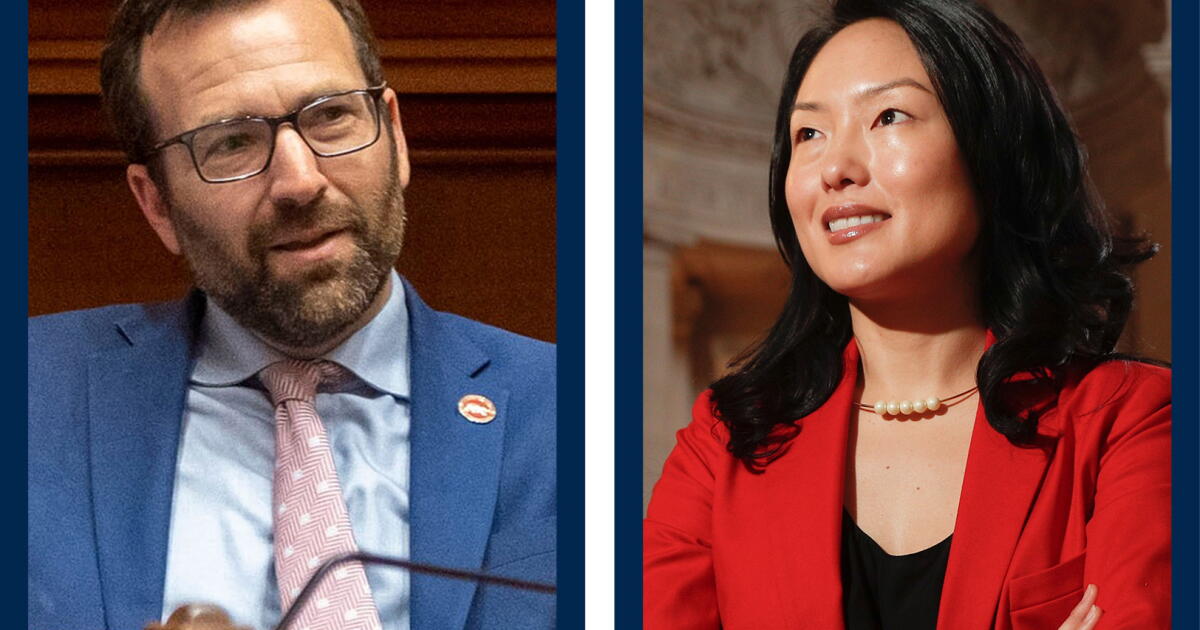
California insurance commissioner election voter guide: Allen vs. Kim

p]:text-cms-story-body-color-text”>

The cornerstone of Kim’s platform is her call for the state-run property disaster insurance program, which largely would be funded by policyholders. Coverage would be universal, with policyholders automatically enrolled. With no need to generate shareholder profits, fund marketing or pay high executive salaries, she contends the plan could better invest in fire prevention and make buildings and property more fire resilient. Such a drastic change in the insurance system would require legislation and support from the governor.

“Voters I’ve talked to don’t want to see the same old tinkering with the system, because most voters agree that it’s actually magical thinking that doing the same tinkering of the existing system is going to lead to a different result,” she said.

Allen is sharply critical of Kim’s plan, which he says is woefully short on details. Instead, he is focusing on the mechanics of improving the current system — for both homeowners and insurers. He wants to speed reviews of insurer rate applications, create a business office to attract more carriers to the state and work with elected officers at all levels to design programs that reduce fire risk of individual properties and at the neighborhood and community scale.

“I’m focused on what’s actually doable. The people who suffer from these terrible fires don’t need a 10-year experiment. Voters of all stripes, not just Republicans, are not interested in making the state a guinea pig,” he said.

Source link

Beyond Meat, Vital Farms lead most shorted consumer staples stocks below $2B (GO:NASDAQ)

supermarket trolley with candy next to pile of sugar

Tara Moore/DigitalVision via Getty Images

Consumer staples short interest was concentrated in packaged foods, food retail, and brewers among stocks with market caps below $2B.

Beyond Meat (BYND) had the highest short interest at 29.62%, followed by Vital Farms (VITL) at 24.35% and

Source link

US consumer confidence hits its lowest level since 2014 ahead of midterms | Business and Economy News

Rising goods and fuel costs are cited as key factors in the sharp drop in consumer confidence.

United States consumer confidence has fallen to its lowest level since 2014, just over one month before the congressional midterm elections.

Consumers pointed to higher costs for goods and services as the primary reason for the decline, according to The Conference Board, which released its monthly report on Tuesday.

Recommended Stories

list of 4 itemsend of list

“The Consumer Confidence Index deteriorated notably in September, following two prior months of softening,” Dana M Peterson, chief economist at The Conference Board, said in a release announcing the report.

Consumers pointed to higher prices at the pump as one of the driving factors. The average price for a gallon (3.78 litres) of petrol has jumped 37 cents over the past month, according to the American Automobile Association (AAA), which tracks daily petrol prices. The average price stood at $4.45 on Tuesday, compared with $4.08 a month ago.

“Oil and gas prices in particular rose to new heights, reflecting September’s surge in fuel costs. Comments about war/conflict eased this month but remained elevated,” Peterson said.

The consumer confidence report comes a day ahead of a key inflation report that the Federal Reserve uses to gauge the state of inflation, the personal consumption expenditures (PCE) index, which was up 3.7 percent in June from a year earlier.

The US central bank raised interest rates for the first time in three years earlier this month, driving up costs of credit cards and car and bank loans. It is set to make another decision on interest rates at its October 27-28 meeting, putting pressure on Republicans as consumer sentiment tumbles across political affiliations.

Consumer confidence fell among all political affiliations, according to the report, the second-to-last major consumer confidence reading before the midterm elections, which will determine the balance of power in Washington, DC.

US consumers think the Democratic Party would handle the economy better than their Republican counterparts, with 42 percent saying Democrats would do a better job compared with 34 percent for Republicans, according to a recent Marist poll.

US markets are only slightly lower as the trading day comes to a close. The tech-heavy Nasdaq closed down 0.08 percent, the Dow Jones Industrial Average declined 0.2 percent and the S&P 500 was down 0.1 percent.

Source link

Paramount settlement is less than desired, more than nothing

Did California come out a winner when Atty. Gen. Rob Bonta settled a multi-state lawsuit against Paramount Skydance on Monday, allowing its $111-billion purchase of Warner Bros. Discovery to move forward?

That’s the question everyone is trying to figure out, as the 32-page agreement is parsed, with pundits pouring over minutiae of cable streaming and tax credits. I’ll leave that to the business experts, but I’m here to give you a big picture of politics, power and possibilities — and one short but unsatisfying answer about whether this deal is good for the Golden State: Yes and no.

I’ll start with this: Did California win is the wrong question. There was always something bigger at play here that was lost behind the fear of further decimation to an industry so central and crucial to the state. The question the lawsuit asked is, “Do we live in an America where government institutions are so broken that power makes its own rules?”

The settlement might not give the entertainment industry all it hoped for but it was “a fight worth fighting,” said George Hay, a professor at Cornell Law School and a former attorney with the U.S. Department of Justice’s Antitrust Division, because it sought to answer that question in favor of consumers, and showed that states like California can and will step up to fill a dangerous void.

Under the Trump administration, the U.S. Department of Justice hasn’t so much abdicated its responsibility to enforce antitrust laws — it has embraced an oligarchic ethos that seems happy to feed the American economy into the mouths of behemoths, allowing companies such as Paramount free reign to gobble up whatever lies in their paths like an old-school Pac-Man.

Our president personally invests in industries he’s supposed to regulate (I’m looking at you, Silicon Valley). Corporations dump money into elections that average people can never hope to match. The free press is under increasing attack with multiple outlets banned from the White House — including CNN, which Paramount hopes to own along with CBS and whose editorial independence is at least addressed in this settlement, albeit weakly.

States, even powerful states such as New York and California, don’t have the muscle or money of the federal apparatus, and were never meant to play the role of national enforcer on issues such as these.

The fact that Bonta and the 11 other states involved in the antitrust litigation pulled together not just a credible, but effective team is a victory for all American consumers, and a message to other Pac-Man companies out there that even if federal regulation is on life support, there are still rules.

The states “showed that they could quickly and effectively put together a formidable litigation team, and achieve significant initial success. That’s a big deal. That that changes the role of the states for a long time into the future,” said William Kovacic. He’s a law professor at George Washington University and a former chair of the Federal Trade Commission, so like Hay, he knows a bit about antitrust enforcement.

“This has a ripple effect that goes through the entire federal enforcement system because they showed they could do something that was very difficult,” Kovacic said. “That’s a big institutional win for the states.”

To hear Bonta describe it, California is absolutely a winner in its own right, though, and this will be “very good” for the state. Which to be fair, is exactly what any decent politician would say.

“It will be good for consumers, good for prices, good for jobs, good for choice, quality, competition,” Bonta told me Monday afternoon.

Kovacic is a bit more measured, calling it a “modest win.”

The deal has many parts, but it covers a five-year period in which the new Paramount mega-studio must release between 30 to 32 films each year, many in theaters and some independent. It also has to keep open and running both the Paramount and Warner Bros. lots, a not-insignificant source of L.A. jobs — and maybe one of the most visible wins for the city.

The new company also must spend at least $1.5 billion over the five years on production in the U.S., and increase that figure if there are certain, uncapped federal or state tax credits available to them.

In California, where the budget deficit is in the billions, creating uncapped credits may be a hard sell, but Bonta told me he’s making it a priority in the next legislative session and will push the next governor — likely Xavier Becerra, who once held his job — to back them.

“I think we’re going to get it in California,” he said. It’s somewhat important because the settlement doesn’t specifically address production in California — and tax credits from other states have been drawing production away for years.

We’ll see how successful Bonta is on that endeavor — he hasn’t always gotten what he wants from governors.

Much has been made about the recent threats from Paramount Skydance Chief Executive David Ellison to move business operations out of California. That pressure has been cited as one of the factors pushing the state to settle, and it probably was — but not just because of Ellison.

Gov. Gavin Newsom made it clear that he preferred a settlement to a drawn-out court case, especially after that threat.

You may recall our governor has presidential aspirations, and is in a long-running battle with Trump over whether California is a wasteland for business beset by fraud and regulation, or a utopia of economic activity fueling the world’s fourth largest economy. Paramount reupping its threat to leave, or even worse, decamping for someplace such as Nashville, is not a great look.

So this case, which was never going to be a slam-dunk to win in court and which could easily have run into 2028 if it proceeded, was never a winning issue for Newsom.

Newsom Monday called the deal “a practical path forward,” which it definitely is — for him.

Hay, of Cornell, said it was a “big blow” when the governor failed to back Bonta and go all-in on litigation.

“Once [Newsom] once came out on the other side, it made things really, really difficult,” Hay said.

So there was pressure on Bonta to make a deal even from his friends, though Bonta told me that “what you call pressure was just noise to me. I never felt pressured in this process.”

But of course, nearly everything that happens in politics and litigation is about pressure — who has the power to apply it and who has the power to withstand it. Bonta, to his credit, applied pressure where Paramount never expected it.

“If I were in California, I’d be proud of the attorney general. At the end of the day, he got the best he could,” Hay said. “I’m glad they were there when the government bailed out because it made Paramount tow the line, and maybe that’s all that we could hope for.”

The Paramount settlement is more about possible than perfect, but it proved that states — and consumers — are not powerless, and every brawl that proves that is, as Hay said, a fight worth fighting.

Source link

Arab News | Saudi Arabia’s consumer spending holds steady at $4.2bn

RIYADH: Saudi Arabia’s consumer spending held steady at SR15.8 billion ($4.2 billion) in the week ending Sept. 5, even as education-related transactions pulled back following the previous week’s back-to-school surge, official data showed. 

The Kingdom’s point-of-sale transactions edged up 0.2 percent from the previous week, while the number of transactions rose 4.8 percent to 267.75 million, according to figures from the Saudi Central Bank, also known as SAMA.

The largely flat overall spending masked a sharp correction in education-related transactions, which fell 31 percent week on week to SR755.97 million, after climbing well above SR1 billion as the new academic year got underway. 

Talking to Arab News, economist Talat Hafiz said the pattern suggests that Saudi consumer demand is becoming broader, more normalized, and more resilient, rather than being driven mainly by seasonal spikes such as back-to-school spending. 

“The rise in transactions even as education spending normalizes indicates that households are continuing to spend across a wider range of goods and services,” he added.  

“Overall, this points to solid underlying household spending capacity heading into the last quarter of the year, particularly as inflation remains contained and employment and income conditions continue to support consumption,” said Hafiz. 

Sectoral spending 

According to SAMA, spending on food and beverages amounted to SR2.69 billion, representing a weekly increase of 3.9 percent. 

Transactions in restaurants and cafes stood at SR1.81 billion, up 1.9 percent, while spending on apparel, clothing and accessories totaled SR1.28 billion, down 9.6 percent. 

The transportation sector witnessed POS transactions worth SR1.15 billion, followed by spending at gas stations at SR1.1 billion. 

Across healthcare, the value of transactions stood at SR964.71 million, up 7.9 percent, while spending on professional businesses and services amounted to SR906.1 million, up 3.8 percent. 

Jewelry stood out as the week’s biggest gainer, with transactions surging 25.4 percent week on week to SR345.61 million, while books and stationery reversed course, falling 8.6 percent to SR182.49 million after the previous week’s back-to-school jump. 

Geographic breakdown 

Riyadh dominated POS transactions, with spending in the capital reaching SR5.53 billion, marking a 0.6 percent increase compared with the previous week, as the number of transactions climbed 5.6 percent to 88.2 million. 

Jeddah witnessed transactions amounting to SR2.14 billion, up 1.4 percent, while the total number of transactions stood at 29.68 million. 

In Dammam, consumer spending totaled SR762.42 million, roughly flat from the week before, followed by Makkah at SR614.20 million, down 1.9 percent, and Madinah at SR592.46 million, down 4.1 percent. 

Alkhobar recorded SR427.12 million in transactions, down 2.3 percent, while spending in Buraidah rose 2.9 percent to SR403.31 million.

Abha posted the sharpest citywide decline at 7.5 percent, with transactions falling to SR199.18 million. 


Source link