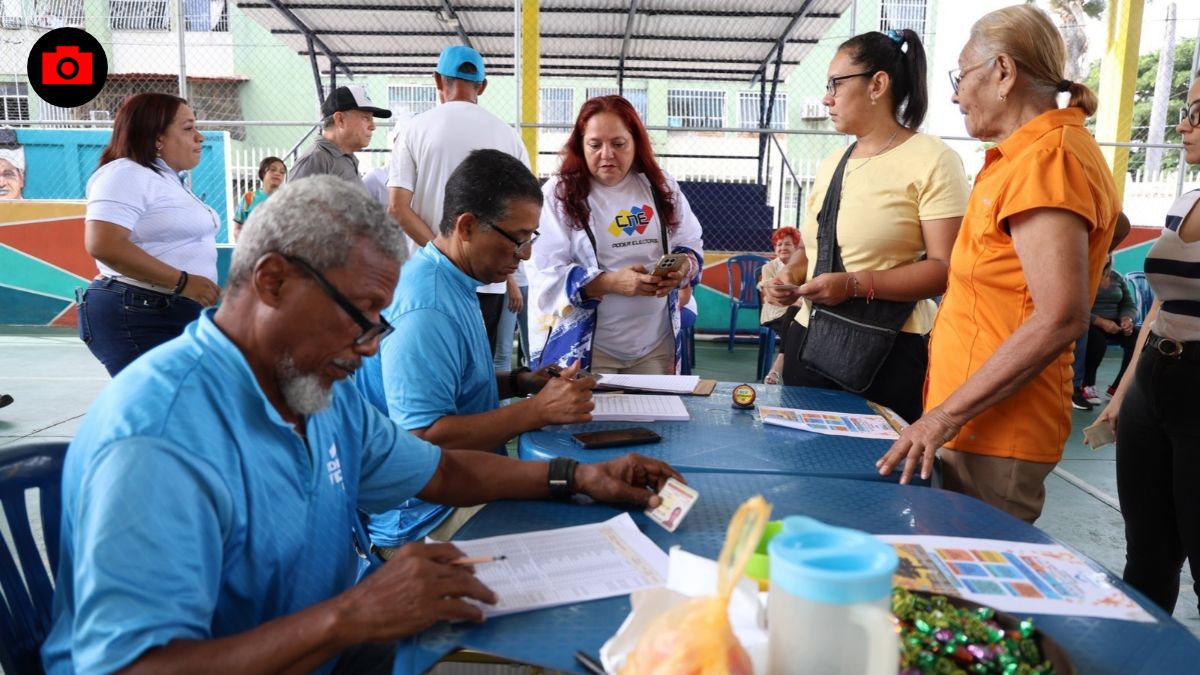
Venezuelans Select State-Funded Local Projects in New Popular Consultation
Condominium boards will also receive funds for the first time. (MinComunas)
Mérida, October 20, 2026 (venezuelanalysis.com) – Venezuela held its second National Popular Consultation of the year on Sunday, October 18, as voters chose local projects to receive state funding.
Organized by communes and communal circuits within the Ministry for Communes and supported by the National Electoral Council (CNE), the vote took place at over 11,400 voting centers nationwide.
More than 37,000 proposals, debated and prioritized in local assemblies under the Seven Transformations (7T) framework, were put to a vote in 5,418 communes and communal circuits. Most options focused on infrastructure and basic service repairs, including addressing water supply and electricity issues.
In this event, and for the first time, over 400 condominium boards took part as well. Venezuelan Acting President Delcy Rodríguez announced the expansion of the electoral exercise to residential instances outside the traditional popular power organizations.
“I want to congratulate all the Venezuelan citizens who have participated in this consultation, because it reflects a genuine belief in a democracy that is growing stronger,” Rodríguez said on state broadcaster VTV on Sunday night. “The funds for these projects are now ready to be allocated for their execution.”
Each winning initiative is slated to receive the equivalent of US $10,000, with local organized communities charged with executing the works and rendering accounts. This was the sixth consultation held since President Nicolás Maduro launched them in 2024.
Two days before the vote, Minister of Communes Ángel Prado, during a meeting with communes in Lara State, explained that the resources would be transferred in stages: an initial disbursement to begin project execution, followed by subsequent disbursements contingent upon the progress of the work. This includes monitoring the projects and ensuring accountability to the communities.
Communities voted on a range of initiatives tailored to local needs. The selected projects included extending the electrical grid, equipping school canteens, expanding irrigation and sewage systems, replacing gas cylinders, maintaining public roads, and developing livestock-related initiatives.
In Cojedes State, the winning project in Los Vencedores Hijos de Chávez Communal Circuit was the extension of the high- and low-voltage electricity network. Meanwhile, in the 5 de Marzo Comandante Eterno Commune in Caracas, the winning project focused on rehabilitating walkways and stairs in a section of the area.
Alongside the popular consultation, activists in Simón Planas, Lara State, also set up a signature drive to oppose mining exploitation in the local Cerro La Vieja. Local organizer José Luis Sifontes told Venezuelanalysis that more than 6,000 people signed the document calling on the government to declare Cerro La Vieja a natural park.
Grassroots resistance has stopped previous efforts to drill for limestone in the area, with communal organizations denouncing that mining will contaminate the soil and water sources.
Edited by Ricardo Vaz in Caracas.