City breaks

I’ve been to both cities claiming to be the world’s greatest – there’s a clear winner

Cape Town and Rio de Janeiro are two cities on most people’s bucket lists, but which one reigns supreme when it comes to the best – one writer compares the two

Days shaped by sand, surf and salt air. Nights by bars, beats and grills. All played out in a city somehow woven between soaring mountains and sun-swept shores. Sounds good, no? Well this is both Brazil’s Rio de Janeiro and South Africa’s Cape Town. Then chuck in vibrant waterfront neighbourhoods, primeval hiking trails, world-class food and drink, plus a melting pot of cultures and you’ve got what it takes to be the greatest city in the world. Which is what both have boldly claimed.

But they both can’t be right, so which takes the crown? I’ve lived in samba-soaked Rio, and recently spent a month exploring the city straddling Africa’s southern tip, so may just be qualified enough to have a say in the debate that’s enraged Brazilians and South Africans online. The neutral voice of reason ’n’ all that.

Weather

Rio has a glorious tropical climate. Hot and humid, with sweltering summers often as high as 40C. You’ll rarely feel cold, but if you’re of a sensitive disposition, it may be too much heat to handle. Plus biblical rains can wash your trip away.

Conversely, Cape Town has a Mediterranean-style climate. Dry, warm summers with highs of a perfect 30C. Fantastic if it weren’t for one thing – the wind. Known as the “Cape Doctor”, it’s like nothing I’ve ever experienced. Sweeping in off the ocean, it can make a hot summer’s day feel like autumn. Worse, it can be downright violent, turning beaches into giant sandblasters, stinging your skin, near blinding you. Bad doctor.

Verdict: Rio is the winner.

Beaches

Oh my, what an amazing array of beaches they both have, like no other city in the world. Apart from each other, of course. Both have smaller arcing sands near the city centre, becoming longer and more pristine the further out of town you head.

Just south of the centre, Rio has the world-famous Copacabana and Ipanema beaches, broad stretches of golden sand where the whole city decants to at weekends to let it all hang out in too-scant swimwear.

Cape Town has the likes of smaller yet very pretty Sea Point, Clifton and Camps Bay, which were far more debonair than I expected. More like the Cote d’Azur than the Cape of Good Hope.

Further up the coast, Rio has beautiful Barra, and Cape Town kite-surf strewn Bloubergstrand, giant stretches of glorious open coastline pounded by those big blue waves.

But the key difference is that Rio’s waters are much warmer, whereas Cape Town’s side of the Atlantic is surprisingly cold year-round, plus that wiiiind, meaning you don’t see many people swimming – the complete opposite of Rio.

Verdict: Rio takes the crown.

Mountains

Both have an imperious plethora of peaks. Cape Town’s most famous is Table Mountain, which your eyes can dine upon from all over the city. Rio’s is craggy Corcovado, atop which the statue of Christ offers redemption to thousands of tourists daily. But there are countless breathtaking viewpoints from many other fantastically surreal mountains, plus hiking trails that transport you into oh-so-big nature – lush jungle in Rio, temperate forest in Cape Town – a world away from the urbanity below.

Verdict: All too amazing to call. Draw.

City centres

Surprisingly, their city centres are the least impressive aspect. Both have smallish downtowns and historical quarters, which are nice but nothing impressive compared to some global cities. Much better are the colourful colonial-era neighbourhoods – Lapa in Rio, Bo Kaap in Cape Town – where you can join the tourist hordes to get your Insta-pics.

Down by the water, Rio’s Port Zone has cool museums and galleries, while Cape Town’s upmarket V&A Waterfront is very pretty with great views and shops, albeit a tad generic. Then both have plush beach front neighbourhoods, where you can whimsically while away days on the golden sands or trendy terraces.

Verdict: Again, too close to call. Draw.

Food and drink

Both have excellent culinary scenes, especially their meats and barbecues. Yum. But Cape Town has a much broader option of cuisines and restaurants, local and international, and during the entire month I was there I didn’t have a single bad meal. Caipirinhas and other potent cocktails get the party rocking in Rio, but Cape Town’s wines are next level. Despite being of proud Provençal stock, I can freely admit their rosés were the best I’d ever tasted. Perfect sundowners.

Verdict: Cape Town is the clear winner here.

Prices

Both have similar prices, which are considerably cheaper than the UK and Western Europe. Decent budget meals are around £4-£10, and mid-level accommodation around £50-£100pn. There are plenty of upmarket options, which are also relatively good value for money.

Verdict: Draw.

Nightlife and music

Both cities come alive even more when the sun sinks into the ocean. Your more mainstream bars and restaurants line the beachfronts, while cool bar-clubs are found in the more hipster hoods of Ipanema and Lapa in Rio, and Bree St and Woodstock in Cape Town.

Both cities are home to world-class music, Rio sways to the sound of samba, rap and “funk”, whereas in Cape Town it’s Afro house, amapiano and 3-step that get things thumping.

Verdict: Cape Town (but mostly due to my penchant for house music), although if we were judging it on Carnival season alone, nothing comes close to Rio!

Vibe

Brazilians are famously some of the most friendly and welcoming people in the world, which is true for Rio, but like any big city, you get plenty of miserable buggers too. People of all shades were friendly with me when I was in Cape Town, yet seemingly not that much with each other.

Sadly, both cities are still riddled with historical divisions between class and race, yet in Cape Town the legacy of Apartheid looms large indeed, and as a tourist you unfortunately won’t see much of the native African side of the city. The division feels tense.

Verdict: Rio.

Overall verdict

My biggest gripe with Cape Town is that as a tourist, you only really see the predominantly rich, white neighbourhoods that feel more like Canada, the US and Australia than Africa.

In Rio, though, everywhere is very Brazilian, no matter the social makeup of the area. Plus the beaches are a leveller, especially Copacabana where the whole city congregates for communal sun-worshipping, eating, drinking, sport playing, and strutting of stuff, no matter if black, white or brown, muscle-bound or beer-belly beautiful – nobody seemingly cares.

And that, for me, is the key difference – which is why Rio is my overall winner.

Source link

European city with incredible views, delicious food scene and fewer crowds than Paris

This city offers stunning hidden walkways, picturesque views and a world-class cuisine – it’s also far less crowded than other destinations in Europe so it’s worth adding to your bucket list

If you’re looking for your next city break destination, then this is one place you must visit. When you think of weekend getaways, Barcelona, Paris and Budapest are among the most popular spots for Brits.

Whether you’re keen for an eating holiday or exploring some picturesque streets, this European city has it all. And the best part is, you don’t have to worry about too many crowds as you would if you were visiting Madrid or Berlin. So the place we’re talking about is in France and it’s none other than the gorgeous city of Lyon.

It is the third largest city in France and unlike the other major tourist hotspots, it certainly has fewer crowds. It does experience distinct peak times during weekends, summer holidays and of course, major festivals.

But in August, locals leave for holidays and international tourism may peak, but it’s still not enough to put you off. One woman recently flocked to the city on a trip – and she was not disappointed.

Speaking with her 21,600 TikTok followers, Reanna said: “Why is no one talking about this European city? Welcome to… Lyon.”

She explained why Lyon had won her over after spending four days as she “couldn’t get enough of how picturesque it is”.

Content cannot be displayed without consent

Exploring Picturesque Streets and France’s Culinary Capital

The travel content creator added: “From the colourful streets and hidden passageways to incredible views, there’s so much to explore.”

Not only is it the third-largest city in France, Lyon is also the country’s culinary capital so if you love food, then you have to visit.

Reanna continued: “The Old Town is UNESCO-listed and full of beautiful Renaissance architecture. It’s also considered the birthplace of cinema, thanks to the Lumiére brothers.”

Lyon has no shortage of attractions, from strolling through secret covered traboules (covered pedestrian shortcut) to taking in the breathtaking hilltop Basilica of Notre-Dame de Fourvière.

Kick things off with some sightseeing by strolling through the cobbled streets of one of Europe’s largest Renaissance old towns. Keep your eyes peeled for hidden shortcut passageways that wind through buildings and corridors.

Make sure to hop on the funicular for breathtaking views across the city. When it comes to food, there’s an absolute wealth of choice on offer. Tuck into local meat dishes and pink praline tarts at traditional eateries.

Top Attractions, Parks, and Flights from the UK

A visit to Les Halles de Lyon Paul Bocuse is well worth your time, where you can browse bustling indoor food stalls brimming with local cheese, wine, and meats.

For parks and museums, the Parc de la Tête d’Or boasts a vast lake, botanical gardens and a free zoo area. Many visitors also flock to the Musée des Confluences, a striking modern museum perched at the junction of the city’s two rivers.

A direct flight to Lyon from the UK will take about 1 hour and 45 minutes on average. If, for example, you’re departing from London this might take slightly less than if you were going from up north.

Many airlines offer multiple flight times to the French city, like British Airways and easyJet.

When you fly to the destination, you will land at Lyon-Saint Exupéry Airport (LYS) which is considerably close to the main city, taking around 45 minutes with public transport.

If you want to stay close to the city centre, prices range from £30 to £45 per night for budget hotels and basic rooms.

As for a standard hotel, this will cost about £200 or slightly more depending on what star you go for.

Source link

UK’s ‘cheapest city break’ has £79 hotels, independent shops and epic nightlife

If you’re looking for an inexpensive weekend away in autumn, you don’t need to go far, as this UK city has been named the cheapest for a budget-friendly break and it’s packed with history and culture

Autumn can be an excellent time for a weekend away, and if you’re looking forward to exploring some cities in the cooler weather, then you might want to consider some hidden gems in the UK.

Research carried out by ticket sellers SeatPick has shown the best UK cities for a budget friendly concert weekend, but you don’t need to have plans to see a gig to enjoy the top destination. There are plenty of historic and cultural sites to enjoy, and its famous for its buzzing nightlife.

Newcastle upon Tyne took the top spot to be crowned the UK’s cheapest city break, beating Liverpool into second place and Birmingham into third. Gilad Zilberman, CEO at SeatPick said: “Newcastle combines a vibrant nightlife with one of the UK’s most affordable city-centre accommodation.

“With average hotel prices of just £79 per night, a walkable centre and plenty of bars and restaurants close to major venues, it’s one of best-value cities for turning a concert into a weekend away.”

One of Newcastle’s most iconic sights is the Gateshead Millennium Bridge, and it’s worth visiting at night when its lit up to get the best photos. At weekends, visit the Quayside Sunday Market for a relaxed day walking along the waterfront with food stalls and arts and crafts.

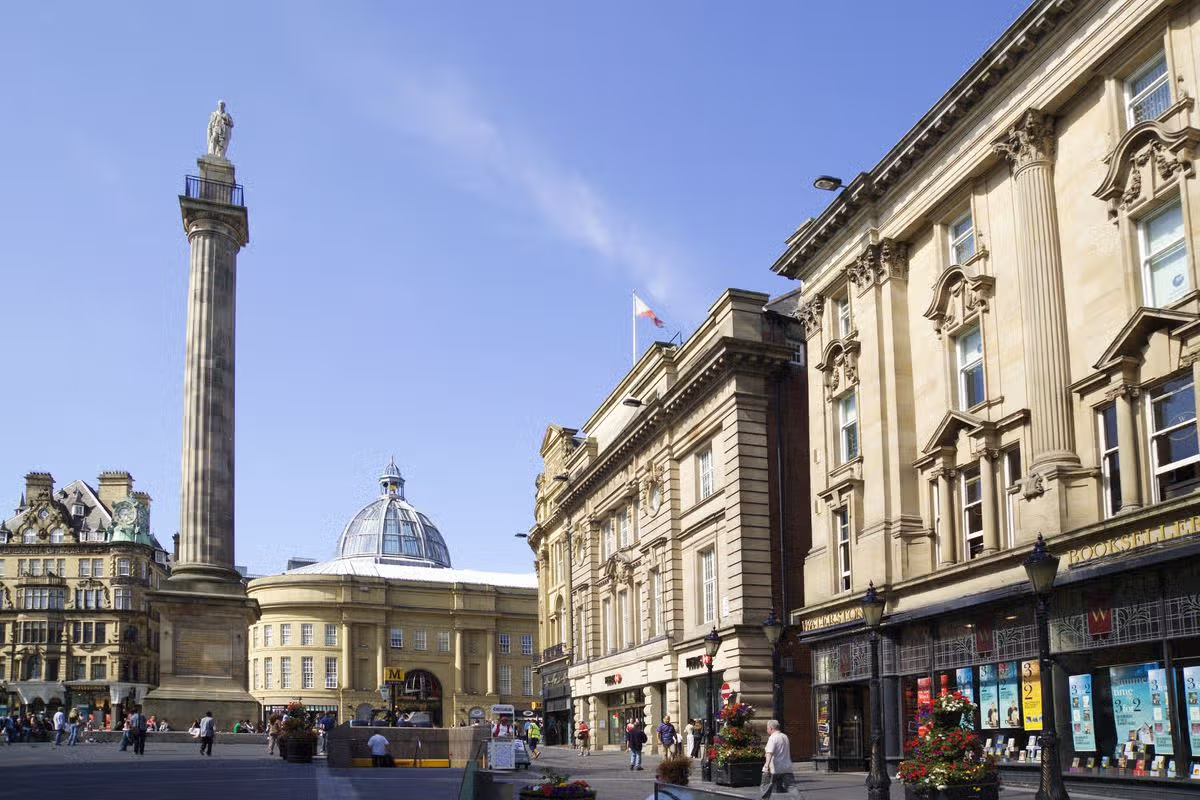
The 12th century Newcastle Castle is also a major landmark. Walk through the rooms and enjoy immersive experiences that bring its past to life before heading to the roof for panoramic city views. Another place to see the city from above the rooftops is from Grey’s Monument. Climb 164 steps up the narrow winding staircase, but be warned, it’s not for the claustrophobic or those who get tired after a couple of flights of stairs.

You might prefer to stay on the solid ground of Grey Street, enjoying the historic vibes of its Georgian architecture, exploring colourful art galleries, or simply sitting in one of its many international restaurants, classic pubs, or stylish bars. You’ve also got major shopping streets and centres just a short walk away, with lots of independent stores among high street favourites.

Newcastle also has a lively cultural scene, and in the evening you can enjoy performances at the Victorian-era Tyne Theatre & Opera House, or the contemporary Northern Stage which has performances from Shakespeare to family-friendly shows. The city is also famous for its nightlife, its compact centre making it easy to go out without spending a fortune in taxis. Popular areas for nights out include Collingwood Street, sometimes known as the The Diamond Strip because of its stylish bars and Bigg Market which has inexpensive and vibrant clubs.

Of the second place choice, Gilad said: “Liverpool combines a thriving music scene with one of the UK’s best-value city breaks. Its compact city centre means fans can explore the Royal Albert Dock, Bold Street and the Cavern Quarter before heading to the M&S Bank Arena or nearby venues without relying on taxis for longer journeys.” While Birmingham was praised for its “excellent transport links and a compact city centre”.

Have a story you want to share? Email us at webtravel@reachplc.com

Source link