
Second Chinese Submarine Drone Mothership Emerges
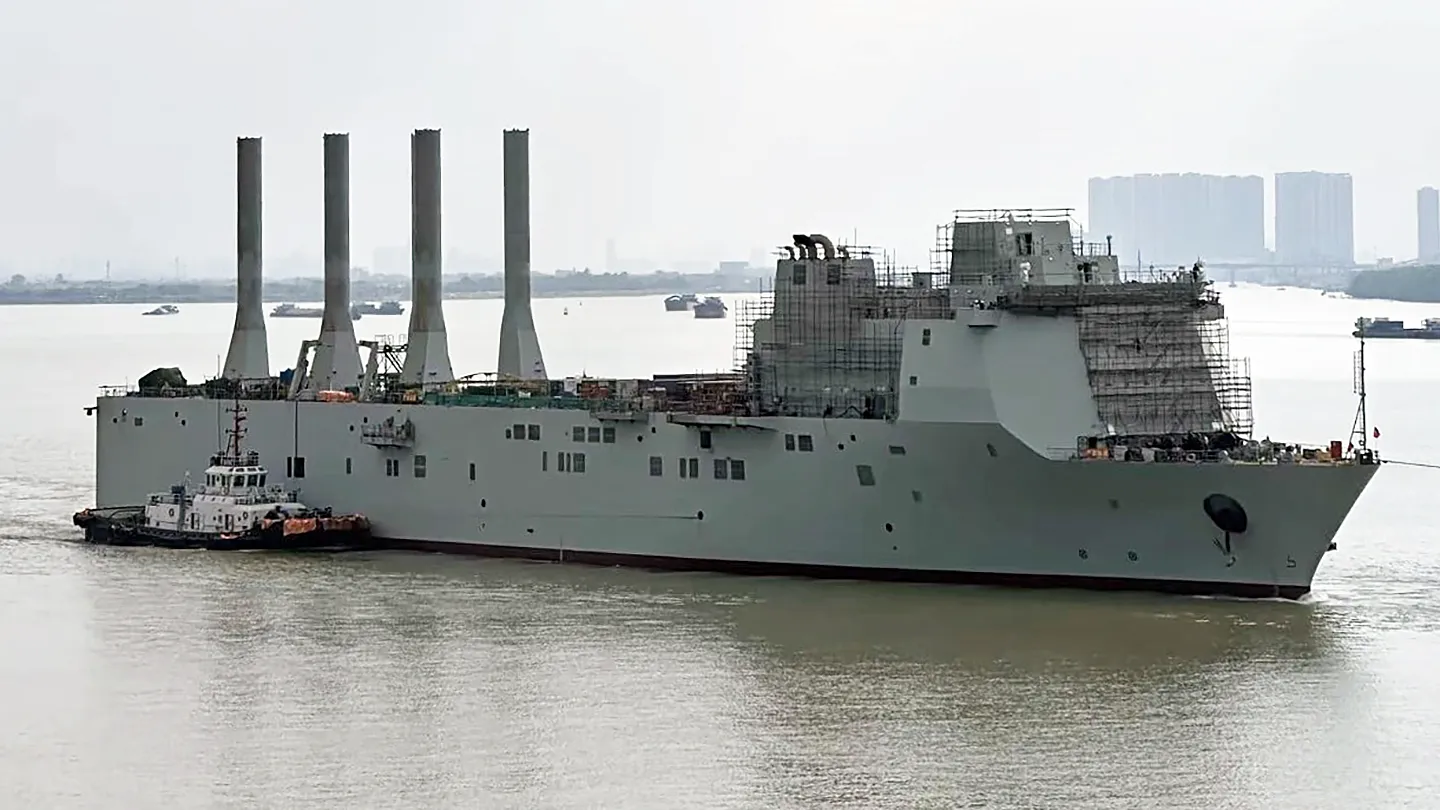
Nearly a month ago, we reported on a uniquely configured vessel that was far along in its construction at Hudong-Zhonghua Shipyard on Changxing Island in Shanghai. The intentions behind this design appeared to be as an uncrewed underwater vehicle (UUV) mothership, capable of deploying a handful of very large vehicles or many more smaller ones via its stern garage door and well deck. Its large pylons would be used to lift the vessels up and down out of the water and to different levels in the ship. Now it appears China has not just one, but two of these vessels nearly complete.
Make sure to read our initial report on this vessel configuration for full context by clicking here.

The new image was taken in Guangzhou and the vessel has a near identical shape, but with smaller proportions and minor changes to its overall moldline, compared to the larger one in Shanghai. This new vessel appears to be about a third smaller overall than its counterpart. The lift towers number six in total instead of six larger ones and six smaller ones on the Shanghai vessel. Regardless, the major design features are all there, including the flight deck and hangar behind the forward superstructure, the location of the smokestacks, and so on.

While two of these assets could still be considered largely intended for experimental use, a growing fleet would have increasing tactical and even strategic importance. Being able to easily launch and recover large numbers of UUVs, or a few very large ones, far from Chinese shores would provide an asymmetric capability. A fleet of ships that is dedicated to deploying, recovering, and tending to these systems, some of which can remain on patrol for very long periods, would be a major indication of how important China sees UUV operations as part of its future strategy.

There have been rumors that these vessels are part of a larger overall program that will see more ships with similar capabilities constructed. Once again, this would be a strong indication that these vessels’ utility will go beyond testing and limited operational use cases. The launch and recovery of large UUVs remains a conceptual work in progress for the U.S., with nothing similar in the U.S. Navy’s inventory, as we discussed in our original post.
Large long-range UUVs can be used for many tasks, from mapping the sea floor to hunting submarines and ships to searching for mines to launching cruise missiles and drones to being turned into immensely destructive weapons in their own right that can circumvent traditional strategic defenses. For China, providing a credible threat to America’s outposts deep in the Pacific and even the U.S. seaboard would be on the table.

There is speculation online as to where exactly this vessel was built. The first place that came to mind is Guangzhou Shipyard International’s (GSI) facilities on Longxue Island, just southeast of the city of Guangzhou. GSI is a subsidiary of the China State Shipbuilding Corporation (CSSC). It is here that many of China’s most unique vessels are born. These include drone test ships of various kinds, massive beach landing barges, and giant supply ships. Upon closer review of archival satellite imagery, we can say for certain that GSI did build this ship. An image from October 2nd shows it peeking out of a covered graving yard area at the facility prior to launch.

The emergence of two of these large UUV tenders in such a short period of time underscores China’s major bet on the technologies they will support. If more ships are added to the currently known fleet of two, a clearer picture of the People’s Liberation Army Navy’s large UUV plans, and its expeditionary potential, will come into focus.
Contact the author: Tyler@twz.com

Study Finds Persistent Negative Perceptions of Chinese Americans
A century and a half after Chinese came to California, one in four Americans hold “very negative attitudes” toward Americans of Chinese ancestry, and a third question their loyalty to the United States, according to a nationwide poll scheduled for release today in Washington.
The survey of public attitudes toward Chinese Americans also found that, while an overwhelming majority of Americans admire Chinese Americans for their devotion to family, emphasis on education and diligence, nearly a quarter would not approve of marriage to a Chinese American.
Twenty-three percent of Americans said they are uncomfortable with the idea of voting for an Asian American candidate for president, compared to 15% for an African American, 14% for a woman and 11% for a Jew.
Thirty-four percent said Chinese Americans have too much influence in the U.S. technology sector. Virtually the same proportion said Chinese Americans are more loyal to China than to the United States.
Those findings would appear to reflect the residue of the federal prosecution of U.S. nuclear scientist Wen Ho Lee, who was accused of transferring nuclear weapons data to unsecured computers on behalf of China.
The poll results, coming at a time of renewed tension between the U.S. and Chinese governments, disheartened experts who have long believed that the American public’s perception of Chinese Americans and other Asian Americans is disproportionately affected by the tone of diplomatic relations. Those experts felt that some of the responses showed that Americans are woefully ignorant about Asian Americans, even in California, where an estimated 40% of the nation’s Asian Americans live.
“We find these findings startling,” said Henry S. Tang, chairman of the Committee of 100, the Chinese American leadership organization that sponsored the telephone survey of 1,216 Americans. The group’s better-known members include cellist Yo-Yo Ma and architect I.M. Pei. “It makes you wonder how not only Chinese Americans, but Asian Americans, can shake this legacy of somehow being less than 100% Americans,” said UCLA political scientist Don T. Nakanishi, director of the Asian American Studies Center.
After a U.S. spy plane collided with a Chinese fighter jet along the coast of southeast China earlier this month, a rash of talk show hosts and radio personalities called for the internment of people of Chinese ancestry. Some even urged a boycott of Chinese restaurants and made fun of Asian accents.
The release of the survey today at the National Press Club is coordinated with the committee’s 10th annual conference during which several panels will discuss the implications of the poll.
The telephone survey, conducted March 1-14 by Yankelovich Partners in consultation with the Anti-Defamation League and the Marttila Communications Group, has a margin of sampling error of 3.1 percentage points.
The main thrust of the study was to probe the public’s attitudes toward Chinese Americans. The survey also tried find out whether attitudes toward Chinese Americans were largely the same or different from those toward Asian Americans in general. It asked 1,002 respondentstheir opinions about stereotypes of Chinese Americans; 214 were asked about identically worded stereotypes of Asian Americans, according to the study. The answers were nearly identical, suggesting that prejudice against Chinese Americans is a subset of broader prejudices against Asian Americans, the researchers said.
Asians Americans were second only to African Americans as undesirable marriage partners. A third of respondents said they disapproved of marrying blacks, compared to 24% for Asians, 21% for Latinos and 16% for Jews.
As for housing, Americans preferred to be neighbors of Asians rather than blacks and Latinos. Seventeen percent of the respondents said they would be upset if an Asian moved into their neighborhood, compared to 21% for Latinos, 19% for blacks and 9% for Jews.
Asian Americans are often told that they excel in technical skills, but lack leadership qualities because they tend not to be assertive.
The poll found that 7% of Americans would not want an Asian American chief executive for a Fortune 500 company, compared to 4% who would not want an African American, 3% a woman and 4% a Jew. And the highest percentage of those surveyed objected to having an Asian American supervisor–6%, compared to 3% to 4% for the other groups.
“What’s disheartening about all of this is these negative views will continue because they are so tied to the things that really relate to our future–high technology, trade, U.S.-China relations,” said political scientist Nakanishi.
(BEGIN TEXT OF INFOBOX / INFOGRAPHIC)
On Chinese Americans
A telephone survey of 1,216 Americans age 18 and older conducted March 1-14 asked about views of Asian Ameri-cans and Chinese Americans.
*
Attitudes toward Chinese Americans
Very negative: 25%
Positive: 32%
Somewhat negative: 43%
*
Positive sentiment toward Chinese Americans (% who said “probably true”)
Have strong family values: 91%
Are as honest as other businessmen: 77%
Are as patriotic as other Americans: 68%
Place a higher value on education than do most other groups in America: 67%
Have contributed much to the cultural life of America: 56%
*
Negative sentiment toward Chinese Americans (% who said “probably true”)
Have too much influence in the U.S. high-technology sector: 34%
Always like to be at the head of things: 32%
Are more loyal to China than to the U.S.: 32%
Hard to get close to, make friends with: 28%
Taking away too many jobs from Americans: 24%
*
Note: Margin of error plus or minus 3.1 percentage points.
Source: Committee of 100

Asia markets slip amid softening Chinese reserves and persistent energ
Asian equity markets traded mostly lower on Wednesday, diverging from overnight gains on Wall Street where a pause in bond yield increases provided relief to technology valuations.
US stock futures were little changed, with Dow down 0.10%, S&P 500 up 0.05%, and
FBI arrests ‘Chinese foreign agent’ for spying on Taiwan president’s son | Espionage News
A California woman allegedly sent photos and videos of President Lai’s son and his family to Chinese officials.

Published On 5 Oct 2026
The FBI has arrested a “Chinese foreign agent” at Los Angeles International Airport accused of spying on the Taiwanese president’s son.
Wanying Zhang, also known as Heather, was arrested on Sunday before her planned departure to China, the first assistant US attorney for the Central District of California, Bill Essayli, said in a post on X.
Recommended Stories
list of 3 itemsend of list
Authorities charged Zhang, 34, of Irvine, California, with acting as an unregistered foreign agent.
Zhang surveilled Taiwanese President William Lai Ching-te’s son, the FBI said. The agency did not directly name Zhang’s alleged target, but later shared a news article identifying him as Lai Ting-yu.
The US Justice Department said Zhang travelled to Seattle in 2025 at the behest of Chinese officials. She sent photos, video and license plate information of the Taiwanese leader’s son and his family to China.
Essayli called Zhang a “Chinese foreign agent” and said she “used tradecraft to avoid detection”.
“She never notified the Attorney General she was acting for a foreign government, a federal offense,” he added.
Essayli said Zhang will appear in a Los Angeles federal court on Monday.
William Lai Ching-te and his Democratic Progressive Party say that Taiwan is already an independent country separate from China. Beijing views the island as Chinese territory.
Washington does not have formal diplomatic ties with Taiwan, but the US is bound by law to provide the island with the means to defend itself.
Earlier this week, the US delivered two F-16V Block 70 fighter jets to Taiwan as the island seeks to build its defence capabilities to deter a feared attack by China.
In January, Chinese President Xi Jinping pledged to achieve the “reunification” of China and Taiwan, calling Beijing’s long-held goal “unstoppable”.
Taiwan Coast Guard confronts Chinese fishing boats in Dongsha waters | Newsfeed
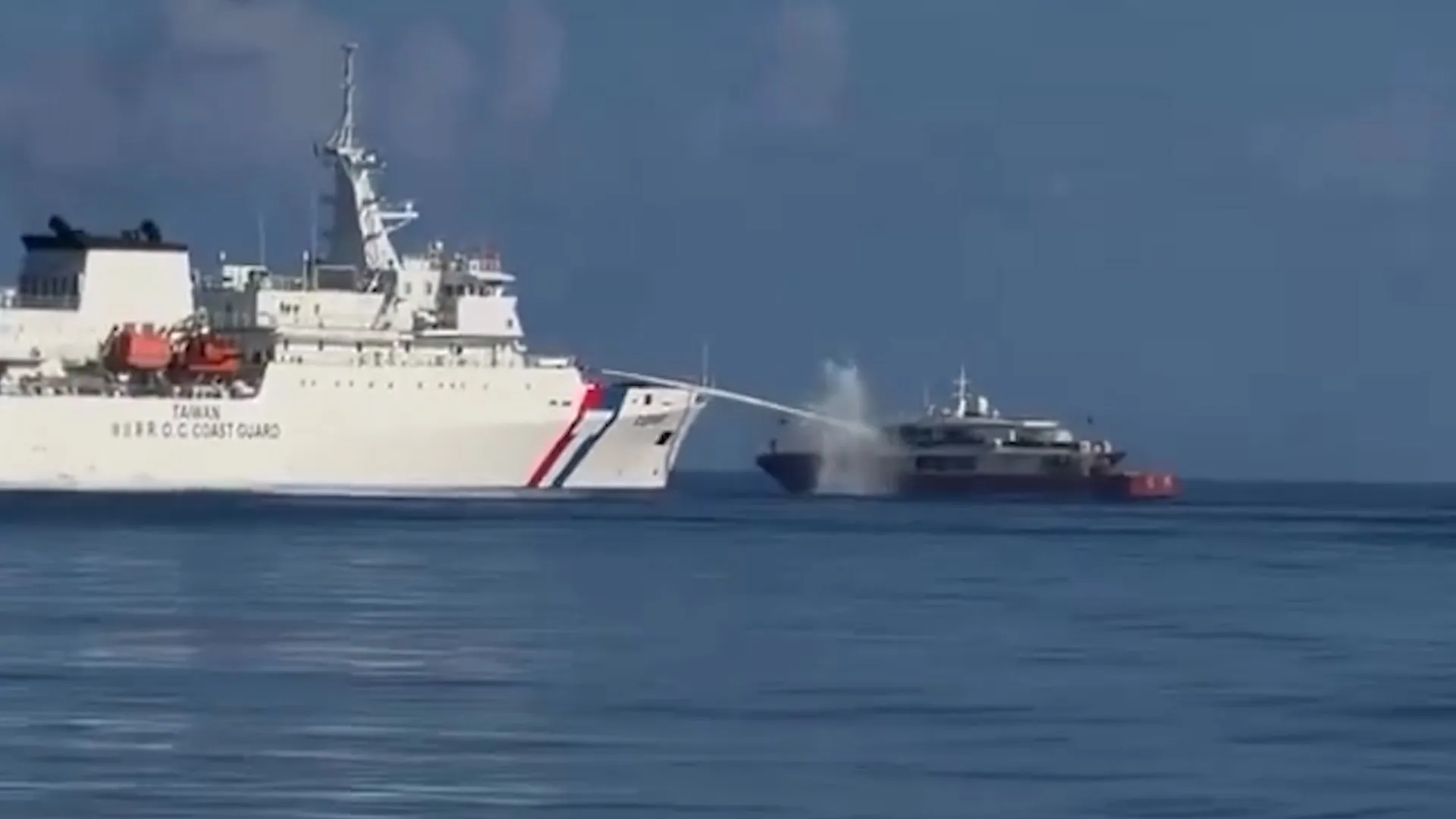
Taiwan’s Coast Guard used a water cannon to drive two Chinese fishing boats away from waters near the Dongsha Islands, citing concerns over unauthorised activity and asserting Taiwan’s jurisdiction in the area.
Published On 2 Oct 2026
Chinese hackers impersonated AI experts to target US policy minds | Cybersecurity News
TA419 hackers used deceptive tactics, impersonating real figures like a former White House AI official
Published On 1 Oct 2026
Chinese hackers have been impersonating artificial intelligence (AI) experts in the United States, including a former government official, according to a new report from cybersecurity firm Proofpoint.
The report, released on Thursday, found that in July, a China-aligned hacking group called TA419 targeted a slate of US policy experts by impersonating prominent figures, including Lynne Edwards Parker, the former principal deputy director of the White House Office of Science and Technology Policy.
Recommended Stories
list of 4 itemsend of list
The hackers, who had been operating since April 2025, first sent otherwise harmless-looking emails intended to engage a target, such as requests to join an “AI Policy Advisory Committee”, and, once they responded, the target would be sent to a fake login page designed to steal their credentials.
The targets included policy experts at think tanks, defence contractors, universities and law firms in both the US and Japan.
The report used a technique that creates a fake browser pop-up window inside a legitimate webpage that mimics an authentic-looking sign-in prompt to deceive victims and make it harder for them to realise they are handing over their information to hackers.
Proofpoint did not specifically name the targets hacked, but the Reuters news agency was able to confirm at least one of them as Alex Engler, a former White House official who now heads the Penn Center on Media, Technology, and Democracy.
Engler told Reuters that he got one of the emails, but after checking with industry colleagues, he discovered that he had received the email from an impersonator.
In February, the same group was behind the impersonation of a “prominent” Anthropic employee in efforts to target AI policy experts. The cybersecurity firm behind the report believes that the group will continue to target think tanks and other policy experts and will continue to use the identity of real-world experts to do it.
Parker did not respond to Al Jazeera’s request for comment.
Legislation on permanently banning Chinese vehicles in the U.S. stalls in the Senate (F:NYSE)

Republican Senator Rand Paul is standing in the way of the bipartisan Connected Vehicle Security Act of 2026, sponsored by Senators Bernie Moreno of Ohio and Elissa Slotkin of Michigan, from passing through the Senate. The legislation aims to prohibit the import, manufacture, and sale
Chinese Next-Generation Submarine Developments Spotted In New Satellite Imagery
Recent satellite imagery of a shipyard in northeastern China offers interesting new insights into the country’s next-generation submarine developments. The images notably show a pumpjet propulsor and other features worth examining on an example of what is generally described as a new class of nuclear-powered attack submarine, or SSN.
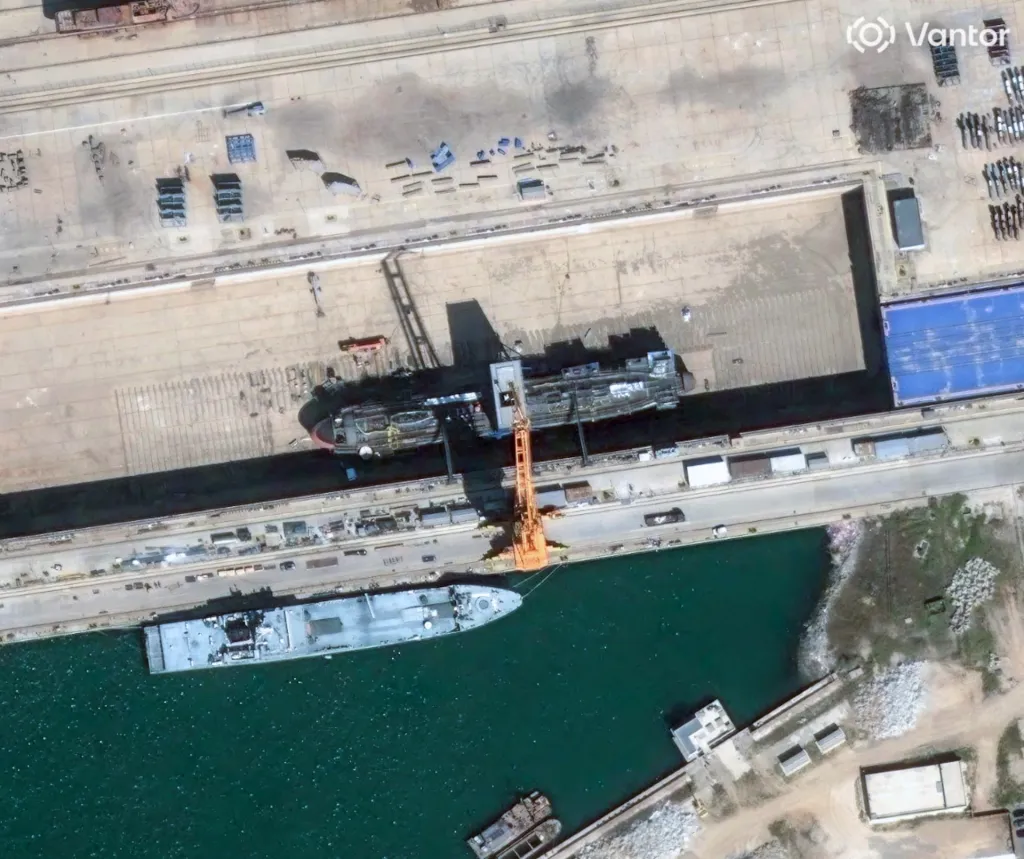
TWZ has obtained a new image taken on September 18 of the submarine in question, which is being built at the Bohai Shipyard in Huludao, from Vantor. Janes reported on this submarine earlier today, based on a separate Vantor image from September 1. The outlet also described the boat as a Type 095, a commonly used, but still unofficial designation. This is something we will come back to later on.

As mentioned, the pumpjet propulsor immediately stands out in both images. This is also understood to be a feature on the Type 093B nuclear-powered attack submarine, a significantly improved variation on that earlier design, which first emerged in the early 2020s. Compared to traditional exposed propellers and more basic shrouded types, pumpjets offer benefits for quieter operation and efficiencies, especially at higher submerged speeds.
The recent imagery also highlights the submarine’s X-shaped stern plane arrangement. This is not found on the Type 093B, which is considered to be something of a bridge between that class and the next-generation design. Broadly speaking, an X-shaped configuration offers advantages when it comes to enhanced maneuverability, efficiency, and safety, which can be particularly useful in littoral environments. It can also provide benefits when it comes to acoustic signature reductions across significant parts of the submarine’s operating envelope compared to the cruciform stern planes.
Another Chinese submarine design that emerged in 2024, currently referred to as the Type 041 or Zhou class, and that is understood to feature a hybrid nuclear/conventional propulsion system, also has an X-shaped stern configuration. The first known example of the Type 041 came to light after it appeared to have sunk in a shipyard.

An X-shaped stern arrangement also looks to be a feature on yet another new class of submarine that appeared at the JN (Jiangnan) Shipyard in Shanghai earlier this year. Initial reports also suggested that the design lacked a traditional sail. However, it has been confirmed that it has a sail, but that is very small proportionally to the overall size of the boat. Truncated sails can offer performance and other advantages, but there are trade-offs.
The image of the submarine that Janes obtained also notably shows an open rectangular-shaped section aft of the sail. The September 18 image that we received from Vantor shows a structure placed over that section of that submarine, obscuring ongoing work on that part of the boat. The Type 095 is widely expected to feature some type of vertical launch system (VLS) array able to accommodate a variety of anti-ship and land-attack cruise missiles, as well as potentially hypersonic types. The Type 095 is also sometimes referred to as a guided missile submarine, or SSGN, as a result. The open area seen in the September 1 shot could be where the VLS array is set to be fitted. It might also provide access to the reactor compartment or another area of the submarine.
Interestingly, the September 18 image also shows what look to be at least two relatively large circular openings, side-by-side, at the bow end of the submarine in front of the sail, the purpose of which is not immediately clear. There is a possibility these could also be for vertically launching munitions or other payloads. As a point of comparison, U.S. Virginia class nuclear attack submarines, starting with the Block III version, have two large-diameter Virginia Payload Tubes (VPT), one in front of the other, in the bow in front of their sails. At the same time, the openings on the submarine in Huludao also appear to be in a position that is very close to where the submarine’s main sonar array would be installed, and they could be tied to that aspect of the design, too.


“I think it’s too early to be sure about the VLS configuration from publicly available imagery. I realize people assume the large rectangular space halfway behind the sail is the VLS, but I am not sure this is the case and I’d caution to jump to conclusions. The space could also be related to work on the reactor compartment,” Alex Luck, a naval analyst who closely tracks submarine and Chinese navy developments, told TWZ. “With Type 093B, the VLS after launch was initially covered with a tarp, and then the installed launchers were readily visible quite quickly during the fitting-out process. The work process may change with these newer boats, but the different appearance during launch and fitting out needs to be considered in that regard.”
“I do expect Type 095 to have a VLS of some sort, but I am not sure as of yet what the configuration would look like, or where exactly it is located,” he added.
The bigger outstanding question may be exactly what type of submarine is currently being built now at the Bohai Shipyard. Based on a review of additional imagery from Planet Labs’ archive, the boat appears to be around 394 feet (120 meters) long. When the first example of what was assessed to be a Type 095 emerged in Huludao in February, it was estimated to have a length of roughly 361 feet (110 meters). The ‘small sail’ design that broke cover earlier this year in Shanghai is also estimated to be some 394 feet/120 meters long based on available imagery, but also looks to be narrower than the boat presumed to be a Type 095 in February.
“One significant question is the nature and difference between the boat launched by Bohai in February, and the two newer hulls launched in late May/early June both by Bohai and at Jiangnan in Shanghai,” Luck, the naval analyst, also told TWZ. “Specifically, we do not quite know whether they are for different operational roles, or rather a two step development for one final configuration of a new SSN. I think the latter is at least plausible.”
“A related question then is what boat we are looking at now with the new imagery, i.e. the February boat or the newer hull Bohai had launched,” he continued. “Without exact and reliable measurements that question for now is unresolved in the public discourse. For now we need more, and more detailed imagery, including of the different boats together, to clarify these aspects.”
“This [September 1] image reinforces my impression that the boat launched in February may have been a one off not including the full spec featured on the notional 095A launched by Bohai and Jiangnan in late May. We’ve already seen both versions side by side in Bohai,” Luck also wrote on X after Janes‘ published its report.
Regardless, the emergence in recent years of so many new, more modern submarines, and across what appear to be several distinct classes, is significant. It is no secret that China’s People’s Liberation Army Navy (PLAN) is working to significantly expand the size and capabilities of its submarine force with a clear eye toward extending operations further and further out in the Pacific, at least. In the past, U.S. officials have publicly said the overall quality of newer Chinese submarines has been getting closer in parity to American designs.
“The PLA Navy is executing a significant strategic shift from diesel-electric to all-nuclear construction, representing a fundamental departure from historical construction patterns,” U.S. Navy Rear Adm. Mike Brookes, head of the Office of Naval Intelligence, wrote in prepared remarks ahead of a hearing before members of the U.S.-China Economic and Security Review Commission in March.
In particular, the Type 095, as well as the new Type 096 nuclear-powered ballistic missile submarine, “represent next-generation platforms expected to enter service during the late 2020s through 2030s,” Brookes also wrote at that time. “These submarines will incorporate substantial advancements in nuclear reactor design, sensor performance, weapons integration, and noise quieting technologies.”
Submarine modernization efforts are just one aspect of a larger effort by the PLAN to expand its capabilities above and below the waves. Chinese shipyards have also been producing ever-more capable aircraft carriers, amphibious assault ships, destroyers, frigates, and more in recent years, as well. The pace of China’s construction of new surface ships and submarines has also been growing, creating a particularly significant and still-widening disparity in this regard with the U.S. Navy. This is something that has become increasingly concerning, as TWZ routinely highlights.
Work in Huludao, as well as shipyards elsewhere in China, is certainly already revealing interesting new insights into China’s next-generation submarine efforts.
Contact the author: joe@twz.com