chief

Fla. Election Chief Aware of ‘Historic’ Role

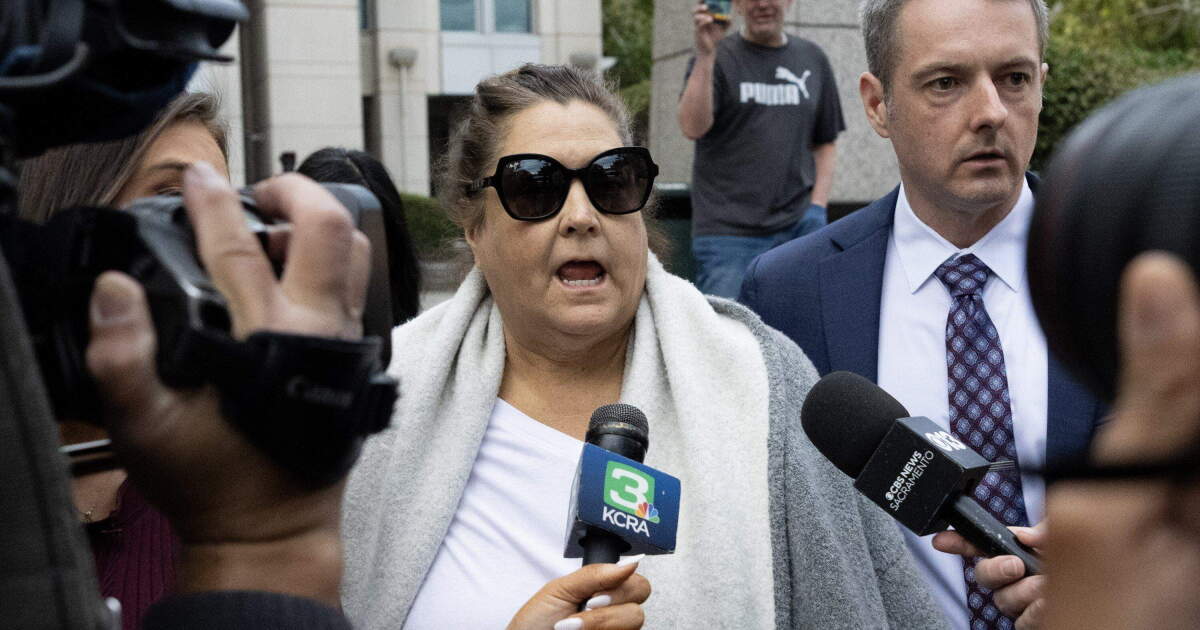
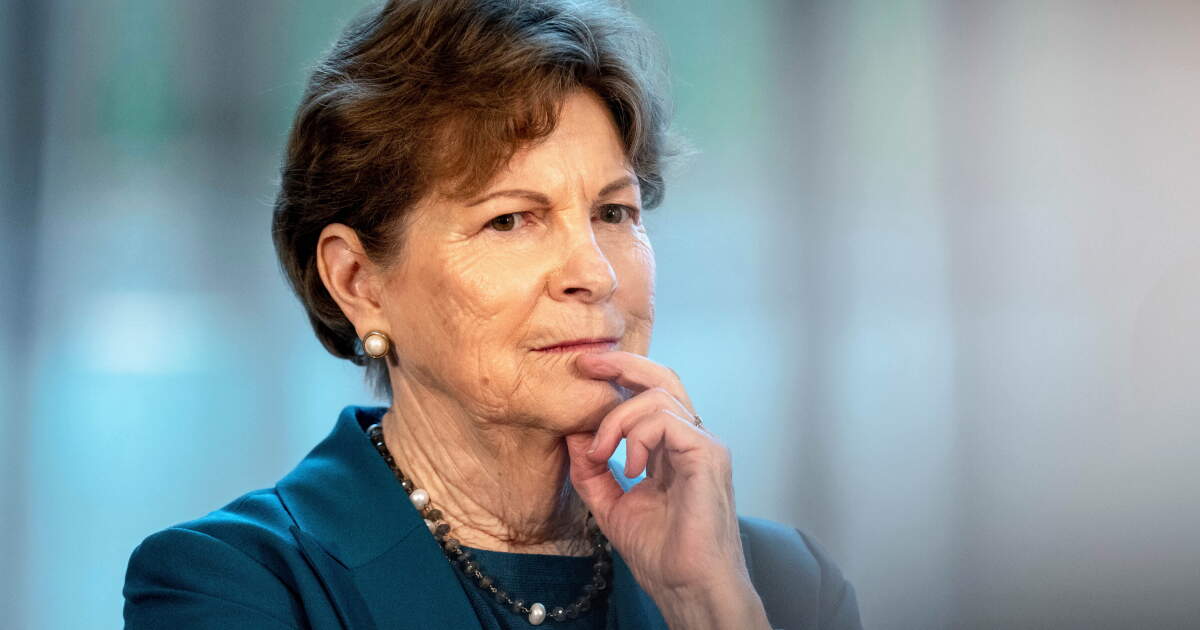
After a wearying 24 hours at work in the midst of chaos over last week’s presidential election, an exhausted Florida Secretary of State Katherine Harris took a moment to reflect on her role in the process.

“I feel so historic,” she said. Little did she know.

By ruling Monday that all of Florida’s 67 counties would have to complete their ballot recounts by 5 p.m. EST today–a move backed by the campaign of GOP Texas Gov. George W. Bush–the 43-year-old Republican became an unlikely pivotal player in the closest balloting in America’s history.

Harris contended she had no discretion to extend the deadline, except in the case of a natural disaster. “But a close election, regardless of the identity of the candidate, is not such a circumstance,” she said.

This, from a woman who once told an interviewer that she didn’t like “gamesmanship” in politics. A multimillionaire whose state position is due to be eliminated in 2002, Harris has spent much of her time in office as an influential patron of the arts.

In taking her hard line against time-consuming hand recounts sought by the presidential campaign of Democratic Vice President Al Gore, Harris incurred the icy disdain of former Secretary of State Warren Christopher, who accused her Monday of a “move in the direction of partisan politics.”

Republicans say otherwise. Former Florida Secretary of State Sandra Mortham, who lost to Harris in a recent primary battle, insisted “she’s doing exactly what her constitutional duties require, no more, no less. To me, this isn’t a political issue. This is whether someone is doing her job.”

The job requires oversight of Florida’s arts, libraries, historical sites and international trade, and supervision of corporate registration, business licensing and elections. It has been largely ceremonial–until now.

“It’s an extraordinary responsibility,” Harris said of her mandate to oversee the recount. “I’m very anxious. The process is so important here.”

Harris has won high marks from both Republicans and Democrats for her support of the arts. There has been speculation in political circles here that Harris might win an ambassadorship or arts post in a Bush administration, whose candidacy she supported.

Harris campaigned for Bush in New Hampshire, was a Florida delegate to the Republican National Convention in Philadelphia and was one of eight co-chairs of his Florida campaign.

“She was a diligent member of the Florida Senate and has been a fairly active secretary of state, from both a cultural and arts perspective as well as a foreign trade perspective,” said Florida lobbyist Ron Book, a Democrat, who helped raise money for Harris when she ran for the statewide office.

Harris’ short term has not been without criticism. She has flown around the world to promote Florida trade, but critics note she has spent more money on travel than Florida Gov. Jeb Bush. “I’m not abusing anything,” she said last month. “I’m working my heart out for the state of Florida.”

Harris grew up in Bartow, a small rural Florida town not far from Tampa. Her grandfather was the late Ben Hill Griffin Jr., a citrus and cattle baron who served in the state Senate.

After graduating from Agnes Scott College in Decatur, Ga., and studying art in Spain and philosophy and religion in Switzerland, she went into business as a marketing executive for IBM, then sold commercial real estate in Sarasota. Later, she earned a master’s degree in international trade at Harvard.

After the late Democratic Florida Gov. Lawton Chiles appointed her to the board of trustees of the Ringling Museum of Art, she sought more state money for the institution.

Disgusted with Sarasota politicians who did not have her commitment to cultural issues, she ran for the state Senate in 1994, collecting more than $20,000 in campaign contributions from a Florida insurance company called Riscorp. The firm would later be indicted in federal court for making illegal contributions to 23 candidates for state and federal offices, Harris among them. Harris, who was not charged, said she felt unfairly tainted by the scandal.

“If somebody hands you counterfeit money, how are you supposed to know it’s counterfeit?” she said.

As a state senator, she sponsored a bill that would have required parental notification before girls under 18 could get an abortion. But it was vetoed by Chiles.

Dubbed one of Sarasota’s “most prominent bachelorettes” by the local newspaper, her marriage in December 1996 to businessman Sven Anders Axel Ebbeson made headlines. They married at the Charlotte County government center, where she made her first campaign appearance. Then they flew to Paris.

Harris is worth about $6.5 million, mostly from stock in her family’s agricultural interests–she used $23,000 of her own money to run for secretary of state.

After one term as a state senator, Harris decided to run for statewide office, raising more than $1.5 million.

Harris won the 1988 GOP primary after a hard fight, then defeated her Democratic opponent.

Her first term will be her last. Harris will be Florida’s last elected secretary of state. Voters approved a change in the state Constitution that eliminates the position in 2002.

Source link

In Paris, new Disney chief D’Amaro showcases empire that made him

A 118-foot mountain of ice rose over the suburban Paris countryside this weekend as Disney opened its Arendelle kingdom to the world — Elsa’s palace glowing at the summit, a “Frozen” Nordic fishing village below, and the company’s new chief executive standing before a crowd of celebrities.

World of Frozen, an immersive land themed to the blockbuster animated franchise, opened Sunday as a centerpiece of a $2.2-billion transformation at Disneyland Paris.

The transformation renames one of Disneyland Paris’ two parks from Walt Disney Studios Park to Disney Adventure World. The inauguration drew Penélope Cruz, Naomi Campbell and Teyana Taylor.

It is the largest expansion in the 34-year history of Disneyland Paris, and one node in a roughly $60-billion global build-out of Disney’s parks, resorts and cruise lines.

A new CEO’s first stage

It is also the first major international stage for Josh D’Amaro, who took over as Disney’s CEO on March 18 — 11 days before the French gates opened — after nearly three decades in the company’s theme parks division.

The parks-and-experiences business reportedly generated 57% of the company’s $17.5 billion in segment operating income last year, the force that observers say propelled D’Amaro from parks chief to the corner office.

“The Walt Disney Co. was built on one man’s dream, and for more than 100 years we’ve shared that dream with the world,” D’Amaro told the inauguration crowd.

“Storytelling is fundamental to everything that we do, whether that’s on screen or stage, in our theme parks, on our cruise ships, or even at home.”

He called the opening “a transformational moment” and paid tribute to the creative team behind the attraction, including “Frozen” writer-director Jennifer Lee — who are all now at work on “Frozen 3.”

An Associated Press journalist accompanied D’Amaro on the “Frozen” ride Saturday night.

The carriage splashed through water to childlike cheers from riders and laughter from the new CEO as they glided past Elsa singing in the dark. Some stepped off lightly wet.

The evening’s emotional peak came when Lou, an 11-year-old whose wish was granted through Make-A-Wish France, took the stage to sing a few notes of “Do You Want to Build a Snowman?”

A next-generation robotic Olaf walked out to join her. It was the 25,000th wish fulfilled for a sick child at Disneyland Paris since 1992.

A French reversal

On Friday, D’Amaro had stood alongside Emmanuel Macron at the resort.

The French president used the visit to claim the park as a national economic asset, calling Disneyland Paris “the leading tourist destination in Europe” and describing it as “a genuine ecosystem of success.”

Macron said the latest expansion would create 1,000 additional direct jobs.

“Since the beginning, that’s 13 billion euros invested on this territory,” Macron said, a figure equivalent to about $15 billion.

Disneyland Paris says it has recorded more than 445 million visits since 1992, accounting for 6.1% of France’s national tourism revenue.

Macron’s presence underscored a remarkable reversal.

When the park opened as Euro Disney in 1992, French intellectuals derided it as a “cultural Chernobyl.” The president at the time, Francois Mitterrand, dryly derided the new attraction as “not exactly my cup of tea.”

Now a French president was standing in front of cameras calling it an engine of national prosperity.

European roots

“‘Frozen,’ of course, has its roots in European storytelling,” said Michel den Dulk of Walt Disney Imagineering.

“It’s very loosely based on Hans Christian Andersen. So to have a northern European, charming wooden little village here in Disneyland Paris — it just made sense.”

The new Tangled family ride, too, draws from European folklore — the Brothers Grimm’s Rapunzel.

The land re-creates Arendelle around a lagoon, its timber buildings painted in muted Scandinavian pastels, facades adorned with rosemaling, a traditional Norwegian decorative art.

At the center is Frozen Ever After, a boat ride featuring state-of-the-art animatronics and immersive projection effects.

Guests can meet Anna and Elsa inside Arendelle Castle, have a conversation with a responsive baby troll named Mossy who talks back, and watch a lagoon celebration called the Snow Flower Festival — featuring an original song.

Visitors praised the scale of the mountain and the detail of the village, even after delays and minor glitches.

“Despite the wait, it was well worth it. The attention to detail is incredible, and the perspective of the ice mountain is breathtaking,” said Daniel Weber, 41, an architect from Munich, Germany, after the ride Sunday.

“You forget you’re outside Paris. For a few minutes, it really feels like Arendelle,” said Léa Moreau, 27, a graphic designer from Lille, France.

Beyond World of Frozen, the rebranded park brings a vast new lake called Adventure Bay, a Tangled family ride, 15 new dining locations — including the posh Regal View Restaurant — and a nighttime spectacular called Disney Cascade of Lights featuring more than 380 drones.

A Lion King land, already under construction, will follow.

More than 90% of the second park’s offerings will have been redesigned since it opened in 2002, and Disney says the footprint will roughly double once the full transformation is complete.

Disney’s streaming has swung from deep losses to profitability, but the parks remain the company’s most dependable earnings engine — and D’Amaro is the man who ran them.

“We continue to dream bigger and bring stories to life in brand new ways,” D’Amaro told the crowd.

Pyrotechnics lighted up Arendelle Village.

The ice palace on the mountain turned blue.

And 34 years after Euro Disney became a punchline, a brand-new kingdom opened in the fields east of Paris — for the first time in forever.

Adamson writes for the Associated Press.

Source link

LAPD chief backed cops who shot Jillian Lauren; commission overruled

For the second time in recent months, the civilian commission that oversees the LAPD has overruled Chief Jim McDonnell in a police shooting, concluding that officers were in the wrong when they shot at Jillian Lauren, an author and the estranged wife of Weezer bass player Scott Shriner.

McDonnell wrote in a report made public Thursday that two officers were justified in using deadly force against Lauren, 52, who pointed a gun and fired at officers during a standoff in the backyard of her Eagle Rock home last April.

But the Police Commission took the rare step of going against McDonnell’s recommendation, finding fault with the shooting and concluding that the officers made serious tactical mistakes.

Although the five-member panel is the final authority on whether a police shooting is in or out of policy, the chief has final say on officer discipline. Such decisions are rarely made public because of state police privacy laws.

The incident began at about 5:20 p.m. on April 8, 2025, when police responded to a request for help from the California Highway Patrol in tracking down three suspects wanted in a hit-and-run crash. Officers Joshua Wolak and Dorian Zhou joined in the search, along with several others from the nearby Northeast patrol station.

Body-worn camera footage released by the department showed Wolak, Zhou and a CHP officer standing on a retaining wall next to a fence that separated a neighbor’s home from Lauren’s property. The LAPD video shows Lauren, wearing a purple Weezer T-shirt and black tights, walk around the yard with a black handgun, looking around as though she were on high alert.

Police said that officers yelled at Lauren to drop her gun for several minutes, before she shot a round in their direction. Wolak then fired seven rounds, while Zhou shot five from a distance of roughly 50 feet.

Lauren was not connected to the hit-and-run incident, authorities said. Audio from a 911 call by one of Lauren’s neighbors indicated that Lauren believed she was being fired at by armed suspects, who had been spotted running through neighboring properties.

After the shooting, Lauren retreated into her home, where she stayed for about an hour until an officer called her personal assistant, who was also inside. She was later taken to an area hospital with a gunshot wound to her left arm, police said.

During his interview with internal investigators, Zhou said he saw Lauren raise the handgun at a 45-degree angle, “rack” the slide to chamber a round and fire at officers. In response, he said, he fired five rounds, aiming at her center mass.

He responded that he stopped firing “because I lost sight of her.”

The commission voted unanimously to rule the officers’ decision to shoot out of policy. Officials typically do not publicly discuss the rationale for reaching certain decisions.

Both the commission and the chief were critical of the command decisions of Sgt. Albert Hoang at the scene, noting his failure to ensure that the officers involved were interviewed and the fact that he didn’t notify his higher-ups about the shooting until three hours after it occurred.

The civilian panel also diverged from McDonnell in assessing the tactical mistakes made by Hoang and the two officers. In his report, McDonnell found that the differing tactics used by CHP and LAPD only contributed to the confusion in what was already a fraught situation.

McDonnell wrote that he wants to develop protocols to ensure that if a similar incident were to arise “the other agency should be directed to disengage from the tactical portion of the incident or, as practicable, placed in a position and role that minimizes the co- mingling of tactics.”

In a 4-1 vote, the commission also decided that the officers’ decision to draw their weapons did not comply with LAPD policies — another rare finding.

Lauren was initially arrested on suspicion of attempted murder of a peace officer, a charge that carries a lengthy prison sentence, then later charged with assault and negligent discharge of a firearm. In December, a Los Angeles County Superior Court judge granted her diversion due to mental health issues, sparing her potential jail time.

The bestselling author of “Everything You Ever Wanted,” she filed for divorce from her husband in December in Los Angeles County Superior Court. In her petition, she cited “irreconcilable differences” but did not list an official date of separation. The two married in November 2005 and share two teenage sons.

Before the confrontation with police, Lauren had been recovering from cancer treatment and a hysterectomy in March.

Times staff writer Alexandra Del Rosario contributed to this report.

Source link

The Rise of Delcy’s Chief Enforcer

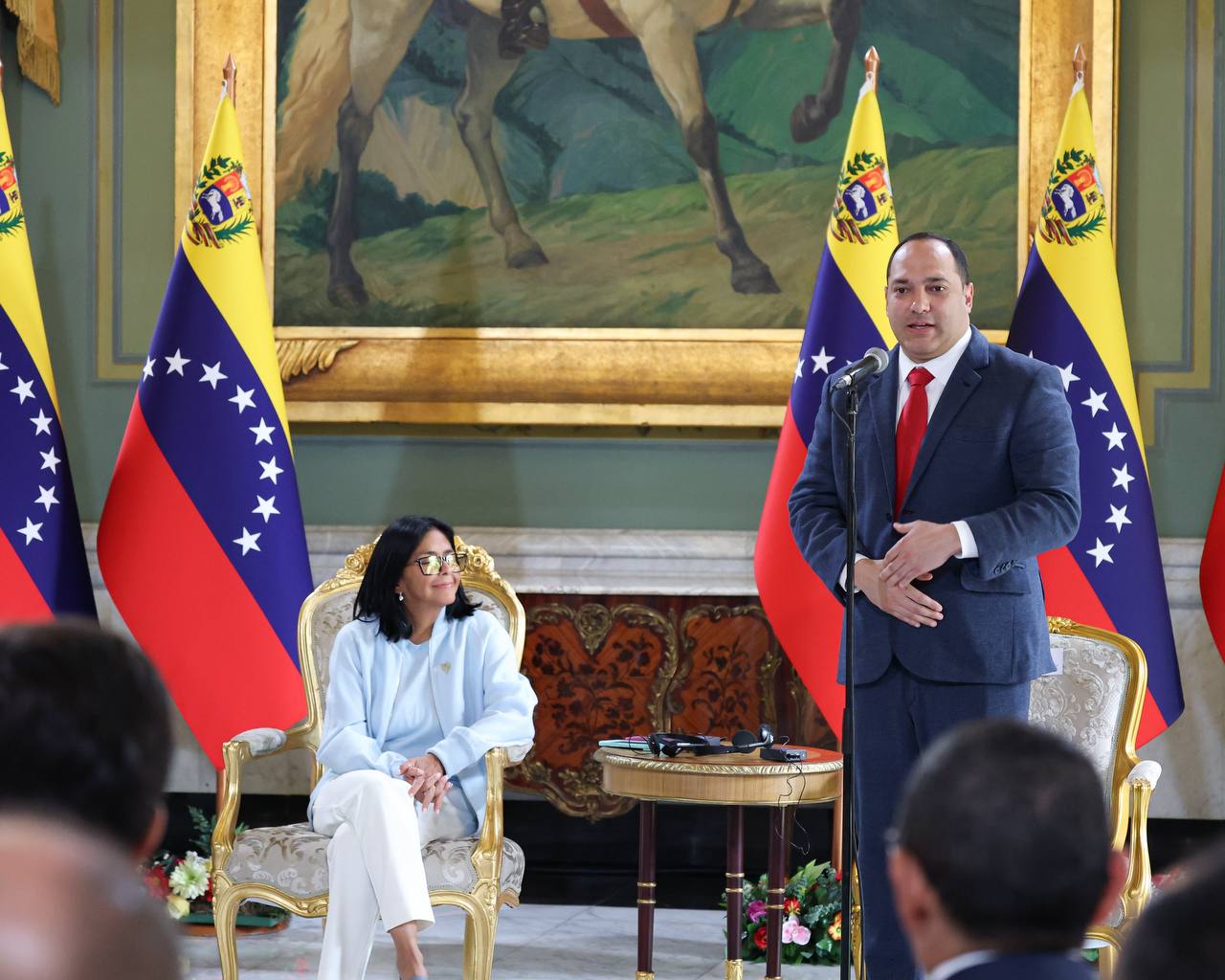
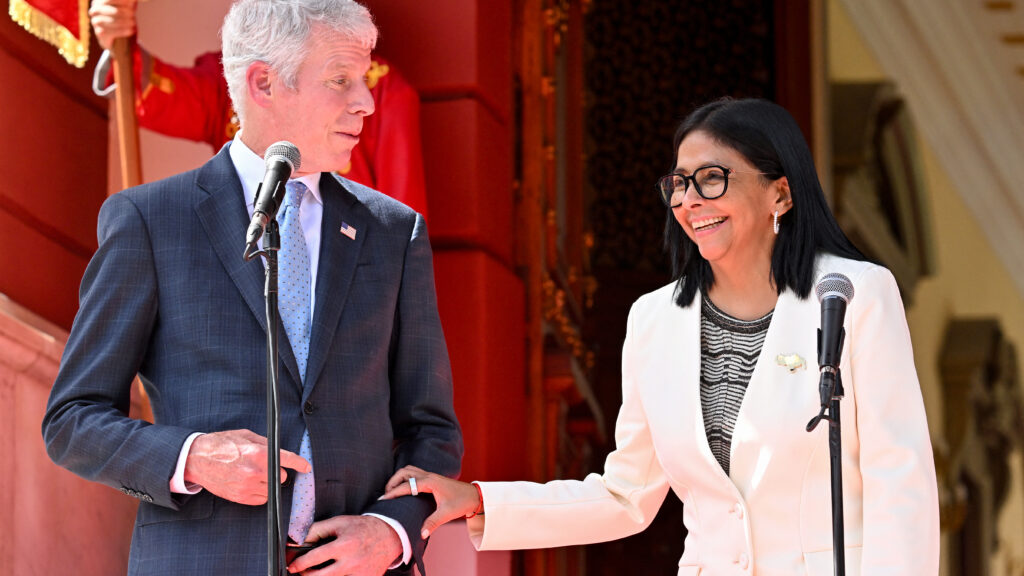
Commander of the Presidential Guard, head of Military Counterintelligence (DGCIM), and now Minister of Defense. The meteoric rise of General-in-Chief Gustavo Enrique González López in the 75 days since January 3 is only comparable to Delcy Rodríguez’s own improbable ascent to Venezuela’s presidency.

In less than three months, González López went from leading the Bolivarian Intelligence Service to commanding the Armed Forces and becoming one of the most powerful figures in the Venezuelan government. His appointment points in several directions: counterbalancing Diosdado Cabello’s power (no longer an ally) in the monopoly of force; shielding the acting president from enemies within chavismo itself; and building a loyal enforcement structure for the new ruling clan.

Amid celebrations of Venezuela’s victory in the World Baseball Classic on March 18, Rodríguez seized the moment to overhaul her cabinet. One of the most radical moves was the dismissal of Vladimir Padrino López, the longest-serving minister in the chavista cabinet. After 12 years at the helm of the Defense Ministry, he will hardly be remembered for defending the nation.

Although rumors had long suggested that Padrino López would soon step down, the selection of his successor caught observers off guard.

There were strong reasons to replace Vladimir Padrino López.

Replacing Padrino with González López raises several questions:

What role will he play in a power structure divided among four family-based factions, consisting of Diosdado Cabello, the Rodríguez siblings, the Chávez family, and the Maduro-Flores clan?

If this marks a new political moment, why recycle officials from the Chávez and Maduro governments?

What is the point of US sanctions if the acting president rewards sanctioned officials with key posts?

Does his appointment guarantee impunity for human rights abuses committed under his command?

And, since it came after official visits from the CIA director and the head of US Southern Command, does it have Donald Trump’s backing?

Neither hero nor martyr

Before examining why González López was chosen, it is clear there were several reasons to replace Padrino López.

On January 3, 2026, when US forces bombed key military infrastructure and captured Nicolás Maduro, the Venezuelan Armed Forces offered no resistance. The attack left 83 dead among those guarding Maduro, including 32 Cubans, while US forces only reported minor injuries. There was no troop mobilization afterward to restore order or deter further attacks.

Padrino appeared only hours later in a solitary video, declaring: “The Bolivarian National Armed Forces inform the world that the Venezuelan people have been the victims of a criminal military aggression by the United States.”

Days later, he justified his inaction bluntly: “It would have been a massacre if we had confronted the Americans.”

When Delcy became the acting minister of petroleum, she appointed González López to a tailor-made role at PDVSA overseeing strategic affairs and production control.

This was not his only failure. In 2021, the FANB lost the so-called Apure war, an operation aimed at expelling FARC dissidents from Venezuelan territory.

The Colombian guerrillas killed 17 Venezuelan soldiers and kidnapped eight more to force negotiations that allowed them to remain in the country. By January 2022, the ELN had finished the job the FANB could not, pushing FARC factions out of the border region.

Nor did the Defense Ministry respond to US attacks on more than 20 Venezuelan vessels in the Caribbean. US tactical teams seized at least eight oil tankers without any naval reaction from Venezuela. Padrino also failed to deploy troops to prevent Maduro’s blatant presidential election fraud on July 28, 2024.

Beyond his rank and decorations, Padrino leaves behind another legacy: signing Resolution 008610, which authorizes the use of “firearms or potentially lethal weapons” for public order control.

Why González López?

González López was the first official appointed after Delcy Rodríguez herself. On January 6, 2026, he was named Commander of the Presidential Guard and head of Military Counterintelligence. These roles are clearly designed to protect the new head of state.

Since then, he has been inseparable from Rodríguez: her shadow, her watchdog, the strongman of the Rodríguez clan. His appointment is key to consolidating this new ruling faction. Previous chavista groups had their own enforcers. These are figures with intelligence expertise, coercive power, and influence over security forces and armed groups. González López fills that role for the Rodríguez siblings.

Their Achilles’ heel had been precisely a lack of support from armed elements within the Venezuelan State. For this reason, the Rodríguez siblings could not operate independently from other chavista factions. They had secured economic power and built extensive business ties, including in the oil sector. Rodríguez’s tenure as foreign minister also gave her a broad international network.

The rise of González López could even foreshadow a purge to both consolidate Delcy’s power and polish the image of a criminalized State.

González López has been close to her since at least 2018, when as vice president she oversaw SEBIN, then led by him.

In 2024, when Rodríguez became the acting minister of petroleum, she appointed him to a tailor-made role at PDVSA overseeing strategic affairs and production control. Such position combined security and operational authority.

González López has therefore become Delcy’s trusted operator, the man that can enforce her orders.

At the same time, chavismo has spent 26 years building a system of power rooted in complicity, which explains the constant recycling of officials. Even if the Rodríguez faction wanted to break away, it cannot fully detach from that structure without risking collapse. It still lacks independent foundations.

Blessed and lucky

After overseeing more than 2,000 arbitrary detentions in 2024 as head of SEBIN, being identified as one of Maduro’s torture chiefs, and linked to the deaths of political prisoners, González López has not been punished. He has been promoted.

His appointment disregards warnings from human rights groups and signals that the regime’s institutional chain remains intact—one of chavismo’s enduring strengths. If prosecutions ever come, they will likely follow the familiar script: a few scapegoats.

His rise could even foreshadow a purge to both consolidate Rodríguez’s power and polish the image of a criminalized State.

As the architect of the Operation for the Liberation and Protection of the People (OLP), González López has already demonstrated a zero-tolerance approach to crime. In practice, that policy led to the killing of young men in poor neighborhoods under the banner of law enforcement.

Could Rodríguez appoint a defense minister of this magnitude without a green light from Washington?

His profile aligns with hardline anti-crime and anti-migrant approaches promoted by US policy in recent years, which could appeal to sectors in Washington.

This may help explain why he appears to have received approval from Donald Trump’s team. Could Rodríguez appoint a defense minister of this magnitude without a green light from Washington? Perhaps not. While not every minister requires it, Defense almost certainly does.

Other signs point in that direction: González López appeared as host during John Ratcliffe’s visit (Trump’s CIA director) and was part of the delegation that met US Southern Command chief General Francis L. Donovan. There have also long been rumors of his role as a US intelligence informant. Which is unsurprising, given that intelligence and repression are his specialties.

For now, sanctions imposed under Barack Obama and accusations of crimes against humanity are not part of Venezuela’s new political moment, as Delcy Rodríguez has labelled it.

After two months, the new era seems to prioritize “stabilization, economic recovery, and political transition.” Not human rights, not justice.

Source link

Beloved BBC station chief dies aged 45 as Vernon Kay stops Radio 2 show to pay tribute to ‘larger-than-life’ colleague

VERNON Kay stopped his BBC Radio 2 show to announce the death of his beloved colleague, station chief Ian Deeley.

The radio star paid tribute to his “larger than life” station manager Ian, 45, who passed away unexpectedly.

Beloved BBC station chief Ian Deeley died unexpectedly aged 45Credit: Linkedin
BBC radio star Vernon Kay offered condolences to his colleague’s familyCredit: Alamy

Ian’s cause of death remains unknown, with Vernon saying “the BBC family were devastated to hear that our brilliant studio manager, Ian Deeley.”

Vernon, 51, hailed his colleague’s passion for radio, saying Ian loved his job and had worked on most BBC radio stations.

The presenter went on to say: “Even though he was a relatively young chap, Ian had a long and illustrious career, during which he pretty much worked on every BBC radio station. 

“His time at the BBC started with news shifts followed by production work and more recently, Ian was working with our colleagues on the outside broadcast team, or ‘the Broadside Outcasts’ as he jokingly called them.

FEARLESS MEL

How Mel Schilling hid cancer hell from legion of fans despite pain off camera


LAST OUTING

Final pictures of late Mel Schilling four months before tragic death

“With the OB team, Ian worked on all manner of big radio stuff, including pop festivals, BBC Proms and numerous royal events.

“The one that stands out for us and our little team is the one where Ian personally made sure that our show from the beaches of Normandy a few years ago went seamlessly – and it did. 

“Ian was our lead engineer on our D-Day [80th] celebrations and he was so dedicated that he went on a [reconnaissance trip] over to France in his own time, just to make sure everything was up to his incredible high standard.”

Vernon added: “Ian loved working with us here at Radio 2 and I know one of his career highlights was working with our friend, Steve Wright, he was thrilled to be able to be a part of the big show and as ‘one of the top operatives’ as Steve called him.

“Steve always said, ‘Ian, keep it cranked’ and he did.”

The radio star would go on to offer condolences to Ian’s mum, partner and brother on behalf of the Radio 2 staff.

Later in the show, Vernon thanked his listeners after they sent in some words of condolence.  

Paying tribute to Ian himself Vernon said: “As an engineer, there were few better but there are also so many things we can say about Ian, the person.

“He was an exuberant, larger-than-life character who was always enthusiastic and brought a smile to everyone’s faces.”

He went on to say that he and his colleagues would miss Ian’s “quick wit.”

Hailing the work Ian and other team members do Vernon added: “As you can imagine at Radio 2, it’s not just the names in the Radio Times who do all the work. 

“We do very little, we just talk when we put up the fader, I’ll be honest with you, myself and every on-air name included.

“It’s the massive team behind Radio 2 that make this network so successful.”

Vernon offered a personal tribute to the station managerCredit: Getty

Source link

Iran names successor to security chief killed in US-Israeli attack | US-Israel war on Iran News

Mohammad Bagher Zolghadr, ex-IRGC commander, to replace late Ali Larijani as chief of Iran’s Supreme National Security Council.

Iran has named Mohammad Bagher Zolghadr, a former commander of Iran’s Islamic Revolutionary Guard Corps (IRGC), as the successor to Ali Larijani, head of the country’s Supreme National Security Council (SNSC), who was killed in a US-Israeli air strike earlier this month.

President Masoud Pezeshkian’s deputy of communications announced the appointment on X on Tuesday.

Recommended Stories

list of 3 itemsend of list

The SNSC, formally chaired by Pezeshkian, coordinates security and foreign policy and includes top military, intelligence and government officials, in addition to representatives of Supreme Leader Mojtaba Khamenei.

Zolghadr, who served in the 1980s war against Saddam Hussein’s Iraq, went on to become head of the IRGC’s joint staff for eight years and then deputy commander-in-chief of the elite force for another eight years.

In 2005, he was named deputy interior minister for security and police in the government of then-President Mahmoud Ahmadinejad, a move that was seen at the time as bolstering the IRGC’s influence in politics.

Since 2023, he has been the secretary of the Expediency Council, a powerful body that plays both an advisory and mediating role between Iran’s various power structures and the supreme leader.

Zolghadr’s new position consolidates the IRGC’s growing clout in Iran amid growing uncertainty regarding decision-making at the top of the system. Mojtaba Khamenei has not been seen in public since he succeeded his assassinated father, Ayatollah Ali Khamenei, in early March.

Larijani, one of the most prominent non-clerical figures in Iranian politics, was killed last Tuesday in a week that saw the war spiralling throughout the region, upending global energy markets and roiling the world economy.

On Tuesday, the war showed no sign of de-escalation after US President Donald Trump’s claim that he was speaking to an unidentified “top person”, as he extended by five days a deadline to hit Iran’s power plants.

Iran’s Parliament Speaker Mohammad Bagher Ghalibaf said “no negotiations” were under way, accusing Trump of seeking “to manipulate the financial and oil markets”.

Source link

Minnesota hockey reporter, 3 children killed in house fire, NHL says

NHL reporter Jessi Pierce and her three children were killed in a weekend house fire in Minnesota, the league announced Sunday.

Pierce, 37, covered the Minnesota Wild as the correspondent for NHL.com for the last decade.

“The entire NHL.com team is devastated and heartbroken by the loss of Jessi and her children,” said Bill Price, vice president and editor in chief of NHL.com, in a statement. “Jessi’s love of her family and hockey was evident in the energy and passion she brought to her work for us. She was an absolute joy to talk to and work with. She will be deeply missed.”

Firefighters responded to a house fire Saturday morning in White Bear Lake, Minn. Neighbors called 911 and reported seeing flames coming through the roof. Fire crews located an adult, three children and a dog inside the house, all deceased, the White Bear Lake Fire Department said. The department did not release the names of the victims in its statement Saturday.

The cause of the fire is under investigation.

“Out hearts ache for those involved in this tragedy. We ask for the opportunity to allow our community to come together and support one another during this difficult time,” Fire Chief Greg Peterson said in the statement.

The Minnesota Wild mourned her loss on social media Sunday. “Jessi was a kind, compassionate person that cared deeply about her family and those around her. She served as an ambassador for the game of hockey during her time covering the Wild and the NHL,” the post said.

Minnesota is known as the “State of Hockey,” and the Wild have had one of the biggest fan bases since their inception in 2000. The Minnesota North Stars moved to Dallas to become the Stars in the early 1990s.

Hill writes for the Associated Press. AP writer Stephen Whyno in New York contributed to this report.

Source link

ICC Chief Prosecutor Khan cleared of sexual misconduct by judges: Report | ICC News

Karim Khan has denied the allegations and took voluntary leave from his position in May.

Judges have cleared the chief prosecutor of the International Criminal Court (ICC), Karim Khan, of all wrongdoing after an investigation into alleged sexual misconduct, Middle East Eye reports.

A report by Middle East Eye published on Saturday said a panel of three judges submitted a confidential report to the court’s oversight body, the Bureau of the Assembly of States Parties (ASP), on March 9.

Recommended Stories

list of 3 itemsend of list

“The Panel is unanimously of the opinion that the factual findings by [The UN’s Office of Internal Oversight Services] OIOS do not establish misconduct or breach of duty under the relevant framework,” the report concluded, according to the sources cited by Middle East Eye.

The OIOS investigation was commissioned by the head of the ASP in November 2024 after a member of Khan’s office accused the prosecutor of sexual misconduct.

In August last year, a second woman came forward and alleged that Khan had abused his power over her while she was working for the British lawyer.

The woman had described his behaviour to UK newspaper The Guardian last year as a “constant onslaught” of advances.

Khan has denied the allegations and took voluntary leave from his position at the ICC in May, while awaiting the inquiry’s results. His deputy prosecutors have been in charge of his office in his absence.

According to Middle East Eye, the ASP met on Monday to discuss its response to the panel’s report. Under the court’s rules, if the bureau determines that no misconduct has occurred, the investigation should be closed.

The ASP has 30 days from receiving the report to make its preliminary assessment of the alleged sexual misconduct. Khan will then have 30 days to respond, and the bureau will have another 30 days to make its decision.

Khan declined to comment on the report, the outlet said.

The allegations of sexual misconduct came as Khan’s office was pursuing an investigation into alleged war crimes and genocide by Israeli officials and forces in Gaza and the occupied Palestinian territory.

Khan sought arrest warrants for Israeli Prime Minister Benjamin Netanyahu and his then-defence minister, Yoav Gallant, over “criminal responsibility” for alleged war crimes and crimes against humanity in Gaza.

He also sought arrest warrants for Russian President Vladimir Putin and other Russian officials over the alleged unlawful deportation of Ukrainian children during Moscow’s ongoing war on Ukraine.

Source link

Former FBI chief, Robert Mueller, dead at 81 | Politics News

Former FBI chief Robert Mueller, who probed the alleged Russian interference in the 2016 United States election, has died at age 81.

“With deep sadness, we are sharing the news that Bob passed away” on Friday night, his family said in a statement Saturday.

“His family asks that their privacy be respected.”

Mueller was appointed as director of the FBI by then-President George Bush in September 2001, a week before the 9/11 attacks that would push him into the centre of a national crisis.

He became the key figure behind changing the FBI from combating crime to now countering national security risks following the attack on New York’s World Trade Centre.

In 2013, Mueller stepped down from the bureau and later by 2017 was appointed as special counsel to oversee the Justice Department’s probe into possible Russian interference in the election, which saw Donald Trump secure his first term over Democratic nominee, Hilary Clinton.

Following the announcement of his death, Trump took to his Truth Social platform to write: “Robert Mueller just died. Good, I’m glad he’s dead. He can no longer hurt innocent people!”

Mueller is survived by his wife and two children.

Source link

U.S. court sentences Bolivian ex anti-drug chief to 25 years

March 20 (UPI) — A U.S. district court has sentenced former Bolivian anti-drug chief Maximiliano Dávila to 25 years in prison for conspiring to import large quantities of cocaine into the United States.

Dávila, 54, was convicted of coordinating cocaine shipments and using heavy weapons to protect drug trafficking operations while serving in senior law enforcement roles in Bolivia under former President Evo Morales.

The sentence, imposed Thursday by U.S. District Judge Denise L. Cote in a Manhattan court, concludes a legal process that began with his arrest near Bolivia’s border with Argentina in 2022 and his extradition in December 2024, Bolivian newspaper La Razón reported.

Dávila served as head of Bolivia’s Special Force to Fight Drug Trafficking, the country’s main anti-narcotics agency, until November 2019. His tenure placed him among the most influential figures in Bolivia’s efforts to combat drug trafficking.

However, his career was marked by allegations of ties to criminal networks, which later led to international investigations, according to local outlet Red Uno.

Prosecutors in New York said Dávila used his position to facilitate drug trafficking operations rather than combat them, turning his office into a logistical hub for organized crime.

They said he ensured safe passage for aircraft carrying cocaine from Bolivian airstrips to intermediate destinations in Central America and the Caribbean, with the drugs ultimately bound for the United States.

According to the investigation, Dávila provided armed protection for cocaine shipments, Bolivian newspaper El Deber reported.

In 2022, the U.S. State Department offered a $5 million reward for information leading to his conviction, underscoring his alleged role in regional drug trafficking networks.

In addition to the 25-year prison sentence, Dávila will face five years of supervised release. His defense has indicated it may appeal, though legal experts say the strength of the evidence makes a reduced sentence unlikely.

Source link

Israel kills Iran’s spy chief; government seen as ‘largely degraded’

The Iranian government remains “intact but largely degraded,” National Intelligence Director Tulsi Gabbard told Congress on Wednesday, as Israel continued to hunt down the Islamic Republic’s leadership with an overnight airstrike that killed the nation’s spy chief.

The death of Intelligence Minister Esmail Khatib, announced Wednesday by Israel, was the third high-level assassination in roughly 24 hours in a series of strikes that have hollowed out Tehran’s leadership ranks.

Israel ordered strikes Tuesday that killed Iranian security chief Ali Larijani and Basij paramilitary commander Gholamreza Soleimani.

Additional senior Iranian figures could be targeted, Israeli Defense Minister Israel Katz said Wednesday. “Israel’s policy is clear and unequivocal: No one in Iran has immunity — everyone is a target,” Katz said.

Ayatollah Mojtaba Khamenei, Iran’s new supreme leader, issued a rare statement Wednesday addressing Larijani’s assassination.

“Undoubtedly, the assassination of such a person shows the extent of his importance and the hatred of the enemies of Islam towards him,” he wrote, according to the Associated Press. “All blood has its price that the criminal murderers of the martyrs must pay soon.”

Tehran responded with renewed missile and drone attacks on Israel and U.S.-aligned countries across the Persian Gulf, further disrupting strained energy infrastructure and shipping lanes. Fighting has halted oil and gas production throughout the region, as shipping was stalled through the Strait of Hormuz, a key artery for global oil supplies.

The war has triggered a severe global oil shortage that has destabilized electronics, agriculture, pharmaceutical and energy supply chains.

Exacerbating those disruptions, the U.S. and Israel carried out a coordinated attack on the South Pars natural gas field on Wednesday. The strikes drew swift condemnation from Qatar, a U.S. ally that shares the reservoir with Iran. The Qatari Foreign Ministry called the attack “dangerous and irresponsible” and “a threat to global energy security.”

The attack is a major blow to Iran’s supply of electricity too, as most of the country’s energy grid relies on gas, analysts said. The field accounts for about 75% of Iran’s natural gas production.

Tehran promised to respond with more attacks on its Mideast neighbors, the Associated Press reported.

Meanwhile, near-constant Israeli strikes in Beirut and southern Lebanon have displaced over 1 million people, and killed 968 civilians, according to the Lebanese Health Ministry.

With the war in its third week, deaths now number in the thousands across Iran, Israel and neighboring countries.

International reaction has sharpened as the fighting showed no sign of relenting. Russia condemned the “murder and liquidation” of sovereign leadership and called for an immediate ceasefire, while European leaders voiced growing alarm about the war’s trajectory and the risks of broader destabilization.

Director of National Intelligence Tulsi Gabbard testifies Wednesday before the Senate Committee on Intelligence.

Director of National Intelligence Tulsi Gabbard testifies Wednesday before the Senate Committee on Intelligence.

(Jose Luis Magana / Associated Press)

All allies in the North Atlantic Treaty Organization have refused to heed President Trump’s call to send warships to the Strait of Hormuz, signaling a deepening rift in the world’s most powerful military alliance. Trump has sought to sever the U.S. from the alliance.

“We no longer ‘need,’ or desire, the NATO Countries’ assistance — WE NEVER DID! “ he wrote on social media Tuesday.

Trump on Wednesday signaled little appetite for de-escalation, floating the prospect of a decisive military endgame.

“I wonder what would happen if we ‘finished off’ what’s left of the Iranian Terror State,” he wrote on his social media website.

The president visited Dover Air Force Base in Delaware on Wednesday, where the remains of six U.S. service members killed in the crash of a refueling aircraft were returned to their families. The visit marks the second time since the Feb. 28 launch of the war with Iran that Trump has attended the solemn military ritual known as a dignified transfer, the Associated Press reported.

At a Senate Intelligence Committee hearing on “worldwide threats” Wednesday, Democrats grilled Gabbard and other intelligence leaders over their preparation for Iranian retaliation against Mideast energy infrastructure, civilian areas and American military sites and personnel.

Trump has maintained that the U.S. was caught off guard by Iran’s retaliatory strikes.

“Nobody expected that. We were shocked,” he said at a Kennedy Center board meeting Monday. Later in the day, when asked at an Oval Office news briefing whether he had been warned about the possibility of Iranian retaliation, Trump reiterated his surprise.

“Nobody, nobody, no, no, no. The greatest experts — nobody thought they were going to hit,” he said.

Last year, intelligence agencies testified to Congress that Iran was capable of inflicting substantial damage on an attacker, executing regional strikes and disrupting shipping, “particularly energy supplies, through the Strait of Hormuz,” Sen. Ron Wyden (D-Ore.) said at the hearing, reading from last year’s worldwide threats report.

“In other words, every problem we’re seeing now was not only foreseeable, but was actually predicted by the intelligence agencies,” Wyden told Gabbard. “It’s hard to see how you can sit here and say that the intelligence agencies couldn’t provide a clear warning that if attacked, the Iranians would respond by attacking our people.”

Gabbard refused to confirm whether intelligence agencies briefed the president on the subject, saying she “won’t divulge internal conversations.”

She also testified that U.S. strikes on Iran had “obliterated” the country’s nuclear enrichment program, including underground facilities, and said officials are now watching to see whether Tehran attempts to rebuild. So far, she said, Iran has not restarted the program.

But Sen. Jon Ossoff (D-Ga.) challenged that assessment, noting that Trump had used the same word — “obliterated” — to describe strikes just months before. He pressed Gabbard on how serious the nuclear threat was leading up to the February operation, given that timeline.

The intelligence community assessed that Iran “maintained the intention to rebuild and to continue to grow their nuclear enrichment,” Gabbard said adding that the “only person” who can determine what constitutes an imminent threat is the president.

“False,” Ossoff shot back. “It is precisely your responsibility to determine what constitutes a threat to the United States.”

Source link

US intel chief Gabbard says Iran was not rebuilding enrichment prior to war | US-Israel war on Iran News

Washington, DC – Tulsi Gabbard, the director of US National Intelligence, said that the United States intelligence community had assessed that Iran was not rebuilding its nuclear enrichment capabilities following US and Israeli attacks last year.

The revelation on Wednesday appeared to undercut one of President Donald Trump’s key justifications for joining Israel in launching the latest war against Iran.

Recommended Stories

list of 3 itemsend of list

Trump and his top officials have repeatedly cited Iran’s nuclear ambitions as one of the main reasons for abandoning ongoing diplomatic talks in favour of military action.

“As a result of Operation Midnight Hammer,” Gabbard said in written testimony to the Senate intelligence committee, referencing the June 2025 US strikes on Iran’s nuclear facilities, “Iran’s nuclear enrichment program was obliterated”.

“There have been no efforts since then to try to rebuild their enrichment capability,” Gabbard said in the written testimony.

Notably, Gabbard did not read that portion of her testimony, which was provided to members of the committee, during her publicly televised oral testimony. When pressed on why she omitted the portion, Gabbard said simply that she did not have enough time. She did not deny the assessment.

“You chose to omit the parts that contradict Trump,” Senator Mark Warner, a Democrat, responded.

Trump has repeatedly said the June 2025 attacks, which came at the end of a 12-day war between Israel and Iran, had “obliterated” Iran’s nuclear capacity, even as he warned that Iran’s alleged nuclear ambitions presented an immediate threat to the US.

Tehran has for years denied it is seeking a nuclear weapon. Nuclear and arms monitors have maintained that even if Tehran were seeking a nuclear weapon, it did not represent a short- or medium-term threat.

The foreign minister of Oman, who had mediated the latest round of US-Iran indirect nuclear talks ahead of the war, has refuted Trump officials’ claims that the most recent negotiations were not yielding any progress.

The Guardian newspaper also reported this week that the United Kingdom’s national security adviser, Jonathan Powell, had attended the final session of talks and assessed that the Iranian position did not justify an immediate rush to war, citing sources familiar with the situation.

The administration has not settled on any single justification for launching the war, also pointing to Iran’s ballistic capabilities, its potential threat to Israel and US forces in the Middle East, and the totality of the Iranian government’s actions since the 1979 Islamic Revolution.

The concept of an “imminent threat” is significant in determining the legality of Trump’s decision to strike a sovereign country under international law.

It is also significant for US domestic law, under which presidents can commit the military only in instances of immediate self-defence. Only Congress can officially declare war or authorise extended military campaigns.

Iran’s government ‘intact but largely degraded’

The White House said earlier this week that Iran’s ballistic missile capacity was “functionally destroyed”, with the Iranian navy “effectively destroyed” and the US and Israel dominating the country’s airspace.

Experts have assessed that Iran still maintains the military capacity to inflict significant damage in the region, and it has continued to wield its military influence over the Strait of Hormuz.

Gabbard, meanwhile, offered a more sober assessment than the White House, saying that despite the killings of Iranian supreme leader Ayatollah Ali Khamenei, top military officials, and most recently the head of the Supreme National Security Council, Ali Larijani and the intelligence minister, Esmail Khatib, “the regime in Iran ⁠appears to be intact but largely degraded by Operation Epic Fury”.

“Even so, Iran and its proxies remain capable of and continue to attack US and allied interests in ⁠the Middle East. If a hostile regime survives, it will seek to begin a years-long effort to rebuild its missiles and UAV [drone] forces,” she said.

Gabbard also listed Iran, alongside Russia, China, North Korea and Pakistan, as among the countries “researching and developing an array of novel, advanced, or traditional missile delivery systems, with nuclear and conventional payloads, that put our homeland within range”.

The Washington, DC-based Arms Control Association has said that US intelligence as of 2025 had said it may take Iran until 2035 or longer to develop a missile capable of hitting the US, if it did indeed seek to do so.

High-profile resignation

Gabbard spoke a day after a top official in her agency, Joe Kent, the director of the US National Counterterrorism Center, resigned in opposition to Trump’s war with Iran.

In his resignation, Kent said that Iran “posed no imminent threat” to the US and that Trump’s decision to enter the war went against his “America First” pledges.

Kent is the first high-profile member of the Trump administration to step down in response to the war.

Gabbard herself had previously been a vocal opponent to indefinite military engagement in the Middle East and war with Iran. A former member of the US House of Representatives from Hawaii, she left the Democratic Party and supported Trump, in part, due to his anti-war vows.

However, in a post on X on Tuesday, Gabbard defended Trump’s decision to go to war.

“As our Commander in Chief, he is responsible for determining what is and is not an imminent threat, and whether or not to take action he deems necessary to protect the safety and security of our troops, the American people and our country,” she said.

She said her agency’s role was to funnel US intelligence to Trump.

“After carefully reviewing all the information before him, President Trump concluded that the terrorist Islamist regime in Iran posed an imminent threat and he took action based on that conclusion,” she said.

Source link

Israel says it killed Iranian intelligence chief Khatib | US-Israel war on Iran

NewsFeed

Israel’s Defence Minister Israel Katz said an overnight strike killed Iran’s Intelligence Minister Esmail Khatib. There has been no confirmation from Iran but Katz says Israel’s military is authorised to target senior Iranian officials without additional approval from the government.

Source link

Trump’s counterterrorism chief quits over Iran war

Joe Kent, the director of the National Counterterrorism Center, abruptly resigned Tuesday, becoming the most senior national security official to break publicly with the Trump administration over its military campaign against Iran.

In a statement posted on social media, Kent said he “cannot in good conscience” continue serving in the administration, contending that Iran had “posed no imminent threat to our nation” and that the United States had been drawn into the conflict through “pressure from Israel and its powerful American lobby.”

“I cannot support sending the next generation off to fight and die in a war that serves no benefit to the American people nor justifies the cost of American lives,” Kent wrote in a letter addressed to President Trump. “I pray that you will reflect upon what we are doing in Iran, and who we are doing it for.”

Trump, speaking in the Oval Office, dismissed Kent’s concerns, telling reporters that he had long believed the counterterrorism director — whom he nominated to the post in February 2025 — was “very weak on security.” The president insisted that Iran has been a threat to the U.S. “for a long time,” and said that it was a “good thing” Kent is leaving.

The resignation came at an uncertain moment for the administration. The war, which has repeatedly been sold to Americans as “short term” and contained, is now in its third week, with fraying alliances, renewed missile and drone fire on gulf Arab nations from Iran, new Israeli strikes on Iran and Lebanon, mounting casualties and no clear exit strategy.

“If we left right now it would take 10 years for them to rebuild,” Trump told reporters. “We’re not ready to leave yet, but we’ll be leaving in the near future. We’ll be leaving pretty much in the very near future.”

The uncertainty was compounded Tuesday by Israel’s killing of Ali Larijani, the head of Iran’s Supreme National Security Council, as well as Gholamreza Soleimani, the head of the Basij, Iran’s militia force.

Trump made reference to the Iranian officials killed without naming them, saying one was “their actual top” and the other was responsible for the killing of 32,000 Iranian protesters in recent weeks.

“It’s an evil group,” he said.

Effect of Larijani’s killing

Iranian officials confirmed the deaths of Larijani and Soleimani via state media Tuesday. In addition to killing the Basij leader, Israel reported striking more than 10 Basij posts, part of an effort to destroy the Islamic Republic’s ability to contain internal unrest and protests.

Benjamin Radd, a political scientist and senior fellow at the UCLA Burkle Center for International Relations, said Larijani’s killing would greatly diminish the Iranian diplomatic and institutional experience, as he was perceived to be “the last of the competent bunch” in power.

Those remaining in power are “generally not the sharpest people, they’re not the people who understand the subtleties of diplomacy, of what negotiating with the U.S. is like,” which clears a path for “a country run by a military junta” comprising Islamic Revolutionary Guard Corps leaders, Radd said.

“We’re really going to be moving more toward a military-style dictatorship — behind a clerical robe, if you will,” he said.

The battlefield developments have done little to reassure Washington’s closest allies, most of which have declined to join the fight despite Trump’s recent pleas to allied nations to send warships to help reopen the Strait of Hormuz, a crucial oil route that has been threatened by Iran’s war efforts.

In a social media post Tuesday, Trump said the United States had been informed by most of its allies in the North Atlantic Treaty Organization that they “don’t want to get involved” in the expanding Middle East war — and he claimed the American military no longer needs or wants their help.

“In fact, speaking as President of the United States of America, by far the Most Powerful Country Anywhere in the World, WE DO NOT NEED THE HELP OF ANYONE!” Trump wrote.

Trump cannot unilaterally remove the U.S. from NATO. In 2023, Sens. Tim Kaine (D-Va.) and Marco Rubio (R-Fla.) — who is now Trump’s secretary of State — successfully pushed a measure barring any president from removing the U.S. from the treaty organization without approval from the Senate or an act of Congress.

“The Senate should maintain oversight on whether or not our nation withdraws from NATO. We must ensure we are protecting our national interests and protecting the security of our democratic allies,” Rubio said at the time.

Some experts viewed Trump’s latest remarks about not needing NATO allies as a result of him having misplayed his hand at the start of the conflict with Iran, which has attempted to widen the war by targeting Gulf Cooperation Council nations in the region.

When Trump started demanding that many other nations join the U.S. in the war effort, or at least in safeguarding the Strait of Hormuz, it was “an attempt on Trump’s side to widen the war the other way,” Radd said, based in part on the fact that other nations, including China and in Europe, are much more reliant on oil from the region than the U.S.

However, it was a “clumsy” move by Trump given his alienation of NATO allies in the past, including during a major speech in Davos, Switzerland, in January, in which the president was “basically shaming and criticizing NATO and European states,” Radd said.

Calling on allies to “step up” after ridiculing them was “ham-handed,” Radd said.

Intelligence official’s departure

In Washington, Kent’s resignation exposed new divisions over the administration’s handling of the war.

On Capitol Hill, House Speaker Mike Johnson (R-La.) told reporters that he did not know where Kent was “getting his information” to conclude that Iran posed no imminent threat to the U.S. He said Trump administration officials in classified briefings have asserted that “they had exquisite intelligence and they understood that this was a serious moment for us.”

“The president felt that he had to strike first to prevent mass casualties,” Johnson said.

Several Democrats called on Kent to appear before Congress and tell the American people more about why the administration dragged the U.S. into war in Iran.

“If even officials like Joe Kent do not believe Iran posed an imminent threat, why are we sending more Americans to die in this war?” Rep. Ro Khanna (D-Fremont) wrote on X.

White House Press Secretary Karoline Leavitt said Kent’s letter contained “many false claims,” including that Iran posed no imminent threat to the U.S.

“This is the same false claim that Democrats and some in the liberal media have been repeating over and over,” Leavitt wrote on X. “As President Trump has clearly and explicitly stated, he had strong and compelling evidence that Iran was going to attack the United States first.”

She said that evidence, which has never been detailed publicly, “was compiled from many sources and factors,” and that Trump “would never make the decision to deploy military assets against a foreign adversary in a vacuum.”

Leavitt then repeated past justifications for the attack, including that Iran sponsors terrorism abroad and that it was building out its missile capabilities as “a shield” for protection as it continued to develop nuclear capabilities.

The press secretary previously said that Trump had a “feeling” that Iran was going to attack the U.S. or its assets. The president has alleged, without evidence, that Iran was within weeks of having a nuclear weapon.

Leavitt said the added assertion by Kent that Trump decided to attack Iran “based on the influence of others, even foreign countries, is both insulting and laughable.”

Kent, a former political candidate with connections to right-wing extremists, was confirmed in July as head of the National Counterterrorism Center, which analyzes and detects terrorist threats. Before joining the Trump administration, Kent ran two unsuccessful campaigns for Congress in Washington state. He also served in the military, serving 11 deployments as a Green Beret, followed by work at the CIA.

Democrats strongly opposed Kent’s confirmation in the Senate, in part because they were concerned about his ties to far-right figures and promotion of conspiracy theories. During his 2022 congressional campaign, Kent paid Graham Jorgensen, a member of the far-right military group the Proud Boys, for consulting work. He also worked closely with Joey Gibson, the founder of the Christian nationalist group Patriot Prayer, and attracted support from a variety of far-right figures.

During his Senate confirmation hearing, Kent refused to distance himself from a conspiracy theory that federal agents instigated the Jan. 6, 2021, attack at the U.S. Capitol, as well as false claims that Trump, a Republican, won the 2020 election over Democrat Joe Biden.

Democrats grilled Kent on his participation in a group chat on Signal where Trump’s national security team discussed sensitive military plans.

Republicans, meanwhile, were drawn to Kent’s experience in the military and intelligence.

Sen. Tom Cotton (R-Ark.), the GOP chair of the Intelligence Committee, said in a floor speech that Kent had “dedicated his career to fighting terrorism and keeping Americans safe.” On Tuesday, Cotton said that he disagreed with Kent’s “misguided assessment” on Iran.

“Iran’s vast missile arsenal and support for terrorism posed a grave and growing threat to America. Indeed, the ayatollahs have maimed and killed thousands of Americans,” Cotton said. “President Trump recognized this threat and made the right call to eliminate it.”

Other conservatives — including former Rep. Marjorie Taylor Greene and commentator Candace Owens — called Kent an “American hero.”

Ilan Goldenberg, a former Biden administration official who dealt with the Middle East, wrote on X that while he disagrees with the Iran war, Kent claiming that Israel pressured Trump into the conflict is “ugly stuff that plays on the worst antisemitic tropes.”

“Donald Trump is the President of the United States and he is the one ultimately responsible for sending American troops into harms way,” he said.

Source link

White House chief of staff Susie Wiles diagnosed with breast cancer

1 of 5 | President Donald Trump speaks with White House chief of staff Susie Wiles during a meeting with trustees of the John F. Kennedy Center for Performing Arts in the East Room of the White House in Washington, D.C., on Monday. Photo by Aaron Schwartz/UPI | License Photo

March 16 (UPI) — White House chief of staff Susie Wiles has been diagnosed with breast cancer and has an “excellent” prognosis, President Donald Trump announced Monday.

In a post on Truth Social, Trump said Wiles has “early stage breast cancer” and will be undergoing treatment “immediately.”

“She has a fantastic medical team, and her prognosis is excellent!” Trump wrote. “During the treatment period, she will be spending virtually full time at the White House, which makes me, as President, very happy!”

Wiles confirmed her diagnosis hours later in a statement on X.

“Nearly one in eight women in the United States will face this diagnosis. Every day, these women continue to raise their families, go to work and serve their communities with strength and determination,” she said.

“I now join their ranks.”

The diagnosis was made last week, she added, while expressing her gratitude to the doctors who “detected the cancer early.”

“I am encouraged by a very good prognosis,” she said.

“I am also deeply thankful for the support and encouragement of President Trump as I undergo treatment and continue serving in my role as White House chief of staff.”

The Hill reported that Wiles was seated next to Trump during Monday’s John F. Kennedy Center for the Performing Arts board meeting at the White House.

Vice President JD Vance also voiced his support for Wiles in a post on X.

“The Vance family is praying for our dear friend as she takes on her next fight!” he wrote.

Trump ally Elon Musk said he was “hoping for the best,” while rapper Nicki Minaj said, “God will get the glory for your testimony, my sister.”

Source link

Trump says chief of staff Susie Wiles has breast cancer but will keep working through treatment

White House chief of staff Susie Wiles has been diagnosed with early stage breast cancer but will continue working during her treatment, President Donald Trump said in a social media post on Monday.

Trump said Wiles’ prognosis is “excellent” and described her as “one of the strongest people I know.” He said Wiles plans to begin treatment immediately but made no suggestion she was pulling back on her work as one of his closest advisers.

“During the treatment period, she will be spending virtually full time at the White House, which makes me, as President, very happy!” Trump said on his Truth Social platform. “She will soon be better than ever!”

It comes as the Republican president confronts mounting challenges on global and national fronts, from the war in Iran and soaring oil prices to this fall’s midterm elections and American’s concerns over affordability.

Wiles, 68, is a longtime Trump ally who rose from his campaign co-chair to his closest adviser and counsel. The first woman to become White House chief of staff, Wiles spent decades as a lobbyist and political operative in Florida and led Trump’s 2016 effort in the state.

Binkley writes for the Associated Press.

Source link

Funeral procession for influential Iranian defence chief | Conflict

NewsFeed

Iran has held a funeral for the country’s most influential defence figure, Ali Shamkhani, who was killed in Israeli-US strikes on February 28. Shamkhani was a key figure in Iran nuclear talks, chief of the country’s Defence Council and advisor to the late Supreme Leader. He lost a leg in an Israeli assassination attempt last June.

Source link

New push for LAPD oversight moves toward November ballot

A series of proposed changes to the city’s charter — essentially its constitution — could give elected leaders in Los Angeles more oversight of the police department and enable the chief to fire problematic officers, reforms long sought by advocates that are likely to once again face fierce opposition.

Among the recommendations approved last week by the city’s Charter Reform Commission was a proposal that would require any LAPD accountability-related motion or ordinance passed by the City Council to automatically become law if not acted on by the Police Commission within 60 days.

Once the language is finalized, the proposals must clear the City Council and its committees before they can be put to voters on November’s ballot.

Another proposal would give city leaders the ability to override the policy decisions by the Police Commission, a board appointed by the mayor that sets the LAPD policies, oversees its budget and serves as a civilian watchdog.

With the police chief taking criticism for a recent rise in shootings by officers, several proposals sought to strengthen accountability for the use deadly force. One recommendation could require the LAPD to purchase “no less than” $1 million of liability insurance for its roughly 8,700 officers. The insurance would be used to cover legal fees if an officer is found liable for a wrongful injury or death, instead of tapping into the city’s General Fund budget.

Another potential change would “clarify and strengthen” the police chief’s ability to “to initiate and pursue the removal of officers with documented, repeated histories of harm or misconduct.”

Under city rules, the chief of police does not have the authority to fire an officer. Instead, they must send officers whose misconduct they deem severe to disciplinary panels, which occasionally lead to lighter penalties. The new proposal would give the City Council the power to override decisions not to fire, still leaving officers the right to appeal through the courts.

Mayor Karen Bass vetoed a similar bid to rework the disciplinary process in 2024.

The latest proposals drew cautious optimism from activists, many of whom claim the Police Commission is too cozy with the LAPD and have pushed for stronger independent oversight.

Godfrey Plata, deputy director of the nonprofit L.A. Forward, called the proposals a “huge victory” in the fight for police accountability.

“Months ago, police reform wasn’t even on the Charter Commission’s to-do list. Today, because community members came together to force conversations that likely never would have happened on their own, we have multiple reforms headed to City Council,” Plata said.

The Police Commission and LAPD issued nearly identical statements that said they are looking forward to working with the City Council on the charter reform process.

An LAPD spokesman declined to say how Chief Jim McDonnell felt about the proposal, saying it wasn’t “in his interests to give his opinion on something like this as long as it’s still with the full council.”

Samantha Stevens, a Los Angeles political consultant and former legislative staffer, said she is worried the proposed changes are a shortsighted solution to address police abuses that will create another layer of bureaucracy.

“If we don’t like how they’re running things, we should replace the commissioners.” she said. “I don’t know that this will be as effective when you’ve got 15 councilmembers now telling LAPD what to do in their own districts. Is that now too many cooks in the kitchen?”

The charter commission, which has been meeting since last July, must send all its recommended changes to the City Council by April 2.

Source link