Pakistan’s army chief Munir returns to Iran: Can he break US war deadlock? | US-Israel war on Iran News
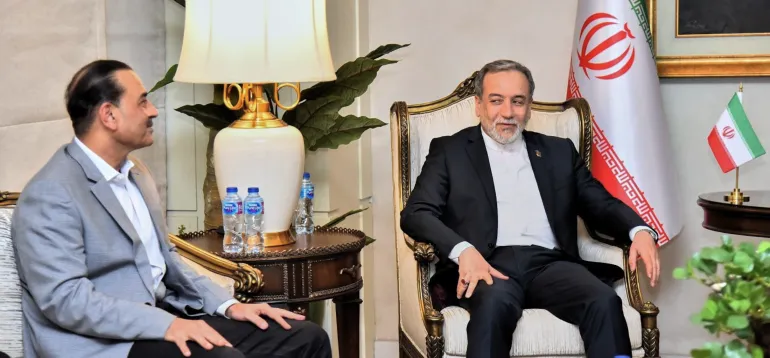
Islamabad, Pakistan — Pakistan’s Chief of Army Staff and Chief of Defence Forces, Field Marshal Asim Munir, is traveling to Tehran on Monday for talks with senior Iranian officials, Iran’s Foreign Ministry announced on Sunday.
It will be Munir’s third visit to Iran this year as Islamabad continues its push to mediate an end to the United States and Israel’s war on Iran.
Recommended Stories
list of 4 itemsend of list
Pakistani officials, speaking on condition of anonymity, confirmed to Al Jazeera that the trip would take place but declined to elaborate on its agenda.
The Pakistani military’s media wing, the Inter-Services Public Relations (ISPR), as well as the Foreign Ministry and Information Ministry, did not respond to Al Jazeera’s requests for comment on the visit, which was unusually announced by Tehran rather than Islamabad.
Foreign Ministry spokesperson Esmaeil Baghaei said the trip would build on Pakistan’s efforts to “help strengthen peace and security in the region”.
Munir will hold talks with senior Iranian officials during his stay, Baghaei told reporters in Tehran.
The visit follows two phone calls between Munir and Iranian Foreign Minister Abbas Araghchi within four days, on Wednesday and Saturday.
The two officials discussed “regional developments” and ways to strengthen “peace, stability and security” in West Asia, according to Iranian state media.
A third trip this year
Munir’s first visit to Tehran this year came in April, days after the Islamabad Talks, the first direct US-Iran negotiations in more than four decades, ended without a breakthrough.

He returned in May, arriving hours after US Secretary of State Marco Rubio said there had been “slight progress” in talks between Washington and Tehran.
His latest visit comes as the diplomatic track underpinning the Islamabad MoU has all but stalled, while Washington prepares a new round of sanctions.
The discussions are also expected to touch on this month’s announcement of the Mecca Joint Defence Agreement between Pakistan, Saudi Arabia and Turkiye, which Munir attended in Mecca.
Yemen’s Houthi fighters, whose attacks on shipping lanes have repeatedly threatened to widen the conflict, are also likely to feature in his conversations with Iranian officials. The Houthis are widely believed to receive support from Tehran.
The issue carries particular weight for Islamabad.
Three Pakistani sailors were killed and several others wounded when Houthi forces struck a Tanzania-flagged commercial vessel in the Bab al-Mandeb Strait on August 11.
Deputy Prime Minister and Foreign Minister Ishaq Dar called the attack a violation of international law and “strongly condemned” it at the time.
Munir is expected to meet Iran’s newly appointed senior military leadership during the visit, according to Reza Afzal Samir, an Iranian journalist tracking the talks.
“He is well positioned to meet Iran’s newer senior military leadership, the new IRGC chief, the new Chief of General Staff of the Iranian Armed Forces, and the new Secretary of the Supreme National Security Council,” Samir told Al Jazeera, referring to Munir’s expected meetings with Major-General Ahmad Vahidi, Major-General Ali Abdollahi and Mohsen Rezaei respectively.
The officials were all appointed earlier this month.
A lapsed deal
The visit comes at a fraught moment for Pakistan’s mediation effort, which it has led after the war began six months ago.
The 60-day window set out in the Islamabad Memorandum of Understanding (MoU), signed by Pakistan, Iran and the US on June 17, lapsed in mid-August without either side agreeing to extend it.

Iran has kept the Strait of Hormuz shut, insisting that Washington first lift its naval blockade, end oil sanctions, unfreeze Iranian assets abroad and halt military threats. Tehran says the US has not met those conditions.
Munir’s trip also coincides with a fresh round of US economic pressure.
US Treasury Secretary Scott Bessent is due to detail on Monday what American officials have called the “toughest sanctions in history” against Iran, a package he has said is intended, alongside the continuing naval blockade, to “collapse” the government in Tehran.
Iran’s Foreign Ministry has called the plan “economic warfare”.
The trip also follows a month of regional realignment. Pakistan, Saudi Arabia and Turkiye signed the Mecca Joint Defence Agreement on August 7, a mutual defence pact under which an attack on one signatory would be treated as an attack on all three.
Pakistan’s Interior Minister Mohsin Naqvi travelled to Tehran earlier this month to revive the stalled mediation push but returned without any concrete results.
Tensions elsewhere in the region have sharpened too.
The United Arab Emirates suspended trade and financial transactions with Iran last week after saying it had come under fire from two ballistic missiles launched from Iranian territory, a claim Baghaei denied.
But Munir’s visit, analysts say, signals that key regional mediators have not given up on efforts to revive talks, either direct or indirect, between Iran and the US, even as they try to balance their own relations with Tehran and Washington.
Oman’s Foreign Minister Badr bin Hamad Albusaidi, who, like Munir, has held recent telephone conversations with Araghchi, is scheduled to visit Tehran on Tuesday, Iran’s state-owned IRNA news agency has reported.
What leverage does Islamabad have?
Analysts remain divided on what Munir’s visit can realistically achieve, given Pakistan’s limited ability to enforce any understanding it helps broker.
“Both sides see Pakistan as a country that has helped facilitate dialogue without any personal stake in the outcome, nothing to gain for itself,” said Qamar Cheema, a political analyst and head of the Islamabad-based Sanober Institute. “That gives it a certain clarity, and the ability to offer an off-ramp to everyone involved.”
Javad Heiran-Nia, director of the Persian Gulf Studies Group in Tehran, said Pakistan’s persistence was driven partly by self-interest.
“Pakistan is concerned about escalating tensions and the outbreak of another all-out war between Iran and the United States, which would further destabilise the region,” he told Al Jazeera, pointing to Islamabad’s reliance on energy imports from the Gulf and the risk of disruption to remittances from Pakistani workers there if instability spreads.
Zahid Mehmood, a retired two-star general and Pakistani defence strategist, went further, describing Munir as still carrying Washington’s own offer to Tehran.
“Pakistan is still carrying, in effect, Washington’s off-ramp to Tehran,” he told Al Jazeera. “The country remains the most trusted conduit available.”
Not every analyst sees Pakistan’s role as this central.

Andreas Krieg, an associate professor of defence studies at King’s College London, said Qatar, not Pakistan, remained the primary channel.
“Qatar is leading the political mediation and remains the essential communication bridge between Washington and Tehran,” he told Al Jazeera.
Munir’s contribution, he said, was narrower, a “military-to-military channel into an Iranian system in which the IRGC and wider security establishment have become increasingly important to decisions about war and peace”.
What Munir can deliver, and what he can’t
Iranian journalist Samir said Pakistan had a significant role in Iran’s calculus because of what it could do.
“Why should Iran listen to Pakistan? Because Pakistan still retains the leverage to actually do something and create a real opening for peace, rather than remaining silent and doing nothing,” he said.
Samir also predicted the Munir visit could be followed quickly by movement on Hormuz negotiations. “I think the timeline for a final agreement between Iran and Oman on the Strait of Hormuz is also drawing near,” he said. “If [Munir] succeeds in bringing Iran back to the table, I anticipate a new announcement from Oman and Iran on the strait shortly after.”
Krieg was more cautious about what Munir’s visit could deliver. The most meaningful outcome, he said, would be “confirmation that Iran’s security establishment would abide by a specific Hormuz deconfliction arrangement and restrain escalation through Yemen or Iraq if Qatar can secure reciprocal American movement”.
Without that, according to Krieg, “the communication bridge remains open, but the two sides continue moving towards another coercive cycle”.
Mehmood, the retired Pakistani general, was less equivocal.
“Pakistan is really the only exit card available to either side for their off-ramp,” he told Al Jazeera.