chat

Amy Winehouse’s closest pal reveals final chat hours before she died

IN the last six months of her short life, there was one person Amy Jade Winehouse could turn to unreservedly.

Dale Davis, her band leader and confidante, provided her with a shoulder to cry on and a reason for her to break into the infectious laughter that came with her wicked sense of humour.

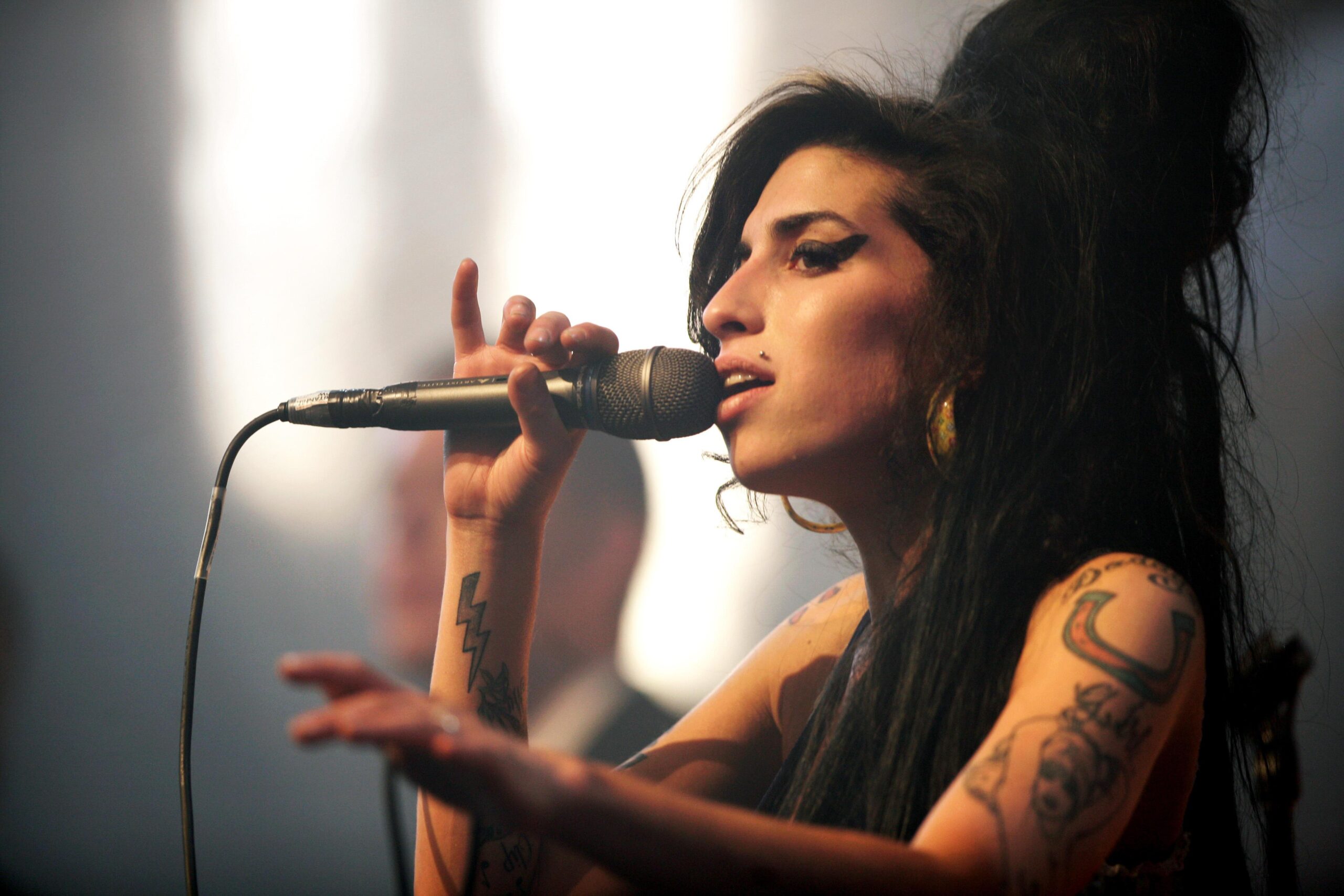
There was one person legend Amy Winehouse could lean on in her final days Credit: Alamy
Dale Davis, 57, was Amy’s band leader and closest confidante from ages 19 to 27 Credit: supplied

He was there to give Amy “a cuddle” during her final public outing, and three days later — on the night before she died aged 27 in 2011 — he spent 15 minutes on the phone to her, telling her she was “the best”.

“We were always chatting in those final months,” he says today to mark the 20th anniversary of Amy’s stellar Back To Black album.

“I remember her saying to me, ‘Dale, I’ve just realised that I’ve spent my whole adult life with you’.

“I was with her from when she was 19 to 27. The things I miss about her most are her big grin and that glint in her eyes.”

Dale joined Amy’s band in 2003 as bassist because the original choice was “too expensive” and, as he self-deprecatingly admits, he was “the uglier, cheaper” alternative.

A year later, he became her musical director and remains the keeper of her flame by leading The Amy Winehouse Band on its regular tours of the UK and abroad.

Though he was 17 years her senior, they bonded over a shared love of “hip-hop, soul and Nineties R&B”.

He adds: “We were also the only members of the band who drank Jack Daniel’s — so there was a lot of affinity there. If Amy loved you, no matter who it was, she loved you hard. She always had my back and I always had hers.”

Reaching the 20th anniversary of Back To Black, released on October 27, 2006, is a milestone Dale finds “surreal”.

Amy’s second album, the follow-up to her debut Frank, catapulted the vivacious, naturally talented singer on to the world stage and has sold more than 20million copies (and counting).

It contained raw, personal songs loaded with pathos and humour, such as Rehab, Me & Mr Jones, Tears Dry On Their Own and Love Is A Losing Game, all delivered in deliciously smoky, jazzy tones.

It charted in graphic detail Amy’s turbulent relationship with the love of her life, Blake Fielder-Civil, as well as her battles with drug and alcohol addiction.

“I believe she was the first star of this millennium, of the broadband generation,” maintains Dale.

“She was a most courageous performer and human being. Amy had a massive heart, but it left her open to the highs and the lows.”

To give an example of her inner conflict, Dale vividly recalls being with her on February 10, 2008, when she scooped five Grammy awards in the wake of Back To Black.

“Life was never dull and that night I saw an indication of what she was going through,” he says.

Amy phoned Dale for 15 minutes just hours before she died Credit: Free for editorial use
He now keeps her memory alive by leading the Amy Winehouse band with members Ade Omotayo, Dale Davis, Nathan Allen and Hawi Gondwe Credit: PA

Amy could not attend the ceremony in Los Angeles because she’d been denied a visa amid drug and legal issues, but she was hooked up remotely to perform from London’s Riverside Studios.

“When she won her third Grammy, it was just me and her on stage,” continues Dale.

“Everyone else had walked off. I said, ‘Well done, Amy’. And she just said, ‘No, this is s*** because Blake’s not here’.

“While she was winning all those awards, her heart was going through the extreme pain of not being with him. There was no middle ground with Amy, and things like that are so destabilising to your mental health.”

When he considers the Back To Black songs, he says Wake Up Alone was Amy’s favourite, but he singles out a sad track, Love Is A Losing Game, and a funny one, Me & Mr Jones.

There’s an exquisite demo rendition of Love Is A Losing Game on the new, expanded anniversary editions, just Amy’s sublime, soulful voice and the strums of an acoustic guitar.

Dale says: “She was equally comfortable with an orchestra or on her own.

“The great thing about that version is that she delivers the most beautiful performance and then, at the end, she goes, ‘Is that all right?’. That really sums her up.

‘Amy had a massive heart’, said Dale Credit: Getty
Next week will see the 20th anniversary of her iconic and most vulnerable album Back to Black Credit: Getty

“Amy was so bright and so intelligent, but because she spoke so normally, it fooled people.”

Of Me & Mr Jones, with its old-school jazz vibe and jaw-dropping line, ‘What kind of f***ery is this?’, Dale says: “That’s my favourite song on the album. It’s right up my street. It’s got doo-wop. It’s got swing.

“I can imagine the mischievous grin as she’s thinking, ‘Right, I’m going to turn this into a funny old song’.

Also, you can’t play it on the radio. That’s the great thing about Amy — she knew no boundaries.”

Yet Dale senses that the star who burned bright for a fleeting moment “sold herself short in the end”.

“Amy was the most rebellious person I’ve ever come across,” he decides.

In 2004, the year Frank came out, Dale remembers “having breakfast with Nick (Shymansky, her first manager), who said, ‘We’ve got some issues with Amy’. I said, ‘Just leave her be, she’s a punk’.

“She had that spirit which could be destructive. However, the only harm she ever did was to herself.

“At the same time, she was so funny — her observational humour was ridiculous.

“I could always tell something funny was coming when I saw that glint in her eyes.

Back to Black has sold over 20 million copies (and counting)Credit: Not known clear with picture desk
The singer drew inspiration from her turbulent relationship with husband Blake Fielder-Civil Credit: Getty – Contributor

“Had she lived, Amy would have been like Barbra Streisand or Bette Midler — an all-round entertainer.

“I can imagine her having her own TV programme or being a great actress. She even talked about wanting to do some acting.”

When I caught up with Dale this week, he was preparing for last night’s Back To Black 20 show, directed by the album’s producers, Mark Ronson and Salaam Remi, at The Roundhouse in Amy’s London stomping ground of Camden.

Among the singers due to step into her ballet flats at the gig were Baby Rose, Corinne Bailey Rae, FLO, Jessie Reyez, Jorja Smith and Lianne La Havas.

Mention of the venue prompts Dale to cast his mind back to Amy’s final public outing, which took place there on July 20, 2011 — three days before she left us too soon.

Dale was by her side for a showcase by her goddaughter, the singer Dionne Bromfield.

Amy bravely appeared on stage — “dancing and being a good sport” — to support Dionne, but declined to take the mic.

“She was wearing a vest and jacket and looking as well as when I first met her,” says Dale.

“After the show, Amy said, ‘Let’s hang out’. So I spent two hours with her and we chatted so much. Before we left, we went outside and she said, ‘Cuddle me because I’m cold’.

“I spent the last ten minutes holding her. When I look back on that moment, I’m thinking it wasn’t like her because she was never cold.”

Amy was married to Blake Fielder-Civil from 2007 to 2009 Credit: PA:Press Association
British soul singer Dionne Bromfield is famously Amy’s honorary goddaughter Credit: Getty

Dale believes Amy’s “eating disorder got her in the end”, a subject of great sadness to him.

He says: “She was never ever big — curvy at most. But I know a comment was made one year and then suddenly all the weight came off. I felt sorry for her.

“It has taken me a long time to realise what eating disorders are.

“I wish I’d had more knowledge so I could have helped.

“Towards the end, her nervous system was getting more and more shocked with the lack of eating.

“And when Blake went to prison, she also stopped sleeping. That had a massive impact on her physical state.”

This brings us to Dale’s phone call with Amy, which started at 11.15pm on July 22, 2011, hours before she died.

He says: “Purely by chance, I had the longest conversation with her that night.

Many faced criticism over Amy’s death including father Mitch and mother Janis Credit: Getty – Contributor
Dale was there to offer Amy ‘a cuddle’ in her final months Credit: Redferns

“Even at her funeral service, I ended up right next to the coffin because there was no room for me elsewhere. All those weird things draw me in to make sure that I protect her legacy.”

Dale describes their final conversation: “Amy said, ‘Dale, I’ve had a little bit to drink’. And I said, ‘Well, you don’t sound at all drunk’.

“Then she said, ‘I’ve been watching some old clips of me on YouTube. I CAN sing, can’t I?’. And I just said, ‘Of course you can. You’re the best’.

“I’m so glad that, on her last evening, she could turn round and say that because she was the least arrogant person about her abilities.”

In the wake of Amy’s tragic death, there have been blame games involving various parties — Blake, management, the music industry, the media, her parents.

Mention of this prompts Dale to launch a staunch defence of Amy’s divorced mum and dad, Janis and Mitch.

He says: “I feel so sorry for Janis because when Amy started to get famous, Janis had her own health problems.

“Amy always said her mother was so serene — and then she had to go through her struggles and watch the demise of her daughter.”

Turning to her London cabbie dad, who left the family home when Amy was about ten but became more involved in her life as her career took off, Dale says: “People point the finger at Mitch.

“Me and my dad don’t really get on, but we love each other and are there for each other.

“It was very difficult for someone like Mitch coming back into Amy’s life when she’d become a self-made multimillionaire. It must have been quite hard to try to direct someone when they’ve made it themselves.”

On a more general note, Dale adds: “The industry and everyone else can take steps to do everything they can — but there’s always going to be someone who slips through the net.”

Next up for him is a UK tour with his Amy Winehouse Band, a chance to hear some of that beautiful, rebellious spirit.

“They tried to make me go to rehab but I said no, no, no.”

  • UK tour details at theamywinehouseband.com. The Back To Black 20 ­Concert is on BBC Two on Saturday, 9.35pm, and Radio 2, Monday, 7pm. Expanded editions of Back To Black, with unheard demos and a 2007 live show, are out on Friday.
Source link

Live chat: Our columnists analyze L.A.’s mayoral debate

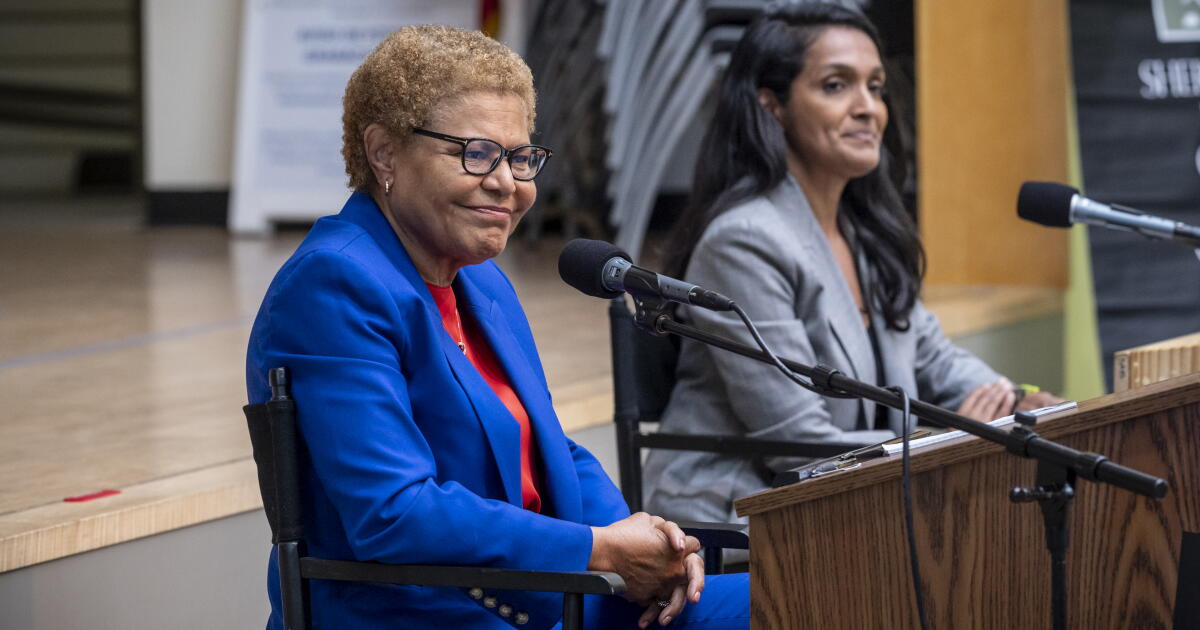
Times columnists Gustavo Arellano, Steve Lopez and Lorraine Ali are chatting about Tuesday night’s Los Angeles mayoral debate between Mayor Karen Bass and Councilmember Nithya Raman. Follow along in real time:

Ali: The stakes are high for both contenders, yet I wonder how many Angelenos will be watching.

It’s surprising the number of otherwise politically aware folks who had no idea the debate was taking place tonight until I mentioned it. Then they were irked to find it airing on network TV: “Who still has cable?!” Apparently, venturing onto Telemundo or NBC’s live feed is a bridge too far. But it shouldn’t be.

Raman is still a mystery to many, even though she’s polling ahead. Tonight, she needs to definitively show who she is beyond The Candidate Who Is Not Karen Bass. Bass has to defend her record, of course, but also contend with the electorate’s insatiable need for change — even if they know very little about what that change may bring.

As for the rest of us? Tune in! The future of L.A. requires your attention.

Lopez: Picking up on Gustavo’s framing of the debate as Round 3, we’re talking about two pugilists who used to fight for the same club, more or less, and now enter the ring looking to take each other out. So it’s personal, and could indeed get nasty.

Raman’s job in the debate is a little easier, in some ways. Though I don’t put much stock in polls, she’s ahead on points by virtue of Bass’ high negative rating alone. And yet, think of the pressure on Raman to seal the deal.

If the challenger doesn’t prevail tonight and go on to win the election next month, she could be setting herself up for a lonely political future, having alienated more than a few former allies in her quest to evict the mayor from City Hall.

For Bass, the stakes are just as high. A 21-year political career is on the line.

I hope that along with the punches and counter-punches, we get some inspiration, too, and a workable game plan for making a great but troubled city a better place to call home, even if the Dodgers end up breaking our hearts.

Arellano: Will the Third Bass-Raman debate be a classic — or a dud?

Ali-Frazier. Morales-Barrera. Liddell-Couture. Trilogies are hallowed in the worlds of boxing and mixed-martial arts as case studies of evenly matched rivals to wallop each other in the first two matches, creating the setting for a final showdown and chance at eternal bragging rights — and usually, a title.

Will tonight’s bout between L.A. mayoral candidates Karen Bass and Nithya Raman, scheduled to air at 7 p.m. on KNBC, rise to those rarified levels?

The makings of a classic are there. Bass was the wily incumbent during her primary face-off with Raman who let fellow mayoral candidate Spencer Pratt land most of the attacks against their shared opponent. That left Raman uttering loopy word salads when she wasn’t crying conspiracy between the two. But the council member nevertheless made it into the general election against Bass, and dominated their second debate, hosted in August by the Sherman Oaks Homeowners Assn.

All of a sudden, Bass was a staggering champion lunging at a revived Raman, who swung and stung and ducked the way only a hungry up-and-comer can.

The two go into their rubber match each promoting polls that they claim show voters back them, while letting proxies launch attack ads that promise to get uglier and more ubiquitous as Election Day nears. Expect Bass at tonight’s debate to try and assert her dominance early with equal part offense against Raman and defense of her record. Expect Raman, whom City Hall opponents have long trashed as conflict-averse, to focus on a message of possibility and positivity while holding her ground and striking back — and hard — when necessary.

Will tonight cement the Bass-Raman trilogy as an electoral classic — or end it on a deflating note? One thing’s for sure: the two need to leave everything on the debate stage if either wants to win and get that much closer to become L.A.’s Madam Mayor.

Source link

Live chat: Times columnists analyze the CNN Hilton-Becerra debate

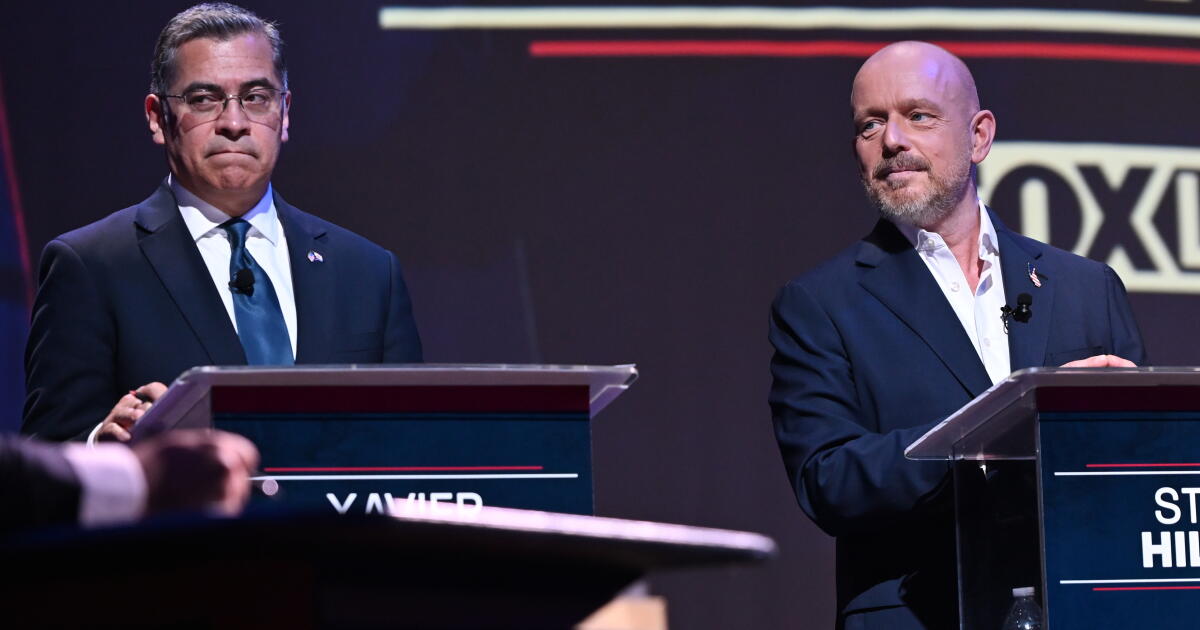
Xavier Becerra has made a campaign out of saying nothing. Steve Hilton will seemingly say anything to anyone as long as there’s a microphone.

Neither dynamic is promising for voters tuning into Wednesday night’s televised debate on CNN with the two candidates vying to replace Gavin Newsom as California’s new governor.

But don’t worry, Golden State voters — Times columnists Gustavo Arellano, Mark Z. Barabak and Anita Chabria are watching every minute, every second, really, to bring you the zingers, gaffes and hopefully maybe even some insights.

*

Chabria: Let me start things off by saying my hope is that Hilton will push Becerra into specifics around issues including affordability, what we’re going to do about the coming Medicaid cliff, housing and education. California has been focused on raising up our most vulnerable and struggling residents for years — which is important.

But the middle class is suffering now, too, in all those areas. Hilton is right that the status quo isn’t working. That’s going to be a challenge for Becerra when he gets into office (and honestly, he could vacation in Hawaii until November and still get elected), so I’ll be looking for answers on how he plans to lift all boats.

Barabak: There will be much critiquing to come, so let me start by paying both gentleman a compliment.

Hilton has been campaigning hard, as though he has more than the merest speck of a chance of pulling an epic upset and somehow prevailing. Good for him!

And Becerra, who’s made himself exceedingly scarce, is stepping up and debating, as he should. And he’s not being cute about it, insisting on, say, a midnight appearance on local cable TV in Alturas. So props for that.

Arellano: I’m hoping that Becerra will once again channel his inner cholo, as I urged him to during the primary.

The Tío Xavier persona that Becerra supporters have trotted out — a kind, chuckling sage — isn’t what California needs right now. Becerra knows that the most loved uncles in Latino households aren’t the safe, boring ones but the ones who risked it all: the ones who came into this country without papers, who pulled themselves up by their bootstraps so that their kids could drive hybrids, and who proudly warble “El Rey” during the mariachi portion of the latest family wedding instead of sit quietly at the table.

We need the loco uncle, Xavier, not the fresa — uppity — one.

And I’m hoping Hilton will rebuke Donald Trump. I know, I know: there’s a better chance of England winning the FIFA World Cup than that ever happening.

But if there’s an iota of hope for the British expat to beat Becerra, it can only happen by him showing Californians that he’s willing to stand up to the loathed president instead of cozying up to him.

Otherwise, as a famous Brit once sang backed by sinuous xylophones, “Baby, baby, baby, you’re out of time.”

Insights

L.A. Times Insights delivers AI-generated analysis on Voices content to offer all points of view. Insights does not appear on any news articles.

Viewpoint
This article generally aligns with a Center Left point of view. Learn more about this AI-generated analysis
Perspectives

The following AI-generated content is powered by Perplexity. The Los Angeles Times editorial staff does not create or edit the content.

Ideas expressed in the piece

  • Chabria argues that the debate should press Becerra for concrete plans on affordability, the coming Medicaid funding cliff, housing and education. In particular, the piece says California’s middle class is struggling and that the status quo is not working, leaving Becerra with a challenge if elected.
  • Barabak welcomes both candidates’ participation: Hilton, for campaigning energetically despite his long odds, and Becerra, for agreeing to a televised debate rather than avoiding the encounter.
  • Arellano contends that Becerra should project a more forceful, less cautious persona, drawing on the immigrant and working-class experience of Latino families. The column also argues that Hilton would need to show independence from President Trump to make a stronger case to California voters.

Different views on the topic

  • A contrasting case for Hilton’s candidacy is that California needs a sharp break from current policies. Hilton has proposed eliminating state income taxes on the first $150,000 of earnings and says he would offset the lost revenue with budget cuts; he has also blamed climate policies and regulations for high fuel costs.[3][1]
  • Becerra’s record of public proposals complicates the article’s portrayal of a candidate who has made a campaign out of saying little: his platform calls for expanding housing construction, streamlining approvals and addressing utility and insurance costs. At the same time, his healthcare proposals have been described as broad rather than detailed, lending weight to calls for greater specificity.[4][2][3]
  • The candidates also offer different approaches to affordability. Hilton has promised to unwind policies he blames for high costs, while Becerra says the state should maintain environmental standards as it works to lower costs and stabilize fuel supply.[3][1]

Source link