Wizz Air has made an announcement that will affect passengers planning to fly with the budget carrier from 2027 onwards. It has confirmed that travellers will soon be able to enjoy high-speed internet access on board.
The airline, which is based in Hungary, revealed it is fitting Elon Musk’s Starlink internet system across all its “new generation” aircraft. Wizz Air claims it will be the first European ultra-low-cost carrier to adopt the technology.
The airline has yet to confirm whether passengers will be charged for using the service. Starlink — owned by billionaire Mr Musk’s SpaceX aerospace firm — operates via thousands of satellites in orbit around Earth. A growing number of airlines have already begun offering the service or have announced plans to introduce it, including British Airways and Virgin Atlantic.
Ian Malin, chief commercial officer of Wizz Air, said: “Ultra low-cost travel has always been about making opportunities accessible to more people. In 2027, we’re taking that philosophy into the space era.
“Our customers shouldn’t have to choose between affordable fares and reliable internet onboard to stay connected to the people, work and moments that matter most. We’re proud to lead that change by collaborating with Starlink to bring maximum benefit to Wizz Air.”
In January, a row broke out between Mr Musk and Ryanair boss Michael O’Leary over whether Starlink could be used on the airline’s flights. After Mr O’Leary dismissed the idea as unfeasible, Mr Musk branded Mr O’Leary an “idiot” and a “chimp”, and speculated on X about potentially buying the airline.
Mr O’Leary claimed the “PR spat” had driven a 2-3% increase in sales.
When Nithya Raman stepped up to a podium on the night of L.A.’s mayoral primary election, she thanked her supporters for standing up to the “powerful interests” who spent millions of dollars trying to “preserve this city’s broken and unjust status quo.”
“At a time when so many people have written Los Angeles off or have lost hope in the future of this incredible city,” the democratic socialist L.A. mayoral hopeful said, “you are proof that Angelenos are hungry for change.”
But as election results rolled in, the movement for change was underwhelming, or at least divided. Incumbent Mayor Karen Bass was in the lead, advancing to the November runoff. That left Raman locked in a battle for a second spot with Republican former reality TV star Spencer Pratt.
Bass is one of several high-profile establishment Democrats to emerge on top. In California’s gubernatorial race, centrist Xavier Becerra, a veteran of the Biden Cabinet, advanced to the runoff after being challenged from the left by billionaire green activist Tom Steyer and Democratic former U.S. Rep. Katie Porter. Steyer is now behind Steve Hilton, a Republican, and battling to make the runoff.
Still reeling from the rise of Donald Trump, Democrats in California and beyond are struggling to figure out the future direction of the party.
Some progressives, inspired by Zohran Mamdani’s New York mayoral victory, saw 2026 as an opportunity to move the city further left. But the results have been mixed in key races, with veteran Democrats like Bass and Becerra eking out leads even as polls show dissatisfaction with status quo politics in California.
“This was supposed to be a change revolution, but voters clearly said no to the revolution,” said Sara Sadhwani, a politics professor at Pomona College. “Voters want change,” she noted, “but it doesn’t appear right now that there has been an appetite for a major shift in the ideology of the city or the state.”
Xavier Becerra speaks during an election night event in downtown Los Angeles on Tuesday.
(Eric Thayer/Los Angeles Times)
Becerra emerged as the Democratic favorite late in the election and won support from many establishment party leaders. Pundits said after a wild primary that included the implosion of Democratic U.S. Rep. Eric Swalwell’s campaign amid sex assault allegations, Becerra emerged as a “safe” choice.
Some opponents attacked his moderate views and his willingness to accept campaign donations from big oil companies like Chevron. But that did not stop his rise.
Bass was also beset with challenges, being an incumbent in a city beset with problems.
For her, election night marked a “victory with an asterisk,” Sadhwani said, noting that Bass is first incumbent L.A. mayor in more than two decades to face a runoff. “It would be wrong for Karen Bass to think that this victory … is a ringing endorsement of the work she is currently doing.”
The results underscore Bass’ unpopularity as an incumbent, garnering just 35% of the vote so far. If Raman can catch up and eventually surpass Pratt in the vote count, she could pose a considerable challenge to Bass as more young voters come to the polls in November.
Mike Bonin, a former L.A. City Council member who leads the Pat Brown Institute for Public Affairs at Cal State L.A., said if Bass exceeded expectations it was because they were very low.
“Coming in first in a runoff isn’t a huge victory for an incumbent mayor,” he said. “Two-thirds of the city did not vote for her. That’s not a position of strength.”
James Adams, a political science professor at UC Davis, said that Becerra and Bass coming through indicates the centrist Democratic candidates were in a stronger short-term position than their rivals. But problems loom ahead, he said, as the longtime Democratic establishment that’s been governing California for the last 15 years failed to make notable progress in solving problems with affordable housing, homelessness, public transportation and education.
“I think the Democrats’ prospects are very bright in 2026 given the California Republicans’ dysfunctionality and a complete backlash against Donald Trump,” Adams said. “But I have much bigger concerns about the California Democrats long term, because it seems to me they’re setting a record for most consecutive years of failing to fix the state’s problems while getting reelected anyway.”
Democrats in California, he said, were suffering from being in power too long.
“Whenever one party gets into a long-term, dominant position, usually because the other party is just in the midst of self-destructing … the whole thing ends in tears, because the party that is in a dominant position, they don’t have to be that good.”
As the vote count continues in the mayor’s race, democratic socialists in Los Angeles already have some wins down-ballot.
“We are gaining momentum,” said Leslie Chang, a co-chair of the 5,000-member L.A. chapter of the Democratic Socialists of America, a decentralized anti-capitalist group that advocates for rental protections and defunding the police. Over the last six years, Angelenos have elected four DSA-backed City Council members and a DSA-recommended city controller.
The DSA did not officially endorse Raman, because she entered the race after the group had issued endorsements and another DSA candidate was also running for mayor. However, three of the six DSA-backed candidates for citywide office were projected to win outright.
DSA Councilmembers Hugo Soto-Martinez and Eunisses Hernandez were reelected by such large margins they avoided runoffs. In the city attorney’s race, DSA-endorsed Marissa Roy was in the lead and the mainstream Democratic incumbent became the first city attorney ousted in a primary in nearly a century. City Controller Kenneth Mejia, a progressive anti-establishment candidate who is not a DSA member but an ally of the group, led by nearly 20 percentage points.
When Chang knocked on doors, she said, some voters asked: “Well, what’s the difference between Nithya and Karen Bass?”
A few voters told her that after reviewing Bass’ and Raman’s websites, they found their platforms similar. Chang was surprised. She thought Raman articulated a clear and novel strategy for how to get L.A. out of the housing crisis, but she said some on the left took issue with her working with housing developers to reduce red tape.
Neel Sannappa, chair of the California Democratic Party’s progressive caucus, said Raman was stymied by getting into the race late and having only a few months to campaign. It also didn’t help that a more left-wing challenger, Rae Huang, already had some momentum — not enough to win, but enough to split the left.
“Nithya does represent something real and growing in Los Angeles,” Sannappa said. “There is a hunger for more progressive, left-leaning candidates that want to make sure that we’re investing in people and not so much investing in just police … and being able to build things that are new and innovative.”
Supporters watch election results come in on their phones during Nithya Raman’s election night party at Boomtown Brewery on Tuesday.
(Gina Ferazzi/Los Angeles Times)
Some have criticized Raman’s coalition-building, noting she was not endorsed by her fellow DSA-backed City Council members. Others said the MIT and Harvard graduate, who has been a councilmember for six years, performed tepidly in a May televised debate and suffered from Pratt’s attempts to tie her to the establishment.
“If you’re a part of the institution, which she is,” Sadhwani said, “then you can’t exactly claim that you’re going to bring massive change.”
Sadhwani said that California’s left, in contrast to New York’s, appears to have a charisma deficit. While Pratt and Hilton had an advantage with their television backgrounds, they also spoke “in plain terms about the real problems that the state faces.”
Part of Bass’ success can also be attributed to assembling a coalition that included the L.A. County Federation of Labor, the L.A. police officers union, the L.A. County Democratic Party and immigrant rights groups.
In the mayoral race, Sadhwani said, “the dominant political coalition still has power, money, the organization.”
“If you can garner the support of the unions, then having a broader message, maybe it’s less important,” she said. “You don’t have to work quite so hard, because the unions have the base machine.”
People attend Mayor Bass’ election party for the California 2026 primaries at the LINE Hotel on Tuesday.
(Carlin Stiehl/For The Times)
Yusef Robb, a longtime Democratic strategist who is an advisor to Bass, attributed the mayor’s lead to her campaign’s success in building a broad coalition and communicating across the political spectrum. Most voters, he said, tend to think less about ideology — and whether a Democrat was mainstream or DSA-supported — than candidates’ positions on bread and butter issues.
“Mayor’s races are first and foremost about what people see outside of their front doors, when they walk their kids to school, when they drive to work,” he said. “At the end of the day, the voters look at the field and say, ‘OK, who do I trust to keep my kids from having to skip around a tent on the way to school?’ ‘Who can I trust to hire more officers?’ … and ‘Who can I trust to fight back against ICE in court through executive action and even in the streets?’ And that’s Karen Bass.”
For Democrats in this robustly blue state, part of the challenge in figuring a path forward is that every candidate — even those already in power — pitches themselves as a bona fide progressive against the status quo.
“We have led a grassroots campaign because we want to bring change to our city,” Bass said on election night. “And that’s what we’ve been doing, and that’s what we’re going to continue to do.”
Raman also tried to tout herself as a change candidate. Articulating her platform in broad strokes rather than bread-and-butter detail, Raman said she wanted L.A. to be a place “where government actually functions and delivers every day on this city’s beautiful bighearted values, where we stand up against ICE, where we show up for our gay and trans siblings.”
But as she talked of neighborhoods “full of trees and shade … and people and good food,” she seemed low-key and equivocal. Her message was a far cry from the pressing one U.S. Sen. Bernie Sanders (I-Vt.) put forward in his presidential campaigns, highlighting the millions of Americans working for “starvation wages” and a young single mother in Nevada struggling on $10.45 an hour.
Ultimately, the fight between Bass and Raman, as a struggle between mainstream and progressive Democrats, is complicated by the fact that Bass came up through the progressive wing of the Democratic Party, founding the grassroots Community Coalition in South L.A. in the 1990s.
Campaign worker Khai Dombroe prepares balloons before Nithya Raman’s election night party.
(Gina Ferazzi/Los Angeles Times)
And even though Raman is a DSA member, she has tacked to the center during the campaign, distancing herself from past calls to defund the police by saying she did not want the LAPD to lose more officers.
While Raman and Bass have much in common, the most significant difference between them is on homelessness, Sannappa said. Even though Bass comes from a political tradition of not wanting to criminalize the unhoused, he said, she understood her voters include people wanting to move homeless people off the streets.
“Brass tacks is that we need people that are going to be willing to fight for mental health services,” Sannappa said.
“I think Nithya more so represents the direction where the Democratic Party is going to have to go.”
As L.A. becomes less affordable and homeownership becomes out of reach for many Angelenos, young renters have become a rising political constituency — a shift that many say will likely propel the city leftward.
Bonin said he expected the next new rising Democratic coalition in L.A. to be a labor-renter coalition. He cited Councilmember Soto-Martinez, a renter and union organizer, as probably the best avatar of that.
But as the middle-class splinters along generational lines, other political experts warn that many ordinary Angelenos feel increasingly shut out of L.A. politics.
“Once upon a time the Democratic Party was the party of the working class, and today it has become the party of the educated elites,” Sadhwani said. “Perhaps one of the gifts that Donald Trump has given to Democrats is to force them to contend with the everyday issues of voters, which they seem to have distanced themselves from.”
As many Angelenos feel worse off now than four years ago, Chang said Bass was not directly responsible for every problem. Still, she said, she could have done more to move the city in the right direction.
Delaying the wage boost tied to the 2028 Olympics, she said, was a move that failed working people at a time when many are struggling to make ends meet.
“My fear, of course, is people pivot away from corporate Democrats and they choose the MAGA Republican, because that is the most visible fight,” Chang said. “Or because they think, ‘Oh, well, a democratic socialist running on the Democratic Party line, this is just more of the same status quo.’ ”
A few hours after Lionel Messi and the Argentine World Cup team checked into their training base in Kansas City, a series of thunderstorms pounded the area, knocking out power, felling trees and bringing flood and tornado warnings.
Hardly ideal conditions for the world’s biggest soccer tournament. Yet that’s likely just the opening salvo of a disruptive weather system that could affect the 38-day competition, which kicks off next week with games in Mexico, Canada and the U.S.
“It’s pretty safe to say climate change is going to have a mark on this World Cup,” said Kaitlyn Trudeau, a senior research associate of climate science for Sacramento-based Climate Central. “With climate change we know it’s not just going to be hotter, but it’s also going to increase the humidity as well.”
And that could make this summer’s World Cup one of the last of its kind. Tournament soccer in June and July has been a tradition dating to the first World Cup in 1930, but since then global temperatures in June have warmed by 1.89 degrees, according to the U.S. National Oceanic and Atmospheric Administration. That may not sound like a lot, but it takes many days and nights of extreme heat to move the needle that much.
“It can be a very dangerous situation,” Trudeau said.
As a result, FIFA President Gianni Infantino has already begun discussions on moving the start of the tournament from June to March or October after 2030. In the meantime, early kickoffs, cooling breaks, air-conditioned stadiums and regular weather-related delays will necessarily become common features of the tournament, according to “Pitches in Peril,” a detailed report on the impact of climate change on global soccer, released in the run-up to the World Cup.
“Football’s all of a sudden starting to reckon with the new climate realities,” said Elliot Arthur-Worsop, founding director of Football For Future, a pioneering U.K. nonprofit and co-publisher of “Pitches in Peril.”
“Extreme weather events are becoming more unpredictable,” he said. “The players, the spectators and the officials, they’re all at risk here, especially when it comes to extreme heat. How can we future-proof the game?
“Adaptation looks like moving the entire tournament to another time of year to deal with the extreme weather. Short term it could be moving the kickoff times, it could be introducing more drink breaks, having more heat protocols and safety regulations.”
Some climatologists fear summer events like the World Cup and Olympic Games are just one heatwave away from a major weather-related tragedy. In fact, Arthur-Worsop said his group’s study found that this men’s World Cup, the first held in North America in 32 years, will likely be the last played here.
“By the time the cycle of awarding the hosting rights would possibly come back, our climate projections show that the tournament in its current form would be unplayable due to extreme weather events,” he said. “Not only heat, but other compounding threats such as extreme wind and flooding and wildfires.”
Trudeau worries that whatever adaptations are eventually adopted won’t keep pace with a rapidly warming planet.
“We are basically pushing ourselves to a limit,” she said. “I’m not saying we’re going to absolutely lose the World Cup. But we are making it so much harder to find time to safely enjoy these kinds of events.
“This is not a safe environment and we should not be putting people’s lives at risk just to watch a game.”
FIFA did move the 2022 World Cup, pushing the start of the tournament in Qatar from June to November. Even then the games had to be played in air-conditioned stadiums, though. Three of the 16 venues to be used this summer — in Atlanta, Houston and Arlington, Texas — are domed and climate-controlled.
But the next World Cup, to be held in 2030, will be played mostly in Spain, Portugal and Morocco, where June and July temperatures frequently top 95 degrees. And just one of the likely venues is climate-controlled.
As for this summer’s tournament, a 2025 study published in the International Journal of Biometeorology found that conditions in 14 of the 16 World Cup host cities are likely to exceed the extreme Wet Bulb Globe Temperature (WBGT) threshold, an advanced index used to measure how the human body experiences heat stress.
A weather delay interrupts a Club World Cup match between Auckland City FC and Boca Juniors in Nashville in June 2025.
(Alex Grimm / Getty Images)
But you don’t have to do complicated math to know it’s hot because there’s also the “feels like” index, which registers how your body feels the heat. That can be vastly different from the reading on a thermometer. In Miami, for example, where seven World Cup games will be played, humidity will make an air temperature of 90 degrees “feel like” 109 degrees.
Under those conditions, it becomes more difficult for the body to cool itself.
“We talk about temperatures all the time, but that is only one part of the equation. It’s not including the amount of heat that you might feel from humidity,” Trudeau said. “It’s so important because once it gets too humid, then our body’s main cooling mechanism, sweating, is no longer possible.
“These are the kinds of situations where you have to be really careful. Not just players, but also people who maybe work at the stadiums, people who are watching the matches. It can be a very dangerous situation.”
Playing games in the cooler evening hours could alleviate that but FIFA, in a nod to TV viewers in Europe, scheduled 40 of the tournament’s 104 games, including the majority of games in the knockout rounds, to kick off at 3 p.m. or earlier local time. And though mandatory three-minute hydration breaks midway through each half have been added, Trudeau questions their impact.
“That’s kind of silly to be like, ‘Oh, we’re going to give an extra water break. But we’re going to be doing it at the hottest time of the day,’” she said. “It kind of sends mixed messages, right? What is the main priority of FIFA here? Is it to get the most views and the most revenue and the most whatever? Or is it to actually protect these players?
“We should not be having these in the hottest parts of the world at the hottest times of day,” she continued. “It’s just common sense.”
Chelsea’s Benoit Badiashile puts water on his face before a Club World Cup match against Esperance de Tunis in Philadelphia in June 2025.
(Francois Nel / Getty Images)
FIFA defended the schedule, saying in a statement that climate-related risks are assessed as part of overall tournament planning and managed in close coordination with the host cities, stadium authorities and national agencies.
“Building on experience from recent tournaments, a tiered heat-mitigation model will apply,” the statement continued. “When forecasts indicate elevated temperatures, venues will activate additional cooling capacity, including shaded areas, misting systems, cooling buses and expanded water distribution. Work-rest cycles for staff and volunteers are adapted accordingly, and first-aid readiness is reinforced with clear triage and escalation pathways for suspected heat illness. These measures scale dynamically based on real-time conditions before and during each event.”
Last summer’s FIFA Club World Cup, a 63-game tournament played in the U.S. as a kind of dress rehearsal for this year’s event, gives an indication of the problems ahead. That tournament was plagued not just by high heat and humidity, but also by thunderstorms and lightning that paused or delayed a half-dozen matches in Orlando, Fla.; Nashville; Cincinnati; Charlotte, N.C.; and East Rutherford, N.J.
“The heat is incredible,” said Argentine midfielder Enzo Fernandez, who played in last summer’s tournament with Chelsea. “I got a bit dizzy during a play. I had to lie down on the ground because I was really dizzy.
“Playing in this temperature is very dangerous.”
But if health risks are the primary concern of summer sporting events on a warming planet, they aren’t the only ones. The weather also affects the quality of play, said Norwegian defender Julian Ryerson, who played for Borussia Dortmund in last summer’s club tournament.
“Football is different when you play in this humidity and heat,” he said. “It is really tough. You take some precautions. That’s the only way to go about it.”
As the planet continues to bake, there are also increasingly fewer ways of going about staging a World Cup. You can play it nontraditional times and in nontraditional places. You can play it indoors in air-conditioned stadiums.
Or you can not play it at all.
“We’re running out of options,” Trudeau said. “We have to understand that unless we are going to address human-caused climate change, you’re going to start losing these things that are culturally important to us or economically important.
“We cannot keep doing these things at the rate we’re doing them and the times that we’re doing them in the ways that we’re doing them while we also continue to warm the planet.”
Bill Plaschke’s and many Angel fans’ desire for Arte Moreno to sell his ownership of the Angels is an overkill. Granted, us Angels fans have suffered under Moreno’s ownership, and the Angels would be better off with new ownership, but over the years Moreno has done many positive and charitable things. I suggest that the Angels provide Moreno with a 10%, non-voting interest, regardless of who the new owners might be. That way the fans are happy, and Moreno will still have a rooting interest.
Michael Gesas Beverly Hills
Bill Plaschke’s column urging Angels owner Arte Moreno to sell the team hits the bull’s-eye. Clear, concise and comprehensive, it highlights most factors leading the Angels to the bottom of MLB. Most factors, except a significant one: Moreno’s ownership incompetence has been facilitated by the group of sycophants he has apparently surrounded himself with. These same people are now hard at work imploring Moreno, “just don’t read The Times today.”
Rob Fleishman Placentia
If Bill Plaschke were an attorney delivering closing arguments at a jury trial, his recent article regarding Arte Moreno’s ownership of the Angels would certainly produce a verdict. The jury has reached its decision: the defendant must sell the team.
Wayne Muramatsu Cerritos
Dear Angels,
I’ll start off by saying it’s not you, it’s me. I tried staying faithful to you but Arte Moreno’s interference in our relationship has clouded my better judgment. I thought I could stick it out knowing how hard you are working trying to reel me back in. It’s not working and I must now turn my back and walk away. What we have now is a shallow affair and it’s not fair to you that the charade continue. In the end, I take great comfort in knowing someday, somehow you will find what you are looking for.
Callum Woodhouse, who plays Tristan Farnon, has warned that things may be “coming to change” for his character’s relationship in the upcoming series
All Creatures Great and Small will return for two more seasons(Image: Channel 5)
A star from All Creatures Great and Small has hinted at potential turbulence ahead for a blossoming romance between two characters.
Callum Woodhouse is set to reprise his role in the cherished period drama for its seventh series later this year.
Taking place during the 1930s and 40s, the much-loved programme chronicles Yorkshire veterinary surgeon James Herriot as he tackles the demands of his countryside practice.
With Nicholas Ralph portraying James Herriot and Rachel Shenton as his on-screen partner Helen, Callum takes on the role of Tristan Farnon, sibling to Siegfried Farnon, portrayed by Samuel West.
The last series and festive special witnessed Tristan confronting his own difficulties following his return from combat, before developing feelings for Charlotte Beauvoir. However, Callum has now cautioned that “things may be coming to change”, reports the Express.
Speaking to RadioTimes, he revealed: “It’s not really a massive spoiler to say I’m still with Charlotte Beauvoir, who is really good for him and helps him with his mental health.
“She keeps him happy and… I think he’s a little bit more content. But there’s only so long that that can last. So, things may be coming to change, but we don’t know.”
Following his character’s arc which depicted him battling PTSD after serving on the front line, Callum previously shared with the publication: “I think she’s come into his life at a time when he just really, really needs her.”
He added: “I think they’ve got a great chemistry and they get on really well.”
He continued: “Tristan, right now, needs someone who is sympathetic and understanding to what he’s been through, and is very much still going through.”
While fans eagerly await the new series of All Creatures Great and Small, the programme has already been confirmed to return for both series 7 and 8, each featuring six hour-long episodes, alongside Christmas specials.
Greg Barnett, Commissioning Editor at 5, had hinted that there remain “many new stories still to tell and more unforgettable adventures ahead”.
Barnett said: “All Creatures Great and Small is a jewel in 5’s drama crown and continues to delight viewers year after year. Its warmth, humour and heart, set against the beauty of Yorkshire, have made it a firm audience favourite.
“We’re thrilled to extend its future with two more series, with many new stories still to tell and more unforgettable adventures ahead for our Skeldale family.”
All Creatures Great and Small is available to watch on My5
A huge, waning moon glimmered over Los Angeles on election night, a metaphor for a trend that emerged in early returns.
The city’s political establishment seemed to be on the retreat in favor of populist insurgents from both the left and the right.
Mayor Karen Bass held a cushy lead in her bid for a second term, and the Associated Press declared that she had made it into the November runoff election. But the underwhelming amount of support she got thus far showed that many voters in a super-blue city didn’t have enough confidence in a Democratic stalwart to return her to office. Instead, many chose self-proclaimed upstarts from opposite ends of the political spectrum: Republican reality TV star Spencer Pratt and democratic socialist City Councilmember Nithya Raman.
Raman launched her campaign at the last moment, just weeks after endorsing her longtime ally Bass, figuring that enough Angelenos were tired of the incumbent and would join her message of change from inside City Hall.
Raman’s instincts were half right. Voters did want change. But they didn’t view her as a challenge to the status quo — to many, she is the status quo.
The mayoral hopeful didn’t articulate a platform that radically departed from Bass’, and voter antipathy to her muddled messaging showed: she ended the night in third place. If the current results hold, Bass would face Pratt in the runoff.
At Raman’s election-night party at Boomtown Brewery on the outskirts of Little Tokyo, I saw why her chances of becoming L.A.’s next mayor were slim from the start. The gathering felt like happy hour at a Silver Lake bar: far whiter than the city overall, with few Latinos. Her address to a packed house was a grab bag of platitudes mixed with a broadside against MAGA, which is a political nothing in L.A. politics. It was an uninspiring cri de coeur and reflective of a campaign that wasn’t apocalyptic enough for those, such as Pratt’s people, who want radical change, while offering nothing new for Bass supporters.
Yet Raman still insisted she had unlocked something transformative.
“Together, we built something extraordinary,” she said to cheers. “And it gives me so much inspiration to be a part of it, a movement powered not by cynicism or political insiders, but by ordinary people who still believe Los Angeles is worth fighting for.”
Raman then went on the dance floor to greet well-wishers, pumping her fist while a DJ blasted Daft Punk’s “Lose Yourself to Dance.”
A billboard for L.A. mayoral candidate Spencer Pratt near MacArthur Park on June 2, 2026.
(Ronaldo Bolanos / Los Angeles Times)
Across town in West Los Angeles, Pratt reveled in his second-place position, enjoying a Mexican dinner with friends and family. It was a peaceful conclusion to a spring of fulminations against Bass (“Karen Basura”), nonprofits, homeless people (“zombies”) and anything that reeked of Democratic pieties, even as the Republican swore he was campaigning for all ideologies in a nonpartisan race.
Long dismissed as a has-been joke, Pratt correctly judged that Angelenos are angry and don’t want to be polite about it anymore. He and his supporters will take his unlikely rise as a mandate to double down against liberal L.A.
But if Pratt, who lost his house in the Palisades fire, does move on to the general election and is serious about winning, he needs to learn from the political revolution successfully pursued by his polar opposites, the local chapter of the Democratic Socialists of America.
Six years ago this spring, L.A.’s political establishment wrote off DSA-LA as wokoso upstarts in their long-shot quest to get a political novice named Nithya Raman elected to the city council. Even as Raman and three other DSA members joined the council, skeptics dismissed them and their progressive policies as anomalies that didn’t reflect how Angelenos actually wanted the city to work.
Tuesday night, four of the six DSA-endorsed candidates in L.A. city elections were in first place by large margins and another was comfortably in second, reflecting DSA’s multicultural, citywide reach. In a telling sign of its newfound king-making status, the local chapter declined to endorse Raman or any other mayoral candidate. Without that powerful backing, their trailblazer, along with DSA member Rae Huang, withered on their L.A. revolutionary vine.
Councilmember Hugo Soto-Martínez and L.A. Unified school board member Rocío Rivas looked to be coasting to outright victories. Marissa Roy was on her way to a runoff that would exclude the incumbent city attorney, Hydee Feldstein Soto, who was a distant third in the early returns. In District 9, where Curren Price is terming out, Estuardo Mazariegos stood comfortably in second place and looked to headed to a runoff against a fellow Latino candidate in a race that will see South Los Angeles elect its first non-Black council member in 63 years.
The most surprising outcome involved Councilmember Eunisses Hernandez, who became a punching bag, along with Bass, for people who thought L.A. had transformed into a hellhole. So-called dark money groups, which don’t have to reveal where their funding comes from, poured hundreds of thousands of dollars into negative mailers. Opponents vying for her seat cast federal raids against drug dealers and gangs in the MacArthur Park area as an indictment of her leadership, berating her during debates and on social media.
Even Hernandez’s supporters were fretting about what might happen on election night. But by the time I arrived at her raucous soirée in Highland Park, early returns showed her way ahead of the field and perhaps avoiding a runoff.
“It’s reassuring to see [DSA’s success],” she said as jubilant supporters lined up beside her to get tattoos — real ink, not temporary — of hummingbirds, her campaign’s logo. “That means people see us. That means people want more.”
Hernandez pointed to her fellow DSA member, New York City Mayor Zohran Mamdani.
“What happened with DSA over there didn’t happen overnight,” she said. “In L.A., we’re getting there.”
A table filled with campaign buttons for Council Memer Hugo Soto-Martinez, who ran for reelection this year and is expected to win outright.
But anyone who wants to win in Los Angeles needs to realize that antiestablishment sentiment is in the air.
At the same time, I would remind the victorious populists to look up in the sky and remember their Shakespeare.
“O, swear not by the moon, th’ inconstant moon / That monthly changes in her circle orb / Lest that thy love prove likewise variable,” Juliet warned Romeo.
Politics, like la luna, waxes and wanes whether we like it or not, and anyone who bets on a permanent transformation at City Hall will probably lose.
Angelenos have declared that they want dramatic change. But how will they feel in November?
Ryanair passengers may not know about this(Image: Bradley Caslin via Getty Images)
A Ryanair rule change could see some holidaymakers charged around £55 extra at the airport. The budget airline is well known for its no-frills approach, regularly slapping on extra fees for things like luggage and choosing your seat in advance.
Currently, passengers travelling on standard tickets are only allowed one small personal item as hand luggage without incurring any additional costs. Should that item be larger than the permitted dimensions, it will need to go into the aircraft hold, at an extra charge.
While plenty of travellers are well aware of this policy, there is another Ryanair requirement that could leave you out of pocket. Anyone flying with Ryanair must check in online. Passengers can then store their boarding pass on a mobile phone or tablet.
In November 2025, Ryanair has moved to “100% digital boarding passes via its app, eliminating paper passes to reduce costs, improve service, streamline rebooking, and save 300 tonnes of paper annually”. Online check-in opens 60 days before departure for those who have bought allocated seats, or 24 hours beforehand for passengers happy to accept a free seat assignment.
Regardless of seating preferences, the online check-in window shuts two hours before the scheduled departure time. Once online check-in has been completed, boarding passes are issued, and passengers are required to save a digital copy. Failing to check in online will land you with an airport check-in fee of £55, or the euro equivalent.
To sidestep this charge, make sure you have a valid boarding pass in hand before setting off for the airport, reports Chronicle Live. For those travelling without a smartphone or tablet, Ryanair will issue a free boarding pass, so long as online check-in has been completed before arriving at the airport.
Ryanair said it will send passengers a reminder to check in online shortly before their scheduled departure.
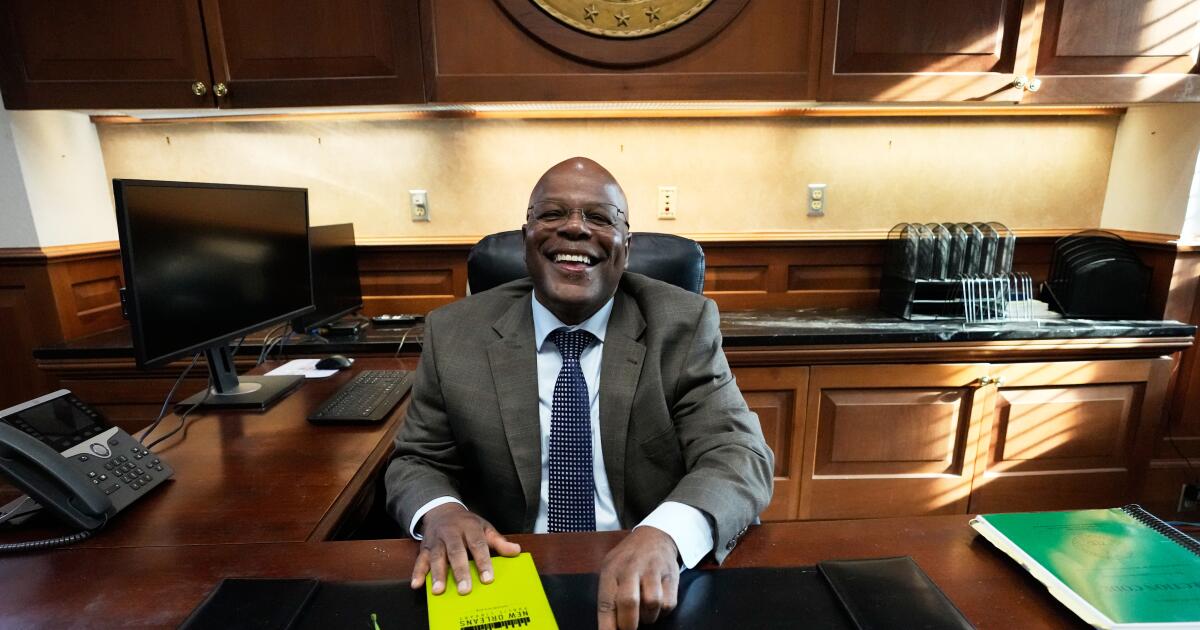
NEW ORLEANS — A sharply divided Louisiana Supreme Court on Monday signed off on abolishing an elected office won by a New Orleans exoneree who had spent nearly 30 years in prison for murder before his conviction was vacated.
The 4-3 decision leaves Calvin Duncan with little path forward to try assuming the role of Orleans Parish clerk of criminal court, a job he won in a landmark election last year before Republican lawmakers raced to eliminate the office this spring.
In a blistering dissent, the court’s Democratic justices said the ruling opened the door to allowing Louisiana lawmakers to subvert the will of voters. The court’s conservative majority disagreed, writing that “this change was entirely within the authority of the Legislature.”
The court also rejected the New Orleans City Council’s attempt to hold a special election, which would have given Duncan the option to run again.
“At a time when our voting rights are under unprecedented attack, this decision clarifies that if we want to live in a democracy, we have to fight for it with every tool our system of government provides,” Duncan said in a statement.
Signed by Republican Gov. Jeff Landry, the bill eliminating the New Orleans clerk’s office was championed by GOP lawmakers as a necessary step toward government efficiency. Supporters denied that it had anything to do with Duncan or his past.
Democrats blasted the change as overreach from a largely white, conservative Legislature that they accused of seeking to thwart the will of a predominantly Black city. Those tensions surfaced again last month when Landry signed a new congressional map that eliminated one of the state’s two majority-Black House districts.
Duncan was convicted of a 1981 murder and was released from prison in 2011. In 2021, an Orleans Parish district judge vacated Duncan’s sentence, finding he had been unjustly convicted and the charges against him were dropped. Duncan is listed on the National Registry of Exonerations.
1 of 2 | The Donald J. Trump and John F. Kennedy Center for the Performing Arts appears in Washington, D.C., on Friday. A federal judge ruled that President Trump overstepped his authority by renaming the Kennedy Center after himself, ordering Trump’s name to be removed and reversing a decision to close the performing arts center for renovations. Photo by Aaron Schwartz/UPI | License Photo
May 29 (UPI) — A federal judge on Friday said President Donald Trump‘s name must be removed from the John F. Kennedy Memorial Center for the Performing Arts in a ruling that also blocked plans to shutter the facility for two years for renovations.
U.S. District Judge Christopher Cooper for the District of Columbia handed down the decisions halting Trump’s plans to impose sweeping changes at the historic venue.
The Kennedy Center’s board of trustees voted in December to add Trump’s name to the building. The decision came less than a year after Trump dismissed the entire board and named new board members, who in turn elected him chairman.
“Congress gave the Kennedy Center its name, and only Congress can change it,” Cooper wrote.
Rep. Joyce Beatty, D-Ohio, sued in response to the name change. Meanwhile, a coalition launched a separate lawsuit in March asking the court to stop the administration from shuttering the facility for two years and carrying out its quarter-billion-dollar reconstruction project.
Trump said the decision to close the facility came after a yearlong review in consultation with contractors, musical experts, arts institutions, and advisers and consultants. He had initially considered a partial project that would permit shows to continue, but decided the best option for the venue was a temporary closure.
Rep. Joyce Beatty, D-Ohio, an ex officio member of the board who sued to have access about the details of renovations, said she believes Trump wants to shutter the Kennedy Center in response to dozens of individuals and cultural organizations who have canceled appearances there in response to Trump trying to rename the center after himself. Beatty said the documents she received about the renovations were “inadequate.”
She said “the documents prove that there is absolutely no basis to shutter this precious living memorial and beloved institution,” she said in a statement. “It certainly looks like President Trump is shutting down the center because he is embarrassed that ticket sales are down and artists are fleeing since his illegal renaming.”
Beatty’s lawyers said she was concerned Trump might use his hand-selected board to push through wholesale changes at the Kennedy Center to design a facility more to his liking. In October, Trump had the East Wing of the White House demolished to make room for a $250 million ballroom.
In a post on Truth Social in March, Trump shared renderings of what he expected the center to look like after the renovations. He said he’s not planning to rip out the facade.
A Washington Post analysis of the renderings show very few changes to the exterior of the building, including altered cornices, updated roof and some windows, painted columns, new signage and landscaping changes.
Secretary of State Marco Rubio and President Donald Trump participate in a Cabinet meeting in the Cabinet Room of the White House on Wednesday. Photo by Samuel Corum/UPI | License Photo