Democrats have taken control of the state House in Georgia after also gaining the governor’s office in last week’s midterm election, giving the party control of each for the first time in more than 20 years.
The flip gives Democrats control of at least 12 new legislative chambers across the U.S. after their major gains at all levels.
It’s the biggest gain for either party in a single election since the Republicans took the majority in 20 chambers in 2010 amid the Great Recession and the rise of the conservative tea party movement.
After officials are sworn in later this year and in early 2027, Democrats will have trifectas — control of both legislative chambers and the governor’s office — in at least six states where they’re currently sharing power with Republicans.
The party running a state government can have a major impact on issues including tax bills, how data center development goes and who qualifies for Medicaid health insurance.
The Associated Press, which has been calling elections since 1848, on Monday determined the outcome of enough Georgia races to declare Democrats had won the lower chamber.
The news organization has not yet determined who will control the state Senate in North Carolina or either chamber in Alaska.
Republicans have controlled the House in Georgia since 2005 and both the Senate and governor’s office since 2003.
Democrats have made gains. In 2020, for instance, Joe Biden narrowly won a plurality in the presidential election there and Democrats prevailed in both U.S. Senate elections. Donald Trump won there in both 2016 and 2024.
This year, Democrat Keisha Lance Bottoms won the governorship and Democrats took a House in which Republicans had a comfortable 99-80 majority heading into the election.
As of Monday, Democrats had won 91 House seats and Republicans 86. Three had not been called — including one where the state’s secretary of state is investigating the late upload of a memory card containing nearly 400 votes.
Republicans kept control of the Senate.
Currently, there are Republican governors in 26 states and Democratic governors in 24.
Democrats will have at least 28 of those jobs next year, with the race in Kansas also remaining to be called.
Democrats gained control of four more state Senates in Nevada, New Hampshire, Pennsylvania and Wisconsin, bringing the total they lead to 24. They’ll have the majority in at least 27 lower chambers, up from 19, after flips in Arizona, Georgia, Michigan, Minnesota, New Hampshire, North Carolina, Texas and Wisconsin.
Election gains in Arizona, Michigan, Minnesota, Nevada, Pennsylvania and Wisconsin will give Democrats trifectas in all those states.
WASHINGTON — Next week’s elections are widely seen as a referendum on President Trump, his team and his party, with most voters telling pollsters they seek a check on his power. But the midterms will also serve as a reckoning for one of the least productive sessions of Congress in a century.
A stunningly low 10% of Americans approve of the job performance of Congress, which has passed fewer bills and conducted less oversight than any of its predecessors in modern history, according to scholars of the legislative branch.
The biggest achievement of unified Republican control has also become one of its biggest liabilities. Deeply unpopular when signed, the One Big Beautiful Bill Act has only grown more controversial, with most Americans still unclear on what’s in it — and those who do know largely disapproving of the law, which cut taxes for businesses and billionaires while adding trillions to the national debt.
A summer Politico poll found that just 8% of Americans believe the law has improved their bottom line. The bill cut billions of dollars for food stamps and over a trillion in health programs and Medicaid.
Two other significant bills passed by this Congress — the Epstein Files Transparency Act and a housing reform package targeting corporate purchases of single-family homes — ultimately became law over Trump’s opposition, leaving Republicans little credit for bipartisan wins.
“It’s not a partisan statement to say that the current Congress will go down in history as one of the most ineffective in history,” said Charles Stewart III, director of the Election Data and Science Lab at MIT. “It may not be the most ineffective, but it’s down there.”
Norman Ornstein, an emeritus scholar at the conservative American Enterprise Institute, said that congressional performance can be measured by several criteria, including the quantity and quality of legislation, its oversight of the executive branch, investigations of government and private-sector failures, and its defense of congressional powers and ethical standards.
By all accounts, he said, “the 119th Congress is an abysmal failure, perhaps the worst I have seen in well over five decades of immersion in the legislative branch.”
Senate pages walk through the halls outside the Senate chamber in the Capitol on Oct. 1, 2026. The Senate had completed its last votes in the middle of the night before going on recess through Nov. 9.
(Anna Moneymaker / Getty Images)
A recent Fox News poll found that government corruption is voters’ top concern this year, surpassing even the economy. Yet the Republican-controlled Congress has failed to deliver meaningful oversight. The enrichment of Trump, his family, allies and aides has gone uninvestigated, while Senate Republicans continue to block legislation targeting insider trading by members of Congress.
It has been a running theme from Democrats working to unseat Republican incumbents, with Rep. Hakeem Jeffries of New York — slated to become speaker of the House if Democrats win control of the chamber — repeatedly characterizing the current session as a “do-nothing” Congress.
Democratic Senate candidate Mary Peltola speaks at a campaign event Oct. 29, 2026, in Juneau, Alaska.
(Chloe Anderson / Associated Press)
In Alaska, Mary Peltola, the Democratic nominee for Senate, accused her GOP opponent, Sen. Dan Sullivan, of doing nothing to stop Trump’s tariff policies or his war with Iran. Democrat Sherrod Brown in Ohio has attacked the Republican incumbent Jon Husted for his procedural attempts to end debate over legislation on the Epstein files. And Democrat Adam Hamilton has targeted Republican Sen. Roger Marshall of Kansas for voting for the One Big Beautiful Bill Act that jeopardized funding to rural hospitals.
Defending the record of his majority, House Speaker Mike Johnson (R-La.) has highlighted a decline in prescription drug prices, the elimination of “wasteful spending” on various federal programs and bipartisan housing reform. Only so much can be accomplished with a razor-thin majority in the chamber, Johnson has said.
Rep. Derrick Van Orden (R-Wis.) listens as U.S. House Speaker Mike Johnson (R-La.) lends his support at a campaign rally on Oct. 29, 2026, in Platteville, Wis. Van Orden is in a rematch from 2024 with Democrat Rebecca Cooke for the state’s 3rd District seat.
(John Moore / Getty Images)
Trump has vowed on the campaign trail that, if kept in power, a Republican Congress would pass a $5,000 dividend to each American, despite its thin record to date.
Critics of the speaker say Johnson’s deference to Trump — and relinquishing of congressional authority to the executive branch — has unilaterally ceded power, souring voters on unified government.
But Stewart, who also co-directs a voting technology project with Caltech, said Congress’ problems run deeper than its current record.
Sen. Darline Graham (R-S.C.) speaks during a campaign stop at the Palmetto State Armory on Oct. 30, 2026, in Columbia, S.C. Graham is running about even in the polls against her opponent, South Carolina Democratic Senate candidate Annie Andrews.
(Win McNamee / Getty Images)
“Not only is Congress not pushing back against the administration, or even innovating in policy, but its members also don’t seem especially interested in serving their constituents on the small-ball aspects of representation,” Stewart said.
“It’s hard to say members of this Congress are connecting with their constituents as they did in decades past,” he added. “We’ll see if that lack of constituency connection will have an impact on the results.”
It’s the third afternoon in another string of sweltering days in Los Angeles. A recent Friday offers no salvation for the weekend ahead besides sitting in front of a fan or turning up the air conditioning.
Thankfully, standing inside the climate-controlled walls of the Line hotel’s lobby and behind a cup of joe from its Alfred Coffee, there’s a smidgen of comfort.
The bell to the ground floor elevator rings and out steps a tall figure, wearing an all-black ensemble. His shorts hang just below his knees, his hair is a bit messy and his boots climb up his calf.
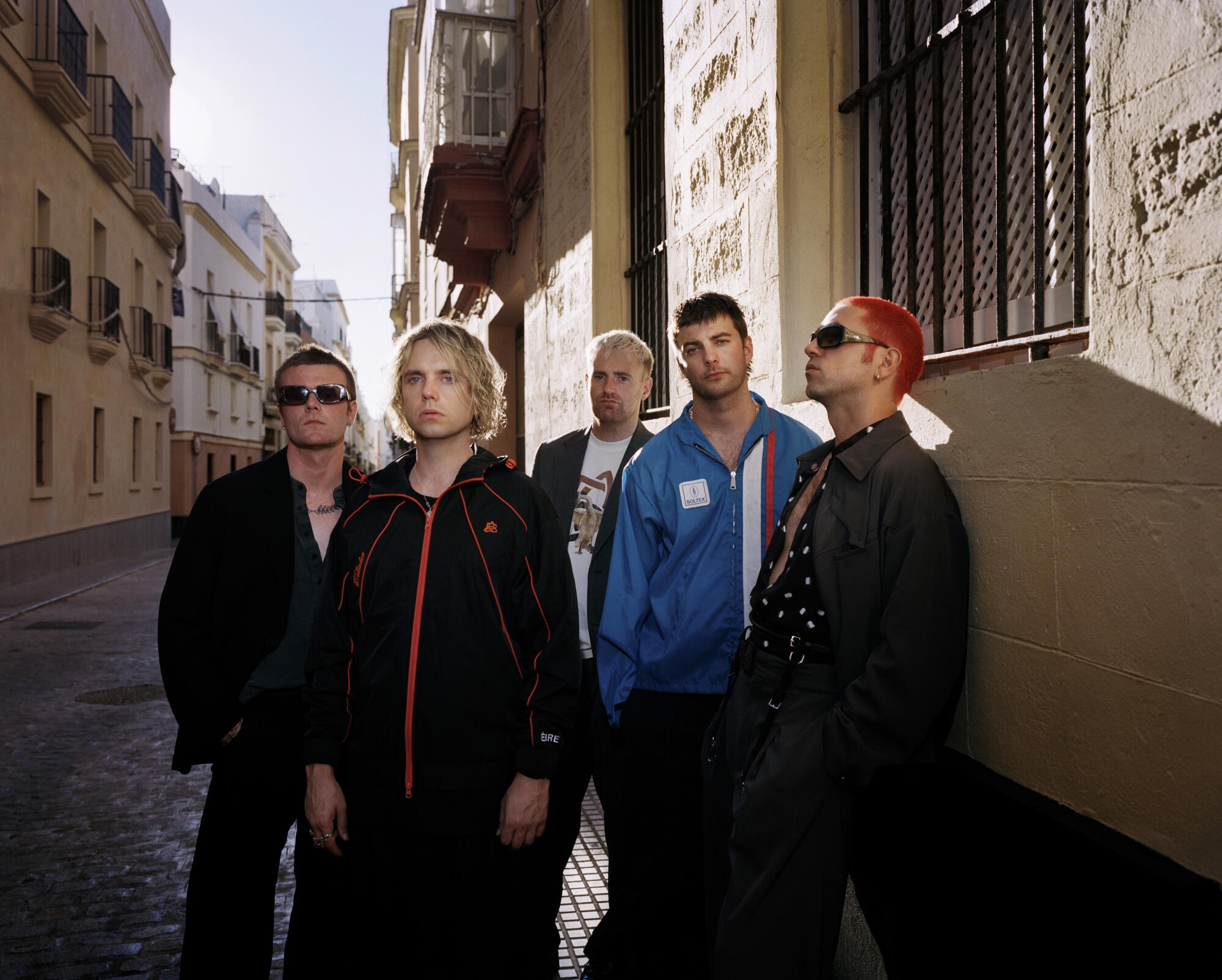
Grian Chatten looks remarkably cool for someone who’s just rolled out of bed, even more so for someone who has a performance at Hollywood Forever Cemetery later that night. He’s the leading man behind Fontaines D.C., a Dublin-born rock quintet that’s become one of the most exciting acts to grace a stage today.
And how couldn’t they be?
Their 2019 debut, “Dogrel,” was met with critical acclaim, a masterful album with references to James Joyce and a teeming garage-style production. Fast-forward five years later and their fourth effort, “Romance,” became their first to chart in the United States, reaching No. 97 on the Billboard 200.
Nowadays, they’re kicking up dust again with the release of “Dopamine Chamber,” which came out last Friday via XL Recordings. Its a continuation of the precedent they’ve set in terms of lyrical and sonic quality, but simultaneously is far more melancholic and synthesized than their previous work.
“Dopamine Chamber” is the band’s fifth release, following the success of “Romance” back in 2024.
(Ewen Spencer)
However, its rollout was rocky as the debut music video “Marianne” was criticized for its use of artificial intelligence. When the psychedelic, entrancing recording first hit YouTube, it listed a credit for AI “artists” in its description, sounding alarms among the band’s loyal fan base.
After all, it was widely viewed as contradictory of the group, which has been vehemently outspoken on various contemporary issues, including what the U.N. Human Rights Council has officially concluded to be genocide in Gaza.
We sat down with Chatten to discuss the new album, as well as some of the backlash the band has recently faced.
Tell me about this album title. Is it a literal happiness chamber?
It was me [who came up with it] because it originated as a line in a song, and the song never made it onto the album. We kept the pairing of words “dopamine chamber.”
I wanted to make it a bit more literary. Turns out that the dopamine chamber … it’s where they put rats to test different chemicals or in order to check their dopamine levels. We found that out after.
So it’s fake happiness.
It’s almost like nonconsensual happiness. I mean, if that exists.
Do you ever feel like that in life? Like you’re like forced to be happy with everything bleak that’s going on?
I think we force ourselves to feel a certain happiness every now and then, just so we can compartmentalize things and go about our day. I think that’s a survival mechanism, anyway. But to lose that is dangerous.
This album is a lot more synthesized than your previous work. “Six Short Morning” and “Mimesis” definitely stand out there.
It made sense, thematically. I felt that those textures signaled … I hate using the word “dystopian,” but the dystopian future. I wanted the album to feel more like an advanced version of “Romance,” where the body of the record had become more bionic. There’s a reason that there are so many strings and cinematic stuff, that’s the organic world that I wanted to draw on — people like Mina, the ‘60s singer from Italy.
The acoustic sounds are, of course, still present.
They’re supposed to be kind of like fighting for space, a little bit.
One track that stuck out to me was “Happy for You,” because of it’s insincere flattery. Who or what do you have in mind when you write songs like that?
It’s a bit like [R.E.M.’s] “Shiny Happy People,” it’s a similar function. That song is a jealousy of other people’s happiness or well-adjustedness.
I noticed those internal struggles show up a lot on this album. On “One Man,” are you singing about feeling the weight of many?
I think that’s more about the general existential feeling of helplessness in the face of things that are happening in the world. I’ve got a really good friend called Nikolaj Schultz, do you know him?
No idea.
He’s a sociologist and philosopher, and he writes mostly about the environment, the Anthropocene, and he’s written a couple of books with the French philosopher Bruno Latour, who passed away [in 2022]. He’s someone who’s strapped to their bed and feels away the world from morning to night.
That was a profound influence on “Romance” and on this album. So I think “One Man” pertains to that, maybe even to him.
It seems like you are heavily inspired by literature, more so than other artists would be by just general music and listening.
I think in literature, I can understand sometimes what the point is in what they’re writing. For example, this Schultz book “Land Sickness,” the style of it is to render the audience sensitive to this issue just by the osmosis of showing how much it affects you. Like, my mom got me into music by showing me how much it affected her.
How did the feature with Rosalía come about for “Where Is Gone?”
Well, this is our first feature. Carlos [O’Connell], our guitarist, grew up in Spain and had been listening to her first couple of records. Then we got into “Motomami” together and it became a fixture to listen to it backstage before our shows. When “Lux” came out, we were all quite obsessed with it.
We were four days out from mixing or from mastering the album, and Carlos rang me. He was like, “I think we’d be mistaken to not just send Rosalía something and see if she’d be interested.”
We sent her four tracks. We sent her “Where Is Gone?,” “One Man,” “Tongue,” and I can’t remember what the other one was. She got back within 48 hours with a full vocal of “Where Is Gone?”
You weren’t in the studio together?
She was on tour. She was in Miami at the time.
What happened with “Marianne?” There was a moment where it was credited to AI “artists.” Then it was corrected to be effects artists.
I woke up at like 5:30 a.m. the day after the video came out, and I saw an article that said there was AI used in the video, and I called our management, and I was like, “What the f—, is this true?” and it turned out that there was some AI used in like the workflow or the postproduction.
So all those main scenes and main effects and stuff were VFX and prosthetics, like the cheeks and everything. Over 110 people worked on the thing. It was a real huge human effort. But then somewhere in the process, someone from the VFX team I guess used some kind of AI in the workflow. And none of us were told about it. Apparently, not even our label or our management were told about it and it was a real shock.
Yeah, it seemed like you guys didn’t know.
Of course. I mean, we’re gonna have it written into our contracts going forward that like it can’t be in our music videos. You know what I mean? I don’t condone it.
I think a lot of people were shocked just because you guys are so active in contemporary issues, which AI certainly is.
It’s so f— ironic. No, very contradictory. The themes of the f— album as well. I was hoping to talk about how I felt about AI in interviews at some point anyway, and then this kind of pulled the rug from under that conversation a little bit.
It just f— sucked.
Well, how do you feel about AI?
I think it’s f— terrifying. I was watching a Robin Williams scene from “Dead Poets Society” when he talks about poetry, literature. These are the things that we stay alive for, and well, that’s exactly what AI threatens to rob from the human race.
I’ve seen those articles about those guys who are leaving AI companies because they said that the human race is going to be dead within 10 years. AI is literally rendering our souls obsolete and I think that is true death.
A lot of people say, “It’s here, we have to deal with it.”
We should just shut it off.
It always ends here. Every conversation [about AI] just ends grim. This is like every conversation with my dad over the last three years about it. It makes it tough to be alive, doesn’t it?