Media moguls are ceding their perch to a new class of leaders
Decades of Hollywood empire-building ended with a quake in 2017 when Australian media mogul Rupert Murdoch decided to sell much of his Fox entertainment holdings amid the rise of Netflix and other tech giants.
This week, another titan who has been instrumental in shaping American media and telecommunications began to unwind his Hollywood holdings.
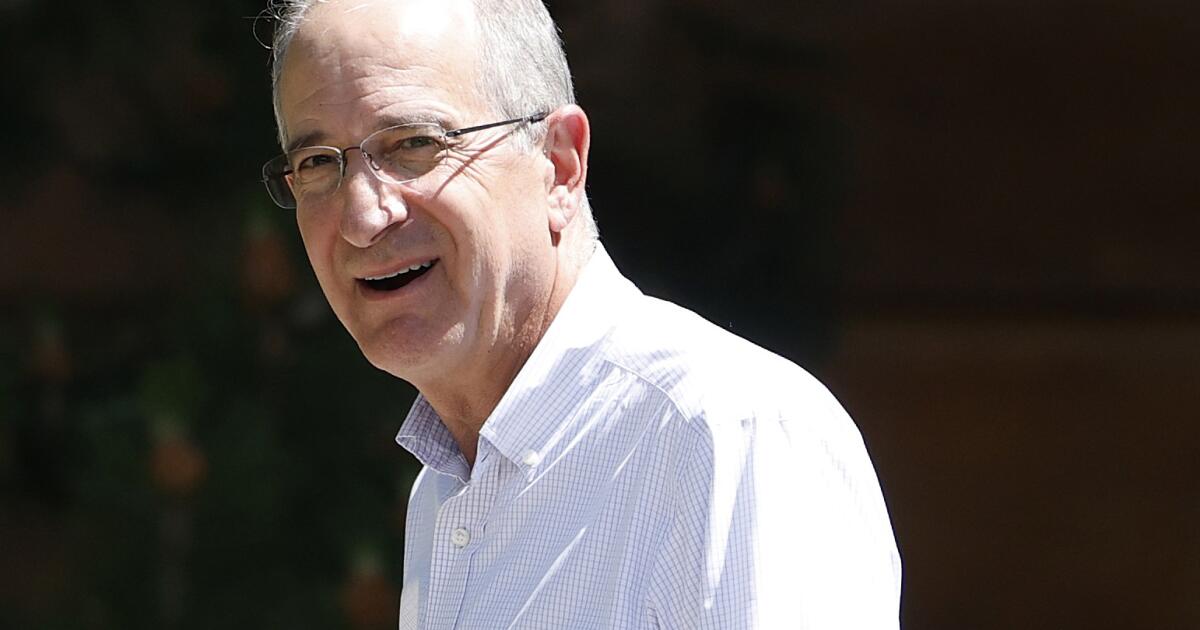
Brian L. Roberts — who with his father built Comcast into a cable TV and internet colossus — announced his company would spin off its prestigious NBCUniversal unit into a separate publicly traded company sometime next year.
The move reverses Roberts’ purchase of NBCUniversal in 2011 — a bold bet that created a behemoth with popular programming and cable pipes to pump that content into consumer homes.
Comcast’s breakup marks the close of a Hollywood era, one dominated for 40 years by a class of maverick moguls: Murdoch, CNN founder Ted Turner, Viacom’s Sumner Redstone, cable titan John Malone and the Philadelphia-based Roberts family.
Now, a new crop of leaders has emerged, reflecting Silicon Valley’s vast influence over the film and and TV business, which has been upended by streaming and, now, artificial intelligence.
“There was a time that Murdoch, Malone and Brian were really industry leaders who could affect change,” said Bank of America managing director Jessica Reif Ehrlich in an interview. “That’s not true any longer.”
Analysts widely believe Monday’s announcement is a prelude to eventual sales of both Comcast and NBCUniversal, a theory that Comcast rejects.
Roberts, 67, told analysts he will remain involved in both NBCUniversal and Comcast after the separation. Still, he plans to relinquish his chief executive role after 25 years and a half century at Comcast. Roberts has picked trusted associates to run each firm, and his family will continue to hold controlling shares of both companies.
But the shift underscores a dramatic loss of clout by Comcast and other traditional media enterprises. Netflix, Apple, Amazon and Google’s YouTube have diminished the industry’s financial pillars — box office receipts and cable programming fees — and given consumers control over when and how they watch programming.
Murdoch was the first to flee. In 2014, he was rebuffed in his $80-billion bid to beef up his 21st Century Fox by buying HBO, CNN and other Time Warner assets. Murdoch’s defeat led to the Fox asset sale to Walt Disney Co.
Last fall, Comcast made a run for the same properties with a plan to unite NBCUniversal with Warner Bros.
Instead, 43-year-old tech scion David Ellison — with help from his billionaire father, Oracle software co-founder Larry Ellison — scooped up the prize for a staggering $111 billion.
The pending blockbuster merger of Ellison’s Paramount Skydance and Warner Bros. Discovery is expected to reshape the industry and leave NBCUniversal increasingly vulnerable to a takeover.
“It looks like Comcast’s NBCUniversal was left standing on the dance floor without a partner,” MoffettNathanson media analyst Robert Fishman wrote in a Tuesday note to investors.
Paramount’s play for Warner Bros. came a month after Ellison finalized his family’s purchase of cash-strapped Paramount from Shari Redstone. The one-two acquisition punch would propel the Ellison family to top-tier moguls with influence over CNN, CBS News, HBO, Turner Classic Movies and two historic Hollywood studios.
“It’s a flagging industry. … The industry will have to consolidate to survive,” said C. Kerry Fields, a USC Marshall School of Business economics professor. “Those who have content plus [streaming] distribution are going to be the winners.”
Roberts knows distribution. His father in 1963 bought his first cable TV system in Tupelo, Miss. It was a quirky bet for Ralph Roberts, who figured his belts and suspenders business would soon be toast as beltless polyester pants became the rage.
Brian Roberts joined Comcast as a high school intern, setting up supermarket promotions. In 1975, he became a trainee cable installer, climbing poles and stringing cables. He joined Comcast full time in 1981 after graduating the Wharton School at the University of Pennsylvania.
For more than 30 years, he worked in tandem with his dad. With key associates, they built the nation’s foremost cable TV service — then the entertainment gateway — and grew stronger by offering internet, phone and then wireless service.
Analysts credit the 2011 purchase of NBCUniversal as a huge success; Comcast rescued a company that was on the ropes due to General Electric’s under-investment.
Over the years, Comcast rebuilt NBC and Spanish-language Telemundo, writing big checks for the best sports rights, including the FIFA World Cup, NFL, NBA and Major League Baseball.
Comcast also recognized value in theme parks and invested heavily, building Universal Studios as a formidable rival to Disney. NBC finished the season in first-place among traditional TV broadcasters and its L.A. film studio is an industry leader.
But the world has changed.
“One of the defining characteristics of this company has always been our willingness to look ahead, embrace change, and position ourselves for the future,” Roberts told analysts during a Monday call.
Reif Ehrlich, the Bank of America analyst, said Comcast needed to do something — or watch its stagnant stock sink farther.
Wall Street has punished the company amid steep losses in its cable TV and broadband internet units, and because NBCUniversal has historically generated its biggest profits from its cable channels.
In January, Comcast spun off those networks, including CNBC, MS NOW, USA Network and Golf Channel, to create a new entity called Versant.
But the move failed to boost Comcast’s battered stock, which dropped 3.3% on Wednesday to $23.73.
Five years ago, Comcast stock topped $50 a share.
“It was just a very challenged market on both sides, and it’s getting worse, not better,” Reif Ehrlich said.
Comcast faces competitors beyond traditional telecommunications firms, including AT&T and T-Mobile. SpaceX’s Starlink provides satellite internet service.
NBCUniversal must jockey alongside other well-capitalized players, including Amazon, Netflix and Disney. NBC’s streaming service, Peacock, has struggled to get traction. It counted 46 million paying subscribers as of the first quarter, a fraction of Netflix’s 325 million and the nearly 132 million subscribers of Disney+.
“It’s kind of a subscale player,” Reif Ehrlich said. “It’s just a real battle, and NBC has expensive sports rights.”
Roberts conceded the difficult landscape on the analyst call.
“The world is changing faster than ever,” Roberts said. “Technology, consumer behavior, competition, capital requirements are all evolving at an unprecedented pace … When we acquired NBCUniversal, more than 15 years ago, the industry looked very different.”
He will retain control for at least three years. The NBCUniversal spin-off is envisioned as a tax-free transaction for shareholders, providing a short-term buffer from deal-making to preserve that structure.
NBCUniversal could be up for grabs by 2029 — a pivotal year when the NFL is expected to open negotiations for a new round of broadcast rights. That auction is expected to draw heavy interest from Amazon and other streamers — not just veterans Fox, NBC, Disney’s ESPN and Paramount’s CBS.
“Brian Roberts has already proven his willingness to play the long game and with continued control should be the end decision maker,” Fishman said.
Much like Murdoch, who is now 95 and partially retired.
“Rupert was the smartest guy in Hollywood — he got out at the top,” Reif Ehrlich said.
He entrusted power to his 54-year-old son, Lachlan, who has been busy remaking Fox after the 2019 sale to Disney, which included Fox’s film and TV studios, streaming service Hulu and the FX and National Geographic channels. Fox also unloaded its regional cable sports networks — a savvy move before that business cratered.
The Murdochs kept Fox Sports, the Fox broadcast network, TV stations, Fox News Channel and the studio lot.
The company has been expanding. Lachlan Murdoch led Fox’s purchase of Tubi, which provides free TV channels and movies for smart televisions, keeping Fox in the streaming game. The company launched Fox News and weather products, and subscription service Fox One, which streams the company’s sports and news.
Earlier this month, Lachlan Murdoch stunned the industry by agreeing to pay $22 billion for Roku, a leading streaming platform that reaches 100 million viewers worldwide. Murdoch called the proposed purchase “a defining moment for Fox.”