cbs news

Paramount’s David Ellison faces daunting challenges in Hollywood

Last week’s settlement of the antitrust lawsuit between state attorneys general and Paramount Skydance over its planned merger with Warner Bros. Discovery marked a clear victory for David Ellison.

If approved by a judge, the settlement would clear the way for the emerging Hollywood mogul to complete the blockbuster $111-billion purchase after months of uncertainty over whether the deal would overcome intense opposition in Hollywood.

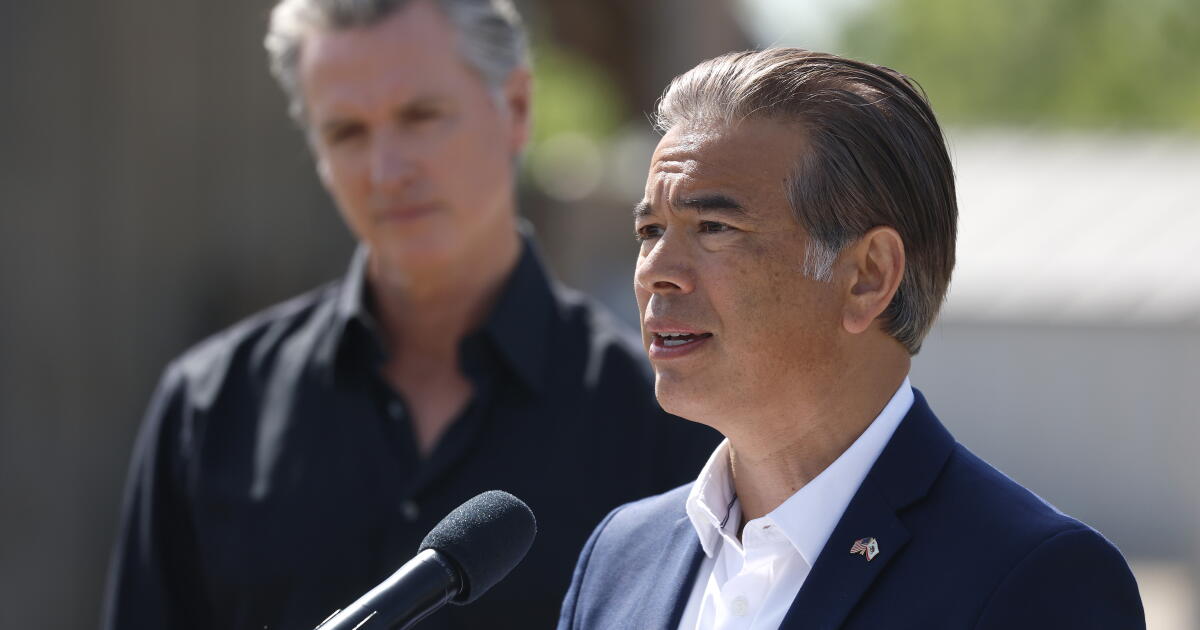
What’s more, Ellison achieved the settlement without having to agree to any so-called structural remedies that California Atty. Gen. Rob Bonta had been seeking.

But Ellison can hardly rest on his laurels. The Paramount Skydance chief executive will have to work hard to repair badly frayed relations with Hollywood talent who fiercely opposed the consolidation of two historic studios as a bad deal for workers. And the 43-year-old tech scion will be constrained by some of the terms that were imposed in the consent decree negotiated with Bonta and other attorneys general.

“I don’t envy David Ellison. You bought this ship, now you’ve got to sail it. And you’re facing threats on all fronts: bad will, everybody rooting for you to fail and operating a business in an incredibly uncertain, challenging time,” said Gabriel Kahn, a professor at the USC Annenberg School for Communication and Journalism. “At the same time, you are going to have to mortgage everything to make these debt payments.”

As part of the deal, Paramount agreed to a slate of requirements that, if it fails to deliver, could induce financial penalties, litigation and other costs.

For one thing, Paramount would have to pay a penalty and divest the Miramax film studio if it does not distribute 30 or more films a year in theaters.

The studio also pledged to spend $300 million more each year on film production in the U.S. and further boost its film spending if the federal government adopts a film tax credit of at least 20%; it agreed not to sell or close its lot on Melrose or the Warner Bros lot in Burbank and to operate them “in a manner consistent with past practices,” until 2031.

Additionally, Paramount is required to establish a board to ensure editorial independence for CNN and CBS News, though it will be appointed by Paramount directors with the authority to remove its members.

Beyond attempting to smooth the industry’s many ruffled feathers, Hollywood’s newest mogul must now also wrestle down an astonishing $80 billion in debt accrued as a result of this highly leveraged merger.

Ellison’s father, billionaire Larry Ellison, late last year agreed to backstop the $47 billion in equity needed to complete the acquisition. Royal families from Saudi Arabia, Qatar and Abu Dhabi have agreed to contribute another $24 billion for an equity stake by assuming some of Ellison’s financial commitments.

The months-long battle was bitter and hard fought and enmity within the industry has yet to subside.

On Tuesday, the morning after Bonta announced the settlement agreement, protesters converged outside of Paramount Skydance’s Melrose Avenue gate criticizing the deal. Some held fake gravestones that read: “RIP local business,” “RIP crew call” and “RIP creativity.”

Two days later, a coalition of several groups including the Committee for the First Amendment, filed an amicus brief asking the court to reject the consent decree, saying that it failed to address the anti-competitive concerns of the state attorneys general and would not protect jobs or consumers.

The sense of betrayal was acute.

“Hate to say it but we all got played,” wrote actor Mark Ruffalo, a leading organizer in Block the Merger, a grassroots organization made up of 1st Amendment advocates and Hollywood celebrities who aggressively opposed it, in a post on X.

Sen. Elizabeth Warren (D-Mass.) repudiated the deal, saying in a statement. that it “enables a handful of billionaires to call the shots in the media.”

The entertainment unions struck more cautionary notes.

SAG-AFTRA, the actors union, wrote in a statement that the deal “addresses some of our deep concerns,” but added, “We hope that the process of engaging with the attorneys general has impressed upon them the fact that in addition to collective bargaining, our members rely on the law to help protect our interests. These are the lowest standards that our employers must meet.”

Bonta, who had spearheaded the antitrust suit, gave a tepid endorsement of the consent decree.

“I want to be clear about something right up front: This settlement is not a vote of support for this merger. It is not a blessing,” he said.

During Paramount’s heated and often contentious legal and political wrangling to wrest control of Warner Bros., many in Hollywood became increasingly apprehensive. Combining two legacy studios, opponents feared, would bring even more job losses to an industry already battered by runaway production.

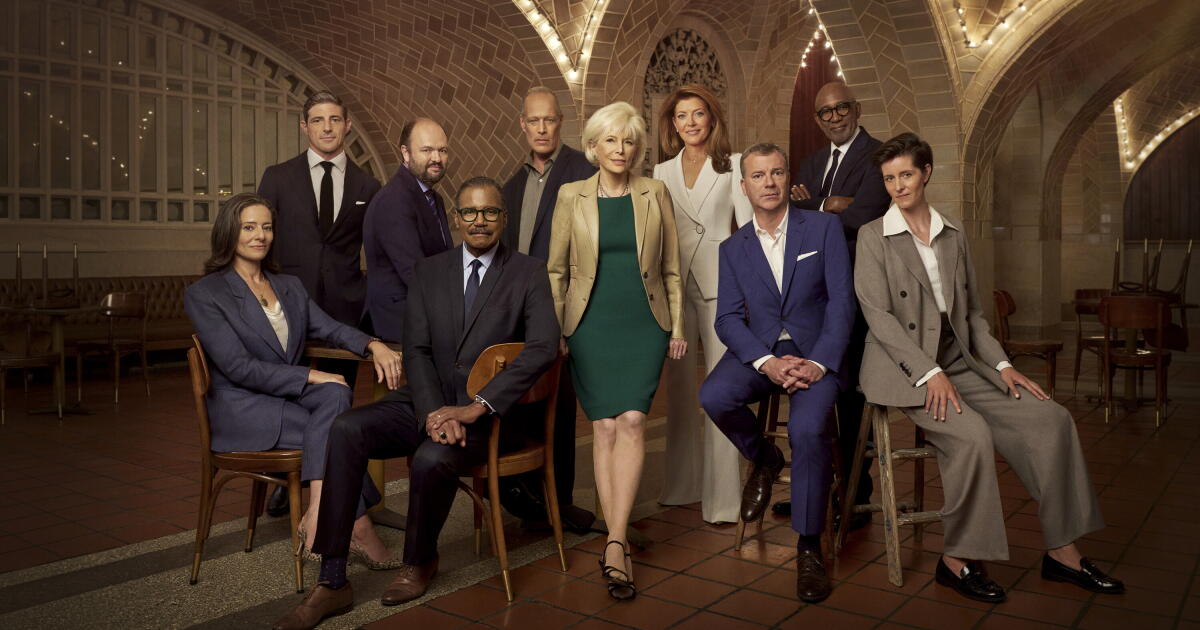
The skepticism hardened as the Ellisons made several controversial moves after Skydance acquired Paramount last summer. They included agreeing to pay $16 million to settle a lawsuit filed by President Trump over a “60 Minutes” interview segment, canceling the “Late Show With Stephen Colbert,” ending diversity, equity and inclusion programs and appointing Bari Weiss as editor in chief of CBS News, who engaged in a wholesale overhaul that led to a revolt at the esteemed “60 Minutes.”

When the newly formed Paramount Skydance announced its intention to swallow up Warner Bros. Discovery just months later, a massive wave of political pressure and public backlash began.

But the Ellisons dug in.

In January — after Netflix threw a surprise wrench into the Ellisons’ designs on Warner Bros. by offering $72 billion, which the studio accepted — Paramount took Warner Bros. to court and launched a hostile takeover bid.

A month later, Netflix walked away from the deal and collected a $2.8-billion termination fee after the Warners’ board agreed to Paramount’s higher all-cash bid.

But many in Hollywood began agitating against the planned merger and pushing for guardrails and protections.

In April, Block the Merger released an open letter declaring their opposition; its list of professionals across the film and television industry eventually swelled to nearly 6,000 names, including Ruffalo, Jane Fonda, Ben Stiller, Sofia Coppola, Trey Parker and Denis Villeneuve.

“The future of free media and a strong entertainment industry in America is at stake here,” said Norm Eisen, co-founder and executive chair of Democracy Defenders Fund, who also helped lead the Block the Merger campaign.

The Writers Guild of America sued to stop the deal, saying it violated antitrust laws. The union last week settled its lawsuit, citing the costs of continuing the litigation, after Paramount agreed not to lay off writers at CBS Broadcast News for years and to pay $17.5 million to the union’s health fund. Nonetheless, the guild said: “We continue to believe the merger will cause damage to writers and the industry at large.”

Some backed the megadeal, including power broker Ari Emanuel.

The WME executive and chairman and CEO of TKO came out swinging, excoriating the antitrust suit, in an op-ed for the Wall Street Journal in July. “They say they are protecting competition. Their actions threaten to destroy it,” he wrote.

The Ellisons’ ongoing ties with Trump — whose administration has clashed with ABC, CNN and other networks — only deepened the suspicions.

Oracle co-founder Larry Ellison has been a Trump supporter and friend. In addition to political donations, he participated in a Nov. 14, 2020, conference call that discussed ways to challenge Trump’s presidential election defeat.

Both Ellison and his son David reportedly promised the president they would make “sweeping” changes at CNN, which is owned by Warner Bros. Discovery.

In June, David Ellison attended the “UFC Freedom 250” event hosted by Trump on the South Lawn of the White House, and last week he was a guest at the White House state dinner honoring Chinese President Xi Jinping.

Amid the high-level public-facing Trump engagements, Paramount had been quietly trying to allay fears about the relationship to industry insiders.

Two individuals in the entertainment industry, who declined to be named for fear of retaliation, said that Paramount sent emissaries to extend a kind of olive branch, explaining their commitment to Hollywood and downplaying the relationship as a necessary step to get the deal done.

In August, Ellison published an op-ed in the New York Times in which he extolled his lifelong love of movies and laid out his case that he could be “trusted as a steward” of the media giant he was amassing, that includes two institutional news organizations (CBS and CNN) and the legacy studios he wished to combine.

However, his seemingly conciliatory message was undercut that same month when he threatened to relocate Paramount’s base to Tennessee or Texas. Ellison built his Skydance production in Santa Monica.

Across the industry, workers viewed the mixed messaging with wariness and anger.

“If Ellison truly wants to be a steward and do the things that he said he can do and wants to do in that article, I think people would welcome it,” said Pamala Buzick Kim, a co-founder of Stay in LA, the 23,000-member grassroots campaign aimed at boosting local film and television production. “They just have no evidence of it.”

Aside from the bad blood, Ellison’s biggest challenge may be financial.

At a time of massive industry upheaval, most observers believe that the company will have to lay off droves of workers to bring its costs down.

“I will honestly say that the biggest work that they have cut out for them is servicing this debt, and that’s going to guide every decision,” said Kahn, the USC professor.

“Now they’re going to have to fire lots of people in order to reduce costs to be able to make this deal pencil out, and they’re going to be skating on the razor’s edge to make sure that they have enough revenue coming in going forward to service this debt. They have almost no room to maneuver.”

But Paramount has one thing working in its favor: leverage. David (as in Ellison), for better or worse, is now the industry’s Goliath.

“I think temper tantrums can be easily forgotten if the work is there,” said Buzick Kim. “I think most people would be happy to leave it behind them — if the work is there.”

Times staff writers Meg James, Stephen Battaglio and Samantha Masunaga contributed to this report.
Source link

California deal on Paramount-Warner Bros. merger spurs frustration

California Atty. Gen. Rob Bonta’s deal to allow the $111-billion Paramount-Warner Bros. merger to proceed was struck amid political pressure from state leaders and concern from some Democratic attorneys general that concessions from the studio fell short, according to multiple sources familiar with the negotiations.

As recently as this weekend, New York Atty. Gen. Letitia James and Connecticut Atty. Gen. William Tong — who had signed on to the lawsuit — had said they needed more concessions, according to three knowledgeable sources close to the negotiations.

In an interview with The Times on Tuesday, Tong said Bonta was “doing his very best in very difficult circumstances” to steer the coalition to a favorable outcome, but amid “a lot of political pressure” from others in California that “did not help.”

“I’m not going to sugarcoat it. This is ultimately not what I wanted,” Tong said.

Tong said one of his chief concerns — shared by others in the 12-member coalition of states — was with the merger’s consolidation of CNN and CBS News under Paramount Skydance Chief Executive David Ellison, the billionaire media mogul close to President Trump and son of Oracle co-founder and Republican mega-donor Larry Ellison.

Tong raised similar concerns after the announcement of the deal, when he said publicly that his state had “led the fight to the bitter end to protect the editorial independence of CNN and CBS News,” and that he was “deeply disappointed that we could not do more.”

Paramount declined to comment.

With its economy and global reputation heavily intertwined with Hollywood’s allure and ability to survive, California had more at stake in the negotiations.

In exchange for the states lifting their antitrust challenge, Bonta said Monday that the studio had agreed to either produce 30 or more films annually for the first five years of the combined company or divest the Miramax film studio; separately negotiate basic channel agreements for Paramount and Warner Bros. or divest from major cable channels; spend $300 million more each year on film production in the U.S.; maintain its Melrose Avenue and Burbank lots; and establish a board to ensure editorial independence at CNN and CBS News, which also fall under the merger.

Bonta said the deal has “real teeth,” and that he “will hold Paramount accountable” moving forward.

Since then, however, other Democrats have voiced less confidence, and some in the coalition believed they could have held out for better terms as the midterm elections approached.

Some also questioned whether Bonta and other California leaders were swayed by Ellison’s threat to move Paramount out of the state.

Gov. Gavin Newsom, Los Angeles Mayor Karen Bass and Xavier Becerra — the front-runner in the race to succeed Newsom as governor — had all urged Bonta to settle the case. In his initial statement on the deal, Ellison thanked the Democratic attorneys general for working through their differences, but also thanked Newsom for “his support throughout this process.”

Sen. Cory Booker (D-N.J.), the ranking Democrat on the Senate Judiciary Subcommittee on Antitrust, Competition Policy and Consumer Rights, said Bonta and the other state attorneys general “took on one of the most powerful media companies in the world, a company backed by the full weight of the White House,” and that Paramount had answered “with what amounted to extortion” by threatening to withdraw from California if the deal was blocked.

Booker claimed the merger remains illegal and questioned the independence of any editorial board picked by and reporting to Ellison — saying it would not stop him from making “sweeping changes at CNN” to please Trump.

“This is what happens when federal enforcers abandon their posts. States are left to carry the fight alone, and even the strongest state enforcers cannot outlast a company willing to say anything and spend anything,” Booker said. “That is not justice. That is a price tag.”

Dissent before the deal

The pace of the negotiations, which had been on-again, off-again for weeks, quickened last week, and Bonta’s office had reached a deal with Paramount by Friday, sources said.

But there was a last-minute hiccup: Some members of the coalition felt the deal fell considerably short of what they had been seeking.

Among other things, James was dismayed that the Writers Guild of America — which had separately sued to block the deal — hadn’t been brought into the negotiations. She pushed to include the WGA and to bolster Paramount’s commitment to the WGA’s health and pension fund.

Over the weekend, Paramount agreed to increase its health fund commitment from $10 million to $17.5 million. Still, the WGA had largely been shut out of the process, and said Monday that it continued to “believe the merger will cause damage to writers and the industry at large.”

One source familiar with the negotiations said the states had four separate votes against settling on Sunday, but the resistance eventually crumbled with word that the WGA was backing out of the fight. Two sources familiar with the matter said some in the coalition were caught off guard by the speed with which Bonta’s “tone” changed and the deal was reached. Some had felt Paramount may be more inclined to grant concessions once it had to start increasing its payout to Warner Bros. investors starting Oct. 1.

On Tuesday, Bonta told The Times that he would not comment on “what specifics led up to” the deal, except to note that all 12 state attorneys general in the coalition signed on to it.

“It was unanimous, and I’ll leave it at that,” he said.

Bonta said there was certainly “a lot of interest” in the case from other elected officials, some of whom made their positions clear, but that “none of it had any influence” on him.

“I need to look at the law and the facts,” he said. “If we’re able to get a solution to our antitrust concerns, we take it.”

Bonta said he could not comment on what effect Ellison’s threats to move Paramount out of California might have had on his decision and that his “focus was on the antitrust concerns” — which he believes the deal substantially addresses.

A source close to the governor’s office said Newsom communicated frequently with Bonta and Ellison, acted as an unofficial mediator and urged them to reach a resolution, but did not try to control the terms of the deal and respects Bonta’s role as the state’s independently elected law enforcement leader. Newsom appointed Bonta as California’s attorney general in 2021 after Becerra, who was serving in that post, accepted a position in President Biden’s cabinet. California voters elected Bonta as attorney general in 2022.

The source said Newsom wanted the two sides to settle the case because he was concerned that the state could face protracted litigation, ultimately lose in court and end up with nothing. Paramount leaving California for Nashville — a destination floated by Ellison — also would have been an economic blow to the state.

Newsom has tried to keep businesses headquartered in the state due to the economic and budgetary impacts of losing companies and their wealthy chief executives to other places, and recently signed legislation to create a new post-production tax credit for studios. Last year, he doubled the state’s existing film and television tax credit in an effort to support the industry.

Mixed reaction

Newsom and many of Bonta’s fellow attorneys general echoed his claims of victory.

James said the deal “will allow the film and television industry to continue to thrive with more movies produced in America and $1.5 billion of new investment in film production.” Oregon Atty. Gen. Dan Rayfield said it “keeps real competition in place, ensures that productions will continue, and ensures journalistic independence.” Arizona Atty. Gen. Kris Mayes said it would protect businesses, including local movie theaters. Colorado Atty. Gen. Phil Weiser said it would protect “moviegoers and producers.”

In a statement, Newsom thanked Bonta for his work to reach the deal, which he called “a practical path forward” that “protects California jobs while putting a safeguard in place to help preserve editorial independence for two of America’s most important news organizations.”

Still, it was clear that others viewed the deal as a partial win at best.

New Mexico Atty. Gen. Raúl Torrez called it a “great first step.” Massachusetts Atty. Gen. Andrea Joy Campbell said the states were “unable to secure every protection we fought for,” and that she “would have liked to see more.” Minnesota Atty. Gen. Keith Ellison stressed that the deal should not be seen as an endorsement of the merger.

“I believe mergers like this are never done with the best interests of consumers, workers and small businesses in mind and are instead designed to help a select few get richer,” he said.

Some outsiders were even more forthright with their skepticism. Rich Greenfield, a longtime media analyst, called the deal a “slam dunk win” for Paramount because it didn’t require the company to sell off any assets. Norm Eisen, co-founder of the Democracy Defenders Action group, said the “so-called independence board” to oversee CNN and CBS News “appears to be sorely lacking in independence.”

Bonta said the deal does set out structural divestment remedies if Paramount does not follow its other terms — including by requiring it to sell off Miramax if it doesn’t produce enough films, and to sell off BET, VH1, Comedy Central and other channels if it doesn’t negotiate cable agreements for Paramount and Warner Bros. separately.

He said that if the state had held out and gone to trial on its antitrust arguments, it would not have been able to negotiate any journalistic oversight for CNN and CBS, whereas the “creativity and flexibility of settlement” allowed them to establish the oversight panel.

“Does that transform our information ecosystem broadly, to make sure that there’s no more misinformation or disinformation? No. Does it make sure that all broadcast news and cable channel news organizations are only telling fair, fact-based, independent, objective news? No. Does it even ensure that happens every single time at CBS News or CNN? No,” Bonta said. “Does it improve the likelihood, vastly, significantly, that that outcome will occur? It does.”

Source link

An editorial board will oversee CNN and CBS News. What does that mean?

The settlement with 12 state attorneys general that cleared the way for Paramount to move forward with its $111-billion acquisition of Warner Bros. Discovery contained a surprise for CNN and CBS News.

The merged company will have an oversight board that will monitor adherence to editorial independence from its owners and shareholders. The editorial board is part of an agreement to end the states’ antitrust fight that threatened to delay the completion of the deal for months.

But the initial reaction among media observers and opponents of the merger was to question how much teeth editorial overseers will have as they will be appointees of Paramount’s board. The board is controlled by Paramount Chief Executive David Ellison’s family and RedBird Capital Partners.

“The so-called independence board appears to be sorely lacking in independence. It’s appointed by and answerable to the board of the combined Ellison-controlled entity, which can also remove the independence board members,” said Norm Eisen, founder of Democracy Defenders Action and one of the leaders of the Block the Merger group.

Agreements on editorial boards or ombudsmen are typically made to assuage regulatory concerns over a change in media ownership.

CBS News installed Kenneth R. Weinstein as an ombudsman ahead of Ellison’s acquisition of Paramount last year. But he has had a scant presence at the network, according to CBS News insiders.

When Rupert Murdoch’s News Corp. took over the Wall Street Journal in 2007, a five-member committee was created to ensure the editorial independence of the newspaper and Dow Jones’ other news services. The Journal has largely been successful in keeping its news-gathering operation separate from its right-leaning opinion pages reflecting the values of its owners.

The oversight board at Paramount adds a new layer of uncertainty as to how the two news divisions will operate in the merged company. CBS News has already seen significant upheaval since Ellison installed Bari Weiss as editor in chief.

Weiss, the founder of the heterodox digital news site the Free Press, has disrupted CBS News with major changes to its signature program “60 Minutes.” Her push to consider more conservative talking points and voices in stories led to accusations that she is tilting the program’s political bent to please President Trump, who has a friendly relationship with the Ellisons.

CNN insiders have been watching the discord at CBS News with concern. Trump and Larry Ellison, the tech mogul and father of David, have reportedly discussed personnel changes at CNN once the takeover of its parent, Warner Bros. Discovery, is complete.

Trump has never been happy with CNN’s coverage, but the hostility intensified last Friday when he banned the organization along with MS NOW and Politico from the White House grounds. The three news organizations are challenging Trump’s ban in federal courts on the grounds that it violates their 1st Amendment rights.

But amid all the turmoil, veteran news executives inside and outside the companies involved were scratching their heads over exactly how an editorial board would operate.

“This was formed up in haste, and the fact that it looks like it’s kind of half-baked is not surprising,” said Tom Bettag, a former network news producer and lecturer at the Philip Merrill College of Journalism at the University of Maryland. “But they were in a hurry to get this merger approved by hook or by crook.”

The agreement says the board will be in charge of “resolving any disputes between CBS News employees, CNN employees, and management of the combined entity regarding alleged reporting bias or failure to meet” agreed upon reporting standards.

Back in June, “60 Minutes” correspondent Scott Pelley angrily questioned Weiss’ decision to fire several of his colleagues. As a result, he was dismissed as well.

It’s unclear whether similar confrontations would be resolved by the new Paramount board and, if so, what that would mean for the authority of the top executives at CBS News and CNN.

Paramount did not respond to requests for comment.

The creation of the editorial board was a compromise brokered among the coalition of state attorneys general. The proposal came about in the final two days of negotiations, according to two people familiar with the matter who were not authorized to comment publicly.

William Tong, the Connecticut attorney general, said in an interview that he agreed to the editorial board after pushing for the divestiture of CNN and CBS News as a condition for approving the merger.

“I’m not going to sugarcoat it. This is ultimately not what I wanted,” Tong told The Times. “However, a week ago, they weren’t willing to do anything.”

He added: “Their view was, ‘We’re buying it. We get to control it.’ … And so, you know, by Friday we had broken them down, and they were willing to do this editorial independence board for both CBS News and CNN. That’s what we were able to secure and it has to be all journalists on this five-person board.”

No Paramount executives, including Weiss, can serve on the board.

Source link

Ratings for the Sunday premiere of ’60 Minutes’ see steep drop from last year’s opener

Sunday’s highly anticipated premiere of “60 Minutes” scored 7.9 million viewers according to Nielsen, the lowest for a season opener since 2000.

Nielsen data showed the news magazine was down 21% compared to last year’s opener, which averaged 10.3 million viewers. The premiere was the first ratings report card for the program since a major upheaval that occurred behind the scenes under CBS News Editor-in-chief Bari Weiss.

The number — which was also below the 2025-26 season average of 9.1 million viewers — has to be a disappointment to CBS News. The episode received a major promotional push in the weeks leading up to the premiere, which featured an exclusive interview with an Air Force officer who was shot down over Iraq.

The story of the pilot’s heroism may not have been enough to overcome the public’s antipathy toward the U.S. military operation which has gone on much longer than President Trump predicted.

The program did suffer from some comparisons to 2025.

The ratings for “60 Minutes” are often tied to the lead-in from the late afternoon NFL game on CBS, which was also off from 2026. Most of the country saw the Minnesota Vikings top the Green Bay Packers by a score of 39-22 which, with 18.4 million viewers, was down 22% compared to a comparable broadcast window last year.

Broadcasters tend to blame Nielsen when there are significant ratings declines. The NFL has already raised concerns to the research company about changes to its methodology in counting viewers, as the first week of games are down significantly compared to a year ago.

This year, CBS did not have the exclusive late Sunday window with its NFL game. Fox carried the Philadelphia Eagles-Washington Redskins contest in the time period. Last year’s “60 Minutes” opener was on Sept. 28, when CBS had the sole game with a Kansas City Chiefs-Baltimore Ravens contest.

CBS News did see “60 Minutes” retain a larger portion of its audience lead-in compared to last year, despite a later start time of 7:48 p.m. Eastern. The delay meant half of “60 Minutes” competed with NBC’s “Sunday Night Football,” the most-watched TV program of the week. It dropped to 6 million viewers by the final quarter hour.

While there are plenty of rationales, CBS News will have to be patient and hope that viewers will sample the program, which largely had the same look as last year despite Weiss’ changes.

But personalities matter to TV viewers, and the new “60 Minutes” is without four of its longtime correspondents — Anderson Cooper, Scott Pelley, Cecilia Vega and Sharyn Alfonsi. The latter three were fired by Weiss after clashing with her over their belief she is pushing the show to the political right. Weiss — who took over editorial control of CBS News after parent company Paramount acquired her heterodox digital news site the Free Press — also dismissed “60 Minutes” executive producer Tanya Simon and replaced her with screenwriter and documentary filmmaker Nick Bilton, who has no previous experience in TV news.

Viewers on Sunday briefly saw one of Weiss’ new hires, former conservative New York Times opinion writer Ross Douthat, who has no previous experience as a TV presenter.

Source link

After a Bari Weiss makeover, “60 Minutes” makes its Sunday debut

The first edition of “60 Minutes” since CBS News editor in chief Bari Weiss initiated drastic changes to the venerable program made it to air Sunday. But the changes weren’t all that apparent on screen.

The 59th season premiere was highly anticipated following months of turbulence behind the scenes. Weiss fired “60 Minutes” correspondents Sharyn Alfonsi and Cecilia Vega, both of whom complained the executive pushed them to add right-wing talking points to their stories. Longtime correspondent Scott Pelley was ousted after he angrily questioned the firings at a staff meeting.

Weiss — who took over editorial control of CBS News after parent company Paramount acquired her heterodox digital news site the Free Press — also dismissed “60 Minutes” executive producer Tanya Simon and replaced her with screenwriter and documentary filmmaker Nick Bilton, who has no previous experience in TV news.

Weiss restocked the program’s correspondent corps with one new full-timer — Ross Douthat, the longtime conservative opinion writer for the New York Times — and several new contributors, none of whom showed up in the premiere.

Douthat is the only newcomer added to the opening credits where the correspondents introduce themselves on camera. He also did the closing segment called “The Last Minute,” talking about the dangers of AI and the need for “journalism you can trust.”

But the look and tone of “60 Minutes” remained intact, with only a few minor tweaks to the graphics.

The episode was heavily promoted, with one on-air spot drawing on clips with from the program’s storied past. Correspondents throughout CBS News touted the premiere on their social media accounts.

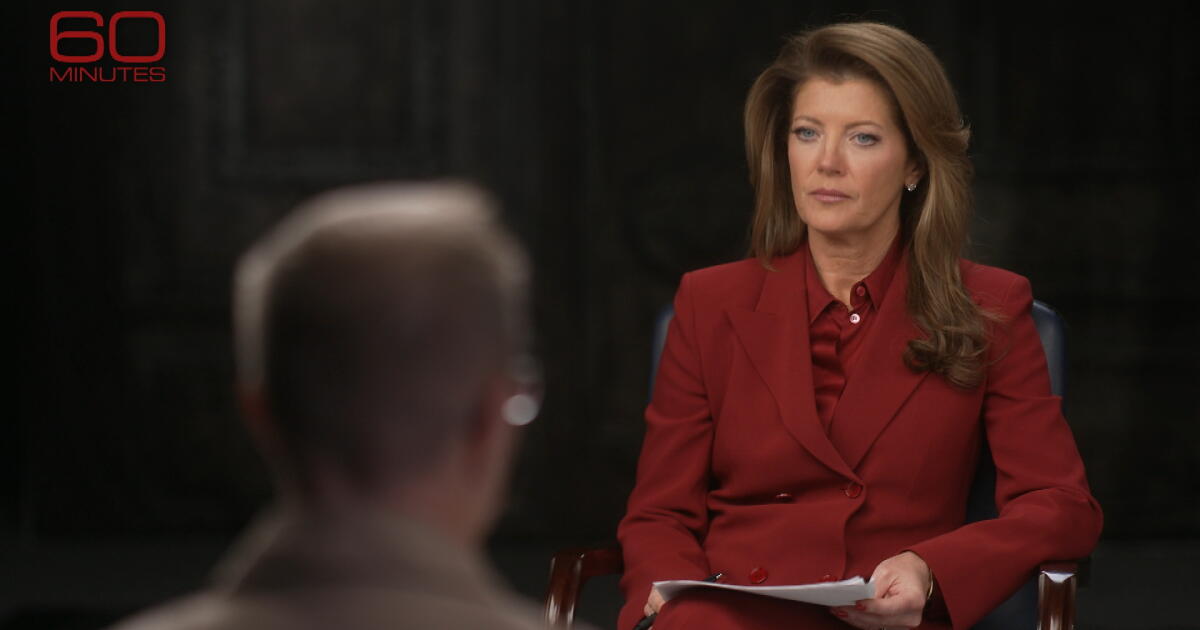
The program opened with Norah O’Donnell’s exclusive interview with the Air Force officer who was shot down over Iran and rescued by special forces. The U.S. fighter jet was the first to be lost over enemy territory in more than 20 years.

The interview gave a detailed account of the rescue mission and steered clear of any political discussion about the Iran war, which O’Donnell described as “costly and unpopular.” Secretary of Defense Pete Hegseth sat for an interview, focusing solely on the rescue mission.

The second segment was a hidden-camera investigation showing how self-styled lobbyists are shopping access to President Trump to felons looking for a pardon. Video captured pardon brokers Jack Burkman and Jacob Wohl, who were seen asking for $300,000 for their help, saying they worked with influencers close to Trump who would advocate for their cases. (The White House told “60 Minutes”: “Anyone spending money to lobby for pardons is foolishly wasting their money … President Trump performs his constitutional duties in an ethically sound manner, and to suggest so otherwise is either ill-informed or malicious.”)

Some on social media expressed surprise that “60 Minutes” would do a tough story on the Trump administration under Weiss after repeated reports that she is attempting to make the program more amenable to conservatives. “So I guess Bari Weiss didn’t totally destroy “60 Minutes” after all?” political analyst Chris Cillizza wrote on X.

The Los Angeles Rams made up the third segment in the program, which typically includes sports stories when CBS has a late afternoon football game leading into prime time. The package mostly focused on Rams head coach Sean McVay.

The ratings for “60 Minutes” will be issued by Nielsen later this week. Last year the program averaged 9.1 million weekly viewers, making it the most watched non-sports program in prime time.

Source link