Carter

Feds move to dismiss case over 20,000 California ballots after Supreme Court denied appeal

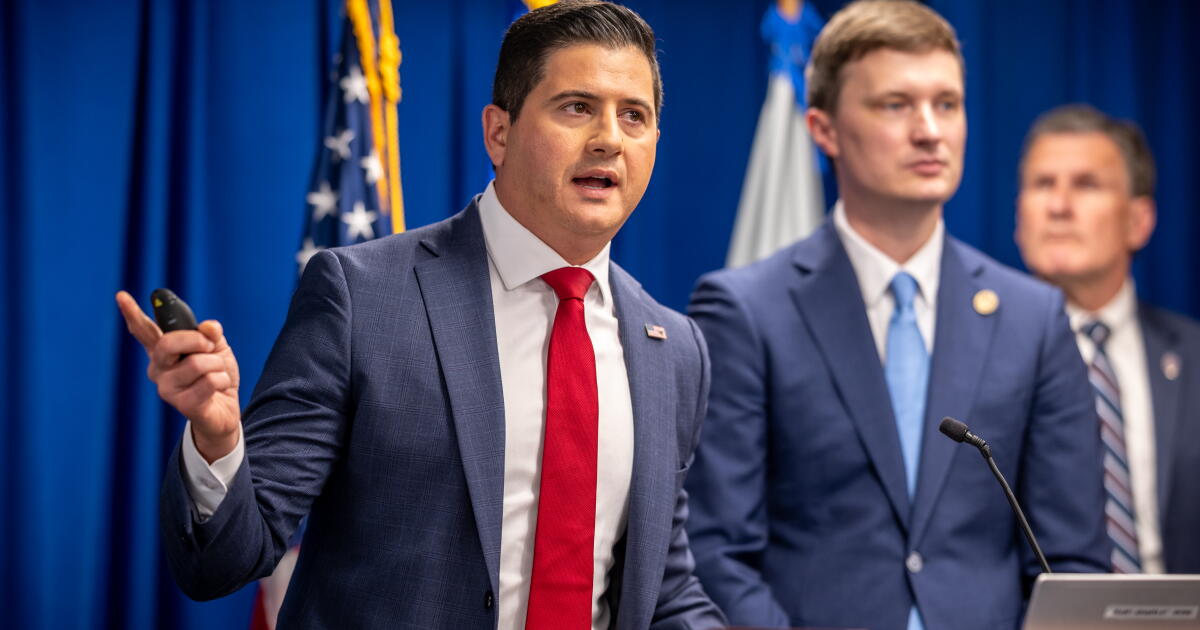
The U.S. Justice Department moved Friday to voluntarily dismiss its lawsuit challenging the counting of 20,000 ballots in California, arguing the relief it sought is now impossible given Tuesday’s midterm election has concluded.

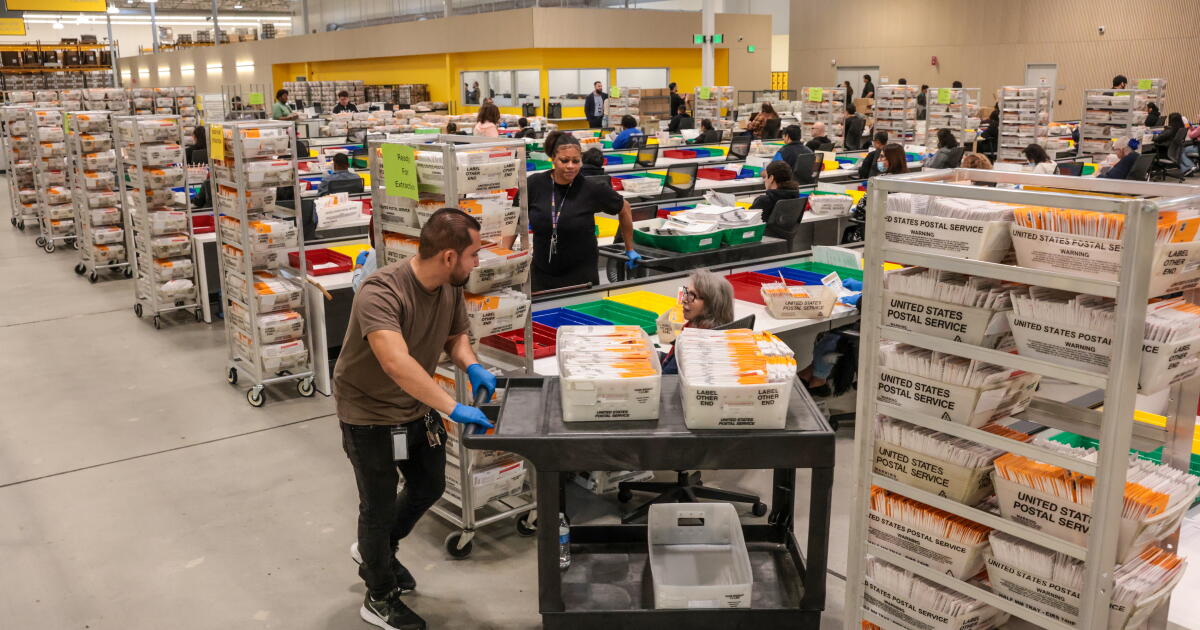
The Justice Department had sought a court order requiring state and Los Angeles County election officials to set aside the ballots, which it alleged could be from noncitizen voters. U.S. District Judge David O. Carter and a three-judge panel of the U.S. 9th Circuit Court of Appeals had both rejected that request, and the U.S. Supreme Court denied a Trump administration appeal to those lower court rulings — with no noted dissents.

Carter had ruled that the government’s request was probably unconstitutional, given the Constitution gives states and Congress power over elections, not the executive, and probably ran afoul of federal law barring sweeping vetting of voter rolls in the immediate run-up to an election.

However, he had set a schedule moving forward for additional fact-finding in the case — including by appointing a special master to dig into the data the federal government was relying on to assert the 20,000 voters were potentially noncitizens.

In a filing before Carter on Friday, Assistant U.S. Atty. Julie Hamill in Los Angeles wrote that that court process was no longer necessary, as it would not provide the relief that the federal government was seeking by filing its lawsuit.

“In light of the Supreme Court’s denial, the United States is evaluating how to best ensure that American votes are protected, including by preventing vote dilution by noncitizens. In addition, by the time of this Court’s hearing on Nov. 13 in this matter, California will have already commingled the challenged ballots with lawful ones,” Hamill wrote. “There is then no way to get the challenged ballots segregated. As a result, the relief the United States sought and needed is no longer available — rendering voluntary dismissal necessary.”

Hamill wrote that the Trump administration had sought to “protect American voters and to prevent the irreparable harm of state and local election officials including illegally cast votes in the final vote tabulation,” but had “exhausted its appeals to obtain timely relief” by going to — and being denied by — the Supreme Court.

First Assistant U.S. Atty. Bill Essayli’s office in Los Angeles — where Hamill works — referred questions about the filing to the Justice Department.

Kiersten Pels, a Justice Department spokesperson, said the litigation at issue was “moot” but that the Trump administration “is not backing down” in its targeting of alleged noncitizen voters, including in a separate case in which it is still demanding that California “conduct proper list maintenance, including removing noncitizens from the state’s voter rolls — which will be crucial to ensure fair elections in the future.”

Secretary of State Shirley Weber, a defendant in the case, did not immediately respond to a request for comment Friday.

L.A. County Registrar-Recorder/County Clerk Dean Logan, another defendant, said he was “pleased that the administration has accepted the clarity of the court findings” against it and ended its lawsuit.

“At each stage of this election, and in response to the Department of Justice, we have been clear that state and federal law sets well-defined standards for verifying and challenging voter eligibility,” Logan said. “Our commitment and focus remain on the fair, secure, accurate, and legal processes we are engaged in to complete and certify the election.”

California Atty. Gen Rob Bonta, in a statement, said that after losing in every court it tried, including the Supreme Court, “the Trump Administration has given up its latest unlawful effort to interfere with California’s elections and disenfranchise eligible voters.”

Bonta added: “Rest assured: California has and always will defend your fundamental right to vote.”

Tricia Webber, president of the California Assn. of Clerks and Election Officials, said state election officials “are very pleased” with the voluntary dismissal of the case — which she said “affirms that our elections are administered with the utmost integrity and care.”

“At the same time, we are under no illusions. We recognize that this issue is unlikely to go away permanently, and we remain fully prepared to continue defending California’s election administration against future challenges,” she said. “We will always stand ready to protect every eligible voter’s right to participate in a fair and secure election process.”

The administration’s filing — three days after President Trump’s party took a drubbing in the midterms — marks a sudden and unremarkable conclusion to an unprecedented court battle in the days leading up to the election, when the federal government sought permission from the courts to force state and local elections officials to set aside votes during an ongoing election.

Carter had rejected the administration’s request for immediate intervention in a blistering Oct. 28 ruling, calling its allegations about the ineligible voters “not credible” and warning that the proposed action could disenfranchise eligible voters and sow chaos in the ongoing midterm election.

“This request violates longstanding constitutional principles mandating that states have control over their elections,” Carter wrote. “If [the Trump administration’s] last-minute request for relief were granted, either party could create chaos for their own political purposes to disrupt the election process.”

While Justice Department officials characterized the relief it had requested from the court as “targeted and modest,” Carter had reached a sharply different conclusion — writing that the administration’s demands would “wreak havoc” on an ongoing election and “create a chilling effect on election workers and voters alike, and discount the votes of United States citizens.”

The reliability of the government’s list became a central issue in the litigation. Logan’s office said its review of about 200 flagged voters found that a substantial portion appeared to have been born in the United States, a finding Homeland Security officials disputed.

Election officials elsewhere in California also reported problems with the lists, including names of people who did not appear to live in their counties or to be registered voters. Justice Department officials sent letters to election officials across the state, demanding that they sequester flagged ballots and warning of potential criminal penalties if they failed to comply.

The three-judge 9th Circuit panel that heard the federal government’s appeal to Carter’s ruling — composed of two appointees of President Trump and one of President Biden — came to some of the same conclusions Carter did in a 2-1 ruling. One of the Trump appointees dissented, writing that he would have ruled for the administration.

Carter ordered an expedited hearing on the state’s and county’s motions to dismiss the case and the government’s motion for a preliminary injunction. He ordered all parties by Nov. 6 to submit witness lists, including experts, regarding the reliability of the list of voters and the methodology behind it. He ordered both sides to appear at the Nov. 13 hearing, with submitted witnesses prepared to take the stand.

Ending the litigation now will forestall that process to detail the origins of the administration’s list — which is still being used by federal prosecutors in California to target individual voters for criminal prosecution.
Source link

California, feds continue election war after courts rebuke challenge to 20,000 ballots

Soon after a federal judge in Los Angeles sharply rejected a Trump administration effort to block 20,000 California ballots from voters it alleged may be noncitizens, the U.S. Justice Department announced it will appeal — leaving attorneys on both sides preparing Thursday for yet another court battle.

That was despite the lower court judge calling the request an unlawful threat to eligible voters in Tuesday’s midterm election and to free and fair American elections moving forward, and the same appellate court having already rejected the same plan days prior.

“Every day, more ballots are processed by election officials. This ongoing emergency disenfranchises American citizens through dilution,” wrote First Assistant U.S. Atty. Bill Essayli, the lead prosecutor in L.A.

Early Thursday, Gov. Gavin Newsom swiped back at the Trump administration, writing, “A warning to Donald Trump: I’m deploying election lawyers to key battleground districts in California to protect every vote. And I just made it a FELONY to illegally seize ballots.”

With just days to go until polls close, the heated election war between California and the Trump administration is showing no signs of slowing down, despite multiple court orders rejecting the administration’s central effort to interfere in the midterms by accusing state and county officials of willfully turning a blind eye to voter fraud.

That’s in part because lawyers within the U.S. Justice Department have been unrelenting in their pursuit of such control, both through court orders and threats to state and county officials. It’s also because those same officials have refused to yield, denouncing the threats in recent letters back to the Justice Department as unconvincing and illegal.

“Be aware that we consider DOJ’s efforts to threaten California election officials with criminal sanctions for following federal and state law to be an effort to unlawfully intimidate both election officials and California voters, which can undermine voters’ faith in the election process,” Susan K. Blitch, counsel for Monterey County, wrote in one.

Several elections experts warned the administration is trying to sow confusion and suspicion around an election in which the Republican Party is poised to lose ground, in part so they can reject the outcome. But they also said the courts have consistently rebuffed the Trump administration, and will continue to do so through Nov. 3 and after — with the recent rulings in the case over the 20,000 flagged ballots a perfect example.

“The federal government lost in every way it could possibly lose. It lost on the law, and it lost on the facts, and it lost on the equities — [or] weighing the harms to the various parties,” said Rick Hasen, director of the Safeguarding Democracy Project at UCLA School of Law.

Appeal, rebuke, appeal

Last week, Trump administration attorneys decided that U.S. District Judge David O. Carter was not ruling quickly enough on their emergency request for a temporary restraining order to block California, Secretary of State Shirley Weber and Los Angeles County Registrar-Recorder/County Clerk Dean Logan from counting the 20,000 ballots it asserted were from “likely noncitizens” — so they appealed straight to the U.S. 9th Circuit Court of Appeals.

On Monday, a three-judge panel there — including two appointees of President Trump and one of President Biden — denied the appeal for a lack of jurisdiction, because Carter hadn’t been given a chance to weigh in. However, two of the judges — Mark J. Bennett, one of the Trump appointees, and Gabriel P. Sanchez, the Biden appointee — also wrote separately to make clear that they would have denied the administration’s request on the merits, too, for being likely unconstitutional and in violation of federal law.

On Wednesday, Carter, an appointee of President Clinton, issued his own ruling, in which he wrote that the administration’s allegations about noncitizen voters were “not credible” and that the intervention it sought would violate a host of federal laws, sow chaos in the ongoing midterm election, likely lead to the disenfranchisement of legitimate voters and foster future political meddling in elections.

“This request violates longstanding constitutional principles mandating that states have control over their elections,” Carter wrote. “If [the Trump administration’s] last-minute request for relief were granted, either party could create chaos for their own political purposes to disrupt the election process.”

Carter wrote that never in American history “has the federal government, on the eve of an election, sought to coerce a state and local government to abandon their own Constitutional elections procedures and bend to the will of the Executive Branch,” and that, in bringing its suit, the Trump administration was asking the court to “believe that it reigns as a sole sovereign.”

“But California and its people are sovereign, too,” Carter wrote.

The ruling — forceful, unequivocal and based on several of the same arguments made by Bennett and Sanchez — was cheered by state officials and voting rights groups. Elections experts said it squared directly with their understanding of the law, and was appropriate in the face of the Trump administration’s unprecedented, legally baseless effort to intervene in an ongoing state-run election.

Trump administration officials did not see it that way, and weren’t taking no for an answer. Justice Department lawyers promptly filed notice of appeal back to the 9th Circuit — where the case is likely, though not guaranteed, to land before the same three-judge panel that previously rejected the administration’s demands.

War of words

On Wednesday night, Newsom appeared on “Jimmy Kimmel Live!” and predicted Trump will take sweeping steps to “literally suppress the vote, to set the conditions where he will then express doubt in the electoral outcome, and suggest that it was rigged.” But he also said California is fighting back and prepared.

“Right now, I am focused on getting over 1,000 poll workers, folks out there to monitor the DOJ monitors that Trump’s gonna send to try to steal this election,” Newsom said. “We have been running tabletop exercises. We have 1,000 volunteers. We have 134 election law attorneys that we’re sending out.”

On Thursday, Essayli replied to the latter deployment, writing, “You’re going to protect every legal or illegal vote? What about California citizens whose votes are being diluted by ineligible voters. Do their constitutional rights matter.”

Trump, meanwhile, asserted with no evidence that “there are hundreds of thousands of bad ballots, bad votes, in California. Millions, in my opinion.” He said California has “very corrupt elections,” and that if it had honest ones, he “would have won it by a lot.”

The remarks were just the latest in a swirling and highly public war of words between state and federal officials.

In Carter’s courtroom Tuesday, Essayli claimed the federal government has maintained a collaborative “tone” since it first demanded the state set aside ballots, and said he was surprised at how “adversarial” state elections officials had been. But Essayli and other Justice Department officials have been engaged for weeks in an aggressive back and forth with California officials online — which is highly unusual for prosecutors actively litigating related cases.

When Newsom’s office recently wrote that “Trump’s DOJ is so desperate to invent ‘widespread voter fraud,’ it sent California counties lists of people who NEVER voted — and voters from the WRONG COUNTY. Absolute clown show!,” Essayli shot back, “Hey Fraud King,” with a crown emoji. “We’re not waiting for them to vote.”

Also unusual have been the threats Justice Department attorneys have been sending to county elections officials in California, including in a series of Oct. 23 letters in which they asserted varying numbers of “likely aliens” per county, set a 48-hour deadline for the counties to cooperate with federal authorities to prove those voters are citizens.

In one letter to Kristin Connelly, head of the Contra Costa County registrar’s office, U.S. Atty. Craig Missakian flagged 407 potential noncitizens in the county, and said he was writing “to make unmistakably clear the legal implications” of processing any ballots from those voters.

On Wednesday, Thomas L. Geiger, Contra Costa County counsel, responded with his own letter, questioning the accuracy of the noncitizen claims and saying it would be “legally unsound” for Connelly to “disregard both California and federal law” in order to comply with Missakian’s demands.

Other county attorneys hit a sharper tone in their own responses. Tony Lopresti, an attorney for Santa Clara County, wrote that his county “reserves its rights to pursue all legal remedies against DOJ for its unlawful intimidation of election officials and California voters.”

Source link

Judge denies feds’ request to block 20,000 California ballots in blistering opinion

A federal judge in Los Angeles denied a Trump administration request Wednesday to immediately block California elections officials from counting the ballots of 20,000 voters whose citizenship the administration questions in a blistering opinion.

U.S. District Judge David O. Carter ruled that the administration’s allegations were “not credible” and that the intervention it sought would violate a host of federal laws, sow chaos in the ongoing midterm election, likely lead to the disenfranchisement of legitimate voters and foster future political meddling in elections.

“This request violates longstanding constitutional principles mandating that states have control over their elections,” Carter wrote. “If [the Trump administration’s] last-minute request for relief were granted, either party could create chaos for their own political purposes to disrupt the election process.”

Carter, an appointee of President Clinton, wrote that never in American history “has the federal government, on the eve of an election, sought to coerce a state and local government to abandon their own Constitutional elections procedures and bend to the will of the Executive Branch,” and that, in bringing its suit, the Trump administration was asking the court to “believe that it reigns as a sole sovereign.”

“But California and its people are sovereign, too,” Carter wrote.

Carter’s ruling was the second to deny the Trump administration a temporary restraining order against the state and Los Angeles County this week, after a three-judge panel of the U.S. 9th Circuit Court of Appeals denied the government’s emergency request in a separate order Monday.

Carter ruled following a 3½-hour hearing Tuesday, where a slew of attorneys for the state, county and independent voting rights groups argued against the administration’s demands.

First Assistant U.S. Atty. Bill Essayli — who is the top federal prosecutor in L.A. and argued for the Trump administration at Tuesday’s hearing — did not immediately respond to a request for comment on the ruling Wednesday. After Tuesday’s hearing, he suggested the administration was likely to appeal Carter’s ruling if it didn’t immediately halt the counting of the flagged ballots.

This is a developing story and will be updated.

Source link

L.A. judge weighs feds’ request to block 20,000 California votes

A federal judge on Tuesday seemed skeptical of a Trump administration request to immediately block California officials from counting about 20,000 ballots from voters whose citizenship the administration questions, but said he would not issue a ruling until Wednesday.

U.S. District Judge David O. Carter questioned how the administration had derived its list of suspect voters, worried about disenfranchising eligible voters, said the demands would represent a “monumental change” to California elections and suggested federal prosecutors bringing the case had other means of holding illegal voters accountable.

But just one day after a federal appeals court rejected the same request, Carter said at the conclusion of a 3½-hour hearing in Los Angeles that he needed more time to rule — except on one related issue.

“This court believes it would be wise — that it would be wise — that any threats to state and county elected employees cease immediately,” he said — a clear reference to federal authorities threatening elections officials with criminal penalties if they count any of the flagged ballots.

After the hearing, First Assistant U.S. Atty. Bill Essayli, the top federal prosecutor in Los Angeles who argued on behalf of the Trump administration, said he had made it “abundantly clear that American voters are being disenfranchised in real time,” and that the administration will wait to see what Carter says Wednesday but was likely to appeal the matter back up to the appellate court.

He also denied threatening state officials, despite the Justice Department having sent formal letters to election officials statewide last week warning them of criminal punishments, and Essayli reiterated that position Tuesday.

Carter’s hearing came after Monday’s decision from the U.S. 9th Circuit Court of Appeals — the reverse of what’s normal — because Justice Department attorneys had tried to go over Carter’s head after he didn’t acquiesce to a deadline they’d set for him to rule on their request for a temporary restraining order against the state last week.

However, when the three-judge appellate panel — composed of two appointees of President Trump and one of President Biden — ruled 2-1 Monday that it had no jurisdiction to hear the case given Carter hadn’t yet had the chance, the case returned to Carter’s courtroom.

And there, Carter — an appointee of President Clinton — seemed loath to rush to judgment, despite the Trump administration’s claims of urgency. He said the administration’s method for arriving at its list of potential noncitizen voters was unclear and that he would like to develop the record further, including by bringing in an expert for the court.

“What are these systems? What are the algorithms? How was this derived?” he said.

He also seemed unmoved by the Justice Department’s argument that the ballots must be segregated immediately to prevent noncitizen votes from being counted, and more focused on whether noncitizens who illegally vote can be identified and held accountable while avoiding disenfranchising legitimate voters in the process.

For those who do vote illegally, “you’ve got a remedy, for goodness sakes,” he told Essayli. “Go out and indict.”

The Justice Department sued California, Secretary of State Shirley Weber and Los Angeles County Registrar-Recorder/County Clerk Dean Logan on Oct. 15, two days after Acting Deputy Atty. Gen. Trent McCotter gave Weber and Logan 48 hours to set aside the ballots for the 20,000 flagged voters, whom McCotter described as “likely noncitizens.”

During the hearing, Essayli argued on behalf of the Trump administration that its demands on California and L.A. County were not onerous, could be complied with easily and did not call for ballots to go uncounted. Essayli said the federal government was in court “on a very narrow request for an injunction to separate ballots of those suspected of being noncitizens” only until the state can prove their citizenship.

He argued that the “reliability and credibility” of the federal government process for flagging the 20,000 voters is unquestionable — while also telling Carter, “We’re never going to stand here and tell you that everything is 100%.” He said every vote counts, as some elections “are decided by a handful of votes,” and that the federal government is simply asking California not to break existing federal law barring noncitizens from voting.

“We’re not telling California what they have to do. We’re telling them what they can’t do, which is just count these ballots without doing more to ensure whether they’re citizens or not,” Essayli said.

Essayli — who has aggressively sparred with California officials on social media for weeks — also argued to the court that the federal government has maintained a collaborative “tone” since first asking the state to segregate the ballots, and that he was surprised at how “adversarial” state elections officials have been on the issue.

Attorneys for Weber and the state said the Trump administration’s demand on the state “distorts several legal doctrines beyond recognition” and is clearly illegal, particularly during an ongoing election. They said the administration has provided no evidence that the 20,000 voters aren’t citizens, and has used “data and methods known to be unreliable.”

Michael Cohen, a deputy attorney general for the state, said the Trump administration questions California law that allows voters to attest to their citizenship under penalty of perjury, while ignoring the fact that standard was set not by the state but by Congress.

Anne Bellows, another deputy attorney general, said California has an established framework for running elections, and the Trump administration is trying to “sweep it off the table and replace it with a new, unclear procedure in which the federal government can issue a list and require California to change the way a subset of its voters’ ballots are received, and whether or not they are tabulated,” which she said was illegal and a “recipe for disenfranchisement” of thousands of legitimate voters.

“The stakes here are enormous,” she said.

Attorneys for Logan said the Trump administration has made its demands “without any credible argument” as to how it is legal, that the “proposed remedy” it is demanding from the state is “vague and unworkable,” and that if it wants to question California’s existing processes, “the proper audience for that argument” is Congress — not the federal court.

Several attorneys for voting and civil rights groups also argued against the Trump administration during the hearing, including by arguing that its reliance on third-party data sets — including from Lexis Nexis — was not a trustworthy way of identifying whether voters are citizens.

The litigation is just one part of a much wider battle by the Trump administration to intervene in state-run elections nationwide, and particularly in California, including on the notion that state elections have insufficient guardrails to prevent noncitizens from voting. Elections experts say such fraud occurs, but is exceedingly rare.

While the 9th Circuit panel’s unsigned ruling Monday rejected the Trump administration’s appeal for lack of jurisdiction, both judges in the majority — Mark J. Bennett, a Trump appointee, and Gabriel P. Sanchez, the Biden appointee — wrote independently to make clear that they would have rejected the case on its merits too.

They said it ran afoul of federal law barring interventions in voting in the immediate lead-up to elections, and the U.S. Constitution, which reserves control of elections for the states and oversight for Congress, not the executive branch.

Judge Patrick J. Bumatay, the other Trump appointee on the panel, also wrote independently in dissent — arguing the federal government must “have the power to stop this potential attack on the integrity of our elections.”

Carter previously rejected an administration lawsuit demanding California’s unredacted voter rolls as “unprecedented and illegal” — a decision similar to those made by dozens of other federal judges in other states. Federal prosecutors recently charged 28 lawful permanent residents in California with election-related crimes, including illegally registering to vote. Some of those charged expressed confusion, said they had no recollection of registering or had never voted.

There are more than 23 million registered voters in California.

Last week, Justice Department officials sent letters to election officials in counties across California demanding they sequester any flagged ballots in their jurisdictions, and warning them that they could face criminal penalties if they don’t. State officials denounced the letters as a legally baseless intimidation tactic.

Federal judges also have slapped back executive orders in which President Trump demanded new nationwide voter ID and citizenship requirements, and blocked a Trump administration plan to empower the U.S. Postal Service to vet mail ballots for the first time.

Beyond the courts, Democrats and voting rights groups have been strategizing for months on how to prevent the Trump administration from interfering in the midterm elections, which will determine control of Congress. The Trump administration has said it is merely trying to enforce the law and ensure that noncitizens do not illegally vote and negate the ballots of U.S. citizen voters.

Source link