What the Capriles Meme Actually Says About Venezuela’s Political Heat Map
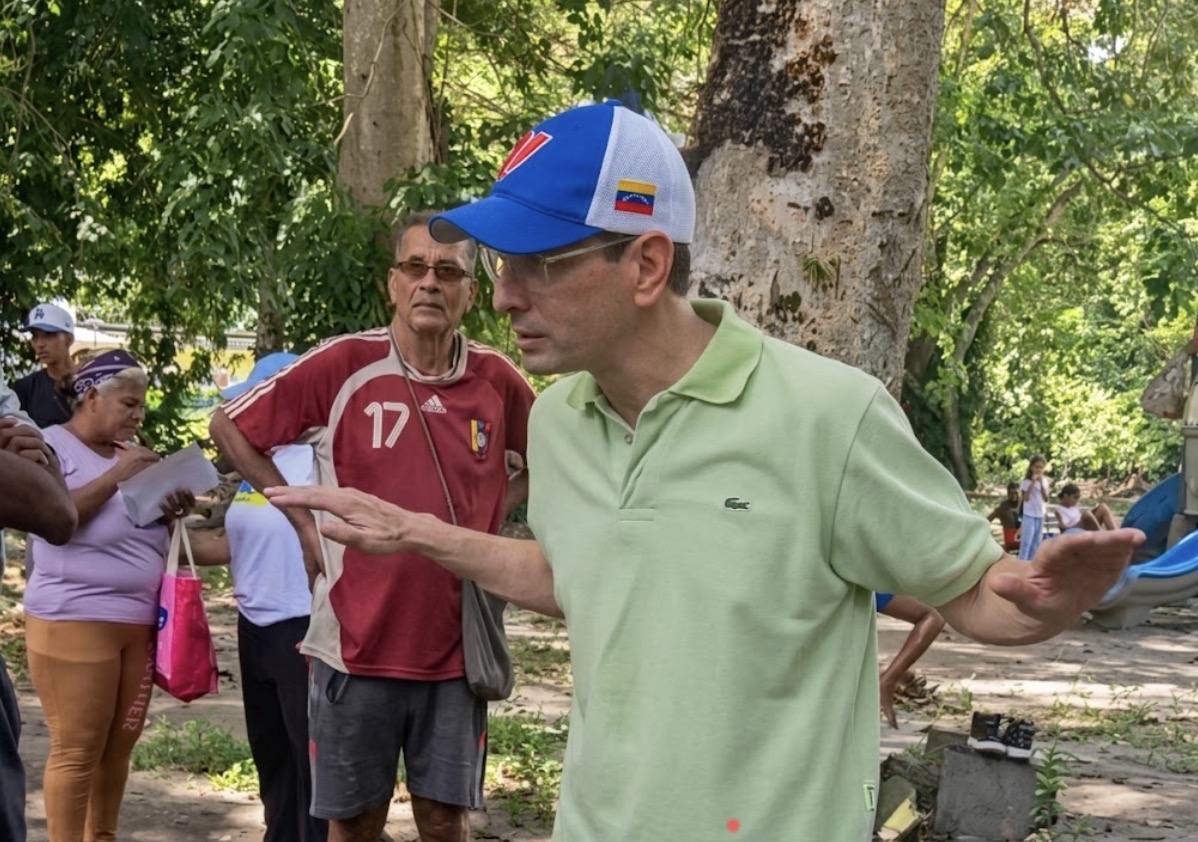
Venezuelan political junkies witnessed an amusing phenomenon in the past few weeks: former presidential hopeful Henrique Capriles embraced a derisive meme about himself that suddenly became popular. Or more precisely, he, too, started joking about his own memefied persona, el manguanguas, the weirdly energetic, repetitive and even creepy politician that appears at your doorstep and, if you let him inside, sits down for hours to hablar de la situación while emptying your family’s coffee reserves.
Capriles is one of the most memeable characters in our universe and the manguanguas moniker is not a rarity. It comes from a 2019, early Juan Guaidó era livestream where he praises Guaidó and rants at Maduro for virtually terminating political competition a year before: “¡Coño, qué manguangua! ¿Ah?” (an indignant “hell, that’s convenient, huh?”).
The whole thing does say a couple of things about our (still overwhelmingly digital) public sphere and the memefication of Venezuelan politics. First, it seems many people were more eager to have a laugh and scroll down the manguanguas rabbit hole than to learn, say, about the US-Nabep deal and the involvement of bolichico king Alejandro Betancourt, a material architect of the crisis that remains the biggest handicap to the quality of life of Venezuelans. To put it another way, el manguanguas was getting an insane amount of attention while the US overlords faced their biggest reputational crisis in Venezuela since January 3.
The meme emerged because Capriles has been touring Miranda while Venezuelan politics become increasingly defined by what a group of gringos in navy blue suits decide to tweet on a Friday evening.
We’re not making a great discovery here—most people know memes can have spectacular traction when it comes to political messaging and campaigning. The Venezuelan jodita, the national propensity to make jokes about everyone and everything even in the midst of tragedy, can make memes an even stronger weapon in our digital sphere. It seems someone made Capriles aware of that: he first reacted by complaining on X, accusing “those who are paying a millionaire campaign in production and publicity” of attacking him on social media. Then he acknowledged it in a friendlier fashion: “They say I visit your homes to steal your coffee,” he said in a September 1 video in Barlovento. “They mock me because they don’t want to see me coming here.” In a later post, he made a toast with other townspeople raising tiny coffee cups: “Por la manguangua!”
Capriles decided to tag his recent posts with #OperaciónManguangua and the whole thing has been helping him—engagement around his account grew and became more positive as a result, though he still doesn’t dare to open the comments section in his X handle. It’s good news for him after a few years of unpopularity, when he formally joined the faux opposition camp. If not for the events of January 3 and a still dim opening of the political arena, Capriles would be flirting with irrelevance, just a washed-up face in the parliamentary seat Jorge Rodríguez gifted him in 2025, begging Iris Varela or Jorge Arreaza for a chance at the chamber’s microphone. We wrote about his acts and decisions extensively—or his lack of courage and effectiveness—in the late Maduro era. But Capriles is not yet irrelevant, at least in my opinion.
The meme emerged in the first place because Capriles has been touring the state of Miranda this summer—a post-Maduro redemption tour, if you will—while Venezuelan political events again become increasingly defined by what a group of gringos in navy blue suits decide to tweet on a Friday evening. A few years ago, Capriles campaigned strongly about “bringing politics back to the country” in a not-so-slight dig at Guaidó, Leopoldo López, and the Trump-backed interim government they led. He now recognizes María Corina Machado as the rightful opposition leader and criticizes her exclusion from the so-called negotiations, so this is not about a plot against her.
Venezuelan politics started to see some interesting movements a few months ago, but these have become less and less intense as the rest of the opposition waits for Machado’s return or the green flag of an election date.
As weak and isolated as he may look, Capriles is one of the few opposition people with actual freedom to call things what they are when it comes to the United States and Venezuela. That is not the case for Machado, Juan Pablo Guanipa, or other figures who might be playing a role behind the scenes. Capriles didn’t have to wait for Marco Rubio’s explanations five days later to make his case about the US-Nabep deal. He was quick to assert that the oil belonged to the people on the day of Trump’s bombastic announcement, and made some sensible questions: What’s the deal’s scope? What’s its legal basis? What do Venezuelans receive, and under which conditions? Elliott Abrams, the GOP hawk and special envoy in Trump’s first term, noted Capriles’ almost lonely stance as a sign of the country’s worrying lack of politicians who are truly independent from Washington (to make his point, the former operative of Ronald Reagan also quoted the Venezuelan Communist Party in his Washington Post op-ed).
Will the manguanguas joke give him an enhanced platform? Maybe for a bit, though Capriles has a habit of messing things up and making people grow tired of him rather quickly. Right now, he is being noisier than at that time he was supposed to run for the 2023 primaries, only to chicken out in the final stretch, knowing he stood no chance against Machado. However, the videos he has been posting of rural communities in the state he once governed do carve out an accurate picture of how the country looks outside a few big cities. In the Barlovento area, Capriles is seen visiting a ramshackle school where the roof looks about to fall down, with a disgusting pile of books and furniture eaten by heat and dust as a library, its walls and windows looking flimsy when not broken. Another post shows a nearby ghost town, Tacarigua de la Laguna, where Capriles records an empty beach in front of him and an abandoned building behind—the only living thing nearby being a baby cat. Mire, aquí lo único que quedó es el gatico, he says.
In March, we wrote that the political heat map of Venezuela was starting to see some interesting movements, but these have also become less and less intense while the rest of the opposition waits for María Corina’s return or the green flag of an electoral calendar to light up the party. Maybe, if the people are kept waiting, angry or disappointed with the Americans as the opposition watches from the dugout, Capriles will remain the only cat making noise. Mire, pues vamos a ver.