candidate

Advice on when best to cast your California primary ballot

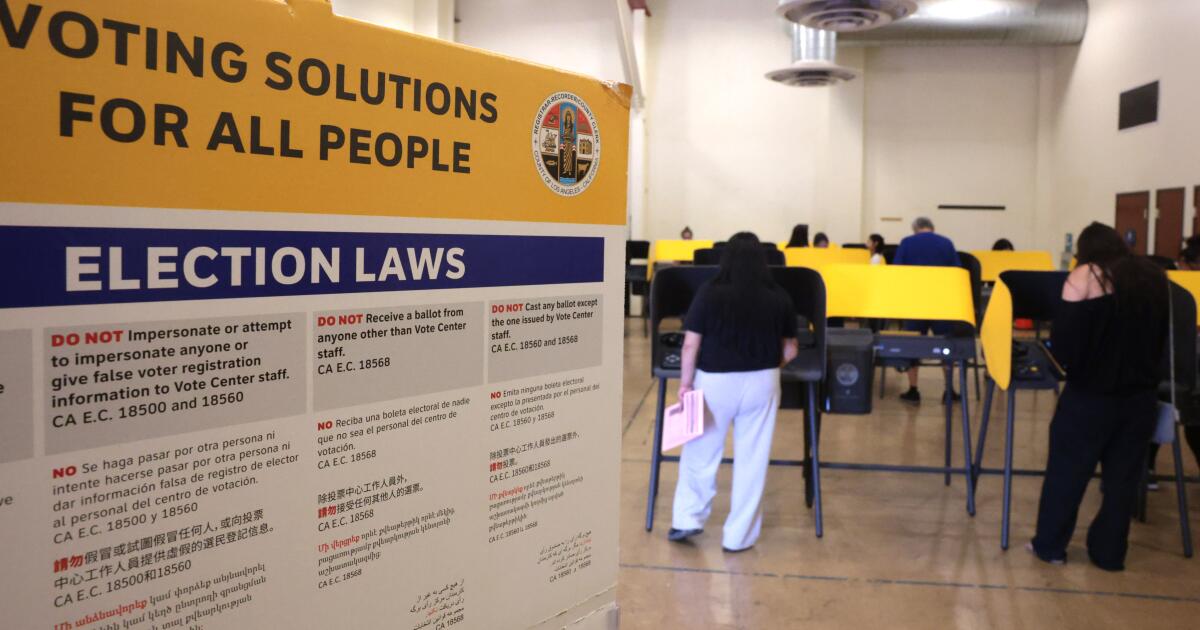
For the next week or so, in homes all over California, ballots will be arriving for the June 2 primary.

Since 2020, a ballot has been mailed to every active registered voter in the state — more than 23 million, by last count. The time to choose is drawing nigh.

In addition to the race for governor, Californians will vote in contests for seven other statewide offices, the Board of Equalization — which oversees the property tax system — and a great many congressional, legislative and local races, including the primary for Los Angeles mayor.

What’s a voter to do?

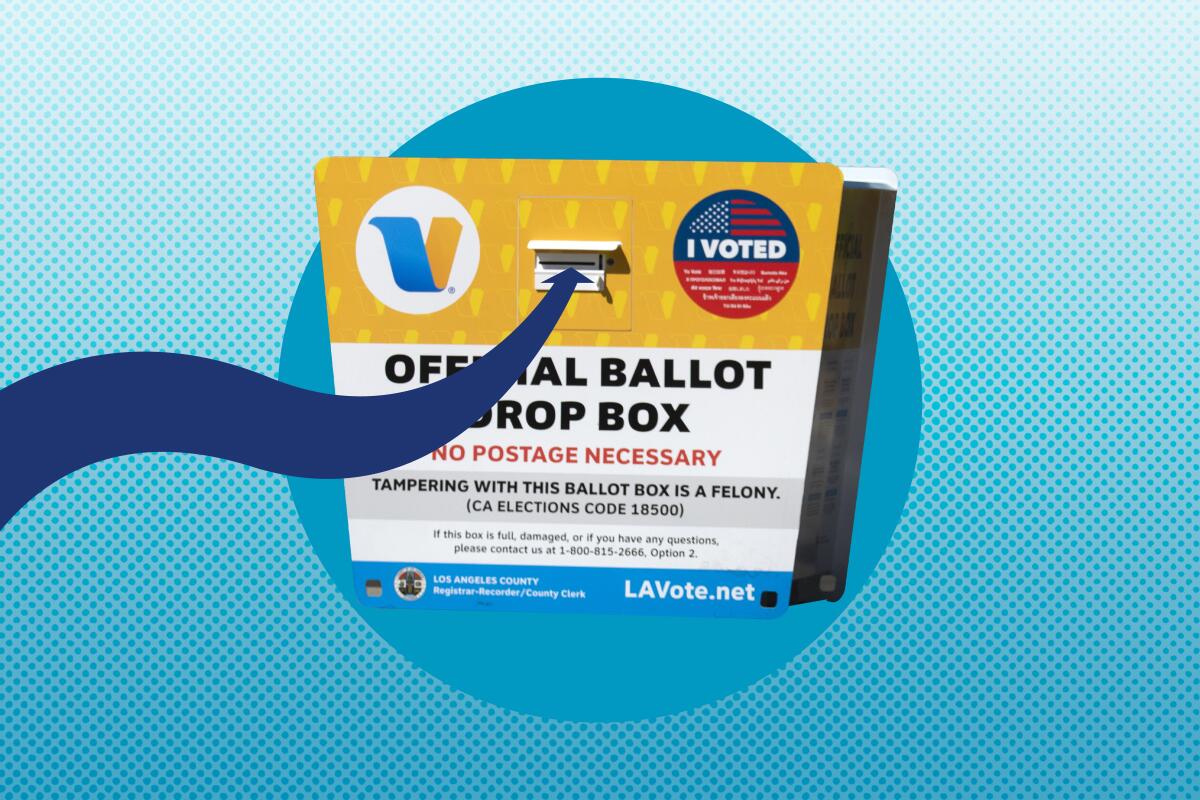
If you’ve waited your entire life for a candidate like Republican Chad Bianco, the Riverside County sheriff running for governor, or you’ve been jonesing to cast a gubernatorial ballot for Democrat Katie Porter from the moment she whipped out her famous whiteboard, the choice is easy. Fill out that ballot and toss it in the mail, stat! No postage needed.

“Don’t mess around,” said Paul Maslin, a veteran Democratic campaign strategist. (His candidate for governor, Betty Yee, quit the race late last month, so he’s a neutral observer at this point.)

“If you have pretty good inkling what you want to do,” Maslin urged, “vote.”

But if, like many, you’re not wed to a particular candidate, what then? If you’re worried about mailing in your ballot and then having some awful, Eric Swalwell-like revelations surface, or if you fret about wasting your vote by supporting someone who drops out before June 2, then what?

There are no do-overs in a California election. Once you’ve cast your ballot, you’ve made your choice. That’s it, however sorry you may be.

Which is why Republican strategist Rob Stutzman, who’s worked in California politics for decades, urged voters not to mail their ballot too soon. Like Maslin, he’s unaffiliated with any of the gubernatorial campaigns.

“It’s a slow-developing race,” Stutzman said of the contest for governor, the marquee attraction on the June ballot. “These are still relatively little-known candidates. There’s going to be a lot more campaigning to go in the weeks ahead. [So] unless you feel really strongly about somebody, I’d hang on to that ballot and see what happens over the next several weeks.”

Then again, with all the talk of clamping down on mail-in ballots and concerns about processing delays by a stretched-thin Postal Service, is there a danger of waiting too long to vote? What if your ballot arrives past the deadline to be tallied?

In March, the U.S. Supreme Court strongly signaled a likelihood it would require mail ballots to be received by election day if they are to be counted as legal. As it stands, California accepts mail-in ballots that were cast before the end of election day, so long as they arrive no later than seven days after.

The court seems unlikely to issue its ruling before the June primary — but that’s not guaranteed.

So is there a sweet spot, somewhere between voting in haste and having your ballot go to waste?

The Official Voter Information Guide, produced by California’s secretary of state, urges those voting by mail to “return your ballot … as soon as you receive it.”

But Kim Alexander, head of the nonpartisan California Voter Foundation, falls into the wait-a-bit camp. “Don’t vote too early,” she counseled, “because this is a very dynamic election.”

Once you’ve made up your mind, her best advice is to mail your ballot at least a full week before election day, which is May 26, to ensure it arrives on time to be processed and counted. If someone wants to drop their ballot off in person, either at a vote center or secure drop box, Alexander suggests doing so by May 30, which is three days before the election.

“The good news,” she said, “is that under a new state law … all county election offices will be open at least six hours on Saturday, May 30, for voters to come vote in person or to turn in their vote-by-mail ballots.”

Voting in person is an option right up until 8 p.m. on election day, even if you received a ballot in the mail. That applies everywhere in California, save for three sparsely populated, rural counties — Alpine, Plumas and Sierra — which conduct their elections entirely by mail. Bring your unused vote-by-mail ballot to your local polling place and swap it for a polling-place ballot you can use instead.

For procrastinators or those wanting to wait until election day to mail their ballot, they run the risk that it won’t be postmarked until after June 2. That means it won’t be counted, regardless of when it arrives at their county elections office.

“Voters who want to hold out as long as possible … ought to be planning to turn their ballot into a drop box or a voting site and not use the mail at all,” Alexander said.

Having spent decades working to make voting easier and elections safer and smoother, Alexander knows that voting by mail has made many people miss “the election day experience.” (Things like bringing the kiddos into the voting booth, or posing for selfies with an “I Voted” sticker.)

Her suggestion is to find other ways to mark the occasion.

“Help somebody else go and vote,” Alexander suggested, “or volunteer to help with an organization” running a get-out-the-vote operation.

“If you want to help election officials get ahead on the vote count” — a source of repeated upset as the country awaits California’s lagging results — “you can be part of the solution by getting your own ballot in just a little bit earlier.”

All of which sound like fine ideas. That way you can celebrate election day and make sure your ballot isn’t cast for naught.

Source link

D.J. Smith a candidate for Kings’ full-time coaching job, GM says

Interim head coach D.J. Smith will be among the candidates for the Kings’ full-time job when general manager Ken Holland conducts his coaching search this month.

Smith took over March 1 when Holland fired Jim Hiller with the Kings at 24-21-14 and out of the playoff picture. The former Ottawa head coach rallied the Kings to an 11-6-6 finish to claim the last wild-card spot in the Western Conference, but the Kings were swept by the powerhouse Colorado Avalanche in their fifth consecutive first-round postseason exit.

“D.J. did a great job,” Holland said Friday. “The team responded to him, so he’s a candidate. … I don’t want to talk to 20 people. I’d like to talk to probably five to eight people, and then make a decision. Some with experience, some maybe assistants, and some who haven’t been a head coach.”

Holland will begin his coaching search next week, looking for a candidate who can get this team out of its first-round playoff exit rut. He reiterated his disinterest in a full-scale rebuild, but also hinted that the Kings might want to make adjustments to their longstanding defense-first philosophy.

The Kings have failed to advance beyond the first round in seven consecutive postseasons since winning the Stanley Cup in 2014, including six first-round exits since team president Luc Robitaille took ultimate charge of hockey operations in 2017. The current Kings had 15 fewer points than last season’s team.

“As I sit here today, I’m not happy,” Holland said. “Luc Robitaille isn’t happy. Our players aren’t happy. It was a disappointing season. Under .500 at home, 29th in the league in goals scored, squeaked into the playoffs, got swept up by a Presidents’ Trophy-winning team. So I’m not happy. We’ve got to make the team better.”

Holland, who replaced Rob Blake a year ago, identified the obvious reason the Kings weren’t a real Stanley Cup contender this season: Their long-standing offensive struggles. The Kings scored only 225 goals, fourth-worst in the NHL and 25 fewer than last season.

Holland attempted to address the problem by trading for Artemi Panarin before the Olympic break, but the high-scoring forward couldn’t make up for the Olympic injury loss of fellow high scorer Kevin Fiala. Holland revealed Fiala might have been ready to return from his broken leg if the Kings had advanced to the second round.

The Kings have prioritized defense for most of the past two decades, often playing a sticky, trapping style that doesn’t promote offensive creativity or attack. That’s tough to overcome against opponents that are more talented while equally committed to defense — such as the Avalanche, who allowed only five goals in their four-game sweep.

Defense won two Stanley Cups for the Kings, but Holland openly wondered whether the Kings need to think bigger.

“Are we too defensive-minded? I’ve got to sort that out,” Holland said. “You’ve got to be good defensively. … You can’t win four games 6-5 in the playoffs. But we’re 29th in the league in goals scored. We’ve got to find ways. Power play has got to be better. We’ve got to generate a little more attack from the back end.”

The Kings also had inept special teams, ranking 28th in the NHL on the power play and 30th in penalty-killing. The Kings were the league’s third-best team at five-on-five defense, but only seventh in total goals allowed thanks to its feckless special teams.

Holland’s coaching hire will have to fix those units without the help of two-time Selke Trophy-winning forward Anze Kopitar, who retired after a 20-year career with Los Angeles. The Kings will need a new captain to replace Kopitar in the dressing room and a high-usage center to take Kopitar’s minutes.

The Kings will be relying even more heavily on Quinton Byfield, the former No. 2 overall draft pick who has grown into a dependable two-way player with the potential to improve in a more open system.

“Obviously it’s going to be QB’s team up front,” Holland said. “Kopi [leaves] a massive hole. He’s the highest-scoring forward in the history of the franchise. He plays 200 feet. He’s big and he’s strong. He wins draws. In my opinion, he’s a first-ballot Hall of Famer. I don’t think we’re just going to be able to go out and find a way to replace him with one person, and I don’t expect it.”

The Kings still have ample veteran talent next to Byfield, Fiala and Panarin, including top scorer Adrian Kempe, emerging forward Alex Laferriere and promising defenseman Brandt Clarke. Holland claims he is eager to add talent across the lineup after he settles on a coach.

“We have lots of good players,” Holland said. “I’ve got to build a better team.”

Beacham writes for the Associated Press.

Source link

Gas prices, wildfire, insurance, climate – what each candidate said last night

Wildfire and insurance — issues amped by climate change — along with the price of gas, took center stage at the California governor’s debate on Tuesday night.

Here are some of the candidates’ defining statements, starting left of the stage:

Tony Thurmond

The Democratic State Superintendent of Public Instruction addressed the state’s wildfire insurance crisis, where private insurers have been dropping policies as climate changes fuels more frequent catastrophic fire. The state has allowed insurers to raise rates in return for writing more policies, but so far its backup FAIR Plan, meant to provide coverage when other companies will not, continues to grow.

Thurmond said he would withhold tax credits, subsidies and benefits from non-cooperative insurers, although moderators and other candidates raised questions about the legality of this strategy.

“The governor can certainly work with the Insurance Commissioner to say there should be no rate increase unless the insurance industry is actually writing policies. They have failed California in our greatest need. They’ve taken the money for premiums and then when people needed to have support to rebuild their homes, they said, ‘whoops, we’re not going to help you.’ Then they got a rate increase. I’m sorry, where I come from, when you do a bad job, you don’t get a raise.”

Chad Bianco

The Republican Riverside County Sheriff said insurers aren’t leaving California because of climate change, but because the state has failed to pass and enforce vegetation management and defensible space policies that would reduce wildfire risk.

“It wasn’t global warming, stop believing that. It was a failed environmental policy that doesn’t allow fire departments to prevent defensible space around our homes or clear out the brush for 30 years that are building in our mountains and in our hills that took out a city. [Insurers] specifically said we were going to lose a city, and our governor said ‘we don’t care.’ And so the insurance companies left.”

Inadequate brush clearance has contributed to other fires in the state, although it’s not a factor experts cite in the Los Angeles fires specifically.

Tom Steyer

The Democratic billionaire hedge fund founder who is positioning himself as the climate candidate in the race, touted his drive to make oil companies pay for damages from climate change, including rising insurance rates and homes lost to wildfires.

“In environmentalism, I have three real rules. Number one is polluter pays. It’s absolutely critical that if people are going to pollute and damage the environment and cause harm to their neighbors, they pay. Two, we have to include environmental justice in every single environmental rule. And third is we need to start to deploy all of the clean energy stuff that’s cheaper now and get us back to the front of the world in leading it.

“There is one person that the corporations are going after, including Big Oil, who is spending millions of dollars to stop me. The electric monopolies, PG&E, millions of dollars to stop me, because I’m the person on this stage who’s the change agent.”

Steve Hilton

The former Republican Fox News commentator said insurers should be allowed to raise rates consistent with actual wildfire risk. He also advocated for “modern forest management,” removing fuel from forests, as a way to protect against wildfires, reduce carbon emissions from fire, and revive the state’s timber industry.

“We can create jobs and opportunity in rural California and reduce carbon emissions in the process, because we won’t have the mega wildfires.”

Asked if he supports the transition to electrification, he promoted natural gas: “Yes, but let’s be sensible about electric. Right now, we have a fleet of gas fired power stations generating electricity that are running at 10 to 15% of their capacity, even though we have abundant natural gas in California that we could be using to generate affordable, reliable electricity that would lower the cost of electric bills for consumers and businesses.”

According to the U.S Energy Information Administration, California’s natural gas production provides less than one tenth of what the state consumes.

Xavier Becerra

The former Health and Human Services Secretary said he would call a state of emergency as governor to require wildfire insurers to freeze rates and come to the table.

“This affordability crisis is hitting every family, and we have to act as if this were a break glass moment … Rate payers have to understand what their risk is, so they understand why they are going to pay for what they’re going to pay for their home insurance. But an insurance company has to be open and transparent about how its pricing its policies so people can afford it.”

Moderator Julie Watts noted that California home insurance rates are below the national average and questioned the legality of a freeze.

Katie Porter

The former Democratic Orange County Congresswoman was asked whether California should keep its refineries. Two of them closed in the past year, reducing the state’s refining capacity by 20 percent and causing California to lean more heavily on imports.

She said the state should keep the remaining refineries open, but also rapidly scale up green energy to meet the state’s growing electricity demand: “Right now we need to keep all of our energy sources online. That’s just the reality that we’re in. … Right now those refineries, they’re up, they’re running, they’re creating good jobs. Let’s keep them there. But I want to be really clear … The people who work at those refineries, and the people who live in Kern County also face some of the worst pollution and lower life expectancies. Green energy gets us out of that.”

She also backed an idea to have state dollars cover insurance for insurers, known as reinsurance.

Matt Mahan

Democratic San Jose Mayor called to suspend the state’s 61 cent-per-gallon gas tax, used to fund road repairs, bridges, and public transport. The state is looking at a $216.4 billion revenue shortfall over the next decade due to increasing fuel economy and electric vehicles. The other Democratic candidates support keeping the tax; Mahan has instead proposed a flat fee on all vehicles.

He said: “I’m the only candidate on this stage who has pledged to suspend and then reform the gas tax. It is the most regressive tax in California. Working people, rural people, are spending three times as much maintaining our roads as wealthier EV owners.”

On the wildfire insurance crisis he said: “The government in Sacramento created so many restrictions, including taking over a year to approve any rate changes, prohibiting insurance companies from using climate data to project future costs, that they stopped writing new policies. The answer is bring them back, force them to compete, allow them to appropriately price risk, and then hold government accountable for maintaining our wildland, reducing all that vegetation and wildfire risk so that we don’t have these catastrophic fires.”

Antonio Villaraigosa

The former Democratic L.A. mayor expressed his concerns with the readiness of the state’s infrastructure to support a transition to electric vehicles.

“We need an all of the above strategy that understands we’ve got to transition from oil and gas to renewables. But here’s an example: the 2035 mandate [to ban gas-powered car sales]. We built 167,000 charging stations in the last 10 years. We need 2 million more to get to that mandate, and if we build them, we don’t have a grid. So we ought to build the grid instead of arguing about whether or not we need an all-of-the-above policy.”

Source link

California governor debate: Candidates scrap over gas tax, homelessness

The top candidates for California governor clashed over the high costs of gas, housing and homeowner’s insurance in a testy debate Tuesday evening, a fiery exchange that may finally draw voter attention as the June 2 primary election fast approaches.

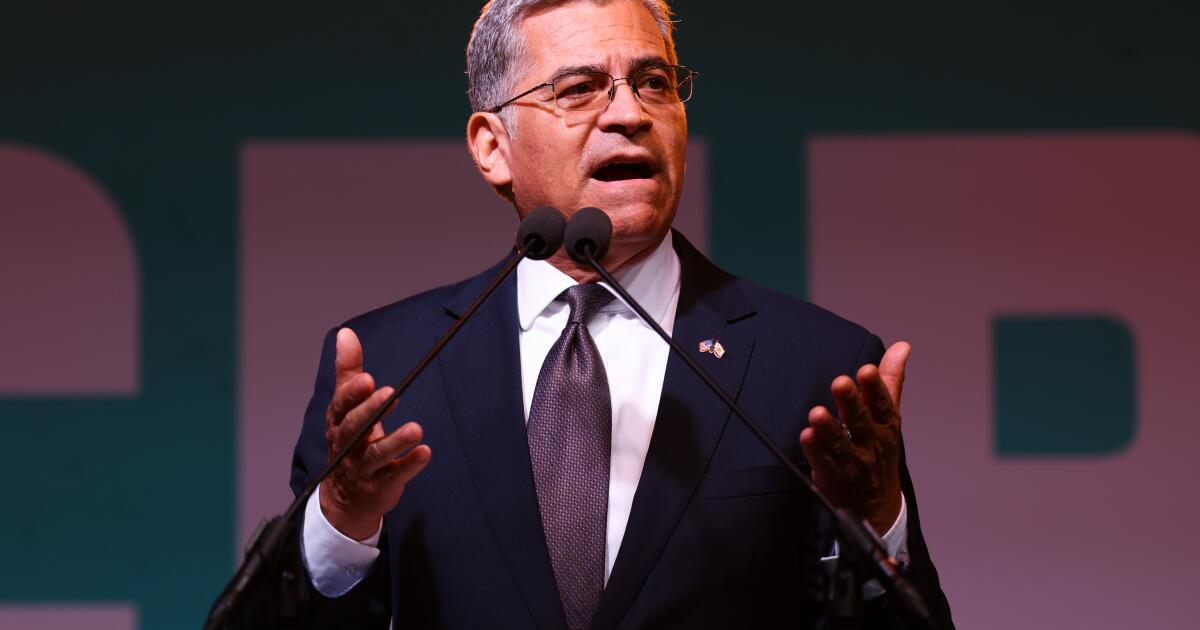
Former U.S. Health and Human Services Secretary Xavier Becerra, whose campaign blossomed after former Rep. Eric Swalwell dropped out amid sexual assault and misconduct allegations, came under persistent attack during the 90-minute debate but also went on the offensive.

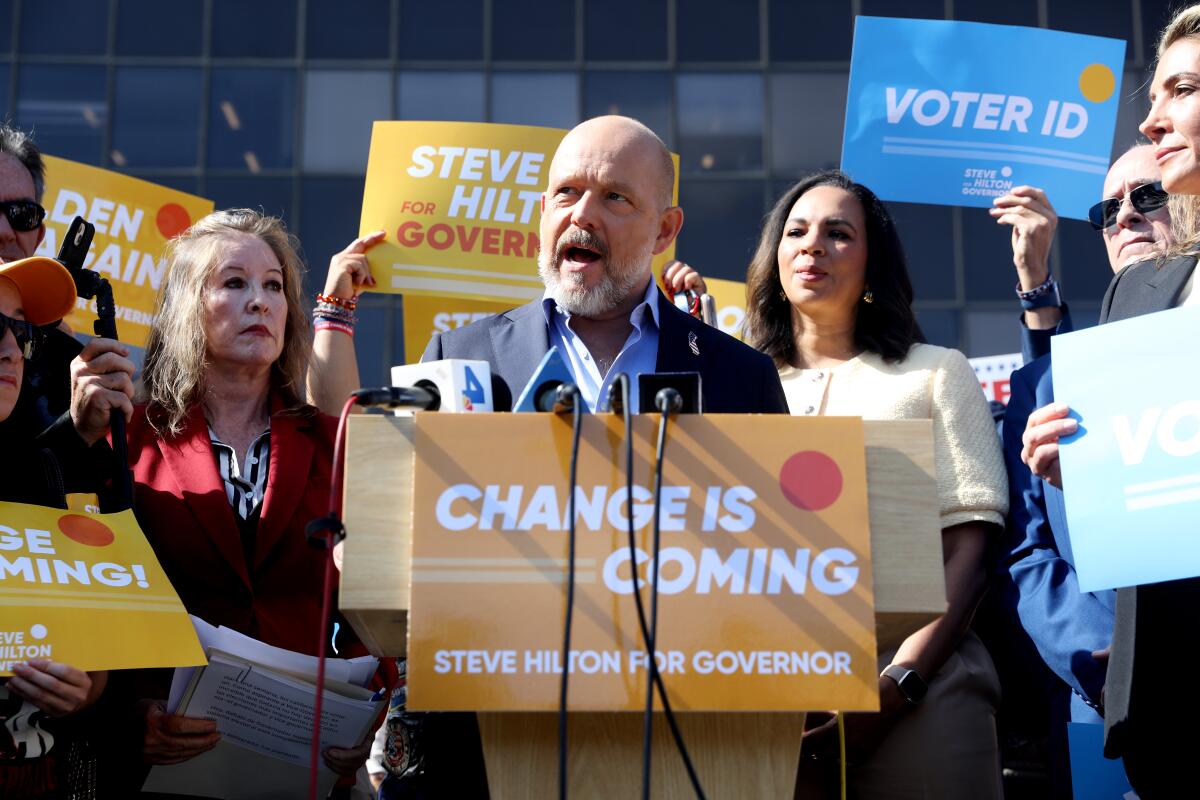
Former Fox News host Steve Hilton, a Republican who leads all candidates in the most recent opinion polls, ripped Becerra for promising to declare a state of emergency to address rising homeowner’s insurance rates, saying the governor lacks that constitutional authority.

“We can’t have a governor who doesn’t understand how the government works,” Hilton said.

Becerra, who served as California attorney general before joining the Biden administration, quickly defended himself, saying he knows the law better than Hilton does.

“We don’t need a talking head from Fox News to tell us how the government works,” he said.

And that was after Becerra got in an early dig at Hilton, who has been endorsed by President Trump, by referring to Trump as “Hilton’s daddy.”

The debate was broadcast and livestreamed by CBS stations around the state. Hundreds of people watched from Pomona College’s historic Bridges Auditorium, a Renaissance Revival-style landmark with Art Deco flourishes that was once among the premier performance venues in Southern California.

With eight major candidates from both parties participating, CBS moderators billed it as “the largest and most inclusive debate of the election.” Becerra and Hilton were joined by Republican candidate Riverside County Sheriff Chad Bianco and Democratic candidates San José Mayor Matt Mahan, former Orange County Rep. Katie Porter, billionaire Tom Steyer, state Supt. of Public Instruction Tony Thurmond and former Los Angeles Mayor Antonio Villaraigosa.

Some takeaways from the debate:

Candidates didn’t shy away from the top issues

Moderators set the theme for the first half-hour of the debate as “affordability,” a top concern among California voters, and almost immediately the candidates began sniping and talking over one another.

Almost all of them vowed to accelerate home construction in California, pivotal to reducing the state’s high cost of housing.

There was no shortage of ideas for other ways to ease the financial burdens facing Californians, but few specifics on how they would deliver on those promises given the state’s complex and arduous legislative process.

Hilton promised to cap the price of gas at $3 per gallon, and Mahan vowed to suspend the state gas tax. Bianco said Democrats have long overregulated and overtaxed Californians, and the state’s supermajority Democratic Legislature would have to get in line with him and end those things if he’s elected.

Becerra said he would reduce prescription drug prices. Thurmond said he would provide down-payment assistance grants to those trying to own their first home.

Barbs traded over climate-caused emergencies

Anchors and reporters from local CBS stations moderated the debate, including Los Angeles anchor Pat Harvey, Sacramento anchor Tony Lopez, Bay Area anchor Ryan Yamamoto and national investigative correspondent Julie Watts. They were joined by Sara Sadhwani, an assistant professor of politics at Pomona College and a member of California’s independent redistricting commission.

Moderators pointed to the surge in catastrophic wildfires across the state in recent years due to climate change, as well as the threat of earthquakes, and asked the candidates how they would respond to future emergencies.

As he did throughout most of the debate, Bianco responded by bashing California’s Democratic leadership, which he said created most of the ills facing the state.

Bianco said the root causes of fire disasters in the state are “not because of climate change” but due to “failed environmental activist policies” that prevented fire departments from clearing highly flammable brush around communities for years.

Mahan, after touting his actions as a Silicon Valley mayor during emergencies, quickly pivoted to take shots at Becerra and his role as U.S. Health and Human Services secretary during the pandemic.

He said Becerra had “never met a crisis that he couldn’t ignore” and accused Becerra of failing to deal with COVID-19, monkeypox and the surge of unaccompanied minors at the U.S.-Mexico border during the Biden administration.

Becerra responded by saying that his agency dealt with the crises by working with all 50 states and the federal government to quickly roll out vaccines and other resources.

“You’re not wearing a mask, are you, Matt? You’re not worried about catching monkeypox, right?” Becerra said.

Steyer also came under attack when he starting discussing his plans to “make polluters pay” for the effects of climate change. Porter criticized the former San Francisco hedge-fund founder for making millions off the oil and gas industry, and using those profits to fund his campaign for governor. Steyer has spent more than $143 million of his own money on his campaign, according to fundraising disclosures filed with the California secretary of state’s office.

“How about profiteers pay? You pay the lowest tax rate on this stage, and yet you made the billions that you’re using to fund your campaign off fossil fuels,” Porter said to Steyer.

Steyer responded that he is a “change agent” candidate opposed by special interests and pointed to campaign committees funded by utility and other industry groups opposing his bid. PG&E, the California Chamber of Commerce and the California Assn. of Realtors have put more than $29 million into a pair of committees to fund attack ads against the billionaire.

Republicans focus on blaming Democrats

Just weeks before the June 2 primary, the race to replace term-limited Newsom remains wide open, with many voters still undecided.

Republicans Hilton and Bianco have led numerous public opinion polls while the large field of Democrats have split the vote, leading to fears among Democrats that the party could get shut out of the general election, despite outnumbering Republicans nearly two-to-one among the state’s registered voters. In California’s open primary, the top two finishers advance to the general election, regardless of party affiliation.

The two Republicans avoided overtly attacking each other at the debate but were regularly the targets of other candidates on the stage.

Becerra, speaking about federal healthcare funding cuts approved by President Trump and congressional Republicans last year, referred to the president’s endorsement of Hilton. “The first thing we have to do is stop Steve Hilton’s daddy,” Becerra said.

Hilton responded jokingly that his father, who was the goalie for the Hungarian national ice hockey team, hadn’t weighed in on the race. And he said Becerra’s comment pointed to what is wrong with California politics — a fixation on Trump despite Democrats controlling the state for more than a decade.

“We’ve had the same people in charge for 16 years now, and it’s such a disaster and such a high cost of living for everyone, and the highest poverty rate in the country and the highest unemployment rate in the country, and the worst business plan,” Hilton said. “All these things going wrong, they can’t do anything except blame Trump. Let’s see how many times you hear that tonight.”

Bianco grew visibly frustrated several times over the debate’s format and his opponents’ answers. At different points, he compared the event to “The Twilight Zone” and called it “the hour and a half that [viewers] are never going to get back.”

Pressed on what he would do differently if elected, the Riverside sheriff also focused on criticizing Democrats and accusing them of lying.

“We have a group of of 20-ish-year-old kids and we’re just sitting here lying to them about broken Democrat policies in California for the last 20 years, and we’re going to sit here and blame a president who’s been president for a year. This is absolutely ridiculous,” he said.

Hilton has seen a bump in his polling numbers since he was endorsed by President Trump earlier this month. A CBS News/YouGov poll of more than 1,400 registered voters released Monday showed Hilton leading with 16%, followed by Steyer with 15%, Becerra with 13%, Bianco with 10%, Porter with 9%, Mahan and Villaraigosa with 4% and Thurmond with 1%. The largest group of voters — 26% — was undecided.

Nixon reported from Sacramento and Mehta reported from Claremont. Times staff writers Kevin Rector, Dakota Smith and Blanca Begert contributed to this report.

Source link

Here’s what to watch for in Tuesday’s California governor debate

Contenders in the race to be California’s next governor will meet on stage Tuesday night for the second of three planned debates before the June 2 primary.

Last week’s meet-up in San Francisco didn’t provide the fireworks or memorable moments the candidates, and many voters, were hoping for — but it did manage to remind us all that ballots will hit mailboxes in coming days and decisions must be made.

Ahead of the forum at Pomona College in Claremont, a trio of our Times columnists — Gustavo Arellano, Mark Z. Barabak and Anita Chabria — weigh in with a cheat sheet on what to look for, what to expect and why it matters.

Chabria: I’ll start us off with the obvious — let’s hope Tuesday gives us at least one breakout candidate who comes with some fire and vision.

After last week’s debate, there was lots of social media posturing about who won and who trolled whom the best. But as one of the six people who actually watched, I can tell you it was mostly bland with no clear winner.

That’s in large part because many of the Democrats have only slivers of daylight between their policies, and ditto for the two Republicans.

So my hope is that at least a single candidate ups their game and comes to voters with not just attacks, but something that inspires, something that sets them apart. This far into the race, that hope is slim, but I’m keeping it alive.

What are your hopes and dreams — and maybe fears — going into this?

Barabak: I know I sound like a broken record. (Google it, kids.) Anita, you and I, in particular, have gone round and round on this one. But I don’t feel a particular need for inspiration from the guys and gal that are running for governor. If I want inspiration, I’ll go back and reread the Rev. Martin Luther King Jr.’s “Letter From Birmingham Jail.” Or listen to a Grateful Dead show from May of ’77.

Give me someone who can work with the Legislature, and as difficult as it may be, President Trump, to get stuff done.

Pursue a “California First” agenda, to borrow a phrase. Put voters and their interests ahead of ego, careerism and personal ambition. Start by pledging, if elected, to serve a full four-year term and not run for president so long as they’re serving as governor.

Of course, that kind of promise can be broken. (See then-Gov. Pete Wilson, who made that vow when he sought reelection in 1994, then turned around and — unsuccessfully — sought the White House in 1995.)

At least we’d have them on the record.

Arellano: I’m all for this morass of democracy. A small part of me wants two Republicans to make it into the general election because the California Democratic Party deserves a meteor-like extinction event. No GOP statewide elected official since Schwarzenegger. Supermajority in Sacramento for most of a decade.

And what do they have to show for their one-party rule? This.

But then I hear Chad Bianco and Steve Hilton mewl, and I’m suddenly hoping alongside Anita that someone vanquishes their foes with an unassailable vision. Problem is, I think all the candidates have reached their ceiling. The only one who has any chance of showing us something new is Xavier Becerra, who needs to drop his Dudley Do-Right shtick for a second and channel the inner cholo we all know is in him.

Instead, he was at a fundraiser in Fullerton over the weekend with professional Latinos — you should’ve been kicking it with my cousins in Anaheim who were watching their Dodgers slaughter the Cubs, loco, because they’re the ones who’ll make or break you.

Chabria: How the first potential Latino governor is failing to excite Latino voters is exactly what I’m talking about. If you don’t give voters something to be excited about, they don’t vote, and our fragile democracy needs every voter it can get.

But if we are forced to vote on nuance, let’s do it informed. Here are some questions I hope these candidates have to answer:

For San José Mayor Matt Mahan, funded in the mega-millions by tech bros, it’s not enough to promise to regulate artificial intelligence, or billionaire influence, for that matter. Tell us what those regulations look like and tell us how you reconcile your own politics with those of big donors such as Joe Lonsdale, co-founder of Palantir, who has called Gen Z the “loser generation.”

For billionaire investor Tom Steyer, who has said he will reform Proposition 13 (which limits property taxes) for corporate land owners: What assurances do homeowners have that they won’t be next?

For former Rep. Katie Porter, polling third among Democrats, the clock is ticking — is there a point where you will drop out and endorse a fellow candidate if you can’t break through? Same-ies for state schools superintendent Tony Thurmond and former L.A. Mayor Antonio Villaraigosa, who are included in this debate but polling in the single digits.

And I agree with you, Gustavo, Becerra is coming across as resolutely bland, but to Mark’s point, he’s using that to position himself as drama-free and experienced. So in an era when fraud and abuse are the words of the day, how does Becerra explain not catching fraud in his own office?

Mark and Gustavo, what are the topics you hope candidates will be grilled on?

Arellano: Slight correction, Anita — California already had a Latino governor: Romualdo Pacheco, the lieutenant governor who replaced Newton Booth in 1875 when the latter became a U.S. senator. Pacheco — a Latino Republican! — served all of 10 months before becoming a Congress member.

See, Californians? Political musical chairs is as much a part of our state as free-spending oligarchs — but enough about Steyer.

Issues? Immigration, of course. I want each one to address the state’s undocumented immigrants for 90 seconds in whatever matter they choose. Water: Believe in climate change or not, but our supply is shrinking faster than the gubernatorial chances of Thurmond. And since I believe that the more random the question, the more you learn about who a candidate truly is: What’s the best song about California, and why? Anyone who says “California Girls” or “California Gurls” deserves disqualification, even if both songs rock.

Barabak: Not an issue, per se. What I’d like to see is a bit of backbone.

The next governor is going to have to make some tough decisions, especially around spending priorities and/or cuts to the state budget. Inevitably, the next governor is going to make some people unhappy. And I’m not talking about just those members of the opposite party, or folks who didn’t vote for them.

So I’d like each of them to name an issue where, for the good of the state, they’re willing to take on their friends and allies, knowing they’ll be displeased. If you’re a Democrat, name something you would do that would, say, tick off organized labor. And for Republicans Bianco and Hilton, what’s an area where you’re willing to say to Trump, “Sir” — the president imagines everyone bowing and calling him sir — “you’re dead wrong about this and California needs to go its own way, whether you like it or not.”

Arellano: Good luck seeing any candidate buck their masters. I think we need to lower our expectations way, way, well, lower. So a simple question to conclude: Who needs to do the most tonight besides Mahan’s beard? I think it’s my fellow Orange Countian, Katie Porter. She’s now to the right of Steyer and left of Becerra, which means she needs to peel off supporters from both of them and grab undecideds if she wants to advance. Not sure how she can pull that off — but if anyone can bring necessary fire, it’s her.

Chabria: Porter definitely has a lot on the line.

One standout moment for her, Steyer or Becerra — good or bad — could tilt this very-much-undecided race — not so much because people will be watching, but because it will fuel the social media and advertising sure to follow. These next two debates are high-stakes, not just to avoid a Biden performance, but to do something, anything, that fires up momentum.

Politics ain’t beanbag, as the old saying goes, and it’s time to bring the heat. So in the spirit of Gustavo’s song request, I’ll leave it with these lyrics from the Rivieras (or the Ramones, if you prefer): We’re out there having fun, in the warm California sun.

Barabak: Not to be the pooper at the party but I think we shouldn’t overstate the import of tonight’s debate. For one thing, as Anita suggested, the audience will be exceedingly small — minuscule, even, relative to the state’s 23 million registered voters.

We know, from experience, that most folks will take away what they do based not on the debate itself but rather the coverage of it and whatever soundbites, memes, chatter and advertising it produces — and that’s only to the extent people are paying attention.

So, yes, what’s said and done in Pomona, will matter some. But we’re still five weeks away from election day, and I suspect many folks will be waiting at least another week or three to start focusing on the race and finally make up their minds.

I’ll end with something that Jerry Garcia sang: All good things in all good time.

Source link

Locked Capitol doors and more cash for security are the new normal after Minnesota assassination

Nearly a year after the assassination of a Minnesota legislative leader, lawmakers across the U.S. have worked to fortify security in state capitols and improve safeguards when officials are in their communities.

The changes have followed a rise in political violence nationwide that included the stunning assassination last June of Rep. Melissa Hortman, the top Democratic leader in the Minnesota House, and the September killing of conservative activist Charlie Kirk, who was speaking at a college in Utah.

In Minnesota, most doors at the state Capitol are now locked, and people entering must go through weapons detectors. People entering the visitors’ galleries to watch floor debates must go through a second set of detectors.

“It’s important for us to be able to not have our government fall apart if our legislators are under threat,” said Minnesota Rep. Julie Green, a Democrat who sits directly across the aisle from Hortman’s old desk, which remains empty except for fresh roses, her portrait and a speaker’s gavel. “It’s a complicated, complex, very emotional issue, as you can imagine.”

High-profile attacks have stoked lawmakers’ fears

In addition to the killings of Hortman and Kirk, violence targeting political figures in the U.S. in the last few years has included an arson attack last year at the home of Democratic Pennsylvania Gov. Josh Shapiro; an assassination attempt on then-candidate Donald Trump at a Pennsylvania rally in 2024; and a hammer attack on the husband of Democratic then-House Speaker Nancy Pelosi at their California home in 2022.

Twenty-five states, including Minnesota, now formally allow candidates to use campaign funds for personal security. Most made the change after the killings of Kirk and Hortman. Eleven states have laws permitting it, while others have approved it through rules or other mechanisms, according to the National Conference of State Legislatures and the VoteMama Foundation.

This year alone, Alabama, Oregon, Nebraska and Utah enacted laws allowing campaign funds for security. Bills to legalize it are pending in about a dozen other states.

It’s not just happening at the state level. Security spending for congressional and presidential campaigns has jumped fivefold over the past decade. Federal political committees spent more than $40 million on expenses labeled as security during the 2023-24 campaign cycle, according to an April report from the nonpartisan Public Service Alliance.

Weapons detectors are just one response

Metal detectors — one of the most visible signs of concerns about political violence — were installed at Alaska’s Capitol last year. Democratic Rep. Sara Hannan said the change was due to “increased risk of violence in our public institutions.” Lawmakers approved them before Hortman was killed.

But some states have balked at making it harder to access the halls of power. Wisconsin Assembly Speaker Robin Vos, a Republican who knew Hortman, resisted efforts to install metal detectors in his state, saying he didn’t want to “fortify” the Capitol. Wisconsin’s is one of 11 state capitols that don’t have metal detectors, a state audit found.

Minnesota lawmakers are also considering creating a special unit within the State Patrol, which oversees Capitol security, that would provide protection for legislators, the state attorney general, secretary of state, state auditor, and Supreme Court justices.

One lead author is Democratic Sen. John Hoffman, who survived being shot nine times the night Hortman was killed. Prosecutors say the gunman, disguised as a police officer, began his rampage by shooting Hoffman and his wife, then stopped at the residences of two other lawmakers who weren’t home. He then went to Hortman’s home, where he killed the representative and her husband, and wounded their dog so severely that he had to be euthanized.

At a hearing Tuesday, Hoffman called his measure “a necessary response” that would “keep elected officials and Supreme Court justices safe and dedicate the resources necessary and hopefully stop future tragedies from happening.”

Numerous states have also taken action to protect lawmakers’ personal information. North Dakota lawmakers on Wednesday discussed a bill draft for next year that would make confidential the home addresses of candidates and public officials upon request.

The NCSL in February created a $1.5-million fund to reimburse legislatures for expenses related to lawmakers’ personal safety and security while they’re away from their statehouses. More than 30 states have applied or are preparing to, NCSL spokesperson Katie Ziegler said.

Karnowski and Bauer write for the Associated Press. Bauer reported from Madison, Wis. AP writers Becky Bohrer in Juneau, Alaska, and Jack Dura in Bismarck, N.D., contributed to this report.
Source link

Park leads challenger Malik in fundraising for L.A.’s coastal council seat

Los Angeles City Council member Traci Park has raised more than $1.2 million for her reelection campaign in the city’s June 2 primary, more than double the amount collected by challenger Faizah Malik, according to finance reports filed this week.

Malik, a civil rights attorney, reported raising roughly $454,000 in her bid for the District 11 seat that skirts along the Westside, including Mar Vista, Pacific Palisades, Venice and Westchester, the reports show.

At nearly $1.7 million, the money raised in the race is the highest for the eight council seats, out of 15 total, on the ballot in the June 2 primary. Any candidate who wins a majority in the election will win the seat outright, otherwise the top two vote-getters will compete in the Nov. 3 general election.

Two of the eight races are open seats to replace termed-out incumbents, and in five other races, incumbents Eunisses Hernandez, Park, Hugo Soto-Martínez, Tim McOsker and Katy Yaroslavsky posted large fundraising leads against their challengers. One incumbent, Councilmember Monica Rodriguez, is running unopposed.

In the west San Fernando Valley’s 3rd District, three candidates are seeking to replace termed-out Councilmember Bob Blumenfield.

Insurance company founder Tim Gaspar was leading the pack in fundraising, reporting nearly $430,000. Barri Worth Girvan, an aide to Los Angeles County Supervisor Lindsay Horvath, has raised about $235,000. Tech entrepreneur Christopher Robert “CR” Celona was far behind with about $12,300.

In Council District 1, which includes Highland Park and Pico-Union, incumbent Hernandez topped the field with about $319,000 in contributions. Challenger Maria Lou Calanche, a former Los Angeles police commissioner, reported raising about $182,000.

Among other challengers in the race, Sylvia Robledo, a small-business owner and longtime City Council aide, reported about $75,000 in contributions. Raul Claros, founder of a nonprofit called California Rising, listed $70,500 in contributions and entrepreneur Nelson Grande reported raising about $55,000.

There are six candidates vying to replace incumbent Curren Price in the 9th District, which includes USC and communities along the Harbor Freeway corridor.

Jose Ugarte, a former deputy chief of staff for Price, led the field in reported financial contributions, amassing $477,000.

Estuardo Mazariegos, head of the Alliance of Californians for Community Empowerment Los Angeles, reported roughly $200,000 in contributions and Elmer Roldan, director of a nonprofit, has raised about $114,000.

Entrepreneur Jorge Nuño and therapist Martha Sanchez trailed with about $25,000 and $13,000, respectively. Educator Jorge Hernandez Rosas did not report any contributions.

In the other races:

  • Yaroslavsky reported raising about $431,000 for her 5th District seat, which includes Westwood, Palms and Hancock Park. None of her opponents, Henry Mantel and Morgan Oyler, reported raising more than $35,000.
  • McOsker reported raising 242,000 for his 15th District seat in San Pedro. Challenger Jordan Rivers, a community organizer, told The Times he did not raise any funds.
  • Soto-Martínez reported raising more than $170,000. The three challengers in the race — Colter Carlisle, Dylan Kendall and Rich Sarian — reported a combined $152,000.

The outcome of the Park-Malik contest in District 11 will be determined in the June 2 primary because there are only two candidates in the race.

In a statement, Councilmember Park credited her fundraising lead to her efforts to clear homeless encampments.

“I raised an historic number of donations from local Westside residents because I’ve been on the ground since Day One solving our number one priority: getting people off the streets into housing and treatment and removing dangerous encampments from our neighborhoods,” Park said. “Residents, workers and visitors all see the difference.”

Kendall Mayhew, communications director for Malik’s campaign, said in a statement that Park and her supporters are spending unprecedented money because “we are winning and they simply don’t know what else to do.”

“What our campaign has demonstrated so far, and what we will demonstrate at the ballot box in just a few weeks, is that corporate money cannot defeat an honest, people-powered campaign,” Mayhew said.

The fundraising totals reported this week represent money given by individual donors, who are limited to contributions of no more than $1,000 in this election cycle. While the reports offer a glance at fundraising, money is also coming in through independent expenditures, which have no limit on how much can be given.

For example, in District 1, the L.A. County Federation of Labor has reportedly spent more than $226,000 in support of Hernandez. Calanche is also receiving supporting funds: the Fix Los Angeles PAC Supporting Calanche, Ugarte and Park for City Council 2026 has spent about $46,000 on her campaign to unseat Hernandez.

Source link

Commentary: 90 minutes, 6 gubernatorial candidates, zero big moments — but some differences that matter

Two of our esteemed gubernatorial candidates, the cowboy and the dilettante, apparently could not find ties for the first debate Wednesday night, showing up with dress shirts casually unbuttoned.

Mr. Middleground sported a scruffy sorta-beard, apparently unable to pay for a razor in the midst of California’s affordability crisis. It’s a trademark look that always makes me think if this doesn’t work out, he’ll opt to live on a boat in some not-too-expensive slip by the Bay.

The billionaire wore Nikes instead of dress shoes, a sartorial nod perhaps to his bid to be the outsider-fighter. Or maybe his feet just hurt.

The last two contenders were remarkably unremarkable.

Why start with fashion? Honestly, it might be the most interesting, and telling, bit of insight that came from this first (of three) chances for our next governor to let us know who they are and what they’re made of. If the debate showed us anything, it’s that none of these candidates are hiding follow-me charisma or an excitement-inducing political vision for our collective future.

Yes, there were a few decent jabs here and there about Tom Steyer’s money, Katie Porter’s temper, Matt Mahan’s tech ties and Chad Bianco’s far-right world view. But even those were predictable.

Still, in between the yawns, there were a couple of answers worth noting, ones that might actually give us insight into how the Democratic candidates differ (Despite all the hype, it seems increasingly unlikely that two Republicans will come out of the primary, and even more unlikely that in a Democratic vs. Republican race, the Democrat would lose in blue California.)

I’ll start with a surprising place where I agreed with Steve Hilton, the Republican endorsed by President Trump.

The candidates were asked if they would support a ban on social media for kids under age 16. This is a quickly accelerating idea not beloved by tech companies. Australia and Indonesia already have bans in place. Other countries, including France and Portugal, have them in the works. Florida banned children under 14 from opening social media accounts on their own last year.

And a Los Angeles jury last month dealt a blow to Meta and YouTube when it found the platforms had damaged the mental health of a young woman with their addictive features.

Hilton took the ban question a step further, saying it “misses the point.” He has long argued that it isn’t just social media that is the problem, but having kids staring at a digital device for hours a day instead of interacting in the real world. It was one of the most genuine answers of the night.

“We’ve got to get to the heart of the problem, and that’s the devices and the screens,” he said. “I think that every parent in their heart knows that it’s wrong.”

While Steyer and Xavier Becerra, the former California attorney general, both said they would support such a ban, the remaining three candidates hedged or said they would not. Porter said no to a ban under age 16, but said she “might consider a different ban,” without being specific.

Mahan, who is backed by significant tech money, and Bianco both said they believed requiring parental consent was the way to go (though Mahan said he would ban devices in schools).

As Becerra pointed out, “kids have died as a result of their use of social media,” so it’s a place where policy matters. And if a candidate doesn’t see government’s role in controlling the dangers of social media, what will happen with artificial intelligence?

The candidates also had differences in how they would handle homelessness and the related crisis of housing affordability, though the devil was often buried in the details.

At least for Democrats. For Bianco, the difference was stark.

“We are not dealing with homeless. So stop calling it homeless,” he snapped at the moderators. “It has nothing to do with homes. This is drug- and alcohol-induced psychosis, mental illness.”

Of course, this is wrong. Last year, the UC San Francisco Benioff Homelessness and Housing Initiative released the results of the state’s most comprehensive survey of homeless people. It found that for most people living on our streets, “the cost of housing had simply become unsustainable.” It also found an increasing percentage of those folks were older — almost half were over the age of 50 — and had become homeless after a hardship such as an illness or a job loss.

“It’s also families who are fleeing intimate partner and domestic violence,” Porter said. “It’s people who are double and tripled up. It’s people who are living in their cars on our college campuses. Homelessness comes in a lot of different forms.”

Most of the Democratic candidates seemed to understand this and embraced the increasingly popular idea of putting more money into helping people stay housed after a hardship, instead of trying to get them housed after they lose their place.

“How can I help you keep your home?” Becerra said. “Because it costs me so much more money to pick you off the streets, provide you with the assistance in the shelter, than it does to keep you in the home.”

But the issue of homelessness is also where daylight emerged between the candidates. Steyer said he and his wife had helped finance low-barrier homes, not just shelter spaces, where people do not need to be addiction-free and where they can bring pets — two issues that are common hindrances for moving folks off sidewalks voluntarily.

Mahan, the mayor of San José, who often touts his city’s success at moving people indoors, agreed that emergency and interim housing was critical, but also voiced support for forcing folks to accept help. Last year, San José passed an ordinance he backed that some say criminalizes homelessness — a person can be cited twice for refusing shelter, and a third refusal within 18 months can lead to an arrest.

“When shelter was available, we required that people come indoors,” Mahan said, adding, “We have to be able to mandate treatment.”

It’s a controversial position, but also one that is increasingly popular. Gov. Gavin Newsom has backed mandated treatment, in a lighter form, with his CARE Court (which is technically voluntarily). And the movement to require people to accept a shelter space or face arrest is growing on the right and even the Democratic-middle.

But there is a fine and dangerous line with mandated treatment and shelter requirements that is often pushed further and further to the side in favor of the clean, safe streets argument. Whenever we start locking folks up — whether it’s in mental wards or immigration detention centers or jails — we should be careful that expediency isn’t trumping ethics.

Of course, the debate would not be complete without the Democratic candidates’ position on our president, speaking of ethics.

Steyer was gleeful that Trump has come after him on social media, a point of pride that he is a relevant figure in the fight against MAGA. He also said he would abolish Immigration and Customs Enforcement if he could, which he can’t.

Becerra highlighted his many lawsuits as California’s attorney general during Trump’s first term, and pledged to keep fighting. Porter leaned into her time in Congress and her efforts to help Democrats in other races win.

Mahan took a different route, pledging to fight when necessary, but adding, “We need a partnership, and we need to find common ground with this administration on certain issues.”

Newsom learned the hard way that common ground is what Trump says it is, and shifts without warning or reason.

So what’s the takeaway from all this?

Boring dad; feisty mom; rich do-gooder; striving newcomer; MAGA one; MAGA two.

None of them hit it out of the park, but no one struck out. Maybe next time.

Source link

As primary election nears, top candidates for California governor debate tonight

With the California governor’s race quickly approaching, six candidates will face off Wednesday evening in the first debate since former Rep. Eric Swalwell dropped out of the race in the aftermath of sexual assault and misconduct allegations.

The debate takes place at a critical moment in the turbulent contest to replace termed-out Gov. Gavin Newsom. Ballots will start landing in Californians’ mailboxes in less than two weeks, and voters are split by a crowded field of eight prominent candidates. The debate also takes place after former state Controller Betty Yee ended her campaign because of a lack of resources and support in the polls.

Two Republicans — Riverside County Sheriff Chad Bianco and conservative commentator Steve Hilton — and four Democrats — billionaire Tom Steyer, former Biden administration Secretary Xavier Becerra, former Orange County Rep. Katie Porter and San Jose Mayor Matt Mahan — will take the stage at Nexstar’s KRON4 studios in San Francisco. Former Los Angeles Mayor Antonio Villaraigosa and state Supt. of Public Instruction Tony Thurmond, both Democrats, were not invited to participate because of their low polling numbers.

As the candidates strive to distinguish themselves in a crowded field, the debate could include fiery exchanges about the role of money in politics and potential heightened attacks on Becerra, who has surged in the polls since Swalwell dropped out. With the debate taking place on Earth Day, environmental issues are also likely to be raised.

The Wednesday night gathering is the first televised debate in the gubernatorial contest since early February. Last month, USC canceled a debate hours before it was set to begin over mounting criticism that its criteria excluded all major candidates of color.

The 7 p.m. debate is hosted by Nexstar and will be moderated by KTXL FOX40 anchor Nikki Laurenzo and KTLA anchor Frank Buckley. It can be viewed on KRON4 (San Francisco), KTLA5 (Los Angeles), KSWB/KUSI (San Diego), KTXL (Sacramento), KGET (Bakersfield) and KSEE (Fresno). NewsNation will also air the debate.

Source link

Governor’s race wildly unpredictable two weeks before Californians receive ballots

The most unpredictable California governor’s race in recent history took another set of dizzying turns on Monday, with former Health and Human Services Secretary Xavier Becerra surging after former Rep. Eric Swalwell dropped out in the face of sexual assault and misconduct allegations, and former state Controller Betty Yee ending her bid.

The race to replace termed-out Gov. Gavin Newsom is the first in a quarter of a century with no clear front-runner and a sprawling field of candidates who have been jockeying for the attention of Californians, who are just beginning to pay attention to the campaign two weeks before ballots arrive in their mailboxes.

“I certainly could not have imagined the twists and the disturbing turns that this race has taken,” Yee said as she announced she was dropping out. “But through it all, my values and my vision for California has never wavered.”

A poll released Monday by the state Democratic Party — its first since Swalwell (D-Dublin) dropped out — showed Becerra’s support jumped nine points to 13%, placing him in a tie with Tom Steyer, the billionaire hedge fund founder turned environmental warrior. Former Rep. Katie Porter of Orange County saw a slight bump to 10% from 7%, while the remaining Democrats in the contest were mired in the low single digits.

The party began the surveys out of concern that Democrats could be shut out of the governor’s race because of California’s unique primary system, where the top two vote-getters in the June 2 primary move on to the November general election regardless of political party.

“I continue to believe there are too many Democrats in the field,” California Democratic Party Chairman Rusty Hicks told reporters Monday. “My call for candidates to honestly assess the viability of their candidacy and campaigns still stands, especially if you are stalled in the single digits, seeing financial resources dry up and/or are failing to pick up additional support.”

Hicks and other party leaders and allies had unsuccessfully urged low-polling candidates to reconsider their candidacies before the filing deadline in an attempt to cull the field and avoid splintering the Democratic vote. Though most did not name candidates who they thought should think about their viability, Yee was widely believed to be among them.

Yee became emotional as she said on Monday that she decided to withdraw from the race because she wasn’t able to raise the resources necessary to compete in the state. She also said her message of competency and experience wasn’t resonating among voters who were seeking a fiery foil to President Trump, not “Boring Betty,” as she dubbed herself. Yee said she would assess the field before making an announcement on whether she would endorse one of her fellow Democrats.

Becerra was another candidate believed to be a target of party leaders’ efforts to shrink the field. But he held on and apparently benefited from Swalwell’s downfall.

“I’m not the richest candidate, I’m not the slickest candidate, but I am the guy that’s got you,” Becerra said, rallying supporters in Los Angeles on Saturday.

The audience was filled with members of labor groups backing the longtime politician, and Becerra told them he’d serve as a “union man” in the governor’s office.

Pro- and anti-Becerra forces tussled outside the town hall after two people, who declined to identify whom they were working for, passed out fliers highlighting critical media investigations of the U.S. Department of Health and Human Services during the migrant crisis when the agency was led by Becerra.

Pro-Becerra attendees grabbed the fliers and told the men to go away, prompting a security guard to intervene.

The question is whether Becerra, who also served as state attorney general, a member of Congress and a state Assembly member, can raise the funds necessary to compete in a state with some of the nation’s most expensive media markets. And he was tied in the state party poll with a billionaire who dumped an additional $12.1 million of his own money into his campaign last week.

Steyer’s total investment in his bid reached $133 million, according to the California secretary of state’s office. He also received the endorsement of Our Revolution, a progressive political organization founded by U.S. Sen. Bernie Sanders (I-Vt.).

“We’ve never endorsed a billionaire — but Tom Steyer is using his position to upset the system,” the group posted on X on Monday. “As Our Revolution executive director Joseph Geevarghese told @theintercept, ‘He’s been a partner in the movement. Most billionaires have used their wealth and privilege to lock in the status quo. Tom is doing the opposite.’”

San Jose Mayor Matt Mahan, who is also running for governor, accused Steyer of hypocrisy for the hedge fund he founded profiting from investments in private prisons being used to house ICE detainees, and Steyer calling for the abolishment of ICE.

Steyer got “rich investing off the ICE infrastructure he now wants to abolish,” Mahan posted on Instagram.

Steyer, who sold his stake in the hedge fund in 2012, has said he ordered the company to divest from the private prison company and has repeatedly expressed remorse about his former firm’s ties with the detention company.

Mahan also appeared Monday at a Hollywood production lot to announce his proposal for a special fund to lure sporting events, concerts and other productions to California as part of his plan to help the struggling film and television industry.

An independent effort supporting Mahan has also raised roughly $11 million since Swalwell left the race.

Mehta reported from Los Angeles and Nixon from Sacramento. Times staff writer Dakota Smith contributed to this report.
Source link

Former state Controller Betty Yee drops out of the governor’s race

Former state Controller Betty Yee dropped out of the 2026 governor’s race on Monday, citing low levels of support from voters and donors.

Yee, a Democrat, was part of a sprawling field of politicians vying to replace termed-out Gov. Gavin Newsom. But despite the bevy of prominent candidates running to lead the nation’s most populous state and the world’s fourth-largest economy, this year’s governor’s race has long lacked a clear front-runner well known by the electorate.

“The whole notion that voters are looking for experience and competence is not a top priority, and that’s been really my wheelhouse in terms of how we grounded this campaign was based on my experience,” she said in a virtual press conference Monday morning. “The donors have felt the chill of the polling … and it really just came down to where I’m not going to have sufficient resources to get us to the finish line.”

The former two-term state controller did not immediately endorse another candidate and said she would take a few days to assess the field before making an announcement.

The race was upended earlier this month when then-Rep. Eric Swalwell, among the leading Democrats in the race, was accused of sexual assault and other misconduct. The East Bay Democrat, who is facing multiple criminal investigations, promptly ended his gubernatorial bid and resigned from Congress.

Yee, 68, was well regarded by Democrats during her tenure in Sacramento. And she highlighted her no-drama persona on Thursday.

“California — had enough chaos, fear and horrendous political scandals? Ready for calm, cool, collected change? Some may consider that boring. But that’s the point. We need Boring Betty,” Yee posted on the social media site X. “No crisis. No circus. Just competent, drama-free leadership you can trust. #BoringisBetter”

But she never had the financial resources to aggressively compete in a state with many of the most expensive media markets in the nation.

Yee reported raising nearly $583,000 for her gubernatorial bid in 2025, according to campaign fundraising reports filed with the California secretary of state’s office. Yee’s announcement that she is dropping out of the race came days before the latest financial disclosures will be publicly reported.

Despite being elected to the state Board of Equalization twice and as state controller twice, Yee was not widely known by most Californians. She never cracked double digits in gubernatorial polls.

Her name will still appear on the ballot. She was among the candidates who rebuffed state Democratic Party leaders’ request earlier this year to reconsider their viability amid fears that the party could be shut out of the November general election because of the state’s unique primary system. The top two vote-getters in the June primary will move on to to the November general election, regardless of party affiliation.

Though California’s electorate is overwhelmingly Democratic, the makeup of the gubernatorial field makes it statistically possible for Republicans to win the top two spots if Democratic voters splinter among their party’s candidates. Yee said fear of that scenario playing out “kind of took over” the gubernatorial race.

“Was it possible? Yes. Was it plausible? No, we’re in California. That was not going to happen,” she said, adding that the top-two primary system should be done away with.

Still, Yee was beloved by Democratic Party activists, and previously served as the party’s vice chair.

No Democratic candidate reached the necessary threshold to win the party’s official endorsement at its February convention, but Yee came in second with support from 17% of delegates despite calls for her to drop out of the race.

“Every poll shows that this race is wide open, and I know this party,” she said in an interview at the convention. “Frankly, I’ve been in positions where it’s been a crowded field, and we work hard and candidates emerge.”

The gubernatorial primary will take place June 2, though voters will start receiving mail ballots in about two weeks.

Source link

Powerful California institutions backed Swalwell’s rise. Now they’re facing questions

Before it all came crashing down, Eric Swalwell appeared on the cusp of rising to the top of the Democratic field in the California governor’s race.

Swalwell had just announced a statewide tour and aired his first ad. The former prosecutor and Dublin city councilman launched his campaign on “Jimmy Kimmel Live!” in November, a comfortable setting for a politician who’d built a national reputation by appearing on cable news shows to attack President Trump.

Influential forces in Sacramento had begun coalescing behind the then-Bay Area congressman, including some consultants and advisors close to Gov. Gavin Newsom. Newsom hasn’t endorsed, but his associates’ involvement lent credibility to Swalwell.

Swalwell’s campaign quickly collapsed with the explosive allegations that he sexually assaulted a former staffer and had acted inappropriately with other women who were just beginning political careers. Swalwell denies the allegations but dropped out of the race for governor and resigned his seat in the House.

The whiplash over Swalwell’s rapid rise and fall has Democratic leaders facing questions about whether they had a blind spot about his alleged behavior.

His onetime allies in Congress are being asked whether they knew about his conduct, which has been described as an open secret on Capitol Hill. Unions who backed Swalwell have fled, and political consultants are returning donations.

A woman holds and speaks into a microphone.

Lorena Gonzalez, president of the California Federation of Labor Unions, speaks to Kaiser Permanente nurses and healthcare workers at the Kaiser Permanente Zion Medical Center in San Diego on Jan. 26.

(K.C. Alfred / San Diego Union-Tribune via Getty Images)

California Federation of Labor Unions President Lorena Gonzalez, whose group endorsed Swalwell and three others in the race, said she confronted Swalwell more than a month ago after hearing rumors about womanizing and illicit photos.

“He’s a liar,” Gonzalez said. “He’s just a very skillful politician who did not tell the truth even when asked directly.”

Though he was little known in much of California, Swalwell, 45, was a youthful and fresh face in a field of candidates, many of them veteran politicians, when he entered the contest.

A little more than a week ago, his campaign was on an upward trajectory. His first statewide ad emphasized his hometown roots and concerns faced by Californians, including rising costs at his favorite doughnut shop in his hometown of Dublin. He rolled out new endorsements from state and federal elected officials almost daily.

Former and current advisors close to Newsom were also helping Swalwell’s campaign, multiple sources told The Times. Others associated with the governor are also helping rival candidates.

“He’s a liar. He’s just a very skillful politician who did not tell the truth, even when asked directly.”

— California Labor Federation president Lorena Gonzalez

Other Democrats in the race said the warnings about Swalwell should have been investigated more thoroughly by the powerful California politicians and interest groups that backed him.

Antonio Villaraigosa, the former mayor of Los Angeles, called him a “flash in the pan” — someone who lacked substance.

“People thought just because he was popular on TV that maybe he had been vetted,” Villaraigosa said. “He had not been vetted.”

A seated woman links toward a man seated next to her.

Gubernatorial candidates Katie Porter and Antonio Villaraigosa share a moment while participating in a candidate forum in Los Angeles on Jan. 10.

(Christina House / Los Angeles Times)

Swalwell’s entrance into the race last fall came at a time when elected officials and leaders of powerful interest groups in Sacramento were unimpressed by the field, particularly after big-name Democrats including former Vice President Kamala Harris, Sen. Alex Padilla and state Atty. Gen. Rob Bonta had passed on running.

Steven Maviglio, a Sacramento-based Democratic consultant, said there was pressure to find the “perfect candidate” for the state’s most powerful office.

“Democrats are looking for a fighter against Trump, and he fit the bill,” Maviglio said. “That was enough for most people.”

As with most members of California’s congressional delegation, Swalwell was an unfamiliar figure to many Californians living outside his Alameda County district, even though he had a lighthearted, robust presence on social media.

He’d never held statewide office when he was elected to Congress after a career that included serving on the Dublin City Council and working as a criminal prosecutor for Alameda County.

But he appeared to be close to former House Speaker Nancy Pelosi (D-San Francisco), who selected him to be an impeachment manager for the case against President Trump in 2021.

A woman speaks into microphones at a lectern.

Former House Speaker Nancy Pelosi (D-Calif.) addresses the crowd at the California Democratic Party State Convention in San Francisco on Feb. 21, 2026.

(Christina House/Los Angeles Times)

At a forum in Washington this week, Rep. Pelosi rejected suggestions that Democrats looked past the accusations.

“None whatsoever,” she said, when asked what allegations she’d heard about.

Sen. Adam Schiff (D-Calif.), who previously worked alongside Swalwell on the House Judiciary Committee and endorsed him, said on MS NOW that he felt betrayed and “sickened” by the allegations.

“My paramount feeling is that I’m grateful these women came forward,” Schiff said. “I’m grateful that they did so when they did — it prevented our state from making a potentially terrible mistake.”

Sara Azari, an attorney for Swalwell, said in a statement that he denies all of the allegations of sexual misconduct and assault and will pursue “every legal remedy” against those making the claims.

“These accusations are false, fabricated and deeply offensive — a calculated and transparent political hit job designed to destroy the reputation of a man who has spent twenty years in public service,” Azari said.

A  woman standing behind a seated woman points to a picture of a woman and a man.

Attorney Lisa Bloom reaches toward a photo at a news conference where Lonna Drewes, left, is seen with former Rep. Eric Swalwell, at a news briefing in Beverly Hills on Tuesday. Drewes detailed a 2018 encounter in which she claimed Swalwell drugged and sexually assaulted her after offering professional mentorship.

(Myung J Chun/Los Angeles Times)

On Tuesday, Lonna Drewes accused Swalwell of drugging and raping her in 2018 while she worked as a model, an allegation now being investigated by the Los Angeles County Sheriff’s Department.

Azari, in an interview on NewsNation, said of Drewes’ allegation: “Two adults consenting, which is our position is, is not against the law.”

California Democratic Party Chairman Rusty Hicks declined to answer questions this week about whether the scandal hurts the party’s credibility, saying only that the allegations are “clear for voters: [Swalwell] is not a suitable choice.”

In an interview with The Times, Hicks said the party relies on delegates to vet candidates before endorsement votes at the party convention. While no gubernatorial candidate reached the necessary level of support to earn the endorsement at the February gathering, Swalwell had the largest share with 24%.

Gonzalez, of the labor federation, said she called Swalwell in the first week of March after being contacted by several people about his sexually inappropriate behavior.

She described the awkward conversation — and his immediate denials. None of it was true, he said. If there was anything sordid to find in his past, it would have been dug up by Trump and conservatives who went after him when he was helping to try and impeach the president, he said.

At the union group’s endorsement meeting, members grilled Swalwell about several issues, including his claimed residency in Livermore, his involvement with a nonunion film production, and his ability to manage his own finances.

The issue of inappropriate sexual behavior never came up at the endorsement, Gonzalez said.

“We were in a position, like so many, of trying to figure out who this guy was with all these red flags, but being told by a lot of surrogates that they were his choice — whether it’s people in Congress or folks who knew him from home,” Gonzalez said.

Other institutional players also threw in their support. The California Medical Assn. endorsed Swalwell early in February. The group represents more than 50,000 physicians in the state and spends heavily in elections.

“It definitely was a nod that that’s where the establishment should head,” Maviglio said.

California Medical Assn. spokesperson Erin Mellon said the group met with candidates and backed Swalwell “based on the information available to us” at the time.

Behind the scenes, Swalwell was courting attention. He began hanging out at the Grange, a favorite hotel bar in Sacramento for state lawmakers and lobbyists, trying to make connections, according to a source who ran into him there.

Months earlier, he sent a text to a California political consultant with questions about who should help his campaign. He asked about the well-known firm of Bearstar Strategies, according to the text exchange, which was viewed by The Times.

Swalwell texted, “would you recommend having our IE go to them?” to the consultant, a reference to an “independent expenditure,” which is an outside committee that raises money in support of candidates but is barred from coordinating with their campaigns.

Bearstar Strategies ultimately launched an independent committee to support Swalwell, which in recent weeks raised more than $7 million from political action committees for the California Medical Assn., DaVita and other medical industry groups, as well as Uber.

A standing man shakes hands with a seated man.

Antonio Villaraigosa, left, shakes hands with Tom Steyer during a gubernatorial candidate forum in Sacramento on April 14, 2026.

(Godofredo A. Vásquez / Associated Press)

Bearstar Strategies, whose members have long advised Newsom, also provides media consultants for a committee running attack advertisements against environmentalist Tom Steyer, another candidate in the race. Swalwell would have benefited from the committee’s spending.

Jim DeBoo, a consultant and Newsom’s former chief of staff, is helping on the anti-Steyer committee, according to multiple sources, which has raised $14 million from real estate agents’ and utility industry groups. DeBoo didn’t respond to a request for comment, and a representative for Bearstar declined a request for an interview.

No one has claimed that any of those consultants or individuals knew about Swalwell’s alleged behavior. Bearstar Strategies said in a statement last week that it had suspended all activity on Swalwell’s independent expenditure.

Jamie Court, president of the nonprofit Consumer Watchdog, said institutional groups backed Swalwell because they thought he could win and they wanted to maintain the status quo in Sacramento.

“They picked the wrong guy,” Court said.

Source link

Brazil’s police open a probe into presidential candidate Flavio Bolsonaro | Courts News

Brazil’s Supreme Court has ordered a probe into whether right-wing presidential candidate Flavio Bolsonaro issued defamatory statements about his election rival, President Luiz Inacio Lula da Silva.

On Wednesday, a decision from Justice Alexandre de Moraes was published, allowing the Federal Police to proceed with an investigation into posts Bolsonaro published in January.

Recommended Stories

list of 3 itemsend of list

Bolsonaro, at the time, responded to news that the United States had abducted Venezuelan President Nicolas Maduro with insinuations linking Lula to crimes.

“Lula will be exposed,” Bolsonaro posted on the social media platform X, with screenshots of a handcuffed Maduro and an article about Lula.

He then predicted that the left-wing alliance known as the Sao Paulo Forum would collapse in scandal.

“It is the end of the Sao Paulo Forum: international drug and arms trafficking, money laundering, support for terrorists and dictatorships, rigged elections,” Bolsonaro wrote.

There are limitations to the freedom of speech in Brazil, and under its penal code, defamation can be a criminal offence. Prosecutors have the option of seeking heightened penalties for defamation against presidents or heads of state.

The Federal Police have a period of 60 days to carry out their initial investigation.

But in a statement to local media, a spokesperson for Bolsonaro, a senator for Rio de Janeiro, denounced the probe as a violation of his rights.

“The senator limited himself to reporting facts and detailing crimes for which Nicolas Maduro was arrested and is being prosecuted internationally,” the statement said, adding that there was no “direct criminal accusation against” Lula.

Bolsonaro and Lula are currently in a neck-and-neck race for the presidency ahead of October’s general election.

A poll released this week from the research firm Quaest shows Lula slightly ahead in the first round of voting, with 37 percent of the vote compared with Bolsonaro’s 32 percent.

But if the race proceeds to a run-off, the frontrunner flips. Bolsonaro polls slightly ahead in a one-on-one contest against Lula, netting 42 percent support compared with the incumbent’s 40 percent.
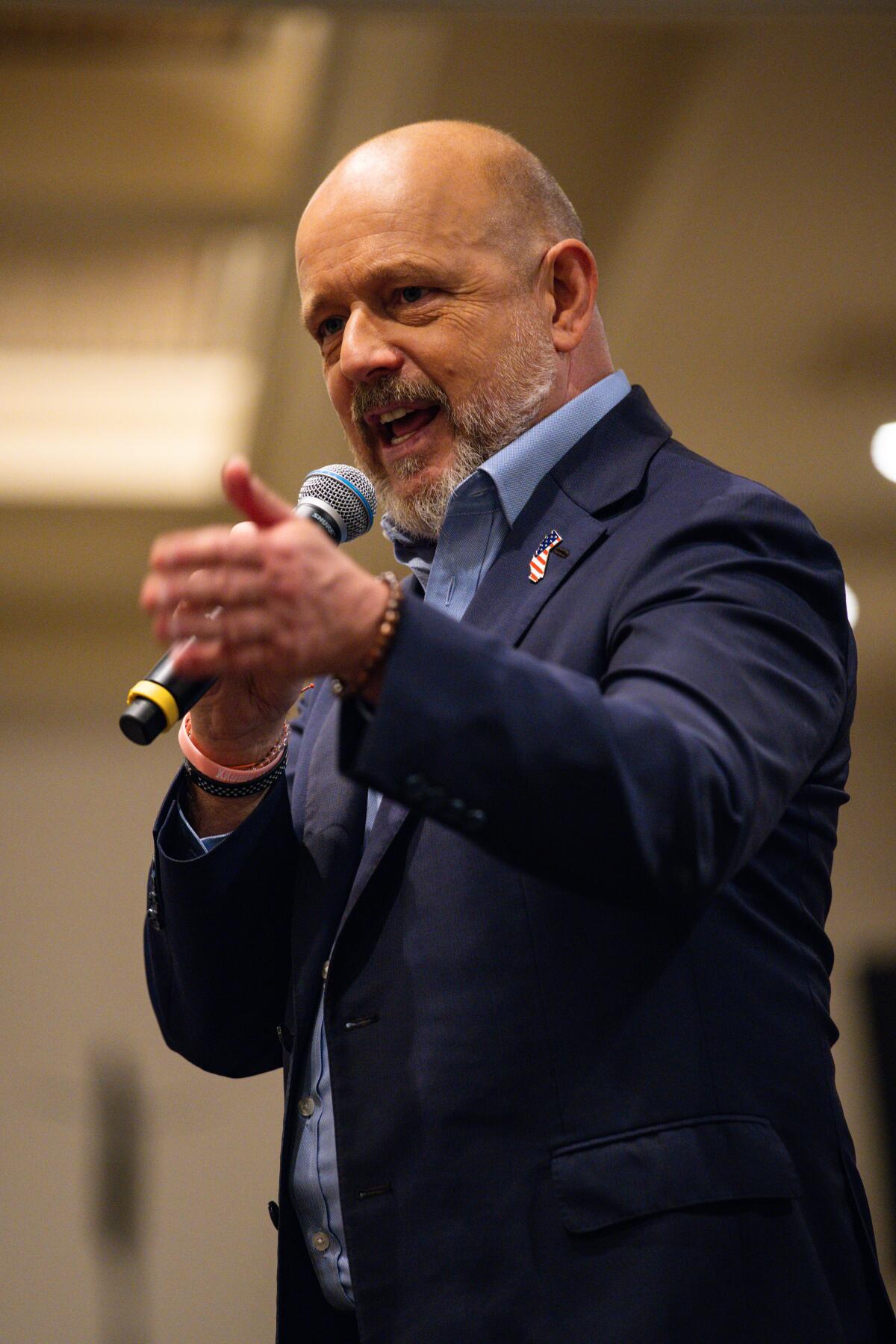
The poll has a margin of error of about 2 percent, though, meaning the results are not conclusive. There is also nearly five and a half months until the first round of voting on October 4.

Both Bolsonaro and Lula are well-known quantities in Brazil’s political sphere.

For the 80-year-old Lula, this year’s race will see him run for a fourth term in office. Previously, he served as president from 2003 to 2011, and then he ran again in 2022, defeating Senator Bolsonaro’s father, Jair Bolsonaro, the incumbent president that year.

The elder Bolsonaro is currently serving a 27-year prison sentence for attempting to subvert the results of that election.

The margins were tight in the 2022 run-off, and then-President Bolsonaro refused to concede defeat, instead suggesting that there were “malfunctions” in the electronic voting machines that favoured Lula.

His supporters took to the streets to protest his loss, blockading roads and attacking police headquarters in the capital, Brasilia.

The unrest culminated in an attack on January 8, 2023, against government buildings in the capital, which was seen as an attempt to trigger a military uprising against Lula’s leadership.

Former President Bolsonaro was later convicted in September 2024 of plotting to stay in power, with prosecutors presenting evidence that he and his allies explored options including calling a new election and assassinating Lula.

The former president has denied wrongdoing and accused his adversaries of a political witch-hunt.

In December, his eldest son, Flavio, 44, entered the 2026 presidential race with his father’s endorsement. He has suggested he would seek his father’s freedom as part of his campaign.

Earlier this year, Lula vetoed a bill that would have lowered Jair Bolsonaro’s prison sentence. He has denounced his predecessor’s actions as a coup attempt.

Source link