campaign ad

Taxpayers have funded nearly $1.5 milliom in pro-Trump ads. Criticism is mounting, including from the GOP

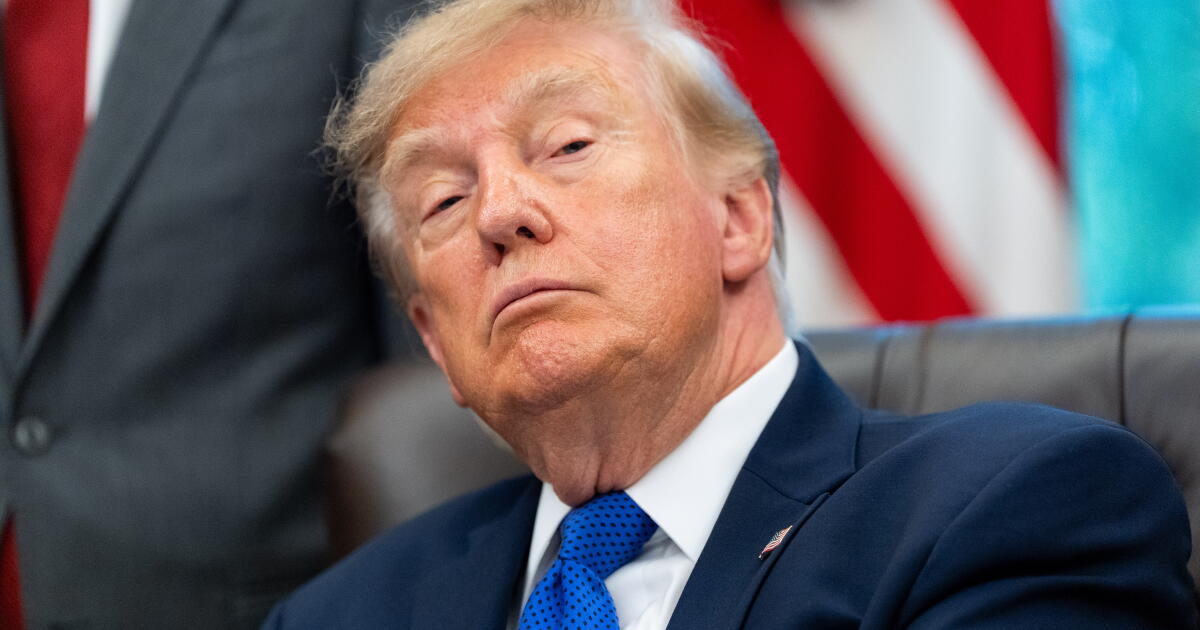
The White House has spent days fiercely defending three taxpayer-funded advertisements that glorify President Trump — approaching at least $1.5 million in public spending — calling them public service announcements.

“Don’t let the Fake News get away with their lies about our epic Public Service Announcements that have been running on tv,” White House communications director Steven Cheung posted on X on Sunday.

But the Republican administration’s ads attracted mounting criticism on Monday, including from members of Trump’s own party.

“It shouldn’t be paid for with taxpayer dollars,” Senate Majority Leader John Thune, R-S.D., told reporters.

“It would not have been something that I would have done. And I know that the White House is not covered by the same guidance that we are, but it’s not something that I would have done,” said Sen. Mike Rounds, another South Dakota Republican.

Multiple legal experts consulted by the Associated Press said the ads appear to run afoul of federal statutes, including a law against congressionally appropriated funds being used for “publicity or propaganda” and a law that limits the partisan political activities of government employees.

They said the new ads, which are airing on network and cable TV and streaming, differ from other administrations’ PSAs because they aren’t designed to help Americans access any specific program.

“You watch all three ads, they’re sheer propaganda,” said Richard Painter, a former White House ethics czar under Republican President George W. Bush. “This is increasingly looking like what authoritarian governments do to promote their leaders.”

The heightened scrutiny comes as the Trump administration has increased spending on the ads and bought time on popular TV shows, including college football and National Football League programming. It remains unclear which part of the government is supplying the funds.

With both chambers of Congress led by Republicans, any oversight would likely have to come from Trump’s allies, decreasing the likelihood of hearings or other accountability efforts before November’s midterm elections.

Three ads have aired in less than a week, totaling well over $1M

The first ad in the campaign, which began airing last Wednesday, features clips of Trump talking about defeating communism interspersed with onscreen text promoting the “largest tax cuts in history,” “reigniting American manufacturing” and a call to “defend law and order and police.”

Later in the week, a second ad began running, showing scenic videos of Mount Rushmore at night with quotes and clips from Trump’s Fourth of July weekend speech there honoring the country’s 250th anniversary.

The latest of the ads, a spot first aired over the weekend, is virtually identical to an ad for Trump’s Republican reelection campaign in 2024. It shows him walking down a hallway as his voice can be heard warning of a “final battle” against “globalists” and “warmongers.”

All three ads end with a message that says: “Paid for by the U.S. Government.” The White House hasn’t responded to inquiries about which part of the government is paying.

According to AdImpact, which tracks media spending, the spots have so far cost more than $1.4 million and run across a wide range of TV networks around the country. The actual amount spent could be significantly more, depending on whether networks classified the ad as a political ad.

The ads are different from past PSAs, experts say

In defending the campaign, the White House published a list of PSAs from recent Democratic and Republican administrations.

Among the examples it cited were Bush’s Republican administration touting a Medicare law, Barack Obama’s Democratic administration promoting Affordable Care Act subsidies and Joe Biden’s Democratic administration running ads promoting COVID-19 vaccinations.

“The announcements are very clearly not campaign ads; President Trump is not on the ballot and there is no call to action,” the White House wrote. “Instead, the announcements are a reminder for Americans to love their country and know why it’s worth defending — at home, at the border, and abroad.”

Kathleen Clark, a legal ethics professor at Washington University in St. Louis, said in her view the new ads differ from the examples the White House provided because they aren’t aimed at helping members of the public benefit from specific government programs.

“These ads are nothing more than government propaganda, aimed at helping Trump,” she said.

Painter, who joined the Bush administration after the Medicare PSAs went out, said that ad campaign toed the line on appropriateness because it included misleading information about Medicare Part D. But he said Trump’s campaign is a far more egregious violation of the statute that blocks congressionally appropriated money from being spent on publicity or propaganda.

“There’s nothing in here about a particular policy that’s at all focused,” Painter said of Trump’s ads. “One of them is just about the evils of the deep state. Another one of them is about communists and Marxists.”

In its support for the ads, the White House also referenced the administrations of President Woodrow Wilson and President Franklin D. Roosevelt, both of whom used posters, radio and film to rally the country during World Wars I and II.

James Kimble, a communication professor at Seton Hall University who studies domestic propaganda, said it’s true that Wilson’s Democratic administration used propaganda to rally Americans. But he said most Americans no longer view its actions in a positive light.

“By almost any objective measure, looking back, we find what they did pretty repulsive,” he said.

Skepticism of the campaign grows on the Hill

Top Democrats on the Senate and House appropriations committees last week wrote to the White House demanding the ads be taken down and requesting more information on how much money was spent to create and air them.

In the days since, more than a dozen Democrats and a handful of Republicans have spoken up to further criticize the ads. Senate Minority Leader Chuck Schumer called the latest ad “an absolute violation of what a democracy is supposed to look like.”

“Americans sat down to watch football, not to be force-fed Trump’s propaganda on their own dime,” he said in a Senate floor speech Monday.

Sen. John Kennedy, a Republican from Louisiana, said on CBS’s “Face the Nation” on Sunday that no public official should spend public money on private ads for themselves.

And Rep. Thomas Massie, a Kentucky Republican who lost his primary to a Trump-backed challenger, had his own harsh words for the administration on Monday.

“Don’t worry, using taxpayer dollars to run ominous campaign ads of the President has been done before and is completely legal… in banana republics,” he wrote in an X post.

The Republican chairs of the Senate and House appropriation committees didn’t respond to requests for comment.

Swenson writes for the Associated Press. AP writers Mary Clare Jalonick and Steven Sloan contributed to this report.
Source link

Trump refers to Black man from racist 1988 campaign ad while stumping in North Carolina

As President Trump tries to convince voters that Democrats have let crime run amok, he’s digging into the country’s political past to cite one of the most controversial campaign advertisements that relied heavily on racist tropes.

During a campaign stop Wednesday in Gastonia, N.C., to stump for Republican U.S. Senate candidate Michael Whatley, Trump resurrected a 1988 George H.W. Bush presidential campaign ad featuring Willie Horton, a Black man convicted of rape and assault after his release through a Massachusetts prison furlough program.

A grainy black-and-white prison photo of Horton was used in the ad targeting then-Massachusetts Gov. Michael Dukakis, who was ahead of Bush in the polls. On Wednesday, Trump evoked the Horton ad in an effort to convince voters Democratic former Gov. Roy Cooper, Whatley’s opponent in the Senate race, is soft on crime.

“Willie Horton was a bad guy, really bad guy,” Trump said, before comparing Dukakis’s release of Horton to the pretrial release of a Black man who faces a murder charge for last year’s killing of a white Ukrainian refugee in Charlotte, N.C.

But Cooper was not the governor when the man was released or when he was later charged with killing the refugee.

“Same thing as this, same as, same exact thing,” the president told the crowd in Gastonia.

It’s the second time Trump has invoked Willie Horton while campaigning for his party. Last month during a speech in Las Vegas, Trump called the Charlotte killing a “Willie Horton — modern day” tragedy.

“After the Willie Horton ad dropped, Bush established a lead in the polls and never looked back,” said Andra Gillespie, a political scientist at Emory University outside Atlanta. “They showed the picture, and you ascribed race onto it. It wasn’t sufficiently condemned as racism.”

A spokeswoman for the Republican National Committee, which organized the Gastonia campaign rally, defended Trump’s reference to Horton.

“Roy Cooper emptied prisons and released thousands of violent monsters onto North Carolina streets,” RNC National Press Secretary Natalie Baldassarre said in a statement to the Associated Press. “The results had deadly consequences, and every Democrat who supports abolishing or defunding the police, paroling criminals, and implementing lax bail policies will have to answer for their dangerous records in November.”

Trump paints North Carolina as a ‘dangerous state’

Wednesday’s rally cited the Aug. 22, 2025, killing of white 23-year-old Iryna Zarutska on a commuter train in Charlotte.

Decarlos Brown Jr., who is Black, faces murder and other charges in Zarutska’s stabbing, which was captured on video. Court records showed that at the time of the attack, Brown had 14 prior cases in Mecklenburg County, including serving five years for robbery with a dangerous weapon. Doctors had diagnosed him with schizophrenia.

Republicans and other influential voices in Trump’s Make America Great Again movement claimed the attack showed how Democratic elected leaders in large cities across the U.S. failed to protect residents, while some conservative commentators suggested Democrats were ignoring an unfounded “black-on-white” crime problem.

“He should have been locked up for many, many years,” Trump said Wednesday of Brown.

“Nobody used to think of North Carolina as a dangerous state, criminally dangerous,” Trump added while blaming Cooper. “It was apple pie, right? Now, it’s one of the most violent, one of the worst in the whole nation.”

According to 2024 FBI crime data, North Carolina ranked 19th for statewide violent-crime rates in a 50-state comparison.

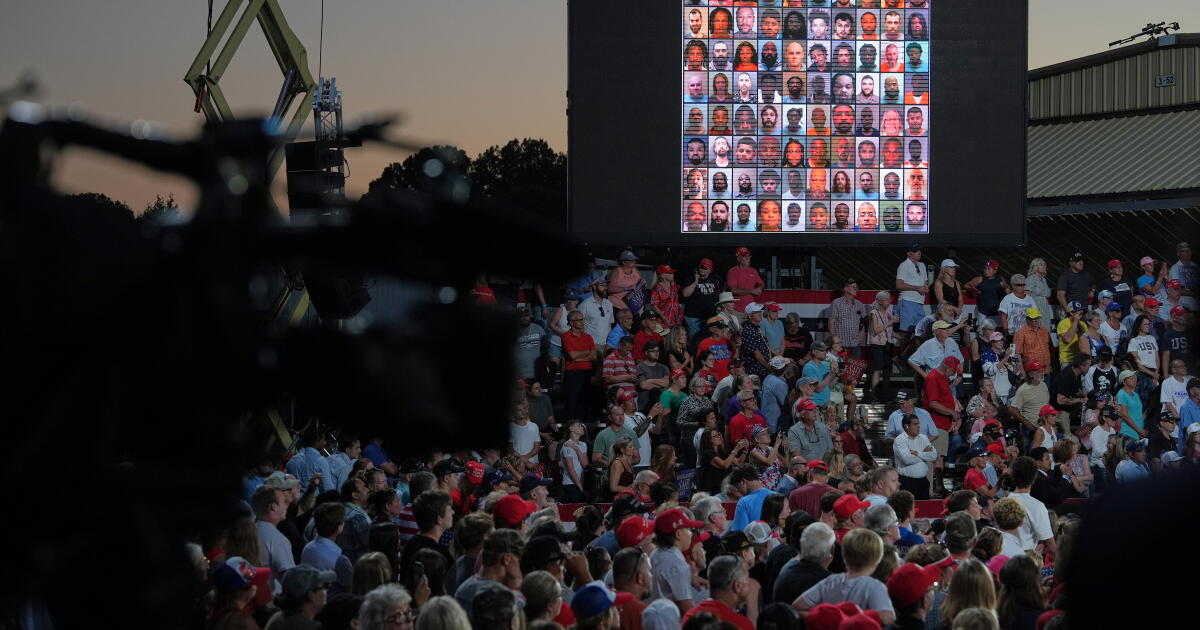
During the Gastonia rally, a mosaic of mug shots was displayed on a large screen for the crowd. Trump claimed Cooper had cut a deal with “radical activists” to release “some of the worst criminals in the nation into North Carolina.”

“He released these people. This is just a small group of them,” the president said, pointing to the mug shots that overwhelmingly featured Black people.

Although it is unclear under what circumstances the people in the mug shots were released, state corrections officials have said Brown was not released early from prison or under Cooper’s COVID-era prisoner-release settlement that Trump referenced.

Before fatally stabbing Zarutska, according to court records, Brown had been on a pretrial release over a misdemeanor offense that was ordered by a magistrate after Cooper left office.

‘Tapping into anger’

Republicans are under pressure to win over swayable voters as the November midterms approach with Democrats pushing to gain control of the House, the Senate, or both. Some political strategists say part of the ploy of adding Horton to the North Carolina Senate campaign is to rile up Trump’s base.

“He’s tapping into the anger to remind Republican voters of what he thinks their first principles are in hopes that will be successful for Republican candidates,” Gillespie said.

“He’s doing this to try and divert attention away from criticism of how he’s governing at the moment,” she added. “Democrats want to make the story of this election Trump’s low approval numbers, the war in Iran, inflation, being preoccupied with things that don’t make a whole lot of sense when there are really serious things going on in the country.”

Dewey Clayton, professor emeritus of political science at the University of Louisville, said Trump and other Republicans may be thinking that what worked before in the 2016 and 2024 elections presumably will work again in this year’s midterms.

“It was very effective,” Clayton said. “You do not necessarily have to look at it as racial, in and of itself, although [race] clearly becomes a component. In 2026, talking about ads going back in the 1980s? I’m sure he had consultants that were basically saying this is tried and true.”

The GOP may need the push in November, Gillespie warns. “I think the motivation by going back to these old strategies is there is real concern about Republican enthusiasm and you might see lower Republican turnout,” she said.

Rhetoric attempts to divert voters’ attention from rising costs

The tactic speaks to desperation by Trump and the Whatley campaign, according to Morgan Jackson, a partner with Nexus Strategies in Raleigh.

“Trump brings up Willie Horton to stoke racial division, something he’s used for the last 10 years,” said Jackson, who is chief strategist for Cooper’s campaign. “It is very clear from the president’s speech last night their only goal is to sow division and hate and lies. Michael Whatley doubles down in support of that effort.”

Jackson also said Trump and Whatley are trying to change the election’s message of “rising inflation and the cost of everything.”

“They want to use inflammatory rhetoric, hate speech and lies to sow division in a chance to win an election,” he said. “By referencing Willie Horton, they are showing their hand very clearly.”

The AP sent an email Thursday seeking comment from Whatley’s Senate campaign.

Williams writes for the Associated Press. Williams reported from Detroit. AP videojournalist Erik Verduzco in Gastonia, N.C., contributed to this report.

Source link

Trump references dropped from GOP Rep. Young Kim’s reelection website

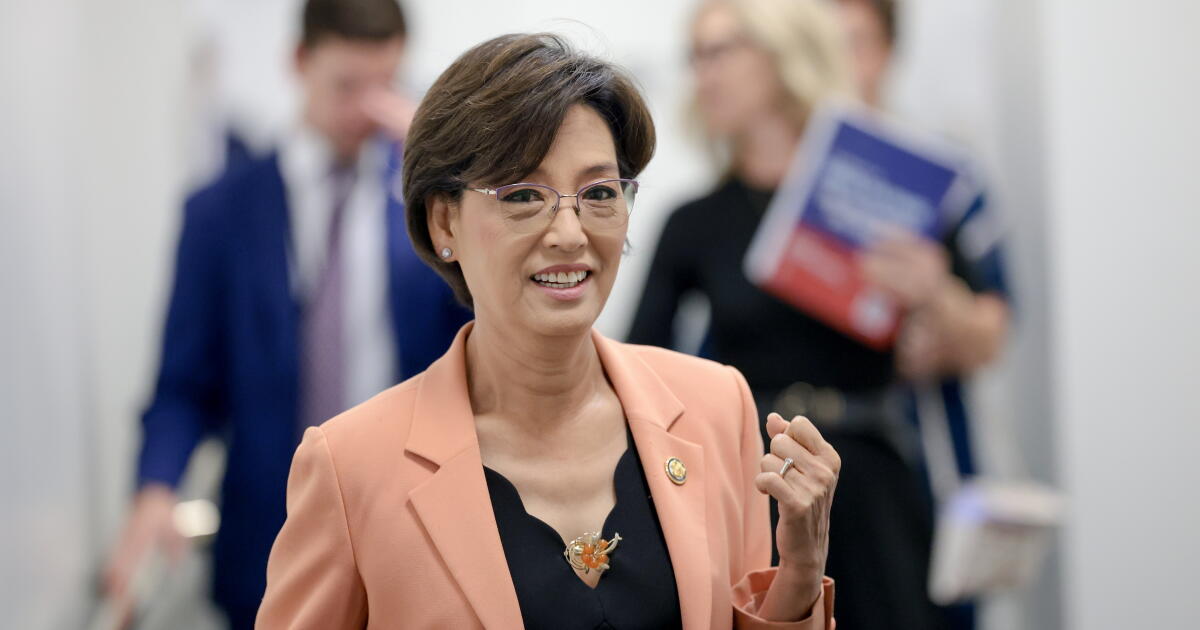
Fighting for reelection, Orange County Rep. Young Kim has removed several references to President Trump from her campaign website as she tries to broaden her appeal to voters in a race against fellow Republican Rep. Ken Calvert.

The two are locked in a brutal intra-party fight over one of the only safe districts left for Republicans in Southern California after voters approved a new congressional district boundaries last year.

Throughout the primary, both Republicans used campaign ads and mailers to play up their support for Trump and court GOP voters. But as the general election approaches, both candidates are diminishing the president’s presence in their messaging by varying degrees.

Until recently, a banner on the homepage of Kim’s website described her as a “Proven Fighter” who would “Stand with President Trump to deliver a bold America First Agenda,” according to archived versions of the site.

As of this week, the banner said the Congresswoman is “taking on Career Politicians to Restore the American Dream.” Previous references to Trump and “America First” have been removed from the website’s homepage and Kim’s biography. The changes were first reported by Politico.

An “Issues” page that highlighted her positions on red meat topics such as “Standing with President Trump to Save America,” “Protecting Election Integrity” and “Fixing Bidenflation” has been taken down.

Kim’s campaign pushed back on the notion that she is distancing herself from Trump, calling it “completely absurd.”

“Our campaign has consistently framed this race as a choice between an effective leader like Young Kim, who has delivered results in less than three terms in Congress, and Ken Calvert, whose career has been plagued by corruption controversies and FBI investigations,” said Kim campaign spokesman Chris Pack. “Calvert incessantly complains about Washington getting nothing done, seemingly oblivious to the fact that after nearly 40 years, he has become Washington.”

The new 40th congressional district, reconfigured under Proposition 50 approved by California voters in 2025, packs many of the region’s Republican voters into a district which includes inland Orange County and portions of San Bernardino and Riverside counties.

While 40% of the registered voters in the district are Republican, 31% are Democrats and 21% declared themselves to be “no party preference,” according to the Secretary of State’s latest report.

The new map carved the district held by Calvert, a Corona Republican and 33-year fixture in Congress, into three different pieces. Democrats redrew the map in an attempt to oust up to five Republicans and cancel out GOP-led gerrymandering in Texas. Kim, who is from Anaheim Hills, and Calvert advanced from the primary election over several Democrats and an independent candidate and will face off in the Nov. 3 general election.

Calvert continues to emphasize his close ties to Trump. His campaign homepage features a video with shots of him shaking Trump’s hand and interacting with him in the Oval Office.

Calvert’s campaign criticized Kim for scrubbing Trump from her website and at other times keeping the president at arm’s length.

“Young Kim can delete Trump from her website, but she’ll never be able to erase the fact that she is a complete and total fraud who will say anything if she thinks it will help her keep her job,” said Calvert campaign spokesman Calvin Moore.

“Young Kim has had every opinion on Trump imaginable from trying to censure him to claiming she’s 100% with him, to promising to kick his butt, then trying to lick his boots in the primary. It’s insulting to voters’ intelligence that she thinks voters won’t see right through it,” he said.

Calvert’s PAC, Americans 4 Security, has also changed messaging on its mailers. Before the primary, it sent over a dozen mailers attacking Kim for “blocking the Trump agenda” and “running from her anti-Trump record.”

Two recent mailers sent by the PAC contrast Calvert’s record with Kim’s and make no mention of Trump.

The post-primary messaging shifts weren’t a surprise to Matt Klink, a Republican political strategist.

“Through targeting, you look at Democrats and decline to state voters, and you soften your message to focus on things that they care about. That’s not changing their position, it’s just effective campaigning,” he said.

But personally, Calvert has continued to embrace the president. His campaign confirmed Calvert is attending an unconventional midterm Republican convention in Dallas, Texas. Trump is scheduled to give keynote speeches both nights.

Kim skipped the GOP convention in favor of meetings with constituents and a human trafficking task force, and to attend 9/11 events, according to her campaign.

“Calvert being with Trump, he’s helping to create that enthusiasm around his campaign,” Klink said. By skipping the convention, “Young Kim is signaling, ‘I may be a Republican, but I care about the district, too.’ It’s a good contrast.”

Source link