california coast

It’s time to rethink our relationship with the California coast

If you’d like to live near the water along the spectacular California coast at some point in your life, you have a number of options.

You can settle in, say, Culver City, which is several miles inland, and wait for rising tides to arrive.

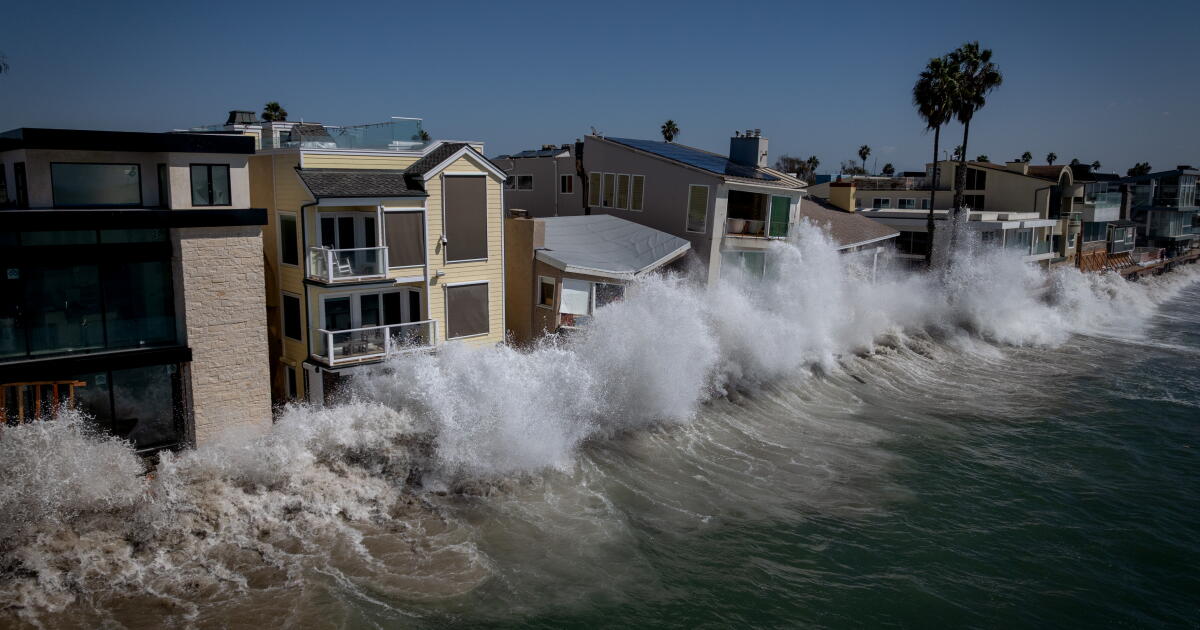
Or, if you just can’t wait that long, I saw a listing you might be interested in. It’s in Capitola, near Santa Cruz, right next to the wharf. The three bedroom, two bath, 1,850-square-foot condo, one of a string of Venetian, pastel beachfront homes, is listed for $3,995,000.

“The beach is your backyard, the cool ocean is your pool,” says the promo.

Given what’s happening right now along the California coast, you might not have to leave that condo to go for a swim. But UC Santa Cruz oceanographer and geologist Gary Griggs, who has seen the thrashing of that row of homes in previous years, is not going to make an offer.

“I’ve got a number of photos,” he said, “that show waves breaking over the top.”

Someone will buy the place, eventually, despite the chance of it becoming a fish tank. California is flush with dumb money and bad judgment, and an insatiable romance with an epic 1,200-mile shoreline.

But it’s time to rethink the relationship.

Last weekend in Long Beach I said a few words at the 50th anniversary of the California Coastal Act, which has kept our shoreline from looking like Atlantic City or Miami Beach by balancing sensible development with conservation and public access.

“The coast is never saved, it’s always being saved,” I said at the 50th, borrowing as I often do from the late Peter Douglas, hammering home the need for constant stewardship, from one generation to the next.

But in an ironic twist, part of the parking lot was underwater, a tractor had raised a berm to hold back the ocean, and just to the south, homes were being thrashed by waves. The coast wasn’t being saved, it was being reclaimed by the sea.

From there I headed south for a friend’s planned birthday party on the sand in Newport Beach, but city streets had been flooded and beaches were closed. The party was moved indoors.

We have not seen the worst of it, with a fall forecast that includes the possibility of an epic Super El Niño that could coincide with king tides, Kelvin waves and a peak lunar nodal cycle, all of which my colleague Rosanna Xia laid out a couple of days ago.

It’s not going to rain hammerheads and sea horses, I don’t think, but coastal destruction could be dramatic.

“We’re likely going to break a number of water level records,” said Timu Gallien of the UCLA Coastal Flood Lab. “It’s not implausible to see some of the piers wiped out, or breakwaters or jetties.”

“This is a glimpse of our future,” said former California Coastal Commission Director Jack Ainsworth. “This is it. It’s here.”

Some low-lying communities have been warned for years to prepare for rising sea levels, Ainsworth said, but have put off the inevitable.

In some areas, the only sane maneuver is what’s called “managed retreat,” meaning relocation of structures farther inland. But that is fraught with legal and political challenges and resistance.

Look, if you want to live on the sand and can afford to do so, good for you. But the general public should not be on the hook for your losses. Along the entire coast, public infrastructure that we all benefit from is under threat, including roadways, parks and railroad tracks, and that’s where any public investment ought to go.

Among the tools available are sand berms, cobble berms (sand on top of small stones), jetties, dredging and relocating sand, and below-surface breakwaters. Living shorelines, such as those along the Orange and San Diego county coasts, involve piling sand atop boulders or smaller stones and covering the berms with vegetation.

But these projects don’t happen overnight, Gallien said. “Right now we’re seeing reactive responses. OK, let’s throw up some sandbags and plywood.”

Kelsey Ducklow, coastal resilience director for the Coastal Commission, said the agency has awarded millions in grants for local planners to study the threat to their communities and come up with plans. Some locales are further along than others, Ducklow said, but there’s no single strategy that will work everywhere, and one typical response is, “Yeah, we know we need to do something. But where’s the money to do it?”

The three choices we have are mitigation, adaptation and suffering, Griggs said. We’re likely to do some of each, but on the mitigation end of things, sea walls, rock revetments and armored cliffs are temporary fixes.

“In the long run, there’s nothing we can do to hold back the Pacific Ocean,” said Griggs, 83, who has been teaching for 59 years. “Everything we do is a Band-Aid, and comes with different price tags and lifespans.”

Griggs was featured in Xia’s award-winning book “California Against the Sea: Visions for Our Vanishing Coastline,” which explores the impact of sea level rise and community responses that range from denial to respectful intervention.

Precious ecosystems are under threat, Xia wrote, “trapped between rising water on one side, pavement on the other.” And multiple Southern California beaches that are “so deeply tied to the state’s heart and soul” could be lost.

I asked Xia what she thought about the rising threat this year.

“So many people think about the coast as a place — a place that doesn’t move,” she said. “But the coast in reality is a living dynamic process that changes every time a wave crashes ashore. That’s the heart of the issue — we’re fundamentally trying to impose permanence onto a space that is meant to be constantly changing.”

We haven’t been the best stewards of the planet, and maybe what’s happening now is a bit of a reckoning. From the first time I saw the California coast as a young lad on vacation from the hot interior, I think I understood that the truest way to love the sea was to fear and respect it.

I now have more fear and more respect.

And maybe, too, a deeper love.

steve.lopez@latimes.com
Source link

Major expansion planned for Sea Ranch Lodge along the Sonoma Coast

The Sea Ranch Lodge, a focal point of a Northern California getaway destination that blends minimalist design with the rocky shores and meadows of the Sonoma County coastline, might have a growth spurt in its future.

Owners of the Lodge at Sea Ranch, which includes 17 hotel rooms, on Sept. 3 presented neighbors in the closely restricted community with plans that include 23 added guest rooms, a dining courtyard, a new dining space, a library and a “space for relaxation and movement.”

The Danish architecture firm BIG: Bjarke Ingels Group and San Francisco-based landscape architects Lutsko Associates are part of these plans. To become reality, however, those plans need to win design approval and permits from the Sea Ranch Assn. (which includes the lodge and surrounding homes) and Sonoma County.

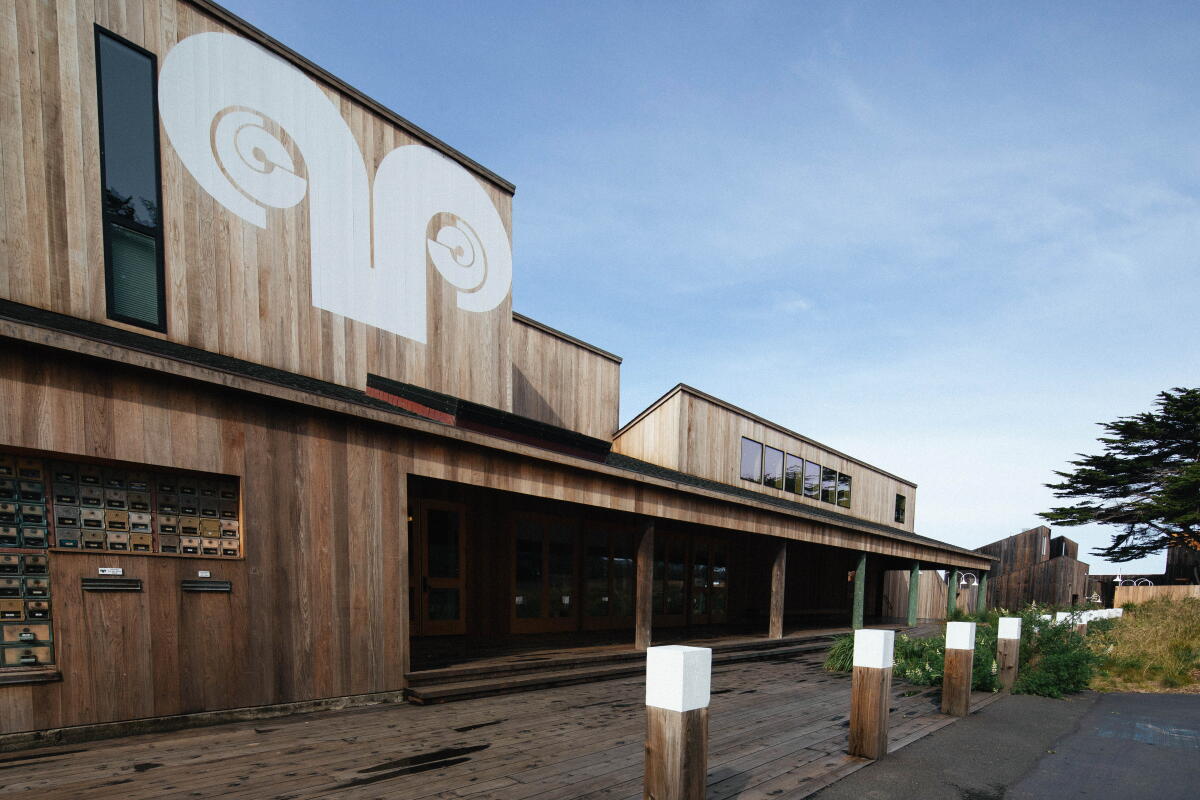
The ram's horns at the Sea Ranch Lodge.

The ram’s horns at the Sea Ranch Lodge were designed by artist Barbara Stauffacher Solomon.

(Myung J. Chun / Los Angeles Times)

The current owners of the lodge took over in 2018, completed a major renovation in 2023 and wish “to remain private,” a representative said. The Wall Street Journal has reported that the investors’ group includes San Francisco-based brothers Patrick and John Collison, who founded the tech company Stripe; venture capitalist Robin Chan; and Twitch co-founder Justin Kan.

The 53-acre lodge property is only one piece of the Sea Ranch puzzle. The surrounding development, which broke ground in 1964, includes about 2,200 homes and lots on roughly 7,000 acres, all subject to strict design standards enforced by the Sea Ranch Assn.

The homes, mostly clad in wooden exteriors, none more than two stories high, are scattered along 10 miles of coastline about 100 miles north of San Francisco. The nearest town is Gualala, about six miles north.

Rooms at the Sea Ranch Lodge often rent for $600 nightly or more. Many visitors rent neighboring Sea Ranch homes from Airbnb, Vrbo or local companies including Gualala-based Sea Ranch Rentals and Sea Ranch Escape. In fall, rental rates for homes often start around $400 nightly.

Widely praised as an model for environmentally sensitive building, the development sparked a years-long legal battle over public access to the coast. The result is a combination of private and public access: Six public-access trails cross Sea Ranch to on their way to the shoreline, while Sea Ranch residents retain access to several private beaches.

An ocean view along the trails at The Sea Ranch Lodge.

An ocean view along the trails at the Sea Ranch Lodge.

(Myung J. Chun / Los Angeles Times)

Source link

We don’t need AI to threaten humanity. We got Trump’s climate policies

You need a boost, right?

We’re living under a dark cloud, with a steady downpour of graft, thuggery and baloney.

There’s the raffling of presidential pardons and the attacks on reporters for doing their jobs, the clownish trade war with Canada, the bungled disaster in Iran, the petty obsessions with the ballroom and the Kennedy Center, the hogwash about a stolen election, the attacks on immigrants and the shameless presidential profiteering while working people suffer the cost of Trump’s countless broken promises.

I could go on, and I will. But rest assured, I have not forgotten about the boost I promised.

For all the affronts, nothing strikes me as more sinister than the Trump administration’s ambitious assault on the planet. Despite nearly daily headlines about the global calamity of overheated oceans, melting glaciers, stark weather transformations and species extinction, Trump keeps shoveling more coal onto a fire that will rage long after he’s dead and gone.

He’s gutted environmental protections and scientific research and dismantled clean energy initiatives. Now his administration is rolling back limits on power plant emissions, attempting to open the California coast to more oil drilling and sabotaging the state’s ambitious goals on emission controls and electric vehicle conversion.

We don’t need AI to threaten the future of humanity. We’ve got Trump.

It’s tempting to duck under the covers and wait for the nightmare to end, but the good news is that a lot of people are standing up rather than rolling over, rebelling against the ignorance and callous disregard that threatens our most precious and fragile shared inheritance.

In August, hundreds showed up to defend California’s authority to govern its own coast at a Santa Monica hearing of the National Oceanic and Atmospheric Agency, and 18,000 more people filed comments online.

The rollback of environmental safeguards is, for many, a call to arms.

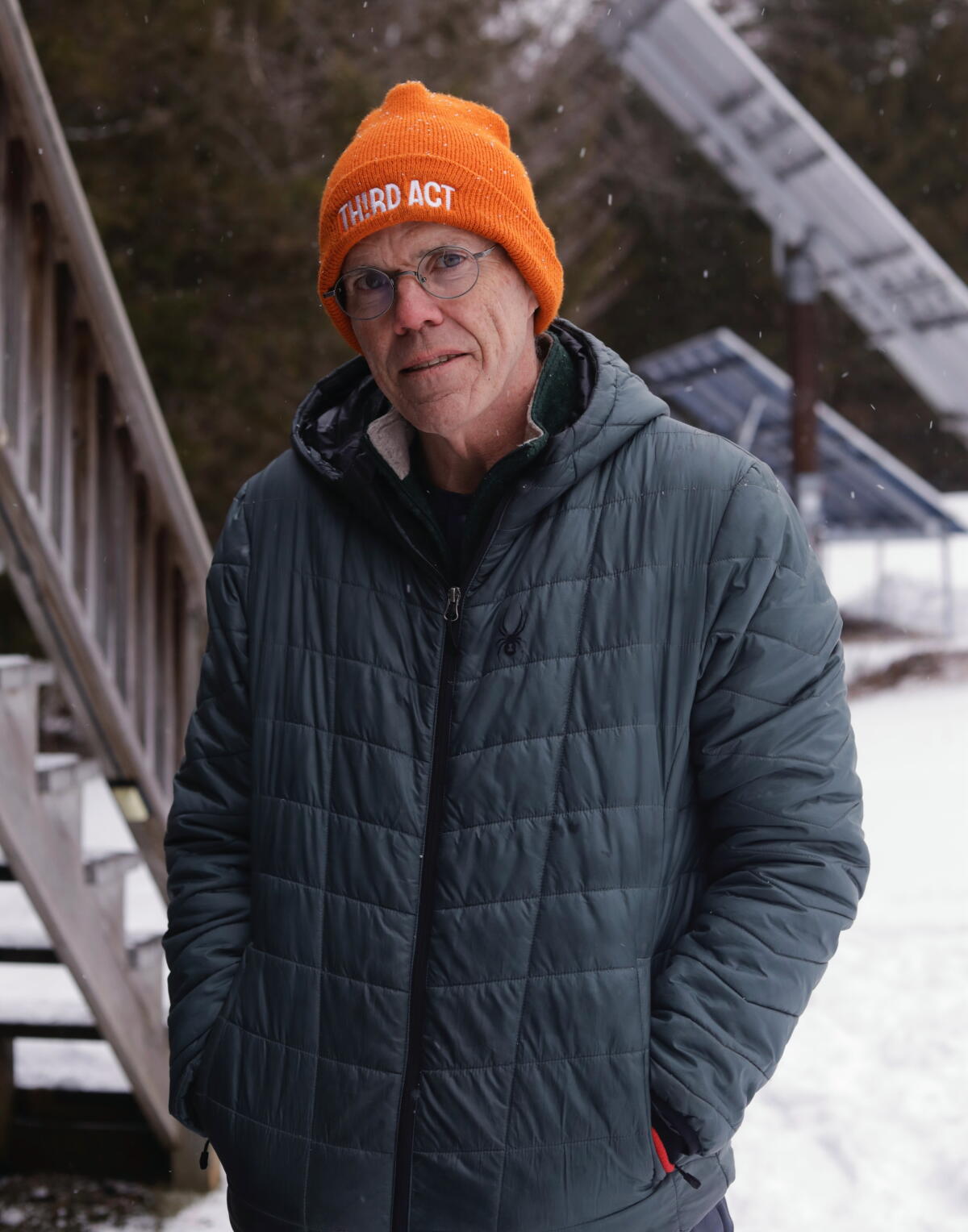
“Yes, I am discouraged. … But I am not despairing,” said Bill McKibben, an author and environmental activist who is organizing a worldwide event called Sun Day for next year to promote clean energy. “We’re reacting to multiple crises, and we’re led by a pack of fools, so why would anybody not stand up?”

McKibben launched a national movement five years ago called Third Act, and tens of thousands of people 60 and older have signed on to advocate for climate action, voting rights and civic participation. Third Act now operates in about 30 states, with a robust chapter in Southern California.

Former Times reporter Zan Dubin has worked as both a volunteer and a paid communications consultant for Third Act, and I asked her what someone could expect to do if they became a member of Third Act/SoCal.

Environmentalist and author Bill McKibben is organizing a worldwide event called Sun Day next year to promote clean energy.

Environmentalist and author Bill McKibben is organizing a worldwide event called Sun Day next year to promote clean energy.

(Amanda Swinhart / Associated Press)

“We do it all,” Dubin said, from promoting climate-friendly candidates to running phone banks and testifying at public meetings. She said Third Act co-sponsors protests at Dodger Stadium, and she and others planned to meet at Vin Scully Avenue and Stadium Way for Sunday’s game against the San Francisco Giants. They want the Dodgers to stop doing business with Big Oil and bench their sponsorship deal with Phillips 66.

She also called out Disneyland for its exhaust-spewing Autopia attraction, along with former Times climate columnist Sammy Roth, and Disneyland responded by announcing in 2024 that it was switching to electric cars beginning in 2027.

Dubin, co-founder of National Drive Electric Week, said 170 volunteer-led events were being held nationwide over the next month to promote EVs, and she was leading one Friday in Irvine.

“Action is absolutely the antidote to despair,” Dubin said. “I find that despite the onslaught of these horrifying headlines … taking action invigorates me.”

Claremont resident Margaret Davis knows that feeling. She emailed me in 2023, prior to participating in a Third Act event, and said many retirees have time on their hands, which puts them in a powerful position.

“The climate crisis is the greatest existential threat humans have ever faced, hence we live in a time when we can make the greatest change for the better,” Davis wrote at the time.

When I called her a few days ago, Davis told me she’s now a member of Senior Stewards Acting for the Environment. She lives at Pilgrim Place — a senior community with a focus on justice, peace and environment — where residents meet regularly to study, discuss and advocate for sustainability, biodiversity and environmental causes.

“When I was in college in 1970, we had the antiwar movement and that was the first year of Earth Day,” Davis said. “At the time, I thought Earth Day was just a distraction from what was going on in the world.”

Later, she said, “I came to realize it was the biggest issue of all time.”

Climate activist Sim Bilal stands next to pumps at an oil field in Los Angeles in 2024.

Climate activist Sim Bilal stands next to pumps at an oil field in Los Angeles in 2024.

(Allen J. Schaben/Los Angeles Times)

Like Davis, I went to college in the ‘70s, and there’s no denying that our aggressively consumptive generation played a key role in manufacturing a crisis for our children and grandchildren. We’ve got matches in our hands and smoke on the horizon, and if we’re honest with ourselves, we’d see atonement not as a hobby, but as a duty.

As for the next generation, climate activist Sim Bilal, 24, said he too shares the sense that this is both a wickedly frightening time and a moment of opportunity.

“In the last month, we’ve gotten more young people involved,” said Bilal, executive director of Youth Climate Stewards 4 Local Action. “We usually have to reach out to them, but so many people have been wanting to get involved, and they’re so eager, and that’s been affirming for me. The policies are depressing, but the fact that people are reenergized and want to fight back is really exciting.”

Bilal said faith in politics, government and corporations is not high among his peers, but he’s trying to grow a network of young people to cultivate and support future leaders.

“A mentor told me there are two kinds of power — organized people, and organized money,” said Bilal, whose activism began when his grandmother died and he began wondering if her cancer, and global warming, were connected to the oil drilling in his South L.A. neighborhood. “We don’t have the money, but a lot of the work we do is political and civic education, demystifying power, and making people understand they have agency.”

You needed a boost, right?

There you go.

Whatever your age, do not despair.

Get off the chair.

steve.lopez@latimes.com

Source link