Business and Economy

Iran conflict: Why has oil stayed near $100 a barrel? | US-Israel war on Iran

The worst-case oil scenario has been avoided, but inflation and slower growth continue to weigh on the global economy.

More than 100 days into the Iran conflict, 20 percent of the world’s energy flows remain disrupted, with the scenario described as the biggest supply shock in history.

For now, the nightmare scenario has been avoided. Oil prices are still at approximately $100 a barrel.

Many analysts have warned that a prolonged disruption to the Strait of Hormuz could send oil above $200 a barrel, triggering a global economic crisis.

Various countries have released their strategic reserves, exporters have found alternative routes and weaker demand has helped contain prices. But the buffers are thinning.

The Organisation for Economic Co-operation and Development (OECD) warns the economic impact could linger well into 2027, even if the conflict ends tomorrow.

Source link

India’s fertility rate falls below replacement level: Why it matters | Demographics News

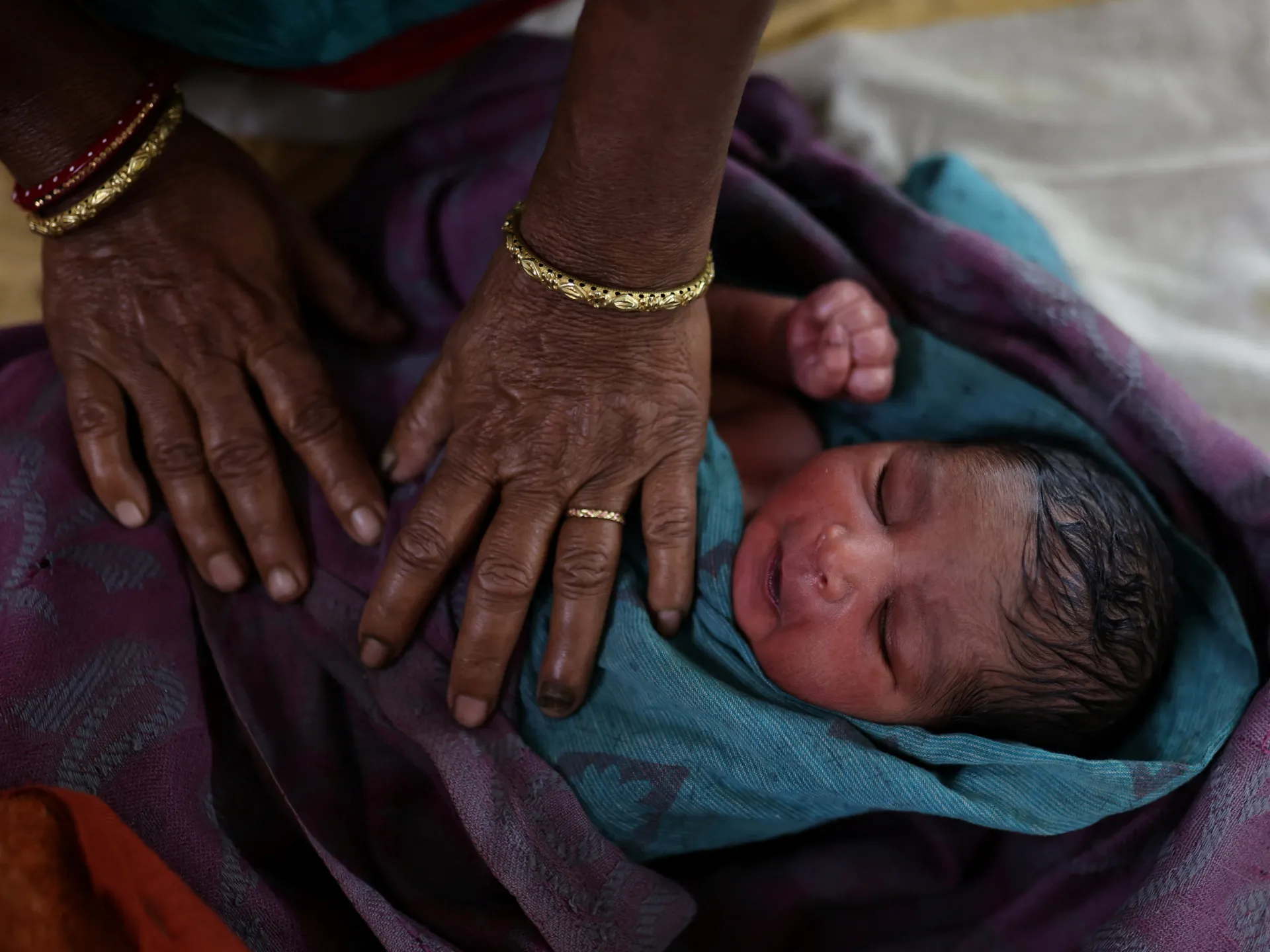
India’s fertility rate has for the first time fallen below the level needed to stop the population from shrinking, raising concerns about future labour shortages and an ageing society.

For decades, India has seen rapid population growth. According to government statistics, including the Sample Registration System (SRS) Statistical Report — the country’s largest demographic survey — India has had a falling fertility rate for some years, but the reproduction rate remained high enough to keep the population growing.

Recommended Stories

list of 3 itemsend of list

The latest SRS report, released last month by India’s Office of the Registrar General and Census Commissioner, said that India’s Total Fertility Rate (TFR) had dropped to 1.9 children per woman – lower than the benchmark level of 2.1 needed to keep the population stable in the long run. TFR is the average number of children that a woman is expected to have in her lifetime. In the 2000s, India’s TFR was around 3.3 births per woman.

So, what is behind reduced fertility? Why does it matter and what are the consequences?

Here’s what we know:

What has led to the falling fertility rate ?

For decades starting in the 1970s, Indian governments and policymakers have tried to battle what they argued was overpopulation — too many people, and too few resources to manage for what was then a relatively poor nation.

Many top-down government initiatives — including a brief controversial effort to forcibly sterilise people in the 1970s — aimed to control India’s population.

Despite that, by 2019, India’s Prime Minister Narendra Modi was still warning of a “population explosion”.

But by 2022, the first signs that India was about to tip over into uncharted territory: The National Family Health Survey released data suggesting that India’s TFR was falling fast, across communities. Yet a year later, India surpassed China to become the world’s most populous nation — and the trend of a declining fertility rate was swamped by the headlines of a 1.5 billion population.

Now, latest survey suggests that the prospect of a shrinking population might be more imminent than policymakers had planned for.

Experts say better access to education and contraceptives are among key factors behind the falling fertility rate — along with the increased costs of bringing up children.

“Total fertility rate often drops when more women in society have access to education, contraceptives and more agency in decision-making in households,”  Dipa Sinha, a development economist who works on social policy in India, told Al Jazeera. “It also drops when the economy becomes expensive so raising children also becomes expensive.”

She said there’s another reason too.

As infant mortality reduces, the desire to have more children also decreases. According to the latest SRS report, India has recorded a significant decline in infant deaths from 30 per 1,000 live births in 2019 to 24 deaths per 1,000 live births in 2024.

These factors also correlate almost perfectly with the differential levels of fertility rates across the country.

According to the May demographic survey report, India’s poorest states, such as Bihar in northern India with the lowest levels of education and high infant mortality rates, also recorded the highest fertility rate in the country at 2.9, followed by 2.6 in Uttar Pradesh.

By contrast, India’s capital New Delhi — with among the highest levels of education and lowest infant mortality rates — registered the lowest fertility rate, with an average of 1.2 births per woman. Southern states such as Tamil Nadu and Kerala, with among the best health and education systems in India, recorded a rate of 1.3.

“A lot of studies on regional development in India from the early 80s have revealed that states in the South have developed faster with respect to both the economy and women’s status in society. So these reasons have contributed to the lower fertility rate,” Sinha said.

What are the consequences of a falling fertility rate?

In 2005, India’s population entered a stage called ‘demographic dividend’, a phase when the proportion of a country’s working age population (15-64 years) is higher than the number of old people and children who are not in the labour force. According to the UNFPA, India’s demographic dividend is expected to last until 2055.

Japan, Singapore and Hong Kong entered this phase in the 1960s and rapidly became developed economies. China entered this phase in the 1980s and — coupled with economic reforms — rapidly rose as an economy. Today it’s the world’s second-largest economy.

In India too, the demographic dividend has helped propel the economy. But millions remain unemployed and — as with China — India is far from a developed economy.

Now, with a declining fertility rate, India might not be able to reap the benefits of a demographic dividend, experts are cautioning, because of a shrinking workforce and a rapidly ageing population.

“If there are fewer children born, then in about 30 to 40 years, India will have more older people who cannot participate in the labour force as much, posing a challenge to the country’s workforce,”  Sinha said.

What is the politics behind India’s population data?

The widely varying fertility rates in different parts of the country mean that northern states — which already have higher populations — will in coming years be home to an ever-increasing share of India’s population.

Southern states have already in recent years been complaining that the Indian federal government — especially under Modi — are being “punished” with fewer funds, Sinha said. Modi’s Bharatiya Janata Party (BJP) has historically struggled to make major political inroads in southern India, though it has made gains in recent years.

Now, “the distribution of financial resources by the country’s government to state governments” could become an even bigger political flashpoint, she suggested. Later this year, India’s government will introduce a policy in parliament called “delimitation”, which will assign seats to each state according to population figures based on the subcontinent’s new census that began earlier this year and conclude in 2027.

“When delimitation comes into effect, there is a fear that the share of southern seats in the Parliament will reduce,” Sinha added.

Moreover, India’s ruling BJP has long stirred the stereotype that Muslims in India are producing more children than Hindus — fanning fears among Hindus that Muslims might some day overtake them as the majority faith in India. The Hindu far-right has been urging Hindus to have more kids. In February, Rashtriya Swayamsevak Sangh (RSS) chief, Mohan Bhagwat, urged Hindu couples to have at least three to four children to prevent the community’s long-term societal decline.

In reality, the Muslim population of India was 13 percent in the last census in 2011. Government data shows that the Muslim fertility rate has been falling faster than in any other religious group, India, including Hindus. The fertility rate among Muslims fell from 4.41 to 2.36 between 1992 and 2021, while it dropped from 3.3 to 1.94 for Hindus.

The latest survey further suggests that India’s fertility rate is falling sharply across faiths.

Is India responding to its declining fertility rate?

While the Indian government has not yet announced a nationwide policy to tackle its falling fertility rate, individual states have been trying to encourage people to have more children.

Last month, the southern Indian state of Andhra Pradesh said families will receive 30,000 rupees ($314) for the birth of a third child and 40,000 for a fourth child ($418). According to the SRS data, Andhra Pradesh’s total fertility rate is 1.4.

States such as Goa in the west and Karnataka and Telangana in the south have introduced state-funded IVF centres for first-time parents, encouraging people to have more children.

Sinha said the Indian government should respect people’s individual reproductive choices and support them.

“It is important for countries like India to develop a public policy based on its demographic structure and future needs. So if we are going to be an ageing population, then we have to be ready to help a lot of old people,” she said. The country needs “a policy now which guarantees that they have better healthcare, pensions and social security in old age”.

Which other countries in Asia have seen dramatic fertility rate declines?

Other Asian countries such as China, Taiwan and South Korea are also experiencing fast-falling fertility rates.

According to the World Bank, China’s 1.0 fertility rate is well below the 2.1 replacement level.

Taiwan’s interior ministry said earlier this year that its total fertility rate is around 0.86 and likely to fall below that.

The United Nations says South Korea’s rate is approximately 0.75 children per woman – the lowest worldwide.

Source link

US lists China’s BYD, Alibaba, Baidu as ‘Chinese military companies’ | Military News

Chinese embassy in Washington, DC, condemns designation, calling it ‘discriminatory’.

The United States has designated Chinese corporate giants Alibaba, BYD and Baidu as companies that support China’s military, expanding its blacklist to some of the country’s best-known commercial brands.

The Pentagon included the firms in an update on Monday that is likely to complicate the fragile detente under way between Washington and Beijing after years of rocky relations.

Recommended Stories

list of 4 itemsend of list

China’s embassy in Washington, DC, condemned the listing as “discriminatory” and an example of the US government “overstretching” the concept of national security.

“Chinese companies that do business overseas have been strictly observing laws and regulations of their host countries,” an embassy spokesperson said.

“The US should stop its wrong practice and create a fair, just and non-discriminatory environment for Chinese companies.”

Alibaba, BYD and Baidu did not immediately respond to requests for comment.

The Pentagon’s list of “Chinese military companies,” which is updated annually, now includes 188 firms, up from 134 in 2025.

Firms included on the list, which was created in 2021, will be barred from consideration for US defence contracts from later this month.

The Pentagon defines “Chinese military companies” as entities owned or controlled by the Chinese military, or that contribute to China’s “military civil fusion”, referring to Beijing’s strategy of melding civilian and defence-related research and innovation.

Companies must also carry out some of their operations in the US to be designated.

The expansion of the blacklist comes less than a month after US President Donald Trump met Chinese leader Xi Jinping in Beijing for a two-day summit aimed at lowering the temperature in their countries’ years-long trade war and tech rivalry.

Alibaba, Baidu, and BYD are among China’s most prominent brands, claiming the top spots in the e-commerce, internet search and electric vehicle markets, respectively.

The addition of several household brands not normally associated with the defence sector mirrors last year’s designation of tech firm Tencent, the owner of the ubiquitous messaging app WeChat.

Other additions to the list include RoboSense Technology, an AI and robotics company with headquarters in Shenzhen, and Hangzhou-based Unitree Robotics.

RoboSense Technology and Unitree Robotics did not immediately respond to requests for comment.

Dennis Wilder, a national security expert who worked on China at the CIA and the White House’s National Security Council, expressed scepticism about the feasibility of implementing such a “broad-brush” blacklist.

“Although it may make some US firms wary of engaging with the labelled entities, in fact, many US firms already have deep relationships with these entities, that they are not going to give up unless there are real penalties attached to working commercial deals with them,” Wilder told Al Jazeera.

“Sanctions that range this widely are sanctions that don’t work. Unless the US is willing to decouple from the Chinese economy altogether, these sanctions are simply performative,” Wilder said.

Source link

Trump makes pitch to farmers hard-hit by tariffs, high prices in Wisconsin | Donald Trump News

Trump seeks to shore up support among rural voters hard hit by tariffs, economic fallout of war with Iran.

United States President Donald Trump has sought to reassure farmers hard-hit by tariffs and the economic fallout of the US-Israeli war with Iran during a visit to Wisconsin.

The stop in Chippewa Falls on Friday for a farming roundtable comes months before the midterm elections in November. Trump was seeking to bolster support for Republican US Representative Derrick Van Orden, who has been targeted by Democrats hoping to take control of the chamber.

Recommended Stories

list of 3 itemsend of list

Van Orden has closely aligned with Trump and has long espoused the president as the best leader for rural Americans. Democrat challenger Rebecca Cook has proven a strong fundraiser and has led Van Orden in recent polls.

Democrats are considered favourites to take control of the US House of Representatives, currently controlled by Republicans, in the midterms.

“I love the place,” Trump said, referring to Wisconsin, “and hopefully you’re going to be voting Republican, because frankly, Republican is – I call it the sane way to go.”

Success for Democrats would allow the party to seriously restrict Trump’s agenda in the final two years of his term.

The Wisconsin visit was also more broadly aimed at shoring up support among farmers, who had largely backed the president in his 2024 election bid.

Farmers have been particularly hard-hit by Trump’s aggressive tariff policies, with many countries limiting imports of US products, notably soybeans, in response. The tariffs have also made importing items needed for daily operations more expensive.

The administration has sought to offset the fallout with temporary aid packages for farmers.

At the same time, fertiliser costs have surged since the US and Israel launched the war with Iran on February 28, with the effective closure of the Strait of Hormuz increasing prices of several key components, including urea.

An April survey by the American Farm Bureau Federation found that 70 percent of farmers in the US reported they cannot afford all of their fertiliser needs.

The average gas price of $4.04 per ⁠gallon of petrol this week was also $1.08 higher than a year ago, according to the American Automobile Association.

Trump assured those gathered that the administration had “largely finished” the war “one way or the other”.

He vowed fertiliser and gas prices would come “way down”.

The visit comes as several polls have shown Trump’s overall approval rating hovering at all-time lows, about or under 40 percent.

His approval was lower on specific issues, with a Marquette Law School poll conducted from May 20-26 finding just 19 percent of respondents approved of Trump’s handling of gas prices. Only 22 percent approved of his handling of inflation and cost of living.

Several top Republicans have also warned that several of Trump’s recent actions could risk alienating voters concerned about the economy.

That included a $1.8bn “anti-weaponisation fund” launched by the Department of Justice to repay individuals, including Trump supporters, who allege they were victims of political prosecutions.

The Department of Justice has since abandoned the plan.

Trump has also requested $1bn in funding for security for his controversial White House ballroom, despite earlier saying that taxpayers would not have to foot the bill.

Source link

Anthropic urges AI labs to pause, warns humans risk losing control | Technology News

Anthropic is proposing that the world’s top artificial intelligence companies come up with a coordinated way to pause development of advanced AI systems, warning that the technology is improving so quickly that there’s a risk humans would lose control.

The company behind the Claude chatbot said in a blog post on Thursday that, as cutting-edge AI gets increasingly faster at carrying out tasks, “it would be good for the world to have the option to slow or temporarily pause” its development.

Anthropic said its internal research institute plans to explore the issue in collaboration with others and “take actions” to help build the systems for a credible slowdown or pause, without being more specific.

Anthropic rival OpenAI argued for a different approach in a report published on Wednesday, saying that “democratic governments — not private companies acting alone — must ultimately determine the rules, safeguards, and accountability mechanisms”.

“Our view is that decisions about the pace of AI innovation should not be left to any one lab, company, or special interest group,” it said.

AI models are getting faster, with rapid increases in how quickly they can carry out software tasks like coding on their own, Anthropic said in its post. Based on current trends and given enough computing power, an AI system could be able to design and develop its own successor, in what is known as “recursive self-improvement”.

Self-building AI would be a major technological milestone that would bring benefits in science, healthcare and other areas, Anthropic said, but it “also might increase the risks of humans losing control over AI systems”.

Some tech industry figures have long warned of such a scenario.

Anthropic’s post comes after a different warning this week from a team of researchers at the University of Toronto who showed how AI tools could be used to create a new kind of AI “worm” that adapts its hacking strategy as it spreads from device to device and takes over a vast computing network.

“I think it’s really important that people understand that it’s not just the biggest, most powerful language models that pose the security concerns,” lead researcher Nicolas Papernot said in an interview.

The authors of the Anthropic post, company cofounder Jack Clark and Marina Favaro, head of its research institute, said the pause would be used to enable “societal structures and alignment research” to keep up with AI advances. Alignment is industry shorthand for making sure the technology matches human values and intentions.

The proposed coordination would let advanced AI labs verify that global rivals have actually stopped or slowed their work, “and that a bad actor could not use the auspices of a coordinated slowdown to jump ahead in secret”.

The company said a coordinated global mechanism is needed because, without it, a slowdown in AI development could let the “least cautious” players catch up and add to pressure on companies and governments as they make tough choices about AI safety.

Fears that advanced AI systems may get out of human control and cause societal harm have risen as the technology becomes increasingly capable. Anthropic’s own Mythos model sent shockwaves through industries, including banking and software, earlier this year with its ability to find vulnerabilities in existing code.

But regulation has been slow, especially in the US, where most leading AI labs are based. A Trump administration executive order earlier this week put the onus on the labs themselves, asking them to voluntarily submit their most capable models for government cybersecurity testing before public release.

Safety focus

AI researchers have also urged a pause before, but have had little success. Elon Musk, who owns AI lab xAI, was among the backers of a 2023 push by the non-profit Future of Life Institute to halt AI development for six months to allow time for safety guardrails.

Anthropic has long positioned itself as a safety-focused AI lab. Earlier this year, it refused to let the US military use its models for domestic surveillance and fully autonomous weapons, prompting backlash from the government, which put it on a national security blacklist, set to take effect later in 2026.

Anthropic’s post comes as the company and ChatGPT-maker OpenAI race to sell shares on the stock market, in an IPO that could value Anthropic at nearly a trillion dollars.

Papernot notified Canadian cybersecurity authorities prior to releasing his report, which shows how researchers developed the worm in a laboratory by using an “open-source” AI tool that is easy for software developers to cheaply access and modify.

“In the past, cyber attackers would focus on targets that are very high value,” he said. “Banking systems, hospitals, electricity grids, water treatment systems, schools.”

Papernot agreed that there should be more collaboration between companies, government agencies and academic researchers to develop countermeasures as AI-powered hacking tools supercharge the search for computer vulnerabilities.

“That old laptop you have in your basement that you don’t check on regularly doesn’t seem like a very high-value target, but it can be used as a launch pad to attack these higher-value targets,” he said. “Anything connected to the internet is now at risk because of how low the cost has become to mount these cyberattacks.”

Source link

Elon Musk’s SpaceX eyes $1.77tn valuation ahead of historic IPO | Technology News

Elon Musk’s rocket company SpaceX is targeting a valuation of nearly $1.77 trillion in its blockbuster initial public offering (IPO), paving the way for the largest stock market debut in history.

In a filing with the US Securities and Exchange Commission on Wednesday, SpaceX said that it plans to sell 555.6 million shares at $135 apiece, raising approximately $75bn.

Recommended Stories

list of 4 itemsend of list

The eye-popping valuation would make SpaceX the world’s seventh-largest company by market capitalisation, ahead of Musk’s electric vehicle maker Tesla and social media giant Meta, and just behind Taiwanese chipmaker TSMC.

It would also eclipse energy giant Saudi Aramco’s 2019 debut, which raised $26bn at a valuation of $1.7 trillion.

Musk, who holds a roughly 42 percent stake in SpaceX, is poised to become the world’s first trillionaire upon the company’s debut on the New York-based Nasdaq stock exchange on June 12.

Despite the public listing, Musk will retain effective control of SpaceX with more than 82 percent of voting rights, the result of a dual-class stock structure that grants certain shares 10 votes instead of one.

The Texas-based firm’s decision to set a specific share price ahead of its IPO marks a break from usual practice.

Companies preparing for a public listing usually announce a preliminary price range that can be adjusted based on investor interest.

“The genuine surprise is that SpaceX fixed a price before the investor roadshow began,” Fabien Yip, a market analyst at online trading and investment company IG Group, told Al Jazeera.

“To me, this reflects Musk’s control over the deal terms and his confidence that the book will fill.”

Musk
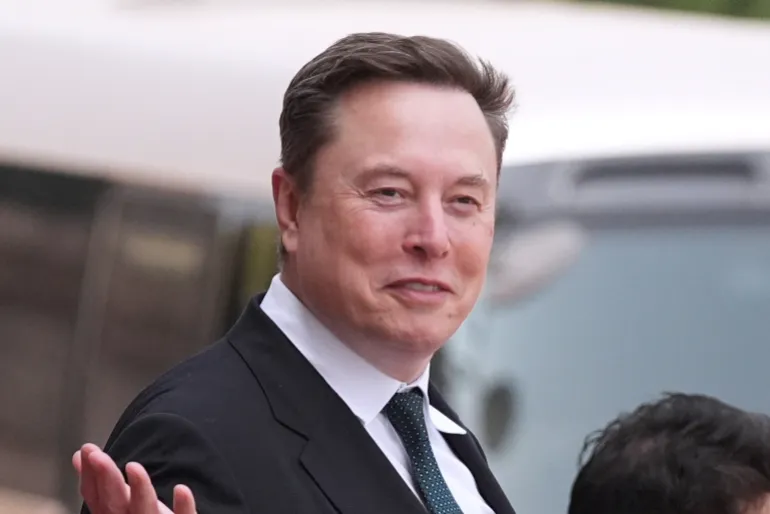
Elon Musk departs after a welcome ceremony with USPresident Donald Trump and China’s President Xi Jinping at the Great Hall of the People, in Beijing, China, on May 14, 2026 [File: Mark Schiefelbein/AP]

Founded by Musk in 2002, SpaceX is best known for designing and launching rockets, spacecraft and reusable launch vehicles on behalf of NASA and private companies.

The company also provides internet services and artificial intelligence models through its Starlink and xAI divisions.

Musk has outlined lofty ambitions for SpaceX, including to establish a “self-sustaining” city on Mars, “make life multiplanetary,” and “extend the light of consciousness to the stars”.

SpaceX’s listing will be a test of investors’ confidence in Musk’s vision, which has yet to translate into profits at the company.

SpaceX reported a net loss of $4.9bn on revenue of 18.7bn in 2025, followed by a $4.3bn loss in the first quarter of this year.

Jay R Ritter, an emeritus professor at the University of Florida who specialises in IPOs, said the SpaceX IPO differs from Saudi Aramco’s blockbuster listing as the state-owned oil company had a track record of generating large revenues and profits.

“SpaceX, in contrast, has trailing annual revenue of less than $20bn, and is not profitable,” Ritter told Al Jazeera.

“So, one company’s valuation was – and is – based on its demonstrated profitability, while the other company’s valuation is based on potential.”

“With SpaceX, there is a risk that cash flows will be used to send hundreds of thousands of people to Mars, at a loss,” Ritter added.

Despite SpaceX’s lack of profitability, market sentiment is strong, said IG’s Yip, noting that buyers of investment products linked to the listing are pricing the company’s end-of-first-day market capitalisation at $2.2 trillion.

“The Tesla parallel is perhaps worth drawing: It debuted in 2010 as a loss-making company and largely tracked the S&P 500 for years, only breaking away decisively once it turned profitable for the first time in Q1 2013,” Yip said, referring to the benchmark stock index on Wall Street.

“SpaceX investors are making a similar bet on future growth, with the added complexity that SpaceX’s addressable market – rockets, satellite internet, AI – is considerably broader than Tesla’s was at listing.”

Source link

US cites forced labour concerns as grounds for new tariffs | Trade War News

The administration of US President Donald Trump has proposed new tariffs of up to 12.5 percent on imports from 60 economies after determining they had failed to curb trade in goods made with forced labour, an assertion that was rejected by US trading partners.

The proposal from the Office of the United States Trade Representative (USTR), issued late on Tuesday, comes from a Section 301 unfair trade practices investigation designed to help rebuild US President Donald Trump’s emergency tariffs, struck down by a US Supreme Court decision in February.

Recommended Stories

list of 4 itemsend of list

Despite laws banning them, the products of forced labour are deeply embedded in supply chains across the world. European lawmakers bristle at the accusation that the region is less effective than the US at curbing the trade in such goods, with one describing the US findings as “utterly absurd”. Business leaders said the US move created more confusion for companies.

The USTR proposed 10 percent additional duties on imports from Canada, Ecuador, the European Union, Indonesia, Mexico, Pakistan, Argentina, Bangladesh, Cambodia, El Salvador, Guatemala, Malaysia, Taiwan and Britain. The USTR said all had plans or partial schemes in place.

The trade agency said it would impose additional duties of 12.5 percent on the remaining 45 countries that it investigated. These include China, India, Nigeria, Japan, South Korea, Vietnam, Australia and New Zealand.

“The failure of our most important trading partners to address the importation of goods made with forced labour is unacceptable,” US Trade Representative Jamieson Greer said in a statement. “This creates a dynamic where American workers are forced to compete globally on an unlevel playing field.”

The USTR said it would accept public comments on the proposed tariffs and other remedies through July 6, with a public hearing scheduled for July 7.

The announcement comes ahead of the July 24 expiration of a 10 percent temporary tariff imposed by the Trump administration on February 20, the day the Supreme Court struck down Trump’s tariffs under the International Emergency Economic Powers Act. It also shows how determined the Trump administration is about building a wall of tariffs around the US economy, the world’s largest, despite repeated setbacks in court.

After the loss in the Supreme Court, Trump turned to another law to impose temporary 10 percent tariffs globally. But those stopgap levies expire July 24. And a specialised trade court ruled last month that they, too, were illegal – though the government can continue collecting them while that case works its way through the courts.

Unjustified tariffs

The European Commission said the tariffs were unjustified and reiterated its commitment to the trade deal sealed with Washington last year.

Bernd Lange, the chair of the European Parliament’s trade committee, which voted on Tuesday to accept that trade deal, said the new tariffs were expected, but said the results of the US investigation were still “utterly absurd” given a 2024 EU law to ban imports of forced labour products.

“The impression is increasingly emerging that a tariff measure is sought first, and only then is a suitable legal justification found,” he said. However, he added that the key question would be whether the additional tariffs would exceed those agreed between both sides last July.

The US’s largest trading partner, the EU, agreed last July to accept tariffs of 15 percent on a broad range of its exports. In its report, the USTR said the EU anti-forced labour measures only came into force in December 2027 and lacked key elements.

It was unclear whether the proposed tariffs – which the US release described as “additional duties” – would come on top of levies agreed in bilateral deals signed with the US.

Britain said it was in regular talks with the US and was taking action to tackle forced labour. It added that the preferential access to US markets that it had negotiated for UK businesses remained in place.

Mexico said that goods that were compliant under the United States-Mexico-Canada Agreement (USMCA) would be exempt from the new tariffs.

Taiwan said it was “hopeful and confident” that the final results would reflect agreements already reached, securing relatively preferential treatment.

Beijing, facing 12.5 percent tariffs, said that it opposed all forms of unilateral tariffs and that there was no forced labour in China. India, confronted with the same rate, said it was engaged with Washington on the Section 301 proceedings, noting the proposed tariffs were not final.

“There will be deep concerns in the international business community that the US [forced labour law could] become a global template,” said Andrew Wilson, deputy secretary general of the International Chamber of Commerce.

“Anyone can make a claim, get a shipment impounded and the company has to prove no forced labour in supply chain.”

Certain exemptions

The USTR said it would exempt from tariffs products including energy, rare earths and some other metals, beef, coffee, certain fruits and vegetables, pharmaceuticals, organic chemicals and aircraft parts.

It also said it was proposing a textile mechanism that would allow for a certain volume of apparel and textile imports to enter the US at a reduced tariff rate, without giving details.

The ICC’s Wilson said the list of exemptions, stretching for more than 76 pages, suggested sensitivities over the potential cost-of-living hit to food and other goods with known forced-labour risks.

“It doesn’t make sense if the object of this is to enhance controls on modern slavery,” he said.

Source link

US targets Brazil with new tariffs over trade practices | International Trade News

The administration of United States President Donald Trump has proposed a new 25 percent tariff on imports from Brazil amid allegations of unfair trading practices.

US Trade Representative Jamieson Greer announced the new punitive tariffs late on Monday, stemming from issues including digital trade and illegal deforestation.

Recommended Stories

list of 4 itemsend of list

The new tariffs would be imposed under Section 301 of US trade policy — a statute that gives the US government broad authority to impose trade sanctions based on violations of trade agreements, as well as what it deems “unfair” trade practices under the Trade Act of 1974.

Greer said there has been an investigation that began in July. The practices under investigation were related to issues such as illegal deforestation, ethanol market access, and anticorruption enforcement, among other key issues, according to the summary released by the US Department of Commerce on Tuesday.

In the 107-page document, the US government said that trade practices between the two nations “are unreasonable and burden or restrict US commerce”, and pointed to agreements that Brazil has with Mexico and India.

“Brazil’s trade arrangements with Mexico and India also create incentives to offshore US production by creating a financial advantage to exporting to Brazil from these countries, as opposed to exporting from the United States,” the document says.

There is a comment period for the general public to weigh in on the proposed tariffs, which begins on Thursday. The written comment period ends on July 1, and there will be a public hearing in Washington on July 6.

Beef, coffee, rare earths, other metals, energy, and aircraft parts are among the products that would be exempt from the tariffs.

On CNBC, Greer said that it would release more findings on unfair trade practices in the next several weeks in order to address what Greer called a “giant” trade deficit.

However, the data shows that the US maintains a trade surplus with Brazil. In March, Brazil bought more goods, worth $3.3bn, from the US than it exported at $2.9bn, representing a $420m trade surplus.

Other countries under investigation include China and Vietnam.

The new tariff would partially replace a tariff of 50 percent on many Brazilian goods imposed last year by Trump, with 40 percent serving as a punishment for Brazil’s prosecution of former President Jair Bolsonaro, a Trump ally.

The White House also recently dropped tariffs on select aluminium, copper, and steel imports, which include agricultural equipment such as harvesters. Those tariffs will drop from 25 percent to 15 percent. The tariffs expire in December 2027.

The new tariffs come after the Supreme Court, in February, struck down the use of the International Emergency Economic Powers Act (IEEPA), which the White House used to impose its sweeping global tariffs.

“They are the first of many new tariffs to replace the IEPPA national security tariffs. The period of public comment will allow for potential modest tweaks and exemptions. Ultimately, it will add to some inflation pressure compared to the last few months but not compared to a year earlier,” Rachel Ziemba, a senior adjunct fellow at the Center for a New American Security, told Al Jazeera.

Political tensions

The changes come despite President Luiz Inacio Lula da Silva’s visit to Washington last month, as relations have deteriorated in recent months.

The US State Department has also designated two of Brazil’s criminal gangs as “terrorist organisations”, a move that supported Senator Flavio Bolsonaro’s position, Lula’s main rival in October’s election, and over the objections of Brazilian officials.

“I expressly asked President Trump not to tariff our companies,” Bolsonaro wrote on X on Tuesday. “Tariffs are not the solution.”

The White House did not respond to Al Jazeera’s request for comment.

Source link

Google parent Alphabet to sell $80bn in stock to fund AI plans | Technology News

US tech giant says fundraising drive includes deal to sell $10 bn of stock to Berkshire Hathaway.

Alphabet, Google’s parent company, has announced plans to sell $80bn worth of shares to fund its rollout of artificial intelligence.

Alphabet said on Monday that the equity offerings would finance the rollout of AI infrastructure needed to meet “unprecedented customer demand”.

Recommended Stories

list of 4 itemsend of list

The US tech giant said the fundraising drive included a deal to sell $10bn of stock to Berkshire Hathaway, the conglomerate led for six decades by legendary investor Warren Buffett.

The remaining $70bn will come from $30bn in underwritten offerings – a type of share issuance where a financial institution buys stock to sell on to investors – and $40bn in staggered sales on the open market.

“The company is experiencing strong demand for its AI solutions and services from enterprises and consumers, at levels that are exceeding the company’s available supply,” Alphabet said in a statement.

“By scaling its investments, the company seeks to expand its foundational infrastructure to support the significant growth opportunity ahead.”

Shares of Alphabet, which has a market capitalisation of more than $4.5 trillion, were down about 1 percent in after-hours trading following the announcement.

Like other Silicon Valley giants, Alphabet, whose AI business spans the Gemini family of assistants, data centres and cloud services, has committed eye-watering sums to AI-related infrastructure.

The company said in its most recent earnings call that it expected its capital expenditures to reach $180-190bn this year, and rise “significantly” in 2027.

US tech behemoths, such as Alphabet, Microsoft, Amazon and Meta, are expected to spend some $800bn on AI-related capital investment in 2026, according to an analysis by Goldman Sachs.

Troy Hooper, co-head of equity capital markets for the Americas at the financial intelligence provider Mergermarket, said Alphabet’s funding plans underscored the intensity of the race to lead the AI buildout.

“For hyperscalers, compute capacity is a direct driver of future revenue,” Hooper told Al Jazeera.

“By leaning into equity, Alphabet is bringing in permanent capital rather than burdening a balance sheet already absorbing record capex,” Hooper said, using the shorthand for capital expenditure.

Hooper said US tech giants have come to view underinvestment in AI as an “existential risk” and over-investment as “merely expensive”.

“The logic is simple: under-investing is an existential risk; over-investing is merely expensive. Microsoft, Amazon, and Meta are following the same calculus,” Hooper said.

“Ownership at scale lowers the marginal cost of training advanced models, building a moat smaller competitors will struggle to match. The message is clear: The winners of the AI era will be decided not just by algorithms, but by who owns the largest and most efficient compute platforms.”

Source link

AI giant Anthropic files for US IPO as investors bet big on AI future | Technology News

Anthropic, which operates AI chatbot Claude, did not disclose the size or the terms of the offering.

Artificial intelligence giant Anthropic has confidentially filed for an initial public offering (IPO) in the United States, teeing up what could become a watershed moment for Wall Street’s AI frenzy.

The move, announced on Monday, sets up a high-stakes test of whether investor appetite for the AI revolution that has reshaped white-collar work around the world can match the sky-high expectations surrounding the booming sector.

Recommended Stories

list of 4 itemsend of list

Anthropic, which operates AI chatbot Claude, did not disclose the size or the terms of the offering. Confidential submissions let companies advance IPO preparations while shielding sensitive financial details from rivals and the public.

Anthropic last raised $65bn at a post-money valuation of $965bn in late May, putting it ahead of rival OpenAI. The company said at the time it was making annualised revenue of $47bn from selling its technology to people and organisations using Claude to write code and do other work and personal tasks on their behalf.

The crucial step towards a listing comes on the heels of SpaceX’s mega-IPO, which is on course to rewrite the record books as the Elon Musk-led company pursues a $75bn offering at a $1.75 trillion valuation.

Anthropic was formed in 2021 by ex-OpenAI leaders, and now both AI firms, along with Elon Musk’s rocket and AI company SpaceX, are all expected to become publicly traded. All three are also still losing more money than they make, fuelling concerns of an AI bubble.

OpenAI and Anthropic have become the face of the AI boom that has redrawn corporate strategies, sparked a global arms race for computing power and talent, and turned AI-linked companies into some of the market’s most richly valued firms.

Anthropic’s rapid rise in early 2026 rattled markets, triggering sharp sell-offs in software and IT stocks as investors worried its increasingly autonomous AI tools could upend traditional business models and accelerate disruption across industries.

“OpenAI and Anthropic are in a race to go public before capital runs out,” said analyst Gil Luria from the investment firm DA Davidson.

“The other reason for Anthropic to try to beat OpenAI out to the public market is that they will get to set the agenda for how a frontier model reports financials and do so in a way that is favourable to their financial model.”

OpenAI is also preparing to confidentially file for a US IPO in the coming weeks, adding to a wave of blockbuster ‌listings anticipated in the year ahead.

A market milestone

As many blockbuster listings race towards public markets, companies from SpaceX to AI giants are competing for a finite pool of investor capital.

“The combined demand for capital from SpaceX, OpenAI and Anthropic will be so considerable that it is likely to create disruptions in the capital markets, so going early will be a great advantage,” Luria said.

The listing would represent one of the most consequential stock market debuts in years, potentially reshaping benchmark indexes, investor flows and the broader narrative driving US equities.

At close to a $1 trillion valuation, Anthropic would vault into the top tier of the S&P 500, alongside a handful of elite companies that dominate global equity markets.

An Anthropic debut would be a major boost for the long-sluggish IPO market, though experts and bankers warn an offering of such scale could drain liquidity and investor attention from smaller listings.

Source link

Nvidia unveils new chip to bring AI directly to personal computers | Technology News

Nvidia is set to bring artificial intelligence to laptop and desktop computers with brands like Microsoft and Dell later this year as the US tech giant broadens its AI presence.

The Santa Clara, California-based AI chipmaker unveiled on Monday at its annual Nvidia GTC event in Taipei new powerful chips that would bring advanced AI functions to laptops and desktop computers.

Recommended Stories

list of 4 itemsend of list

CEO Jensen Huang said that the new development is “going to reinvent the PC [personal computer]”.

The changes come amid three years of collaboration between Microsoft and Nvidia and pit the latter against companies like chipmaker Advanced Micro Devices and personal computer brands Intel and Apple.

“This is going to be the new PC,” Huang said as he unveiled Nvidia’s RTX Spark superchip — which combines CPU, or central processing unit, and GPU, or graphics processing unit, capabilities — that would power new Windows laptop and desktop computer models in what the company called “AI personal computers”, expected to debut in the fall of this year.

The chip, developed with Taiwan’s MediaTek, will be in compact desktops from Dell, HP, Lenovo, ASUS, Microsoft Surface and MSI, with models from Acer and GIGABYTE to follow.

Nvidia, which is already the world’s most valuable company, said the reinvention will be for creating and gaming.

“When it has an autonomous [AI] agent, an agent that’s helping you, that understands you, you could talk to it. It could look at you. You could ask it to read files, go help you do some research. It could do a lot more,” Huang said.

Microsoft said in a separate statement that the personal computers running on Nvidia’s RTX Spark superchips would be able to support “highly capable AI models” and complex workloads. With the new superchips, these personal computers can run AI agents locally, Nvidia said.

“This is the first across the lineup of PC reinvention for 40 years,” Huang said.

Nvidia’s move is significant at a time when demand is growing for the use of personal AI agents, said Lian Jye Su, chief analyst at the technology research and advisory group Omdia.

“For consumers, it means more choices, which is always a good thing,” Su said.

Neil Shah, analyst and co-founder of Counterpoint Research, described Nvidia’s announcement as a move that’s “revolutionising how PCs would look like in the next 10 years”.

The new laptops and desktop computers “will drive agentic AI applications in every home”, Shah said, with an aim of having an “AI supercomputer” in each household.

Also during Monday’s speech, Nvidia’s Huang said its new Vera CPUs for data centres are in full production and are “going to be our new major growth driver” on the boom of AI agents, with early customers including Anthropic, OpenAI and SpaceXAI.


Huang also revealed a humanoid robot reference design that could act as a blueprint for future research, especially within the higher education sector. Nvidia said its “Isaac GR00T” stands nearly 1.83 metres (6 feet) tall and has the humanoid chassis of Chinese robot maker Unitree’s H2. It is equipped with five-fingered dexterous hands, made by Singapore-based robotics startup Sharpa, that are capable of finely controlled movements.

Reception for AI PCs has been mixed so far. HP reported last week that the devices helped prop up quarterly sales, but Dell said earlier this year that demand had fallen short of initial expectations. Qualcomm, looking to capitalise on AI demand, has also been offering AI PCs with Microsoft.

On Wall Street, Nvidia stock rose nearly 4 percent on the news in midday trading. Microsoft ticked up 2.5 percent and Dell surged 9.3 percent. Competitors AMD and Intel, on the other hand, are on the decline. AMD is down 0.1 percent from the market open, and Intel is down by 2.5 percent.

Source link

Ex-US Fed Chair Powell warns against politicisation amid Trump’s attacks | Business and Economy

Jerome Powell says the US central bank is undergoing a ‘stress test’ like other institutions in the current era.

Former US Federal Reserve Chair Jerome Powell has warned against the politicisation of monetary policy amid President Donald Trump’s repeated attacks on the independence of the central bank.

In a speech at an awards ceremony in Boston on Sunday, Powell said that the Fed had been undergoing a “stress test” like many other institutions in the Trump era.

Recommended Stories

list of 4 itemsend of list

Powell said the US Congress had “wisely” chosen to insulate the central bank from political pressure and that all other advanced economies had similar norms upholding the independence of monetary policy.

“These protections have served the public well, and administrations from both parties have respected them,” Powell said after accepting the 2026 John F Kennedy Profile in Courage Award.

“If any administration finds a way to remove Fed officials over policy differences, then future administrations will do so as well,” Powell said.

“The public would lose faith that the central bank will make decisions based only on what’s best for all Americans.”

Powell, who stepped down as the head of the central bank last month, said that the Fed’s credibility would be “lost” in such a scenario.

“That credibility enables the Fed to support a strong and stable economy for the benefit of American families and businesses,” he said.

“Our credibility has been built and sustained over many decades, and we have a duty to safeguard that priceless asset for our fellow citizens and for generations to come.”

Powell, who made the usual decision to stay on as one of the seven members of the Fed’s Board of Governors after stepping down as chair, also offered a broader defence of democratic institutions generally.

“Partisan political differences are normal – indeed essential – in a thriving democracy. But we ought to be united in our commitment to the higher principles that define our nation,” Powell said.

“Chief among them is respect for the rule of law. As John Adams wrote, ours is ‘a government of laws and not of men’. Our public institutions carry us forward through change. These institutions embody our commitment to freedom, democracy, and service of the public good.”

While Powell did not mention Trump by name, the US president has waged a sustained pressure campaign against the central bank for not heeding his demands to cut interest rates more sharply.

Trump repeatedly threatened Powell with dismissal during his tenure, while Trump appointee and ally Jeanine Pirro opened a short-lived criminal investigation into Powell’s congressional testimony about ongoing renovation works at the Fed’s headquarters.

Trump also ordered the removal of Fed governor Lisa Cook over unproven claims of mortgage fraud, though the Supreme Court has ruled that she can remain in her position while it considers a legal challenge against her firing.

Under the Federal Reserve Act, the US president must demonstrate “cause”, widely interpreted to mean malfeasance, to remove any of the Federal Reserve’s governors.

The John F Kennedy Profile in Courage Award was created in 1989 to honour those who demonstrate courage in public service without regard to professional or personal consequences.

Past winners of the award, which is named after Kennedy’s Pulitzer-winning book Profiles in Courage, include former US President Barack Obama, then-Ukrainian President Viktor Yushchenko, and then-UN Secretary-General Kofi Annan.

Source link

US says ban on AI chip shipments applies to Chinese firms outside China | Technology News

Department of Commerce issues guidance on chip restrictions amid concerns about loopholes in export control regime.

The United States has issued a notice affirming its restrictions on shipments of semiconductors to subsidiaries of Chinese companies located outside China amid concerns about loopholes in Washington’s export control regime.

The Department of Commerce said in the guidance issued on Sunday that its licensing requirements for the export of advanced AI chips applied to all businesses with headquarters or a parent company in China.

Recommended Stories

list of 4 itemsend of list

The Bureau of Industry and Security (BIS), which falls under the Commerce Department, said it issued the clarification in response to questions about whether it was enforcing preexisting licence requirements after it had overturned former President Joe Biden’s AI Diffusion Framework.

“The answer is yes,” the BIS said in the notice.

Unveiled in the final days of the Biden administration, the AI Diffusion proposed the implementation of a globe-spanning framework to control access to AI chips, including export caps for all but the closest US allies.

The framework drew backlash from tech firms, including Nvidia, the world’s most valuable chip company, which cast the proposal as a threat to innovation and cross-border collaboration.

President Donald Trump’s administration scrapped the framework last May, ahead of its implementation, citing the “burdensome new regulatory requirements” and the harm it would do to Washington’s diplomatic relations with other countries.

Chip giant Nvidia, whose top-of-the-line Blackwell GPUs are banned for export to China, said it had already been operating in keeping with the clarified rules.

“The guidance reaffirms that NVIDIA’s sales and vetting process is correct – consistent with our existing approach, licences are required to ship controlled products to PRC headquartered companies,” a Nvidia spokesperson told Al Jazeera, using the acronym for the People’s Republic of China.

AMD and Intel, Nvidia’s main competitors in the GPU space, did not immediately respond to requests for comment.

TSMC, which manufactures the most advanced chips on behalf of clients such as Nvidia, did not immediately return an email seeking comment.

The BIS also did not respond to inquiries.

Chris McGuire, a former State Department official who worked on technology policy in the Biden administration, accused the Trump administration of providing Chinese companies a loophole to buy export-controlled chips.

“Chinese companies have been buying these chips, very likely at scale. And because BIS has not updated export control regulations to clearly state what it IS enforcing, all of this was legal,” McGuire said in a post on X.

“This clarification does make clear that Blackwell shipments to China-headquartered companies outside of China are now illegal again – which is good, although obviously we have to see how many shipments have already gone to assess how much damage was done,” McGuire said.

“BIS’ statement acknowledges these shipments have been happening when it says companies who bought chips under this loophole don’t have to stop using them.”

The US has rolled out numerous restrictions on the supply of high-end technology to China, as Washington and Beijing battle for dominance in AI.

In December, Trump announced that he would allow Nvidia to sell its H200 chip to China, in a major loosening of Washington’s export controls.

While not Nvidia’s most advanced chip, the H200 is about six times as powerful as the H20, the most advanced chip previously allowed for export to China.

Source link