OpenAI’s announcement is the latest in a series of claimed scientific breakthroughs credited to AI.
OpenAI has announced that its AI models have made several scientific discoveries in mathematics, computer science and physics.
The AI giant said on Monday that the three new discoveries concerned the fields of harmonic analysis, complexity theory and quantum field theory.
Recommended Stories
list of 4 itemsend of list
Among the discoveries, AI models proved the local smoothing conjecture, one of the central propositions of harmonic analysis, in every spatial dimension for the first time, according to OpenAI.
Researchers in harmonic analysis, a branch of mathematics that studies how complex signals and functions can be broken down into elementary waves, had previously only proved the theory in three dimensions.
‘Historic development’
Alex Iosevich, a professor of mathematics at the University of Rochester who specialises in harmonic analysis, said OpenAI appeared to have “cracked” the conjecture in a “historic development”.
“The conjecture was formulated by my PhD adviser, Chris Sogge, so it is near and dear to my heart, and the news was a shock at first,” Iosevich told Al Jazeera.
“Now I am filled with joy and optimism, because the scientific enterprise as a whole is going to make giant leaps as a result of the AI revolution, and we have the chance to be a part of this historic development.”
Iosevich said he expected the field of theoretical mathematics to “change drastically” due to AI.
“I feel a twinge of sadness as a result,” Iosevich said.
“Many theoretical mathematicians I know feel the same way, but I firmly believe that these feelings will soon give way to the realisation that there is so much we can now accomplish.”
“Problems in pure mathematics did not arise in a vacuum,” he added. “Many of them came out of concrete physical considerations, and these connections can now be explored rapidly and decisively.”
According to OpenAI’s announcement, its models also disproved the Exponential Time Hypothesis, which relates to the time it takes to solve complex computational problems, and provided “mathematically rigorous [proof of the] existence” of quantum chromodynamics, which studies the interaction of quarks and gluons.
The ChatGPT creator said it had reached out to scientists outside the company to turn its “raw research data into scientific understanding”.
The San Francisco-based company said it decided on several different methods for releasing the findings based on consultations with three expert groups chosen to act as “shepherds”.
While the groups collaborating on the mathematics and computer science problems opted to make the AI-produced data public immediately, the physics group decided to defer the release in order to write up their own interpretation of the findings, OpenAI said.
“All of these approaches involve tradeoffs,” OpenAI said.
“On the one hand, the collaborations empower experts to foster unpacking the results and contextualizing them in the broader academic community,” the $852bn start-up said.
“On the other hand, choosing initial shepherds necessarily shapes who gets involved first and creates asymmetry of information. We welcome feedback on how to broaden participation and make this process more useful.”
OpenAI’s announcement is the latest in a series of claimed scientific breakthroughs credited to AI.
Last month, Claude creator Anthropic announced the discovery of a new enzyme said to resemble CRISPR, the groundbreaking gene editing mechanism used in treating conditions such as cancer and sickle cell disease.
Anthropic’s announcement drew mixed reactions among scientists.
While some researchers hailed the finding as an exciting development, others suggested that the AI company had exaggerated its significance.
Doha, Qatar – African countries are feeling the economic fallout from the ongoing conflict in the Middle East, with rising fuel and fertiliser prices threatening to drive up food costs, according to trade ministers from the region and the United Nations’ top trade official.
The crisis around the Strait of Hormuz due to the United States and Israel’s war on Iran needs to be resolved “sooner rather than later”, Luz Maria de la Mora, director of the Division on International Trade and Commodities at UN Trade and Development (UNCTAD), told Al Jazeera at the World Investment Forum on Monday. She warned that soaring fertiliser prices could affect harvests next year.
Recommended Stories
list of 4 itemsend of list
“Prices of fertilisers have risen dramatically … so many countries have decided to reduce the use of fertilisers, which will have an effect next year in terms of crops,” she said.
“It may have an effect on availability of food and prices of food.”
Luz Maria de la Mora, director of the Division on International Trade and Commodities at UN Trade and Development [Urooba Jamal/Al Jazeera]
The US-Israel war on Iran has highlighted the world’s heavy reliance on the strategic waterway, through which one-fifth of global oil and liquefied natural gas trade previously passed.
Against this backdrop, Doha hosted UNCTAD’s World Investment Forum on October 25 and 26, bringing together heads of state, policymakers, CEOs and investors to discuss global investment and sustainable development.
The Strait of Hormuz’s disruption has rippled through African economies. In Zimbabwe, rising fuel and fertiliser prices are a critical concern in a country where more than 70 percent of the population depends on agriculture, Monica Mutsvangwa, the country’s minister of women affairs, community, small and medium enterprise development, told Al Jazeera.
Uganda, another heavily agrarian economy, has also been hit, with fuel prices more than doubling, Sanjay Tanna, the country’s minister of trade, industry and cooperatives, told Al Jazeera.
The impact extends beyond the immediate cost of energy. Rising oil prices have disrupted supply chains, with effects lasting longer than anticipated, according to de la Mora.
“The effects are lasting longer than we would have expected or would have wanted,” she said.
‘Friend to all, enemy to none’
The shock has also exposed differences in how African economies weather global disruption.
Uganda’s reliance on subsistence farming has helped cushion the impact, with domestic food production offering some protection from international market volatility, said Tanna.
But the country has not been insulated from financial pressures: its currency has lost 10 percent of its value against the US dollar, the minister said. The Ugandan shilling has steadily declined since mid-2026.
For Zimbabwe, the crisis has reinforced the importance of attracting investment while maintaining economic ties across geopolitical divides.
Monica Mutsvangwa, Zimbabwe’s minister of women affairs, community, small and medium enterprise development [Urooba Jamal/Al Jazeera]
Amid the simmering trade war between the US and China, Harare considers itself a potential partner to investors from either side, Mutsvangwa said.
“We are a friend to all and an enemy to none,” she said.
“Money has no color … If we get an investor who comes into our country, follows the rules and regulations of the country, makes his money, and Zimbabwe develops, that’s what we want.”
The official pointed to Zimbabwe’s deposits of more than 60 critical minerals, including lithium and graphite, as well as its tourism potential.
Trade in an unequal system
But attracting foreign capital remains a challenge for developing economies, with investment concentrated in a relatively small number of countries.
That concentration is “very understandable”, de la Mora said, arguing that investors need confidence that their money will generate returns.
“Capital is risk averse. Capital needs to have certainty that its investment is going to yield returns and it’s going to come to fruition,” she said.
Governments can help build that confidence through transparent institutions, the rule of law and investment in infrastructure, including reliable electricity, energy supplies and digital connectivity, she added.
The question of whether the international trading system treats all countries equally prompted a more blunt assessment from Uganda’s trade minister.
“Of course not,” said Tanna. “The world cannot be equal … It’s unfair, but we believe that, within the space that we are in, we are in a good space.”
Sanjay Tanna, Uganda’s minister of trade, industry and cooperatives [Urooba Jamal/Al Jazeera]
Uganda was well placed for the future, he argued, because it produces its own food – an advantage at a time when international supply chains are under pressure.
For both Uganda and the Republic of Congo, building resilient economies also means investing in younger generations.
The Republic of Congo’s Deputy Prime Minister for Coordination, Development Infrastructure and Land Planning, Jean-Jacques Bouya, said the country had aligned its national development plan, Vision 2063, with the African Union’s broader development ambitions.
Connectivity – through electricity, digital infrastructure and physical links – is central to that strategy, he told Al Jazeera.
The Republic of Congo also wants to expand local processing so that more value from its natural resources remains within the country.
“Africa can no longer be a reservoir of raw materials, and neither can Congo – a place where raw materials are extracted, taken elsewhere, processed and then sold back to us at a much higher price. We cannot go on like this,” Bouya said.
In late August, United States President Donald Trump announced a 90-day pause on certain beef tariffs, making beef cheaper to import, particularly from Brazil.
That decision was framed as a way to bring down prices for consumers, but it landed as a betrayal for many US ranchers, who were getting ready to take their cattle to market.
Recommended Stories
list of 4 itemsend of list
It is too soon to tell how the decision will ultimately affect grocery prices, but the impact on ranchers was immediate: prices at cattle auctions plummeted, temporarily lowering ranchers’ profits. The United States Cattlemen’s Association, the National Cattlemen’s Beef Association and the Farm Bureau, all member organisations that represent ranchers, opposed the decision.
Rural Republican members of Congress also distanced themselves, but it is not yet clear how ranchers will vote in the midterms — or whether those votes will decide races.
Chad Basinger, a rancher in Pretty Prairie, Kansas, is sceptical that the imports will have a significant impact.
“I know there’s people that have said, ‘Well I’m just gonna vote for the other party’ or ‘I’m not gonna vote’ or ‘This administration’s really let me down’. So yes, there will be people that swing the other way in the midterms. But overall I don’t think it’ll be that much,” Basinger said.
Ranchers will also be weighing the administration’s other actions, Basinger said, such as the $8bn in farm relief announced in Kansas on October 19.
Basinger’s House of Representatives district in Kansas is expected to remain safely Republican in the midterms. But Kansas faces an unexpectedly tight Senate race and ranchers in House districts elsewhere may find themselves closer to the political fray: potential swing districts in Montana, Iowa, Texas and Colorado are all in cattle country.
Still, it is unlikely that ranchers alone will decide elections: ranchers — along with farmers more broadly — represent a shrinking percentage of rural voters and a smaller voting bloc in practice than in the public imagination.
America’s cattle herd is near its smallest size since 1951 and the number of ranchers has declined alongside the number of livestock. Observers worry that ongoing uncertainty fuelled by tariffs, fuel prices and drought may cause the ranching population to shrink further.
David Anderson, an agricultural economist at Texas A&M University who advises ranchers, said that high prices this year should have given ranchers the confidence to invest in the future and expand their herds. Making imports cheaper, however, may have helped nudge ranchers in the opposite direction.
“It really works against the market signal to expand and produce more domestically,” Anderson said. “That got a lot of people pretty angry.”
Tariff changes add volatility
This is not the first time that Trump’s tariffs have impacted cattle supplies. Last year, the president added a 50 percent tariff on Brazil, a key trade partner for beef, raising the cost of importing Brazilian lean beef, which is often mixed with fatty US beef to make hamburger patties, a staple in most homes.
In February, Trump allowed more tariff-free beef imports from Argentina. In August, he did the same for Brazil and Paraguay.
Both tariff changes led to swift price swings in cattle futures markets, which are often volatile in response to the news cycle.
Cattle prices also moved this year in response to more fundamental drivers of supply and demand: plant closures by meatpackers, labour shortages late last month related to ICE actions at Kansas packing plants, the second-largest in the country, and the reopening of the southern border after a closure due to New World screwworm disease.
Big picture, the shrinking US cattle herd has less to do with short-term price changes and more to do with drought cycles, which are growing more intense as warming temperatures increase evaporation.
Still, tariff changes add uncertainty. “This has been a hot topic for the last six weeks,” said Anderson. “It just adds a little more uncertainty or volatility — or worries or stress.”
This year, extra price volatility as many ranchers prepared to sell meant ranchers faced lower profits and more risk.
Basinger says that for many established ranchers, the tariff announcement was frustrating, but not existential.
“People are upset. They have a right to be upset. But they’re not going to change their strategy,” he said. For most ranchers, Basinger said, the imports would not be the biggest factor shaping decisions about their herds this year.
Where price volatility may matter more, Basinger said, is for the next generation. Most of today’s ranchers are eyeing retirement. Their heirs must decide whether to make a go of ranching or sell their family’s land. Other aspiring ranchers are also watching the industry.
“If you’re seeing your dad not make money, or somebody else not make money…it’s not easy work!” Basinger said. “It has to be very enticing for somebody to want to jump in and be like, ‘I’m gonna be a rancher and go break ice in the middle of winter when it’s cold and I could be inside’.”
Record revenue and record costs
This year, low US cattle supplies meant that ranchers commanded record-high cattle prices, despite added imports and other market shifts.
But high revenue doesn’t always mean huge profits: Many ranchers operate at a loss for years in a row. Then, they rely on a few good years to pay down debts or expand their herds.
This year, profits were lower than hoped, because ranchers also faced high costs.
Interest rates on loans are high and the war with Iran meant ranchers paid extra for fuel and fertiliser. A drought across much of America’s ranchland meant they paid more for feed.
In states such as Kansas and Nebraska, ranchers also faced destructive wildfires and aid groups like Farm Rescue coordinated hay donations.
Still, Basinger said, ranchers who raise cows and calves generally did well this year. In Kansas, he is seeing ranchers use profits to make repairs and upgrades. He said this year’s high cattle prices have been helping. “But it needs to help for a little longer to give them more of an edge,” he said.
More of an edge might mean, for example, enough money for bigger purchases, like buying land from a neighbouring ranch to make room for a growing herd.
Rangeland, however, is increasingly expensive. When it is up for sale, outside investors can often pay more than ranchers, which can mean less land for cattle. That’s just one more pressure shrinking the US herd decade after decade.
Ranchers had hoped that 2026 would be a turnaround year. So far, however, “we really don’t have much evidence of herd expansion,” Anderson said.
Speaking at the World Investment Forum in Doha, state minister says peace and security are essential for trade and investment prosperity.
Published On 25 Oct 202625 Oct 2026
Qatar’s Minister of State for Foreign Trade Affairs Ahmad bin Mohammed al-Sayed has called for greater international cooperation and economic stability, warning that trade and investment cannot flourish without peace and security.
Speaking at the United Nations-led World Investment Forum in Doha on Sunday, al-Sayed said geopolitical upheaval and growing economic fragmentation were threatening global investment prospects.
Recommended Stories
list of 3 itemsend of list
“The global economy is undergoing changes. There are geopolitical changes. These are all issues that redefine the landscape of global investment,” he said.
“We believe that investment in the future is related to investment in peace and security,” the minister added.
“Trade will prosper, and long-term investment will create its potential only with a safe and stable environment.”
Organised by the UN Conference on Trade and Development (UNCTAD), the World Investment Forum brings together heads of state, policymakers, CEOs and investors to discuss global investment, opportunities, challenges and sustainable development.
Al-Sayed’s remarks come as several conflicts continue to rage around the world, and with growing fears of an escalation in the US-Israel war on Iran in the coming weeks.
Shipping through the Strait of Hormuz, a vital waterway for global oil and liquefied natural gas (LNG) shipments, has been disrupted since the US and Israel launched the war on February 28. Iran responded by effectively blocking the strait and attacking targets across the region.
Prior to the war, one-fifth of the world’s traded oil and gas flowed through the strait.
In the past week, escalating attacks on shipping in the strait and uncertainty over diplomatic efforts to end the nearly eight-month war have led to a surge in oil prices, putting further pressure on the global economy.
On Thursday, oil prices climbed about 4 percent to a five-month high, with Brent futures crossing $113.17 a barrel.
‘Further cooperation, less isolation’
Al-Sayed stressed the need for predictable international rules and stronger economic partnerships at a time of heightened uncertainty.
“In our world, which is facing further uncertainty and economic fragmentation, our message stays clear. It is a call for further cooperation and less isolation, further cooperation and less division,” he said.
Iranian strikes on Qatar’s Ras Laffan industrial complex in March damaged facilities, with repairs expected to take several years.
The minister outlined Qatar’s efforts to strengthen supply chains, diversify economic partnerships and “open new markets for our exports”.
He said Qatar attracted 373 foreign direct investment projects in 2025, a 50 percent increase from the previous year, generating more than 15,000 jobs.
Qatar has also unveiled infrastructure projects worth $38.5bn over the next five years, alongside an anticipated $22.5bn in private sector investment in hospitality and real estate, al-Sayed added.
For the past four-and-a-half years, the war on Europe’s doorstep has haunted policymakers. Yet they have treated it as a looming threat rather than one already eroding the very foundations on which Europe stands.
Russia’s war has devastated much of Ukraine’s south and east, even as the front lines have shifted only slowly. For Europe, however, the challenge has never been confined to the battlefield. Supporting Ukraine and constraining Russia have tested the continent’s economic resources and political unity. Now, as United States President Donald Trump seeks to force a disadvantageous settlement on Kyiv and repeatedly threatens to withdraw US support, Europe faces the prospect of shouldering even more of that burden alone.
Even if the latest crisis is averted, Europe can no longer assume that Washington will guarantee its security. It must develop the financial capacity to sustain Ukraine’s defence, the industrial strength to defend itself and the economic leverage to constrain Moscow. To meet these challenges, Europe must build a war economy.
The past four years offer lessons in how Europe can finance such an effort, but also warnings about the divisions that could undermine it. The European Union has already been at the forefront of Ukraine’s recent financing, moving from an 18.1-billion-euro ($21bn) share of the G7’s $50bn Extraordinary Revenue Acceleration (ERA) loans in 2024 to finalising a new 90-billion-euro ($100bn) loan this April, one that came without US commitment. Yet internal divisions remain over numerous issues, particularly as they pertain to constraining Russia. This month, the EU adopted its largest-ever round of sanctions listings. But while the measures added a record number of designations, they did little to broaden the scope of restricted activity and did not accelerate the phase-out of Russian energy imports, with pipeline gas imports still permitted until autumn 2027. European leaders have also expressed concern over Trump’s decision to waive new Russia-related sanctions as he seeks to grapple with the costs his foreign policy has wrought.
However, the US-Israel war on Iran has, if anything, shown that Europe’s measures against Russian hydrocarbons could have gone further. Before February, some 20 million barrels per day (bpd) of crude and oil products and roughly 110 billion cubic metres (bcm) a year of liquefied natural gas (LNG) passed through the Strait of Hormuz. By comparison, Russia exported about 6.5 million bpd of oil and products in September, and some 43bcm of LNG last year – about a third of Hormuz’s oil and two-fifths of its LNG. As the crisis continues and Trump seeks additional Russian supplies, Europe must complement its efforts to constrain Moscow with greater investment in its own security.
The first and most important step is to establish a standing framework for joint EU borrowing – not only to finance Ukraine’s continued defence, but also to fund the defence industry Europe will need to sustain its own defence and, if necessary, prevail against future threats from Russia. Crisis begets innovation, as demonstrated during the COVID-19 pandemic, when EU member states pushed past their long-held aversion to mutualised borrowing, creating the 750-billion-euro NextGenerationEU recovery fund in 2020. The EU’s contribution to the ERA loans and this year’s 90-billion-euro facility, both financed by common EU borrowing, extended that logic to wartime finance. But these remain crisis-by-crisis improvisations. Deepening fiscal and capital markets union and building a genuine fiscal-military state would provide the foundations of Europe’s power and its ability to deter and win wars.
The same logic plays out in the US today, where deep capital markets have given companies such as SpaceX, which invested heavily for years before seeing returns, the space to develop technologies such as its Starlink network that have reshaped modern warfare. The importance of this technology is now keenly felt on Ukraine’s battlefields, where Kyiv’s communications have rested on a network subject to the whims of one man, SpaceX CEO Elon Musk. Europe therefore needs the fiscal capacity to fund its own technological development and procurement.
There are understandable jitters about the existing indebtedness of European states such as France and the United Kingdom. However, Russia’s frozen sovereign assets offer a potential way to support further borrowing. Divisions remain over using these assets, with Belgium, which hosts the lion’s share at Euroclear, opposing such a move over fears of Russian legal action and damage to its position in the global financial system. The bloc must come together to share that risk, which is overblown in any case. Not all EU fiscal support needs to come in the form of direct joint debt either. Greatly expanding the EU capital markets union and creating tax-advantaged structures across the region for defence firms and technological innovators may prove even more effective.
Beyond the assets themselves, Europe must also take greater control over its continued economic linkages with Russia. That means intervening far more actively in cases such as that of Austria’s Raiffeisen Bank. In 2025, following a Russian court ruling, more than 2.1 billion euros were taken from Raiffeisen’s Russian subsidiary to compensate Rasperia, a company tied to the sanctioned oligarch Oleg Deripaska. A Vienna court’s ruling last month now paves the way for Raiffeisen to seek compensation from Rasperia’s frozen assets in the EU – using the same sanctions derogation through which Euroclear released some $3bn in 2025. It is precisely this kind of legalised dealing with Moscow that keeps threats like those levelled at Belgium credible: if the Kremlin can seize European assets and prompt the release of Russian-linked assets frozen in the EU, every expropriation becomes a bargaining chip.
Furthermore, the UK and the EU have increasingly made use of measures against circumvention that share some features with US secondary sanctions. Europe should now be more assertive in making it clear that firms helping Russia evade its sanctions risk losing access to European financial systems and markets. US firms will choose Europe over the Kremlin, even if Trump waives more sanctions.
Finally, Europe should seek to reduce US influence over its foreign and security relationships. Speaking in Qatar this week, US Ambassador to Turkiye Tom Barrack said Washington was moving away from its decades-old bargain of security for Gulf oil. Europe may not be able to offer the same level of security, but it can offer a mutually beneficial partnership that addresses both sides’ concerns. And it is Europe that is now stepping up in the Gulf, with the UK and France deploying jets, air defences and refuelling support to help Saudi Arabia against Houthi attacks. Unlike Washington, Europe can promise a deeper partnership in the future and serve as a reliable buyer of Gulf oil and gas exports in exchange for Gulf states doing more to address Europe’s security concerns about Russia through enhanced sanctions compliance and, first and foremost, ending the Kremlin’s role in OPEC plus.
Europe has the means to finance its own security. It must now find the will to borrow for it.
The views expressed in this article are the author’s own and do not necessarily reflect Al Jazeera’s editorial stance.
Tech-heavy Nasdaq falls 2.6 percent as debate rages over whether AI is a bubble.
Published On 23 Oct 202623 Oct 2026
US tech stocks have dropped sharply amid market jitters over the sustainability of companies’ enormous capital investments in AI.
The Nasdaq Composite, which is dominated by tech firms linked to the AI boom, fell 2.6 percent on Thursday, its steepest fall since the index tumbled 4.2 percent on June 5.
Recommended Stories
list of 4 itemsend of list
The broader S&P 500 slid 1.21 percent, the benchmark’s biggest drop since a 1.52 percent decline on July 29.
Apart from Apple, each of the “Magnificent 7”, which make up more than one-third of the overall market, saw substantial losses.
Meta dropped nearly 7 percent after it raised its projected capital spending for this year to $135bn to $145bn in its latest earnings report, even as the Facebook parent company’s net profit fell short of expectations.
Amazon fell 4.6 percent, while Nvidia dropped 4.4 percent.
Tesla and Alphabet both fell 3.1 percent, while Microsoft declined 2.2 percent.
Apple rose 1.2 percent.
The sell-off extended to other major tech players, including Intel and Advanced Micro Devices, both of which fell about 8 percent, and Broadcom, which slid 4.3 percent.
Rising oil prices since February, due to the fallout of the US-Israel war on Iran, added to the downbeat mood.
Brent crude futures rose 4 percent on Thursday and continued to climb on Friday morning, taking the international benchmark above $114.20 a barrel, its highest since May.
Stocks slip in Asian trading
Major stock markets in Asia opened lower on Friday, following the losses on Wall Street.
Japan’s benchmark Nikkei 225 fell more than 2 percent in morning trading before recovering some ground, while South Korea’s KOSPI dropped as much as 3.5 percent.
The Hang Seng Index in Hong Kong fell about 0.5 percent.
Jay Goldberg, a senior analyst at Seaport Research Partners in San Francisco, said the swings in the market appeared to be driven more by sentiment than underlying fundamentals.
“In short, nothing has changed. Investors have just decided to be afraid this week. Everyone I speak to points to a different cause for the downfall … It’s just a giant wall of worry,” Goldberg told Al Jazeera.
“There are legitimate concerns about the AI trade, but this level of shift in the markets is driven much more by investor sentiment than any tangible reason.”
US tech companies’ huge investments in AI have stoked intense debate about whether a market bubble is forming similar to the one that preceded the 2000 dot-com crash.
While some Wall Street analysts view current levels of investment in datacentres and graphics processing units as unsustainable, others argue that AI will revolutionise society to a degree that justifies the eye-watering sums involved.
Global AI investment is forecast to reach $2.7 trillion in 2026 and $3.6 trillion in 2027, according to technology insights company Gartner.
On trade, investment and innovation, leaders will work toward conclusion of a Canada-Turkiye Free Trade Agreement.
Published On 22 Oct 202622 Oct 2026
Canadian Prime Minister Mark Carney and Turkish President Recep Tayyip Erdogan have announced the launch of a Canada-Turkiye Strategic Partnership, backed by a three-year action plan.
“In an increasingly complex global security environment, rising geopolitical uncertainties, and evolving humanitarian challenges, a strong and resilient Canada-Turkiye partnership is essential, providing a foundation to mitigate shared threats and capitalise on new opportunities,” said a statement by the two leaders on Thursday.
This comes as Carney is on a two-day visit to Turkiye, seeking to forge a new partnership as Canada looks to reduce its dependence on the United States.
The partnership’s three-year action plan rests on four pillars: trade and investment; defence and security; energy; and ties between people, the statement said.
On trade, investment and innovation, the two leaders agreed to “work toward successful conclusion of a Canada-Turkiye Free Trade Agreement”, it said. They will also expand bilateral trade and investments in priority sectors including energy supply, defence production, aerospace, and Artificial Intelligence (AI).
On defence and security, the leaders “underlined their intent to deepen bilateral and multilateral cooperation”. They also agreed to “strengthen cooperation in support of peace and security in the Euro-Atlantic region and beyond including Ukraine, South Caucasus, and the Middle East, in particular Gaza”.
Meanwhile, energy ministers from both countries will work on areas such as LNG, nuclear energy and critical minerals.
‘Launching a new era’
Speaking to reporters in Ankara alongside Carney on Thursday, Erdogan said the two countries “hope to increase our trade volume, which currently stands at around $3 billion, to $5 billion initially and then to $10 billion through the steps we will take”.
He said the two sides had agreed to begin free trade agreement negotiations before the end of the year to boost trade and investment, adding that elevating Turkiye-Canada relations to the level of a strategic partnership would not be merely a symbolic step on paper.
“We have today overcome the disconnect that had persisted between Turkiye and Canada for many years. Now we are launching a new era between Turkiye and Canada,” he said.
Canadian and Turkish leaders will convene next month in Ankara for the first round of trade talks, the joint statement said.
Carney is on the first bilateral visit by a Canadian prime minister to Turkiye, although he travelled to Ankara in July to attend the NATO summit.
He was scheduled to meet with Erdogan and other officials before travelling to Istanbul for talks with Turkish business groups as the two countries seek to deepen trade ties.
The Canadian prime minister has sought to diversify partnerships and reduce reliance on the US amid an escalating trade war with President Donald Trump, marked by US tariffs on Canadian goods, retaliatory measures by Canada and statements questioning Canadian sovereignty.
New Delhi, India — United States Secretary of State Marco Rubio has arrived in India for a two-day visit, during which he is set to tour the Jamnagar refinery complex in Gujarat, owned by billionaire Mukesh Ambani’s Reliance Industries, a major player in global oil markets.
Reliance’s crude refinery in Prime Minister Narendra Modi’s home state is the world’s largest single-site refinery. In many ways, Reliance Industries’ businesses sit at the crossroads of the ongoing global energy crisis.
The conglomerate is central to Washington’s efforts to punish Russian energy buyers, while also trying to contain oil prices amid the war on Iran, on top of rising diesel costs in the US, where a crucial midterm election looms. Reliance has also only recently committed to a major investment in the US, which President Donald Trump’s administration has cited as an example of its successes in luring global capital.
Rubio is skipping the capital, New Delhi, at a time when the US-India bilateral relationship has been rocky, strained by a string of friction points — and an elusive trade deal.
So why is the top US diplomat visiting the world’s largest single-site oil refinery?
Secretary of State Marco Rubio shakes hands with US Consul-General in Mumbai Yuriy Fedkiw as he disembarks from a plane after arriving at Mumbai airport in India, October 20, 2026 [Kylie Cooper/Reuters]
Where is Rubio visiting?
After meetings in Mumbai, India’s financial hub in the western state of Maharashtra, Rubio will fly to Jamnagar in neighbouring Gujarat, near the Gulf of Kutch. Jamnagar opens into the Arabian Sea and is home to Reliance Industries’ refining complex, a major hub for crude processing and fuel exports, which processes 1.4 million barrels per day (bpd).
Rubio had visited India earlier this year too, but this trip “is a little more business-focused”, the US ambassador to India, Sergio Gor, told reporters last week. A readout from Rubio’s office noted that he would “meet with business leaders to promote opportunities for commercial investment and economic cooperation”.
“[At Jamnagar] he will meet some of the folks at Reliance,” Gor said.
The Reliance Industries oil refinery in Jamnagar, Gujarat, India, on July 31, 2021 [Bloomberg]
What’s in Jamnagar?
The world’s largest single-site oil-refining complex has a combined crude-processing capacity of 1.4 million bpd. That is nearly 1.5 percent of global refining capacity, according to the company.
The complex comprises two refineries: the original facility, commissioned in 1999 with a capacity of 660,000bpd, and a second, export-oriented refinery commissioned in 2008, adding 580,000bpd, which operates in a special economic zone.
Jamnagar imports crude from international suppliers and exports refined products to global markets. The refinery can process heavy, sulphur-rich crude that many facilities cannot handle efficiently, converting oil into higher-value products.
Reliance said last month that the complex has processed more than 216 crude grades, claiming to be “perhaps the only refinery to achieve this feat”.
The Jamnagar refinery’s capacity is also driving a sharp revival in imports of Venezuelan crude — taken over by the US earlier this year after abducting then-President Nicolas Maduro — as Washington seeks to reshape global oil trade.
Reliance is expected to account for roughly 350,000bpd to 370,000bpd of the October intake, according to estimates from analytics firm Kpler. “We will talk with Reliance about refining more Venezuelan crude,” Rubio told reporters in brief remarks on Tuesday.
Secretary of State Marco Rubio, right, with US Ambassador to India Sergio Gor, in Mumbai, October 20, 2026 [Kylie Cooper/Reuters]
Why is the refinery significant for global energy supplies?
Reliance is a central player in keeping global oil markets stable, as one of the world’s biggest suppliers of refined petroleum products. In September, for instance, six of the seven large cargo ships that docked at European Union ports carrying oil products were bearing Reliance goods.
Reliance’s biggest export is diesel, which Trump has been particularly worried about, with prices reaching historic highs in the US ahead of midterm elections early next month.
Though the data on exports by category is not public, an analysis by the Reuters news agency from trade sources noted that Reliance Industries exported 21.66 million tonnes of refined petroleum products in the first half of 2025 from Jamnagar. Diesel accounted for the largest share at 9.81 million tonnes, followed by petrol at 6.14 million tonnes and jet fuel at 2.06 million tonnes.
Europe accounted for the biggest share of the company’s exports, making up 28 percent of Reliance’s refined products during the period. Buyers include BP, ExxonMobil, Glencore, Vitol and Trafigura.
The Jamnagar refinery also shipped about $143m worth of oil products to the US last month, according to data cited by the Centre for Research on Energy and Clean Air (CREA), a think tank in Finland.
CREA noted in its report that the EU’s ban on importing petroleum products made from Russian crude from January 2026 does not adequately prevent products from refineries in third countries from entering Europe when those refineries also process Russian crude. The Jamnagar refinery is a prime example of that loophole.
Rubio’s visit to the refinery also comes as Trump faces his worst approval ratings amid inflation and rising fuel prices ahead of the midterm election in November. Just about 31 percent of Americans are happy with Trump’s performance – the lowest-ever number in his two terms, according to a Reuters/Ipsos survey.
The Trump administration has also reportedly been pushing Ukraine’s President Volodymyr Zelenskyy to stop strikes on Russian energy facilities, which have rattled the global fuel markets.
Why the refinery is important for the Russia-Ukraine war
Since the start of Russia’s full-fledged war on Ukraine in February 2022, India has emerged as the second-largest buyer of Russian oil after China. And Reliance is driving that surge in imports. While only 3 percent of its oil was sourced from Russia before 2022, that share rose to 50 percent by 2025.
So when Trump imposed an additional 25 percent tariff on Indian goods in August 2025 to punish New Delhi for the purchase of Russian oil, Reliance was directly affected. It cut back on Russian crude imports significantly in subsequent months, but it still made up a third of the oil processed by Jamnagar’s refinery during the July-September 2026 quarter.
That was under threat when the Trump administration appeared poised to impose a 100 percent tariff on Indian goods because of continued Russian oil imports, under a new law passed last month.
But Trump has since suspended those proposed tariffs, easing concerns for India and Reliance.
Rubio has said India has been diversifying its import mix away from Russian crude, even as it still buys millions of barrels of Russian oil every day. “You’ve got countries like India, for example, that have voluntarily diversified their energy portfolio, but are still getting a substantial amount of energy from Russia because it’s hard to pivot from one day to the next,” Rubio said on Sunday.
“But they’re also an important ally and partner of the United States.”
Is Reliance also investing in the US?
Yes, India’s richest man, Mukesh Ambani, the chairman and managing director of Reliance Industries, is investing in the US, primarily through energy-related projects.
It is backing America First Refining’s planned oil refinery at the Port of Brownsville in Texas, also the first major US refinery in about 50 years, announced by Trump in March.
The refinery is expected to cost $3bn to $4bn and process about 60 million barrels of US crude annually. Reliance has signed a 20-year agreement to buy a large share of the facility’s output, with operations expected to start around 2029.
In November 2024, Reliance’s US subsidiary also acquired a 21 percent stake in helium explorer Wavetech Helium for $12m as part of its low-carbon energy strategy.
Last month, Trump announced that India’s Essar Group — an oil major with knee-deep ties to Russia — is planning an $18bn integrated steel investment in the US through its subsidiary, Mesabi Metallics.
Didn’t Trump’s ally just lock horns with Ambani?
Despite Reliance’s investments in the US and Rubio’s upcoming visit to the Jamnagar facility, Elon Musk, the world’s richest man who is also a key Trump ally, recently hit out at Ambani.
His Starlink space telecommunications firm has struggled for years to secure a licence to operate in India.
In a series of X posts recently, Musk accused Prime Minister Narendra Modi’s government of stalling Starlink’s entry to favour market leader Ambani’s telecom firm, Jio. Musk taunted Ambani directly, addressing him as “Prime Minister Ambani” and asking whether he would “consider allowing Starlink to compete”. Starlink, Musk wrote, was being blocked by “oligarchs” protecting their “monopolistic chokehold” on Indians.
In a statement issued on X, Reliance said it has “never feared competition” and has “grown in an India that welcomes investment and innovation, homegrown or international”.
Riyadh postpones flagship investment conference until 2027, orders government staff to work from home.
Published On 20 Oct 202620 Oct 2026
Saudi Arabia’s Future Investment Initiative (FII) conference has been postponed until next year, according to a statement on the official website, as deadly strikes by the Iran-backed Houthis against the kingdom continue.
The annual event was due to start next week on October 26 and run through October 29, with a date next year to be announced “very soon”, the statement released on Tuesday said.
Recommended Stories
list of 3 itemsend of list
FII Institute chief executive officer Dr Maha Bint Mishari Al Saud said the decision “comes from a deep commitment to our partners, members, speakers and delegates”.
“Because this is our landmark tenth edition, we want to ensure it delivers the full scale, extraordinary quality, and unforgettable impact that our community has come to expect and truly deserves,” she said.
Informally dubbed “Davos in the Desert”, a nod to the World Economic Forum’s annual meeting in Switzerland, the state-backed conference showcases the kingdom’s ambitious investment plans in a bid to attract billions of dollars needed to fund its economic transformation away from hydrocarbons towards tourism, sport and technology.
Expected speakers included: Alphabet & Google’s president and chief information officer, Ruth Porat; Goldman Sachs Group chairman and CEO David Solomon; and BlackRock chairman and CEO Laurence Fink, according to the FII website.
Smoke and flames rise from King Khalid International after Yemen’s Houthis said they attacked the airport in Riyadh, Saudi Arabia, on October 8, 2026, in this screengrab obtained from a social media video [Reuters]
Fighting between a Saudi-led coalition supporting Yemen’s internationally recognised government and the Iran-aligned Houthis has escalated in recent weeks.
The Houthis, also known as Ansar Allah, have hit military, energy and civilian infrastructure across Saudi Arabia, including Riyadh’s international airport, killing at least 18 people and injuring hundreds more.
Government staff to work from home
Government agencies in the Saudi capital, Riyadh, have told employees to work from home, one worker and two consultants told the AFP news agency, as the city comes under repeated attack from the Houthis.
The Kingdom Centre, a 99‑storey tower in downtown Riyadh that houses the International Monetary Fund’s regional office, also requested workers stay away until further notice.
On Sunday, an employee of a government agency in the capital received a message saying, “It has been decided to implement remote work from Monday to Thursday this week”. The message added: “We ask everyone to continue their activities as normal.”
Companies based in the King Abdullah Financial District, which hosts offices of major United States firms, have also asked employees to work from home, according to other sources.
US federal prosecutors allege the defendant was in frequent contact with unnamed member of royal family.
Published On 19 Oct 202619 Oct 2026
An ex-OpenAI engineer accused of planting a recording device in an executive conference room at the AI company appears to have received considerable support from the Saudi government, United States prosecutors have said in a court filing.
Federal prosecutors allege that the defendant, Abdulrahman Alfozan, 35, was in frequent communication with an unnamed member of the Saudi royal family and that a Saudi military official paid for a one-way plane ticket for Alfozan’s wife and young son to return to Saudi Arabia after his arrest, according to the court document, made public late on Sunday.
Recommended Stories
list of 4 itemsend of list
Prosecutors made those allegations as they asked a federal judge to keep Alfozan in US custody to await trial, arguing he is a flight risk. Alfozan, a Saudi national and lawful permanent resident in the US, is scheduled to appear in federal court in San Francisco later on Monday.
The case has highlighted security challenges around sensitive AI research as companies and governments compete fiercely for an edge in the transformational technology.
“The defendant went to significant lengths to create customized, encrypted recording devices to secretly record highly sensitive meetings involving senior OpenAI personnel and executives, high-level business counterparts, and government officials, all while communicating with individuals of significance in Saudi Arabia and pursuing opportunities in — and making plans to travel to — Saudi Arabia,” prosecutors wrote in a detention memo.
The Saudi government media office did not immediately respond to a request for comment. A lawyer for Alfozan did not immediately respond to a request for comment.
The lawyer, William Pernik, previously asked for Alfozan to be released from custody, subject to conditions including location monitoring and surrendering his passport, and said Alfozan had spent the last 15 years in the US and had applied to become a citizen.
The lawyer said a planned trip by Alfozan to Saudi Arabia this month was booked before he was under investigation and was for “family and immigration reasons”, according to a court filing.
Investigation remains active
US prosecutors charged Alfozan last week with using an electronic device to intercept oral communications. Alfozan plugged a recording device into the back of a television in an executive conference room at one of OpenAI’s San Francisco buildings, according to a criminal complaint.
Meetings involving government officials took place in the conference room around the time the device was installed, according to the prosecutors’ detention memo.
Prosecutors said the investigation remains active and additional charges could be brought against Alfozan.
A member of the Saudi royal family sought to recruit Alfozan for an AI-focused role in Saudi Arabia, writing in one message, “Saudi needs you more then [sic] the US!” Alfozan replied, “100,” according to messages cited by prosecutors.
Before his arrest, Alfozan was scheduled to fly to Riyadh during a planned two-month parental leave. His wife told investigators that she and their son planned to move permanently to Saudi Arabia and that Alfozan eventually intended to join them, according to prosecutors.
In an Arabic-language interview on the Identity Capital podcast last month, Alfozan said that he visits Saudi Arabia three or four times a year, follows developments there and advises or mentors Saudi startups.
He said meeting Prince Mohammed bin Salman, then deputy crown prince, during a 2016 gathering with young Saudi tech workers in Silicon Valley persuaded him to learn at a top tech company before bringing those skills back home.
While Alfozan was working at Facebook, he and other Saudis in Silicon Valley formed a consulting initiative that linked Saudi public- and private-sector organisations with expertise in big data, the internet of things and machine learning.
OpenAI previously said it discovered the device on September 30 and referred the matter to the FBI.
Al Jazeera has reached out to the Saudi embassy for comment.
Chuck Schumer urges FCC to reject petition allowing AI robocalls ahead of key November midterm elections.
Published On 19 Oct 202619 Oct 2026
United States Senate Democratic leader Chuck Schumer of New York has urged the Federal Communications Commission (FCC) not to approve a petition by the conservative group Club for Growth to allow AI-generated robocalls ahead of the November midterm elections.
“Under this change, campaigns could use their opponents’ voice to send out a message that is, at best, disingenuous and, at worst, a blatant lie,” Schumer said on Monday.
Recommended Stories
list of 4 itemsend of list
The petition was originally filed on August 31, and the public comment period began on September 4 and expires on Monday.
Earlier this month, Anna Gomez, the Democratic member of the FCC, urged her colleagues not to allow consideration of the petition brought by the national conservative fiscal policy organisation.
Her concerns echoed Schumer’s. “[If] the FCC allows a dark money group to flood Americans’ phones with AI-generated robocalls they never agreed to receive, it would bring chaos so close to Election Day,” commissioner Gomez told the Reuters news agency at the time.
There is precedent for the concerns being raised. In the 2024 presidential election, ahead of the New Hampshire primary, voters received an AI-generated version in the voice of President Joe Biden, the then Democratic incumbent, telling them not to vote. The FCC said that a political consultant working with longshot primary challenger Dean Phillips was responsible.
At the state level, Louisiana, Tennessee and Vermont passed laws this year requiring disclosures for AI-generated campaign phone calls. While robocalls have been used in political campaigns for years, FCC rules prohibit such calls to cellphones without prior consent, but the restrictions do not apply to landlines.
Club for Growth’s president, David McIntosh, in a statement earlier this month, said that the group is asking for “the FCC to treat First Amendment-protected political speech the same way it already treats wireless calls about package deliveries, bank accounts, and doctor’s appointments”.
“There is no one at the FCC that has expressed any interest in moving to an order on this or any of the petitions, and there are zero plans to do so. The FCC seeks comment on petitions that come in as a matter of normal procedure,” a spokesperson for the FCC told Al Jazeera.
GDP growth picks up from Q2 amid AI-driven boom in exports.
Published On 19 Oct 202619 Oct 2026
China’s economy has grown faster than expected in the most recent quarter amid booming exports underpinned by artificial intelligence, according to official figures.
China’s gross domestic product (GDP) expanded 4.5 percent in the July-September period from the same quarter a year earlier, picking up from 4.3 percent growth in the second quarter and beating most analysts’ forecasts, figures released on Monday by the National Bureau of Statistics showed.
Recommended Stories
list of 4 itemsend of list
During the first nine months of the year, GDP grew 4.6 percent year-on-year, according to the preliminary figures.
While China’s technology-related exports have surged during the AI boom, growth in the world’s second-largest economy has been dampened by weak domestic demand and a sagging property market.
China’s ruling Communist Party has set a GDP growth target of 4.5 to 5 percent for 2026, which would be among the slowest expansions in decades, excluding during the COVID-19 pandemic.
Chinese exports surged more than 16 percent in the first three quarters of the year to reach 23.19 billion yuan ($3.47bn), according to the official data, largely due to strong demand for semiconductors and other tech-related goods.
Retail sales, a key measure of domestic consumption, increased 1.1 percent year-on-year in September and 2.6 percent during the first nine months of 2026.
Industrial production, which measures output in sectors such as manufacturing and mining, rose 5.5 percent in September, taking growth in the first three quarters to 5.3 percent.
Investment in fixed assets, which covers spending on real estate, factories and machinery, edged up 0.7 percent last month but contracted 7.2 percent during the January-September period.
Zhiguo He, a finance professor at Stanford University’s Graduate School of Business who studies the Chinese economy, said that while China’s economy is on track to hit official targets, Beijing will be wary of the continuing reliance on export-driven growth.
“I expect Beijing is getting 4.5 percent as wanted,” He told Al Jazeera.
“A managed slow slowdown is the best Beijing can hope for,” he said.
“Real estate is still shrinking. This is what Beijing wanted and a good thing, and China’s households have been adapting their expectations based on this.”
The messages, reported by a Brazilian daily, say the platform recommended Bolsonaro’s profile and his WhatsApp channel.
Published On 16 Oct 202616 Oct 2026
Employees at Meta have acknowledged in internal communications that the Instagram accounts of Brazilian President Luiz Inacio Lula da Silva were negatively affected by restrictions during the country’s election, media reports say.
The messages, reported on Friday by Brazilian daily Folha de S Paulo, also acknowledged the platform recommended the profile of Lula challenger Senator Flavio Bolsonaro, as well as his WhatsApp channel. Folha, the Sao Paulo-based paper, cited messages it had reviewed.
Recommended Stories
list of 4 itemsend of list
Meta told the Reuters news agency that the technical issues cited in the report were already public and the conversations it referenced related solely to the severity of the issues, not political interference.
“Any suggestion that Meta favors one side is false,” it added in a statement.
Lula, the left-wing incumbent, will face right-wing challenger Bolsonaro in a presidential runoff on October 25, following a stronger-than-expected performance by the senator in the first-round vote earlier this month.
Friday’s report came on the heels of a Brazilian court ruling on Thursday that ordered Meta to immediately adopt measures to provide equal treatment of the two candidates ahead of the runoff.
The ruling by a judge in Brazil’s top electoral court was made shortly after Lula filed a complaint that accused the tech giant – which owns Instagram, Facebook and WhatsApp – of using biased algorithms and AI restrictions to favour opposition candidate Bolsonaro ahead of the election.
Justice Marco Aurelio Bellizze ruled that Meta cannot reduce the distribution of political content, restrict searches or remove posts in a way that creates an imbalance between Lula and Bolsonaro. His ruling also orders the company to ensure its artificial intelligence tool applies identical criteria to both candidacies.
Bellizze said in his ruling that Meta must pay a fine of 500,000 reais ($98,700) per day if it fails to comply.
According to Lula’s party, some of his posts appeared without a share button and had reduced reach. Options for reactions, sharing, audio or accelerated speed were also missing.
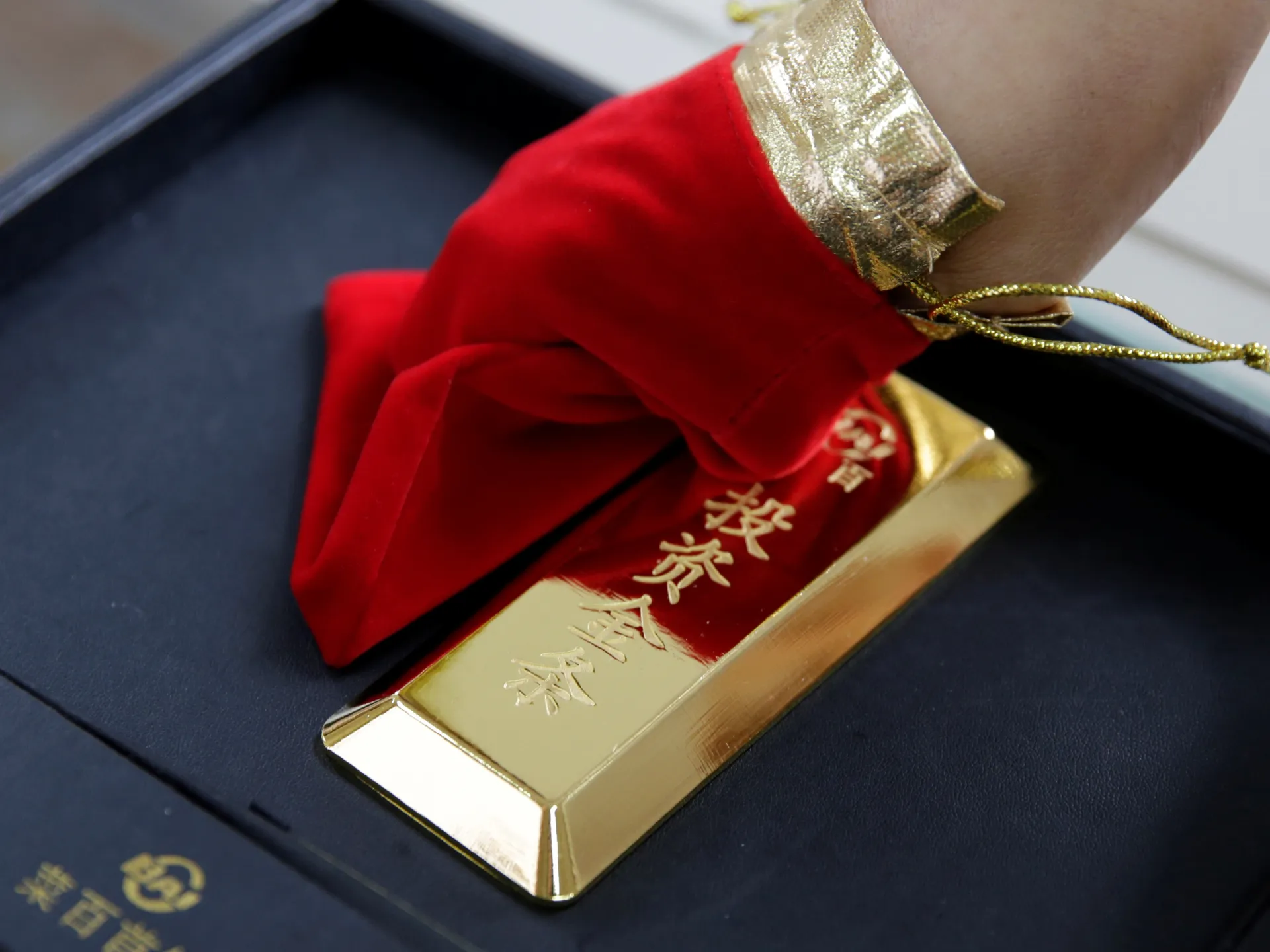
China is increasing its gold reserves in a bid to reduce its dependence on US dollar assets and protect against financial and geopolitical risks, analysts say, while households are turning to the precious metal amid uncertainty over the domestic economy.
The People’s Bank of China reported buying gold for a 23rd consecutive month in September, when the country’s central bank also made its largest monthly purchase in nearly three years. The sustained buying points to a longer-term effort to spread risk associated with its vast reserves, experts say.
Among concerns is high US debt and Western governments’ freezing of assets, which has highlighted the inherent risk in holding money overseas, particularly for emerging market and Global South economies. Gold bought and stored domestically offers protection against that risk because access does not depend on the will of another government.
But central bank buying and household demand for gold in China have different drivers. While Beijing is managing its financial exposure, private investors are seeking somewhere to preserve their savings. Here is what we know.
How much gold has China bought?
China’s central bank added approximately 23 tonnes of gold in September, bringing its reported holdings to about 2,410 tonnes, according to the World Gold Council. That was its largest monthly purchase since October 2023. Gold accounted for 8.5 percent of China’s total official reserves at the end of September, compared with 5.5 percent at the end of 2024.
Reserves are assets central banks hold to ensure they can meet international payments and respond to financial disruption. They usually include foreign currencies, foreign government debt and gold.
Private demand for gold within China has also risen, with purchases of gold bars and coins 28.4 percent higher in the first half of 2026 than during the same period last year, according to the China Gold Association. The buying of gold has continued amid falling prices, with gold down around 8.5 percent over the month.
The World Gold Council attributed the decline in gold prices partly to a stronger dollar and higher returns on US government debt. With interest rates going up in an attempt to curb inflation, these investments are attractive for buyers as they pay interest, making them more attractive to private investors than gold, which does not.
Why is China buying more gold?
A key objective is to reduce dependence on US government debt, known as Treasuries, according to Thu Lan Nguyen, head of commodity research at Commerzbank in Frankfurt.
China holds substantial reserves in dollar-based assets and, therefore, buying gold reduces its exposure to decisions taken in Washington. “China’s gold purchases are part of a broader effort to make its reserves more resilient,” Nguyen told Al Jazeera.
The freezing by Western countries of roughly $300bn in Russian Central Bank overseas assets following Moscow’s invasion of Ukraine in 2022 demonstrated how reserves held abroad can quickly become inaccessible.
The concern for China may be that a future confrontation with Washington could expose some of its overseas assets to similar restrictions. “Gold held domestically has a crucial advantage in this respect: it does not represent a claim on another country and is therefore much less exposed to sanctions or asset freezes,” Nguyen said.
“I would interpret it primarily as risk management,” she added, pointing to increased geopolitical tensions and economic and fiscal risks.
America’s rising debt, which hit $40 trillion for the first time in history earlier this year, adds another source of uncertainty. In February, the US Congressional Budget Office projected that federal debt held by the public would rise from 101 percent of the size of the US economy in 2026 to 120 percent in 2036. That provides context for concerns about Washington’s ability to repay that debt going forward should an economic crash occur. Much of this debt is held by China. Gold, therefore, offers a less volatile and risky asset to hold.
Chinese households have different motivations for buying gold. When confidence in other investments weakens, gold can become more attractive as a way to hold savings. “Strong demand for gold can partly reflect a search for alternative stores of value,” Nguyen said.
The World Gold Council has identified weak Chinese share markets as one factor supporting domestic demand for gold, while its property market is burdened by heavy borrowing and overbuilding, contributing to a fall in housing prices, making it a poorer investment.
What this means for the US dollar
Analysts warned that China’s increased buying of gold does not signal an imminent end to the dollar’s global dominance. “I would be cautious about describing this as a major shift away from the dollar,” Nguyen said. “The dollar remains by far the dominant global reserve currency.”
But a gradual shift could still matter if China and other central banks put more of their new reserves into gold, buying fewer US assets than they normally would. That could weaken one source of demand for US government debt. But the effect would depend on how widely and quickly the shift developed.
“The key point is, therefore, that this is likely to be a slow diversification process rather than a sudden abandonment of the dollar,” Nguyen said. She added that the consequences for the US economy would remain limited unless the trend broadened and accelerated substantially.
Central banks also need readily available foreign currency to support international payments and the dollar remains central to those transactions. So gold can provide financial protection, but it cannot directly replace all the functions of dollar reserves.
Who else is buying gold?
China is part of a wider trend, particularly among central banks in emerging economies, Nguyen said.
“The trend is particularly visible among emerging market central banks,” Nguyen said. “But sanctions are only part of the story.”
Poland has also become a more prominent buyer. Its central bank purchased 31 tonnes in the first quarter of 2026 and another eight tonnes in July, according to the World Gold Council.
Large holdings do not necessarily indicate recent purchases. India, for example, confirmed in June that its physical gold stock remained unchanged at about 880.5 tonnes. India’s gold reserves have changed little since mid-2025, according to the World Gold Council. It bought about four tonnes in 2025, down from 73 tonnes in 2024.
Despite China’s sustained buying, its reserves remain far smaller than those of the United States. Its holdings of about 2,300 tonnes at the end of 2025 amounted to less than one-third of the US stockpile of approximately 8,133 tonnes.
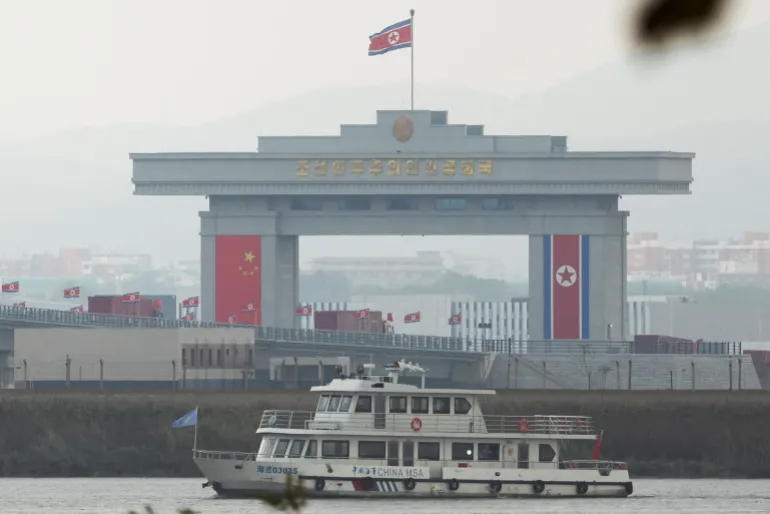
As China and North Korea cut the ribbon on New Yalu River Bridge this week, officials described the new border crossing in momentous terms.
Chinese Premier Li Qiang said the 3km (1.9-mile) bridge, which links China’s Dandong and North Korea’s Sinuiju, would “vigorously promote” trade and “strengthen emotional bonds”.
Recommended Stories
list of 4 itemsend of list
North Korean Premier Pak Thae-song expressed his belief that the crossing would “accelerate the advance for the prosperity of the two countries” and “add fresh vigour” to their economic cooperation.
Analysts on China-North Korea ties are much more circumspect.
While the bridge is a concrete symbol of China and North Korea’s efforts to revitalise relations that have waned from their Cold War-era peak, the prospects for trade are hindered by obstacles ranging from international sanctions to a North Korean leadership that prioritises security above all else, experts say.
“It reflects China’s renewed effort to strengthen its relationship with North Korea at a time of changing regional alignments,” Phillip Park, a professor at the University of North Korean Studies in Seoul, South Korea, told Al Jazeera.
“But whether this leads to substantially deeper economic integration, greater North Korean dependence, or a significant shift in Pyongyang’s strategic orientation remains an open question.
“The bridge could facilitate trade and logistics, but it does not remove international sanctions,” Park added.
A Chinese maritime patrol vessel travels along the Yalu River as trucks adorned with Chinese flags cross the newly opened New Yalu River Bridge into North Korea’s Sinuiju from China’s Dandong New Zone, as seen from Dandong, Liaoning province, China, on October 15, 2026 [Florence Lo/Reuters]
China, whose troops fought alongside Pyongyang in the 1950-53 Korean War, has long been North Korea’s most crucial economic benefactor.
China accounts for as much as 95 percent of official trade with the secretive country, which is among the world’s most diplomatically and economically isolated states.
Before the four-lane New Yalu River Bridge officially opened on Thursday, road and rail freight between Dandong and Sinuiju, the main route for China-North Korea trade, travelled exclusively via the ageing Sino-Korean Friendship Bridge.
Opened in 1943, the bridge, which has a single-lane road and a rail track, can only carry vehicles weighing a maximum of 20 tonnes.
Jae-woo Joo, a professor of Chinese foreign policy at Kyung Hee University in Seoul, said the new bridge could “tremendously” boost trade between the sides, including the transfer of components banned under sanctions against Pyongyang’s nuclear and missile programmes.
“It is therefore really significant to open this bridge with China,” Joo told Al Jazeera.
After coming under strain from North Korea’s nuclear weapons tests in the mid-2000s, Beijing-Pyongyang ties have warmed under Chinese President Xi Jinping and North Korean leader Kim Jong Un.
At Xi and Kim’s most recent meeting in June, their seventh summit since 2018, the leaders pledged to enhance cooperation in areas spanning trade, defence, agriculture, law, science and technology.
Analysts have, in part, cast Beijing’s deepening engagement with Pyongyang as a response to the latter’s growing ties with Moscow, which have included the deployment of thousands of North Korean troops to the front lines of Russia’s war in Ukraine.
Last month, North Korean and Russian officials opened the first road bridge linking their countries across the Tumen River.
Chinese President Xi Jinping walks with North Korean leader Kim Jong Un, right, to a reception following a military parade to commemorate the 80th anniversary of Japan’s World War II surrender held in front of Tiananmen Gate in Beijing, China, on September 3, 2025 [Mahesh Kumar/AP]
North Korea and China’s two-way trade grew 25 percent in 2025 to reach $2.74bn, according to figures from China’s General Administration of Customs.
Bilateral trade has continued to grow in 2026, jumping nearly 20 percent to reach $1.5bn in the first half of the year, putting it on track to reach its highest volumes since the COVID-19 pandemic.
But while growing, trade remains relatively minuscule in the context of global commerce.
With China’s overall trade hitting $6.36 trillion in 2025, North Korea’s contribution to the total was a little more than 0.04 percent.
Official trade between the neighbours also remains substantially below its 2010s heyday.
Trade hovered around $5-6bn throughout much of the decade, peaking at $6.45bn in 2013.
Economists have offered explanations for the slowdown that range from tightened sanctions to China’s waning reliance on imports amid its efforts to boost economic self-reliance.
Christopher Green, a senior consultant for the Korean Peninsula at International Crisis Group, said the new border crossing’s significance should not be overstated, considering that China-North Korea trade “is fundamentally driven by politics”.
“Lack of cross-border transit routes is not the main obstacle,” Green told Al Jazeera.
“If the bridge opening signifies a political desire on both sides to give political cover to rising trade volumes, then a boost to trade should follow,” Green said, describing ties up until now as “steady-as-she-goes” economic engagement.
“Time will tell. But the key is the politics of national security, not economics.”
Vehicles drive through a new bridge linking China and North Korea as it opened in North Phyongan province, North Korea, on October 15, 2026 [Cha Song Ho/AP]
As much as officials have hailed the New Yalu River Bridge as a reflection of Chinese-North Korean cooperation, the project had a long and torturous road to completion.
Construction began in 2011 and was finished on the Chinese side in 2014.
But North Korean authorities only completed roads and customs facilities on their side of the river this year following repeated pauses in construction amid tensions with Beijing.
“The 12-year delay certainly suggests that economic cooperation is more conditional than the language of friendship might imply,” Marco Mari, a PhD researcher at Bocconi University in Italy who studies China-North Korea economic ties, told Al Jazeera.
“The bridge can facilitate supplies and economic activity, while Russian support gives North Korea alternatives that diminish Beijing’s leverage,” Mari added.
“This does not necessarily imply broader economic reform or a comparable improvement in ordinary people’s lives.”
Chinese Premier Li Qiang, on screen, makes a speech through video conference as a new bridge linking China and North Korea opens in North Phyongan province, North Korea, Thursday, October 15, 2026 [Jon Chol Jin/AP]
Weiqi Zhang, an associate professor at Suffolk University who studies relations between North Korea and China, said the history of China-North Korea economic ties is littered with abortive projects, such as the Hwanggumpyong Special Economic Zone, a North Korean-Chinese development near Dandong.
“There were cases, like the Hwanggumpyong Special Economic Zone – established by China and North Korea – where China built infrastructure on its side, but North Korea didn’t even pave the road on their side,” Zhang told Al Jazeera.
“One reason is that, unlike its neighbours, North Korean government doesn’t really pay much attention to trade for economic development,” Zhang said.
“International trade is used by North Korea more like a foreign policy tool.”
With China wishing to demonstrate its “indispensability” as a trade partner and North Korea eager to strengthen their economic ties, trade is likely to grow, said Edward Howell, a lecturer in international Relations at the University of Oxford.
Even so, economic engagement will be subject to political considerations, Howell said.
“North Korea will obviously want to avoid facing any Chinese influence to change its economic model, but Pyongyang will want to reap the economic benefits of trade with its principal economic benefactor,” Howell told Al Jazeera.
Fuel theft cited in Baniyas-Homs leak as gas export line in Hasakah catches fire.
Published On 15 Oct 202615 Oct 2026
Two pipelines carrying gas and oil products were damaged in separate incidents in Syria, state media reported, the latest disruptions to the country’s energy infrastructure following a series of suspected sabotage attacks.
The state-owned Syrian Petroleum Company announced the damage on Thursday, according to the Syrian Arab News Agency (SANA). The incidents add to a number of attacks on Syria’s oil and gas network in recent months, as the government tries to revive its energy sector.
Recommended Stories
list of 2 itemsend of list
An explosion struck the Jbessa gas pipeline in southern Hasakah province in the late afternoon, hours after damage to a pipeline transporting oil products from the coastal city of Baniyas to Homs caused a fuel leak.
The company said the gas pipeline had been targeted in a “sabotage attack”, according to SANA.
Neither SANA nor the company named a suspect or group responsible for the attacks.
Repairs under way
Oday al-Satouf, head of the company’s media office, told SANA that a hole was found in the Baniyas-Homs pipeline in the Hadida area, west of Homs. Crews isolated the affected stretch and secured the surrounding area, he said, closing valves on either side of the damaged section. Repairs have begun, while other teams monitor the area for safety. State media said the leak was believed to be linked to an attempted fuel theft.
Al-Satouf said gas would continue to reach power stations through alternative arrangements, and that domestic gas supplies were unaffected, according to SANA.
A man fills a container with petroleum for heating at home in Suwayda, Syria [File: Elke Scholiers/Getty Images]
A string of incidents
More than a week ago, the company said an oil pipeline near Tal Hamis in the northeastern province of Hasakah was damaged in a sabotage attack. It added that authorities had arrested those responsible.
In late September, a fire broke out on a gas pipeline between al-Shoula and Deir Az Zor in the east, halting gas flows from the Jbessa plant to power stations, SANA reported. Hisham al-Saleh, a gas sector official at the company, said gas pressure in the area fell as crews worked to extinguish the blaze.
Syria has been working to restore its energy infrastructure and increase domestic oil production. That includes resuming operations at oil fields in Hasakah to supply refineries in Homs and Baniyas. In January, the petroleum company announced plans to transport crude from recently recovered fields to the two refineries as part of efforts to revive the sector.
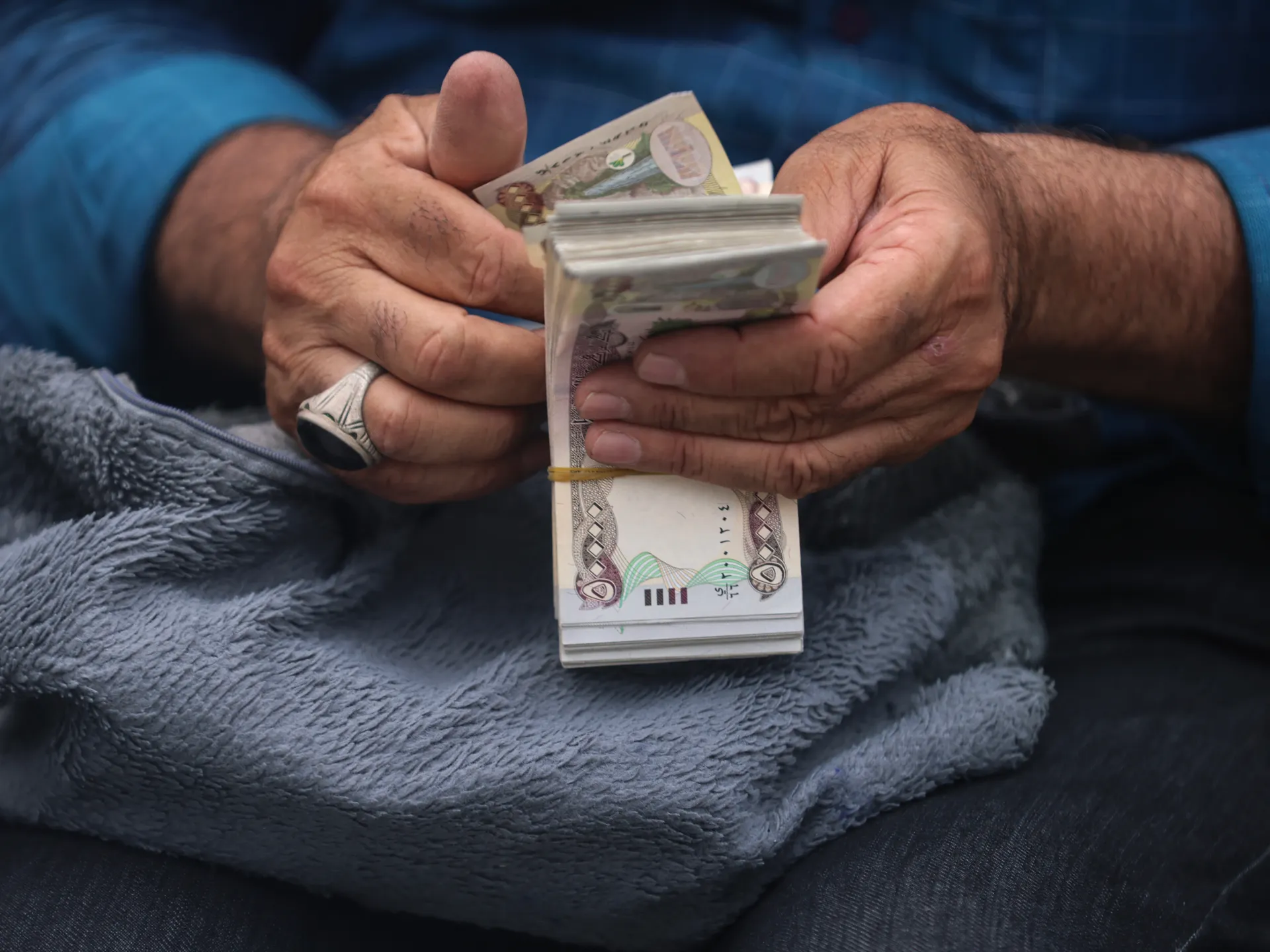
Baghdad, Iraq – Sitting anxiously in his small office in Jameela market, one of Baghdad’s main wholesale markets, food trader Hamza al-Rudayni is waiting to see what the coming days will bring.
A decision by the Iraqi government to devalue the country’s currency, the dinar, against the US dollar has left traders like him facing sudden losses and uncertainty over the prices they should charge for their goods.
Recommended Stories
list of 3 itemsend of list
“I don’t know what to do,” al-Rudayni told Al Jazeera after the devaluation reduced the dollar value of his dinar holdings, leaving him with less money to purchase imported goods.
“All I know is I woke up a few days ago to discover that I had lost 25 million Iraqi dinars (roughly $16,500 at the new exchange rate) because of this decision, while larger merchants lost billions,” he said.
Al-Rudayni entered the wholesale trade market last year after losing his previous job at a private Iraqi bank that he says was sanctioned by the United States Treasury. He sold his car and used his savings to start trading with a larger merchant before recently launching his own business.
With exchange-rate fluctuations making prices unpredictable, al-Rudayni said he and many other traders have chosen to suspend buying and selling until the situation stabilises.
“Market activity has ground to a halt,” al-Rudayni said. “Traders buy goods in dollars but sell them in dinars, as regulations prohibit them from selling in dollars.”
That is the root of the problem for traders: A weaker dinar means they have to pay more in local currency for goods imported in dollars, while making it harder to determine the right price they should charge customers for goods they already have in stock.
Why devalue?
On October 7, the Iraqi government introduced a new official exchange rate against the US dollar, in an attempt to ease a financial crisis triggered by the US-Israeli war on Iran and the disruption of oil exports through the Strait of Hormuz.
Before the war, Iraq exported around 3.5 million barrels of oil per day through the Strait of Hormuz, accounting for 90 percent of Iraq’s government revenue.
The Central Bank of Iraq decision set the rate at 1,520 dinars per US dollar for cash sales to the public. It was previously set at 1,320 dinars per dollar.
Devaluing the Iraqi dinar by almost 15 percent against the dollar allows the government to receive more local currency for every dollar of oil revenue it converts, helping it cover public spending, including government employee salaries.
“It is my decision and I am responsible for it,” Iraqi Prime Minister Ali al-Zaidi said during a meeting with parliamentary leaders on Thursday.
“I was facing three challenging options to cover salaries and other mandatory expenditures,” al-Zaidi added. “The first is to cut salaries by 35 percent … the second is to pay the salaries every 45 days … while the third is to resort to foreign loans.”
Al-Zaidi, a former banker, also said that his government had inherited public debt exceeding 208 trillion Iraqi dinars ($139bn at the new rate) when it took office in May. He said the government needed approximately 10 trillion dinars ($6.7bn) each month to cover salaries and other essential expenditure.
A shortage of liquidity
The crisis in the Strait of Hormuz had caused a severe financial squeeze for the Iraqi government.
Although the situation has eased somewhat in recent weeks after Iraq’s oil exports partially recovered, they have yet to return to their pre-war levels.
Mudher Mohammed Salih, the Iraqi prime minister’s financial adviser, said in August that the Central Bank of Iraq’s foreign currency reserves had declined from $106bn to approximately $80bn.
To make up for the loss of revenue, the Iraqi government has also turned to borrowing from domestic banks to cover salaries and other expenses.
A Finance Ministry official told Al Jazeera that ensuring salaries were paid on time remained the government’s main priority, describing this issue as a matter of domestic economic stability.
“Our hands are tied regarding the revenue and how to maintain enough money to ensure that we can pay the salaries,” the official, who asked to remain anonymous because he was not authorised to speak publicly, said.
Economists have warned that while adjusting the exchange rate could ease some immediate fiscal pressures, it would not address the deeper weaknesses in Iraq’s economy.
“Nothing in economics is sacred, including the exchange rate,” said Nabil al-Marsoumi, professor of economics at Al Maaqal University in Basra. “It can be adjusted, but only after all other options have been exhausted.”
“In any case, the exchange rate shouldn’t be used as a cover-up for failures in the state’s economic and fiscal policies,” he added.
The G20 finance ministers and central bank governors are gathering in Bangkok, Thailand, on Thursday amid an uncertain global outlook shaped by the US-Israel war on Iran.
The meetings are being held in conjunction with the annual meetings of the International Monetary Fund (IMF) and the World Bank, taking place in the Thai capital from October 12 to October 18.
Recommended Stories
list of 4 itemsend of list
Here are some of the key details about the meetings:
What are the G20, the IMF and the World Bank?
The G20 is an economic forum comprising 19 large economies, including the United States, China, the United Kingdom, Australia, Brazil, India, Japan, Indonesia and Saudi Arabia, as well as the European Union and the African Union.
The grouping has an annually rotating presidency, currently held by the US.
Together, the G20 countries account for about 85 percent of global gross domestic product (GDP) and three-quarters of global trade.
The G20 was established in 1999 as a forum for finance ministers and central bank governors to address shared economic concerns in the wake of the Asian Financial Crisis, before expanding into a broader forum for national leaders.
The IMF, based in Washington, DC, is an international financial institution that promotes international cooperation on monetary policy, trade and economic growth.
Its membership includes all but a handful of the world’s sovereign states, including North Korea, Cuba, the Vatican City and Monaco.
The World Bank, also based in Washington, DC, primarily serves as a provider of loans and grants to developing countries. It has 189 member countries.
The IMF and the World Bank were created at the 1944 Bretton Woods conference in the US, convened by the Allied Powers to establish the contours of the post-World War II international financial order.
Who will be attending the meetings?
Most finance ministers and central bank governors of the G20 will be in Bangkok, along with IMF Managing Director Kristalina Georgieva and World Bank Group President Ajay Banga.
US Treasury Secretary Scott Bessent will be a notable absence from the gatherings, as the top economic official of the world’s biggest economy and G20 chair.
US officials have cited “domestic engagements” for Bessent’s decision to skip the events, at which Washington will be represented by Deputy Secretary Francis Brooke and Undersecretary for International Affairs Erin Browne.
The G20 meeting, one of several gatherings of the group’s finance ministers each year, will help shape the agenda for the headline leaders’ summit in Miami, Florida, taking place on December 14-15.
What is on the agenda?
The economic fallout from the US-Israel war on Iran is expected to dominate discussions.
Attacks across the Middle East have upended economic activity across the region, while disruption to shipping in the Strait of Hormuz has driven a surge in energy prices worldwide.
Crude oil prices have exceeded $100 a barrel for much of the past eight months, placing a strain on government coffers and household budgets, particularly in the Gulf region and the rest of Asia.
In advance of the meeting, Australia’s Treasurer Jim Chalmers MP said he would use the discussions to call for an end to the conflicts in the Middle East and the reopening of the Strait of Hormuz “because that’s what the global economy desperately needs”.
“The war in the Middle East is having a devastating economic impact and is pushing up fuel prices, inflation and interest rates around the world,” Chalmers said in a statement.
Other issues likely to feature on the agenda include the ballooning debt levels of many countries, which exceed 100 percent of GDP in the US, Canada, Japan, Italy and France.
In a speech on Wednesday, Georgieva warned that mounting debt posed a threat to the global economy and that there was no “magic” formula that would allow governments to avoid tax hikes or spending cuts.
G20 members will also bring more specific individual concerns to the table based on their economic and geopolitical priorities.
The US, for example, has repeatedly expressed concern about “global imbalances”, a veiled reference to China’s state-driven industrial model that has allowed Chinese exporters to flood overseas markets with cheap goods.
US President Donald Trump has long claimed that China’s large trade surplus, which stood at a cumulative $938bn in September, proves that international trade is stacked against US manufacturers.
In a statement addressed to the IMF on Wednesday, Bessent called for action to address mismatched trade balances.
“This especially includes strengthening its analysis and engagement on the role non-market policies and practices and exchange rates play in driving external imbalances,” Bessent said.
“Policymakers around the world are having difficult discussions about how to sustain market-based systems amid distortionary policies from some economies that skew competition and hurt employment.”
Divisions and competing interests cloud the prospects for coordination, however.
At the last meeting of G20 finance ministers in Asheville, North Carolina, US, held on August 31 and September 1, member countries failed to issue a joint communique after China objected to language to do with trade.
The President’s ally says conservatives “cannot give an inch” in Latin America as he accepts an award in Washington.
Published On 15 Oct 202615 Oct 2026
Argentine President Javier Milei has urged his ally, US President Donald Trump, to come out of the United States midterm elections in a stronger position, calling the vote important for the West as a whole.
Milei made the appeal on Wednesday at a Hispanic Heritage gala in Washington, where a Hispanic association gave him an award, ahead of November’s vote.
Recommended Stories
list of 2 itemsend of list
Conservatives, he said, “cannot give an inch in our reconquest of the hemisphere”, according to Agence France-Presse (AFP).
Milei flew into the US capital on Wednesday for meetings with investors and the gala. He is due to address the US Chamber of Commerce on Thursday.
Argentina’s President Javier Milei attends the Hispanic Heritage Gala in Washington, DC, on October 14, 2026 [Alex Wroblewski/AFP]
Milei’s lifeline
Trump firmly backed Milei a year ago, when his government also faced crucial legislative elections. He has called Milei his “favorite president”.
That backing, together with a currency swap agreement with the US Treasury, helped Milei to success in those polls, analysts have argued.
The centrepiece of the package, announced by Treasury Secretary Scott Bessent, was a $20bn swap with Argentina’s central bank, in which the US exchanged dollars for pesos. The swap came shortly after Milei’s party lost a key provincial election.
Trump made clear at the time that the support hinged on a Milei victory. “I’m with this man because his philosophy is correct,” he said ahead of a White House lunch with the Argentine leader. “If he wins, we’re staying with him. And if he doesn’t win, we’re gone.”
Trump also warned that the US would not be “generous” if Milei lost. The remarks unsettled Argentine markets, with the main stock index giving up earlier gains and falling about 2 percent, The Associated Press reported.
The package drew criticism in the US. Democratic lawmakers accused Trump of prioritising a foreign bailout while the US government was shut down.
Economists divided on Fed rate hike as inflation creates uncertainty in run-up to US midterm elections in a tense market.
United States consumer prices jumped in September in the final inflation report before the midterm elections, increasing chances of an interest rate hike later this month.
Annual inflation accelerated to 3.7 percent, up from 3.4 percent in August. On a monthly basis, prices rose by 0.6 percent, according to the Consumer Price Index report released by the Labor Department’s Bureau of Labor Statistics (BLS) on Wednesday.
Recommended Stories
list of 4 itemsend of list
Petrol prices led the surge as tensions between the US and Iran, as well as Russia and Ukraine, weighed on global energy prices. Petrol prices rose 9.1 percent in September, accounting for more than half of the CPI monthly increase, according to the BLS. They were up 34.2 percent from the same time a year ago.
“The directionless war in Iran continues to disrupt global supply chains, driving up the prices of food and fuel,” Kyle Moore, chief economist at The Century Foundation, an economic think tank, said in a statement provided to Al Jazeera.
Petrol prices have continued to climb. The average price for a gallon of petrol is $4.33 ($1.14 per litre), compared with $4.31 a month ago, according to the American Automobile Association (AAA), which tracks daily petrol prices. Diesel prices are higher, at $6.29 per gallon (1.66 per litre), compared with $6.23 a month ago.
In a post on X, Patrick DeHaan, head of petroleum analysis for GasBuddy, said, “2026 has now seen more days with average gas prices over $4/gal than any year before: 158 days.”
Shelter costs also jumped 0.4 percent from the previous month, following a 0.3 percent increase in August. Food costs were a bright spot in the report, remaining unchanged overall.
Food away from home, including restaurant meals, rose 0.2 percent, but that increase was offset by a 0.1 percent decline in food-at-home prices, which track grocery costs.
At the grocery store, poultry prices jumped 0.7 percent, fruit and vegetable prices rose 0.5 percent, and juice prices increased 1.1 percent. However, milk prices dropped 2.1 percent and beef prices fell 0.9 percent.
Amid heavy investment in AI infrastructure, prices for computer software and accessories have jumped 28 percent from the same time last year.
“The AI boom is playing a huge part, and we have all read about the hundreds of billions being poured into data centers, AI firms, and models,” Rami Cassis, principal of Parabellum Investment, said in comments provided to Al Jazeera.
Fed pressures
The inflation data comes days before the US Federal Reserve’s interest rate decision later this month. Last month, the US central bank raised rates by 25 basis points, bringing the target range to 3.75–4.00 percent, the first hike in three years.
Economists are divided over whether the Fed will raise rates again or hold them steady. According to CME FedWatch, which tracks the likelihood of monetary policy decisions, there is a 52.9 percent chance that rates will remain in the 3.75–4.00 percent range, while a 47.1 percent chance of a quarter of a percentage point hike that would bring them to 4.00–4.25 percent.
The inflation data puts pressure on Republicans before the midterm elections on November 3. A recent Reuters/Ipsos poll showed that about 78 percent of Americans blamed US President Donald Trump’s policies for price increases.
US markets trended downward following the inflation report. The Nasdaq fell 0.8 percent and the S&P 500 dropped 0.6 percent, while the Dow Jones Industrial Average was roughly flat in midday trading.
The call comes as polls cast doubt on political leaders’ ability to manage AI risks amid US midterm elections.
A group of more than 300 scientists from around the world is calling for urgent changes to how artificial intelligence is developed and deployed amid growing concerns about its unpredictable behaviour.
The letter, released on Tuesday and signed by researchers representing universities and research institutes in 32 countries, warned that failures to follow basic cybersecurity practices could lead to damage to critical infrastructure.
Recommended Stories
list of 4 itemsend of list
Many recent incidents in which AI models escaped secure environments could have been prevented with stronger security systems, the scientists said.
They recommended that organisations developing and testing advanced AI systems capable of carrying out cyberattacks do so in more tightly controlled environments, including “air-gapped” systems that are not connected to the internet.
Growing concerns
The letter comes amid growing concerns about AI’s capabilities and its potential impact on everyday users. On Monday, Anthropic warned that its AI models could soon be capable of creating self-spreading malware that could affect everyday internet-connected devices, including smart TVs, security cameras and smart appliances such as ovens.
The report found that AI systems could identify unfamiliar devices without human intervention. The company, led by Dario Amodei, warned that smaller AI models could be capable of carrying out autonomous attacks by the end of the year.
The malware could also be difficult to contain because it might take days to infect a device and could spread across multiple machines rather than remain concentrated in a single, controlled location.
Taking control of internet-connected devices can have immediate consequences. In France, for example, hackers compromised cooling systems across hundreds of supermarkets, raising temperatures and causing more than $220,000 in damage.
Meanwhile, Axios news organisation reported on Friday that Anthropic, OpenAI and other major AI company executives are privately preparing for the possibility of a catastrophic AI-related incident that could disrupt access to major financial services, the internet and potentially critical infrastructure such as water and power systems. Several industry insiders believe a major incident could occur within the next six months to a year, it said.
The scientists also called for more safeguards, including the creation of an international organisation to establish a set of best practices for AI alignment and containment along with timely reporting of incidents.
One of the signatories, David Lie, a professor at the University of Toronto’s Department of Electrical and Computer Engineering, said his concerns began after OpenAI’s AI agents bypassed controls and hacked into servers at the tech company Hugging Face.
“One is that OpenAI, in setting up its test environment, didn’t appreciate how capable its agents were,” Lie said.
“These were the AI agents that they were designing. Second is that the AI agents independently found each other and chose to collaborate on this attack, and third is that they also intentionally tried to deceive and mislead their human creators.”
Political pressures
The letter underscores growing public concern about AI, including in the lead-up to the US congressional midterm elections. A recent Reuters/Ipsos poll found that 57 percent of voters said President Donald Trump’s administration was not taking AI risks seriously enough, while 54 percent said the same of Congress.
An AP-NORC poll echoed those findings, with about 80 percent of respondents saying the government should keep AI under human control. Respondents also expressed little confidence in either party’s ability to manage the technology: 39 percent said neither Republicans nor Democrats could be trusted to do a good job of reining it in, while 23 percent expressed greater confidence in Democrats and 21 percent in Republicans.
Iraq, Bahrain, Kuwait and Qatar face double-digit declines in GDP amid the fallout from the US-Israel war on Iran.
Published On 13 Oct 202613 Oct 2026
The economy of the Middle East and Central Asia is set to shrink in 2026 amid the fallout of the US-Israel war on Iran, with countries such as Kuwait and Qatar facing double-digit contractions, according to the International Monetary Fund (IMF).
The region’s gross domestic product (GDP) is forecast to contract by 0.3 percent this year, a sharp downgrade from the 1.9 percent expansion projected in April, the IMF said in its latest economic outlook on Tuesday.
Recommended Stories
list of 4 itemsend of list
The IMF cited the prolonged disruption to shipping in the Strait of Hormuz, a conduit for one-fifth of global oil supplies in peacetime, for the downgraded outlook.
Kuwait, Iraq and Qatar are forecast to have the most severe economic contractions, with their GDPs expected to shrink by 16.7 percent, 16 percent and 15.6 percent, respectively.
Bahrain’s GDP is forecast to contract by 11.3 percent, while Iran’s economy is projected to shrink by 7.6 percent.
Saudi Arabia, which has partially offset the hit to its energy sector by boosting oil exports through the East-West pipeline, is projected to record negative growth of 3.3 percent.
Kyrgyzstan is expected to have the strongest growth in the region, with GDP forecast to expand 9 percent.
The Middle East and Central Asia is the only region that is expected to experience negative growth in 2026.
Emerging and developing Asia’s GDP is forecast to grow 5.1 percent, while the economies of Sub-Saharan Africa and Latin America and the Caribbean are projected to expand 4.5 percent and 2.3 percent, respectively.
The United States and China, the world’s two largest economies, are forecast to register growth of 2.3 percent and 4.5 percent, respectively, while the eurozone’s GDP is estimated to grow 1.1 percent.
The IMF said it expected global GDP to grow 3.1 percent, up from 3 percent in its previous outlook.
The Washington, DC-based institution said while economic activity had proved resilient this year, the global economy faced multiple risks.
“Further escalation in conflicts, a reassessment of expectations surrounding artificial intelligence (AI), renewed trade tensions, and fiscal vulnerabilities could weaken growth,” it said.
“On the upside, stronger momentum in AI investment and productivity gains from AI or a sustained easing of geopolitical and trade tensions could strengthen growth.”
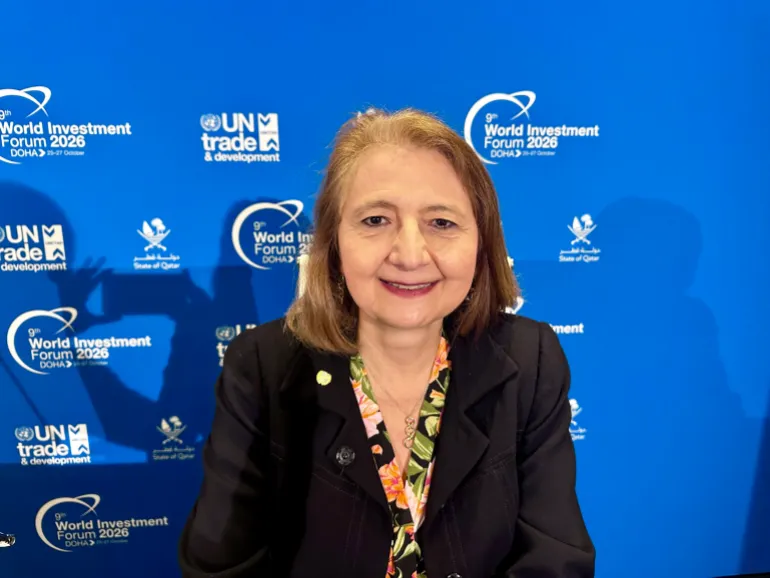
![Luz Maria de la Mora, director of the Division on International Trade and Commodities at UN Trade and Development (UNCTAD) [Urooba Jamal/Al Jazeera]](https://i0.wp.com/occasionaldigest.com/wp-content/uploads/2026/10/IMG_1959-1793042302.jpeg?w=640&ssl=1)
![Monica Mutsvangwa, the country’s Minister of Women Affairs, Community, Small and Medium Enterprises Development [Urooba Jamal/Al Jazeera]](https://i0.wp.com/occasionaldigest.com/wp-content/uploads/2026/10/IMG_1955-1793042225.jpeg?w=640&ssl=1)
![Sanjay Tanna, Uganda's Minister of Trade, Industry and Cooperatives [Urooba Jamal/Al Jazeera]](https://i0.wp.com/occasionaldigest.com/wp-content/uploads/2026/10/IMG_1969-1793042385.jpeg?w=640&ssl=1)
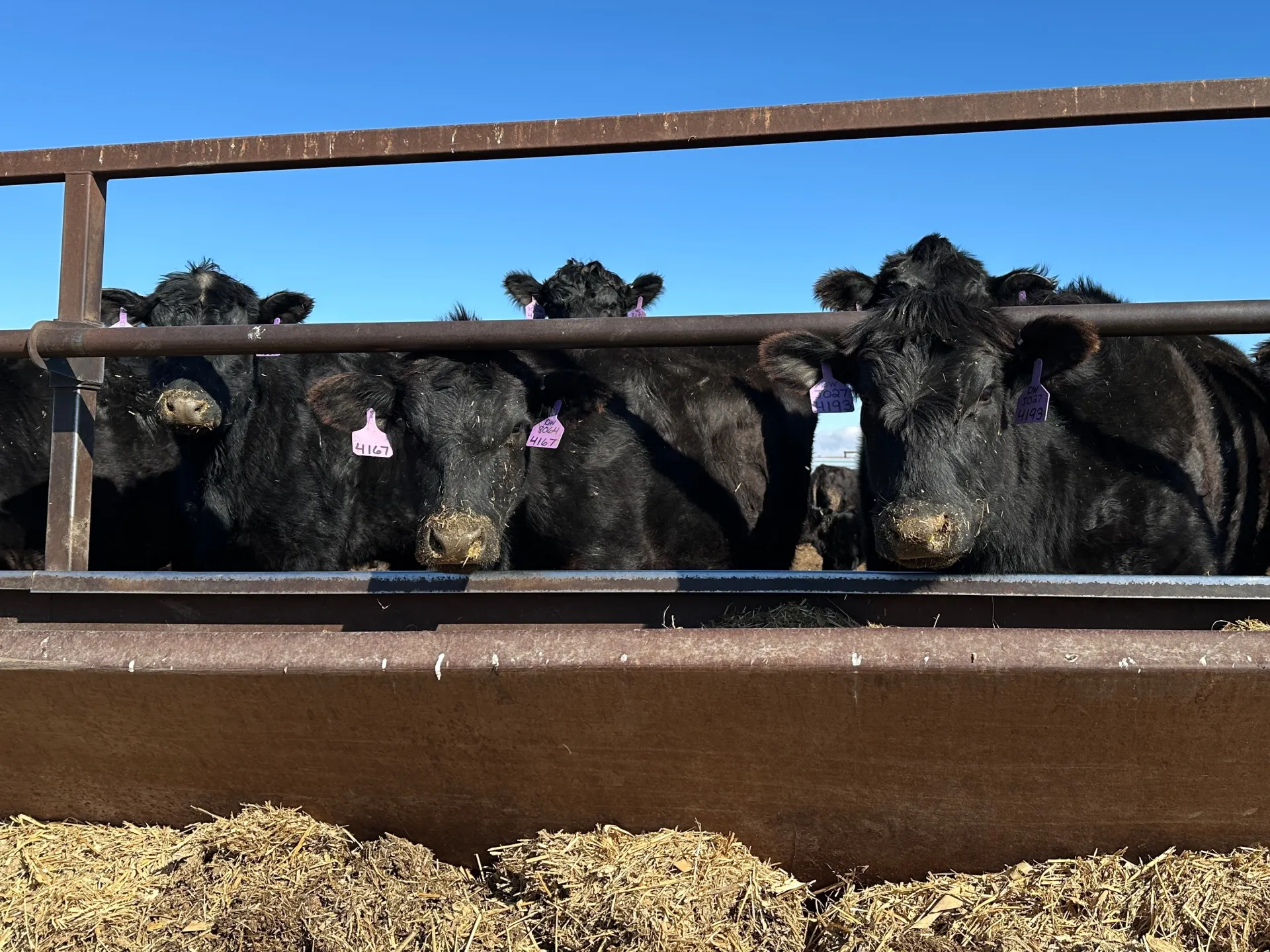



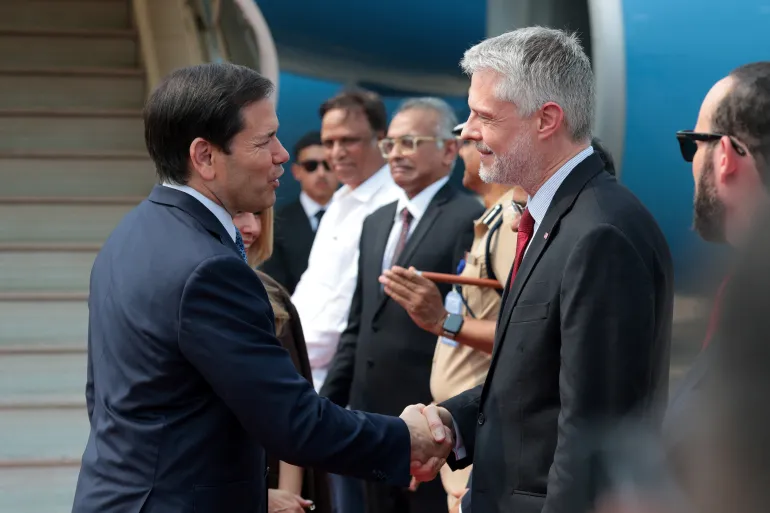


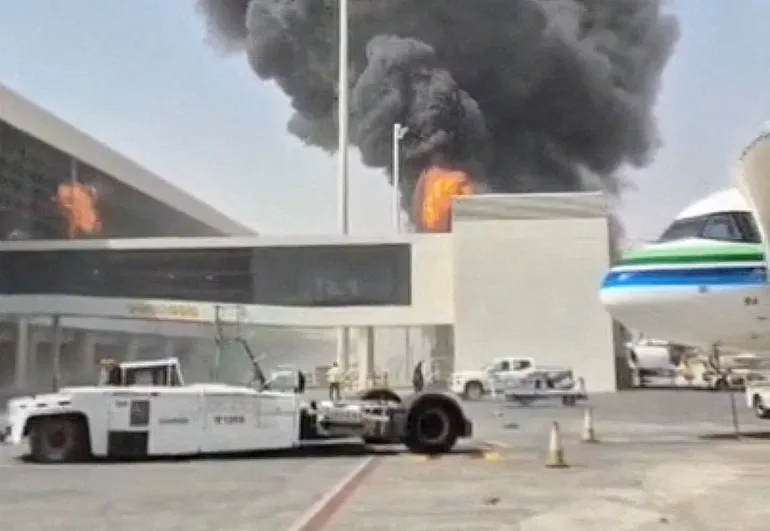
![Smoke and flames rise from King Khalid Airport, after Yemen's Iran-backed Houthis said they attacked the airport, in Riyadh, Saudi Arabia, October 8, 2026, in this screengrab obtained from a social media video [Reuters]](https://i0.wp.com/www.aljazeera.com/wp-content/uploads/2026/10/2026-10-12T233040Z_1811944814_RC231OANP5EH_RTRMADP_3_IRAN-CRISIS-SAUDI-YEMEN-WARNINGS-1792451959.jpg?w=640&ssl=1)