Burnham

UK PM Burnham says Iran likely behind RAF base incident: Is there evidence? | Military News

British Prime Minister Andy Burnham has said the UK’s security services have “strong indications” of Iranian involvement in the incident at a British Royal Air Force (RAF) station near Fairford this week in which five men were arrested before they were released on bail.

The five British men were spotted near the airbase and arrested on Sunday on suspicion of “terrorism” and explosives offences, before they were released.

Recommended Stories

list of 3 itemsend of list

The United States has used the British base to carry out operations in various conflicts, including to deploy bombers in its war against Iran.

Iran has strongly denied any involvement with the airbase incident, with Foreign Minister Abbas Araghchi saying British authorities are “barking up the wrong tree”.

So, what do we know about the incident, and is there evidence Iran played a role?

What happened at the airbase?

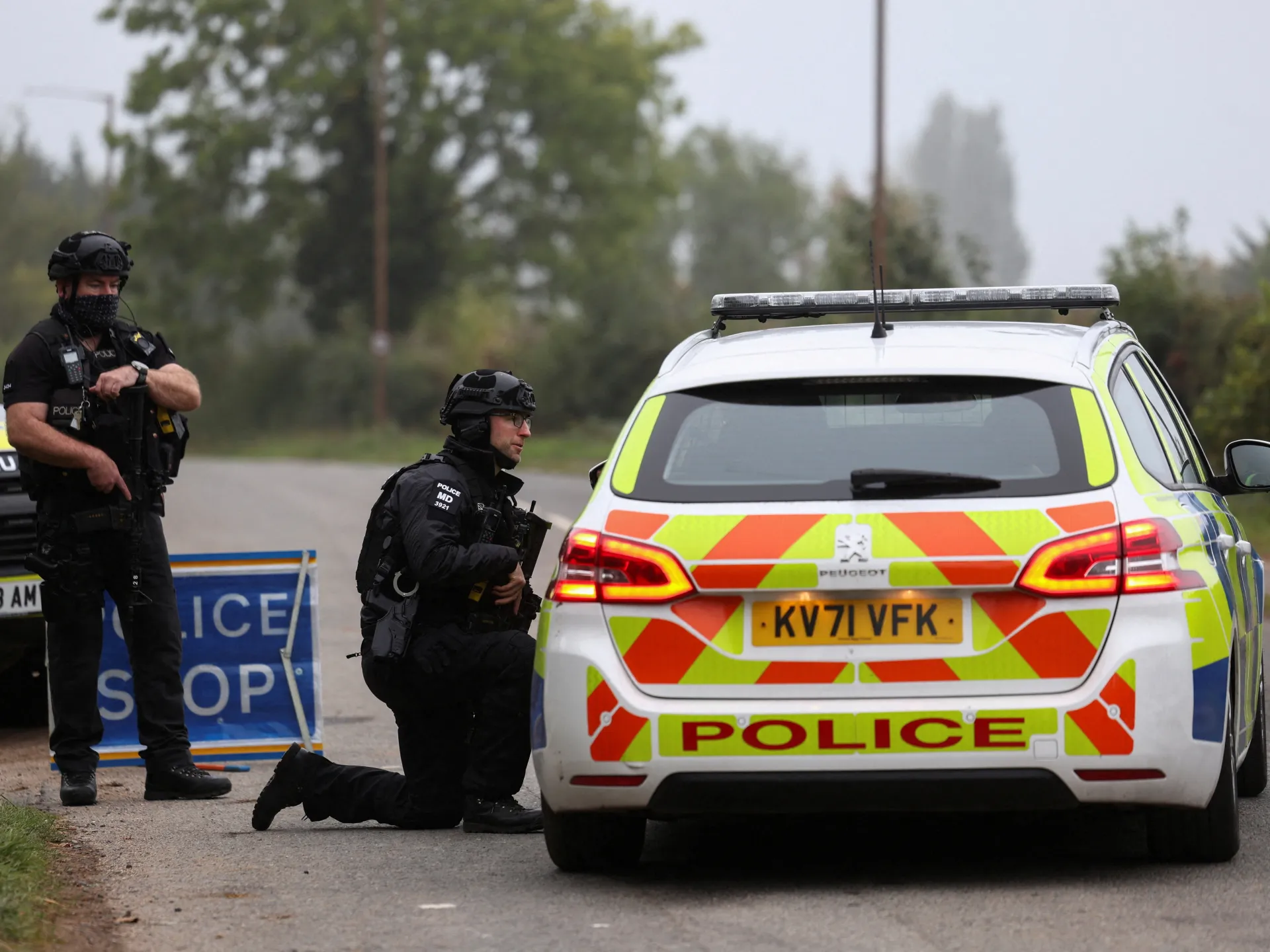
Authorities were alerted to suspicious activity near the base early Sunday morning, including three vans parked oddly and a group of hooded, masked men.

Police responded and arrested five British men in their early 20s in the nearby Whelford area, saying they were suspected of explosives offences. Counter Terrorism police later took over the probe and said the men were suspected of preparing “a terrorist act”.

The suspects were released on bail Monday, but remain subject to “stringent conditions on their movement and contact with others,” according to the United Kingdom’s head of counter terrorism policing, Laurence Taylor.

On Tuesday, after three days of investigations, including using a bomb disposal team, police said they had found no explosives in the vehicles that were parked the near the base, but had retrieved a “quantity of petrol”.

Who is linking the incident to Iran, and have they cited evidence?

Officials in the UK, the US and Israel have all pointed to Iran but offered no details.

Burnham on Wednesday spoke of “strong indications” of Iran’s involvement and said an “ongoing, complex and serious police investigation” is continuing.

However, the prime minister did not give any details on what the suspects were planning or why the UK thinks Iran was involved, saying only that he would “update people more in due course”.

In the US, President Donald Trump said the case “might be” Iran-linked and that the US had been keeping tabs on the suspects “for a long time”. Secretary of State Marco Rubio said the case “clearly involved the hands of a foreign actor”, without naming a specific state.

In Israel, Prime Minister Benjamin Netanyahu said Israel had forewarned the UK about a potential “Iranian-sponsored attack”.

How has Iran responded?

Iran has firmly denied involvement.

In a statement on Monday, Iran’s embassy in London said it “categorically rejects and strongly condemns” any attempts to link Iran to the individuals arrested near the airbase.

It said the spread of such “fabricated speculations” fuel “Iranophobia propaganda” and that Iran reserves the right to “take appropriate legal measures”.

On Wednesday, Iran’s Foreign Minister Abbas Araghchi said the UK was “barking up the wrong tree” by pointing to potential Iranian involvement.

Why has the UK released the suspects on bail?

It is unclear. Under British “counterterrorism law”, police can hold suspects for up to two weeks before charging them. However, if authorities find little evidence to support their initial suspicion of “terrorism”, they would have far less time – usually 24 to 36 hours, said Chris Phillips, a former head of the UK’s National Counter Terrorism Security Office.

“If it’s not an actual terrorist attack, then the police don’t have anywhere near as long to keep them in custody,” said Phillips. “I think the police just need more time to do their enquiries.”

Andrew Silke, professor of criminology at Royal Holloway, University of London, said the suspects could have also been released on bail while under suspicion of “terrorism” if “authorities feel relatively confident that these individuals do not pose an imminent danger of either carrying out or organising a terrorist attack”, such as if they had “peripheral” or “unknowing involvement”.

Afzal Ashraf, a visiting fellow in international relations and security at Loughborough University and a former senior Royal Air Force officer, said the bail release does not necessarily indicate that the “Iranian-involvement hypothesis has been rejected” but it does mean “police have judged that these individuals did not present any immediate danger”.

Taylor, the head of counter terrorism policing, said the men’s release on bail was an “investigative decision” based on “experience and careful considerations of policing powers.” He stressed that the men are bound by “stringent conditions on their movement and contact with others” as the investigation into them continues.

But their release drew backlash in the US from Trump, who said British authorities “should not have done that”.

“How do you give bail to a terrorist?” Trump asked.

Iran’s Araghchi appeared to suggest that the suspects’ release supported Iran’s position that it was not involved.

“I can confirm Iran’s belief that releasing supposed terrorists working for foreign states really says it all,” wrote Araghchi in a post on X.

What questions about the case are still unanswered?

Questions remain about the circumstances in which authorities were initially alerted to suspicious activity near the base, the extent to which they believe the suspects are linked to Iran and what the suspects may have been planning.

According to the BBC, police received two early-morning calls on Sunday regarding suspicious vehicles near the base, the first of which the media understands was made by one of the suspects themselves.

The Times of London reported that police are looking into the suspect’s motives for making such a call, including “whether he got cold feet or whether it was part of the plan”.

Authorities are also probing whether the incident was a form of “surveillance, a ‘dry run’ to test security or a stunt to send a message to the British government”, reported The Times.

Meanwhile, police have suggested they are looking into whether the suspects could have been unwittingly acting on Iran’s behalf.

In an updated briefing on Tuesday, Taylor said officials were examining whether the activity could have been “committed by proxies, or individuals either knowingly or unknowingly, working on behalf of a foreign state”.

He also spoke more generally about the “increasing breadth and complexity” of threats facing the UK, saying threats often emerge first as small-scale criminal activity, “committed by individuals whose primary aim is not terrorism but a quick financial gain”.

Phillips told Al Jazeera he believes the suspects could have been recruited online to carry out some type of malicious activity that falls short of a “terrorist attack”.

“It sounds as though these people have been paid online to do some naughty work”, such as “setting fire to something”, said Phillips.

He said both Russia and Iran have allegedly paid “stooges” to carry out such acts in recent years. “At first glance now, it seems that that may be the case, but time will tell,” Phillips added.

Royal Holloway’s Silke also said he believes the evidence suggests “a proxy explanation”.

“Certainly, there have been recent cases in Europe where individuals have been used unwittingly as proxies by foreign governments to carry out activities which have a hostile intent,” he said. “The UK authorities in this case may have assessed that something similar had happened here, and that the individuals involved had no inherent terrorist motivation themselves, but had been caught up unintentionally in a larger plot.”

Has Iran previously been accused of plots in the UK?

Yes. MI5 Director General Ken McCallum said in October 2025 that the agency had tracked “more than 20 potentially lethal Iran-backed plots” in the UK within a year.

McCallum alleged that Iran, along with Russia, has resorted to “ugly methods,” such as “surveillance, sabotage, arson or physical violence”.

British Security Minister Dan Jarvis has said Iran often uses criminal proxies to “obfuscate” its involvement in attacks, which have targeted Iranian dissidents and Jewish and Israeli people in the country.

In March this year, British police arrested four people on suspicion of helping Iran spy on the local Jewish community. The month after, police said they were probing possible Iran links to a series of arson attacks on Jewish targets ‌in London.

In June, two Romanian men whom British prosecutors said had acted as proxies for Iran’s government were handed lengthy jail terms for stabbing a British journalist of Iranian origin who wrote for an Iranian media outlet critical of Iran’s government.

Iran’s government has repeatedly denied involvement in any illegal plots or attacks on British.
Source link

UK‘s PM Burnham sets out plans to reshape public services | Politics

UK Prime Minister Andy Burnham is promising a major improvement to public services including social care, housing and energy. Al Jazeera’s Milena Veselinovic reports on what he’s proposing and what it could mean for the people of the UK.

Source link

Burnham set to nationalise Avanti West Coast services next year as Labour pledges to start ‘delivering for passengers’

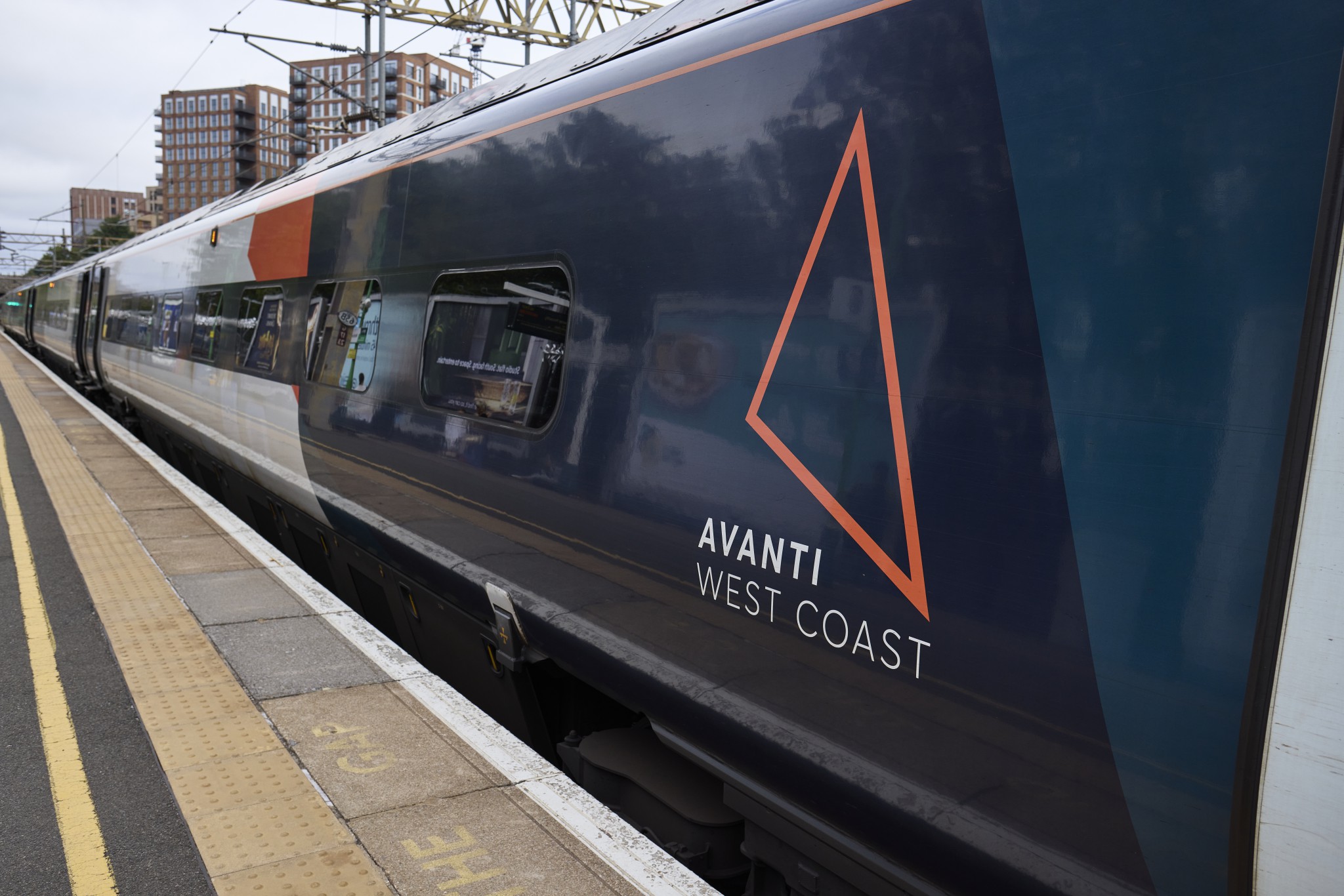
An Avanti West Coast train with its logo on the side at Watford Junction Station.
Credit: Jon Kempner

ANDY Burnham is set to nationalise Avanti West Coast next year as Labour pledges to start “delivering for passengers”.

The Government will take control of the private operator from March 7 as the PM said passengers had been failed “time and time again”.

Avanti West Coast Pendolino high-speed train traveling towards the camera at Rugeley Trent Valley station.
Avanti West Coast is set to be nationalised from next year, the government has announced Credit: Getty

An extra £10million is set to be invested in power and signalling maintenance in addition to £840million earmarked for infrastructure on the West Coast Main Line, reports ITV.

The government hopes timetable changes will also improve services for passengers as well as boosted WiFi connectivity.

It was also announced that Euston station in London will receive a £50million upgrade.

Transport Secretary, Heidi Alexander said: “For years, we’ve heard stories of Avanti underperforming, with passengers left paying the price. Enough is enough.

SAY HOLA

Spain’s last ‘secret’ island just off the mainland & it’s 28C next week


CAN I HAVE MAUR?

The African island with UK flights, hot winters & breakfast mango picking

“That is why we will bring Avanti into public ownership at the earliest opportunity, in March next year.

“This Labour Government is committed to putting essential services back in public hands, connecting people to opportunity and delivering growth in every postcode and this move reflects that commitment.

“We will also introduce a comprehensive improvement plan, focused on delivering for passengers, not shareholders.”

Avanti West Coast’s contract is due to come to an end on March 7, 2027.

That will leave East Midlands Railway and Cross Country as the only train operators yet to be nationalised.

Prime Minister Andy Burnham blasted Avanti, saying they had failed passengers “time and time again”.

In a post on X he said: “We’re putting essential services back in public hands and building a railway that actually works for the people who use it.”

It comes as Avanti West Coast recorded the highest number of cancellations in the UK this summer, according to analysis by The Times.

That is double the national average as they made 1.4million delay repay claims in the year to March – around a million more than in 2019, according to the outlet.

Andy Mellors, managing director at Avanti West Coast, said: “We’re proud of what we’ve achieved over the last six years – from refurbishing our Pendolino fleet and introducing our new Evero trains to running more services than ever before.

“Together, these improvements have given customers greater choice, more capacity and better connectivity, while we’ve continued to innovate to shape the future of the West Coast and wider rail industry.

“Over the coming months, we’ll work closely with the government to ensure a seamless transition into public ownership while remaining focused on delivering for our customers and communities.”

The Sun reported earlier this month how Avanti had cut back hundreds of its journeys in the run-up to Christmas.

A reduced timetable will also continue between Christmas and the new year due to engineering works, with the scheduled change aiming to “save taxpayers money“.

Source link

Andy Burnham expects to find ‘common ground’ with Trump in first meeting

Asked about the state of the relationship between the UK and US, the prime minister said he believes it is “as strong as it’s ever been”.

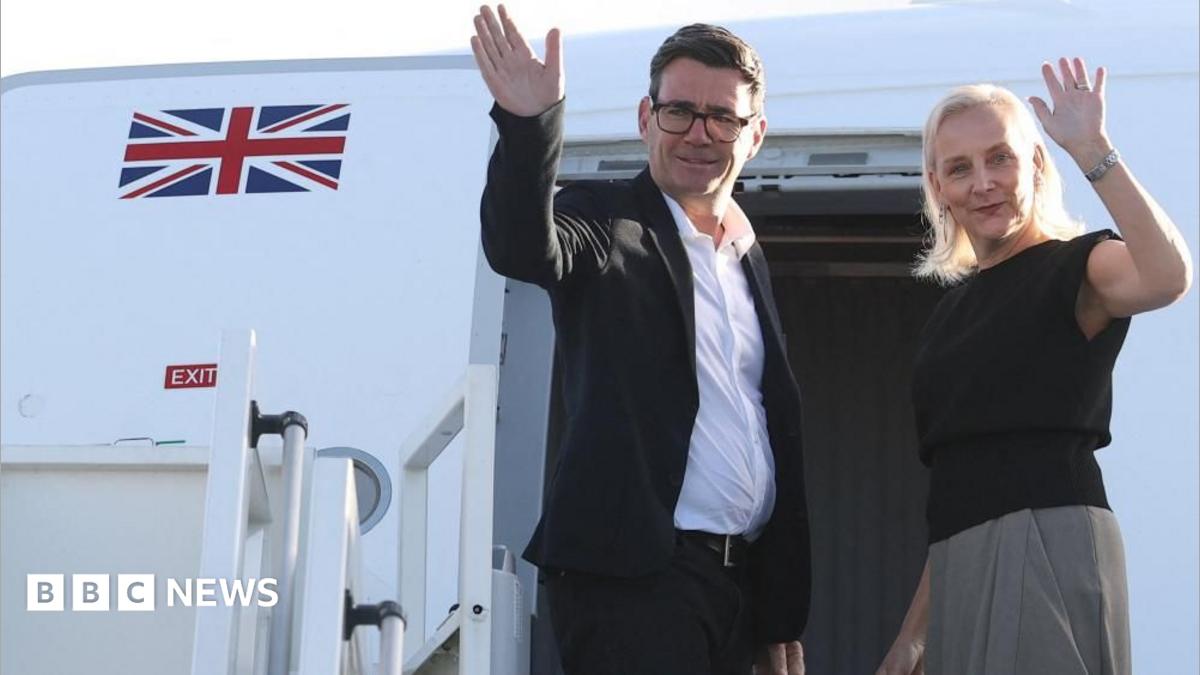
Burnham has travelled to New York with his wife, Marie-France Van Heel, for a day of diplomacy and a speech to the UN General Assembly, which is expected to focus on the opportunities and dangers associated with artificial intelligence (AI).

He said: “I will be making the case for closer international co-operation on AI, a just and lasting peace in Ukraine, and renewed efforts to bring an end to the conflict in the Middle East because what happens abroad impacts each and every one of us at home.”

The prime minister will also announce the start of work on a new AI and Autonomy partnership between the UK and the US, focused on protecting critical national infrastructure using AI tech.

Lib Dem leader Sir Ed Davey is expected to criticise this plan at the final day of his party’s conference, saying it “doesn’t come close to meeting the scale of the threat” and “only risks making us more dependent on a Trump administration in the pocket of the tech bros”.

He will also call for a global pause on superintelligent AI and propose a new International AI Safety Agency.

His criticisms come after a series of stark warnings from the AI industry about the technology’s possible dangers.

For a new British prime minister, the first meeting with a US president has always been a pivotal encounter, but officials are well aware of the added jeopardy of a public appearance alongside the most unpredictable president in American history.

In advance of the meeting, the UK revealed that the UK and the US have, for the first time, fired an American torpedo from a British undersea drone in a military exercise.

The torpedo, described as “heavyweight” by UK officials, is “designed to sink ships and deep diving submarines”, Downing Street said.

It was launched in UK waters last week from a 12-metre long undersea drone called Excalibur, made in Plymouth.

It is the first time either the UK or the US have launched a torpedo from an uncrewed underwater vessel, rather than a crewed submarine, and is seen as a breakthrough in attempts to protect vital infrastructure such as deep sea data cables.

“Our work together already shows what can be achieved when our two countries combine our expertise and innovation,” the prime minister said.

Burnham was also asked by reporters about the UK government seeking to hand over the Chagos Islands to Mauritius and pay to lease back the joint US-UK military base on Diego Garcia.

It was confirmed in April that the deal had been paused indefinitely because of Trump pulling his support.

Burnham spoke to the Mauritian prime minister, Navin Ramgoolam, on Monday.

He was asked by reporters to outline what he had told Ramgoolam, whether he supported the deal and if he had a plan to convince Trump to back it.

Burnham replied: “I said that we remain determined to secure the long-term operation of the base, which is crucial to our security and that of our allies.

“The assurance I gave was I will work towards a resolution, at the moment we don’t have that, but I gave an assurance that I would commit to working towards one.”

Source link

‘Culture shift’ needed in how UK does business, Andy Burnham urges

The UK needs a “culture shift” in how it does business, Andy Burnham has said ahead of a meeting with some of Britain’s biggest bosses.

The prime minister said those who take risks in business should be backed by government and local leaders should have the power to work with companies.

The Labour government has been criticised for increasing costs for firms, such as with the employer national insurance and minimum wage changes under Burnham’s predecessor Sir Keir Starmer.

The meeting comes as Chancellor John Healey prepares for his first Budget next month, with rising borrowing costs in recent weeks adding to the pressure on government finances.

Downing Street said Burnham will meet the chief executives of BP, Shell, HSBC, Morrisons, Sainsbury’s, BT, Vodafone, Rolls-Royce and several others at Number 10.

Ahead of the meeting, Burnham said he would give people “the confidence that if they have a great idea, they’ll get all the support they need to bring it to life”.

“When local leaders have the tools to get things done and government works in partnership with business, you can pull in investment, create jobs and transform communities,” he said.

He added the government would be “a partner for growth to make every part of Britain better off”.

Burnham will host a reception for the business community where local leaders are invited before a private engagement with senior chief executives at Downing Street on Monday evening.

The meeting comes as higher borrowing costs in the UK and other countries present problems for governments looking to spend money on business support or investment.

Separately, hundreds of hospitality businesses have written to the prime minister, calling on him to cut VAT for the sector.

More than 800 pub, restaurant and hotel bosses – include celebrity chefs Heston Blumenthal and Tom Kerridge – signed the letter asking for the hospitality VAT rate to be reduced from 20% to 10%.

When he was still Mayor of Greater Manchester, Burnham said he would argue for the tax to be in line with the lower rates seen in other European countries.

Source link