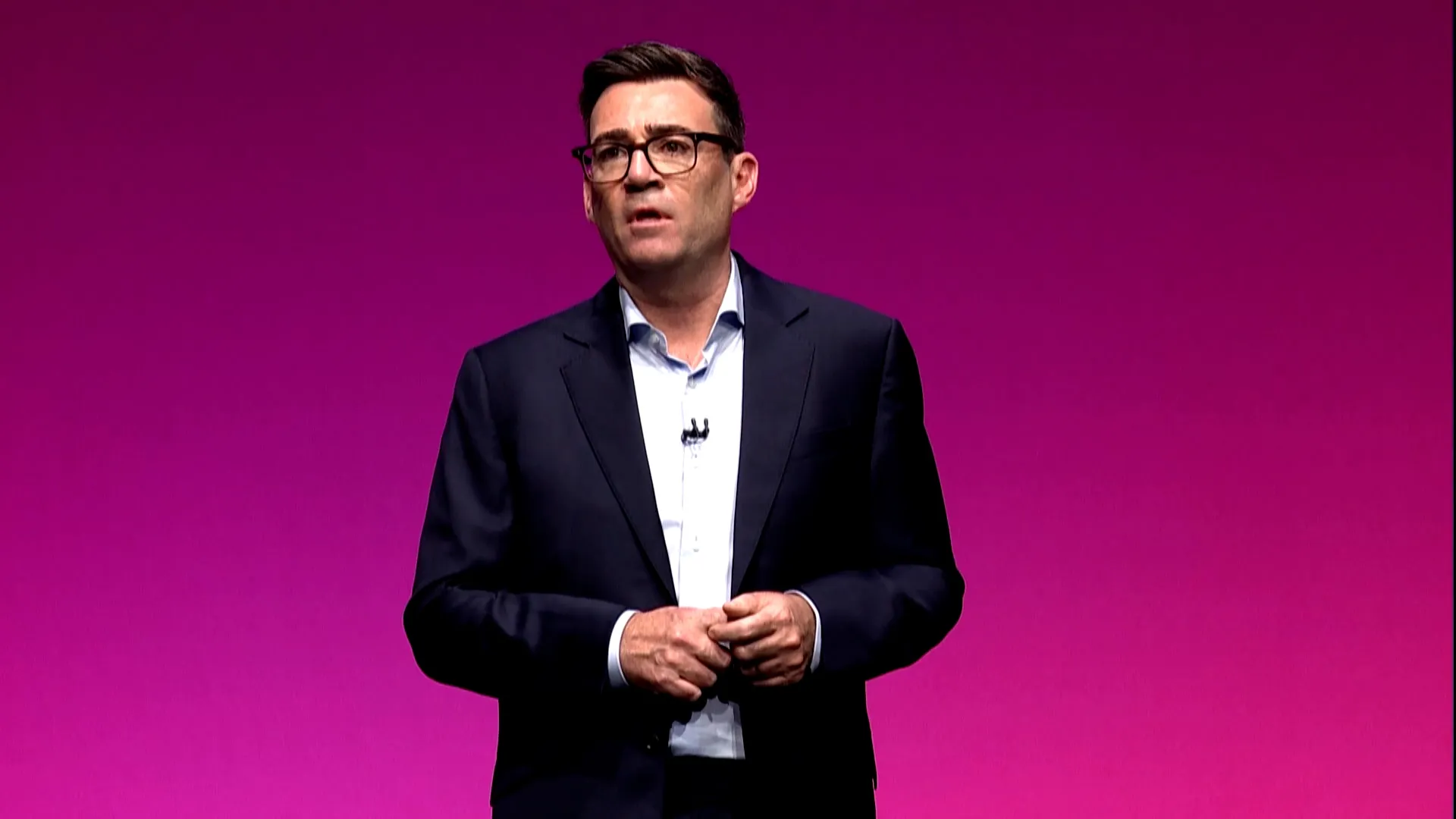
Burnham

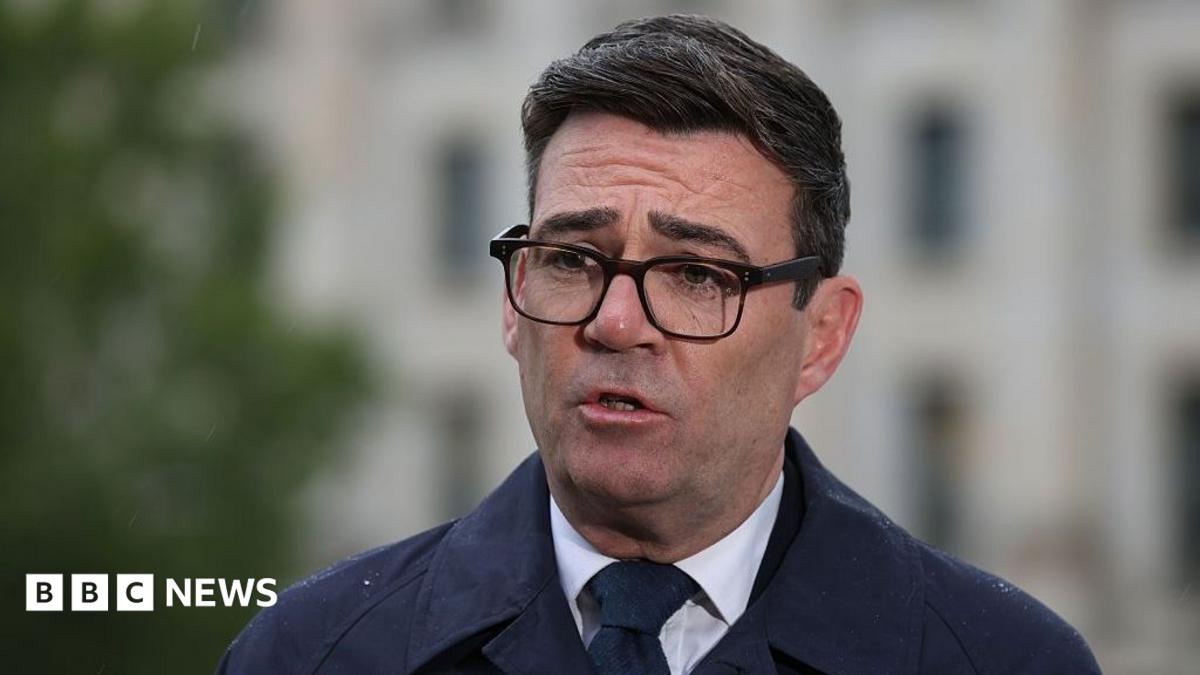
Andy Burnham tells BBC NHS ‘will collapse’ without social care reform

Andy Burnham has told the BBC “the NHS will collapse” if social care is not reformed but said he could not put a timeline on changes.

In his first major interview since becoming prime minister, Burnham said he would not want to leave office without bringing in “substantial change” to the social care system.

The prime minister also suggested making it harder to claim benefits, saying the country had to get serious about getting the welfare bill down.

Conservative leader Kemi Badenoch has meanwhile written to the prime minister, saying he should rule out tax rises or increased borrowing to fund social care reform.

Burnham told the BBC that if the government did not reform social care, the NHS would “collapse under the weight of trying to care for people who’ve really not needed to end up in the NHS system”.

But pressed on whether he would create a new system before the next election, he said he “couldn’t put a timeline on it right here, right now”, though he would put “whatever political capital I have into fixing broken social care”.

Burnham first proposed a universal system of social care in England in 2009 when he was health secretary under Gordon Brown and pursued the idea of a compulsory levy to fund it.

That Labour government also floated the idea of allowing people to defer the payment until after they died, which led to the Tories branding it a “death tax”.

Burnham is due to make a speech on adult social care on Wednesday.

The BBC understands the PM will stop short of unveiling plans for a new system in this speech, instead announcing he is speeding up the Casey Commission, an independent review that has been considering possible solutions for social care.

Baroness Louise Casey is not expected to give her final recommendations until 2028, but Burnham wants to bring her schedule forward.

Adult social care provides state support to help people live more independently, including assistance at home.

Unlike the NHS, social care is not free at the point of use. In England and Northern Ireland, people with savings worth more than £23,250 are not entitled to help with care costs from their council.

In Wales and Scotland, different rules apply in terms of eligibility.

Sarah Woolnough, chief executive of healthcare think tank the King’s Fund, said the current “punitive system” meant that “quite a lot of people go without care that they need”, with one in seven paying in excess of £100,000 for social care.

While Burnham has not yet outlined any plans, Woolnough told the BBC Radio 4’s Today programme that reforms could range from making social care free at the point of need to placing a cap on the amount people spend.

“The PM has for a long time mooted the idea of a social care system similar to NHS,” she said.

“It would be expensive but on the scale of what we spend on other public services – around £200bn on the NHS – we are talking for some of these options low billions per year.”

Adult social care has proved a complex issue to tackle for successive governments.

Two years ago Sir Keir Starmer was criticised when Labour scrapped plans for an £86,000 cap on the amount people in England would spend on social care in their lifetime.

Badenoch wrote in her letter to Burnham that “any solution to the issues around social care must also be fair to those who have made provisions and saved up over the course of their lives”.

Layla Moran, the Liberal Democrat MP who chairs the Health and Social Committee, told the Today programme: “We do need to discuss where the money is going to come from but also we need to all be putting our political capital into this.”

Lib Dem leader Sir Ed Davey said he was ready to do “whatever I can to find a real and lasting consensus on social care”.

“Family carers must be at the heart of any new system, everyone must get the care they need and no one should lose their home as a result,” he said.

Reform Treasury spokesman Robert Jenrick said social care needed fixing but warned the party would fight any proposal for a “universal death tax”.

He said: “It’s not fair to raid people’s life savings and drags hundreds of thousands more families into paying tax when their loved ones pass away.”

Source link

Britain’s Andy Burnham hosts President Volodymyr Zelensky at naval base

British Prime Minister Andy Burnham (pictured) was due to host Ukrainian President Volodymyr Zelensky at a Royal Navy base on Monday, marking his first international visitor since replacing Keir Starmer a week ago. File photo by Henry Nicholls/EPA

July 27 (UPI) — New British Prime Minister Andy Burnham was scheduled Monday to host Ukrainian President Volodymyr Zelensky at a Royal Navy base training Ukrainian forces.

Ahead of the visit, the first of any foreign leader since he got the keys to No. 10 Downing Street on July 20, Burnham told the BBC that he fully supported Ukraine and Britain’s “unwavering — 100%” backing for its ally would continue.

Burnham said the fact Zelensky was his first international visitor “illustrates the strength of the relationship between the two nations,” vowing to emulate the personal commitment to Zelensky shown by his predecessor, Keir Starmer.

“My support for Ukraine is unwavering — it is 100%. And I will do what, in Ukraine, people think is the right thing that they need,” said Burnham.

“Britain stands with Ukraine, shoulder to shoulder, and our support remains unwavering. Russia should be in no doubt of our resolve, and we will not back down until we achieve a long-lasting and just peace for Ukraine,” he added.

He will use the visit to the naval base to announce a deal permitting Ukraine to mass-manufacture Stone Cloak electronic warfare technology, which is fitted to drones to make them invisible to air defense radar.

Downing Street said that after Ukraine begins using Stone Cloak, it will be incorporated into Britain’s next generation of long-range weapons, including from Project Brakestop, which is developing low-cost cruise missiles.

Burnham said Stone Cloak was “the best of homegrown British innovation and proven on the frontline, and it will be vital to protecting our security in both our countries.”

Burnham and Zelensky will also meet with more than 200 Ukrainian service members taking part in Exercise Sea Breeze, a maritime training deployment involving Ukraine and 14 other countries aimed at boosting warfighting capabilities and tactics to deal with mines in the Black Sea.

In a post on X, Zelensky thanked Britain, saying that Ukraine valued that it could “always count on Britain’s principled decisions, leadership, and support.”

Total British support to Ukraine since Russia’s full-scale invasion in February 2022 is $33.3 billion, $21.3 billion of it military assistance, figures put out by Downing Street show, with bipartisan consensus across the previous administrations of Boris Johnson, Liz Truss, Rishi Sunak and Keir Starmer.

Starmer’s final act as prime minister was to visit with Zelensky in Kyiv on July 17, his last official day as leader of the Labour Party.

Astronaut Buzz Aldrin walks on the surface of the Moon during the Apollo 11 mission on July 20, 1969. Photo by NASA/UPI | License Photo

Source link

My dog Axel ‘wouldn’t get on’ with Larry the cat, says Burnham

UK Prime Minister Andy Burnham told Laura Kuenssberg his dog Axel will be staying in Greater Manchester and will not be moving to No 10 Downing Street.

Burnham revealed he does not think his poodle-mix would get along with Larry the cat, who has lived at the residence for 15 years.

Watch Panorama Andy Burnham: The Laura Kuenssberg Interview on iPlayer from 06:00BST, and on BBC One at 20:00BST on Mon 27 Jul 2026.

Source link

British PM Andy Burnham opens ‘No. 10 North’ office in Manchester

Police officers guard the entrance to Heron House, which will house No. 10 North while another site is under construction, in Manchester, England. The bee is the symbol of Manchester. Photo by Adam Vaughan/EPA

July 24 (UPI) — New British Prime Minister Andy Burnham held his first meeting at No. 10 North, his project to have official space in his hometown of Manchester, England, instead of keeping everything official in London.

Burnham, who was once mayor of Greater Manchester, said the new office will get “growth in every corner of the country,” the BBC reported.

The idea is to shift power from Whitehall and Westminster — the center of the British government — to other parts of the country. Manchester is about two hours by train from London.

Burnham told staff that the shift north showed he was rewiring the state.

“No 10 North is going to take that up to the next level. It’s not just a new office — through this place, power is going to flow, energy is going to flow, new ideas are going to come through,” Burnham said.

Conservative Party leader Kemi Badenoch called it a “gimmick”, and said it “does not make decision-making any better, it’s just creating another branch of the civil service in a different place.”

“It’s sending a message to everybody here who has come in to No 10 North in its early days that you’ve got the full support of government from the very top — prime minister, chancellor, first secretary of state — that’s a very powerful message that we’re sending today, that the political commitment is there,” Burnham said.

No. 10 North is at Heron House in Manchester temporarily while a new Civil Service Campus just outside of the city is being developed.

Burnham has faced some opposition to the project over costs, but he dismissed it as criticism from London.

Dai Davies, a former head of royal protection, has named Burnham’s Manchester base “Number 10A.”

“Number 10A will have to be strengthened,” he said. “And, of course, there’ll have to be a 24-hour-7 protection. So it’s going to cost us taxpayers millions in terms of technical security, surveillance, cameras,” The Guardian reported.

“Depending on where it is, it may have to have underground detection systems, it probably will have to have a safe room, and Manchester police will have to bear the burden of protection, in the uniform sense, 24-7, I suspect. So the real cost is many millions of pounds,” he said.

Burnham has pledged several progressive reforms, such as capping the cost of public transportation, cutting taxes on home electricity bills and easing the cost of living.

Opening the new Manchester center, Burnham described it as the best day of his life.

“I cannot tell you what a proud moment this is. I think this might be the best day of my life. I’m not joking either. I know you think I am, but I’m not,” Burnham said. “Things are just completely coming full circle here for me, and to be here with you all in the heart of Manchester this Friday morning, at the end of a fairly big week, is just everything to me.”

Astronaut Buzz Aldrin walks on the surface of the Moon during the Apollo 11 mission on July 20, 1969. Photo by NASA/UPI | License Photo

Source link

Burnham urged to lobby EU leaders directly to waive EES border controls | Travel & leisure

Andy Burnham has been urged to lobby EU leaders directly to suspend the new entry-exit system, EES, as the peak weekend for overseas holidays begins.

About 2.2 million British holidaymakers are expected to head abroad between Friday and Monday, the majority to Europe, with all schools in the UK now on their summer break.

Speaking at Heathrow airport on Friday morning, the Liberal Democrats’ foreign affairs spokesperson, Calum Miller, said the prime minister needed to call on EU states to drop the “bungled, malfunctioning border system” until at least September.

The EES, which requires non-EU citizens to register on arrival and be photographed and fingerprinted, has been technically in full force since April after launching last year, but border police have been allowed to relax requirements during extreme delays.

Holidaymakers queue in traffic at the North Macedonia–Greece border at the start of the summer tourist season. Photograph: Georgi Licovski/EPA

Some passengers, however, have still missed flights while others have had to queue for several hours.

Miller said: “Holidaymakers and hauliers should not be punished by a bungled, malfunctioning border system that is completely out of their control. Andy Burnham needs to pick up the phone to each and every European leader – and persuade them, collectively, to suspend the EES until at least September.”

He said a disastrous Brexit deal was “putting millions of Britons at risk of having their holidays ruined by this broken EU border system”.

The travel association Abta said Spain would be the main destination for people travelling abroad this weekend, with strong demand also for Greece, Portugal, Italy and Turkey. Its chief executive, Mark Tanzer, said passengers should leave plenty of time for their journeys.

“For many heading overseas, this will be the first experience of EES, and for some, though not all, it may take longer than usual to get through passport control,” he said.

The EU’s entry-exit (EES) system at Venice airport. Abta advised people to allow plenty of time for their journeys. Photograph: Sopa Images/LightRocket/Getty

Greece has already indicated it will not impose the additional biometric checks on UK nationals who make up the majority of its incoming non-EU tourists, while problems with technology provided to France means that automated booths at its borders are not working.

skip past newsletter promotion


The transport secretary, Heidi Alexander, has met EU commissioners and her French counterpart, speaking again last week to raise concerns. A government spokesperson said: “While the new EES checks are a matter for the EU, we recognise this is a significant change for British travellers and are doing everything we can to get people away on their summer holidays with as little hassle as possible.”

That includes money for EES facilities and management of traffic at the port of Dover. For cross-Channel traffic, the French border posts are in the UK – prompting concerns of tailbacks over the peak getaway period. But French border police have decided not to fingerprint or photograph car travellers at ferry ports or the Eurotunnel terminal and traffic has so far passed smoothly.

The port of Dover said it was expecting its busiest days of the summer on Friday and Saturday, with just over 10,000 cars on top of the usual haulage traffic, but that queueing time had not exceeded 40 minutes and had been as little as 10 minutes.

Return flights from Europe for UK citizens will be the biggest anxiety. EasyJet urged the EU on Thursday to extend the flexibility to suspend the EES until the end of October.

Source link

Burnham to spend first day working from No 10 North

Burnham’s first day as prime minister in No 10 North will include talks with business leaders, including representatives of the Federation of Small Business, the Confederation of British Industry and the British Chambers of Commerce, about how to generate growth and investment.

Labour wants to create a plan that would pull from existing devolution strategy and local growth policy, to allow civil servants, mayors, councils and businesses to work together more closely.

Burnham’s first week in power has seen him make a series of interventions aimed at easing the cost of living, including announcing a 20% cut in business rates for pubs, social clubs and live music venues from April next year.

However, Conservative leader Kemi Badenoch has criticised his ambitions for being “too small”.

Speaking on Thursday, she urged him to tackle high energy costs for businesses as well as a gap in defence funding.

“When you are mayor of Manchester, you are handed a big pot of someone else’s money, and you decide where to spend it,” she said.

“I’m sure this is great fun. It can make you very popular. But it is not the same as being prime minister.

“Andy Burnham needs to do better. He is behaving like he’s still the mayor of Manchester. He is now the prime minister of the United Kingdom, he needs to start acting like it.”

Source link

Millionaires ask Andy Burnham to tax them more

Millionaires including former footballer Gary Lineker and music producer Brian Eno have written to new prime minister Andy Burnham asking to be taxed more.

In an open letter, 120 well-off Britons told Burnham: “We can afford it. We’re not talking about higher taxes on those who get up and go to work for their income every day, but on the very richest whose income is derived from the wealth they hold.”

Organised by Patriotic Millionaires, the letter said it would lead to a more equal society, and urged a “devolution of wealth and power from the very richest”.

People can already quietly give money or stocks voluntarily to the Treasury using its donation facility.

The group supports a 2% tax on wealth over £10m.

“Millionaires are a patriotic bunch,” the letter states. “We love this country and we want it to succeed.

“But success requires investment and a primary source of untouched capital investment is sitting with us, in untaxed potential.”

The renewed call for higher tax on the wealthy follows a similar campaigns in previous years.

Burnham did not rule out a wealth tax when asked about it by Lineker a few days before he became prime minister.

He suggested he may have “to ask for a little more” tax at some point.

The latest call from Patriotic Millionaires said there is a “need to embrace a new kind of devolution of wealth and power, from the very richest in order to reinvest back into our greatest asset in every region”.

It added that in its own poll, the majority of millionaires wanted a higher tax on themselves.

“There are a few people left with outdated economic thinking and few others desperate to hold onto every penny they can… Those that can’t see past the end of their own self interest have no place in designing a Britain for the future,” the letter said.

Other signatories include film director Richard Curtis who directed Notting Hill and Ian Gregg, the former managing director of bakery chain Greggs, who is the son of the firm’s founder.

Source link

Burnham says he will review early prisoner release scheme

Andy Burnham has said he will review an early prisoner release policy, due to come into force this autumn, following anger that two killers of PC Andrew Harper could be freed early.

From September, thousands of offenders in England and Wales will be eligible to be released earlier under the Sentencing Act. Tens of thousands of inmates have been let out of prison to create more space in jails since 2024.

Burnham said: “I can’t say that I can change the policy completely, but I will look at it in detail before we go further forward.”

He acknowledged that there was “pressure on prisons places” and that a failure to invest in the prison system in the past had created “an unacceptable situation”.

His comments come after the mother of police officer Andrew Harper said the potential early release of two of her son’s killers felt like an “insult”.

Jessie Cole and Albert Bowers were sentenced to 13 years in custody for manslaughter but could be released early under the new Sentencing Act.

Henry Long was jailed for 16 years for PC Harper’s manslaughter but would not be eligible.

The overcrowding of the prison estate has been a problem for several years and successive governments have released prisoners early in a bid to free up space.

The Sentencing Act, which was passed by Sir Keir Starmer’s government earlier this year, was designed to ease pressure on prisons, and will see some offenders spend less time in prison before release.

Burnham said: “I want to assure myself that everything has been looked at before this policy proceeds, and I can give that assurance that every single part of this I will look into with the justice secretary.”

Concerning the case of PC Harper, he said: “I feel for the family it’s an appalling crime that was committed.”

He said the “main perpetrator” of his death would not be eligible for early release.

Source link

Can Andy Burnham Deliver Growth Without Spooking Investors?

Andy Burnham has officially begun his tenure as Britain’s prime minister with something few of his recent predecessors enjoyed: breathing room. After replacing Keir Starmer as Labour leader and becoming the United Kingdom’s seventh prime minister in just a decade, Burnham inherits an economy burdened by weak growth, strained public services and persistent cost-of-living pressures. Yet, unlike the turbulent starts experienced by previous leaders, financial markets have greeted his arrival with surprising calm.

That early confidence may prove one of Burnham’s greatest assets—or one of his greatest tests.

A Different Kind of Labour Leader

Burnham enters Downing Street with a political identity distinct from his predecessor. During his time as Mayor of Greater Manchester, he cultivated an image as a champion of regional development and public investment, earning the nickname “King of the North.”

Unlike Starmer’s cautious approach to fiscal management, Burnham has promised to “rewire Britain” through greater devolution, investment in public services, re-industrialisation and stronger local government.

Stay ahead of the geopolitical week.

MD Briefing delivers expert analysis across five global fronts — the Indo-Pacific, energy, geoeconomics, European security, and the Middle East — every Monday morning. Free.

Such promises normally raise concerns among investors wary of higher public spending. Yet markets have remained remarkably composed.

British government bond yields have stayed close to 5%, while sterling has strengthened against the euro since Burnham emerged as Labour’s preferred successor. Investors appear reassured by his commitment to maintaining Britain’s existing fiscal rules rather than pursuing aggressive borrowing.

Why Markets Are Staying Calm

Several factors explain why investors have not reacted negatively.

First, Burnham has avoided announcing sweeping fiscal changes during his first days in office. Instead, he has focused on politically popular issues such as healthcare, homelessness, defence and regional economic development.

Second, his appointment of former Defence Secretary John Healey as Chancellor suggests continuity rather than confrontation with financial markets.

More importantly, many economists believe economic policy will remain closely directed by Downing Street rather than being driven independently by the Treasury, reducing uncertainty over Britain’s fiscal direction.

This perception matters because markets today are extremely sensitive to fiscal credibility.

The Shadow of Liz Truss

Any discussion of British economic policy inevitably returns to September 2022.

Former Prime Minister Liz Truss’s unfunded tax-cutting budget triggered one of the worst government bond sell-offs in modern British history. Pension funds came under severe pressure, forcing the Bank of England to intervene to stabilise markets.

That episode fundamentally changed how investors assess UK fiscal policy.

The International Monetary Fund recently concluded that the crisis permanently increased the risk premium investors demand for holding British government debt. In other words, markets now react far more aggressively to any sign of fiscal irresponsibility.

Burnham understands this reality.

His repeated commitment to existing borrowing rules appears designed to reassure investors that Labour will not repeat past mistakes.

The Economic Tailwinds

Burnham also benefits from several favourable developments that could buy his government valuable time.

Inflation has moderated compared with previous years, reducing immediate pressure on the Bank of England to tighten monetary policy further.

Energy prices have also eased relative to their crisis peaks, while upcoming regulatory adjustments may further reduce household energy costs.

Another important advantage comes from the fiscal restraint maintained under former Chancellor Rachel Reeves.

Her adherence to strict borrowing limits has substantially reduced planned government debt issuance this year, giving Burnham more flexibility to adjust spending priorities without immediately alarming financial markets.

In effect, Burnham inherits a stronger fiscal starting position than many expected.

The Difficult Choices Ahead

Those advantages, however, are unlikely to last indefinitely.

Britain still faces sluggish productivity, weak investment, deteriorating public infrastructure and mounting demands for higher defence spending.

Burnham has also hinted at broader reforms that could eventually test investor confidence, including:

  • Greater public control over utilities.
  • Property tax reform.
  • Increased defence spending.
  • Adjustments to frozen income tax thresholds.
  • Possible changes to National Insurance contributions.
  • Expanded regional investment programmes.

Each proposal carries fiscal implications.

Delivering meaningful improvements in living standards while maintaining market confidence will require careful balancing.

The Reform UK Factor

Politics may ultimately shape economic policy more than economics itself.

Although Labour has changed leaders, Nigel Farage’s Reform UK continues to perform strongly in opinion polls.

If Burnham adopts an overly cautious approach that fails to improve public services or living standards, Reform could continue gaining political momentum.

That creates a dilemma.

Markets generally favour fiscal discipline, but voters increasingly demand visible economic change.

Burnham must therefore find a middle ground: ambitious enough to convince voters Labour can improve daily life, yet disciplined enough to convince investors Britain’s finances remain under control.

Why It Matters

Burnham’s premiership begins at a pivotal moment for Britain.

Economic growth remains weak, public confidence in government is fragile, and geopolitical uncertainty—from rising defence commitments to global trade disruptions—continues to weigh on the outlook.

Unlike many of his predecessors, Burnham enjoys a brief window of goodwill from financial markets. Whether he can convert that goodwill into lasting economic reform without unsettling investors may determine not only Labour’s electoral fortunes but also Britain’s broader economic trajectory.

Analysis

The first major test will come with Burnham’s autumn budget.

Investors will closely examine whether his government maintains fiscal discipline while introducing the reforms needed to revive growth and address Britain’s long-standing structural problems.

Markets will also monitor whether Labour can improve economic conditions quickly enough to halt the rise of Reform UK. If opinion polls continue shifting toward Nigel Farage’s party, investors may begin pricing in greater political uncertainty, reviving memories of the volatility seen during the Liz Truss government.

For now, Burnham has been handed two valuable gifts: investor patience and fiscal breathing space. Whether those advantages become the foundation of a successful premiership or simply a temporary reprieve will depend on the difficult choices his government makes over the coming months.

With information from Reuters.

Source link

Key takeaways as Andy Burnham becomes PM

In his first speech in Downing Street, Burnham announced he would “end rough sleeping in our country”.

This was swiftly followed by a No 10 press release promising an extra £340m for the task over the next five years.

He also promised a new 10-year plan for Britain – to be unveiled later this year – and to build a new economy, putting “life’s essentials back under public control”.

But arguing that people also needed “breathing space now”, he said announcements on tackling the cost of living would start on Tuesday.

Other changes he promised included changing the education system to help young people into work, building more council homes, and honouring commitments to fund defence while sticking to the UK’s spending and debt rules.

Source link

Andy Burnham to become British prime minister

Britain was set to get its seventh prime minister in 10 years Monday when the king invites Andy Burnham (L) to form a new government, only four weeks after the former Mayor of Manchester was elected to parliament in a by-election. Photo courtesy of House of Commons/EPA

July 20 (UPI) — Andy Burnham was set to become British Prime Minister on Monday after a private audience with King Charles III at Buckingham Palace, at which he will ask the former Manchester Mayor to form a government.

Burnham is expected to head to the palace late morning after outgoing Prime Minister Keir Starmer gives a farewell speech outside No. 10 Downing Street at around 11:15 a.m. local time and departs to make the 1-mile journey to meet with the king to officially tender his resignation.

Burnham will be the country’s seventh prime minister in 10 years and brings to five the number among those leaders installed in Downing Street by their respective parties and without initially winning a mandate from the electorate.

He takes over just two years after Starmer led the party to a landslide general election victory that returned Labour to power after 14 years in opposition.

On his arrival in Downing Street but before going inside, Burnham will make his first speech as prime minister in which he is expected to promise to give people “breathing space” from cost of living pressures.

Afterward, he will head inside for briefings on classified national security matters, including the launch codes for the country’s nuclear missile arsenal, before getting on with appointing his chancellor of the exchequer, foreign and home secretaries and the rest of his cabinet, as well as other ministers and departmental heads.

Burnham inherits a daunting in-tray of complex, deep-seated problems to tackle that Starmer was perceived as failing to get to grips with or failing to do so with sufficient pace, which led to his downfall.

Those issues include cutting spending on welfare, sickness and disability benefits which is projected to rise from its current $78 billion to $105 billion by 2030, finding $12.1 billion a year to fund the outgoing administration’s Defense Investment Plan, fixing the “social care” system that looks after the elderly in the community or in retirement homes, meeting a 300,000 a year house-building target, and getting over a million 16-24 year-olds into work.

What little specifics Burnham has set out include ditching a national digital ID scheme, easing a ban on new oil and gas drilling in the North Sea by allowing existing fields to expand into adjacent untapped areas, some form of public control of water utilities, and cuts to taxes on local businesses funded by major multinational corporations which currently pay a lower rate.

Emma Burnell of the LabourList website told the BBC that while the mood within the party was upbeat, members of the Parliamentary Labour Party believed it was their last chance to get it right.

“It’s going to be a long, hard project. I don’t think he’s going to be able to do it overnight, he will need to show that there is real, tangible progress being made,” she said.

In a letter to Burnham posted on X on Sunday, Conservative opposition leader Kemi Badenoch accused Burnham of lacking “a clear plan on any of the issues facing our country” and avoiding legitimate questioning regarding his intentions.

“You have refused calls to come to Parliament for questions from MPs, and you have not submitted yourself to serious media scrutiny. This is not a promising start.”

She vowed the Conservatives would back any bid to slash benefits, saying the country was in danger of becoming “a welfare state with a country attached” and called on Burnham to rule out tax rises and to grant new licenses to drill for oil and gas in the North Sea.

“Where we support your agenda, I will say so. But I will always stand against the instincts of Labour MPs for higher taxes and more spending,” wrote Badenoch.

Astronaut Buzz Aldrin walks on the surface of the Moon during the Apollo 11 mission on July 20, 1969. Photo by NASA/UPI | License Photo

Source link

Burnham confirmed Labour leader, vows new direction for UK | Newsfeed

NewsFeed

Britain’s governing Labour Party confirmed Andy Burnham as its new leader, clearing the way for him to become prime minister next week. In his first speech, he pledged to chart a new political and economic course, saying Britain needed a break from four decades of failed policies.

Source link

Andy Burnham to become British premier with overwhelming party backing

Andy Burnham (L) was set to get the keys to No. 10 Downing Street just 28 days after being sworn in as a Member of Parliament after winning the Makerfield by-election, a seat the sitting lawmaker vacated specifically to enable Burnham to make a run for the prime ministership.File photo by House of Commons/EPA

July 14 (UPI) — Newly elected Labour Member of Parliament Andy Burnham was set to become British prime minister uncontested at the beginning of next week after securing unassailable backing from fellow lawmakers.

On Tuesday, with two days of the nomination period for the leadership of the party still to run, the former Mayor of Greater Manchester had the support of 349 Labour MPs, making it a mathematical impossibility for another candidate to overtake him.

Candidates need the backing of 81 Labour MPs minimum to be nominated — equivalent to 20% of the party’s 403 lawmakers — but the level of support Burnham has means insufficient numbers of uncommitted MPs remain to nominate another candidate.

Endorsements he needs from three other affiliated groups, including two trade unions, were expected to be rubber-stamped.

As the lone candidate to replace Keir Starmer, who resigned on June 22 after six years at the helm and two years as prime minister, Burnham, 56, will formally take over as party leader on Friday and become prime minister on Monday.

Burnham increased his support tally from 322 MPs to beyond the threshold at which he could still be challenged after hustings to answer questions from Labour MPs on Monday night with the proceedings held in private.

The former MP and government minister, who quit Westminster politics in 2017 after two failed bids for the leadership of the party while it was in opposition, succeeded at his third attempt, staged via a parliamentary by-election in Manchester just three-and-a-half weeks ago, which he won easily.

Burnham has promised a drastic transfer of power to the regions and to build an efficient state with a “laser-like focus on growth and regeneration,” but has said little else, in part because, with no mandate from the electorate, he is hemmed in by the manifesto that brought Starmer to power in a landslide general election in July 2024.

Starmer was forced out amid falling approval ratings and losses at the ballot box in successive local and by-elections, as well as rebellions by his own MPs forcing policy U-turns, and the debacle over his appointment of Peter Mandelson as ambassador to the United States.

The final straw was a disastrous defeat to Reform UK in “mid-term” local elections in May, prompting defections from his cabinet and growing numbers of MPs calling on him to give way to Burnham, said to be one of the country’s most popular political figures.

Astronaut Buzz Aldrin walks on the surface of the Moon during the Apollo 11 mission on July 20, 1969. Photo by NASA/UPI | License Photo

Source link

From Manchester to Downing Street: What Burnham could mean for Palantir | Police News

London, United Kingdom – Should Andy Burnham enter Downing Street as early as July 17, if he is confirmed unopposed as Labour leader, one of his most consequential early decisions will have nothing to do with defence spending, immigration, or the economy.

It will concern a seven-year 330-million-pound ($440m) contract between NHS England and Palantir Technologies, a leading defence and intelligence software firm in the United States that received no contracts from Burnham’s Greater Manchester administration during his nine years as mayor.

Recommended Stories

list of 4 itemsend of list

The ramifications of such a decision could extend well beyond the NHS.

Media reports surfaced last week that Burnham is minded to hold that line with Palantir across all of the UK government when he arrives in Downing Street.

When approached by Al Jazeera, an Andy Burnham spokesperson said: “We’re not going to comment on individual government procurement contracts or companies and there are legal processes that must be followed.

“However, in general, Andy’s guiding principles on procurement are that we need to be getting value for money for the taxpayer and that we need to be safeguarding people’s data and British interests.”

For a company that has spent six years embedding itself across several public sector entities – the NHS, the Ministry of Defence, the Home Office, the Financial Conduct Authority – that posture is a real shift from the outgoing Labour administration led by Keir Starmer.

Starmer’s government actively courted US-based AI companies championed by the former UK ambassador to Washington, Peter Mandelson.

According to the Financial Times, which cited people briefed on the discussions, Burnham’s advisers, including former tech minister Josh Simons, are working with researchers Antonio Weiss and Martha Dacombe on a new AI strategy prioritising British companies and workers.

The story of how we got here runs through Manchester.

The Manchester precedent

Burnham served as Mayor of Greater Manchester from 2017 until June, when he returned to Westminster via the Makerfield by-election.

Under his leadership, the Greater Manchester Combined Authority issued no contracts to Palantir. Greater Manchester Police has separately confirmed it did not have a Palantir contract in the past five years.

The more instructive precedent, though, is in the NHS – an institution Burnham has no direct mayoral authority over, but shaped politically through Greater Manchester’s landmark health devolution settlement.

Rather than adopt the NHS England-mandated Federated Data Platform, built on Palantir’s Foundry software, Greater Manchester’s NHS leaders spent six years building their own analytics infrastructure instead. That became a proof of concept, which allies now cite nationally: effective NHS data management, they argue, does not require Palantir.

In May, Al Jazeera spoke to the Good Law Project about its concerns that Palantir was a “potential security risk”.

Some campaigners have interpreted recent political signalling from Burnham’s camp as supportive of their position, although a Good Law Project spokesperson said it has had no direct contact with him or his team.

The political context

In his first major speech since returning to Westminster as an MP, Burnham said he wanted social value to weigh more heavily in government procurement decisions. The reasoning, according to those close to him, is as much political as ethical.

Reports have described concern within his camp that “unfettered tech boosterism” risks alienating voters already uneasy about how much of the state now runs on American software.

Underneath that concern sits a more specific worry: that a company built to serve defence and intelligence clients does not necessarily share the values of an institution built to treat patients.

“A defence company has inherently different values than a healthcare organisation like the NHS,” said Duncan McCann, Technology and Data Lead at the Good Law Project, which has led legal action seeking greater transparency over the contract. “That’s where I think this concern was created.”

Palantir is not unique in this respect. Its origins in US defence and intelligence contracting are shared, to varying degrees, by most of the US AI firms now supplying British government departments – a lineage that, for critics like McCann, taints the whole category rather than one company alone.

What’s next?

The NHS contract is the most visible, but it is unlikely to be the only one making headlines this year.

A parallel battle is already under way in London, where Palantir has launched a High Court challenge after Mayor Sadiq Khan blocked a 50-million pound ($67m) Metropolitan Police contract, arguing the decision amounts to stifling free speech.

Khan’s office has since approved a smaller arrangement – a partial reversal that has done little to settle the underlying tension.

NHS workers contend that Palantir’s extensive support to the Israeli military will have inevitably contributed to Israel’s 804 attacks on Gaza health facilities [Vi Dimitrova/Health Workers for a Free Palestine]
NHS workers have previously contended that Palantir’s extensive support to the Israeli military will have inevitably contributed to Israel’s attacks on Gaza health facilities [File: Vi Dimitrova/Health Workers for a Free Palestine]

For campaigners who have spent years pushing for greater scrutiny of Palantir’s role in British public life, Burnham’s ascent could be the moment the tide finally turns. The NHS break clause falls in March 2027, but a decision needs to be made by December.

Burnham is expected in Downing Street later this month. He will soon decide whether Palantir has a future in Britain’s health service – and, by extension, in the rest of the UK’s public sector.

Al Jazeera reached out to Palantir for comment but had not received a response at the time of publishing.

Source link

Burnham pledges devolution and discipline if he becomes UK prime minister | Politics News

The frontrunner to succeed Keir Starmer was criticised for not taking questions after a speech setting out his policy vision.

Andy Burnham, the frontrunner to become Britain’s next prime minister, has vowed to “bring about the biggest rebalancing of power our country has seen” by handing more autonomy to the regions if he succeeds Keir Starmer.

In a speech on Monday setting out his policy vision, in Manchester where he spent nine years as mayor, Burnham pledged fiscal discipline and promised to reduce Britain’s ballooning welfare bill, having already sought to calm markets by committing to the government’s current borrowing limits.

Recommended Stories

list of 4 itemsend of list

“Growth cannot be ordered from the top down. Instead, it can only be nurtured from the bottom up,” Burnham said.

“If councils can’t fix potholes, what chance do they have of bringing forward major regeneration schemes to get growth going?”

He set out a 10-year plan to get “good growth in every postcode”, in a country where wealth and power are concentrated in London and the south of England.


Burnham won a by-election on June 18 to regain a seat in parliament, where he was sworn in on June 22, the same day Starmer announced that he will resign as soon as a successor is chosen.

Burnham is so far the only contender in the Labour Party leadership contest. If nobody challenges him, he will become prime minister by July 20.

Although he is considered more charismatic than Starmer, Burnham will face the same political and economic challenges, including a sluggish economy, tattered public services and a cost-of-living squeeze.

He will be constrained by the platform the Labour Party was elected on in 2024, with a pledge not to increase taxes on working people.

Like other NATO countries, Britain is also under pressure to dramatically increase defence spending to counter a more aggressive Russia and less reliable United States.

The government’s long-awaited defence investment plan is expected to be published before a NATO summit in Turkey on July 7 and 8. Starmer’s successor will be expected to stick to the commitments in the plan.

Burnham drew criticism from political commentators and opposition leader Kemi Badenoch of the Conservative Party for declining to take any questions after his speech.

“He doesn’t have a plan beyond telling the mayors to go and sort it out,” Badenoch said. “If he wants to be the leader of our country, it’s time to start acting like it.”

Source link

Andy Burnham says he’d hand more power to local governments if he becomes U.K. leader

Andy Burnham, likely the next U.K. prime minister, pledged Monday to give away a chunk of his power by handing greater autonomy to local leaders in a “circuit-breaker” for the sclerotic British state.

The former mayor of Greater Manchester also said he would move part of the prime minister’s office from London’s 10 Downing St. to northwest England as part of “the biggest rebalancing of power our country has seen.”

“Growth cannot be ordered from the top down. Instead, it can only be nurtured from the bottom up,” Burnham said in a speech aimed at bringing voters, Labour Party colleagues and financial markets up to speed with his economic vision.

Burnham is the strong favorite to replace Prime Minister Keir Starmer, who announced his resignation last week.

“If councils can’t fix potholes, what chance do they have of bringing forward major regeneration schemes to get growth going?” Burnham said. He set out a 10-year plan to get “good growth in every postcode,” in a country where wealth and power are concentrated in London and the south of England.

He said he would reverse almost two decades of low growth since the 2008 financial crisis through an approach dubbed “Manchesterism” — harnessing private and public money to invest in areas like transport, housing and infrastructure. He also pledged to create new industrial jobs and better educational opportunities, and to reform the U.K.’s inefficient and expensive privatized water and energy utilities.

Moving the new ‘No. 10 North’ to Manchester

During the speech at the People’s History Museum in the city where he spent nine years as mayor, Burnham said a new government office in Manchester – dubbed “No. 10 North” — would oversee regional development and become “the nerve center of a rewired Britain,” tasked with equalizing living standards across the country. Regional mayors would get more power over housing, welfare and education as part of his planned reforms.

Burnham’s rousing speech was short on specifics about where the government would find more money, and he didn’t take questions from journalists.

Burnham won praise for his role in revitalizing and regenerating Manchester, but he has not served in a U.K. government for almost two decades, and may struggle to replicate “Manchesterism” on a U.K.-wide scale.

The Institute for Public Policy Research, a left-leaning think tank, said Burnham is right to focus on “rebalancing Britain.”

“The U.K.’s concentration of power and opportunity in Westminster has held back growth, productivity and living standards for too long,” said IPPR Executive Director Harry Quilter-Pinner. “The real test now is delivery.”

Matthew Flinders, a politics professor at the University of Sheffield, said replicating Burnham’s Manchester approach on a national level would require “a fundamental shift” in the way politics is done in Britain.

“And at the heart of that would be moving from a very traditional, elitist, centralized model of politics toward something that is in many ways far more European, far more based on power-sharing in order to develop long-term policymaking capacity,” he said.

Burnham is likely to inherit Starmer’s challenges

Burnham will be aware that Starmer also announced a 10-year mission — the equivalent of two full terms in government —- to transform Britain soon after he was elected in a landslide in July 2024. Starmer is leaving after two years in office marred by missteps and judgment errors that eroded his standing with his party and the public.

Burnham won a special election for a seat in Parliament on June 18 and was sworn in as a lawmaker on June 22, the same day Starmer announced that he will resign as soon as a successor is chosen.

Burnham is so far the only contender in the Labour Party leadership contest. If no one challenges him, he will become prime minister by July 20.

While Burnham is considered more charismatic than the stolid Starmer, he will face many of the same political and economic challenges, including a sluggish economy, tattered public services and a cost-of-living squeeze. He will also be constrained by the platform the center-left Labour Party was elected on in 2024, with its pledges not to increase taxes on working people.

And like other NATO countries, the U.K. is under pressure to dramatically increase defense spending to counter a more aggressive Russia and less reliable United States.

The government’s long-awaited defense investment plan — which sparked the resignation of Defense Secretary John Healey on June 11 — is expected to be published before a NATO summit in Turkey on July 7 and 8. Starmer’s successor will be expected to stick to the commitments in the plan.

“Andy Burnham’s big idea is to shuffle power between politicians,” said opposition Conservative Party Chairman Kevin Hollinrake. “Not fix the welfare system. Not cut the taxes strangling working families and British business. Not fund the defense our country desperately needs.”

Grant and Lawless write for the Associated Press. Lawless reported from London. AP writer Brian Melley contributed to this report.

Source link

Starmer couldn’t master the media. Can Burnham? | TV Shows

Keir Starmer is out after a short tenure as prime minister during which he failed to connect with voters and much of Britain’s media. As Andy Burnham prepares to become the UK’s seventh prime minister in a decade, can he navigate a media landscape transformed by Brexit and the rise of Reform UK?

Contributors: 
Chris Painter – Professor, Birmingham City University
Peter Oborne – Journalist and broadcaster
Shehab Khan – Political editor, Zeteo UK
Polly Toynbee – Columnist, The Guardian

On our radar

A controversial luxury resort backed by Donald Trump’s family has sparked weeks of protests in Albania. With much of the country’s media looking the other way, Ryan Kohls examines how demonstrators are using independent journalism and social media to shape their own narrative.

Argentina’s Far-Right Rewrite of the Past

As right-wing populists take power across Latin America, they have waged a ‘cultural battle’ to reclaim the past. In Argentina, President Javier Milei – and a legion of supportive influencers and YouTubers – are revising how the country’s history of military dictatorship is remembered and debated.

Featuring:
Agustín Laje – President, Fundación Faro; YouTuber
Sol Montero – Professor, National University of San Martín

Reporter: Tariq Nafi
Producer: Ella Willis


Source link

Trump says UK’s likely next leader Andy Burnham is ‘extremely liberal’ | Donald Trump

NewsFeed

US President Donald Trump has made his first comment on the UK’s likely next leader describing Andy Burnham as ‘extremely liberal’. He also declared that Britain is ‘dying’ and urged greater oil drilling in the North Sea. The comments came after Keir Starmer announced plans to step down, with Burnham the only candidate to succeed him.

Source link

Britain’s Keir Starmer quits, Andy Burnham to run to replace him as PM

British Prime Minister Keir Starmer outside No. 10 Downing Street on Monday as he announces his resignation, pending the selection of a replacement. That will take between three and 10 weeks depending on whether there is more than one candidate. Photo by Neil Hall/EPA

June 22 (UPI) — Keir Starmer announced Monday that he was standing down as British Prime Minister, saying he had heard the message from his own party that he wasn’t the right person to lead them into the next general election.

“I will resign as leader of the Labour Party. I have spoken to His Majesty the King this morning to inform him of my decision,” he said in a televised address outside No. 10 Downing Street in London shortly after 9 a.m. local time.

Starmer said he had instructed the Labour Party National Executive to draw up a timetable to select his replacement with a 7-day nomination period starting on July 9 — which, provided there is more than one challenger — fires the starting gun on a race that would see a new leader and prime minister in place by Sept. 1 at the latest.

It could be much sooner if the party throws its support behind a single candidate.

Starmer said he would stay on as prime minister until the process was complete and vowed to do everything he could to “ensure an orderly hand-over of power.”

The move came hours before Andy Burnham, the politician tipped to replace him, was due to be sworn as a Member of Parliament on Monday afternoon after a decisive win in a by-election last week.

Burnham confirmed he would run to replace Starmer, pledging in a post on X there would be no interruption to the business of governing and vowing to deliver on “economic growth, cost of living, public services, housing and opportunities for the next generation,” if he became prime minister.

If the nomination period comes to a close with him as the lone candidate he could be handed the keys to Downing Street as early as July 17 — in a revolving door of leaders that would see him become the country’s seventh prime minister in a decade.

Two of them — Conservatives Liz Truss and Rishi Sunak — never had a mandate from the electorate having been appointed by the Conservative Party in the middle of parliamentary terms, which normally run five years maximum.

The opposition Conservative Party did not immediately comment on Starmer’s resignation but Nigel Farage’s Reform UK said a general election should be called.

“If Labour thinks it can shove another professional politician into No. 10, it has another thing coming. Reform demands an election, and we are ready to deliver radical change,” he wrote in a post on X.

The end came swiftly for Starmer following Manchester Mayor Burnham’s very strong showing in Thursday’s by-election for the parliamentary seat for the Greater Manchester constituency of Makerfield.

Until this morning Starmer, publicly, had vowed to fight any challenge — and as the incumbent gets an automatic bye to stand in any contest — but over the weekend senior figures in his administration persuaded him it was in the interest of the country, and in particular the party, to avoid a messy and potentially damaging fight.

However, Starmer’s problems can be traced back to within months of the landslide election victory he won in July 2024.

Rumblings within the party began after a poor showing in local elections in May 2025, losing a by-election in the “safe” Labour seat of Runcorn and Helsby and declining approval ratings in the polls.

Rebellions by his own MPs forcing policy U-turns, the Peter Mandelson debacle, and more losses at the ballot box, culminating in a disastrous defeat to Reform UK in “mid-term” local elections in May, saw growing numbers of MPs call for him to quit and defections from his cabinet.

Source link

Andy Burnham says Israel would be his first overseas visit in old clip | Israel-Palestine conflict

NewsFeed

An old clip has resurfaced showing Andy Burnham saying Israel would be his first overseas visit if elected as UK Prime Minister. The new MP for Makerfield is under the spotlight amid expectations he’ll challenge Labour leadership. Here’s what he’s previously said about Israel-Palestine.

Source link

Voters hand Andy Burnham bye to challenge Starmer for premiership

Andy Burnham, the new Labour Member of Parliament for Makerfield surrounded by supporters on Friday as he celebrates winning the seat in Greater Manchester. Burnham, who has served as the region’s mayor since 2017, beat Reform UK candidate Robert Kenyon by more than 9,000 votes. Photo by Adam Vaughan/EPA

June 19 (UPI) — Greater Manchester Mayor Andy Burnham scored a convincing victory for the ruling Labour Party in a by-election for the parliamentary seat of Makerfield on Friday, winning more seats than all the other parties combined.

The two-time former nominee for the leadership of the party saw off Reform UK in Thursday’s poll with 24,927 votes — 55% of the vote — against Reform’s 15,696, with the official opposition Conservative’s candidate pushed into a distant fourth place with only 997 votes.

Burnham’s return to parliament to mount an anticipated bid to oust Prime Minister Keir Starmer with Burnham’s supporters saying the scale of his win confirmed he was the best person to lead the party — and by extension — the country.

In his victory speech in the early hours in the constituency, 20 miles west of Manchester and on the outskirts of Wigan, Burnham said the win could be a “turning point” for Britain.

“Everyone knows that politics isn’t working. Everyone can feel that the country isn’t where it should be. Tonight could, just could, be the turning point. From here on, I will give everything I have got to make it so. To ensure that the name Makerfield is forever synonymous with bringing about the change this country needs,” said Burnham.

Starmer congratulated Burnham, saying voters had chosen the party’s vision of “hope and optimism over division and hate” but vowed he would not “walk away” from the leadership.

He stressed that there was no contest for the leadership of the party currently and that he didn’t think it was a good idea because it would “plunge the country into chaos — but said that if Burnham initiated a challenge after he returns to Parliament next week, he would fight.

“If there is a contest, then yes. I will run. I will stand. I’m not going to walk away from that.”

Any challenger needs the backing of a quarter of MPs — around 81 — but the incumbent gets a bye and is automatically entered into the contest, should they wish to participate.

Former Health Secretary Wes Streeting, who quit the cabinet on May 14 — the same day the sitting Makerfield MP stood down to make way for Burnham — is also tipped to enter the race.

Other candidates such as former Defense Secretary Jon Healey could also emerge in the interim.

It is understood Burnham will not move against Starmer immediately and his preference, along with others in the party who no longer back Starmer, is that given some breathing space he will stand aside without a fight.

Starmer’s problems began in summer 2025, less than a year into his government’s five-year term following a landslide election victory, after a poor showing in local elections and losing a by-election in the “safe” Labour seat of Runcorn and Helsby.

Rebellions by his own MPs forcing policy U-turns, the Peter Mandelson debacle, and more losses at the ballot box, culminating in a cataclysmic defeat to Reform UK in “mid-term” local elections in May, saw growing numbers of MPs call for him to quit and defections from his cabinet.

First elected as an MP representing the Greater Manchester seat of Leigh in 2001, Burnham unsuccessfully fought two contests for the Labour leadership when the party was in opposition, losing to Ed Miliband in 2010 and Jeremy Corbyn in 2015, before quitting the House of Commons in 2017.

He currently has two years still to run of his four-year term as mayor of Greater Manchester. His resignation to take up his seat in Parliament triggers a mayoral election in Britain’s second largest metro area after London scheduled for July 30.

Troops in landing craft approach Omaha Beach on D-Day in Normandy, France, on June 6, 1944. D-Day was the largest seaborne invasion in history and turned the tide of World War II. Photo by UPI | License Photo

Source link

Andy Burnham wins key UK by-election, paving way to challenge Keir Starmer | Politics News

Greater Manchester Mayor Andy Burnham has cruised to victory in a high-stakes by-election in northern England, paving the way for him to challenge Prime Minister Keir Starmer for the leadership of the Labour Party and the United Kingdom.

Burnham handily defeated his closest challenger, Robert Kenyon, the candidate for the anti-immigration Reform UK, in the seat of Makerfield, vote results showed early on Friday, securing the House of Commons seat he needs to mount a bid for the prime ministership.

Recommended Stories

list of 4 itemsend of list

Burnham won 24,927 votes, beating Kenyon by more than 9,000 votes.

Rebecca Shepherd of Restore Britain was a distant third, trailed by Michael Winstanley of the Conservative Party, Sarah Wakefield of the Green Party, and the Liberal Democrats’ Jake Austin.

“Everyone knows that politics is not working,” Burnham said in his victory speech.

“Everyone can feel that the country isn’t where it should be. Tonight could – just could – be the turning point. From here on, I will give everything that I have got to make it so, to ensure the name Makerfield is forever synonymous with bringing about the change this country needs.”

Burnham’s victory is likely to either precipitate Starmer’s resignation or set off a leadership contest pitting the prime minister against the outgoing mayor and Wes Streeting, the former health secretary.

Under the UK’s political system, MPs can choose a new prime minister without holding a general election.

Burnham is widely considered a strong favourite to become the next prime minister if he challenges Starmer.

In an Ipsos poll published earlier this week, Burnham was chosen by 25 percent of British adults as the preferred prime minister, compared with 12 percent for Starmer.

If he does succeed Starmer, Burnham, who was the early favourite in the 2015 Labour leadership race before coming second to Jeremy Corbyn, would be the UK’s seventh prime minister since the country voted for Brexit in 2016.

After leading Labour to a thumping election victory in 2024, Starmer has been under mounting pressure to step down amid widespread public dissatisfaction with his leadership.

Calls for his resignation within Labour have mounted since the party suffered crushing losses in local and regional elections in May.

Twenty ministers have resigned from Starmer’s government in less than two years, nearly half of whom expressed a loss of confidence in his leadership or clashed with him on policy, including Streeting.

Starmer has rebuffed calls to resign, pledging to fight any challenge to his leadership and insisting that such a contest would be a “bad thing for the country”.

Burnham – dubbed the “king of the north” for his grassroots appeal across northern England and his willingness to challenge Westminster – ran on the promise to “change Labour” to “change politics and change the country”.

As mayor of Greater Manchester, Burnham built an avid following across the UK’s less developed northern regions by channelling populist themes about elite apathy and industrial decline.

First elected mayor in 2017, and re-elected in 2021 and 2024, he has criticised the UK’s political system as “too London-centric” and taken aim at neoliberal economic policies and trickle-down economics that did not “trickle down very much at all”.

In his victory speech, Burnham said that Makerfield would be the “touchstone” for his politics.

“A Makerfield test at the heart of British politics will ensure that the places Westminster has neglected will now get fairness,” he said.

Burnham, who served in several ministerial portfolios under former Prime Ministers Tony Blair and Gordon Brown, had been the narrow favourite in the race, holding a five-point lead over Kenyon in an opinion poll released on Saturday by pollster Opinium.

Labour’s Josh Simons, who previously held the seat of Makerfield, triggered the by-election last month by resigning his seat to allow Burnham to challenge Starmer.

About 75,000 people were entitled to vote in the constituency, which is located about 320km (200 miles) northwest of London.

Turnout was 58.75 percent, up from 52.4 percent at the 2024 general election.

Source link