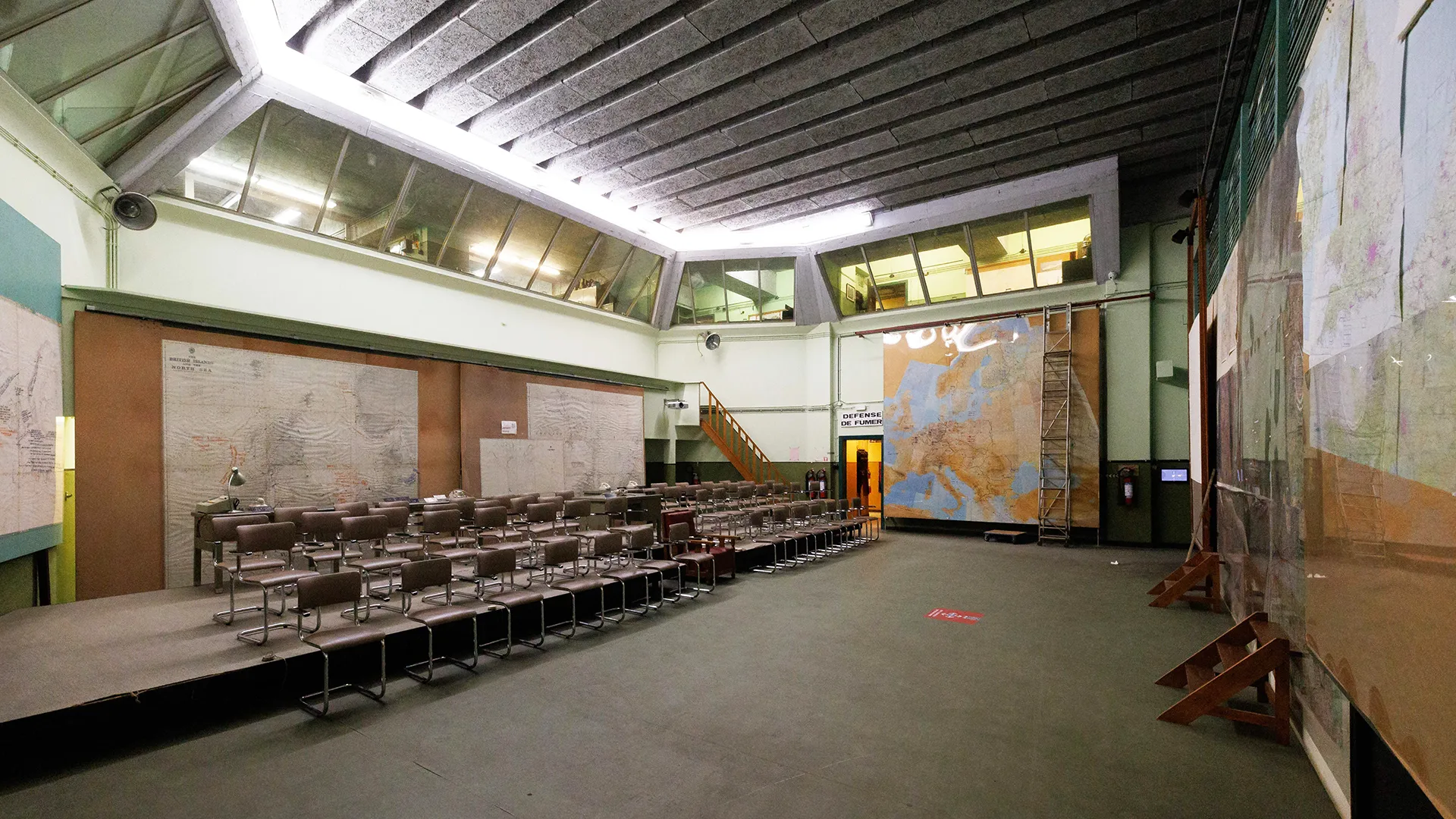
bunker

Bunker Talk: Let’s Talk About All The Things We Did And Didn’t Cover This Week

Welcome to Bunker Talk. This is a weekend open discussion post for the best commenting crew on the net, in which we can chat about all the stuff that went on this week that we didn’t cover. We can also talk about the stuff we did or whatever else grabs your interest. In other words, it’s an off-topic thread.

This week’s caption reads:

An officer walks past a Royal Air Force Harrier GR7 ground attack jet, from the 2nd/4th Wing RAF Cottesmore, parked inside a hardened shelter at a base in an undisclosed location in the Gulf 04 March 2003 AFP PHOTO/POOL/Chris Helgren (Photo by CHRIS HELGREN / REUTERS POOL / AFP) (Photo by CHRIS HELGREN/REUTERS POOL/AFP via Getty Images)

  • If you want to talk politics, do so respectfully and know that there’s always somebody that isn’t going to agree with you. 
  • If you have political differences, hash it out respectfully, stick to the facts, and no childish name-calling or personal attacks of any kind. If you can’t handle yourself in that manner, then please, discuss virtually anything else.
  • No drive-by garbage political memes. No conspiracy theory rants. Links to crackpot sites will be axed, too. Trolling and shitposting will not be tolerated. No obsessive behavior about other users. Just don’t interact with folks you don’t like. 
  • Do not be a sucker and feed trolls! That’s as much on you as on them. Use the mute button if you don’t like what you see.  
  • So unless you have something of quality to say, know how to treat people with respect, understand that everyone isn’t going to subscribe to your exact same worldview, and have come to terms with the reality that there is no perfect solution when it comes to moderation of a community like this, it’s probably best to just move on. 
  • Finally, as always, report offenders, please. This doesn’t mean reporting people who don’t share your political views, but we really need your help in this regard.

Tyler’s passion is the study of military technology, strategy, as well as foreign policy, and he has fostered a dominant voice on those topics in the defense and national security space. Tyler was the creator of the hugely popular defense site Foxtrot Alpha before developing TWZ, which he continues to lead as the Editor-In-Chief to this day.


Source link

Bunker Talk: Let’s Talk About All The Things We Did And Didn’t Cover This Week

Welcome to Bunker Talk. This is a weekend open discussion post for the best commenting crew on the net, in which we can chat about all the stuff that went on this week that we didn’t cover. We can also talk about the stuff we did or whatever else grabs your interest. In other words, it’s an off-topic thread.

This week’s caption reads:

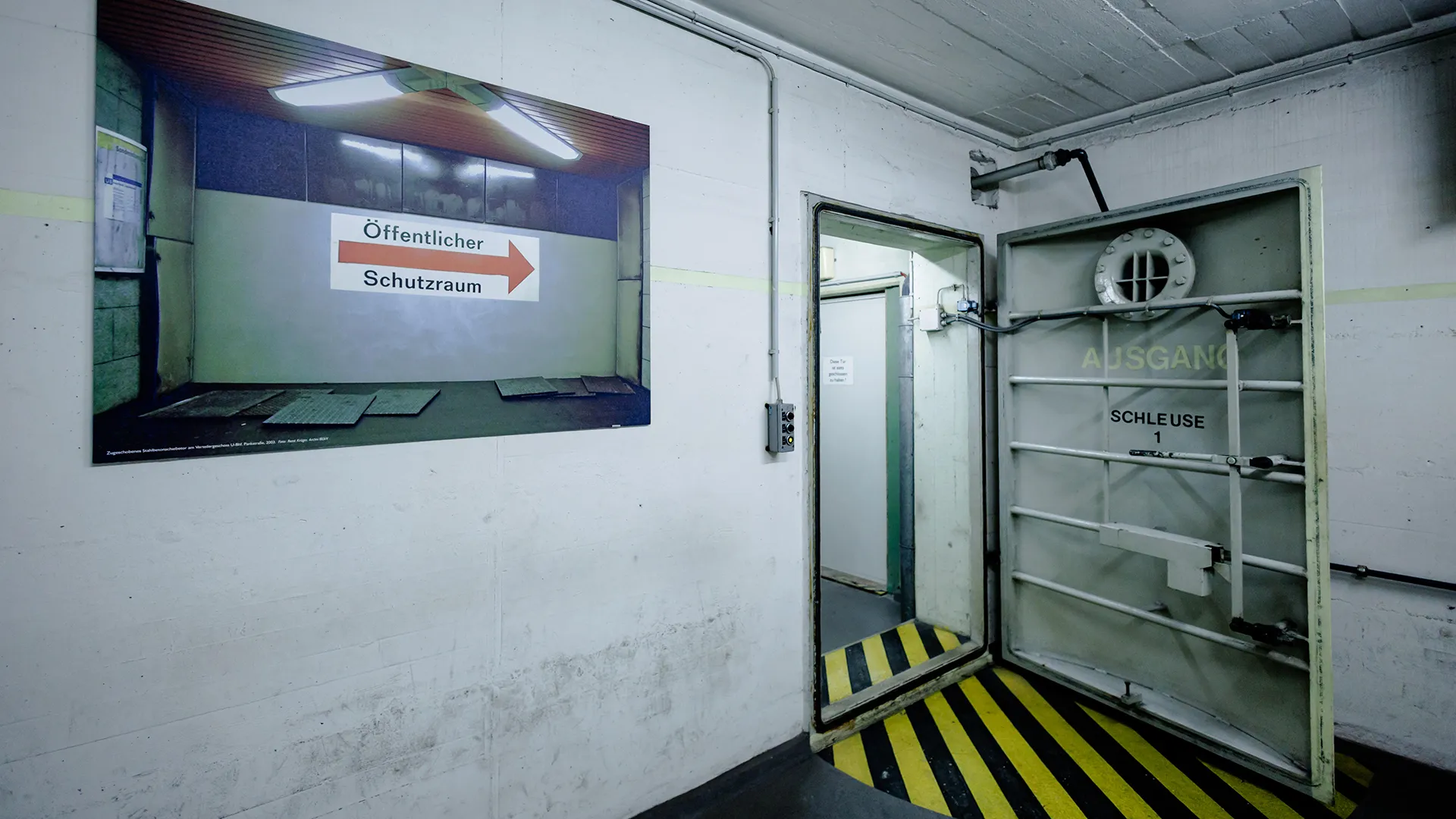
A scalar model for an atomic bomb proof hospital. Details show Geiger counters, decontamination chambers, oxygen wards, boiler room, power plant and huge hospital city below ground. The underground part would be insulated against radioactivity and poison gas by protective belts of earth, steel, and concrete. The underground hospital would accommodate 700 patients and a full hospital staff, in addition to an undetermined number of civilians. The three level subterranean hospital would be stocked with food, water and other supplies which would enable continuance of life for an almost indefinite period. (Bettmann/Getty Images)

Prime Directives:

  • If you want to talk politics, do so respectfully and know that there’s always somebody that isn’t going to agree with you. 
  • If you have political differences, hash it out respectfully, stick to the facts, and no childish name-calling or personal attacks of any kind. If you can’t handle yourself in that manner, then please, discuss virtually anything else.
  • No drive-by garbage political memes. No conspiracy theory rants. Links to crackpot sites will be axed, too. Trolling and shitposting will not be tolerated. No obsessive behavior about other users. Just don’t interact with folks you don’t like. 
  • Do not be a sucker and feed trolls! That’s as much on you as on them. Use the mute button if you don’t like what you see.  
  • So unless you have something of quality to say, know how to treat people with respect, understand that everyone isn’t going to subscribe to your exact same worldview, and have come to terms with the reality that there is no perfect solution when it comes to moderation of a community like this, it’s probably best to just move on. 
  • Finally, as always, report offenders, please. This doesn’t mean reporting people who don’t share your political views, but we really need your help in this regard.
Tyler’s passion is the study of military technology, strategy, as well as foreign policy, and he has fostered a dominant voice on those topics in the defense and national security space. Tyler was the creator of the hugely popular defense site Foxtrot Alpha before developing TWZ, which he continues to lead as the Editor-In-Chief to this day.


Source link

U.S. Open: Wyndham Clark sets scoring records at Shinnecock Hills

The USGA set up a different golf course at Shinnecock Hills to keep it playable in strong wind. And when the wind subsided late Thursday afternoon, Wyndham Clark looked like he was playing in a different U.S. Open.

Clark seized on a more gentle course — slightly calmer and still soft with receptive greens — by pulling away late to reach six-under-par through 16 holes.

He left in darkness with a four-shot lead over seven players, one of them Oklahoma junior Ryder Cowan, another the surprisingly resurgent Dustin Johnson.

Rory McIlroy thought he had made a fine effort with a 69 in gusts that topped 30 mph in the middle of the day, when the scoring average was well above 74. The afternoon started tough until the wind kept subsiding, and players began taking aim at flags. The afternoon wave was playing at least a stroke easier than the early starters who faced relentless wind.

“Everything was kind of clicking,” said Clark, who came into the U.S. Open playing as well as anyone. “We were definitely fortunate with the wind laying down. Overall a good round.”

Shinnecock was still a brute of a test, but the red numbers on the white scoreboard were an unfamiliar site for this course. When play was suspended by darkness, 17 players were under par.

Xander Schauffele strikes the ball as he hits the tee shot on the ninth hole during the second round of the U.S. Open.

Xander Schauffele hits his tee shot on the ninth hole during the second round of the U.S. Open at Shinnecock Hills Golf Club on Friday.

(George Walker IV / Associated Press)

The lowest opening round in the previous five U.S. Opens at Shinnecock is 66, last done by three players in 2004.

Cowan birdied his last hole for a 68 to join former Sooner Max McGreevy and former Oklahoma State player Sam Stevens, the only one of that trio who faced the harsh wind of the morning wave.

Johnson, in his final year of being exempt from the U.S. Open he won at Oakmont in 2016, ran off four straight birdies and was tied with Clark after 13 holes. But Johnson failed to get up-and-down for birdie on the easy par-five fifth, where Clark made eagle. And then Johnson three-putted from short range for double bogey on the sixth to fall four shots behind.

Scottie Scheffler, who needs the U.S. Open to complete the career Grand Slam, battled all day and relied heavily on his short game to salvage a 72. It was his 10th consecutive U.S. Open round without breaking par, but at the time it left him only four shots out of the lead.

Clark, who won the U.S. Open in Los Angeles three years ago, changed the look of the leaderboard. He was to return Friday morning to complete the round, then head out for the second round in wind expected to be not as strong.

One key to his round might have happened some five hours before he even showed up.

Thirty minutes after the round began, play was stopped because of fog so dense it was difficult to see the fairway and the green on the par-three 11th. The two-hour delay pushed back tee times.

The forecast was for the strongest wind of the week during the brightest part of Thursday.

“I would say when I got my tee times on Tuesday, I was like, ‘Oh, could be a tough draw,’” Clark said. “That two-hour fog delay was very helpful, and it was really nice it laid down. So it definitely helped those last six, seven holes we played.”

His golf wasn’t too shabby, either. Clark started on No. 10 and opened with two quick birdies. He went out in 32 to get his name atop the leaderboard. And after missing an eight-foot birdie putt on No. 1 and failing to save par from a bunker on the long par-three second, he took off.

He hit wedge to five feet on No. 3 for birdie, made a 20-foot birdie putt on the next and then from 207 yards with some wind at his back, he hit his second on the par-five fifth to within three feet for eagle.

When Johnson faltered, Clark had plenty of breathing room — and a quick turnaround.

The wind was so strong and the conditions so severe that it took Scheffler’s group nearly three hours to complete nine holes. There was a question the round could have finished even without the fog delay.

Only 27 out of the 77 players from the afternoon wave — Jason Day withdrew because of a back injury — finished the first round.

Dustin Johnson throws his head back and puts his arms out to the side after missing a putt on the sixth hole at the U.S. Open

Dustin Johnson reacts after missing a putt on the sixth hole during the second round of the U.S. Open at Shinnecock Hills Golf Club on Friday.

(Gerald Herbert / Associated Press)

Johnson was joined by three other U.S. Open champions — Matt Fitzpatrick (2022), Gary Woodland (2019) and Jon Rahm (2021) — at two under, with all still having holes to play.

Rahm, who had a chance in the final hour at the PGA Championship, was bogey-free and reached two under by making a 60-foot birdie putt on the par-three 17th hole.

Stevens overcame a double bogey to start his round — a hole that took him over two hours to play because of the fog — and strung together six birdies for his 68.

“The greens haven’t been too firm, the fairways haven’t been too firm, so I’ve really felt like it’s pretty scorable,” said Stevens, who had only his second sub-70 round in his fourth U.S. Open. “Obviously, it’s difficult, but overall it’s an awesome place. I think the setup is great right now.”

For half of the opening round, the USGA appeared to have the ideal test. Coming off two Opens at Shinnecock when the course got out of control, it slowed greens to 10 1/2 on the Stimpmeter — rare for any major, much less the U.S. Open — and keep plenty of water on the putting surfaces.

It was all because of the wind, which did not disappoint. The sustained wind approached 25 mph, and gusts were even stronger. And if that wasn’t enough, it shifted directions in the middle of the day.

“It was tough around here without wind, and then it was blowing pretty hard — really hard,” Keegan Bradley said after a 70. “The USGA did a great job setting the course up because if the greens were any faster or firmer, we might not be playing right now.”

But they played, it became more ideal with each passing hour late in the afternoon.

Source link

Bunker Busters With Winged JDAM-ER Kits Could Allow For Near Horizontal Strikes On Fortified Targets

The U.S. military wants to see if it can enhance the capabilities of the 2,000-pound-class Joint Direct Attack Munition-Extended Range (JDAM-ER) precision-guided bomb as a bunker-busting munition. JDAM-ERs already come with wing kits that allow them to glide dozens of miles to their targets, helping keep the launch platform away from threats. This would also open up new opportunities for low-angle, lateral attacks on hardened targets. In general, bunker-buster bombs are released relatively close to and above what are often higher-value and better-defended targets. TWZ has highlighted the inherent risks this entails on several occasions just in the context of the recent conflict with Iran.

Interest in expanding the role of the JDAM-ER as a bunker buster is tucked away in a section of the Pentagon’s proposed 2027 Fiscal Year budget covering requested funds for the Defense Threat Reduction Agency (DTRA). DTRA is a multi-faceted organization focused on responding to Weapons of Mass Destruction (WMD) threats. Since deeply buried and otherwise hardened facilities are often tied to WMD programs, a key area of the agency’s work is helping devise new and improved ways to hold those targets at risk. A prime example of this is the key role DTRA played in the development of the 30,000-pound-class GBU-57/B Massive Ordnance Penetrator (MOP) bunker buster bomb.

Now, DTRA wants to “evaluate current hard target defeat capabilities with 2000lb Joint Direct Attack Munition Extended Range (GBU-64 JDAM-ER) and provide recommendations on future JDAM-ER development to enhance HDBT penetration capabilities,” according to Pentagon budget documents.

A JDAM-ER seen in flight gliding during a test. RAAF

GBU-64/B is the formal designation the U.S. military has given to the 2,000-pound-class JDAM-ER. As is the case with standard JDAMs without supplemental wings, the JDAM-ER is a kit that turns various types of unguided bombs into ‘warheads’ for the resulting precision-guided munitions. Additional versions of the JDAM-ER kit are available for use with 500-pound and 1,000-pound-class bombs.

Prime contractor Boeing has said that the BLU-109/B bunker-buster bomb can be combined with the JDAM-ER kit, but it is unclear if that configuration is already in operational U.S. service. At the time of writing, the GBU-64(V)1/B still looks to be the only subvariant officially confirmed to be in use anywhere across the U.S. military. The GBU-64(V)1/B uses the Mk 64 Quickstrike air-dropped naval mine as its warhead. There is also a 500-pound-class GBU-62(V)1/B, which pairs a JDAM-ER kit with the smaller Mk 62 Quickstrike mine. You can read more about these versions, also called Quickstrike-ERs, here.

A now-dated Boeing briefing slide from 2017 mentioning testing of BLU-109/B with the JDAM-ER kit. Boeing
B-52 Deploys Quickstrike-ER Naval Mines (2019 OP TEST) thumbnail

B-52 Deploys Quickstrike-ER Naval Mines (2019 OP TEST)


It’s not clear whether bunker-buster JDAM-ERs are in inventory today outside of the U.S. military, either. Versions of the JDAM-ER using general-purpose high-explosive bombs as warheads have been in service at least in Australia and Ukraine for years now.

A JDAM-ER with a general-purpose high-explosive ‘warhead’ under the wing of a Ukrainian MiG-29. via X A JDAM-ER under the wing of a Ukrainian MiG-29 offering a good look at the specialized pylon used to employ these weapons from those aircraft, as well as Su-27s. via X

Wingless bunker-busting 2,000-pound-class JDAMs are a staple in the U.S. military’s aerial munition arsenal, and were very publicly employed in large numbers in strikes on Iran earlier this year. Tactical jets and bombers were used to deliver them.

A US Air Force F-15E Strike Eagle on its way to strike targets in Iran with a load of 2,000-pound-class JDAMs with bunker buster ‘warheads.’ CENTCOM

If it has not been put into U.S. service already, a 2,000-pound-class JDAM-ER would offer clear benefits when configured as a bunker buster, in general. Depending on how it is released, a standard JDAM can hit targets up to 15 miles away, according to the U.S. Air Force. With the wing kit, JDAM-ERs have a maximum reach of roughly 45 miles, though the exact range is also dependent on release altitude and flight profile. As noted, being able to release bunker buster bombs further away from the target can help reduce risks to the launch platform.

The additional drag of the JDAM-ER wing kit could also reduce the bomb’s kinetic energy, which is important for bunker-busting. It is possible that the bombs could be programmed to glide to a certain point above the target before diving onto it for maximum effect.

At the same time, the gliding capabilities of a JDAM-ER open the door to additional operational possibilities enabled by low-angle attack profiles. Being able to focus the effects of a bunker buster bomb directly on the side of a structure rather than at steeper angles from the top could offer major benefits.

Furthermore, it would be possible to get the bombs deeper down inside the entrance tunnels and through the sides of other fortified structures, magnifying the warhead’s effectiveness. Lobbing precision-guided bombs into tunnels and cave entrances is already a well-established tactic, and one that can hamper access to underground targets that might otherwise be unreachable. This is something we will come back to in a moment. Striking dams, bridge pylons or even ships in port, among other targets, at shallow angles, would also be a new weaponeering option for heavy bunker buster warheads not often found on cruise missiles.

What further enhancements might emerge as a result of the JDAM-ER bunker-buster testing DTRA has planned remains to be seen. As an aside, the U.S. military also looks set to field a jet-powered derivative, called the GBU-75/B JDAM-LR, which features even greater range, as you can learn more about here.

With all this in mind, DTRA’s budget request notably includes a separate mention of plans to “conduct R&D [research and development] in ‘skip’ bombing capability to develop new tactics and weaponeering options,” which could help in “enabling deeper access for penetrating weapons.”

Skip bombing specifically involves releasing munitions in a way so that they bounce off the ground or the surface of a body of water. This sends them further forward on a flatter trajectory that can be beneficial in various scenarios. The core tactic here is decades old now. British bombers famously used bombs specially designed for skip bombing attacks against German dams during World War II. During the war, skip bombing was also heavily used when attacking ships, especially by U.S. military aircraft in the Pacific Theater. Doing this could help ensure more serious hits on a target’s hull near the waterline.

Barnes Wallis - Bouncing Bomb Tests, Dambusters thumbnail

Barnes Wallis – Bouncing Bomb Tests, Dambusters


Skip Bombs (1940-1949) thumbnail

Skip Bombs (1940-1949)


NEWSREEL: SKIP BOMBING TACTICS - DOCUMENT - ARCHIVE thumbnail

NEWSREEL: SKIP BOMBING TACTICS – DOCUMENT – ARCHIVE


Improved skip bombing tactics could be paired with new precision-guided bunker busters, including versions of the GBU-64/B, for further increased effect. Being able to penetrate deeper into tunnel entrances and other weak spots on the ground could create additional complications for an opponent trying to dig out key assets afterward.

In recent months, Iran has been observed working to regain access to nuclear and other facilities that the United States and Israel have targeted in the past year or so. This includes sites the U.S. military struck during Operation Midnight Hammer in June 2025. This has contributed to continued questions about the overall effectiveness of the aerial strikes on many of these targets.

It’s also worth noting here that Iranian authorities themselves took steps at various points to cover entrances and ventilation shafts to try to make underground facilities even harder to reach, including by any raiding forces on the ground.

While U.S. bunker-busting strikes on targets in Iran have been front-and-center in recent months, the new capabilities that DTRA is interested in would be applicable in conflict scenarios, as well. There’s something of a global trend, especially among America’s adversaries and competitors, toward more underground and/or hardened facilities. China, Russia, and North Korea, in particular, all have significant and still-expanding networks of subterranean military infrastructure, including air and naval bases, missile silos, command and control bunkers, and more.

This, in turn, has already been driving the U.S. military to pursue other new bunker-busting capabilities. These efforts are known to include a conventional Next Generation Penetrator (NGP) successor to the MOP and a new nuclear bunker buster bomb referred to currently as the Nuclear Deterrent System-Air-delivered (NDS-A). The U.S. military has also added a new conventional 5,000-class bunker buster bomb, the GBU-72/B, to its arsenal in recent years.

Bunker-buster versions of the JDAM-ER would offer valuable additional options for U.S. commanders at the lower end of the capability spectrum, if they haven’t already entered service to a degree.

Contact the author: joe@twz.com

Joseph is TWZ’s Deputy Editor, helping to oversee the site’s highly experienced and dedicated team, while also writing informative and impactful defense and national security content. He lives right in the thick of it in the Washington, D.C. area.


Source link

Bunker Talk: Let’s Talk About All The Things We Did And Didn’t Cover This Week

Welcome to Bunker Talk. This is a weekend open discussion post for the best commenting crew on the net, in which we can chat about all the stuff that went on this week that we didn’t cover. We can also talk about the stuff we did or whatever else grabs your interest. In other words, it’s an off-topic thread.

This week’s caption reads:

FEB 22 1981; Federal Emergency Management Agency (Underground Bunker At Den Fed CTR); (Photo By Dave Buresh/The Denver Post via Getty Images)

Prime Directives:

  • If you want to talk politics, do so respectfully and know that there’s always somebody that isn’t going to agree with you. 
  • If you have political differences, hash it out respectfully, stick to the facts, and no childish name-calling or personal attacks of any kind. If you can’t handle yourself in that manner, then please, discuss virtually anything else.
  • No drive-by garbage political memes. No conspiracy theory rants. Links to crackpot sites will be axed, too. Trolling and shitposting will not be tolerated. No obsessive behavior about other users. Just don’t interact with folks you don’t like. 
  • Do not be a sucker and feed trolls! That’s as much on you as on them. Use the mute button if you don’t like what you see.  
  • So unless you have something of quality to say, know how to treat people with respect, understand that everyone isn’t going to subscribe to your exact same worldview, and have come to terms with the reality that there is no perfect solution when it comes to moderation of a community like this, it’s probably best to just move on. 
  • Finally, as always, report offenders, please. This doesn’t mean reporting people who don’t share your political views, but we really need your help in this regard.

Tyler’s passion is the study of military technology, strategy, and foreign policy and he has fostered a dominant voice on those topics in the defense media space. He was the creator of the hugely popular defense site Foxtrot Alpha before developing The War Zone.


Source link

Bunker Talk: Let’s Talk About All The Things We Did And Didn’t Cover This Week

Welcome to Bunker Talk. This is a weekend open discussion post for the best commenting crew on the net, in which we can chat about all the stuff that went on this week that we didn’t cover. We can also talk about the stuff we did or whatever else grabs your interest. In other words, it’s an off-topic thread.

This week’s caption reads:

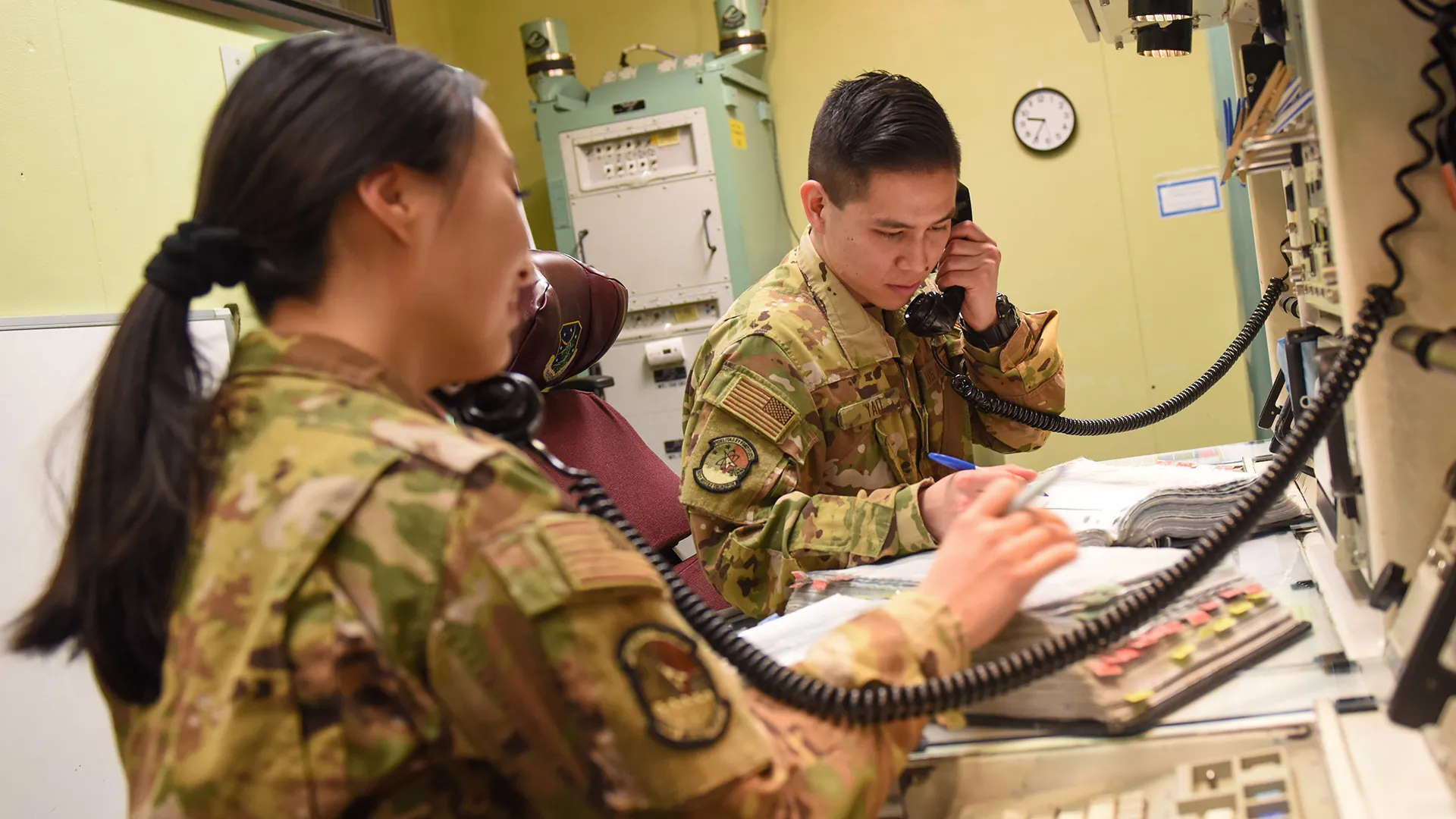
First Lt. Pamela Blanco-Coca, 319th Missile Squadron missile combat crew commander, and her deputy commander, 2nd Lt. John Anderson, simulate key turns of the Minuteman III Weapon System Feb. 9, 2016, in the E-01 Launch Control Center in the F.E. Warren Air Force Base, Wyo., Missile Complex. A properly conducted key turn sends a “launch vote” to any of a number of Minuteman III ICBMs in a missileer’s flight area, and two launch votes from two separate LCCs will enable a real-world launch when directed by the U.S. president. (U.S. Air Force photo by Senior Airman Jason Wiese) 

Prime Directives:

  • If you want to talk politics, do so respectfully and know that there’s always somebody that isn’t going to agree with you. 
  • If you have political differences, hash it out respectfully, stick to the facts, and no childish name-calling or personal attacks of any kind. If you can’t handle yourself in that manner, then please, discuss virtually anything else.
  • No drive-by garbage political memes. No conspiracy theory rants. Links to crackpot sites will be axed, too. Trolling and shitposting will not be tolerated. No obsessive behavior about other users. Just don’t interact with folks you don’t like. 
  • Do not be a sucker and feed trolls! That’s as much on you as on them. Use the mute button if you don’t like what you see.  
  • So unless you have something of quality to say, know how to treat people with respect, understand that everyone isn’t going to subscribe to your exact same worldview, and have come to terms with the reality that there is no perfect solution when it comes to moderation of a community like this, it’s probably best to just move on. 
  • Finally, as always, report offenders, please. This doesn’t mean reporting people who don’t share your political views, but we really need your help in this regard.
Tyler’s passion is the study of military technology, strategy, and foreign policy and he has fostered a dominant voice on those topics in the defense media space. He was the creator of the hugely popular defense site Foxtrot Alpha before developing The War Zone.


Source link

Bunker Talk: Let’s Talk About All The Things We Did And Didn’t Cover This Week

Welcome to Bunker Talk. This is a weekend open discussion post for the best commenting crew on the net, in which we can chat about all the stuff that went on this week that we didn’t cover. We can also talk about the stuff we did or whatever else grabs your interest. In other words, it’s an off-topic thread.

This week’s caption reads:

U.S. Air Force Maj. Gen. Tom Wilcox II, center, Air Force Installation and Mission Support Center commander, talks with Airmen at the 423rd Security Forces Squadron bunker shoot house training location at Royal Air Force Molesworth, England, Sept. 29, 2021. The AFIMSC leadership visited the 501st Combat Support Wing and its mission partners at the U.S. European Command Joint Intelligence Operations Center Europe Analytic Center at RAF Molesworth, England. The AFIMSC provides base communications, civil engineering, security forces and logistics support that assist the 501st CSW in fulfilling its mission. (U.S. Air Force photos by Senior Airman Jennifer Zima)

Prime Directives:

  • If you want to talk politics, do so respectfully and know that there’s always somebody that isn’t going to agree with you. 
  • If you have political differences, hash it out respectfully, stick to the facts, and no childish name-calling or personal attacks of any kind. If you can’t handle yourself in that manner, then please, discuss virtually anything else.
  • No drive-by garbage political memes. No conspiracy theory rants. Links to crackpot sites will be axed, too. Trolling and shitposting will not be tolerated. No obsessive behavior about other users. Just don’t interact with folks you don’t like. 
  • Do not be a sucker and feed trolls! That’s as much on you as on them. Use the mute button if you don’t like what you see.  
  • So unless you have something of quality to say, know how to treat people with respect, understand that everyone isn’t going to subscribe to your exact same worldview, and have come to terms with the reality that there is no perfect solution when it comes to moderation of a community like this, it’s probably best to just move on. 
  • Finally, as always, report offenders, please. This doesn’t mean reporting people who don’t share your political views, but we really need your help in this regard.

Tyler’s passion is the study of military technology, strategy, and foreign policy and he has fostered a dominant voice on those topics in the defense media space. He was the creator of the hugely popular defense site Foxtrot Alpha before developing The War Zone.


Source link

Bunker Talk: Memorial Day Weekend Edition

Welcome to Bunker Talk, Memorial Day Weekend Edition. For all our American readers/commenters, I hope you have a great Memorial Day weekend. And, of course, I want to give a huge thanks to all of those who made the ultimate sacrifice for our country.

We owe you everything.

This week’s caption reads:

4th July 1944: An American soldier takes a drink of captured German Cognac, while clearing out a German gun emplacement at Cherbourg. (Photo by Fred Ramage/Keystone/Getty Images)

Directives: 

  • If you want to talk politics, do so respectfully and know that there’s always somebody that isn’t going to agree with you. 
  • If you have political differences, hash it out respectfully, stick to the facts, and no childish name-calling or personal attacks of any kind. If you can’t handle yourself in that manner, then please, discuss virtually anything else.
  • No drive-by garbage political memes. No conspiracy theory rants. Links to crackpot sites will be axed, too. Trolling and shitposting will not be tolerated. No obsessive behavior about other users. Just don’t interact with folks you don’t like. 
  • Do not be a sucker and feed trolls! That’s as much on you as on them. Use the mute button if you don’t like what you see.  
  • So unless you have something of quality to say, know how to treat people with respect, understand that everyone isn’t going to subscribe to your exact same worldview, and have come to terms with the reality that there is no perfect solution when it comes to moderation of a community like this, it’s probably best to just move on. 
  • Finally, as always, report offenders, please. This doesn’t mean reporting people who don’t share your political views, but we really need your help in this regard.

Tyler’s passion is the study of military technology, strategy, and foreign policy and he has fostered a dominant voice on those topics in the defense media space. He was the creator of the hugely popular defense site Foxtrot Alpha before developing The War Zone.


Source link

Bunker Talk: Let’s Talk About All The Things We Did And Didn’t Cover This Week

Welcome to Bunker Talk. This is a weekend open discussion post for the best commenting crew on the net, in which we can chat about all the stuff that went on this week that we didn’t cover. We can also talk about the stuff we did or whatever else grabs your interest. In other words, it’s an off-topic thread.

This week’s caption reads:

Sleeping accommodation in the Clapham deep shelter, London. Four thousand beds at three shillings a night, deep beneath London, are being offered to Festival of Britain visitors. The beds, together with dining accommodation, are in Clapham’s deep shelter, now taken over by the London County Council. The deep shelter is a mile long, runs 45 feet beneath the underground railway. (Photo by PA Images via Getty Images)

Prime Directives:

  • If you want to talk politics, do so respectfully and know that there’s always somebody that isn’t going to agree with you. 
  • If you have political differences, hash it out respectfully, stick to the facts, and no childish name-calling or personal attacks of any kind. If you can’t handle yourself in that manner, then please, discuss virtually anything else.
  • No drive-by garbage political memes. No conspiracy theory rants. Links to crackpot sites will be axed, too. Trolling and shitposting will not be tolerated. No obsessive behavior about other users. Just don’t interact with folks you don’t like. 
  • Do not be a sucker and feed trolls! That’s as much on you as on them. Use the mute button if you don’t like what you see.  
  • So unless you have something of quality to say, know how to treat people with respect, understand that everyone isn’t going to subscribe to your exact same worldview, and have come to terms with the reality that there is no perfect solution when it comes to moderation of a community like this, it’s probably best to just move on. 
  • Finally, as always, report offenders, please. This doesn’t mean reporting people who don’t share your political views, but we really need your help in this regard.

Tyler’s passion is the study of military technology, strategy, and foreign policy and he has fostered a dominant voice on those topics in the defense media space. He was the creator of the hugely popular defense site Foxtrot Alpha before developing The War Zone.


Source link

Bunker Talk: Let’s Talk About All The Things We Did And Didn’t Cover This Week

Welcome to Bunker Talk. This is a weekend open discussion post for the best commenting crew on the net, in which we can chat about all the stuff that went on this week that we didn’t cover. We can also talk about the stuff we did or whatever else grabs your interest. In other words, it’s an off-topic thread.

This week’s caption reads:

Soldiers with Bravo Company, Task Force Guardian, 41st Infantry Brigade Combat Team, secure a bunker in an enemy fortified entrenchment during the initial phase of combat operations as part of an exercise during the Joint ReadinessTraining Center (JRTC) rotation 24-09 at Fort Johnson, La., July 18, 2024. Task Force Guardian is comprised of personnel from 2nd Battalion, 162nd Infantry; 1st Battalion, 186th Infantry; and the 141st Brigade Support Battalion. The JRTC goal is to create realistic environments that help prepare units for complex operations. (Oregon Army National Guard photo by 1st Sgt. Zachary Holden, 115th Mobile Public Affairs Detachment)

Prime Directives:

  • If you want to talk politics, do so respectfully and know that there’s always somebody that isn’t going to agree with you. 
  • If you have political differences, hash it out respectfully, stick to the facts, and no childish name-calling or personal attacks of any kind. If you can’t handle yourself in that manner, then please, discuss virtually anything else.
  • No drive-by garbage political memes. No conspiracy theory rants. Links to crackpot sites will be axed, too. Trolling and shitposting will not be tolerated. No obsessive behavior about other users. Just don’t interact with folks you don’t like. 
  • Do not be a sucker and feed trolls! That’s as much on you as on them. Use the mute button if you don’t like what you see.  
  • So unless you have something of quality to say, know how to treat people with respect, understand that everyone isn’t going to subscribe to your exact same worldview, and have come to terms with the reality that there is no perfect solution when it comes to moderation of a community like this, it’s probably best to just move on. 
  • Finally, as always, report offenders, please. This doesn’t mean reporting people who don’t share your political views, but we really need your help in this regard.

Tyler’s passion is the study of military technology, strategy, and foreign policy and he has fostered a dominant voice on those topics in the defense media space. He was the creator of the hugely popular defense site Foxtrot Alpha before developing The War Zone.


Source link

New Nuclear Bunker Buster Bomb Plans Revealed (Updated)

The Department of Energy is seeking millions of dollars for work in part on a new bunker-busting nuclear weapon called the Nuclear Deterrent System-Air-delivered (NDS-A) in its latest budget request. At present, there is only one specialized air-delivered deep-penetrating weapon known to be in America’s nuclear stockpile, the B61-11 gravity bomb, and there have been discussions about a potential successor for decades now.

The Fiscal Year 2027 budget request for the Department of Energy, which was released last month, includes a new line under Weapons Activities for Future Programs. The Department is asking for $99.794 million in the next fiscal cycle to support those efforts.

An example of the B61-11, or more likely an inert version thereof. This is the only specialized air-delivered deep-penetrating weapon known to be in the U.S. nuclear stockpile today. Public Domain

“The Increase represents the start of one new Phase 6.X program, currently known as Phase 1 Nuclear Deterrent System-Air-delivered (NDS-A), as well as supporting production assessments for two new Rapid Capability Team (RCT) projects,” according to a public summary of what the Future Program funding would support.

The Department of Energy, in cooperation with the U.S. military, develops, produces, and sustains nuclear weapons, and uses a multi-phase rubric to categorize where they are in their respective life cycles. The Phase 6.X process is itself broken into several stages, spanning all the way from the definition of the basic concept of a weapon and its requirements through to full-scale production.

A graphic offering a general overview of the Phase 6.X process. NNSA

Where the NDS-A may already be in the process is unknown, but the mention of “Phase 1” here could point to Phase 6.1, which is the basic concept assessment stage. Beyond that it will be air-delivered, there are also no details currently available publicly about the weapon’s design, including whether it will be based on something already in the stockpile. It is also not known if it will be an unpowered bomb or a missile/rocket-assisted weapon of some kind. We will come back to this point later on.

“The Nuclear Deterrent System-Air-delivered will provide the President with additional nuclear options to defeat Hard and Deeply Buried Targets, ensuring that adversaries cannot place their most valued assets beyond the reach of America’s nuclear forces,” a spokesperson for the National Nuclear Security Administration (NNSA) told TWZ when asked for more information. “The program is moving aggressively, and further information will become publicly available when it is strategically beneficial to the United States.”

Within the Department of Energy, NNSA is specifically responsible for nuclear weapons-related activities.

As noted, at present, the B61-11 is the only air-delivered nuclear weapon in the U.S. stockpile today that is specifically designed to address this target set. The B61-11 is based on the earlier B61-7, but is substantially different in form and function. It has a heavily reinforced outer shell, possibly with a depleted uranium penetrating nose section, and a rocket booster at the rear to help it penetrate down into underground facilities. Sources differ on the maximum yield of the B61-11, but it is said to either be between 340 and 360 kilotons (identical to that of the B61-7) or to be closer to 400 kilotons. There are also reportedly fewer than 100 of these bombs in the stockpile.

The yield of the B61-11 is classified, but it is a converted B61-7 bomb. The yield of the -7 and -11 are usually given as more than 300 kilotons. @nukestrat says the B61-11 was increased to 400 kt. Either way, this is a very powerful nuclear weapon. pic.twitter.com/2GZ3zB6m4K

— Dr. Jeffrey Lewis (@ArmsControlWonk) June 19, 2025

You can learn more about the entire B61 family, the first versions of which entered service in the 1960s, here.

For a time, the newer B61-12 variant, which has a precision guidance package in a new tail kit, was considered as a potential successor to the B61-11. The B61-12 is also a dial-a-yield design with multiple yield settings, but the highest one is reportedly 50 kilotons. The logic was that improved accuracy would allow for more precise placement of the bomb, and, by extension, of its explosive force. This, in turn, would make up for its lack of deep-penetrating capability and more limited yield. The plan to supplant the B61-11 with the B61-12 was subsequently abandoned.

B61-12 Flight Test with F35-A Lightning II thumbnail

B61-12 Flight Test with F35-A Lightning II


More recently, a more powerful B61-13 variant, which features the same precision guidance tail kit as the B61-12, was developed explicitly to provide “the President with additional options against certain harder and large-area military targets.” This version is understood to have a maximum yield in line with the B61-7. However, the U.S. government has also previously said that the B61-13 is not intended as a direct replacement for the B61-11, according to the Federation of American Scientists (FAS).

The first B61-13 production unit. NNSA

The U.S. military also has B83-1 nuclear gravity bombs in the stockpile, which are of a completely different design from the B61 series and have a far more powerful megaton-class maximum yield. By virtue of that high yield, the B83-1 is also intended to be used against certain deeply buried and otherwise hardened facilities, as well as large-area targets.

An inert example of a B83-series nuclear gravity bomb. US military An inert B83-series nuclear bomb. DOD

In the early 2000s, NNSA, in cooperation with the U.S. Air Force, did explore the possibility of developing a B61-11-like bomb on the basis of the B83-1, as well as a new deep-penetrating version of the B61 itself. In 2005, Congress brought a halt to work on what was dubbed the Robust Nuclear Earth Penetrator (RNEP).

A low-quality and now thoroughly dated briefing slide discussing the RNEP effort. USAF

There have been hints since then, however, about possible revivals of the RNEP concept and/or other plans for a true successor to the B61-11.

This weapon was not explicitly mentioned in the 2018 Nuclear Posture Review. But NNSA bases the new weapon on the NPR’s guidance to “enhance the flexibility and range of [US] tailored deterrence options.

Welcome back from the grave, RNEP!

— Hans Kristensen (also on Bluesky) (@nukestrat) August 1, 2019

What may be prompting the requirement for the NDS-A now is unknown. There are deeply-buried targets only a nuclear weapon can realistically destroy. The development of the B61-11 is understood to have been prompted heavily by one such facility in particular, Russia’s Kosvinsky Kamen bunker. Kosvinsky Kamen is a key node in the Russian nuclear command and control enterprise and was built under a mountain of the same name in the northern Urals. The nature of its location and design also means it could serve as a so-called “continuity of government” site for senior leadership to operate from before or after a nuclear strike or in response to some other major emergency.

However, the landscape of deeply-buried, hardened facilities that U.S. authorities would be interested in holding at risk has grown substantially in the past two decades since work, at least publicly, on RNEP came to an end.

The Russian and Chinese governments have been expanding on their already significant arrays of subterranean facilities. In China, this includes the construction of vast fields of new intercontinental ballistic missile (ICBM) silos, as well as work on a new underground command center outside of the capital, Beijing, just in recent years.

A graphic detailing a previous US military assessment about the state of new ICBM silo fields in northern China. US military

Other, smaller countries, like North Korea and Iran, have been investing in new underground and other hardened facilities, as well. This has been driven in many cases by concerns about the prospect of conventional strikes carried out by the U.S. military and others.

In the past year, the matter of Iran’s deeply buried nuclear facilities, and the limits of U.S. conventional options for prosecuting those targets, has been an especially hot-button issue. During Operation Midnight Hammer in June 2025, U.S. B-2 bombers struck Iranian nuclear sites at Fordow and Natanz with 30,000-pound-class GBU-57/B conventional bunker buster bombs. The outcome of that operation remains a subject of heated debate and is deeply intertwined with the justifications for U.S. and Israeli forces launching the latest campaign against Iran in February. U.S. officials are now at a crossroads with how to proceed with operations targeting Iran, which has now turned to a maritime blockade, at least for the time being, following the announcement of a ceasefire in April.

The video below is a montage of imagery from GBU-57/B MOP tests over the years.

GBU-57 MOP test thumbnail

GBU-57 MOP test


Broader concerns about just getting the B61-11 to its intended target in the future may also be a factor driving plans now for the new NDS-A nuclear bunker buster. Unpowered bunker buster bombs, nuclear or conventional, need to be released relatively close to their targets. The kinds of facilities that the B61-11 is intended to be employed against are deep inside hostile territory, behind layers of integrated air defenses. Major potential adversaries, as well as smaller nation states and even non-state actors, are only expected to expand the scale and scope of their defensive architectures in the coming years. With all this in mind, it is not surprising that the more survivable B-2 is currently the only platform certified to employ the B61-11, as well as the conventional MOP. It is more or less a given that both of those weapons will be integrated onto the forthcoming B-21 Raider for the same general reasons.

A B-2 bomber drops a GBU-57/B MOP during a test. USAF

That being said, as TWZ regularly highlights, stealth aircraft are not invisible or invulnerable. This reality is part of the argument for the planned integration of the new nuclear-tipped AGM-181 Long Range Stand Off (LRSO) air-launched cruise missile onto the B-21, as well as the venerable and non-stealthy B-52. LRSO will also just extend the B-21’s reach, with that aircraft already expected to be an extremely long-range platform. This all raises the possibility of the NDS-A being a powered design offering some degree of standoff capability.

A rendering of the still-in-development AGM-181 Long Range Stand-Off (LRSO) cruise missile. USAF

As an aside here, powered designs have also been part of the discussions about potential conventional successors to the MOP. A follow-on to the GBU-57/B, the Next Generation Penetrator (NGP), is now in development, but it is unclear whether or not that will be a powered weapon. Still, when it comes to the NDS-A, it seems more likely that it will be a traditional bomb that adapts elements of existing designs, including the B61-11, -12, and -13.

A 2010 briefing slide discussing plans for a Next Generation Penetrator, which could have a powered standoff capability, and other future bunker busters. USAF

Whether or not the NDS-A effort reaches fruition also remains to be seen. The previous RNEP effort prompted significant criticism, including from members of Congress, in part because of concerns about what steps it might prompt other countries to take in response. At the same time, there has been a change in tenor in U.S. nuclear policy in recent years, driven by other global developments, especially efforts by the Chinese to rapidly and substantially expand their stockpile.

There is also a question of affordability. The U.S. military is already in the midst of a major modernization push across all three legs of America’s nuclear deterrence triad that is set to cost hundreds of billions of dollars in the coming decades. This could impact support for funding another ‘new’ nuclear weapon, even if it is derived from an existing design.

More definitely remains to be learned about the NDS-A program and the design of that weapon. What is clear is that the Department of Energy is requesting funding to kick off at least the initial development of a new air-delivered nuclear bunker buster that could succeed the B61-11.

UPDATE: 5:27 PM EST

It has been brought to our attention that some additional details about the NDS-A effort have been tucked away in U.S. budget requests in recent years.

In its Fiscal Year 2025 budget, the Air Force asked for, and ultimately received just over $39 million for work on NDS-A, but under a budget line titled “Hard and Deeply Buried Target Defeat System (HDBTDS) Prototyping.”

“The Air-delivered Nuclear Delivery System (NDS-A) is a new start project to address a capability gap identified in the 2022 Nuclear Posture Review (NPR). A congressionally directed study based on the NPR led to endorsement of the Deputy’s Management Action Group (DMAG) and initiation of this project,” according to the 2025 Fiscal Year budget documents. “The Air Force will work with the Department of Energy’s (DOE) National Nuclear Security Administration (NNSA) and its National Laboratories to develop a prototype NDS-A system to demonstrate the capability to close this gap in the near term.”

“Early development will include Model and Simulation (M&S) analysis of several nuclear explosive package (NEP) options to refine the proposed NEP,” the budget documents add. “Ground tests may include wind tunnel, static ejection, vibration and thermal, cable pull-down, and sled tests. Flight tests will be performed by USAF F-15E developmental flight test aircraft, with final prototype demonstrations flown on B-2 aircraft.”

The video below shows flight testing of the B61-12 using a U.S. Air Force F-15E Strike Eagle.

B61-12 full-weapon system demonstration at Tonopah Test Range thumbnail

B61-12 full-weapon system demonstration at Tonopah Test Range


In the Air Force’s proposed 2026 Fiscal Year budget, the line item was renamed “Nuclear Delivery Systems Prototyping,” but references to NDS-A by name were also omitted. A nearly $18 million year-over-year increase in requested funding (from roughly $39 million to almost $57 million) was attributed “to greater emphasis on prototype design after completion of Modeling and Simulation of mission effectiveness of design space options; increased procurement and development of components; the initiation of subsystem and test unit assembly; and the initiation of ground tests of the Prototype Weapon Assemblies.”

The Fiscal Year 2025 and 2026 budget documents do not provide any details about the design of the weapon or say what aircraft it will be integrated onto operationally.

More details about the current state of the Air Force side of this program are likely contained in the service’s 2027 Fiscal Year budget request documents. However, at the time of writing this update, they are inaccessible online.

Contact the author: joe@twz.com

Joseph has been a member of The War Zone team since early 2017. Prior to that, he was an Associate Editor at War Is Boring, and his byline has appeared in other publications, including Small Arms Review, Small Arms Defense Journal, Reuters, We Are the Mighty, and Task & Purpose.


Source link

Bunker Talk: Let’s Talk About All The Things We Did And Didn’t Cover This Week

Welcome to Bunker Talk. This is a weekend open discussion post for the best commenting crew on the net, in which we can chat about all the stuff that went on this week that we didn’t cover. We can also talk about the stuff we did or whatever else grabs your interest. In other words, it’s an off-topic thread.

TIRANA, ALBANIA – SEPTEMBER 16: View inside the Bunk’Art Museum, a vast underground bunker built for the former Albanian dictator and high-ranking dignitaries, featuring five floors, 106 rooms, and a cinema hall for government meetings, covering an impressive area of 2,685 m2, seen on September 16, 2024, in Tirana, Albania. (Photo by Artur Widak/NurPhoto via Getty Images)

Prime Directives!

  • If you want to talk politics, do so respectfully and know that there’s always somebody that isn’t going to agree with you. 
  • If you have political differences, hash it out respectfully, stick to the facts, and no childish name-calling or personal attacks of any kind. If you can’t handle yourself in that manner, then please, discuss virtually anything else.
  • No drive-by garbage political memes. No conspiracy theory rants. Links to crackpot sites will be axed, too. Trolling and shitposting will not be tolerated. No obsessive behavior about other users. Just don’t interact with folks you don’t like. 
  • Do not be a sucker and feed trolls! That’s as much on you as on them. Use the mute button if you don’t like what you see.  
  • So unless you have something of quality to say, know how to treat people with respect, understand that everyone isn’t going to subscribe to your exact same worldview, and have come to terms with the reality that there is no perfect solution when it comes to moderation of a community like this, it’s probably best to just move on. 
  • Finally, as always, report offenders, please. This doesn’t mean reporting people who don’t share your political views, but we really need your help in this regard.

Tyler’s passion is the study of military technology, strategy, and foreign policy and he has fostered a dominant voice on those topics in the defense media space. He was the creator of the hugely popular defense site Foxtrot Alpha before developing The War Zone.


Source link

Bunker Talk: Let’s Talk About All The Things We Did And Didn’t Cover This Week

Welcome to Bunker Talk. This is a weekend open discussion post for the best commenting crew on the net, in which we can chat about all the stuff that went on this week that we didn’t cover. We can also talk about the stuff we did or whatever else grabs your interest. In other words, it’s an off-topic thread.

Airmen from the 386th Air Expeditionary Wing sit inside of a bunker during a base-wide exercise at an undisclosed location within the U.S. Central Command area of responsibility, May 24, 2024. The exercise assessed the responsiveness of Airmen and first responders during a simulated attack. (U.S. Air Force photo) 

Also, a reminder:

Prime Directives!

  • If you want to talk politics, do so respectfully and know that there’s always somebody that isn’t going to agree with you. 
  • If you have political differences, hash it out respectfully, stick to the facts, and no childish name-calling or personal attacks of any kind. If you can’t handle yourself in that manner, then please, discuss virtually anything else.
  • No drive-by garbage political memes. No conspiracy theory rants. Links to crackpot sites will be axed, too. Trolling and shitposting will not be tolerated. No obsessive behavior about other users. Just don’t interact with folks you don’t like. 
  • Do not be a sucker and feed trolls! That’s as much on you as on them. Use the mute button if you don’t like what you see.  
  • So unless you have something of quality to say, know how to treat people with respect, understand that everyone isn’t going to subscribe to your exact same worldview, and have come to terms with the reality that there is no perfect solution when it comes to moderation of a community like this, it’s probably best to just move on. 
  • Finally, as always, report offenders, please. This doesn’t mean reporting people who don’t share your political views, but we really need your help in this regard.

Tyler’s passion is the study of military technology, strategy, and foreign policy and he has fostered a dominant voice on those topics in the defense media space. He was the creator of the hugely popular defense site Foxtrot Alpha before developing The War Zone.


Source link

Bunker Talk: Let’s Talk About All The Things We Did And Didn’t Cover This Week

Welcome to Bunker Talk. This is a weekend open discussion post for the best commenting crew on the net, in which we can chat about all the stuff that went on this week that we didn’t cover. We can also talk about the stuff we did or whatever else grabs your interest. In other words, it’s an off-topic thread.

This week’s caption reads:

The Volcano Lair was the underground headquarters of the terrorist syndicate SPECTRE during the Bond film You Only Live Twice from 1967. 

Also, a reminder:

Prime Directives!

  • If you want to talk politics, do so respectfully and know that there’s always somebody that isn’t going to agree with you. 
  • If you have political differences, hash it out respectfully, stick to the facts, and no childish name-calling or personal attacks of any kind. If you can’t handle yourself in that manner, then please, discuss virtually anything else.
  • No drive-by garbage political memes. No conspiracy theory rants. Links to crackpot sites will be axed, too. Trolling and shitposting will not be tolerated. No obsessive behavior about other users. Just don’t interact with folks you don’t like. 
  • Do not be a sucker and feed trolls! That’s as much on you as on them. Use the mute button if you don’t like what you see.  
  • So unless you have something of quality to say, know how to treat people with respect, understand that everyone isn’t going to subscribe to your exact same worldview, and have come to terms with the reality that there is no perfect solution when it comes to moderation of a community like this, it’s probably best to just move on. 
  • Finally, as always, report offenders, please. This doesn’t mean reporting people who don’t share your political views, but we really need your help in this regard.

Tyler’s passion is the study of military technology, strategy, and foreign policy and he has fostered a dominant voice on those topics in the defense media space. He was the creator of the hugely popular defense site Foxtrot Alpha before developing The War Zone.


Source link

Trump rails against court decision that once again stalls his White House ballroom project

President Trump railed against a federal judge’s decision on Thursday that continues to block above-ground construction of a $400-million White House ballroom, allowing only below-ground work on a bunker and other “national security facilities” at the site.

U.S. District Judge Richard Leon’s latest ruling comes in response to an appeals court’s instruction to clarify an earlier decision on the 90,000-square-foot ballroom planned for the site where the East Wing of the White House once stood.

Trump on social media called Leon, who was nominated to the bench by Republican President George W. Bush, a “Trump Hating” judge who “has gone out of his way to undermine National Security, and to make sure that this Great Gift to America gets delayed, or doesn’t get built.”

The administration filed a notice that it will ask the U.S. Court of Appeals for the District of Columbia Circuit to review Leon’s latest decision, too.

Carol Quillen, president and chief executive of National Trust for Historic Preservation, whose group sued to challenge the project, said in a statement that the group is pleased with the court’s ruling.

Leon said that below-ground work on security measures is exempt from his order suspending above-ground construction. Government lawyers have argued that the project includes critical security features to guard against a range of possible threats, such as drones, ballistic missiles and biohazards.

Leon’s latest ruling comes several days after a three-judge panel from the D.C. appeals court instructed him to reconsider the possible national security implications of stopping construction.

In his previous order, Leon barred above-ground work on the ballroom from proceeding without congressional approval. The judge also ruled on March 31 that any construction work that’s necessary to ensure the safety and security of the White House is exempt from the scope of the injunction. Leon said he reviewed material that the government privately submitted to him before concluding that halting construction wouldn’t jeopardize national security.

Leon had suspended his March 31 order for two weeks. He stayed his latest decision for another week, which gives the administration more time to seek Supreme Court review.

Leon said he is ordering a stop only to the above-ground construction of the planned ballroom, apart from any work needed to cover or secure that part of the project. Otherwise, the Trump administration is free to proceed with the construction of any excavations, bunkers, military installations, and medical facilities below the ballroom.

“Defendants argue that the entire ballroom construction project, from tip to tail, falls within the safety-and-security exception and therefore may proceed unabated,” the judge wrote. “That is neither a reasonable nor a correct reading of my Order!”

On Saturday, the appeals court panel said it didn’t have enough information to decide how much of the project can be suspended without jeopardizing the safety of the president, his family or the White House staff.

Leon said he recognizes the safety implications of the case, but stressed that “national security is not a blank check to proceed with otherwise unlawful activity.” He also said he has “no desire or intention to be dragooned into the role of construction manager.”

On April 2, two days after Leon’s previous ruling, Trump’s ballroom won final approval from the 12-member National Capital Planning Commission, which is charged with approving construction on federal property in the Washington region.

The preservation group sued in December, a week after the White House finished demolishing the East Wing to make way for a ballroom that Trump said would fit 999 people. Trump says the project is funded by private donations, although public money is paying for the bunker construction and security upgrades.

Kunzelman writes for the Associated Press.

Source link