Bulgaria

Bulgaria’s former President Radev wins election: All you need to know | Elections News

Bulgaria’s eighth parliamentary election in five years has concluded with former president Rumen Radev’s Progressive Bulgaria party emerging as the clear winner. Radev will be the next prime minister.

While pollsters predicted a win for Radev ahead of the election, they did not necessarily expect it to be such a large one.

Recommended Stories

list of 3 itemsend of list

With 98.3 percent of ballots tallied on Monday, official figures show Radev’s party taking 44.7 percent of the vote, and likely to secure roughly 130 of the 240 seats in parliament. The centre-left party has come in far ahead of rivals, raising hopes among voters for a more stable government after years of fragile coalitions and repeated votes.

However, questions remain over what Radev’s foreign policy will entail and what his election means for Bulgaria’s position within the European Union and NATO.

Here is what you need to know:

Who is Rumen Radev?

The 62-year-old served as Bulgaria’s president for nearly a decade before stepping down in January this year to launch his bid to become prime minister.

The former air force commander has positioned himself as an outsider, saying he wants to rid the country of its “oligarchic governance model”, amid widespread frustration with corruption and political turmoil that has gripped the country of 6.6 million people.

In 2025, Radev supported anti-corruption protests that brought down the conservative-backed government of former Prime Minister Rosen Zhelyazkov. He urged voters to turn out in large numbers to counter vote-buying.

At a pre-election rally on Wednesday last week, he pledged to “remove the corrupt, oligarchic model of governance from political power”.

epa12899730 Rumen Radev, leader of the Progressive Bulgaria (PB) coalition, casts his ballot during the parliamentary elections in Sofia, Bulgaria, 19 April 2026. Approximately 6.6 million voters are heading to the polls to elect 240 members of the National Assembly in an attempt to establish a stable coalition government following a period of prolonged political deadlock in the Balkan nation. EPA/BORISLAV TROSHEV
Rumen Radev, leader of the Progressive Bulgaria (PB) coalition, casts his ballot during the parliamentary elections in Sofia, Bulgaria [Borislav Troshev/EPA]

Radev’s stance on foreign policy has drawn attention in Europe, however.

Although he publicly condemned Russia’s 2022 invasion of Ukraine, he has also opposed providing military support to Ukraine and called, instead, for renewed, “practical relations with Russia based on mutual respect and equal treatment”.

Radev objected to a 10-year defence pact concluded between Bulgaria and Ukraine in March.

He has also called for the resumption of Russian imports to Europe, despite EU sanctions on Russian oil and a decision at the end of last year to cease all energy imports from Russia by 2027.

All this has led to critics labelling him “pro-Russian”. Radev, however, says he is merely taking a pragmatic approach.

“We are the only member state of the European Union that is both Slavic and Eastern Orthodox,” he said in an interview with Bulgarian journalist Martin Karbovski.

“We can be ‌a very important ⁠link in this whole mechanism … to restore relations with Russia,” he added.

Following the election, Russia congratulated Radev, welcoming his victory.

“Of course, we are impressed by the statements made by Mr Radev, who won the election, and by some other European leaders regarding their willingness to resolve problems through pragmatic dialogue,” said Kremlin spokesman Dmitry Peskov on Monday.

On Europe, some label Radev a eurosceptic, as he has criticised aspects of EU policy, including reliance on renewable energy and Bulgaria’s adoption of the euro.

At his campaign rally on Wednesday last week, he said: “The coalition-makers introduced the euro in Bulgaria without asking you. And now, when you pay your bills, always remember which politicians promised you that you would be in the ‘club of the rich’.”

Following his victory, he told reporters: “A strong Bulgaria and a strong Europe need critical thinking and pragmatism. Europe has fallen victim to its own ambition to be a moral leader in a world with new rules.”

Nevertheless, Radev has signalled his willingness to cooperate with pro-European parties on issues like judicial reform and has stated that Bulgaria will “continue on its European path”.

Following his win, European Commission President Ursula von der Leyen said: “Bulgaria is a proud member of the European family and plays an important role in tackling our common challenges.”

How significant is this result?

Since 2021, Bulgaria has been through multiple governments, many brought down by protests or parliamentary disagreements.

The election result places Radev’s party, with 44 percent of the vote, well ahead of the centre-right GERB party of former Prime Minister Boyko Borissov, which secured 13.4 percent of the vote, and the reformist PP-DB coalition, with 12.7 percent.

The margin between the parties is wider than pollsters predicted. On Friday last week, according to Bulgaria’s Alpha Research, Radev’s Progressive Bulgaria was projected to win, but with only 34.2 percent of the vote, followed by Borissov’s GERB-UDF with 19.5 percent. This led observers to predict that a coalition government would be necessary.

Despite securing a clear majority, however, Radev has yet to rule out creating a coalition with a smaller party to form a government.

“We are ready to consider different options so that Bulgaria can have a regular and stable government,” he told reporters on Sunday.

This latest election was called after former PM Zhelyazkov announced in December that his cabinet would resign, amid a looming no-confidence vote.

The election campaign centred heavily on cost-of-living pressures, corruption, and other economic concerns, with many voters expressing frustration at the lack of credible political alternatives.

What will Radev’s role as prime minister be?

Although Radev is best known for holding the title of president, that is a largely ceremonial role in Bulgaria’s political system.

The president serves as head of state, representing national unity and playing a role in foreign policy; executive power lies primarily with the prime minister and his cabinet.

The prime minister appoints his cabinet ministers, sets the government agenda, and is the key representative of Bulgaria in international affairs, including within organisations like the European Union and NATO.

The prime minister remains in office unless he chooses to resign or is removed in a no-confidence motion.

Source link

Pro-Russian former president leads Bulgaria’s election polls

Bulgarians voted on Sunday in their eighth parliamentary election in five years. The frontrunner, pro-Russian former President Rumen Radev, aims to end corruption and establish stable governance. Radev, who stepped down from the presidency in January, opposes military support for Ukraine and gained support through a strong social media campaign and promises of stability. After casting his ballot in Sofia, he emphasized the need for a modern European Bulgaria and a respectful relationship with Russia.

Polls closed at 8 p.m. (1700 GMT), with exit polls anticipated shortly after. The results are expected either later that day or on Monday. Although Bulgaria has made progress since the fall of communism and joined the EU in 2007, it faces challenges such as widespread corruption and a struggling economy, especially regarding living costs after adopting the euro.

Frustration among voters stems from the previous government’s failure to address important issues like tax increases proposed in a new budget, which led to protests. Voter sentiment reflects a desire for politicians to cooperate instead of engaging in constant elections without resolution, as voiced by a voter in Sofia.

Radev’s candidacy has increased voter interest, with forecasts estimating a turnout of around 60%, up from 34% in June 2024. Radev’s party is projected to receive about 35% of the vote, which, if confirmed, would be one of the strongest showings in years but still short of a majority. The GERB party, led by former Prime Minister Boyko Borissov, is estimated to come in second with about 18%. Additional governing partnerships may face challenges due to differing pro-European and Russian policies. Borissov emphasized his party’s support for Ukraine and European integration after voting.

With information from Reuters

Source link

Bulgarians head to polls for eighth time in five years | News

Bulgarians vote to elect a new parliament, after mass protests brought down the previous Conservative-led government in December.

Bulgarians have started voting in the eighth parliamentary election in five years after mass protests brought down the previous Conservative-led government in December.

Polling stations opened at 7am local time (0400 GMT) and are due to close at 1700 GMT, according to AFP journalists.

Recommended Stories

list of 2 itemsend of list

Sunday’s vote is significant as it could bring to power a left-leaning, pro-Russian former president Rumen Radev – just days after voters in Hungary rejected the authoritarian policies and global far-right movement of Viktor Orban, who cultivated close ties with Russian President Vladimir Putin.

The December protests drew hundreds of thousands of mainly young people to the streets. The protesters called for an independent judiciary to tackle widespread corruption.

Radev, a former air force general, has said he wants to rid the country of its “oligarchic governance model” and backed anti-corruption protests late last year that brought down the conservative-backed government.

He has advocated for renewing ties with Russia and criticised sending military aid to Ukraine. He resigned from the mainly ceremonial presidency in January to launch his bid to lead the government as prime minister.

He leads the newly formed centre-left grouping, Progressive Bulgaria. Opinion polls before Sunday’s vote suggested it could gain 35 percent of votes.

Since 2021, the nation of 6.5 million has struggled with fragmented parliaments that produced weak governments. None managed to survive more than a year before being brought down by street protests or backroom deals in parliament.

Source link

Full list of airports as easyJet warns of ‘longer queues’

easyJet issued an ‘important update’ earlier this month

easyJet has issued an alert to passengers travelling to more than 100 destinations with the airline after a major rule change that has come in post-Brexit.

In an “important update” issued earlier this month, easyJet warned queue times may be affected and said: “Airports across Europe may experience longer queues at passport control whilst the new European Entry/Exit System (EES) border checks are being completed. This will mean you may need to have your biometrics taken including your face and fingerprints scanned.”

Passengers are advised to plan travel to and through the airport, factoring in that they may have to queue for longer than previously. Anyone who needs to use Bag Drop should do so as soon as it opens, and travellers should make sure they have all necessary documents to hand.

easyJet is also urging people to go through security as early as possible and to head to the gate or boarding area as soon as it is announced. The travel operator further said there may be additional checks at passport control before your gate and added: “You may experience longer queues in your arrival airport”.

Full list of easyJet destinations under the new EES

  • Ajaccio, Corsica (AJA) – France
  • Akureyri (AEY) – Iceland
  • Alicante (ALC) – Spain
  • Almeria (LEI) – Spain
  • Amsterdam (AMS) – Netherlands
  • Athens (ATH) – Greece
  • Barcelona (BCN) – Spain
  • Bari (BRI) – Italy
  • Basel (BSL) – Switzerland
  • Bastia, Corsica (BIA) – France
  • Berlin Brandenburg (BER) – Germany
  • Biarritz (BIQ) – France
  • Bilbao (BIO) – Spain
  • Bordeaux (BOD) – France
  • Brest Brittany (BES) – France
  • Brindisi (BDS) – Italy
  • Brussels Intl (BRU) – Belgium
  • Budapest (BUD) – Hungary
  • Burgas (BOJ) – Bulgaria
  • Calvi, Corsica (CLY) – France
  • Copenhagen (CPH) – Denmark
  • Corfu (CFU) – Greece
  • Costiera Amalfitana Salerno, Naples (QSR) – Italy
  • Crete Chania (CHQ) – Greece
  • Crete Heraklion (HER) – Greece
  • Dubrovnik (DBV) – Croatia
  • Dusseldorf (DUS) – Germany
  • Evenes-Lofoten (EVE) – Norway
  • Faro (FAO) – Portugal
  • Figari, Corsica (FSC) – France
  • Frankfurt International (FRA) – Germany
  • Friedrichshafen (FDH) – Germany
  • Fuerteventura (FUE) – Spain
  • Geneva (GVA) – Switzerland
  • Gibraltar (GIB) – Gibraltar
  • Gran Canaria (LPA) – Spain
  • Grenoble (GNB) – France
  • Hamburg (HAM) – Germany
  • Ibiza (IBZ) – Spain
  • Innsbruck (INN) – Austria
  • Kalamata (KLX) – Greece
  • Kefalonia (EFL) – Greece
  • Kittila (KTT) – Finland
  • Kos (KGS) – Greece
  • Krakow (KRK) – Poland
  • La Coruña (LCG) – Spain
  • La Rochelle (LRH) – France
  • Lamezia (SUF) – Italy
  • Lanzarote (ACE) – Spain
  • Lille (LIL) – France
  • Lisbon (LIS) – Portugal
  • Ljubljana (LJU) – Slovenia
  • Luxembourg (LUX) – Luxembourg
  • Lyon (LYS) – France
  • Madeira Funchal (FNC) – Portugal
  • Madrid (MAD) – Spain
  • Majorca Palma (PMI) – Spain
  • Malaga (AGP) – Spain
  • Malta (MLA) – Malta
  • Marseille Provence (MRS) – France
  • Menorca Mahon (MAH) – Spain
  • Milan Linate (LIN) – Italy
  • Milan Malpensa (MXP) – Italy
  • Montpellier (MPL) – France
  • Munich (MUC) – Germany
  • Murcia Intl (RMU) – Spain
  • Mykonos (JMK) – Greece
  • Nantes (NTE) – France
  • Naples (NAP) – Italy
  • Nice (NCE) – France
  • Oslo (OSL) – Norway
  • Paris Charles de Gaulle (CDG) – France
  • Paris Orly (ORY) – France
  • Pisa (Tuscany) (PSA) – Italy
  • Porto (OPO) – Portugal
  • Porto Santo (PXO) – Portugal
  • Prague (PRG) – Czech Republic
  • Preveza (PVK) – Greece
  • Pula (PUY) – Croatia
  • Rennes (RNS) – France
  • Reus (REU) – Spain
  • Reykjavik Keflavik (KEF) – Iceland
  • Rhodes (RHO) – Greece
  • Rimini (RMI) – Italy
  • Rome Fiumicino (FCO) – Italy
  • Rovaniemi (RVN) – Finland
  • Salzburg (SZG) – Austria
  • Santa Cruz de la Palma (SPC) – Spain
  • Santiago de Compostela (SCQ) – Spain
  • Santorini (JTR) – Greece
  • Sardinia Cagliari (CAG) – Italy
  • Sardinia Olbia (OLB) – Italy
  • Scandinavian Mountains (SCR) – Sweden
  • Seville (SVQ) – Spain
  • Sicily Catania (CTA) – Italy
  • Sicily Lampedusa (LMP) – Italy
  • Sicily Palermo (PMO) – Italy
  • Skiathos (JSI) – Greece
  • Sofia (SOF) – Bulgaria
  • Split (SPU) – Croatia
  • Strasbourg (SXB) – France
  • Tenerife South (TFS) – Spain
  • Thessaloniki (SKG) – Greece
  • Toulouse (TLS) – France
  • Tromsø (TOS) – Norway
  • Turin (TRN) – Italy
  • Valencia (VLC) – Spain
  • Venice Marco Polo (VCE) – Italy
  • Verona (VRN) – Italy
  • Vienna (VIE) – Austria
  • Zadar (ZAD) – Croatia
  • Zante Zakynthos (ZTH) – Greece
  • Zurich (ZRH) – Switzerland

The EES applies to 29 countries: Austria, Belgium, Bulgaria, Croatia, Czechia, Denmark, Estonia, Finland, France, Germany, Greece, Hungary, Iceland, Italy, Latvia, Liechtenstein, Lithuania, Luxembourg, Malta, Netherlands, Norway, Poland, Portugal, Romania, Slovakia, Slovenia, Spain, Sweden, and Switzerland. The above list of airports are the Schengen area destinations you can fly to with easyJet from the UK, as of the airline’s website at the time of publication.

Source link

Beautiful European town is ‘like mini Amalfi Coast’ but cheaper – and less crowded

This destination is a ‘like for like’ alternative to pricey Italian hotspots with beer under £2

While a trip to the Amalfi Coast might seem like the ideal getaway, it’s one that can prove rather pricey, particularly once you account for spending money while you’re there. Yet elsewhere across Europe, there’s another breathtaking coastal spot that serves as an excellent alternative.

Laura Evans-Fisk, head of digital and engagement at Eurochange, has noted a substantial rise in British tourists visiting Bulgaria, with Sozopol emerging as a fantastic alternative to the Amalfi Coast.

Laura says: “Although Bulgaria has joined the euro, prices for things like food, accommodation and drinks are still particularly low compared to other popular holiday destinations like Greece, Spain and Italy.”

For example, you can expect to pay less than €2 (£1.7) for a beer and around €10 (£8.7) for a meal.

“And, Brits don’t need to compromise on the beautiful scenery and beaches these popular hotspots offer. In fact, there are plenty of destinations in Bulgaria that are almost a ‘like for like’ but at a fraction of the cost.”

Championing Sozopol specifically, she added: “This gorgeous coastal town has a really similar feel to the likes of Positano and Cinque Terre, in Italy’s famous Riviera.

“Sozopol’s old town is dotted with quaint wooden houses and cobbled streets that overlook the stunning coastline and bright blue waters.” Stunning Sozopol ranks among Bulgaria’s most ancient coastal towns and remains far less crowded than many other European hotspots.

Sozopol boasts Kavastie and Harmani beaches, along with several beach bars, ensuring that whether you’re after a family outing or an evening of drinks, you’ll find exactly what you need.

And if you fancy a change from lounging on the sandy coastline, there’s no shortage of alternative activities, from discovering the town’s historic churches, to soaking up some culture at Ravadinovo Castle or Sozopol Archaeological Museum, or enjoying a fun-packed day at Aquapark Neptun.

A recent visitor to Kavastie Beach posted on Tripadvisor: “Fantastic beach, one of the very best that I’ve ever been to. Extremely clean, wonderful sand and safe sea ideal for children. Decent bars and restaurants. We’ll definitely be back next year.”

Meanwhile, a tourist who explored Ravadinovo Castle wrote: “A very eclectic castle, but a marvel to behold. A place of wonder. Around every corner was an amazing sight and a surprise. The floors inside the chapel and the ceiling were incredible. A stunning day out.”

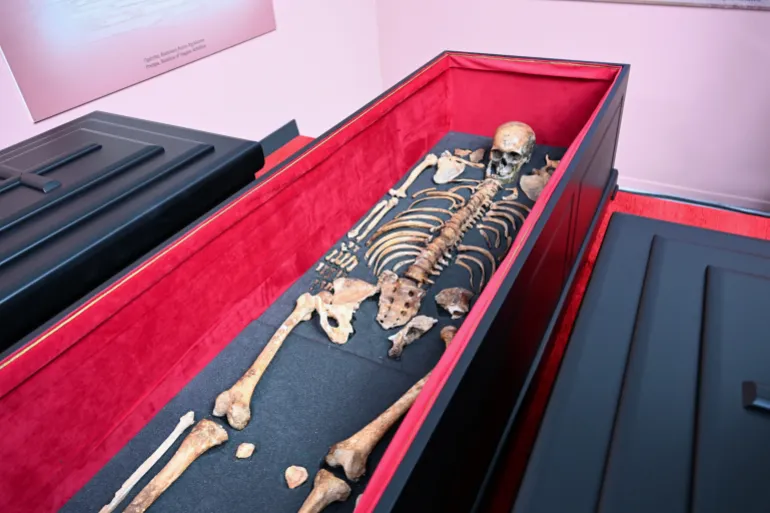
And a visitor to the Sozopol Archaeological Museum added: “We spent a few hours at the museum this summer. Although it’s not a huge museum, they have interesting exhibitions. The lady who was in charge of the museum was very nice and told us some peculiar facts about the history of Apolonia. Recommend taking a look at the second floor, where you can find an ancient ‘vampire’ skeleton.”

Source link

TUI reveals best places in Europe for hot and sunny weather this Easter

Many European destinations and warming up, and spring is definitely on the way. But which short-haul spot is most likely to give you sunshine and dry days over Easter? Here’s the destination with the best odds.

It feels like winter has dragged on forever this year, and many parts of the country are only just emerging from months of endless rain and grey skies to see a little bit of sunshine. With Easter on the way, which can be an unpredictable time for UK weather, many people will be looking to get away to the sunniest spot they can find for a few days.

Luckily, TUI has put together a list of the Easter getaways that are most likely to give you the ideal weather conditions, analysing historic data on the average rainfall, wind speed, and temperature in early-April to work out a Good Weather Score. Brits will be pleased to hear that topping the rankings is a destination just over four hours away from the UK that’s expected to see highs of 19C over the next couple of weeks.

According to TUI’s rankings, Turkey historically has the “most ideal weather conditions” during the Easter holidays, usually offering holidaymakers average temperatures of 18C. It’s also the destination where you’re least likely to be caught in an April shower. In the Easter holiday months, the amount of rainfall is just 0.01mm on average.

When the data was broken down into individual destinations, Marmaris in Turkey was the place most likely to give holidaymakers the best Easter weather conditions. It often reaches highs of 19C around Easter, and is usually dry with only light winds. Marmaris is in southwest Turkey in an area dubbed the Turkish Riviera. This lively port town has a marina, bustling grand bazaar, and historic sites such as the 16th-century Marmaris Castle.

Marmaris also has an amazing selection of sandy beaches that sit alongside its turquoise seas. Marmaris Long Beach (Uzunyali), is around six miles long, starting at the city centre, and has a lively promenade full of hotels, restaurants, and bars. A quieter alternative can be found at İçmeler Beach, just south of the city, where you’ll find sandy coves and incredible mountain views.

Second on the list for good weather was Greece, and this time of year brings mean temperatures of around 16C and long sunny days. Meanwhile, Bulgaria ranked third for its “pleasant and balanced climate”. Like Turkey it offers light winds and low rainfall, and Easter can be a good time to explore as tourist don’t have to contend with the intense summer heat. Bulgaria is becoming a major hiking destination, especially around the Rila and Pirin mountain ranges which combine gentle trails with more intense, steep climbs.

Bulgaria is also known for its stunning beaches. The Black Sea coast has 200 beaches to choose from and resorts to suit all sorts of holidaymakers. Sunny Beach is known for its lively nightlife and cheap drink deals, while Varna is a historic and cultural hub that has soft golden sand beaches and clear blue seas.

Anyone planning an Easter break can also check TUI’s holiday weather guide, which gives a breakdown of weather by month for popular tourist spots.

Europe’s top 10 destinations for good Easter weather

  1. Turkey
  2. Greece
  3. Bulgaria
  4. Spain
  5. Croatia
  6. Italy
  7. Hungary
  8. Portugal
  9. Montenegro
  10. Gibraltar

Have a story you want to share? Email us at webtravel@reachplc.com

Source link