A budget-friendly cabin bag from Home Bargains is available to buy right now while stocks last
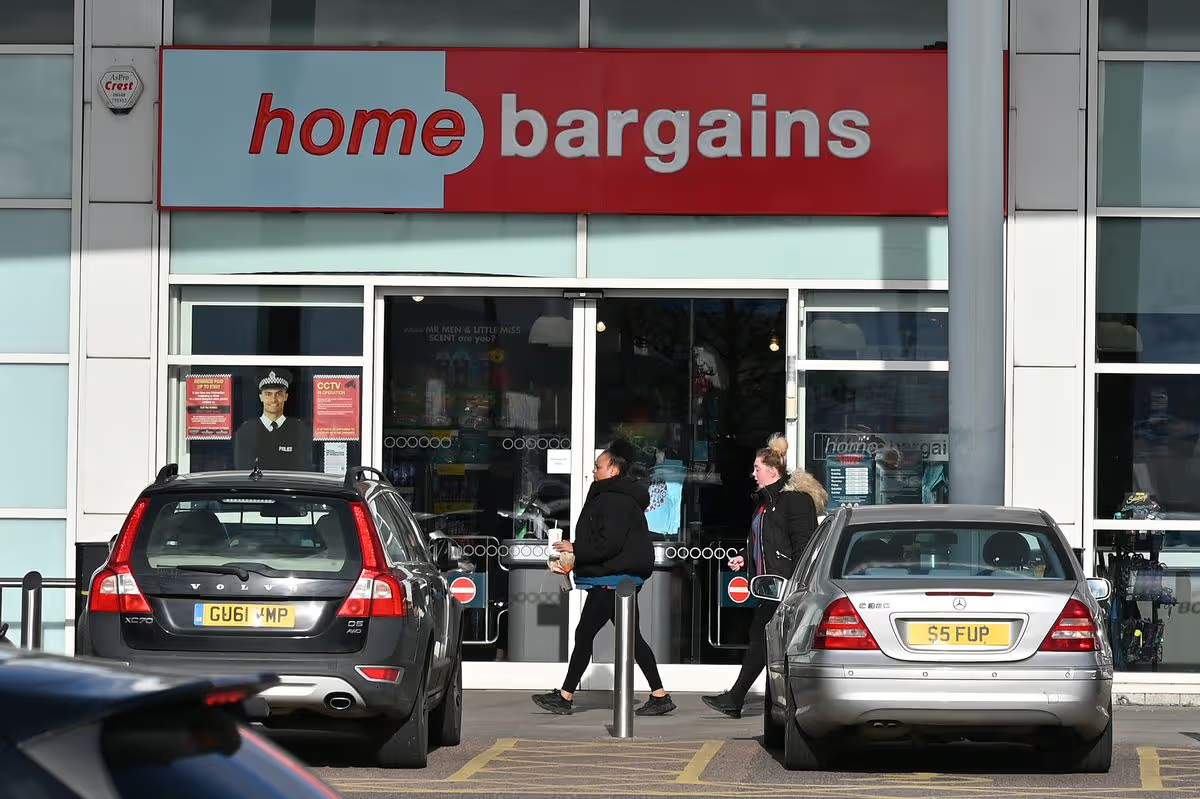
Home Bargains is selling a budget-friendly cabin bag(Image: Home Bargains)
A “versatile” cabin bag described as a “fantastic size” has landed on shelves at Home Bargains, and it could take the hassle out of getting ready for your next trip. The wallet-friendly purchase is designed to provide ample packing room while remaining compatible with a number of airlines operating throughout the UK.
The popular high street retailer is widely recognised for its extensive range of homeware and furnishings, but it has also been steadily growing its selection of budget travel accessories. Step forward the Salisburys Under Seat Bag, which will set you back just £9.99.
Describing the item, Home Bargains said: “Meet the Salisburys Under Seat Bag – your perfect travel companion! With its spacious zipped compartments and sleek design, it’s ideal for keeping your essentials close at hand while you jet off on your next adventure.
“Salisburys presents its broadest line-up of tried and tested luggage solutions with contemporary features to help the modern tourist navigate the hurdles of twenty-first century travel.
“Salisbury Under Seat Bags solve modern travel issues of the check-in case. A fantastic size bag that is versatile for the needs of your modern travel. Large open zipped storage compartment with small zip side pouch.”
Coming in four colours — black, green, light pink and purple — the bag boasts a rectangular design, complete with two carry handles at the top and an adjustable shoulder strap on each side. It comes with a zip fastening along the top, a padded exterior featuring stitched horizontal pockets at the front, plus several zip compartments throughout.
With dimensions of 40cm x 20cm x 25cm, the bag falls within the free under-seat cabin baggage allowances offered by a number of major airlines. It is compatible with carriers including Ryanair, and also fits comfortably within the larger free personal item allowances provided by the likes of easyJet, Jet2, TUI and British Airways.
Holidaymakers are nonetheless urged to double-check their airline’s most up-to-date baggage policy prior to travelling, as regulations can differ depending on ticket type and route. Those keen to find out more are encouraged to head over to the Home Bargains website.
The bag is available both in-store and online, with Home Bargains offering standard home delivery across the UK mainland for £3.95, and free delivery on orders over £100. Larger furniture pieces carry a £10 delivery charge, and standard parcels typically land within four working days.
Millions of Brits are due to pack up the budgie smugglers and inflatable doughnuts and head abroad – but there are plenty of sneaky charges and questionable practices that can easily ruin a holiday
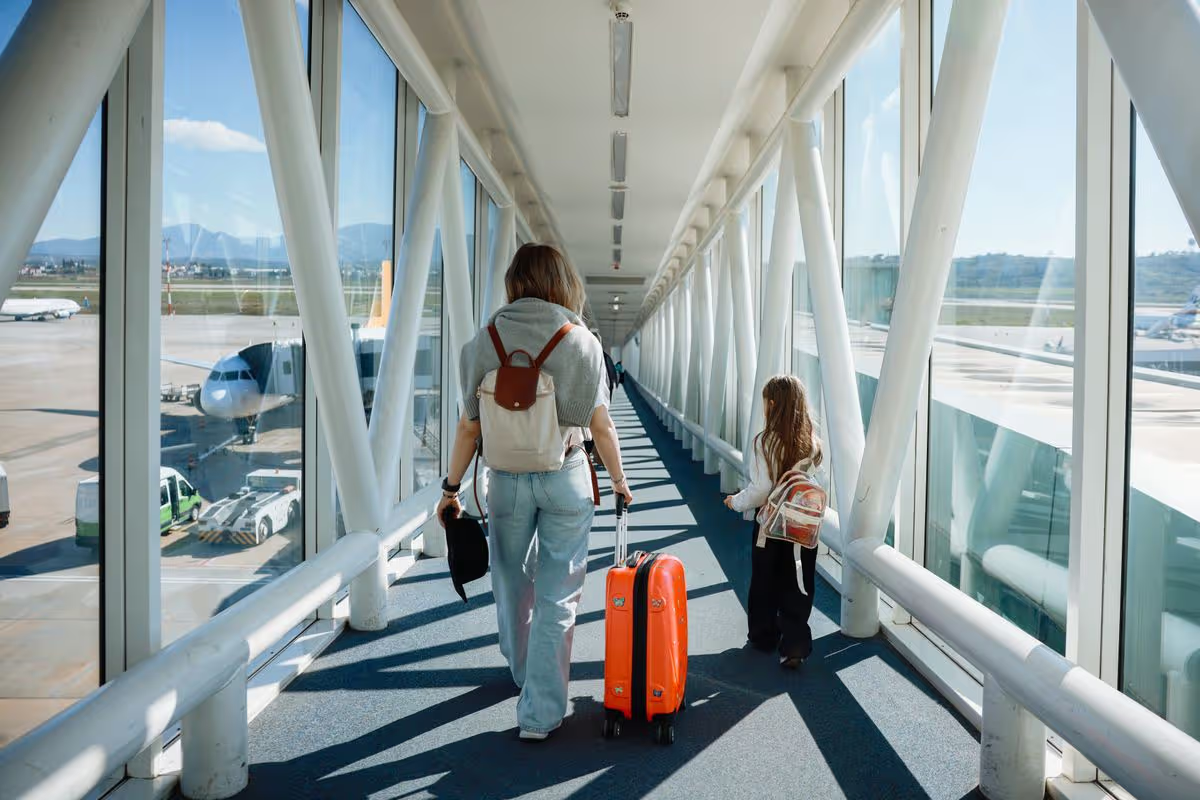
Don’t get caught out this summer(Image: encrier via Getty Images)
Are you due to travel abroad for a holiday in the coming months? You’re not alone.
Despite dire warnings of cancelled flights, raising prices and stifling heatwaves, millions of Brits are due to pack up the budgie smugglers and inflatable doughnuts and head abroad.
However, there are lots of extra charges, shoddy practices and other travel traumas that can catch out the unwary traveller. So here’s my guide to some of the holiday horrors that you might not be aware of, so you can get away without a care in the world.
Don’t get caught out by a non-compliant cabin bag
So you’re travelling with just a cabin bag, but it’s looking a bit overstuffed. Beware…
Airlines all have specific rules around the size of your cabin bag (the bigger one) and your hand luggage (the smaller one). Despite what it may say on your suitcase, there is no definitive size for cabin bags, though as a general rule the standard is 56 x 45 x 25cm for the cabin bag and 40cm x 30cm x 15cm for an under-seat (hand)bag. There are also weight restrictions too, with most cabin bags limited to a maximum of 7kg to 10kg.
Standard sizes are all well and good, but airlines can set their own, more restrictive rules around the size of both types of carry-on luggage. So before you travel, it’s vital that you understand their rules – and the consequences of not meeting them.
You’ll need to measure the height, depth and width of your carry-on bags. Missing off the wheels when you check the height is one of the more common mistakes.
But the biggie is over-stuffed bags. Having a bag that meets the criteria when empty doesn’t mean it does when you’ve jammed it full of holiday items. Remember that the bag must fit in to that metal box at the boarding gates if you want to get on your flight without paying extra.
Cheeky add-on charges on your flights
Chances are you’ve already booked your luggage costs as part of your flight booking. But make sure you pack your bags a few days before you travel so you know if you need to add on a hold bag, or are at risk of being caught out by those cabin bag rules.
The closer you get to travel, the higher the price you pay for your bags. So if you’ve not paid for your luggage yet, do it now.
So how much extra will you pay for essential add-on charges? By my calculations, the average prices hover around:
£40 to £50 if you want to take a 23kg hold bag one way.
£30 to £50 for an overhead cabin bag (this has almost doubled since last year – it might be cheaper to share a hold bag for two people).
£6 to £25 for the most basic seat reservation
That’s £76 to £125 each way or £152 to £250 for a return. However, you’ll pay more the closer you are to your flight date.
In addition, watch out for charges to book a specific seat. I was charged over £320 for two return flight seat reservations alone through British Airways recently, just so I could sit with my partner! For shorter haul, the seat prices aren’t as high, but are still outrageous.
In fact, Ryanair has U-turned on charging £8 for families to sit with kids after the the Competition and Markets Authority (CMA) announced an investigation.
You can usually book a specific seat 24 to 48 hours before check in opens. But watch out! There’s usually a massive rush to book and you may miss out. I tested the BA website after I’d paid for my shocking seat prices and the website and app went down on both occasions when check in opened.
Apartment traps and questionable locations
Using online travel marketplaces and apartment rental websites can be a great way to find a fabulous place to stay for your big holiday. But you do have to be a bit cautious about what’s on offer and you’ll need to check to see if the places you like are as good as they seem.
You may already be aware of the warnings about ‘tickers’ – those on-screen alerts that say there are only two rooms left in the hotel, or things are ‘booking fast’. Despite numerous warnings and fines, the industry is still finding sneaky ways to panic us in to buying without checking things thoroughly.
But there are other things to watch out for. Many websites offer hotels and aparthotels alongside private lets. There’s nothing wrong with a private let in theory, but with a hotel, you can complain to the reception if things aren’t as advertised, whereas a private let might limit your options if the host is a bit rubbish.
Check photos thoroughly to see if the advertised facilities are all there, ask questions before booking and look at the reviews – focus on recent ones. Watch out for things like extra bedrooms that turn out to be a sofa bed in the living room. I always look for a personal handover and return of keys too as this is a guide to how good your host is.
The latest thing to watch out for is the location of the property. Many sites list properties as being ‘500 metres from the centre’.
Yet, some of the sites I checked don’t specify which centre. You may find that you’re not 500 meters from the centre of Barcelona, but 500 meters from the centre of a suburb nearby. Check out a map online so you know where the main tourist areas are for your destination and cross reference with the details on the booking website.
Martyn James is a leading consumer rights campaigner, TV and radio broadcaster and journalist
THE ongoing heatwave has caused chaos at the UK’s airports with more than 1,000 flights either delayed or cancelled.
Airports affected on Saturday include Heathrow, Gatwick, and Edinburgh, with 1,019 flights delayed and 160 axed, as air traffic restrictions were put in place overnight.
Sign up for the Travel newsletter
Thank you!
Passengers wait for their flights at the North Terminal at Gatwick Airport (archive photo)Credit: AlamyLightning strikes over London hitting Canary Wharf in the early hours of the morningCredit: Alamy
London Heathrow had 440 flights delayed, Gatwick 425, 120 at Edinburgh, Leeds Bradford had 20 and London City had 14, according to the tracking website FlightRadar.
Heathrow had 103 flights cancelled, while Gatwick had 46, there were six at London City and five at Edinburgh.
A British Airways (BA) flight from Santiago, Chile, was the longest delayed, it had been due to land at 10am but is now expected to arrive at 9pm.
London saw its skies light up as lightning hit and downpours came in following day of extreme temperatures that saw the month’s record temperature broken on three consecutive days.
London Heathrow had 103 flights cancelled and 440 flights delayed (archive photo)Credit: AlamyImpressive lightning storm over the Rampion Offshore Wind Farm late last nightCredit: Story Picture Agency
Thunderstorms forced airports to limit the number of flights that could take off and land, meaning holidaymakers were left stranded or facing severe delays.
BA put the delays down to London’s “weather conditions,” pointing to the Met Office’s amber “extreme heat” warning which covered the capital, the south-east and East Anglia.
This has now been extended by the Met Office to cover Sunday until 9pm.
Gatwick Airport urged passengers to contact their airline to check the status of their flight.
A spokesperson said that temporary air traffic restrictions had caused flight cancellations and delays “due to thunderstorms”.
A spokesman for London City Airport said: “Flights are gradually returning to normal following this morning’s weather-related air traffic restrictions.
“There have been some associated delays and cancellations.”
The thunderstorm also caused Edinburgh Airport to be hit by the air space restrictions with four arrivals and 15 departures delayed.
Leeds Bradford Airport also suffered with three departures delayed Saturday morning.
A spokesman for British Airways said: “Like other airlines, we’ve had to make some adjustments to our schedule today due to Air Traffic Control restrictions caused by adverse weather conditions affecting parts of UK airspace.
“While the vast majority of our customers will be unaffected, we apologise for the inconvenience caused and our teams are working hard to help those impacted get their journeys back on track.”
A spokesman for NATS, which runs air traffic control in Britain, said: “Forecasted severe weather across the south-east of England is causing disruption to flights today, with aircraft needing to avoid affected areas.
“Our teams are managing traffic safely and working to reduce delays, but weather disruption is expected to continue through the rest of today.
“Passengers should contact their airline for the latest information on their flight.”
While temperatures are predicted to fall over the weekend the Met Office still has an amber extreme heat warning in place until 9pm on Sunday.
An amber warning means officials expect significant impacts on health and social care services, with an increased risk of illness and deaths among older and vulnerable people.
The cooler weekend comes in the wake of several days of rare red heat warnings, the most severe warning where there is a danger to life.
The decision of where to sit on a plane could impact the rest of your holiday
08:31, 27 Jun 2026Updated 08:35, 27 Jun 2026
Picking the right seat could make a big difference(Image: Getty)
As millions of Brits gear up to jet off on their summer holidays, one decision that many may have overlooked could make or break their entire trip. Choosing the right seat on the plane might be the difference between relaxing on a sun-soaked beach or making endless trips to the toilet.
Research has revealed that whether passengers opt for a window, middle, or aisle seat could potentially affect their chances of catching a viral infection before the holiday has even got underway. However, your seat selection alone won’t be the sole factor determining your overall risk of falling ill.
How close you are to someone carrying a virus is the single biggest indicator of how likely you are to pick up an infection. This is followed by how busy the flight is, as the greater the number of passengers on board, the higher the likelihood that some will be carrying viruses.
Airflow throughout the cabin, passenger movement, contact with shared surfaces (such as in the bathroom) and whether or not you wear a mask will all have a bearing on your risk of catching a viral infection during a flight.
Dr Sophie Dix, Head of Medical Affairs at online pharmacy MedExpress, has offered guidance on how travellers can lower their risk of falling ill while flying, including advice on where to sit. She said: “Although there is no guaranteed way to avoid picking up an illness while flying, there are practical steps people can take to reduce their exposure to germs and viruses on planes.”
She shared her top tips for travellers looking to lower their chances of picking up an infection. Here’s what she advised.
Seat selection matters
“The best advice to avoid getting sick on the plane is to try and reduce as much contact with germs and other passengers as possible, so choosing where you sit may have more impact than you might have originally thought.
“Window seats are a great option as they are often far away from high traffic areas such as bathrooms and busy walkways. Aisle seats also increase your exposure to people who frequently pass by throughout the flight, queue for the toilet, and access luggage from overhead compartments. One study found that sitting in a window seat can reduce your interactions with other passengers or crew by up to five times compared to if you sit in a middle or aisle seat.”
She added: “Additionally, research may suggest that leaving the middle aisle free reduces the spread of airborne diseases by 37%, so choosing seats that appear to have middle aisles empty could be a strong choice. Whilst protection from illness is never guaranteed, this highlights that creating distance between other passengers greatly reduces your chances of getting sick.”
Wipe down any surfaces
“Surfaces such as tray tables, armrests, seatbelt buckles, touchscreens, magazines and window shutters can harbour germs easily as they are used so frequently by previous passengers. Wiping down surfaces with disinfectant wipes or sanitiser greatly reduces your risk of coming into contact with germs on them.
Wash your hands regularly
“Maintaining good hygiene standards while travelling can greatly reduce your chances of getting sick. Washing your hands regularly with soapy water or hand sanitiser, especially after coming into contact with surfaces, is a simple but effective way to stop the spread of germs while you’re on the plane.
Stay hydrated
“Cabin air on planes can be extremely dry and irritate your nose and throat whilst travelling, leaving you feeling more run down and vulnerable to picking up any viral infections. Make sure to drink plenty of water and keep on top of hydration throughout the flight to strengthen your immune system. Keep water easily accessible throughout the flight, and drink regularly, especially if you’re travelling with children.
Wear a face mask
“Wearing a face mask greatly reduces the spread of any airborne viruses, as we saw throughout the COVID-19 pandemic. Crowded flights may become a hotspot for any infections due to the cramped space and close proximity to other passengers, so taking preventative measures may help reduce the spread of any current infections.
Ensure you’re well rested
“Those who don’t get adequate rest before a flight are over 4 times more likely to catch a cold compared to those who are fully rested. This is due to your immune system being weaker when you haven’t got enough sleep, making you more susceptible to picking up any infections.
Shoppers looking to ‘travel in style’ could do just that with the latest travel deal at Home Bargains
Take a look at the latest deal at Home Bargains(Image: Home Bargains)
Home Bargains is helping shoppers prepare for their summer holidays with a “spacious yet compact” cabin bag that meets the hand luggage requirements of several major UK airlines. The discount retailer, which has over 600 stores nationwide, claims it is “perfect for your adventures”.
It may be renowned for its affordable homeware and furnishing deals, but Home Bargains’ range extends far beyond side tables, lamps and ornaments. From garden accessories and beauty buys to travel essentials, shoppers can find plenty of wallet-friendly options.
Take the Salisburys Carry-On Cabin Lightweight Backpack, for instance, which retails for a more-than-affordable £9.99. It comes in black, and boasts a very simple aesthetic to suit various tastes.
Describing the product, Home Bargains said: “Travel light and in style with the Salisburys Carry-On Cabin Lightweight Backpack in sleek black! Perfect for your adventures, this spacious yet compact backpack is designed for easy packing and effortless carrying.
“Every Salisburys product has been designed, manufactured and extensively tested to stand the rigours of today’s travel. Every Light Luggage product has been designed, manufactured and extensively tested to stand the rigours of today’s travel.”
According to Home Bargains, the cabin bag measures approximately 45 x 30 x 15cm, making it suitable for use with the cabin luggage allowances of most major airlines, namely easyJet, British Airways, Virgin Atlantic and KLM. Please note, it could be too long for Ryanair, Wizz Air and Jet 2.
Weighing around 760g, it features multiple zipped compartments for organising belongings, a fully lined interior and a lightweight construction designed for travel. Interested shoppers can find out more, and view additional product images, on the Home Bargains website.
It’s available both in-store and online as Home Bargains offers standard delivery across the UK mainland from £3.95, while orders over £100 qualify for free delivery. A £10 delivery fee applies to larger furniture items, and most standard parcels are expected to arrive within four working days.
Home Bargains is also selling the Salisburys Under Seat Bag which will also set you back £9.99. The product description reads: “Meet the Salisburys Under Seat Bag – your perfect travel companion!
“With its spacious zipped compartments and sleek design, it’s ideal for keeping your essentials close at hand while you jet off on your next adventure. Salisburys presents its broadest line-up of tried and tested luggage solutions with contemporary features to help the modern tourist navigate the hurdles of twenty-first century travel.
“Salisbury Under Seat Bags solve modern travel issues of the check-in case. A fantastic size bag that is versatile for the needs of your modern travel. Large open zipped storage compartment with small zip side pouch.”
The discount chain claims this bag is ‘approved by over 30 airlines’ around the world
Home Bargains claims that ‘up to 30 airlines’ should accept this bag size without issue(Image: John Keeble/Getty Images)
A ‘compact’ yet ‘stylish’ travel bag is available at Home Bargains, which the store says could help take the stress and worry of overpacking out of holidaymakers‘ minds this summer. It has been approved to comply with the luggage dimension rules of up to 30 airlines worldwide.
People can pick up the Bordlite Under Seat Cabin Bag in an online sale, down from £14.99 to £5.99 (a 60% saving). Shoppers can choose between black and navy for the same price at Home Bargains.
Describing the travel bag online, the store said: “The Bordlite Under Seat Cabin Bag is a lightweight and compact travel essential, approved by over 30 airlines. With three external pockets and a long shoulder strap, it keeps your journey organised and hassle-free.”
According to the Home Bargains website, the bag measures in at “approximately” 40 x 30 x 20cm. Using the provided dimensions, shoppers can confidently pack and use this underseat bag on a variety of airlines.
Home Bargains claims that “over 30” will approve this for travel, including Ryanair, Wizz Air, EasyJet, Jet2 and British Airways. Because the bag fits in with some of the strictest size guides, it automatically works for airlines that offer slightly larger allowances.
Below is a full list of the 30 airlines which accept this size (or bigger) when booking. In most cases, airlines include a free personal or underseat item within the ticket price – but always double-check with the airline itself before getting caught out with an extra airport fee.
For more Home Bargains deals, click here. Some are online-only, meaning shoppers who shop only at their local store could miss out on certain major deals.
What airlines accept this size bag?
UK & Europe:
Ryanair (Up to 40 x 25 x 20cm)
Wizz Air (40 x 30 x 20cm exactly)
FlyOne (40 x 30 x 20cm exactly)
easyJet (Up to 45 x 36 x 20cm)
Jet2 (Up to 45 x 36 x 20cm)
British Airways (Allows a large cabin bag up to 56 x 45 x 25cm for free)
Lufthansa (Up to 40 x 30 x 10cm for personal item, but easily fits their free overhead limit of 55 x 40 x 23cm)
Air France / KLM (Up to 40 x 30 x 15cm for personal item, but easily fits their free overhead limit of 55 x 35 x 25cm)
Norwegian Air (Up to 38 x 30 x 20cm)
Iberia (Up to 40 x 30 x 15cm for personal item / 56 x 45 x 25cm for overhead)
TAP Air Portugal (Up to 40 x 30 x 15cm for personal item / 55 x 40 x 20cm for overhead)
Aegean Airlines (Up to 40 x 30 x 25cm)
Vueling (Up to 40 x 30 x 20cm)
Eurowings (Up to 40 x 30 x 25cm)
Pegasus Airlines (Up to 40 x 30 x 15cm for personal item / 55 x 40 x 20cm for overhead)
SAS (Scandinavian Airlines) (Up to 40 x 30 x 15cm for personal item / 55 x 40 x 23cm for overhead)
Swiss International Air Lines (Up to 40 x 30 x 10cm for personal item / 55 x 40 x 23cm for overhead)
Middle East and Asia
Emirates (Allows an overhead bag up to 55 x 38 x 20cm for free on all tickets).
Qatar Airways (Allows a cabin bag up to 50 x 37 x 25cm for free).
Etihad Airways (Allows a cabin bag up to 56 x 36 x 23cm for free).
Singapore Airlines (Allows a personal item up to 40 x 30 x 10cm or a main cabin bag up to 55 x 40 x 20cm)
Turkish Airlines (Allows a personal item up to 40 x 30 x 15cm or a main cabin bag up to 55 x 40 x 23cm)
American and Transatlantic
Delta Air Lines (no specific personal item dimensions, must fit under the seat)
United Airlines (Up to 43 x 25 x 22cm)
American Airlines (Up to 45 x 35 x 20cm)
Air Canada (Up to 43 x 33 x 16cm for personal item / 55 x 40 x 23cm for overhead)
JetBlue (Up to 43 x 33 x 20cm)
Spirit Airlines (Up to 45 x 35 x 20cm)
Frontier Airlines (Up to 45 x 35 x 20cm)
WestJet (Up to 41 x 33 x 15cm for personal item / 53 x 38 x 23cm for overhead)
The Foreign Office has lifted its no-go travel warning after Iran and the US signed a deal
Simon Calder says airlines will be desperate for people to ‘take summer holidays’ after the easing of travel advice
A travel expert has provided an update on journeys to and from the Gulf region following the US and Iran reaching an agreement to cease hostilities between the two nations. Speaking outside the Foreign, Commonwealth & Development Office (FCDO), Simon Calder confirmed that travel insurance was ‘once again valid’ after both the Iranian and American presidents put pen to paper on a deal to end the conflict.
Mr Calder stated that those wishing to visit the region could now do so ‘with some confidence’. He said: “I’m at the Foreign Office which has just changed its advice for travellers going to the Gulf region, in particular Dubai, which last year was visited by 1.4 million British travellers.
“As from now, the no-go warning which prevailed for the whole of the UAE, including Dubai and Abu Dhabi, as well as to the countries of Qatar, Bahrain and Kuwait, has been lifted. The Foreign Office still warns that you need to be ready for trouble to resume at any time, but it means that travel insurance is once again valid and anybody planning a trip to the UAE or Qatar or elsewhere in the region can do so with some confidence.
“The immediate effect, I think, is going to be a big marketing campaign by the giant airlines: Emirates of Dubai, Etihad of Abu Dhabi, and Qatar Airways based in Doha. They will be wanting to get people to both connect through their hubs, but also to take summer holidays. Be warned, it is extremely hot with average daily highs around 40°C.”
Content cannot be displayed without consent
Not only do millions of holidaymakers head to the Gulf states, but countless others use them as a stopover for journeys to Asia and Australia. That meant the tourism industry took a particularly severe blow when the US and Israel launched strikes on Iran in late February.
The FCDO decision means tourists can now return without putting their travel insurance at risk. But that doesn’t mean flights will restart straight away.
Virgin Atlantic halted flights until winter 2027 after the conflict began, and a spokesperson confirmed on Thursday that this ‘remains the case’.
British Airways announced earlier in June that it wouldn’t restart flights to the UAE until October 2026. Emirates has maintained flights to and from the region throughout the hostilities.
Mr Calder continued: “The immediate effect, I think, is going to be a big marketing campaign by the giant airlines: Emirates of Dubai, Etihad of Abu Dhabi, and Qatar Airways based in Doha. They will be wanting to get people to both connect through their hubs, but also to take summer holidays. Be warned, it is extremely hot with average daily highs around 40°C.”
“But it means that anybody who’s planning to travel perhaps to Asia or to Australia now will be able to travel with confidence through one of the Gulf hubs. In addition, I imagine that airfares will fall because the Asian carriers will not be able to command such a premium.
“Stand by for some really good holiday offers, but I personally won’t be seeing you on the beach in Dubai until about November.”
Brits who find themselves stranded in Europe due to a cancelled flights could soon have new rights to claim back travel replacement costs, amid a shake-up of the EU’s air travel rules
08:22, 19 Jun 2026Updated 08:22, 19 Jun 2026
Passengers whose flights are cancelled could have the option to arrange their own transport(Image: Getty Images)
Cancelled flights could soon come with a more costly penalty for airlines, as a landmark air passenger rights agreement was reached between the EU Council and the European Parliament in good news for holidaymakers.
The ruling means that Brits who find themselves stranded in Europe due to their flight being cancelled could soon claim back replacement travel costs worth up to four times the price of their original ticket. It comes amid a raft of changes around airline charges for cabin bags and family seating, which could see Brits getting a fairer deal when they visit destinations such as Spain, Greece, Italy, Portugal, or France.
The law states that, after a flight cancellation, “if an airline fails to offer rerouting within three hours, passengers may organise their own rerouting and claim reimbursement of up to 400% of the original ticket price.” According to AirAdvisor, which specialise in claims for disrupted flights and mishandled baggage, this means passengers will no longer need to wait around for the airline to sort out a journey home for them.
AirAdvisor also said in a statement that this rerouting reimbursement will be separate from the standard compensation that some passengers are entitled to for cancelled flights. It explained: “The Council statement confirms that even when a passenger is rerouted, “airlines remain responsible for compensation for delays at arrival.”
This means passengers could potentially reclaim the cost of replacement flights, as well as claiming for standard cancellation compensation, which can be up to £350 per passenger for a UK to Spain flight, and higher for long-haul journeys.
“However, the standard compensation would still depend on the usual qualifying conditions, including whether the disruption was within the airline’s control. If extraordinary circumstances apply, airlines may not be required to pay financial compensation,” the statement continued.
EU rights aren’t based on nationality, but rather the route and the airline operating the flight. So even post-Brexit, Brits are protected on journeys departing from an EU airport to the UK, or any flights from the UK to the EU that are operated by an EU airline. For example, Brits taking a Ryanair flight from Malaga to the EU would be covered by the legislation.
However, flights from the UK to the EU on non-EU airlines wouldn’t be covered. So, the outbound leg of a London to Madrid flight on a carrier such as British Airways would not follow these rules because it is arriving in the EU from a non-EU country on a non-EU airline.
The UK has its own UK261 framework, which includes the Right to Care for journeys delayed over two hours, but it’s not known whether this legislation will be updated in light of the changes in the EU.
Anton Radchenko, aviation lawyer and CEO of AirAdvisor, said: “For the passengers who are genuinely in trouble, the ones standing at a desk in a European airport being told the next available flight is days away, this is the change that actually matters. A reimbursement cap of up to four times the original ticket price could make a real difference to families who suddenly have to buy last-minute flights home, and it is a part of the reform I would want every British holidaymaker to know about.”
He added: “The importance of this rule is that it gives people a clearer point at which they can act. The harder part, as with every passenger right, will be making sure travellers know it exists before they are stuck at the airport, rather than finding out months later.
“My practical advice to any traveller is straightforward. If your covered flight is cancelled, give the airline its three-hour window to offer a suitable reroute, and then keep everything: your original booking, the cancellation notice, proof of what the airline offered or failed to offer, and every receipt for the travel you arrange yourself.
“In my experience, the passengers who successfully recover what they are owed are almost always the ones who documented the situation as it happened, not the ones who tried to piece it back together weeks later. A right is only ever as useful as the evidence you keep to support it.”
Have a story you want to share? Email us at webtravel@reachplc.com
A SMALL airport in South Yorkshire once allowed passengers to travel to Europe – but lasted just over a decade.
Sheffield City Airport first opened in 1997, taking Brits to the likes of Belgium and the Netherlands.
Sign up for the Travel newsletter
Thank you!
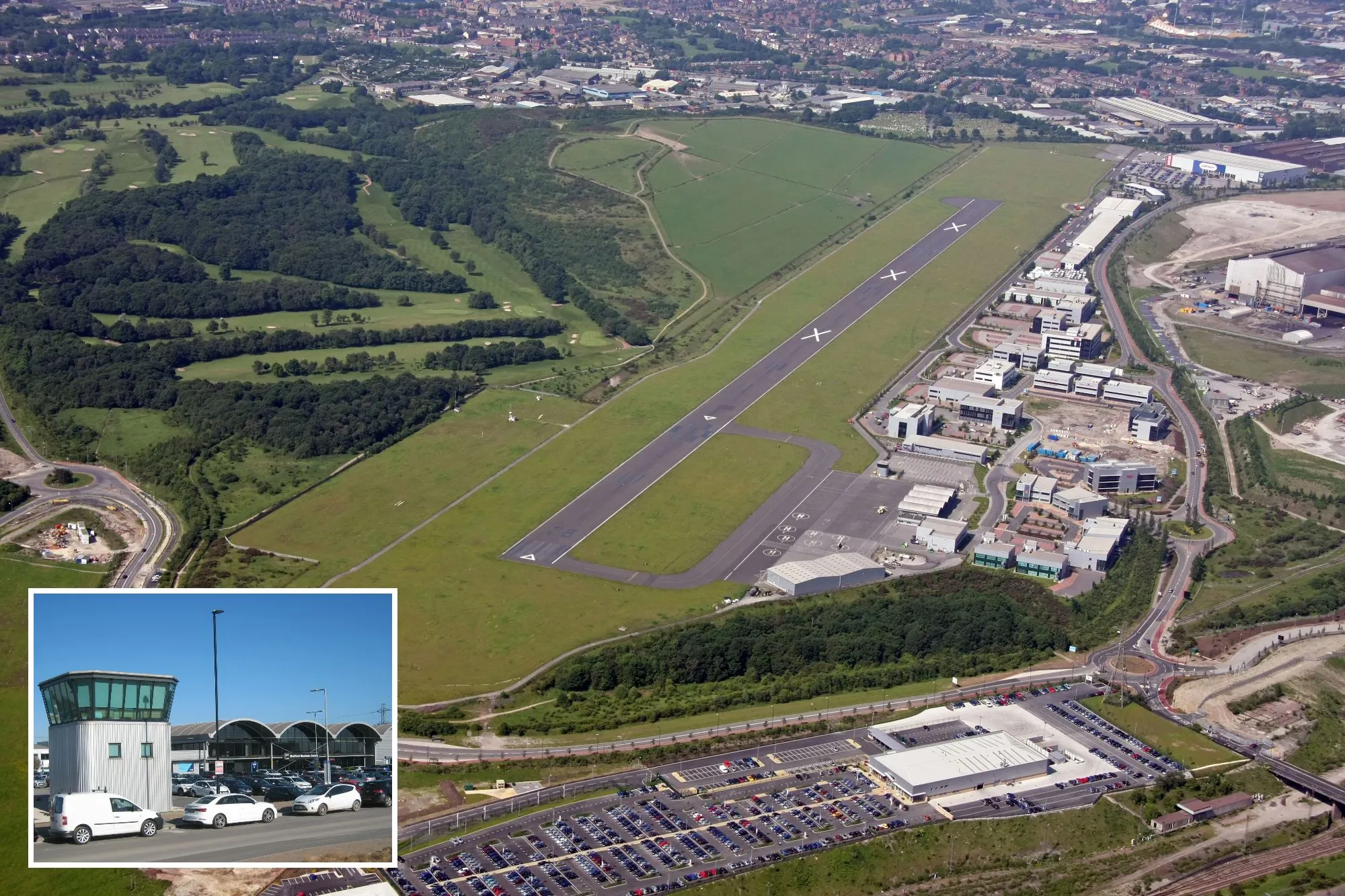
Sheffield City Airport flew Brits from South Yorkshire to places like the NetherlandsCredit: AlamySheffield City Airport including the tower has been developed into officesCredit: Wikipedia
First proposed in 1968, it finally opened in the 1990s as a gateway to Europe for those in South Yorkshire.
Passenger flights began in February 1998 with airlines KLM, Sabena, British Airways and Aer Arann.
AN ABANDONED airport home to one of the UK’s longest runways is set to reopen as early as next year.
Commercial passenger flights at the airfield are expected to restart sometime in the next two years.
Sign up for the Travel newsletter
Thank you!
An abandoned UK airport is set to reopen as soon as this yearCredit: AlamyDoncaster Sheffield Airport previously closed in 2022 for financial reasons, but has been undergoing a major redevelopmentCredit: Alamy
The site was previously considered no longer financially sustainable and since closing has remained abandoned and partially derelict.
During this time, regional developers have been pushing for a major overhaul of the former transport hub, costing around £160 million through a public-funded reopening programme.
The proposals have received the support of local councils, and the site is projected to resume cargo operations as early as this year, with passenger flights slated to resume in late 2027 or early 2028.
The airfield also boasts one of the UK’s longest runways, measuring 1.8miles and once operational again, will be the eighth longest commercial runway in England.
The longest runway can be found at London Heathrow, measuring 2.4miles, and runs parallel with the second longest runway also found at the airport, measuring 2.2miles.
Executive director for Airport Operations at FlyDoncaster, Simon Hinchley, said: “As we work towards re-opening Doncaster Sheffield Airport, our focus is firmly on building a safe, efficient and operationally robust airport that is ready to serve a broad range of users from day one.”
Airlines such as TUI and Wizz Air used to be found at Doncaster Sheffield Airport, but currently it has not been confirmed who will be flying to and from the transport hub.
The airport is also keen to showcase the region, having independent vendors on-site rather than larger chains.
The airport will be kitted out with the latest technology and security lanes and systems are expected to move as their original location was in an unideal area of the site.
A project of this size has previously been described as transformative for the area.
The South Yorkshire Mayoral Combined Authority, which is one of the backers on the project, previously stated their rationale for investing in the development.
They said: “Doncaster Sheffield Airport closed in November 2022, leaving South Yorkshire one of the largest UK city regions without an international aviation presence.
“South Yorkshire’s Mayor, Oliver Coppard, and Council Leaders have taken a historic decision to reopen Doncaster Sheffield Airport, approving a £160 million funding package that will see commercial flights return to the region.”
Doncaster Sheffield Airport first opened in 1915, and operated as a Royal Flying Corps airfield in the First World War.
The transport hub then served as an RAF base before being transformed into a commercial airport in 2005.
The airport was previously called Robin Hood Airport, referencing the folklore of the region.
IF you’re looking for a new London hang-out spot, Olympia has it all from pretty bars to top-tier entertainment.
After a £1.3billion upgrade, the impressive project is opening its rooftop ‘Canopy’ today and its music venue later this week.
Sign up for the Travel newsletter
Thank you!
Olympia in West Kensington has been transformed after a £1.3 billion upgradeCredit: OlympiaNew rooftop bars and restaurants are opening this week like Bar ArribaCredit: Olympia
The enormous revamped building in West Kensington is opening its rooftop bars and restaurants that can only be found at Olympia today.
For anyone who fancies Mexican, check out Bar Arriba which serves up fresh cocktails and small bites from tacos to tostadas.
Lillie’s Wine Bar & Restaurant is the spot for the best of British food from Gressingham duck to Devon crab salad and you can even try a rhubarb and custard cocktail.
The outside area looks like an English country garden too with sculptures and beds of daffodils.
At Wolves of Tokyo dig into Japanese dishes from sushi to grilled skewers, gyozas and tartare.
Arbour is the food hall which has more of a casual vibe and inside are four different spots; Café Modo, Fry Baby, The Rambler and Whammy Burger.
All of these spots are up on the rooftop so they’re perfect for a sunny weekend.
But if the weather doesn’t play ball, there is a retractable roof to protect punters from the rain.
Another dining venue at Olympia called Pillar Hall opened in March, 2026.
It’s found in the Grade-II listed part of Olympia that was built in 1886 and is home to Idalia an all-day restaurant and Pepperbird, a speakeasy-style bar.
Lillie’s Bar and Restaurant is in the style of an English country gardenCredit: Incipio
It’s been described as a ‘world-class venue’ which will host music, comedy and entertainment.
It will start with performances by Self Esteem and McFly before the likes of Van Morrison and Khalid take to the stage later in the year.
This will be followed by the 1,575-seat British Airways Theatre in 2027 which will be London’s largest new theatre in 50 years.
Japanese restaurant Wolves of Tokyo has beautiful views from outsideCredit: Olympia
The Hyatt Regency hotel which will have 204 rooms will open to guests from July 6.
The other on-site hotel, CitizenM London Olympia will have 146 rooms and is expected to open this summer, although no official date has been announced.
Olympia London first opened in 1886 and has held performances by Jimi Hendrix and Pink Floyd and was used as an exhibition space by the likes of Vivienne Westwood.
BOARDING gates are usually good for people spotting, but I don’t usually see famous faces among the frazzled families, loved-up couples and hen parties.
British Airways’ newest route isn’t your average flight though.
Sign up for the Travel newsletter
Thank you!
Toulon Airport is a cab ride or a 2.50 euro bus ride from the famous seaside town of St TropezCredit: GettyThe Sun’s Head Of Travel (Digital) Caroline McGuire flew the new route for her stay at Prairie De La Mer campsite with Eurocamp
The 2-hour journey from London City airport (best airport in the UK in my opinion) is taking passengers to Toulon-Hyeres airport in the south of France twice-weekly until September.
The seaside city is a taxi ride away from A-List heavy holiday destinations like St Tropez, Grimaud and Sainte Maxime.
Which is why my plane featured not one, not two, but three celebrities queueing to board.
London City is a dream airport, with non-existent security queues, almost non-existent check-in queues and very short walks to boarding gates.
I kicked myself for arriving a keen two hours before the flight, because we did everything so quickly that we had masses of time to kill.
The planes are small by BA standards but as they’re part of the BA CityFlyer brand that operates out of London City, Economy passengers get a free drink and a light snack on the two-hour trip, with flights costing from £130 one-way.
Business Class passengers get a full meal and car service, which includes fried breakfasts, salads and a hot main, plus pudding and bread roll, depending on the time of day you travel.
Despite this, flights cost from £130 one-way.
The flight is aiming itself at passengers who want relaxed and luxurious travel to the famous French Riviera, and Toulon airport is so tiny that arrivals at the other end are similarly breezy.
The dreaded lengthy passport control queues were perfectly manageable as the airport only serves seven destinations.
Because it’s so small, there is only a tiny cafe at Toulon after check-in though, so it’s worth coming armed with your own food if you have specific tastes.
The French Riviera isn’t known for being cheap, but you don’t have to splash 100 euros on a taxi to St Tropez.
There is a coach that leaves twice daily from the airport and costs 2.50 euros per person and travels all the way to St Tropez, stopping at a number of holiday destinations en route.
I was staying at the Eurocamp in nearby Port Grimaud and it took me nearly all the way, with just a 10 euro Uber at the end to get me to my campsite.
St Tropez is in the spotlight even more than usual this summer, as the new series of HBO’s The White Lotus will be set on the French Riviera, with the posh Chateau de la Messadiere in St Tropez being used as the main filming location.
So if you fancy checking out the real-life location that’ll be beaming onto our screens next summer ahead of the crowds, this is one of the easiest and most comfortable flights to get you there.
Plus you might even spot a celeb or two on your way.
As the route is part of the BA CityFlyer brand that operates out of London City, Economy passengers get a free drink and a light snack on the two-hour tripCredit: Alamy
Passengers no longer need to make connecting flights as the new service is set to start from July 23, the first of its kind on a route to and from Manchester Airport
Rachel Vickers-Price UK and World News Reporter
07:58, 09 Jun 2026
New airfares between England’s north and Saudi Arabia will soon be on offer(Image: Getty Images)
A major airline has announced it will be running a new direct service to a major capital city from Manchester Airport.
Riyadh Air will launch the service between the Saudi Arabian capital and Manchester from July 23.
Flights direct to Riyadh will operate three times a week, making one of the first direct links between the Saudi Kingdom and England’s north in decades. Many passengers have been forced to rely on connecting flights through European hubs or other Gulf airports – until now.
As per Riyadh Air, the airline will run the route on Tuesdays, Thursdays and Saturdays, with flight RX417 leaving Riyadh King Khalid International Airport at 1.45am local time before arriving into Manchester at 6.40am. The return service, RX418, will depart Manchester at 8.40am and land back in Riyadh at 5.20pm local time – right on time for the dinner service.
Riyadh Air told travel news website Travel and Tour World that the route has been designed to appeal to both business and leisure passengers, offering faster and more convenient travel between the Middle East and England’s north. The new direct service will mean business travellers will be able to attend meetings in Riyadh without overnight layovers, and holidaymakers can travel to Saudi Arabia without the need to make a connecting flight. Additionally, the flights will make use of Riyadh Air’s Boeing 787-9 Dreamliner aircraft, which feature wider seating, advanced lighting systems, and nifty travel technology designed to reduce jet lag on long-haul journeys. Riyadh Air said the new Manchester flight path forms part of Saudi Arabia’s wider Vision 2030 strategy, which aims to grow tourism, strengthen global connections, and expand the country’s aviation sector. Riyadh Air, which was founded in 2023, plans to grow its fleet of more than 100 aircraft over the next decade, while also aiming to connect travellers to more than 100 international destinations.
The Manchester route is among the first international services planned as part of the national airline’s wider summer 2026 expansion programme, with new connections also flying out of London.
The additional fares come as travel between the UK and Saudi Arabia continues to increase, with weekly seat capacity surging by up to 150% in recent years to meet rising business and tourism demands. Riyadh Air is now the only aviation firm to expand flight offerings and launch new direct routes between major British and Saudi airports, with British Airways recently boosting its London Heathrow to Riyadh service to up to 14 weekly flights and its Jeddah (JED) route to five flights per week. Wizz Air and Virgin Atlantic have also launched direct routes connecting Gatwick and Heathrow airports to cities like Medina, Riyadh, and Jeddah.
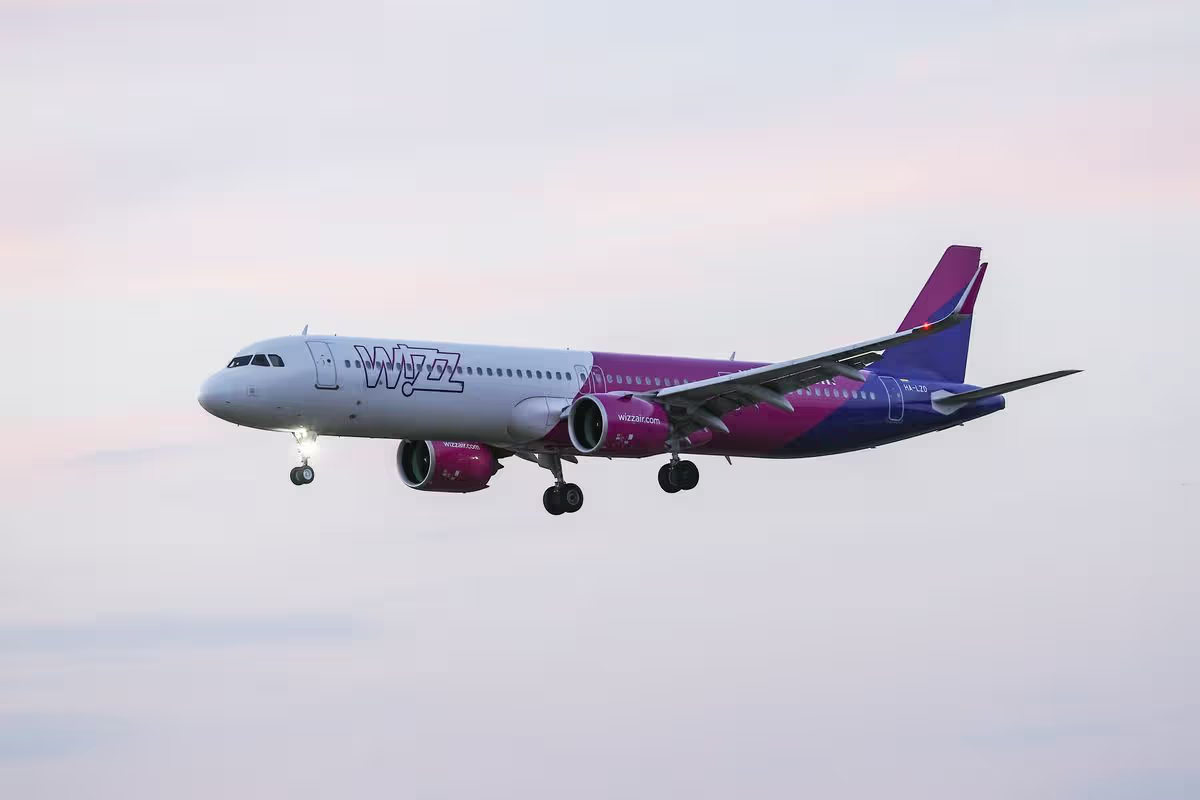
Wizz Air has made an announcement that will affect passengers planning to fly with the budget carrier from 2027 onwards. It has confirmed that travellers will soon be able to enjoy high-speed internet access on board.
The airline, which is based in Hungary, revealed it is fitting Elon Musk’s Starlink internet system across all its “new generation” aircraft. Wizz Air claims it will be the first European ultra-low-cost carrier to adopt the technology.
The airline has yet to confirm whether passengers will be charged for using the service. Starlink — owned by billionaire Mr Musk’s SpaceX aerospace firm — operates via thousands of satellites in orbit around Earth. A growing number of airlines have already begun offering the service or have announced plans to introduce it, including British Airways and Virgin Atlantic.
Ian Malin, chief commercial officer of Wizz Air, said: “Ultra low-cost travel has always been about making opportunities accessible to more people. In 2027, we’re taking that philosophy into the space era.
“Our customers shouldn’t have to choose between affordable fares and reliable internet onboard to stay connected to the people, work and moments that matter most. We’re proud to lead that change by collaborating with Starlink to bring maximum benefit to Wizz Air.”
In January, a row broke out between Mr Musk and Ryanair boss Michael O’Leary over whether Starlink could be used on the airline’s flights. After Mr O’Leary dismissed the idea as unfeasible, Mr Musk branded Mr O’Leary an “idiot” and a “chimp”, and speculated on X about potentially buying the airline.
Mr O’Leary claimed the “PR spat” had driven a 2-3% increase in sales.
EXCLUSIVE: A new book charts the extraordinary history of British Airways, inclduing its unusual first passenger flight, its unique link to Marmite, royal fans, and some questionable fashion
10:05, 07 Jun 2026Updated 10:06, 07 Jun 2026
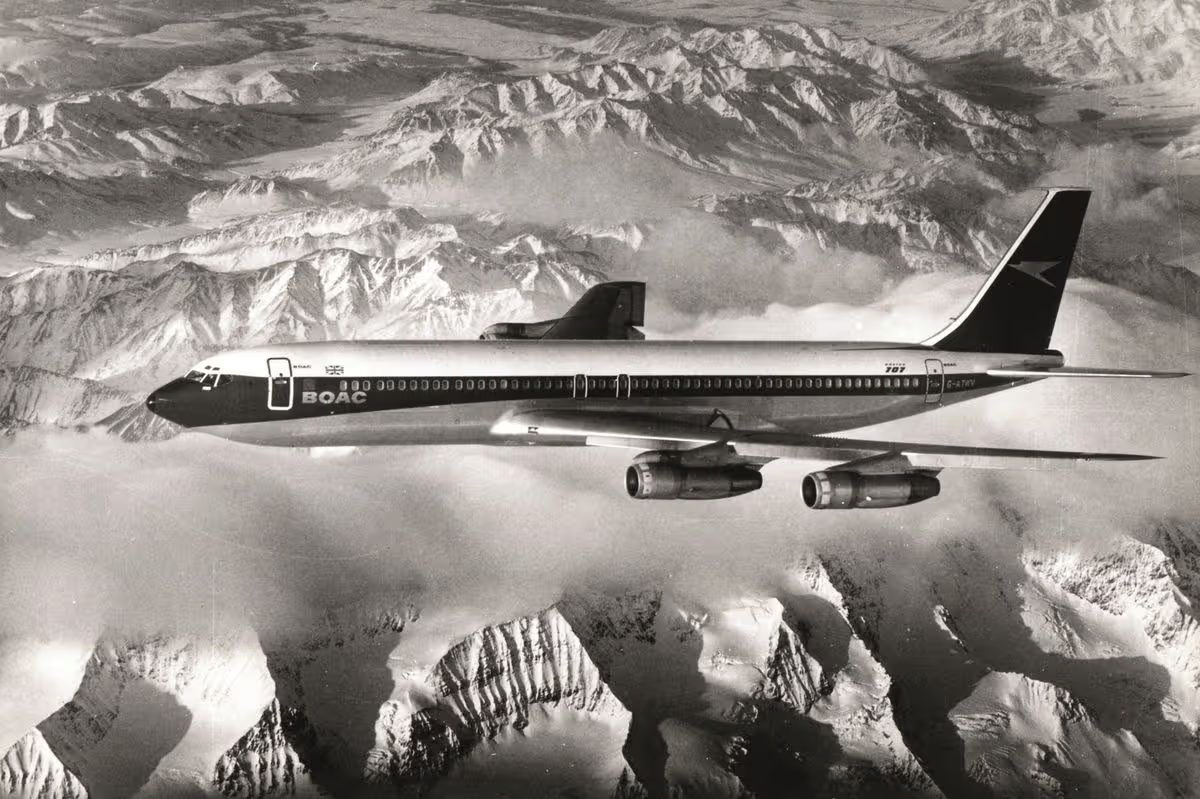
The Boeing 707 was a symbol of the iconic 60s and shrunk the world overnight(Image: Supplied)
British Airways has been flying for 107 years, connecting Britain to the world across more than a century of aviation history.
From a single biplane lifting off from a grass field in west London to a fleet serving destinations across the globe, the story of the world’s favourite airline is told in a new history by Captain Al Bridger – taking the story of BA in 100 objects, which encompass everything from Neville Chamberlain to Marmite.
British Airways traces its roots to 1919, when Aircraft Transport and Travel (AT&T) launched the world’s first international scheduled passenger service from Hounslow Heath to Paris.
This pioneering line later fed into Imperial Airways, which became BOAC in 1939 for long-haul routes, while BEA was formed in 1946 for European services; the two finally merged in 1974 to create modern British Airways.
But it began on August 25 1919 when a modest biplane was prepared on the grass at Hounslow Heath, a few miles from what is now Heathrow Airport. Captain Al said: “The world’s first international scheduled passenger was piloted by Lieutenant Bill Lawford.
“It carried one passenger, some newspapers, fresh grouse bound for the British Ambassador to France and Devonshire clotted cream. In challenging weather, Lawford skilfully completed the trip in 2 hours and 30 minutes.”
Five years later, in March 1924, the British government formed Imperial Airways, at the futuristic Croydon Airport. The art deco structure had a first-class restaurant, canteen for staff and a viewing gallery. The network expanded and flights could reach Delhi in seven-and-a-half days.
The Argosy aircraft, which first flew a passenger service on July 16 1926, gave early travellers a taste of luxury that would define the airline’s ambitions for decades to come. Captain Al said: “A white-coated steward served twenty passengers incredible four-course meals with drinks, providing true luxury for those lucky enough to afford it.
“The aircraft were also used for very popular weekend ‘Tea Flights’, offering afternoon tea while enjoying fabulous views over the capital.”
Among the collection’s most striking objects is a signed photograph of Prime Minister Neville Chamberlain, stepping from a British Airways Lockheed 10A after his famous Munich meetings and the declaration of “peace in our time”.
The 1950s brought a fresh start. “The Jet Age was officially launched with the introduction of the Comet in 1952, placing the UK at the very forefront of aviation,” said Captain Al, “The Rolls-Royce-powered Boeing 707 was a truly iconic symbol of the 1960s, and Sydney in Australia was now within reach in just 33 hours with four stops on the way. A true symbol of the iconic 1960s, the Boeing 707 was a triumph, shrinking the world overnight.”
The collection’s menu cards speak to a more glamorous age of flying. A BEA Silver Wing menu signed by Sir Winston Churchill on 26 April 1955 sits alongside one signed by Muhammad Ali on 10 May 1979
The 1960s brought experimentation of a more flamboyant kind. BOAC introduced cabin crew uniforms that became one of aviation’s most memorable fashion footnotes.
“While famously described as paper dresses, they were in fact sensibly made of a fireproof fabric that resembled paper and could be cut to the required length,” said Captain Al. “Incredibly, they were discarded after each flight.” They lasted a year.
The airline was also reaching out to its youngest passengers. On 26 March 1957, BOAC launched the Junior Jet Club, and Captain Al said: “The club was a huge success and had over 2 million members in its twenty-seven years of existence. Cabin crew would hand young travellers an envelope containing a registration form, a logbook and a Junior Jet Club badge.”
No history of British Airways would be complete without Concorde. The aircraft first flew on 2 March 1969 and entered service with British Airways on 21 January 1976. Captain Al said: “Concorde was to become the flagship of the fleet, bringing supersonic travel to everyone for the first time. Able to carry 100 customers in total luxury at speeds in excess of Mach 2 (more than 1,300 mph) the aircraft could cross the Atlantic in under 3 hours, with the record set on 7 February 1996 at 2 hours and 52 minutes.” The aircraft operated its last service on 24 October 2003.
While Concorde was redefining long-haul travel, the airline was also transforming life on board for ordinary passengers. A BOAC packing checklist pamphlet from the 1960s shows the formality of travel at the time. “For gentlemen, the list mentions the necessity of a dinner jacket, shirt collars and hair tonic,” said Captain Al. “For ladies, a bed jacket, hat and stole were essentials when travelling abroad.”
A photograph of the Beatles from the same era shows the Fab Four carrying BEA travel bags. Captain Al said: “Note how the Beatles are carrying BEA(TLES) travel bags, much like the more common BOAC bags. Clearly the band were travelling light.”
The 1980s brought fresh challenges and fresh ambition. In 1995, as part of a £500 million investment, the airline introduced the world’s first fully flat bed seat in First Class. Captain Al said: “Scientifically proven to give a much better night of sleep, it represented a huge leap forward in airline comfort.”
The airline’s inflight magazine, High Life, had been charting the journey since 1973. Captain Al said: “It truly is BA’s wingman. Through the years there have been some amazing contributors, from Jilly Cooper to Morecambe and Wise.”
Smoking had been part of airline life since the very beginning, but by March 1998 it was over. “When BEA was formed in 1946 over half of the British public smoked, with two-thirds of adult males recorded as smokers,” said Captain Al. “It wasn’t until 1998 that British Airways introduced a complete smoking ban on all flights.”
The modern era brought its own landmark moments. On 18 May 2012, a gold-liveried Airbus A319 named Firefly carried the Olympic flame into Culdrose Naval Airbase in Cornwall. Captain Al said: “Safely contained in four miner’s lamps, the flame was taken from the aircraft by Anne, the Princess Royal, accompanied by Lord Coe, the chairman of the London Olympics Organising Committee and football superstar David Beckham.”
The airline’s centenary in 2019 produced one of the collection’s most unlikely objects. “To celebrate the airline’s centenary, British Airways and Marmite teamed up and created a limited-edition jar that could be purchased on board,” said Captain Al.
“Apparently Marmite is the most confiscated brand at airport security, so the centenary jar was made to be just 70 grams, conveniently sized to fit within the liquid allowance to get it safely through airport security.”
Few objects in the collection carry more weight than the Royal Flights book, its pages bearing the signatures of those who have trusted the airline across the decades. The first entry dates from November 1983.
Captain Al said: “The book was beautifully inscribed with superb calligraphy and the signatures of Her Late Majesty Queen Elizabeth II and His Late Royal Highness The Duke of Edinburgh. Fittingly, the final signature is again that of Her Late Majesty after her visit to the British Airways Headquarters on 23 May 2019 to celebrate the airline’s centenary year.”
From a grass field in Hounslow to the signature of a queen, British Airways has carried the nation and the world for 107 years.
As Captain Al writes of the airline he has served and loves: “It has seen great highs and led the world through some very challenging times, and I know it will continue to give the best it can in the coming years, generating many more wonderful objects along the way.”
British Airways in 100 Objects by Al Bridger is published by Amberley, £17.99
BA in numbers
46.3 million passengers carried in 2025.
Fleet of 254 aircraft serving 215 destinations across six continents.