Brazil

Brazil’s Lula and Bolsonaro close campaigns ahead of critical election | Elections News

Latest polls suggest Lula’s lead over Bolsonaro is narrowing, with neither candidate likely to win outright on Sunday.

Brazilian President Luiz Inacio Lula da Silva and right-wing Senator Flavio Bolsonaro have wrapped up their election campaigns, each voicing confidence in victory ahead of Sunday’s tightly contested first-round presidential vote.

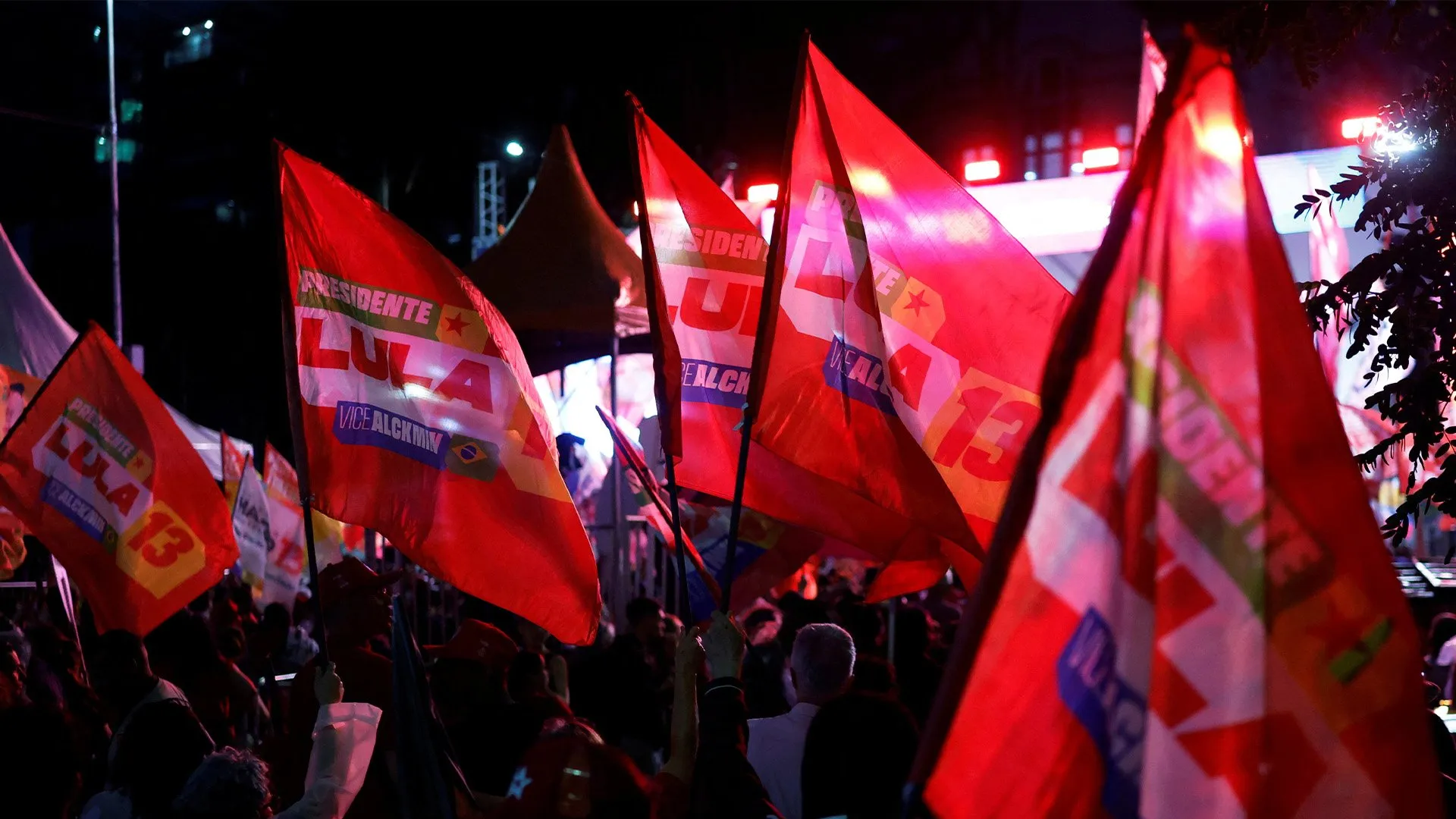
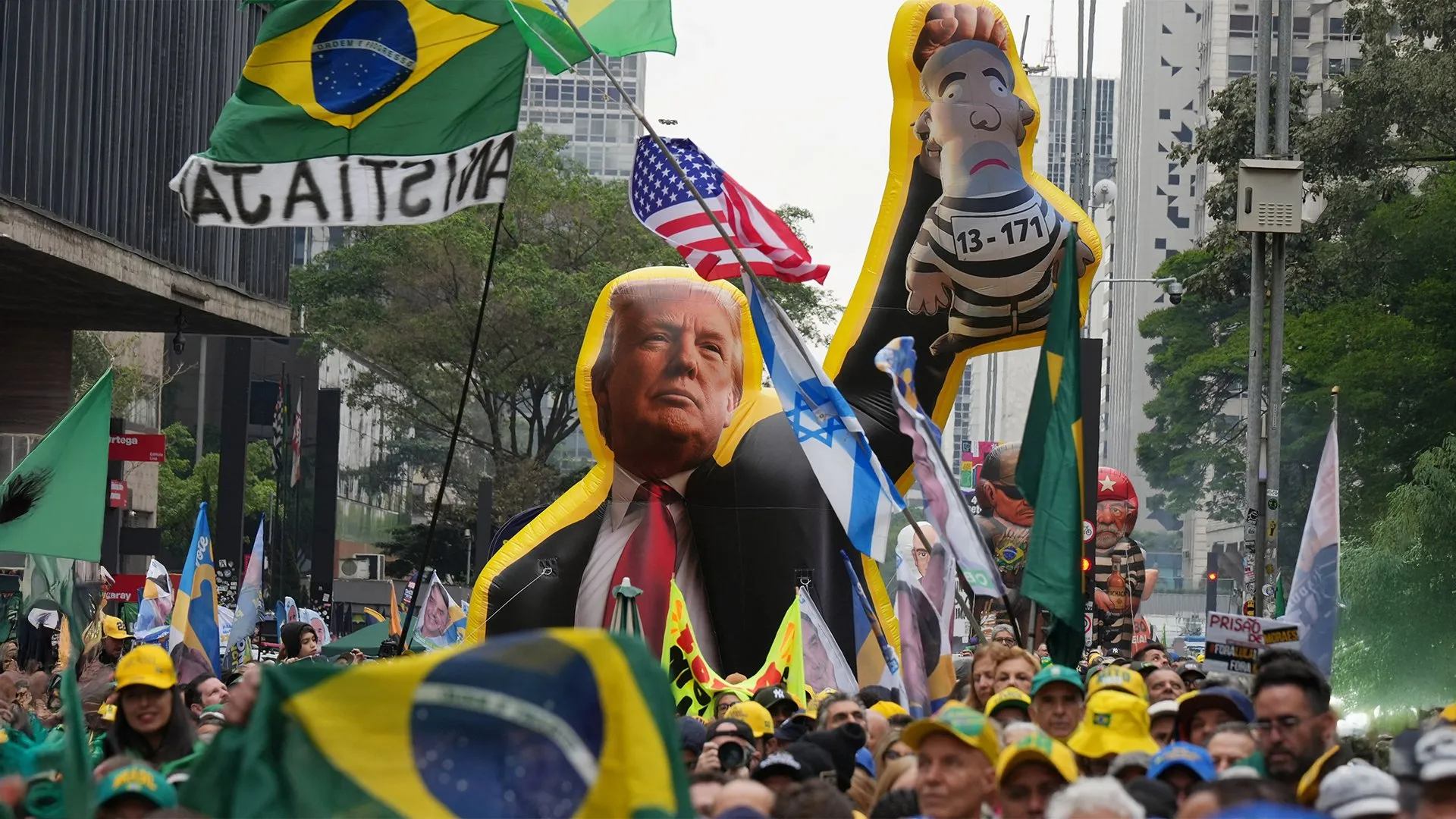
Lula, 80, closed his re-election bid on Saturday with a march through Sao Paulo, Brazil’s economic powerhouse, drawing what his campaign called a record crowd for a closing rally.

Recommended Stories

list of 3 itemsend of list

“Tomorrow, we’re going to win the elections in the first round,” he told supporters, describing Sunday’s vote as a choice between “democracy and barbarism” and promising to “defeat the far right”.

He has also framed the election as a test of Brazil’s sovereignty, warning against “meddling” by Washington.

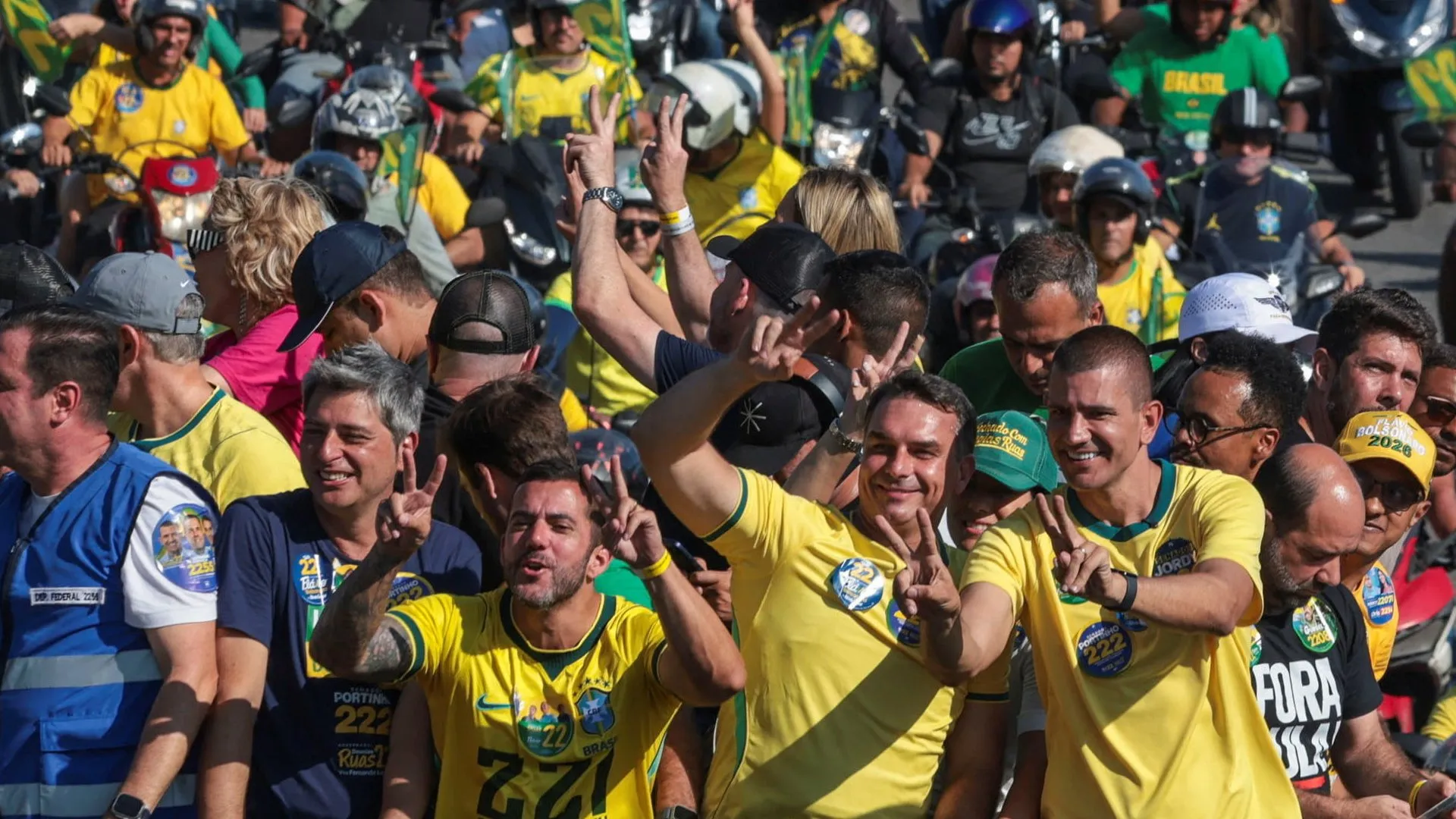
Bolsonaro led a motorcycle caravan through towns in Sao Paulo state, echoing the campaign style of his father, before rallying later in Rio de Janeiro. “I am convinced that everything is in place for us to win this election in the first round,” he said.

The 45-year-old is the son of former President Jair Bolsonaro, a close ally of US President Donald Trump. The former leader, 71, is serving a 27-year prison sentence for attempting to overturn his 2022 election loss to Lula.

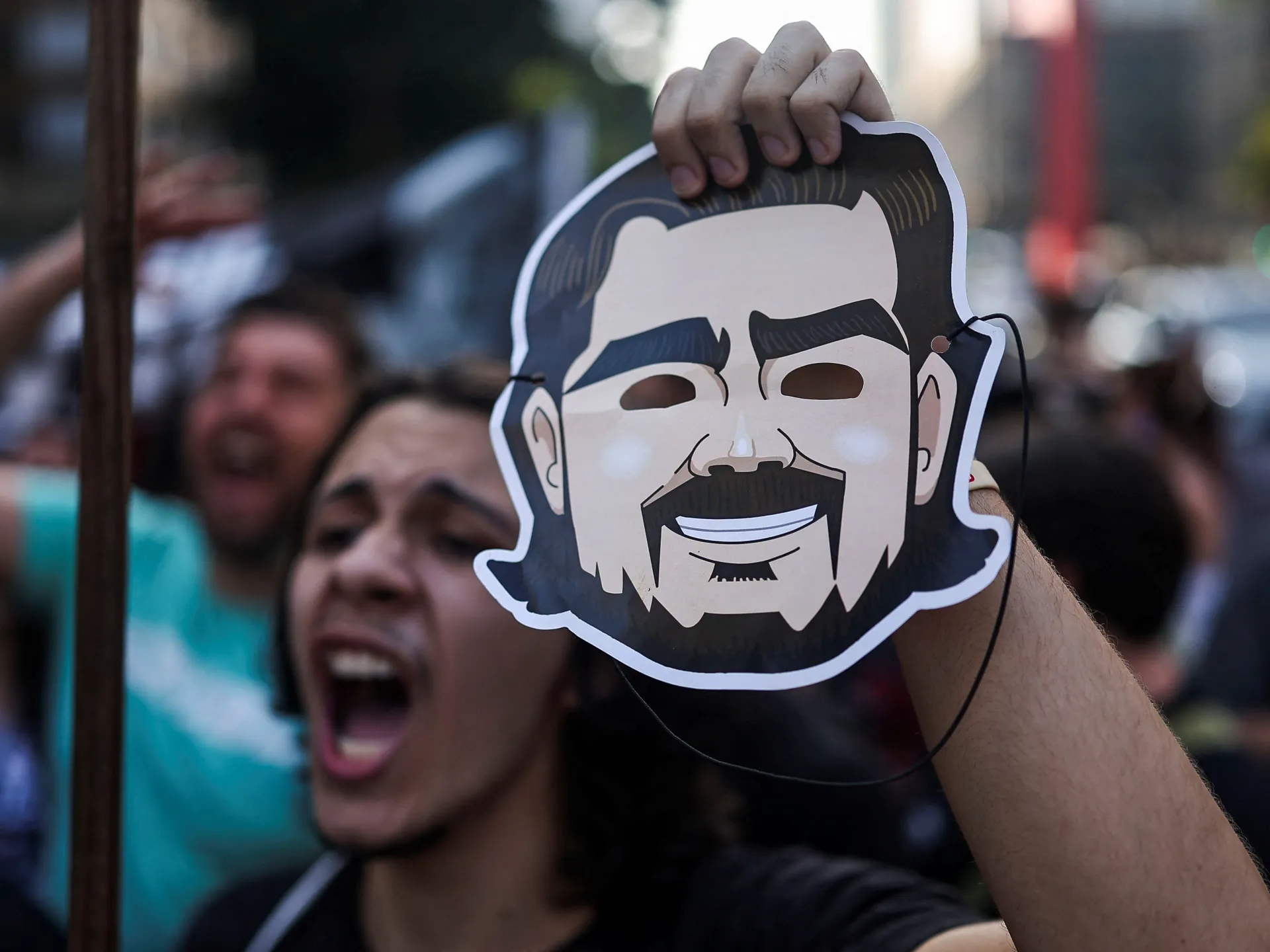
The younger Bolsonaro was photographed at his rally holding a portrait of his father.

Trump has not formally endorsed Bolsonaro but has said he is watching the election “very closely”, a level of US interest that has become a flashpoint in the campaign.

Lula’s supporters have seized on it as evidence Washington is trying to meddle in the elections, while some Bolsonaro supporters, frustrated by the cost of living, say they would welcome US pressure if it helped force change at home.

Polls released on Saturday suggested Lula was still ahead but his lead was narrowing, with neither candidate likely to win outright on Sunday. Such a result would send the race to a run-off on October 25 between the two frontrunners, a contest polls suggest would also be close.

It is a far tighter race than Lula’s last victory in 2022, when he beat the elder Bolsonaro by less than two percentage points.

Meanwhile, the Bolsonaro campaign has faced scrutiny over a film-funding scandal. Flavio Bolsonaro is under investigation over financing for Dark Horse, a biopic about his father, bankrolled by a jailed banker tied to one of Brazil’s biggest financial scandals.

Brazil’s Supreme Court authorised federal police in April to investigate whether Flavio Bolsonaro made defamatory statements about Lula.

Bolsonaro has pledged to seek his father’s release from prison if elected, and has echoed his father’s unsubstantiated claims questioning the reliability of Brazil’s electronic voting system, which analysts say could be laying the groundwork to contest the result if he loses.

Beyond the presidency, Brazil’s nearly 160 million registered voters will also choose lawmakers, governors and senators on Sunday.

Right-wing candidates have gained ground in Latin America in recent months.

Source link

What to know about Brazil’s 2026 presidential election | Elections News

For the second election in a row, Brazilian voters face a choice between left-wing candidate Luiz Inacio Lula da Silva and a right-wing candidate from the Bolsonaro family.

The country’s fractious election is set to take place during a wave of successful far-right candidates across Latin America and a sensitive time in Brazil’s modern political history.

Recommended Stories

list of 3 itemsend of list

Former right-wing President Jair Bolsonaro is serving a 27-year prison sentence over his role in a coup plot following his loss to Lula in 2022. The conviction of Jair Bolsonaro and several military officers raised questions about the resilience of Brazilian democracy, revived several decades ago following a period of rule by a United States-backed military dictatorship.

An explosive corruption scandal has implicated prominent figures and institutions across the political spectrum, and observers have expressed concern about possible US intervention.

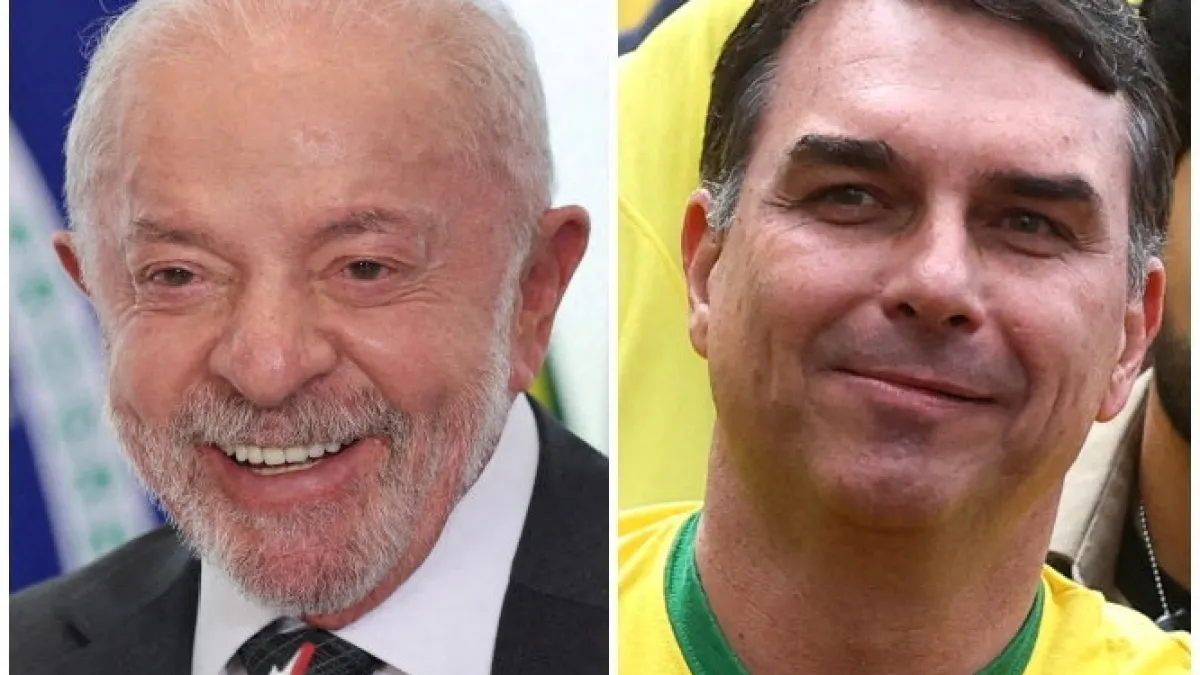
Polls suggest Lula, the current president seeking a fourth non-consecutive term, and Bolsonaro’s eldest son, Senator Flavio Bolsonaro, are in a virtual tie in a simulated run-off.

Who are the candidates, what issues have been front and centre, and what could the election mean for Brazil? Here’s what you need to know about Brazil’s 2026 presidential elections.

When is the election?

The first round of voting in the Brazilian presidential election will take place on October 4 from 8am to 5pm Brasilia time (11:00 to 20:00 GMT).

If no candidate wins the first round outright, the top two candidates will proceed to a run-off vote on October 25.

Who is Lula?

Luiz Inacio Lula da Silva, better known simply as Lula, is the country’s current president and the candidate for the Workers’ Party, or the PT.

The 80-year-old has been a central figure in Brazilian politics for decades, serving two four-year presidential terms between 2003 and 2011, and his current term, which began in 2023.

His time in office has been defined by an effort to pair political democracy, restored after a US-backed military dictatorship that ruled the country for several decades until the 1980s, with material improvement for the country’s poor through a series of social programmes meant to address inequality.

Lula has also sought to forge ties between developing, non-Western countries on the global stage.

“He has come to embody the institutionalisation and consolidation of Brazilian democracy since the end of the dictatorship,” Andre Pagliarini, an assistant professor of history and international studies at Louisiana State University and the author of a book on Lula, told Al Jazeera in a phone call.

Who is Flavio Bolsonaro?

Flavio Bolsonaro has emerged as the heir to his father’s status as leader of Brazil’s political right and Lula’s main challenger in the 2026 election. Bolsonaro is running as the candidate of the right-wing Liberal Party.

The 45-year-old is the eldest son of former President Jair Bolsonaro.

Flavio has pledged a hard stance on crime and insecurity and close collaboration with the administration of US President Donald Trump, which has designated several criminal groups in Brazil as “terrorist organisations”.

He has also promised to rein in inflation and government spending, with an adviser stating that he would implement a debt ceiling if elected.

Flavio Bolsonaro has also sought to turn his father’s conviction into a story of political persecution, denouncing his trial as illegitimate and seeking his release from prison.

“I ask God for the opportunity to walk up the ramp of Planalto Palace next year alongside President Jair Messias Bolsonaro, so that he may place the presidential sash across my chest,” he said at a campaign event in September.

“The Bolsonaro family’s pitch is that the institutions that Brazilian democracy has erected since the end of dictatorship are either rotten and unresponsive, and that we need a sharp turn away from this status quo,” said Pagliarini.

“The stakes of this election are incredibly stark because the candidates stand for such opposing visions about what Brazil’s recent history means,” he added.

What issues have defined the race?

As with many recent elections across the region, crime, insecurity and cost of living issues have dominated the Brazilian election. Corruption and concerns about US intervention in the country’s domestic affairs have also loomed over the campaign.

A Quaest survey from September 7 found that 31 percent of respondents cited violence as their biggest concern, followed by 20 percent who said corruption, 19 percent who said the economy, and 12 percent who said health.

While Brazil has seen decent economic growth and low unemployment and inflation during Lula’s third term, those mild gains have been paired with explosive levels of household debt and concerns about the rising cost of living.

A report from the Center for Economic and Policy Research, a left-leaning US-based think tank focused on economic issues, found that extreme poverty in Brazil fell by about 40 percent between 2022 and 2024, unemployment dropped to historic lows, and the country’s economic growth significantly outpaced that of most of its neighbours. But the analysis also found that households were strained by a sharp uptick in the cost of servicing debt. All in all, analysts say they amount to a view of the economy that is neither catastrophic nor particularly satisfying.

Pagliarini says that both candidates have tried to steer the election onto more favourable terrain for their issues of choice, with Lula portraying Flavio Bolsonaro as a willing accomplice in US efforts to undermine Brazilian sovereignty, and Flavio Bolsonaro accusing Lula of being corrupt and weak on crime.

What do the polls say?

Analysts say that polls reflect the state of Brazilian politics: deeply polarised but unenthusiastic.

“The general vibe is that this is a very downbeat campaign,” said Pagliarini. “There’s not a lot of enthusiasm either way, and it’s hard to tell at this stage who that favours.”

Most surveys show a close race, with Lula holding a marginal advantage over Flavio Bolsonaro that tightens further in a hypothetical run-off.

A Quaest survey from September shows Lula with 37 percent of voter intention against Flavio Bolsonaro’s 33 percent, while an AtlasIntel survey from the same period showed Lula winning 46 percent to Flavio Bolsonaro’s 43 percent.

A Datafolha poll found Lula with 40 percent and Flavio Bolsonaro with 36 percent.

Polls also show Flavio Bolsonaro favoured over Lula on issues of inflation, combating corruption, and crime and drug trafficking, while Lula is seen more favourably on issues of poverty and inequality, foreign affairs and health.

What challenges has each campaign faced?

An explosive corruption scandal, focused on disgraced banker Daniel Vorcaro, has raised questions for both campaigns and implicated members of the country’s political and economic elite across the political spectrum.

Reports found that Flavio Bolsonaro had solicited substantial funds from Vorcaro, ostensibly to finance a documentary – The Dark Horse (or O Azarao) – about his father.

Lula’s former finance minister, Guido Mantega, has also said he helped arrange a meeting with Vorcaro, Lula and the head of Brazil’s central bank to discuss banking policy. Lula has said he told Vorcaro there would be no political interference in his bank’s case, only a “technical investigation conducted by the central bank”. The Reuters news agency confirmed the meeting.

The scandal has also embroiled the country’s Supreme Court, with Alexandre de Moraes, whose central role in Bolsonaro’s coup trial turned him into a subject of ire for the political right, facing questions about his own links to the banker.

De Moraes has in turn accused a justice appointed by Bolsonaro of wrongdoing, with the court considering probes into the conduct of both justices.

What are the concerns about US intervention?

Concerns that the Trump administration could intervene or seek to influence the outcome on behalf of Bolsonaro have also loomed over the election.

The US president has frequently threatened to cut off economic assistance to Latin American countries if his preferred candidate fails to win. Trump had also used sanctions to target members of the Brazilian judiciary involved in the case against the elder Bolsonaro, which he portrayed as a “witch-hunt”. Trump also placed heavy tariffs on Brazil in a bid to have the case thrown out.

The country’s government denied visas to two US officials who sought to travel to Brazil, saying they planned to cast doubt on the integrity of Brazilian elections. Lula’s government has warned the US against meddling in the country’s domestic affairs.

Trump has himself used false claims of rampant fraud to justify efforts to remain in office despite his election loss in 2020.

A group of 31 Democratic US Congress members recently sent a letter to US Secretary of State Marco Rubio criticising “an apparent effort to interfere with, and potentially undermine” Brazilian elections.

The Reuters reported that Brazilian intelligence officials also briefed a French and German delegation in September about possible interference in the election by outside powers such as the US and Russia. The officials said that US interference ranged “from lawfare to interference that is openly acknowledged”.

Source link

US and Australia suspend diplomatic operations in Brazil before election | Elections News

Security threats prompt US and Australia to suspend diplomatic operations in Brazil before pivotal election day.

The United States has suspended consular services in Brazil, prompting Australia to close its embassy in the Brazilian capital, two days before Brazil’s presidential election on Sunday.

In a statement released on Thursday, the US embassy said it would suspend consular services starting on Friday and advised American citizens seeking assistance not to visit its embassy, consulates or other diplomatic facilities.

Recommended Stories

list of 3 itemsend of list

The statement cited security concerns but gave no further detail on the nature of the threat or any link to the election.

The US State Department said it was working closely with Brazilian counterparts to address the security concerns, adding that embassies and consulates routinely issue alerts about local threats and developments.

Australia’s ambassador to Brazil, Sophie Davies, said on social media that the Australian embassy would also close on Friday, citing the US alert, and advised Australians to avoid US diplomatic facilities.

Brazil’s federal police said they carried out preventive search and seizure warrants in Sao Paulo and the Federal District, the administrative region surrounding the capital, Brasilia, as part of an investigation into suspected plans that could threaten US diplomatic facilities.

Police said the operation followed cooperation with foreign intelligence agencies, but that investigators had found no evidence corroborating the initially reported threat, nor identified any suspects linked to criminal organisations.

An investigation was continuing after the seizure of communications equipment, according to the police.

The closures came two days before the Brazilian presidential election, which pits incumbent Luiz Inacio Lula da Silva, who is seeking re-election, against Senator Flavio Bolsonaro, son of former President Jair Bolsonaro. Jair Bolsonaro is serving a 27-year sentence for attempting a coup.

If neither candidate wins more than 50 percent of the vote on Sunday, a runoff will be held on October 25.

Edinho Silva, president of Lula’s Workers’ Party, called the closures “unprecedented”, saying: “It makes no sense at all. It’s one of Trump’s ways of trying to influence Brazilian public opinion.”

Lula’s allies have pointed to US tariffs and an effort by Washington to send officials to Brazil to “discuss electoral integrity” as evidence of foreign interference.

Brazilian intelligence officials briefed French and German delegations in Brasilia this month on what they described as US and Russian interference in the race.

US President Donald Trump has publicly praised Flavio Bolsonaro, a close ally, without formally endorsing him, saying he is “watching that election very closely”.

Source link

How the Banco Master scandal injected chaos into Brazil’s presidential race | Elections News

A historic collapse

One factor in the widespread disillusionment has been the Banco Master scandal. The financial imbroglio has delivered a black eye to both ends of Brazil’s political spectrum.

A range of business leaders, political figures, regulators and judges have been swept up in the scandal.

A mid-sized lender, Banco Master grew aggressively over the last decade by selling high-yield deposit certificates. Some of those certificates offered returns of up to 140 percent relative to Brazil’s benchmark interbank rate.

But Banco Master did not have the assets needed to sustain that output.

It lacked the money to pay back its risky loans, and what assets it did have were diverted to shell accounts, according to prosecutors.

Brazil’s Central Bank ultimately liquidated Banco Master in 2025, as the lender faced a major funding squeeze.

Its owner, Daniel Vorcaro, was subsequently arrested, accused of an array of financial crimes, including money laundering and fraud.

The collapse of Banco Master triggered a nearly $7.7bn payout from Brazil’s Credit Guarantee Fund, the largest disbursement in the nonprofit insurance’s history.

Investigators have suggested that Vorcaro protected his fraud scheme by cultivating influence among power brokers among Brazil’s elite.

Among those implicated in the scandal is Senator Flavio Bolsonaro, the presidential candidate.

Last month, the Supreme Court unsealed documents showing he is under investigation for alleged corruption and money laundering in connection with Vorcaro.

Audio recordings have also surfaced, appearing to show Bolsonaro soliciting the disgraced bank leader for millions in funding. The money was slated as financing for Dark Horse, a film about his imprisoned father, Jair Bolsonaro.

Flavio Bolsonaro has denied any wrongdoing. He described the interaction as a private sponsorship opportunity, unrelated to the Banco Master scandal.

Source link

Election debate cancelled in Brazil, bomb scare outside Supreme Court | Elections News

Brazilian president and opposition candidate snub the final debate ahead of the presidential election.

Brazilian President Luiz Inacio Lula da Silva and his main opponent Flavio Bolsonaro have snubbed a chance at a final debate ahead of the first round of the presidential election on Sunday, while police ruled out a bomb threat outside the country’s Supreme Court.

Lula, instead of taking part in the debate, opted to appear on a popular podcast with millions of YouTube subscribers while his rival Bolsonaro accused the electoral court of “censorship” as a reason for his withdrawal.

Recommended Stories

list of 3 itemsend of list

Bolsonaro, son of the former Brazilian President Jair Bolsonaro, said during a live broadcast on Thursday on his social media channels that his decision not to participate in the debate was due to “censorship imposed by the electoral court”.

The right-wing candidate was referring to a decision that barred the debate broadcaster from keeping President Lula’s empty seat on stage.

The debate organised by TV Globo, the country’s most popular broadcaster, was set for Thursday and offered a final opportunity for the two presidential frontrunners to face off before polls open.

TV Globo said in a statement that the debate was cancelled because two rulings, one from the country’s electoral court and the other from the Supreme Court, had created “legal uncertainty” about the event.

Lula, 80, will face off against Bolsonaro in a first-round vote on Sunday, with polls giving him a slight advantage.

The pair are neck and neck in projections for a potential runoff on October 25, however.

Bomb scare

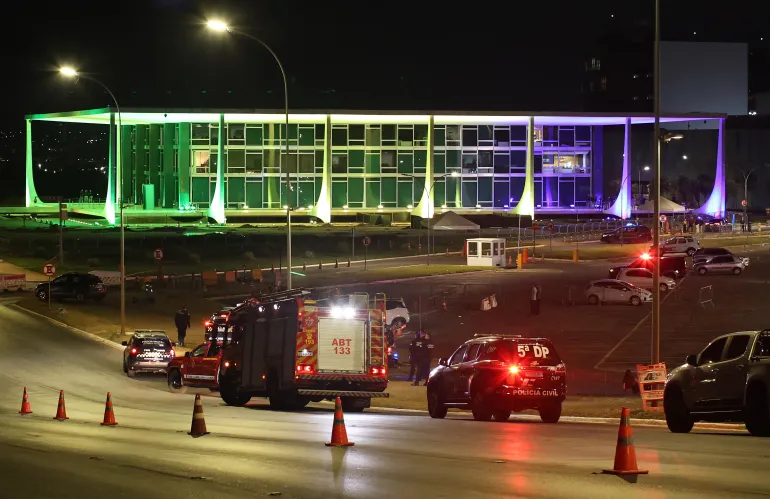
On the same day of the cancelled debate, Brazilian police ruled out a bomb threat outside the Supreme Court.

A suspect who “tried to jump the court’s fences” and “threw a backpack on top of a bus stop” had been arrested, the court said in a statement.

Authorities examined the backpack, which ultimately contained “only personal belongings,” military police spokesperson Raphael Broocke told AFP.

The suspect will remain in custody while the investigation continues, he added.

Brazilian police and firefighters inspect the area of a possible bomb in a backpack outside the Supreme Court headquarters in Brasilia on October 1, 2026 [AFP]

The Supreme Court has been criticised by the political right, notably for the 2025 conviction of ex-leader Jair Bolsonaro over a coup plot.

It has also become embroiled in a fraud scandal that has dominated the final weeks of the presidential campaign.

Source link

Everything you need to know about Brazil’s tight presidential race | Jair Bolsonaro

Voters will decide between incumbent President Luiz Inácio Lula da Silva and the son of former President Jair Bolsonaro in a too-close-to call election this Sunday. If neither wins an outright majority, a runoff vote will take place on Oct. 25. Al Jazeera’s Monica Yanakiew explains what’s at stake.

Source link

Brazilian government calls for probe into US funding of far-right causes | Elections News

A report stating that the Trump administration directed funds towards right-wing groups comes ahead of Brazil’s presidential election.

Brazil’s attorney general has called on law enforcement to investigate alleged efforts by the United States to interfere in the country’s domestic politics through the diversion of funds to far-right causes.

Attorney General Jorge Messias called for the probe on Thursday, one day after the British newspaper The Guardian published a story suggesting that the administration of United States President Donald Trump planned to award $1m to right-wing civil groups opposing the Brazilian Supreme Court.

Recommended Stories

list of 3 itemsend of list

Messias stated in a social media post that foreign meddling “cannot be tolerated” and that the report represented “an important alert for Brazilian sovereignty”.

“The information is especially serious in light of Brazil’s electoral process and the recent episodes of external pressure on our institutions,” the attorney general added.

The report comes amid a tense presidential election in which leftist President Luiz Inacio Lula da Silva is seeking re-election.

Lula has sought to focus attention on efforts Trump has undertaken to boost the prospects of far-right allies across Latin America, warning of threats to regional sovereignty.

Trump has endorsed multiple right-wing candidates ahead of elections across the region, sometimes hinging the possibility of economic support on the voting results.

He has also cultivated close relations with the family of former Brazilian President Jair Bolsonaro, who lost to Lula in the last presidential election.

Bolsonaro’s eldest son, Senator Flavio Bolsonaro, is a frontrunner in the race to challenge Lula this year. Recent polls have shown Lula and Bolsonaro virtually tied ahead of the first round of voting on October 4.

Flavio Bolsonaro met with Trump at the White House in May. He has promised closer ties with the US, while Lula has positioned himself as a critic of Trump’s interventionist approach to Latin American politics and security.

The Guardian report published on Wednesday states that the Trump administration sought to redirect $175m from the State Department’s human rights fund to various far-right causes around the world.

The recipients allegedly included groups advocating for white Afrikaners in South Africa that the Trump administration has falsely portrayed as victims of a “genocide” and efforts in Brazil to counter what the US called “lawfare and censorship”.

Brazil’s Supreme Court has been a subject of frequent criticism from the political right, both in Brazil and the US.

Much of that criticism stems from the 2025 conviction of Jair Bolsonaro for involvement in an alleged coup plot, designed to subvert his loss to Lula in the 2022 election.

Bolsonaro and his allies, including Trump, have depicted the case as an instance of political persecution.

Citing the trial, Trump last year placed 50-percent tariffs on certain Brazilian goods that he has since removed.

At the time, he announced the tariffs in a letter that denounced Bolsonaro’s prosecution. “The way that Brazil has treated former President Bolsonaro, a Highly Respected Leader throughout the World during his term, including by the United States, is an international disgrace,” Trump wrote.

The Trump administration also revoked the visas of Brazilian judicial officials involved in Bolsonaro’s case in an effort to have it tossed out. It also levied short-lived sanctions against Brazilian Supreme Court Justice Alexandre de Moraes, accusing him of “an unlawful witch hunt” against right-wing voices.

Bolsonaro was ultimately convicted and sentenced to a 27-year prison sentence in September 2025.

In June, one of his sons, Eduardo Bolsonaro, was sentenced to more than four years in prison after a court ruled he had lobbied for US interference in his father’s case.

Source link

US Supreme Court agrees to take up Trump’s ICE detention policy | Migration News

The case is the latest dispute over US President Donald Trump’s sweeping immigration crackdown.

The United States Supreme Court has agreed to hear a case focused on the Trump administration’s policy requiring millions of undocumented immigrants to remain in detention while they fight deportation.

The case, accepted on Thursday by the justices, is the latest dispute over US President Donald Trump’s sweeping immigration crackdown to reach the nation’s highest court.

Recommended Stories

list of 3 itemsend of list

At issue is whether migrants already living in the US have a legal right to a hearing where a judge can decide whether they should be released on bond from Immigration and Customs Enforcement (ICE) detention while their deportation cases are pending.

In July 2025, the administration introduced new guidance directing federal immigration authorities to detain undocumented immigrants without a bond hearing for the duration of their deportation proceedings, which can last for years.

The new policy, which has divided lower courts, reverses a decades-old interpretation that allowed some immigrants in the US to be released while their cases were pending in immigration court, according to Reuters news agency.

Most US federal appeals courts have ruled that immigrants cannot be detained without a bond hearing. But the 5th and 8th US Circuit Courts of Appeals have found that immigrants accused of illegally entering and remaining in the country must remain detained while their deportation cases proceed.

Trump administration attorneys told the Associated Press the split is “disrupting the orderly administration of immigration law”.

“The result is an unworkable patchwork of inconsistent immigration enforcement, where aliens present without admission are subject to mandatory detention in some circuits but are entitled to bond hearings and often released in others,” the lawyers wrote.

Millions could be affected

The Supreme Court case stems from a 2nd US Circuit Court of Appeals ruling involving Ricardo Aparecido Barbosa da Cunha, a Brazilian national who entered the US around 2004 or 2005.

Immigration officers arrested him in September 2025 while he was driving to work in the US state of Massachusetts. He was initially denied a bond hearing under the administration’s policy but was later released on bond, according to court documents cited by Reuters.

The American Civil Liberties Union (ACLU), which is representing the plaintiffs, told the Associated Press the Trump administration is trying to deny bond hearings for immigrants apprehended within the US rather than limiting the restriction to noncitizens stopped at the border.

“Millions of noncitizens could be affected by the government’s new interpretation,” ACLU attorneys wrote.

The Supreme Court is expected to hear arguments on Monday, when its new term starts.

Source link

Cattle to feed: Why a global meat crisis is looming | Food News

Beef prices are soaring in China. Across the Pacific Ocean in the United States, cattle farmers are complaining that their businesses are becoming increasingly unsustainable. And in India, poultry rearers are slashing their production targets because they cannot afford feed.

More than 90 percent of the world’s population eats meat in one form or another — and a looming meat crisis threatens to affect what they buy at the market, what they cook at home, and what’s served on the table.

At the heart of this is a chain of decisions and uncertainties that consumers rarely see. A cow has to be raised for years before it can become beef. Chickens need feed, much of it tied to global grain and soya bean markets. Farmers need land, water and weather conditions that allow them to keep animals alive and productive.

When any link in this chain is disrupted, a spiralling crisis ensues.

So what is putting the pressure on meat production, and what does it mean for billions of people around the world?

Declining cattle stocks in Brazil, US and China

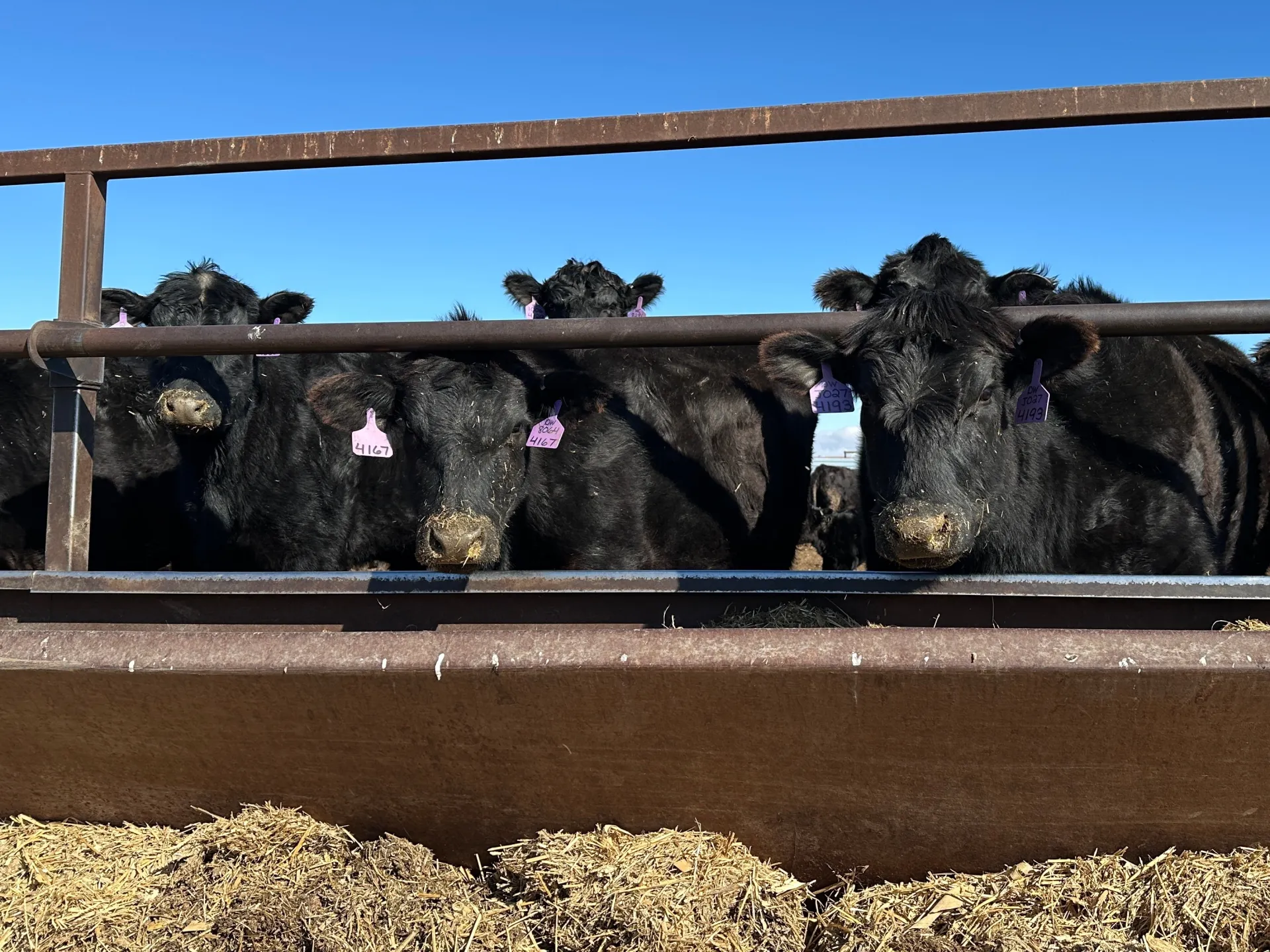
Brazil, the US and China are the world’s three biggest beef producers, together supplying more than half of the world’s beef. But their cattle herds are shrinking at the same time.

According to a March estimate by the US Department of Agriculture (USDA), Brazil’s total herd this year is estimated at 177.4 million cattle — a nearly 8 percent drop from 192.5 million in 2024.

Over in the US, cattle numbers are at a historic low.

The USDA counted 86.2 million cattle and calves on farms on January 1, 2026. The number of beef cows — the females needed to produce future calves — was 27.6 million, down 1 percent from a year earlier. The 2025 calf crop was also down 2 percent.

In China, the USDA estimated a cattle head count of 94 million in January 2026, down 14 percent from 105 million in January 2024.

In all three cases, beef production is also projected to be down in 2026.

The USDA predicts a 2 percent decline in Brazil’s beef production and a 5 percent fall in exports. As for the US, beef production in 2026 is likely to be 4 percent lower than last year. China’s total beef supply this year is projected to be 12 percent lower than 2024.

The decline in domestic production, coupled with shrinking supplies that can be imported, has sent prices soaring in China — the world’s largest beef consumer and importer.

What’s driving down cattle herds and beef production?

The reasons are many, and they vary from country to country.

Brazil counts China and the European Union as two major markets for its beef exports. But both have imposed import restrictions that have disincentivised Brazilian beef manufacturers. That is partly responsible for the country’s decreased cattle head count, according to an analysis by Augusto Neto at S&P Global, the market intelligence firm.

Additionally, Brazil is currently in what is known as a cattle reversion cycle — when rearers reduce the slaughter of animals and instead try to preserve their female stock to help rebuild their herd — according to the USDA.

In the US, droughts have hit 60 percent of the country’s cattle-rearing area, according to a report by Sampad Nandy of S&P Global. With grazing areas decreasing, feed costs have risen.

Three major organisations, representing breeders in the states of Texas, Oklahoma and Kansas, issued a joint statement this week arguing that Immigration and Customs Enforcement (ICE) raids were disrupting their already strained operations. The meat industry depends heavily on immigrant workers.

If beef prices are rising, shouldn’t rearers want to produce more beef?

In theory, yes. But in practice, high prices do not automatically mean that more cattle can be produced quickly.

Cattle production is constrained by biological supply cycles, Kenneth Foster, professor of agricultural economics at Purdue University, told Al Jazeera. It can take a couple of years for a producer who receives a signal from the market to expand production and actually see the resulting animals enter the beef supply. The quickest way to rebuild a herd is to keep female cattle that might otherwise have been sold and use them for breeding. That is what Brazil is now doing.

But that creates a difficult economic calculation. A producer can sell an animal today at a high price, or keep it for breeding and wait for the next generation. That means carrying the costs and risks of keeping the animal while waiting for it to reproduce.

The result is a market in which strong demand and limited supply can persist even when prices are already high.

The USDA expects the cattle herd to begin rebuilding in the US, but the process is gradual.

The US and Brazil cases illustrate one of the central problems facing meat production: sometimes the constraint is not technology, land or money.

It is time.

Europe’s move from beef to poultry

Meanwhile, Europe presents a different picture. The continent is witnessing a structural change in what consumers are eating.

The EU produced about 42.7 million tonnes of meat in 2025. But EU meat production is projected to decline by about 3 percent between 2025 and 2035, with beef production projected to fall by 10 percent and pork by 7 percent. Poultry is the exception: production is projected to rise by 5 percent.

This shift is also visible in consumption.

Consumption of EU beef and pigmeat is projected to decline through 2035, while poultry consumption is expected to increase by 9 percent.

Beef and pork require longer production cycles and face different economic and environmental pressures. Poultry, by contrast, can respond much more quickly to changes in demand because chickens reach market weight within weeks rather than years.

That difference is becoming increasingly important. The OECD-FAO Agricultural Outlook expects poultry to be the fastest-growing major meat category globally over the next decade, helped by its relatively low cost and short production cycle.

Europe is therefore becoming an example of how a meat system can adapt without simply producing more of everything. Some forms of meat become harder or more expensive to produce, while others expand to fill part of the space.

Poultry has problems too — as India shows

Yet the poultry industry faces its own challenges, with India offering an example.

In June, a large section of India’s poultry industry announced plans to cut production by 25 percent after soya meal prices rose by more than 40 percent in a month.

The decision was announced by the All India Poultry Breeders’ Association after producers faced sharply higher feed costs and a seasonal decline in demand. Producers also began culling parent breeder stocks — birds needed to produce future generations of poultry.

Soya meal is an important protein source in animal feed. When its price rises sharply, poultry producers face a choice: absorb higher costs, raise prices, or reduce the number of birds they produce.

In India’s case, producers chose to cut production.

The consequences extended beyond individual farms. The Reuters news agency reported in May that Indian soya meal prices had risen 41 percent in one month to a four-year high of 66,000 rupees ($687.5) per tonne. India subsequently cancelled 25,000 tonnes of soya meal export contracts and began turning to soya bean imports from African countries.

The takeaway: a shock in one part of the agricultural system can move quickly through the meat supply chain globally.

As farmers try to protect their livelihoods and families try to keep food on the table, changing climates, rising prices, shifting dietary preferences and growing trade barriers are together reshaping the future of meat — and what we eat.

Source link

Political rallies fill Brazil’s streets a week before elections | Politics

Rival political rallies have been held in Brazil as campaigns intensify with one week to go until election day. Brazilians head to the polls on Oct 4 to choose between current president Lula da Silva or Senator Flavio Bolsonaro, the son of former far-right President Jair Bolsonaro.

Source link

The media battle behind Brazil’s election | TV Shows

As Brazilians head into national elections, there’s a familiar name on the ballot: Bolsonaro. Not former President Jair Bolsonaro. It’s his son Flavio, who is presenting himself to the electorate as a more moderate version of his father.

Election coverage has been dominated by a major corruption scandal – the biggest banking fraud case in the country’s history. Brazilians are accustomed to corruption scandals involving political figures. The coverage tends to be framed as: they’re all equally corrupt.

Contributors:
Andrew Fishman – President & co-founder, Intercept Brasil
David Nemer – Professor, University of Virginia
Andre Pagliarini – Professor, Louisiana State University
Natalia Portinari – Reporter, O Globo

On our radar: Donald Trump’s decision to bar three news outlets from the White House appears to have backfired after journalists organised a media boycott and a judge overturned the ban. Tariq Nafi has been tracking the latest duel between the US president and the media.

Spain’s neo-Nazis: spectacle vs reality

A fringe neo-Nazi movement in Spain, Nucleo Nacional, has attracted a growing online following by packaging incendiary and slickly produced content. The mainstream media attention the group has received has made a marginal organisation appear far larger and more influential than it is. The Listening Post’s Elettra Scrivo travels to Madrid – where she comes face-to-face with Nucleo Nacional’s members – to look at the reality that lies behind the spectacle.

Featuring:
Miquel Ramos – Author, ‘Antifascistas’
Urszula Mrozowska – Digital researcher in hate speech and extremism

Source link

Brazil’s Lula and Flavio Bolsonaro still essentially tied in new poll | Elections News

Luiz Inacio Lula da Silva is up 2 points, but that’s still within the poll’s margin of error.

⁠Brazilian President ⁠Luiz Inacio Lula da Silva has maintained a two-percentage-point lead over Senator Flavio Bolsonaro, ⁠his main challenger, in a potential run-off ahead of October’s presidential election, a Datafolha poll has shown.

In poll results released Thursday, Lula would receive 47 percent of the vote compared with 45 percent for Bolsonaro in a simulated run-off. A previous Datafolha poll last week had ‌Lula leading Bolsonaro by 46 percent to 44 percent.

The result also represents a technical tie as it falls within the poll’s margin of error of 2 percentage points.

In a first-round scenario, Lula leads with ⁠40 percent of the vote, followed ⁠by Bolsonaro (36 percent), Augusto Cury (5 percent), Ronaldo Caiado (4 percent) and Renan Santos (3 percent).

The previous poll showed the leftist president with 39 percent against the ⁠right-wing senator’s 36 percent.

Senator Bolsonaro is the eldest son of ⁠former President Jair Bolsonaro, who ⁠is serving a 27-year prison sentence for attempting to overturn his 2022 election defeat to Lula.

Lula is seeking a fourth nonconsecutive term as Brazil’s president.

If no candidate ‌wins more than 50 percent of valid votes in the first round, the two frontrunners advance ‌to ‌a run-off.

Datafolha surveyed 2,002 people between September 22 and 23.

Earlier this week, two other polls showed similar results.

A Quaest poll released on Monday showed Bolsonaro with 42 percent of voter support in a potential run-off, versus 41 percent for Lula.

Meanwhile, a BTG Pactual/Nexus poll has Lula receiving 46 percent of voter support, compared with 45 percent for Bolsonaro in a potential run-off.

Source link

Brazil election: Lula and Flavio Bolsonaro tied in latest polls | Elections News

Luiz Inacio Lula da Silva is running in October’s election for a fourth non-consecutive mandate as Brazil’s president.

Brazilian President Luiz Inacio Lula da Silva and Senator Flavio Bolsonaro remain deadlocked in the latest polls, with the first round of Brazil’s election less than two weeks away.

Two new polls on Monday showed that the pair are statistically tied in simulated runoffs ahead of next month’s election. If no candidate wins more than 50 percent of valid votes in the October 4 first round, the two frontrunners advance to a runoff on October 25.

Recommended Stories

list of 3 itemsend of list

Lula is seeking a fourth non-consecutive term as Brazil’s president, but faces a challenge from the political right in Flavio Bolsonaro, the son of former far-right President Jair Bolsonaro, an ally of US President Donald Trump.

Brazilian presidential candidate Flavio Bolsonaro speaks at an agribusiness fair as he campaigns in Esteio, Brazil, on September 2, 2026
Brazilian presidential candidate Flavio Bolsonaro speaks at an agribusiness fair as he campaigns in Esteio, Brazil, on September 2, 2026 [Diego Vara/Reuters]

The elder Bolsonaro was ruled ineligible for office after Brazil’s top electoral court found he had abused his power while in office. He was later convicted separately over a plot to overturn his 2022 election loss to Lula.

A Quaest poll released on Monday showed Bolsonaro with 42 percent of voter support in a potential runoff, versus 41 percent for Lula.

Meanwhile, a BTG Pactual/Nexus poll has Lula receiving 46 percent of voter support, compared with 45 percent for Bolsonaro in a potential runoff.

The latest polls mark a narrowing from an earlier Quaest poll on August 5, which put Lula ahead by a wider five-point margin, 44 percent to 39 percent.

New York City Mayor Zohran Mamdani and Brazilian President Luiz Inacio Lula da Silva speak to reporters after a meeting in New York on September 21, 2026
New York City Mayor Zohran Mamdani and Brazilian President Luiz Inacio Lula da Silva speak to reporters after a meeting in New York on September 21, 2026 [Dave Sanders/Reuters]

US pressure looms over election

Lula launched his re-election bid on August 2 at the Workers’ Party convention in Sao Paulo, casting himself as a defender of Brazilian “sovereignty” as pressure from the US administration looms over the race.

The US imposed two fresh rounds of tariffs on Brazilian products in July, which Lula denounced as an attempt to influence the elections through economic pressure.

The Brazilian leader is currently in New York, where he is preparing to address the United Nations General Assembly.

Lula met New York City Mayor Zohran Mamdani for the first time on Monday. In a brief statement to reporters after the meeting, the Brazilian president said the two had talked about problems common to both Brazil and the United States, particularly the rising cost of living.

Source link

Brazilian police capture suspected serial killer disguised as a woman | Newsfeed

Brazilian police say they will reopen dozens of cases after they arrested a self-confessed serial killer disguised as a woman. Jorlan Lopes da Silva, 33, confessed to 80 murders after he was arrested in Paraiba State in the country’s north east, trying to flee in a wig and holding a baby.

Source link

New tiger cat species identified in Bolivia, first in over a century | Environment News

Leopardus tilcayo is the first new living cat species named and described in more than a century.

A tiny wild cat that lives in Bolivia’s lush cloud forests has been identified as a previously unknown species, marking the first time in more than a century that a new living feline species has been formally named and described.

Called “tilcayo” by local communities, the cat is part of a group called tiger cats, which are found across much of South America.

Recommended Stories

list of 2 itemsend of list

It was discovered in the Yungas forest, a mountainous region where forests are often covered by clouds and surrounded by high humidity, according to the researchers.

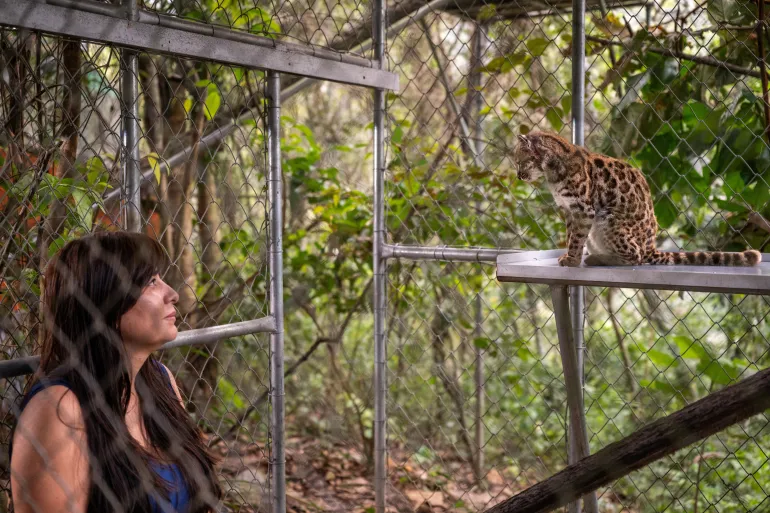
Given the scientific name Leopardus tilcayo, the cat measures 46cm (18 inches) long and weighs about 1.4kg (3 pounds), making it smaller than an average domestic cat.

“Its fur is light brown … with irregularly shaped rosettes across its body,” according to Paola Nogales-Ascarrunz, a National Geographic Explorer and one of the authors of the study describing the newly identified species published on Thursday in the journal Current Biology.

Little is known about the cat’s biology and lifestyle. Remains of small rodents in scat samples suggest they may form part of its diet, while camera-trap evidence indicates it could be more active at night, Nogales-Ascarrunz said.

Tiger cats are so-called cryptic species, meaning they cannot easily be distinguished merely by appearance, evolutionary biologist and study co-lead author Jonas Lescroart of the University of Antwerp in Belgium said.

National Geographic Explorer Paola Nogales Ascarrunz, who led the research that identified Leopardus tilcayo as a new species, observes the cat at the Senda Verde animal refuge in the Yungas region, in Bolivia, September 1, 2026 [Fernando Faciole/Handout via Reuters]
National Geographic Explorer Paola Nogales Ascarrunz, who led the research that identified Leopardus tilcayo as a new species, observes the cat at the Senda Verde animal refuge in the Yungas region, in Bolivia, September 1, 2026 [Handout/Fernando Faciole/Reuters]

Observing the Bolivian cat drew interest because “its characteristics did not match the descriptions, most of them based on Brazilian cats”, Nogales-Ascarrunz said. “This made us wonder, what tiger cat do we actually have in Bolivia?”

The team analysed DNA from 38 cats sampled across several South American countries, including eight museum specimens. The study found that tiger cats are in fact five genetically distinct species.

“We never expected this Bolivian tiger cat to be a separate species, and no one had ever proposed it as a different animal, subspecies or otherwise,” Jonas Lescroart said.

Genetic analysis suggested that the tilcayo lineage separated from other tiger cats about 1.4 million years ago.

The research team also described a new tiger cat subspecies in Peru’s Yungas, naming it Leopardus tigrinus antisuyo, after Antisuyu, the region of the old Inca Empire that included the area it inhabits.

Source link

Why does Brazil get to speak first at UNGA? | United Nations

Brazil has opened the UN’s General Debate for decades, with the US traditionally second in line as the host country. Here’s how that tradition began and how the rest of the speaking order is decided. 

Al Jazeera’s Farah Samir explains.

Source link

Trump may be BRICS’s best recruitment agent | Opinions

United States President Donald Trump has made no secret of his hostility towards BRICS.

Last year, he threatened an additional 10 percent tariff on any country aligning itself with what he called the bloc’s “anti-American policies”. Since then, his administration has continued to wield tariffs aggressively against trading partners, including BRICS members such as Brazil, India and China.

The message appears straightforward: Countries that challenge US economic power should expect to pay a price.

But coercion has consequences. And as BRICS leaders meet in New Delhi today, Trump may be strengthening the very incentives that made the bloc attractive in the first place. The more Washington demonstrates its willingness to use access to its markets, its financial system and the dollar as instruments of political leverage, the more reason other countries have to reduce their exposure to them.

This does not mean BRICS is becoming an anti-US alliance. Far from it.

The bloc’s 11 members – Brazil, China, Egypt, Ethiopia, India, Indonesia, Iran, Russia, Saudi Arabia, South Africa and the United Arab Emirates – have enormous political and economic differences. Together, they account for nearly half the world’s population and about 40 percent of global gross domestic product, but they do not share a common ideology, security policy or even geopolitical orientation.

Recent events have made those divisions impossible to ignore. Iran, Saudi Arabia and the UAE find themselves on opposite sides of a growing regional conflict. In May, Iranian and Emirati representatives clashed during a foreign ministers’ meeting in New Delhi. India and China have had a heated border dispute that led to deadly skirmishes in 2020-2021; only in the past two years have their relations gradually stabilised.

So Trump is not producing a united geopolitical front against Washington.

He may, however, be giving countries with otherwise divergent interests a common reason to cooperate economically: Protection against vulnerability to US power.

For countries outside the Western core, dependence on US-centred economic infrastructure carries risks.

The dollar’s centrality gives the US enormous structural advantages. International transactions pass through financial institutions subject to US jurisdiction; access to US markets can be restricted; sanctions can isolate governments and companies from parts of the global financial system.

BRICS’s efforts to diminish dependence on the US financial system do not mean the dollar is about to lose its position as a global reserve currency. This claim is often made around BRICS summits, usually accompanied by breathless predictions of a new BRICS currency. The evidence does not support it.

The dollar remains overwhelmingly dominant. According to the International Monetary Fund, it accounted for 57.1 percent of global foreign-exchange reserves in the first quarter of 2026. The Chinese renminbi accounted for just 2 percent. Indeed, the dollar’s share rose slightly during the quarter.

But replacing the dollar and reducing dependence on it are two very different things.

BRICS countries are already experimenting with the latter. South Africa has connected to China’s Cross-Border Interbank Payment System, allowing transactions with China to be settled directly in renminbi. Brazil and China are increasingly using their own currencies in bilateral trade, while India and the UAE have settled transactions in rupees and dirhams. China and Russia have shifted much of their bilateral trade into their national currencies.

BRICS itself is also moving cautiously towards greater financial connectivity.

Last year, its leaders called for continued work on a cross-border payments initiative and greater interoperability among members’ payment systems. In August, Reserve Bank of India Governor Sanjay Malhotra confirmed that BRICS countries are discussing linking their fast-payment networks and potentially their central bank digital currencies. India itself is also encouraging greater use of the rupee in international trade.

The New Development Bank offers another example. Established by the original BRICS countries as an alternative source of development finance, it has made lending in members’ currencies an explicit strategic objective. Its current strategy targets 30 percent of financing in local currencies, partly to reduce borrowers’ exposure to foreign-exchange risks and costly currency swaps; the number could increase to 40-50 percent for the next cycle, 2027-2031.

None of this amounts to a rival global financial system. Much of it remains experimental, bilateral or limited in scale.

But that is precisely why the fixation on whether BRICS can “replace” the dollar misses what is happening. The more significant development is the gradual construction of options that allow governments and businesses to conduct a number of transactions without relying on the dollar and Western-dominated financial infrastructure.

Trump’s policies give this process additional urgency.

Consider Brazil. Washington imposed a new 25 percent tariff on a range of Brazilian products in July, affecting billions of dollars in exports, despite running a trade surplus with the country. The Trump administration has also scrutinised Brazil’s hugely successful Pix instant-payment system, which competes with established card-payment networks.

Sanctions demonstrate the same vulnerability more dramatically. Russia and Iran have been pushed towards alternative payment and trading arrangements precisely because their access to Western financial networks has been restricted. Washington is now considering further measures that could penalise countries heavily reliant on Russian energy, including China and India.

No BRICS member needs to sympathise with Moscow or Tehran to understand what this implies.

US financial power depends not simply on possessing the world’s largest economy or issuing its dominant currency. It also depends on other countries continuing to regard participation in a US-centred system as more advantageous than the alternatives.

The more frequently Washington turns that system into an instrument of coercion, the stronger the incentive to construct escape routes from it.

That said, most BRICS countries do not appear eager to exchange dependence on Washington for dependence on Beijing.

India maintains extensive relations with the US while buying Russian energy and pursuing closer economic cooperation within BRICS. Brazil has long sought greater autonomy without becoming a Chinese satellite. Saudi Arabia and the UAE remain deeply intertwined with Western economies while expanding their relationships with China.

Their objective is less likely to be replacing one hegemon with another than increasing their ability to manoeuvre between competing centres of power.

That distinction matters. A trade transaction settled in rupees, a loan denominated in renminbi or rand, or a payment made through a system that does not depend on the same Western intermediaries will not overthrow dollar dominance.

But multiply such arrangements across countries and over time, and they begin to reduce the costs of saying no to Washington.

This is why portraying BRICS simply as an anti-US threat risks becoming self-defeating. Punishing countries for seeking alternatives gives them another reason to develop those alternatives.

Trump wants to make challenging US power costly. Instead, he may be making dependence on US power costlier still.

The views expressed in this article are the author’s own and do not necessarily reflect Al Jazeera’s editorial stance.

Source link

Arab News | Corruption probe targets Brazil presidential candidate Flavio Bolsonaro

BRASILIA: Revelations that Brazilian presidential candidate Flavio Bolsonaro is under investigation for alleged corruption and money laundering rocked his right-wing campaign Friday, weeks before elections.

Bolsonaro, the son of former leader Jair Bolsonaro, is vying for the presidency against leftist incumbent Luiz Inacio Lula da Silva in the October ballot.

A newly released court document revealed that police have been investigating Flavio Bolsonaro since July regarding possible crimes “in the context of financing the production” of a forthcoming film about his father.

Police conducted dozens of raids Thursday over the alleged embezzlement of public funds by the company that produced the flattering biopic.

“Dark Horse” — starring US actor Jim Caviezel as Jair Bolsonaro — has been under scrutiny as part of a widening corruption scandal that has loomed over the election.

“I have nothing to hide. The film is completely legal,” Flavio Bolsonaro said at a campaign event on Friday.

An investigation of this kind does not prevent someone from running for office in Brazil.

Voters in Latin America’s largest economy head to the polls on October 4, deeply polarized and with a weary sense of deja vu as Lula takes on Bolsonaro.

The 45-year-old senator Flavio Bolsonaro was thrust into the electoral race after his father was jailed for attempting a coup in 2022.

He has styled himself as a “more moderate” version of his firebrand father.

Neck and neck

The right-wing candidate has vowed to “rescue” Brazil from corruption, crime, high food prices and soaring public debt. His speeches are woven through with references to “God, country, family and freedom.”

He has also pledged a heavy hand on crime, which polls show is voters’ main concern.

While Lula has promised to prioritize the fight against organized crime, his challenger blames him for not taking violence seriously enough.

Bolsonaro’s campaign has been hit by disclosures that he approached notorious fraud-accused banker Daniel Vorcaro — head of the collapsed private bank Banco Master — for money, which Bolsonaro said was to finance “Dark Horse.”

According to court documents obtained by AFP, investigators believe Flavio Bolsonaro personally met with Vorcaro and discussed the film’s financing with him on several occasions.

The documents also point to the transfer of $12.3 million from a company indirectly linked to Vorcaro to another tied to an attorney for Eduardo Bolsonaro, Flavio’s younger brother.

A police source told AFP that the targets of Thursday’s raids included Karina Gama, head of the company that produced “Dark Horse,” and Mario Frias, a pro-Bolsonaro congressman listed as the film’s executive producer.

Both have been banned from leaving Brazil pending the investigation’s outcome. Frias has said he is innocent, denouncing the “smoke screen” probe.

Police officials said the money came from parliamentary funds available to lawmakers to finance special projects, usually in their electoral strongholds.

Vorcaro’s alleged interactions with Supreme Court Judge Alexandre de Moraes, whom he apparently asked for legal help days before his arrest, have meanwhile triggered a crisis in Brazil’s top court.

“The impact of corruption scandals is much greater for Lula’s campaign than for Flavio’s,” said political scientist Mayra Goulart from the Federal University of Rio de Janeiro.

However, new evidence against Bolsonaro closer to the election could influence “voters whose choice is less clearly defined,” she told AFP.

Lula was imprisoned for 580 days on corruption charges in 2018 and 2019, but his conviction was later overturned.

He and Flavio Bolsonaro are neck-and-neck in voting intentions ahead of the first round.

If, as expected, no one wins an outright majority, a runoff will be held on October 25.


Source link

Brazil’s Supreme Court shuts down early as political chaos mounts | Courts News

Members of the high court have exchanged accusations after one justice was accused of involvement in a bank scandal.

Brazil’s Supreme Court has cancelled a second straight day of deliberations as suspicions of corruption, political bias and police interference loom over several of its members.

Cancellations are rare at the high court. But on Thursday, Chief Justice Luiz Edson Fachin nixed a second consecutive session, calling for the court to reconvene on Tuesday instead.

Recommended Stories

list of 3 itemsend of list

The decision was spurred by an ongoing crisis among the court’s members.

The divisions emerged on September 1, when one justice, Andre Mendonca, unsealed a series of federal police documents that appeared to show a disgraced banker, Daniel Vorcaro, seeking advice from another justice, Alexandre de Moraes.

De Moraes has rocketed to prominence in recent years for his roles in high-profile cases.

He presided over the trial of former President Jair Bolsonaro after prosecutors accused the far-right leader of plotting a coup following his 2022 election defeat. De Moraes also oversaw suspensions of platforms like X and Rumble for failing to abide by court orders, making him a target for Brazil’s right wing.

The document release authorised by Mendonca, a Bolsonaro appointee, contains roughly 30 text messages sent to a phone number associated with de Moraes, allegedly from Vorcaro.

In response, de Moraes has accused Mendonca of abusing his authority on the court for political gains. He requested a probe into whether Mendonca interviewed Vorcaro without the presence of police or prosecutors.

Tuesday’s session will involve the full Supreme Court bench, and 10 of the justices will discuss whether the 11th member, de Moraes, should be investigated over the text messages.

The tit-for-tat on Brazil’s high court is the latest fallout from the Banco Master corruption scandal.

Vorcaro, the head of the Banco Master financial institution, was arrested in November 2025 on accusations he defrauded investors of billions in lost funds, in one of the biggest banking scandals in the country’s history.

The collapse of Banco Master’s private banking arm left behind more than $7bn in debt.

Lawmakers from across the political spectrum have become embroiled in the unfolding scandal as new details emerge.

The turmoil risks affecting October’s general elections, including a pivotal presidential election.

Left-wing incumbent Lula Inacio Lula da Silva is set to compete for the presidency against Jair Bolsonaro’s eldest son, Senator Flavio Bolsonaro.

Both Lula and Senator Bolsonaro have called for investigations into the Supreme Court justices.

The Bolsonaro family itself has been dragged into the Banco Master scandal. In May, the publication Intercept Brasil released a report showing that Senator Bolsonaro petitioned Vorcaro for funds to finance a film about his ex-president father, who is now serving a 27-year prison sentence.

Senator Bolsonaro has denied wrongdoing, claiming he did nothing more than seek private sponsorship for the film, entitled Dark Horse.

But on Thursday, Brazilian police executed dozens of raids related to the Banco Master scandal, including some that targeted two figures involved in the film: Karina Gama, the head of a production company, and Congressman Mario Frias, who served as executive producer.

Senator Bolsonaro has called the probes “attempted political interference” ahead of the elections.

Source link

Arab News | Supreme Court judge reinstates Brazil police chief after suspension

BRASILIA: A judge ordered the reinstatement of Brazil’s federal police chief on Wednesday after another judge ordered his suspension amid a deepening crisis in the nation’s top court.

Supreme Court Justice Flavio Dino ordered police director-general Andrei Rodrigues to return to his duties, overturning a decision Tuesday by Justice Andre Mendonca, who had suspended him after accusing the police of illegally spying on him.

Scandal has engulfed the court ahead of October presidential elections after it emerged last week that a disgraced banker charged with fraud apparently asked one of its judges for help, days before his arrest.


Source link

Brazil Supreme Court rift deepens as justice suspends federal police chief | Courts News

Allegations of misconduct between two justices threaten to pull court into political battles ahead of upcoming election.

Brazilian Supreme Court Justice Andre Mendonca has ordered the suspension of federal police chief Andrei Rodrigues and the force’s intelligence chief Leandro Almada amid growing divisions that have tested the credibility of the country’s highest court.

The suspensions were announced on Tuesday. Mendonca, appointed by former right-wing President Jair Bolsonaro, has accused Rodrigues and Almada of producing six illegal reports on the activities of justices.

Recommended Stories

list of 3 itemsend of list

The move was backed by a majority on one of the high court’s five-member panels.

But it is likely to be challenged by the government, possibly pulling the administration of leftist President Luiz Inacio Lula da Silva into a political battle ahead of October’s presidential election.

“Investigating possible evidence of crimes is correct,” Institutional Relations Minister Jose Guimaraes, a top aide to Lula, said in response to the decision on social media. “But this measure smells electoral to me. That cannot happen.”

Polls show Lula and Jair Bolsonaro’s eldest son, Senator Flavio Bolsonaro, in a tight race ahead of the first round of voting on October 4.

The Supreme Court has been roiled by mutual accusations of wrongdoing between Justice Alexandre de Moraes, appointed under centre-right President Michel Temer, and Mendonca, a Bolsonaro appointee.

De Moraes has become a prominent target of right-wing criticism, particularly after he oversaw the case against Jair Bolsonaro for plotting a coup after the 2022 election.

A report detailing possible links between de Moraes and disgraced banker Daniel Vorcaro was made public by Mendonca last week.

De Moraes, however, responded by accusing Mendonca of abusing his power, citing federal police intelligence reports and urging the court to investigate him. Mendonca has now challenged the legality of those reports.

The Vorcaro corruption scandal has widened to include powerful political figures on both the left and right.

Vorcaro was arrested in 2025 for allegedly overseeing one of the largest bank fraud schemes in the history of Brazil, leaving billions in owed money.

Flavio Bolsonaro has also faced scrutiny for his ties with Vorcaro, after he approached the banker for assistance in funding a film about his father. Jair Bolsonaro is currently serving a 27-year prison sentence.

The right-wing senator used Tuesday’s suspension to push his claim that the prosecution of his father was a political “witch-hunt”. The Federal Police had recommended charges be brought against the elder Bolsonaro in November 2024.

“Lula’s special group in the Federal Police officially unmasked,” Senator Bolsonaro wrote in a social media post. “May the honourable and glorious Federal Police regain its autonomy to go after criminals, and not Lula’s political adversaries.”

William Marcel Murad, the federal police’s executive director, released a statement saying that Rodrigues has the agency’s “full confidence” and that agents “will not be shaken by attacks”.

Source link

Polls suggest tight presidential race as Brazil marks Independence Day | Elections

Brazil has marked Independence Day with the two main candidates for October’s presidential election holding events. The latest poll shows current President Luiz Inacio Lula da Silva’s lead narrowing against his main rival Flavio Bolsonaro.

Source link