Brain

X-62A Toting Infrared Search And Track Pod Used Its AI ‘Brain’ To Autonomously Intercept An ‘Enemy’ T-38

The U.S. Air Force’s X-62A test jet was able to use its artificial intelligence (AI) driven ‘brain’ to autonomously spot and track other aircraft in flight, and then move to intercept them, in recent testing. On top of this, the AI ‘agent’ on the X-62A performed these tasks by leveraging data from an infrared sensor pod slung underneath the aircraft. The tests demonstrate exactly the kind of autonomous air-to-air combat capabilities the Air Force is hoping to gain from its first batch of operational Collaborative Combat Air (CCA) drones.

The Air Force and Lockheed Martin shared details about the new testing involving the X-62A, which is a uniquely modified F-16, today. The U.S. Air Force Test Pilot School (USAF TPS), Lockheed Martin’s famed Skunk Works advanced projects division, and other unmanned “industry partners” supported what is described variously as a “closed‑loop AI combat test” and a demonstration of “autonomous AI sensor-to-vehicle control.” The X-62A, which started life as a two-seat F-16D Viper and is also known as the Variable Stability In-flight Simulator Test Aircraft (VISTA), is assigned to the USAF TPS. The Air Force also nicknamed this particular test effort Have Heat.

The X-62A seen at Edwards Air Force Base in California during the Have Heat testing. USAF

“Leveraging Lockheed Martin’s Infrared Search and Track Legion Pod, during the HAVE HEAT program, the X-62 VISTA platform demonstrated the ability of AI agents to ingest live infrared sensor data, directing the X-62 to autonomously intercept an airborne target in real time,” according to a release from the Air Force’s 412th Test Wing at Edwards Air Force Base in California.

“An artificial intelligence (AI) agent used targeting information from an operational sensor to execute successful air intercepts against a live target,” a separate release from Lockheed Martin also explained. “Across eight flights, the X-62 Variable In-flight Simulation Test Aircraft (VISTA) executed 27 AI-controlled intercepts.”

A T‑38 jet trainer was used as the live target during the tests, per Lockheed Martin.

The Air Force has clearly been building up to tests like Have Heat for years now. The service, together with General Atomics, has notably used the latter company’s MQ-20 Avenger drone equipped with this same pod to demonstrate autonomous target detection and tracking capabilities in the past.

As an aside, it is also worth noting here that Legion Pod has been in active operational use on crewed Air Force fighters for some time now. This reflects a separate renaissance that infrared search and track (IRST) capabilities have been seeing across the U.S. military. IRSTs are especially valuable for helping spot stealthy targets with features designed to reduce their radar cross-sections since they detect and track infrared emissions. By extension, IRSTs are also immune to radio frequency electronic warfare jamming. As passive sensors, they do not emit their own signals that could alert a target to the fact they are being tracked, either. IRSTs can still be used to cue or otherwise be linked to other sensors, including active electronically-scanned array radars. Fusing data from multiple sources can provide higher fidelity tracks of multiple targets, as well as improved situational awareness overall.

Legion Pod Flies on F-16 thumbnail

Legion Pod Flies on F-16


The Air Force, together with various industry partners, including Lockheed Martin, General Atomics, Shield AI, Anduril, and others, have also made other important strides in autonomous air combat capabilities in recent years. This includes a ground-breaking mock dogfight between the X-62A and a crewed F-16 back in 2024.

What Have Heat has now demonstrated is the ability of an autonomous platform to use its own closed data loop to directly prosecute an aerial intercept of a physical aircraft. It also showed that the parties involved could move “AI testing from simulated target data to real-time, on‑board sensor streams, mirroring the data environment pilots will face in future high-stakes engagements,” Lockheed Martin’s press release notes.

This all speaks to a core challenge in the development of advanced autonomous aircraft: situational awareness limitations. While the aforementioned simulated dogfight in 2024 was a breakthrough event, the Air Force subsequently disclosed that the X-62A and the F-16 had been directly exchanging data the entire time. This, in turn, underscored the difficulties of ensuring an autonomous platform can safely operate closely together with friendly aircraft, let alone engage a non-cooperative hostile threat, as TWZ explored in detail at the time. The Air Force, as well as other branches of the U.S. military, have been open about the need to overcome these hurdles and the difficulties of doing so.

Another picture of the X-62A at Edwards during Have Heat. USAF

It is also important to note that the commercial and military aviation sectors have been developing and fielding ever-more advanced automated ‘sense and avoid’ systems for crewed aircraft for decades now. This technology has already been working its way into the uncrewed aviation realm. However, at least so far, the main focus has been on flight safety in controlled airspace rather than dynamic air combat operations over hostile territory where threats and other hazards could emerge unexpectedly.

“Our autonomous agents consumed classified infrared search and track feeds and executed combat‑critical maneuvers in real time. This achievement marks a decisive advance toward delivering AI‑augmented air dominance for the United States,” Ron Fehlen, Vice President and General Manager of Lockheed Martin Skunk Works, stressed in a statement today about Have Heat.

“Our ability to provide reliable sensor data is critical, but the real advantage comes when that data can connect seamlessly with AI to take action,” Stacy Kubicek, Vice President and General Manager at Lockheed Martin Sensors and Global Sustainment, also said in a statement. “This project demonstrates how sensing and autonomous AI can come together as a force multiplier to make faster, more informed action in complex environments.”

“HAVE HEAT represents a meaningful expansion of avionics capability towards integrated, AI-driven control of multiple sensors and air vehicles for mission autonomy,” Air Force Lt. Col. Joshua Strafaccia, Dean of Faculty for Research at the USAF TPS, said in his own statement. “This bridges a capability gap and positions us to test advanced autonomy faster.”

As mentioned at the start, for the Air Force more specifically, Have Heat is another important stepping stone toward the air combat capabilities the service wants at least from its initial tranche of CCA drones. Using CCAs as forward IRST nodes is clearly a top priority. Putting the passive sensors out ahead of manned platforms, especially in groups, will generate high-quality target data independent of radars that even stealth aircraft cannot hide from. It will also help with survivability of the drones compared to equipping them with radars, but some will likely be equipped that way, as well. With all this in mind, IRST has already been emerging as a key capability for CCA-type programs more broadly, and not just in the United States.

The service’s initial CCA fleet is set to be made up of a mix of General Atomics FQ-42 Dark Merlin and Anduril FQ-44 Fury types. The Air Force is already using pre-production versions of those drones to help develop new concepts of operations and tactics, techniques, and procedures to go with them. This includes an operational test at Creech Air Force Base in Nevada just last month, which TWZ was first to report.

A pre-production YFQ-44A Fury at Creech Air Force Base during an operational test last month. USAF
A pre-production YFQ-42A Dark Merlin comes in to land at Creech Air Force Base during the operational testing in July. USAF

The Air Force does still see human operators at least being on the loop for the foreseeable future, especially to authorize lethal attacks. The service’s F-22 Raptors are in line to be the first airborne controllers for operational CCA drones. At the same time, the exact command and control schema can be expected to evolve as autonomous capabilities continue to advance, and human operators gain more trust in those platforms to perform their assigned tasks.

All of this is directly intertwined with tests like Have Heat to expand what the autonomous packages for those uncrewed aircraft are capable of doing. The X-62A has been especially deeply involved in this work for years now. The aircraft itself has been receiving new upgrades specifically to expand its own autonomous and other capabilities. The Air Force’s press release on Have Heat today also touched on another recent effort called Have Holidays, which focused on rapid testing of new software and hardware. Have Heat and Have Holidays were conducted in parallel.

“HAVE HOLIDAYS saw simultaneous integration and evaluation of a wide suite of modular technologies into the X-62’s Enterprise Open Mission System Architecture computer,” according to the Air Force’s release. “This included the integration of a non-prime, third-party autonomous agent onto the X-62, testing of enhanced safety rules to prevent autonomous vehicles from violating user-established operational limits, and further chip integration for advanced sensor exploitation.”

Another stock picture of the X-62A USAF The unique X-62A Variable-stability In-flight Simulator Test Aircraft (VISTA) seen here flew in a fully autonomous mode against a crewed F-16 fighter in a milestone mock dogfight in September 2023. USAF

TWZ has previously explored in detail the importance of rapid, iterative testing in the development of new AI-driven autonomous capabilities, including in the virtual realm. Lockheed Martin says that it was able to complete “full integration and ground test of the agents” used in Have Heat in just three months using its “‘Supermassive’ AI agent generation capability.”

“This system-of-systems test served as critical technical risk mitigation on the design and development of logistics and integration frameworks required to maximize flight opportunities post-MSU, paving the way for broader government, academic, and industry partnerships,” the Air Force’s release today also added.

MSU here is the larger Mission Systems Upgrades plan for the X-62A. The MSU effort is currently working toward the integration of Raytheon’s PhantomStrike radar onto the aircraft, as well as other new “sensor and computing capacity” and “modern network data communications” capabilities, per the Air Force. The addition of PhantomStrike, a lower-cost lightweight active electronically-scanned array radar, is particularly significant and will give the test jet another important boost in situational awareness, as you can read more about here.

PhantomStrike: Next generation radar superiority thumbnail

PhantomStrike: Next generation radar superiority


“X-62 is continued proof that an agile, dedicated team can rapidly advance Department of War initiatives through intentional collaboration,” Air Force Col. Maryann Karlen, Commandant of the USAF TPS, said in a statement today. “Accomplishing these significant milestones is a direct reflection of the adaptability and warfighter focus personified by all members of the school.”

Beyond the unique VISTA aircraft, the Air Force has also been modifying six other F-16s to help support advanced autonomy work as part of Project Viper Experimentation and Next-Gen Operations Mode (VENOM). The service announced the start of actual flight testing involving Project VENOM jets last month.

One of the Project VENOM F-16s. USAF

The Air Force has also been making use of a variety of other crewed and uncrewed aircraft, including the aforementioned MQ-20 Avenger, to support autonomy testing and otherwise help lay the groundwork for its future CCA fleets, as well. The service has been closely coordinating with the U.S. Marine Corps and the U.S. Navy on this work, and all three services have a formal agreement to develop a common command and control architecture for future CCA-type drones. The Air Force has also been working to bring in foreign allies and partners into its CCA program, starting with the Netherlands.

Members of the Royal Netherlands Air and Space Force stand next to a pre-production YFQ-44A drone during the CCA testing at Creech Air Force Base in July 2026. USAF

The Air Force is now hoping to begin fielding its first operational CCAs by 2030. In the meantime, tests like Have Heat utilizing the X-62A and other platforms will only become more important to help build the foundation for the air combat capabilities those drones will provide on day one.

Contact the author: joe@twz.com

Joseph is TWZ’s Deputy Editor, helping to oversee the site’s highly experienced and dedicated team, while also writing informative and impactful defense and national security content. He lives right in the thick of it in the Washington, D.C. area.


Source link

Army integrating new handheld device to quickly assess brain injuries

U.S. Army Lt. Col. Bradley Dengler, the neurosurgery consultant to the Army Surgeon General, with Landstuhl Regional Medical Center, shows Col. Jessica Peck, the command surgeon for 10th Army Air and Missile Defense Command, how to use the i-Stat Alinity at LRMC, Germany on May 21. The device is a portable blood analyzer used to detect traumatic brain injures and delivers real-time, lab-quality diagnostic test results. U.S. Army Photo by Sgt. 1st Class Jacob Kohrs

July 16 (UPI) — U.S. Army medics in Europe said Thursday they are testing a new handheld diagnostic tool that can identify traumatic brain injuries in as little as 15 minutes.

Military officials predicted the new i-STAT Alinity device, made by Abbott Laboratories, can revolutionize the way medics can detect and treat such injuries quickly in the battlefield environment.

Rather than traditional methods of assessing brain injury or concussion by making subjective judgements based on questioning patients, the new device can yield objective information by measuring unique biomarkers that are present in the blood of the injured.

Lt. Col. Bradley Dengler, the neurosurgery consultant to the Army Surgeon General and director of the Military Traumatic Brain Injury Initiative at the Uniformed Services University, said the development of the i-STAT Alinity is a game-changer.

“This is probably the single most important advancement in traumatic brain injury care in the last 15 to 20 years,” he said in an Army release. “Historically, we’ve missed a lot of these injuries.”

Abbott Labs received clearance from the Food and Drug Administration to use the device with whole blood two years ago. The company says it allows doctors to help assess patients with suspected concussion at the bedside and obtain “lab-quality” results in 15 minutes.

Prior to that, the tests were only cleared for use with plasma or serum, requiring samples to be sent to a lab for processing and testing.

With that approval, the Army is now integrating the devices into air defense forward units under 10th Army Air and Missile Defense Command. These units were judged to be among the most likely to benefit from the devices because they often operate in far-flung locations, hours away from advanced medical facilities and sophisticated brain scanners.

The i-Stat device measures two biomarkers from the brain that may be released into the bloodstream indicating a possible brain injury — ubiquitin C-terminal hydrolase L1, or UCH-L1, and glial fibrillary acidic protein, or GFAP.

Dengler said the tests are extremely valuable because if the blood biomarkers are not elevated, there is a 99% chance that there is no bleeding in the brain.

That’s deemed a major improvement over the widely used Military Acute Concussion Evaluation, a 15-minute standardized cognitive assessment involving memory lists and concentration exercises.

Source link

Jennifer Finch of L7 diagnosed with brain cancer, will miss band’s farewell tour

Jennifer Finch, the bassist for veteran LA rock act L7, has brain cancer and will not perform with the band on its farewell tour this year.

“Our beloved bandmate, sister and friend Jennifer Finch has been diagnosed with an aggressive form of brain cancer,” the band wrote in a statement on its Instagram on Monday. “Following multiple surgeries and serious complications, Jennifer now requires extensive medical care, rehabilitation and professional in-home support.”

The group said that its final tour, scheduled for fall, “was planned along with Jennifer when all four of us were in good health and spirits.” Finch asked the band to continue with these performances, according to the statement.

“We will honor her request while making her care and well-being our immediate priority,” the band wrote. “We love her, and we want her to feel the full strength of the community that has loved and supported her for so many years.”

L7, a hugely influential act in the alt-rock wave of the ‘90s, was formed in 1985 by guitarists and singers Suzi Gardner and Donita Sparks, drummer Dee Plakas and Finch. Its firey singles “Pretend We’re Dead” and “Wargasm” helped kick off the riot grrl movement of the era, until they went on hiatus in 2001. The band reunited in 2014, and will begin The Last Hurrah tour in San Diego on Oct. 6.

The band also posted a GoFundMe for donations to help with her medical care . “The level of care Jennifer needs has gone beyond what friends and family can safely provide around the clock,” the band wrote. “As we face the difficult reality that Jennifer may have more good days behind her than ahead, we are asking for help to make the time she has with her friends, family, and fans as comfortable, meaningful, and full of love as possible.”


Source link

Theo Burrell dead: ‘Antiques Roadshow’ star, 39, had brain cancer

Theo Burrell, an “Antiques Roadshow” star and cancer research advocate, has died. She was 39.

A family member announced Burrell’s death on Instagram on Saturday, writing, “It is with great sadness that I share the news that Theo passed away peacefully surrounded by her family on Wednesday afternoon. Neither she nor her medical team foresaw this happening quite so quickly.

“She was an incredible person who fought hard for her family, friends and raising awareness of this cruel disease,” the post continued. “She saw life events like her son’s first day at school and her wedding that a little over 4 years ago we thought she’d never see.”

Burrell, born Theodora Helen Burrell on Sept. 1, 1986, was a ceramics and decorative arts specialist on the BBC’s “Antiques Roadshow,” a reality series that features antiques experts appraising family heirlooms, garage sale gems and more. Off screen, she worked as a specialist and auctioneer at Lyon & Turnbull, the oldest auction house in Scotland.

“One of the things I love about antiques is that they have survived so many years, witnessing life changing events such as coronations & world wars,” Burrell wrote in the caption of an 1840s-era white marble bust.

In June 2022, Burrell was diagnosed with an incurable, aggressive Grade 4 brain tumor, and was told she had a year to a year and a half to live. She subsequently underwent brain surgery, radiotherapy and chemotherapy in an effort to keep the cancer at bay. In June 2023, she organized a star-studded auction to raise money for the British cancer research nonprofit the Brain Tumour Charity and raised the equivalent of about $93,500. She also became a patron of the charity Brain Tumour Research.

“We are heartbroken that we have lost the phenomenal, determined and truly inspiring Theo to this devastating disease,” Dan Knowles, chief executive of Brain Tumour Research, said on Instagram. “She constantly inspired us with how big her heart was and we will continue on our mission, driven by everything she taught us. Our thoughts are with her family, her friends and with all those who had the privilege of knowing her.”

During a January 2024 BBC “Morning Live” appearance, Burrell said that six months before she was diagnosed, she started to get unusual symptoms including headaches, nausea, feelings of pressure in her head and issues with her vision. After multiple trips to various physicians and a CT scan, doctors found an about 2-inch-diameter brain tumor in the right side of her brain.

She spoke candidly about her battle in the media and across social platforms, telling BBC, “I really felt that with a small public profile which I had from the ‘Roadshow’ that if I could do something good with that, then I should. And I have watched other people, such as Tom Parker, who sadly lost his life to a glioblastoma, really work so incredibly hard when he was so ill to try and make a difference for people like me.”

Burrell’s family said in the statement announcing the antiques enthusiast’s death that the cancer community provided “so much comfort and strength to her in her darkest moments.”

“But most of all it provided hope and I think what she would want most of all is for other people to find hope in her story. Hope that the statistics aren’t gospel and that one day they’ll be very different.”


Source link

Brain cancer patient, 24, saw mum sob during eight-hour phone fight over holiday refund

EXCLUSIVE: After Sarah-Jane Doherty found out she had a brain tumour the size of a golf ball in her brain, she got in touch with loveholidays to cancel a £1,100 upcoming trip – but claims they initially ‘didn’t want to know’

‘I was misdiagnosed – it took doctors a year to find out what was really wrong’

A young woman who is awaiting brain surgery for a tumour the size of a golf ball watched her mum sob while fighting for her holiday to be refunded after being told she was unfit to fly. Sarah-Jane Doherty, 24, from Doncaster in Yorkshire, was told she had a brain tumour in June 2026 after one year of being misdiagnosed.

She first noticed she was ill in July 2025 when she found herself being overly exhausted, to the point where she could not stand up for long periods of time. Other symptoms included depressive episodes, psychosis, hallucinations, manic episodes, and issues with her mood being up and down, which led professionals to believe she was displaying symptoms of bipolar disorder.

This meant she was put onto anti-psychotic medications which masked what would have been one of her major symptoms, seizures, as an electric shock-type of feeling down her left side. She also suffered issues with her vision before being rushed to A&E after having a severe headache that caused her so much pain that she sobbed on her bed.

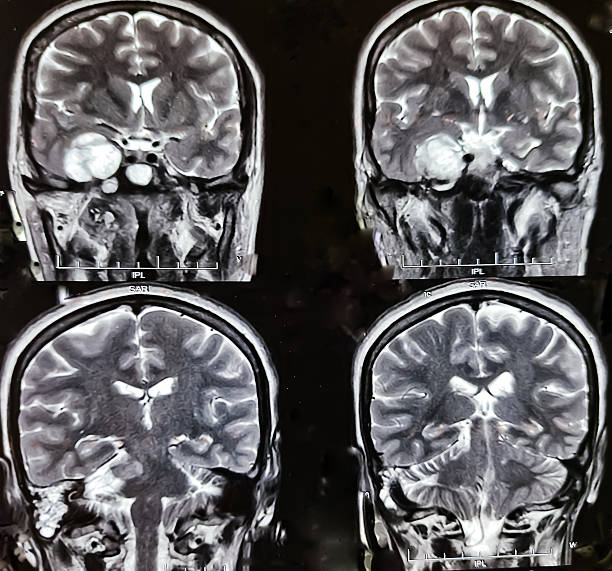
After having a CT scan at Doncaster Royal Infirmary, Sarah-Jane was told doctors thought she had a bleed on her brain, and that she would need to be admitted and have an MRI scan. The next morning, Sarah-Jane’s life changed forever after being told she had a brain tumour around the size of a golf ball.

Medication masked a golf ball-sized brain tumour

She said: “They told me in a bay of four people by myself that I had a brain tumour, and that they think is a glioma. I was just distraught, I was absolutely hysterical.

“I rang my mum straight away, and she came into the hospital. She rang my dad and he came home from work to see me. I feel a bit like I’m in an episode of Grey’s Anatomy, like it just doesn’t feel like it’s actually me.

“I was upset, I was stressed thinking, ‘what if it’s not removable?’ I didn’t know what grade it was. What if it’s spread somewhere else in my body? And I just had so many what-ifs in my mind that I just kept crying.”

Before being diagnosed with a suspected grade 2 glioma, Sarah-Jane had booked a £1,100 holiday to Ayia Napa with one of her friends through loveholidays, with flight bookings through British Airways.

Loveholidays booking dispute after Sarah-Jane’s cancer diagnosis

Sarah-Jane said: “I went to Ayia Napa last year and it was really good so we were set on [going] there. But it was last minute because it’s just finding time for us to be together and book holiday.

“I hadn’t been on holiday this year yet, we just wanted to get away so I’d not really had any annual leave or anything like that.

“Just wanted a break and plus because I would be starting a new training programme in September. I wanted to find a decompress before that.”

The day Sarah-Jane was diagnosed with cancer, she contacted loveholidays to make them aware and asked for a refund of her package. At the same time she realised her yearly travel insurance cover had not renewed as she thought it had.

She said: “The first time that we called they didn’t want to know at all. They didn’t even express empathy or anything like that. And then I got an email just saying I can get £62 back.”

Sarah-Jane then sent two letters from medical professionals, one from a consultant at the hospital, and a second from her GP, which were both rejected by loveholidays due to her first letter being a “statement for fitness for Work (SSP)” and the second being a letter that “outlined that it had been issued to support a travel insurance claim”.

Sarah-Jane’s TikTok video prompts action from loveholidays CEO office

After receiving pushback from loveholidays the 24-year-old made a video about her experience on TikTok, with a member of the CEO office at the company reaching out shortly after.

Sarah-Jane continued: “So it was just calls back and forth. They said you need to get in touch with British Airways. British Airways said it has to all be done through loveholidays.

“I asked them to speak to my mum, I just couldn’t deal with speaking to them. I couldn’t keep hearing no and saying, ‘there’s nothing we can do’.

“Then the person from the CEO office said ‘we wish Sarah the best and stuff’ which just shows that there’s no compassion.”

The company then offered Sarah-Jane a £300 refund, which her mum refused, before offering £600, which they also rejected. The following day, however, the loveholiday’s team confirmed they would offer Sarah-Jane a full refund.

She said: “She spent over eight hours on the phone, backwards and forwards, to loveholidays and British Airways because they just kept sending each other to each other. She started crying on the phone because the way people were speaking to her was just… It’s not what she needed to hear.

“She was unnecessarily sent between two different companies that both didn’t want to know. I think that just shows that more protection is needed in the event of major health diagnoses, because if it wasn’t for the TikTok then nothing would have been done.”

Loveholidays and British Airways issue official statements

A loveholidays spokesperson said: “We are deeply sorry to hear about Sarah’s diagnosis and the difficult circumstances she is facing. We wish her all the very best with her treatment and recovery.

“To support Sarah during this difficult time, we have refunded her in full for her holiday, and we have also explained how she can request a refund for the seat purchase she made directly with her airline.

“While we always do everything we can to support customers in difficult circumstances, as a travel agent we are bound by the cancellation policies of our airline and hotel partners, many of which do not provide refunds when customers are unable to travel due to illness.

“For this reason, we always strongly recommend that customers take out travel insurance to help protect them if unforeseen circumstances prevent them from travelling.”

A spokesperson from British Airways said: “We’re very sorry to hear of our customer’s experience and our teams have been in touch.”

The spokesperson also said that the airline had “resolved this matter”, however Sarah-Jane told us that she has yet to receive the refund or, indeed, any further communication from British Airways customer service.

Source link

South Korean team uses brain oxidant to activate Alzheimer’s prodrug

An AI-generated illustration depicts research into a disease-activated prodrug for Alzheimer’s disease. Data from KAIST. Graphic by Asia Today and translated by UPI

July 2 (Asia Today) — South Korean researchers have developed an experimental prodrug that uses elevated hydrogen peroxide in brains affected by Alzheimer’s disease as a signal to activate treatment, KAIST said Thursday.

The compounds remained largely inactive under healthy brain conditions but became active therapeutic agents after encountering hydrogen peroxide associated with Alzheimer’s pathology. The researchers confirmed their effects in animal experiments.

The research was led by Mi Hee Lim, a professor in KAIST’s Department of Chemistry. The university worked with research teams led by Min Geun Kim of Chonnam National University, Chul Ho Lee and Kyung Sim Kim of the Korea Research Institute of Bioscience and Biotechnology and Young Ho Lee of the Korea Basic Science Institute.

A prodrug is an initially inactive compound that converts into an active treatment only under specific conditions in the body.

The research team designed its prodrugs to activate only when exposed to hydrogen peroxide, a reactive oxygen species found at elevated levels in brains affected by Alzheimer’s disease.

Hydrogen peroxide has generally been treated as a harmful substance that should be removed because it can damage cells. The researchers instead used it as a biological signal to switch on the treatment.

The two prodrugs, called BE-1 and BE-2, showed little reaction under healthy brain conditions. When exposed to hydrogen peroxide in an Alzheimer’s-like environment, they converted into active compounds known as AP-1 and AP-2.

The activation process reduced hydrogen peroxide and other reactive oxygen species. It also interfered with the aggregation of amyloid beta, a protein that can accumulate in the brain and form toxic clumps associated with Alzheimer’s disease.

Advanced analytical tests showed that the activated compounds altered the structure of amyloid beta and prevented it from developing into larger aggregates, the researchers said.

Tests using mice with Alzheimer’s-like conditions showed that the prodrugs crossed the blood-brain barrier, which regulates which substances in the bloodstream can enter the brain.

The compounds then converted into their active forms inside the animals’ brains. The findings demonstrated that the prodrugs could reach their intended target and respond to the disease-related environment.

The approach differs from treatments designed to act continuously against a single protein. Instead, the KAIST-led strategy uses conditions within diseased tissue to activate treatment only where it is needed.

Researchers said this targeted activation could provide a strategy for increasing therapeutic effects while limiting unnecessary activity in healthy tissue. KAIST said the technology could also have potential applications in treatments for Parkinson’s disease and other neurodegenerative disorders.

“This study is significant because it uses hydrogen peroxide, which had previously been regarded only as something that should be removed, as a signal that activates the drug,” Lim said.

“The technology, which activates drugs only in diseased tissue, could become a new platform for treating complex diseases such as Alzheimer’s more safely and effectively,” she said.

— Reported by Asia Today; translated by UPI

© Asia Today. Unauthorized reproduction or redistribution prohibited.

Original Korean report: https://www.asiatoday.co.kr/kn/view.php?key=20260702010001077

Source link