Bourdain

‘Tony’ review: A saucy Dominic Sessa makes a meal of a legend

Bravado, insecurity, deceit. These are the bitter ingredients that seasoned the chef Anthony Bourdain inside the pressure cooker of the restaurant industry. Set over one formative summer in 1975, Matt Johnson’s affectionately sleazy biopic “Tony” is a portrait of the culinary adventurer (who died by suicide in 2018 at the age of 61) as a snotty 19-year-old Vassar student who doesn’t know an oyster knife from his ego. “I was — to be frank — a spoiled, miserable, narcissistic, self-destructive and thoughtless young lout, badly in need of a good ass-kicking,” Bourdain confessed in his 2000 bestseller “Kitchen Confidential,” a scorching memoir that elevated him from obscurity to damaged saint. “Tony” opens with that quote and proves it with scenes of boozing, puking and petty crime. Miraculously, it’s the most heartwarming comedy of the year.

Teenage Tony (a feral Dominic Sessa of “The Holdovers”) claims he’s already writing the next great American book, a navel-gazing bildungsroman — his word, not mine — in the key of Kerouac. Really, he’s just a middle-class kid from New Jersey who doesn’t expect to work for a living. Stalking his high school crush Nancy (a grounded Emilia Jones) to Provincetown, Mass., he begrudgingly supports himself with a dishwashing gig at the Flagship, a humble seafood joint. The kid is ashamed of blue-collar labor. That his rowdy co-workers think he sucks at it is worse. This taste of humiliation would change his destiny.

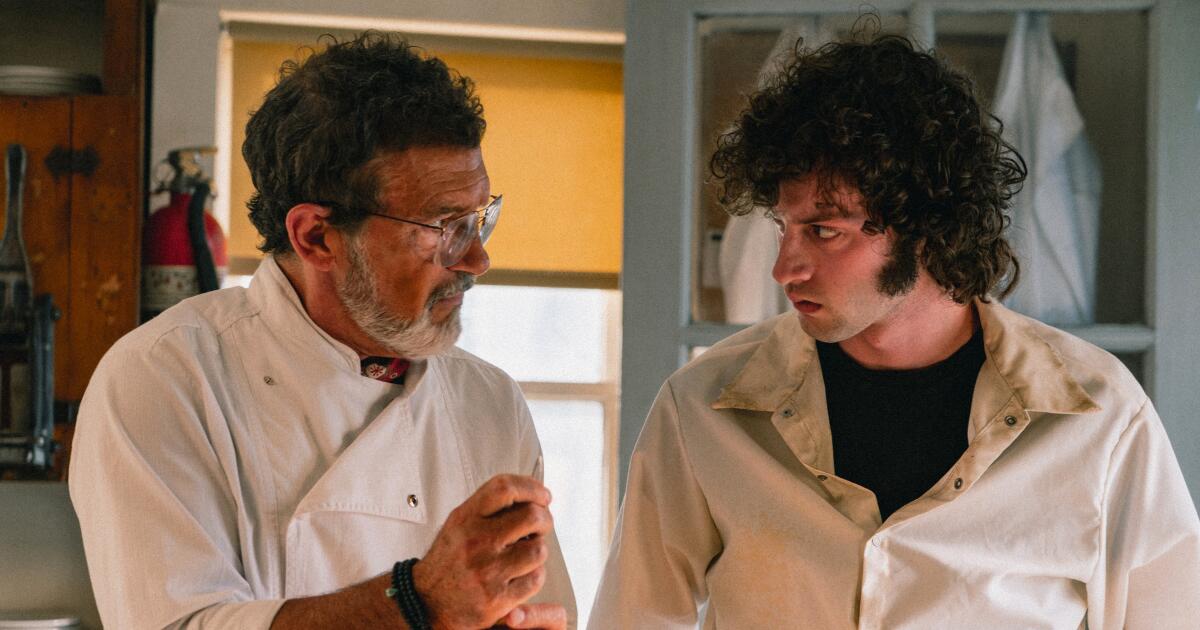
Under the tutelage of the Flagship’s idiosyncratic unnamed chef (Antonio Banderas), Tony will discover the importance of punctuality. A devilish shellfish-shucker (Leo Woodall, an intoxicating scamp) will also introduce him to cocaine. That first bump hits Tony with such a rush that the soundtrack explodes with boogielicious disco.

Sessa was born to prowl around wild-eyed in retro polyester. He relishes the fast and funny dialogue, flinging around fancy words that don’t mean a thing. At low emotional tide, Sessa’s Tony can also be watchful and quiet. He makes us hear the character’s silent inner schemes as loudly as when he’s actually blabbering.

Director Johnson (“BlackBerry” and the maniacally brilliant “Nirvanna the Band the Show the Movie”) and his co-screenwriters Matthew Miller, Todd Bartels and Lou Howe have blended every hard-knock lesson that Bourdain learned across decades of job-hopping into one month of blood and sweat. Spiritually, it’s fantastic. Factually, it’s baloney, although “Tony” does restore the restaurant’s actual name — the Flagship — from Bourdain’s Dreadnaught, the pseudonym he gave it before he ever imagined future fans following him around the world. Mild spoiler alert: Readers of “Kitchen Confidential” will also know it’s dedicated to Nancy, who became his first wife.

The kitchen scenes are a combo platter of boot camp, frat house hazing ritual and kung fu movie. As Bourdain would later explain, he thrived in a setting where actions have instant consequences: a sore back, a sliced hand, a good meal. Burn the sandwich, toast it again; scrub every plate and punch out with pride. You can’t help but grin at Sessa’s hoot when his scrawny Tony finally manages to muscle a raw potato through a french-fry slicer. And at the end of a shift, he and his dysfunctional workplace family gather to share bowls of squid stew and taste the results of their work. Back in New Jersey, dinnertime with his biological family feels as cold and stale as their meal of frozen peas and store-bought white bread.

Banderas’ chef is the kind of mentor you’d expect to find on a mountaintop mediation retreat, starting over a half-dozen scenes coldly waking up the sleeping whippersnapper with a cold bucket of morning seawater to the face. As Banderas plays him, he’s a bearish marvel of a man with the kind of earthy soul that would have had Ernest Hemingway chugging salty dogs on his barstool all night. There’s a shot of Banderas biting into a tomato that’s pure bliss for him and us.

Whereas Tony talks a big game, squeezing Japanese words like boketto — the art of doing nothing — into conversation, Banderas shows us how to simply do it. (Likewise, a centerpiece montage makes penning a coming-of-age book look way lamer than than just living a full life.) Watching Banderas’ chef stare at the Atlantic, it may occur to you that a cook can no longer afford a waterfront shack on the sand. The film is too breezy to say so directly, but its emphasis on the value of honest work wants you to think it.

Watching Banderas spend a day simmering his own handcrafted ketchup simply to store it in repurposed Heinz bottles says everything about the guy’s devotion to food and his indifference toward marketing. It’s a little grating to see boorish Tony offer him business tips. It helps that some of his advice isn’t great.

“Tony” stays planted in its own immediate present, rarely hinting at the veers Bourdain’s biography will take. “Kitchen Confidential” won’t be published for another 25 years; his globe-trotting celebrity comes after that. Johnson keeps the tone so zingy and loose that you don’t have to know Bourdain at all to enjoy the movie. The ending even tacks on a let’s-save-our-hangout rally that could be Velcroed onto any ’80s comedy.

The script allows itself just two beats to squeeze out a knowing tear. The first comes when Tony describes his approach to writing: “I try to imagine interesting places I’ll probably never go, people I’ll never get to meet,” he says, unaware how much his horizons will one day expand. The second trickier and clumsier aside happens when Banderas’ chef tells Tony the tragedy of 17th century French cook François Vatel, who literally fell on his sword before serving a banquet to Louis XIV. Lore has it that Vatel didn’t have enough fish. The teenager doesn’t understand. “He killed himself? Why?” Tony repeatedly asks. That question will never have a satisfying answer.

Like a lazy Susan, today’s youth seem to be coming full circle to young Tony’s dilemma. He’s got one foot on the so-called safe path — college, white-collar isolation — and the other on a career that’s already covering him in well-earned scars. As employees are feeling insecure and replaceable, there are rumblings that the current crop of kids is gravitating back toward physical jobs and finding, as Tony did, that one can find fulfillment working with your hands. The stress of the kitchen didn’t make Tony a better man overnight. But it was the grit that grew a pearl.

‘Tony’

Rated: R, for pervasive language, drug use, and sexual content/nudity

Running time: 1 hour, 46 minutes

Playing: Opening Friday, Aug. 7 in limited release
Source link

Eddie Huang: On new novel ‘Come Undone,’ Anthony Bourdain and Baohaus

On the Shelf

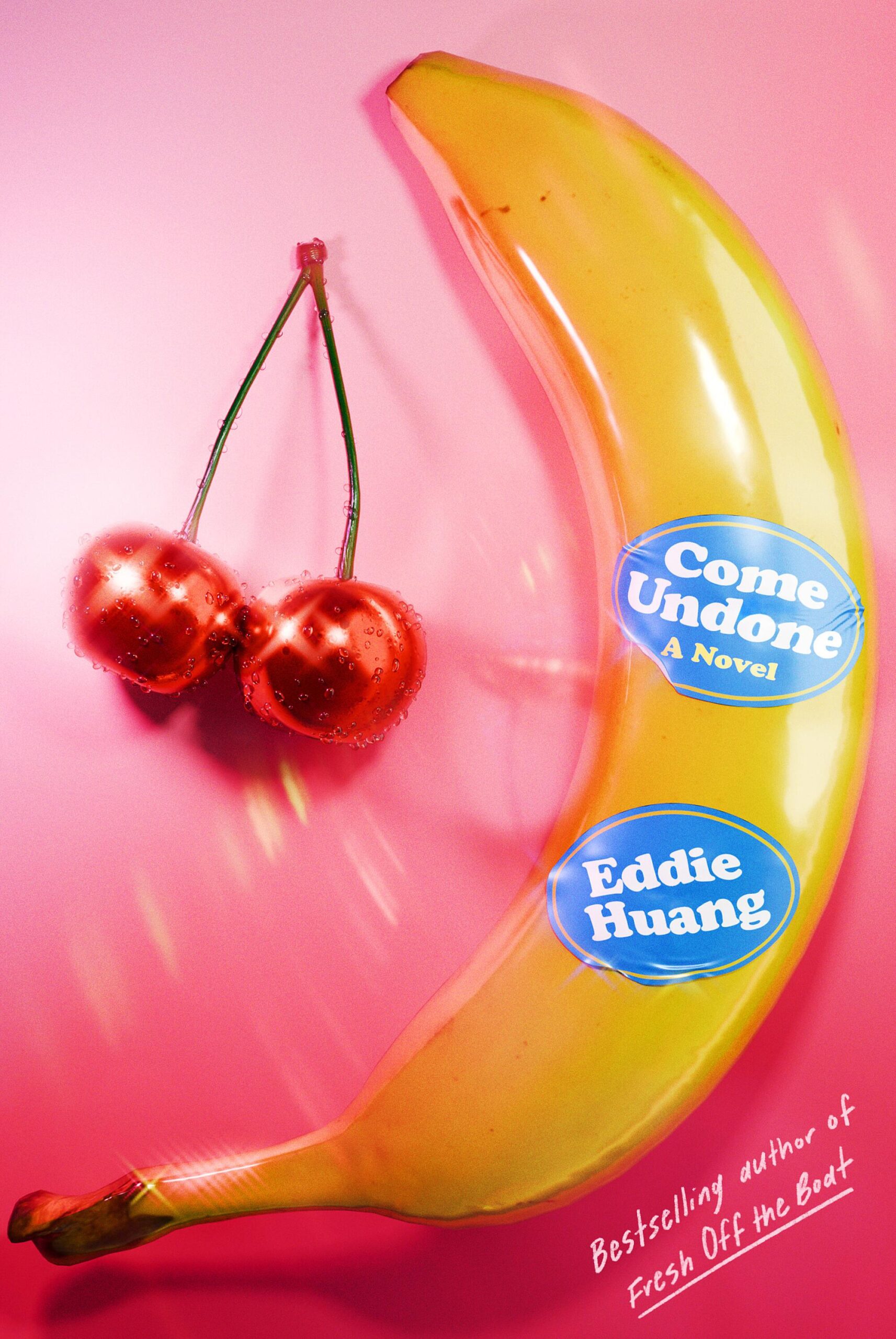
Come Undone: A Novel

By Eddie Huang
One World: 240 pages, $29

If you buy books linked on our site, The Times may earn a commission from Bookshop.org, whose fees support independent bookstores.

Eddie Huang has never felt lighter. Last month, after his debut novel, “Come Undone,” finally released, something shifted.

“I have a family. I feel healed,” he said over coffee and short ribs in Santa Monica hours ahead of a live talk with Ottessa Moshfegh, the bestselling, critically acclaimed author of Huang’s favorite book, “My Year of Rest and Relaxation.”

“People always write me off as a personality or a multi-hyphenate,” he said. “It’s a nice way of saying I’m not really good at anything. But I didn’t have any of that this time.” He leaned forward, serious. “I have to be honest. I do think the Knicks are a big, big part of it.”

His beloved Knicks winning the championship, he said, kept him from spiraling over the book. In person, Huang subdues his ironic braggadocio with polite eye contact and rolling belly laughs at his own jokes. For years, audiences have watched Huang resist whatever box you put him in. His particular brand of cultural fluency — a rapid-fire mix of food, fashion, basketball, politics and pop culture — is what made the “Gua Bao Bad Boy impossible to categorize.

For most of his career, Huang has seemed constitutionally incapable of standing still. Chef. Memoirist. TV host. Filmmaker. Lawyer. Comic. Podcaster. His first book, “Fresh Off the Boat,” became the longest-running network sitcom centered on an Asian American family, even as Huang publicly distanced himself from the show. Since leaving post-fires L.A. for New York, he’s reopened Baohaus — returning to the kitchen that built his career. Waiting for him at home after the book tour is his wife, Natashia Perrotti, and their 2-year-old son.

Now there’s “Come Undone,” fiction that Huang called his most honest — and vulnerable — work to date.

“It’s sort of this next-gen auto fiction type thing that is creating its own rules,” Moshfegh said ahead of their Q-and-A. “It made me think about my own appreciation for the experience of male heterosexuality and how much it’s been commodified.”

The book follows Hubie, a globe-trotting food-show host drifting through Chateau Marmont, Madeo, Nobu and other “dirtbag L.A” (as Huang coins) spots. He meets Janine, his equal in appetite and id, sending him into a tailspin of yearning and loops of Sky Ferreira’s “Everything Is Embarrassing” on sadboi walks. The “two walking red flags” decide to try to make it work.

"Come Undone: A Novel" by Eddie Huang

Huang called the novel an “autofictional riddle.” The puzzle isn’t especially difficult if you’ve followed his relationship with Perrotti, who co-hosts their podcast, “Canal Street Dreams.” Marrying a writer, she’s learned, often means finding out what he feels by reading it. “We’ll get into a fight,” she said, “and I’ll wake up to a Substack article about it.”

It’s also part of the private life she’s since conceded. “It’s annoying,” she added. “But now I can read it, and maybe understand him a little bit better. He’s trying to communicate through the writing, like sending somebody a song and saying, ‘I want you to listen to these lyrics.’”

The novel goes further, drawing from experiences the couple has never discussed publicly. In the novel, Hubie and Janine’s relationship pivots after an ectopic pregnancy ends in loss. Perrotti said the scene is fictionalized but mirrors a similar experience they had early in their own relationship.

“It brought us closer together,” she said. “It was the catalyst for us realizing we were serious.”

Before Huang could finish the book, the life he was writing about had to fall apart. “This book was very much about breaking up with your family to start your own,” he said. “There was a lot of anger in the book that had not been resolved.”

By the end of 2024, Huang had stopped speaking to his mother. The break followed what he described as a blowup at a Cheesecake Factory. It also unlocked the ending he’d been chasing.

Eddie Huang.

Eddie Huang.

(Jason Armond / Los Angeles Times)

Looking back, Huang thinks the earlier versions failed because he was still arguing with her. He’s still trying, in some way, to communicate with her through his writing. “If there’s one person I wish would read the book,” he said, “it would be my mom.”

There were other chapters he had to close the book on, mainly Hollywood. His foray into fiction coincided with the writers’ strike, drying up all his income and future projects. That same year, he became a father. “I had to accept and realize that my value was not in making money,” he said. “Because for three years, I couldn’t.”

He recalled a particular low point researching life insurance policies. “I had to rebuild my whole self. Really love myself despite not being able to offer anybody anything.”

That new certainty didn’t make Huang any less willing to pick fights. Last year, as his documentary “Vice Is Broke” — an autopsy of the media company behind “Huang’s World” and its eventual bankruptcy — awaited release, Huang said distributor Mubi shelved the film after he boycotted the company over Sequoia Capital’s investment in an Israeli defense technology startup. (Mubi denied this and said it still planned to distribute the film.)

The ghost of Vice still lingers in today’s media ecosystem in what he called our “era of cartel journalism:” creators navigating a world of blurred incentives and corporate interests. He traced this instinct to challenge those systems back to Socrates’ “gadfly” — the person whose job was to annoy power. “As a writer, you should be challenging people,” he said. “If your memoir can be turned into a sitcom, it probably wasn’t challenging.”

Eddie Huang.

Eddie Huang.

(Jason Armond / Los Angeles Times)

After the 2025 L.A. fires drove his new family back to New York, Huang went back to cooking. He worked pop-ups, reopened Baohaus and found himself alongside line cooks half his age. In March 2025, he rewrote the novel in five days. That same month “was the first month I didn’t overdraft my credit card,” he said, with the majority of his income today coming from the restaurant. It’s allowed him to make films, write books and walk away from deals he doesn’t believe in. “Being a chef is the anchor that allows me to maintain my artistic integrity.”

For years, comparisons to Anthony Bourdain followed Huang everywhere. The two eventually became friends.

“He was one of the few people who was as advertised,” Huang said. “Nicer and more generous in person. And wounded.”

Bourdain is the only real person who appears in “Come Undone” under his own name.

When Huang mentions him, he stops talking. He covers his face. Tears come.

“I don’t believe in God,” he said, “but I asked the universe why for many, many years.”

Bourdain’s suicide, he said, was one of the reasons he walked away from “Huang’s World” in 2018. At the time, few people understood why. “It was Tony. It was family. It was everything.”

Eddie Huang.

Eddie Huang.

(Jason Armond / Los Angeles Times)

Now, looking back, Huang thinks he was writing “Come Undone” toward a different ending than the one he’d imagined.

“This book is a guy saying, ‘I don’t want to be like my biological father,’” he said. “And, in the most respectful, loving way, I don’t want to go out like Tony.”

He paused. “I needed to name the sadness in me. I needed to allow myself to be loved.”

Huang is already writing another memoir about getting back into the kitchen. Still, he said, these days, he’d rather write fiction.

Rudi, an L.A. native, is a freelance art and culture writer. She’s at work on her debut novel about a stuttering student journalist.

Source link