Some countries in the region say it infringes on their rights.
Libya’s eastern parliament has walked back its objection to an agreement with Turkiye, demarcating boundaries in the Mediterranean Sea.
Its rival administration, the internationally recognised Government of National Unity, signed the deal seven years ago.
The ratification has revived a simmering dispute over exploring a potentially gas-rich region. Greece, Cyprus and Egypt were quick to object, with Athens referring the issue to the UN Security Council.
They say Libya and Turkiye are ignoring their sovereign rights.
So what are the geopolitical implications of this deal in the eastern Mediterranean?
Presenter: Mohammed Jamjoom
Guests:
Sinan Ulgen – Chairman of the Centre for Economic and Foreign Policy Studies
Maria Gavouneli – Professor of international law at the National and Kapodistrian University of Athens
Tarek Megerisi – Director of Informmi, a geopolitical research and advisory firm
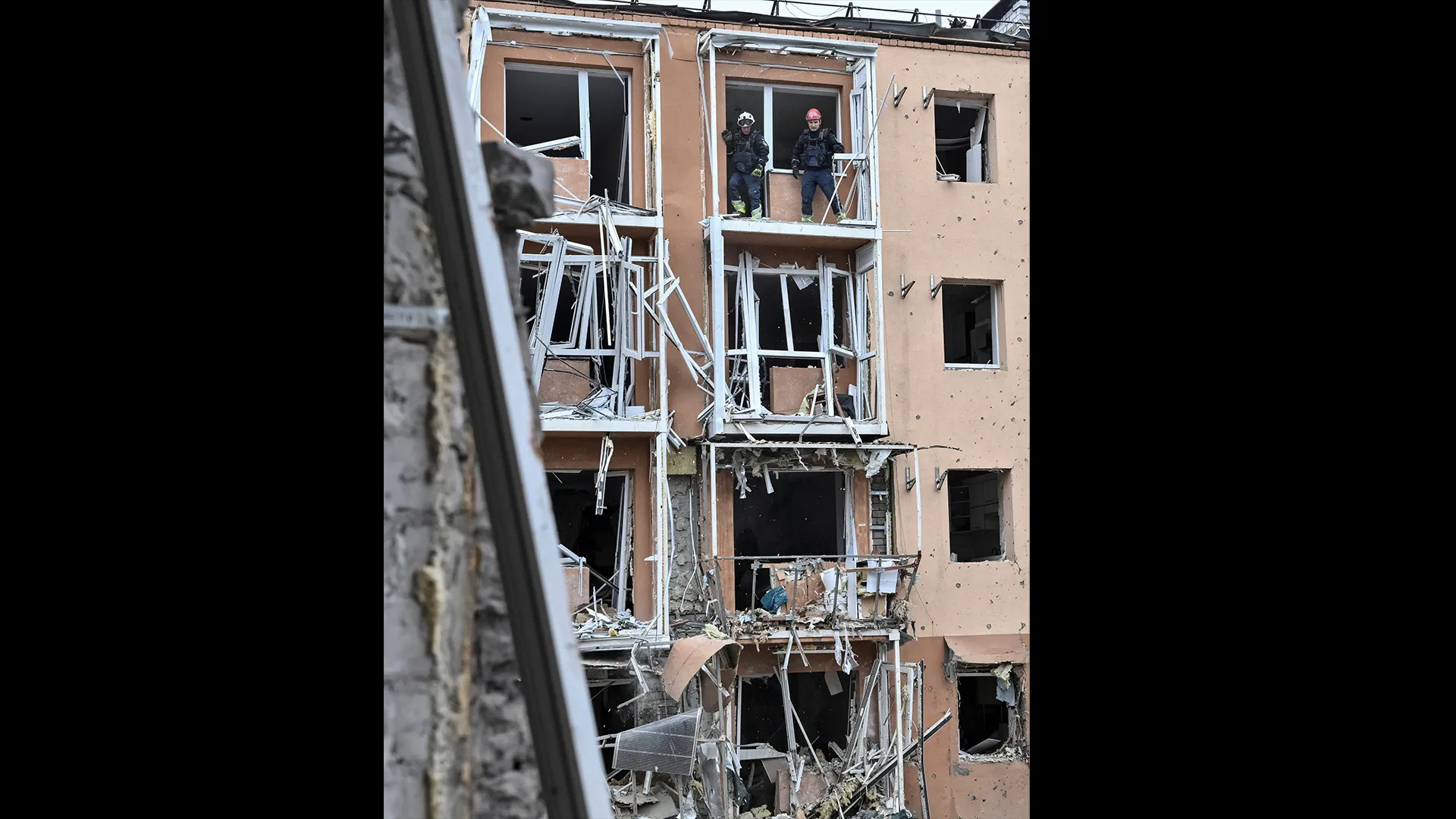
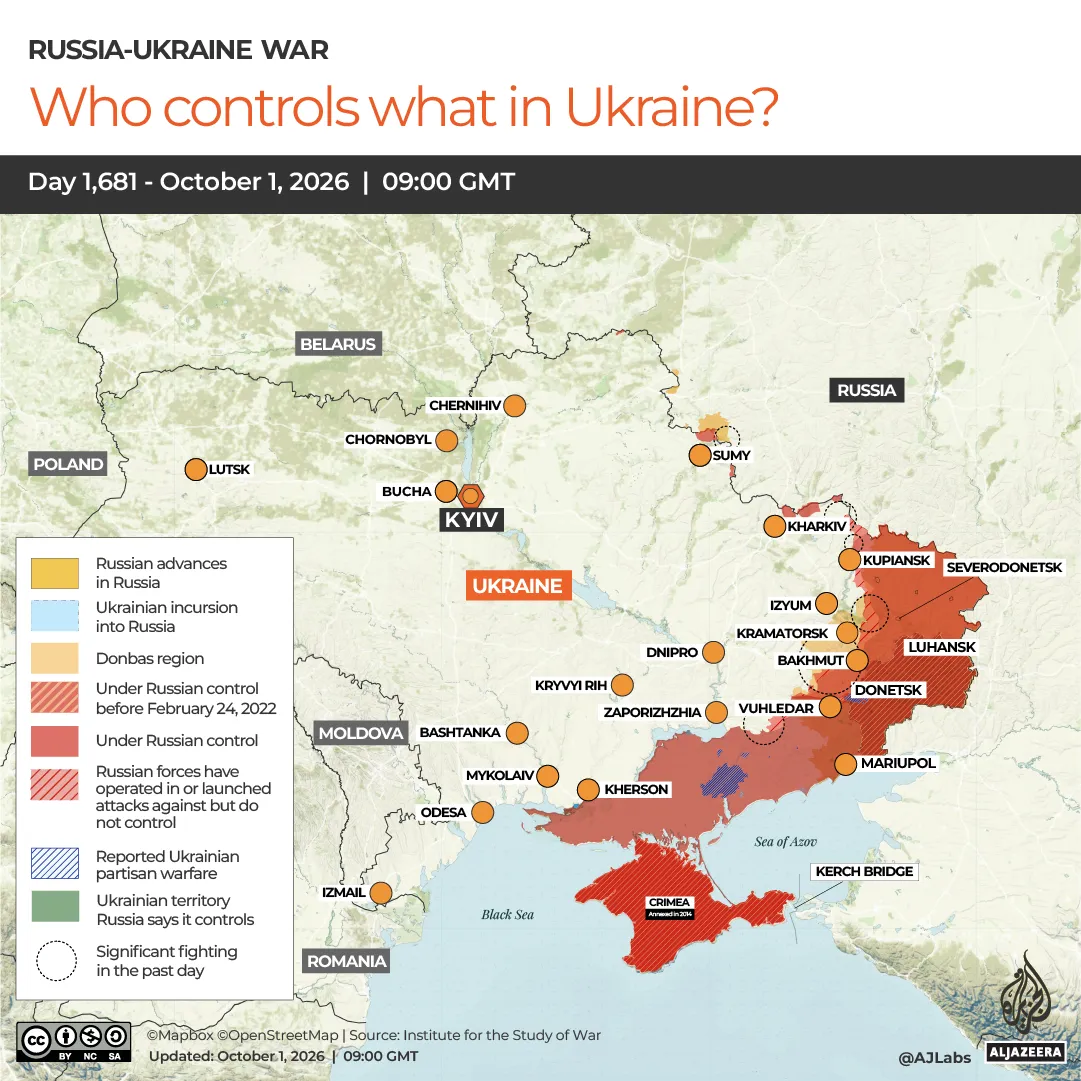
At least eight people have been killed and nearly 60 injured in the latest wave of Russian strikes across Ukraine. Ukraine’s Air Force said Russia launched 332 drones and missiles overnight, of which 293 were intercepted or neutralised.
Ukrainian President Volodymyr Zelenskyy warned Russia’s ambitions extend beyond eastern Ukraine, saying its drone attacks threaten NATO. Speaking after an EU summit in Belgium, he also took a jibe at US President Donald Trump for saying he is harder to deal with than Putin.
Ukraine says it has received proposals from India, Turkiye, Egypt and the United States to broker talks with Russia. The offers come as the two adversaries escalate attacks on each other’s energy and port infrastructure with their war now in its fifth year.
Ukrainian Foreign Minister Andrii Sybiha revealed the four proposals at a briefing in Kyiv on Friday and singled out New Delhi’s. “The most comprehensive is India’s proposal,” he said, adding that India had signalled a willingness to play a role for the first time.
Recommended Stories
list of 3 itemsend of list
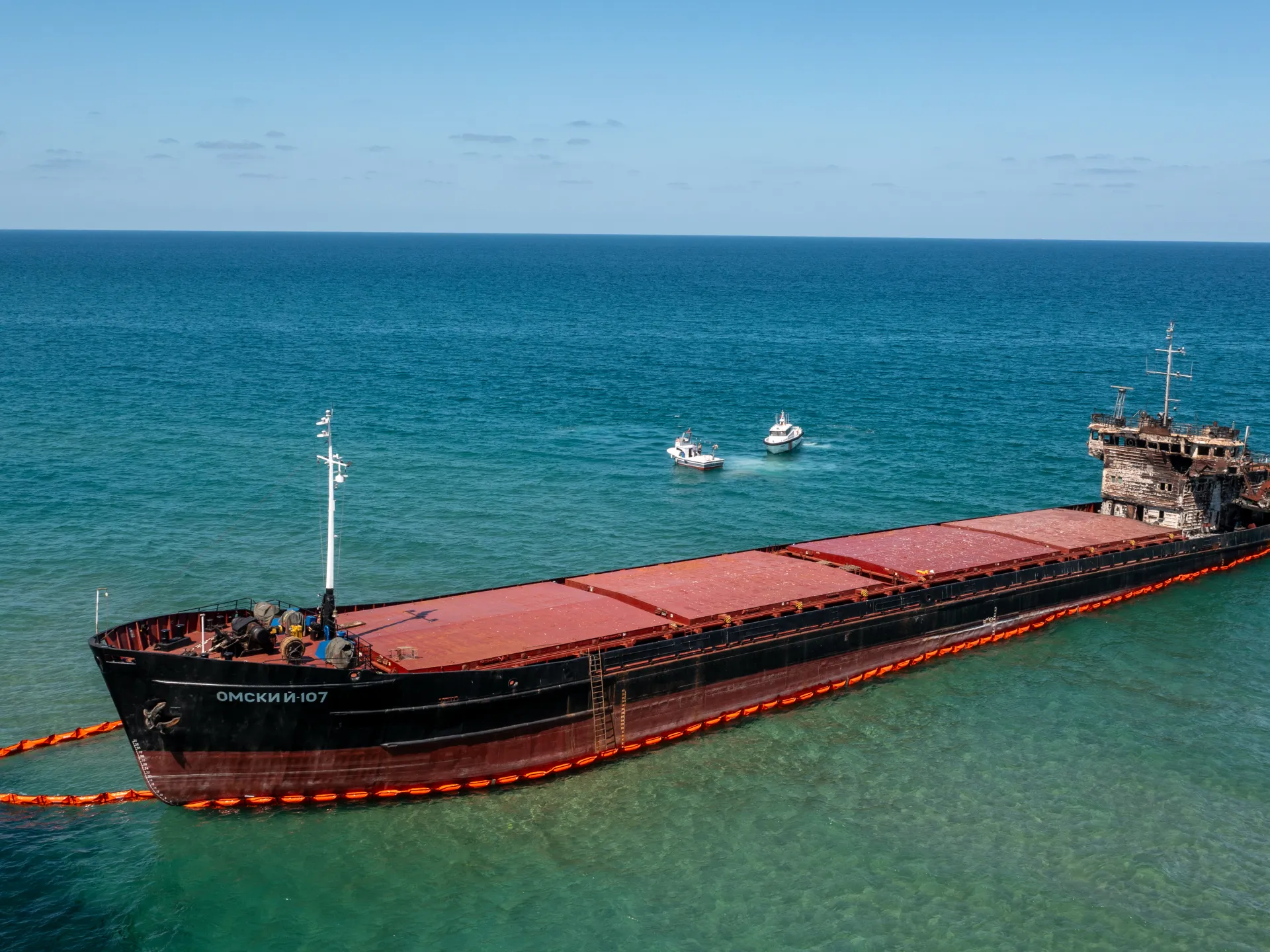
None of the proposals aims to end the war. Each seeks a narrower truce, covering energy facilities, ports or commercial shipping in the Black Sea.
Here’s what we know:
What is India proposing?
India has not made its plan public. Quoting unnamed sources, however, Indian media have reported it has three parts. According to the Hindustan Times, it would aim to protect infrastructure, keep grain and energy supplies moving through Black Sea ports, and ensure the safety of commercial shipping.
The first part – mutually halting strikes on energy facilities and ports – matches what Kyiv has been demanding. Sybiha said any deal must be a complete energy truce that covers port infrastructure as well.
The second part builds on the Black Sea Grain Initiative, which Turkiye and the United Nations mediated in 2022 but Russia abandoned in 2023.
The third part, protecting merchant ships and their crews, is particularly important to India because Indian sailors have been killed or harmed on Black Sea routes.
The sources were quoted as saying India’s plan goes further than the other three proposals because it covers infrastructure and shipping together. A Ukrainian official told the Kyiv Independent that it incorporates elements of the Turkish, Egyptian and US initiatives. The Kyiv Post reported that Sybiha also described the plan as addressing a possible ceasefire along the front lines, although other accounts said he gave no specifics.
The proposal likely took shape during Indian External Affairs Minister Subrahmanyam Jaishankar’s first visit to Ukraine last month and in a later meeting with Sybiha at the UN General Assembly in New York, also in September. Jaishankar said New Delhi was “trying to be helpful, starting with the Black Sea safety of shipping issue”.
What do we know about the Turkish and Egyptian proposals?
Very little. Neither Ankara nor Cairo has published details. Both reportedly focus on keeping Black Sea grain supplies moving by suspending attacks on commercial shipping. Some reports said the two countries proposed a grain truce jointly while others described two separate plans.
Turkiye has done this before. With the UN, it steered the 2022 grain deal, one of the few narrow truces of the war to hold for any length of time. Ankara and the UN are now organising new Black Sea talks with a round planned for October.
Beyond its Black Sea focus, almost nothing is known about Egypt’s proposal. Its interest, however, is clear: Egypt relies on Ukraine for nearly one-third of its grain supplies.
What is the US pitching?
According to Ukrainian President Volodymyr Zelenskyy, Washington has proposed three steps: a mutual halt to energy strikes, a reopening of the grain corridor and a trilateral meeting with Ukraine and Russia, possibly in Abu Dhabi.
The latest effort began in early September when US President Donald Trump’s envoys visited Kyiv and Moscow and secured an agreement in principle for a trilateral meeting. Steve Witkoff and Jared Kushner met Russian President Vladimir Putin in Moscow on September 5 while Kremlin envoy Kirill Dmitriev visited the US twice in September.
The trilateral meeting has since been pushed back. It had been expected to take place in the United Arab Emirates in early October. Washington now wants it in late October, and people close to the talks blamed the delay on Russia.
Washington has also invited Putin to the Group of 20 summit in Miami, Florida, in December. “We hope that’s an invitation he’ll accept,” US Secretary of State Marco Rubio said. The Kremlin said no decision has been made.
At the same time, the US is applying pressure to try to end the war. Trump recently signed a law giving him sweeping powers to sanction buyers of Russian energy.
He has also called on Ukraine to stop targeting Russian diesel facilities amid a diesel prices crisis in the US, where Trump faces tricky midterm elections next month. “Mr Zelenskyy has to do one thing,” he said on September 13. “He has to stop knocking out diesel fuel in Russia.” This drew much criticism that Trump instead should focus his comments on Russia, which began the war with its invasion of Ukraine in February 2022.
He is reportedly sceptical about his own government’s latest diplomatic initiative. People familiar with his thinking have told US media that he doubted Putin would agree to an energy truce before winter.
(Al Jazeera)
How have Russia and Ukraine responded?
Sybiha said Ukraine would agree to a truce but with conditions. It would accept an energy and Black Sea shipping ceasefire, but only as a combined package, he said.
He added that Kyiv is also open to an unconditional ceasefire along the current front lines. Zelenskyy backs the US-proposed meeting but stressed it needs “not only Ukraine but also the Russian side” to support it.
Moscow has been warm in tone but has committed to nothing. Kremlin spokesperson Dmitry Peskov said Russia would welcome India’s peace efforts while Putin said Modi has “very good ideas aimed at finding mutually acceptable solutions”, but he did not elaborate.
In private, Moscow appears to have said no. A Ukrainian official told the Kyiv Independent that Russia has rejected India’s proposal although this has not been confirmed publicly. Ukraine’s agriculture minister said Russia had rejected every Black Sea ceasefire option the mediators have presented.
Why are Global South countries becoming more involved?
Food supplies, the lives of their citizens and fuel prices are all at stake.
“I think it’s clear to many countries that this war is not a localised war, but it’s a war that has these global consequences,” Fredrik Wesslau, a senior policy fellow at the European Council on Foreign Relations, told Al Jazeera.
Russia and Ukraine account for more than a quarter of global wheat shipments, and their attacks on each other’s ports helped push wheat futures to a three-year high in August.
Sailors from countries with no links to the war are being killed. At least five Indian seafarers have died in strikes on Black Sea shipping in recent months along with seven Azerbaijani crew members since June. On Saturday, a Russian strike on a Liberian-flagged ship in a port in the Odesa region killed a crew member. Ukraine, for its part, has targeted tankers it links to Russia’s shadow fleet since July.
The energy war is also being felt in global markets. Ukraine reported more than 194 drone attacks on Russian refineries this year, hitting all 11 of the largest. Bloomberg News estimated that Russia’s fuel output has fallen by more than 30 percent. With Middle East supply already down as a result of the US-Israel war on Iran, global diesel markets are more exposed to the loss of Russian supplies.
Maximilian Hess, a nonresident senior fellow in the Eurasia Program at the Foreign Policy Research Institute, said energy is at least as important as grain in driving the diplomatic efforts. He pointed to a “clear frustration” among many countries over high oil prices, which reflect both the Russia-Ukraine war and the crisis in the Middle East.
“Of course, Ukrainian grain is important for them, but the oil-price factor is important there as well,” he told Al Jazeera. “I think it is those commodity-shock concerns that are pushing them to re-embrace this rhetoric, rather than anything else.”
What are the challenges ahead?
Every previous attempt at diplomacy has failed to end the Russia-Ukraine war. A US-brokered, 30-day energy truce in early 2025 collapsed amid accusations of violations on both sides. At talks in Istanbul in May 2025, Zelenskyy complained that Russia had sent a junior delegation with no authority to sign a ceasefire.
In August 2025, a meeting between Trump and Putin in Alaska yielded no results despite Trump claiming to be close to a deal ahead of it.
Wesslau said Washington’s efforts have faltered partly because Trump – who had boasted he would end the war within 24 hours of taking office in January 2025 – has appeared unwilling to put real pressure on Moscow. “The Russians see this, and they conclude that they can continue this war,” he said.
Deep distrust remains. Oleksandr Merezhko, head of the Ukrainian parliament’s foreign affairs committee, said: “Putin never keeps agreements.”
Moscow’s actions on the ground suggest it is in no hurry, Wesslau said “They’re trying to strangle Ukraine, strangle the economy, and make it unliveable ahead of the winter,” he said. He added that Moscow’s occasionally softer rhetoric was aimed mainly at the Trump administration and “has always proved to be a bluff”.
Russia’s terms are another obstacle. Hess said Moscow’s demands have not softened at any point since it launched the war and at times have grown. Putin has demanded all of Ukraine’s Donetsk, Luhansk, Kherson and Zaporizhia regions, including territory Russian forces have never controlled, as well as a buffer zone in northern Ukraine. Moscow is also seeking sanctions relief and military concessions for any Black Sea deal.
“I don’t think it’s a question of who actually mediates. I think it’s really a question of the calculation in Moscow,” Wesslau said. “Fundamentally, the problem is that Putin doesn’t want a ceasefire or a peace agreement. He wants to continue the war. He believes that he can win.”
Analysts said only greater economic pressure is likely to change that calculation.
Wesslau said if Europe can close down Russia’s shadow fleet of oil tankers, “this would be a massive blow to Russia’s war economy.” Hess said the country best placed to shift things quickly is China, rather than the US, by cutting its purchases of Russian oil. However, he added: “I don’t think Beijing is interested in doing so.”
Hess said that unless there is an outside shock, the war “is much more likely to last another four years than another four months”.
The United Nations Interim Force in Lebanon said there were no casualties after small arms fire targeted a border post.
Published On 7 Oct 20267 Oct 2026
The United Nations Interim Force in Lebanon (UNIFIL) says one of its posts on the Lebanon-Israel border was targeted by small arms fire, with no casualties reported.
The UN force said the incident occurred on Wednesday morning with several rounds of small arms fire targeting a UNIFIL position near Kfar Shouba along the UN-drawn border with Israel, known as the Blue Line.
Recommended Stories
list of 3 itemsend of list
“Such deliberate attacks gravely endanger the lives of peacekeepers,” UNIFIL said in a statement, adding that it was investigating the incident.
Under pressure from the United States and Israel, the UN Security Council decided earlier this year to set December 31 as the end of the mandate for the UN peacekeeping force in Lebanon.
UNIFIL was initially created to oversee the withdrawal of Israeli troops from southern Lebanon after Israel’s 1978 invasion, and its mandate has been renewed annually since then.
The mission was expanded after the 2006 war between Israel and Hezbollah. Proponents say it remains important to maintaining a demilitarised buffer between the two sides along the volatile Israeli and Lebanese border.
Israel has long accused UNIFIL of failing to prevent threats posed by Hezbollah and has increasingly pushed for the end of its mission since cross-border fighting escalated in the wake of the October 7, 2023, Hamas-led attacks on Israel and the start of Israel’s war on Gaza.
UNIFIL currently has 7,500 peacekeepers from around 50 countries operating in Southern Lebanon.
Last month, Lebanon’s Prime Minister Nawaf Salam pressed the UN on the need to “avert the vacuum” that would be caused by withdrawing the mission from the country’s south without a viable replacement.
Violence has decreased since a ceasefire following a June memorandum of understanding in the US-Iran war. Lebanon and Israel concluded a US-sponsored framework agreement later that month.
The Israel-Lebanon deal involves the disarmament of Hezbollah, a gradual withdrawal of Israeli forces from Lebanon’s south and the deployment of the Lebanese army to the region, starting in test areas known as “pilot zones”.
Eritrea dismisses allegation as Ethiopia’s pretext for more war.
Published On 7 Oct 20267 Oct 2026
Eritrean soldiers have been seen driving through a northern town inside Ethiopia, witnesses tell the Reuters news agency, days after the neighbouring countries severed ties.
At least two witnesses told Reuters they saw “dozens” of Eritrean soldiers drive through Adigrat in two trucks on Wednesday. The town is located 25km (15 miles) south of the border with Eritrea.
The witnesses said they could identify the soldiers as Eritrean by their off-white camouflage uniforms.
Another Adigrat resident who was not in town at the time said family members had told him they had also seen Eritrean troops, according to Reuters, which could not independently verify their accounts.
“The Eritrean army has entered Tigray in uniform, equipped with heavy weaponry,” said Gebreigziabher Beyene, commander of the Tigray Peace Force, a pro-government militia that has fought alongside the federal army.
“This force is being struck by drones,” he said, adding Eritrea was “deliberately deploying its forces so that the fighting takes place inside Tigray rather than spilling into Eritrea”.
Last week, the chief administrator in Ethiopia’s northeastern Afar region said Eritrean troops were fighting in the area, but Reuters was unable to confirm the claim.
In a statement on X, Eritrea’s Information Minister Yemane Meskel did not deny that troops had crossed the border, but said Ethiopia’s government was creating “a fallacious narrative of ‘self-defense’ to rationalise and camouflage its war of aggression”.
If confirmed, it would mark the first time Eritrean forces have been seen inside Ethiopia since the renewal of fighting between Ethiopian forces and a seven-group armed alliance, including the Tigray People’s Liberation Front (TPLF), on September 23.
Ethiopia has accused Eritrea, as well as Egypt and Sudan of backing the armed alliance which is fighting to remove the government. All three countries have denied involvement.
Eritrea announced it was severing ties with Ethiopia on Thursday after Addis Ababa announced it would close its embassy in Asmara and expel 10 Eritrean diplomats.
In a statement, Eritrea’s Ministry of Foreign Affairs said Ethiopia’s actions had left it with “no option but to reciprocate in kind and sever all diplomatic ties with Ethiopia”.
Members of the Ethiopian pro-government Tigray Peace Force (TPF) give a thumbs up to residents after Ethiopian federal and allied forces entered the Tigray capital of Mekelle on October 4, 2026 [AFP]
On Monday, Ethiopian forces captured Tigray’s regional capital Mekelle, days after the TPLF confirmed that it had withdrawn from the city and moved its regional administration “temporarily” to another location.
It happened as Ethiopia’s Prime Minister Abiy Ahmed was sworn in for another five-year term, during which he insisted that his landlocked country must have access to the Red Sea.
On the same day, Eritrea joined Somalia, Sudan and Egypt in issuing a joint declaration calling for a political and peaceful solution to the war in Ethiopia.
The declaration appeared to push back against several policies pursued by Ethiopia in recent years, highlighting widening rifts between Addis Ababa and its neighbours.
Parti Quebecois returns to power, promising a third referendum on Quebec’s independence from Canada.
Published On 6 Oct 20266 Oct 2026
The secessionist Parti Quebecois has won the most seats in Quebec’s election and will form the next government in the predominantly French-speaking Canadian province, according to media reports.
The result on Monday revives the question of whether the province should leave Canada, testing Prime Minister Mark Carney’s message of national unity.
Recommended Stories
list of 2 itemsend of list
Paul St-Pierre Plamondon, the party’s leader, is set to become premier.
During the campaign, he promised a third referendum on leaving Canada during his first term, although he said he would wait until US President Donald Trump leaves office in January 2029.
It was not yet clear whether the party had reached the 64 seats needed for a majority in the 127-seat National Assembly.
If it falls short, it would lead a minority government and need support from opposition lawmakers to pass major legislation and survive confidence votes.
The Parti Quebecois, or PQ, last governed the province from 2012 to 2014.
Monday’s victory marks a sharp recovery for the PQ, which won just three seats in the 2022 provincial election.
Its return also ends eight years in power for the Coalition Avenir Quebec, or CAQ, a centre-right Quebec nationalist party that does not support independence.
Daniel Beland, a political science professor at McGill University in Montreal, told The Associated Press news agency that the victory reflects Quebec’s multiparty system, where support is divided among several parties, rather than a surge in secessionist sentiment.
Support for independence remains at about 30 percent, low by historical standards, he said.
Still, Beland said a secessionist government in Quebec represents a new national-unity challenge for Carney, particularly with another independence-related vote approaching in Alberta.
“Seeing that a pro-independence party won in Quebec barely two weeks before an independence-related referendum takes place in Alberta might suggest to the Trump administration that national unity remains a major issue in Canada despite the popularity of Mark Carney,” Beland said.
Quebec held two previous referendums on independence, in 1980 and 1995, and voters rejected secession both times.
The second vote was decided by a narrow margin, but there has been no further referendum in the three decades since.
Neighbouring countries say coastal states must govern Red Sea as fighting escalates in northern Ethiopia.
Published On 5 Oct 20265 Oct 2026
Ethiopia’s Prime Minister Abiy Ahmed has insisted that his landlocked country must have access to the Red Sea, despite a conflict in the north of the country that risks escalating into a regional conflict.
Abiy made the demand as he was sworn in for another five-year term in power on Monday. His call came as Ethiopian forces were pushing back opposition forces in the northern Tigray region, which are backed by Eritrea, whose independence in 1993 blocked Addis Ababa’s access to the coast.
Recommended Stories
list of 4 itemsend of list
Repeating previous assertions, Abiy said in a speech in Parliament that the country would work to secure a port on the Red Sea, saying that access was critical to Ethiopia’s “civilisation”.
“Based on the principle of give and take, we will work diligently to ensure that Ethiopia has an outlet to the sea,” he said.
Ethiopian pro-government Tigray Peace Force fighters ride in a truck as federal forces entered Tigray’s capital of Mekelle, October 4, 2026 [AFP]
Abiy’s new term and call for Red Sea access come amid worsening relations between Ethiopia and its neighbours.
Ethiopia has accused Eritrea, Egypt and Sudan of supporting opposition forces in the northern Tigray region, following a resurgence of fighting against Abiy’s government.
Lower-level clashes between the federal military and Tigray People’s Liberation Front (TPLF) began in August, violating a three-year-old peace deal that ended a devastating two-year war between the parties.
Fighting intensified following the formation of the Ethiopian Peoples’ Forces Alliance for Survival – a coalition of seven armed movements, including the TPLF, which has committed itself to removing Abiy’s government.
In an exclusive interview with Al Jazeera, Somali President Hassan Sheikh Mohamud said Somalia did not object to Ethiopia gaining access to the Red Sea through Somali territory but added that the two countries would need to officially negotiate.
Four of the five countries bordering the Red Sea – Egypt, Eritrea, Sudan and Somalia – met on Sunday in Egypt’s New Alamein, claiming that oversight of the coastline was reserved for bordering states.
The following day, Ethiopia’s Foreign Ministry said discussions over the Red Sea must account for the country’s “legitimate interests and enduring connection” to the body of water.
As renewed fighting spreads across northern Ethiopia, the government has accused Eritrea, Sudan and Egypt of backing armed opposition groups, raising fears that the conflict could draw in regional powers.
Over the weekend, Ethiopian army chief Birhanu Jula attributed his country’s unrest to those he called Ethiopia’s “historical and contemporary adversaries”.
Recommended Stories
list of 3 itemsend of list
Birhanu accused Eritrea of being the go-between linking these external powers – including Sudan and Egypt, which he explicitly named – with armed groups inside Ethiopia.
Eritrea, Sudan and Egypt have all rejected the accusations. Speaking to Al Jazeera, Egyptian Foreign Ministry spokesperson Nader Zaki said that Egypt’s foreign policy was founded on “full respect for the sovereignty, unity and territorial integrity of states, and noninterference in the internal affairs of other countries”.
Zaki added that Egypt “is fully committed to the rules of international law and the Charter of the United Nations, and rejects any practices that would undermine regional security and stability”.
Major-General Samir Farag, the former head of the Egyptian Armed Forces’ Morale Affairs Department, also told Al Jazeera that the accusations against Egypt were false. “It has not been Egypt’s policy to interfere in the internal affairs of any state in the region,” he said.
Sudan’s military also dismissed the accusations as “baseless” and levelled its own charge of destabilising behaviour at Ethiopia, accusing it of supporting the paramilitary Rapid Support Forces (RSF), which has been fighting the Sudanese Armed Forces since 2023. Ethiopia has denied those allegations.
Troubled relations
Ethiopia’s relations with the countries it has accused have already been strained by other disputes that predate the latest fighting.
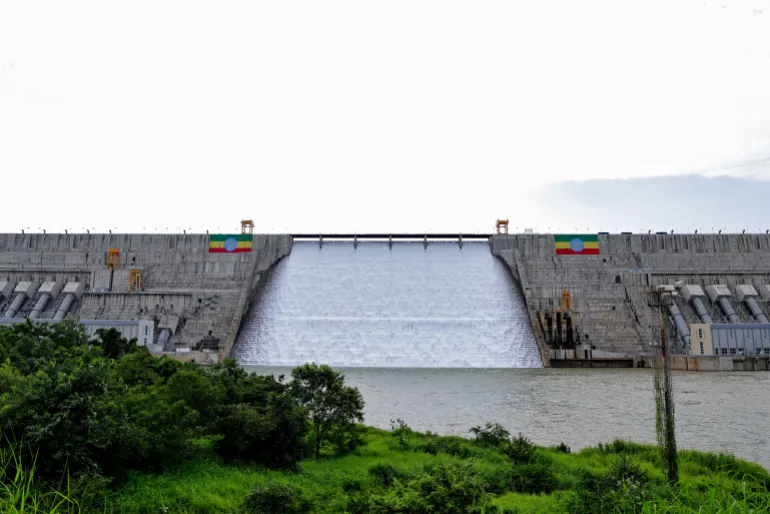
Relations between Cairo and Addis Ababa have remained tense as a longstanding dispute over the Grand Ethiopian Renaissance Dam (GERD) remains unresolved. Competition between the two has increasingly extended to regional security, the Red Sea and the Horn of Africa.
The Grand Ethiopian Renaissance Dam, the construction of which stoked fears in Cairo that Ethiopia could choke off the Nile River, September 9, 2025 [File:Tiksa Negeri/Reuters]
Sudan’s relations with Ethiopia are similarly troubled. Since the outbreak of the Sudanese civil war, Khartoum has accused Addis Ababa of providing training, supplies and the use of Ethiopian territory to the RSF.
Eritrea had fought alongside Ethiopia against rebel groups in the latter’s Tigray region during a war between 2020 and 2022, but relations between the two neighbours have since soured, with Eritrea alarmed by Ethiopia’s attempts to gain access to the Red Sea.
Against that background, some analysts and Ethiopian opposition figures say that Addis Ababa is pointing the finger at foreign conspiracies in a bid to rally support behind its national army.
Mohamed Selim, deputy chair of the Egyptian parliament’s African Affairs Committee, told Al Jazeera that he believes the accusations were an attempt to shift attention from Ethiopia’s domestic problems by creating an external enemy and seeking to unify the internal front.
Amani al-Tawil, director of the Africa Programme at the Al-Ahram Centre for Political and Strategic Studies, similarly described the accusations as “an understandable attempt to escape from internal crises”.
She questioned why Egypt would choose this moment to intervene militarily in Ethiopia, given the two have been in dispute over GERD since 2011.
Al-Tawil said the breadth of the new opposition alliance in Ethiopia – seven groups representing disparate ethnic groups and regions announced the coalition last week – presented a challenge to Addis Ababa.
(Al Jazeera)
Spillover concerns
The renewed fighting in Ethiopia has spread across Tigray and into neighbouring Amhara and Afar.
Mohammed Hussein, the chairman of the Prosperity Party Afar Region Branch Office – the ruling party in Ethiopia’s Afar region – told Al Jazeera that the three regions together have a population of more than 38 million, according to his estimate, and include areas near the borders with Djibouti and Eritrea, raising fears of a regional war.
Ammar Arki, a writer focusing on Horn of Africa affairs, told Al Jazeera that Ethiopia had, at various stages, blamed Sudan, Egypt and Eritrea for contributing to instability inside Ethiopia.
He said the latest accusations could be interpreted as an attempt to redirect some domestic attention towards an external threat and build support around the federal government.
But Arki warned that the longer Addis Ababa continued to explain its internal crisis in terms of an “external conspiracy”, particularly if neighbouring states responded in the same way, the greater the risk that Ethiopia’s conflict could move beyond Ethiopia’s borders and become regional.
Demonstrators are demanding early elections and accuse Pedro Sanchez’s government of negligence.
Published On 26 Sep 202626 Sep 2026
Thousands of people have rallied in the Spanish capital to protest the government’s policy on irregular migration and its handling of a recent migrant influx into the North African enclave of Ceuta.
Saturday’s protest in Madrid was organised by right-wing civil society group Sociedad Civil Espanola and backed by the mainstream conservative People’s Party (PP) and far-right Vox.
Recommended Stories
list of 3 itemsend of list
According to the government, 20,000 people attended, while protest organisers put the turnout at 180,000.
At the end of July, more than 70,000 migrants stormed into the autonomous Spanish city of Ceuta from neighbouring Morocco, before most of them were returned. However, thousands remain stranded.
Demonstrators accused Prime Minister Pedro Sanchez and his government of failing to protect the borders of Ceuta.
They are calling for an early election to be held by mid-November, with Vox demanding Sanchez be tried for treason. Spain’s next general election is not due until August 2027.
PP’s secretary-general Miguel Tellado said there was a “widespread feeling that the government has not acted responsibly; there has been a dereliction of duty, extreme negligence”.
“Spanish society has to take to the streets to ask the government to defend our territorial integrity,” he added.
The July 30 and 31 surge of people into Ceuta led to unprecedented scenes and the deaths of dozens of migrants.
Sanchez said on Tuesday that Moroccan border control failed to adequately handle the incident and that an investigation was still under way, adding that Rabat had been asked for answers.
The Spanish government estimates that between 6,000 and 10,000 stranded migrants remain in Ceuta.
Vox leader Santiago Abascal is demanding that everyone who arrived in late July be deported to their country of origin.
Abascal said Ceuta remained “invaded because Sanchez continues to be Morocco’s servant”.
Spanish newspaper El Pais reported on Saturday that the government is planning to approve a decree on Tuesday to accelerate the return of migrants from Ceuta to Morocco.
The protest is the second under the March for Dignity banner. That demonstration was held in late May before the incident in Ceuta and attracted 40,000 protesters, according to the government.
Pakistani security forces report ongoing cross-border fire in latest escalation in fighting between the neighbours.
Published On 25 Sep 202625 Sep 2026
Pakistan has foiled an “attempted Afghan aggression” on the Pakistan-Afghan border.
Pakistani security sources said several Afghan members of the Taliban were killed in an intermittent exchange of fire in the Gulistan area of the border on Friday and that fighting was ongoing.
Recommended Stories
list of 3 itemsend of list
There has been no official confirmation from either country involved.
The Afghan government said on Thursday that it would deliver an “appropriate response” to Pakistani air attacks on 10 locations in Afghanistan earlier in the day.
The strikes were in response to a “deliberate and unlawful incursion into Pakistan by drones” on Wednesday, Pakistani Information Minister Attaullah Tarar said on Thursday.
Tarar said in a post on his X account that Pakistan’s aerial and drone attacks hit “terrorist hideouts and support infrastructure including drone launching and storage sites”.
He also posted a video said to show the military strikes on the Afghan sites.
Afghanistan’s government spokesperson Zabihullah Mujahid said the air strikes targeted Kandahar, Paktia and Khost provinces.
Taliban officials denied that their government launched drones against Pakistan on Wednesday.
The air raids on Thursday were carried out amid growing tensions between the former allies over attacks by armed groups in Pakistan, which triggered their worst fighting in years in February.
Islamabad accuses Kabul of harbouring fighters who stage cross-border attacks, but Afghanistan’s government denies harbouring anti-Pakistani armed groups and says the attacks are Pakistan’s internal problem.
The escalation threatens mediation efforts by China, Turkiye, Qatar and Saudi Arabia to broker a lasting peace between the two neighbours.
Strikes carried out in southeastern province of Khost cause no casualties, governor’s office says.
Published On 24 Sep 202624 Sep 2026
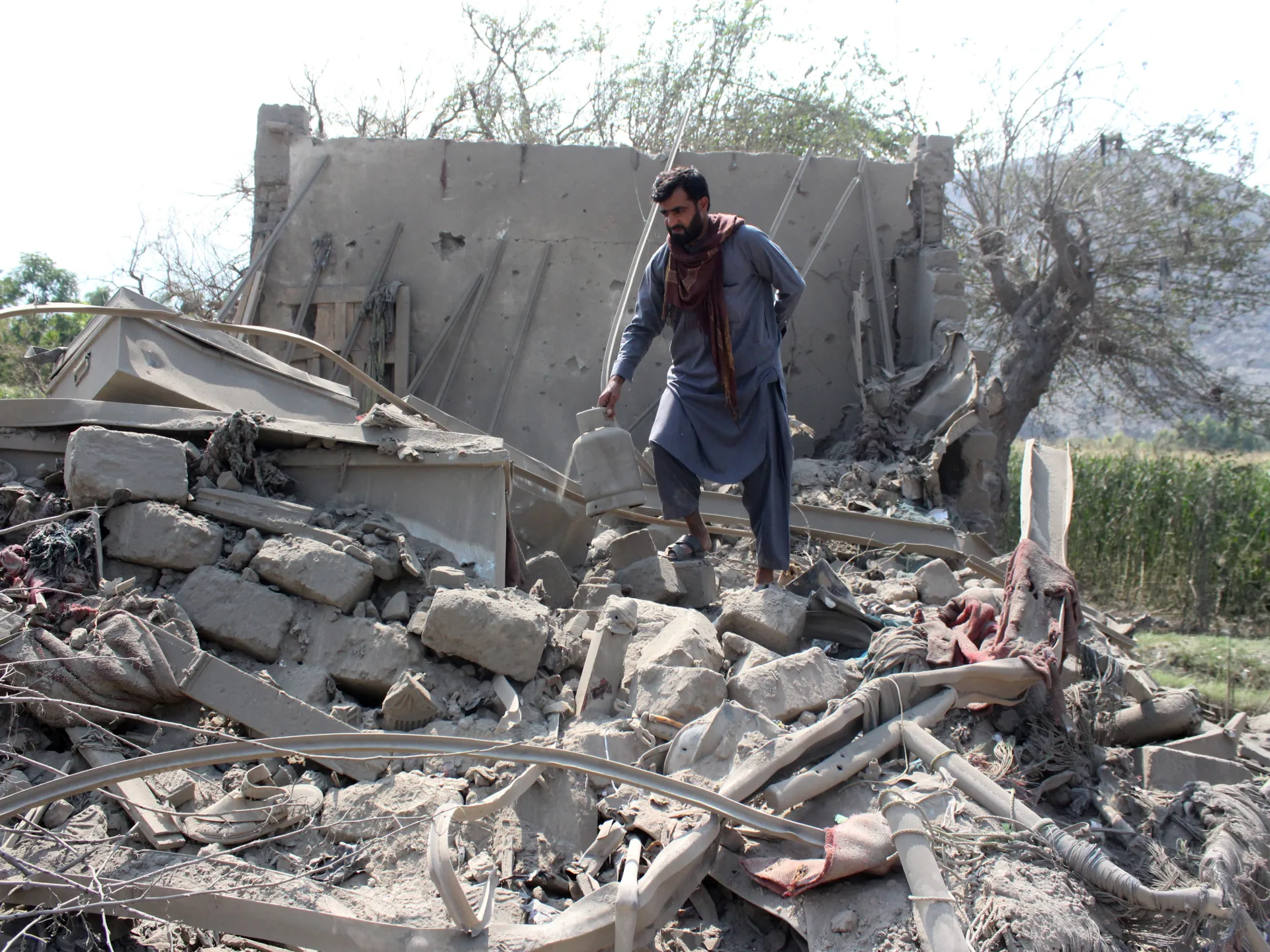
Pakistan says it has carried out air strikes on 10 locations in Afghanistan used to store and launch drones, some of which were used in cross-border attacks.
The air strikes on Thursday were carried out as tensions grow between the former allies over attacks by armed groups in Pakistan, which triggered their worst fighting in years in February.
Recommended Stories
list of 3 itemsend of list
Islamabad accuses Kabul of harbouring fighters who stage cross-border attacks, but Afghanistan’s Taliban government denies harbouring anti-Pakistani armed groups and says the attacks are Pakistan’s internal problem.
The air strikes were “deliberate, precise, calibrated, and proportionate, and strictly limited to identified military objectives directly linked to the attempted attacks against Pakistan”, Pakistani Information Minister Attaullah Tarar wrote on X.
He condemned a “deliberate and unlawful incursion into Pakistan by drones” on Wednesday.
“This constitutes a blatant violation of Pakistan’s sovereignty and territorial integrity and is a grave and unacceptable act of aggression,” he said.
The Pakistani air strikes were conducted in several areas of Khost province in southeastern Afghanistan, Mustaghfir Gurbaz, spokesperson for the Khost governor, said.
There were no casualties, he said.
An attack on a police facility in northwestern Pakistan last week that killed at least 21 people has reignited fighting between the countries after nearly three months of relative calm. A Pakistan Taliban faction claimed responsibility for the blast and subsequent gun battle.
On Monday, air strikes targeting three locations in northeastern Afghanistan killed three civilians in the Nurgal district of Kunar province, Afghan officials said. Islamabad said it killed 28 “terrorists”.
The escalation threatens mediation efforts by China, Turkiye, Qatar and Saudi Arabia to broker a lasting peace between the two neighbours.
Relations between the former allies have been strained since the fighting in February, the worst for years.







![Members of the Ethiopian pro-government Tigray Peace Force (TPF) ride in a pickup truck while Ethiopian federal and allied forces enter the Tigray capital of Mekelle, October 4, 2026 [AFP]](https://i0.wp.com/occasionaldigest.com/wp-content/uploads/2026/10/afp_6ac4015e5e71-1791230302.jpg?w=640&ssl=1)