Boot

Will USAF Tankers Getting The Boot From Israel’s Biggest Airport Impact Combat Capabilities?

For several months, Israel’s Ben Gurion Airport was so packed with U.S. Air Force aerial refueling tankers deployed for the fight against Iran that officials in Jerusalem complained about the toll that presence was taking on airport operations. The issue came to a head on Tuesday, when Israel’s Transportation Minister placed a limit on how many of these jets can land at Ben Gurion Airport. The move comes despite an increase in fighting between the U.S. and Iran and with several Arab nations coming under fire from the Islamic Republic. Tuesday afternoon, U.S. Central Command (CENTCOM) announced a new round of strikes against Iranian targets as the naval blockade on that nation’s ports is being restored.

While an anonymously sourced Israeli news story stated that U.S. and Israeli officials are irate about this decision, three experts we spoke with suggest that despite ratcheted-up kinetic actions, the restrictions on tanker operations at Ben Gurion will be more of an inconvenience to U.S. forces than a major problem.

At issue is the tension faced by a very busy international airport operating at the peak of summer travel season, while also having to host dozens of American tankers deployed for high-tempo combat operations that are currently not happening.

“Hundreds of thousands of plane tickets were bought by Israelis to fly and enjoy their summer vacation,” Miri Regev said earlier on Tuesday. “We promised that we will enable commercial flights and we will not cancel a single ticket because of American refueling planes.”

“Therefore I have given instructions that we will not allow any U.S. refueling tankers to land at Ben Gurion Airport beyond the agreed number of 20 planes, and the remaining planes will land at Air Force bases.”

As we reported in the past, the U.S. Air Force began sending tankers to Ben Gurion in the lead-up to the U.S.-Israeli war on Iran that began Feb. 28.

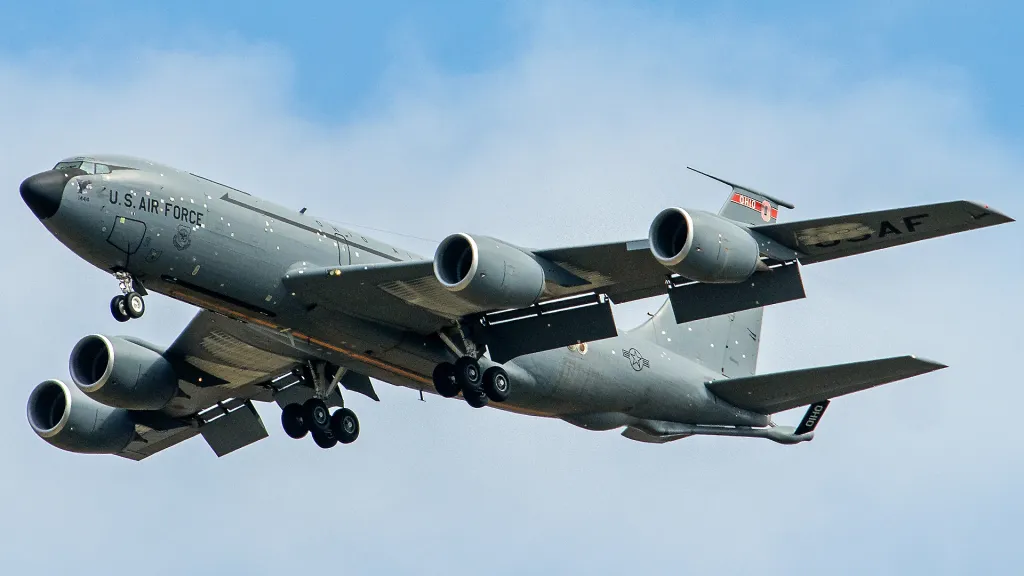
Nine KC-46 Pegasus and five KC-135 Stratotanker aerial refueling jets arrived at Ben Gurion in the days before hostilities began. The number of U.S. Air Force tankers, as well as the service’s cargo jets, at the airport has grown tremendously since then.

“A fleet of about 75 U.S. refuelers and cargo planes had parked at Ben Gurion Airport for many months, as part of the US military buildup in the region prior to the war,” the Times of Israel reported on Tuesday. “Following the partial removal of the tankers in recent weeks, more than 30 US refueling planes are estimated to be stationed at Ben Gurion Airport, crowding out civilian aircraft and creating a shortage of parking spaces.” 

In our previous reporting, we noted that dozens of U.S. Air Force refueling aircraft deployed to Ben Gurion Airport had been expected to stay in Israel at least until the end of this year, though those plans now appear to be in flux.

Meanwhile, there are alternatives for the dozen or so KC-135s and KC-46s that now need a new home. The Air Force can operate tankers from several other bases in Israel as well as across the region. However, bases closer to Iran have come under dense Iranian fire and five tankers were reportedly damaged in an Iranian long-range strike on Prince Sultan Air Base in Saudi Arabia in March. Operating far forward during war time, such as at the traditional hub for these operations, Al Udeid Air Base in Qatar, isn’t possible due to the extreme risk posed by Iranian standoff weapons. Other bases, like Muwaffaq Salti Air Base in Jordan is already packed with aircraft with little room for dozens of tankers.

KC-135 seen with battle damage repairs landing at RAF Midlenhall.
A KC-135 Stratotanker, riddled with shrapnel from an Iranian attack, lands at Mildenhall Air Base in the U.K. in May. (Aviation photographer Andrew McKelvey)

As we noted earlier in this piece, the tanker limit reportedly upset U.S. and Israeli officials alike.

“Senior officials at U.S. Central Command have contacted the IDF’s top brass and Israel’s defense establishment in recent hours following the Transportation Ministry’s decision Tuesday not to allow additional American refueling aircraft to land at Ben-Gurion Airport,” according to Israel’s Ynet news outlet. “According to sources familiar with the details, the Americans were angered by the decision and made clear that it directly harms the operational needs of U.S. forces operating in the region amid the escalation with Iran. They said the refueling aircraft are a vital component of the regional deterrence and defense array.”

TWZ cannot independently confirm Ynet‘s reporting. Earlier in the day, Navy Capt. Tim Hawkins, CENTCOM’s spokesman, told us that the command “will continue working with our Israeli partners to best position U.S. aircraft to support operations.”

Hawkins declined to elaborate.

“Israel is a strong military ally, and we appreciate the warm hospitality for American forces as we work shoulder to shoulder in promoting regional security and stability,” Hawkins stated.

Meanwhile, as we have noted in earlier reporting, the U.S. has already returned F-22 Raptors that were flying out of Ovda Air Base in Israel back to the United States. Other aircraft, such as A-10s and F-15Es, have also returned home from or have been replaced in the CENTCOM region. So clearly there is a lot of shifting of aviation assets taking place even amid current operations.

Ten F-22 Raptors arrived at RAF Fairford on Friday from Ovda Air Base in Israel, where they took part in Operation Epic Fury.
Ten F-22 Raptors arrived at RAF Fairford on July 10 from Ovda Air Base in Israel, where they took part in Operation Epic Fury. (@Saint1Mil) (@Saint1Mil)

A former senior U.S. Air Force leader acknowledged the tensions inherent in operating military aircraft for combat operations out of a civilian airport. However, Ben Gurion is considered one of the most important airfields in the region, the former official told us. 

Ben Gurion’s location, situated just to the southeast of Tel Aviv, roughly in the center of the country, is a big factor, both in terms of geography and Israel’s vaunted integrated air defense system (IADS), the former leader added.

Ben Gurion Airport. (Google Earth)

Still, he suggested that the new limits at Ben Gurion don’t automatically mean a restriction in U.S. air operations against Iran or in support of partner forces.

Given the existing options in the region, CENTCOM and the Air Force will be looking at what runway, ramp space, and equipment availability there is elsewhere.

“Flow control is something we’re always concerned about during combat operations,” he explained, adding that planners will consider distance to where the tankers have to orbit, proximity to potential threats, and the capacity to launch sorties.

“They really work in advance to create the best mix of protection, survivability, and an operational envelope,” the former senior leader noted.

U.S. Air Force F-16 Fighting Falcon aircraft maneuver after receiving fuel from a KC-135 Stratotanker in the U.S. Central Command area of responsibility May 23, 2026. (U.S. Air Force photo by Tech Sgt Tiffany A. Emery)
U.S. Air Force F-16 Fighting Falcon aircraft maneuver after receiving fuel from a KC-135 Stratotanker in the U.S. Central Command area of responsibility May 23, 2026. (U.S. Air Force photo by Tech Sgt Tiffany A. Emery) Tech. Sgt. Tiffany Emery

Retired Air Force Col. Troy Pananon, who once commanded Mildenhall Air Base, a tanker installation in the U.K., surmised that the Ben Gurion restrictions will have limited effects.

“I would say the base has an impact on the overall plan, but it doesn’t limit the ability to execute,” said Pananon, who was quick to point out he has no inside information about current operations. “Tanker planners can and should modify the plan to ensure there is enough fuel airborne in the AOR to accommodate the requirements for the receivers servicing the designated targets for the day. In other words, if they are limited in capacity at base A, they can or will supplement from base B, or adjust loiter times or targets.”

“Air campaigns by nature are a fluid event and stresses the importance of planners, leadership and C2 [command and control,” he added.

A U.S. Air Force KC-135 Stratotanker refueling aircraft taxis at a base in the Middle East, April 30, 2026. (U.S. Air Force photo by Master Sgt. James Cason)
A U.S. Air Force KC-135 Stratotanker refueling aircraft taxis at a base in the Middle East, April 30, 2026. (U.S. Air Force photo by Master Sgt. James Cason) Master Sgt. James Cason

Israel is carrying out a balancing act when it comes to Ben Gurion, a high-ranking IDF official told us.

The airport “is effectively Israel’s only major international civilian airport,” he noted. “Haifa and Ramon handle only a very small fraction of Israel’s civilian air traffic. Operationally, Ben Gurion can accommodate roughly 20 U.S. Air Force refueling tankers. Beyond that number, the impact on civilian aviation becomes significant.”

However, “at the same time, Ben Gurion is arguably the safest airport in the region for U.S. aircraft,” the IDF official pointed out. “That is why discussions are currently focused on finding the right balance between parking tankers at Ben Gurion and dispersing them among Israeli Air Force bases. In my view, this is fundamentally an operational, economic and civil aviation issue, not a political one.”

25 May 2026, Israel, Tel Aviv: US Air Force Boeing KC-135 Stratotanker aerial-refuelling aircrafts are seen on the tarmac at Ben Gurion Airport in Tel Avivl. The presence of US military aircraft highlighted ongoing security cooperation during the ceasefire period. Photo: Gil Cohen-Magen/dpa (Photo by Gil Cohen-Magen/picture alliance via Getty Images)
U.S. Air Force Boeing KC-135 Stratotanker aerial refuelling aircrafts are seen on the tarmac at Ben Gurion Airport in Tel Aviv. (Photo by Gil Cohen-Magen/picture alliance via Getty Images) picture alliance

The issue of U.S. Air Force tankers at Ben Gurion interfering with civil aviation is not new.

“The presence of the aircraft—not the U.S. military—is causing significant operational difficulties at Ben Gurion Airport, as they are parked almost everywhere possible at the airport,” Israel’s N12 News reported on X back in May.

How long the limitations at Ben Gurion last remains an open question, especially should Israel find itself at war again with Iran. 

As we pointed out in previous reporting, the KC-46s and KC-135s now at Ben Gurion alone are a tanker force far larger than what the Israeli Air Force (IAF) has in its inventory today. Each KC-46 also carries more fuel to offload to receivers than a KC-707 or a KC-135. During Epic Fury, when both the U.S. and Israel were attacking Iran, U.S. tankers gassed up IAF jets.

One of the IAF’s KC-707s seen refueling an F-15. (IAF)

All this being said, in a time of war, these restrictions would be quickly lifted and civilian flights would decline. While moving aircraft around to other bases and still providing the majority of the refueling capacity available before the tankers’ exodus from Tel Aviv will certainly be possible, sortie rates and durations for receiver aircraft could still suffer in a sudden crisis. Seeing as these are tankers, their availability and proximity to their ‘customers’ has downstream effects. It comes down to how much gas is available in the sky at any given time versus the needs of the air operation. Luckily, America’s tanker crews and planners are masters at juggling their assets to make sure any changes in basing has a minimal impact on commanders’ needs.

The Israeli Transportation Minister’s decision comes as the prospects for a diplomatic settlement of the tensions between the U.S. and Iran seem dimmer than at any point since a ceasefire was agreed to on April 8.

As we noted earlier in this piece, CENTCOM forces “began launching an additional round of strikes on Iran to continue degrading Iranian capabilities used to attack commercial shipping in the Strait of Hormuz,” the command stated on X. “The strikes are taking place as American forces prepare to resume the naval blockade against Iranian ports and coastal areas. The blockade goes into effect at 4 p.m. ET.”

Meanwhile, Israeli Prime Minister Benjamin Netanyahu “warned Iran on Tuesday against launching future attacks on Israel, saying Tehran would face a far harsher response than in previous confrontations,” the Jerusalem Post reported on Tuesday.

“Do not count on it being quiet if you attack us,” Netanyahu said while speaking at the Negev Conference in Dimona. “Do not count on a rerun; this will be a different event, much more powerful.”

Given all this, it does not appear there will be much of a reduction in the need for U.S. Air Force aerial refueling tankers in the Middle East. However, where they will be based remains in flux.

Contact the author: howard@twz.com
Howard is a Senior Staff Writer for TWZ. He writes frequently about conflict, focusing heavily on the Middle East and Ukraine, and interviews with military and intelligence officials and industry leaders from around the globe. He lives near Tampa, Florida, home of U.S. Central Command, U.S. Special Operations Command.


Source link

Norway’s Erling Haaland left World Cup with 7 goals, taxidermy raccoon

Erling Haaland is a character.

Hardcore soccer fans already knew that about the Premier League’s top scorer. Casual fans certainly found out during Norway’s run to the World Cup quarterfinal round, where they lost 2-1 to England on Saturday.

Case in point: After the team’s plane landed at Oslo Airport on Monday, the 6-foot-5 striker with flowing blond hair stepped out with a rather unusual carry-on tucked under his left arm.

It was a taxidermy raccoon clutching an empty liquor bottle.

“It followed me home,” Haaland wrote in an Instagram post that also included a photo of himself carrying his new prized possession.

The stuffed creature was one of many purchases Haaland made during his team’s stay in Dallas for its round of 32 game against Ivory Coast on June 30. Following the 2-1 victory at AT&T Stadium, Norway’s all-time leading scorer decided he wanted to add a little Texas style to his look before departing for East Rutherford, N.J., for the next round.

“I want just a cowboy hat,” Haaland said at the time, as seen in a video posted on his YouTube channel. “That’s all I want.”

He ended up getting much more during what ended up being a 90-minute visit to Wild Bill’s Western Store with some team staff members just hours after the game.

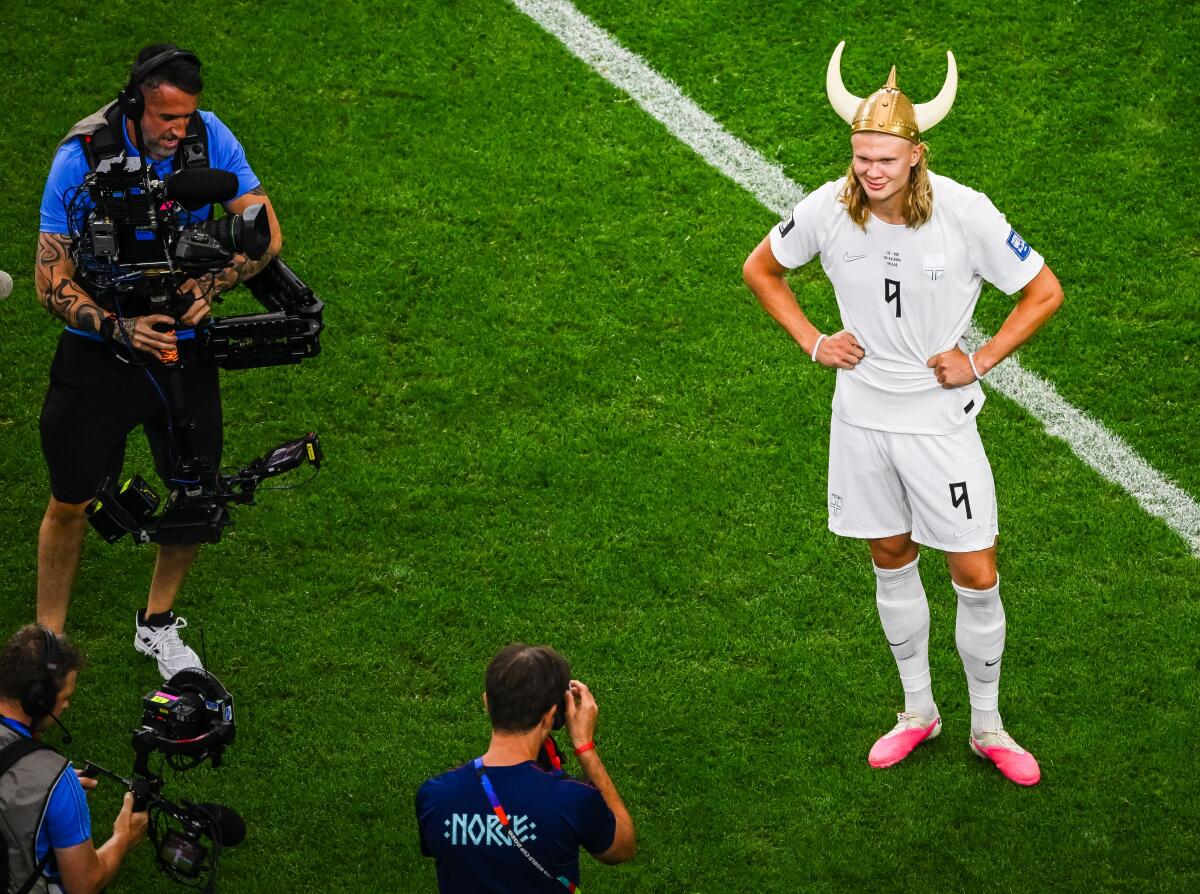
Erling Haaland wears a Viking helmet and a white uni as he poses on the pitch for photographers

Norway’s Erling Haaland wears a viking helmet after his team’s World Cup round of 32 game against Ivory Coast on June 30 in Arlington, Texas.

(Jessica Tobias / AP Photo)

“Just every department: boots, hats, belt, buckles, T-shirts, Western shirts,” store co-owner Julie Newport told The Times of Haaland’s purchases. “It was such a fun time for all of us because they were all chill and relaxed, and our team was just doing their job, you know, getting in the right sizing and having some fun with them.”

At some point while roaming the store, Haaland noticed the hard-partying raccoon and had to have it. His haul ended up including two taxidermy squirrels as well — one dressed as a sheriff and the other posed to look like it is drinking out of a Budweiser can.

The so-called Whiskey Raccoon sells for $750, and the squirrels go for $450 each. Because of their price tags, the taxidermy items weren’t typically huge sellers. Instead, Newport said, folks mainly liked coming by and posing for pictures with them.

Now, however, they are sold out and in high demand. Newport said three of the raccoons are on order and should be in-store by next week. After that, she said, the availability depends on whether they can talk the man who makes them out of retirement.

Other items that Haaland purchased and featured on his YouTube video have also been flying off the shelves. Those include a gray Stetson Brenham cowboy hat, Dan Post python boots and a T-shirt that proclaims “Y’all Can Kiss My Dallas.”

“We opened up international shipping for the first time ever, and so we started shipping to Norway, to Germany, to the UK,” Newport said. “I added Brazil and Australia this morning, and luckily our supplier is able to keep us with it.”

She added: “We’re so grateful because we’re one store. We’re locally owned, you know? So this is an incredibly exciting time for us, and we’re learning how to pivot and handle this kind of exposure and traction with sales. It’s just been a really wild ride.”

Born to Norwegian parents in Leeds, England, Haaland moved with his parents to their hometown of Byrne at age 3. He has played for Manchester City since 2022 and has won the Premier League’s golden boot for most goals scored in three of the last four seasons, including his 27-goal effort in 2025-2026.

During the World Cup, Haaland garnered a stateside fan base with his seven goals in five matches, as well as his quirky social media posts and fun personality. Few were likely surprised when Haaland asked on his Instagram Story for help naming “my new buddy” (a.k.a. the Whiskey Raccoon). The choices were Cowboy, Ranger, Tex or R.O.W. (Raccoon On Wheels).

“I think it’s a good thing because I like the Americans,” Haaland said of his newfound U.S. popularity during a team news conference last week. “I think they are kind of hilarious as well. They are funny. I like the way they are.”


Source link

World Cup Golden Boot: Messi leads Mbappe, Haaland before quarterfinals | World Cup 2026 News

Messi is the top goal scorer after tallying his eighth against Egypt, with Erling Haaland and Kylian Mbappe next best.

Argentina superstar Lionel Messi has, once again, taken the lead in the race for the World Cup’s Golden Boot award after scoring his eighth goal in his country’s thrilling 3-2 win over Egypt in the round of 16 on Tuesday.

Messi’s goal brought Argentina back on level terms after they were 2-0 down in the match in Atlanta, and also helped him break away from the rest of the pack.

Recommended Stories

list of 4 itemsend of list

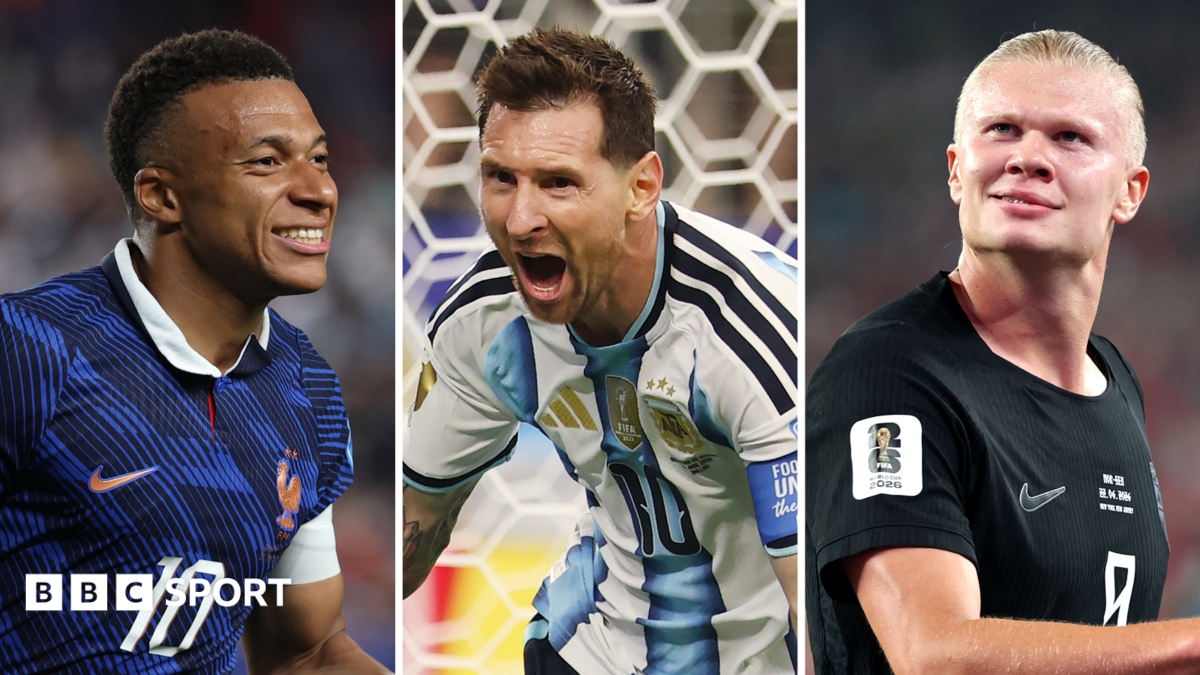
For three days, French talisman Kylian Mbappe and Argentinian great Lionel Messi rubbed shoulders as the joint leaders – with seven goals apiece – in the race to be the tournament’s top goal scorer, but Haaland’s double in Norway’s round of 16 win against Brazil put him level with both on Sunday.

When the World Cup’s knockout stage began, Messi became the first to reach seven goals when Argentina beat Cape Verde on Friday, and Mbappe matched him a day later as France beat Paraguay.

England’s Harry Kane took his tally to six goals after scoring in England’s thrilling 3-2 win over Mexico late on Sunday.

Spain’s Mikel Oyarzabal and Mbappe’s teammate Ousmane Dembele are hot on their heels with four goals each.

Here’s everything you need to know about FIFA’s Golden Boot award:

Lionel Messi in action.
Messi shoots at goal during the Argentina-Egypt last-16 tie at Atlanta Stadium [Nathan Ray Seebeck/Imagn Images via Reuters]

What’s the FIFA Golden Boot award and how is it decided?

FIFA’s Golden Boot is awarded to the player with the most goals at the end of the tournament.

France’s Mbappe is the current holder after scoring eight goals in Qatar at the 2022 World Cup.

If two players are tied on the same number of goals at the end of the tournament, then the player with the most assists will win the award.

If those tiebreakers cannot split two players, then the Golden Boot is handed to the player who achieved their goals and assists in the least number of minutes.

Haaland celebrates
Erling Haaland celebrates after the match as Norway qualify for the round of 16 [Issei Kato/Reuters]

Which players are the top goal scorers at World Cup 2026?

  1. Lionel Messi (Argentina) – 8 goals, 1 assist
  2. Kylian Mbappe (France) – 7 goals, 2 assists
  3. Erling Haaland (Norway) – 7 goals, 0 assists
  4. Harry Kane (England) – 6 goals, 1 assist
  5. Ousmane Dembele (France) – 4 goals, 2 assists
  6. Mikel Oyarzabal (Spain) – 4 goals, 1 assist

How many Golden Boot awards have current World Cup players won?

Mbappe, Kane and James Rodriguez are all looking to bag the top goal-scorer prize for a second time.

England’s Kane won the award in 2018 in Russia, while Colombia’s Rodriguez was the top scorer in 2014 in Brazil.

No player has ever won the award more than once.

Entering the quarterfinals, Mbappe gets his chance first to increase his goal tally when France plays Morocco on Thursday.

Which player has scored the most goals in a single World Cup?

French forward Just Fontaine holds the record after scoring an incredible 13 goals at the 1958 tournament in Sweden.

Sandor Kocsis scored 11 at the 1954 tournament in Switzerland, while West Germany’s Gerd Muller bagged 10 at the World Cup 1970 in Mexico.

Kylian Mbappe in action.
France’s forward Kylian Mbappe practices ahead of his nation’s quarterfinal tie against Morocco on Thursday in Boston [Franck Fife/AFP]

Who has scored the most goals in FIFA World Cup history?

  1. Lionel Messi (Argentina) – 21
  2. Kylian Mbappe (France) – 19
  3. Miroslav Klose (Germany) – 16
  4. Ronaldo (Brazil) – 15
  5. Harry Kane (England) and Gerd Muller (West Germany) – 14

Source link

World Cup 2026: Messi, Mbappe, Haaland contest best ever Golden Boot race? | World Cup 2026 News

The race for the Golden Boot at World Cup 2026 is shaping up to be one for the history books.

After just two games, Argentina talisman Lionel Messi leads the way with five goals, followed by France’s Kylian Mbappe and Erling Haaland of Norway with four goals each.

Recommended Stories

list of 4 itemsend of list

Germany’s Deniz Undav has three with Jonathan David of Canada on the same mark after a hat-trick against Qatar.

A further 20 players have scored twice in their opening two games, including 2018 Golden Boot winner Harry Kane of England, Cristiano Ronaldo of Portugal, Vinicius Jr of Brazil and Mikel Oyarzabal of Spain.

The stars are all shining and, given the rate of scoring so far, it seems possible double figures might be needed to win the Golden Boot, something done only three times in history – by Hungary’s Sandor Kocsis in 1954, Just Fontaine of France four years later and Gerd Muller of Germany in 1970.

Fontaine holds the record of 13 goals in one World Cup in just six matches in Sweden, but the expanded 48-team format in 2026 means the nations qualifying for the semifinals in July will play an unprecedented eight games in this edition.

At the 2006 World Cup in Germany and in South Africa four years later, only five goals were needed to claim the Golden Boot while nobody has scored more than eight in the past 13 editions, a feat achieved only by Brazil’s Ronaldo in 2002 and Mbappe four years ago in Qatar.

Kylian Mbappe scored twice against Iraq and claps France fans.
Kylian Mbappe followed his double against Senegal with another against Iraq in this year’s World Cup [Siphiwe Sibeko/Reuters]

Why have so many goals been scored at World Cup 2026?

It took just 33 matches for a century of goals to be racked up in this edition, second only to 1954 in terms of pace.

After Portugal’s 5-0 win over Uzbekistan on Tuesday, 139 goals had been scored across the first 45 games – the most in the group stages of a single edition of the finals, overtaking the 136 scored in 2014 in three fewer matches.

The record number of goals in one edition came in Qatar 2022 with 172 from 64 games. With an extra 40 matches in the new expanded format that went into effect this year, it was always likely to be broken, but the rate of scoring suggests the old mark will be obliterated.

The Adidas Trionda ball used at the World Cup 2026.
The Adidas Trionda ball used in World Cup 2026 [Simon Fearn/Imagn Images]

One reason for the increase in goals might be the Adidas Trionda ball, which FIFA commissioned for this World Cup.

Before the tournament, FIFA said it boasts several key performance innovations, including intentionally deep seams designed to produce optimal in-flight stability by ensuring sufficient and evenly distributed drag as the ball travels through the air – in short, it flies through the air – while the surface of the ball is designed to increase grip when striking or dribbling in wet or humid conditions, which we have seen plenty of in the opening matches.

Austria head coach Ralf Rangnick said: “This ball is as fast as a cannonball. If you kick the ball in the right position, it’s extremely difficult to save.”

The controversial addition of hydration breaks to each half may also mean players are performing at their peak for longer, leading to the glut of late goals so far. Of course, the fact that 48 teams are taking part, drawn from the world’s leading 85 teams in the rankings, means there are some mismatches in the first phase.

Colombia coach Nestor Lorenzo also said attackers are more protected by officials than they used to be, which may contribute to the increased scoring, adding: “They didn’t have this protection some 20, 30 years ago when they were hit a lot more, when rough play was a lot more common.

“Today, any team that defends well and uses counterattacks and tries to play can manage to do well.”

Erling Haaland celebrates a goal against Senegal.
Erling Haaland has scored two goals in each of his first two World Cup appearances. [John Sibley/Reuters]

Who is likely to win the Golden Boot?

Much will depend on fitness and, of course, how deep a country goes in the tournament, but Messi has to be considered the favourite to win his first accolade.

The 38-year-old scored seven goals at the last World Cup and has now scored in six straight tournament matches, having netted in every knockout round in Qatar and the first two games of this edition. He even missed a penalty against Austria, which would have made it back-to-back hat-tricks.

Argentina’s final group game on Sunday is against already eliminated Jordan although Messi’s inclusion from the start in that one is by no means a given as his side have already secured the top spot in Group J.

They look set for favourable knockout fixtures, though, with the potential for Uruguay or Cape Verde in the last 32, potentially Australia or Iran in the round of 16 and the possibility of Croatia or Colombia in the quarterfinals, should they make it.

Only in the semifinal might they come up against a powerhouse nation, likely in the form of England or Brazil or dark horses Japan, Norway or Mexico.

Mbappe also looks likely to have a favourable run and is likely to feature against Norway on Friday in the group finale, which will decide the top spot in Group I.

Winning the group could mean a round of 32 meeting with Sweden, Germany the potential opponents in the last 16 and the Netherlands or Morocco awaiting in the last eight.

Whoever finishes second out of France and Norway could face a tricky task against the Ivory Coast in the last 32 with Brazil or Japan awaiting the winners and the possibility of England lurking in the quarterfinals, which might put a ceiling on Haaland’s prospects, despite having scored 59 goals in 52 international games for Norway.

Kane will seek to enter the conversation with England facing a must-win Group L finale on Sunday against Panama with the prospect of a last-32 meeting with Cape Verde to follow and Mexico likely lying in wait in the Azteca (known during the World Cup as Mexico City Stadium) in the round of 16.

Cristiano Ronaldo may have left it too late to begin a real quest, given Portugal face Colombia on Sunday in their final Group K game and could face resolute Ghana in the last 32 with Spain potential opponents in the last 16.

But Vinicius Jr could add to his two goals when Brazil face Scotland on Thursday in their final Group C game although the knockout rounds would appear a stiffer test.

Source link

World Cup 2026: Messi, Mbappe, Haaland & Kane in Golden Boot race for the ages – who will win?

Records have been falling from day one for the game’s most feared forwards.

Messi now leading the all-time World Cup list has taken a lot of the headlines, and rightly so.

But he isn’t the only one who has been setting records this tournament.

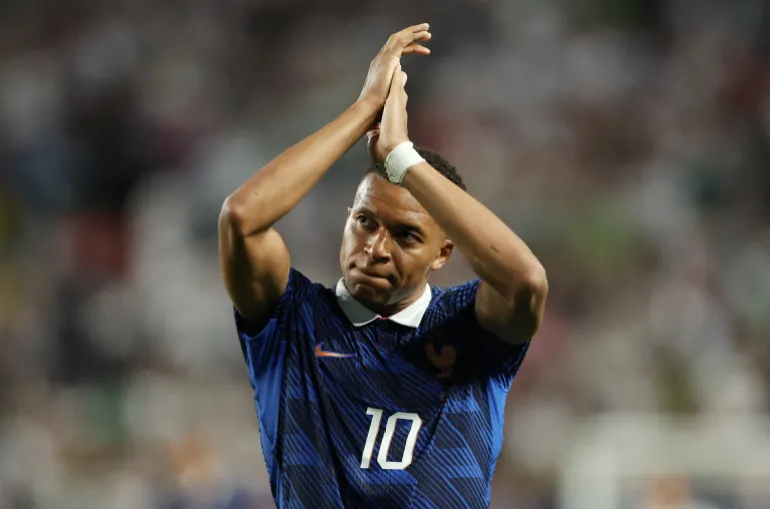
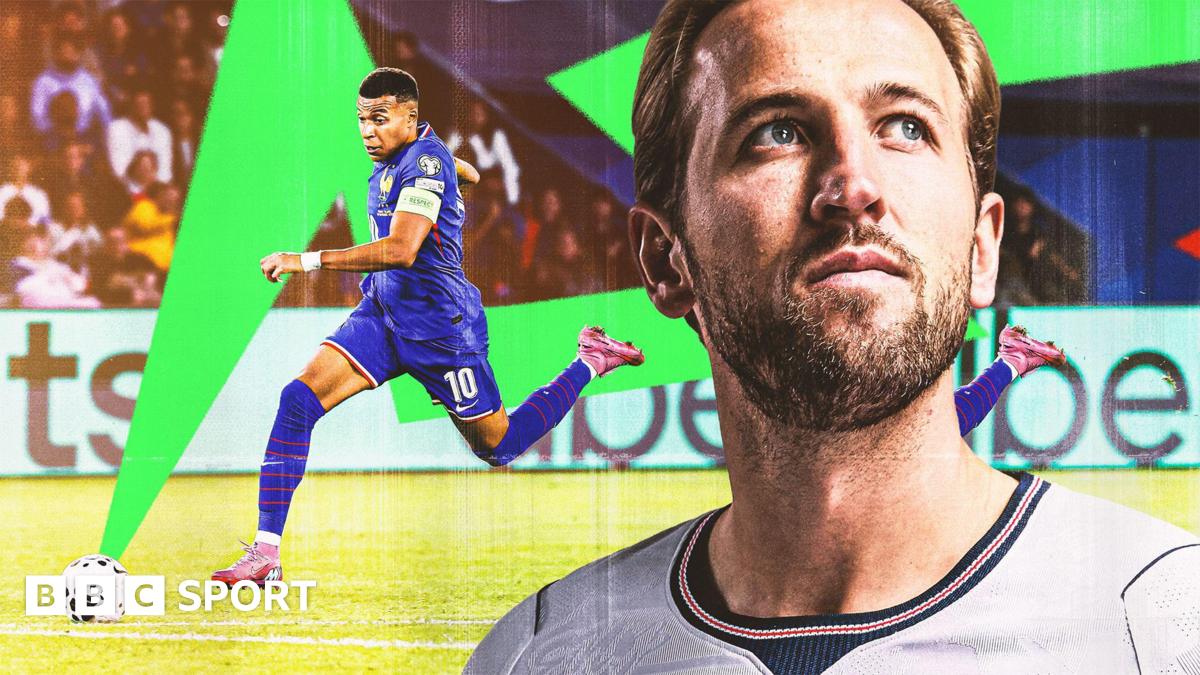
Mbappe now tops France’s goalscoring charts, Haaland is Norway’s leading World Cup scorer – after just two games – while Kane has equalled Gary Lineker’s World Cup record for England.

And all of them will have their sights set on France’s Just Fontaine’s 1958 record of 13 goals scored in one tournament.

Only three players – Fontaine, Gerd Muller for Germany in 1970 and Hungary’s Sandor Kocsis in 1954 – have ever hit double figures at a single World Cup.

It would not be a surprise if that select list has grown by the end of this tournament.

The new 48-team format certainly looks to have increased the potential for goals. With more lower-ranked teams, the world’s best attackers have prospered.

The World Cup winners will also have to play one more round than ever before – again increasing the chance for goals.

Former France defender Gael Clichy told BBC Sport: “Kylian Mbappe is part of the generation which [has] that fearless factor.

“I remember when I started you had to give respect to the older generation when you came in, and you were not trying to do a nutmeg to the old men.

“This generation, they have respect, but differently. Don’t talk about age, talk about performance.”

So, back to the small matter of the race for the Golden Boot.

“It’s not something I’m thinking about right now,” said Mbappe. “Leo always scores. He always has and always will.

“If I start watching him, I’ll feel like I have to do even more, so no, I don’t watch what he’s doing. I’m only thinking about helping my team – by helping the team, I score goals and get closer to that kind of level.”

Norway boss Stale Solbakken has, perhaps unsurprisingly, pushed Haaland’s cause.

“He is the best striker – he is not playing for France or Argentina, he scores for Norway. He’s scored four goals now, two braces on the biggest stage,” he said.

“It’s easier to win the Golden Boot when you play for France and Argentina, but we’ll try to give Erling more games, and more help also in the next games. So he’s on fire and I’m very happy for him that he can score on the biggest stage.”

USA striker Folarin Balogun has made a decent enough start to the tournament himself, with two goals in his first two games.

But he probably summed it up the best, when he joked: “I think it’s annoying. Seeing players like Messi, Mbappe, Haaland – they’re so inevitable. I think they’re scoring a goal a game, sometimes more.

“For me, it’s just about trying to get to that level – to be inevitable as well.”

Source link

World Cup 2026: Who are favourites to win the Golden Boot?

No-one has won the World Cup Golden Boot more than once – but two men have a good chance to become the first to do so this summer.

Mbappe scored four goals in World Cup qualifying and as one of the strongest squads in the tournament, it is likely that 2022 finalists France will reach the latter stages of the competition.

Another striker seeking a historic second boot is Kane. At 32, he is as we know significantly older than the average winner – but with 54 goals for his club this season, Kane is no average player. If Thomas Tuchel’s side go deep into the tournament, Kane is surely certain to score his fair share.

Messi has claimed plenty of personal accolades in his career, but there is a Golden Boot-shaped gap next to the eight Ballon d’Or trophies in his cabinet. Aged 38, the 2026 tournament is his final chance.

At the other end of the age scale, Yamal will turn 19 the week before the final. Spain have not progressed beyond the round of 16 since their 2010 tournament win, but Luis de la Fuente’s men showed they have the mettle to go the distance at Euro 2024 and were impressive in qualifying.

Premier League Golden Boot winner Erling Haaland has scored 26 league goals for Manchester City this season but his bid for the boot might depend on how long Norway stay in the tournament. Haaland scored 16 goals in eight qualifying games.

Source link

Leinster boss Leo Cullen says media love ‘throwing the boot in’ at province

Cullen and Leinster, who had comfortably cruised through the tournament last season, came under intense scrutiny after Northampton’s fast start saw them take a 12-point lead at half-time.

The four-time champions fought back and almost snatched the game at the death, with Cullen revisiting late refereeing decisions that cost his side in the 37-34 defeat last May.

A year on, he defended his side, who had previously never beaten three-time champions Toulon, and said he always expects a Champions Cup semi-final to “never go to script”.

“Naturally [in the last 10 minutes] you try and protect things, don’t you? Whereas the other team they don’t have protection and throw everything at it,” he added.

“We were sitting in this room this time last year. We were in that situation and we were throwing everything at Northampton. [Henry] Pollock gets a poach – it should have been a penalty.

“It’s clearly illegal, but nobody wants to report about it after. We should have had a penalty try and nobody wants to report about it. You just want to kick the boot into us, don’t you? But that’s the way it goes.

“Semi-finals come down to the tightest of margins. In 2012, Wesley Fofana knocked the ball over the tryline and that is how we [Leinster] got to the final.

“I would be kind to Toulon as they showed great spirit to the very end.”

Leinster will travel to Bilbao for the final on Saturday, 23 May, where they will face last year’s champions Bordeaux-Begles or Bath, who play on Sunday.

Cullen confirmed centre Robbie Henshaw and flanker Josh van der Flier, who left the field with head injuries, will undergo the graduated return-to-play protocol.

Flanker Jack Conan limped off and “will get checked”, with Tommy O’Brien said to be likely suffering from cramp.

All four are important players for Cullen as Leinster seek a fifth Champions Cup in three weeks’ time.

Source link