boost

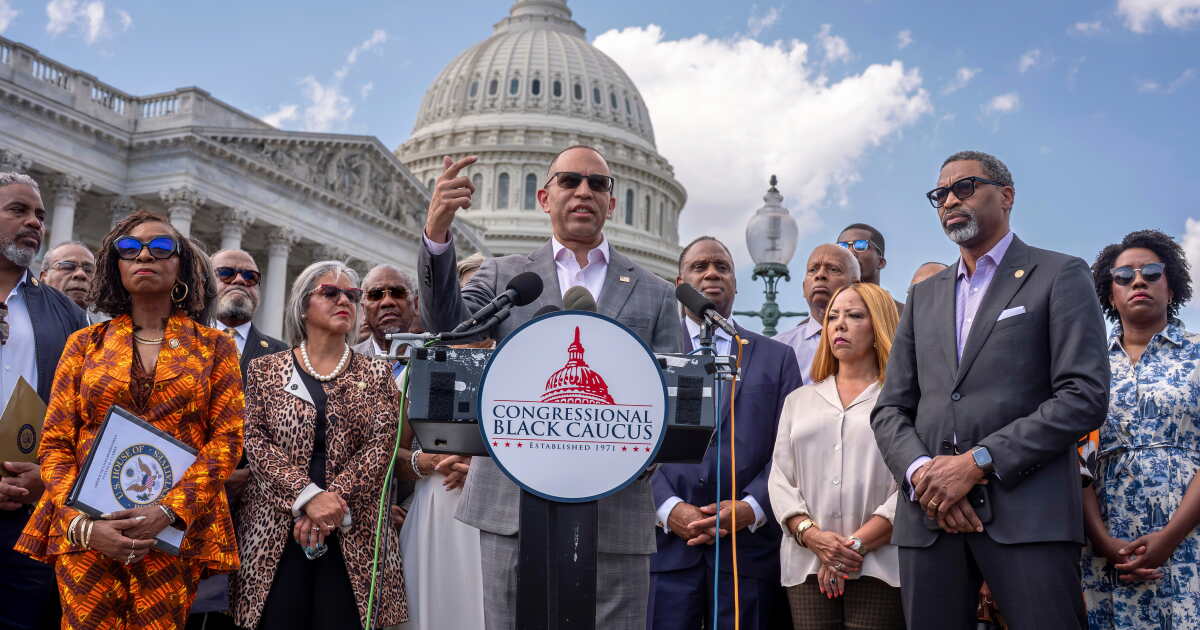
‘Earthquake’: Supreme Court limits Voting Rights Act in setback for Black Democrats, boost for GOP

The Supreme Court’s conservative majority on Wednesday sharply limited a part of the Voting Rights Act that has forced states to draw voting districts to help elect Black or Latino representatives to Congress as well as state and local boards.

In a 6-3 decision in Louisiana vs. Callais, the court ruled that creating these majority-minority districts may amount to racial discrimination that violates the 14th Amendment.

When weighing what the Voting Rights Act requires, “we start with the general rule that the Constitution almost never permits the federal government or a state to discriminate on the basis of race,” Justice Samuel A. Alito Jr. wrote for the court.

Alito said states may draw election districts for partisan advantage but may not use race as a basis for redistricting.

The ruling in a Louisiana case appears to clear the way for Republican-led states across the South to redraw their election maps and eliminate voting districts that favor Black or Latino candidates for Congress, state legislatures and county boards.

UCLA law professor Rick Hasen said, “It is hard to overstate what an earthquake this will be for American politics,” adding that the decision makes the Voting Rights Act a “much weaker, and potentially toothless law.”

Hasen said it’s unclear how the decision will affect the November election because in many states early voting has already started and primaries have already taken place.

But the ruling’s long-term consequences for minority representation in Congress, state legislatures and local government are almost “certainly” going to be felt in 2028, Hasen said.

Republican leaders in states across the South have already signaled they intend to move quickly to redraw congressional maps in the wake of the ruling.

Alabama Atty. Gen. Steve Marshall said the state will “act as quickly as possible” to ensure its congressional maps “reflect the will of the people, not a racial quota system the Constitution forbids.” Marshall called the decision a recognition of how much the South has changed since the civil rights era.

“The court rightly acknowledged that the South has made extraordinary progress, and that laws designed for a different era do not reflect the present reality,” he said in a statement.

Florida was already in motion before the ruling came down. But Gov. Ron DeSantis celebrated the decision and said it was all the more reason for state lawmakers to redraw its congressional maps, in a manner that could give Republicans up to four more seats in Congress.

The proposed congressional maps, drawn by DeSantis’ office, were first unveiled to Fox News on Monday. On Wednesday, both chambers approved the maps, and readied them for DeSantis’ final approval.

In Mississippi, Gov. Tate Reeves had already called lawmakers into a special session at the end of May in anticipation of a court ruling on the Voting Rights Act. In a post on X, Reeves underscored the ideological underpinnings to the ruling’s potential implications.

“First Dobbs. Now Callais. Just Mississippi and Louisiana down here saving our country!” Reeves wrote.

Sen. Raphael Warnock of Georgia speaks outside the Capitol.

Sen. Raphael Warnock (D-Ga.) speaks at a news conference outside the U.S. Capitol after the Supreme Court ruling.

(Tom Williams / CQ-Roll Call / Getty Images)

At issue was how to ensure equal representation for Black and Latino citizens.

About one-third of Louisiana’s voters are Black, but the state seeks an election map that will elect white Republicans to five of its six seats in the House of Representatives.

Lower courts said that map violated the Voting Rights Act because it denied fair representation to Black residents.

The state had one Black-majority district, in New Orleans.

Two years ago, judges upheld the creation of a second Black-majority district that stretched from Shreveport to Baton Rouge on the grounds that it was required under the law.

The state’s Republican leaders appealed and argued that race was the motivating factor in drawing the second district.

Alito and the conservatives agreed and called that district an “unconstitutional racial gerrymander.”

The three liberals dissented. The consequences of the ruling “are likely to be far-reaching and grave,” said Justice Elena Kagan, adding that it will allow “racial vote dilution in its most classic form.”

She said the decision means “a state can, without legal consequence, systematically dilute minority citizens’ voting power. Of course, the majority does not announce today’s holding that way. Its opinion is understated, even antiseptic.”

But she said states across the South may draw electoral districts that deprive Black voters of equal representation. Justices Sonia Sotomayor and Ketanji Brown Jackson agreed.

The decision was the latest example of a partisan political dispute in which the court’s six Republican appointees vote in favor of the Republican state plan, while the three Democratic appointees dissent.

The ruling is likely to have its greatest impact in the Southern states, where white Republicans are in control and Black Democrats are in the minority.

The court’s divide over redistricting is similar to the long dispute over affirmative action.

For decades, university officials said they needed to consider the race of applicants to achieve diversity and equal representation.

But in 2023, the court by a 6-3 vote struck down college affirmative action policies at Harvard and the University of North Carolina and ruled race may not be used to judge applicants.

The historic Voting Rights Act of 1965 succeeded in clearing the way for Black citizens to register and vote across the South, but it took longer for Black candidates to win elections.

The dispute was highlighted in a 1980 case from Mobile, Ala. Its three commissioners were elected to six-year terms, and each of them ran countywide.

Even though one-third of the county’s voters were Black, white candidates always won.

The Supreme Court upheld this arrangement as legal and constitutional. In dissent, Justice Thurgood Marshall said Black residents were left with the right to cast meaningless ballots.

In response, Congress amended the Voting Rights Act in 1982 to say states must give minorities an opportunity to elect representatives of their choice.

Four years later, the Supreme Court interpreted that to mean that states had a duty to draw voting districts that would elect a Black or Latino candidate if these minorities had a sufficiently large number of voters in a particular area.

In recent years, the court’s conservatives, led by Justice Clarence Thomas, have chafed at the rule on the grounds it sometimes required states to use race as a factor for drawing election districts.

Alito’s opinion adopted that view and said states are not required or permitted to use race as a basis for drawing districts.

Hours after the ruling came out, President Trump met with reporters in the Oval Office and said he had not yet seen the decision. He was visibly excited, however, when a reporter explained the decision favored Republicans.

“I love it!” he said. “This is very good.”

Former President Obama said in a statement that the court’s decision “effectively guts a key pillar of the Voting Rights Act, freeing state legislatures to gerrymander legislative districts to systematically dilute and weaken the voting power of racial minorities — so long as they do it under the guise of ‘partisanship’ rather than explicit racial bias.”

The Mexican American Legal Defense and Educational Fund, in Los Angeles, also denounced the decision.

“The Supreme Court’s decision blesses racially discriminatory gerrymandering, and dismantles the legal protections for minority voters,” said Nina Perales, the group’s vice president for litigation. It “openly invites states to dilute minority voting strength, and undermines our democracy.”

Source link

Florida Legislature approves new congressional map intended to boost Republicans in midterms

The Florida Legislature approved a new congressional map intended to maximize Republicans’ advantage in the state as part of the national redistricting battle that President Trump launched ahead of this year’s midterms.

The vote came just two days after Gov. Ron DeSantis unveiled his proposal and the same day that the U.S. Supreme Court rolled back a key provision of the Voting Rights Act. The decision could make it harder for Democrats to challenge Republican efforts to redraw congressional districts in ways that limit the influence of nonwhite voters.

DeSantis’ map could increase Republicans’ advantage in Florida’s House delegation to 24 to 4, up from the current split of 20 to 8. The potential four-seat gain is the same as what Virginia Democrats expect from a recent redistricting referendum, which is being challenged in state court there.

Florida’s new districts are certain to face lawsuits as well, especially because the state constitution prohibits redistricting for explicitly partisan purposes. DeSantis and his aides believe those provisions will not be a legal barrier because they have been weakened previously by the Florida Supreme Court and again by Wednesday’s U.S. Supreme Court ruling.

Florida Republicans, comfortable in their supermajority in both legislative chambers, said little about the new districts during the whirlwind special session. The measure’s sponsor, Rep. Jenna Persons-Mulicka (R-Fort Myers), limited her remarks to careful answers about an “evolving legal landscape” as Democrats’ asked her about the redistricting effort.

“I believe that there is a likelihood that that map will be upheld against legal challenge,” Persons-Mulicka said.

Opposition was vocal but futile

Democrats, activists and some citizens to decried the process as a partisan power play to satisfy Trump, boost DeSantis’ future ambitions and hurt the majority of registered Florida voters who are not Republicans.

“Y’all are doing this because y’all’s daddy in the White House is injecting national political objectives into what should be a state-driven process,” Rep. Michele Rayner (D-St. Petersburg) told her Republican colleagues before an 83-28 vote in favor of the measure.

The Florida Senate later approved the plan in a 21-17 vote.

Rep. Angie Nixon, a Jacksonville Democrat, chided Republicans for yielding the redistricting process to DeSantis, whose second term expires in January.

“Last time I checked, we’re the ones who were supposed to be drawing the map,” she said, “and yet we are allowing y’all to continue to hold the water of the governor, who is a lame duck and just trying to figure out what his next job is going to be.”

Democrats diminished in metro areas

The new map reshapes districts in Democratic areas around Orlando, the Tampa-St. Petersburg area and in south Florida around Palm Beach, Fort Lauderdale and Miami. The changes could cost Reps. Jared Moskowitz and Debbie Wasserman Schultz, among others, their seats.

DeSantis and his aides said before and during the session that new map is necessary to account for population growth in suburban and exurban areas since the 2020 census and to ensure Florida has a “race-neutral” congressional plan.

The proposal presumed the outcome of the U.S. Supreme Court’s Wednesday decision, which specifically struck down a Louisiana congressional district drawn for the electorate to be majority-Black. Historically, Black voters have aligned more with Democrats, while a majority of white voters lean toward Republicans.

The changes in Florida include the effective elimination of one nearly majority Black south Florida district that was represented by Rep. Sheila Cherfilus-McCormick, a Black Democrat, until her resignation earlier this month.

Lawmakers fast-tracked the measures

From the session’s opening bell Tuesday morning, Republican leaders moved swiftly.

In one of just two committee hearings, Senate Rules Chair Kathleen Passidomo (R-Naples) said she wanted “everybody who has taken the time and effort to come to Capitol to have an opportunity to speak.” Then she declared each speaker would have 30 seconds.

“I know that doesn’t seem like a lot but it actually is, uh, if you’re concise,” she said.

Deborah Courtney drove more than two hours from from Jacksonville and noted that all citizen speakers expressed opposition.

“Why are you doing this redistricting now?” she asked senators. “I doubt that your phone have been ringing off the hook from your constituents going, hey, we need some new maps.”

Rob Woods came from the Tampa area, which under the new map could have no Democratic representation in the U.S. House. A Black man, Wood told senators he was a veteran who said he “bought in from elementary school” on notions of the U.S. as an equal-opportunity democracy.

Now, he said, “it seems as if we are back in that period of Reconstruction, moving back to Jim Crow.”

On the House floor, Persons-Mulicka sidestepped specifics about what factors went into the map. She repeatedly called it “race-neutral,” citing testimony from DeSantis aide Jason Poreda, who took sole credit for the map during the session and did not disclose the names of any architects. But asked about Poreda’s admission that he examined party affiliation and voting patterns, Persons-Mulicka balked.

“I cannot speak to the intent of the map drawer,” she said.

DeSantis unveiled the map on Fox News

Persons-Mulicka and Sen. Don Gaetz, who sponsored the map in the Senate, deflected questions about why DeSantis unveiled the plan on Fox News.

Gaetz, a Crestview Republican, confirmed he had no part in drafting the map and forwarded the governor’s proposal to other senators as soon as he received it late Monday morning.

There’s no guarantee that new maps across the country will play out the way two parties hope. For example, Texas based its revised lines largely on Trump’s performance in 2024, redistributing the president’s voters across more districts to pull them into the Republican column. But Trump’s popularity has waned since his reelection, including among Latino voters who figure prominently in the state.

Florida could face a similar conundrum. Creating more majority-Republican districts could leave margins thin enough to allow for Democratic victories, especially if there’s an anti-Trump backlash at the polls this year.

Some Republicans have expressed worry about that possibility, and a handful voted against the measure in the Florida Legislature.

The governor already took a hit because of the session. He had wanted lawmakers to adopt state regulations on artificial intelligence, ostensibly protecting minors from harmful material, while rolling back vaccine mandates for students in Florida’s public schools. House Speaker Daniel Perez, a Republican but not a DeSantis ally, spiked both ideas.

DeSantis called it “political shenanigans.”

House Minority Leader Fentrice Driskell (D-Tampa) lamented that Republicans still delivered DeSantis the big-ticket item that he wanted.

“On destroying our democracy, they’ve been aligned,” she said, “and that’s what we did here today.”

Barrow writes for the Associated Press.

Source link

Virginia voters deciding on redistricting plan that could boost Democrats’ seats in Congress

Virginia voters on Tuesday are deciding whether to ratify an unusual mid-decade redrawing of U.S. House districts that could boost Democrats’ chances of flipping control of the closely divided chamber, as the state becomes the latest front in a national redistricting battle.

A proposed constitutional amendment backed by Democratic officials would bypass the state’s bipartisan redistricting commission to allow use of new congressional districts approved by state lawmakers in this year’s midterm elections.

The referendum, which needs a simple majority to pass, tests Democrats’ ability to push back against President Trump, who started the gerrymandering competition between states after successfully urging Texas Republicans to redraw congressional districts in their favor last year. Virginia is the second state, after California last fall, to put the question to voters.

It also tests voters’ willingness to accept districts gerrymandered for political advantage — coming just six years after Virginia voters approved an amendment meant to diminish such partisan gamesmanship by shifting redistricting away from the legislature.

Even if Democrats are successful Tuesday, the public vote may not be the final word. The state Supreme Court is considering whether the redistricting plan is illegal in a case that could make the referendum results meaningless.

Virginia Democrats are following California’s lead

Congressional redistricting typically is done once a decade after each U.S. census. But Trump urged Texas Republicans to redistrict ahead of the November elections in hopes of winning several additional seats and maintaining the GOP’s narrow House majority in the face of political headwinds that typically favor the party that is out of power during midterms.

The Texas gambit led to a burst of redistricting nationwide. So far, Republicans believe they can win up to nine more House seats in newly redrawn districts in Texas, Missouri, North Carolina and Ohio.

Democrats think they can win up to five more seats in California, where voters approved a mid-decade redistricting effort last November, and one more seat under new court-imposed districts in Utah. Democrats hope to offset the rest of that gap in Virginia, where they decisively flipped 13 seats in the state House and won back the governor’s office last year.

Voters focus on fairness, with different perspectives

The stream of voters was steady Tuesday at a recreation center in the Old Town area of Alexandria, Virginia.

Matt Wallace, 31, said he votes regularly but this election has additional emphasis.

“I think the redistricting issue across the country is unfortunate, that we’ve had to resort to temporary redistricting in order to sort of alter our elections across the country,” Wallace said. He said he voted for the Democratic redistricting amendment “to help balance the scales a bit until things get back to normal.”

Joanna Miller, 29, said she voted against the redistricting measure, “because I want my vote to count in a fair way.” Miller said she was more concerned about representation in Virginia than trying to offset actions in other states.

“I want my vote and my representation to matter this fall,” she said.

Political parties made a big push in Virginia

Leaders of both major parties see Tuesday’s vote as crucial to their chances to win a House majority in the fall. Trump weighed in via social media Tuesday morning, telling Virginians to “vote ‘no’ to save your country!”

Former Virginia Gov. Glenn Youngkin, a Republican, rallied with opponents of the measure Monday night, calling the redistricting plan “dishonest” and “brazenly deceptive.” House Minority Leader Hakeem Jeffries told reporters at the Capitol earlier in the day that a vote to approve the redraw “will serve as a check and balance on this out-of-control Trump administration.”

A committee supporting the Democratic redistricting effort had raised more than $64 million — three times as much as the roughly $20 million raised by opponents, according to finance reports filed less than two weeks before the election.

The back-and-forth battle over congressional districts is expected to continue in Florida, where the Republican-led legislature is scheduled to convene April 28 for a special session that could result in a more favorable map for Republicans.

A lobster-like district could aid Democratic efforts

In Virginia, Democrats currently hold six of the 11 U.S. House seats under districts that were imposed by the state Supreme Court in 2021 after a bipartisan commission failed to agree on a map based on the latest census data.

The new plan could help Democrats win as many as 10 seats. Five are anchored in Democratic-heavy northern Virginia, including one shaped like a lobster that stretches into Republican-leaning rural areas.

Revisions to four other districts across Richmond, southern Virginia and Hampton Roads dilute the voting power of conservative blocs in those areas. And a reshaped district in parts of western Virginia lumps together three Democratic-leaning college towns to offset other Republican voters.

The Virginia redistricting plan is “pushing back against what other states have done in trying to stack the deck for Donald Trump in those congressional elections,” Democratic Gov. Abigail Spanberger said during an online rally last week.

Ads for the “yes to redistricting” campaign featuring former President Barack Obama have flooded the airwaves.

Opponents have distributed campaign materials citing past statements from Obama and Spanberger criticizing gerrymandering, but those were before Trump pushed Republican states to redraw their congressional maps in advance of this year’s midterms.

Democrats “were all against gerrymandering before they were for it,” Virginia Republican Party Chairman Jeff Ryer said.

Virginia court weighs whether lawmakers acted illegally

Virginia lawmakers endorsed a constitutional amendment allowing their mid-decade redistricting last fall, then passed it again in January as part of a two-step process that requires an intervening election for an amendment to be placed on the ballot. The measure allows lawmakers to redistrict until returning the task to a bipartisan commission after the 2030 census.

In February, they passed a new U.S. House map to take effect pending the outcome of the redistricting referendum. Republicans have filed multiple legal challenges against the effort.

A Tazewell County judge ruled that the redistricting push was illegal for several reasons. Circuit Court Judge Jack Hurley Jr. said lawmakers failed to follow their own rules for adding the redistricting amendment to a special session.

He ruled that their initial vote failed to occur before the public began casting ballots in last year’s general election and thus didn’t count toward the two-step process. He also ruled that the state failed to publish the amendment three months before that election, as required by law.

If the state Supreme Court agrees with the lower court, the results from Tuesday’s vote could be rendered moot.

Lieb writes for the Associated Press. AP writers Gary Fields in Virginia and Lisa Mascaro in Washington contributed to this report.

Source link

How Luka Doncic is still providing Lakers a big playoff boost

When the doors opened after Lakers practice on Monday, injured stars Luka Doncic and Austin Reaves were nearby as their teammates took some final shots after the session.

Doncic, who is back with the team after traveling to Spain to receive treatment for his Grade 2 left hamstring strain, sat out the Lakers’ Game 1 win over the Houston Rockets. He also won’t play in Game 2 on Tuesday, but he remained his usual joyful and playoff self after practice, his infectious personality providing a good vibe during a tense time for the team.

But even without Doncic and Reaves, the Lakers still had an “elevated” two days of practice as they prepared to face the Rockets with or without All-Star Kevin Durant at Crypto.com Arena.

Doncic, who sustained his injury against Oklahoma City on April 2, hadn’t been with the Lakers during their final five games of the regular season. Having him back around the team provided the Lakers with a big boost ahead of Game 1.

“It’s amazing. I think people don’t know how much impact Luka has, not only on the court, but off the court,” Rui Hachimura said. “He’s a guy that always wants to be around. … We love him just being around, just hanging out, talking. So, yeah, we’re happy that he’s back finally and he’s doing funny things always. … We missed him for sure.”

Hachimura was asked about the funny things Doncic did during practice.

“Just messing around with the coaches and the players and just the normal things you guys see on the camera, probably,” Hachimura said. “It’s just a normal thing for him.”

The Lakers weren’t messing around during the film sessions or practices.

They were focused on the task ahead, knowing the Rockets don’t want to go down 0-2 in the series.

Lakers coach JJ Redick directs his players during their Game 1 playoff win over the Houston Rockets on Saturday.

Lakers coach JJ Redick directs his players during their Game 1 playoff win over the Houston Rockets on Saturday.

(Allen J. Schaben / Los Angeles Times)

“Well, every day requires something different,” Lakers coach JJ Redick said. “Yesterday required an elevated recovery day. Today required an elevated focus. It was a longer film session. A decent amount of teach [and] talk on the court beyond just the practice session. Tomorrow is going to require an elevated sense of desperation on our part because they’re going to come in with that.”

Durant didn’t play in the first game because of a right knee injury and has been called a game-time decision, Rockets coach Ime Udoka told reporters after practice.

Whatever the case is, the Lakers are expecting a tough game against the Rockets.

“Yeah, I mean, it’s the playoffs. Every team’s got to play desperate,” Jaxson Hayes said. “I mean, if you lose, you go home. So, if you’re not playing desperate, then why are you here at the end of the day? But, yeah, I mean, we played against teams like this all year. I mean, obviously, they’re a very aggressive, very fast-playing, big, long team, and so we just got to make sure we take care of the ball like we didn’t do in Game 1 and just get rebounds and just stay locked in.”

With Doncic and Reaves (Grade 2 left oblique muscle strain) out, the Lakers needed other players to fill that void.

Hachimura did his part in Game 1, and it went beyond his 14 points. He was efficient from the field, going six for 10. He was good on defense, collecting three steals and two blocked shots in 42 minutes.

“It’s the playoffs. You have to make every play matter,” he said. “Every position matters. So, I was trying to make plays and not only offense, but on the defensive side. And rebound, and all that. So, that’s what I was doing.”

During Game 1, Doncic offered advice and encouragement to his teammates from the bench.

But his recent conversations with Hayes have been focused, in part, on what comes after the season.

Doncic has talked to Hayes about playing for the Slovenian national team and the big center has interest.

“Um, we got my Slovenian passport. That’s all he’s been telling me,” Hayes said. “Now he’s been saying, ‘My Slovenian brother,’ every time.”

Hayes laughed, and then was asked if he really did receive a Slovenian passport.

“Yeah,” he said, “it really came through.”

There was a moment during Game 1 when Doncic was playing around with Hachimura, hitting him on the head. But Hachimura didn’t recall it happening.

“Hmm? I don’t remember,” Hachimura said. “He always does that stuff. I probably don’t even think about it. I’m used to it, probably. I don’t remember that.”

Source link

Trump’s budget director defends White House plan for massive boost in military spending

An effort to ramp up U.S. weapons production and build more ships, planes and drones will require a massive upfront investment, President Trump’s budget director told a House committee Wednesday.

The testimony from Russell Vought jump-starts the White House’s push to increase defense spending to nearly $1.5 trillion in the next budget year, up from nearly $1 trillion this year, while cutting health research, heating assistance and scores of other domestic programs by about 10% overall. Such cuts do not cover mandatory spending, which includes such programs as Social Security and Medicare.

The debate over Trump’s proposal underscored the sharp divide that will shape some of the most significant policy debates going into a midterm election that will give voters the ultimate say on the direction of the country.

“For the industrial base to double or triple and build more facilities, not just add shifts, it requires multiyear agreements to purchase into the future,” Vought told lawmakers. “That cost has to be booked in this first year.”

The White House is calling for about $1.1 trillion for defense through the regular appropriations process, which typically requires support from both parties for approval. An additional $350 billion would come through a separate bill that Republicans can accomplish on their own, through party-line majority votes.

Rep. Brendan Boyle of Pennsylvania, the ranking Democratic member of the committee, said he believes in a strong national defense. But he said the idea of increasing defense by more than 40% while cutting programs that people need shows that the Republican administration’s priorities are “out of whack.”

The committee chairman, Rep. Jodey Arrington (R-Texas), predicted the hearing would be more “amped up” than usual, and that proved to be true, beginning with his opening statement focused on criticizing Democrat Joe Biden’s presidency. Arrington said he did not know of any president in his lifetime who “inherited such a complete and utter mess as President Trump did in January of last year.”

Since then, Arrington said, Trump has secured the border, cut taxes and constrained nondefense spending.

It was the beginning of several back-and-forths at the hearing.

“You know how bad this economy is when we hear Joe Biden being invoked, we hear trans people being invoked. I was waiting for Jimmy Carter to be blamed next,” Boyle said in response to Arrington’s opening remarks.

Boyle said consumer confidence is plummeting under Trump and noted a gas station he passed in Philadelphia recently was selling gas at $4.11 a gallon versus less than $3 a gallon some six weeks ago because of Trump’s “war of choice in Iran.”

Rep. Becca Balint (D-Vt.) called the proposed defense spending increase shocking.

“We’ve never in the history of this country seen spending like this, paid for by slashing healthcare, education and housing,” Balint said. “Mr. Vought, yes or no, is $350 billion for the war in Iran lowering costs for Americans?”

“It is certainly not defunding child care. We fully fund child care in this budget,” Vought said, not directly answering the question.

Balint went on to incorporate Trump’s “America first” mantra in her questioning.

She said that $350 billion could pay for an enhanced health insurance tax credit for 10 years and that her constituents are asking how the country can continue to spend money on wars and not find a solution to helping people afford healthcare.

Vought said the president has made clear he was not going to let Iran have nuclear weapons, missiles and a navy that affect U.S. national security.

“He is doing what is necessary to keep us safe, while at the same time trying to pursue diplomacy so that we can get out of wars and lower those costs over time,” Vought said.

Vought said it was unclear how much the administration would seek to fund the war during the current budget year, which ends Sept. 30. That money would be part of an emergency supplemental spending bill and would be on top of the funds the White House is seeking to boost defense spending next year.

“Would it be more than $50 billion?” asked Rep. Veronica Escobar (D-Texas).

“We’re still working on it,” Vought said. “I don’t have a ballpark for you.”

Freking writes for the Associated Press.

Source link

Aid groups bidding to boost relief shipments into Iran | US-Israel war on Iran News

Supply of humanitarian aid for people displaced by the conflict has been complicated by air and sea route closures.

Aid groups have said they’re seeking to boost humanitarian relief shipments into Iran as the effects of the United States-Israeli war hit the population.

The International Federation of Red Cross and Red Crescent Societies (IFRC) said on Tuesday that it had delivered “life-saving” aid and medical supplies, marking one of the first humanitarian shipments since the war began.

Recommended Stories

list of 4 itemsend of list

The shipment entered the country through Turkiye on Sunday, IFRC spokesman Tommaso Della Longa said in a statement. Iran faces a deepening humanitarian crisis after nearly six weeks of conflict that has killed more than 3,000 people, according to Iranian authorities, and displaced up to 3.2 million, he stressed.

“The operation is critical as humanitarian supply chains into Iran have been severely disrupted in recent weeks due to the conflict, making it increasingly difficult and more costly for essential medical and relief items to reach those in need,” the spokesman said.

The convoy, which departed from the Turkish capital Ankara on Friday, carried around 200 trauma kits containing emergency medical supplies along with tents and blankets.

epa12886919 People gather and view photographs of people killed in a US-Israeli airstrike on a residential building, displayed in front of the same building that was hit in Tehran, Iran, 13 April 2026. Iran and the US have failed to reach an agreement after peace talks held in Islamabad on 11 April. EPA/ABEDIN TAHERKENAREH
A residential building that was hit by a strike in Iran’s capital, Tehran  [Abedin Taherkenareh/EPA]

‘Needs are high’

The Turkish Red Crescent Society also dispatched four trucks separately carrying 48 tonnes of aid, including emergency shelters, hygiene kits and first-aid supplies.

“Needs are high, medical needs in particular, but also the psychological toll on people is immense,” Della Longa said.

He noted the toll on the Iranian Red Crescent Society has been high, confirming that the organisation had lost four relief workers in the line of duty.

The effort to respond to humanitarian needs in Iran is growing.

The International Committee of the Red Cross (ICRC) said on Tuesday that it had dispatched 14 trucks from Jordan carrying household supplies for around 25,000 people, including mattresses, jerry cans, kitchen sets and solar lamps.

In addition, ICRC said, 200 generators and 100 motor pumps purchased locally had been donated to the Iranian Red Crescent Society to support relief and rescue operations

Air and sea routes have been blocked by the conflict, it said, making overland crossings through Turkiye and Jordan critical for aid delivery.

The relief comes amid a fragile two-week ceasefire between the United States and Iran.

According to the Turkish Red Crescent Society’s president, Fatma Meric Yilmaz, around 3.6 percent of Iran’s 90 million people have been displaced, while 62,000 homes and more than 20,000 businesses have been destroyed.

Source link

Celtic: Martin O’Neill says Green Brigade return could boost title bid

O’Neill was speaking as the Scottish FA announced sports event consultant Mark Blackbourne will lead its investigation into the disorder that followed the Scottish Cup quarter-final between Rangers and Celtic in March.

Tensions have arisen between elements of Celtic’s support and the board about such matters as summer transfer activity, managerial appointments and crowd safety.

Discussions have been held between the Green Brigade and the club and Celtic said earlier this week that Glasgow City Council’s Safety Advisory Group was happy for the suspension to be lifted.

“I think that the safety regulations have been sorted,” O’Neill said. “We’ve got to just see how it goes and see what the end of the season brings. Let’s have a proper conversation at the end.”

Defending champions Celtic go into Saturday’s game three points behind leaders Heart of Midlothian and two adrift of Rangers.

Hearts have been handed a visit to Celtic Park on the final day of the season following the publication of the post-split Scottish Premiership fixtures, but O’Neill said “it’s certainly a long way off for us” to be thinking of that possibly being a title decider.

Celtic’s goal difference is worse than both their title rivals, but the Northern Irishman said “it’s too late now” to think about that and “I would just be delighted to win the games”.

Meanwhile, O’Neill revealed on-loan right-back Julian Araujo had suffered a recurrence of his hamstring injury after returning to Bournemouth for treatment and would miss the rest of the season – and possibly the World Cup with Mexico.

Fellow right-back Colby Donovan also has a hamstring injury that will rule him out for perhaps the next two weeks, but Canada international Alistair Johnston could return next weekend for the first time since October.

Source link

Korea group offers up to 12% annual savings interest to boost births

Korea Federation of Community Credit Cooperatives Director Cho Bong-eop (2-L) poses with the first customer of its new savings product offering an annual interest rate of up to 12% at the organization’s office in Seoul on Friday. Photo by Korea Federation of Community Credit Cooperatives

SEOUL, April 10 (UPI) — The Korea Federation of Community Credit Cooperatives said Friday it launched a savings product that offers an annual interest rate of up to 12% in an attempt to boost childbirth.

The one-year installment savings product provides a base rate of 4%, which increases by steps to 12% depending on the number of the customer’s children. It is subject to a deposit limit, though.

For savers with a newborn in areas experiencing population decline, the country’s top apex organization said that the maximum 12% interest would be guaranteed regardless of the number of children.

“We have introduced dedicated financial products every year since 2023 in an effort to help address the low birth rate,” cooperative Director Cho Bong-eop said in a statement.

“As a community-based financial institution, we will keep fulfilling our social responsibilities by supporting vulnerable groups and revitalizing local economies, in addition to tackling the low birth rate,” he added.

South Korea has one of the world’s lowest fertility rates, which fell to 0.72 in 2023, according to Statistics Korea. The figure rebounded slightly to 0.75 in 2024 and 0.8 last year, still far below the replacement level of 2.1.

This means that for every 100 South Korean women, only 80 babies are expected to be born over their lifetimes, leading to a gradual population decline. The country’s population stands at 51.6 million.

To address the challenge, the Seoul government has funneled a huge amount of money over the past decades to little avail. In recent years, even private companies stepped in, providing bonuses and various benefits to employees who have a baby.

Last month, Statistics Korea reported nearly 27,000 births in January, the highest monthly figure in nearly seven years. However, the fertility rate still remained below 1.

Source link

OPEC agrees on another oil production boost as Strait remains blocked

OPEC+ members announced Sunday they would modestly boost production as worldwide oil supplies tighten and prices spike amid the American-Israeli war on Iran. File Photo by Olivier Matthys/EPA

April 5 (UPI) — Members of the Organization of the Petroleum Exporting Countries said Sunday they will again modestly boost oil production as war rages in Iran and the Persian Gulf, although the move is largely symbolic as the Strait of Hormuz remains closed.

As first they did in March, the eight OPEC+ countries — Saudi Arabia, Russia, Iraq, United Arab Emirates, Kuwait, Kazakhstan, Algeria and Oman — on Sunday agreed to a 206,000 barrel-per-day production increase amid attacks by Iran on the oil and gas facilities of several of its members in the Persian Gulf.

Iran has blocked the key Strait of Hormuz shipping lane in response to the American and Israel attacks that started on Feb. 28.

Since then the global price of oil has shot up by close to 60% while gas prices at the pump in the United States have surpassed $4 per gallon.

Although the waterway remains choked off, the OPEC+ move indicated producers will likely ramp up production to help alleviate the worldwide oil shock once the Strait is reopened and production facilities in the Gulf states are secured from Iranian drones and missiles.

U.S. President Donald Trump on Sunday continued to threaten Iran with destruction of civilian and military infrastructure by Tuesday unless Tehran loosens its grip on the Strait.

But Iran has remained defiant, continuing to launch drone attacks against OPEC members who host U.S. military facilities, particularly targeting Kuwait, Bahrain and the UAE, where critical infrastructure again came under attack on Sunday.

Damage was sustained at civilian facilities in all three countries, officials reported.

The Kuwait Petroleum Corp. announced “significant material losses” after Iranian drone attacks on several of its facilities, the KUNA news agency reported.

Meanwhile, Kuwaiti Interior Ministry spokesman Brig. Gen. Nasser Bousleib said officials had registered nine reports of falling shrapnel during the preceding 24 hours, boosting the total of such incidents since the beginning of the Iranian aggression to 678.

An Iranian flag stands amid the destruction in Enghelab Square following the attacks carried out by the United States and Israel on Tehran, Iran, on March 4, 2026. Photo by Nahal Farzaneh/UPI | License Photo

Source link

Iconic 145-year-old pier finally re-opens in boost for quaint UK seaside town

SEASIDE lovers are in for a treat as an iconic pier is finally re-opening today.

The historic 145-year-old pier is back in business after a grueling six-month closure that left locals and tourists high and dry.

A green vintage train car with a flatbed trailer attached to its front sits on tracks under a white arched sign that reads "HYTHE PIER."
A historic 145-year-old pier is officially re-opening todayCredit: Alamy

Hythe Pier, which stretches a whopping 700 yards into Southampton Water, has undergone a massive “deep clean” and vital electrical upgrades to make it ship-shape for the public.

And the best part is it’ll cost sun-seekers just £1 to take a stroll and soak up the stunning coastal views.

Local leaders are hailing the move as a massive “first step” in bringing the Hampshire town’s “beating heart” back to life.

The pier, which first opened its doors in 1881, was forced to shut last year due to safety concerns and infrastructure wobbles.

SANDS GREAT

Where to find the best UK beach – AND it gets the least amount of rain


SAFETY FIRST

World famous UK beach closed to the public after storm damage

But thanks to a band of dedicated volunteers and local businesses, the Grade II-listed structure is ready for action once again.

A spokesperson for the Hythe Pier, Train and Ferry Group previously said: “We could see how incredibly important it was that we bring our much-loved pier back to the community.

“Every £1 you spend goes back into the pier, supporting its future. Come and walk the full length, take in the views, and be part of this next chapter.”

The pier is also home to a historic ferry train which having opened in 1922 makes it the world’s oldest, a feat recognised by Guinness World Records.

While the walkway is officially open from 10am today, fans of the pier’s world-famous railway will have to wait a little longer.

Work is still ongoing to get the vintage carriages and the ferry service back on track, but bosses are “hopeful” the full service will be restored soon.

Hythe councillor Malcolm Wade said: “It’s really good news that it has been opened so residents can go up and down the pier again.”

The pier’s reopening is a major shot in the arm for the quaint town, which relies on the landmark to draw in thousands of visitors every year.

A long pier extending into the water with a bright sunset over the horizon.
Hythe Pier’s reopening is a major shot in the arm for the quaint townCredit: Alamy

Source link

House Backs Funds to Boost Infant Survival

The House on Monday approved allocating an extra $30 million to community and migrant medical centers, a move aimed at reducing infant deaths.

The bill, passed on a voice vote, requires the Department of Health and Human Services to give spending priority to centers that serve high-risk areas and to population groups with high infant mortality rates.

The bill was sent to the Senate, which passed a similar measure Aug. 6. Conferees will work on a compromise between the two.

The Reagan Administration opposes the legislation. It has proposed instead to test innovative ways of providing services to Medicaid-eligible pregnant women and infants up to a year old.

When the House Energy and Commerce Committee approved the House version last month, several Republican members called it unnecessary and said they found no reason to believe the extra spending would help more newborns survive.

Source link

Easter staycation planned by 12.5 million Brits in massive tourism boost

Tourism chiefs are predicting a near two million jump in the number of Brits holidaying at home this Easter

Around 12.5 million Brits are planning an Easter staycation – as the Middle East war deters families from jetting abroad.

The number of people who say they intend to holiday in the UK over the Easter weekend is up sharply from 10.6 million last year. The near two million surge will help deliver a bumper £4.8billion boost to tourism and the wider economy, according to VisitEngland, which published the data.

The number saying they hope to holiday at home dwarfs the estimated 7.4 million who are planning a trip abroad this Easter. Of those definitely aiming to take a staycation during the Easter break, the majority will be short breaks of one to three nights.

READ MORE: UK drivers urged to do three-second car check as clocks change this weekendREAD MORE: UK’s ‘holiday park of the year’ is on family-run farm near beautiful beaches

It came as VisitEngland’s Trip-Tracker revealed that more than a quarter of those it surveyed, 28%, were worried about the impact of the Middle East conflict on their upcoming travel plans in April and May. The top concern was having less money to spend due to the economic impact. There have already been fears of air fare price hikes and possible flight cancellations.

The number of people planning an Easter staycation this year also marks a big jump on 2024’s 11 million, and nearly double the 6.5 million in 2023. A further 5.1 million people surveyed said they were undecided about whether to take an overnight holiday trip in the UK during the Easter weekend. The top reasons were “waiting to see if I can afford it” and “waiting to see what the weather is like”. Forecasts for the weather suggest it will be a mixed bag next week, but with settled conditions over the Easter weekend itself.

However, those driving for days out and holidays in the UK face a hit to the wallet from soaring fuel prices on the back of the Iran war. The nationwide average for unleaded has jumped to 150p a litre, up 17p since before the conflict erupted. Diesel drivers have been hit even harder, with diesel now averaging 176.68p per litre, a leap of 34p in recent weeks.

RAC head of policy Simon Williams said: “Petrol has now broken through the unwelcome milestone of 150p a litre (150.11p), something drivers haven’t seen since mid-May two years ago while the average price of diesel is now approaching 180p at 177.68p.

“With the long-awaited four-day Easter weekend almost within touching distance, the cost of getting away by car is going to be noticeably higher this year.

“And with average prices at motorway services at 166p for unleaded and 182p for diesel, drivers on long journeys will need to plan very carefully where they refuel. The best advice remains to shop around for fuel and make use of free apps such as myRAC to never pay a penny more for fuel than is absolutely necessary.”

Some families may also think twice given another wave of bill increases – including water and council tax – from the start of April, and warnings that food price inflation could jump again.

Kate Allen, owner of Devon-based Finest Stays, said: “For now, we’re not seeing a slowdown. Bookings are up around 10% on this time last year, with more guests opting to stay in the UK rather than travel further afield to places like Dubai.

“The Great British holiday is very much in favour, as we’re a nation that prioritises getting away, and domestic breaks are benefiting from that shift. That said, there’s a nervous undercurrent. Fuel costs feel like a slow leak, pressure building rather than bursting.

“We’re expecting more guests to postpone or cancel, and that’s where it gets tricky. Terms and conditions may cover it, but it doesn’t make refund conversations any easier when the wider impact on businesses and homeowners isn’t fully understood.”

Tourism Minister Stephanie Peacock said: “It is wonderful that so many people are planning on having a staycation this Easter weekend, whether that’s spending time visiting our stunning landscapes and coastlines or exploring our vibrant towns, cities and cultural landmarks. Supporting domestic tourism helps local areas thrive – fuelling small businesses, boosting pride, and strengthening community economies.”

VisitEngland chief executive Patricia Yates said: “Tourism businesses and destinations will be looking to the critical Easter weekend for much needed cash flow so it’s encouraging to see so many of us are planning a holiday at home, with its ease, convenience and certainty of budgeting. We also know that the cost of living remains a concern for holidaymakers, leaving it difficult too for businesses to plan in advance.

“We have incredible activities, experiences and places to stay for all tastes and budgets, and there really is nowhere quite like Britain in springtime. From walks in our beautiful countryside with the promise of a pub lunch or discovering contemporary culture in our buzzing cities to enjoying fish and chips on the beach, there is something for everyone. So, a rallying cry to please go out and explore the amazing destinations and events here on our doorstep this spring. Tourism businesses will be very pleased to welcome you, you will have an amazing time and create memories to make you smile all year.”

It came as trade body UKHospitality stepped up criticism of what has been dubbed a new “tourist tax”. Labour is proposing to allow regional mayors in England to introduce a “visitor levy” on overnight stays, as already happens in some European countries. While details of how it would work are still to be finalised, it could either be a per head charge or a percentage of the cost of the stay. Small businesses – from guesthouses to B&Bs – say it could lead to closures.

Modelling by Oxford Economics, commissioned by UKHospitality, which assumed a 5% levy, warned it could lead to a £1.6billion tax increase for holidaymakers by 2030, and a £2.2billion hit to the economy.

Source link

Iconic 145-year-old pier to re-open next week in boost for quaint UK seaside town

A HISTORIC Hampshire pier is set to reopen to the public for the first time since its closure in 2024 after undergoing months of work.

Hythe Pier will reopen on Thursday, April 2 following major electrical improvements and a subtle revamp.

A man leaning out of the Hythe Pier railway car on the wooden pier.
Located in Hampshire, the pier is a crucial stopping point for the Hythe FerryCredit: Getty

Under the management of Hythe Pier Companies, it will cost visitors £1 to walk along the pier, but children under five will be allowed on for free.

A spokesperson for the Hythe Pier, Train and Ferry Group said: “Every £1 you spend goes back into the pier, supporting its future as we begin our transition into a charity.

“Come and walk the full length of the pier (700 yards / 640 meters) take in the views, and be part of this next chapter.”

The attraction is the UK’s seventh-longest pier but has been shut for more than a year and has kept essential ferry services closed, disrupting life for locals.

WAVE HELLO

Inside UK’s biggest indoor tropical waterpark getting a £500,000 makeover


SPLASH OUT

Island resort on top Europe beach named best in Spain & has TUI and Jet2 deals

A crucial stopping point for the Hythe Ferry, which ran regular services to Southampton before the closure, the pier has been essential to the community.

The pier is also home to a historic ferry train which having opened in 1922 makes it the world’s oldest, a feat recognised by Guinness World Records.

Although the reopening is good news for tourists, the essential ferry and train services that once connected the village to Southampton are not yet back on track.

Local councillor Malcolm Wade explained that the pontoon, owned by ferry operator Red Funnel, has been broken for almost two years, leaving commuters, football fans and day trippers cut off.

“We’re waiting for Red Funnel to decide what they’re going to do, because they’ve already written to us to say they’re not interested in running the ferry anymore and we want our ferry back”, he said.

Hythe Pier, Train and Ferry Group said: “We could see how incredibly important it was that we bring our much-loved pier back to the community.

“This is hopefully the first step towards restoring the service.”

Hythe Pier in Hampshire extending into Southampton Water, with a village and lush trees in the background.
The attraction is the UK’s seventh-longest pierCredit: Getty

Source link

‘Remote’ towns welcome trains for first time in 60 years in mega £185m transport project boost

TWO towns are back on the railway map for the first time in 60 years after new stations finally opened.

New stops have welcomed passengers again following a massive £185million project to restore long-lost rail links across the West Midlands.

An orange and gray train arriving at a train station platform.
Two Black Country towns are back on the railway map

Willenhall and Darlaston stations now sit on the line between Shrewsbury and Birmingham New Street via Wolverhampton — giving locals a direct route into the city.

The first train pulled in early on Thursday morning, marking the end of decades without rail services.

Both stations were shut in 1965 during the infamous Beeching cuts, when more than 2,000 stations across the UK were shut down.

Services will now run roughly every hour on weekdays and Saturdays, with no trains stopping there on Sundays.

BACK ON TRACK

Train station with 7million passengers a year reopens after 10-month closure


TUBE TALK

Huge Hollywood star to lend legendary voice to iconic Tube station this week

Commuters can expect to pay around £8.90 for a peak return from Willenhall to Birmingham, or £6.40 off-peak, while Darlaston passengers will pay slightly less.

From Darlaston, a peak return costs £8 and an off-peak ticket is £5.90.

The stations come with lifts, shelters, ticket machines and cycle racks, plus parking for 300 cars at Darlaston and 33 at Willenhall.

Pat McFadden, the MP for Wolverhampton South East which covers Willenhall, used the new trains recently, describing them as “clean, modern and easy to use”.

He added: “This is going to save people a massive amount of time. It’s going to enable people to take up jobs they probably couldn’t have taken up.

“It’s a transport boost, it’s a morale boost and it’s an economic boost to both towns.”

Walsall Council leader Mike Bird said the openings are “a major milestone for communities and a real boost for the borough’s future”.

Source link

S. Korean refiners boost output to prevent fuel shortages

Drivers pump gas into their cargo trucks at a gas station in Incheon, South Korea, 13 March 2026. The government implemented a temporary fuel price cap system the same day to ease cost burdens amid supply concerns linked to the Middle East crisis. YONHAP / EPA

March 18 (Asia Today) — South Korea’s four major oil refiners are ramping up production and delaying maintenance to stabilize domestic fuel supply amid rising global energy risks, industry officials said Tuesday.

The move comes as refining margins approach $30 per barrel, far above the industry break-even level of about $4 to $5, signaling what analysts describe as a “super cycle.”

Despite strong profitability, refiners said the decision reflects a priority on supply stability as concerns grow over potential fuel shortages linked to Middle East tensions and disruptions in the Strait of Hormuz.

GS Caltex has postponed major maintenance at its Yeosu refinery by about two months to May, opting to keep production running during the current high-margin period. Such maintenance typically lasts about 40 days and costs hundreds of billions of won.

Industry officials said the delay was driven not only by profitability but also by the need to ensure stable supply, including naphtha, a key feedstock for petrochemical production.

Naphtha prices have surged to about $1,009 per ton, roughly double the level seen a year earlier.

Refiners said maintaining high operating rates will also support petrochemical companies by ensuring a steady supply of raw materials.

SK Energy said it will continue operating at full capacity while complying with the government’s oil price cap policy. Authorities are monitoring refinery inventories and shipments in real time through a joint task force.

S-Oil and HD Hyundai Oilbank are also prioritizing domestic supply in line with government measures limiting exports of gasoline and diesel.

Industry sources said other refiners may follow GS Caltex in adjusting maintenance schedules, as shutting down facilities during a period of elevated margins would reduce efficiency.

Analysts said refiners are seeking to balance strong earnings with their role in preventing a domestic fuel crisis as geopolitical tensions persist.

— Reported by Asia Today; translated by UPI

© Asia Today. Unauthorized reproduction or redistribution prohibited.

Original Korean report: https://www.asiatoday.co.kr/kn/view.php?key=20260317010005107

Source link

U.S. eases Venezuela oil sanctions as Trump seeks to boost world oil supply during Iran war

U.S. companies will be allowed to do business with Venezuela’s state-owned oil and gas company after the Treasury Department eased sanctions, with some limitations, on Wednesday as the Trump administration looks for ways to boost world oil supplies during the Iran war.

The Treasury issued a broad authorization allowing Petróleos de Venezuela S.A, or PDVSA, to directly sell Venezuelan oil to U.S. companies and on global markets, a massive shift after Washington for years had largely blocked dealings with Venezuela’s government and its oil sector.

Separately, the White House said President Trump would waive, for 60 days, Jones Act requirements for goods shipped between U.S. ports to be moved on U.S.-flagged vessels. The 1920s law, designed to protect the American shipbuilding sector, is often blamed for making gas more expensive.

The moves highlight the increased pressure that the Republican administration is under to ease soaring oil prices as the United States, along with Israel, wages a war with Iran without a foreseeable end date. Global oil prices have since spiked as Iran halted traffic through the narrow Strait of Hormuz, where one-fifth of the world’s oil typically passes through from the Persian Gulf to customers worldwide.

The Treasury’s license is designed to incentivize new investment in Venezuela’s energy sector and is intended to benefit both the U.S and Venezuela, while increasing the global oil supply, a Treasury official told the Associated Press. The official was not authorized to discuss the matter publicly and spoke on condition of anonymity.

Since the ouster and arrest of Nicolás Maduro as Venezuela’s president during a U.S. military operation in January, Trump has said the U.S. would effectively “run” Venezuela and sell its oil.

The U.S. license provides targeted relief from sanctions, but does not lift the penalties altogether. The license allows companies that existed before Jan. 29, 2025, to buy Venezuelan oil and engage in transactions that would normally be banned under American sanctions, reopening trade for a major oil producer to global markets.

There are some limits.

Payments cannot go directly to sanctioned Venezuelan entities such as PDVSA, but must be sent instead to a special U.S.-controlled account. In other words, the U.S. will allow the oil trade but will control the cash flow.

Additionally, deals involving Russia, Iran, North Korea, Cuba and some Chinese entities will not be allowed. Transactions involving Venezuelan debt or bonds will not be allowed.

The license is expected to give a massive boost to Venezuela’s oil-dependent economy and help encourage companies that have been apprehensive to invest. The decision is part of the Trump administration’s phased-in plan to turn around Venezuela. But critics of the acting Venezuelan government argue that the move rewards Venezuela’s leadership — all loyal to Maduro and the ruling party — while repression, corruption and human rights abuses continue.

Many public sector workers survive on roughly $160 per month, while the average private sector employee earned about $237 last year, when the annual inflation rate soared to 475%, according to Venezuela’s central bank, and sent the cost of food beyond what many can afford.

Venezuela sits atop the world’s largest oil reserves and used them to power what was once Latin America’s strongest economy. But corruption, mismanagement and U.S. economic sanctions saw production steadily decline from the 3.5 million barrels per day pumped in 1999, when Maduro’s mentor, Hugo Chávez, took power, to less than 400,000 barrels per day in 2020.

A year earlier, the Treasury Department under the first Trump administration locked Venezuela out of world oil markets when it sanctioned PDVSA as part of a policy punishing Maduro’s government for corrupt, anti-democratic and criminal activities. That forced the government to sell its remaining oil output at a discount — about 40% below market prices — to buyers such as China and in other Asian markets. Venezuela even started accepting payments in Russian rubles, bartered goods or cryptocurrency.

The new license does not allow payments in gold or cryptocurrency, including the petro, which was a crypto token issued by the Venezuelan government in 2018.

Meantime, White House press secretary Karoline Leavitt said the Jones Act waiver would help “mitigate the short-term disruptions to the oil market” during the Iran war and would “allow vital resources like oil, natural gas, fertilizer, and coal to flow freely to U.S. ports.”

Hussein and Cano write for the Associated Press. Cano reported from Caracas, Venezuela. AP writer Seung Min Kim contributed to this report.

Source link

Montana senator pulls a fast one to boost preferred successor

For months, the senior U.S. senator from Montana pondered his political future.

Or so he said.

Wrapping up his second term and facing a glide path to a third, Steve Daines unexpectedly opted this month against seeking reelection, saying in an aw-shucksy video he planned to spend more time back home in Montana and enjoy more cherished moments with his seven grandkids.

Notably, after long “wrestling with this decision,” Daines announced his intent a scant two minutes after the deadline passed for candidates to put their names on the ballot. March 4 at 5:02 p.m local time, to be precise.

More notable still, Daines’ preferred successor, Republican former U.S. Atty. Kurt Alme, jumped into the race at 4:52 p.m. that very same day.

There are relay runners who might learn a thing or two from their timing and coordination.

As part of the seamless handoff, Alme was swiftly endorsed by President Trump, Montana’s Republican governor, Greg Gianforte, and its other Republican senator, Tim Sheehy, for all intents settling the GOP contest and, quite likely, choosing the state’s next member of the U.S. Senate.

Never mind what voters might have wished, or other prospective candidates might have had in mind.

“There are a lot of Republicans in the state, folks with political ambitions, who are extremely peeved right now,” said Kal Munis, a Montana native and political science professor at Auburn University, who closely tracks politics in his home state.

Moreover, Munis said, with enough notice a heavy-hitting Democrat might have entered the contest, instead of the lowly bunch now running hopeless campaigns.

Montana, which has a rich Democratic history, has become a solidly Republican state, though the makeover took some time to complete.

As recently as 2008, Barack Obama made a serious run there, losing to John McCain by less than 3 percentage points. Montana had a Democratic governor until Gianforte was elected in 2020 and a Democratic U.S. senator until Jon Tester was defeated in 2024.

Still, while Daines’ seat hardly appeared at great risk for the GOP, a fight for the party’s nomination might have been a costly distraction, diverting money and attention that could go elsewhere as Republican prospects for the midterm election grow increasingly dim. (An unpopular war and shaky economy that’s been knee-capped by a sudden spike in oil prices will do that.)

Of all people, Daines certainly appreciates the bigger political picture, having led Republicans’ Senate campaign committee during the 2024 cycle. So he and his allies short-circuited the election process by laying hands on Alme, who stepped down as U.S. attorney to sidle into the Senate.

Seth Bodnar was among those who quite rightly criticized Daines for, as Bodnar put it, having “so little respect for Montana Republicans that he withdrew at the last minute to coronate his handpicked successor instead of giving them a voice at the ballot box.”

It just goes to show, Bodnar suggested, “the disgusting arrogance of Washington politicians and their party bosses who trade power back and forth like candy.”

Bodnar, the former president of the University of Montana, is running for Senate as an independent, conspicuously steering clear of the toxic Democratic brand. There is speculation the high-handed behavior of Daines, Trump and other Republicans might be enough to give Bodnar’s steep-odds candidacy a decent shot in November.

Munis, for one, is doubtful.

“There are a number of activist types who are deeply angered by this,” he said. “But when it comes to tallying votes in an election, that’s just a drop in the bucket.”

Unfortunately, Daines’ scheming, stick-it-to-the-voters approach isn’t just a Montana Republican thing.

Democratic Rep. Chuy Garcia of Illinois announced in the fall that he would not seek a fifth term this year. The last-second move — which came after Garcia had earlier filed paperwork to run for reelection — made it so his chief of staff and preferred successor, Patty Garcia (no relation), was the only major Democrat to appear on the ballot, virtually guaranteeing her election in November.

The cynical maneuver so disgusted Rep. Marie Gluesenkamp Perez, a maverick Democrat from rural Washington state, that she defied party leaders and introduced a resolution rebuking Garcia.

His actions were “beneath the dignity of his office and incompatible with the spirit of the Constitution,” said Gluesenkamp Perez, who was jeered and booed by fellow Democrats during the floor debate for having the temerity — heavens to Betsy! — to put principle above knee-jerk partisanship. The measure passed the House, 236 to 183, with only 22 Democrats joining Gluesenkamp Perez in support.

In California, the law prevents incumbents from pulling off the kind of underhanded stunt that Garcia and Daines managed. That’s because the filing deadline is automatically extended for an extra five days whenever a sitting lawmaker opts against seeking another term.

So, for instance, when Rep. Darrell Issa suddenly announced this month he would not run for reelection, he endorsed his favored replacement, San Diego County Supervisor Jim Desmond, but couldn’t grease the process to see to it that Desmond takes his place.

Legislators in other states should pass a law like the one in California to prevent the undemocratic shenanigans that in effect neutered voters in Montana and the Chicago area.

That is, if they truly believe elections matter and voters should have a choice and not stand by powerless as their government representatives are anointed from on high.

Source link