Having always loved the idea of running her own bookshop, Mirror writer Julia Banim spent the night at Read and Rabbit in Loftus, which offers guests the opportunity to try their hand at bookselling

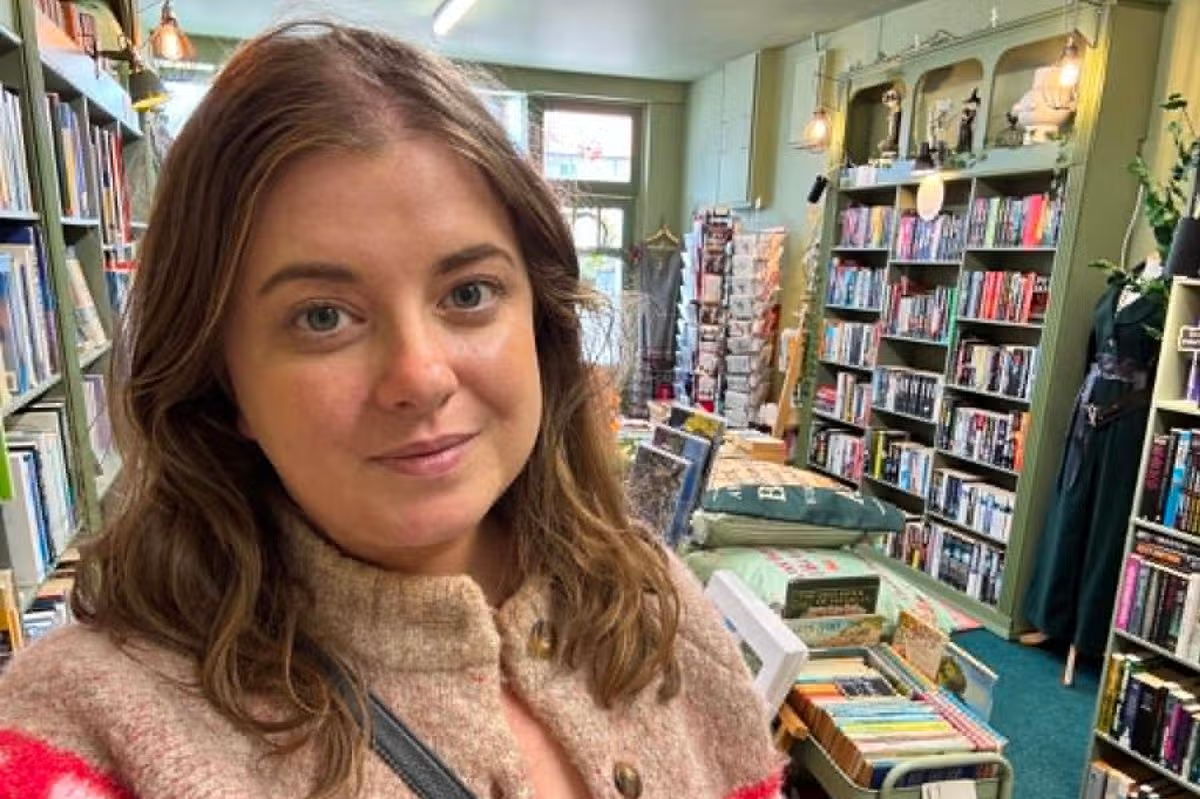
Mirror reporter Julia Banim spent the night at Read and Rabbit in Loftus, Yorkshire(Image: Julia Banim)
It’s always been a bit of a daydream of mine to run a quirky bookshop, ideally in a suitably pretty location.
So imagine my delight when I learned about Read and Rabbit, a sweet pink bookshop nestled in the quaint village of Loftus, on the very edge of the breathtakingly poetic North York Moors National Park.
It’s here where literary-minded holidaymakers can stay above the shop in the cosiest of surroundings. Best of all, in between curling up with a book and exploring the many charms of the local area, guests can try their hand at running the shop themselves, tallying up change, and greeting customers looking for a good read, and indeed, a good rabbit.
If you’ve been waiting around for your romcom moment, then let this be your sign. I simply couldn’t resist.
Read and Rabbit is the baby of Marta Eleniak, a friendly and likeable host with an encyclopedic knowledge of local haunts. She tells the Mirror: “I love creating experiences for people. Of all the things that I’ve done in my life, it’s when I’ve organised holidays for other people and done things that made them smile, that’s kind, where I feel I’m in my element. It’s like my calling, really, creating experiences for others.”
Before clocking on for my bookshop shift, Marta and I stop by the nearby Cattersty Sands beach, a hidden gem offering enough tranquillity to dislodge even the most stubborn writer’s block. Those with pets will also be pleased to know that it’s dog-friendly.
A relative newbie to Loftus, Marta fell for the area while looking for somewhere new to live, ideally in a friendly, affordable community with woods to walk in and plenty of rolling hills.
While chatting about her search on a Facebook group, a fellow member suggested their hometown of Loftus, with its waterfalls and proximity to the sea. Marta was immediately sold.
Having familiarised myself with lovely Loftus, it was onto my shift. The bookshop itself is a real treasure, with creative displays and even a fun ‘Harry Potter experience’ that young bookworms, and perhaps those not so young, will no doubt enjoy.
Marta learned that the centuries-old shop, previously an artist’s pottery studio, was up for sale through the local walking group, and while she initially had no intention of buying, when she saw it in person, it was love at first sight. It was then that things started to come together.
With this new ‘run a bookshop’ experience, guests staying in the self-catering accommodation have free rein to run Read and Rabbit, should they choose to. If they decide to do so, the only rules are that they open on at least one of the core days between 10 am and 2 pm on Saturday and on one midweek day.
That aside, guests are free to do as they wish and can spend time organising the books, changing up the window displays, and even offering workshops. For those looking for a bit more of a transformative stay, Marta offers buddy-up sessions to help people overcome writers’ block.
For Marta, Read and Rabbit is about more than selling books. From spending time online, she’s come across people who don’t necessarily have many friends in the offline world, and feels a brick-and-mortar bookshop offers that all-important sense of physical connection that’s so often missing in today’s society.
Marta says: “When I was researching bookshops, lots of people who had bookshops said the positive is that bookshops are just happy places for so many people. If you’re neurodivergent, it’s often a place where you feel quite happy and at ease.
“I just thought, I want to make it a happy place for people. And I want to have fun, quirky stuff there that makes people laugh. So even if they come in and something just makes them laugh, and they don’t buy anything, that’s good enough for me.”
There’s a comforting feel to the place, and indeed, Marta herself, that seems to prompt people to open up. While peaceful, Read and Rabbit also gets its fair share of eccentric and interesting customers, including those from North Yorkshire’s thriving artistic community. Often, they’ll stop and chat, sharing their stories, a laugh, and any problems that might be troubling them, big or small.
Profits from book sales go towards creating affordable events for people, with Marta noting: “Meditation is great, but not everybody can afford £10 or whatever it is for a meditation session.” I’m soon getting a feel for the place and the wider village, selling everything from adorable children’s books to humorous cards.
Now, I’ve worked in the trenches of retail before and can assure future guests that this is a far more relaxed experience. As Marta herself put it: “It’s a bit like when you’re a kid, and you play shop, but you actually get a whole shop to play with, but it’s real.”
For lunch, I enjoy a delicious takeaway pie and brownie from the award-winning Willow Cake Shop, a much-loved local establishment that looks like a bakery straight out of a fairytale. It’s a sizeable portion, but I don’t leave so much as a crumb.
After we close for the day, Marta and I take a walk in the local woods, of which there are plenty. Outdoorsy readers will be spoiled for choice with ancient woodland to explore, with plenty of Tolkien-esque trees and dramatic waterfalls to fire up the imagination.
Afterwards, we head into nearby Staithes, a wonderfully atmospheric fishing village with labyrinthine cobbled streets, a rugged coastline, and the saltiest sea air.
Those writing novels populated with old-timey smugglers, crashing waves, and secrets shared in lantern-lit taverns will adore Staithes. Do make sure to check out the Cod and Lobster, which offers excellent fresh seafood and unparalleled views over the harbour.
Lungs filled with sea air, I settle into my accommodation at Read and Rabbit, a charmingly unique set of rooms with plenty of literary touches, from typewriters to, of course, plenty of books. With two rooms to choose from, I went for the larger one with the window seat overlooking the street.
The kitchen is well stocked, with Marta kindly leaving out fresh local eggs and oranges to pop in the press for juice. I particularly love the colourful roof garden, the perfect spot for a morning cuppa. I sleep well and spend the first hour or so reading happily by the window, rain tinkling on the pane outside.
When things brighten up a bit, I say a reluctant goodbye to Read and Rabbit, and head over to nearby Saltburn, a Victorian seaside town famed for its historic pier and surfing. Saltburn has a relaxed, youthful feel, while still maintaining its timeless British seaside feel.
Fish and chips are, of course, a must, and so I stop by The Seaview Restaurant, a popular local haunt where there are queues on an ordinary Monday afternoon. The delicious and generous servings are made all the more special by the sparkling ocean views.
With Wuthering Heights fever having gripped the nation earlier this year, it’s clear that Yorkshire’s wild literary culture is having a moment. Should you want to explore beyond the crowds at Whitby and Howarth, then overlooked yet well-positioned Loftus, and in particular Read and Rabbit, offers the perfect opportunity to do so.
You can find out more about staying at Read and Rabbit here.
Do you have a story to share? Email me at julia.banim@reachplc.com