BUSTED’s Matt Willis has penned an emotional book about his life on and off the stage.
The musician says he hopes the project will help others who are currently battling addiction issues.
Matt Willis has penned an emotional book about his life on and off the stage, including his marriage to Emma WillisCredit: GettyJust four weeks before his marriage to Emma in 2008, Matt checked into rehabCredit: Getty
Speaking about Mending: Busted, Breaking and Getting Better, out on October 8, Matt said: “For a long time, I wasn’t sure I’d ever be able to tell this story, or even if I should.
“But over the last few years, I’ve realised that talking honestly about addiction, recovery, family and everything I’ve learned along the way might help someone else.
Sign up for the Showbiz newsletter
Thank you!
“This isn’t a book about having all the answers. I definitely don’t.
“It’s about learning that recovery isn’t a finish line, life doesn’t suddenly become perfect, and that we’re all still figuring things out as we go.
“Writing it has been one of the hardest and most rewarding things I’ve ever done, and I honestly can’t wait for you to read it.”
Just four weeks before his marriage to Emma Willis in 2008, Matt checked into rehab, and despite a relapse in 2016, he’s now been sober for almost nine years.
He’s a brave man, and I’m looking forward to reading his book.
Matt said: ‘Writing it has been one of the hardest and most rewarding things I’ve ever done’Credit: SuppliedDespite a relapse in 2016, he’s now been sober for almost nine yearsCredit: PA
WANT A BLUE PETER BADGE LIKE HARRY? YOU JUST HAVE TO ASK
Harry Styles said it was one of his proudest achievements when he was given a Gold Blue Peter Badge to mark his record-breaking run of 12 shows at WembleyCredit: PA
HARRY STYLES said it was one of his proudest achievements when he was given a Gold Blue Peter Badge to mark his record-breaking run of 12 shows at Wembley .
But I can reveal that the Beeb has now resorted to giving the famous accolade away on freebie websites in a desperate bid to keep the younger generation tuning in.
Once a prized possession, Blue Peter badges used to be given out strictly on merit.
However, an online listing reads: “The BBC are giving away free Blue Peter badges to anyone aged between five and 15.
“The badge allows you to gain free entry to over 200 attractions. Just send Blue Peter a letter explaining why you’d like one. That’s all.”
I understand it’s a sign of the times, but it seems a bit bleak to give it away for next to nothing.
BRITAIN’S Got Talent winner Sydnie Christmas joined American legend Gloria Gaynor for an unlikely collaboration on her 1979 hit I Will Survive at Boogie- town Festival in Surrey at the weekend.
Sydnie said: “I didn’t want it to end. Her love and passion consumes you.
“In that moment, nothing else mattered but the love of music.”
PUB MICK: IT’S CRAWL OVER NOW
Sir Mick Jagger has revealed how he ended up singing in a pub in Oxford last monthCredit: SuppliedThe global rock icon joined an Irish folk group at The Half Moon pub where he sang Handsome Molly with themCredit: Getty
The global rock icon, whose band The Rolling Stones are on course for their 15th No1 album on Friday with Foreign Tongues, joined an Irish folk group at The Half Moon pub where he sang Handsome Molly with them.
Explaining how it happened, he told the Conan O’Brien Needs A Friend podcast: “I had dinner at an Oxford college and then one of the students who I was talking with said, ‘I play mandolin. I’m going down the road to play with an Irish band. Do you want to come?’.
“I said, ‘Sure’, and I took a couple of people I was with and the provost of the college, who took his gown off.
“The band was doing fiddle pieces and the guy joined in with his mandolin, but no one was singing so I thought, ‘Well, here’s an opening. This is my chance for pub crawl singing’.”
I don’t think you’ll ever have to revert to that, Mick.
Kerry’s all gold
Kerry Washington was going for gold as she hit the red carpetCredit: GettyWhitney White, Whoopi Goldberg and Kerry WashingtonCredit: Getty
The actress wore this quirky metallic gown at the opening of stage production The Whoopi Monologues in New York.
Things really are going swimmingly for US star Kerry, who appears in the show penned by Sister Act’s Whoopi Goldberg.
The one-woman comedy turn debuted on Broadway in 1984, starring Whoopi herself, pictured with Kerry at the opening.
Speaking on US TV’s The View about the original hit, Kerry said: “Whoopi has been such a groundbreaker – a trailblazer and an inspiration for so many of us.
“Throughout my career, this show became a bonding place with other actresses. I would meet them and we would talk about how it impacted us and our idea of what was possible.”
SET FOR A MAIDEN VOYAGE
Iron Maiden have sold a stake in their publishing and master music rightsCredit: Getty
IRON MAIDEN have sold a stake in their publishing and master music rights, name and image to the Pophouse Entertainment company run by Abba’s Bjorn Ulvaeus, with massive plans to expand their legacy.
The big-money deal with Bruce Dickinson and the group was announced yesterday and comes after the firm partnered with other acts including Tina Turner and Kiss.
It will mean the band can pursue new creative ventures, including the filming of their Run For Your Lives tour for a “major cinematic project” as well as “developing a digital universe centered around” their mascot Eddie.
It’s exciting news for fans of the band, given Pophouse is the founding investor in Abba Voyage.
Perhaps Iron Maiden will be returning to a stage, in digital form, soon.
Kim’s heart is racing
Kim Kardashian and Lewis Hamilton’s romance is motoringCredit: Instagram / @kimkardashian
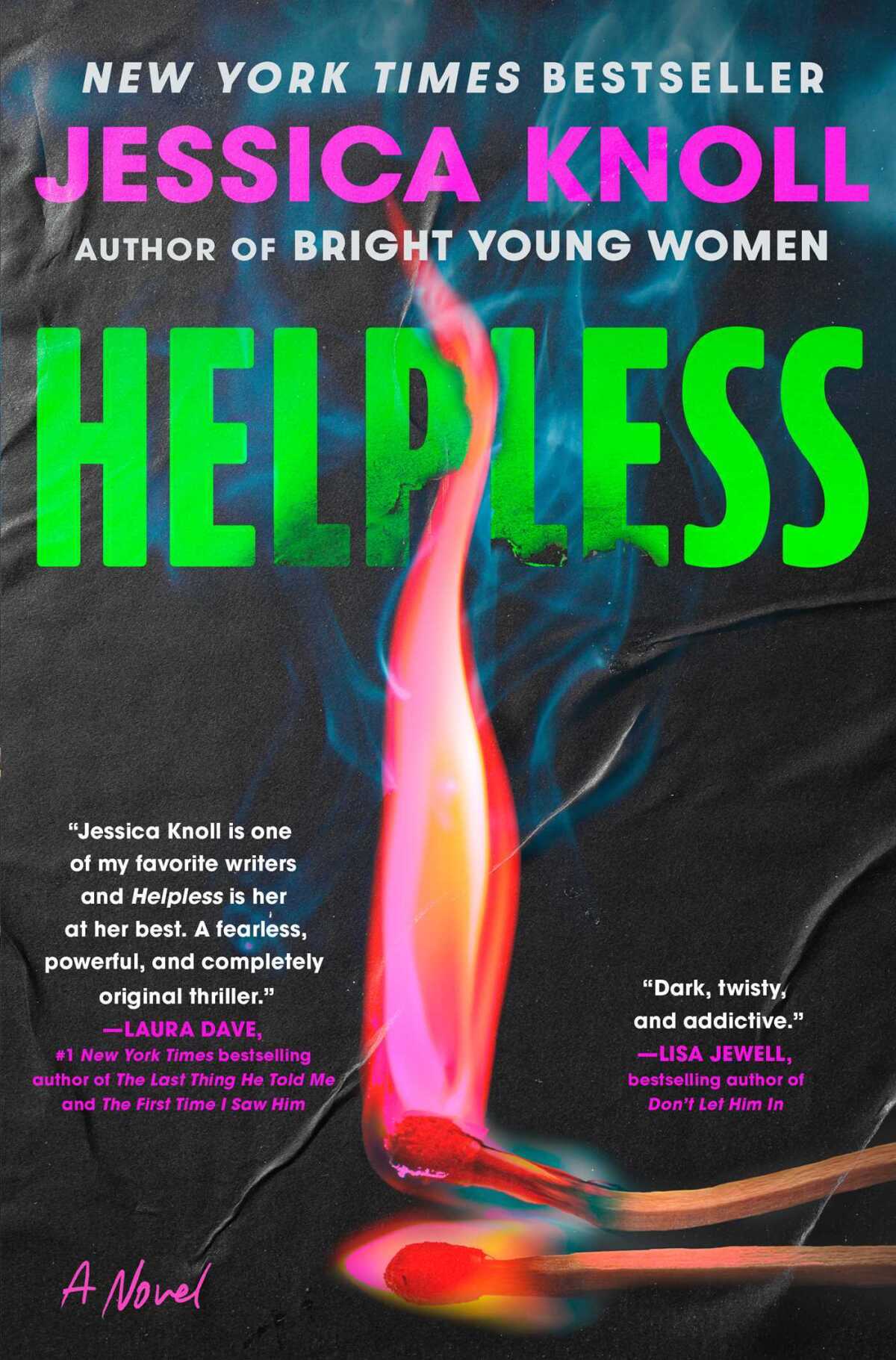
Bestselling author Jessica Knoll’s protagonists mostly follow a specific pattern: They are women who have learned Not. To. Flinch.
On the Shelf
Helpless
By Jessica Knoll Scribner: 320 pages, $28
If you buy books linked on our site, The Times may earn a commission from Bookshop.org, whose fees support independent bookstores.
And, apparently, neither does Knoll. Talking over Zoom about her fourth novel, the erotic thriller “Helpless,” which is out this month, the author is blunt about the challenges it took to complete the book. “It takes a lot of skill to write good sex,” Knoll says. “I relied a lot on feedback from my editor and from my book agents saying ‘this is hot; this is not.’”
Knoll has written romantic scenes before, but “Helpless” needed to be enthralling and economic enough not to get her kicked off of Target’s bookshelves. In the end, the author says, “I went by what felt good and natural for these characters and maybe a little bit of the really unfiltered talk you have with your girlfriends after a couple martinis or are on a girls trip.”
Knoll’s successful career as a novelist rests on her knack for creating provocative page-turners that depict the absolute worst things one person could do to another — but in such a sensational, tongue-prickling-sour-candy kind of way that her books come off as devilishly evil beach reads. Since her debut bestseller, 2015’s “Luckiest Girl Alive,” — a master class in braided narration between a Machiavellian magazine editor and her younger self who endured so much emotional and physical trauma that it’s no wonder she grew up to be extremely calculating — to 2018’s reality TV-set “The Favorite Sister” and 2023’s “Bright Young Women,” a response to the public’s obsession with immortalizing serial killers while also not knowing the name of a single one of their victims. Knoll’s books are not only stories about women who do not care if you like them but also ones where disastrous results await the women who do follow our cultural conditioning to be agreeable to men.
Her “Helpless” heroine is not so different from a lot of her previous main characters: Type A overachievers with cutting inner monologues that let the reader know they’re always one step ahead in the social Darwinism that is female relationships. This time, she’s named Faye Heron, an Emmy-winning Hollywood multi-hyph who found cachet while working on one of those edgy premium dramedies that probably aired on HBO. Faye, and her husband/producing partner, have parlayed this notoriety into indie, cool-kid projects that are just commercial enough that some of the target audiences’ boomer parents may also watch.
When Faye’s beloved college professor dies suddenly and she’s asked to speak at a memorial ceremony, nostalgia and flattery make her drop everything and hightail it back to the leafy northeastern college town. The place is a time capsule with sketchy internet service, drunken frat boys, and — most crucially — Faye’s college boyfriend Henry, who is now married with two kids and still lives in the area. The clothing references and song choices are popcorn for those old enough to remember the aughts but young enough to party during them. The Elsa Peretti-designed Tiffany & Co. heart necklace that was the it-girl accessory of the time, and now is one that Gen Zers are fishing out of the bottoms of their parents’ jewelry boxes, factors significantly into the plot.
Although the story eventually spirals into other tropes of the Knoll-niverse — kidnappings, cover-ups, affairs, the laissez-faire security that only old money affords — Faye stands out because she wants to be told what to do. In a secure and mutually consenting relationship, of course. And preferably after she’s told her partner what she wants.
“Helpless” was influenced by the 1995 Susanna Moore thriller “In the Cut” as well as Sarah J. Maas’ currently uber-popular romantasy series “A Court of Thorns and Roses,” both of which discuss power imbalances and smart women who become enamored with dangerous lovers.
Knoll has always been open about creating work that’s commercial. She famously wrote a 2018 New York Times opinion piece, titled “I Want to Be Rich and I’m Not Sorry,” that discussed her need to rank in money with an almost Scrooge McDuck fervor: “Success, for me, is synonymous with making money,” she writes. “I want to write books, but I really want to sell books. I want advances that make my husband gasp and fat royalty checks twice a year. I want movie studios to pay me for option rights and I want the screenwriting comp to boot.”
(Evelyn Freja / For The Times)
During our Zoom, with the background carefully faded behind her wavy blond bob, she promises that she doesn’t just copy and paste her subjects and settings from what sells.
“I’m just always looking on what the spin is; like, what the timely take is on something that happens to capture my attention,” she continues, citing a habit she credits to her early career working in women’s magazines like Cosmopolitan and Self. She adds that “I just happen to be interested in, like, really dark s—.”
“Helpless,” Knoll stresses, is a work of fiction; even though fans may be looking to draw comparisons to her life since “Luckiest Girl” was heavily influenced by her own career and childhood. Like the book’s Faye, Knoll went to a private liberal arts college. She’s spent time in the Adirondacks with the wealthy families who vacation in bare-basics cabins on the land they own. And she has dealt with her share of studio executives. Unlike Faye, Knoll is happily married to her husband, financial technology executive Greg Cortese. They share a young daughter. Last year, the family moved back to New York after some time in Los Angeles.
She does relate to Faye’s wealth dynamics. Her “Helpless” heroine grew up middle class but now has reached the “made it” level of nervous cockiness that happens when you combine new money and fame; the dream of so many who move to L.A. Henry, Faye’s ex, and his family are so comfortable in their generational wealth that he was raised to wear the same, now-bleach-stained, chambray button-down he had in college than buy a new one because clothes aren’t sound investments.
Knoll says she doesn’t want “things to feel didactic,” but concedes that class divides offer a treasure trove of stories.
“I just find myself going back to, again and again, this idea of someone who is the outsider because they don’t have the pedigree of their peers, but however many years later they’ve accomplished something and they think that they’re on more equal footing with these people from their past,” Knoll says. “Then something happens that brings them back into this environment where maybe they felt less-than years ago. They think that they’re going to go back and be like, ‘well, I’ll show you now because I’ve made it’ and those feelings of inferiority are still there.”
As she’s grown older and her career has become more stable, Knoll says she doesn’t think about success and fame the same way she did when she wrote her viral opinion piece or gave interviews where she talked about money and her own financial security. She says now that her priority is “the longevity of the career.”
Like her heroines, no one tells Knoll what to do. Unless she gives the OK.
Friedlander is a pop culture and entertainment journalist based in Los Angeles who hates coffee but loves Coke Zero.
A great novel can transport you to places you’ve never been, take you on imaginary adventures across the globe and, just occasionally, inspire you to visit a literary location in real life. We’d love to hear about a book you’ve read that led to one of your favourite trips, whether it was somewhere far-flung or close to home.
The best tip of the week, chosen by Tom Hall of Lonely Planetwins a £200 voucher to stay at a Coolstays property – the company has more than 3,000 worldwide. The best tips will appear in the Guardian Travel section and website.
Keep your tip to about 100 words
If you have a relevant photo, do send it in – but it’s your words we will be judgingfor the competition.
We’re sorry, but for legal reasons you must be a UK resident to enter this competition.
The competition closes on Monday 20 July at 10am BST
Your responses, which can be anonymous, are secure as the form is encrypted and only the Guardian has access to your contributions. We will only use the data you provide us for the purpose of the feature and we will delete any personal data when we no longer require it for this purpose. For alternative ways to get in touch securely please see our tips guide.
If you’re having trouble using the form click here. Read terms of service here and privacy policy here.
IF YOU’RE dreaming of a late summer holiday but holding off until the Three Lions finish their World Cup run, let me give you some free advice: stop playing chicken with the booking button.
Because I work in travel, my screen is constantly locked onto live booking data, and I’ve been crunching the numbers from Euro 2024 and the last World Cup, comparing tournament months against normal years, and the trend is identical.
Brits shouldn’t wait until the football is over to book their summer holidayCredit: onthebeach
The second England gets knocked out (or in this year’s case, hopefully lifts the trophy) the market goes completely mental.
Millions of Brits who put their summer plans on ice to watch the football suddenly rush to the package holiday sites at the exact same time.
And according to the data, this massive surge forces package prices to spike five to eight per cent above normal seasonal baselines within hours.
Whether we lose to Argentina on Wednesday or go all the way, demand is going to flood the market.
So if you still fancy a summer holiday this year but haven’t yet booked, you need to beat the post-tournament rush.
And here’s exactly where the data suggests prices are about to climb fastest.
5. Antalya, Turkey
You could stay at Lemas Suites Hotel Side in August with a free boat service to the beachCredit: onthebeach
Turkey always reacts aggressively after a major tournament, especially around the Antalya coast where all-inclusive packages dominate.
Our data shows that the moment football fever breaks, resorts like Alanya experience an immediate eight per cent price hikeabove the normal baseline.
You could stay at the Lemas Suites Hotel Side, which is a cracking value base right near the harbour, but my favourite thing about this hotel is its private river-boat shuttle.
The property sits slightly back from the coast on the side of the Manavgat river, and they run a free, regular boat service that drops you directly onto their private sandy beach lot, completely cutting out the sweaty August coastal walk.
On the Beach offers a five-night stay from August 22 at Lemas Suites Hotel Side, including return flights from Manchester Airport, from £355pp.
4. Canary Islands, Spain
Or if you want to head to the Canary Islands, visit Club Tenerife which is built into the hillsideCredit: onthebeach
The Canaries are Britain’s ultimate safety net for guaranteed summer sun, which makes them prime targets for the post-football booking surge.
The data shows that Fuerteventura’s Caleta de Fuste climbs a massive 17 per cent above normal rates post-tournament, while Matagorda in Lanzarote jumps by 13 per cent.
But, fear not, because you can check in to Club Tenerife in Los Cristianos.
And because the hotel’s built directly into a sheltered hillside, the main sun terraces are entirely shielded from the standard high-summer Atlantic winds that plague the flat beachfront hotels, giving you a proper, peaceful sunbathing setup.
On the Beach offers a five-night stay from August 22 at Club Tenerife in Los Cristianos, including return flights from Liverpool Airport, for £318pp.
3. Crete, Greece
In Greece, you could visit Ourania Apartments in Crete which hosts a local souvlaki nightCredit: onthebeach
Crete is another major mover in our holiday tracking, with the family-heavy resort of Kato Gouves seeing a massive 24 per cent price surge the second England exits a tournament.
You could stay at Ourania Apartments in Kato Gouves – this hotel’s an absolute peach of a pick too.
Every week, the family hosts an incredible local souvlaki night where they cook everything over open coals right in the central courtyard, serving up an elite, authentic Cretan feast for a fraction of what you’d pay at the beachfront tourist spots.
Where do I sign?
On the Beach offers a five-night stay from August 22 at Ourania Apartments in Kato Gouves, including return flights from Manchester Airport, from £383pp.
2. Costa Brava, Spain
On the Costa Brava, MedPlaya Esmeraldas Aparthotel links directly to the beach via an underground walkwayCredit: onthebeach
As you’d expect, Spain always runs hot after the football finishes – but the Costa Brava sees some of the steepest climbs on the board, specifically, the resort of Calella routinely records package prices sitting 25 per cent higher than normal once the tournament wraps up.
These apartments are exceptionally modern, but the best feature here is the private underground walkway that links the complex directly to the beachfront avenue.
It means you can wander from your living room to the sand in about two minutes without ever having to cross the busy main resort traffic.
On the Beach offers a five-night stay from August 22 at MedPlaya Esmeraldas Aparthotel in Tossa de Mar, including return flights from London Gatwick, for £283pp.
1. Costa Blanca, Spain
And in Costa Blanca, head to Jardin Milenio Hotel which sits inside a UNESCO-protected tropical palm groveCredit: onthebeach
The undisputed heavyweight of post-tournament price surges is the Costa Blanca.
Cala de Finestrat routinely explodes by 32 per cent above normal rates, while Albir climbs by 18 per cent.
Even Benidorm, despite its massive hotel capacity, jumps five per cent overnight.
You could opt for five-nights to the Jardin Milenio Hotel in Elche for under £300pp and for peak August, that is an unbelievable data loophole.
The standout feature here is that the hotel is located directly inside the famous Palmeral of Elche – a massive, UNESCO-protected tropical palm grove.
It means the entire pool area is surrounded by thousands of ancient palm trees, giving you a lush, high-end Caribbean resort aesthetic for less than three hundred quid.
On the Beach offers a five-night stay from August 22 at Jardin Milenio Hotel in Elche, including return flights from London Luton for £268pp.
“Little House on the Prairie” is the third television adaptation to bear the name of Laura Ingalls Wilder’s 1935 autobiographical novel of life on the Kansas plains in 1869 to 1870. The first, the Michael Landon television series that debuted in 1974, set in Walnut Grove, Minn., is really based on Wilder’s subsequent volume, “On the Banks of Plum Creek,” while a 2005 miniseries, shown as part of “The Wonderful World of Disney,” was generally faithful to the letter and spirit of the text. The record shows that I liked it.
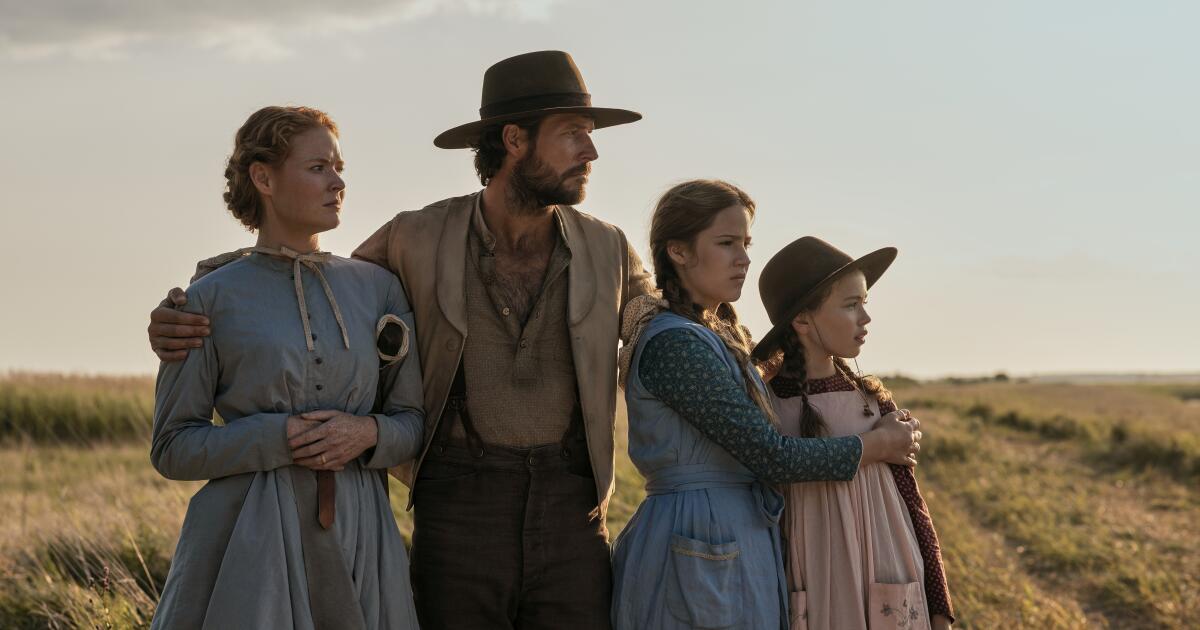
The new “Little House,” created by Rebecca Sonnenshine and streaming on Netflix, is fairly faithful to its spirit, and less so to its letter. At its center is the Ingalls family: father Charles (Luke Bracey), or Pa; mother Caroline (Crosby Fitzgerald), or Ma; serious older sister Mary (Skywalker Hughes), and adventurous Laura (Alice Halsey), whose story this is. They are heading out to Kansas to what they imagine is free land, though they will have a thing or two coming on that account. “This will be our new forever,” says Laura, who doesn’t yet know that her future will be in Minnesota.
To be sure, the character relations remain essentially the same. Pa will play his fiddle. Laura and Mary will dance, when not getting in one another’s hair, or sulking. There will be singing, frequently. Major episodes from the book — when Jack got lost, (Jack is the dog, and he will be found), the incident of Mr. Scott (Maclean Fish) down the well, Christmas, the one about malaria, and all the business of building the eponymous log house — are accounted for, if in some cases expanded upon or altered. So extensive are its innovations that, although I am going to point out certain departures from or additions to the text, because I am that sort of pedant, it may be best just to regard this “Little House” as an original thing, a variation on a theme by Laura Ingalls Wilder, or a reboot of the television show.
Some touches are drawn from Wilder’s own history. Her mother was a teacher before she married Charles Ingalls; her maternal grandfather died from drowning. The black cowboy hat Laura sports is straight from a photograph of Wilder as a girl. Laura is made a sort of mini-Scheherazade to foreshadow the writer she’ll become (though she’ll also ask, “What am I ever going to need in a book?”). Baby Carrie, in the novel from the start, is born, as she really was, in Kansas, meaning that Ma is pregnant through much of the season — a condition that may have seemed too complicated for a 1935 children’s book, but which adds new strains of drama to the miniseries. It also introduces a theme in which Ma, who has lost “so many” babies, is trying to give Pa a boy, though he is not the sort to be disappointed in another girl.
Also new to the story is Independence, Kan., itself, which in the book is an offstage place to which Pa will sometimes go to fetch necessities, disappearing from the story until he returns. Here it’s nearby — a nicely realized little movie town to which the whole family will sometimes repair, to shop, raise a church or join in a Founders Day celebration. It’s dominated by a less than transparent booster, Eli James (Michael Hough), who comes with a self-important wife, Jemma (Mary Holland), and a pair of teenage twin girls who might be described as all dressed up with nowhere to go.
Notably, the series’ treatment of Native Americans feels intended to rectify, or at least deepen, their portrayal in the book — naive or romantic, maybe, though not, I’d argue, negative — with added native characters and discussions regarding the land and treaties and such. While Ma frets about the natives in the neighborhood, for no reason she can articulate — one juvenile delinquent steals her cherished china figurine, but we understand that there are social causes for his behavior — Pa, who has built his house unwittingly on an Osage trail, has sympathy and perspective. (Ma will soften considerably, because this is that kind of show.)
It’s not an issue for guileless, outgoing Laura, who acquires an Indigenous best friend, Good Eagle (Wren Zhawenim Gotts). Her father, Mitchell (Meegwun Fairbrother) will be a friend to Pa and her mother, White Sun (Alyssa Wapanatâhk), will provide a skeptical counterpoint to Ma. Mission-educated, they live in a nice house with a crucifix on the wall and shelves full of literature.
Most every character gets some backstory, some traumatic. The Ingalls left Wisconsin under a cloud. (“Why didn’t anyone come to say goodbye?” wonders Laura.) (Still, it’s good to see Martin Donovan as Pa’s angry father in a fever-induced flashback.) Ma married Pa, her social inferior, against her mother’s wishes. Caleb (Kowen Cadorath), a new character who works for another new character, Emily Henderson (Barrett Doss), at the general store, was abandoned as a small child. Echoing the character played by Victor French in the TV show, Mr. Edwards (Warren Christie) has a drinking problem, brought on by a family tragedy. (In the book he describes himself as a “wildcat from Tennessee”; here he has wild … cats.) Much of the time, someone is sad. Halsey and Hughes, who are very watchable throughout, are especially good with worried looks, and Fitzgerald, perhaps the series’ MVP, is an artist when it comes to expressing concern.
Sonnenshine also invents tentative romances between Edwards and Lacey Aubert (Rebecca Amzallag), who is French, independent, runs the saloon, I guess you’d call it, dresses in black and wears trousers; between Emily and Dr. Tann (Jocko Sims), who is in the book, but much more established here; and between Mary and Caleb. All these storylines sacrifice the centrality of Laura as a character and observer and makes this “Little House” less a story of a family out on its own than a family in the context of community. (That’s for later volumes in Wilder’s nine-book saga.)
It’s very sentimental — which the novel, with its matter-of-fact, if sensually evocative prose, and its child’s-eye view, is not. The dialogue here is ripe with sampler sentiments and weighted with meaning (“Hope is everything,” “What if this is where we finally become who we’re meant to be,” “Life can get away from you if you don’t speak your heart.”) Much of the added material would have easily fit the TV series — temperamentally, it’s very much a case of late 20th century broadcast television — which to some may be a recommendation.
It’s pretty, often very pretty, to look at. The flat expanse of Winnipeg, Canada, where it was filmed, makes a good topographical match for east Kansas. Prairies are prairies.
Mothers and daughters are often caught in a double bind: biologically kindred yet divided by competing claims on identity and selfhood. In Cay Kim’s debut novel “The Future Perfect”, that bond is tangled by cultural discontinuity.
The novel’s mother has been reared in a South Korean household that places a high value on academic rigor and head-down discipline. She devotes all of her energy to grinding that work ethic into her daughter (Kim’s characters are unnamed), who is shuttled between her native Seoul and Minnesota, and grapples with finding the one true way for her to navigate the world.
I spoke with Kay, a native of Seoul who relocated to the States, about mothers, daughters and the unstoppable power of language.
You’re reading Book Club
An exclusive look at what we’re reading, book club events and our latest author interviews.
By continuing, you agree to our Terms of Service, which include arbitration and a class action waiver. You agree that we and our third-party vendors may collect and use your information, including through cookies, pixels and similar technologies, for the purposes set forth in our Privacy Policy such as personalizing your experience and ads.
✍️ Author Chat
Author Cay Kim
(Margaryta Bushkin)
This is your first novel. Did you start writing it in college?
This actually originated from a long poem that I wrote. I didn’t know I was going to turn it into a novel at the time. I just had the idea, the summer before my MFA, to expand each stanza into a chapter. That made the writing process relatively easier for me because it was such a straightforward process. I already had the frame of it.
Even though the novel is grounded in a very specific milieu — that of a child who is ensnared between Korean and American cultures — it’s very much a universal story, of a mother who feels the burden of raising a perfect daughter and is resentful when the daughter rebels against her ministrations.
It’s something that occupies so much of my head space. I wanted the mother to be portrayed as a victim of her society. The way that people choose to parent isn’t something that they learn in a vacuum. She has deep-seated beliefs about suffering and self-abnegation. But there’s a point at which an act of service risks inverting into a selfish act.
A big concept for the mother is endurance.
Exactly. It’s a generational trauma the mother is dealing with. She has had such ingrained beliefs passed down to her, and she’s unable to recognize when her methods result in her own mental and physical splintering, as well as her daughter’s.
Is it a function of the mother’s ego, or some kind of twisted narcissism?
She is putting herself through so much suffering because she believes she is doing the right thing. And there’s an extent to how much you can excuse that self-unawareness.
Yet despite this, the daughter feels tied to her mother, even when they are at loggerheads and she is living thousands of miles away.
The mother is such an integral part of the daughter’s consciousness that severance is impossible. They have a shared history and the daughter wants to share things with her mother, even when they are fighting. When she feels lonely at Stanford, the daughter verbalizes the fact that she has learned loneliness from her mother.
There are a lot of scenes in the novel tied to meals prepared by either the mother or the grandmother.
I do a lot of thinking about how cooking plays a role in our everyday lives. It’s something that people can spend hours preparing, only to have it disappear. It’s her mother’s domain. It is so opposed to the way the father thinks, which is very much tied to capital, to amassing and saving money.
The daughter really comes into herself when she is exposed to American culture.
Minnesota is where she acquires language for the first time. Language is so important to this character. Then she is shuffled back to Korea, and this disjunction is the thing that propels her narrative development. But as the story goes on, the daughter reaches a point where she has such mastery of expression and that is a power she acquires.
“The Future Perfect” is written in a very precise and concise way. What fiction writers do you admire, or who may have served as models?
I love writers whose use of language jolts the mind. My favorite writer of all time is Marguerite Duras. “The Lover” reads so easy but when you pay attention to the language, it’s very precisely engineered. I also love Clarice Lispector, for the way she expresses human spirituality.
Is this book drawn from your life? I ask that only because your protagonist winds up attending Stanford, as you did.
When I first started learning how to write, my teacher always used to say that writing shouldn’t necessarily contain the factual truth, but it should have emotional truth. And I feel like that has been the core of my writing practice throughout my life, and that even for those that don’t think consciously about it, that’s often the case.
This Q&A was edited for length and clarity.
📰 The Week(s) in Books
Country music performer Kenny Chesney sat down with Holly Gleason, the co-author of his new memoir, to talk about writing the book.
(Jill Trunnell)
The state of Ohio is celebrating America’ssemiquincentennial by offering a statewide reading project that features Toni Morrison’s fictional oeuvre, thus providing a vivid alternative history of the country. “Not only does her work re-center African Americans in the story of our country, it also tackles major events from our founding, through slavery, to the impact of Jim Crow, to the great migration and beyond,” Literary Cleveland Executive Director Matt Weinkam tells Leigh Haber.
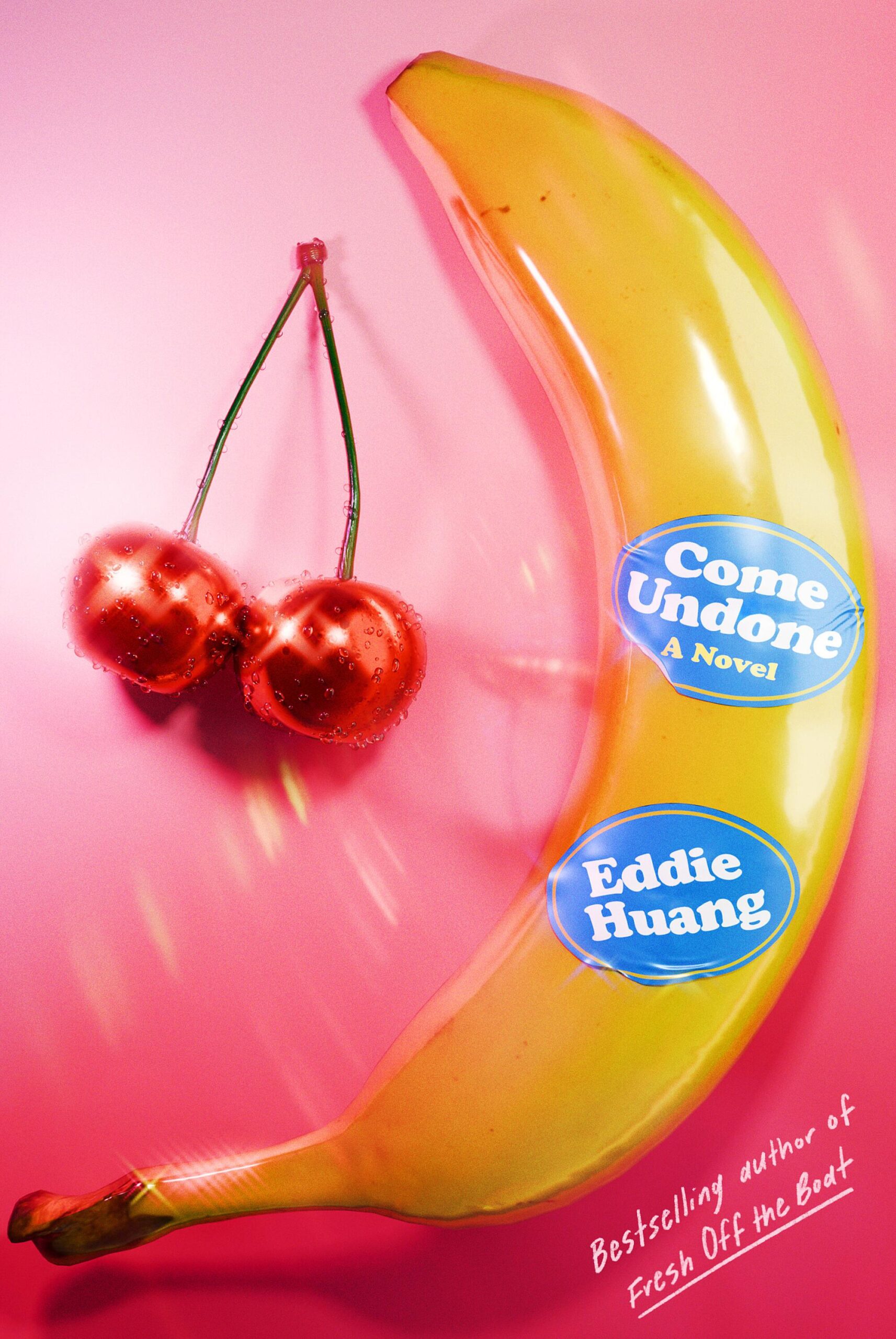
Chef-Podcaster-Author etc. Eddie Huang has written his first novel, a lightly autobiographical twirl through the foodie-verse called “Come Undone.“ “This book was very much about breaking up with your family to start your own,” he tells Mariella Rudi.
At a time when teen literacy is declining, Rudi polled five high school teachers to find out what books students should be reading now.
Gabrielle Korn’s novel “Long Island Girls” is a Millennial coming-of-age story that drips with Y2K nostalgia and the ways in which youthful optimism and hope can drift into middle-aged cynicism. “One thing I wanted to capture about early adulthood is the constant humiliation,” Korn tells Emily St. Martin. “The thing about being young is that people are so resentful of your youth, but you don’t understand that it’s resentment, you just think everybody hates you.”
📖 Bookstore Faves
The Loved Ones bookshop
(James Alan Duran)
J.C. Gabel, the owner of local book imprint Hat and Beard, has opened a new bookshop called The Loved One, and it already feels like an essential anchor for Historic Filipinotown’s burgeoning cultural scene. The store, which is also a gallery and events space, is expansive (5,000 square feet) and inviting, with patinated hardwood floors and a wall of picture windows that bathes the interior in natural light. I spoke with Gabel about his future plans for his new space.
What is the mission statement of The Loved One?
The Loved One reflects our ongoing commitment to independent publishing, original exhibitions, and the belief that books (and ideas within them) are best experienced in conversation with one another, in-person, whenever possible. In our post-post digital age, the serendipitous nature of organically curating physical objects is, in a sense, the point of the entire operation. We envision The Loved One as a space where everyone can exchange ideas, free from data-mining tech overlords, AI slop and click-bait tomfoolery.
What kind of books are you selling?
We’re going to focus mostly on new books about the visual arts, but we’ll also have several curated tables of fiction and nonfiction organized by subject and publisher, to highlight and promote the work of publishers we admire. Moreover, our genre-based book clubs and live author events — which will run weekly by August — will also influence the titles carried in the shop, too. Lastly, we’re bringing back Big Table, our books and conversation podcast — which we started with Dub Lab during COVID — now that we have a physical space to host and record these conversations.
It’s a very large space. What are your plans for it?
We are really keeping the space as modular as possible so we can change the interior of both storefronts to exhibit art and photography, as well as host author events, artist talks, live music, comedy, book clubs, etc.
You’re also a publisher, with Hat and Beard. How will that tie into The Loved One?
At least half of the arts programming I bring to the table will tie back to Hat and Beard’s original publications; the other half will be curated by Aubrie Wienholt and her team, working in tandem with myself and the H&B family. H&B will, of course, continue to program events all over the city regularly, but it will be nice to have a storefront again for the publishing house. We also intend to sell our rare and limited edition bundles of our books at TLO. There will finally be a physical space where one can come see this work in person before purchasing.
What about Historic Filipinotown? The Loved One is such a cool addition to what is becoming a vital cultural hub for L.A.
We are honored and thrilled to be working out of Historic Filipinotown. So much has opened in and around this neighborhood since COVID. It is a really vibrant community. There is a great camaraderie among all the small businesses in and around our cluster off Temple Street and Glendale Boulevard. Our immediate neighbors, Couplet Coffee and the bar 1642, are both actively involved in our programming monthly: Couplet has sent over a pop-up barista to serve coffee and tea at our literary events, and most of our after-parties are now held at 1642, two doors down.
Emily Ratajkowski’s viral essay detailing her sex life as a single mom just landed her a seven-figure book deal.
According to Page Six, the model’s essay in the Cut had publishers champing at the bit in a 12-way bidding war that culminated in the hefty pay day. Editor Helen Rouner at Penguin Press — who also edited Lauren Christensen’s memoir “Firstborn” and Michael W. Clune’s novel “Pan” — landed the deal.
“Emily is an electrifying writer, and she works with a style and force of presence that any publisher would be lucky to support,” Rouner told The Times on Friday. “She’s painting with every color in the palette.”
Rouner continued that the forthcoming memoir is “wise, funny, irreverent, moving — and wholly original.”
Publishers Marketplace announced the forthcoming memoir, describing it as “an examination of modern female identity through the story of the author’s own efforts as a newly single mother in New York City to discover what really constitutes a good life for a woman.”
The essay, which dropped a month ago and quickly broke the internet, drops the veil on EmRata’s sexual adventures (or maybe misadventures) since she and her former husband, Sebastian Bear-McClard, split in 2022.
“It was a violent transition into a new reality of screaming baby on my aching tit and ring on my swollen finger,” Ratajkowski writes of new motherhood. “And then, in a time period that felt both instant and excruciatingly slow, my marriage collapsed. Six months after my son was born, my husband and I stopped having sex. Less than a year later, we separated.”
In the missive, the model interrogates her sexuality — is she a Madonna or a whore? — while untangling bigger questions around gender, power and self-actualization. If Carrie Bradshaw wrote about “Sex and the City,” then Ratajkowski is writing about sex, the city and single motherhood. And naturally, her fleeting paramours have vague monikers: “Vegan Graffiti Artist,” “Spanish Gen-Zer” and “Son of a Billionaire.”
“And then there was the Elder Millennial: obsessed with dental hygiene, psychedelics, and dirty talk,” she writes. “He had approached the subject coyly at first, like it was something he was kind of embarrassed about — the way a kid will test you to see if you’ll talk to them about their dorky obsession of the moment. Do you like Godzilla? What about Star Wars?”
Would-be sleuths with Ratajkowski’s essay and a gossip rag handy will have their work cut out for them.
This will be Ratajkowski’s second book. The first, “My Body,” dropped in 2021 and was a bestselling collection of essays exploring gender, power dynamics, sexuality and the commodification of female beauty in the modeling and entertainment industries.
Ratajkowski’s foray into the spotlight came more than a decade ago when Robin Thicke’s controversial “Blurred Lines” music video made the model an overnight star. She was cast in David Fincher’s adaptation of “Gone Girl,” which hit theaters the following year, and catapulted to top fashion runways — Marc Jacobs, Versace, Victoria’s Secret and Dolce & Gabbana, to name a few. She she’s been romantically linked to Harry Styles, Eric Andre, Shaboozey, Brad Pitt and Pete Davidson, among others.
In 2023, she moonlighted as the host of the “High Low With EmRata” podcast, where she interviewed sex workers, investigated ethical nonmonogamy and pondered the etymology of the word “toxic.” The same year, she told The Times that she was coming into herself post-divorce, “Being able to assert what I want — that feels like it just started: My life as a creator and not as a muse.”
BOOKING something to look forward to doesn’t have to mean breaking the bank.
In fact, you can jet off to trendy European capitals or unwind at a spa hotel in the British countryside for less than you’d think.
From European holidays to mystery breaks and spa staycations, here’s Wowcher’s top travel dealsCredit: Getty
We’ve rounded up a selection of the best Wowcher travel deals on offer right now, starting from £89 with options both in the UK and abroad.
Whether you want to hop on the Eurostar to the canals of Amsterdam, pop over to Paris for a 4* getaway, or take the ultimate £99 gamble on a mystery holiday, we’ve got you covered.
Sign up for the Travel newsletter
Thank you!
Wowcher Mystery Holiday – £99
With a Wowcher mystery holiday you could land anywhere from Disneyland Paris to MiamiCredit: Alamy
This famous travel gamble lands you return flights and a minimum 3-star hotel stay for £99pp, with 100+ worldwide destinations in the mix.
While you could bag a sunny beach escape to Ibiza or a chic city break to Rome, the real jackpot is landing a long-haul trip to New York, Bali or the Maldives.
Other destinations where you could land a mystery holiday include Disneyland Paris, Thailand and Miami.
Book a £99 Wowcher Mystery Holiday
4* Peak District Countryside Spa Stay – £89
Take a relaxing trip to the Peak District and stay in a spa hotel for £89ppCredit: Alamy
Escape to the spectacular hills of the Peak District with this four-star spa staycation for two.
Situated on the edge of Staffordshire, this bargain break at The Three Horseshoes Country Inn includes a cosy overnight stay, a cooked breakfast, and access to the spa.
Nearvy, explore rock formations at The Roaches, go paddle-boarding at Rudyard Lake, or visit Alton Towers Resort, which is a 20-minute drive away.
Book a 4* Peak District Countryside Spa Stay from £89pp
4* Paris Getaway with Hotel, Flights, and Breakfast – £119
Stay two nights in Paris with return flights included for £119ppCredit: Getty
Whisk yourself away to Paris on a stylish, four-star city break from £119pp which includes return flights from your pick of nine UK airports, plus a two night stay and a delicious daily breakfast to fuel your sightseeing.
Stay at the sleek 4* Best Western Plus Suitcase Paris – La Défense, which has beautifully-designed contemporary rooms and a relaxing lounge bar.
Ticking off landmarks like the Eiffel Tower and the Louvre is totally effortless too, thanks to a metro station just 300 meters from the hotel door with direct routes straight into the city centre.
Book a two-night city break to Paris from £119
Northampton Stay at Staverton Park Hotel & Golf Club – £104
This package Wowcher deal at a country club includes a two-course dinner, breakfast and a glass of wineCredit: Wowcher
Treat yourself to a countryside retreat with a stay at the Staverton Park Hotel & Golf Club, starting from just£104 for two people which includes delicious two-course dinner or buffet access, a complimentary glass of wine each, and a full breakfast.
You’ll also enjoy unlimited access to the on-site gym and sauna, plus handy perks like a 2pm early check-in and an 11am late check-out to stretch your relaxation time.
Golf fans can even tee off on the PGA European-tour standard course, while the hotel sits just a short drive away from the beautiful Daventry Country Park and the iconic Silverstone Circuit.
Book a stay at Staverton Park Hotel & Golf Club for £104
Amsterdam Eurostar Break with Hotel Stay – £139
Book a two-night city break in Amsterdam for £139 with WowcherCredit: Getty
Hop aboard the Eurostar for a seamless two-night city break to Amsterdam, with return Eurostar tickets plus a stay at the modern ibis Amsterdam City West, which places you close to the vibrant Westerpark.
Getting around the capital will be easy, too, with a metro station a five-minute stroll from the hotel door.
From there, a quick ride drops you right at Amsterdam Centraal, putting bucket-list attractions like the Van Gogh Museum and beautiful canal cruises within easy reach.
WEEKEND plans in the UK can easily burn through a hundred quid these days – so why not spend that exact same cash on a European getaway instead?
Travel companies Wowcher and Loveholidays offer city breaks that bundle your return flights and hotel stays together, all for £99 or less.
Visit lake Lake Como from £79pp on a budget-friendly city breakCredit: Getty
Whether you want to sip world-class beers in hidden cellar bars, or soak up the sunshine by a gorgeous Italian lake, here are five city breaks you can snap up now starting at £79pp.
Lake Como – £79
Rub shoulders with celebs at Italy‘s most glamorous lake without paying Hollywood prices.
Sign up for the Travel newsletter
Thank you!
Here you can cruise across sparkling waters, ride the funicular railway for panoramic mountain views, and tuck into delicious risottos at a waterfront trattoria.
Spend your days in Lake Como exploring historic cobblestone towns and lush botanical gardens right on the water’s edge.
This Wowcher deal includes a stay at the traditional B&B Hotel Como, which recently won a TripAdvisor Traveller’s Choice award.
Wowcher offer a two night break to Lake Como with return flights from London Gatwick, London Stansted, Manchester, Bristol or Edinburgh, from £79pp.
Krakow – £89
Krakow in Poland is a popular city break destination, and is packed with history and vibrant nightlifeCredit: Alamy
Lose yourself in the cobblestone charm of Poland‘s cultural capital, where fairytale spires tower over Europe’s largest medieval market square.
Feast on traditional dumplings by day before wandering the glowing historic streets and exploring underground cellar bars by night.
From the trendy cafes of the old Jewish Quarter to the grand castle overlooking the winding river, Krakow packs masses of history into every corner.
This bargain Wowcher deal bundles in your return flights and a stay at the charming Hotel Yarden by Artery Hotels, right in the heart of the city.
Wowcher offer a two night break to Krakow with return flights from Newcastle, Edinburgh, London Bristol or Manchester from £95pp.
Barcelona – £99
Enjoy a four star stay at the Eurostars Executive hotel with a £99 Wowcher city breakCredit: Alamy
Spend a whirlwind weekend in Barcelona to try tasty tapas, visit golden beaches, and tick off a visit to the jaw-dropping Sagrada Familia.
Wander the winding alleys of the Gothic Quarter before dipping into buzzing bars along La Rambla.
When the sun goes down, head to the hidden neighbourhood plazas like Plaça del Pi to drink cold beer under the palms.
This brilliant Wowcher deal bundles your return flights with a stay at the modern, four-star Eurostars Executive hotel.
Wowcher offer a two night break to Barcelona with return flights from Edinburgh, London Birmingham or Manchester for £99pp.
Prague – £99
Visit Prague on a weekend break from £99 with LoveholidaysCredit: Getty
Escape to Prague on a fairytale break where the streets are filled with soaring stone spires and historic castles.
Here, winding cobblestone streets hide traditional taverns and cellar bars pouring world-class lager.
Vibrant market stalls fill the sprawling Wenceslas Square, while the famous Astronomical Clock draws lively crowds to the historic Old Town.
This Loveholidays getaway pairs your return flights with an easy stay at the automated, digital-entry Royal Court Legerova apartments.
Loveholidays offer a two night break to Prague with return flights from London Luton for £99.
Venice – £99
Tick off a trip to Venice with a £99 weekend getaway with LoveholidaysCredit: Getty
Tick off a trip to romantic Venice with this cheap Loveholidays city break deal.
You can hop onto a public water bus for a few euros and cruise down bustling waterways, passing striped-shirt gondoliers along the way.
Stop off at a traditional neighborhood tavern to wash down bite-sized cicchetti snacks with a glass of bright orange Aperol spritz.
Loveholidays is offering flights plus a stay at the traditional Venetian hotel Agli Artisti, situated steps from the Grand Canal.
Loveholidays offer a two night break to Venice in November with return flights from London Luton for £99.
Five more affordable city breaks
Marrakech – £79
4* Overnight hotel stay with return flightsfrom London or Manchester with Wowcher.
Book yourself in for some sun and visit Morocco’s Marrakech, with your flights and hotel included for £79.
The vibrant city is home to Jemma El Fnaa Square, a World Heritage site where you can find everything from souks selling fragrant perfumes to snake charmers.
Overnight stay in a central hotel with return flights from Manchester, Edinburgh, London or Bristol with Wowcher.
A must-visit capital, Rome boasts some of the best-preserved historical sites on the planet. as well as top bars and restaurants.
For some lesser-known things to do, check out the street art and markets of the Testaccio district, and walk through the fairytale streets of Quartiere Coppedè.
Two-night stay at a&o Frankfurt Ostend with return flights from London Stansted with On the Beach.
Frankfurt offers something for everyone with a striking futuristic skyline alongside a beautifully restored old town.
Dip into traditional cider taverns. check out the independent boutiques and local markets of the Bornheim district, and walk through the picturesque streets of historic Höchst.
Two-night stay at Hotel F1 Nantes est Porte de Ste Luce with return flights from London Stansted with On the Beach.
Nantes is best known for its mix of medieval heritage and surreal mechanical art installations, as well as legendary buttery crepes and crisp Muscadet wine.
Make sure to check out the river and charm of the Chantenay district, and walk the brightly-coloured, bohemian streets of nearby Trentemoult.
CHEYENNE, Wyo. — She refused to ban books, many of them about racism and the experiences of LGBTQ+ people. And for that, Suzette Baker was fired as a library director in a rural county in central Texas.
“I’m kind of persona non grata around here,” said Baker, who had headed the Kingsland, Texas, library system until she refused to take down a prominent display of several books people had sought to ban over the years.
Now, Baker is fighting back. She and two other librarians who were similarly fired have filed workplace discrimination claims with the U.S. Equal Employment Opportunity Commission. And as culture war battles to keep certain books from children and teens put public and school libraries increasingly under pressure, their goal is redemption and, where possible, eventual reinstatement.
So far, it’s a wait-and-see whether the claims will succeed — and set new precedent — in the struggle between teachers and librarians around the country who oppose book bans and conservative activists who say some books are inappropriate for young minds.
The fight has involved a record number of book-banning efforts, some libraries cutting ties with the American Library Assn. — which opposes book bans — and even attempts to prosecute librarians for allowing children to access books some consider too graphic.
At least one terminated librarian has gained a measure of success.
Brooky Parks, who was fired for defending programs on anti-racism and LGBTQ+ stories she organized for teens at the Erie Community Library north of Denver, won a $250,000 settlement in September. Reached through the Colorado Civil Rights Division, the settlement requires her former employer to give librarians more say in decisions involving library programs.
Parks’ settlement with the High Plains Library District capped a stressful eight-month period without work, when community donations helped her avoid losing her home. And it will probably resolve Parks’ claim with the EEOC, said attorney Iris Halpern, who represents Parks and the other two librarians.
“I just wasn’t going to back down from it. It was just the right thing to do,” said Parks, now a librarian at the University of Denver.
After her firing in 2022, Baker filed an EEOC claim against her employer, the Llano County Library System in Kingsland. And in September 2023, Terri Lesley filed a claim over her firing last summer as executive director of the Campbell County Public Library System in Gillette, Wyo.
Halpern, with the Denver firm Rathod Mohamedbhai, compared the wrongful-termination claims to civil rights-era legal battles.
“It is honestly sad that we’ve gotten to this point. But history is a constant struggle, and we have to learn from our past,” she said.
The 1964 Civil Rights Act established the EEOC to enforce laws against workplace discrimination. One legal expert thinks the librarians might be able to prevail on the grounds that, under those laws, employees may not be discriminated against for associating with certain classes of people.
“With any case, the devil can be in the details in terms of how the facts come out and what they can present. But these are definitely actionable claims,” said Rutgers University law professor David Lopez, a former EEOC general counsel.
An EEOC investigation can take more than a year. After that, the EEOC may attempt to reach a settlement with the employer out of court, sue on the employee’s behalf or issue a letter saying the employee has grounds to sue on their own.
The librarians haven’t yet received an EEOC response and none is expected before the end of next year.
“I would love to be optimistic,” Baker said. “I know there are a lot of people in this community who are just absolutely behind the library being open and free and equal for all. And there’s a lot of people who aren’t. So it’s a hard, hard situation.”
EEOC spokesperson Victor Chen declined to comment on specific filings, saying, “We can’t even confirm or deny we have these complaints.”
The county attorney offices and other representatives of the government officials who fired Parks, Baker and Lesley did not return phone and email messages seeking comment, or declined to comment.
At her Texas library, Baker displayed several books that have been targeted in recent book bans and a sign that read: “We put the ‘lit’ in literature” — a reference to a Tennessee pastor’s recent burning of books.
Baker was fired after refusing to take down the display and signs — considered the last straw after she resisted book banning in her library.
In March, a federal judge ordered 17 books returned to Kingsland library shelves while a citizen lawsuit against book banning proceeded. The works ranged from children’s books to award-winning nonfiction, including “They Called Themselves the K.K.K: The Birth of an American Terrorist Group,” by Susan Campbell Bartoletti; and “It’s Perfectly Normal: Changing Bodies, Growing Up, Sex, and Sexual Health,” by Robie Harris.
“Content-based restrictions on speech are presumptively unconstitutional and subject to strict scrutiny,” Texas U.S. District Judge Robert Pitman wrote in his March 30 ruling. He cited a 2015 U.S. Supreme Court ruling that barred communities from banning signs because of what they say.
The Llano County Commissioners Court decided against closing the county’s three libraries in response to the ruling. Closing the libraries would have echoed the history across the U.S. of closing swimming pools rather than desegregating them, Halpern said.
Like Baker, Lesley had trouble finding work after being fired from the library system she directed in Gillette, Wyo. Her dismissal followed two years of turmoil over challenges to the books available and library programs.
Some of the same county officials who opposed a transgender magician’s plans to perform at the library went on to join local residents in seeking to ban books, according to Lesley’s EEOC filing.
Baker and Lesley both were fired after local officials appointed new library board members willing to be more aggressive about pulling books.
“Our county commissioners appointed board members who were sympathetic to the people who wanted to remove the books. And it was a long dance to try to get it there. And in the end they had to fire me, I think, in order to be able to meet their goal,” Lesley said.
The Campbell County Commission skirted a deputy county attorney’s recommendation not to appoint past applicants for the board without reinterviewing them along with new candidates, according to Lesley’s EEOC claim.
“I saw this as a well-executed attack on the library by a group of citizens and elected officials. It was an attack on the LGBTQ+ community as well,” she said. “And it was an attack on the books.”
FANCY bagging a sunny getaway at a European resort from £9.50?
You don’t need to spend a fortune to book a family break abroad, because our famous £9.50 Hols unlock some of the biggest and best holiday resorts across Europe.
Sign up for the Travel newsletter
Thank you!
You can book a stay at Park Umag in Istria, Croatia with Sun Hols from £9.50Credit: Euro CampHundreds of holidays from £9.50 will become available on July 8, but Sun Club members can bag them a day earlyCredit: Euro Camp
We’re talking massive pool complexes, thrilling waterslides, and doorstep access to gorgeous beaches – plus quirky perks like on-site bakeries with fresh bread delivered straight to your door.
Good news – new dates will be released for all of the following European holiday parks plus more on Wednesday, July 8.
But if you want to beat the crowds and bag yourself a bargain before they all sell out, make sure to sign up to Sun Club.
Sun Club members will get exclusive access to these holidays an entire day early, scoring the best deals before anybody else.
Whether you want to lounge under banana trees in Spain, explore ancient Rome from a shaded pine forest, or splash in Croatia’s clear blue seas, these action-packed parks have something for everyone.
Here’s our selection of the mega European holiday parks you can book with Hols from £9.50.
La Torre del Sol, Costa Dorada, Spain
La Torre del Sol in Spain’s Costa Dorada is just one of hundreds of parks in the £9.50 Hols top-upCredit: Euro Camp
While the kids are busy splashing around in a dedicated pirate pool and splash park, adults can kick back with a cocktail under the shade of lush banana trees at La Torre del Sol.
Centred around a massive swimming pool, this pretty resort is styled with Roman and Moorish designs.
There are plenty of ways to keep the energy high with table tennis, bike rentals, and evening family discos.
But the best way to unwind at this resort is going for a relaxing soak in a hot tub in the unique shape of a snake.
Millau Plage, France
Millau Plage in France has activities like football, paddle-boarding and canoing availableCredit: Euro Camp
Sat on the edge of France‘s Tarn River among rolling green hills and deep rock gorges, this holiday park is a total outdoor playground.
Here you can set off on a canoe or paddleboard onto the water, have a game of basketball or football on the multi-sports pitch, plus kids can tire themselves out on the outdoor adventure course.
Plus you could even hire a bike on-site and load up a picnic with fresh food from the park’s very own bakery, then pedal off to explore the nearby town of Millau.
When you return, you can unwind in your modern holiday home. Each spacious unit comes with full self-catering facilities and a private outdoor space.
Fabulous, Lazio, Italy
Fabulous in Lazio, Italy has a huge outdoor pool and splash park, plus a lazy river and waterslideCredit: Euro Camp
Surrounded by a sprawling 70 acres of beautiful pinewoods, Fabulous is an aptly-names resort that sits on Italy‘s Ostia coast.
The area was once a bustling port city in Ancient Rome, and while there is plenty of history and nature here to explore, the resort itself is packed with top tier amenities.
You can spend your days alternating between a massive outdoor pool and a lazy lagoon, catching thrills on the waterslide, or soaking in the whirlpool.
Plus the resort is a convenient 30-minute drive away from the centre of Rome, where you can tick off all of the must-see sites and restaurants.
Bella Austria
Bella Austria is surrounded by bright green fields, rolling hills and meadowsCredit: Euro Camp
Set in a landscape of massive mountains and vibrant meadows, Bella Austria looks just like a film set.
Tucked away in the rural Katschtal Valley, this active park is built for outdoor adventures.
Nature lovers can set off on scenic hiking trails, guided countryside tours, and cycling routes down to the nearby Mur River.
When you aren’t out exploring the local villages, the resort keeps the whole family happy with a mini animal farm, sports pitches, and a traditional Austrian wellness area complete with saunas.
Park Umag, Istria, Croatia
Park Umag in Istria, Croatia has activities like water zorbing and a giant inflatable obstacle courseCredit: Euro Camp
Facing the turquoise Adriatic Sea, Park Umag is a massive, lively resort on Croatia‘s Istrian peninsula.
With direct beach access, it features two miles of waterfront promenade and Blue Flag beaches that are perfect for exploring on hired bikes.
When you aren’t off exploring the local beaches, the site keeps everyone busy with two seafront pools, waterslides, water zorbing and an inflatable obstacle course.
There’s also four restaurants, a pizzeria as well as supermarkets and a traditional market on-site – so you won’t go hungry.
Orbitur Valverde, The Algarve, Portugal
Orbitur Valverde sits between Lagos and Praia da Luz in The Algarve, PortugalCredit: Euro Camp
Imagine waking up to freshly-baked bread delivered to your door before spending the day out exploring the Portuguese coast.
That’s what’s on offer with a stay at Orbitur Valverde, a holiday park ideal for those who love the outdoors.
Tucked between The Algarve‘s Lagos and Praia da Luz, the resort has a wealth of dramatic coastal walks and sweeping sandy beaches right on your doorstep.
On-site there’s an action-packed itinerary of golfing, horse riding, and scenic boat trips that will fill your days with adventure.
All the ways to book your holiday from £9.50
There are six ways to book our Holidays From £9.50 – however Sun Club members gain access an entire day early
Book with Sun Club: Join Sun Club for £1.99 per month. Then go to the Sun Club Offers hub and find the Hols from £9.50 page. You do not need to collect any code words or Sun Savers codes. Sun Club members can book from 00:01 on Tuesday, July 7 2026.
Collect codes then book online: Simply collect five out of 20 code words printed in The Sun daily from Saturday July 4 to Thursday, July 23, 2026. Then enter them at thesun.co.uk/holidays to unlock booking. Code collectors will be able to book from Wednesday, July 8.
12-Page pullout – Gather codes from the pullout on Saturday, July 4, 2026. Then enter them at thesun.co.uk/holidays to unlock booking.
Book with Sun Savers: Download the Sun Savers app or register at sunsavers.co.uk. Then go to the ‘Offers’ section of Sun Savers and click ‘Start Collecting’ on the ‘Hols From £9.50’ page. Collect five Sun Savers codes from those printed at the bottom of the Sun Savers page in the newspapers from Saturday, July 4, 2026. Then enter or scan the codes on Sun Savers to unlock booking from Wednesday, July 8.
Book by post: Collect five of the code words printed in The Sun each day fromSaturday July 4 to Thursday, July 23, 2026. Cut the code word out and send it back with the booking form – found in paper onor online at thesun.co.uk/holidays.
Book with The Sun Digital Newspaper: Sign up to The Sun Digital Newspaper at thesun.co.uk/newspaper. Then download the Sun Savers app or sign up at sunsavers.co.uk, log in to Sun Savers with your Sun account details (the same email and password you use for your Digital Newspaper) and enjoy automatic access to Hols, without the need to collect Sun Savers codes daily. Digital Newspaper subscribers can book fromWednesday, July 8.
If you buy books linked on our site, The Times may earn a commission from Bookshop.org, whose fees support independent bookstores.
New reads abound for your vacation tote throughout the weeks of July, with fiction picks featuring a Carnival cruise casualty, a highly entertaining jewel heist at the Waldorf-Astoria, and a Soviet-era madcap adventure. In nonfiction, authors consider how we define wild places, how we pigeonhole the aging, and how languages live or die. Happy reading!
FICTION:
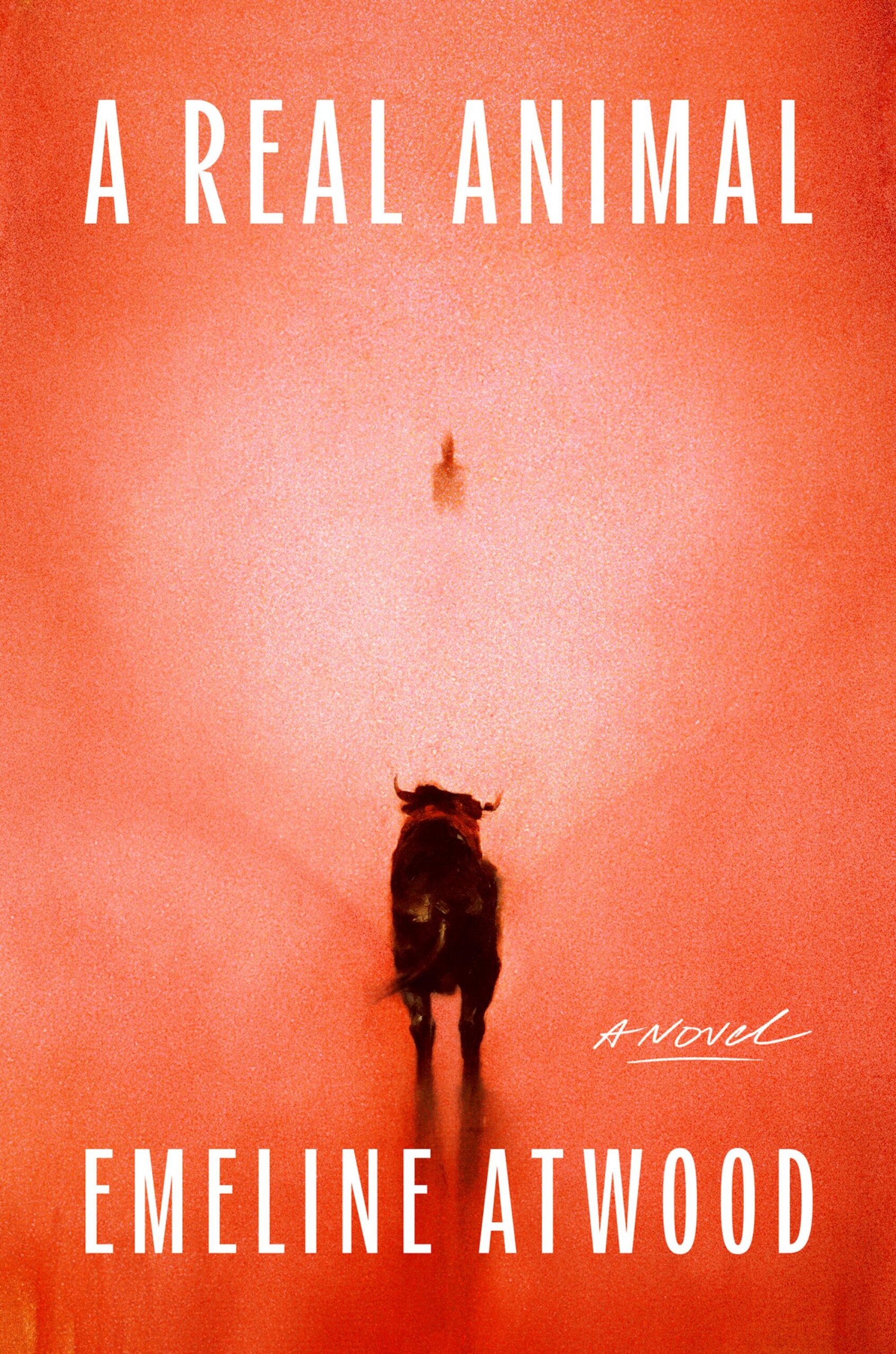
A Real Animal: A Novel By Emeline Atwood Catapult: 368 pp., $29 (July 7) After surviving a sexual assault, narrator Lucy stalks her college campus as a leopard. Don’t spend too much time worrying about whether this transformation is real, or not; Lucy’s knowledge of her fierceness is the point, a fierceness she employs as she struggles to negotiate her independence from parents who wish she’d come home to recover and men who offer up their desires and ignore hers. It’s an astonishing debut with a compelling voice.
Man Overboard!: A Novel By Kathleen Rooney Gallery Books: 208 pp., $27 (July 7) Readers expecting something akin to Rooney’s wondrous previous novel, “Lillian Boxfish Takes a Walk,” should remember that that book followed “Cher Ami “ and “Major Whittlesey,” a story about a pigeon and a World War I Army officer. In other words, Rooney doesn’t repeat herself, and in “Man Overboard!” she’s concocted a hilarious adventure tale of a man floating in the Gulf of Mexico, adrift with himself, his thoughts, and a few sea creatures.
Astronaut!: A Novel By Oana Aristides W. W. Norton: 272 pp., $28 (July 14) Imagine a dystopia set neither in the future nor in fantasy; that’s the 1989 Romania 7-year-old Lia inhabits, its adults living in fear of Communist dictator Nicolae Ceauşescu, its infrastructure strained by deprivation, and its reality so scrambled that calling an explorer an “astronaut” instead of “cosmonaut” risks punishment. When Lia sets out to buy her mother a birthday gift, she sets in motion a series of weirdly probable yet totally weird events.
City of Widows: A Novel By Nadia Hashimi William Morrow: 432 pp., $32 (July 28) During the two decades of American occupation, Afghanistan experienced a sort of peace, one in which women could be educated, work as professionals, and even serve in the military. When the U.S. left in 2020, those same women found themselves — regardless of their individual status — subject to Taliban restrictions that deny differences in gender, desire and ambition. Hashimi (“Sparks Like Stars”) shows how desperate and daring the women become.
Cool Machine: A Novel By Colson Whitehead Doubleday: 368 pp., $30 (July 21) First “Harlem Shuffle,” then “Crook Manifesto,” and now, “Cool Machine,” the highly anticipated “Harlem Trilogy” conclusion from the two-time Pulitzer Prize-winning Whitehead. The inimitable Ray Carney, who started out as a minor criminal, is now Sterling Furniture’s “Northeast Regional Dealer of the Month,” a respected businessman. It’s the mid-1980s, and when Ray’s beloved wife Elizabeth gets turned down for a small-business loan, he takes matters into his own hands, in his own former ways.
NONFICTION:
How to Kill a Language: Power, Resistance, and the Race to Save Our Words By Sophia Smith Galer Crown: 304 pp., $33 (July 7) Smith Galer’s nonna spoke an Italian she called “dialet”; her mother spoke “dialet” and English; Smith Galer herself speaks only English. What do we lose, the author asks, when a language dies? The answers she found are powerful, like an enzyme to treat HIV that was found in a tree that was discovered because a researcher spoke Samoan. Unsurprisingly, she also found that language death often corresponds to ecological and cultural devastation.
The Earth Said Remember Me: How to Revive Our Memories and Restore Our Planet By Jason Dove Mark W. W. Norton: 224 pp., $25 (July 14) Perhaps art will be the thing that preserves the environment, even if humans can’t save it. “Go outside. Bear witness. Make a record. Pass it on,” writes Mark in this eloquent, impassioned plea for us all to remain involved in environmental action. The more we appreciate the natural world, the more we’ll want to care for it, share it with others, and help future generations understand how some changes are natural and not all are inevitable.
Aging Out: An Exploration of Caregiving, Community, and How Americans Grow Old By Lucy Schiller Flatiron Books: 272 pp., $30 (July 14) Services for the elderly range from luxury assisted-living facilities to special digital devices meant to bypass phone scams, but as Schiller explains, these things not only commodify a natural life passage — they separate older people from their natural communities. The author was inspired to investigate our country’s aging population when she cared for a grandmother who died from COVID; the book weaves the personal with the political in a meaningful way.
(Avid Reader Press/Simon & Schust)
Dad, Love, Me: A Memoir By Matthew Quick Avid Reader Press: 320 pp., $30 (July 21) Novelist Quick (“The Silver Linings Playbook”) turns to memoir in recounting his contentious relationship with his father, whom he’s losing to dementia. While the author has had big highs (like the movie adaptation of “Playbook”), he’s also experienced deep lows, including alcoholism and severe creative block. Somehow, through recovery (which he credits to Jungian therapy), he affords both his imperfect, ailing parent and himself grace.
The Savage Landscape: How We Made the Wilderness By Cal Flyn Viking: 448 pp., $35 (July 28) In “Downton Abbey”, the Dowager Duchess of Grantham starchily asked “What is a ‘weekend?’” In this book, journalist Cal Flyn asks — more affably, but with equal intensity — “What is a wilderness?” Her answer: Depends on your perspective. In other words, nearly every place on Earth teems with life. It’s only humans who have attached words like “wild” and “unexplored” to regions where they feel uncertain, afraid, and even awed.
Patrick is a freelance critic and author of the memoir “Life B.”
If you buy books linked on our site, The Times may earn a commission from Bookshop.org, whose fees support independent bookstores.
Eddie Huang has never felt lighter. Last month, after his debut novel, “Come Undone,” finally released, something shifted.
“I have a family. I feel healed,” he said over coffee and short ribs in Santa Monica hours ahead of a live talk with Ottessa Moshfegh, the bestselling, critically acclaimed author of Huang’s favorite book, “My Year of Rest and Relaxation.”
“People always write me off as a personality or a multi-hyphenate,” he said. “It’s a nice way of saying I’m not really good at anything. But I didn’t have any of that this time.” He leaned forward, serious. “I have to be honest. I do think the Knicks are a big, big part of it.”
His beloved Knicks winning the championship, he said, kept him from spiraling over the book. In person, Huang subdues his ironic braggadocio with polite eye contact and rolling belly laughs at his own jokes. For years, audiences have watched Huang resist whatever box you put him in. His particular brand of cultural fluency — a rapid-fire mix of food, fashion, basketball, politics and pop culture — is what made the “Gua Bao Bad Boy” impossible to categorize.
For most of his career, Huang has seemed constitutionally incapable of standing still. Chef. Memoirist. TV host. Filmmaker. Lawyer. Comic. Podcaster. His first book, “Fresh Off the Boat,” became the longest-running network sitcom centered on an Asian American family, even as Huang publicly distanced himself from the show. Since leaving post-fires L.A. for New York, he’s reopened Baohaus — returning to the kitchen that built his career. Waiting for him at home after the book tour is his wife, Natashia Perrotti, and their 2-year-old son.
Now there’s “Come Undone,” fiction that Huang called his most honest — and vulnerable — work to date.
“It’s sort of this next-gen auto fiction type thing that is creating its own rules,” Moshfegh said ahead of their Q-and-A. “It made me think about my own appreciation for the experience of male heterosexuality and how much it’s been commodified.”
The book follows Hubie, a globe-trotting food-show host drifting through Chateau Marmont, Madeo, Nobu and other “dirtbag L.A” (as Huang coins) spots. He meets Janine, his equal in appetite and id, sending him into a tailspin of yearning and loops of Sky Ferreira’s “Everything Is Embarrassing” on sadboi walks. The “two walking red flags” decide to try to make it work.
Huang called the novel an “autofictional riddle.” The puzzle isn’t especially difficult if you’ve followed his relationship with Perrotti, who co-hosts their podcast, “Canal Street Dreams.” Marrying a writer, she’s learned, often means finding out what he feels by reading it. “We’ll get into a fight,” she said, “and I’ll wake up to a Substack article about it.”
It’s also part of the private life she’s since conceded. “It’s annoying,” she added. “But now I can read it, and maybe understand him a little bit better. He’s trying to communicate through the writing, like sending somebody a song and saying, ‘I want you to listen to these lyrics.’”
The novel goes further, drawing from experiences the couple has never discussed publicly. In the novel, Hubie and Janine’s relationship pivots after an ectopic pregnancy ends in loss. Perrotti said the scene is fictionalized but mirrors a similar experience they had early in their own relationship.
“It brought us closer together,” she said. “It was the catalyst for us realizing we were serious.”
Before Huang could finish the book, the life he was writing about had to fall apart. “This book was very much about breaking up with your family to start your own,” he said. “There was a lot of anger in the book that had not been resolved.”
By the end of 2024, Huang had stopped speaking to his mother. The break followed what he described as a blowup at a Cheesecake Factory. It also unlocked the ending he’d been chasing.
Eddie Huang.
(Jason Armond / Los Angeles Times)
Looking back, Huang thinks the earlier versions failed because he was still arguing with her. He’s still trying, in some way, to communicate with her through his writing. “If there’s one person I wish would read the book,” he said, “it would be my mom.”
There were other chapters he had to close the book on, mainly Hollywood. His foray into fiction coincided with the writers’ strike, drying up all his income and future projects. That same year, he became a father. “I had to accept and realize that my value was not in making money,” he said. “Because for three years, I couldn’t.”
He recalled a particular low point researching life insurance policies. “I had to rebuild my whole self. Really love myself despite not being able to offer anybody anything.”
That new certainty didn’t make Huang any less willing to pick fights. Last year, as his documentary “Vice Is Broke” — an autopsy of the media company behind “Huang’s World” and its eventual bankruptcy — awaited release, Huang said distributor Mubi shelved the film after he boycotted the company over Sequoia Capital’s investment in an Israeli defense technology startup. (Mubi denied this and said it still planned to distribute the film.)
The ghost of Vice still lingers in today’s media ecosystem in what he called our “era of cartel journalism:” creators navigating a world of blurred incentives and corporate interests. He traced this instinct to challenge those systems back to Socrates’ “gadfly” — the person whose job was to annoy power. “As a writer, you should be challenging people,” he said. “If your memoir can be turned into a sitcom, it probably wasn’t challenging.”
Eddie Huang.
(Jason Armond / Los Angeles Times)
After the 2025 L.A. fires drove his new family back to New York, Huang went back to cooking. He worked pop-ups, reopened Baohaus and found himself alongside line cooks half his age. In March 2025, he rewrote the novel in five days. That same month “was the first month I didn’t overdraft my credit card,” he said, with the majority of his income today coming from the restaurant. It’s allowed him to make films, write books and walk away from deals he doesn’t believe in. “Being a chef is the anchor that allows me to maintain my artistic integrity.”
For years, comparisons to Anthony Bourdain followed Huang everywhere. The two eventually became friends.
“He was one of the few people who was as advertised,” Huang said. “Nicer and more generous in person. And wounded.”
Bourdain is the only real person who appears in “Come Undone” under his own name.
When Huang mentions him, he stops talking. He covers his face. Tears come.
“I don’t believe in God,” he said, “but I asked the universe why for many, many years.”
Bourdain’s suicide, he said, was one of the reasons he walked away from “Huang’s World” in 2018. At the time, few people understood why. “It was Tony. It was family. It was everything.”
Eddie Huang.
(Jason Armond / Los Angeles Times)
Now, looking back, Huang thinks he was writing “Come Undone” toward a different ending than the one he’d imagined.
“This book is a guy saying, ‘I don’t want to be like my biological father,’” he said. “And, in the most respectful, loving way, I don’t want to go out like Tony.”
He paused. “I needed to name the sadness in me. I needed to allow myself to be loved.”
Huang is already writing another memoir about getting back into the kitchen. Still, he said, these days, he’d rather write fiction.
Rudi, an L.A. native, is a freelance art and culture writer. She’s at work on her debut novel about a stuttering student journalist.
For 45 years, in his novels, short stories and essays, James Ellroy has been creating the definitive under-history of his Los Angeles hometown, mapping in his work the subterranean currents of power, corruption, sex and lies that have shaped the polity of the city. Ellroy’s latest is another compelling entry in his ongoing project.
“Red Sheet” is a multilayered American epic that blurs fact and fiction, a deep dive into anti-Communist paranoia, from the corridors of City Hall to the dank precincts of the LAPD. The novel also marks the return of Fred Otash, a real-life Hollywood fixer whom the author has featured in previous novels, including his last book, “The Enchanters.” I recently talked to Ellroy about Otash, L.A. in the ‘60s and L.A. today.
You’re reading Book Club
An exclusive look at what we’re reading, book club events and our latest author interviews.
By continuing, you agree to our Terms of Service, which include arbitration and a class action waiver. You agree that we and our third-party vendors may collect and use your information, including through cookies, pixels and similar technologies, for the purposes set forth in our Privacy Policy such as personalizing your experience and ads.
✍️ Author Chat
Freddie Otash has been something of a twisted muse for you. In “Red Sheet,” Otash is an LAPD detective trying to smoke out Communist sleeper cells in Kennedy-era L.A. He was, in fact, a real person, a notorious Hollywood fixer. How did you first become aware of him?
I had seen a documentary about his specious role in the cover-up caper surrounding Marilyn Monroe’s death. I’d been hearing about him for years, and then I created the Jack Vincennes character who worked for scandal magazines in my book “L.A. Confidential,” played by the scurrilous Kevin Spacey in the vastly overrated movie of the same name.
Did you ever meet him?
Years ago I met a producer named James B. Harris, who produced all the old Stanley Kubrick movies and had optioned one of my early books called “Blood on the Moon.” I asked him if he knew Freddie Otash, and he said everyone in Hollywood knew Freddie Otash. I was planning my novel “American Tabloid” and so I arranged to meet him. He was unpleasant and charmless and way past his prime. I spent some time with him in Miami, where he was living in a place called the Jockey Club, and I had to listen to him talk about his many conquests of the world’s most beautiful and desirable women. I didn’t believe a word of it.
But he did have useful stories, I’m assuming.
Otash I used for the character Pete Bondurant in “American Tabloid.” We entered into a deal whereby I would pay him 10% of what Knopf was paying me in exchange for him keeping his mouth shut. He has become that valuable literary artifact: the great detective.
“Red Sheet: A Novel” by James Ellroy
(Knopf)
Your book deals with a piece of legislation called the Rumford Act that would tear down the city’s racist racial housing covenants in 1963, but the act in ’62 had enemies in high places, namely Mayor Sam Yorty and his power base. You were 14 in L.A. in 1962. Did you feel this racial tension?
I remember vividly how the world was changing. I knew there was de facto segregation in housing. I remember Nixon’s pathetic campaign for governor in 1962. But I remember racial barriers breaking down, particularly in school. Just talking with Black kids in school, because why wouldn’t you? And I had been this dumb, bigoted kid.
What’s interesting about the characters in your book is that their ideological alliances are quite fluid, depending on the circumstances. Communists are married to John Birchers, who may be, in fact, red-diaper babies, and so on.
People are endlessly complex. Going back to Freddie Otash again. He knew Tom Bradley in the ‘40s, when Bradley was a cop. And Freddie becomes a bag man for the civil rights movement, and the Rumford Act in particular. He’s about the most unlikely guy you would expect to support civil rights. I wanted to show [how] complex human beings and their beliefs can be, and this book is a primer on that.
You are so closely associated with Los Angeles, and you lived here for most of your life. Why do you live in Denver now?
Helen Knode is my all-time life partner, who is also my second ex-wife. Ten years ago, we decided to get back together, but she was living in Colorado. She came up with the idea of me getting a loft in her building, and we would have the keys to each other’s places, and that’s why I did it. I like it in Denver, though it’s quite hot at the moment.
Do you miss L.A? What are you feeling about the city now?
I was just there on my book tour. I feel like it’s a complete dump. It’s just totally run-down. When I got off the airplane, I noticed a smog layer, so smog is back. I saw many young, odd-looking, overly adorned young people. I don’t know. … It’s a kid’s town now, to a certain extent.
This Q&A was edited for length and clarity.
📰 The Week(s) in Books
Country music performer Kenny Chesney sat down with Holly Gleason, the co-author of his new memoir, to talk about writing the book.
(Jill Trunnell)
Greg Sarris is the chairman of the Federated Indians of Graton Rancheria in Sonoma County. He’s also an acclaimed novelist whose his first book in 28 years, “The Last Human Bear,” is loosely based on the life and teachings of Pomo spiritual leader Mabel McKay, a constant lodestar for Sarris. “An American Indian woman is as richly complicated as anybody else. I wanted to show this rich and complicated character who’s negotiated a history that she’s showing you,” Sarris tells Maddie Connors.
In “Daughters of the Sun and Moon,” author Lisa See excavates the events surrounding the Chinese Massacre of 1871. In doing so, she also digs into her own Chinese heritage in L.A. “My great-grandfather’s fourth wife was 16 when he brought her here, and she was never let out,” See tells Emily St. Martin. “My mom used to say these women would all get together, and she used to describe it as birds twittering together, because they actually had this opportunity to be with each other, but on really very rare occasions.”
Fear not, literary Cassandras: Authors can still generate online heat, thanks to BookTok and other social media outlets. So much so that more books are being adapted into streaming content than ever before. “With the advent of BookTok, it allows you to have so much social chatter around these authors,” producer Bryan Unkeless tells Gary Goldstein. “They’re becoming new rock stars, in a way.”
Finally, Kenny Chesney sat down with Holly Gleason to discuss their collaboration on “Heart Life Music,” Chesney’s new memoir. “I didn’t know if there was a story there,” the country megastar tells Gleason. “Over time you wore me down, to make me pause and … reflect.”
📖 Bookstore Faves
The interior of Counterpoint Records & Books.
(David Jones)
In a city that has so often seen its old-school retail businesses turned into nail salons and real estate offices, Counterpoint Records & Books remains an outlier. Originally established in 1979 by John and Susan Polifronio, the store on Franklin Avenue has remained, even as many of its nearby store-mates have shuttered, offering a well-curated selection of secondhand books and records from every conceivable genre. I chatted with David Jones, who is one of the owners of the Franklin Avenue store, about Counterpoint’s enduring success.
Counterpoint is an Eastside institution, but businesses along your strip on Franklin have gone under while you have survived. What is the secret to your longevity?
Firstly, we are lucky enough to own the building we do business in, which has given us a lot of freedom to be able to pursue doing business our way. That didn’t happen until we were in business for almost 20 years, but now in our 47th year we feel lucky to be able to continue to provide a physical, in-person shopping experience. I think our success is tied to this. People are looking for an experience away from their screens, and I think we provide that without being anachronistic or nostalgic by keeping up with and stocking contemporary music, digital media and all types of books.
Is your clientele mostly local? I’m guessing it’s a multigenerational clientele, given the store’s long history.
We definitely have a younger demographic these days, but we have a very intergenerational staff, and I think that attracts an all ages clientele. We meet folks daily from all over the world as a destination that people return to and tell their friends about. I think word-of-mouth is our greatest form of outreach. People say we feel special to them, as if they’ve stumbled onto a secret by shopping here. It’s something I love and am very proud of.
How have books maintained their staying power despite the countless distractions of daily life?
I think of it as one of life’s greatest luxuries. To be honest, I never thought too much about the staying power of books until the pandemic. During that time, people would come in and thank us for being open and a place they could come to escape what was happening. It was a real turning point for me. I started to think more about the importance of what we do and how much of an effect it has on people. I never took what we do for granted, but it gave me a sense of urgency that I didn’t quite have before.
GREENBELT, Md. — Former Trump administration national security adviser John Bolton pleaded guilty on Friday to illegally retaining classified information, sealing a deal with federal prosecutors that could allow him to avoid a prison term.
Bolton, who became an outspoken critic of President Trump after serving in the Republican’s first administration, is scheduled to be sentenced on Oct. 28 by U.S. District Judge Theodore Chuang in Greenbelt, Md.
Bolton pleaded guilty to a single count of illegally retaining classified information. His plea agreement with the Justice Department may enable him to avoid time behind bars, but the judge ultimately will decide his punishment.
The plea agreement recommends capping any prison sentence at five years but the judge isn’t bound by that part of the deal. Bolton can withdraw his guilty plea if the judge issues a longer prison sentence or a fine greater than $2.25 million.
Bolton was charged last October with 18 counts of either retaining or disseminating classified information, including diary-like notes that he shared with relatives as he wrote a memoir about his career in government.
Other Trump adversaries have been charged with federal crimes during his second term in the White House. While some of those cases have collapsed under judicial scrutiny and amid claims of political retribution, Bolton didn’t mount a vigorous defense against his charges before cutting a deal.
FBI agents searched Bolton’s Maryland home and Washington, D.C., office last August, but the investigation began before Trump returned to the White House in January 2025.
Bolton served for more than a year in Trump’s first administration before getting pushed out in 2019. He later published a book called “The Room Where it Happened” that presented an unflattering portrait of Trump’s leadership.
The Trump administration fought unsuccessfully to block the book’s release, claiming it contained classified information that could jeopardize national security. Trump derided Bolton as a “crazy” warmonger who would have led the country into “World War Six.”
Bolton’s indictment focused on notes that he shared with his wife and daughter rather than the contents of his book. After sending one document, Bolton wrote in a message to his relatives, “None of which we talk about!!!” In response, one of his relatives wrote, “Shhhhh,” prosecutors said.
BEAUTIFUL Britain is packed with postcard towns and villages that look like they’ve been plucked straight from the pages of a storybook.
From chocolate-box cottages tucked away in the Cotswolds to hidden Highland havens and medieval bridges – you don’t need to board a flight to find a little bit of magic.
The charming village of Cockington in Devon is home to pretty thatched cottagesCredit: AlamyThe town of Burford is often referred to as the ‘gateway’ to the CotswoldsCredit: Alamy
Even better, a fairytale escape doesn’t have to come with a royal price tag.
Whether you fancy sipping craft ales by a roaring log fire in Scotland, playing a game of Poohsticks in the Peak District, or exploring a village dedicated to cheese, you can also do it on a budget.
Our travel team has rounded up the most enchanting UK villages to visit this summer – with stays starting from £20 per night.
The Scottish Highlands
Head of Travel, Lisa Minot
Head of Travel Lisa Minot recommends a visit to Carrbridge in the Cairngorms National ParkCredit: Lisa Minot
It’s a little slice of Highland heaven. A picture-perfect scene of a babbling brook and ancient bridge surrounded by pine forests – but it is one with a slightly darker past.
The village of Carrbridge in the Cairngorms National Park is known for its famous Packhorse Bridge.
First built in 1717, it was used to transport coffins across the raging River Dulnain when waters rose.
Over time, what is now the oldest stone bridge in the Highlands has fallen into disrepair but looks all the prettier for its decrepit state.
The village itself, set in the grand, wild majesty of the Cairngorms, has other claims to fame including the Golden Spurtle World Porridge Making Championship.
Every October, chefs from around the world descend on the village hall to battle over oatmeal concoctions.
For travellers looking to refresh after a hike through the surrounding mountains, The Cairn is a lively pub in the heart of the village with a roaring open fire, huge selection of single malt whiskies and craft ale and lots of local game on the menu.
There’s also plenty of artisan treasures to pick up at the Carrbridge Artists Studio.
And keep your eyes peeled when you wander the village and surrounding Ellan Wood.
Massive wooden sculptures of red squirrels, owls and folklore figures abound, created in the annual chainsaw carving championships that are hosted in the village every year.
Stay in Carrbridge
If you click on a link in this box, we will earn affiliate revenue
The Cairn Hotel on the main street of Carrbridge offers budget-friendly stays in a double room from £60 per night.
There are three bridges crossing the river in Ashford in the Water, including Sheepwash BridgeCredit: Alamy
Set in the picturesque Peak District National Park, Ashford in the Water is a pretty village that looks like something from a children’s picture book.
At the heart of the village is Sheepwash Bridge, a medieval stone bridge that stretches over the River Wye. As the name suggests, the river was once used by farmers to wash their sheep before shearing.
Take a stroll over the hump of historic cobbles to watch the ducks drift past. Visit England even named this spot the best place in the country to play a classic game of Poohsticks.
Head further into the village to find charming limestone cottages with manicured gardens, as well as the Holy Trinity Church, which dates back to the 12th century.
The village hosts several unique events throughout the summer, too. The Well Dressing & Flower Festival in June sees the villages’ wells adorned with flower displays, while the Ashford Sheepwash lets you watch the farmers guide their ewes through the river.
Head to the Riverside House Hotel and sit down to a tasty breakfast starting from £8. The hotel dates back to 1620, and its stone exterior is covered with a blanket of climbing ivy.
Five minutes down the road you’ll find the market town of Bakewell, where it would be rude not to try a famous cherry-topped tart.
Stay in Ashford in the Water
If you click on a link in this box, we will earn affiliate revenue
Stays at the Riverside House Hotel start from £180 per room, working out to £90pp per night.
Alternatively, book a stay 20 minutes down the road at the YHA Hartington Hall: a 17th century property with 124 rooms that feels more like a stately home than a hostel.
If you don’t mind sharing a room, you won’t find many hostels more beautiful than this for your money. Dorm rooms start at £20 per night.
Deputy Travel Editor Kara Godfrey recommends strolling down Mermaid Street in RyeCredit: Alamy
When the town’s own main road is called Mermaid Street, it’s no wonder Rye is often compared to the storybooks.
It is steep and cobbled so leave the princess heels at home.
But let down your hair at the aptly named Mermaid Inn, at over 800 years of age, it’s one of the oldest in the UK – even visited by some British queens too.
(Live out your princess dreams up Ypres Tower too, for some of the best port views).
There’s souvenir shopping galore so pick-up some artwork, books, or homeware.
Don’t forget a decadent hot chocolate at Knoops – this was the original shop before its rollout across the UK and worth the price.
Stay in Rye
If you click on a link in this box, we will earn affiliate revenue
You can stay in a bell tent in the woods in Rye, surrounded by local ducks, goats and chickens, from £99 per night.
Visit the jaw-dropping landscapes of Cheddar Gorge on a trip to the village in SomersetCredit: Alamy
A village named after one of Britain’s favourite foods – what could be better?
Cheddar takes its name seriously and the main road that cuts through the village centre, leading up to the famous Cheddar Gorge, is littered with themed pubs, cafes and shops dedicated to the dairy product.
It’s all a little cheesy, but you’ve just got to embrace it.
In need of a new frock? Gorge-ous Boutique is the place to head. Feeling peckish? I’m still dreaming of the cheese rarebit that I devoured at Cafe Gorge a few months back.
Although very little cheddar is actually produced in the village nowadays, you can still get your hands on some local stuff at The Cheddar Gorge Cheese Company – the only place to still sell it.
I’d recommend opting for the cave-aged variety which is left to mature in Gough’s Caves for a year or so, giving it a deep and rich flavour.
Pop into the caves while you’re here, too. It’s pretty cool to be able to take in such an ancient structure – the stalactites in here are a staggering 500,000 years old.
Stay in Cheddar
If you click on a link in this box, we will earn affiliate revenue
Westmill, Hertfordshire
Travel Reporter, Alice Penwill
Travel Reporter Alice Penwill recommends a visit to Westmill in HertfordshireCredit: Alamy
If you didn’t know it was there, you’d miss it. But just next to the larger town of Buntingford is the charming village of Westmill.
To get to it, you’ve got to head down a bumpy track, or walk across rolling fields.
There’s no noisy traffic, in fact, it’s so incredibly quiet you’re likely just to hear the bleating of sheep.
Westmill has thatched-roof cottages, a village green, a charming tea room and a pub loved by locals called The Sword Inn Hand.
In fact, it’s been rated among the Top 100 Restaurants for Outdoor Dining in the UK for 2026 by OpenTable.
And it was also named the ‘Best Pub’ in Hertfordshire by The Telegraph thanks to its “cheerful crackling log fires in winter, a pretty garden with country views in summer, generous portions of good locally sourced food, local ales and superb service”.
Stay in Westmill
If you click on a link in this box, we will earn affiliate revenue
Knaresborough, North Yorkshire
Deputy Travel Editor, Kara Godfrey
The market town of Knaresborough in North Yorkshire has a giant picturesque viaductCredit: Alamy
Knaresborough might technically be a town, but to me it gives big village vibes.
Not only does it feel small, but its postcard-perfect viaduct feels like something from a storybook, especially when a train runs along the top at the same time as errant row boats underneath.
Even its main attraction Mother Shipton’s Cave sounds like it’s make-believe.
One of England’s oldest tourist attractions, it is the “birthplace of a famous prophetess” with magic seemingly woven throughout…
Otherwise the historic market town is perfect for a souvenir or two followed by afternoon tea.
Stay in Knaresborough
If you click on a link in this box, we will earn affiliate revenue
Stay at The Mitre Inn, a cosy pub with rooms by the train station, from £130 per night for a double.
Visit the Rose Cottage tea gardens of Cockington for a delicious and traditional cream teaCredit: Alamy
YOU wouldn’t believe that this stunning, quaint village is just a short walk from the beach and bustling towns on the English Riviera…
Cockington is a small village set back from Torquay seafront, where you will find thatched cottages, open meadows, a manor house and a thatched pub with a sprawling garden.
It is the ideal day out or retreat from the busy seaside.
Head to The Drum Inn for a tipple or if you prefer to keep it Devonshire, make sure to visit The Weavers Cottage Tea Garden for a traditional cream tea including freshly made scones.
At the top end of the village you’ll find Cockington Court, with stables home to a number of independent makers including glassblowers and blacksmiths.
Stay in Cockington
If you click on a link in this box, we will earn affiliate revenue
There’s aren’t many places to stay in the village itself, but nearby Torquay has numerous wallet-friendly spots.
This includes The Charterhouse, a four-star hotel with its own pool, with rooms from £77 a night.
Visit the village of Ballygally in Northern Ireland for a haunted castle backed by rolling green hillsCredit: Alamy
Picture a 17th century castle facing the sea, backed by rolling green hills of farmland – that’s the storybook village of Ballygally in County Antrim.
Right on the castle’s doorstep lies a golden crescent of beach, watching the morning mist roll over the Irish Sea.
Head in the opposite direction of the sea and you’ll find bright green hills dotted with grazing sheep that look, from a distance, like cotton wool balls with legs – the kind you’d draw as as child.
To make your visit all the more magical, venture out by car to Glenariff Forest Park. Here there are waterfall walks and gorges connected by old wooden bridges, where deer and red squirrels wander.
The beachfront castle of Ballygally is now a Hastings Hotel, and is the only 17th century castle in Northern Ireland in which you can stay overnight.
It’s famously haunted by resident ghost Lady Isabella Shaw. Brave guests can even peek inside her untouched ‘Ghost Room’ in one of the castle’s turrets.
If that’s not enough whimsy for you, then you can sit down to a Game of Thrones-themed afternoon tea for £36pp, or explore the property’s enchanting gardens hidden behind its weathered stone walls.
Stay in Ballygally
If you click on a link in this box, we will earn affiliate revenue
You can stay in a double room at Ballygally Castle Hotel from £120 per night.
This also gives you access to attractions such as the Ghost Room, and interactive exhibits like pointing a musket through the castle’s original loopholes.
A visit to the stunning Corfe Castle in dorset comes with plenty of spectacular viewsCredit: Getty
The charming Corfe Castle, named after the old fortress ruins that are tucked away at the edge of the village, has a cutesy, old-world feel to it.
Sat a little way back from the coast in Dorset, this place is filled with artsy tea shops selling homebaked cakes piled high with buttercream and boutiques flogging antiques and second-hand goods.
I visited in peak autumn which made the village come alive with colour – fiery red ivy was dripping from the stone cottages and crunchy leaves were littering the winding paths.
Pop into the wonky Castle Inn for a pint in the cosiest setting. It’s all stone interiors and timber beams smothered in multi-coloured fairy lights.
The castle is a National Trust site and well worth a visit.
Its crumbling ruins are perched high on a hill and great fun for little kids with a wooden pillory for posing in and giant catapult.
For a properly good cuppa and wedge of cake, head to By the Castle.
Stay near Corfe Castle
If you click on a link in this box, we will earn affiliate revenue
If you don’t mind staying in a hostel, you can stay at the YHA Swanage from £31 per night.
The hostel is 250 metres from Swanage’s Blue Flag sandy beach, and 14 minutes’ drive to Corfe Castle.
Visit the village of Burford for old school sweet shops and rows of charming cottagesCredit: Getty
You can’t get much more of a quintessential Cotswolds town than Burford.
The cobbled high street is littered with old school sweet shops and quaint cafes (Huffkins and Hunters are popular with the locals).
At the end of the road is a tiny bridge running over the River Windrush – perfect for taking the kids to feed the ducks.
Its reluctance for any big chains has kept it feeling like stepping back in time, instead the town is mainly taken up with whimsical honeysuckle-lined cottages and churches.
The Prince of Burford is one of the classier hotels, with four poster beds in the pub rooms if you need somewhere to stay.
Make sure to pop into Burford Garden Centre too – it’s one of the fanciest in the country and you might even spot a celeb or two.
Stay in Burford
If you click on a link in this box, we will earn affiliate revenue
For a budget-friendly base to explore Burford, you can stay at the Travelodge Burford Cotswolds from £36 per night.
Totnes Castle in Devon is one of the UK;s best-preserved Norman moat and bailey castlesCredit: Alamy
OVER the years Totnes in Devon has earned many nicknames as the hippy capital of the UK.
But this unique town is like no other I’ve ever visited, with a high street clear of major brands – instead you’ll find independent coffee shops and lots of local artists selling their work.
At the bottom end of the high street, you’ll also find the River Dart, which makes for a nice walk to watch the boats bob up and down.
Half-way up the high street, you can visit Totnes Castle too, which is a motte-and-bailey castle.
Make sure to peruse the bookstores too – there are many of them, each with their own specialism.
Stay in Totnes
If you click on a link in this box, we will earn affiliate revenue
Grantchester, Cambridgeshire
Travel Reporter, Alice Penwill
Stroll through the meadows or enjoy a picnic by the River Cam in GrantchesterCredit: Alamy
Having watched episodes of Grantchester growing up, I was looking forward to visiting and seeing whether it had that charming old England feel to it. And it did.
The village just south of Cambridge is filled with old-fashioned pubs like The Green Man where lots of the residents enjoy a tipple.
I’ve never seen anything like the Orchard Tea Garden which is set literally in an apple orchard surrounded by trees and filled with fold out deckchairs and picnic tables.
If you’re a fan of the countryside like I am, take a stroll through the meadows by the River Cam.
Stay near Grantchester
If you click on a link in this box, we will earn affiliate revenue
For an affordable place to stay, book a room at the Travelodge Cambridge Fourwentways from £31 per night.
Hugh Ryan is an absolute superstar of queer history. His first two books, “When Brooklyn Was Queer” and “The Women’s House of Detention: A Queer History of a Forgotten Prison,” were magnets for awards and accolades. After spending recent years immersed in cultural stories, he’s turned his investigative eye on his own coming of age with the rollicking, raw, funny and sharp memoir “My Bad: A Personal History of the Queer Nineties and Beyond.” Pivoting from scholar of history to student of life, Ryan shares lessons learned from beloved but homophobic middle school teachers (“The nicest mother— I knew could accidentally curb-stomp my heart at any moment”) to ones acquired on the dance floor (“Dancing is sex on a communal level: an embodied ecstatic ritual of union”).
Ryan swung through L.A. on his book tour, and what better place to host a paean to the ’90s than the ASU FIDM Museum, where the exhibit “Obsessed: Fashion and Nostalgia in the ’90s” is serving Westwood plaids, Calvin Klein’s minimalist silk parachute sheath and Donatella’s zipper-slashed, leather mourning dress. A fellow survivor of the era, I interviewed Ryan and the evening was introduced by the exhibition’s sparkling curator, Christina Frank, who cheekily shared period photos of the author alongside images from the museum’s ’90s archives, asking: Who wore it best? Whether it was Ryan channeling designer inspo or fashion-snatching looks from the streets, the display — like the book that inspired it — was colorful and daring, inspired and eccentric and wholly unique. At a time when nostalgia for the ’90s is seemingly everywhere, “My Bad” places the decade into context, including its paradoxical freedoms and oppressions, with the intimate, funny rough language of your freakiest, funnest bestie.
Michelle Tea: Your previous books are this amazing, accessible scholarship. In “My Bad,” your language is so different — you’re cussing! The academic gloves are off — which isn’t to say that it’s not brainy. Was this just the voice that the book wanted? It’s like, “Oh, so we’re just like sitting on the curb having a cigarette together.”
Hugh Ryan: I actually wanted to buy a box of clove cigarettes while I was doing the research, but apparently they’re illegal now because they’re deadly and full of fiberglass.
So much of it is about writing it for people today who are younger, who look up to my books and are like, “I’m going to get my PhD and be just like you!,” and I was like, I didn’t do that, I’ve misrepresented myself somehow, and I want to be really real. Also, I had this job for four or five years where I ghost wrote a kids’ books series, and I was eventually fired, because I took a beloved character — who I am not allowed to name — and made her curse, which she had apparently never done in her 100-year history. When I made her say ‘hell’ and ‘damn’ while solving a mystery, the internet went wild, and you can find the Amazon page where I am ruined. So, the ability to curse in my work and have a real voice was something that, from very early on in my career, I was like, “Oh no, I got to be real careful about being too much myself on the page.”
Ryan in ‘90s Calvin Klein; Dave Navarro walks the Anna Sui Spring/Summer 1997 runway.(Hugh Ryan; Michel Arnaud; Gift of Arnaud Associates, 2000; From ASU FIDM Museum Collection)
MT: You needed to break that pattern of self-censoring. What was it like to shift the focus of your intellectual investigation onto yourself?
HR: Excruciating. At first I really enjoyed it, when it was just this idea. I’ve never really told these stories. In the early versions of it, everything I wrote was jokey, silly, overly stylized, not honest. I wasn’t ready to really dig in. I think that I had a lot of layers of defensiveness that I didn’t even understand I had until I had to write things down. My agent kept being, “No, no, this isn’t real, stop with these jokes, it is funny, but you have to get into the serious issues.” There was a large resistance inside me. Asking, “OK, how did my experiences relate to the ’90s as a whole?” actually let me talk about myself and the time period I emerged from. I needed that scaffolding to feel comfortable.
MT: How do you feel about Gen X’s legacy as basically the coolest generation?
HR: I mean, I kind of love it.
MT: We’re having the most sex, even though we’re so old now. And we’re tough, because we’ve survived so much queer trauma. You write in “My Bad” about having Snapple bottles thrown out windows at you.
HR: If you looked queer and you were out in the world, it was just accepted that at some point during the day someone was going to be violent towards you. Verbally, maybe physically. It just was what it was. Though I will say, having now, later in my life, thrown some Snapple bottles really hard just to feel it, it does feel very good. They’re heavy, they’re glass, they explode. If you can get your hands on some classic ’90s Snapple, just throw them, just try it.
MT: We have to have a queer, Gen X ritual of throwing Snapple bottles, like a rage room.
Ryan in the ‘90s. In his new memoir “My Bad,” Ryan looks back on this time with the intimate, funny rough language of your freakiest, funnest bestie.
(Hugh Ryan)
HR: I do think that it’s easy to forget all of that, because I think we all wanted to forget it to a certain degree. We wanted to let go of our pain. Both the people who were hurt and the people who caused those hurts had some amount of evolution. This is something I think about a lot with my family. If you read the book, in the early chapters it’s rough with my folks. They were loving, but also had no idea what to do with me. I was not just gay, I was weird and trans and confused, and always making noise and acting out and being inappropriate. There’s all this tough stuff, and then we try to forgive each other and let it go, but without saying it. Writing the book was this moment of, “Oh no, am I making us talk about all the bad times again?” It took me sitting with that and realizing — that’s the only way to get to the other side. I’ve seen this change in my family, and it felt important to document how shitty it was, so we could see the change.
MT: What sign are you?
HR: Cancer.
MT: You’re Cancer?!
HR: Yeah, tell me about it. I know so little about astrology. It’s the straightest thing about me, how little I know about astrology.
MT: I don’t even know what to say, because I’m getting such Aquarius-Virgo-Gemini from you that Cancer is just blowing my mind.
HR: I do have a shell, I know that about myself. And that was my first two books. Now I’m trying to invite people in.
MT: Will you talk about the club kid scene in New York City in the ’90s?
HR: I just touched up on the edges of it. The club kid movement really stopped after effective retrovirals come in, in 1996. Suddenly club kids saw a future for themselves, and did not all imagine that they were going to die of AIDS imminently. The ones who I’ve interviewed have said, “That’s the moment at which suddenly, dressing for Friday night no longer felt like what you spend two weeks doing.” But when it was happening, it was amazing. There were these free magazines in New York City, HX and Next, little queer rags full of party promotions and photos of half-naked people in clubs, and ads for those awful viatical companies that would buy up your life insurance if you had AIDS. They were very weird, but they’re like style bibles for me. And then you would go to the clubs.
When you went to Limelight, there would be two entrances, one for straight people and one for gay people. The bouncer at the line for the straight entrance was a giant gay guy, who — this was abusive, and probably wrong, but it was very funny — he’d be like, “You two make out if you’re gonna tell me you’re gay, make out or you don’t come in.” You only got access to half the club if you went in the straight entrance — the other half was only for queer people, and so you would have these straight folks trying to get in. It was amazing, and it was a place where I came to really love my body, because up until then the only things I had been told my body were for were sports, and that was never going to be me. There, I could dance all night.
Limelight was the coolest, but I loved Tunnel. Tunnel was 80,000 square feet of nightclub in a former railway terminal. There was a room entirely designed by the artist Kenny Scharf, and it was covered in fake fur — in a club when smoking was still allowed! It was the worst smelling place I’ve ever been in my whole life. I would sneak down there wearing giant Jnco raver pants, and watch everyone. These giant pants had these huge pockets in them, and I would put a big, gallon Ziploc bag with a clean T-shirt and clean socks inside the pant pocket. When the night was done I would go out, get food, change my clothes, and put the dirty clothes inside the Ziploc bag. I still had to have the pants on. I carried like the smell of 1,000 humid homosexuals with me everywhere I went.
The club, Ryan says, “was a place where I came to really love my body, because up until then the only things I had been told my body were for were sports, and that was never going to be me.”
(Hugh Ryan)
MT: Speaking of being grimy — you were also really affected by Burning Man.
HR: I had met this guy, we totally fell in love. He was a high school dropout computer hacker who was the epitome of the bisexual ’90s — longhaired, androgynous, everything I wanted to be. You know, that very queer thing of: Do I want you, do I want to be you, should we go on a road trip or a killing spree? We were in love and I did not want to go back to school. I had had a terrible junior year, and I was looking to make new mistakes. He was like, “I’m gonna go to this thing called Burning Man, do you want to go? It’s out in the desert, there’s all this art, and it’s super cool,” and I was like, “When is it?” And it was the very first week of classes my senior year, and I was like, “Yeah, absolutely.”
It was amazing. We got adopted by these people who called themselves the Church of Mez, or Mezbians. They were extremely rich Microsoft engineers. We were completely unprepared, because we’d f—ing come in on the Greyhound bus. You’re supposed to bring a gallon of water per person per day, just to start with, and we had nothing. We had a tent and a sleeping bag, and these people thought we were somewhere between pets and aphrodisiacs.
It felt like such an amazing thing to get to touch. And I know that all of those people ended up being like fascist tech bros of today, I’m sure, and I worry about the environmental degradation that I did not know anything about. And it was so white, so many white people with dreadlocks and those terrible tribal tattoos. Like many things in the book, I have to write about it tenderly, even though I know there are so many problems. I don’t think I would be who I was if I didn’t show some tenderness towards those spaces that made me, or at least allowed me to see myself.
Michelle Tea is the author of more than 20 books for grown-ups, teenagers and children.
If you buy books linked on our site, The Times may earn a commission from Bookshop.org, whose fees support independent bookstores.
Before her death in 1993, Mabel McKay — one of the last living dreamers of the Pomo Indian people — shared a prophecy while driving through the Sonoma hills. One day, this paradise would burn.
“Everything is going to go dry. Everything will burn. That’s my latest vision,” she said, gesturing to the idyllic landscape.
Startled, writer Greg Sarris asked what could be done to stop it.
“You live the best way you know how,” McKay replied.
Since her passing, Sonoma County experienced the most destructive wildfires in California history in 2017, only for another, more destructive fire to surpass it a year later. “She always used to say, ‘Whether you believe it or not, it’s true,’” Sarris recalls.
McKay and her visions are the inspiration behind Sarris’ latest work. His first novel in 28 years, “The Last Human Bear,” is loosely based on the spiritual leader McKay, whose wisdom and companionship served as a refuge to Sarris during a tumultuous childhood in Sonoma County.
A reluctant casino mogul
On a Monday morning in California, Sarris sits in his sleek office at the Federated Indians of Graton Rancheria in Rohnert Park. Sarris, 74, has served as chairman of the Federated Indians of Graton Rancheria for more than 30 years. In his office, diplomas and academic certificates crowd the walls. A framed poster for the 2023 film “Joan Baez: I Am a Noise” hangs nearby — she’s a close friend. Behind him, an American flag ripples in the distance outside the window, blurred by the summer heat.
Just up the road sits a multibillion-dollar tribe-owned casino, Graton Resort & Casino — a project the writer oversees. “I had never been in a casino. I have a PhD in modern thought and literature from Stanford,” says Sarris.
How does an accomplished author find himself at the helm of a multibillion-dollar casino enterprise? It’s a question that still puzzles Sarris. “I told them if we can raise our people and become a platform for social justice and environmental stewardship to benefit Indian and non-Indian alike, I’ll do it.”
Before his stint as a reluctant casino mogul, Sarris was a prolific author and university professor at UCLA and Sonoma State. In 2023, he was appointed a regent of the University of California by Gavin Newsom. Over the course of his career, he published six books, and his novel “Grand Avenue” became an HBO original film in 1996.
California’s Native history: revisited
From early in his career, Sarris wanted to depict Indians as he knew them, rather than as Hollywood depicted them. “We’ve been erased by Hollywood, because the idea of Indians has always been Plains Indians or Southwest,” Sarris explains. “It’s easier for Americans to access Buffalo Bill.”
Greg Sarris’ new novel “The Last Human Bear.”
(Josh Edelson / For The Times)
“California Indians have always been left out of the picture,” says Sarris.
“The Last Human Bear” is Sarris’ latest attempt to revive the legacy of California’s Native history. The novel follows Mary Hatcher, a Pomo Indian in Sonoma County, from Prohibition through the 21st century. It’s told in the first person through Hatcher’s compelling voice as she narrates the horror and heartbreak of her lifetime over the course of a century, echoing William Faulkner’s literary style, which influenced Sarris.
‘California Indians have always been left out of the picture,’ says Sarris.
“I’m curious why you want to know about me,” reads the first line. The novel unfolds like an oral storytelling tradition, driven by a voice that Sarris painstakingly crafted, evoking his conversation with McKay. “The voice comes. I have to call it, almost like a spirit,” says Sarris. “I wanted it to feel like an oral story.”
Hatcher — a Pomo shape-shifter who dodges prejudice by passing as Mexican in the novel — is a thorny protagonist, often cunning, scheming and unforgiving. “An American Indian woman is as richly complicated as anybody else. I wanted to show this rich and complicated character who’s negotiated a history that she’s showing you,” says Sarris.
Acclaimed Northern California writer and activist Rebecca Solnit, who has authored 17 books and is a friend of Sarris’, says that she was fascinated by his ability to evoke so many aspects of female life in “The Last Human Bear.” Solnit was especially moved by Sarris’ rendering of California’s tragic history. “It’s shocking, given how rich California’s Indigenous cultures were — 99 different language groups, mythologies, belief systems and linguistic traditions. Every North American Indigenous language family is represented in California. It’s weird how this history has been erased, and how horrific what happened was.”
Climate change and ongoing ecological disasters have made Indigenous perspectives more vital than ever, the author argues. “I think Indigenous people have been hugely influential in giving us a point of view in which we were never separate from nature,” she says. According to Solnit, Sarris’ novels are part of a broader resurgence of interest in Native culture.
In the early chapters of the “The Last Human Bear,” the protagonist gets a job on a ranch by posing as Mexican, since Indians were forbidden from working as housekeepers. What follows is a tale of tension, deception and a forbidden love that sours, reminiscent of Brontë novels.
Sarris hopes that the novel illuminates an uncomfortable history of Sonoma County that remains largely invisible, looming beneath the soil of wine country. The novel offers “a history of this county that a lot of people haven’t seen,” says Sarris.
“There were more Indian people right where we’re sitting per capita than anywhere else in the entire New World outside Mexico City, which was the Aztec capital,” says Sarris. “The genocide was so horrendous.”
Identity, revenge and a search for home are themes that arise throughout the novel — subjects Sarris knows well in his own life.
Greg Sarris feeds chickens at an organic farm across the street from Graton Resort & Casino, which he heads, in Rhonert Park.
(Josh Edelson / For The Times)
Uncovering a hidden Native heritage
In 1952, Sarris’ teenage mother gave him up for adoption, her family hoping to evade the embarrassment of their Jewish daughter becoming pregnant by a Native American Filipino man. Sarris grew up in a white family in Santa Rosa alongside three siblings. His adopted father, George Sarris, became abusive, causing Greg to flee the house with his adopted mother’s blessing. “God bless her. She let me go out and live on ranches and run with other people to get away from him.”
It was in these formative years that Greg became acquainted with Native American people in Santa Rosa, always feeling a mysterious pull toward them. It was these years that also shaped his sensibility as a writer. “I was a lost kid on the streets, so I was always paying attention to everyone, listening, and people would tell me stories.”
Native Americans lived on the fringe of town, often practicing healing ceremonies that were frowned upon by white Catholic families in the suburbs Sarris explains. “When I was 15, I met Mabel McKay, who I wrote the book about. I knew she did some of those strange things that I heard about, but I liked her,” he says. “I had no idea that I was related to these people. I thought I was a mixed-blood Mexican or Spanish.”
At age 30, Sarris uncovered the identities of his birth parents and learned of his Native heritage. He learned his birth mother was buried in a pauper’s grave at the Calvary Catholic Cemetery in Santa Rosa, with “nothing to mark her grave but an upside-down horseshoe that has her name in it.” In the opening pages of the novel, a dedication to her: Bunny Hartman.
Excitedly, Sarris presented proof of his Indian heritage to McKay, his trusted confidant. “I thought it was a big deal that I had Indian blood,” says Sarris. He showed McKay a photo of his father, which she met with indifference. Naturally, Sarris was disappointed. “She told me something later: ‘You’re never any more Indian than your experience.’”
A lifelong outsider
Questions surrounding the legitimacy of Sarris’ heritage haunted him for decades and ultimately informed the novel. Being adopted by a white family, only to be shunned by the Native community, perpetuated his lifelong feeling of being an outsider. “I keep thinking maybe I just got in with this group of people and my Indian relatives so that I would feel rejected again,” he says. “We gravitate towards what we know as home emotionally.”
“I didn’t grow up on a reservation. I’m fair-skinned,” he says. “Being adopted, it feeds into that feeling of not being good enough,” he says, adding: “Illegitimacy is a medicine in the end.”
In the Native American literary community, Sarris has often felt excluded from discourse. When in doubt, he reminds himself of his involvement with the tribe. “Who among them have done this much for their people?” he asks. “Who among them has given this much time and sacrificed a writing career for their people?”
Jane Fonda, the two-time Academy Award-winning actress and activist, struck up a friendship with Sarris through a shared cause. “We met during the campaign to secure health and safety setbacks that would finally prevent oil wells from being drilled within 3,200 feet of a community. Greg and the federated tribes helped us win that fight against Big Oil,” Fonda explained in an email.
“I can tell from his books and my time with him that he embodies indigenous wisdom and beliefs,” Fonda says. “I see Greg Sarris as a man who embodies the best of two worlds — the mercantile culture of Western civilization and the indigenous world that knows we are part of nature and interdependent with it. It’s a rare and valuable combination.”
Greg Sarris, who holds a PhD in literature from Stanford, inside the casino he works for to help fund his tribe’s future.
(Josh Edelson / For The Times)
Inside the polarizing casino kingdom
The Graton Resort & Casino, launched by Sarris over 12 years ago, now plays a vital role in supporting the Pomo Indian community. “I promised early on: roof over everyone’s head, an insurance policy in every pocket and a college degree paid for,” he says. “We give $2.5 million a year in perpetuity to the University of California, so that all California Indians can go to the University of California tuition-free.” The casino has funded theater programs, youth writing intensives and revenue sharing with neighboring tribes.
On the car ride to the casino, Sarris is riffing on his friendship with Grateful Dead member Mickey Hart, who bought Sarris a quarter horse as a gift. In the casino, Sarris eagerly greets his employees with a friendliness that betrays his repeated insistence that he’s a reclusive writer. He points out blown-glass flower sculptures, an embellishment he once saw at the Four Seasons in Paris. He walks past the baccarat room, where he hosts high rollers from Beijing, whom he boasts, “play $100,000 in a hand.”
Early on, news of the casino’s construction caused waves of controversy across Sonoma County — some of which resulted in death threats against Sarris’ life. Concerns that a casino would invite debauchery into the county circulated, which Sarris points out is ironic for a community predicated on wine: “Beyond whether gambling is right or wrong, what is implicit is their privilege and elitism,” says Sarris. “People were getting scared because these brown people, who were the poorest in Sonoma County, are suddenly going to have power.”
Admittedly, Sarris says their newfound wealth has not been without repercussions in the tribe. “People who have been traumatized with generational poverty are the most vulnerable to the lure of materialism,” he says.
When time catches up
In the final chapters of “The Human Bear,” the protagonist, at the end of her life, recalls: “Human Bears often like to even the score before they die.” Revenge is futile, she concludes. “If I was going to avenge our people, I would have to poison nearabout all of history.”
Sarris recalls a similar epiphany he had speaking with McKay. He explains Pomo Indians believed that each action had a consequence. “Ethnographers always said we’re a culture predicated on black magic and fear. No, we were cultures predicated on profound respect for the complexity of all life,” says Sarris.
Then, white men came and seemingly bent the laws of natural order. “The Kashaya Pomo word for white people was ‘miracles’, because they came in and killed everything and did all these things. Nothing could come back to them,” says Sarris.
He explained to McKay that he thought of the white man’s fate differently. “Look, there’s no water. There’s no air. Everything’s poison,” he says, gesturing around him to this vast, broken world. “It’s all come back. It just took time.”
Connors is a culture journalist from Sonoma County. She covers books, food, entertainment and offbeat Los Angeles. She’s currently at work on a book of essays about tourism in all its forms.
At the beginning of Mary H.K. Choi’s wildly entertaining presentation for her new novel “Pool House’” at Skylight Books, she reveals she won’t be reading.
“Readings are boring,” she says, tapping her Prada loafers. “It’s like you’re watching someone else play video games.”
Instead, she and Yasi Salek, host of the hit podcast “Bandsplain,” spend the evening riffing on literature, coolness, autism diagnoses and a literary perennial: unrelenting pain.
“How is your mother wound?” Salek asks in her signature vocal fry most often heard ad-libbing about the band Weezer. Salek reveals she is in Jungian therapy, adding, “What Carl says, goes.”
Throughout the discussion, Choi describes her novel as a challenging read — calling it a “gross, decaying meat soup.” She jokes that her career as an author feels like a “Make-A-Wish Foundation wish,” bewildered by any attention her work has garnered. Yet dozens of eager readers have packed into the independent bookstore, spilling into the aisles with copies of the novel balanced on their laps.
“Publishing is so slow, it’s like giving birth to a lawn chair,” Choi remarks. Later, she professes tedium with the resurgence of an alt-lit scene.
“Don’t you find that everyone has to be cool right now? Why is everyone so cool?” Choi asks Salek.
Let’s be clear: Salek and Choi are very cool. Salek sits cross-legged, dressed in all black, with a heart tattoo on her forearm that reads “books.” Before “Pool House,” Choi authored three New York Times bestselling novels. Salek recounts dropping out of her MFA program at Bennington College in 2020 to start what would become a cult-classic podcast.
Book-themed sugar cookies sold at a past Little Literary Fair at Hauser & Wirth.
(Francine Orr / Los Angeles Times)
“I love that you started a podcast instead of getting an MFA,” Choi replies.
Like Skylight Books, independent bookstores across Los Angeles have become gathering places for readers and writers alike. Authors ranging from household names to debut novelists regularly draw enthusiastic crowds. Increasingly, bookstores are functioning not only as retail spaces but as community hubs.
A few blocks from Echo Park Lake, local favorite A Good Used Book has transformed Sunday mornings into one of the neighborhood’s liveliest recurring gatherings. Visitors browse used books while enjoying charcoal portraits, handmade jewelry and Hawaiian shaved ice. Buy a book and you might even end up on the store’s coveted Instagram Story — the hottest plug in town.
“It feels like in a city as big as Los Angeles, books are still underrepresented. So there’s a lot of room to grow, and that’s exciting,” says Chris Capizzi, who founded the bookstore in 2017.
Earlier this month, the Los Angeles Review of Books hosted its annual Little Literary Fair at SCI-Arc, drawing hundreds to literary panels and workshops on zine-making, publishing and finding an agent. Vendors from across California filled the space, representing independent presses, bookstores and literary magazines.
“I find writers based [in the L.A. area] to be socially incisive in equal measure as being experimental, innovative and just fun,” says Emily VanKoughnett, the events director at the Los Angeles Review of Books. “I love the L.A. lit scene because it invites people to explore pockets of the city and connect over writing.”
This summer, literary events across Los Angeles are continuing to draw readers into bookstores, community spaces and alternative venues alike. The city’s literary scene remains as weird, profane and sentimental as ever.
Sitting in the control room of their home studio known as the Centre of Mental Arts (COMA for short), Long Beach husband-and-wife duo Scott Montoya and Julia Kugel smile as they discuss new music they recorded for their band Soft Palms. Their new album, titled “In Echo,” has been in the works for over five years. The 10-song album, out Friday on Everloving Records, was inspired by their frustration about how they feel the world has devolved since 2020.
“The first record I was like, ‘I want to give the world a hug,’” Kugel says. “And then this one I was like, f— this world.”
For Kugel and Montoya, the album serves as the latest chapter of their creative and personal journey. The pair met in 2012 at a music festival in Dallas (“The most romantic city,” Kugel quips), while playing in the Atlanta-based band the Coathangers and Orange County’s the Growlers, respectively. They bonded over a shared disgust at gladiator shoes, and soon thereafter, were in a relationship.
By 2017, they were married and settled in Long Beach. Despite Kugel’s role in the Coathangers at the time (Montoya left the Growlers in 2016), the couple wanted to form a band. Previously, they recorded a pair of songs that constituted Kugel’s second solo seven-inch single. That experience made them comfortable knowing they could balance their professional and personal lives.
“He’s super easy to work with,” Kugel says of Montoya, who sits beside her, trying to hide a smile. She looks at him and continues, “he’s very talented and very patient.”
“When we were in our other bands, we used to meet up on tour,” Montoya, who also produces and engineers for other artists, says. ”You see the absolute worst of people on tour … so this is nothing.”
To kickstart Soft Palms, Kugel drew from a batch of songs she had previously written that had no home. Being able to record in their own studio allowed the pair to craft songs without feeling any pressure to meet a deadline.
By late 2019, the pair put the finishing touches on their self-titled debut. When the record was released in July 2020, the pandemic was still in full force. The pair were disappointed and upset by the state of the world, and after a few years of stewing, Kugel and Montoya got started on a second album.
Don’t be fooled by its breezy ’60s-analog vintage pop sound. Soft Palms are angry, and that informs the spirit of “In Echo.”
The pair points to “Radio” as the album’s bellwether. First released in 2025, the song rails against how, over the past handful of years, people have fought for the sake of fighting, with no end in sight.
More strikingly, on the biting “Nervous as Hell,” Montoya points to Fox News as “infecting everyone’s parents.”
“I did some digging because I couldn’t believe something that hateful existed,” he says of the network, specifically its landmark $787-million settlement with Dominion Voting Systems. “It turned it from this horrible thing into this s— business that has taken advantage of the elderly and destroyed families.”
That anger continues on the angsty rocker “The Wedding Song.” Kugel points to attending a wedding where a family member married a “total raging maniac,” and how they dealt with the buildup of delicately balancing being cordial yet firm.
“He [the family member] goes, ‘I just want you to show up and shut up!” she says. “I was like, ‘Well, firstly, f— you. Then secondly, this is a song — you just handed me gold.”
Since settling in Long Beach, for the last 10 years Kugel and Montoya took it upon themselves to help foster a positive, artistic community. It’s that mindset that pushed them to found and operate their 501(c)(3) nonprofit called Studios for Schools with the goal of providing recording equipment to underprivileged schools.
Their DIY work ethic in entertainment was also the driving force behind Happy Sundays, a free Long Beach-based music festival. Running for 10 years, the fest created a block party in the city’s Zaferia neighborhood that eventually expanded into a full weekend of shows across stages set up at local businesses to host a diverse lineup of veteran and up-and-coming area bands. Though the event was paused this year so they can focus on the new album and book, the couple plan to bring it back in 2027.
“It was like a statement in that way of like f— these giant prices, VIP experiences and all of that stuff,” Kugel says. “It’s the anti-music festival and a celebration of community.”
Keeping with that spirit, and drawing from the experiences of their two-decade careers, last month the pair released a book titled “How to Be Self-Reliant in the Music Business.” The genesis of this self-published guidebook occurred when the pair realized they were not receiving a portion of a royalty stream they were owed. They knew that if they were in the dark on the issues they thought they knew, others likely were as well.
“We decided to turn it into a book because we realized there’s so much stuff that few artists know about on their own,” Montoya says. “I want people to understand the scope of what they’re actually getting into, and the reality of their situations.”
“It’s a very thorough overview,” Kugel adds.
The book includes information beyond what one would find in Donald S. Passman’s longstanding industry bible “All You Need to Know About the Music Business.” With assistance from a lawyer friend and a CPA family member, the pair addresses topics ranging from backstage etiquette to managing social media to dealing with record labels and publishing companies. They hope that it will provide a blueprint for bands old and new to better navigate music’s notoriously choppy waters. Their accessible, snack-size chapters move fluidly as they explain the realities artists face in 2026.
Battling through the disappointment of the first part of the decade allowed Kugel and Montoya to find their creative way. Armed with this infusion of activity across various disciplines, the couple is inspired to continue to shake their way out of the past. Though focused on their impending U.S. and European tour, the duo promise that the next Soft Palms album won’t take as long and are mulling over their next music-industry book project. For now.
“It’s a lot to keep up with all of these projects,” Montoya says. “We work all day, every day. And it’s been cool to see signs that it’s paying off.”
Patton Oswalt is an avid reader. When he thinks about his ideal Sunday in the Valley, where he has lived for more than a decade, bookstores come up more than a few times, particularly ones like the neighborhood staple the Iliad, which encourages patrons to sit and read for hours.
Currently, the 57-year-old comedian says he is rereading Mo Daviau’s 2016 time-travel/rock-nerd novel “Every Anxious Wave,” the plot to which he “truly can’t describe,” adding: “It’s about, especially for me, how does Gen X grow old? And how do they try to dodge growing old? It’s pretty f— brilliant. Imagine a day just killing two or three hours in the Iliad just reading it. Oh, it’s the best.”
In Sunday Funday, L.A. people give us a play-by-play of their ideal Sunday around town. Find ideas and inspiration on where to go, what to eat and how to enjoy life on the weekends.
Not that Oswalt always has time to sprawl out with a novel. Like any touring comedian of his caliber, he admits that his schedule is constantly in flux. Not only did he spend last summer and fall promoting his 10th stand-up hour, “Black Coffee and Ice Water” (out now on Audible), but he is constantly at work on new material. On June 9, he’s launching “Tea & Scotch” on YouTube, which delves into more observational comedy subjects such as ghost-seeing cats, AI paranoia and parenting a teenager. (Oswalt tells The Times that his daughter usually does her own thing on weekends, but sometimes they’ll journey to Burbank and hit the vintage shops on Magnolia, followed by poke for lunch.)
When he’s not earmarking time in his perfect Sunday for reading, Oswalt also delights in frequenting Valley small businesses that fully embrace the indie and oddball. “I like where the Valley’s going. I like how its residents are aging,” says Oswalt. “Because they’re aging into weirdness rather than safety, which is what I will always go for. Instead of just, ‘I want the nice, reliable chain restaurant, the nice, big book chain,’ I prefer smaller shops that take risks. They’re more quirky, an actual person works here, and the imperfections are what makes it amazing.”
Below, Oswalt shares his ideal Sunday in L.A., which sometimes begins later than he’d like it to.
7 a.m.: Enjoy a quiet breakfast at home
I try to be an early riser. Today I got up at 8:30, but a great day for me is getting up at 7, because I have that hour of quiet to have my breakfast, sip some tea, do some reading, and then start my day.
But it’s hard to have a lot of those mornings in a row, because unfortunately, I also have those nights where I’m just, like, lying awake thinking. I have those crash-out days where I’m like, “Sleep until noon today! Need it! Gotta catch up.” Anyone who says that they consistently wake up at 7 a.m., for the most part, they’re probably lying.
9 a.m.: Morning coffee with a side of people watching
What’s critical about the Valley, especially Studio City, is a lot of hipsters who have aged out of Los Feliz and Silver Lake have all moved here, and they brought the good sushi, the good bookstores and the good coffee with them. So, my perfect Sunday starts at the Studio City Farmers Market. You do this kind of roaming breakfast. Where they do the farmers market, there’s an amazing tamale stand that does these chicken and green chile tamales. You get one of those, and then you go over to Joan’s on Third, and you get yourself a really strong cup of coffee, because Joan’s is right there, part of the farmers market.
It’s almost like Joan’s is the motor on a sailboat. If you can’t find the food that you like roaming around the farmers market, you can hop into Joan’s and grab something, but that’s where the good coffee is. Then you get a thing of berries from one of the sellers, and you sit. There are musicians everywhere, and it is a really good opportunity to not start your day looking at a screen and instead actually look at beautiful and flawed and imperfect and awesome people moving around and interacting. For a comedian or writer, that is gold.
11 a.m.: Worm into a book
From there, I would go up to the Last Bookstore, which just opened a location on Lankershim Boulevard in NoHo. It’s a work in progress; you can see the beginnings of the cool building that they’re doing on the interior. It’s almost like when you watch the Talking Heads’ “Stop Making Sense” and you see them assemble the stage as the concert goes on. It’s kind of amazing. So I always drop by there and spend way too much money on a book.
1 p.m.: Catch a matinee (and a matcha)
One of my favorite things is to see a movie in the afternoon. The Laemmle NoHo 7 on Lankershim is my little ’90s throwback Sunset 5, but in the Valley. They show very cool first-run indie movies, and then they will just randomly throw in [a classic], “Oh yeah, we’re showing ‘Jules and Jim.’” I just check my Fandango, to see what they’re showing in the afternoon, then I go see a movie.
I don’t really eat lunch these days, but across the street from the NoHo 7 is a place called Horror Vibes Coffee. It’s all based around horror movies. It’s weirdly popular. All these goth kids go in there, and they make really good matchas. So I’ll go in there, I’ll get a matcha, and then take that into the movie theater, see a flick. The Laemmle NoHo 7 does make really good chicken nuggets, and they do make a really, really bad for you — but delicious — bagel dog. Listen, a bagel dog with a recent indie movie? That’s mwah. [Gestures a chef’s kiss.]
4 p.m.: Head back to the bookstore
When I’m done at the movies, I will take whatever book I’ve gotten and go back down to the Last Bookstore and just sit and read. Or if you really want to go goblin-mode reading, you go to the Iliad Bookshop on Cahuenga. They encourage you just to go in there, sit, read. There are store cats everywhere that are hanging around, and the store kitties are very friendly. The Iliad has these big, overstuffed couches and chairs with blown springs. You are encouraged to sit and lounge and read. They have no problem with you doing that. A big thing for me now is having two to three uninterrupted hours of just reading. No phone, no nothing. Don’t gotta go anywhere. Don’t do anything. [Editor’s note: The Iliad is closed Sundays.]
6 p.m.: Sit down for some sushi
I’m very spoiled living in the Valley, because I live near amazing sushi. If I really want to splurge out and have what I think is the best sushi in the Valley, then I visit Sushi Tomoki, which is on Cahuenga. I just cannot rave about this place enough. They have a black cod sushi, and the black cod is slightly seared. It’s not cold, but it’s not totally cooked. There is something about cold rice and then this slightly seared, slightly burned black cod. The flavor is so perfect, I love it.
Right now, in the Valley, I’m kind of spoiled for good restaurants. There’s OyBar on Moorpark that I could go to. I go there right at 5. Otherwise there’s a line. I go right when they open. And then there’s a place called Wood & Water, further up Ventura, kind of closer to Sherman Oaks. That place is just solid, good. Everything on the menu is great, great wine list, you know. But the word is out — it’s getting crowded. Not to be a snot rag, but I go to Wood & Water so much that they kind of know me there, and they can usually get me a table. Not that I’m a big celeb, it’s just I go there a lot because their food is so good.
Once you’re my age, when I hear, “You gotta wait in line”… like, that’s why I’ve never been to Sqirl. Because I know I can’t do that, man. If I’m gonna stand in line, I’m gonna go to All Time, but I’ll just get there when they open. I can’t do lines anymore. You can do it when you’re 20, but I just want my g— breakfast.
8 p.m.: Take an outdoor stroll, then return to your book
After dinner, if it’s summertime in the Valley, I just walk through my neighborhood. There’s really good hills and stuff to go for, like, a nice nighttime walk after dinner. Or, because I’m such a freaking bookworm, I go home and sit on my big, comfy couch and just read some more until I fall asleep. There’s nothing wrong with double-dipping — you don’t have to read just once during the day. You can go back and forth.
The historic abandoned village is steeped in history and is said to have inspired an iconic novel Jane Eyre
There is a 13th century packhorse bridge(Image: Khrizmo via Getty Images)
Just four miles from Colne sits the historic village of Wycoller, providing a remarkable glimpse into a long-forgotten era, boasting ancient ruins and a compelling literary heritage.
This abandoned village is particularly celebrated for its ties to the legendary Brontë sisters, who made their home in nearby Haworth.
In her seminal novel Jane Eyre, English author Charlotte Brontë created a fictional setting, Ferndean Manor, widely believed to have been inspired by the present-day ruins of Wycoller Hall.
From the 16th through to the 18th century, the hall stood as the village’s centrepiece, dominating the surrounding landscape and almost certainly catching the eye of the author during her travels through the region.
The novelist was known to visit Gawthorpe Hall as a guest of the Kay-Shuttleworth family, and it is widely thought that on these journeys, this striking structure fired her imagination.
The telling clue lies in her depiction within the novel of the approach to the Manor along the old coach road, which bears a striking resemblance to Wycoller Hall. Sadly, today only rubble and remnants remain of what was once a vibrant and picturesque community, reports Lancs Live.
After years of abandonment, local volunteers stepped in to save the village during the 1940s, with Lancashire County Council later taking ownership of the site. Now forming part of Wycoller Country Park, the site is open to all those who wish to explore and wander amongst its historic remains.
Among the heritage highlights, visitors can discover several bridges spanning the peaceful beck that winds through its heart.
Clam Bridge stands proudly amongst these ancient structures, regularly crossed by park visitors, with origins stretching far beyond the 19th century and the era of the Brontës. This bridge is believed to be an ancient monument, over 1,000 years old – and it’s not the only testament to the area’s deeply-rooted history.
Another equally impressive bridge in Wycoller is Sally’s Bridge, which earned its fame by featuring in the film The Railway Children. It has stood the test of time, with origins traced back to the 13th-15th century.
Clapper Bridge likewise comprises substantial gritstone slabs resting on piers, thought to date from as early as the 16th century.
Artefacts unearthed amongst the remnants of this deserted village reveal evidence of human settlement stretching back to the Stone Age.
The site continues to draw visitors today, who come to explore the ruins and uncover the stories of those who once called it home.
Preservation measures are firmly in place to protect its unspoilt charm, keeping modern intrusions well away. This includes a car-free zone, meaning no accessible roads reach the village, which can only be approached on foot, unless you are a resident holding a permit.
One visitor documented their trip on TripAdvisor, writing: “Wycoller is such a cute, picturesque little place. It has a lovely stream for sitting by or paddling in. There’s plenty of shade in summer, from the huge trees.
“There was also a small exhibition, some ruins and well preserved stone bridges. It’s not a long walk but it’s perfect for a picnic and/or for the kids to paddle in the stream.”
Another added: “Beautiful place to go with amazing sights and a lovely shop for snacks and a warm drink. There are also different little trails and bridges to go over and plenty of ducks to feed. I recommend this to anyone who fancies going out for the day to be in touch with nature.”