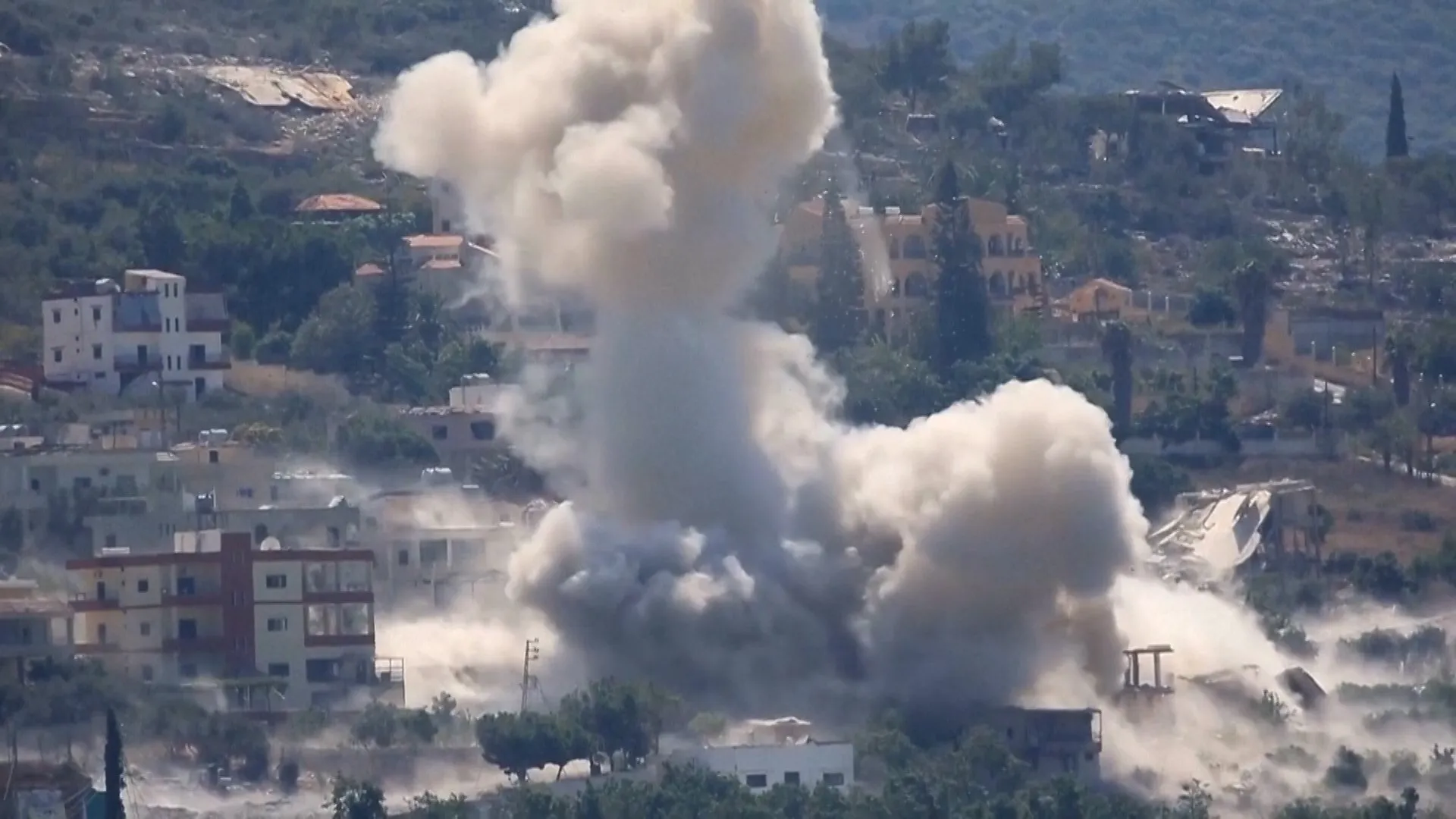
Israeli drones drop bombs on southern Lebanon’s Mansouri | Israel attacks Lebanon
Several explosions rocked the southern Lebanese town of Mansouri after Israeli military drones dropped explosives in the area.
Published On 4 Sep 2026
Several explosions rocked the southern Lebanese town of Mansouri after Israeli military drones dropped explosives in the area.
Published On 4 Sep 20264 Sep 2026
Share
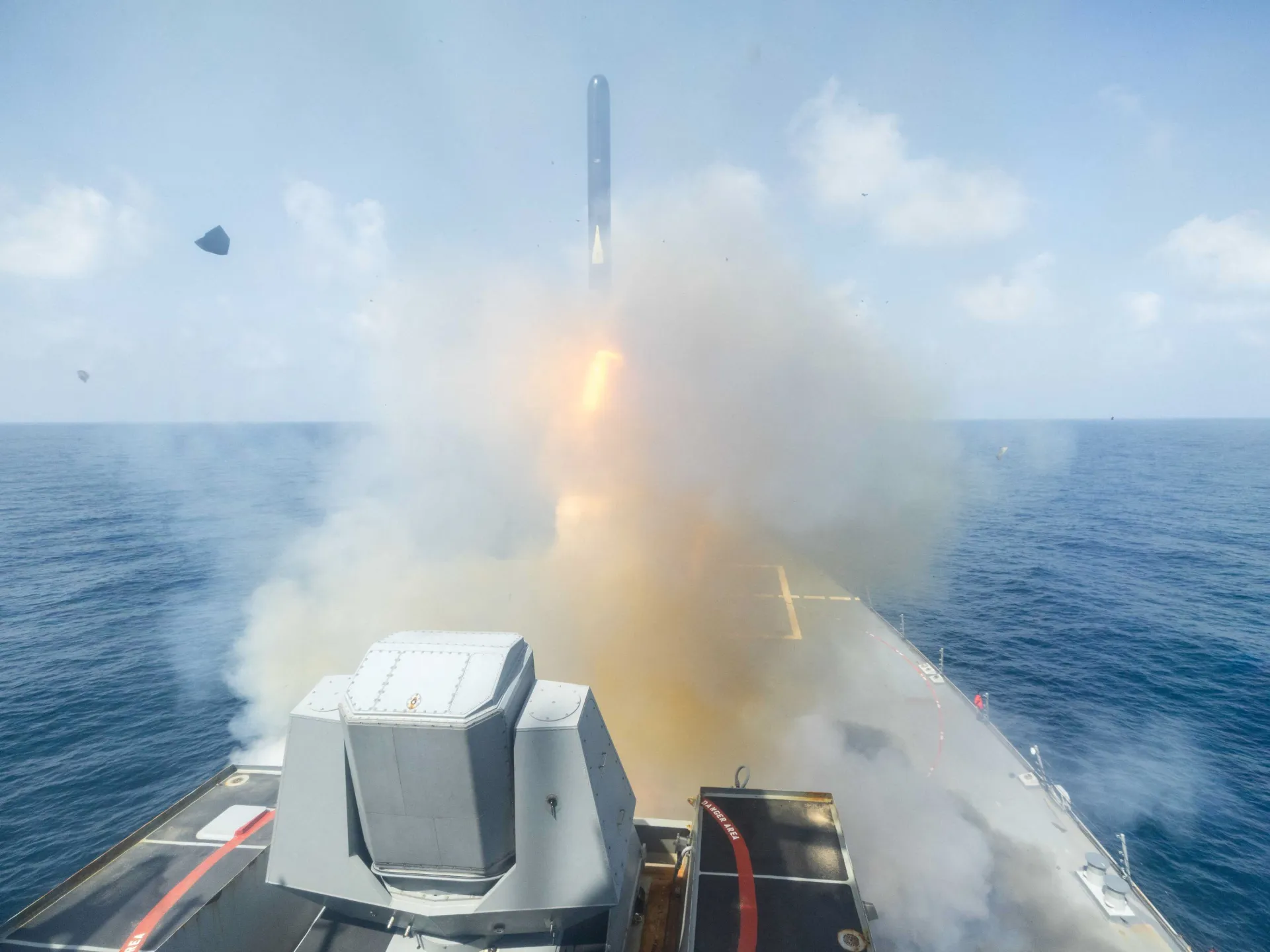
US says its forces ‘successfully’ completed a wave of strikes against Iranian targets, accusing the IRGC of attempted attacks on shipping and US service members.
Published On 2 Sep 20262 Sep 2026
Share
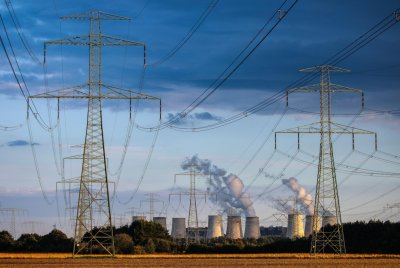

Power lines stand in front of the Janschwalde power plant in Turnow-Preilack, Germany, Tuesday. Several improvised explosive devices were found at a substation, damaging several power lines, according to police and a grid operator. The facility is an important hub in the Lausitz power grid and is connected to the nearby Janschwalde coal-fired power plant. Photo by Clemens Bilan/EPA
Sept. 1 (UPI) — Police in Brandenburg, Germany, said they found several improvised explosive devices at a coal-fired power plant in Tunow-Preilack, some of which hadn’t been detonated.
Bomb disposal experts from the State Criminal Police Office were able to diffuse the IEDs.
There were no injuries, police said.
Power company 50Hertz said there was a “brief interruption of service” but that all power lines were back in operation at the substation. It distributes electricity from the Jänschwalde, Germany, plant.
Brandenburg Police in Potsdam asked the public for information or witnesses who may have seen something on Tuesday morning.
Also on Tuesday, Germany accused Russia of responsibility for a drone attack at Leipzig’s airport last month and announced new measures against Moscow.
While it’s not yet known who placed the IEDs at the power substation, the German interior minister said Germany is, “a daily target of hybrid attacks.”

Aug. 23 (UPI) — Thailand’s southern region has been hit by dozens of coordinated arson attacks and bombs “aimed at creating unrest,” officials said Sunday.
The Thai Military said there were more than 50 incendiary attacks overnight on Saturday, injuring at least two people, the BBC reported.
At least six of the attacks involved bombs.
A government office building, convenience store and vehicle were set on fire.
Car tires were burned and power poles were blown up, Xinhua reported.
The attacks happened in Narathiwat, Yala and Pattani provinces, the news agency reported.
The investigation into the incident continues, and no group has claimed responsibility yet, the BBC reported.
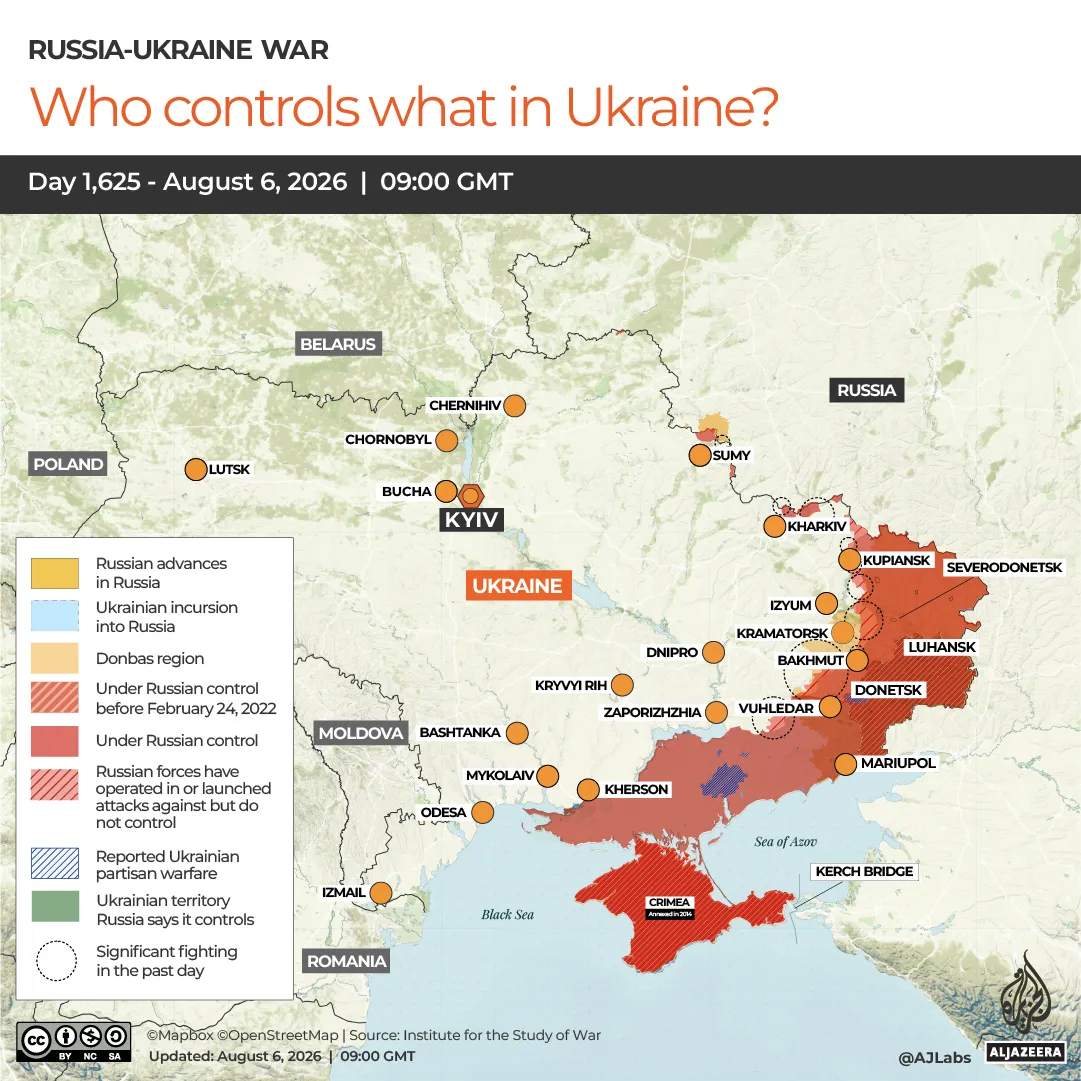
The General Staff of the Armed Forces of Ukraine has claimed that Russia’s army suffered 42,800 casualties in July, which, if accurate, would be the highest rate of losses so far this year estimated by Kyiv.
At the same time, Russia has responded to its poor battlefield performance and domestic energy crises by doubling down on the two weapons Ukraine has not found an adequate defence to – glide bombs and ballistic missiles.
list of 4 itemsend of list
Russia unleashed 8,300 glide bombs in July, more than in any other month of the war, said Ukraine’s defence ministry.

Ukraine’s kill rate is rising to meet what President Volodymyr Zelenskyy believes will be a call-up of up to half a million Russian reservists in October.
Al Jazeera is unable to independently verify either side’s claims of casualties in the war, now raging on in its fifth year.
Russian President Vladimir Putin has so far refrained from using regular army conscripts and reservists in what he calls his Special Military Operation in Ukraine, fearing a political backlash. Should Ukraine force him to do so, it could mark a political inflexion point in Putin’s popularity at home.
As for Ukraine’s casualties, Zelenskyy recently told Fox News they amounted to 450,000, of whom 50,000 are fatalities.
The Center for Strategic and International Studies (CSIS) has recently estimated that “the Russia-Ukraine casualty rate has likely risen to nearly 8:1 in the first half of 2026, up from between 2:1 and 3:1 for much of the war, in large part due to Ukraine’s use of drones”.
Drones were responsible for 30,272 of Russia’s casualties in July, said Zelenskyy.
Russia’s rising casualty rate is accompanied by a falling rate of performance on the battlefield.
The Institute for the Study of War, a Washington-based think tank that assesses territorial control using geolocated open-source material, estimates that Russia occupied a total of 37.85sq km (15sq miles) of Ukraine in July, compared with 455,000sq km (176,000sq miles) in July of 2025.
That is demonstrative of Russia’s poor showing this year.
The ISW estimates that on balance, Russia has lost 183.5sq km (70sq miles) of Ukrainian territory this year, compared with the 2,198sq km (848sq miles) it seized during the first seven months of 2025.
Moscow has succeeded in infiltrating areas of Ukraine – a tactic of sending individual troops to pre-position themselves and await reinforcements, thus placing Ukrainian control of territory in dispute, if not firmly controlling it.
Russia infiltrated 121.6sq km (47sq miles) in July, according to the ISW, bringing total infiltrated territory for the year to 379.9sq km (147sq miles).
Many of these infiltrations have been reversed by the Ukrainian military, but they may yet prove effective in Kostiantynivka, the southernmost of Ukraine’s fortress cities, where Ukrainian defenders have recently expressed doubt about their ability to hold the city for more than a few more months.
Ukraine has also been holding its own in the air.
Zelenskyy declared a 40-day air strike campaign a success and renewed it on August 4.
The three-tiered campaign aimed to hit military production and oil refining inside Russia, energy and weapons flows in occupied territories close to the front line, and front-line positions.
Ukraine’s Security Service (SBU) said it had struck 14 refineries, dozens of oil depots and loading terminals, 14 aircraft and four airfields over 40 days.
Many of those strikes took place in the past week, when Ukraine set fire to a Lukoil refinery in Volgograd, three refineries in the city of Ufa, 1,600km (994 miles) from Ukraine, the Slavneft-Yanos oil refinery in Yaroslavl, the Engels 2 and Saratov airfields, and a factory in Izhevsk manufacturing Shahed drones.
Unlike the larger Shahed factory in Alabuga, which relies on Chinese parts, this one uses almost exclusively Russian parts, said military technology expert Serhii Beskrestnov.
Ukraine has destroyed about a third of Russia’s actual refining capacity, a recent Financial Times analysis of satellite photographs found.
Ukraine has been launching close to 10,000 long-range drones a month to achieve these results.
Moscow mayor Sergei Sobyanin said 6,225 Ukrainian drones flew towards Moscow in July, representing approximately two-thirds of all Ukrainian long-range strikes on Russian soil.
When Ukraine launched its drone campaign at the end of 2023, its goal was to manufacture 11,000 long-range drones in all of 2024. It has since contracted agreements with nine allies to manufacture drones on their soil, sending 50 percent of production to Ukraine, and says 15 more agreements are pending.
The results of the 40-day campaign have been most dramatic in occupied Crimea, where Ukraine has struck 201 electricity substations.
“The Crimean Peninsula’s power grid faced an unprecedented load and operated in critical mode. Rolling blackouts occurred in all Crimean districts,” said the Kremlin’s ambassador-at-large, Rodion Miroshnik.
Things were not much better in the adjacent occupied territories of Kherson and Zaporizhia, where he said “large-scale power outages … were recorded throughout the week in all regions”.
Ukraine said it has also sunk or disabled 206 Russian tankers and ferries carting oil and war materiel to Crimea across the Black and Azov seas. The head of its unmanned systems forces said it had run out of targets.
The energy crisis has forced the Kremlin to spend billions of roubles subsidising the peninsula, including placing a 100 rouble ($1.20) price cap on petrol in the past week.
Meanwhile Ukrainian strikes have continued, levelling a 60,000-tonne petroleum products tank farm in Taman, on the Russian side of the Kerch Strait, used to supply Crimea, and causing a catastrophic fire on July 31. Ukraine followed up by striking aircraft hangars in Yevpatoria, a naval boat yard in Chornomorske and an artillery brigade’s supply base, all in Crimea.
Russia’s glide bombs are inertial ordnance fitted with fins giving them extra range and accuracy, so they can be dropped at safe distances of 20 to 30km (12 to19 miles) from the front lines.
Some carry three tonnes of explosives. They fly too fast to be intercepted by drones and cannot be disoriented by scrambling.
As well as glide bombs, Russia also unleashed its greatest monthly tally of missiles against Ukrainian cities – 376 in July, compared with a previous record of 288 in March. Of these, 120 were ballistic, and their density has depleted Ukraine’s stock of Patriot interceptors – the only missile that has proven effective against them.
During the past week, Ukraine stopped only one out of 51 Iskander-M ballistic missiles.
The Russian penetration rate translated directly into hits and civilian deaths – at least nine on August 1 and 17 on August 5 in Kyiv alone.

Russian production of Iskander-Ms is estimated at 70 a month, but North Korean ballistics may now be coming into play.
A missile fired at Radushne, Ukraine last month was of Korean manufacture, claimed Zelenskyy – only the second such missile to be used in the war.
Zelenskyy has pleaded for countries to send some of their stockpiles of an estimated 4,000 to 5,000 Patriot interceptors.
“The United States knows what we need. Europe knows what we need. Anti-ballistic missiles must protect people – not sit in stockpiles,” he said.
Ukraine’s vulnerability is clear from figures shared by its air force. It has intercepted 4,626 missiles of various types since the beginning of the war, but only 437 ballistic missiles.
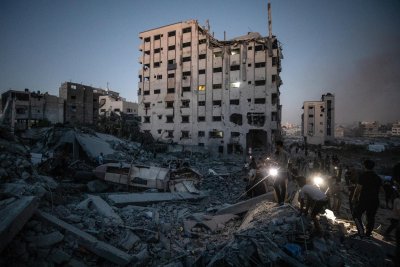

Palestinians inspect a destroyed mosque following an Israeli air strike in Gaza, Tuesday. The Palestinian Ministry of Health said at least four people were killed in Israeli attacks across the territory on Tuesday. Photo by Mohammed Saber/EPA
July 29 (UPI) — The Israeli military on Wednesday accused Hamas of storing weapons inside a mosque it bombed in northern Gaza on Tuesday, an allegation Palestinian sources called false.
The mosque was “another example of terror organizations using civilian infrastructure for terror purposes,” The Times of Israel reported, citing the Israeli military.
Israel said the weapons were to be used in attacks on Israeli troops in Gaza and Israeli civilians, and the sites were hit “to remove the threat.”
The Hamas government said the allegations were “entirely false” and that Israel used the claim “to justify its attacks on mosques,” The New York Times reported. There were no reports of deaths from the mosque attack, but there were four deaths from attacks in Gaza, the Palestinian Ministry of Health reported.
The Israeli military said it gave advance warning of the attack to civilians “to mitigate the risk of harm to them.”
“It was a terrifying sound,” Riyad al-Masri, 31, who lives near the mosque, told The New York Times. “It shook the ground.”
Despite a cease-fire signed in October, Israel has increased its attacks on Gaza in recent weeks.
More than 1,200 people have been killed in Gaza since the cease-fire, on top of more than 73,000 killed during the war, according to the Gaza health ministry. Its list does not distinguish between combatants and civilians, The New York Times reported.
Under the 20-point peace plan for Gaza negotiated by the United States, Hamas was required to disarm. The group has agreed to give up administrative control of Gaza, but it has not yet agreed to disarm.
IDF Deputy Chief of Staff Maj. Gen. Tamir Yadai said earlier this month that Israel would continue strikes in Gaza if Hamas doesn’t disarm, The New York Times reported.
“At the end of the day, this place will be demilitarized, and there will be no Hamas,” he said in remarks published by Channel 14, a right-wing Israeli TV station.
Iranian media report blasts in cities in the far north and far south, including Tabriz and Chabahar.

Published On 20 Jul 202620 Jul 2026
The United States has launched strikes on Iran for a ninth consecutive night, with Iranian media reporting explosions in multiple cities, including Sirik, Jask, Tabriz and Chabahar.
The attacks on Monday came as the US military announced the death of a third soldier in recent days and as a month-old ceasefire agreement between Tehran and Washington unravelled amid a struggle for control of the Strait of Hormuz.
list of 4 itemsend of list
In a statement, the US military said the latest strikes were aimed at “degrading Iranian military capabilities used to attack commercial vessels and mariners transiting the Strait of Hormuz”.
Iran’s IRIB state broadcaster said several explosions were heard in the port cities of Mahshahr and Imam Khomeini, in the southwestern Khuzestan province. It reported further explosions near the cities of Sirik and Jask in the Hormozgan province on Iran’s southern coast, as well as near the city of Khvormuj in the Bushehr province.
Three explosions were also heard near the city of Tabriz in northwestern Iran, IRIB added, while air defences were activated in the southeastern cities of Konarak and Chabahar in the Sistan and Baluchestan province, according to the semi-official Fars news agency.
Al Jazeera’s Tohid Asadi, reporting from the Iranian capital, Tehran, said the latest US strikes had again targeted Iran’s southern coast. He added that the explosions in Tabriz, if confirmed, mark the first time the northwestern city has come under attack since the recent escalation began.
“We are having yet another night of exchange of fire,” he said. “The Iranian side is also talking about retaliatory strikes, with Iranian media reporting a new wave of missiles from the province of Lorestan targeting US military assets across the region.”
Earlier, Kuwait reported confronting “hostile drone threats”, while air raid sirens sounded in Bahrain for a second time on Sunday. Sirens also sounded in Jordan, where the military said it shot down three Iranian missiles. Kuwait’s government said a desalination plant had been attacked for the second day running on Sunday, causing a fire, in what it said was a direct strike on vital civilian infrastructure.
Both Iran and the US have also taken aim at shipping traffic, with Washington saying it is enforcing a naval blockade on Iranian ports, and Tehran saying it targets vessels violating its rules on navigating the Strait of Hormuz.
Iran’s Islamic Revolutionary Guard Corps (IRGC) said on Sunday that four vessels had attempted to transit the strait via an “unsafe route” with US backing after ignoring IRGC warnings. It said two had abandoned the attempt, while the other two were involved in an “accident”. It did not elaborate.
US Central Command (CENTCOM) said it has redirected six commercial vessels and disabled another ship to ensure “full compliance” with its blockade.
Earlier, CENTCOM also said that an American soldier was killed in northern Iraq on Saturday during a “controlled detonation of unexploded ordnance” from a downed Iranian drone. It added that “unidentified remains” had been found at the site of a deadly Iranian attack in Jordan on Friday and that “an examination process to verify the remains is ongoing”.
Two US soldiers died in Friday’s attack, while a third was reported missing in action.
The latest deaths bring the number of US service members killed since the war began to 17, while more than 420 have been wounded.
The conflict, which began when the US and Israel attacked Iran on February 28, has killed thousands of people, mostly in Iran and Lebanon, and led to major disruptions to energy supplies and fears over global inflation.

The US has launched a new wave of strikes on Iran after two American soldiers were killed by Iranian strikes in Jordan. President Donald Trump called it ‘swift punishment’, as Al Jazeera’s Heidi Zhou-Castro reports.
Published On 19 Jul 202619 Jul 2026
Share
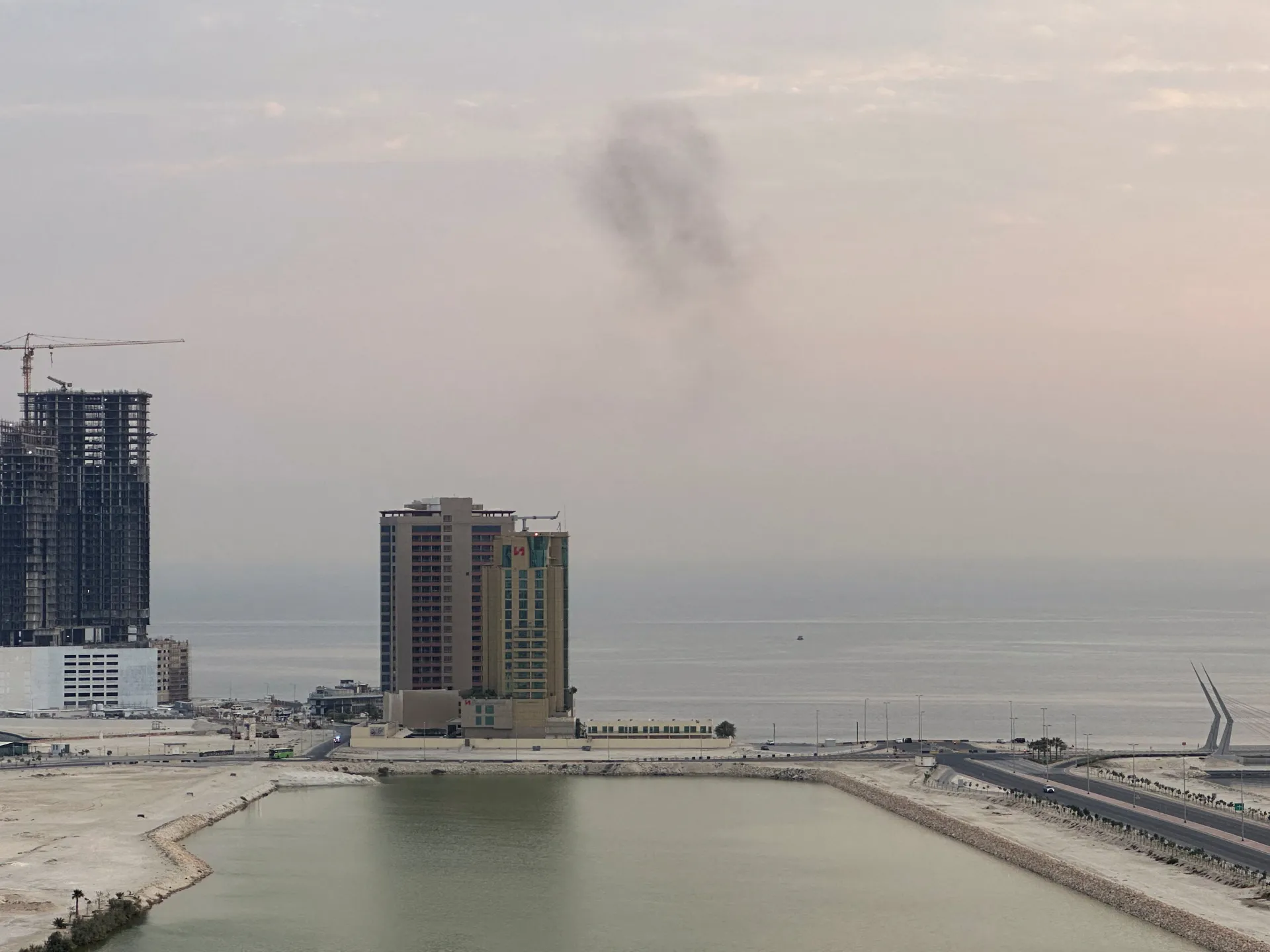
The United States carried out attacks against Iran for a third consecutive night late on Monday.
Iran has continued to hit targets in the Gulf in several waves of retaliatory strikes on Tuesday, including UAE‑flagged oil tankers in the Strait of Hormuz and US military facilities in Bahrain and Kuwait.
Here is a recap of what has happened on Monday night and Tuesday, and what each side has said.
US Central Command, the military’s regional command known as CENTCOM, said its latest strikes began at 4:45pm ET (20:45 GMT) on Monday and were aimed at degrading Iran’s capacity to attack “innocent civilians and commercial shipping” in the strait.
CENTCOM later announced the conclusion of its strikes and said the latest round of attacks on Iran lasted five hours. It added that US forces “successfully struck military targets across Iran including Bushehr, Chah Bahar, Jask, Konarak, Abu Musa, and Bandar Abbas”.
Iranian state television and semi-official news agencies reported explosions throughout the night across the country’s southern coast, including the port city of Bandar Abbas, and on Kish and Qeshm islands, as well as the town of Jam in Bushehr province.
A projectile that struck western Bandar Abbas caused no casualties, the Fars news agency reported, citing the regional governor’s office.
For its part, Iran’s Islamic Revolutionary Guard Corps (IRGC) said it had launched a wider retaliatory campaign against US allies and interests across the Gulf.
Iran’s Tasnim news agency reported that Iranian forces had struck several “violating” vessels in the strait, and that a US-made drone had been shot down near Bandar Abbas.
The UAE: The UAE said two of its oil tankers had been hit by Iranian cruise missiles in Omani waters in the Strait of Hormuz. The UAE added that one Indian national crew member had been killed on one of the tankers, and eight other people were wounded.
Iran’s Tasnim news agency said the IRGC hit two “offending” oil supertankers, citing an IRGC statement – apparently referring to the two UAE tankers.
Kuwait: The Iranian army said on Monday that it had carried out a drone attack on US military targets in Kuwait. In a statement posted by state broadcaster IRIB, the army said it launched drones at a US Patriot missile system, fuel tanks, a watchtower, an ammunition depot and communication systems.
Bahrain: The IRGC said it targeted “several weapons storage depots, a satellite communications centre, and a building housing US forces” at al-Juffair Base in Bahrain. It also said it had hit the US Fifth Fleet in Bahrain with missiles and drones.
Air sirens have been heard four times in Bahrain on Tuesday so far.
Jordan: Jordan’s army said it shot down four missiles in Jordanian airspace that were fired from Iran, according to the official Petra news agency. After this, the IRGC said it launched ballistic missiles at US forces and key facilities at an airbase in Jordan.
In a message addressed directly to Jordanians, the IRGC insisted that the operation was aimed at the US military presence in the country rather than at Jordan or its citizens. “You know that we hold no animosity toward your country. On the contrary, we deeply love you, the noble people. You understand the pain and suffering of the Palestinian people better than any other nation, and you are aware of the crimes of the Zionist regime in the massacre of 70,000 Palestinians, including 20,000 children in Gaza, carried out with the direct involvement of the United States,” it said.
US President Donald Trump formally notified Congress on July 10 that fighting with Iran had resumed on July 7, invoking his authority to keep US forces in combat for another 60 days without lawmakers’ approval.
At a news conference on Monday, Trump said Iran’s offensive capabilities were being dismantled, but he still thinks a “deal is possible” despite the return to open fighting.
Trump also repeated an earlier demand that Gulf nations help cover the cost of protecting shipping, saying Washington was “protecting a very rich portion of the world” and expected to be paid for it.
On Monday, Trump also threatened to “take out” Kuh-e Kolang Gaz La, also known as Pickaxe Mountain, a suspected nuclear site near the Natanz uranium enrichment facility in central Iran.
Meanwhile, the US blockade on Iran, confirmed by the US Navy-led Joint Maritime Information Centre (JMIC), is due to begin at 20:00 GMT on Tuesday.
The US’s blockade covers Iran’s ports and terminals along the entire southern coastline, according to JMIC.
Ebrahim Azizi, the head of the Iranian Parliament’s National Security Committee, has warned that Iran remains steadfast in defending its red lines, following the formal introduction of a bill to manage the Strait of Hormuz.
In an X post on Tuesday, Azizi wrote: “Last night, coinciding with the downing of US drones, the ‘Strategic Action for the Security and Sustainable Progress of the Strait of Hormuz and the Persian Gulf’ bill was formally introduced in Iran’s Parliament. We remain steadfast in defending our red lines, particularly regarding the management of the Strait of Hormuz.”
Oil prices rose more than 9 percent on Monday, with Brent crude climbing to about $81 a barrel, its highest level since mid-June.
Kpler, the ship-tracking firm, said crossings through the strait fell by about 52 percent between July 10 and July 12, compared with the previous week.
Iranian state media report explosions in port cities pof Bandar Abbas, Sirik and Jask, as well as Qeshm Island.


Published On 13 Jul 202613 Jul 2026
Share
Explosions heard in the port cities of Bandar Abbas, Sirik, Chabahar, Bandar-e Deyr and Asaluyeh as US bombs Iran for a third time this week.

Published On 12 Jul 202612 Jul 2026
Share
Air raids come after US revokes a waiver that allowed Iran to sell oil, citing the attacks on ships in the Strait of Hormuz.

Published On 8 Jul 20268 Jul 2026
Share
US president threatens to ‘militarily complete the job’ as US strikes Iran over ship attacks.

Published On 28 Jun 202628 Jun 2026
Share
No group has yet claimed responsibility for the attacks.
Published On 20 Jun 202620 Jun 2026
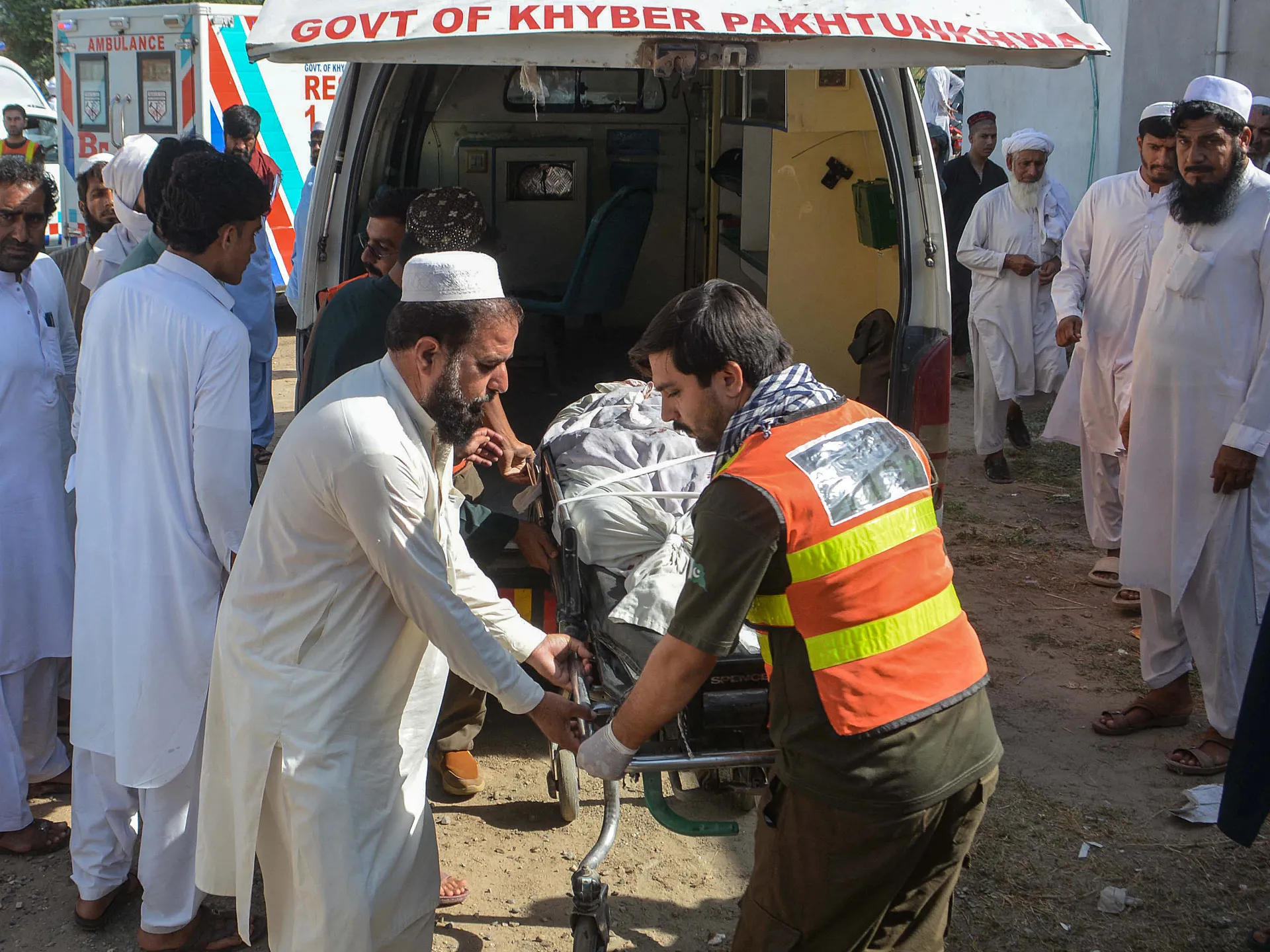
Two roadside bomb blasts in northwestern Pakistan have killed at least seven people.
The first explosion on Saturday hit a vehicle, and the second was detonated as rescuers responded, police said.
list of 3 itemsend of list
“A private pick-up truck carrying passengers was targeted with a remote-controlled IED,” said Yasir Afridi, a police officer in Bannu district in Khyber Pakhtunkhwa province bordering Afghanistan, using a common acronym for a homemade bomb.
“The injured were being transported to hospital in a car for emergency treatment when a second IED exploded,” he said, adding that three people were wounded.
Prime Minister Muhammad Shehbaz Sharif condemned the attack and said the government would bring those responsible to justice.
There has been no claim of responsibility for the blast, but the Pakistan Taliban, known by the acronym TTP, and other armed groups operate in the area.
Pakistan has blamed Afghanistan for a surge in attacks near the border, although the Taliban government in Kabul has repeatedly denied Pakistani accusations that Afghan territory is used as a sanctuary for armed groups.
Frosty relations have escalated into clashes in recent months, including Pakistani air strikes on Afghan cities.
Pakistani air strikes near the border this month killed at least 26 Taliban fighters, the Pakistani government said, while the Afghan government said 12 civilians were killed.
The border has remained largely closed since violence escalated in October, freezing bilateral trade and disrupting the movement of people and goods.
DEVELOPING STORYDEVELOPING STORY,
Explosions hit Qeshm Island, ports along Strait of Hormuz after Trump threatens to hit Iran ‘very hard’.
Published On 10 Jun 202610 Jun 2026
The United States has launched fresh strikes against “multiple targets” in Iran at President Donald Trump’s direction, in a fresh escalation that prompted Tehran to declare the Strait of Hormuz closed to “all types of vessels”.
The US military said the strikes late on Wednesday were “in response to Iran’s unwarranted and continued aggression”, as Iranian state media reported explosions on Qeshm Island and in the cities of Bandar Abbas and Sirik along the Strait of Hormuz.
list of 4 itemsend of list
Blasts also hit the southern city of Kargan, wounding at least two people.
Iran’s Islamic Revolutionary Guard Corps accused the US of “repeated violations” of their April ceasefire, and said the Strait of Hormuz was “closed until further notice”.
It said all traffic in the vital waterway, including oil tankers and commercial vessels, would be affected, and firmly rejected the US’s previous claims that it had helped ships pass through the strait.
The IRGC subsequently added that “two oil tankers attempting to illegally pass through the strait were hit”.
The escalation comes a day after the US and Iran exchanged tit-for-tat strikes over the downing of a US Apache helicopter in the Strait of Hormuz.
Earlier, Trump said the US would hit Iran “very hard”.
“We’ll see what happens with the deal. We were really close to a deal. But they keep stringing us along. They keep playing us for suckers because you know what? They dealt with some very stupid presidents. I have to say that I’m embarrassed to say it,” he told reporters at the White House.
Iran’s President Masoud Pezeshkian slammed Trump’s threat in a post on X.
“Critical infrastructures are the lifeblood of the people. Threats to target them – from transportation networks to the electricity and water industries – are not a show of strength but a sign of desperation in the face of a nation’s will,” he wrote.
“Iran, relying on the knowledge and capabilities of its specialists, national unity, and solidarity, will stand firm against any pressure or threat,” he added.
The United States and Iran engaged in some of the most intense fighting overnight since all-out hostilities in the ongoing US‑Israeli war on Iran were halted with a Pakistan‑mediated temporary ceasefire on April 8.
A comprehensive peace agreement remains elusive as Iran and the US have exchanged a series of proposals and counterproposals in the weeks since that pause. After a string of smaller escalations, however, the US struck targets in Iran following the downing of a US Apache helicopter close to the Strait of Hormuz on Tuesday, and Iran retaliated by hitting US military bases in the Gulf.
The US military said it targeted communications and radar facilities. Iranian officials, however, said civilian infrastructure was also damaged, including two water reservoirs.
If correct, this is the first reported strike on civilian infrastructure in Iran in several weeks, but it comes at a time when Iran is facing a severe water shortage.
The US launched waves of attacks starting late on Tuesday following the downing of the helicopter in the Strait of Hormuz. The US described the attacks as “self-defence strikes” and a “proportional response to unjustified Iranian aggression”.
While an official US inquiry into what caused the helicopter to crash has yet to conclude, US President Donald Trump quickly blamed Iran, which he said had deliberately shot it down.
“I have just been informed by our Great Military that last night the Iranians shot down one of our highly sophisticated Apache Helicopters while patrolling over the Strait of Hormuz. There were two pilots involved, both are safe and uninjured,” Trump wrote on social media.
“Nevertheless, the United States must, of necessity, respond to this attack.”
Iran’s Islamic Revolutionary Guard Corps (IRGC) said US strikes, which hit targets including Sirik, Jask, Minab, Qeshm Island and the port of Bandar Abbas, had caused major damage to a telecommunications tower in the town of Sirik and destroyed two water reservoirs there.
Iran’s West Asia News Agency (WANA) news outlet reported on Wednesday, citing “available reports”, that two concrete water storage reservoirs in the Bamani district in the Sirik County of Hormozgan Province, in southern Iran, 1,012km (629 miles) from the capital, Tehran, had been hit in the US attacks.
The IRGC claimed attacks on US military bases in Bahrain, Kuwait and Jordan in retaliation.
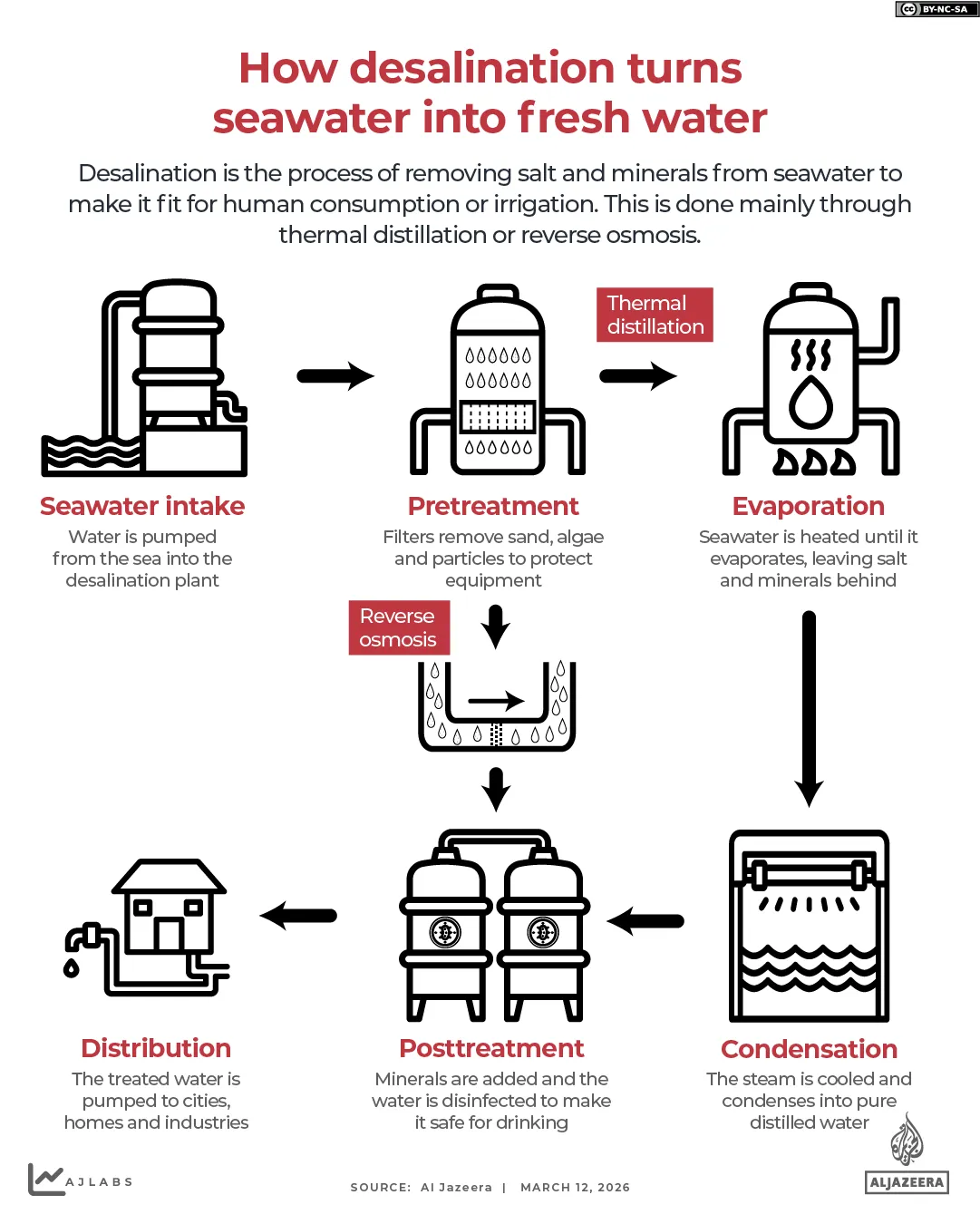
Yes. On March 7, while missiles were flying across the region in an all-out war between Iran and the US-Israel, Iranian Foreign Minister Abbas Araghchi accused the US of striking a desalination plant on Qeshm Island off the coast of Iran in the Strait of Hormuz. The strike reportedly cut off the water supply to 30 villages.
“Water supply in 30 villages has been impacted. Attacking Iran’s infrastructure is a dangerous move with grave consequences. The US set this precedent, not Iran,” Araghchi wrote in an X post.
A desalination plant converts seawater into water suitable for drinking, irrigation and industrial use. These facilities are particularly critical in areas such as the Gulf, where freshwater is scarce.

The reservoirs that were struck provide drinking water to more than 20,000 residents in the city of Kouhestak and 10 surrounding villages. WANA reported initial estimates for damages amounting to $780,000 to $830,000.
Iran was already facing a multiyear drought and decline in precipitation before the US-Israeli war on Iran started. After years of poor agricultural practices and mismanagement, Iran’s main water supplies, including its reservoirs, rivers and groundwater reserves, continued to run dry.
According to Aqueduct data from the World Resources Institute, which tracks global water risk, Iran’s baseline water stress is classified as “extremely high” – meaning the country uses more than 80 percent of its renewable water resources in a typical year.
Last year marked Iran’s fifth consecutive year of drought. In November 2025, the water crisis was so dire that Tehran’s Amir Kabir Dam only held 8 percent of its capacity, while across the country, 19 major dams had run dry.

Isa Bozorgzadeh, spokesman for Iran’s water industry, claimed the US strike on the water reservoirs is a war crime, WANA reported.
International humanitarian law classifies water infrastructure, including drinking water installations, treatment plants and pipelines, as civilian property which is not deemed a legitimate target during war.
The Berlin Rules on Water Resources, drafted by the International Law Association (ILA) and adopted in 2004, are a set of non‑binding international legal principles about how countries should use, share and protect water.
The Berlin Rules prohibit countries at war from destroying water installations “if such actions would cause disproportionate suffering to civilians”.