Blue Owl

PIK: The Hidden Risks of Payment-in-Kind

Liquidity relief today, balance-sheet strain tomorrow: The very structures that make private credit nimble—PIK loans—could also mask risk until it’s too late.

When GoHealth Inc. filed for Chapter 11 bankruptcy protection on June 7, the writing had been on the wall for two years. The Chicago-based health insurance marketplace had inked a payment-in-kind (PIK) deal to preserve liquidity only to collapse under the weight of more than $1 billion in debt.

For GoHealth’s lenders, including Blue Owl Capital, one of the largest private credit managers, it was a familiar scenario — allow a portfolio company to defer cash interest payments and roll them into its debt balance. This preserves liquidity during uncertain times. For GoHealth, the PIK agreement preceded a critical Medicare enrollment cycle.

Ultimately, it only bought time.

Liquidity deteriorated, Medicare Advantage pressures persisted, and GoHealth—once valued at $6.6 billion—ran out of runway. By late last year, lenders had placed the company’s loans on nonaccrual status. By the time GoHealth filed for bankruptcy protection, the PIK arrangement had become just another case study in a growing private-credit risk: debt structures that postpone distress while quietly deepening it.

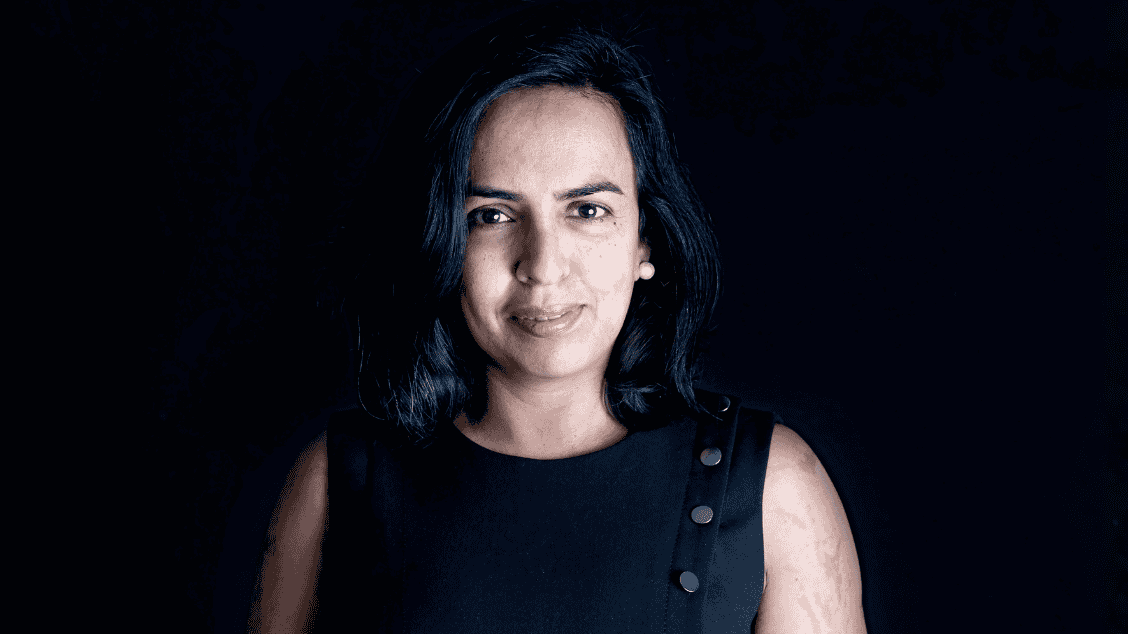
“PIK is like a double-edged sword,” said Lakshmi Ganapathi, founder of Unicus Research in Ridgefield, Connecticut. “Borrowers seem to love PIK toggles in good times because it preserves the cash, but under stress, the accruing principal at a compounding rate becomes a balance-sheet problem. It’s attractive until it’s not.”

GoHealth and Blue Owl did not respond to requests for comment.

Borrower, Beware

Lakshmi Ganapathi
Lakshmi Ganapathi,
Unicus Research

GoHealth is hardly alone. P3 Health Partners restructured its term loan last year into a cash-and-PIK arrangement, requiring borrowers to pay a portion of interest in cash while adding the remainder to principal. This preserved liquidity but increased leverage over time. The Henderson, Nevada-based healthcare provider now has $380 million in long-term debt at double-digit interest rates.

In some cases, the outcome is more dramatic. Software company Pluralsight, owned by Vista Equity Partners, was ultimately handed over to a consortium of private credit lenders, including Blue Owl, Ares, Golub, Oaktree, Goldman Sachs, and BlackRock. Efforts to manage Pluralsight’s debt burden proved insufficient, and Vista wrote off roughly $4 billion in equity.

“There’s a through-line across all of them,” Ganapathi told Global Finance. “A borrower under cash-flow strain defers an obligation, whether through PIK, an amendment, or a liability-management exercise.”

The deferral increases the debt burden or postpones the reckoning, and the resolution is a lender-led restructuring in which the equity is wiped out or impaired and the debt holders take control.

“The 2026 cluster is concentrated in healthcare and software, where higher-for-longer rates met business models underwritten on cheaper money,” she added.

In a post-bank-crisis world of high interest rates and tightened underwriting standards, private credit has stepped into the void. But the very perks that make it nimble — like PIK loans — can be foreshadowing: a bankruptcy filing that simply formalizes what the PIK plan already implied.

Firms like Blue Owl Capital have exposure across a range of heavily leveraged software, technology, and financial borrowers, some of which have recently faced bankruptcies, insolvencies, or out-of-court restructurings. It’s enough to turn certain dealmakers off completely.

“Our firm doesn’t do any pay-in-kind,” Scott Stevens, CEO of Grays Peak Capital, a New York-based global investment firm, said. “We only do cash pay, and that is, I think, why we’ve had no defaults.”

One need only look to the September bankruptcy of auto parts supplier First Brands Group. The filing came after a PIK-based option had been introduced — highlighting how quickly deferred-interest arrangements can become embedded in stressed credits. Fortified by the “cockroach” imagery used by JPMorgan Chase CEO Jamie Dimon, headlines about the collapse of private credit began circulating.

But the evidence isn’t just anecdotal.

Poorly PIK-ed

An analysis by Lincoln International found that 11% of loans in its private credit database carried some form of PIK interest in 2025, up from 7% in 2021. While the increase appears gradual, the composition of these loans is what’s striking: 58% are now classified as “bad PIK.”

That means the borrowers couldn’t keep up with payments and later had to switch to PIK. The shift matters because it reflects weakening credit quality rather than a pre-planned financing option.

In other words, the loans migrated into PIK status as borrowers faced deteriorating cash flows and required relief. The share of “bad PIK” loans has more than doubled since late 2021, Lincoln notes, effectively turning the metric into a proxy for underlying problems.

The implications are significant. In many cases, borrowers use PIK not because business conditions are improving or because growth is being reinvested, but because cash generation is insufficient to service debt. Lincoln describes this as a potential “shadow default rate,” capturing companies that might otherwise have defaulted absent lender forbearance.

The deterioration in the balance sheet is equally stark. Within the bad PIK group, average loan-to-value ratios have risen from 39.4% at origination to 76.1% today, underscoring how quickly leverage can escalate when earnings weaken and enterprise values compress.

Private credit proponents highlight flexibility and speed as advantages that outweigh the drawbacks. Unlike traditional banks, direct lenders can close deals in weeks, tailor covenants, and even hold entire loan books. Borrowers pay a premium for certainty and confidentiality: a trade-off that often, though not always, takes the form of a PIK arrangement. But Grays Peak Capital’s Stevens sees 2026 as an inflection point.

“A lot of people tightened their lending standards over the last three to six months,” he says. Stevens attributes the stress to a combination of rate resets and companies failing to grow in line with underwriting assumptions. Some defaults are to be expected, especially those that are tech and venture related. “But I don’t think it’s systemic in terms of the economy.”

A Bank-Like Game, Sans the Rules

Scott Stevens, CEO, Grays Peak Capital
Scott Stevens,
Grays Peak Capital

Not everyone is so optimistic. After all, the sector’s flexibility comes with a cost: opacity. Critics point to the tangled web of interconnections between private lenders and banks as a source of potential systemic risk.

The very features that make private credit attractive — speed, flexibility, confidentiality — also make it difficult to monitor. And as PIK loans accumulate on balance sheets with limited public disclosure, a broader question is taking shape. If private credit is playing a bank-like game, should it play by the same rules?

Regulating private credit providers like banks would be too stifling, Stevens argues. “If they would go too far down the regulatory path, I think this will skirt innovation and growth,” he said, pointing to defense sector financing as an area where private credit needs room to maneuver.

Todd Holleman, a partner at King & Spalding, draws a distinction between the two. Bank regulations exist for a reason, he argued. Deposits are primarily individuals’ money, and the global financial crisis showed how quickly bad investments could put that money at risk. Private credit is different. Its capital comes primarily from sovereign wealth funds, pension plans and insurance companies — sophisticated investors who are already regulated and understand what they’re buying. Applying bank regulations to private credit, Holleman said, would be an apples-to-oranges comparison. “They just wouldn’t work.”

Ganapathi sees it differently, citing the case of Market Financial Solutions (MFS). The UK bridge lender collapsed into administration in February following allegations of fraud and asset double-pledging. HSBC wasn’t directly exposed to MFS — it was exposed to Apollo, which was. The $400 million loss traveled up the chain.

“It cascades,” Ganapathi said, drawing a parallel to Japan’s lost decade, when banks extended credit to insolvent borrowers while avoiding mark-to-market accounting — papering over losses until the system buckled. “They were extending and pretending like nothing happened, not marking to market. That derailed the system. Regulations stopped it. Now, if you take regulation out of the picture, what will stop this? Without a trigger, this could continue for a long time.”

Anthony Noto covers corporate finance and private credit. Contact him at anoto@gfmag.com.
Source link

BlackRock’s CEO Exit Signals Private Credit Shift

A steep NAV drop and a federal probe trigger a high-level departure at BlackRock.

The private credit market’s roughest stretch in years has claimed its first senior leader at a major asset manager.

BlackRock’s Phil Tseng is in the process of leaving his post as CEO of the firm’s publicly traded business development company, according to Bloomberg News.

The move comes amid a brutal year for BlackRock TCP Capital Corp. The firm marked down its net asset value twice in 2026 — by 19% in January and another 5% in May. Meanwhile, federal prosecutors in Manhattan have been reportedly probing the fund and questioning executives as part of the inquiry.

Tseng, an acqui-hire from BlackRock’s 2018 acquisition of Tennenbaum Capital Partners, remains employed for now with no set departure timeline.

Tseng’s exit echoes a pattern that emerged last fall when two auto-related borrowers collapsed and rattled private lenders. Cleveland-based First Brands filed for Chapter 11 in September after off-balance-sheet financing obscured leverage levels beyond what lenders had underwritten. Founder and CEO Patrick James resigned as the bankruptcy unfolded.

That same month, subprime auto lender Tricolor Holdings began liquidating. Federal prosecutors later indicted founder and CEO Daniel Chu and chief operating officer David Goodgame, alleging the pair systematically misled lenders to keep credit lines open. Goodgame pleaded guilty in June to six counts, including bank fraud and conspiracy, and is now cooperating with prosecutors — a deal that could put him on the stand against Chu, who has pleaded not guilty. Chu had also abruptly resigned from Origin Bancorp’s board days before Tricolor’s implosion.

Industry executives have largely characterized the two collapses as isolated fraud cases rather than evidence of systemic rot. Blue Owl co-president Craig Packer told CNBC in October that the failures “weren’t private credit stories” at all.

BlackRock CEO Larry Fink struck a similarly confident tone. On an April earnings call, he told analysts that institutional demand for private credit was “accelerating.” Still, headlines around the sector aren’t reflecting what the firm’s own client and portfolio data showed.

Redemptions from business development companies, key lenders in the private credit market, are surging. Investors requested $20.8 billion in redemptions in the first quarter alone. In some cases, those redemptions exceeded the 5% cap set by BlackRock and its rivals: Apollo Global Management, Ares Management, Blackstone, Blue Owl Capital, and KKR.

Not all private credit funds appear troubled. Goldman Sachs’ private credit fund, for example, honored all redemption requests in Q2 because it reported relatively modest private credit fund redemption requests (3.2%). The same goes for Nuveen Churchill and Oaktree with withdrawals of 3.1% to 4.5%, respectively.

But with so many of the sector’s players posting losses, Tseng’s departure suggests the reckoning is reaching up the org chart.

Source link

Private Credit Crash Fears Are Overstated

Despite investor fears, private credit is far from a meltdown because not all risks are the same.

The cracks in the private credit market appear to be widening.

Private credit is a significant alternative to syndicated bank loans as a source of corporate capital provided predominantly by private equity (PE) firms. The market is heavily involved in financing data center capacity, which is burgeoning along with the demand for artificial intelligence. Investors fear that the artificial intelligence capital spending boom poses a threat to the software industry and may be creating a market bubble that leaves private credit funds overly exposed.

Yet there are reasons to believe the potential damage to the private credit market remains manageable and contained.

This article appears in the May 2026 issue of Global Finance Magazine. .

To be sure, when auto parts seller First Brands announced its bankruptcy late last year, which was financed by a credit fund sponsored by investment bank Jefferies Group, it raised alarms in some quarters. Underscoring the opacity of private credit, which is largely unregulated, were allegations that First Brands had borrowed against the same receivables more than once. Meanwhile, defaults elsewhere in the credit sector hit a record high in 2025, according to Fitch Ratings, reaching a 9.2% rate, more than double the 3.6% recorded in 2023. Default rates this January continued upward, reaching 9.4% before slightly easing in February to 5.4%.

As the First Brands financing reveals, banks as well as PE firms are involved in private credit, either by financing investment funds sponsored by Ares Capital, Antares, Apollo, Blackstone, Blue Owl, and the like, or via funds of their own. With pension funds, insurance companies, and increasingly, individuals investing in private credit, law firm Quinn Emanuel warned in a March client memo that the trend may pose systemic risk, even though private credit is still a relatively small part of the overall loan market.

“The result is a transmission chain that runs from the technology companies, through private credit originators, to the regulated banks that lend to them, to the insurers and pension funds that invest alongside them, and potentially to the retirement accounts of ordinary Americans,” the memo’s authors warned.

Only a minority of small corporate borrowers are in trouble, and companies with EBITDA of $25 million or less experienced significantly higher default rates—15.8%—than larger companies in 2025. Healthcare and consumer companies have higher default rates. Fitch also notes that realized losses for first-lien lenders have been limited, with most cases resulting in full or high-percentage recoveries.

Notably, private credit default rates historically tend to run higher than those on broadly syndicated loans, a trend some observers attribute to more customized, and sometimes distressed, lending terms. The January uptick was largely driven by “distressed” exchanges and payment-in-kind (PIK) interest, according to Fitch.

AI Anxieties

Alen Lin, Fitch Ratings, Private Credit Analysis
Alen Lin, Fitch Ratings

Concerns are growing about PE funds exposed to software. Investors worry that AI will disrupt the software industry, leading to defaults within portfolios of private-credit loans to the sector. But most such funds are diversified, and even those that aren’t may not be as vulnerable to disruption by AI as investors fear. That’s because the large language models underpinning AI require application program interfaces to operate, so software may still be needed to facilitate the technology’s use.

“Implementing AI still requires significant effort to get it to work in a particular environment,” Alen Lin, senior director of North America corporates, technology, at Fitch Ratings, told audiences at a recent webinar held by the firm.

Of course, much depends on the type of application involved. As Fitch notes, companies producing software that is either deeply embedded in enterprise technology systems, leverages proprietary data, or operates in more regulated industries like health care and financial services could benefit from the development of AI. By contrast, those producing software for applications that aren’t so embedded, such as digital content creation or certain types of analytics and visualization tools, are more exposed to AI disruption.

Even if the AI bubble bursts, that risk is unlikely to evaporate, Lyle Margolis, senior director in Fitch’s corporates group, where he manages its private credit business, said in an interview with Global Finance. “AI is here to stay and is going to be disruptive to certain segments of the software market,” he says.

Yet the risks may be overstated. Whether measured by leverage, interest coverage, or EBITDA, “the trends in the software sector have actually been somewhat positive,” he noted. Refinancing risk for the sector is relatively benign. And data-center build-out provides one of several “significant tailwinds” for private credit in the software sector, added Dafina Dunmore, Fitch’s senior director of North American non-bank financial institutions.

Another mitigating factor: Redemption risk, which can see large outflows of capital. However, it is limited largely to business development companies (BDCs), a more liquid, retail-oriented variety of private-credit investment vehicle. Blue Owl, for example, recently blocked redemptions at one of its BDCs and liquidated some others. And the $33 billion Cliffwater Corporate Lending Fund, the largest US private-credit interval received redemption requests on 14%.

Although defaults are rising for these portfolios, redemption risk isn’t a problem for most credit funds, because investors are locked in until maturity. In addition, stress is concentrated in direct lending: corporate loans that fund working capital and growth.

Hidden Risks

To be sure, many such risks may be hidden, given private credit’s opacity. Blue Owl’s exposure to software loans, among the highest in the industry, is roughly twice as extensive as its public filings indicate, according to a recent analysis by the Wall Street Journal. The paper also found other PE firms whose credit funds exhibit software exposure exceeding what’s publicly disclosed include Blackstone, Ares, and Apollo.

Investor worries may exacerbate Blue Owl’s redemption woes since its data center financing deals involve accounting practices that obscure the risk involved. The main source of concern is likely Blue Owl’s $27.3 billion financing of Meta’s Hyperion data center in Louisiana.

Yet, S&P rates the bond backing the deal, called Beignet, as Meta’s obligation, reflecting that it bears the risk of default. Indeed, investors seem to like that cash-rich Meta stands behind Beignet. The bond was recently spread over a bond financing the CoreWeave data center, which isn’t backed by the hyperscaler.

Still, some wonder if the risks are adequately priced into these issues.

Quinn Emanuel warns that the vagaries of Meta’s accounting treatment may lead to litigation between the parties over who bears the loss if AI fails to meet expectations and Meta chooses not to renew the lease. Blue Owl finances an Oracle data center in similar fashion, but that bond is trading at a discount to Meta’s, partly because Oracle doesn’t back it and partly because the ultimate tenant is less financially stable OpenAI.

“When we rate data centers, to some extent we look at the credit quality of the ultimate tenant,” says Victor Leung, vice president for project finance at ratings firm DBRS Morningstar.

This type of complexity led Quinn Emanuel to warn in its March 13 memo that, “the AI data center buildout—projected to require $5.2 trillion in infrastructure investment by decade’s end—has spawned complex financing structures that are generating significant litigation risk.”

Mark Koziel, CEO of the International Association of International Certified Professional Accountants and president-CEO of the American Institute of CPAs, says he would raise the issue of current accounting rules for such financing arrangements at an upcoming meeting with the Financial Accounting Standards Board. Also last month, the US Department of the Treasury said it would meet with industry and investor representatives to discuss private credit’s potential risk to the financial system.

Thus far, warnings of a private credit meltdown seem overstated.

Credit funds focused on asset-backed finance (ABF), which is based on the value of a borrower’s assets and is the fastest-growing sector in the market, are relatively immune to stress, thanks to their self-liquidating feature. In contrast to direct loans, principal on asset-backed financings is paid back during the life of the loan. As a result, ABF funds don’t face the same refinancing risk as direct lenders.

Sponsors of direct lending funds “don’t have the benefit of those cash flows directed to pay down the loans,” notes Fitch’s Margolies.

Apart from First Brands’ receivables deal with Jefferies, the ABF segment has yet to be fully tested. But a test may soon be underway: Beignet is also asset-backed. Or sort of.

Debt principal remains outstanding at each renewal point, so it isn’t completely self-amortizing. As a result, DBRS Morningstar’s Leung notes, “you face a risk that your facility will lose its source of revenue.” Hence, Meta’s guarantee that it will make up any loss facing investors if it fails to renew the lease and the facility’s residual value falls below a certain threshold.

That scenario is not far-fetched, Quinn Emanuel warns, noting that it’s expensive to convert an AI data center to general-purpose cloud computing or other uses: “If demand for AI computing contracts, these facilities may function as stranded assets with limited alternative use and depressed liquidation value.”   

Source link