Asian stocks fall as naval blockade threat injects new turmoil into financial markets.
Published On 13 Apr 202613 Apr 2026
Oil prices have risen sharply following US President Donald Trump’s announcement of a naval blockade of Iran.
Brent crude, the international benchmark, rose more than 8 percent on Sunday to top $103 a barrel.
Recommended Stories
list of 4 itemsend of list
It was the first time the benchmark rose above the psychologically important threshold of $100 since Tuesday, when prices surpassed $111 a barrel.
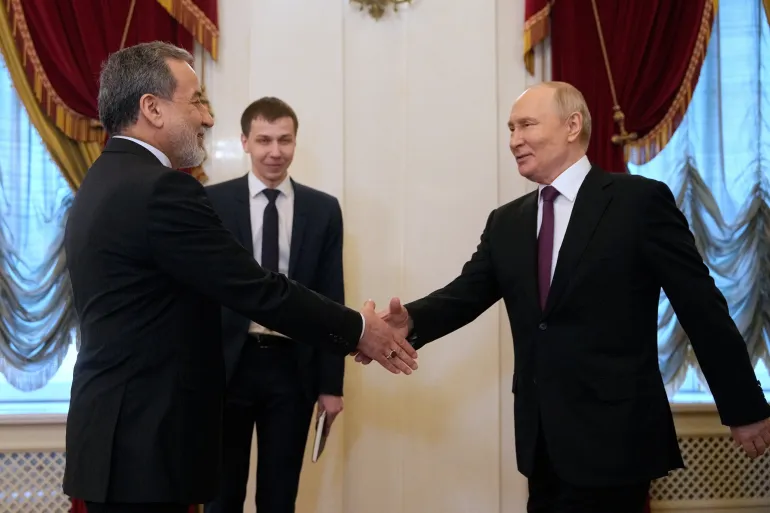
Trump announced on Sunday that the US Navy would block all ships from entering or exiting the Strait of Hormuz, following the collapse of ceasefire talks between US and Iranian officials over the weekend.
US Central Command said in a later statement that it would only block vessels travelling to and from Iran and that other traffic would not be impeded, in an apparent scaling back of Trump’s threat to impose a full blockade.
The command said the blockade would take effect on Monday at 10am Eastern Time (14:00 GMT).
Oil prices have been a rollercoaster since US-Israeli strikes on Iran prompted Tehran to impose a de facto blockade of the Strait of Hormuz, a conduit for about one-fifth of global oil and natural gas supplies.
After topping $119 last month, Brent fell below $92 a barrel last week after the US and Iran announced a two-week ceasefire following more than six weeks of war.
While Iran has allowed a limited number of ships to transit the waterway, subject to prior vetting and authorisation, traffic has been reduced to a trickle compared with peacetime levels.
Despite Washington and Tehran’s fragile truce officially remaining in place until April 22, only 17 vessels crossed the strait on Saturday, according to maritime intelligence firm Windward, down from roughly 130 daily transits before the war.
Major stock markets in Asia opened lower on Monday as Trump’s blockade threat stoked uncertainty on trading floors.
Japan’s benchmark Nikkei 225 fell 0.9 percent in morning trading, while South Korea’s KOSPI dropped more than 1 percent.
US stock futures, which are traded outside of regular market hours, also fell, with those tied to the benchmark S&P 500 down about 0.8 percent.
Vessels will still be able to transit Strait of Hormuz to and from non-Iranian ports, says CENTCOM; Iran warns any approaching military vessels will be breaching ceasefire.
Published On 13 Apr 202613 Apr 2026
The United States military has announced it will begin blockading all Iranian ports on Monday, its latest move to exert pressure on Tehran after marathon peace talks in Pakistan concluded without a deal.
In a statement on Sunday evening, US Central Command (CENTCOM) said the blockade would apply to “all maritime traffic entering and exiting Iranian ports” from 10am Eastern Time (14:00 GMT) on April 13. That includes “vessels of all nations entering or departing Iranian ports and coastal areas”, including those on the Gulf and the Gulf of Oman.
Recommended Stories
list of 3 itemsend of list
However, US forces “will not impede freedom of navigation for vessels transiting the Strait of Hormuz to and from non-Iranian ports,” CENTCOM said, in an apparent scaling back from President Donald Trump’s earlier threat to blockade the entire strait and pursue ships paying tolls to Iran.
“There are a lot of questions here,” said Al Jazeera’s Heidi Zhou-Castro from Washington, DC, pointing to “conflicting information” coming out of the US side.
“Trump said the blockade would target any and all ships trying to enter or leave the Strait of Hormuz. But CENTCOM is saying this would only target ships going to or from Iranian ports.”
The price of US crude oil jumped 8 percent to $104.24 a barrel after the US blockade threat. Brent crude oil, the international standard, increased 7 percent to $102.29.
Iran has essentially taken control over the Strait of Hormuz, a vital chokepoint for the global energy market, since the US and Israel launched a war against the country on February 28. Traffic through the waterway has since slowed to a trickle, nearly paralysing about one-fifth of the world’s oil and liquefied natural gas shipments.
Iran has continued to move its own vessels through the strait, while allowing limited passage of ships from other countries. Iranian officials have discussed setting up a toll system after the fighting ends.
In a statement responding to Trump’s blockade threat, Iran’s Islamic Revolutionary Guard Corps said any approaching military vessels would be in breach of a US-Iran ceasefire – meant to be in effect until April 22 – and “will be dealt with severely”.
The US-declared blockade appears to be triggered by the failure of the talks in Pakistan’s capital, Islamabad, raising fears of renewed fighting.
Iranian officials blamed the US side for failing to reach a deal, with Minister of Foreign Affairs Abbas Araghchi saying US negotiators shifted the “goalposts” and obstructed efforts when a memorandum of understanding was “just inches away”.
Zohreh Kharazmi, an associate professor at the University of Tehran, said the US “is not in a position to dictate” to Iranians how to behave, or “to choose which vessels may pass”.
“If this blockade becomes a contest between the resilience of the Islamic Republic and the resilience of global markets, it will not take long to see who is losing,” she said, adding that Iran “is ready for a prolonged war”.
“Technically, they [the US] cannot control the situation. With Hollywood-style strategies, they cannot prevail in this battleground.”
President Donald Trump announced on Sunday that the U. S. Navy would begin a blockade of the Strait of Hormuz following unsuccessful talks with Iran, endangering a fragile two-week ceasefire. Trump stated that the Navy would take action against vessels in international waters that had paid Iran a toll and would destroy mines allegedly placed by Iran in the strait, a critical passage for about 20% of global energy supplies.
Trump declared, “Effective immediately, the United States Navy. . . will begin the process of BLOCKADING any and all Ships trying to enter, or leave, the Strait of Hormuz. ” He added that no vessel paying an illegal toll to Iran would have safe passage and warned that any Iranian who fired at the U. S. or peaceful vessels would face severe consequences. Trump also mentioned that NATO allies had expressed interest in assisting with this operation.
In an interview with Fox News, Trump anticipated that Iran would return to negotiations, suggesting that his comment about wiping out Iranian civilization had prompted initial discussions. Each side blamed the other for the failure of the talks, which aimed to end six weeks of fighting that resulted in thousands of deaths and rising oil prices. Vice President JD Vance, who led the U. S. delegation, indicated that Iran’s unwillingness to accept terms relating to nuclear weapons was the main obstacle.
Iranian Parliamentary Speaker Mohammad Baqer Qalibaf criticized the U. S. for failing to earn Tehran’s trust despite proposed initiatives. He emphasized that the U. S. needed to decide if it could gain Iran’s trust. The recent talks were the first direct U. S.-Iranian meeting in over a decade and came after a ceasefire was announced.
Despite ongoing negotiations, Israel continued its military actions against Hezbollah militants in Lebanon, claiming that this conflict was separate from the U. S.-Iran ceasefire discussions. Israeli military struck Hezbollah rocket launchers, while air raid sirens in Israeli villages signalled incoming rocket fire from Lebanon. Iran seeks control of the Strait of Hormuz, war reparations, a regional ceasefire, and the release of its frozen assets. Even amidst these tensions, three supertankers laden with oil successfully passed through the Strait of Hormuz, marking the first vessels to leave the Gulf since the ceasefire deal.
WASHINGTON — President Trump responded to the collapse of high-stakes negotiations with Iran by escalating the conflict on Sunday, ordering a full blockade of shipping through the Strait of Hormuz — a risky move that could drive global oil prices higher and provoke confrontation with a far more formidable adversary.
No country relies more heavily on the strait than China, which receives nearly half of its oil imports through the international waterway. In recent days, Beijing has warned that access to its shipping lanes “must be guaranteed.”
Trump administration officials believe the blockade could compel China to pressure Tehran into making further concessions, following Beijing’s crucial role earlier this month in convincing Iran to accept an initial ceasefire.
But the decision by U.S. diplomats to tie negotiations over the status of the strait to those over the fate of Iran’s nuclear program — a matter of torturous diplomacy for the last quarter-century — could make it harder to secure a breakthrough.
In the meantime, a full blockade of the strait could force China to become more directly involved in a conflict that is already heightening tensions with Washington.
On Saturday, reports that Beijing could be preparing to send advanced missile and air defense systems to Iran prompted anger from the White House.
It is a high-stakes moment in the world’s most important bilateral relationship, ahead of a closely watched summit between Trump and Chinese President Xi Jinping in Beijing next month that both sides had hoped would help stabilize relations.
The United States and Iran agreed to a two-week ceasefire in the war on Tuesday — on the condition that Iran would allow full freedom of navigation through the strait, a vital commercial artery that was treated for decades as an open, international waterway.
Marathon negotiations in Islamabad, Pakistan, over the weekend between senior U.S. and Iranian officials failed to secure a long-term agreement.
Vice President JD Vance said the central sticking point was Iran’s insistence on maintaining its nuclear program. But Tehran also signaled that shipping through the strait would not return to prewar conditions, pledging to control traffic and impose transit tolls — a scenario that could result in permanently higher global oil prices, a political nightmare for the Trump administration entering the midterm elections.
Trump’s threat to completely shut down traffic through the strait on Sunday may also lead to a temporary spike in oil prices, with experts warning the market could experience barrels costing $150 or more if a blockade persists.
Describing his plans to Fox News on Sunday, Trump said there would be no exceptions to the U.S. blockade for Tehran’s “friends.” Throughout the war, Chinese-bound vessels were granted special passage by Iranian authorities.
“We’re putting on a complete blockade. We’re not going to let Iran make money on selling oil to people that they like and not people that they don’t like, or whatever,” Trump said.
“It won’t be a percentage,” he added. “It won’t be a friend of yours, like a country that’s an ally or a country that’s your friend. It’s all or nothing.”
Trump also wrote on social media that he had ordered the Navy to “seek and interdict every vessel in International Waters that has paid a toll to Iran” — and to “blow to hell” any Iranian assets that open fire on ships.
Beijing did not immediately respond to the proposal. But it has walked a fine line over six weeks of war in the region, describing open waters in the strait as of global interest, while avoiding any condemnation of Iran’s assertion of control.
China’s main energy trading partners in the gulf — Saudi Arabia, the United Arab Emirates and Kuwait — have all advocated for a return to the status quo ante for the passage, pressing allies to reject Iranian control as the new normal.
“Keeping the area safe and stable and ensuring unimpeded passage serves the common interest of the international community,” a Chinese official said last week.
“We hope that all sides can work together,” the official added, “for the early resumption of normal traffic at the strait.”
HAVANA — Two U.S lawmakers called for a permanent solution to Cuba’s crises after witnessing the effects of a U.S. energy blockade during an official visit to the island.
Democratic Reps. Pramila Jayapal of Washington and Jonathan Jackson of Illinois met with Cuban President Miguel Díaz-Canel, Foreign Minister Bruno Rodríguez and members of Parliament during a five-day trip that ended Sunday.
Díaz-Canel wrote on X Monday that upon meeting with Jayapal and Jackson, he “denounced the criminal damage caused by the #blockade, particularly the consequences of the energy embargo imposed by the current US administration and its threats of even more aggressive actions.”
Díaz-Canel added: “I reiterated our government’s willingness to engage in serious and responsible bilateral dialogue and find solutions to our existing differences.”
Both the U.S. and Cuba have acknowledged recently that talks are ongoing at the highest level, but no details have been disclosed.
Jayapal told reporters she believes that recent steps taken by Cuba, such as opening the economy to certain investments by Cuban Americans living abroad; the recent announcement that more than 2,000 prisoners would be pardoned; and the arrival of an FBI team to collaborate in the investigation of a fatal shooting involving a U.S.-flagged boat, “indicate that the moment is here for us to have a real negotiation between the two countries and to reverse the failed U.S. policy of decades, a Cold War remnant that no longer serves the American people or the Cuban people.”
Cuba’s government has released the pardoned prisoners who were accused of a variety of crimes, although none so far appear to be political prisoners.
In late January, President Trump threatened to impose tariffs on any country that would sell or provide oil to Cuba, although he made an exception for a Russian ship that reached the island last week with 730,000 barrels of crude oil. It was the first petroleum shipment in three months to dock in Cuba, which produces only 40% of the oil it needs.
“This is cruel collective punishment — effectively an economic bombing of the infrastructure of the country — that has produced permanent damage. It must stop immediately,” Jayapal and Jackson said in a statement released Sunday.
Critical oil shipments from Venezuela were halted after the U.S. attacked the South American country in early January and arrested its leader, Nicolas Maduro.
Cubans already suffering from five years of economic crisis have acutely felt the impact of the fuel shortage: national blackouts, gasoline shortages and rationing, lack of public transport, cuts in working hours, paralyzed hospitals and surgeries, and suspension of flights, among other things.
Russia has promised a second delivery of petroleum, although it’s not clear when it might arrive. Experts have said that the first shipment could produce about 180,000 barrels of diesel, enough to feed Cuba’s daily demand for nine or 10 days.
Jayapal said that while such shipments are critical, they are only temporary solutions: “We need a longer, permanent solution for the Cuban people and the American people.”
Meanwhile, Jackson compared the blocking of the Strait of Hormuz off Iran’s coast to the oil blockade in Cuba, adding that the island “is the most sanctioned part of Earth.”
“Our government is fighting to keep the Strait of Hormuz open so there is a free flow of oil around the world. We want, for humanitarian reasons, a free flow of oil, fuel, and energy in our own hemisphere,” he said.
Jackson and Jayapal said they would prepare a report and continue to work on initiatives proposed by fellow members of the U.S. House of Representatives to lift sanctions against Cuba to alleviate the ongoing humanitarian crisis.
Mesquita and Rodríguez write for the Associated Press.
Protesters gathered outside the US embassy in Madrid as sanctions pushed Cuba into an electricity blackout. They called for an end to US intervention in Latin America and the Middle East.
HAVANA — Reggaeton boomed in a neighborhood bar in Old Havana on a recent night, when, suddenly, the music stopped and everything went dark.
The customers groaned. Another blackout.
A U.S. blockade on oil shipments to Cuba has plunged the island into its worst energy crisis in modern history. The country’s already cratering economy now teeters on the verge of collapse, with vehicles idled by a lack of gas, hospitals forced to cancel surgeries and millions living without a steady supply of electricity and water.
It is the result of a calculated pressure campaign by President Trump, whose administration is negotiating with Cuba’s leaders over the future of the communist-ruled Caribbean island.
People fed up with rolling blackouts have staged sporadic protests in recent days, banging pots and shouting slogans against the government, rare demonstrations in a country known for repressing dissent.
Some power outages hit isolated areas, but in recent weeks Cuba has experienced three island-wide blackouts. The most recent one struck Saturday night and continued into Sunday.
Two men sell food from a cart in front of the Kempinski hotel Friday night in Havana.
As Havana and Washington hash out a possible deal — which is likely to include some form of economic opening, and perhaps limited changes to Cuba’s leadership — many people here say they feel like pawns in a geopolitical game beyond their control.
Some, like those at the bar, who kept drinking in the dark after the power vanished, say they have little choice but to adjust to a life where flushing a toilet, cooking a pot of rice or riding a bus to work is now considered a luxury.
“The U.S. is trying to punish the Cuban government,” said one customer, named Rolando. “But it’s the people who are suffering.”
Cuba’s struggles long predate the oil embargo. For years, Cubans have complained of food shortages, crumbling public services and political repression. Demographers say Cuba is undergoing one of the world’s fastest population declines — a 25% drop in just four years — as birth rates fall and emigration soars.
Cuban President Miguel Díaz-Canel blames “genocidal” economic, financial and trade restrictions imposed by the United States in the decades since Fidel Castro’s army toppled the U.S.-backed dictator Fulgencio Batista in 1959.
1
2
1.Young people play dominoes in the streets of Old Havana.2.A woman reacts to her granddaughter at a bar in Old Havana.(Natalia Favre/For The Times)
But many Cubans blame their own leaders for mismanaging the economy — and straying from the ideals of Castro’s revolution. They were raised to believe in an implicit social contract, which maintained that while Cubans might not have luxuries or be allowed all civil liberties, they would always have free education and healthcare, a place to sleep and enough to eat.
“The pact has failed,” said Juan Carlos Albizu-Campos Espiñeira, an economist at the Christian Center for Reflection and Dialogue in Havana.
He faults the government for soaring inflation and a misguided investment strategy that pumped money into the tourism industry while neglecting fundamental sectors like industry and healthcare.
“This is the worst moment in Cuba’s history,” he said. “But things were really bad before this.”
The Vedado neighborhood in Havana.
Life has long been challenging for Pablo Barrueto, 63, who works mornings at a construction site and now spends afternoons filling plastic jugs from a tap on the street and hauling them up narrow stairwells to neighbors who have been without water for weeks.
His two jobs barely enough cover food for him and his partner, Maribel Estrada, 55, who earns $5 monthly as a security guard at a state-run museum.
The pair, who live in a cramped studio apartment in a crumbling colonial-era building, can’t afford butter or mayonnaise, so breakfast is a piece of plain bread. Barrueto said he often goes to bed hungry. It has been years since he has tasted pork or beef.
“I work so hard,” said Barrueto, who on a recent afternoon was cooking beans in a pair of tattered jeans. “But I don’t see the fruits of my labor.”
Pablo Barrueto, center, fills water containers from a public tap after more than 17 days without running water.
Estrada has developed ulcers on her legs, but the doctor who prescribed her antibiotics said she wouldn’t be able to find them on the empty shelves of state-run pharmacies. On the black market, the medication was being sold for more than what Estrada makes in a month.
“If I lived in another country, my legs wouldn’t look like this,” she said, rolling up her pants to show the chronic sores on her calves.
Estrada said she was reaching a point where she would accept anything that would improve her life, even U.S. intervention.
“If things don’t get better, they should just hand over the country to Trump,” she said.
The U.S. has long played a major role in Cuban history, from its involvement in the island’s war of independence from Spain to the heavy hand of American companies in Cuba’s sugar industry. Washington repeatedly backed unpopular leaders who protected U.S. interests, including Batista, whose corrupt and repressive regime sparked support for the Cuban Revolution.
For decades, the island was celebrated by U.S. critics worldwide as a scrappy symbol of anti-imperialism and a utopic experiment in socialism. But in recent years, amid a government crackdown on dissent, some of that support has faded.
A man holds his ration book and cash while waiting to collect his daily bread in Havana.
The Trump administration’s bellicose new push to dominate Latin America with tariffs and military intervention has scared allies who in the past might have come to Cuba’s rescue.
Mexico, Brazil and Colombia, all led by leftists, have declined to provide emergency fuel shipments in recent months out of fear of angering Trump.
The current crisis was set in motion on Jan. 3, when the U.S. launched a surprise attack on Venezuela, killing 32 Cuban security guards stationed there — in addition to scores of Venezuelan troops and civilians — and capturing President Nicolás Maduro.
As the U.S. seized control of Venezuela’s oil industry, the impacts immediately rocked Cuba, which had long relied on subsidized oil shipments from Maduro’s regime.
Cuba’s leaders say the country has not received a single fuel shipment in three months, debilitating an economy that depends on oil to generate the electricity.
There is little relief in sight.
An employee of a MIPYME sells vegetables and other goods to a customer Friday in Havana.
A state-owned Russian oil tanker loaded with 750,000 barrels of crude is currently crossing the Atlantic. It’s unclear whether the U.S. will try to stop the ship from reaching Cuba, where the oil, once refined, could provide Havana with energy for several weeks.
At the same time, the “Nuestra América” humanitarian convoy is in the process of delivering more than 20 tons of critical supplies to Cuba, some of which will arrive by boat in the coming days.
David Adler, a general coordinator of Progressive International, a global leftist group that helped organize the flotilla, said he hoped the delivery of medicine, food, baby formula and solar panels would highlight the severity of Trump’s restrictions on Cuba.
“We’re beginning to come to grips with the fact that there will be mothers and children and elderly and sick people who will die simply as a result of this senseless and cruel and criminal policy,” Adler said. “Why are we inflicting such cruel punishment on a country that does not represent any threat to the United States?”
In Cuba, where many fear the prospect of no electricity come summer, with its muggy heat and swarms of disease-carrying mosquitoes, people are getting creative. With virtually no public transport and few drivers able to find — or afford — gas that costs more than $5 a gallon, many people have resumed riding bicycles. Others have fashioned electric-powered scooters into slow-moving taxis.
Young people talk in the street in central Havana.
One man in the small town of Aguacate made headlines after he modified his 1980 Fiat Polski to run on charcoal, the same fuel many people here are now cooking with.
Camila Hernández, who works at Havana’s airport, had hoped to celebrate her 21st birthday at home with friends, eating and dancing. “It would have been wonderful,” she said.
But it had been weeks without regular electricity in the home she shares with her parents and boyfriend. His family’s home had power — but lacked water.
To avoid yet another night sitting in the darkness, she marked her birthday by strolling to the Paseo del Prado, an iconic boulevard not far from the waterfront cooled by a light sea breeze.
Her boyfriend’s mother, Yusmary Salas, 47, said poor living conditions were testing her patience. “I can’t even go to the bathroom without planning how I will flush the toilet,” she said. She said she is hungry for change, but has no idea what shape it will take.
Trump insists he “can do whatever I want” in Cuba, and recently said he expects to have the “honor” of “taking Cuba in some form.”
Pablo Barrueto carries a water container up to his home in Old Havana.
Such talk rattles many here who grew up in a country where government buildings still bear the revolutionary motto: “Homeland or death, we will prevail.”
Salas said she hopes that whatever comes next is peaceful, and that Cubans, long a proud people, have their dignity restored. And their power restored, too.
At the darkened bar in Old Havana, workers scrambled to light candles and serve beer that, without refrigeration, would soon go warm. Someone with a battery-powered speaker hit “play” on a song, the 2004 Daddy Yankee hit “Gasolina.”
“Dáme más gasolina!” they sang together. “Give me more gasoline!”
The national power grid comes back on after Cuba’s 10 million people were plunged into darkness overnight.
Published On 18 Mar 202618 Mar 2026
Cuba has reconnected its power grid and brought online its largest oil-fired power plant, energy officials said, putting an end to a nationwide blackout that lasted more than 29 hours amid a United States move to choke off the island’s fuel supply.
After the country’s 10 million people had been plunged into darkness overnight, the Caribbean island’s national power grid had fully come back online by 6:11pm (22:11 GMT) on Tuesday. However, officials said power shortages may continue because not enough electricity is being generated.
Recommended Stories
list of 4 itemsend of list
In addition to cutting off oil sales to Cuba, US President Donald Trump has escalated his rhetoric against the Communist-run island, saying on Monday he could do anything he wanted with the country.
A US State Department official blamed the Cuban government for the grid collapse, calling blackouts a “symptom of the failing regime’s incompetence”.
Cuban President Miguel Diaz-Canel fired back at Washington, criticising its “almost daily public threats against Cuba”.
“They intend to and announce plans to take over the country, its resources, its properties, and even the very economy they seek to suffocate in order to force us to surrender,” Diaz-Canel wrote on social media on Tuesday night, shortly after power returned nationwide.
Cuba has yet to say what caused Monday’s nationwide grid failure, the first such collapse since the US cut off the island’s oil supply from Venezuela and threatened to slap tariffs on countries that ship fuel to the nation.
By midday on Tuesday, grid workers successfully fired up the Antonio Guiteras power plant, a decades-old behemoth that underpins the country’s power grid.
Daily blackouts
Electricity generation, hampered by dire fuel shortages and antiquated power plants, is still far below what is necessary to meet demand, providing scarce relief for Cubans already exhausted from months of blackouts.
Most Cubans, including those in the capital, Havana, were seeing 16 or more hours of blackout daily even before the latest grid collapse.
“It affects every aspect of our lives,” said Havana resident Carlos Montes de Oca, noting that the outages had thrown simple necessities such as food and water supply into disarray. “All we can do is sit, wait, read a book… otherwise the stress gets to you.”
Much of Cuba was overcast through the afternoon on Monday as a cold front neared the island, casting shadows on the solar parks that account for a third or more of daytime generation.
Cuba has received only two small vessels carrying oil imports this year, according to LSEG ship tracking data seen by Reuters on Monday. On Tuesday, a Hong Kong-flagged tanker that could be carrying fuel to Cuba resumed navigation after suspending its course weeks ago in the Atlantic Ocean, the data showed.
Cuba and the US have opened talks aimed at defusing the crisis, among the most acute since 1959, when Fidel Castro forced a US ally from power on the island.
Neither side has provided details of the ongoing negotiations, although Trump has portrayed Cuba as desperate to make a deal.
Cubans, no strangers to hardship, saw little choice but to stay calm.
“We still don’t have power at my house,” said Havana resident Juana Perez. “But we’ll take it in stride, as we Cubans always do.”