blockade

How long can Iran survive the US’s Hormuz blockade? | US-Israel war on Iran News

United States President Donald Trump has claimed Iran is “collapsing financially” and said the country is losing millions of dollars a day due to Washington’s naval blockade of Iranian ports.

In a post on his Truth Social platform on Tuesday night, Trump wrote: “Iran is collapsing financially! They want the Strait of Hormuz opened immediately – Starving for cash! Losing 500 Million Dollars a day. Military and Police complaining that they are not getting paid. SOS!!!”

Recommended Stories

list of 3 itemsend of list

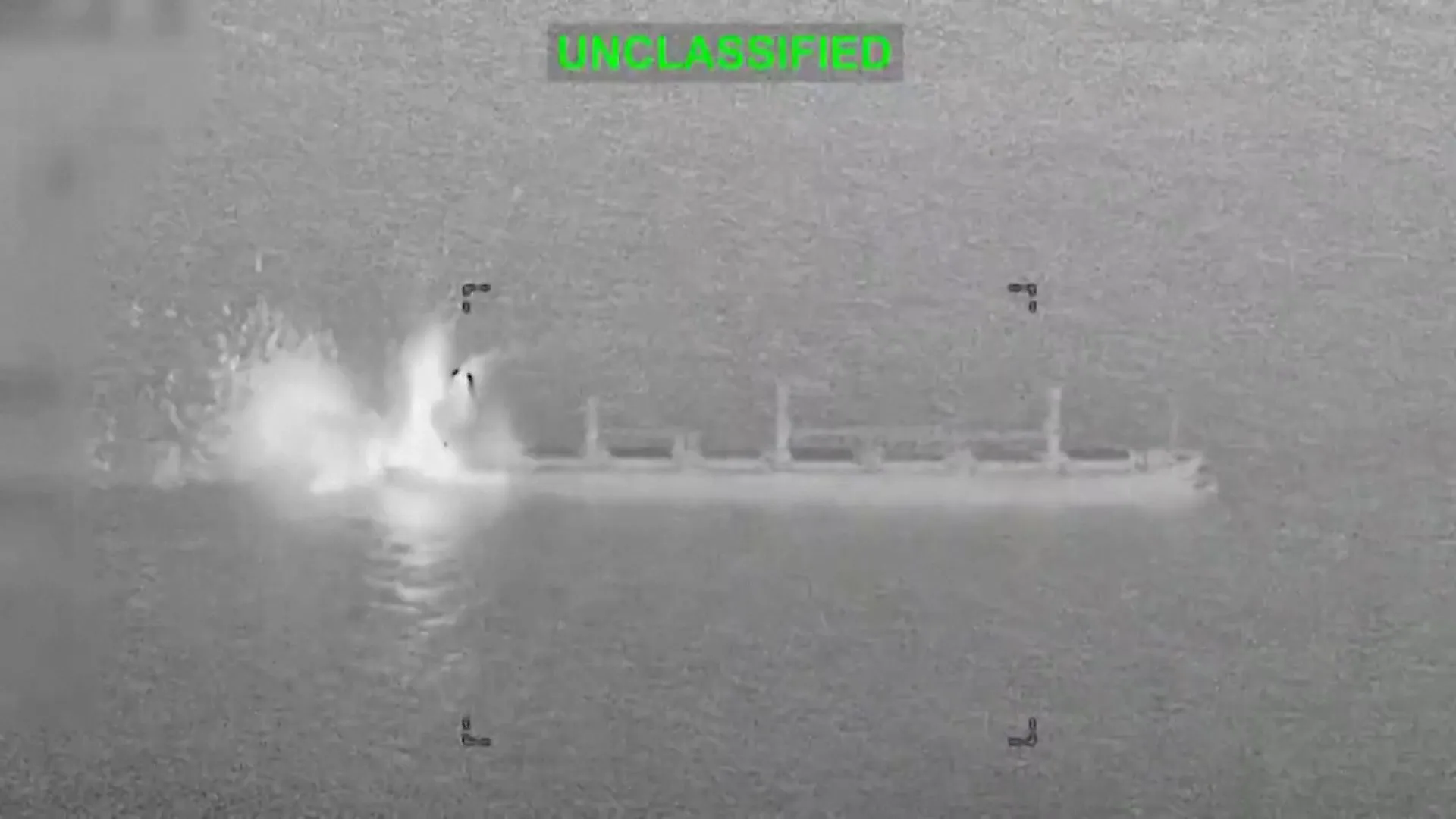
The US blockade of Iranian ports began at 14:00 GMT on April 13. Since then, the US has fired on and seized an Iranian-flagged tanker near the Strait of Hormuz, and redirected ships in the open seas carrying cargo to or from Iran. Iran’s armed forces have called this “an illegal act” that “amounts to piracy”.

In response to the US naval blockade, Iran has closed the Strait of Hormuz to all foreign shipping and has captured several foreign-flagged ships. Previously, it had allowed some ships deemed “friendly” to Iran to pass.

On April 19, Iran’s First Vice President Mohammad Reza Aref said the “security of the Strait of Hormuz is not free”.

“One cannot restrict Iran’s oil exports while expecting free security for others,” he wrote in a post on X.

“The choice is clear: either a free oil market for all, or the risk of significant costs for everyone,” he added. “Stability in global fuel prices depends on a guaranteed and lasting end to the economic and military pressure against Iran and its allies.”

In a statement on social media on Thursday, Iran’s parliamentary speaker and lead negotiator in the ceasefire talks, Mohammad Bagher Ghalibaf, said a full ceasefire could only work if the US naval blockade is lifted.

Analysts say the blockade is hurting Iran but believe the country has the economic and political will to sustain it.

How long can Iran survive the naval blockade?

Here’s what we know:

How is the naval blockade hurting Iran?

Iran exports oil, gas and other goods including petrochemicals, plastics and agricultural products by sea. Analysts say the US naval blockade of its ports, including in the Strait of Hormuz, could therefore affect this trade.

Soon after the start of the US-Israel war on Iran on February 28, authorities in Tehran implemented the effective closure of the Strait of Hormuz, the only waterway out of the Gulf, through which 20 percent of the world’s oil and liquefied natural gas (LNG) supplies were shipped from Gulf producers in peacetime.

The near-shutdown of the vital chokepoint sent global oil and gas prices soaring, and since then, Iran has controlled the strait. However, it has continued to export its own energy products through the waterway.

Iran’s oil exports through the Strait of Hormuz account for about 80 percent of its total oil exports. According to Kpler, a trade intelligence firm, Iran exported 1.84 million barrels per day (bpd) of crude oil in March and has shipped 1.71 million bpd so far in April, compared with an average of 1.68 million bpd in 2025.

From March 15 to April 14, it exported 55.22 million barrels of oil. The price per barrel of Iranian oil – across its three major variants, known as Iranian light, Iranian heavy and Forozan blend – has not fallen below $90 per barrel over the past month. On many days, the price has surpassed $100 a barrel.

Even at the conservative estimate of $90 a barrel, Iran has earned at least $4.97bn over the past month from its ongoing oil exports.

By contrast, in early February before the war started, Iran was earning about $115m a day from its crude oil exports, or $3.45bn in a month.

Simply put, Iran has earned 40 percent more from oil exports in the past month than it did before the war.

Stopping this is a key motivation behind the US naval blockade of Iranian ports.

In an interview with Al Jazeera on April 14, Frederic Schneider, a nonresident senior fellow at the Middle East Council on Global Affairs, told Al Jazeera that the previous six weeks had been a boon for Iran in terms of oil revenues, but with the US blockade, that will change.

“Iran has some buffer in the form of crude oil reserves in floating tanks – basically parked tankers – which was estimated at about 127 million barrels in February. But that doesn’t mean that the blockade wouldn’t hurt Iran,” he said.

On Friday, Schneider told Al Jazeera that Iran, however, seems to be “playing the longer game” and has anticipated and prepared for this sort of conflict to some degree.

“The naval blockade has added economic strain, as several civilian ships have been captured in international waters. But it remains unclear how tight the blockade is, how many ships manage to pass given the considerable amount of floating Iranian oil, and how long Trump can maintain the blockade,” he said.

INTERACTIVE - Strait of Hormuz - March 2, 2026-1772714221
(Al Jazeera)

Can the US keep the blockade going for long?

Schneider noted that Trump will face a legislative challenge by May 1, when the 60 days he can maintain a foreign offensive without congressional approval come to an end.

Dire conditions have been reported on the ships that are upholding the blockade, he said, and it remains to be seen how China will react to the continuing seizure of ships that carry any of its cargo.

“China has already said it sees the blockade of Chinese trade with Iran as unacceptable. Further, the closure of Hormuz by Iran in retaliation is hurting, if not the US itself that much, American allies in the region and globally, raising the pressure on Trump,” he said.

“If we can glean anything from the behaviour of the two sides, it is Iran that is signalling patience and Trump showing impatience,” he added.

Adam Ereli, a former US ambassador to Bahrain, told Al Jazeera’s This is America programme that while the US blockade of Iranian ports and seizure of vessels transporting Iranian oil “makes sense” as a policy, it may not work as intended due to domestic political considerations in the US.

“The Iranians have prepared for this, for this eventuality. They have their own plans. They’ve got alternative means of storing their oil or selling their oil,” Ereli told Al Jazeera.

“Even if they ran out of oil, they have ways to survive a very tough blockade and sanctions regime that, frankly, I think will outlast Trump’s patience and the patience of the American people,” he said.

“Remember, this isn’t just about moving soldiers and ships and planes around on a map. There’s politics involved here in the United States,” he added.

“Trump is nothing if not attuned to the political winds. And for that reason, I think that you’ve got this Iran strategy on the one hand that runs up against an electoral strategy on another hand, and therefore, the question is, which one is going to give?”

Can Iran store the oil the US is blockading in the meantime?

Iran’s domestic refineries have a capacity of 2.6 million bpd, according to consultancy FGE Energy. Its oil and gas production facilities are concentrated in southwestern provinces: Khuzestan for oil and Bushehr for gas and condensate from the South Pars gasfield.

Iran is also the third-largest oil producer in the Organization of the Petroleum Exporting Countries (OPEC) and exports 90 percent of its crude oil via Kharg Island for shipping through the Strait of Hormuz.

The US naval blockade has begun affecting the country’s storage capacity, according to TankerTrackers, the maritime intelligence agency. The blockade means Iran has to store more oil, and space could become tight.

TankerTrackers said that on Kharg Island, to prepare for the possibility of running out of oil storage space, Iran has brought an old tanker named NASHA (9079107) out of retirement.

“She’s a 30yo [year old] VLCC [Very Large Crude Carrier] that’s been anchored empty for the past few years; currently spending 4 days on a trip that should take 1.5-2 days,” TankerTrackers said in a post on X, suggesting that the tanker is being used to store oil. It is unclear if the ship has a heading or course.

Can Iran continue to earn revenues from oil?

Yes, analysts say that for a few months, Iran can continue to earn revenue from oil which is already in transit at sea.

Kenneth Katzman, former Iran analyst at the Congressional Research Service in Washington, DC, said Iran is not exporting new oil amid the US blockade of Iranian ports, but Tehran has between 160 million and 170 million barrels of oil “afloat” on ships around the world currently.

Those supplies, which transited the Strait of Hormuz before the US blockade was imposed, are on board hundreds of tankers and “waiting to be delivered”, Katzman told Al Jazeera.

Katzman said he had been informed by an Iranian professor that, based on those supplies, Tehran could have revenue flows that can last until August despite the US naval blockade.

“Which is a long time. Does President Trump have until August? Probably not,” he said.

“He’s probably going to have to look at kinetic escalation if he wants to bring this to the conclusion that he wants, or he’s going to have to accept less than the deal he ideally wants,” he said.

Iranian ships will still have to avoid US naval ships on the open ocean, as the US Navy has also recently intercepted ships carrying Iranian cargoes.

On Wednesday this week, for example, the US military intercepted at least three Iranian-flagged tankers in ‌Asian waters, Reuters reported, and was said to be redirecting them away from their positions near India, Malaysia and Sri Lanka.

How else can Iran earn revenue?

Besides oil revenue, Iran is also currently receiving revenue from a “toll booth” system that the country imposed on the Strait of Hormuz in March.

On Thursday, Iran’s deputy parliament speaker Hamidreza Haji-Babaei said Tehran’s central bank had received the first revenues from tolls imposed since the start of the war, according to the semiofficial Tasnim news agency. It is unclear how much that toll revenue is.

Iranian politician Alaeddin Boroujerdi told the United Kingdom-based, Farsi-language satellite TV channel Iran International in March that the country has been charging some vessels as much as $2m each to pass through the strait.

According to Lloyd’s List, the shipping news outlet, at least two vessels that have transited the strait so far have paid fees in yuan, China’s currency. Lloyd’s List reported that one “transit was brokered by a Chinese maritime services company acting as an intermediary, which also handled the payment to Iranian authorities”. It is, however, not clear how much the vessels paid.

How resilient is Iran’s leadership?

In recent days, while pressuring Iran to negotiate a ceasefire deal, US President Donald Trump has claimed that Iranians are “having a very hard time figuring out who their leader is”, alleging that there is “crazy” infighting between “moderates” and “hardliners” in Tehran.

But the country’s officials have insisted that Iran’s government is united.

Mohammad Reza Aref, Iran’s first vice president, said on Thursday: “Our political diversity is our democracy, yet in times of peril, we are a ‘Single Hand’ under one flag. To protect our soil and dignity, we transcend all labels. We are one soul, one nation.”

Foreign Minister Abbas Araghchi also dismissed allegations that the Iranian military may be at odds with the political leadership.

“The failure of Israel’s terrorist killings is reflected in how Iran’s state institutions continue to act with unity, purpose, and discipline,” he wrote on X, referring to the assassinations of Iranian political and military figures Israel has carried out in recent weeks.

“The battlefield and diplomacy are fully coordinated fronts in the same war. Iranians are all united, more than ever before.”

One of the strongest messages of unity came from Iran’s President Masoud Pezeshkian.

“In Iran, there are no radicals or moderates,” he said on X.

“We are all Iranians and revolutionaries. With ironclad unity of nation and state and obedience to the Supreme Leader, we will make the aggressor regret.”

How strong is Iran militarily?

Iran has demonstrated considerable military resilience in the face of weeks of US-Israeli strikes through its use of asymmetric warfare.

This includes the use of guerrilla tactics, cyberattacks, arming and supporting proxy armed groups and other indirect tools.

During its war with the US and Israel, Iran has targeted energy infrastructure in Israel and across the Gulf, threatened to target banking institutions and targeted US data centres of technology companies such as Amazon in the United Arab Emirates and Bahrain.

Iran has also blocked the Strait of Hormuz and reportedly placed mines in the strait to disrupt shipping, sending global oil prices soaring.

Since the US began its naval blockade of Iranian ports in mid-April, Iranian officials have repeatedly promised that their country will defend itself and respond to any US attack.

Earlier this week, after the US military said it had seized an Iranian vessel and ordered dozens of others to turn around, Iran also retaliated by capturing foreign commercial vessels around the Hormuz Strait, which it said violated naval regulations.

Ereli, the former US ambassador, told Al Jazeera that Iran and the IRGC have “revolutionary fervour”, which means they can “survive”. “They can tolerate pain for a lot longer than I think most American decision makers and planners calculate,” Ereli said.

Ereli said it was unknown how long Tehran could last under “siege conditions” imposed by the US, but probably a lot longer than the US anticipates.

“I think they can go a lot longer, especially than most people imagine, and especially when it comes to kneeling to the Americans,” Ereli said.

“There’s a level of pride and survival. They’re at war with us, and for them it’s a war of necessity. They’ve got to survive,” he added.

Source link

Trump likes a naval blockade. But Iran presents big differences from Venezuela and Cuba

President Trump has turned to naval blockades to pressure the governments of Venezuela, Cuba and now Iran to meet his demands, but his preferred tactic is confronting a very different reality in the Middle East than in the Caribbean.

Unlike Cuba or Venezuela, Iran choked off a crucial trade route for energy shipments, meaning the longer the standoff persists, the more the global economy will suffer. Tehran also poses a greater military threat than those two adversaries in America’s own hemisphere and requires a sustained military presence far from U.S. shores.

Iran’s leverage over the Strait of Hormuz gives it power during a shaky ceasefire because the widening economic risks, especially higher U.S. gas prices in an election year, could force the Republican president to end the blockade on Iran’s ports and coastline, experts say.

“It’s really a question now of which country, the U.S. or Iran, has a greater pain tolerance,” said Max Boot, a military historian and senior fellow for national security studies at the Council on Foreign Relations.

Iran presents ‘major differences’ from other blockades

The effectiveness of Trump’s use of the world’s most powerful navy to block the trade of Iran’s sanctioned oil and other goods is very much up for debate. But it certainly appears to be intensifying as the war grinds on.

The U.S. military on Thursday announced the seizure of another tanker associated with the smuggling of Iranian oil, a day after Iran’s paramilitary Revolutionary Guards took control of two vessels in the crucial waterway.

Trump also announced he has ordered the U.S. military to “shoot and kill” Iranian small boats laying sea mines in the strait.

But the situation in Iran is not exactly analogous to what is playing out with the U.S. operations in Venezuela and Cuba.

Some experts say Trump’s success in Venezuela probably had more to do with the U.S. military raid that captured leader Nicolás Maduro than American warships seizing sanctioned oil tankers to enforce U.S. control over the South American country.

A U.S. oil embargo on Cuba, meanwhile, has caused the island’s most severe economic crisis in decades. While U.S. and Cuban officials have met recently on the island for rare talks, the financial strangulation has failed to produce the Trump administration’s stated goal of leadership change.

“I do think that the success of the Maduro mission in Venezuela has probably emboldened the president,” said Todd Huntley, director of Georgetown University’s National Security Law Program.

That does not make the situations in Venezuela and Iran similar — geographically, militarily or politically. “There are some major differences,” said Huntley, a retired Navy captain and judge advocate general.

While the blockade against Iran has delivered a severe blow to its economy, including stopping freighters from importing various supplies, the country has still been able to move some of its sanctioned oil, ship-tracking companies say.

Iran has rejected Trump’s demands to reopen the strait, where 20% of the world’s oil normally flows, and it has been firing on ships again this week. Stalled shipments through the strait have sent gasoline prices skyrocketing far beyond the region and raised the cost of food and a wide array of other products, creating a political problem for Trump before the November’s elections.

“Blockades are usually just one tool of a mechanism used in a conflict,” said Salvatore Mercogliano, a maritime history professor at Campbell University in North Carolina. “They can be important. But it’s only one element. And I don’t think it’s going to be enough to convince the Iranians.”

Effectiveness of U.S. blockade called into question

Adm. Brad Cooper, head of U.S. Central Command, claimed last week that “no ship has evaded U.S. forces.” The command overseeing the Middle East said it has directed 31 ships to turn around or return to port as of Wednesday.

Merchant shipping groups are skeptical.

Lloyd’s List Intelligence said “a steady flow of shadow fleet traffic” has passed in and out of the Persian Gulf, including 11 tankers with Iranian cargo that have left the Gulf of Oman outside the strait since April 13.

The maritime intelligence firm Windward said this week that Iranian traffic continues to flow “via deception.”

Iranian ships have several ways to sneak through the blockade, including spoofing their location tracking data or traveling through Pakistani territorial waters, Mercogliano said. He also noted that the sheer volume of shipping traffic the military needs to screen is a challenging task.

Blockades require patience to work

The last time the U.S. mounted a blockade similar to the one focused on Iranian ships was during the Kennedy administration in the early 1960s, against Cuba, Huntley said.

“And it wasn’t even called a blockade,” he said. “We called it quarantine.”

Some naval blockades over the course of history have had an impact, such as Britain’s blockade on Germany during World War I. “But they tend to be very long-term impacts, whereas Trump is looking for short-term, quick results,” according to Boot, the military historian.

He said Trump probably saw the blockade on sanctioned oil tankers tied to Venezuela as playing a large role in the success of leadership changes in that country. But Boot said it had more to do with the U.S. ousting Maduro and the subsequent cooperation from his vice president, Delcy Rodríguez, who is now the acting president.

“There is no Delcy Rodríguez in Cuba or Iran,” Boot said. “I think his success in Venezuela led him astray, thinking that this was a template that could be replicated elsewhere. He sees it as a huge success at little cost. And, in fact, it turns out to be a unique set of circumstances.”

Finley, Klepper and Toropin write for the Associated Press.

Source link

Trump maintains blockade as Iran’s factions struggle to unite

Iranian forces attacked three commercial vessels in the Strait of Hormuz on Wednesday, stoking an already tense standoff in the Persian Gulf as a U.S. naval blockade strains Tehran’s economy and pressures its divided leadership to return to peace talks.

The Islamic Revolutionary Guard Corps, or IRGC, claimed responsibility for the attack, saying it seized two ships and damaged a third after the vessels “ignored repeated warnings.” British maritime monitors confirmed the incidents, describing one cargo ship left disabled in the water and another that took heavy damage to its bridge.

“Disrupting order and safety in the Strait of Hormuz is considered a red line for Iran,” the Iranian Navy Command said in a statement.

Hours before, President Trump confirmed he would maintain the naval blockade in the gulf, but agreed to give Iranian leaders additional time to agree on a new peace proposal, he wrote in a Truth Social post.

“Based on the fact that the Government of Iran is seriously fractured, not unexpectedly so and, upon the request of Field Marshal Asim Munir, and Prime Minister Shehbaz Sharif, of Pakistan, we have been asked to hold our Attack on the Country of Iran until such time as their leaders and representatives can come up with a unified proposal,” Trump wrote Tuesday.

More than a dozen American warships have prevented exports from leaving Iranian ports since peace talks in Islamabad failed earlier this month. The tactic has greatly constrained Iranian oil exports — about 90% of which flow through the Strait of Hormuz — contributing to rising inflationary pressure.

The restrictions could wipe out roughly $435 million in daily economic activity, according to Miad Maleki, a senior fellow at the Foundation for Defense of Democracies. Oil exports, Tehran’s primary revenue source, have halted. At the same time, Iran has been unable to import food or industrial goods. As a result, the blockade is expected to empty Iran’s war coffers and sharply accelerate inflationary effects on its people.

Trump is betting that the strategy will force Iran’s fractured negotiating team — which appears to be split between parliamentary moderates and hard-liners within the Revolutionary Guard — to agree on a “unified” peace proposal.

Karoline Leavitt, the White House press secretary, said Wednesday the president extended the ceasefire agreement to allow Iran to get their “act together,” and emphasized that Trump has not given Iran a “firm deadline” to respond yet.

“President Trump will ultimately dictate the timeline and he will do so when he feels it is in the best interest of the United States and the American people,” Leavitt told reporters.

Though she declined to specify who the administration is negotiating with in Iran, Leavitt said the president was “generously offering a bit of flexibility” to the regime so that they can come up with a unified response.

“This is a battle between the pragmatists and the hard-liners in Iran right now,” Leavitt told reporters at the White House.

That division was visible earlier this week when plans for a second round of talks in Islamabad collapsed after Iranian officials failed to confirm participation and instead introduced new preconditions under pressure from hard-line factions.

Iranian Parliament Speaker Bagher Ghalibaf initially signaled a willingness to attend talks, but was overshadowed by Islamic Revolutionary Guard Corps commander Maj. Gen. Ahmad Vahidi, who insisted that the United States lift its blockade before discussions could begin. A report by the Institute for the Study of War said Vahidi sought to derail negotiations rather than secure meaningful economic relief.

“One challenge with the ongoing negotiations is the divided nature of Iran’s negotiating team,” the report said, adding that “[Trump’s] reference to a ‘unified’ proposal appears to imply that previous proposals were not unified in some way.”

And while hard-liners continue attempts to derail diplomacy with continued demands and attacks in the strait, moderates in Iran continue to push for peace.

This week, prominent Sunni cleric Moulana Abdol Hamid called a “fair agreement” the only viable path forward and warned that those who seek to block negotiations would bear responsibility for the “homeland’s devastation.”

Benjamin Radd, a political scientist at UCLA who studies Iran, said the dispute is a sign of a larger power struggle for control of Tehran’s government.

“There are clear divisions within the leadership,” Radd said in an interview. “Right now, it’s the IRGC faction that has all the power. They have the guns, they have the weapons. What they don’t have is the diplomatic connections and experience dealing with the United States.”

Radd pointed to the economic toll of the U.S. blockade as a key driver of tension inside Iran.

“They’re facing a huge domestic crisis,” he said. “They’re not able to replenish their own needs. Nothing can get in or out of the country. They can’t make any money.”

The consequences of the U.S. strategy could push the more moderate Iranian leaders to strike a deal on nuclear enrichment or a reopening of the strait in exchange for the United States lifting the blockade, Radd said.

“That would start rebuilding some sort of trust,” Radd said. “And then we’re seeing the IRGC is basically steadfast, refusing to do any of this.”

With renewed Israeli attacks in Lebanon killing at least three people Wednesday, despite a 10-day ceasefire agreement, Iranian leaders are preparing for the possibility that talks with the United States will fail altogether.

“Iran has prepared for a new phase of fighting,” the IRGC-affiliated Tasnim News Agency reported this week, citing military redeployments and updated target lists.

Meanwhile, Iranian Judiciary Chief Gholam Hossein Mohseni Ejei warned that renewed U.S. or Israeli strikes were likely. Iran Foreign Ministry spokesman Esmaeil Baghaei made a similar statement in a news briefing Wednesday. He announced the country’s armed forces were “on high alert” and ready to defend against any threat, while being open to Pakistan’s mediation efforts.

He did not confirm if the government was participating in a second round of negotiations.

“Diplomacy is a tool for ensuring national interests and security,” he said, “and we will take the necessary steps whenever we conclude that the necessary and logical grounds exist to use this tool to achieve national interests.”

Until then, it appears both Washington and Tehran will continue brinkmanship in the strait.

On Wednesday morning, the IRGC released a statement confirming it seized the two cargo ships and identified them as the MSC Francesca and the Epaminondas. It claimed the MSC Francesca was linked to Israel and accused both of “jeopardizing maritime security by operating without necessary permits and tampering with navigation systems.”

A third ship, the Euphoria, which sails under the Panamanian flag and is owned by a company based in the United Arab Emirates, was fired upon early Wednesday while heading east out of the Strait of Hormuz, according to Vanguard, a maritime intelligence firm.

The Euphoria later resumed sailing toward the Gulf of Oman, according to Lloyd’s List.

In Lebanon, Amal Khalil became the fourth journalist killed by Israeli fire since hostilities with the Lebanese Shiite militant group Hezbollah intensified on March 2.

Khalil’s body was reported to have been found under the rubble of a house where she and freelance photographer Zeinab Faraj were sheltering, according to their colleagues.

Khalil and Faran were in the southern Lebanese town of Al-Tayri, covering developments there when an Israeli attack targeted the vehicle in front of them, killing its occupants.

The two journalists then sheltered in a house but were hit by Israeli fire once more, according to a statement from the Lebanese Health Ministry.

When Red Cross crews scrambled to the area to rescue the trapped journalists, they were targeted with a sound bomb and machine-gun fire.

The Israeli military said it was not preventing rescue teams from reaching the area and that the incident was under review. It acknowledged targeting a vehicle it said had come out of a structure used by Hezbollah and was heading toward Israeli troops.

The Red Cross reached the house by the early evening local time, and rescued Faraj, who is reported to be in stable condition after undergoing surgery for a head wound, according to her colleagues.

Times staff writers Ana Ceballos in Washington and Nabih Bulos in Beirut contributed to this report.

Source link

Cuba confirms talks with US officials, wants end to Trump’s energy blockade | Donald Trump News

A Cuban Foreign Ministry official said the exchange with Washington was ‘respectful and professional’ and devoid of threats.

The Cuban government has confirmed that it held recent talks in Havana with officials from the United States, as tensions remain high between the two countries over Washington’s energy blockade of the Caribbean country.

Alejandro Garcia del Toro, deputy director general in charge of US affairs at the Cuban Ministry of Foreign Affairs, said on Monday that the US delegation included assistant secretaries of state, and the Cuban delegation included representatives at the level of deputy foreign minister.

Recommended Stories

list of 4 itemsend of list

Garcia de Toro said that the US delegation did not issue any threats or deadlines as had been reported by some US media outlets.

“The entire exchange was conducted with respect and professionalism,” he said.

In comments reported by Cuba’s Communist Party newspaper Granma, Garcia del Toro emphasised that ending the three-month-old US oil blockade was “a top priority” for the Cuban government in the talks, and accused Washington of “blackmail” for threatening countries that export oil to Cuba with tariffs.

“This act of economic coercion is an unjustified punishment for the entire Cuban population,” he said.

“It is also a form of global blackmail against sovereign states, which have every right to export fuel to Cuba, in accordance with the principles of free trade,” he added.

US news outlet Axios reported on Friday that officials from US President Donald Trump’s administration held multiple meetings in Havana on April 10, including with Raul Guillermo Rodriguez Castro, grandson of former President Raul Castro. The meetings marked the first time that American diplomats had flown into Cuba since 2016 in a new diplomatic push.

According to reports, US officials laid out several conditions for negotiations with Cuba to continue, including the release of prominent political prisoners, an end to political repression, and liberalising the island’s ailing economy.

The Reuters news agency said that US proposals for Cuba also include allowing Elon Musk’s Starlink internet terminals into the country and providing compensation for Americans and US corporations for assets confiscated by Cuba after the 1959 revolution. Washington is also concerned about the influence of foreign powers on the island, a US official told the news agency.

Trump has hinted at military intervention in Cuba and warned of tariffs on any country that sells or supplies oil to Cuba. The fuel blockade has aggravated Cuba’s economic and energy crisis, leading to warnings of a humanitarian disaster.

Cubans have also braced for a possible attack following Trump’s repeated warnings that the country will be “next” after his war on Iran and the US military’s abduction of Venezuela’s President Nicolas Maduro in January.

Last week, Cuban President Miguel Diaz-Canel said that his country was prepared to fight if the US carried through on its threats.

The leaders of Mexico, Spain and Brazil on Saturday voiced concern over the “dramatic situation” in Cuba and urged “sincere and respectful dialogue”.

German Chancellor Friedrich Merz said on Monday there was no evident justification for the US to attack Cuba.

“The ability to defend oneself does not mean the right to intervene militarily in other states when their political systems do not match what others might have in mind,” he said.

Source link

Iran Reopens Strait Of Hormuz, U.S. Blockade Continues (Updated)

Iran says it has reopened the Strait of Hormuz, which it largely closed after being attacked by the U.S. and Israel. The move was prompted by a temporary ceasefire in Lebanon between Israel and Hezbollah, an Iranian proxy. However, the U.S. blockade on Iranian ports enacted on Monday remains in place, President Donald Trump announced on his Truth Social social media site.

All this comes as the U.S. and Iran appear closer to reaching a deal to end the war, which we will discuss in greater detail later in this story. The temporary ceasefire between the two countries ends April 21.

“In line with the ceasefire in Lebanon, the passage for all commercial vessels through Strait of Hormuz is declared completely open for the remaining period of ceasefire, on the coordinated route as already announced by Ports and Maritime Organization of the Islamic Rep. of Iran,” Sayyed Abbas Araghchi, the Iranian Foreign Minister, stated on X Friday morning.

In line with the ceasefire in Lebanon, the passage for all commercial vessels through Strait of Hormuz is declared completely open for the remaining period of ceasefire, on the coordinated route as already announced by Ports and Maritime Organisation of the Islamic Rep. of Iran.

— Seyed Abbas Araghchi (@araghchi) April 17, 2026

That route is a narrow five-mile stretch between the islands of Qeshem and Larak, roughly 15 miles from the Iranian shoreline.

In a post on his Truth Social site, U.S. President Donald Trump hailed the decision but said it did not change the ongoing blockade.

“THE STRAIT OF HORMUZ IS COMPLETELY OPEN AND READY FOR BUSINESS AND FULL PASSAGE, BUT THE NAVAL BLOCKADE WILL REMAIN IN FULL FORCE AND EFFECT AS IT PERTAINS TO IRAN, ONLY, UNTIL SUCH TIME AS OUR TRANSACTION WITH IRAN IS 100% COMPLETE,” Trump stated. “THIS PROCESS SHOULD GO VERY QUICKLY IN THAT MOST OF THE POINTS ARE ALREADY NEGOTIATED.”

Trump:

The Strait of Hormuz is completely open and ready for business and full passage, but the naval blockade will remain in full force and effect as it pertains to Iran only, until our transaction with Iran is 100% complete! pic.twitter.com/YMGS5BUGjD

— Clash Report (@clashreport) April 17, 2026

The president added that “Iran has agreed to never close the Strait of Hormuz again. It will no longer be used as a weapon against the World!” However, there was no immediate response from Tehran.

𝗗𝗼𝗻𝗮𝗹𝗱 𝗝. 𝗧𝗿𝘂𝗺𝗽 𝗧𝗿𝘂𝘁𝗵 𝗦𝗼𝗰𝗶𝗮𝗹 𝗣𝗼𝘀𝘁 𝟭𝟬:𝟰𝟬 𝗔𝗠 𝗘𝗦𝗧 𝟬𝟰.𝟭𝟳.𝟮𝟲

Iran has agreed to never close the Strait of Hormuz again. It will no longer be used as a weapon against the World! President DONALD J. TRUMP

— Commentary Donald J. Trump Posts From Truth Social (@TrumpDailyPosts) April 17, 2026

Regarding any peace deals, Trump said on his Truth Social network that the “U.S.A. will get all Nuclear ‘Dust,’ created by our great B2 Bombers – No money will exchange hands in any way, shape, or form.”

This was a reference to the Operation Midnight Hammer attack on Iranian nuclear facilities last year.  Iran is believed to have about 440.9 kg of uranium enriched up to 60% of the explosive uranium isotope, U-235 stored at these locations.

“This deal is in no way subject to Lebanon, either, but the USA will, separately, work with Lebanon, and deal with the Hezboolah situation in an appropriate manner. Israel will not be bombing Lebanon any longer,” Trump added.

“The U.S.A. will get all Nuclear “Dust,” created by our great B2 Bombers – No money will exchange hands in any way, shape, or form.” pic.twitter.com/vkRVe30AzT

— The White House (@WhiteHouse) April 17, 2026

It remains to be seen how this will play out. Iran’s state TV, citing a senior military official, highlighted that “only civilian vessels will be allowed to pass through the Strait of Hormuz via designated routes and with permission from the Islamic Revolutionary Guard Corps Navy.”

“The passage of military vessels through the strait remains prohibited,” it said.

Iran’s state TV, citing a senior military official, said “only civilian vessels will be allowed to pass through the Strait of Hormuz via designated routes and with permission from the Islamic Revolutionary Guard Corps Navy.”

“The passage of military vessels through the strait… pic.twitter.com/1mi3rOmTgX

— Iran International English (@IranIntl_En) April 17, 2026

Despite the closure, ships have still transited the strategic body of water through which about a fifth of the world’s oil and gas exports pass. Ship traffic through the Strait actually “increased from last month’s unusually low levels, with crossings rising and activity extending across a broader mix of vessel types and cargoes,” according to the global trade intelligence firm Kpler.

Traffic gradually returns to Hormuz

Vessel traffic through the Strait of Hormuz has increased from last month’s unusually low levels, with crossings rising and activity extending across a broader mix of vessel types and cargoes. Movements are becoming more balanced in both… pic.twitter.com/FPjw0s3N9k

— Kpler (@Kpler) April 16, 2026

There is also still the issue of mines in the section of the Strait outside the Qeshem-Larak passage. Demining is one of the issues being discussed today in an international meeting being held in Paris, a French official told us. We’ll discuss this meeting in a little more detail later in this story.

Trump, however, claimed that “Iran, with the help of the U.S.A., has removed or is removing all sea mines!”

The Strait of Hormuz and Qeshem and Larak islands. (Google Earth)

We have reached out to shippers and maritime analysis and security firms to get a clearer picture of what this decision means from their perspectives.

“This is good news,” a spokesman for Hapag-Lloyd told us. “There are still some open questions on our end, but they might be resolved within the next 24 hours. Top priority for the passage is safety and security for the seafarers, the vessel and the cargo of our customers. If all open issues are cleared (i.e. insurance coverage, clear orders of Iranian government/military about the exact sea corridor to be used and the sequence of ships leaving) we would prefer to pass the strait as soon as possible. Our crisis committee is in session and will try to resolve all open items with the relevant parties within the next 24-36 hours.”

The reopening of the Strait “marks a turn for global shipping, as it allows over 750 vessels previously trapped in the Middle East Gulf to begin clearing approximately $17 billion in stranded energy and dry bulk cargoes,” Kpler told us. “As of April 17, 2026, there are 862 vessels currently operating within the Mideast Gulf. The core of the backlog is composed of approximately 187 laden tankers carrying roughly 172 million barrels of crude and refined products, along with a specialized cluster of 15 LNG vessels that remain almost entirely stalled following the collapse of recent ceasefire talks.”

The Strait reopening and a looming new round of peace talks appears to have provided a boost to the world economy.

“Oil prices are falling by more than 10%, and Wall Street is rallying toward another record after Iran said the Strait of Hormuz is fully open, which would allow oil tankers to exit the Persian Gulf again and carry crude to customers worldwide,” The Associated Press reported. “The S&P 500 rallied 0.7% as U.S. stocks sprinted toward the finish of a third straight week of big gains. The Dow Jones Industrial Average rose 1%, and the Nasdaq composite added 1%.”

Stocks “have rallied more than 11% since late March on hopes that the United States and Iran can avoid a worst-case scenario for the global economy,” the wire service added.

BREAKING: President Trump and Iran’s foreign minister say the Strait of Hormuz is now fully open. Crude oil prices tumble 10% after the announcements. https://t.co/d44au7X8UP

— The Associated Press (@AP) April 17, 2026

UPDATES

Our coverage for the day has concluded.

UPDATE: 5:45 PM EDT

Trump told CBS News that Iran has “agreed to everything,” and will work with the U.S. to remove its enriched uranium.

He insisted that doing so will not involve U.S. ground troops. But when asked who would retrieve it, he would only say “our people.”

“No. No troops,” he told the network. “We’ll go down and get it with them, and then we’ll take it. We’ll be getting it together because by that time, we’ll have an agreement and there’s no need for fighting when there’s an agreement. Nice right? That’s better. We would have done it the other way if we had to.”

The president said the material would then be brought to the U.S.

“Our people, together with the Iranians, are going to work together to go get it. And then we’ll take it to the United States,” he said.

NEWS President Trump tells me:

-No ground troops will be required to remove enriched uranium from Iran

-Iran has agreed to stop backing all proxy groups like Hezbollah and Hamas

-I asked if Iran has agreed to stop enriching uranium *forever.” He said, “They’ve agreed to…

— Weijia Jiang (@weijia) April 17, 2026

UPDATE: 5:24 PM EDT –

Speaking to the White House press corps, Trump addressed questions about the peace process.

“We’ll see how it all turns out, but it should be good, some very good discussions, and hopefully that subject that you like to talk about will be very good,” he said. “And we’ve done a good job, but we’ll see … the talks are going on and going over the weekend, and a lot of good things are happening that includes Lebanon.”

Asked about differences with Iran on how all this is developing, Trump said: “If there are, I’m going to straighten it out. .. don’t think there’s too many significant differences.”

As for the blockade: “When the agreement is signed, the blockade ends,” he proclaimed.

Earlier on Friday, Iranian officials said they would close the Strait again if the blockade is not lifted.

“We’ve had some very good discussions… Talks are going on. It’ll go on over the weekend — and a lot of good things are happening,” says @POTUS in Arizona.

“As soon as the agreement gets signed, that’s when the blockade ends.” pic.twitter.com/PjNlBvwSAo

— Rapid Response 47 (@RapidResponse47) April 17, 2026

UPDATE: 1:34 PM EDT –

Trump told Axios that U.S. and Iranian negotiators will probably meet this weekend, and he expects them to hammer out a final deal to end the war. The deal should come “in a day or two,” Axios reporter Barak Ravid added on X.

UPDATE: 1:28 PM EDT –

Trump told Reuters on Friday that the U.S. will work with Iran to recover its enriched uranium ​and bring it back to the United States.

“We’re going to get ‌it together. We’re going to go in with Iran, at a nice leisurely pace, and go down and start excavating with big machinery… We’ll bring it back to the United ​States,” Trump said during a phone interview.

The ⁠United States will work ‌with Tehran to recover its enriched uranium and bring ​it back to ‌the United States, President Donald Trump told Reuters on Friday.

“We’re going to get it together. ‌We’re going to go in with Iran, at ⁠a nice leisurely pace, and go ‌down ​and… pic.twitter.com/ZfwJTFrIbr

— Iran International English (@IranIntl_En) April 17, 2026

UPDATE: 1:17 PM EDT –

Seyyed Mohammad Mehdi Tabatabaei, a spokesperson for Iran’s president, pushed back on Trump’s claim that Iran promised never to close the Strait again.

“The Twitter rhetoric and baseless statements of the enemy are aimed at stripping the Iranian nation of their sense of pride for the great victories they have achieved through their resolute defense,” he stated on X. “The conditional and limited reopening of a portion of the Strait of Hormuz is solely an Iranian initiative, one that creates responsibility and serves to test the firm commitments of the opposing side. If they renege on their promises, they will face dire consequences.”

لفاظی‌های توئیتری و اظهارات بی‌پایه دشمن، در جهت سلب احساس افتخار ملت ایران برای پیروزی‌های بزرگی است که در دفاع مقتدرانه کسب کرده‌اند.
بازگشایی مشروط و محدود بخشی از تنگه هرمز ، صرفا ابتکاری ایرانی، مسئولیت‌آفرین و برای آزمون تعهدات قطعی طرف مقابل است. بدعهدی کنند، بد می‌بینند.

— سيد مهدي طباطبايي (@tabaei1356) April 17, 2026

UPDATE 12:51 PM EDT –

Iran considers the continuation of the U.S. blockade on its ports a ceasefire violation and would close the Strait of Hormuz again if the blockade is not lifted, the IRGC-affiliated Fars News reported citing an informed source close to the Supreme National Security Council.

We’ve reached out to the White House for comment.

Iranian official to Fars:

If the maritime blockade continues, it will be considered a violation of the ceasefire, and the Strait of Hormuz transit route will be closed.

— Clash Report (@clashreport) April 17, 2026

With new talks potentially set to be held in Pakistan over the weekend, the U.S. and Iran are negotiating over a three-page plan to end the war, Axios reported Friday morning. One of the key elements under discussion is “that the U.S. would release $20 billion in frozen Iranian funds in return for Iran giving up its stockpile of enriched uranium,” the outlet noted, citing two U.S. officials and two additional sources briefed on the talks.

The Memo of Understanding (MoU) also states the two sides are negotiating over a “voluntary” moratorium on nuclear enrichment by Iran. It also deals with the Strait of Hormuz, “though the sources said there are still significant gaps on that issue,” Axios posited.

It’s unclear if the MOU refers to Iran’s ballistic missiles and its support for regional proxies.

🚨 SCOOP: The U.S. and Iran are negotiating over a three-page plan to end the war, with one element under discussion being that the U.S. would release $20 billion in frozen Iranian funds in return for Iran giving up its stockpile of enriched uranium. https://t.co/w84Yd8JHgp

— Axios (@axios) April 17, 2026

“Trump is directly talking to the Iranians,” U.S. Sen. Lindsey Graham (R-SC) told Fox News

“He is negotiating himself,” Graham proffered. “He was on the phone with the Iranians a couple of days ago, and it got rather sporty—to the point that Trump loudly told Iran what would happen if they keep playing games. He actually lost his voice. I’d hate to be the Iranian on the receiving end of that.”

Senator Graham:

Trump is directly talking to the Iranians. He is negotiating himself.

He was on the phone with the Iranians a couple of days ago, and it got rather sporty—to the point that Trump loudly told Iran what would happen if they keep playing games.

He actually lost… pic.twitter.com/rMPjT9SYYc

— Clash Report (@clashreport) April 17, 2026

Despite rising hopes that the war in Iran could soon end, the country’s deputy foreign minister on Friday rejected any call for a temporary ceasefire. Instead, Tehran is seeking a comprehensive end to conflict across the Middle East, Saeed Khatibzadeh told reporters today. That includes fighting between Israel and Hezbollah, currently paused on the first full day of a shaky 10-day ceasefire.

“We are not accepting any temporary ceasefire,” Khatibzadeh said on the sidelines of the Antalya Diplomacy Forum hosted by Turkey’s Foreign Affairs Ministry. Any end to the fighting must include all conflict zones “from Lebanon to the Red Sea,” he added, describing it as a “red line” for Iran.

The cycle of violence “should end here once and for all,” Khatibzadeh continued, according to Al Jazeera.

The Islamic Revolutionary Guard Corp (IRGC) said it is ready to resume fighting if needed.

The Army and the IRGC have their “finger on the trigger” and are “prepared to deliver a powerful, destructive, and regret-inducing response to any aggressive or criminal action by the US-Israeli enemy and their allies against the Iranian nation,” the IRGC said Friday.

As we noted earlier in this story, the leaders of nearly three dozen nations met – mostly virtually – at a conference in Paris today to discuss the future of the Strait of Hormuz.

Co-chaired by French President Emmanuel Macron and British Prime Minister Keir Starmer, the conference on the Initiative for Maritime Navigation in the Strait of Hormuz looked at ways of protecting shipping after the fighting ends.

Starmer said the U.K. and France will lead a multinational mission to “protect freedom of navigation” in the Strait as soon as conditions permit. He added that the mission would be “strictly peaceful and defensive,” with the aim of reassuring commercial shipping and supporting mine clearance efforts.

Starmer invited other countries to join, saying that roughly a dozen countries had committed to contributing assets.

Kaja Kallas, European Union High Representative for Foreign Affairs and Security Policy/Vice-President of the European Commission, said leaders also discussed ensuring that Iran imposes no tolls on passage through the Strait.

“Any pay-for-passage scheme will set a dangerous precedent for global maritime routes,” she stated on X. “Iran has to abandon any plan to levy transit fees. Europe will play its part in restoring the free flow of energy and trade, once a ceasefire takes hold.”

Kallas added that the EU’s Aspides naval mission is already operating in the Red Sea “and can be quickly strengthened to protect shipping across the region. This could be the fastest way to provide support.”

Yesterday, a spokesman for Aspides told us that there were no changes in its mission.

Under international law, transit through waterways like the Strait of Hormuz must remain open and free of charge. This is what leaders made clear in their call on reopening the Strait today.

Any pay-for-passage scheme will set a dangerous precedent for global maritime routes.… pic.twitter.com/Jeufv4hQou

— Kaja Kallas (@kajakallas) April 17, 2026

Contact the author: howard@thewarzone.com

Howard is a Senior Staff Writer for The War Zone, and a former Senior Managing Editor for Military Times. Prior to this, he covered military affairs for the Tampa Bay Times as a Senior Writer. Howard’s work has appeared in various publications including Yahoo News, RealClearDefense, and Air Force Times.


Source link

Iran closes Strait of Hormuz again over US blockade of its ports | US-Israel war on Iran News

Reports of Iranian gunboats opening fire on a tanker in strait, after Tehran said it is closing the waterway until the US lifts the blockade of its ports.

Iran says it has closed the Strait of Hormuz again, calling the decision a response to a continued blockade of its ports by the United States.

The Iranian military on Saturday said control of the strategic waterway, through which 20 percent of the global oil flows, has “returned to its previous state”, with reports saying Iranian gunboats fired at a merchant vessel as it attempted to ‌cross.

Recommended Stories

list of 4 itemsend of list

The closure of the strait came hours after it was reopened, with more than a dozen commercial ships passing through the waterway, after a US-mediated 10-day ceasefire deal was reached between Israel and Lebanon.

The Islamic Revolutionary Guard Corps (IRGC) on Saturday said in a statement, cited by the Iranian media, that the ongoing US blockade of Iranian ports represented “acts of piracy and maritime theft”, adding that the control over Hormuz is “under the strict management and control of the armed forces”.

“Until the US restores full freedom of navigation for vessels travelling from Iran to their destinations and back, the status of the Strait of Hormuz will remain tightly controlled and in its previous condition,” it said.

By 10:30 GMT on Saturday, no fewer than eight oil and gas tankers had crossed the strait, but at least as many ships appeared to have turned back, having begun to exit the Gulf, the AFP news agency reported.

The toing and froing over the strait cast doubt on US President Donald Trump’s optimism the day before, that a peace deal to end the US-Israel war on Iran was “very close”.

Trump had celebrated the reopening of the strait on Friday, but warned the US attacks would resume until Iran agreed to a deal, which included its nuclear programme.

“Maybe I won’t extend it,” Trump told reporters on board Air Force One about the temporary ceasefire agreement in place. “So you’ll have a blockade, and unfortunately we’ll have to start dropping bombs again.”

Asked whether a potential deal could be made in this short timeframe, Trump said: “I think it’s going to happen.”

But Iran says no date has been agreed for another round of peace talks, accusing the US of “betraying” diplomacy in all negotiations.

The conflicting and changing reports about the strait and how much freedom ships have to transit through it have deterred many vessels from crossing, according to John-Paul Rodrigue, a maritime shipping specialist at Texas A&M University.

“Ships have been attempting transit since the announcement, but it looks like many of them are heading back because the situation is unclear,” Rodrigue told Al Jazeera. “There is contradictory information being issued by all parties.”

Reporting from Tehran, Al Jazeera’s Tohid Asadi said “uncertainty is the name of the game” as far as the Strait of Hormuz is concerned.

“Iran is looking for a comprehensive end to the war across the region, security assurances, sanctions relief, the unfreezing of frozen assets, regional relations – and on top of all of that – the nuclear dossier and Iran’s stockpile of highly enriched uranium,” he said.

“But right now, uncertainty is the name of the game. The fragile situation makes it hard to talk about the possibility of successful negotiations down the road.”

Source link

U.S. Pursuing Iranian-Linked Ships All Over The World In Addition To Its Blockade (Updated)

The U.S. military is not limiting its efforts to interdict Iranian vessels to the Middle East. Air Force Gen. Dan Caine, Chairman of the Joint Chiefs of Staff, told reporters today that this is a global campaign.

“Let me be clear, this blockade applies to all ships, regardless of nationality, heading into or from Iranian ports,” he said. “The U.S. action is a blockade of Iran’s ports and coastline, not a blockade of the Strait of Hormuz. Enforcement will occur inside Iran’s territorial seas and in international waters.”

“In addition to this blockade, the joint force, through operations and activities in other areas of responsibility, like the Pacific Area of Responsibility, under the command of Admiral [Samuel] Paparo, will actively pursue any Iranian-flagged vessel or any vessel attempting to provide material support to Iran,” he added. “This includes Dark Fleet vessels carrying Iranian oil. As most of you know, Dark Fleet vessels are those illicit or illegal ships evading international regulations, sanctions or insurance requirements.”

Caine added that no Iranian ships have been boarded in the CENTCOM region so far, but he did not say if any have been interdicted outside the CENTCOM region. We have reached out to his office for more details. It should be noted that early in Epic Fury, a U.S. Navy submarine sunk an Iranian frigate in the Indian Ocean.

.@thejointstaff Chairman Gen. Dan Caine: “Let me be clear: this blockade applies to ALL ships, regardless of nationality, heading into or from Iranian ports. The U.S. action is a blockade of Iran’s ports and coastline, not a blockade of the Strait of Hormuz. Enforcement will… pic.twitter.com/xGIclPQHmi

— Rapid Response 47 (@RapidResponse47) April 16, 2026

Caine was one of three top military leaders to brief reporters this morning on the currently paused Operation Epic Fury and the ongoing blockade. Here are some highlights from the press conference, which also included War Secretary Pete Hegseth, and CENTCOM commander, Adm. Brad Cooper.

  • Caine explaining how the Navy is enforcing the blockade:

“This map is a pull from our common operating picture that we use to allow commanders and key leaders to see what is happening in near real time, we just grabbed screen grabs to highlight the actions and activities,” Caine noted. “What is not shown is how incredibly congested this area is and the incredible work that our sailors are doing to ensure that they can work in and around an incredibly busy water space. What is also not depicted here is the massive, massive force of fighters, intelligence aircraft, helicopters and other embarked forces, to include aerial refueling tankers that are up overhead this blockade area. You’ll note that U.S. forces are in blue. Iranian ships are in red.”

  • Caine on how the Navy communicates with ships approaching the blockade:

“At each point, the United States Navy will transmit a warning. A young sailor, normally on the bridge of one of those destroyers – a junior officer – picks up that mic and transmits, and I quote, ‘do not attempt to breach the blockade. Vessels will be boarded for interdiction and seizure, transiting to or from Iranian ports, turn around or prepare to be boarded. If you do not comply with this blockade, we will use force,’” the chairman explained. “And as this message is being transmitted…those ship masters can literally see, sense and feel the pressure around them.”

“It’s a finely tuned machine rehearsed multiple times and executed now 13 times since the blockade has begun,” he posited.

  • Caine on the capabilities of U.S. Navy warships:

“When we talk about an American destroyer, it’s important that you and the American people understand their capabilities. And Arleigh Burke class destroyers are the backbone of the United States Navy surface fleet,” Caine proffered. “Over 500 feet long, they displace 9,000 tons, and it is the sports car of the United States Navy. From the keel to the mast, they stand nearly 10 stories tall, and their four gas turbine engines can drive the ship at 30 plus knots. These ships are armed to the teeth with surface-to-air missiles, land attack cruise missiles, anti ship missiles, anti submarine rockets, torpedoes, five-inch naval guns, multiple electronic warfare systems, embarked helicopters extending the reach and capability of each and every one of these destroyers. But far and away, the most important weapon on board these ships is the American sailor.”

BREAKING: Chairman of the Joint Chiefs of Staff Dan Caine outlines the DEADLY capabilities of American warships:

“These ships are armed to the teeth with surface to air missiles, land attack cruise missiles, anti-ship missiles, anti-submarine rockets, torpedoes, five inch naval… pic.twitter.com/gBTcnnMEqF

— Fox News (@FoxNews) April 16, 2026

  • Caine on operating a blockade in highly congested waters:

“On that bridge, our sailors maintain a constant watch, maneuvering the ship tactically and safely through always congested water space, and there is a lot out there,” the general pointed out. “It is like driving a sports car through a supermarket parking lot on a payday weekend with thousands of kids in that parking lot as you attempt to maneuver through there to get to that ship that would attempt to run that blockade.”

NOW: Chairman of the Joint Chiefs of Staff Dan Caine reveals what it’s like for American warships enforcing the Middle East naval blockade:

“It is like driving a sports car through a supermarket parking lot on a payday weekend with thousands of kids in that parking lot, as you… pic.twitter.com/Xfh7ngNQBZ

— Fox News (@FoxNews) April 16, 2026

  • Cooper on working with allies during Epic Fury:

“I assess that our military partnerships are stronger than ever as we continue to maintain a very active defense posture across the region during this ceasefire, and that posture stretches across the entire Arabian Peninsula, and it runs from Northern Iraq all the way down into the northern Arabian Gulf,” according to the admiral. “In creating the largest air defense umbrella in the world, across the Middle East, we invited specially trained U.S. military air defenders alongside our partner nation soldiers side by side, literally side by side.”

“And to give you a sense of their contribution and impact,” he highlighted, “the king and crown prince of Bahrain both personally knew our soldiers by name.”

CENTCOM Commander Brad Cooper:

Bahrain, UAE, Saudi Arabia, Qatar, Kuwait, and Jordan have been exceptional teammates.

I had a chance to meet with both their senior leadership as well as their troops—both equally inspiring and equally committed to mutual defense.

They defended… pic.twitter.com/rQLhcv2VQx

— Clash Report (@clashreport) April 16, 2026

  • Hegseth on being prepared to resume fighting if needed:

“We can make that transition again very quickly and even more powerfully than ever at the direction of President Trump,” the secretary stated. “The War Department will ensure that Iran never has a nuclear weapon, never. We prefer to do it the nice way, through a deal led by our great Vice President and negotiating team, or we can do it the hard way. We urge this new regime to choose wisely.”

  • Hegseth on Iranian command and control:

“Their command and control capabilities are highly degraded,” Hegseth noted. “So their ability to talk, see and sense is the worst it’s ever been. But their motivation to want to stay in the ceasefire is very high, because they understand that a violation of that ceasefire means a commencement once again, of Admiral Cooper’s forces, which went very poorly for them. “

“As far as the Houthis, thus far, they have stayed out of it, which, of course, we think is a good decision by them,” Hegseth said. “And I think it is a reflection of the fact that over a year ago, in Operation Rough Rider, we had an ongoing and intense campaign that demonstrated American capabilities, which has them hesitating to want to do something on that Strait, which I think would be a poor choice.”

It is worth noting that USNI reported that the aircraft carrier USS George H.W. Bush, which is heading to the Middle East, did not transit the Strait of Gibraltar, but is instead “operating off the coast of Namibia… The path around Africa allows the carrier and its escorts to avoid transiting the Red Sea and the Bab el-Mandeb, which were both hubs of activity for the Houthis in their drone and missile attacks on U.S. and commercial shipping in 2024 and 2025.”

  • Hegseth on claims China is helping to arm Iran:

“President Trump has a very strong and direct relationship with President Xi, and they’ve communicated on that, and China has assured us that that indeed is not going to happen,” Hegseth avowed.

  • Hegseth on the health of Iranian Supreme Leader Mojtaba Khamenei:

He is “believed to be alive, wounded and disfigured,” Hegseth explained. His “status remains the same.”

According to U.S. Secretary of Defense Pete Hegseth, the current assessment on the health of Iranian Supreme Leader Mojtaba Khamenei remains the same, alive, wounded and disfigured. pic.twitter.com/XCuwrz3vZE

— OSINTdefender (@sentdefender) April 16, 2026

UPDATES:

Our coverage for the day has concluded.

UPDATE: 6:19 PM EDT –

The ceasefire in Lebanon earned praise from the U.N. Secretary General and Saudi officials.

“I welcome the announcement of a ceasefire between Israel & Lebanon, and commend the role of the U.S. in facilitating it,” Antonio Guterres said on X. “I hope this will pave the way for negotiations towards a long-term solution to the conflict & contribute to ongoing efforts toward a lasting & comprehensive peace in the region. I urge everyone to fully respect the ceasefire and to comply with international law at all times.”

I welcome the announcement of a ceasefire between Israel & Lebanon, and commend the role of the US in facilitating it.

I hope this will pave the way for negotiations towards a long-term solution to the conflict & contribute to ongoing efforts toward a lasting & comprehensive…

— António Guterres (@antonioguterres) April 16, 2026

The Saudi Foreign Ministry “expresses the Kingdom of Saudi Arabia’s welcome of the announcement by President Donald Trump of the United States of America, regarding the ceasefire in the Republic of Lebanon,” it stated on X. “The Kingdom commends the significant and positive roles played by the President of the Republic of Lebanon General Joseph Aoun, the Lebanese Government, headed by Prime Minister Nawaf Salam, and the Speaker of Parliament, Nabih Berri.”

#Statement | The Foreign Ministry expresses the Kingdom of Saudi Arabia’s welcome of the announcement by President Donald Trump of the United States of America, regarding the ceasefire in the Republic of Lebanon. The Kingdom commends the significant and positive roles played by… pic.twitter.com/wCxeu5Hi18

— Foreign Ministry 🇸🇦 (@KSAmofaEN) April 16, 2026

UPDATE: 6:09 PM EDT –

Trump took to Truth Social to blast Italy, saying: “Italy wasn’t there for us, we won’t be there for them!”

He included a link to a Guardian story from March about how “Italy has denied the use of an airbase in Sicily to U.S. military planes carrying weapons for the war in Iran after the U.S. did not follow the required authorization procedure.”

UPDATE: 5:59 PM EDT

Pre-war planning meant Iran’s military “was able to mitigate the impact of U.S.-Israeli strikes on its weapons arsenal and leadership,” Bloomberg reported, citing Western military intelligence assessments — which also say the Islamic Republic retains the ability to respond if the ceasefire fails.

Despite the widespread damage and killings of leadership during the hostilities, operational planning undertaken in anticipation of the conflict was effective in preventing the destruction of its missile and drone capabilities as well as maximizing the impact of its military response, people familiar with the assessments told the news outlet.

Exclusive: Iran Has Limited the Impact of US Strikes, Intelligence Says

Pre-war planning meant Iran’s military was able to mitigate the impact of US-Israeli strikes on its weapons arsenal and leadership, according to Western military intelligence assessments — which also say it…

— Alex Wickham (@alexwickham) April 16, 2026

UPDATE: 5:54 PM EDT –

People in the Lebanese capital of Beirut celebrated by firing flares as the 10-day ceasefire between Israel and Hezbollah went into effect.

UPDATE: 5:48 PM EDT –

Netanyahu says he rejected Hezbollah’s demands for an Israeli withdrawal from all Lebanese territory, and for a ceasefire in the form of “quiet will beget quiet.”

Israeli Prime Minister Netanyahu says he rejected Hezbollah’s demands for an Israeli withdrawal from all Lebanese territory, and for a ceasefire in the form of “quiet will beget quiet.”

In other words, the new ceasefire in Lebanon will be based on the same model as the November… pic.twitter.com/Yn50TCtwSa

— Ariel Oseran أريئل أوسيران (@ariel_oseran) April 16, 2026

UPDATE 5:42 PM EDT –

CENTCOM released a video of a sailor aboard the Arleigh Burke class guided missile destroyer USS Michael Murphy communicating with a merchant vessel during a diversion in the ongoing blockade.

Audio🔊of a Sailor aboard USS Michael Murphy (DDG 112), with video from the guided-missile destroyer’s embarked helicopter flying over the Gulf of Oman, as the U.S. Navy diverts a merchant vessel while enforcing the blockade on ships entering or departing Iranian ports. U.S.… pic.twitter.com/10QxlEoGkk

— U.S. Central Command (@CENTCOM) April 16, 2026

UPDATE 5:20 PM EDT –

Trump on Thursday claimed that Iran has agreed to give up its nuclear ambitions. He made that statement during comments to the press outside the White House on Thursday.

“We had to make sure that Iran never gets a nuclear weapon. They’ve totally agreed to that. They’ve agreed to almost everything,” he claimed, despite no deal being reached during Saturday’s U.S.-Iran talks in Pakistan, The Jerusalem Post noted

In addition, Trump asserted that Iran is willing to do things today “that they weren’t willing to do two months ago,” before the U.S. and Israel launched Operation Epic Fury against Iran.

When asked if it would be acceptable for Iran to agree to a 20-year halt for enriching uranium, Trump said he had received “a very powerful statement” that Iran will not have nuclear weapons for “beyond 20 years.” 

It is unclear how Iran has responded.

.@POTUS on whether a 20-year minimum for Iran to stop enriching uranium is acceptable:

“We have a statement, a very powerful statement, that they will not have — beyond 20 years — that they will NOT have nuclear weapons. There’s no 20-year limit.” pic.twitter.com/saqa3DjfYl

— Rapid Response 47 (@RapidResponse47) April 16, 2026

An image emerged on social media purporting to show what appears to be an anti-drone cage atop a U.S. radar system in Baghdad. Last month, a radar and a Black Hawk helicopter in the Iraqi capital were damaged during a first-person view (FPV) drone attack by an Iranian proxy militia group. As we have been reporting for years, these so-called cope cages emerged in the battlefields of Ukraine and have become ubiquitous in conflicts around the globe.

Reports are emerging of intense and sustained activity by the IRGC to restore access to Iranian underground missile sites. 

“Throughout the early morning (04:15 AM – 06:00 AM local time today), a total of approximately 30 explosions were recorded as crews worked persistently to clear or unseal the blocked tunnel entrances,” according mamlekate, a network of independent journalists covering Iran. 

As we have noted, these sites have been targeted multiple times since February 28, the first day of the war.

Reports from Bushehr, Jam, indicate intense and sustained activity by the IRGC to restore access to the underground missile sites.
Throughout the early morning (04:15 AM – 06:00 AM local time today), a total of approximately 30 explosions were recorded as crews worked… https://t.co/3t3HIbM5as

— مملکته (@mamlekate) April 16, 2026

During his press conference, Hegseth noted that the U.S. is closely monitoring Iranian efforts to dig out these facilities and said they would be unsuccessful.

“While you are digging out, which is exactly what you’re doing, digging out of bombed-out and devastated facilities,” he posited. “We are only getting stronger. You are digging out your remaining launchers and missiles with no ability to replace them.”

🚨SOW Hegseth: “While you are digging out, which is exactly what you’re doing, digging out of bombed-out and devastated facilities. We are only getting stronger. You are digging out your remaining launchers and missiles with no ability to replace them.” pic.twitter.com/Xdkco9qo5F

— Raylan Givens (@JewishWarrior13) April 16, 2026

As we noted yesterday, CNN reported that Iran appears to be using the time to reopen entrances to underground missile cities damaged during the war. The network published footage showing engineering equipment at the Tabriz South missile base and the Khomein missile base. 

The network also noted that, according to U.S. intelligence estimates, about half of the Iranian missile launchers remained intact after a month of fighting, and that many of these launchers could have been buried in underground storage facilities as a result of strikes on the entrances.

CNN published footage showing engineering equipment making use of the ceasefire to reopen the entrances to underground facilities at missile bases that were damaged during the war.

The sites documented include the Tabriz South missile base and the Khomein missile base.

Notably,… pic.twitter.com/B88HISqVYD

— Ben Tzion Macales (@BenTzionMacales) April 15, 2026

U.S. and Iranian negotiators have scaled back ambitions for a comprehensive peace deal and are instead seeking a temporary memorandum to prevent a return ​to conflict, two Iranian sources told Reuters.

“A senior Iranian official said the two sides had started to narrow some gaps, including over how to manage the Strait of Hormuz, a vital route for about 20% of the world’s oil and gas needs that has ​been closed to most ships for weeks,” the news outlet reported.

Iran, which has faced crippling U.S. sanctions for years, “wants a memorandum to include Washington unfreezing some Iranian funds, ​in return for allowing more ships through the strait,” Reuters added.

However, no dates for a return to talks has yet been set.

The commander-in-chief of the Iranian Army boasted about how his country still has a functional Air Force, as demonstrated yesterday during the escort over its airspace by a visiting Pakistani delegation.

“They say the Iranian Air Force is gone. Yesterday we had a guest (Commander of the Pakistan Army),” proclaimed Gen. Amir Hatami. “As soon as he entered our airspace, we announced that your (Pakistan’s) planes weren’t needed. We escorted our guest with twice the number of planes they wanted to bring for escort.”

🇮🇷🇵🇰⚡️– Commander-in-Chief of the Iranian Army:

“They say the Iranian Air Force is gone.

Yesterday we had a guest (Commander of the Pakistan Army). As soon as he entered our airspace, we announced that your (Pakistan’s) planes weren’t needed.

We escorted our guest with twice… pic.twitter.com/fc79L019xG

— MonitorX (@MonitorX99800) April 16, 2026

Hatami’s comments came a day after images emerged on social media purporting to show an IRIAF F-4E and Mig-29A flying over Tehran escorting the Pakistani delegation that arrived today to discuss potential future peace talks.

Despite the ongoing efforts to end the fighting, the U.S. is continuing to flow assets to the region, with transport planes regularly landing in the Middle East from the U.S.

What is a “good faith deal?” U.S. officials say this includes the Iranians understanding they can’t obtain a nuclear weapon, can’t enrich uranium, and must remove already enriched uranium from their country. pic.twitter.com/86XPn0L0cW

— Trey Yingst (@TreyYingst) April 16, 2026

Trump said Israel and Lebanon have agreed to a ceasefire.

“I just had excellent conversations with the Highly Respected President Joseph Aoun, of Lebanon, and Prime Minister Bibi Netanyahu, of Israel,” the president stated on his Truth Social site. “These two Leaders have agreed that in order to achieve PEACE between their Countries, they will formally begin a 10 Day CEASEFIRE at 5 P.M. EST.”

However, the statement doesn’t mention Hezbollah, which is fighting Israel, so it is unclear what effect this will have.

Trump added that he is “inviting the Prime Minister of Israel, Bibi Netanyahu, and the President of Lebanon, Joseph Aoun, to the White House for the first meaningful talks between Israel and Lebanon since 1983, a very long time ago.”

Prior to Trump’s social media post, Iran’s parliament speaker Mohammad Bagher Ghalibaf told his Lebanese counterpart Nabih Berri that Tehran is pushing for a permanent ceasefire “in all conflict zones” and that a ceasefire in Lebanon is “just as important” as in Iran, according to a statement on Telegram.

BREAKING: Iran’s parliament speaker Mohammad Bagher Ghalibaf tells Lebanese counterpart Nabih Berri that Tehran is pushing for a permanent ceasefire “in all conflict zones” and that a ceasefire in Lebanon is “just as important” as in Iran, according to a statement on Telegram. pic.twitter.com/dLis1PD2xE

— Al Jazeera Breaking News (@AJENews) April 16, 2026

Despite Ghalibaf’s comments, Lebanon’s president will not speak to Israel’s prime ​minister in the near future as anticipated, Lebanese officials said on Thursday, according to Reuters. The move dealt a blow to U.S. efforts to expand contacts between the enemy states as Pakistan said peace in Lebanon ‌was vital to ending the Iran war.

The IDF is setting up more outposts in southern Lebanon, Haaretz reported.

Soldiers serving in Lebanon told the newspaper that the army is “operating in Lebanon using methods similar to those used in the Gaza Strip and that these new outposts are likely to become focal points for friction and ongoing fighting against Hezbollah.”

IDF Setting Up More Outposts in Southern Lebanon:
“We’re behaving just like we did in Gaza,” one army source said. “There’s a list of homes to be demolished, and we measure success based on the number of buildings destroyed in a day.”

https://t.co/AVKD6jzmXK

— Mona Fawaz (@mona_fawaz) April 16, 2026

Select Committee on China Chairman John Moolenaar sent a letter to Hegseth concerning the operations of Airbus Space “due to its role in likely providing satellite imagery of U.S. military assets to MizarVision, a Chinese entity, days before the commencement of Operation Epic Fury,” according a committee press release.

“While commercial satellite imagery may serve public interest purposes in some cases, unconstrained imagery provision exposing U.S. forces to heightened risk crosses a dangerous threshold,” Moolenaar wrote. “Near-real-time publication of precise, annotated imagery identifying the exact type, number, and location of specific high-value military assets at an active forward operating base—while those assets are actively engaged in combat operations—is targeting data for enemy forces.”

As we noted yesterday, VANTOR and Planet Labs, two U.S. satellite firms, have already complied with the Pentagon and have curtailed providing imagery over the Middle East.

A Chinese firm, MizarVision, posted detailed satellite imagery of U.S. forces in the Middle East while not disclosing its data sources.@ChinaSelect analysis found @AirbusSpace satellites had multiple daily windows, up to 10 hours, where they could have captured imagery of U.S.… pic.twitter.com/HywjpstNUb

— Select Committee on China (@ChinaSelect) April 16, 2026

China and the U.S. are maintaining communication on U.S. President Donald Trump’s visit to China, Chinese Foreign Ministry spokesperson Guo Jiakun said on Thursday

Guo’s statement came in response to a question regarding remarks by President Trump in an interview aired Wednesday on Fox News, in which he said factors including Iran would not change the dynamic of his meeting with the Chinese leader.

#Chinese Foreign Ministry spokesperson Guo Jiakun said on Thursday that China and the #US are maintaining communication on US President Donald #Trump’s visit to China. Guo’s statement came in response to a question regarding remarks by President Trump in an interview aired… pic.twitter.com/S80Mu6XCEH

— Global Times (@globaltimesnews) April 16, 2026

U.S. Central Command (CENTCOM) clarified its efforts to interdict ships providing support to Iran. All Iranian vessels, those with active Office of Foreign Asset Control (OFAC) sanctions, and ships suspected of carrying contraband are subject to boarding and seizure. The contraband items include weapons, ammunition, fissile materials, equipment for nuclear enrichment, metals, oil and lubricants among others.

The ongoing reduction of oil exports from the Middle East as a result of the war is having dire economic impacts around the globe.

On Thursday, International Energy Agency Chief Fatih Birol stated that Europe has “maybe six weeks of jet fuel left,” and warned of possible flight cancellations, according to Sky News

Contact the author: howard@thewarzone.com

Howard is a Senior Staff Writer for The War Zone, and a former Senior Managing Editor for Military Times. Prior to this, he covered military affairs for the Tampa Bay Times as a Senior Writer. Howard’s work has appeared in various publications including Yahoo News, RealClearDefense, and Air Force Times.


Source link

Cuban president defiant amid US pressure and energy blockade threats | Conflict News

Miguel Diaz-Canel marks anniversary of socialist revolutionary declaration under threat of US attacks.

Cuban President Miguel Diaz-Canel has said that his country does not seek conflict with the United States but is prepared to fight if necessary, as Cuba marks the anniversary of its socialist revolutionary character amid the threat of US attacks.

Diaz-Canel struck a defiant tone on Thursday in remarks before a crowd marking the 65th anniversary of Fidel Castro’s declaration of the socialist nature of the Cuban Revolution and the failed invasion at the Bay of Pigs by forces aligned with the US the day after.

Recommended Stories

list of 3 itemsend of list

“The moment is extremely challenging and calls upon us once again, as on April 16, 1961, to be ready to confront serious threats, including military aggression,” Diaz-Canel said. “We do not want it, but it is our duty to prepare to avoid it and, if it becomes inevitable, to defeat it.”

President Donald Trump has threatened that the US could overthrow the Cuban government, a longtime source of ire for Washington, and has ratcheted up energy restrictions meant to squeeze the island’s economy.

“We may stop by Cuba after we finish with this,” Trump said earlier this week, stating that his attention could turn to Cuba after the end of the US-Israel war on Iran.

A US energy blockade and an end to oil shipments from Venezuela after the US abducted former Venezuelan President Nicolas Maduro in January have caused deteriorating conditions on the island. Fuel shortages and energy blackouts have roiled the island for weeks, heaping strain on workers and businesses.

Even before those increased restrictions, Cuba’s economy had suffered from decades of economic embargo from the US, along with economic mismanagement and political repression that prompted many Cubans to leave the country.

A vote at the United Nations in 2025 demanding an end to the US embargo passed with 165 votes in favour and seven against, including the US, Israel, Argentina, and Hungary. The resolution has been passed annually for more than 30 years.

“Cuba is not a failed state. Cuba is a besieged state,” Diaz-Canel said on Thursday. “Cuba is a state facing multidimensional aggression: economic warfare, an intensified blockade and an energy blockade.”

Source link

Hegseth says US blockade to continue, ready for new attacks on Iran energy | Donald Trump News

United States Pentagon Chief Pete Hegseth has said the military blockade of Iran’s ports will continue “as long as it takes”, saying Washington remained “locked and loaded” to attack Iran’s energy facilities.

The US Pentagon chief spoke on Thursday as a tenuous pause in fighting agreed to last week has continued. On Monday, President Donald Trump announced the military would blockade Iran’s ports in the Strait of Hormuz and the Persian Gulf after US-Iran talks in Pakistan failed to reach a breakthrough.

Recommended Stories

list of 3 itemsend of list

Hegseth struck an aggressive tone as he maintained the US military was monitoring Iran’s military movements during the pause in fighting, which currently is meant to extend through early next week.

“We are reloading with more power than ever before…even more importantly, better intelligence than ever before,” Hegseth said.

“As you expose yourself with your movement to our watchful eye, we are locked and loaded on your critical dual-use infrastructure, on your remaining power generation and on your energy industry,” he said.

Still, the Pentagon chief said the US prefers to resolve the conflict, which began with US-Israeli attacks on Iran on February 28, through diplomacy.

“You, Iran, can choose a prosperous future, a golden bridge, and we hope that you do for the people of Iran,” he said. “In the meantime and for as long as it takes, we will maintain this blockade, successful blockade, but if Iran chooses poorly, then they will have a blockade and bombs dropping on infrastructure, power and energy.”

On Wednesday, a Pakistani delegation arrived in Tehran to coordinate a new round of talks. While both sides have indicated they remained open to further negotiations, Major-General Ali Abdollahi, the commander of the Khatam al-Anbiya Central Headquarters of the Islamic Revolutionary Guard Corps (IRGC), warned that the US blockade could end the current pause in fighting.

White House spokesperson Karoline Leavitt, meanwhile, indicated the US maintained a positive outlook on future talks.

“At this moment, we remain very much engaged in these negotiations, in these talks,” she said.

But reporting from Tehran on Thursday, Al Jazeera’s Ali Hashem says deep-seated distrust remains. The US under Trump twice attacked Iran amid ongoing indirect talks over Iran’s nuclear programme, a fact that has cast a long shadow over the most recent bout of diplomacy.

“Clearly, there have been several messages conveyed to the Iranians. But rather than consolidating a feeling of trust and optimism, it seems that it’s already shaken,” he said.

“We saw a platform closely associated with the foreign ministry tweeting today, quoting a source saying that whatever is being demonstrated or said in the media regarding the optimism is just hype, and this is used for PR and it’s for President Trump to use in the markets,” he said.

Iran’s speaker of parliament, Mohammad Bagher Ghalibaf, who led the Iranian delegation in the talks with Iran, told his Lebanese counterpart on Thursday that a ceasefire in Israel’s invasion and ongoing bombardment of Lebanon is “as important” as the pause in fighting in Iran.

A Lebanon ceasefire has emerged as one of the main sticking points in talks, which also include control of the Strait of Hormuz and the future of Iran’s nuclear programme.

‘We will use force’

Speaking during the news conference on Thursday, General Dan Caine, the chairman of the Joint Chiefs of Staff, said so far, 13 ships leaving Iranian ports have turned around in response to US military warnings.

“If you do not comply with this blockade, we will use force,” Caine said.

Admiral Brad Cooper, the head of US Central Command (CENTCOM), meanwhile, said the US is using the wear to rearm and reposition its forces.

“We’re rearming, we’re retooling, and we’re adjusting our tactics, techniques and procedures. There’s no military in the world that adjusts like we do, and that’s exactly what we’re doing right now during the ceasefire,” said.

During questions with reporters, Hegseth also shot down reports that China was planning to send weapons to Iran amid the pause in fighting. Hegseth said Washington had received assurances from Beijing that this was not the case.

Hegseth also used a large portion of the news conference to attack US press coverage of the war, which the Trump administration is receiving criticism for its shifting objectives and justifications for launching the conflict.

Hegseth called the coverage “incredibly unpatriotic”.

Source link

U.S. says blockade has ‘completely halted’ Iran’s maritime trade

The U.S Central Command said late Tuesday that its forces have halted all maritime traffic to and from Iran. File Photo by Ali Haider/EPA-EFE

April 15 (UPI) — The U.S. military’s maritime blockade of Iran has “completely halted” sea-based trade with the Middle Eastern country, U.S. Central Command said late Tuesday.

President Donald Trump announced the blockade on Sunday after negotiations to end the U.S.-Israeli war with Iran collapsed.

The blockade of 12 U.S. warships, more than 100 fighter and surveillance aircraft and more than 10,000 soldiers began at 10 a.m. EDT Monday, an effort to prohibit maritime traffic to and from all Iranian ports.

According to U.S. military officials, it covers the entire southern coastline of Iran, including ports on the Arabian Gulf and Gulf of Oman, between which lies the Strait of Hormuz.

“A blockade of Iranian ports has been fully implemented as U.S. forces maintain maritime superiority in the Middle East,” Adm. Brad Cooper, Central Command commander, said in a statement.

“In less than 36 hours since the blockade was implemented, U.S. forces have completely halted economic trade going into and out of Iran by sea.”

Central Command said earlier Tuesday that no ships had made it through during the blockade’s first 24 hours and that six vessels had complied with U.S. forces’ direction to return to an Iranian port on the Gulf of Oman.

“The blockade is being enforced impartially against vessels of all nations entering or departing Iranian ports and coastal areas,” Central Command said.

The blockade comes amid a two-week cease-fire between the United States and Iran that Trump announced on April 8. During the fragile truce negotiations on a permanent end to the war were to be conducted.

However, negotiations with Iran collapsed in Pakistan on Sunday, seemingly over disagreements on Iran’s nuclear program and control of the Strait of Hormuz.

Not long after the war began with the United States and Israel attacking Iran on Feb. 28, Iran sharply restricted vessel traffic to the Strait of Hormuz, an important trade route through which flows roughly 27% of the world’s maritime trade in crude oil and petroleum products as well as 20% of global liquefied natural gas trade, according to the U.S. Congressional Research Service.

Iran’s control of trade through the strait has caused gas prices to spike, threatening countries with energy crises.

The U.S. blockade appears aimed at financially squeezing Iran by cutting it off from maritime trade revenue.

According to Maid Maleki, senior fellow of the Foundation for Defense of Democracies, a nonpartisan Washington, D.C., research institute, the blockade could cost Iran about $435 million a day.

“The blockade makes continued resistance economically impossible,” he said in a statement.

Source link

Navy Turns Around Ships Trying To Run Blockade Of Iran (Updated)

A day into the U.S.-imposed military blockade of the Strait of Hormuz, several ships have apparently transited the narrow waterway, including at least two that reportedly had previously stopped at Iranian ports. However, U.S. Central Command (CENTCOM) is pushing back against claims that vessels ran the blockade. As we noted yesterday, CENTCOM said the maritime exclusion operation would be “enforced impartially against vessels of all nations entering or departing Iranian ports and coastal areas, including all Iranian ports on the Arabian Gulf and Gulf of Oman.”

Meanwhile, there are indications that the U.S. and Iran may continue seeking a diplomatic offramp to the crisis, which began Feb. 28 when America and Israel began bombarding the Islamic Republic. We will discuss that in greater detail later in this story.

Strait of Hormuz (Google Earth)

Christianna, a Liberia-flagged cargo ship, “exited the Persian Gulf through the strait on Monday night, after leaving the Iranian port city of Bandar Imam Khomeini,” The New York Times reported, citing the global trade intelligence firm Kpler. It said the ship was not carrying any cargo.

In addition, Elpis, a methanol carrier, “traversed the strait roughly around the time that the U.S. blockade began, according to ship-tracking data,” the newspaper added, “Kpler said that the vessel had been at the Iranian port of Bushehr. The United States had placed sanctions on the ship last year under an earlier name, Chamtang, over its connections to the Iranian oil trade.”

It is unclear if these two ships fell within CENTCOM’s “grace period” around the deadline, had gained permission to pass or had somehow bypassed the blockade, the Times noted. We have reached out to CENTCOM and the White House for more details.

CENTCOM stated on X that during “the first 24 hours, no ships made it past the U.S. blockade and 6 merchant vessels complied with direction from U.S. forces to turn around to re-enter an Iranian port on the Gulf of Oman.”

“The blockade is being enforced impartially against vessels of all nations entering or departing Iranian ports and coastal areas, including all Iranian ports on the Arabian Gulf and Gulf of Oman,” the command reiterated. “U.S. forces are supporting freedom of navigation for vessels transiting the Strait of Hormuz to and from non-Iranian ports.”

All told, more than “10,000 U.S. Sailors, Marines, and Airmen along with over a dozen warships and dozens of aircraft are executing the mission to blockade ships entering and departing Iranian ports,” CENTCOM explained.

More than 10,000 U.S. Sailors, Marines, and Airmen along with over a dozen warships and dozens of aircraft are executing the mission to blockade ships entering and departing Iranian ports. During the first 24 hours, no ships made it past the U.S. blockade and 6 merchant vessels… pic.twitter.com/dpWAAknzQp

— U.S. Central Command (@CENTCOM) April 14, 2026

Several other Iranian-linked ships also exited the Strait, however, there was no indication they stopped at any Iranian port and thus would not have been subject to the blockade.

The Rich Starry, “sanctioned by the US for Iran-related trade, sailed east from Sharjah in the UAE through the strait overnight, data shows,” according to BBC. “The tanker Murlikishan, which is also under US sanctions for Iran-related trade, sailed from Lanshan in China and headed west through the strait overnight.”

BREAKING: US-sanctioned tanker, Chinese-owned Rich Starry, transited through the Strait of Hormuz on Tuesday despite a US blockade of the vital oil chokepoint, shipping data from LSEG showed. pic.twitter.com/yrIRltDvrI

— Al Jazeera Breaking News (@AJENews) April 14, 2026

Overall, shipping in the region has largely remained at a standstill. There are concerns this could exacerbate economic woes across the globe sparked by Iran’s near total closure of the Strait in the wake of U.S. and Israeli attacks. At the moment though, Brent Crude, a petroleum benchmark, was trading at just over $95 a barrel as of Tuesday at 11 a.m. EDT. That’s down from a high of nearly $110 a barrel on April 6, according to OilPrice.com.

“Little traffic is entering and leaving Iranian ports in the Persian Gulf and the Gulf of Oman on the first full day of the US-declared blockade,” CNN reported, citing ship-tracking data. “Shipping through the Strait of Hormuz also remains severely curtailed, with just a handful of tankers and bulk carriers transiting the waterway in the last day.”

Traffic deflates further after US blockade takes effect

Commercial traffic through the Strait of Hormuz remains well below typical levels, with just six vessels crossing on 13 April compared with 14 the previous day. While a ceasefire and the US naval blockade are now in place,… pic.twitter.com/swZQ6OYgPh

— Kpler (@Kpler) April 14, 2026

“Maritime activity in the Strait of Hormuz is entering its first full day under active U.S. enforcement, with early vessel behavior indicating a fragmented response to the blockade,” according to the latest report from Windward Maritime Intelligence

Initial movements “show a mix of continued transit, route deviation, and potential blockade evasion,” Windward explained. “Sanctioned and falsely flagged vessels remain active, with some proceeding through the Strait while others delay, reverse, or shift routing patterns.”

At the same time, “Iranian oil flows continue to rely on indirect distribution networks, with significant volumes accumulating offshore rather than moving directly through the Strait,” the company continued. “Taken together, the operating environment is shifting from uncertainty to active enforcement dynamics, where compliance, evasion, and selective movement are all occurring simultaneously.”

Activity in the Strait of Hormuz is intensifying as sanctioned dark fleet vessels navigate the newly imposed blockade.

Two critical movements unfolding this morning:

• Starry Rich: A U.S.-sanctioned, falsely flagged tanker signaling laden. After reversing course yesterday, it… pic.twitter.com/lzBSBHljnL

— Windward (@WindwardAI) April 14, 2026

Amid all this, Iran “is considering a short-term pause to shipments through the Strait of Hormuz to avoid testing a US blockade and scuppering a fresh round of peace talks,” Bloomberg reported, citing a person familiar with Tehran’s deliberations.

“The potential pause reflects a desire to avoid immediate escalation at a sensitive diplomatic juncture as Washington and Tehran sort logistics for another face-to-face meeting, the person said.”

China’s Foreign Ministry strongly condemned the blockade on Tuesday.

“The US’s targeted blockade and its increased military deployment are dangerous and irresponsible,” said ministry spokesperson Guo Jiakun. “At a time when the parties concerned have reached a temporary ceasefire arrangement, the blockade will only aggravate tensions, further destabilize the situation, undermine the already fragile ceasefire, and further jeopardize navigational security in the Strait of Hormuz.”

The US’s targeted blockade and its increased military deployment are dangerous and irresponsible, said a spokesperson for China’s Foreign Ministry on April 14, 2026.

Chinese FM Spokesperson Guo Jiakun was speaking on Tuesday, a day after the US military announced a blockade of… pic.twitter.com/81zAizEHUN

— China Military Bugle (@ChinaMilBugle) April 14, 2026

As the blockade continues, several countries have called for the Strait and by implication surrounding waterways to be reopened. Several hundred miles of Iran’s coastline sits along the Gulf of Oman, which is also included in the CENTCOM blockade.

“We have been clear from the outset that the security of the Strait of Hormuz must not be harmed by any escalatory moves,” said Majed Al-Ansari, a spokesman for the Qatari Foreign Ministry. “We reject any attempt to politicize the Strait and call for the immediate resumption of maritime activity without pre-imposed conditions, given its importance to the global economy. We are engaging with regional and international partners toward a solution. Regarding the talks in Islamabad, we remain in contact with Pakistan and support their mediation efforts, while focusing on strengthening regional coordination around this process.”

Dr. @majedalansari , Advisor to the Prime Minister and Spokesperson for the Ministry of Foreign Affairs, during the weekly media briefing:

We have been clear from the outset that the security of the Strait of Hormuz must not be harmed by any escalatory moves. We reject any… pic.twitter.com/4IEhz8bBl5

— Ministry of Foreign Affairs – Qatar (@MofaQatar_EN) April 14, 2026

French President Emmanuel Macron called for the Strait to “be reopened unconditionally, without restrictions or tolls, as soon as possible. Under these conditions, negotiations should be able to resume quickly, with the support of the key parties concerned.”

He added that “France and the United Kingdom will also host a conference in Paris this Friday, bringing together by videoconference non-belligerent countries ready to contribute, alongside us, to a multilateral and purely defensive mission aimed at restoring freedom of navigation in the strait when security conditions allow.”

Yesterday, I spoke with Iranian President Massoud Pezeshkian, as well as with U.S. President Donald Trump.

I urged the resumption of the negotiations suspended in Islamabad, the clearing up of misunderstandings, and the avoidance of any further escalation.…

— Emmanuel Macron (@EmmanuelMacron) April 14, 2026

UPDATES

We have concluded our coverage for the day.

UPDATE: 5:26 PM EDT –

To execute the blockade, American naval assets are not lingering near Iranian ports or in the Strait of Hormuz itself, The Washington Post noted

“Iranian forces mined the strait, one of several flash points in negotiations, soon after hostilities began more than six weeks ago,” the newspaper reported. “The narrow, shallow corridor also leaves any vessels there vulnerable to attack.”

“Our net is the Gulf of Oman,” said one of the officials, who explained that the U.S. warships involved wait for an opportune moment — after observing vessels leave Iranian facilities and clear the strait — before intercepting the merchant ships and forcing them to turn around.

“There’s one way in and one way out,” the official said. “We’ve got the whole thing on lockdown.”

.@USNavy is watching each ship — and waiting for them to exit the Strait of Hormuz where more than a dozen U.S. warships await. “Our net is the Gulf of Oman,” one official said. Whether a vessel is stopped or not depends on it it was in an Iranian port after 10 am EST April 13.…

— Tara Copp (@TaraCopp) April 14, 2026

UPDATE: 4:52 PM EDT –

There have been no indications yet reported during the CENTCOM blockade, but more than 20 commercial ships have passed through the Strait of Hormuz recently, The Wall Street Journal reported. The publication added that it marks “an improvement in the flow of vessels through a critical chokepoint.”

WSJ: More than 20 commercial ships have passed through the Strait of Hormuz in the past 24 hours, according to two U.S. officials… Ships that aren’t visiting Iran’s ports aren’t subject to the blockade and are being allowed to transit freely.

— Annmarie Hordern (@annmarie) April 14, 2026

UPDATE: 4:08 PM EDT –

Following today’s trilateral meeting with Israel’s Ambassador to the U.S., Yechiel Leiter, said his country won’t allow Hezbollah to fire missiles into Israel.

Israeli Ambassador to U.S.:

“We will not allow a terror organization to continually fire missiles into our population centers,” after his meeting with Rubio and the Lebanese Ambassador, in Washington D.C.. pic.twitter.com/fEdmkyvgyI

— Open Source Intel (@Osint613) April 14, 2026

UPDATE: 3:58 PM EDT –

UN Secretary-General Antonio Guterres stated that it’s “highly probable” talks to end the war will resume. He spoke after meeting with the Deputy Prime Minister of Pakistan.

UN Secretary-General Antonio Guterres says it’s “highly probably” talks to end the US-Israel war on Iran will resume.

He spoke after meeting with the Deputy Prime Minister of Pakistan. pic.twitter.com/hAhjVztKAc

— Al Jazeera Breaking News (@AJENews) April 14, 2026

UPDATE: 3:35 PM EDT –

CENTCOM offered some additional details about its blockade of Iran.

“An F-35B stealth fighter jet is prepared for flight aboard USS Tripoli (LHA 7) as the amphibious assault ship sails in the Arabian Sea,” CENTCOM stated on X. “Tripoli and its 3,500 Sailors and embarked Marines are executing the mission to blockade ships entering and departing Iranian ports. The blockade is being enforced impartially against vessels of all nations.”

An F-35B stealth fighter jet is prepared for flight aboard USS Tripoli (LHA 7) as the amphibious assault ship sails in the Arabian Sea. Tripoli and its 3,500 Sailors and embarked Marines are executing the mission to blockade ships entering and departing Iranian ports. The… pic.twitter.com/TrrT8qKT5t

— U.S. Central Command (@CENTCOM) April 14, 2026

UPDATE: 3:09 PM EDT –

The U.S. State Department provided some details of the trilateral meeting between the U.S., Israel and Lebanon. This meeting “marked the first major high-level engagement between the governments of Israel and Lebanon since 1993. The participants held productive discussions on steps toward launching direct negotiations between Israel and Lebanon,” the department stated.

“The United States congratulated the two countries on this historic milestone and expressed its support for further talks, and for the Government of Lebanon’s plans to restore the monopoly of force and to end Iran’s overbearing influence,” the State Department said in an email. “The United States expressed its hope that talks can exceed the scope of the 2024 agreement and bring about a comprehensive peace deal. The United States expressed its support for Israel’s right to defend itself from Hizballah’s continued attacks. The United States affirmed that any agreement to cease hostilities must be reached between the two governments, brokered by the United States, and not through any separate track. The United States underscored that these negotiations have the potential to unlock significant reconstruction assistance and economic recovery for Lebanon and expand investment opportunities for both countries.”

The State of Israel “expressed its support for disarming all non-state terror groups and dismantling all terror infrastructure in Lebanon and expressed its commitment to working with the Government of Lebanon to achieve that goal to ensure security for the people of both countries,” the message added.  “Israel expressed its commitment to engage in direct negotiations to resolve all outstanding issues and achieve a durable peace that will strengthen security, stability and prosperity in the region.“

UPDATE: 3:01 PM EDT

Stepping up the pressure on Tehran in what it calls Economic Fury, the Treasury Department said the short-term authorization permitting the sale of Iranian oil already stranded at sea is set to expire in a few days and will not be renewed.

Treasury is moving aggressively with Economic Fury, maintaining maximum pressure on Iran. Financial institutions should be on notice that the department is leveraging the full range of available tools and authorities and is prepared to deploy secondary sanctions against foreign…

— Treasury Department (@USTreasury) April 14, 2026

UPDATE: 2:41 PM EDT –

The New York Post said Trump informed them during a phone interview that additional US-Iran peace talks “could be happening over next two days” in Pakistan’s capital.

Trump initially claimed that discussions were “happening, but, you know, a little bit slow” before indicating that a second round of direct negotiations to end the seven-week war would likely happen somewhere in Europe, the newspaper added.

About half an hour later, Trump called back with an update.

“You should stay there, really, because something could be happening over the next two days, and we’re more inclined to go there,” he said of Islamabad. “It’s more likely, you know why? Because the field marshal is doing a great job.”

Trump was referring to Pakistan Field Marshal Gen. Asim Munir.

BREAKING: President Trump tells a New York Post journalist to stay in Pakistan, saying peace talks are so close they could break at any moment.

Peter Doocy says the president believes a deal is now within reach over the next couple of days.

DOOCY: “Good afternoon, President… pic.twitter.com/quxaTfRXt4

— Overton (@overton_news) April 14, 2026

Days after in-person peace talks between the U.S. and Iran ended with no agreement, the two sides are still talking. There are also reports that there may be another round of meetings later this week.

“The United States and Iran have traded proposals for a suspension of Iranian nuclear activities but remain far apart on the length of any agreement,” The New York Times reported, citing Iranian and U.S. officials.

During the negotiations in Islamabad, “the United States asked Iran for a 20-year suspension of uranium enrichment,” the newspaper added. “The Iranians, in a formal response sent on Monday, said they would agree to up to five years, according to two senior Iranian officials and one U.S. official. Mr. Trump rejected Iran’s offer, according to a U.S. official.”

NYT: The US proposed a 20-year “suspension” of all nuclear activity. That would allow the Iranians to claim they had not permanently given up their right, under the Nuclear Nonproliferation Treaty, to produce their own nuclear fuel.
In response, Iran renewed a proposal that it…

— Annmarie Hordern (@annmarie) April 14, 2026

Still, despite the impasse and the U.S. imposed blockade on Iranian ports, “U.S. officials are discussing details for a potential second in-person meeting with the Iranians,” CNN noted.

Trump administration officials are discussing another meeting with Iranian negotiators before the ceasefire ends, with possible dates and locations under review, CNN reports. pic.twitter.com/vS6F3Ik1ll

— Open Source Intel (@Osint613) April 13, 2026

Meanwhile, as the fighting continues in Lebanon between Israel and Hezbollah, Jerusalem and Beirut are scheduled to hold talks in Washington today. The first direct diplomatic discussion between the two nations in more than 30 years is aimed at preparing negotiations to end the conflict. However, there is little hope of any quick resolution.

Lebanon’s pre-condition is a full ceasefire, something Israel is refusing to do, CBC noted. Hezbollah’s chief Naim Qassem has called the discussions “pointless” and said just talking to Israel is akin to surrendering. 

Hezbollah is a separate entity from the Lebanese government and is fighting Israel, not that nation. However, Beirut called for the meeting to discuss “the announcement of a ceasefire” between the warring parties “and the date for starting negotiations between Lebanon and Israel under American sponsorship,” The Washington Post explained.

The State Department said the talks will focus on “how to ensure the long-term security of Israel’s northern border and to support the Government of Lebanon’s determination to reclaim full sovereignty over its territory and political life,” the publication added.

“We’re not about to release the peace doves,” an Israeli official told The Times of Israel. As Israel prepares for its most senior in-person engagement with Lebanon in its 78-year history, expectations are being managed.

There is one problem preventing the flight of those… pic.twitter.com/gke7Ew7mrO

— Amit Segal (@AmitSegal) April 14, 2026

On the battlefield, the Israeli Defense Forces (IDF) and Hezbollah continue to attack each other.

The IDF claimed that “three soldiers were severely injured, and an additional soldier was moderately injured in a close-quarters encounter in southern Lebanon.”

It also said it struck more than 150 Hezbollah targets across southern Lebanon.

🎯⏰24HR RECAP: ~150 Hezbollah targets were struck in numerous areas across southern Lebanon.

Accomplishments:
– Rocket launchers & UAVs struck
– Military structures, anti-tank missile launch points & terror command centers were targeted
– Terrorist cells that attempted to carry… pic.twitter.com/FYbntP7ml6

— Israel Defense Forces (@IDF) April 13, 2026

Hezbollah said it struck the Yiftah military barracks in northern Israel.

Hezbollah has released footage showing the targeting of the Yiftah Barracks in northern Israel using Sayyad-2 (also known as T2 and Sayyad-107) loitering munitions. pic.twitter.com/5vsNJlXDCJ

— OSINTWarfare (@OSINTWarfare) April 14, 2026

Mossad operated “in the heart of Tehran” during the recent US-Israeli campaign against Iran, the Israeli intelligence agency’s Director David Barnea said at a Holocaust Remembrance Day ceremony.

“We brought precise intelligence to the Air Force, and we hit missiles that threatened Israel,” he explained.

“But our mission has yet to be completed,” the spy chief added. “We didn’t think that this mission would be completed immediately with the end of the battles. But we planned intensively for our campaign to continue and achieve results even in the period after the strikes in Tehran.”

Mossad Director David Barnea:

Our mission will only be complete when the extremist regime in Iran is replaced.

We did not believe the mission would be finished immediately after the fighting subsided, but we did plan—indeed carefully—that our campaign would continue and be… pic.twitter.com/WvIaNQX54N

— Clash Report (@clashreport) April 14, 2026

Chinese President Xi Jinping weighed in on the tense situation in the Middle East, issuing “four propositions on safeguarding and promoting peace and stability” in the region, according to Mao Ning, spokesperson for the Chinese Foreign Affairs ministry.

Xi is calling for commitments to preserving “peaceful coexistence…the principle of national sovereignty…the rule of law” and “a balanced approach to development and security.” 

President Xi Jinping made four propositions on safeguarding and promoting peace and stability in the Middle East.

1️⃣ Stay committed to the principle of peaceful co-existence. The Gulf states in the Middle East are close neighbors that cannot move away. It’s important to support… pic.twitter.com/dBfGZCV9TF

— Mao Ning 毛宁 (@SpoxCHN_MaoNing) April 14, 2026

The Chinese MFA took a much harsher stance in response to Trump’s threat to impose a 50% tariff on Chinese imports if it provides arms to Iran. Trump issued that warning in an interview on Sunday with Fox News. He was reacting to reports that U.S. intelligence determined Beijing was providing military support to Tehran.

“China always acts prudently and responsibly on the export of military products, and exercises strict control in accordance with China’s laws and regulations and due international obligations,” the MFA proclaimed on X. “Media reports accusing China of providing military support to Iran are purely fabricated. If the U.S. goes ahead with the tariff hikes on China on the basis of these accusations, China will respond with countermeasures.”

The MFA did not specify what those countermeasures might be.

China always acts prudently and responsibly on the export of military products, and exercises strict control in accordance with China’s laws and regulations and due international obligations.

Media reports accusing China of providing military support to Iran are purely… pic.twitter.com/cMW2EDhEZP

— CHINA MFA Spokesperson 中国外交部发言人 (@MFA_China) April 14, 2026

Author’s Note: We have adjusted the headline to better reflect the story.

Contact the author: howard@thewarzone.com

Howard is a Senior Staff Writer for The War Zone, and a former Senior Managing Editor for Military Times. Prior to this, he covered military affairs for the Tampa Bay Times as a Senior Writer. Howard’s work has appeared in various publications including Yahoo News, RealClearDefense, and Air Force Times.


Source link

No ships ‘make it past US blockade’ in Hormuz strait in first day: Pentagon | US-Israel war on Iran News

CENTCOM contradicts reports on ships breaking blockade as Trump says US-Iran talks could resume in the next two days.

The Pentagon says no ships “made it past” the United States military blockade in the Strait of Hormuz in its first 24 hours and six merchant ships followed orders to turn around.

The statement on Tuesday from the US military’s Central Command (CENTCOM) was the first update since US President Donald Trump announced the blockade of the waterway after US-Iran talks over the weekend in Pakistan failed to yield an agreement on ending the war the US and Israel launched on February 28.

Recommended Stories

list of 3 itemsend of list

CENTCOM said the blockade applies only to vessels “entering and exiting Iranian ports” and other vessels remain free to transit the waterway.

It added: “US forces are supporting freedom of navigation for vessels transiting the Strait of Hormuz to and from non-Iranian ports.”

The Reuters news agency reported at least three vessels transited the strait during the first 24 hours of the blockade, citing shipping data. They included two tankers sanctioned by the US. The three ships were not heading to Iranian ports, according to Reuters.

However, the AFP news agency and several US media outlets, citing data from the maritime tracker Kpler, reported two ships had transited the waterway after leaving Iranian ports on Monday.

CENTCOM said 10,000 US sailors, Marines and airmen were involved in the operation, along with more than a dozen US warships and dozens of aircraft.

Military observers have widely said US forces have the capability to maintain the blockade for the foreseeable future but the continued pressure increases the likelihood of Iranian attacks. That in turn could see a two-week ceasefire that began on Wednesday collapse.

Meanwhile, any efforts to intercept vessels from strategic foes, including China, could create new escalations. The strategy is also likely to continue to roil global oil markets.

Iran has decried the US approach as “piracy” while Trump on Monday promised to “eliminate” any Iranian ships that seek to break the blockade.

Trump says more talks are possible

The update on Tuesday came as both sides signalled they would be open to further talks after failing to reach a breakthrough during 21 hours of negotiations between a US delegation led by Vice President JD Vance and an Iranian delegation led by parliamentary Speaker Mohammad Bagher Ghalibaf.

The talks were the highest-level face-to-face contact between the two countries since the 1979 Islamic revolution.

Key unresolved sticking points include control of the Strait of Hormuz, the future of Iran’s nuclear programme and whether the ceasefire extended to Israel’s ongoing invasion and bombardment of Lebanon.

In an interview with the New York Post newspaper on Tuesday, Trump said “something could be happening over the next two days” in Islamabad as he hailed Pakistani Field Marshal Asim Munir, who has been among the officials shepherding the negotiations.

Reporting from Tehran, Al Jazeera’s Ali Hashem said sources stated there are already messages being exchanged regarding what both sides consider to be “bridgeable issues”.

“Iran is open to talks, and it showed that from last week when it went to Islamabad. The main hurdle always is the mistrust, distrust between both sides,” Hashem said.

“For the Iranians, they’ve been repeating that they’re open. If the Americans want to fight, they’re going to fight. And if they want to talk, they can talk.”

Source link

Russia’s Lavrov visits China as US pressures Iran with Hormuz blockade | US-Israel war on Iran News

Russian Foreign Minister Sergey Lavrov has arrived in Beijing as the United States blocks the Strait of Hormuz, through which China imports about a third of its oil supplies.

Lavrov received a red-carpet welcome on Tuesday, according to photos shared by Russia’s Ministry of Foreign Affairs.

Recommended Stories

list of 4 itemsend of list

Beijing and Moscow have condemned the US and Israel over their war on Iran, with China also being economically affected by the energy crisis it has caused.

China, a big importer of Iranian oil, also slammed a recently imposed US scheme to blockade vessels entering or departing Iranian ports and coastal areas, including in the Gulf and the Gulf of Oman.

“The Strait of Hormuz is an important international trade route for goods and energy, and maintaining its security, stability, and unimpeded flow is in the common interest of the international community,” China’s Ministry of Foreign Affairs spokesman Guo Jiakun said on Monday.

Lavrov speaks to Araghchi

Al Jazeera’s Alan Fisher, reporting from Washington, DC, said the US’s goal is to choke Iran off by blocking everything coming in and out of Iranian ports.

“What the US hopes is that there’ll be pressure on Iran from some of its main business partners, including China,” he said, adding that Beijing imports about a third of its oil from Iran. “The United States is hoping that pressure on China will mean China putting pressure on Iran and forcing Iran to get back to the negotiating table.”

On Monday, Lavrov held a telephone conversation with his Iranian counterpart, Abbas Araghchi.

The top Russian diplomat told  Araghchi it was important to guard against any resumption of hostilities in the Middle East, and said Russia stood ready to help with a settlement, according to a statement by the Russian Foreign Ministry.

“S Lavrov emphasised the importance of preventing a recurrence of armed confrontation and once again confirmed Russia’s unwavering readiness to assist in resolving the crisis, which has no military solution,” the ministry said.

It added Araghchi related to Lavrov details of US-Iran talks in Pakistan at the weekend, which failed to reach a breakthrough.

Beijing and Moscow are close economic and political partners, and the relationship has deepened further since Russia’s full-scale invasion of Ukraine in 2022.

Wang also held a call with Lavrov on April 5, when they agreed that Beijing and Moscow would work together to de-escalate tensions in the Middle East.

Diplomacy traffic in Beijing

China welcomed a string of leaders of countries that have been affected by the war and its economic fallout this week, including Spanish Prime Minister Pedro Sanchez and United Arab Emirates President Mohamed bin Zayed Al Nahyan, also known as MBZ.

Chinese President Xi Jinping met MBZ and Sanchez on Tuesday morning, and Vietnamese President To Lam is expected in China for a four-day trip.

“I think what this really speaks to is that many people around the world have been surprised that China has not played a more active role in the Iran war, given it has such strong ties with Tehran, including as Iran’s largest trading partner and buyer of crude oil,” Al Jazeera’s Katrina Yu, reporting from Beijing, said.

“But what China has been doing, besides calling for restraint and more negotiation, is taking advantage of this moment to really look at states that may be a little disenchanted with the US or looking to diversify from reliance on Washington,” Yu said.

“China has presented itself as the opposite of Washington – a reliable, stable and predictable partner. For many states, that message really appeals.”

Trump’s threats after ‘fabricated’ reports

Trump, who is scheduled to visit Beijing next month for talks with Xi, said on Sunday he would hit China’s goods with a 50 percent tariff if it provided military assistance to Tehran.

His comments came the same day CNN reported that US intelligence indicated China was preparing to deliver new air defence systems to Iran within the next few weeks, quoting three people familiar with the assessments.

On Tuesday, Chinese Foreign Ministry spokesman Guo said those reports were “completely fabricated”.

“If the US insists on using this as an excuse to impose additional tariffs on China, China will definitely take resolute countermeasures,” he said.

Source link

Naval Blockade Of Iran Now In Full Effect

The U.S. military has said it will start enforcing a blockade of all Iranian Gulf ports and coastal areas today. The move follows on from U.S. President Donald Trump’s earlier promise to close off the Strait of Hormuz, the strategic shipping route that Iran has already effectively shut to the vast majority of maritime traffic in response to U.S.-Israeli strikes. It comes after negotiators from both sides failed to reach a deal to end the war, which began on February 28 but is currently under a two-week truce.

U.S. Central Command (CENTCOM) said it would start the blockade at 10:00 a.m. ET, effectively taking control of all maritime traffic linked to Iran.

“The blockade will be enforced impartially against vessels of all nations entering or departing Iranian ports and coastal areas, including all Iranian ports on the Arabian Gulf and Gulf of Oman,” CENTCOM said. “CENTCOM forces will not impede freedom of navigation for vessels transiting the Strait of Hormuz to and from non-Iranian ports.”

Reuters reports that the U.S. military sent the following message to seafarers providing more details of the blockade:

“Any vessel entering or departing the blockaded area without authorization is subject to interception, diversion, and capture,” the note reportedly said. “The blockade will not impede neutral transit passage through the Strait of Hormuz to or from non-Iranian destinations.”

We have reached out to CENTCOM for more details about how this will be enforced and what assets will be involved. In the meantime, The Wall Street Journal reports that “more than 15 U.S. warships” are currently involved in the operation.

Meanwhile, the U.K. Maritime Trade Operations (UKMTO) center has issued the following guidelines to ships:

  • The restrictions encompass the entirety of the Iranian coastline, including ports and energy
    infrastructure.
  • Transit passage through the Strait of Hormuz to or from non-Iranian destinations is not
    reported to be impeded by these measures; however, vessels may encounter military
    presence, directed communications, or right-of-visit procedures during passage.
  • Neutral vessels currently within Iranian ports have been granted a limited grace period to
    depart.

In a lengthy post on his Truth Social platform, Trump said Sunday that the U.S. Navy was going to start “BLOCKADING any and all Ships trying to enter, or leave, the Strait of Hormuz.”

US President Donald Trump says that the US is going to start “BLOCKADING any and all Ships trying to enter, or leave, the Strait of Hormuz” as Islamabad talks fail. https://t.co/GCmLstdLKR

— Sidhant Sibal (@sidhant) April 12, 2026

“I have also instructed our Navy to seek and interdict every vessel in International Waters that has paid a toll to Iran. No one who pays an illegal toll will have safe passage on the high seas,” Trump said.

“Any Iranian who fires at us, or at peaceful vessels, will be BLOWN TO HELL!” he continued.

In a statement today, maritime data and intelligence company Lloyd’s List Intelligence said “all traffic” through the strait had indeed stopped after Trump announced the blockade. It added that two vessels that were leaving the strait turned around after the post.

There has been some movement of vessels through the strait since the ceasefire was announced, but this has been extremely limited, and these ships are still exposed to risk.

Trump:

34 Ships went through the Strait of Hormuz yesterday, which is by far the highest number since this foolish closure began. pic.twitter.com/Wf2chAqHdS

— Clash Report (@clashreport) April 13, 2026

Referencing Iranian mines in these waters, Trump told Fox News Sunday that “it won’t take long to clean out the strait” and that “numerous countries are going to be helping us,” adding that the United Kingdom and other nations were sending minesweepers. At this stage, we are still awaiting confirmation of non-U.S. military participation in the blockade.

Trump:

NATO countries say they want to come, and they want to help with the strait, and it won’t take long to clean it out.

So we’re going to clean out the strait. pic.twitter.com/3xGW30ekvm

— Clash Report (@clashreport) April 12, 2026

Last week, the Iranian Ports and Maritime Organization published a graphic instructing ships to follow designated entry and exit routes to transit the strait. The organization warned that ships ran the risk of hitting mines outside of these routes. A spokesperson from Lloyd’s List told the BBC: “We know Iran is essentially still in control of the strait, and the assumption is that ship owners will still need to seek permission from the IRGC… and how that’s going to work is still not clear.”

Infographic with a map showing the two alternative maritime routes imposed on ships by Iran, which has warned of sea mines on the usual route through the Strait of Hormuz (Graphic by Valentina BRESCHI and Sylvie HUSSON / AFP via Getty Images)
Infographic with a map showing the two alternative maritime routes imposed on ships by Iran, which has warned of sea mines on the usual route through the Strait of Hormuz. Graphic by Valentina BRESCHI and Sylvie HUSSON / AFP VALENTINA BRESCHI; SYLVIE HUSSON

While Trump said the U.S. military would cooperate with other countries to halt maritime traffic through the strait, NATO allies said on Monday they would not take part in the blockade, Reuters reports. Instead, those countries have reportedly indicated they would only consider involvement after the fighting ends.

NATO allies refuse to join Trump’s Strait of Hormuz blockade

(Reuters) – The United States’ NATO allies said on Monday they would not get involved in President Donald Trump’s plan to blockade the Strait of Hormuz, further ratcheting up tensions within the increasingly fragile…

— Phil Stewart (@phildstewart) April 13, 2026

One country that stands behind the blockade is Israel. Benjamin Netanyahu, Israel’s prime minister, said on Monday that he supports Trump’s decision to impose a naval blockade on Iran and that Tel Aviv is coordinating with Washington on the situation.

“Iran violated the rules [of the peace talks in Pakistan], President Trump decided to impose a naval blockade,” Netanyahu said at a cabinet meeting, according to a video statement released by his office.

Netanyahu:

Since Iran violated the rules, Trump decided to impose a blockade, a naval siege, and we of course support this firm position. pic.twitter.com/BhpoAOdDp6

— Clash Report (@clashreport) April 13, 2026

In response, Iran’s Islamic Revolutionary Guard Corps (IRGC) warned that “approaching military vessels to the Strait of Hormuz is considered a violation of the ceasefire.”

An Iranian Armed Forces spokesperson said on Monday that restricting vessels in international waters was illegal and “amounts to piracy.”

Iran would decisively implement a “permanent mechanism” to control the Strait of Hormuz, the spokesman added.

“Security in the Persian Gulf and the Sea of Oman is either for everyone or for NO ONE,” the military said, according to the state broadcaster IRIB. “NO PORT in the region will be safe.”

While unclear at this point if related or not, the Ambrey maritime security firm told TWZ that a merchant vessel had sighted an explosion and a fire in the Fateh Oil Field, approximately 45 nautical miles northwest of the port of Jebel Ali, in the United Arab Emirates.

“Video footage and still imagery showed that the fire extended above the horizon to a significant altitude, Ambrey said. “The vessel did not report hearing any distress calls. At the time of writing, no casualties, damage to merchant vessels, or damage to port infrastructure had been reported,” the security firm added.

Iran’s parliamentary speaker, Mohammad Bagher Ghalibaf, took to X with a message to the United States yesterday, posting a map showing gas prices in Washington, DC, and the words: “Enjoy the current pump figures. With the so-called ‘blockade’, soon you’ll be nostalgic for $4–$5 gas.”

Enjoy the current pump figures. With the so-called ‘blockade’, Soon you’ll be nostalgic for $4–$5 gas.

ΔO_BSOH>0 ⇒ f(f(O))>f(O) pic.twitter.com/rVxlC6vFWG

— محمدباقر قالیباف | MB Ghalibaf (@mb_ghalibaf) April 12, 2026

Earlier, Ghalibaf said Trump’s new threats would not affect the Iranian nation: “If you fight, we will fight … We will not bow to any threats.”

Iran’s speaker Mohammad Bagher Ghalibaf, responds to Trump:
If you fight, we fight, and if you come with reason, we deal with reason. We will not succumb to any threat. Let them test our will once again so we can give them an even greater lesson.

— Ali Hashem علي هاشم (@Alihashem) April 12, 2026

Trump claims that the U.S. military has already “obliterated” 158 Iranian ships. “Iran’s navy is laying [sic] at the bottom of the sea,” he wrote on his social media platform Truth Social.

Trump:

Iran’s Navy is laying at the bottom of the sea, completely obliterated – 158 ships.

What we have not hit are their small number of, what they call, “fast attack ships,” because we did not consider them much of a threat.

Warning: If any of these ships come anywhere… pic.twitter.com/HPqcaSLiSs

— Clash Report (@clashreport) April 13, 2026

The Wall Street Journal previously warned that, while the United States and Israel have wiped out much of Iran’s conventional navy, the fleet of the Islamic Revolutionary Guard Corps, which Tehran relies on to exert control over the Strait of Hormuz, remains largely intact.

The paramilitary IRGC maintains a large fleet of smaller, more agile vessels built to dominate the strategic waterway using missiles, mines, and otherwise to harass commercial shipping.

Farzin Nadimi, an Iran-focused senior fellow with the Washington Institute, a U.S.-based think tank, told the WSJ that more than 60 percent of the IRGC’s fast-attack craft and speedboat fleet remains intact and that it continues to pose a threat.

Reflecting on Iran’s “fast attack ships,” Trump said they are not considered “much of a threat” to the blockade. He threatened to take down these ships using the same “system of kill” used against “drug dealers on boats,” a reference to U.S. military operations in the Caribbean.

“Warning: If any of these ships come anywhere close to our BLOCKADE, they will be immediately ELIMINATED, using the same system of kill that we use against the drug dealers on boats at Sea.” – President Donald J. Trump 🇺🇸 pic.twitter.com/Gj9nFCfG8T

— The White House (@WhiteHouse) April 13, 2026

Since the conflict began on February 28, the strait’s geography has enabled Iran to use it as a strategic lever, restricting access through the narrow passage and driving up oil prices as a result. Tehran has also been demanding large payments from some vessels for safe passage.

By enforcing the blockade, Trump could deprive the Iranian government of a key source of income, though it also runs the risk of pushing global oil and gas prices even higher.

This also ties in with reports that Trump and his advisers have received warnings from officials and corporate leaders about the potential hit on the U.S. economy from a prolonged war.

NEW: Inside the meetings + calls where President Trump and his team were given clear indicators that the economy (possible rise in prices) could take a hit if the war in Iran is prolonged.

Treasury Secretary Bessent and the president discussed various measures the Treasury could…

— Brian Schwartz (@schwartzbWSJ) April 12, 2026

On the other hand, there remains a question about just how significant an effect on Iran a blockade of this kind will have.

According to Lars Jensen, the chief executive of analysts Vespucci Maritime, in the near term, the blockade of the strait will only halt “a very tiny trickle of vessels.” Meanwhile, any other ships paying tolls to Iran already face sanctions for funding the regime.

While the blockade is calculated to help pressure Iran into making a deal on American terms, Trump has said he is unconcerned about whether Tehran returns to negotiations. “I don’t care if they come back or not,” he said on Sunday. “If they don’t come back, I’m fine.”

China is becoming an increasing factor in the crisis in the Middle East. With each passing day, Beijing’s energy situation becomes more of a problem, with impacts from the strangulation of oil out of the Strait becoming more pronounced. Iran is a key supplier of oil to China.

In a statement yesterday, before the blockade came into force, the Chinese defense minister, Adm. Dong Jun, said that his country was “monitoring the situation in the Middle East. Our ships are moving in and out of the waters of the Strait of Hormuz,” he added. “We have trade and energy agreements with Iran. We will respect and honor them and expect others to not meddle in our affairs. Iran controls the Strait of Hormuz, and it is open for us.”

CHINA BACKS IRAN

“We are commited for peace & stability in the world. We are monitoring the situation in the middle east. Our ships are moving in and out of the waters of Strait of Hormuz. We have trade & energy agreements with Iran. We will respect & honour them and expect… pic.twitter.com/7tgWQOo9Ib

— China in English (@En_chinaNews) April 13, 2026

CENTCOM declined to respond to our questions about the current rules of engagement or what would happen should a Chinese vessel try to pass through the strait.

According to The Wall Street Journal, citing officials and people familiar with the situation, Trump and his advisers are looking at resuming limited military strikes in Iran in addition to the blockade of the strait. The same officials reportedly said that a full-fledged bombing campaign is considered less likely, “given the prospect of further destabilizing the region and the president’s aversion to prolonged military conflicts.”

BREAKING: President Trump is looking at resuming limited military strikes in Iran, according to officials and people familiar with the situation. -WSJ

Trump could also resume a full-fledged bombing campaign pic.twitter.com/CUr0nFC0h9

— Faytuks News (@Faytuks) April 12, 2026

UPDATES:

UPDATE: 4:40 PM EDT –

President Trump’s remarks on Iran during an impromptu White House press appearance on Monday appeared to dampen expectations for a swift diplomatic resolution to the conflict.

“They will never have a nuclear weapon,” Trump told reporters shortly after accepting a DoorDash delivery of McDonald’s, staged to highlight his tax policy eliminating levies on tips.

“If they don’t agree, there’s no deal. There’ll never be a deal. Iran will not have a nuclear weapon, and we’re going to get the dust back. We’ll get it back, either we’ll get it back from them, or we’ll take it.”

.@POTUS: “Iran will not have a nuclear weapon… If they don’t agree, there’s no deal. There’ll never be a deal. Iran will not have a nuclear weapon and we’re going to get the dust back — either we’ll get it back from them or we’ll take it.” pic.twitter.com/SNani9M8hT

— Rapid Response 47 (@RapidResponse47) April 13, 2026

A U.S. official said “there is continued engagement between the U.S. and Iran and forward motion on trying to get an agreement,” multiple outlets reported.

CNN’s coverage of the ongoing U.S.-Iran conflict included a direct quote from the official, while a Reuters alert similarly referred to continued engagement, also attributing the information to an official.

UPDATE: 3:23 PM EDT –

AEI estimates Epic Fury costs between $25 and $35 billion.

As of the April 8th ceasefire, AEI’s Elaine McCusker estimates the cost of the war in Iran to be between $25 and $35 billion.

Read her tally of Operation Epic Fury’s cost below.https://t.co/vgFf9kA7mO

— American Enterprise Institute (@AEI) April 13, 2026

UPDATE: 1:30 PM EDT –

The United States asked that Iran agree to a 20-year moratorium on uranium enrichment during talks in Pakistan this weekend, Axios reported Monday.

Citing a source familiar with the situation as well as a U.S. official, Axios said that Iran responded with a proposed “single-digit” timeframe.

☢️🇺🇸🇮🇷The U.S. asked Iran to accept a 20-year moratorium on uranium enrichment during negotiations in Islamabad over the weekend, according the a U.S. official and a source with knowledge. My story on @axioshttps://t.co/rZZfAy72bc

— Barak Ravid (@BarakRavid) April 13, 2026

Bloomberg reports that it is unclear where Trump got the figure of 34 ships passing through the strait yesterday, saying that it has a smaller figure.

Bloomberg: “It was not clear where the president got that exact figure, as it appears to be higher than the number tracked by Bloomberg” pic.twitter.com/RWp0KkjJEi

— OSINTtechnical (@Osinttechnical) April 13, 2026

Trump says Iran wants to make a deal and that he will not come to any agreement that allows Tehran to have a nuclear weapon.

He said that Iran had “called this morning” and that “they’d like to work a deal.”

The aircraft carrier USS George H.W. Bush has reportedly passed through the Strait of Gibraltar and is expected to arrive in the eastern Mediterranean before the end of the week. The carrier will take the place of the USS Gerald R. Ford, which suffered a fire while underway in the Middle East, and is now being repaired at Souda Bay in Crete. You can keep up to date on these movements using TWZ’s weekly carrier tracker monitoring America’s flattop fleet, including deployed Carrier Strike Groups and Amphibious Ready Groups, using publicly available open-source information.

Carrier Tracker As of April 12, 2026

Trump orders U.S. Navy to blockade Strait of Hormuz as a third carrier strike group steams towards the CENTCOM area of responsibility.https://t.co/fxxOfsHfkE

— The War Zone (@thewarzonewire) April 13, 2026

U.K. Prime Minister Keir Starmer on Monday reaffirmed that Britain will not take part in any blockade of the Strait of Hormuz.

Speaking to the BBC, Starmer said the government’s priority is ensuring the strait is fully reopened.

“All the time the strait is shut or not free for navigation in the way it should be, that means oil and gas is not getting to market, that means the price is going up, and everybody listening to this is facing higher energy bills,” Starmer said. “I don’t want that to happen. I want their energy bills to be stabilized and lower.”

The ongoing closure of the Strait of Hormuz is deeply damaging. Getting global shipping moving is vital to ease cost of living pressures.

The UK has convened more than 40 nations who share our aim to restore freedom of navigation.

This week the UK and France will co-host a…

— Keir Starmer (@Keir_Starmer) April 13, 2026

After the Islamabad talks, it is clear that the Iranian nuclear issue remains the top sticking point. In a cabinet meeting today, Israel’s prime minister, Benjamin Netanyahu, said he had spoken to U.S. Vice President JD Vance about the negotiations. “The explosion came from the American side, which could not tolerate Iran’s blatant violation of the agreement to enter the negotiations,” Netanyahu said. “The agreement was that they would cease fire, and the Iranians would immediately open the gates. They did not do that. The Americans could not accept that. He also made it clear to me that the main issue on the agenda for President Trump and the United States is the removal of all enriched material, and ensuring that there is no more enrichment in the coming years, and that could be in decades, no enrichment within Iran.”

Again, on the nuclear issue, Kremlin spokesman Dmitry Peskov told reporters on Monday that Russia is ready to take in Iran’s highly enriched uranium as part of a future peace deal with the United States.

Russia is ready to take in Iran’s enriched uranium as part of a future peace deal with the United States, the Kremlin says

— Faytuks Network (@FaytuksNetwork) April 13, 2026

Israel’s military announced on Monday that it has started what it described as targeted ground operations in the Bint Jbeil area of southern Lebanon.

Although Iran and Pakistan claim that the temporary ceasefire brokered by Pakistan last week also covers Lebanon, Netanyahu stated that there is “no ceasefire in Lebanon” and that Israel will continue to strike Hezbollah “with full force.”

David Ignatius, an associate editor and columnist for The Washington Post, has provided his prediction on what might happen after the failure to reach a deal in Islamabad over the weekend. Ignatius writes:

“After talking Sunday with people close to the negotiations, my sense is that the Islamabad impasse won’t necessarily mean a return to war. The blockade is a pressure tactic, to be sure, but not primarily a military one. Trump has no appetite for further armed conflict. He knows that the upsides are limited and the ‘tail risk,’ as financial traders like to say, is large. His aim instead is to put a severely battered Iran into an economic vise to see if its leaders will set a different course in a big, comprehensive deal.”

David Ignatius: “After talking Sunday with people close to the negotiations, my sense is that the Islamabad impasse won’t necessarily mean a return to war. The blockade is a pressure tactic, to be sure, but not primarily a military one. Trump has no appetite for further armed…

— Karim Sadjadpour (@ksadjadpour) April 12, 2026

Meanwhile, citing a regional source and a U.S. official, Axios reports that Pakistani, Egyptian, and Turkish mediators will continue talks with the United States and Iran in the coming days, “in an effort to bridge the remaining gaps and reach a deal to end the war.”

Pakistani Prime Minister Shehbaz Sharif also indicated on Monday that efforts are still being made to resolve the conflict.

ISLAMABAD, April 13 (Reuters) – Full efforts are still being made to resolve the conflict between the U.S. and Iran, Pakistani Prime Minister Shehbaz Sharif said on Monday, a day after talks between the two sides, held in Islamabad, ended without agreement.

— Idrees Ali (@idreesali114) April 13, 2026

Trump launched a sharp attack on Pope Leo XIV over the weekend, calling him “weak on crime and terrible for foreign policy” and accusing him of harming the Catholic Church. “Leo should get his act together as Pope,” he wrote on Truth Social. The criticism came after Leo condemned the “delusion of omnipotence” as driving the U.S.-Israel war in Iran and urged political leaders to halt the fighting and pursue negotiations.

“Pope Leo is WEAK on Crime,” begins a Sunday evening message from the President.

Also: “Leo should get his act together as Pope.” pic.twitter.com/2Bl1jTOsc0

— Niall Stanage (@NiallStanage) April 13, 2026

“I have no intention to debate with [Trump],” Leo said today. “The message is the same: to promote peace,” he added.

Contact the author: thomas@thewarzone.com

Thomas is a defense writer and editor with over 20 years of experience covering military aerospace topics and conflicts. He’s written a number of books, edited many more, and has contributed to many of the world’s leading aviation publications. Before joining The War Zone in 2020, he was the editor of AirForces Monthly.


Source link

What are the pros and cons of Trump’s Iranian naval blockade? | US-Israel war on Iran

NewsFeed

What does Donald Trump’s naval blockade of Iranian ports look like and can it achieve what the US president wants? It is hard to know when the planning appears to have been done on the fly, according to war studies lecturer Samir Puri.

Source link

UK Breaks with US on Iran Strategy, Refuses to Back Strait Blockade

Britain has publicly distanced itself from Washington’s escalating strategy against Iran, with Prime Minister Keir Starmer making clear that the UK will not support any blockade in the Gulf.

Speaking after the United States announced sweeping restrictions on Iranian shipping, Starmer emphasized that Britain’s priority is not enforcement but de-escalation. He stressed the importance of keeping vital trade routes open rather than contributing to further disruption.

What Starmer Said

Starmer’s message was direct. The UK will not be drawn into the conflict and will not support a blockade of the Strait of Hormuz.

Instead, Britain is focused on ensuring the strait remains open. While confirming the presence of British minesweepers in the region, he made clear their role is defensive and aimed at maintaining safe passage, not enforcing restrictions.

Contrast with Washington

The stance puts London at odds with the approach taken by Donald Trump.

The U.S., through United States Central Command, has announced a broad blockade targeting Iranian maritime traffic. Trump has gone further, warning that vessels linked to Iranian payments could be intercepted and threatening force against any resistance.

While Washington frames the move as pressure on Tehran, Britain is signaling concern about the wider consequences.

Why the Strait Matters

The Strait of Hormuz remains one of the most critical energy routes in the world. A significant share of global oil supply passes through it, meaning even partial disruption can send shockwaves through markets.

For the UK, keeping this route open is not just a regional issue but a global economic priority.

Implications: Cracks in Western Unity

Britain’s refusal highlights a growing divide among Western allies on how to handle the Iran crisis.

The U.S. is pursuing a strategy of maximum pressure, while the UK is prioritizing stability and the prevention of further escalation. This divergence could complicate coordinated action and weaken the overall Western response.

Analysis: A Strategic Balancing Act

Starmer’s position reflects a careful calculation. Supporting the blockade risks entangling Britain in a wider conflict and worsening global economic strain. Opposing it, however, creates visible distance from a key ally.

By focusing on keeping the strait open, the UK is attempting to balance security concerns with economic stability, while avoiding direct confrontation.

Britain’s stance sends a clear signal. Even close allies are not fully aligned on how far to go against Iran.

As tensions rise, that lack of unity could shape the next phase of the crisis just as much as the actions taken in the Gulf itself.

With information from Reuters.

Source link

U.S. Navy to blockade Iranian ports on both sides of Hormuz Strait

April 13 (UPI) — The U.S. military said it will begin blocking all ships from leaving or entering Iran’s ports on Monday morning in line with a maritime blockade ordered by U.S. President Donald Trump to cut off Iranian oil exports.

U.S. Central Command said in a news release Sunday that the blockade would be enforced equitably against vessels of all nations sailing to or from Iranian ports, including all those on the Persian Gulf and Gulf of Oman, but stressed vessels serving ports in neighboring countries would be left alone.

“CENTCOM forces will not impede freedom of navigation for vessels transiting the Strait of Hormuz to and from non-Iranian ports,” said the news release, which instructs the masters of all ships to monitor “Notice to Mariners” broadcasts and make radio contact with U.S. naval forces on bridge-to-bridge channels in Gulf of Oman and Strait of Hormuz approaches.

The blockade would effectively cut off Iran’s international trade by preventing it from importing or exporting anything by sea, in particular its energy exports on which it is reliant for hard currency.

Further details would be communicated in a formal notice that would be provided to commercial ships and operators prior to the start of the blockade, due to come into force at 10 a.m. EDT, CENTCOM said.

The statement clarified comments by Trump early Sunday in which he appeared to announce a total blockade of the Strait of Hormuz in response to the failure of peace talks in Pakistan at the weekend.

Trump had said the U.S. Navy “will begin the process of BLOCKADING any and all Ships trying to enter, or leave, the Strait of Hormuz.”

On Saturday, CENTCOM announced that the U.S. Navy guided-missile destroyers USS Frank E. Peterson USS Michael Murphy had transited the Strait of Hormuz and operated in the Persian Gulf, preparatory to clearing Iranian mines and reopening the shipping route to commercial vessels.

Tehran responded to the development with unspecified threats against the ports of its neighbors and raised the specter of widening the conflict to the Red Sea, the other sea passage in the region that is critical to the global economy.

“Security in the Persian Gulf and the Sea of Oman is either for everyone or for NO ONE. If Iran’s ports are threatened, NO PORT in the region will be safe,” the Iranian military’s central command said in a statement carried by state-run broadcaster IRIB.

“Naval blockade of Iran? Bab al-mandeb Coming soon?!,” IRIB said earlier in a post referencing the narrow strait at the southern entrance to the Red Sea, which leads to the Suez Canal, where Iran-backed Houthi rebels attacked around 100 commercial ships November 2023 through September 2025.

Oil prices rose in response to the developments while stock markets retreated.

The benchmark Brent crude and West Texas Intermediate both climbed back above $100 a barrel with the Brent contract for June delivery changing hands at $102.31 per barrel in mid-morning trade in London while the WTI contract for May was trading at $104.44.

The FTSE 100 in London was down 0.33%, the DAX in Frankfurt fell almost 1.2% and France’s CAC 40 was off by almost 1%.

Former U.S. special envoy to the region David Satterfield expressed concerns over the blockade, warning that if shipping continued to be affected current supply disruption would widen beyond oil, with serious implications for Gulf countries’ exports of many other critical materials from aluminum and helium to polymers and fertilizer feed stocks.

“The Gulf is a critical global supply point, far beyond hydrocarbons — and the impact if this goes on for several more weeks is going to become quite profound, beyond just the cost of petrol and diesel at the pump,” Satterfield told the BBC.

Secretary of Defense Pete Hegseth speaks during a press briefing at the Pentagon on Wednesday. Yesterday, the United States and Iran agreed to a two-week ceasefire, with the U.S. suspending bombing in Iran for two weeks if the country reopens the Straight of Hormuz. Photo by Bonnie Cash/UPI | License Photo

Source link

Starmer says UK will not support US blockade of Strait of Hormuz | US-Israel war on Iran News

Other US allies criticise Trump’s move, including France, Spain and Turkiye, and China also condemns the plan.

British Prime Minister Keir Starmer says his country will not join the blockade of the Strait of Hormuz announced by United States President Donald Trump, a move also criticised by other US allies.

“We are not supporting the blockade,” Starmer told BBC radio on Monday, adding that the United Kingdom “is not getting dragged in” to the US-Israel war on Iran.

Recommended Stories

list of 4 itemsend of list

Starmer said it was vital to get the strait reopened. In peacetime, about 20 percent of the world’s oil supplies pass through the strategic waterway that links the Gulf to the Indian Ocean.

“It is in my view vital that we get the strait open and fully open, and that’s where we’ve put all of our efforts in the last few weeks, and we’ll continue to do so,” he said.

Al Jazeera’s Rory Challands, reporting from London, said Starmer has continued to “maintain a delicate balancing act” of saying the UK will not be joining the war while being careful not to level any criticism directly at Trump regarding his actions in the war.

Traffic through the strait has been heavily restricted since the start of the war. Iran has allowed through only some vessels serving friendly countries, such as China.

Starmer made his statement as the US military announced it would block all maritime traffic entering and exiting Iranian ports starting from 14:00 GMT. It was unclear, however, how the US military would enforce the blockade.

“The blockade will be enforced impartially against vessels of all nations entering or departing Iranian ports and coastal areas, including all Iranian ports on the Arabian Gulf and Gulf of Oman,” the US military’s Central Command said.

US forces would not impede vessels transiting the Strait of Hormuz to and from non-Iranian ports, it added.

A map of the Strait of Hormuz
A map of the Strait of Hormuz [Courtesy of Roudi Baroudi]


In a lengthy social media post on Sunday, Trump said his goal was to clear the strait of mines and reopen it to all shipping and Iran must not be allowed to profit from controlling the waterway.

Meanwhile, French President Emmanuel Macron announced that France and the UK would hold a conference in the coming days aimed at restoring freedom of navigation in the strait.

Macron reiterated that no diplomatic effort be spared in reaching a lasting end to the US-Israel war on Iran.

Nicole Grajewski, assistant professor at the Center for International Research at the Paris Institute of Political Studies, said a US blockade was “not a minor coercive signal” but could rather be considered essentially a resumption of the war.

Other US allies also criticised Trump’s move, including Spanish Defence Minister Margarita Robles, who said the planned naval blockade “makes no sense”.

“It’s one more episode in this whole downward spiral into which we’ve been dragged,” she said.

Fellow NATO ally Turkiye said the Strait of Hormuz should open “as soon as possible”.

“Negotiations with Iran should be conducted, persuasion methods should be used and the strait should be opened as soon as possible,” Turkish Foreign Minister Hakan Fidan told the state-run Anadolu news agency.

China, Washington’s great power rival and a big importer of Iranian oil, also criticised the plan.

“The Strait of Hormuz is an important international trade route for goods and energy, and maintaining its security, stability and unimpeded flow is in the common interest of the international community,” Ministry of Foreign Affairs spokesman Guo Jiakun said, urging Iran and the US not to reignite the war.

Source link