blackouts

Gambian leader pledges halt to rolling blackouts as protests turn violent | Energy News

Barrow pledges new power infrastructure, including a 24-megawatt plant, to tackle The Gambia’s worsening electricity crisis.

Gambian President Adama Barrow has said the country will boost energy supplies by next month, hoping to quell violent protests over prolonged power outages as the premier stands for re-election.

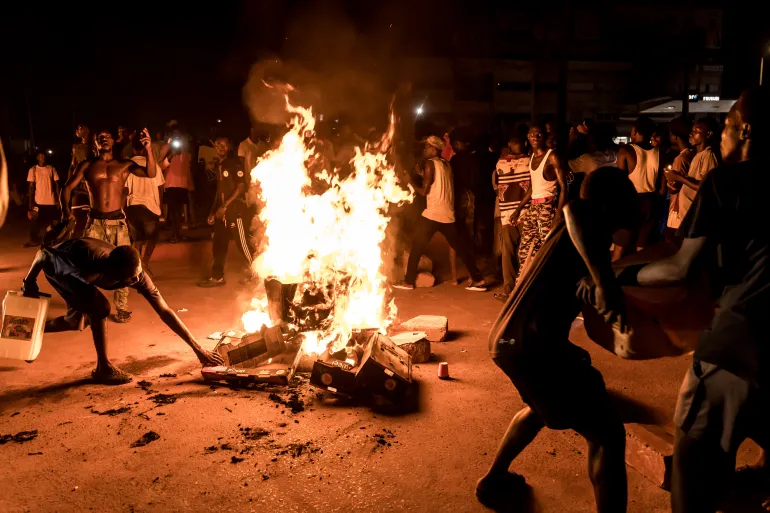
Protesters burned tyres and built barricades blocking traffic, demanding that Barrow resign, in The Gambia’s capital, Banjul, and nearby cities on Monday and Tuesday.

Police used tear gas to disperse crowds who gathered in multiple locations, including near Barrow’s residence and the National Water and Electricity Corporation (NAWEC) headquarters, which supplies the country’s electricity.

Demonstrators burn tyres and block a road during a protest over the country's ongoing electricity crisis and persistent power outages in Brusubi on September 8, 2026. [AFP]
Demonstrators burn tyres and block a road during a protest over the country’s ongoing electricity crisis and persistent power outages in Brusubi on September 8, 2026. [AFP]

Barrow declared the outages an emergency and a “national security issue” during a visit to a NAWEC power station. In a national address, he announced that the government would install a 24-megawatt generation machine by the end of October.

“I know that the fans have stopped turning, children work in the dark, mothers throw away stale food, and the heat is unbearable by day and by night,” Barrow said.

The rolling blackouts are taking place during the West African country’s hot season and have lasted up to 48 hours in some places.

The Gambian president also announced an additional 50-megawatt solar power plant that would begin construction soon.

NAWEC Managing Director Gallo said the prolonged electricity cuts were in part due to climate change and the US-Israel war on Iran. The electricity provider, in a statement released in August, also claimed that it was experiencing an “unforeseen surge” in demand due to high temperatures.

The blackouts come just months ahead of the December presidential election, in which Barrow is running for a third term.
Source link

Arab News | Sudan’s war-driven blackouts push residents toward solar power but high costs shut many out

OMDURMAN: For almost a year, Randa al-Mansour, a 31-year-old Sudanese housewife, has relied on solar energy panels installed on the rooftop of her building to survive the recurrent blackouts triggered by the war-torn country’s deteriorating electricity grid.

“We are suffering big time,” said al-Mansour, who lives with her three children in Omdurman, just outside the capital of Khartoum.

“When kids arrive at school in the morning, they find no electricity there, so they are forced to head back home, where there is none either. It is very hard for them to study under such a high temperature.”

The Sudanese military and the paramilitary Rapid Support Forces have been fighting since April 2023, killing at least 59,000 people, though aid groups say the number could be higher, and displacing some 13 million.

The conflict also has strained an already weak power infrastructure, forcing many Sudanese to seek alternative energy sources, especially during scorching summer heat. The United Nations Development Program has estimated the damage inflicted on the electricity grid at $3 billion.

“We resorted to solar energy as a way of adapting to this situation. However, not everyone in Sudan can afford this solution,” said al-Mansour, who supports her family with remittances from her husband working in Saudi Arabia.

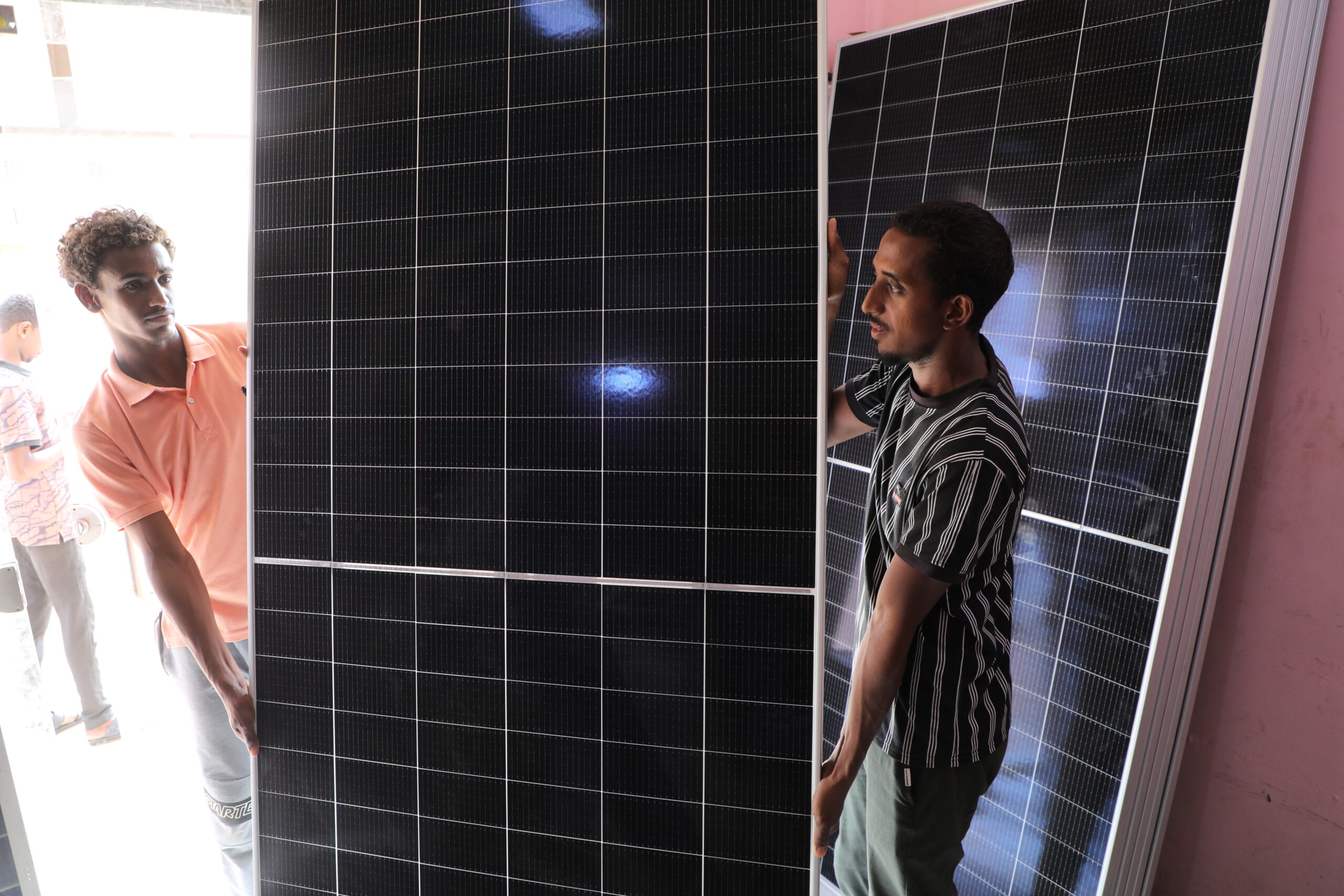
In recent months, billboards advertising solar panels, batteries, and inverters have expanded in the capital as more Sudanese consider transitioning to solar energy.

“For a low-income family, installing a solar panel system is a huge sacrifice but an inevitable choice,” said Mohey Eddin Abu-Bark, owner of a solar systems business in Khartoum, adding that a typical household 10-kilowatt solar system costs nearly $5,000.

Manahel Madany, a 43-year-old diabetic civil servant, cannot afford the transition, despite needing steady electricity for her fridge for her insulin.

“Every three to four days, I am forced to throw away all my insulin stock after it goes bad due to heat and power outages,” said Madany.

She lives in a two-bedroom house with her mother and sister in Omdurman, and like many Sudanese, the three are forced to sleep in their house courtyard to escape the searing heat indoors.

“Not all pharmacies can afford to install solar panels for medical storage, and that’s why most medications have become unavailable,” Madany said.

The Sudan Doctors’ Network, which tracks violence across the country, warned that the continued electricity cuts could impact patients in hospitals, especially kidney patients who need constant care.

At least 30% of Sudan’s population has no access to electricity, with rural areas bearing the brunt, according to the World Bank. Conditions in grid-connected urban centers have also deteriorated, with power outages reaching up to 16 hours in many parts of the country in recent months, according to two electricity department officials who spoke to The Associated Press.

Electricity production has dropped from 4,400 megawatts before the war to 1,100 megawatts as many power plants were hit by drones launched by the RSF, while nearly half of Sudan’s best electricity engineers and technicians have also left the country since 2023, the officials said, citing a survey by a local labor union.

The two spoke on condition of anonymity because they were not authorized to brief the media.

Sudan has limitless potential to generate solar energy given the long hours of sunshine that often exceed 4,000 hours per year, according to the U.N. However, the high upfront cost of imported solar energy systems and a depreciating local currency derail the transition to clean energy.

Source link